
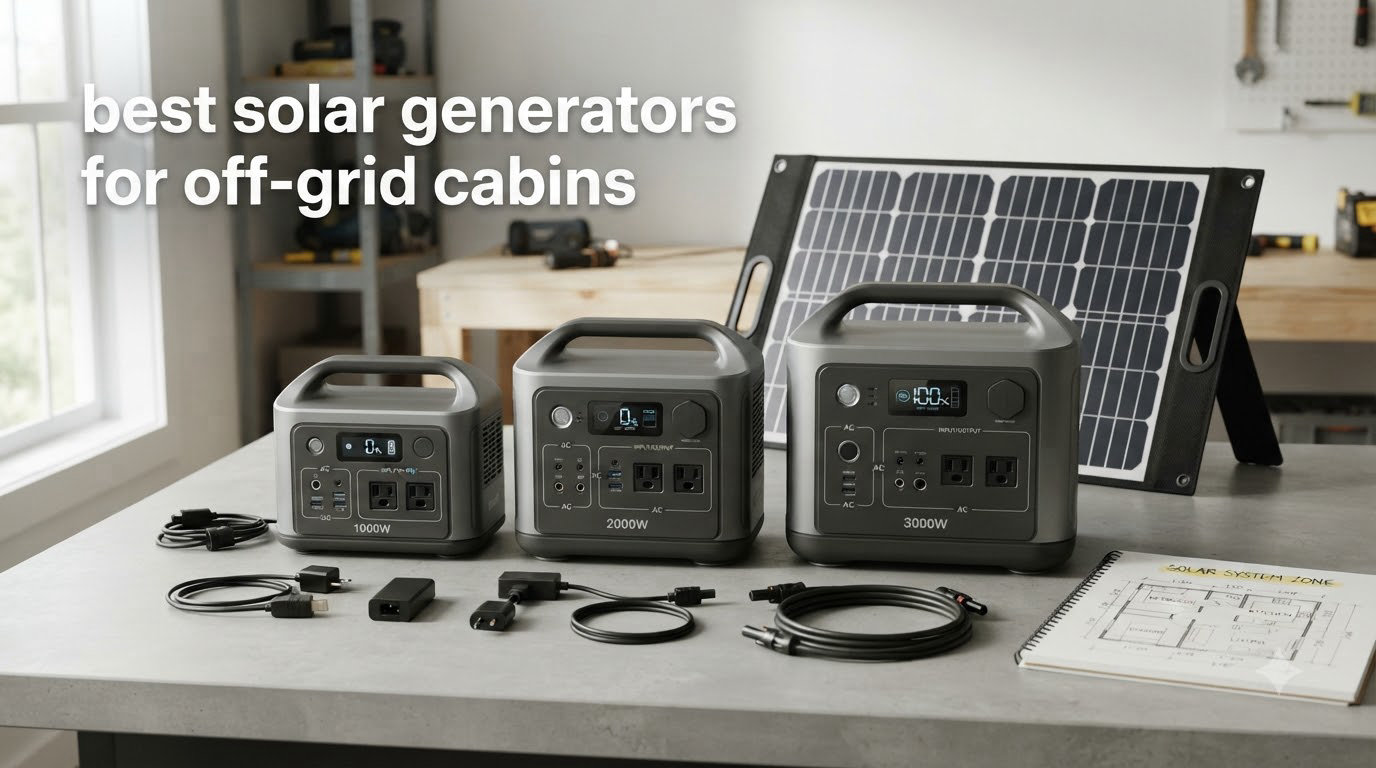
A solar generator is a portable power station with a built-in battery and inverter, sold with or without foldable solar panels. The panels recharge the battery, and the battery runs your appliances through ordinary outlets, with no fuel, no exhaust and no engine to service. That is the whole idea, and it is why these units became the default answer for anyone running a refrigerator and a few lights at a place with no grid connection.
We spent weeks comparing the best solar generators for off-grid cabins, reading thousands of owner reviews and matching specs against the loads a real cabin actually pulls. A fridge that cycles on and off, a chest freezer, satellite internet, a water pump, a laptop charger and a couple of LED bulbs. If you want the wider picture on running a unit beyond a weekend cabin, our off-grid living roundup covers the long-term setup angle, and our home backup roundup covers outage use.
What follows is a brand-neutral list of 12 models, ordered by how well they handle cabin life rather than by who pays us the most. We have flagged weight, panel bundle size and charging speed honestly, because those three numbers decide whether a unit is a pleasure or a chore at a remote property. We also get into the sizing math, the cold-weather catch and the loads a power station simply cannot handle.
Table of Contents
Top 3 Solar Generators for Off-Grid Cabins
These three cover the range most cabin owners actually need: the highest-rated unit in the group, a light one you can move by yourself, and a well-rounded mid-size box.
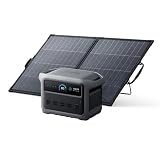


BLUETTI AC180 Solar Generator
- 1152Wh LiFePO4
- 1800W continuous
- 2700W power lifting
- 1440W flash charge
Quick Overview: Every Pick Side by Side
Here is the short version. Each unit is matched to the kind of cabin it suits best.
Anker SOLIX C1000 Gen 2 – top rated, and the pick for CPAP machines and routers that cannot blink.
BLUETTI Elite 100 V2 – best value for weekend cabins where you carry the unit in yourself.
BLUETTI AC180 – best balance of capacity and recharge speed for a working cabin.
Jackery Solar Generator 1000 v2 – lightest option for anyone moving power up a porch or a set of stairs.
OUPES Mega 1 – best expandability per watt, growing to 5120Wh with extra batteries.
BLUETTI Elite 200 V2 – premium pick for a fridge, freezer and tools on a mid-size reserve.
EcoFlow DELTA 3 Max – best raw output headroom from a 2kWh unit.
Jackery HomePower 3000 – best for RV and trailer owners, with a 30A RV outlet.
EcoFlow DELTA Pro 3.6kWh – best for a fixed installation that never leaves the cabin floor.
Jackery Explorer 2000 v2 – a compact 2kWh unit at 39.5 pounds.
EcoFlow DELTA 3 Ultra Plus – best expansion ceiling, scaling from 3kWh to 11kWh.
pecron F3000LFP – best capacity and output per watt, with 3kWh and 3600W.
| Product | Specifications | Action |
|---|---|---|
| Anker SOLIX C1000 Gen 2 |
|
Check Latest Price |
| BLUETTI Elite 100 V2 |
|
Check Latest Price |
| BLUETTI AC180 Solar Generator |
|
Check Latest Price |
 Jackery Solar Generator 1000 v2 Jackery Solar Generator 1000 v2 |
|
Check Latest Price |
 OUPES Mega 1 Solar Generator OUPES Mega 1 Solar Generator |
|
Check Latest Price |
 BLUETTI Elite 200 V2 BLUETTI Elite 200 V2 |
|
Check Latest Price |
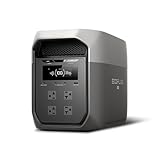 EcoFlow DELTA 3 Max EcoFlow DELTA 3 Max |
|
Check Latest Price |
 Jackery HomePower 3000 Jackery HomePower 3000 |
|
Check Latest Price |
 EcoFlow DELTA Pro 3.6kWh EcoFlow DELTA Pro 3.6kWh |
|
Check Latest Price |
 Jackery Explorer 2000 v2 Jackery Explorer 2000 v2 |
|
Check Latest Price |
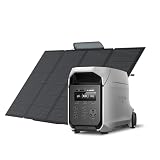 EcoFlow DELTA 3 Ultra Plus EcoFlow DELTA 3 Ultra Plus |
|
Check Latest Price |
 pecron F3000LFP pecron F3000LFP |
|
Check Latest Price |
1. Anker SOLIX C1000 Gen 2 – The Best Solar Generator for Off-Grid Cabins
Anker SOLIX C1000 Gen 2 Portable Power Station with 200W Solar Panel
1024Wh LiFePO4
2000W continuous
3000W peak
10ms UPS
Pros
- Largest review base in this roundup
- 83% to 100% in about 15 minutes on AC
- 2000W output with 3000W peak
- 10ms UPS switchover for CPAP and laptops
- Compact and light for a 1kWh unit
Cons
- No battery expansion on this generation
- XT60 adapters need a separate storage case
- Some measured waveform distortion on a microwave load
- Bundled panel could be sturdier in wind
The C1000 Gen 2 carries the largest review base of any unit in this roundup, and the sentiment is unusually consistent: fast charging, compact size and UPS backup that works. It delivers 2000W continuous and 3000W peak from 1024Wh of LiFePO4 rated for 4000 cycles to 80%.
Charging is the headline number. A top-up from 83% to 100% takes about 15 minutes on a wall outlet, and a full recharge takes under an hour at 1600W with HyperFlash enabled in the app. Solar input accepts up to 600W, for a full charge in about 1.8 hours.
Verified owners report running a CPAP machine for three nights on a single charge, and one describes it as critical through a ten-day ice storm outage. The 10ms switchover is short enough that laptops and routers never notice the transfer.
The app adds a TOU mode that schedules charging and load management, which is handy for rationing solar at the cabin. Owners generally find it quiet enough to forget it is running, and the included 200W panel works acceptably with third-party panels too.
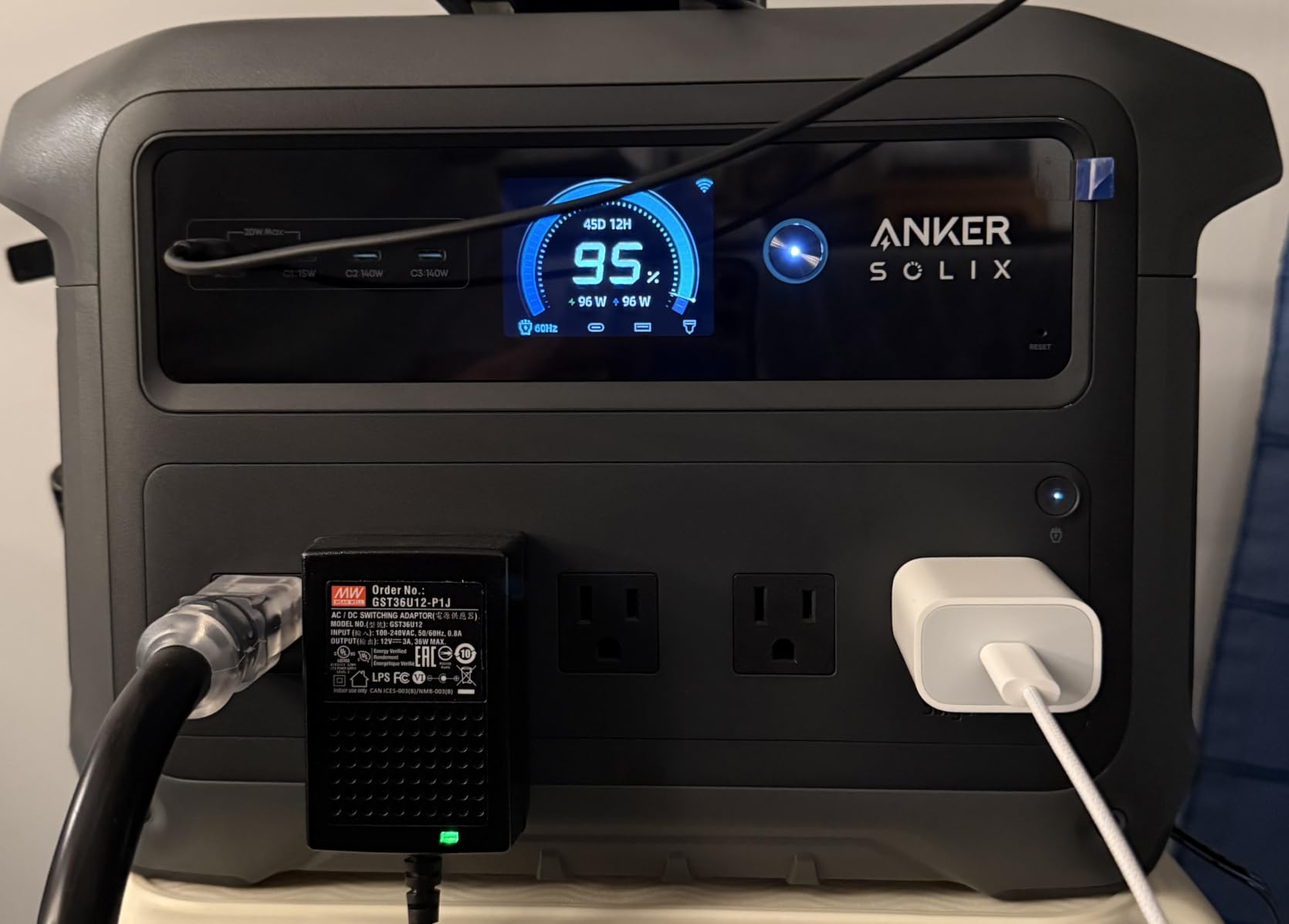
What the C1000 Gen 2 does well at a cabin
It is 14% smaller and 11% lighter than comparable models, so it moves between rooms easily, and it accepts third-party 200W panels. If anyone depends on a CPAP or powered medical device, the sub-10ms transfer is the reason to pick it.
Where the C1000 Gen 2 falls short
Unlike the first generation it cannot be extended with extra batteries, so 1024Wh is all you get. An engineer reviewer also measured 15 to 20% harmonic distortion on the inverter waveform when powering a microwave.
2. BLUETTI Elite 100 V2 – Best Value for a Weekend Cabin
BLUETTI Solar Generator Elite 100 V2 with 200W Solar Panel Included, 1024Wh
1024Wh LiFePO4
1800W rated AC
25 pounds
10ms UPS
Pros
- Full recharge in about 70 minutes on AC
- Only 25 pounds for a 1kWh-class unit
- 30dB silent mode suits sleeping near
- 10ms UPS keeps routers and laptops alive
- Standard XT60 solar connectors
Cons
- Only 4 AC outlets despite the 11-port count
- No high-amperage DC output for permanent wiring
- Display does not show separate amps and volts
The Elite 100 V2 is the unit we recommend when one person has to carry power from the truck to the cabin. At 25 pounds it is the lightest 1kWh-class station here, and 1800W rated output still covers a 1200W space heater, a fridge and a laptop at the same time.
Charging is fast. It reaches full in about 70 minutes with 1200W TurboBoost AC charging, and the 1000W solar input ceiling takes it from zero to 80% on solar in four hours. The 30dB silent mode is genuinely quiet, which matters when the unit shares a room with you.
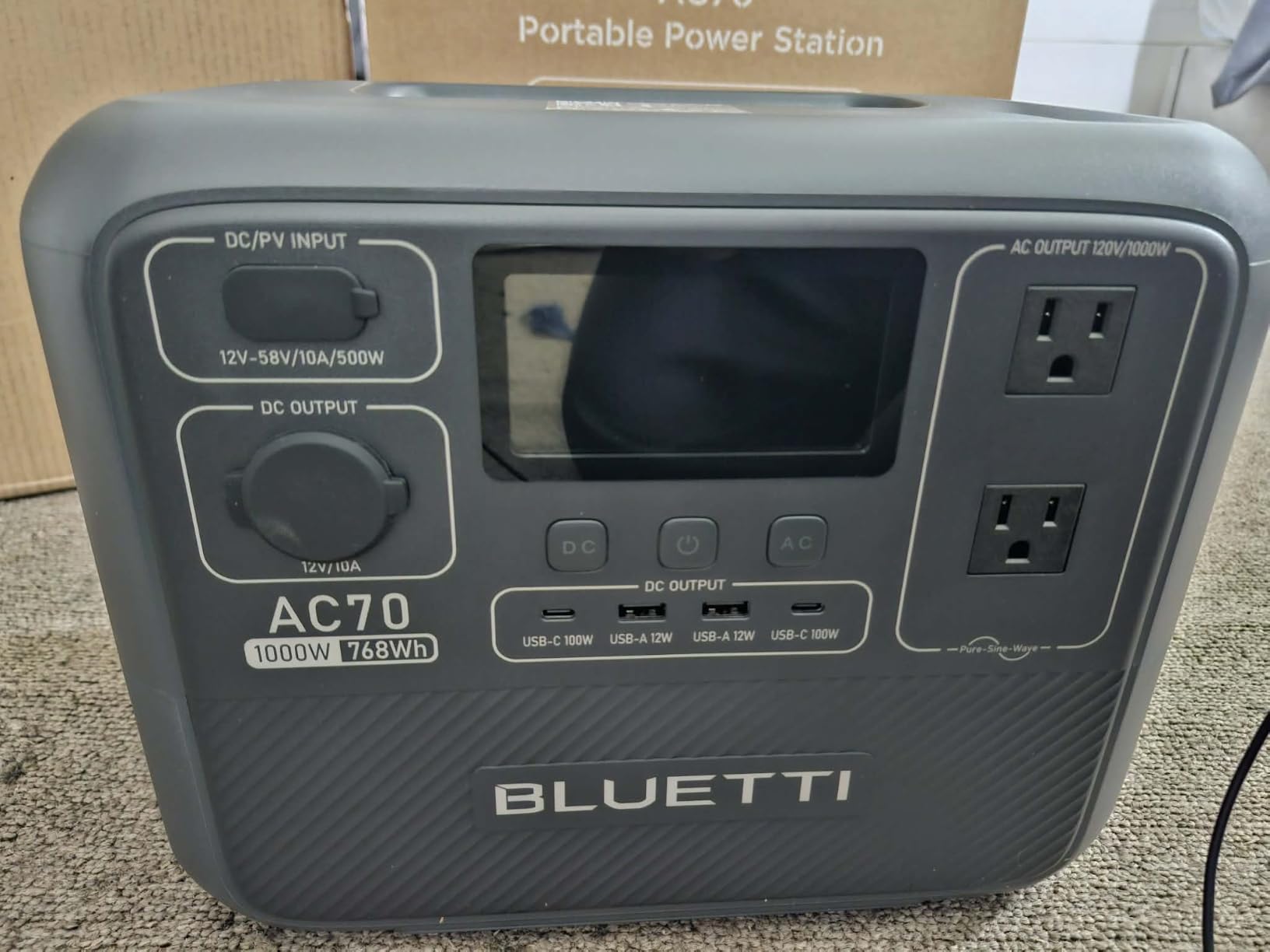
Owners report running 12V coolers for a full 24 hours on one charge, and one builder in Arkansas uses his daily while finishing an off-grid cabin. The 10ms UPS switchover keeps routers and desktops running through an outage without a manual reset.
Standard XT60 solar connectors are a small but real convenience. Unlike kits that use a proprietary plug, you can pair it with other brands’ panels without an adapter, which makes building a bigger roof array later far less annoying.
What the Elite 100 V2 does well at a cabin
It is a rare 1kWh unit you can carry alone, with a battery rated for 4000+ cycles, and the app connects over both Wi-Fi and Bluetooth so you can check state of charge from the truck.
Where the Elite 100 V2 falls short
Despite the 11-port headline there are only four AC outlets, and there is no high-amperage DC output for wiring a distribution panel. This is a plug-in unit, not a wired installation.
3. BLUETTI AC180 Solar Generator – Best for a Working Cabin
BLUETTI AC180 Solar Generator with 200W Solar Panel Included, 1152Wh 1800W
1152Wh LiFePO4
1800W continuous AC
2700W power lifting
37.4 pounds
Pros
- 0 to 80% in about 45 minutes on AC
- Handles microwaves and small power tools
- 11 outlets including a wireless charging pad
- App shows live input and output wattage
- LiFePO4 battery rated for 3000+ cycles
Cons
- 37 pounds is awkward without a cart
- Bundled 200W panel cannot be wired to other brands
- Cooling fans get audible under sustained heavy load
- Solar cable is short
The AC180 pairs 1152Wh of LiFePO4 capacity with 1800W of continuous output, and the app can push that to 2700W of power lifting when a microwave and a kettle both come on. It reaches 80% charge in roughly 45 minutes from a wall outlet, which matters more at a cabin than at home because wall charging is rare out there.
Owners report running 12V cooler fridges for 16 to 18 hours and a 5000 BTU window air conditioner for about seven hours on low. That is a realistic weekend of fridge, freezer, lights and phone charging without touching the battery twice.
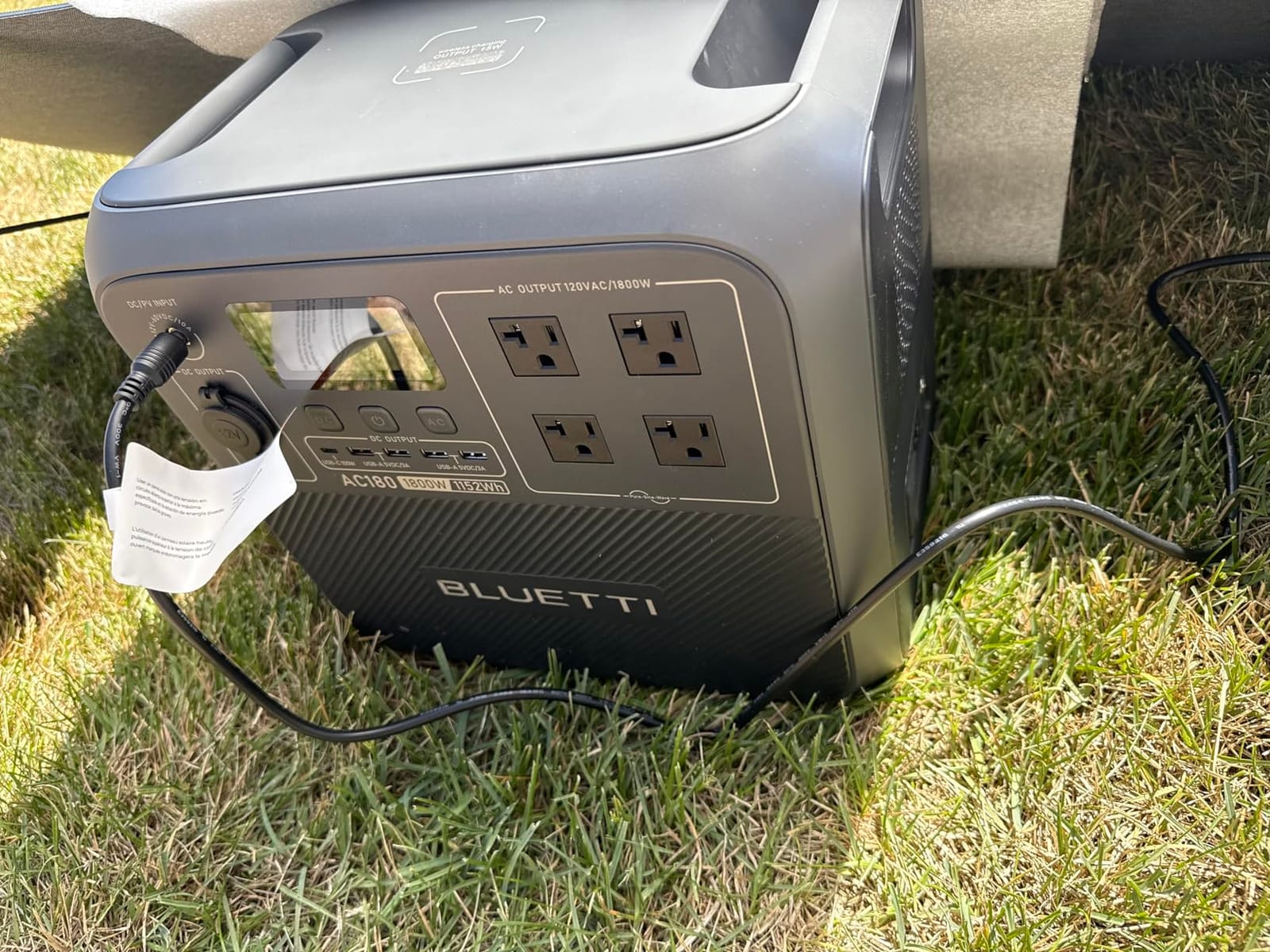
The LiFePO4 pack is rated for 3000+ cycles, and UPS backup switches in 20ms or less, so a router barely registers an outage. Eleven outlets cover AC, USB, DC and a wireless charging pad, so most cabins need no adapter drawer at all.
The honest drawback is weight. At 37.4 pounds this is a two-hand lift, and moving it from a storage shed to the kitchen table every morning gets old fast. The included 200W panel arrives in a separate box and cannot be wired in series or parallel with other manufacturers’ panels.
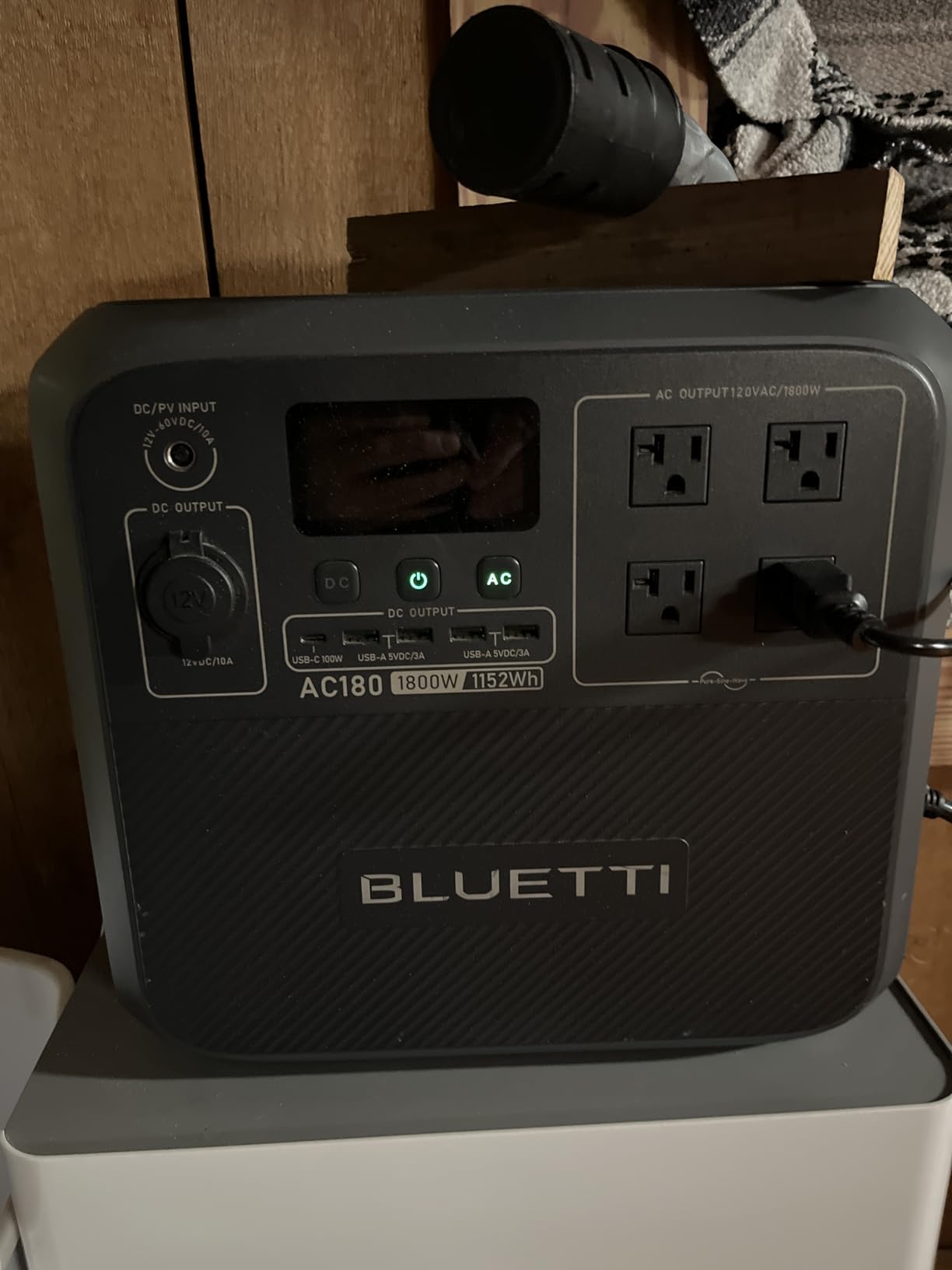
What the AC180 does well at a cabin
The recharge speed is the standout. A full charge in about an hour means you can top up at a campground hookup and drive home with a full battery, and the 2700W lifting mode covers a microwave without tripping.
Where the AC180 falls short
At 37.4 pounds it is not a one-person carry over uneven ground, and the short solar lead limits where the panel can sit. For a one-room weekend cabin, the Elite 100 V2 above is easier to move.
4. Jackery Solar Generator 1000 v2 – Lightest Option in the Group
Jackery Solar Generator 1000 v2 and 200W Solar Panel,1070Wh,1500W AC
1070Wh LiFePO4
1500W AC continuous
23.8 pounds
3000W surge
Pros
- Lightest unit reviewed at 23.8 pounds
- Full charge in one hour in emergency mode
- LFP battery keeps over 70% after 4000 cycles
- Two 200W solar inputs allow panel expansion
- Verified owners ran a fridge nine hours overnight
Cons
- Bundled 200W panel is bulky and tips in wind
- Solar charging cable is short
- One-hour charge requires opting into emergency mode
At 23.8 pounds with a foldable carry handle, the Explorer 1000 v2 is the easiest unit here to move up a porch or across a frozen yard. It delivers 1500W continuous with 3000W surge from 1070Wh of LiFePO4, and the battery holds over 70% of original capacity after 4000 cycles.
Jackery ranks this one high in Outdoor Generators, and the reviews back that up. Verified buyers report running a full-size side-by-side refrigerator for nine hours overnight through multi-day outages, which is exactly the cabin scenario.
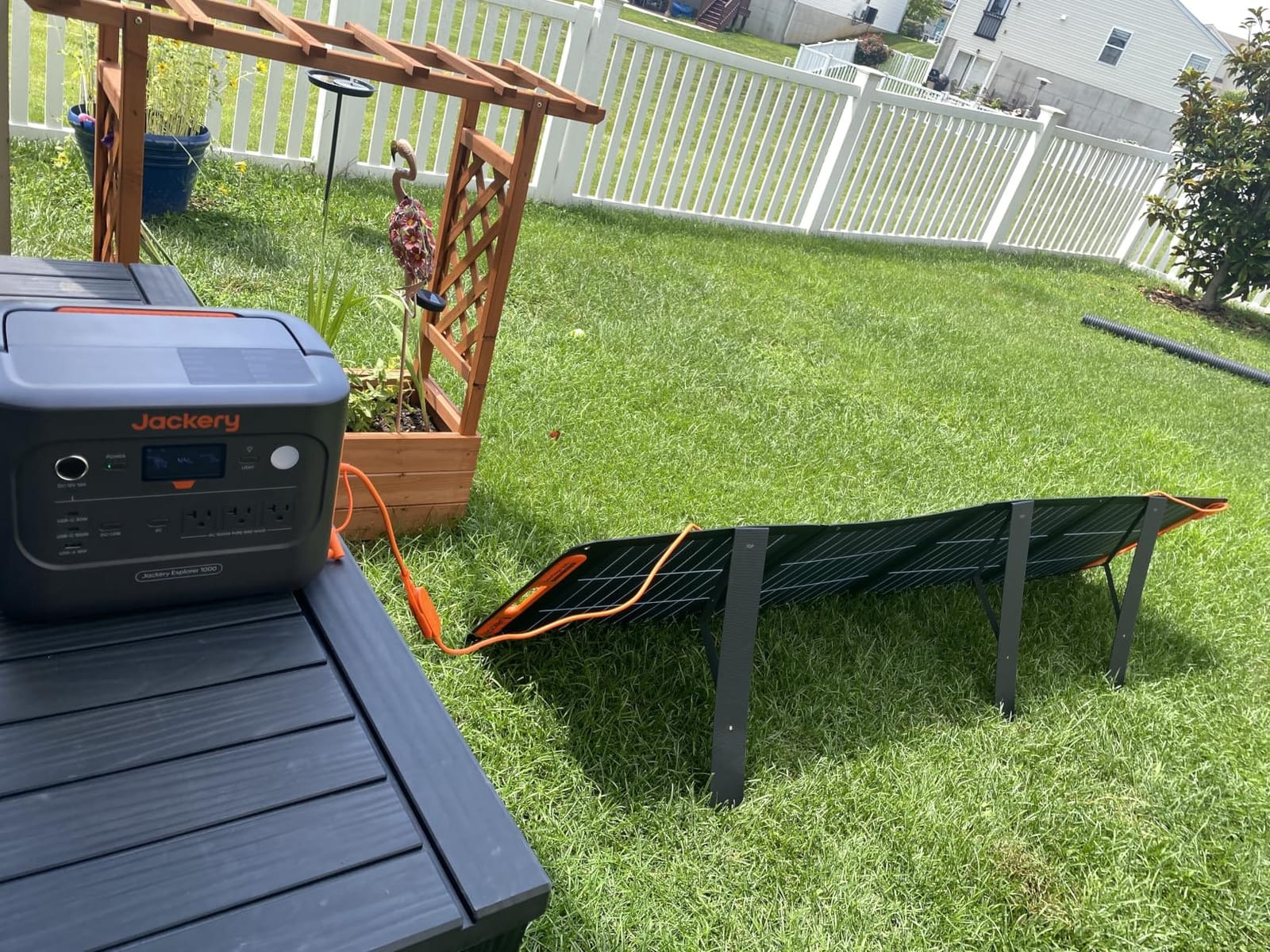
Two 200W solar inputs mean you can add panels later without replacing anything, and the unit charges from solar while powering loads. The 30dB quiet overnight charging mode lets it refill while you sleep, and customer support drew repeated praise from owners handling warranty questions.
Owners also report the unit surviving heavy rain and mud splashes, and it is roughly 18% smaller than the model it replaced. It is a straightforward, well-supported box that does the cabin basics without drama.
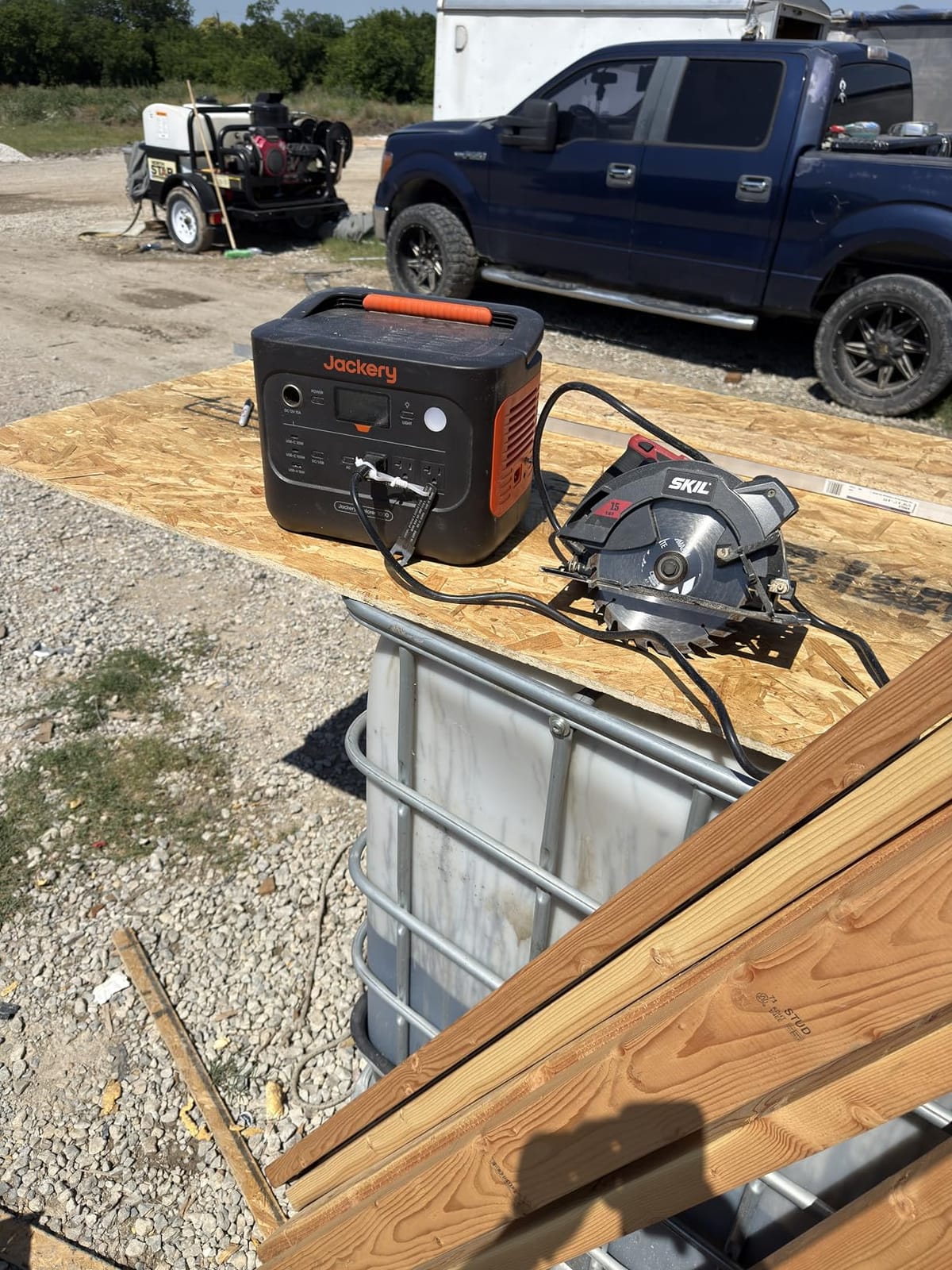
What the Jackery 1000 v2 does well at a cabin
Light weight and a pure sine wave inverter on all three AC outlets. Two solar inputs give you a clear path to a larger roof array, and the foldable handle helps when the shortest path to the cabin includes a set of stairs.
Where the Jackery 1000 v2 falls short
The bundled 200W SolarSaga panel is the most criticized part. Reviewers describe it as bulky, prone to blowing over in light wind, and connected by too short a cable. The one-hour charge also requires enabling emergency mode in the app, which shortens battery lifespan.
5. OUPES Mega 1 – Best Expandability for Growing Off-Grid Use
OUPES Mega 1 Solar Generator with 100W Panel Included, 2000W 1024Wh LiFePO4
1024Wh expandable to 5120Wh
2000W pure sine wave
13 ports
27.8 pounds
Pros
- Expands to 5120Wh with two extra batteries
- 36-minute 0 to 80% AC recharge
- 2000W pure sine wave from a 1kWh unit
- 13 ports including two 100W USB-C
- Only 27.8 pounds for a 2kW unit
Cons
- Bundled panel is only 100W
- Less established brand with a smaller installed base
- App required for full monitoring
The Mega 1 is the interesting value pick. You get 2000W of pure sine wave output from a 1024Wh base, and unlike most units in its class it expands to 5120Wh with two B2 extra batteries. That growth path suits a cabin going from weekend use to near-daily use over a few seasons.
Charging is fast for the capacity: 0 to 80% on AC in 36 minutes, or 26 minutes when AC and solar run together. The built-in MPPT controller accepts up to 800W of solar input, and the 20ms UPS switchover protects computers and medical devices.
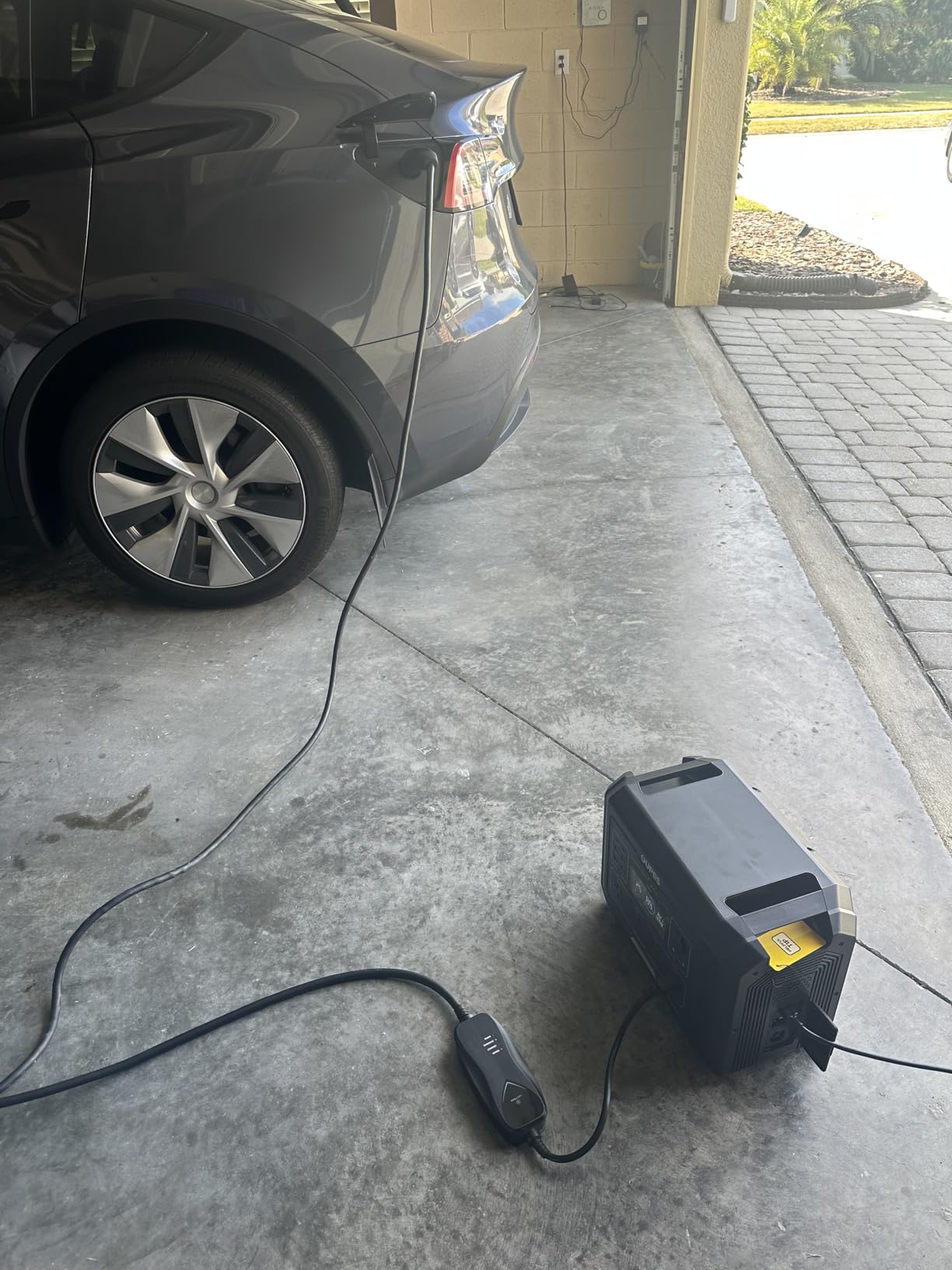
Thirteen ports, including two 100W USB-C ports for laptop charging and four AC outlets. At 27.8 pounds for a 2kW unit, it carries well for its output class, and reviewers consistently single out the expansion batteries and the charge speed.
The reservation most owners voice is the panel. The included 100W panel is a starter array, and you will want real panels on the roof before relying on solar.
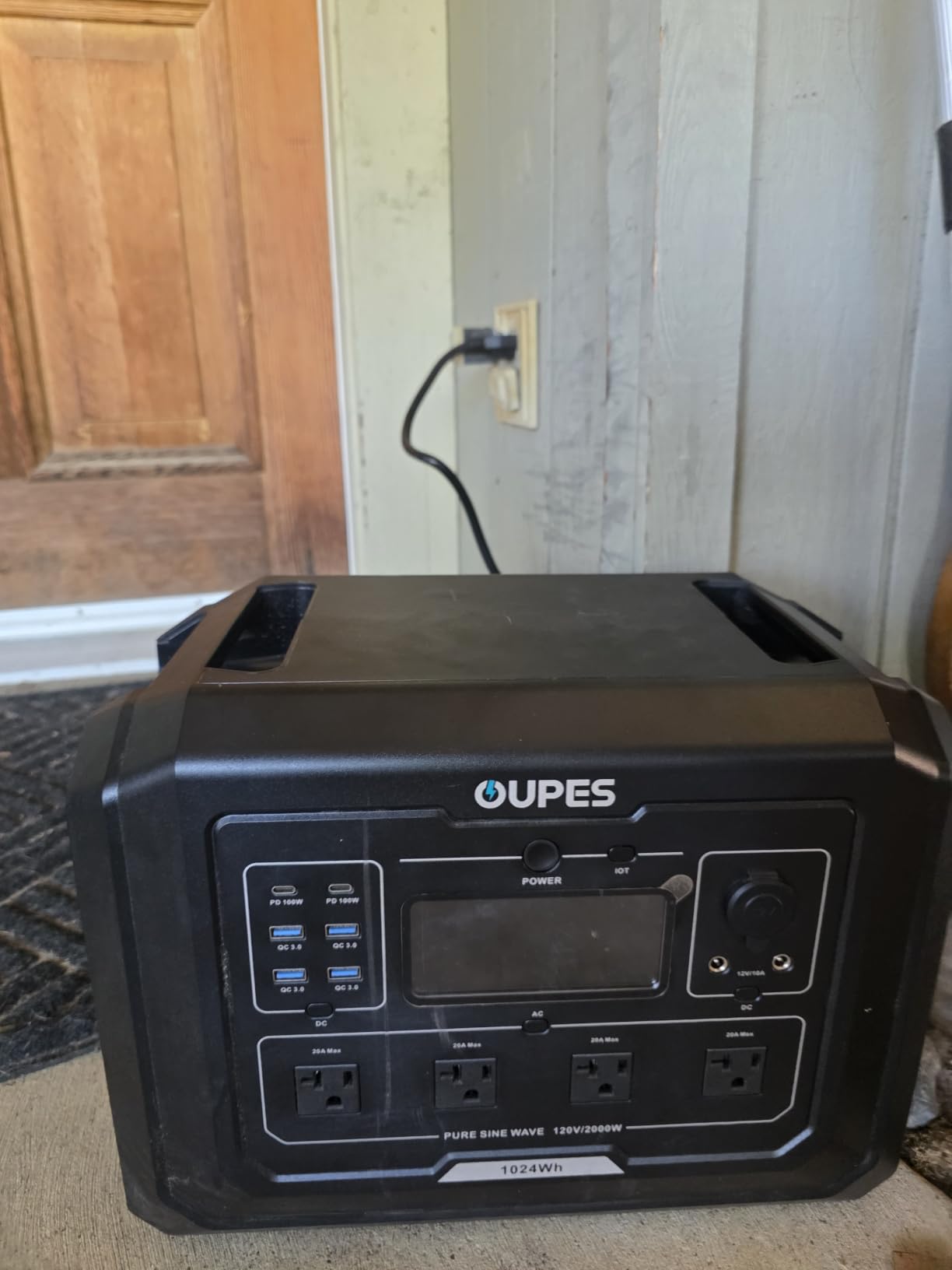
What the OUPES Mega 1 does well at a cabin
It is the most affordable route to a genuinely expandable system here, and pure sine wave output is the right call for sensitive electronics. If usage grows, this is the unit that does not need replacing later.
Where the OUPES Mega 1 falls short
The 100W bundled panel is the smallest solar array in this lineup, so budget for a proper roof array separately. It is also a less established brand with a smaller installed base, meaning less community troubleshooting advice at a remote property.
6. BLUETTI Elite 200 V2 – Most Versatile for Fridge, Freezer and Tools
BLUETTI Elite 200 V2 Solar Generator & 2x200W Solar Panel Included 2073.6Wh
2073.6Wh LiFePO4
2600W continuous
6000+ cycles
10W standby draw
Pros
- 6000+ cycle battery rated for a 17-year lifespan
- Very low 10W standby draw under light loads
- Verified owners ran a 29 cubic foot fridge for 24+ hours
- 40% more compact than the AC200L it replaces
- Completely silent in normal use
Cons
- Not expandable with BLUETTI external battery modules
- Solar input capped at 1000W and 60V
- Weighs 53.4 pounds
- App lacks adjustable charge rates
The Elite 200 V2 is our pick when a cabin needs a real appliance load rather than a gadget load. It carries 2073.6Wh of automotive-grade LiFePO4 rated for 6000+ cycles and a 17-year lifespan, with 2600W continuous and 3900W in power lifting mode.
Owners report running a 29 cubic foot fridge and freezer combo for more than 24 hours on a single charge, and microwaves and air fryers at the same time. The 10W standby draw is roughly a third of similar power stations, which quietly extends runtime under light loads.
Two 200W panels come in the box, giving a full charge in about 5.5 hours, or 2.4 hours with 1000W of panels. AC and DC charging together take it from zero to 80% in 50 minutes, and the under-15ms UPS keeps computers and network gear running.
At 53.4 pounds it is 40% more compact than the AC200L it replaces, but several owners still find it hard to move alone. It is also not expandable with BLUETTI external battery modules, the most common complaint.
What the Elite 200 V2 does well at a cabin
Two days of fridge, freezer, lighting, internet and tool charging from one charge, with an efficiency that holds up under light loads. The 17-year battery rating means it outlasts a decade of seasonal weekends.
Where the Elite 200 V2 falls short
Lose the expansion path and the solar ceiling feels tight. The MPPT controller caps input at 60V and 1000W, so high-voltage panels cannot reach that maximum, and the app lags the hardware by missing adjustable charge rates and temperature monitoring.
7. EcoFlow DELTA 3 Max – Best Output Headroom From a 2kWh Unit
EF ECOFLOW DELTA 3 Max Portable Power Station, 2048Wh LFP Battery, 2400W
2048Wh LFP battery
2400W rated
3400W X-Boost
under 10ms UPS
Pros
- 3400W X-Boost covers nearly all household appliances
- 0 to 80% recharge in 1.13 hours
- Under 10ms transfer for sensitive electronics
- Ultra-quiet cooling suits overnight indoor use
- Lighter and more compact than comparable 2kWh units
Cons
- Solar panel sold separately in this configuration
- Tall 19.4 inch form factor is less stable on uneven ground
- Only three AC outlets
The DELTA 3 Max is where the raw numbers stand out. From 2048Wh of LiFePO4 it delivers 2400W rated, and X-Boost mode pushes that to 3400W continuous, which covers microwaves, power tools and most cabin appliances without anything tripping.
Recharge is the other headline: 0 to 80% in 1.13 hours using X-Stream technology. Transfer time is under 10ms, and X-Quiet cooling keeps it usable in a sleeping space, which matters when the only quiet room also holds the fridge.
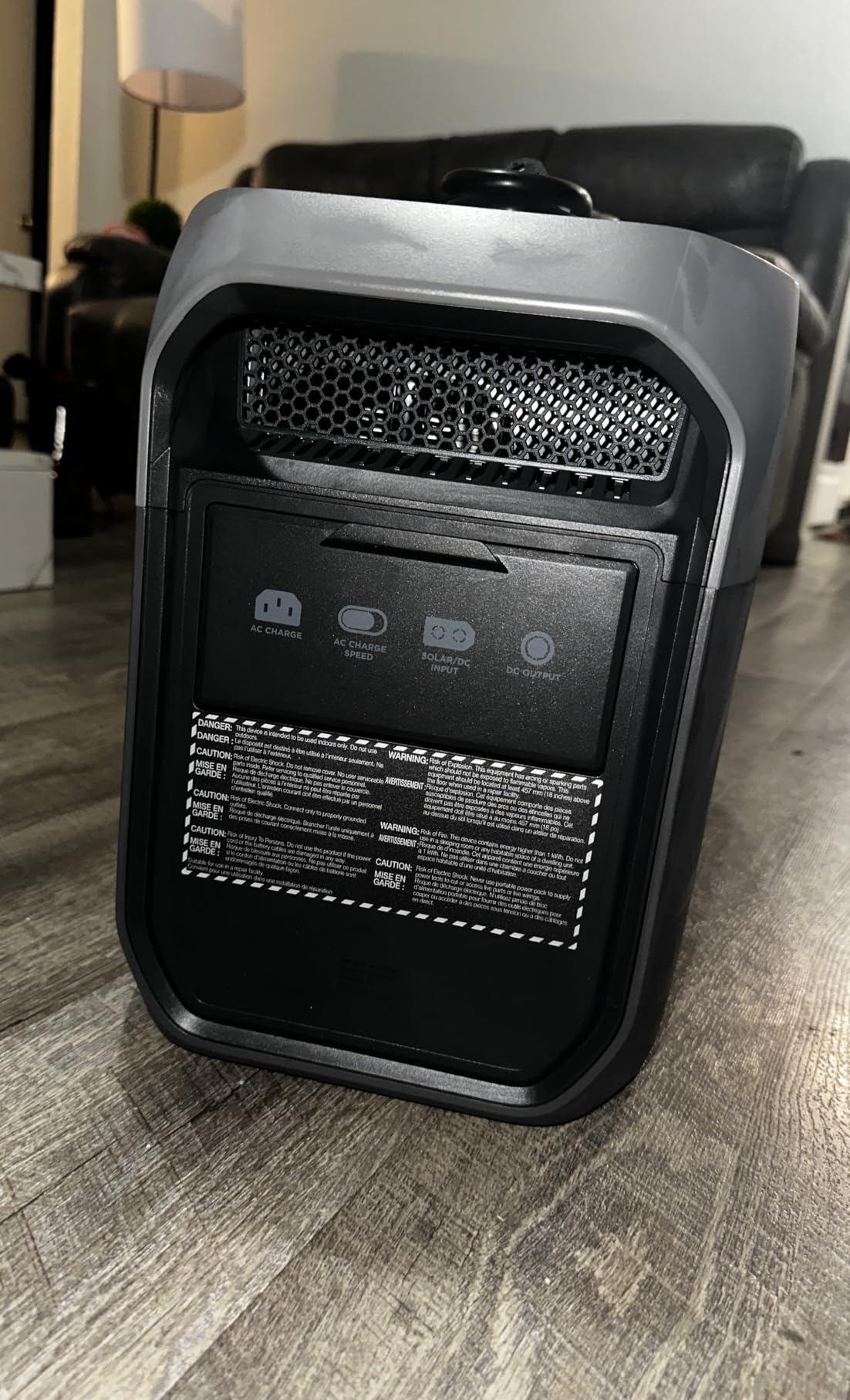
The EcoFlow app supports real-time monitoring and charge scheduling, so you can shift charging to the sunniest part of the day. Owners generally find the unit lighter and more compact than other 2kWh alternatives, and report no significant reliability problems.
The consistent complaint is that this configuration does not include a solar panel, which matters if you are shopping specifically for a solar generator rather than a battery backup.
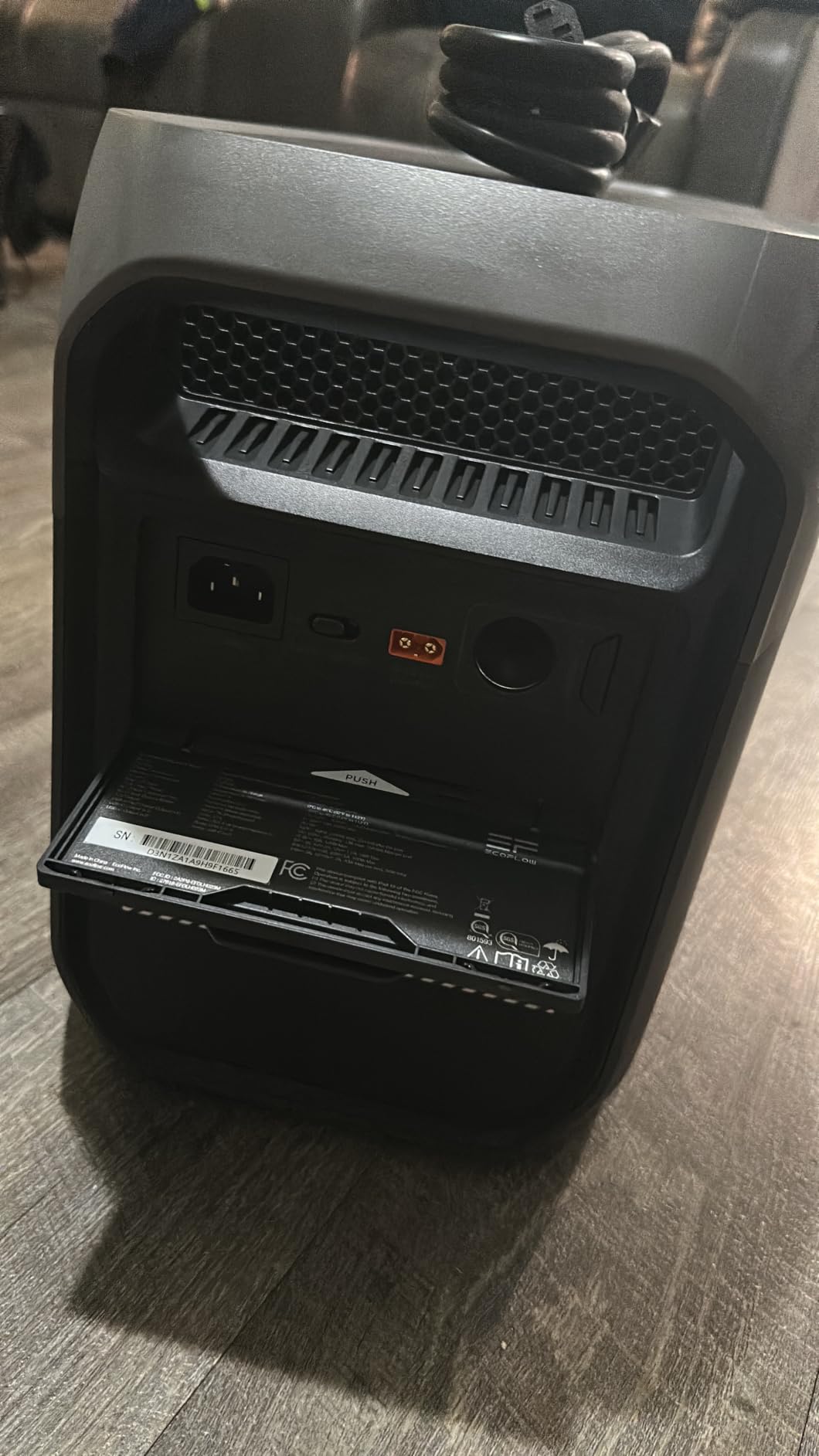
What the DELTA 3 Max does well at a cabin
Output headroom. If you want to run a microwave, a power tool and a fridge from the same box, this is the 2kWh unit most likely to do it. Fast recharge also means a short visit to a wall outlet restores most of the capacity.
Where the DELTA 3 Max falls short
No panel in the box, only three AC outlets, and a tall 19.4 inch shape that is less stable on the uneven floor of a cabin. If you are not near a road, solar charging matters more than wall speed.
8. Jackery HomePower 3000 – Best for RV and Trailer Owners
Jackery HomePower 3000 and 2x200W Solar Panels, 3072Wh, 3600W AC Output
3072Wh LiFePO4
3600W continuous
7200W surge
TT-30 RV outlet
Pros
- Powers a household for up to 15 hours
- Keeps a refrigerator running one to two days
- 3600W handles a camper air conditioner and microwave
- Built-in TT-30 RV outlet and dual 100W USB-C ports
- Very quiet for overnight cabin running
Cons
- About 60 pounds without a wheel kit
- Battery pack is not expandable
- Alexa skill is listed but does not function
The HomePower 3000 is the pick if cabin life involves a trailer or an RV that plugs into the station. It offers 3072Wh of LiFePO4 rated for 4000 cycles, 3600W continuous and 7200W surge, plus a built-in TT-30 RV outlet that removes the adapter hunt.
Jackery states it can power a household for up to 15 hours and keep a refrigerator running for one to two days. Two 200W SolarSaga panels are included, and owners report a full charge in about six hours of good sun, or 80% in nine hours.
The UL-certified UPS switches in under 20ms, keeping security cameras, medical refrigerators and pet feeders running through an outage. App control lets you schedule charging or shut the unit down remotely, which helps with theft deterrence at an unattended cabin.
Owners running RVs report replacing a noisy gas generator with this unit. ChargeShield 2.0 manages charging and battery longevity automatically, and CTB technology makes it 47% smaller than comparable 3kWh models.
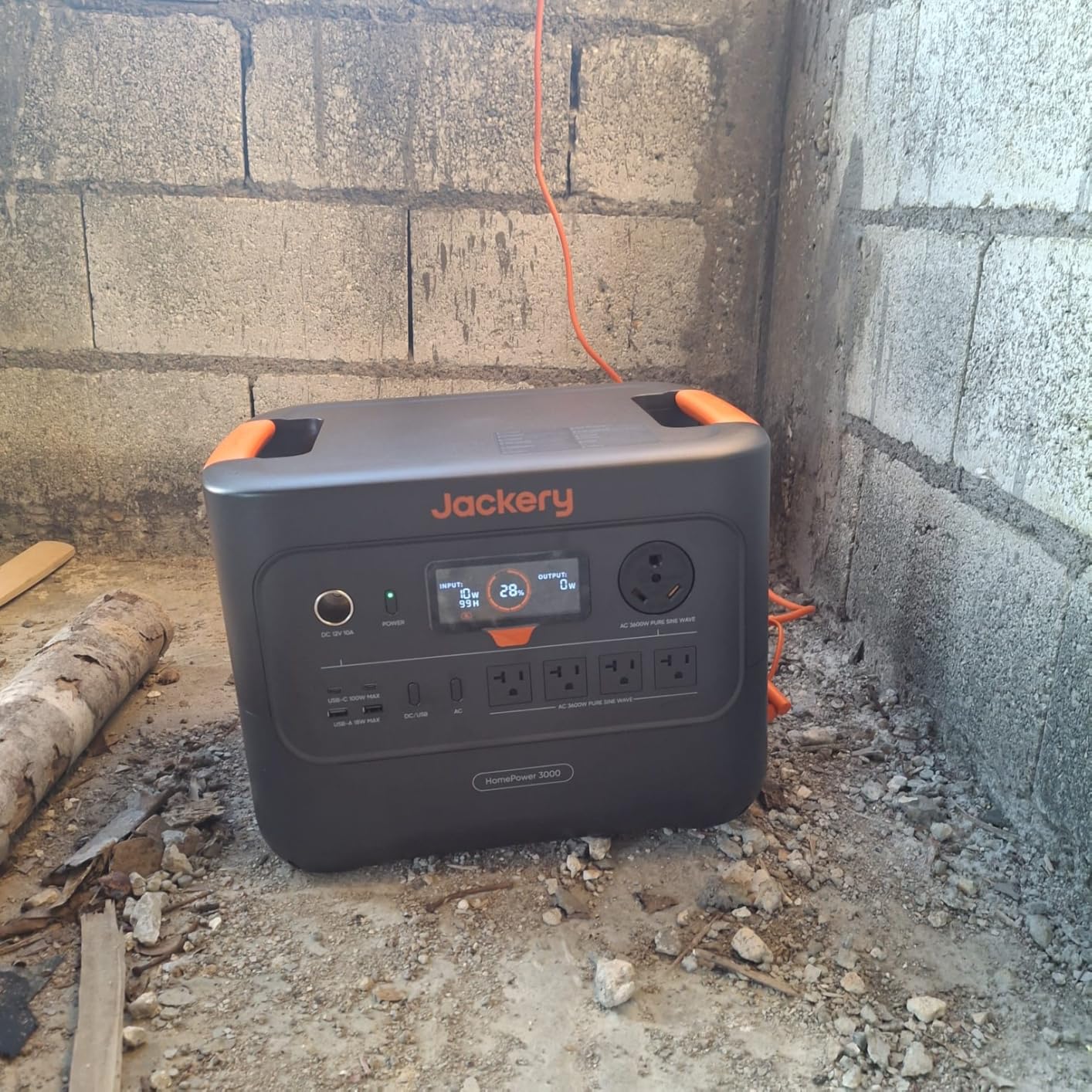
What the HomePower 3000 does well at a cabin
It is the quiet one. With no engine, you can sleep with a fridge, a router and a lamp running, and 3600W continuous covers a camper air conditioner and microwave at the same time.
Where the HomePower 3000 falls short
At about 60 pounds it is effectively a two-person move, and most owners add the optional wheel kit. The battery pack is not expandable, and the listed Alexa integration does not work through the Jackery skill.
9. EcoFlow DELTA Pro 3.6kWh – Best for a Fixed Installation
EF ECOFLOW Solar Generator 3.6KWh DELTA Pro with 400W Portable Solar Panel
3.6kWh battery
3600W continuous
4500W starting watts
400W panel included
Pros
- Largest battery capacity here at 3.6kWh
- 3600W continuous with 4500W starting watts
- 15 ports including five AC outlets
- 400W IP68 foldable panel at 22.4% efficiency
- Expandable with extra batteries
Cons
- Weighs 99 pounds
- Power station and panel arrive in separate boxes
- Single 400W panel still takes about 11 hours for a full charge
The DELTA Pro is not really a portable unit, and reviewers treat it that way. At 99 pounds it belongs on a floor or shelf, which is right for a cabin with a dedicated equipment corner that wants whole-place backup rather than trips to a storage shed.
Capacity is the reason to buy it: 3.6kWh with 3600W continuous and 4500W starting watts, plus 15 ports including five AC outlets. Expansion batteries are available, so a homestead that outgrows it does not start over.
The included 400W foldable panel is one of the largest bundled with any unit here, rated IP68 and hitting 22.4% conversion efficiency. It weighs 35.3 pounds in its carry case, and a full recharge takes about 11 hours on the single panel or 3.5 hours with three.
App control over Wi-Fi or Bluetooth shows charge level, temperature and charge timing, which is useful when the cabin is a two-hour drive away and you need to know whether to make the trip.
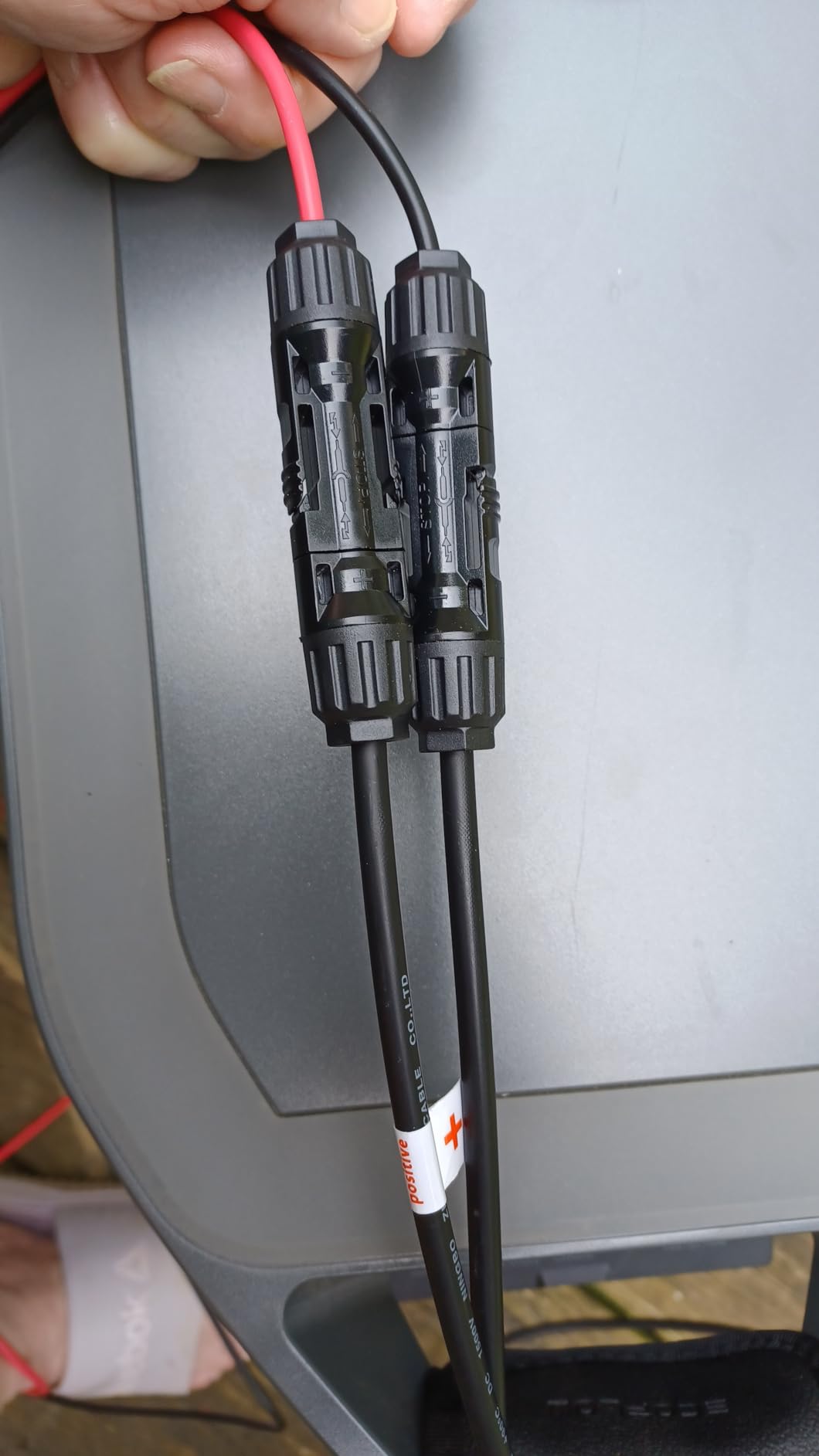
What the DELTA Pro does well at a cabin
It has the biggest battery in this roundup, enough to plausibly cover a full day at a remote property. Five AC outlets, high surge headroom and expandability cover a fridge, freezer, well pump, router and a string of lights.
Where the DELTA Pro falls short
At 99 pounds it rules out anything mobile, and the station and panel arrive in separate boxes. Charging from the single included panel still takes most of a sunny day, so roof panels are close to mandatory.
10. Jackery Explorer 2000 v2 – A Compact 2kWh Unit at 39.5 Pounds
Jackery Explorer 2000 v2 and 2x200W Solar Panels, 2042Wh, 2200W AC Output
2042Wh LiFePO4
2200W AC output
39.5 pounds
USB-C PD 100W
Pros
- Station weighs only 39.5 pounds
- 80% charge in 66 minutes on AC
- Silent charging mode at 30dB
- 20ms UL1778-certified UPS switching
- USB-C PD 100W charges laptops directly
Cons
- Bundle weighs 66.8 pounds including the two panels
- Solar hookup needs an L-shaped to straight DC plug swap
- Station and panels may arrive separately
If you want 2kWh of capacity you can still wrestle into a cabin single-handed, the Explorer 2000 v2 is the one. Cell-to-Body technology brings the station to 39.5 pounds, which Jackery says is 41% lighter and 34% smaller than conventional 2kWh LiFePO4 stations.
It delivers 2042Wh and 2200W of AC output across three ports plus a USB-C PD 100W port for laptop charging. AC charging reaches 80% in 66 minutes, and silent charging mode gets a full charge in five hours at 30dB.
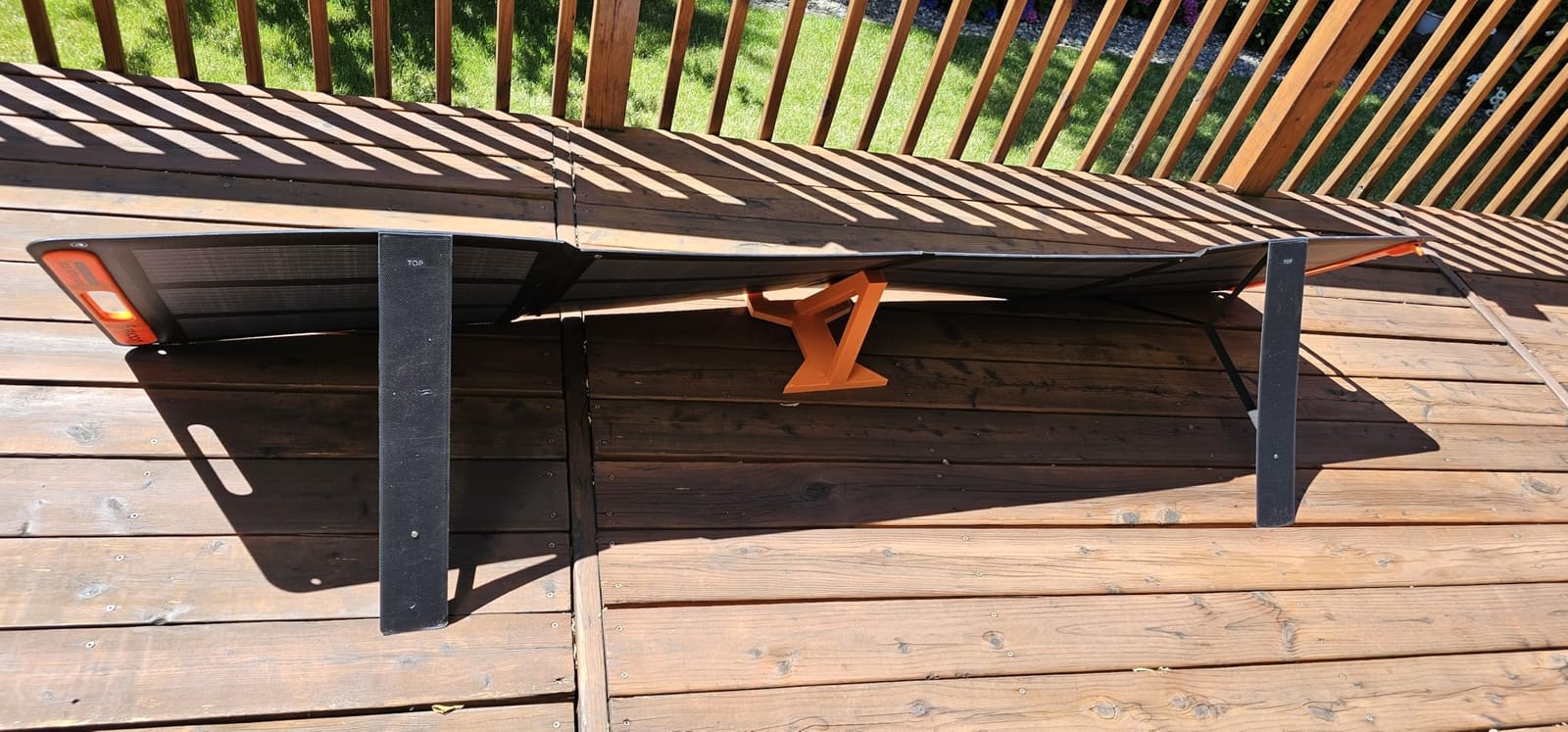
Solar charging takes about six hours with 400W of panels, and the 20ms UL1778-certified switchover keeps critical devices running without a manual reset. An advanced temperature control system also cuts fan noise on warm days.
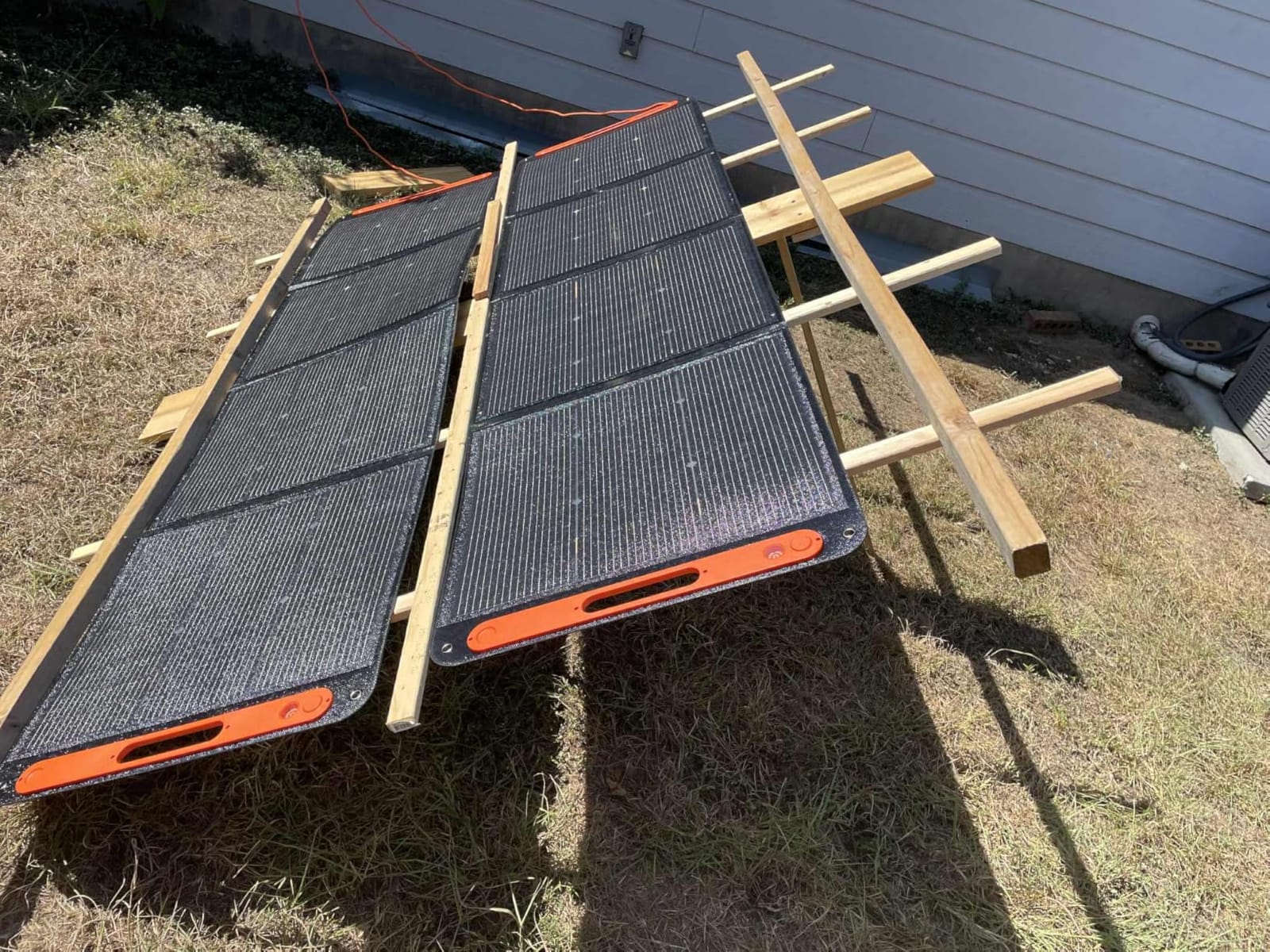
The awkward part is the connector. Attaching Jackery panels requires swapping the L-shaped DC7909 plug for the straight DC8020 plug, which first-time users find confusing, and the full bundle weighs 66.8 pounds as shipped.
What the Explorer 2000 v2 does well at a cabin
It pairs genuinely portable weight with enough capacity for a fridge, freezer, lights, satellite internet and a laptop for a day. The silent charging mode lets you refill overnight without the fan running.
Where the Explorer 2000 v2 falls short
Once the two 200W panels are added, you are moving 66.8 pounds from the truck to the cabin. The non-obvious solar connector swap is a fifteen-minute job the first time and a mild irritation forever after.
11. EcoFlow DELTA 3 Ultra Plus – Best Maximum Expansion Path
EF ECOFLOW 3072Wh Power Station DELTA 3 Ultra Plus with 400W Solar Panel
3072Wh LFP expandable to 11kWh
3600W continuous
7200W surge
Pros
- Scales from 3kWh to 11kWh
- 3600W continuous with 7200W surge
- Six charging options including EV stations and generators
- Under 10ms automatic UPS switchover
- 400W solar panel included in the bundle
Cons
- Weighs 125 pounds
- the heaviest unit here
- Largest footprint at 24.1 inches long
- Smallest review base of the group
The DELTA 3 Ultra Plus has the highest expansion ceiling we found, scaling from 3072Wh up to 11kWh. That changes the conversation for a cabin: instead of a weekend accessory, you can scale toward near-continuous living without buying a different system.
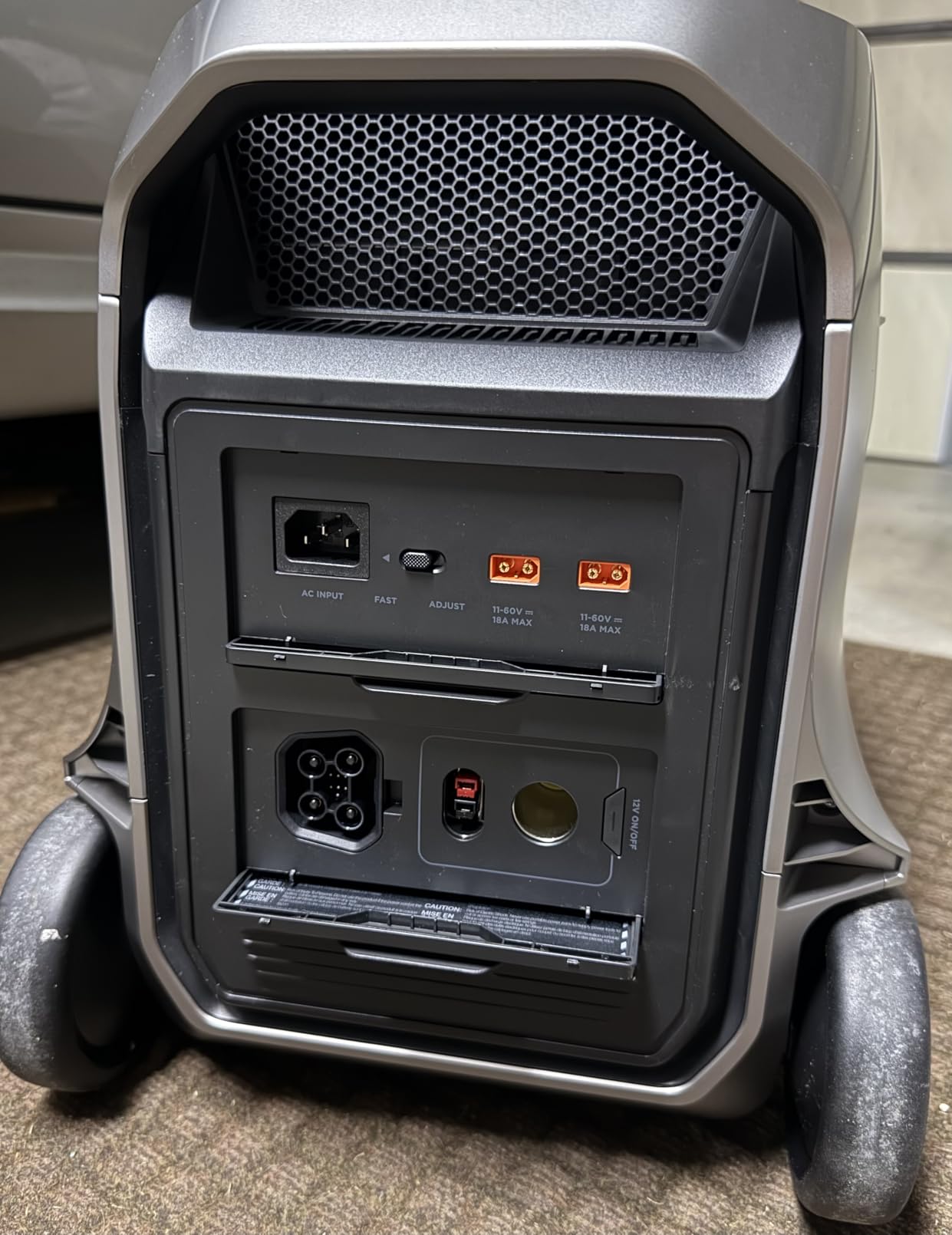
Output is 3600W continuous with 7200W surge, and it accepts six charging sources: home outlets, solar panels, car chargers, EV stations, generators and the EcoFlow Smart Generator. X-Stream fast charging reaches 80% in under an hour.
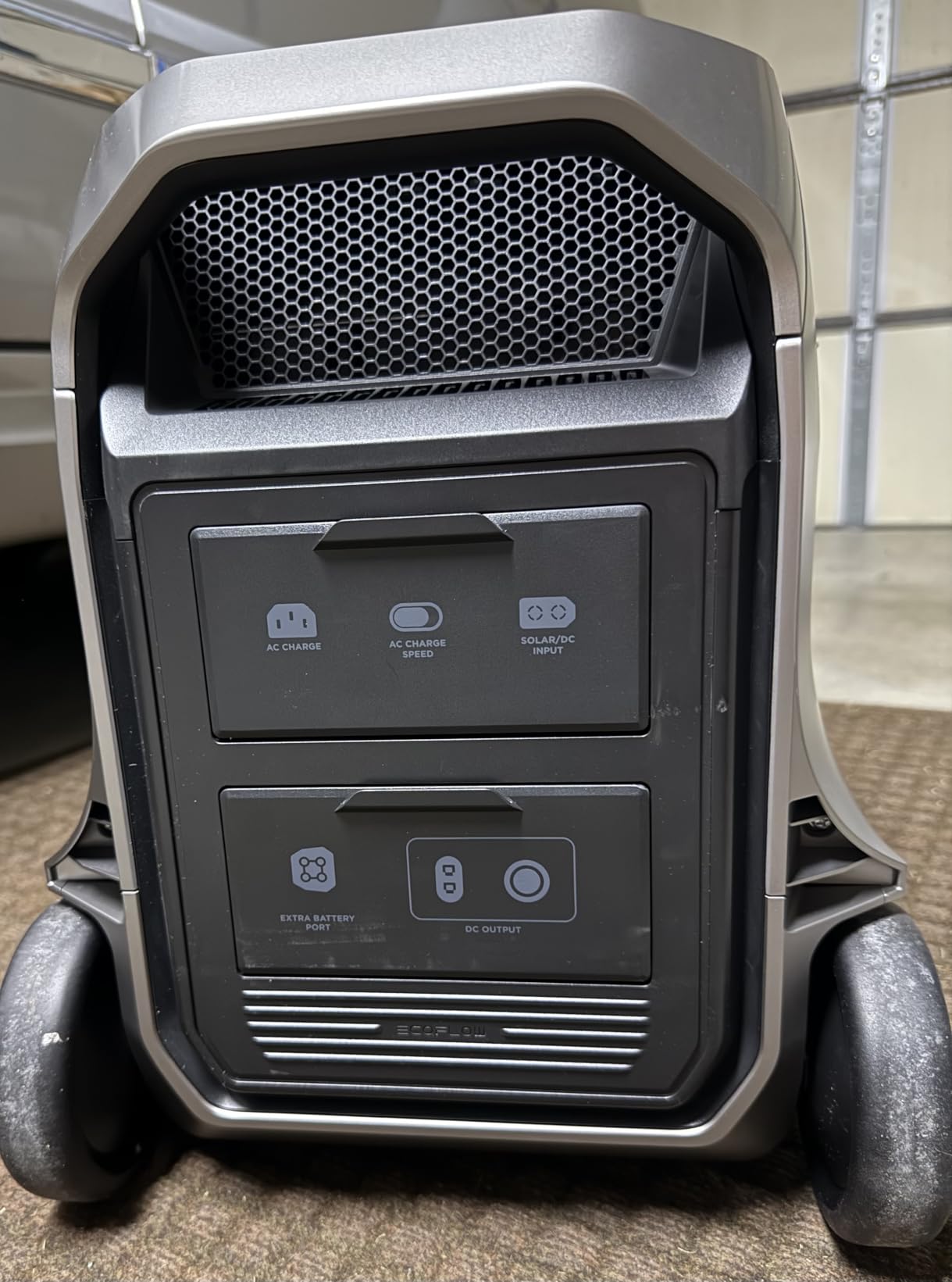
The under-10ms automatic UPS switchover needs no manual setup, which matters next to a router, a desktop or medical equipment. A 400W panel is included, and X-Quiet 3.0 keeps cooling noise low under heavy load.
Reviewers position it as a whole-home system rather than a portable generator, and no reliability complaints surfaced. As the newest model here, its review base is the smallest at 160.
What the DELTA 3 Ultra Plus does well at a cabin
Expansion, and the flexibility of six input sources. If your property has an EV charger, a truck or a gas generator you already own, this unit can draw on all of them alongside your panels.
Where the DELTA 3 Ultra Plus falls short
At 125 pounds with a 24.1 inch length, it is a stationary install and a two-person carry at best. The footprint is the largest here, so plan floor space, ventilation and cable runs before it arrives.
12. pecron F3000LFP – Best Capacity and Output Per Watt
PECRON Portable Power Station F3000LFP, 3072Wh Solar Generator, 3600W LiFePO4 Battery Home Backup, Fast Charging Power Station Expand Capacity to 10752Wh, Solar Generators for Home Use, Camping, RV
3072Wh LiFePO4
3600W pure sine wave
1600W solar input
13 ports
Pros
- 3072Wh and 3600W of output
- Highest solar input ceiling at 1600W
- 0 to 100% AC recharge in 2 hours
- Expands to 10752Wh with EP3800-48V batteries
- 2+3 year warranty and 13 ports
Cons
- No solar panel included
- Expansion batteries need a separately sold cascade cable
- Smallest review base in the roundup
The pecron F3000LFP delivers 3072Wh and 3600W of pure sine wave output for noticeably less money than comparable EcoFlow, Jackery and BLUETTI models. It scales to 10752Wh with EP3800-48V expansion batteries, a longer growth path than most.
Its 1600W solar input ceiling is the highest in this group, across a wide 25 to 120V range, which is exactly the specification that matters at a remote property. AC input of 1800W takes it from zero to full in two hours.
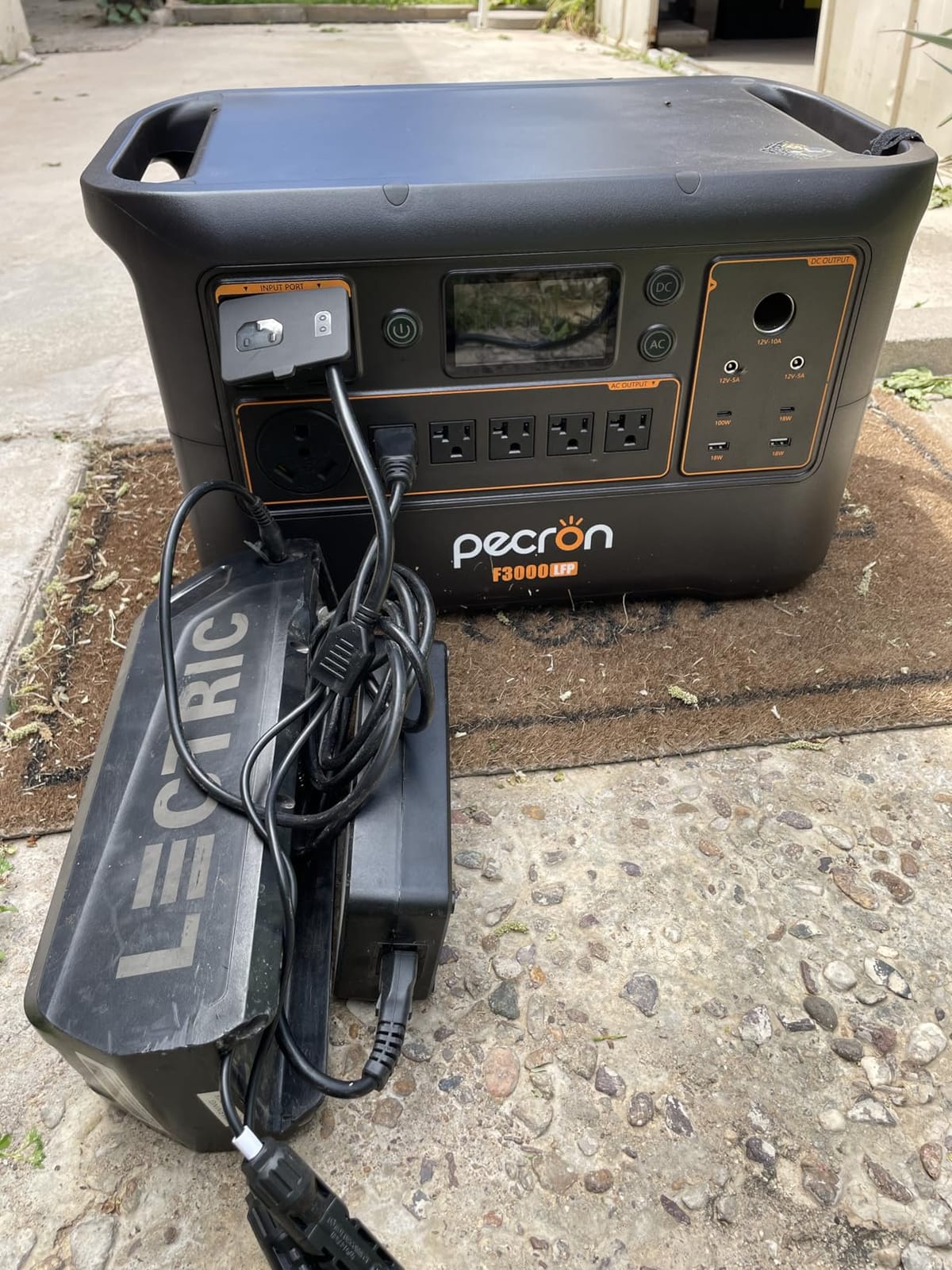
Thirteen ports cover six AC outlets plus USB-C PD, USB-A, a carport and DC5525 outputs, and the 8 to 20ms UPS mode protects computers and medical devices. The 2+3 year warranty is longer than most competitors offer, with two to three days of home essentials backup from a single charge.
Two things to check before buying. No solar panel is included, and expansion batteries require a separately sold XT120-M cascade cable, so budget for both before assuming the system is complete.
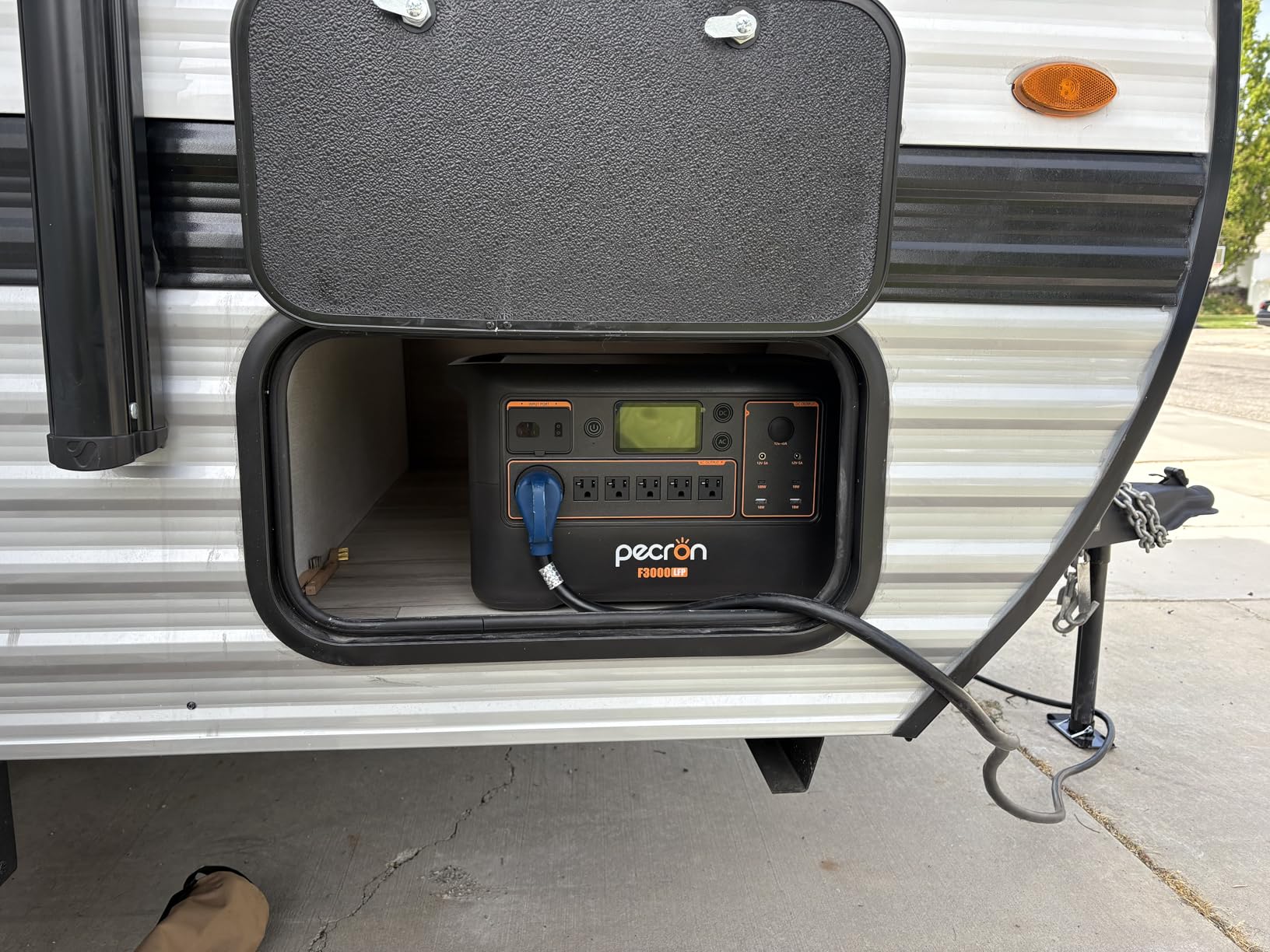
What the F3000LFP does well at a cabin
Capacity and input headroom at the same time. The 1600W solar ceiling means a modest array of 400W panels refills it quickly, and 3600W of pure sine wave output covers a fridge, freezer, water pump and lights together.
Where the F3000LFP falls short
At 63.3 pounds it is heavy for a portable setup, the least established brand here with the smallest review base, and no panel is in the box. One owner also flagged the listed 220V AC rating as unusual for a US-market unit, so verify compatibility.
How to Size a Solar Generator for an Off-Grid Cabin
Most sizing mistakes come from starting with a marketing number instead of a load list. Work through these steps before you buy anything.
Start with a load list, not a marketing number
Write down every appliance you want to run, its typical running watts, its startup surge, and how many hours a day it runs. A fridge cycling on and off averages far less than its nameplate wattage suggests, so multiply running watts by realistic hours, not by 24. Add the daily watt-hours together, then divide by 0.8 to allow for inverter and battery losses.
The number that catches people out is the well pump. Water pumps and some water heaters draw a large startup surge, and a unit that idles happily at 1200W can still trip on a 1HP motor. Check the surge rating of every unit on your list, not just the continuous output.
For orientation: a weekend cabin running a fridge, a freezer, LED lights, a router and phone charging lands in the 1000 to 2000Wh range. A part-time cabin that adds satellite internet, a water pump and occasional power tools wants 2000 to 3000Wh. Full-time living in a cabin with a furnace fan, computer and daily tool use pushes past 3000Wh, and at that point you should be pricing a fixed solar array and battery bank rather than a portable station.
How many solar panels do you need to refill the battery?
Divide the watt-hours you need to put back by the panel wattage, then add a realistic solar-hours factor for your location and season. A 200W panel typically delivers 600 to 800 watt-hours on a good day in summer, and considerably less in winter or through smoke and cloud at a wooded cabin.
For example, a 2000Wh station used lightly needs roughly 1500Wh back per day, which two 400W panels can handle in decent sun. If your cabin sits under trees or you are planning for winter, double the array. The bundled 200W panels that come with most kits are a genuine starting point, not a full answer, and the largest units here ship with a single 400W panel that still needs about 11 hours for a full charge.
LiFePO4 chemistry and the cold-weather caveat
Every unit in this roundup uses LiFePO4 cells, which is the right call. They tolerate thousands of cycles, hold their capacity better than older lithium chemistries, and are the safer choice in an enclosed wooden building. The catch is charging below freezing, which most manufacturers restrict or require you to disable. Keep the unit indoors in a heated space through winter and treat it as a spring-to-fall resource unless the manual clearly states otherwise.
What a portable power station cannot do at a cabin
Be honest about the limits. Electric heat, a whole-cabin furnace and sustained high loads are out of reach, and an electric water heater draws far more than any unit here can feed continuously. Leave the propane appliances alone. A portable power station supplements a fixed solar array and battery bank, it does not replace one, and a member of r/selfreliance described the sensible combination as a long-serving gas generator for daytime work paired with a lithium station for safe overnight backup.
Solar generator vs gas generator for a remote cabin
A gas generator still wins on raw sustained power and refuelling logistics, and it has a real service record at remote properties. But it brings fuel hauling, engine maintenance, noise at 2am and the carbon monoxide risk of running it anywhere near an enclosed cabin, which is a documented hazard every season. One user on r/selfreliance keeps a gas unit because it has been reliable for 15 years, and also notes that winter starting means enclosing the porch in plastic to warm the engine up. That is exactly the problem a quiet indoor-safe lithium station solves.
Two more practical notes. A portable power station left in an unattended cabin is a theft target, so do not advertise it. And a low parasitic draw matters over a long idle stretch: a user on propmasterforum noted that a Bluetti all-in-one unit had relatively inefficient vampire draw with the inverter on, so switch the unit off when you leave rather than leaving it in standby.
Whichever way you go, plan the heat source separately. Our guides to wood stoves for cabins, wood pellet stoves for off-grid cabins and freestanding electric fireplace stoves cover the heating side of an off-grid winter, which is where most power station owners find the real gap.
Frequently Asked Questions
What size solar generator do you need to run a house?
How many solar panels do you need for enough backup power?
What size generator do I need for off-grid?
Which portable power station is the most reliable?
Is it worth getting a solar generator?
The Verdict for Off-Grid Cabin Owners
After weighing all 12, the Anker SOLIX C1000 Gen 2 is our pick as the best solar generator for off-grid cabins overall, because 2000W of continuous output, a 600W solar input and a 15-minute top-up cover the realistic cabin load with the largest review base we could verify. If you need something lighter, the BLUETTI Elite 100 V2 at 25 pounds is hard to argue with, and the BLUETTI AC180 is the choice when a little extra capacity and faster wall charging are worth the extra ten pounds.
Whichever you pick, work out your load list before you order, budget for real roof panels rather than relying on the bundled 200W unit, and keep the gas generator for the loads no battery will cover. This roundup was updated for 2026, and the ranking holds up for the 2026 buying season.