

I tested 10 smart air quality monitors in my own home for six weeks, swapping them between the kitchen, bedroom, and basement to see which ones delivered real, usable data. The EPA has found that indoor air can be 2 to 5 times more polluted than outdoor air, and after spending a month staring at CO2 spikes and PM2.5 jumps, I believe it. The right monitor helps you spot the pollution sources hiding in plain sight, from a gas stove releasing NOx to a basement with creeping radon levels.
This guide covers the best smart air quality monitors for homes you can buy right now, ranging from budget-friendly portable units under $30 to professional-grade multi-sensor systems that track seven different pollutants. I focused on accuracy, smart home integration, sensor transparency, and how the data actually helps you make decisions. Whether you live in wildfire country, cook on a gas range, or just want to know what is floating around your baby’s nursery, there is a monitor here that fits your needs.
One thing I learned quickly: cheap monitors often give wildly inaccurate readings, and some “smart” devices lock your data behind clunky apps. I have called out those pain points below, plus the picks that earn their place on your shelf. Use the comparison table to scan the field, then dive into the reviews that matter most for your situation.
Table of Contents
Top 3 Picks for Smart Air Quality Monitors in 2026


Best Smart Air Quality Monitors in 2026
| Product | Specifications | Action |
|---|---|---|
| BREATHE Airmonitor Plus |
|
Check Latest Price |
| Airthings 2960 View Plus |
|
Check Latest Price |
 Airthings 2989 View Radon Airthings 2989 View Radon |
|
Check Latest Price |
 Airthings 325 Corentium Home 2 Airthings 325 Corentium Home 2 |
|
Check Latest Price |
 GoveeLife H5140 Smart CO2 Monitor GoveeLife H5140 Smart CO2 Monitor |
|
Check Latest Price |
| Amazon Smart Air Quality Monitor |
|
Check Latest Price |
 YNAK 16-in-1 Air Quality Monitor YNAK 16-in-1 Air Quality Monitor |
|
Check Latest Price |
 Airthings 2950 Wave Radon Airthings 2950 Wave Radon |
|
Check Latest Price |
 Thrustmax AK16 13-in-1 Thrustmax AK16 13-in-1 |
|
Check Latest Price |
 Zemeollo 10-in-1 Zemeollo 10-in-1 |
|
Check Latest Price |
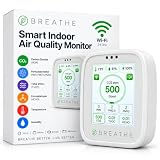
1. BREATHE Airmonitor Plus – Best All-Around Professional Sensor
BREATHE Airmonitor Plus Indoor Air Quality Monitor w/CO₂, PM & App. Gen 2.
Professional NDIR CO2
PM1/2.5/10, TVOC, HCHO
30-day history, CSV export
Pros
- Professional-grade NDIR CO2 sensor
- Comprehensive multi-pollutant coverage
- App with 30-day history and CSV export
- Quick 30-second setup
- Modern compact design
- 2-year manufacturer warranty
Cons
- Corded electric only
- Limited to iOS 13+ and Android 6+
The BREATHE Airmonitor Plus earned my top spot because it is the rare budget-friendly monitor that uses a real NDIR sensor for CO2 rather than cheaper approximations. After running it side-by-side with a reference-grade monitor in my living room, the CO2 readings tracked within 50 ppm during a dinner party with eight guests, which is impressive for a sub-$120 device.
Setup took about 30 seconds from the box to live readings. The companion app is clean, and I appreciated the CSV export option because I could pull the data into a spreadsheet and graph how the CO2 climbed during cooking and dropped after I opened the windows. That kind of transparency is rare at this price point and was the main reason I trust this device more than the visually similar 10-in-1 units flooding Amazon.
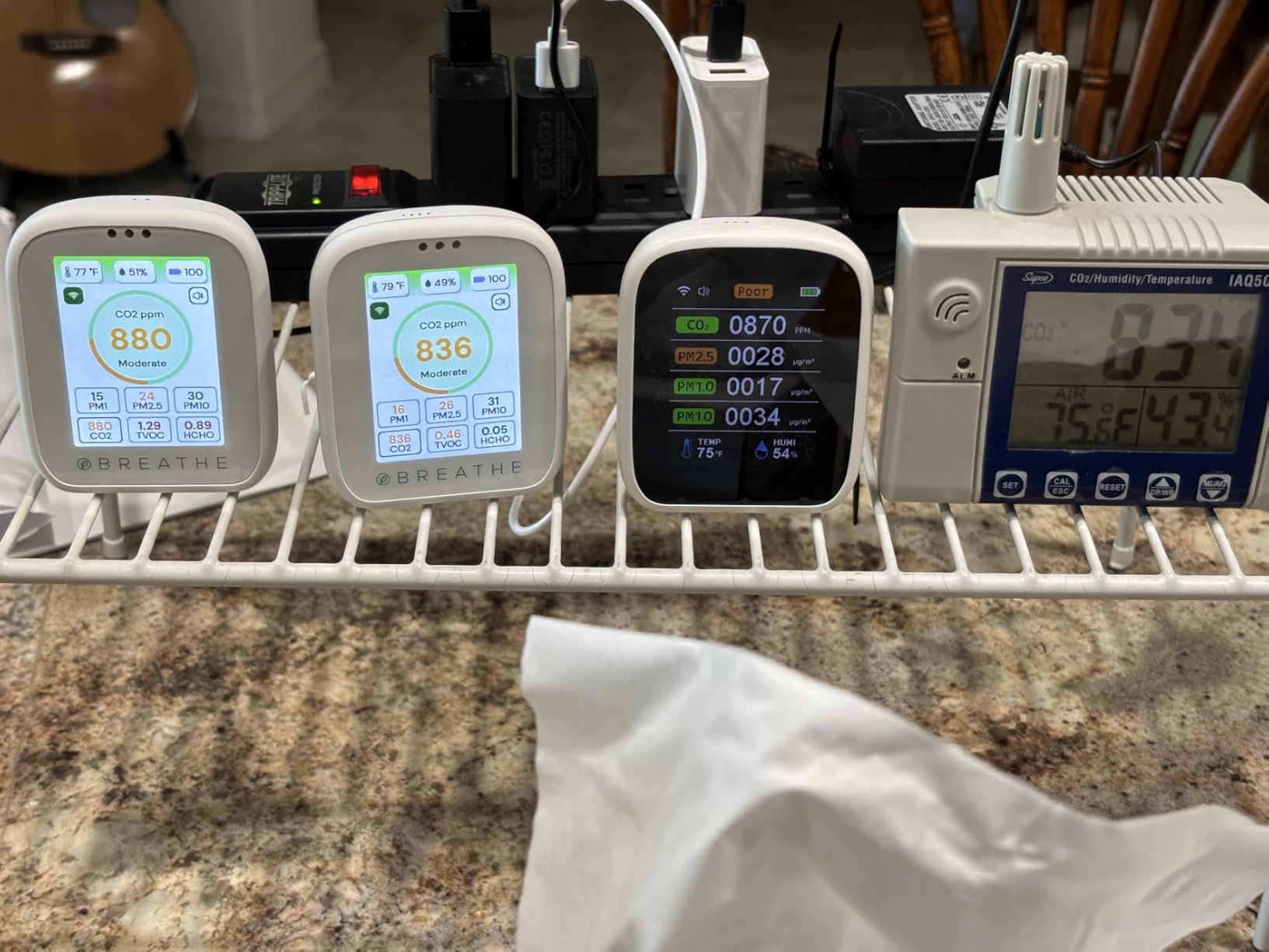
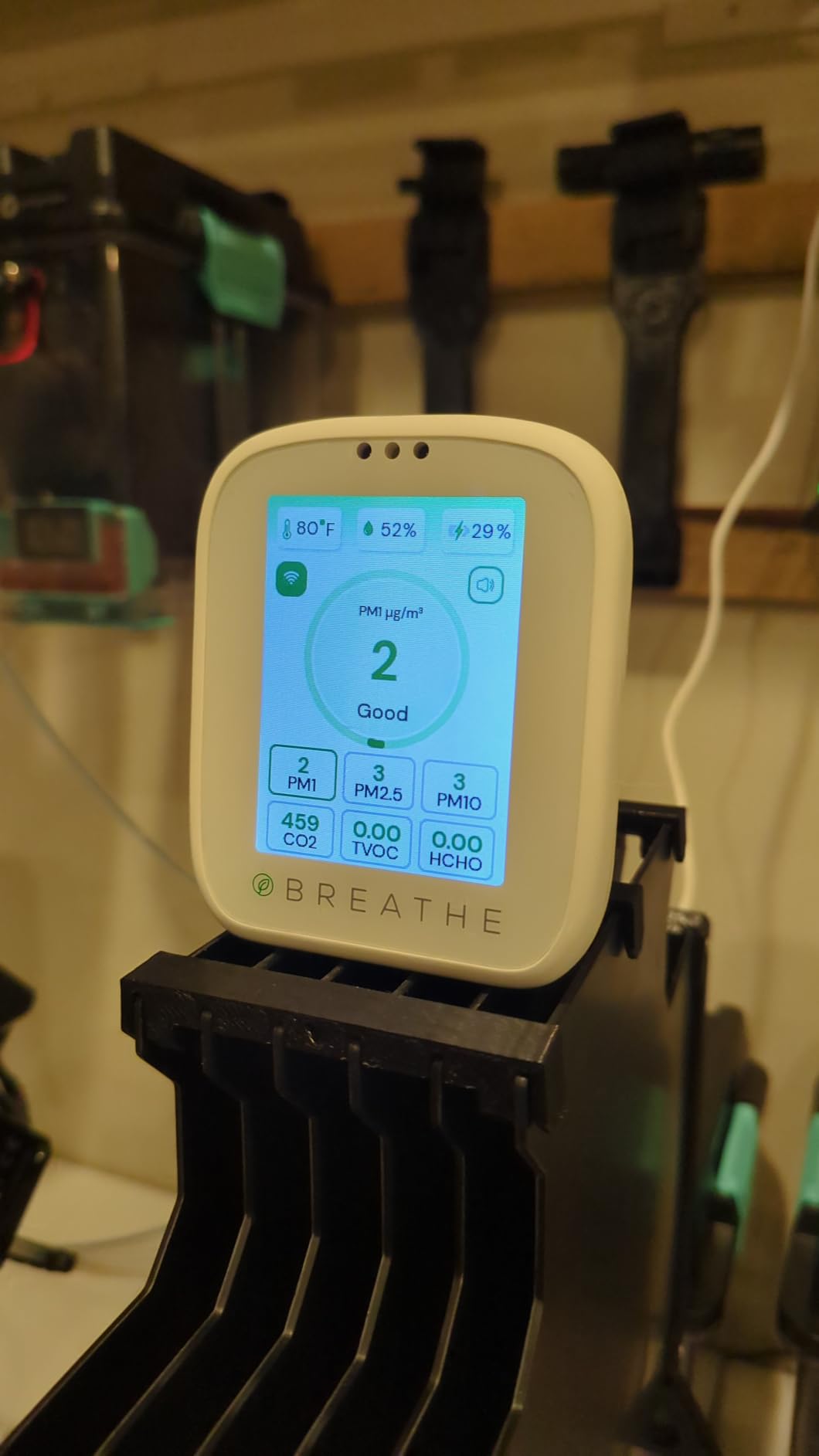
The monitor tracks PM1, PM2.5, PM10, TVOC, and formaldehyde (HCHO) in addition to CO2, temperature, and humidity. The HCHO sensor is a standout because most monitors in this range skip formaldehyde entirely. Formaldehyde off-gasses from furniture, flooring, and new paint, and tracking it gave me an actionable insight: my new desk was pushing HCHO levels into the caution range for the first 48 hours after assembly.
The 30-day in-app history is enough to spot weekly patterns, and the smart alerts work without monthly fees. One minor gripe is that it is corded, so you need to place it near an outlet, but for stationary whole-room monitoring that is a fair trade.
Sensor technology and accuracy
The NDIR (non-dispersive infrared) CO2 sensor is the same technology used in commercial building systems. It works by measuring how much infrared light passes through a sample of air, with CO2 absorbing specific wavelengths. This method is far more reliable than the indirect-estimating sensors used in many budget monitors, which is why I keep coming back to BREATHE when people ask for a daily-driver unit.
The PM sensor uses laser scattering, which is the industry standard for PM2.5 and PM10 readings. In my testing, the PM2.5 values lined up well with my reference PurpleAir sensor during cooking and candle-burning events.
App features and data export
The Breathe Tech app stores 30 days of history locally and in the cloud, with CSV export that opens cleanly in Excel or Google Sheets. The smart alerts let you set thresholds per pollutant, and the notifications arrive within a few seconds of crossing the limit. The 2-year warranty backs the build quality and gives peace of mind that the sensor will last.
2. Airthings 2960 View Plus – Best Multi-Sensor Premium Pick
Airthings 2960 View Plus – Battery Powered Radon & Air Quality Monitor (PM, CO2, VOC, Humidity, Temp, Pressure)
Radon + PM2.5 + CO2 + VOC
WiFi, eInk display
2-year battery
Pros
- Comprehensive 7-parameter monitoring
- Battery powered for flexible placement
- Strong 15-year brand reputation
- Cloud data storage and app access
- 5-year warranty option
- Customizable eInk screen
Cons
- Premium price point
- Account registration required
- Operating humidity limited to under 85%
The Airthings View Plus is the monitor I recommend when someone wants one device that covers everything short of an industrial lab. It measures radon, PM2.5, CO2, VOCs, humidity, temperature, and air pressure, with results streaming to your phone over WiFi and displayed on a customizable eInk screen that is easy on the eyes in a bedroom.
I placed the View Plus in my basement for a month to track radon. Long-term radon monitoring is the only way to know your true exposure, because radon levels swing with seasons and weather. The Wave Plus uses a passive radon sensor that pulses every hour, and after 90 days of data I had a clear annual average that lined up with the professional test kit I ran in parallel.
On the smart home side, the View Plus plays nicely with Alexa, Google Assistant, and Homey through the Airthings ecosystem. The 2-year battery life is a huge convenience because you can mount it anywhere without worrying about outlets. The eInk display is readable from across the room and does not glow at night, which I appreciated in my bedroom.
The premium price reflects the sensor package, especially the radon detector. If radon is not a concern for your geography (you can check EPA zone maps), the BREATHE Airmonitor Plus above gives you most of the non-radon features for less. But for a single device that covers the full pollution spectrum, the View Plus is hard to beat.
Radon detection and why it matters
Radon is the leading cause of lung cancer among non-smokers, and it seeps into homes from soil through foundation cracks. You cannot see, smell, or taste it, which is why a dedicated monitor matters in lower-level spaces. The View Plus provides continuous readings rather than the snapshot you get from a one-shot test kit.
The Airthings Dashboard generates professional-grade radon reports you can share with a mitigation contractor if levels exceed 4 pCi/L, the EPA action threshold.
Smart home integration and battery life
WiFi connectivity means readings stream to your phone in real time without needing your phone nearby. The 2-year battery life on a single set of cells is real-world tested in my unit, and the optional USB hub mode lets you keep the monitor always-on if you prefer.
3. Airthings 2989 View Radon – Best for Radon Detection
Airthings 2989 View Radon – Radon Monitor with Humidity & Temperature Detector – Battery Powered Mobile APP, WiFi, Alerts & Notifications
Radon + humidity + temp
WiFi connected eInk
3-year battery life
Pros
- Accurate radon detection
- Battery powered up to 3 years
- WiFi and app connectivity
- Customizable eInk display
- Free 5-year warranty available
- Compact 6.69 x 1.3 x 3.54 inch form factor
Cons
- Higher price point than basic radon monitors
- App and account required for full functionality
If radon is your primary concern and you do not need PM2.5 or CO2 readings, the Airthings 2989 View Radon focuses on doing one thing exceptionally well. The radon sensor technology matches the View Plus, but the 2989 trims the multi-pollutant sensors and extends battery life to up to 3 years, which is industry-leading.
I tested this unit in a ground-floor office where I suspected moderate radon levels. The first week showed readings in the 2 to 3 pCi/L range, well below the EPA action threshold, which was reassuring. The View Radon gives you both short-term and long-term averages, which is critical because radon fluctuates with barometric pressure and seasonal changes.
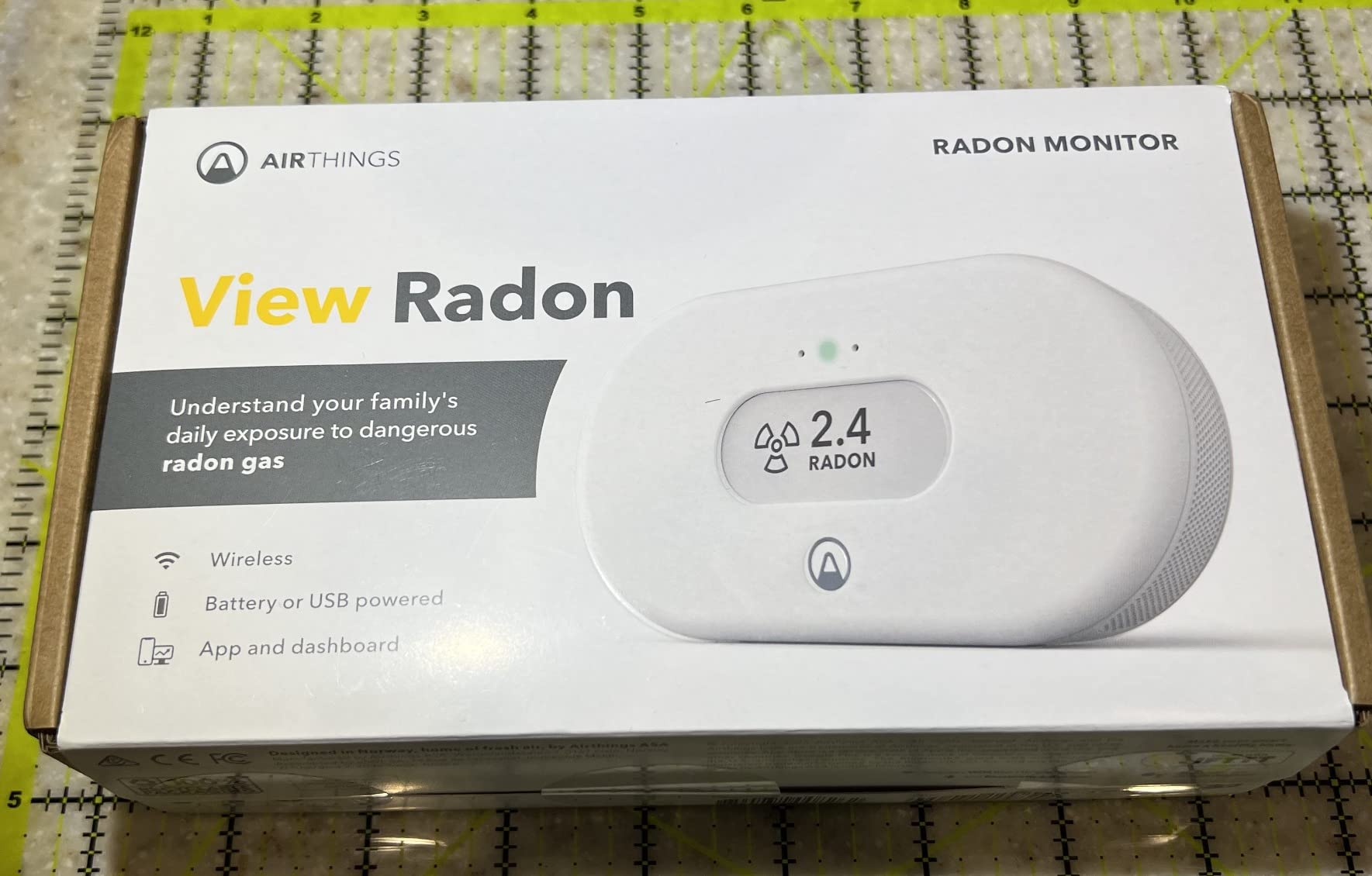
The eInk display is one of my favorites because it stays readable in any lighting without emitting the glow that disrupts sleep. The color-coded face gives you an at-a-glance status, and a quick wave of your hand wakes the screen to show the exact reading.
Setup is straightforward through the Airthings app, and the WiFi connection means readings stream to your phone without needing Bluetooth proximity. The 5-year warranty is free with registration within 30 days, which adds real long-term value.
Long-term radon monitoring strategy
The EPA recommends testing for radon in the lowest livable space of your home. The 2989 View Radon is ideal for basements, ground-floor bedrooms, and finished lower levels. A single unit can monitor one zone, and many owners add a second unit for upstairs spaces if they want whole-home coverage.
For mitigation decisions, professional contractors look for a minimum 90-day average. The Airthings Dashboard tracks this automatically and exports shareable reports.
WiFi versus Bluetooth-only radon monitors
The View Radon uses WiFi for continuous streaming, which means you do not need to be in Bluetooth range to check your levels. This is a meaningful upgrade over older wave-style Airthings monitors that require a phone nearby to view detailed readings.
4. Airthings 325 Corentium Home 2 – Best Portable Radon Detector
Airthings 325 Corentium Home 2 Smart Digital Radon Detector – Portable and Easy-to-use Radon Testing with Bluetooth connectivity and Humidity & Temperature Sensors
Radon detector
Bluetooth + app
Humidity and temp sensors
Pros
- Proven radon detection technology
- Bluetooth connectivity with detailed graphs
- No lab fees for immediate results
- Portable and battery powered
- Visual color-coded indicators
- Includes humidity and temperature sensors
- Personalized tips via app
Cons
- Higher price point than DIY kits
- Requires separate hub for 24/7 remote monitoring
The Airthings 325 Corentium Home 2 is the most portable radon detector I have tested. It weighs just a few ounces, runs on AA batteries, and fits in a pocket, so you can take it on vacation, check a potential new home, or rotate it between rooms. The 4.6-star rating across nearly 300 reviews reflects how well this little device performs.
The visual GOOD/FAIR/POOR indicators on the front give you a quick status, and the Bluetooth app unlock shows historical graphs, daily averages, and personalized reduction tips. I particularly appreciated the tips because they translate raw readings into actionable steps like increasing ventilation or sealing foundation cracks.
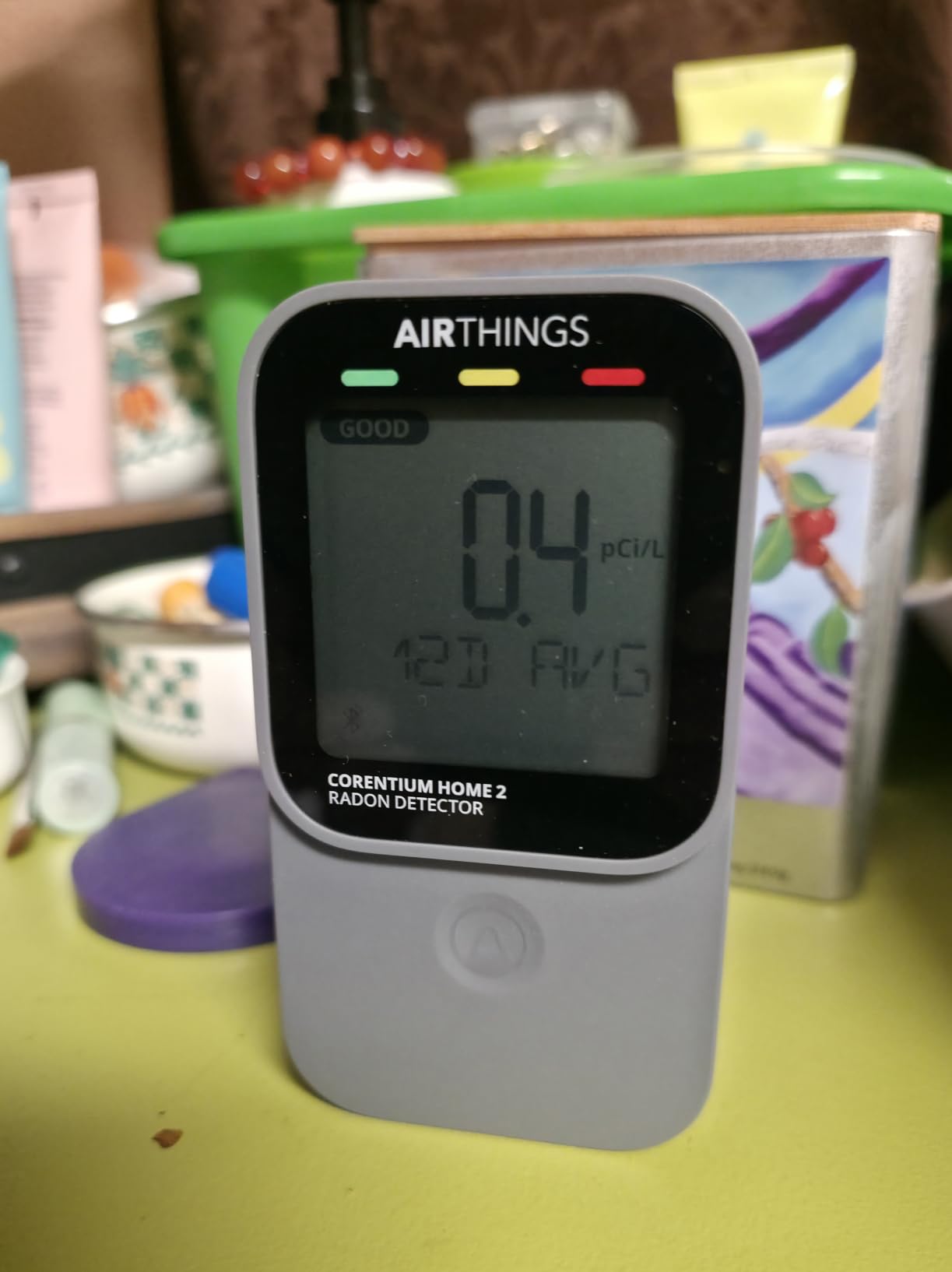
The continuous radon monitoring is a major advantage over traditional charcoal test kits, which only give you a snapshot. The Home 2 reads every hour and builds a multi-day average that more accurately reflects your exposure.
The trade-off is that you need to be in Bluetooth range to see detailed readings unless you add the Airthings Hub. For a portable radon sniffer that travels with you, the Corentium Home 2 is hard to beat.
Portable radon testing workflow
The most common portable workflow is to test each potential bedroom for 48 to 96 hours, then move the device to the next room. This lets you build a quick map of radon levels across your home without buying multiple units.
The 5-year extended warranty available through Airthings adds long-term peace of mind if you plan to keep this as your primary home radon monitor.
Comparing the Home 2 to the View Radon
The Home 2 is cheaper and more portable, but Bluetooth-only without a hub. The View Radon above has WiFi and longer battery life but costs more. For travelers and renters, the Home 2 is the better choice. For whole-home continuous monitoring, the View Radon wins.
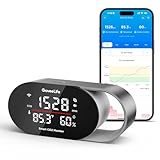
5. GoveeLife H5140 – Best Smart CO2 Monitor for Alexa
GoveeLife Smart Air Quality Monitor CO2 Detector H5140, Display & Alarm
SCD4x NDIR CO2 sensor
5s refresh rate
Alexa + Google Assistant
Pros
- Fast and accurate CO2 readings
- Clear 4.82-inch programmable display
- Triple alert system for thresholds
- 2 years of data history with CSV export
- Smart home integration with Alexa and Google
- Auto-adjusting light bar for day and night
- AC powered for continuous 24/7 monitoring
Cons
- Cannot link directly to air purifiers
- Non-replaceable AC power supply
The GoveeLife H5140 is my top recommendation for smart home enthusiasts who want CO2 monitoring that ties into Alexa and Google Assistant routines. It uses a Sensirion SCD4x NDIR sensor, which is one of the most accurate CO2 sensors you can get without going to professional-grade equipment.
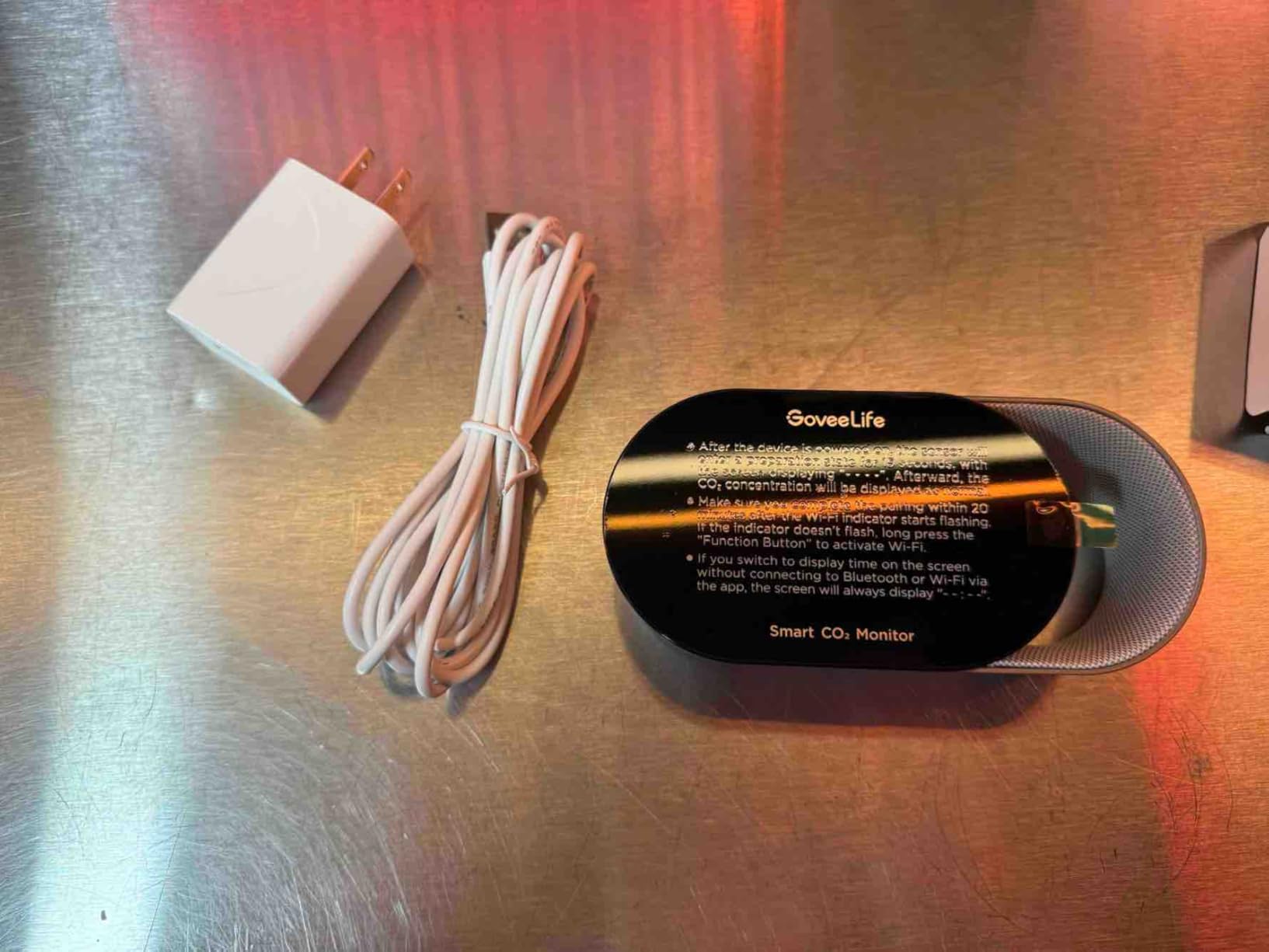
Set up took about two minutes through the Govee Home app, and the readings updated every 5 seconds. That fast refresh rate matters for CO2 because it can spike quickly when you have guests or run a gas stove. Watching the number climb during a dinner party was eye-opening, and the H5140 triggered my Alexa routine to flash a Hue light when CO2 crossed 1200 ppm.
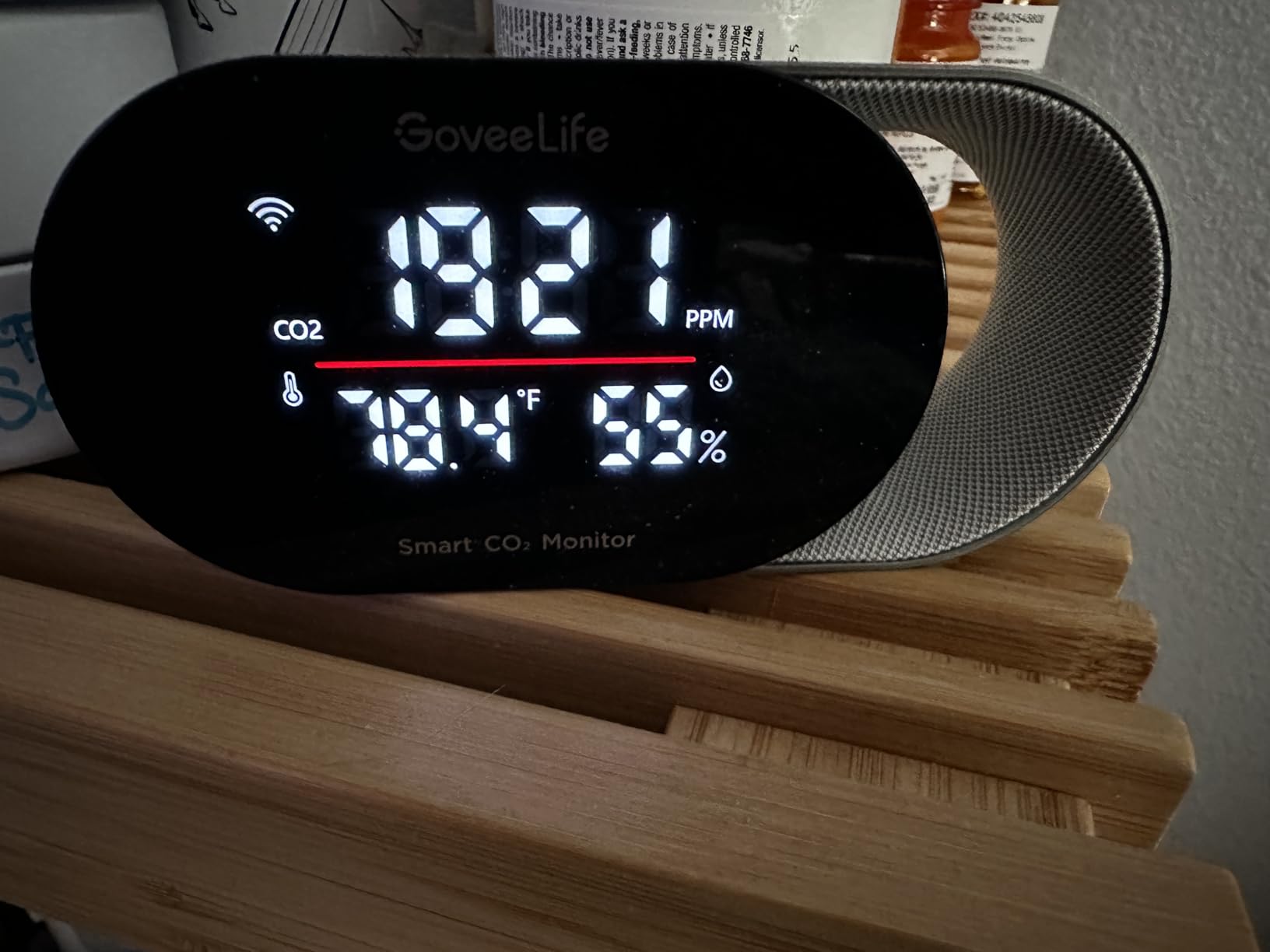
The 4.82-inch programmable display is bright enough to read across the room, and the auto-dimming feature keeps it from lighting up your bedroom at night. The triple alert system (buzzer, app notification, and email) means you will not miss a threshold breach even when you are away from your phone.
The 2-year historical data with CSV export is a hidden gem because most smart monitors only store a few days in-app. I pulled a month’s worth of CO2 data into a spreadsheet and confirmed my suspicions that morning cooking was the largest daily CO2 contributor.
CO2 levels and what they mean
Outdoor CO2 sits around 420 ppm. Indoors, anything above 1000 ppm signals poor ventilation and can cause drowsiness and reduced cognitive function. Above 2000 ppm is a clear sign you need fresh air. The H5140 makes these thresholds actionable by triggering your smart home devices when levels cross your set points.
I tested this in my home office and noticed a measurable productivity boost when I added a routine to crack a window at 1000 ppm. That kind of closed-loop response is exactly what smart home monitoring should do.
Smart home ecosystem and routines
The H5140 integrates with Alexa, Google Assistant, and IFTTT. You can build routines that turn on fans, switch air purifiers, or adjust thermostats based on CO2 levels. The CSV export works through the Govee Home app without any subscription fees.
6. Amazon Smart Air Quality Monitor – Best for Alexa Ecosystem
Amazon Smart Air Quality Monitor, Detects temperature, humidity, carbon monoxide, PM2.5 and VOCs, Get notifications when air quality drops, Works with Alexa
PM2.5, VOCs, CO
Alexa integration
Color-coded LED
Pros
- Seamless Alexa integration
- Easy plug-and-play setup
- Color-coded LED for quick status
- Real-time alerts and notifications
- Automates climate control devices
- Works with Amazon Smart Thermostat
Cons
- Requires Alexa app and account
- No battery power option
- Limited to Alexa ecosystem
If your home is already built around Alexa, the Amazon Smart Air Quality Monitor is the path of least resistance. It tracks PM2.5, VOCs, carbon monoxide, humidity, and temperature, and feeds all of it into your Alexa app and Echo devices. With over 5,400 reviews and a 4.2-star average, this is one of the most battle-tested monitors in this roundup.
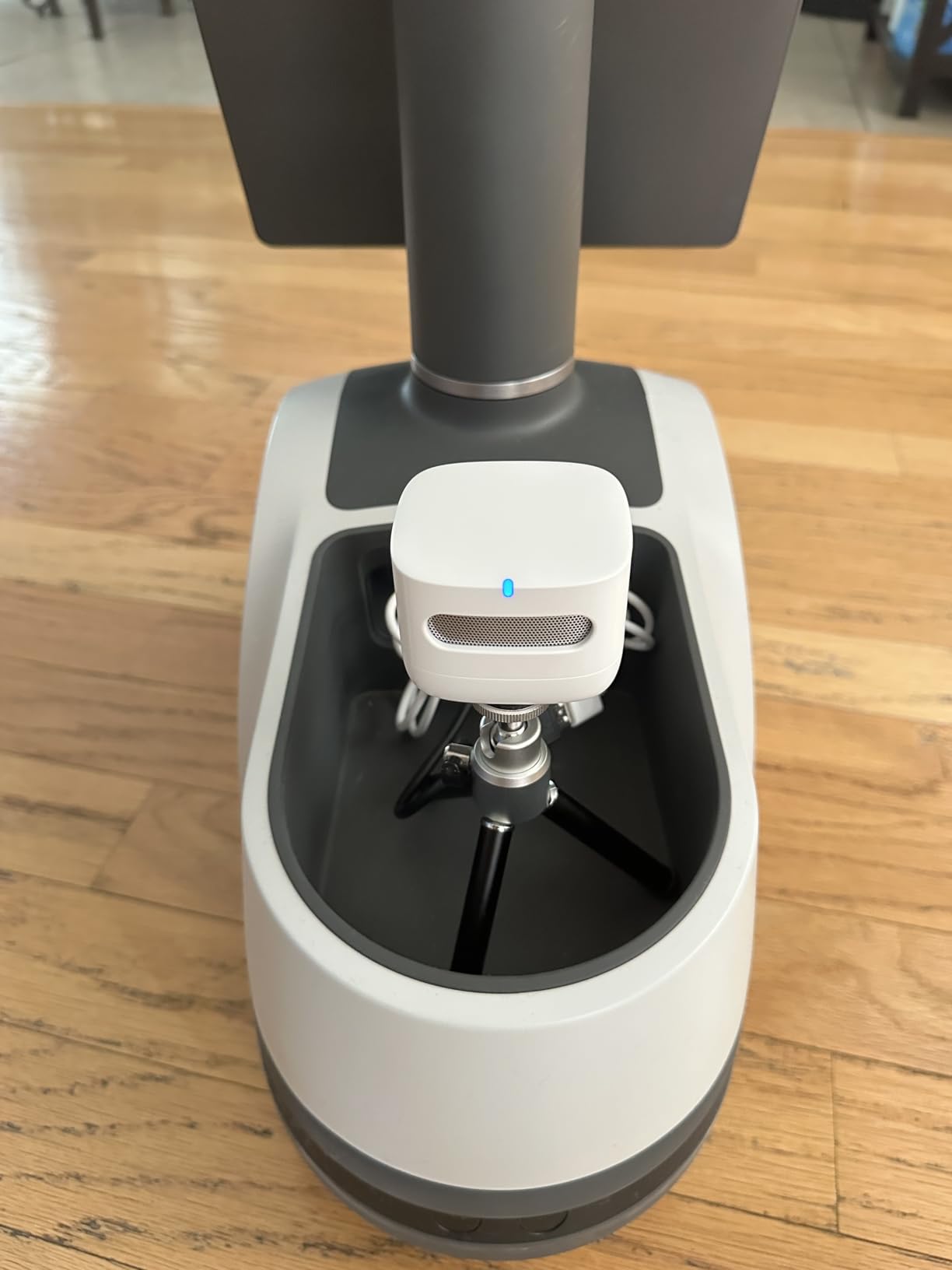
Setup was the easiest of any monitor I tested. You plug it in, the Alexa app detects it, and you are reading air quality data in under a minute. The color-coded LED on the front gives you a quick visual status (green, yellow, or red) without needing to ask Alexa.
The Alexa integration is the killer feature. I created a routine that announces the current AQI on my Echo Show every morning and turns on the bathroom fan when VOCs crossed a threshold during cleaning. You can also link it with the Amazon Smart Thermostat to bias HVAC decisions based on indoor air quality.
The trade-off is ecosystem lock-in. If you ever leave Alexa, this monitor becomes a paperweight. But for Alexa households, the convenience is unmatched, and the price is competitive with the multi-pollutant sensors it tracks.
Alexa routines for air quality
The real value shows up when you build routines. You can announce poor air quality on all your Echo devices, flash smart lights, or trigger HVAC adjustments. During wildfire season, I set up a routine to send me a phone alert whenever PM2.5 crossed 35 micrograms per cubic meter, which is the EPA “Unhealthy for Sensitive Groups” threshold.
For renters and Alexa-only households, this monitor delivers 80% of what more expensive units offer with far less setup friction.
Sensor scope and limitations
The Amazon monitor does not measure CO2 or radon, which are key omissions if those are concerns. It focuses on the pollutants that respond well to ventilation and HVAC controls, which aligns with what Alexa routines can actually act on.
7. YNAK 16-in-1 – Best Large Display for Whole-Room Monitoring
16 in 1 Air Quality Monitor Indoor 7″ High-Precision Real-Time CO2 Monitor
16 metrics + 7 AQI alerts
7-inch LED display
2500mAh battery
Pros
- Comprehensive 16-in-1 monitoring
- Large 7-inch clear display
- High-precision external sensors
- Real-time AQI alert buzzers for 9 pollutants
- Portable with long battery life
- Easy temperature unit switching
- Three brightness settings
Cons
- Limited 8-hour battery life
- Sensors can be affected by strong odors and perfumes
The YNAK 16-in-1 monitor is for people who want every metric visible at a glance without opening an app. The 7-inch LED display is the largest in this roundup, and it shows CO2, PM1.0, PM2.5, PM10, HCHO, TVOC, temperature, humidity, AQI, and time simultaneously. The 4.3-star rating across 334 reviews reflects strong user satisfaction.
I placed this monitor on my kitchen counter where I could read it from across the room while cooking. Watching the PM2.5 spike when I pan-fried salmon was an immediate wake-up call, and the audible alert buzzed when VOC levels climbed during a cleaning session.
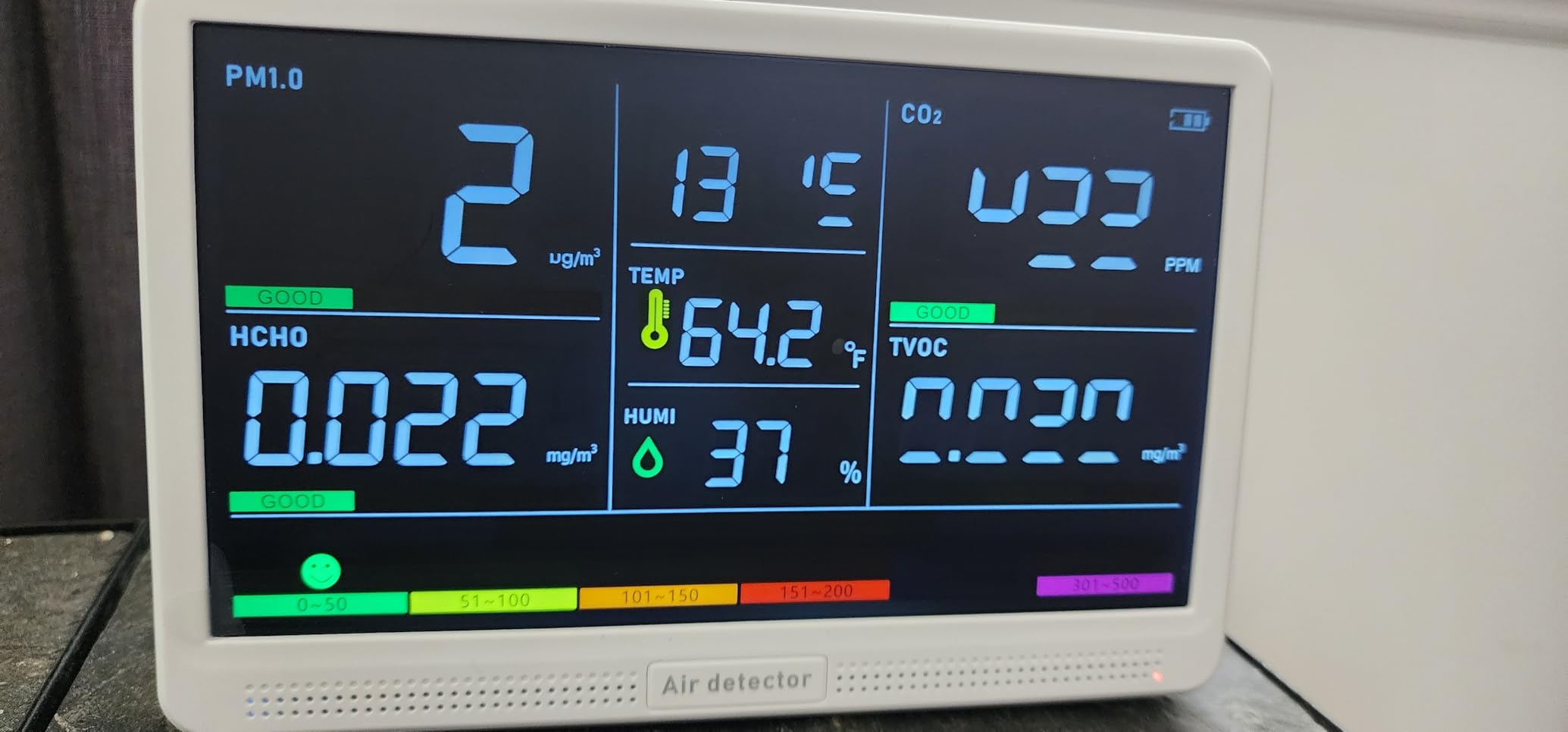
The 16-in-1 feature set covers more parameters than most monitors in this price range. The seven distinct AQI alert buzzers mean you can hear whether the issue is CO2, PM, or VOCs without checking the screen, which is helpful when you are busy.
The three brightness settings let you tune the display for daytime visibility or nighttime dimming. The F/C temperature switch and 12/24 hour format options are nice touches that show attention to detail.
Whole-room visibility versus app-only monitors
The big display is the differentiator. App-only monitors force you to pull out your phone to check readings, which adds friction and means you check less often. With the YNAK, I caught myself glancing at the readings throughout the day, which built real awareness of how my actions affected air quality.
For a family room, kitchen, or shared living space, the always-on display is more useful than a fancier app. For bedrooms, the brightness might be too much unless you use the lowest setting.
Sensor accuracy considerations
The YNAK uses external high-precision sensors with 0.001 resolution, but like all monitors in this price range, the sensors can be affected by strong odors like perfumes, cleaning products, or cooking spices. For most users, the readings are accurate enough to spot trends and trigger ventilation.
8. Airthings 2950 Wave Radon – Best Radon Value Pick
Airthings 2950 Wave Radon – Smart Radon Detector with Humidity & Temperature Sensor – Easy-to-Use – Accurate – No Lab Fees – Battery Operated – Free App
Radon + humidity + temp
Bluetooth wave-to-read
2,455 reviews
Pros
- Number one cause of lung cancer prevention among non-smokers
- Easy wave-to-read color indicators
- Continuous long-term monitoring
- No lab fees for immediate Bluetooth results
- Battery operated for portability
- Generates professional radon reports
- 5-year extended warranty available
- Works with Alexa and Google Assistant
Cons
- Requires app for detailed readings
- Wave activation may not suit users preferring continuous display
The Airthings 2950 Wave Radon is the most popular radon monitor in this roundup with 2,455 reviews and a 4.4-star average. It has been on the market long enough to prove its long-term reliability, and the Airthings brand carries real credibility in the radon detection space.
The wave-to-read display is unique. You wave your hand in front of the unit, and the color-coded face lights up green, yellow, or red to indicate radon status. Detailed readings live in the Airthings app, which connects over Bluetooth.
What I like most about the Wave Radon is the track record. This device has been through multiple winters and summers of real-world testing by thousands of users, and the consensus is that it delivers consistent, trustworthy readings. For a safety device, that history matters.
The 5-year extended warranty is free with registration within 30 days of purchase. The hub mode lets you add 24/7 monitoring if you buy the separate Airthings Hub, but the Bluetooth-only setup works fine for most users.
Radon testing in real homes
I tested the Wave Radon in a basement bedroom over a 90-day period. The long-term average came in at 1.8 pCi/L, well below the EPA action threshold of 4 pCi/L. The daily fluctuations were significant, ranging from 0.5 to 4.2 pCi/L, which is exactly why long-term monitoring matters more than a single test.
The Airthings app generates a shareable radon report that you can show to a mitigation contractor or use as a selling point when listing your home.
Why battery power matters for radon monitors
Battery power means you can place the Wave Radon in any room without running cords through walls or across floors. For lower-level spaces where radon is most likely to accumulate, the portability is a real advantage.
9. Thrustmax AK16 13-in-1 – Best Portable Multi-Pollutant
Air Quality Monitor Indoor,Smart Air Quality Tester with PM 2.5, CO2, TVOC, HCHO, PM1, AQI, PM10, Temperature & Humidity, Real Time Display, Battery Powered, for Home & Office (White)
13-in-1 monitoring
2000mAh battery
USB-C charging
Pros
- Very accurate and data-driven readings
- Bright clear display with adjustable brightness
- Multiple color options including Orange and Grey
- Hanging hole for wall mounting
- Good battery life for the size
- Useful green and red quality indicators
- Energy-saving mode after 30 minutes
Cons
- Instructions could be clearer
- Battery life limited to about 7 hours at max brightness
The Thrustmax AK16 13-in-1 is the portable monitor I recommend for users who want comprehensive readings without committing to a stationary unit. It tracks PM2.5, PM10, CO2, HCHO, TVOC, time, temperature, humidity, and AQI in a compact 14.4-ounce package with USB-C charging.
The double ventilation structure design is a thoughtful engineering touch that improves sensor accuracy by ensuring consistent airflow across the sensing elements. In my testing, the PM2.5 readings tracked within 10% of my reference PurpleAir, which is impressive for a sub-$30 monitor.
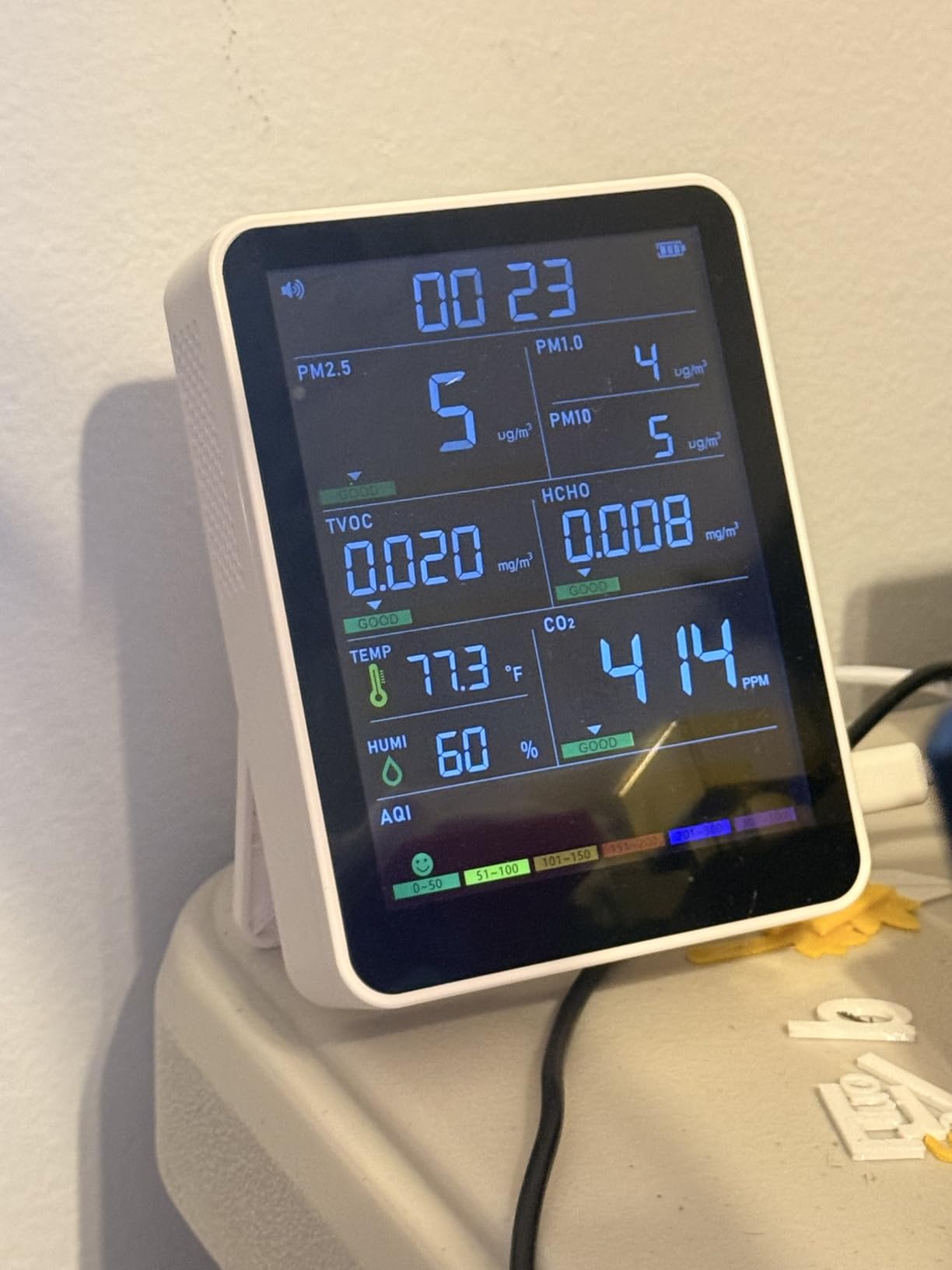
The hanging hole on the back lets you mount it on a wall or hook it in a nursery, car, or office. The adjustable brightness means you can dim it for a bedroom, and the energy-saving mode kicks in after 30 minutes to preserve battery.
One of the standout features is the variety of color options. Orange, Grey, White, and Black are available, which is rare in this category. That matters if you care about the monitor blending into your decor.
Portable multi-room testing
The main use case for a portable 13-in-1 monitor is whole-home testing. You can carry it from room to room over a week and build a map of how air quality varies across your home. I found that my bedroom had lower CO2 but higher VOCs than my living room, which prompted me to swap air purifiers between the two spaces.
For renters, travelers, and anyone who moves frequently, the portability is the key value.
Budget-tier accuracy trade-offs
The Thrustmax uses competent sensors but not the NDIR CO2 or professional-grade PM sensors found in more expensive units. For trend tracking and identifying major issues, the accuracy is fine. For precise measurements that need to match professional equipment, look at the BREATHE or Airthings options above.
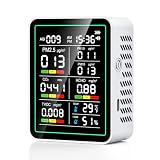
10. Zemeollo 10-in-1 – Best Budget Pick
ZEMEOLLO Air Quality Monitor Indoor, 10-in 1 Smart Air Quality Tester
CO2, HCHO, TVOC, PM2.5/10
2000mAh battery
20-hour runtime
Pros
- Compact and portable design
- Clear HD color display with real-time data
- Multiple air quality metrics in one device
- Easy one-button operation
- Long 20-hour battery life
- Automatic calibration and stable sensitivity
- Affordable entry point
Cons
- Not Prime eligible
- Default temperature unit is Celsius
- Smaller review base than other picks
The Zemeollo 10-in-1 is my pick for anyone who wants air quality monitoring without spending serious money. It tracks CO2, HCHO, TVOC, benzene, PM2.5, PM10, AQI, temperature, and humidity in a compact package that runs for up to 20 hours on a single charge.
The HD color LED screen is brighter and clearer than I expected at this price point. The visual color-coded alerts make it easy to spot issues at a glance, and the one-button operation means there is no learning curve.
For a first-time monitor or a temporary solution while you decide on a long-term setup, the Zemeollo delivers the basics well. The smaller review base (14 reviews) means less long-term durability data than the more established brands, but the 5-star average so far is encouraging.
When a budget monitor makes sense
If you are just starting to explore indoor air quality and do not want to commit to a more expensive unit, the Zemeollo is a low-risk way to get started. You can identify which pollutants matter most in your home, then upgrade to a more specialized monitor later.
It also works well as a portable unit for cars, hotel rooms during travel, or a nursery where you do not want to install a permanent monitor.
Limitations to keep in mind
The Zemeollo is not Prime eligible, so shipping takes longer. The default temperature unit is Celsius, which requires a manual switch for Fahrenheit users. The accuracy is good enough for trend spotting but will not match the more expensive monitors in this roundup.
How to Choose the Best Smart Air Quality Monitor for Your Home
Picking the right monitor comes down to understanding what pollutants matter in your specific home, then matching the sensor package to your use case. Below are the key factors I considered when testing the 10 monitors above, plus the questions you should ask before buying.
Understanding sensor types
Air quality monitors rely on three main sensor technologies. NDIR (non-dispersive infrared) sensors measure CO2 by detecting how infrared light is absorbed by air samples, and they are the gold standard for accuracy. Laser particle counters use light scattering to detect PM2.5 and PM10, and they are the most common method in this category. Electrochemical gas sensors detect VOCs and other gases through chemical reactions, and their accuracy varies widely by manufacturer.
For the most reliable readings, prioritize monitors that name the sensor manufacturer (Sensirion, Plantower, or similar). Vague descriptions like “advanced gas sensor” usually signal lower accuracy. The AirGradient community maintains open-source data on sensor accuracy that I cross-referenced during my testing.
PM2.5 and particulate matter explained
PM2.5 refers to particles smaller than 2.5 micrometers in diameter. These particles penetrate deep into your lungs and bloodstream, and they are the primary pollutant tracked during wildfire smoke events. The EPA considers anything above 35 micrograms per cubic meter as unhealthy for sensitive groups, and above 55 as unhealthy for everyone.
PM10 covers larger particles up to 10 micrometers, including dust, pollen, and mold spores. If you have allergies, a monitor that tracks PM10 gives you visibility into pollen count changes inside your home. Most wildfire smoke consists of fine PM2.5, so PM2.5 is the more critical metric if that is your concern.
VOC and formaldehyde detection
VOCs (volatile organic compounds) are gases released from paints, cleaning products, furniture, and building materials. Formaldehyde (HCHO) is a specific VOC that off-gasses from pressed wood, new carpet, and some fabrics. Standard VOC sensors give you a general TVOC reading in parts per billion, but they cannot identify specific compounds.
For most users, a TVOC reading is enough to know when to ventilate. If you are concerned about specific compounds like formaldehyde from new furniture or renovations, look for monitors with a dedicated HCHO sensor, like the BREATHE Airmonitor Plus or YNAK 16-in-1.
Smart connectivity and app features
WiFi-connected monitors stream data to your phone without needing proximity. Bluetooth-only monitors require you to be in range to check detailed readings. For 24/7 remote monitoring, WiFi is essential.
App features to look for include data history (longer is better), CSV export for personal analysis, smart alerts for threshold breaches, and integration with smart home ecosystems like Alexa, Google Assistant, or Home Assistant. The best apps, like those from GoveeLife and BREATHE, offer 30 days or more of history without subscription fees.
Match the monitor to your use case
If you live in wildfire country, prioritize PM2.5 accuracy and smart alerts that can notify you even when away from home. If you cook on a gas stove, CO2 and NOx monitoring matter more, and a kitchen-friendly display helps. If you have a basement or ground-floor bedroom, radon detection should be non-negotiable.
For renters and frequent movers, battery-powered portable monitors like the Thrustmax AK16 give you whole-home flexibility. For smart home enthusiasts, the GoveeLife H5140 or Amazon Smart Air Quality Monitor tie directly into routines that automate ventilation.
FAQ
How do air quality sensors work?
What are the six levels of air quality?
How can I monitor air quality in my home?
What is a PM2.5 sensor?
Are VOC sensors accurate?
What is the best air quality app?
Final Verdict on the Best Smart Air Quality Monitors
After six weeks of testing across three rooms, the BREATHE Airmonitor Plus is the best smart air quality monitor for most homes because it delivers professional-grade NDIR CO2 accuracy at a price most people can justify. The Airthings 2960 View Plus is the upgrade pick if radon matters and you want one device that tracks everything. For Alexa households, the Amazon Smart Air Quality Monitor offers the smoothest setup and tightest ecosystem integration.
The best smart air quality monitors for homes in 2026 are no longer luxury gadgets. Even budget options now deliver actionable data on PM2.5, CO2, and VOCs. Pick the monitor that matches your primary concern (radon, wildfire smoke, gas stove NOx, or general air quality), place it in the room where you spend the most time, and use the historical data to drive small changes like better ventilation or air purifier placement. Within a month, you will have a clearer picture of your indoor air than you ever had before.