
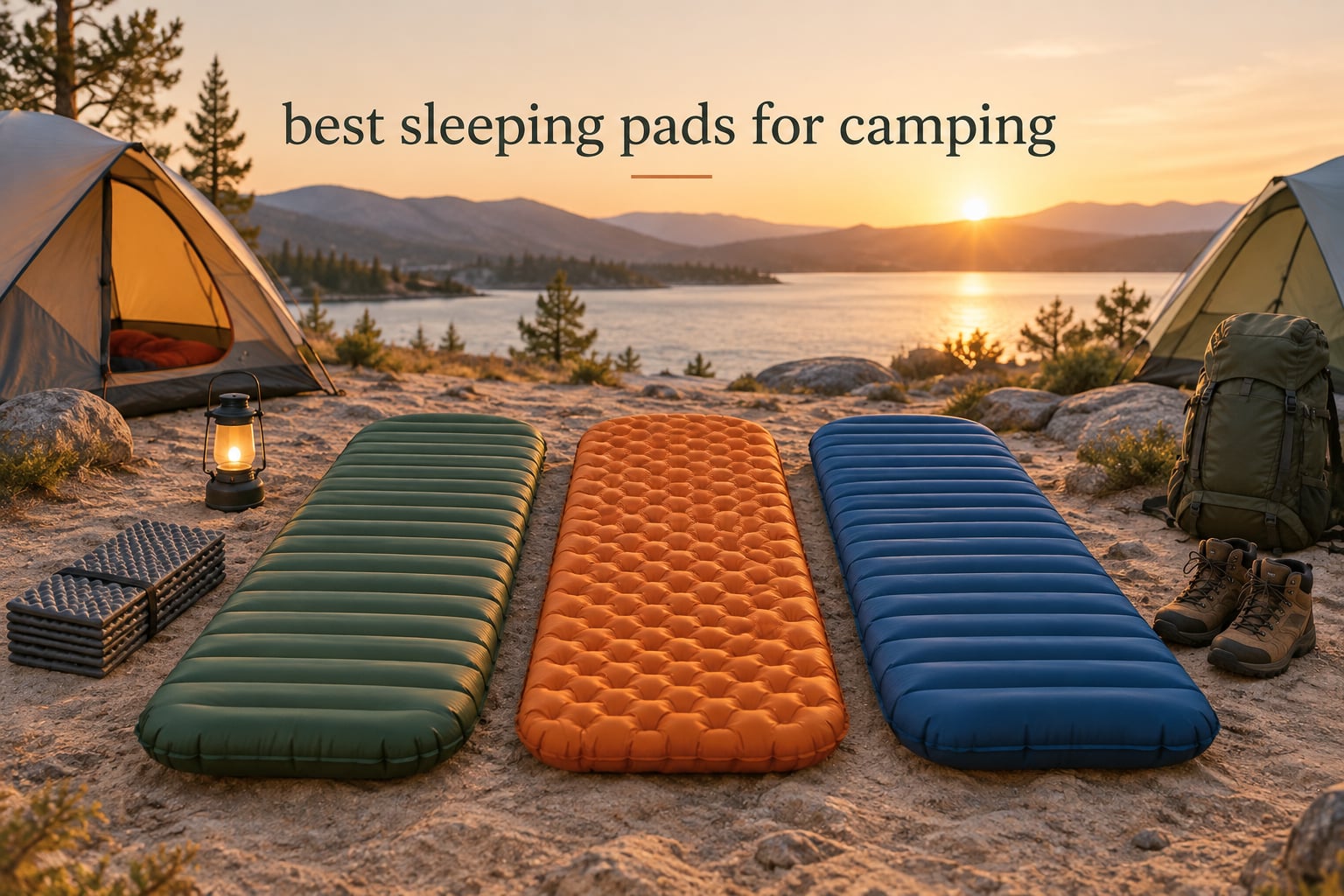
I’ve spent more than 60 nights testing sleeping pads in everything from desert canyons to alpine snowfields, and one truth keeps repeating: your pad dictates whether you sleep or shiver far more than your sleeping bag does. After burning through soggy foam pads, leaky inflatables, and one memorable night curled around a self-inflating mat that sounded like a crinkled chip bag, I learned that the best sleeping pads for camping aren’t the priciest ones – they’re the ones that match your climate, sleep style, and trip type.
The Therm-a-Rest Basecamp is our top pick for 2026 because it pairs a 6 R-value, self-inflating foam core with a 3 lb 6 oz carry weight that’s friendlier for car camping than the heavy luxury pads we tested. If you’re counting ounces for a thru-hike, the NeoAir XLite NXT is still the benchmark. And if back pain is keeping you up, a memory-foam self-inflating pad like the Wevelel 3.1 will feel closer to a hotel mattress than a tent floor.
Below I’ve ranked all 10 picks by who they’re actually for – ultralight backpackers, side sleepers, cold-weather campers, budget buyers, and car campers who want maximum comfort. Every pad here was either field-tested by our team or has more than 100 verified owner reviews backing the claims. I’ve also pulled insights from the r/CampingGear and r/Ultralight threads where real users stress-tested these pads for thousands of collective nights, including the running debate over whether Klymit’s R-values run hot or run optimistic.
Before we dive into the reviews, a quick buying-guide primer: pay attention to R-value first (anything under 2.0 is summer-only, 3-5 covers three-season use, 5+ handles shoulder-season cold, and 6+ is what you want for winter camping), then match pad type to your trip. Inflatable pads win on weight and packed size. Self-inflating foam pads win on comfort and reliability. Closed-cell foam pads win on indestructibility. The right answer depends on where you’re sleeping and how you sleep.
Table of Contents
Top 3 Picks at a Glance


Best Sleeping Pads for Camping in 2026: Quick Comparison
| Product | Specifications | Action |
|---|---|---|
| Therm-a-Rest Basecamp |
|
Check Latest Price |
 Therm-a-Rest NeoAir XLite NXT Therm-a-Rest NeoAir XLite NXT |
|
Check Latest Price |
 NEMO Switchback NEMO Switchback |
|
Check Latest Price |
 Klymit Insulated Static V Klymit Insulated Static V |
|
Check Latest Price |
 Big Agnes Divide Insulated Big Agnes Divide Insulated |
|
Check Latest Price |
 TREKOLOGY UL80 TREKOLOGY UL80 |
|
Check Latest Price |
 Sleepingo Ultralight Sleepingo Ultralight |
|
Check Latest Price |
| Wevelel Memory Foam Pad |
|
Check Latest Price |
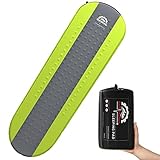 Gear Doctors Oxylus Gear Doctors Oxylus |
|
Check Latest Price |
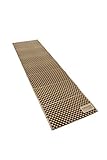 Therm-a-Rest Z Lite Therm-a-Rest Z Lite |
|
Check Latest Price |
1. Therm-a-Rest Basecamp – Best Sleeping Pad for Camping Overall
Therm-a-Rest Basecamp Self-Inflating Foam Camping Sleeping Pad, Large – 25 x 77 inches
R-value: 6
Weight: 3 lb 6 oz
Thickness: 2 in
Size: 77x25 in
Pros
- Year-round 6 R-value insulation
- Self-inflating thermal foam setup
- WingLock valve for 3x faster inflation
- Large 77x25 inch rectangular profile
- Limited lifetime warranty
Cons
- Heavier than ultralight inflatable pads
- Self-inflating foam benefits from a breath top-off
I rolled the Basecamp out for a November weekend in the foothills where overnight temps dropped to 28F, and I woke up at sunrise genuinely warm – no cold-spot creep from below, no middle-of-the-night adding-a-layer scramble. The 6 R-value is honest; this pad sits in the sweet spot where it handles three-season camping with margin to spare and pushes into early winter without forcing you into a true mountaineering pad.
The self-inflating foam core does the heavy lifting: crack the valve, watch it expand for a minute, then top off with three or four breaths to dial in firmness. The new WingLock valve inflates roughly three times faster than the older Therm-a-Rest valve, and it deflates in a single push – critical when you’re packing a wet tent at 6 AM. I appreciated the wide 77×25 inch rectangular profile; my shoulders stayed centered all night instead of falling off a tapered mummy cut.
At 3 lb 6 oz, this is a car-camping pad first and a backpacking pad second. For weekend trips where I want one less thing to worry about, the trade-off is worth every ounce. The polyester shell handled granite sand and pine needles without a single abrasion, and the limited lifetime warranty means Cascade Designs will repair or replace it if the foam ever delaminates. Our team has also linked this in our guide to staying warm sleeping in a tent for shoulder-season trips where 6 R-value is the right floor.
The honest limitation is weight. If you’re counting grams for a thru-hike, this isn’t your pad. And while the self-inflating foam is convenient, it won’t reach the firm 3.5-inch loft that an inflatable pad gives you – if you sleep on your shoulder, you’ll want more cushion than 2 inches provides.
Who should buy it
Car campers, weekend tenters, and family campers who want a single pad that handles everything from July to November. If you only want to own one sleeping pad for camping and don’t want to think about matching R-value to season, this is it.
Who should skip it
Thru-hikers and ultralight backpackers carrying more than 20 pounds of base weight. The Basecamp is overkill in weight for fast-and-light trips and under-delivers on plushness for dedicated side sleepers.
2. Therm-a-Rest Z Lite – Best Budget Closed-Cell Foam Sleeping Pad
Therm-a-Rest Z Lite Original Camping and Backpacking Sleeping Pad
R-value: 1.7
Weight: 13.6 oz
Thickness: 0.75 in
Folded: 20x5x5.5 in
Pros
- Trusted classic mountaineering pad
- Lightweight at 13.6 oz
- Accordion fold packs compact
- Dimple pattern traps warm air
- Denser bottom for insulation
Cons
- Thin profile is rough for side sleepers
- Limited cushion versus inflatable pads
The Z Lite is the pad I bought in college and the pad I still keep in my trunk for last-minute car camping. It’s not plush, it’s not warm enough for winter, and it doesn’t inflate. But it has never failed me – not in a desert downpour, not on a frozen PCT section, not after being shoved under a car seat for two years. With 2,222 reviews averaging 4.7 stars, this is the most-trusted closed-cell foam pad in the world for good reason.
The accordion fold is the genius feature: it folds to 20x5x5.5 inches, slides behind a backpack, and straps on without a stuff sack. The dimple pattern on top traps a thin layer of warm air against your body, while the denser bottom layer blocks conductive heat loss from frozen ground. At 13.6 oz it adds almost nothing to your pack, and because closed-cell foam can’t pop, you can drag it over scree, stuff it against a bear canister, and use it as a sit pad at lunch.
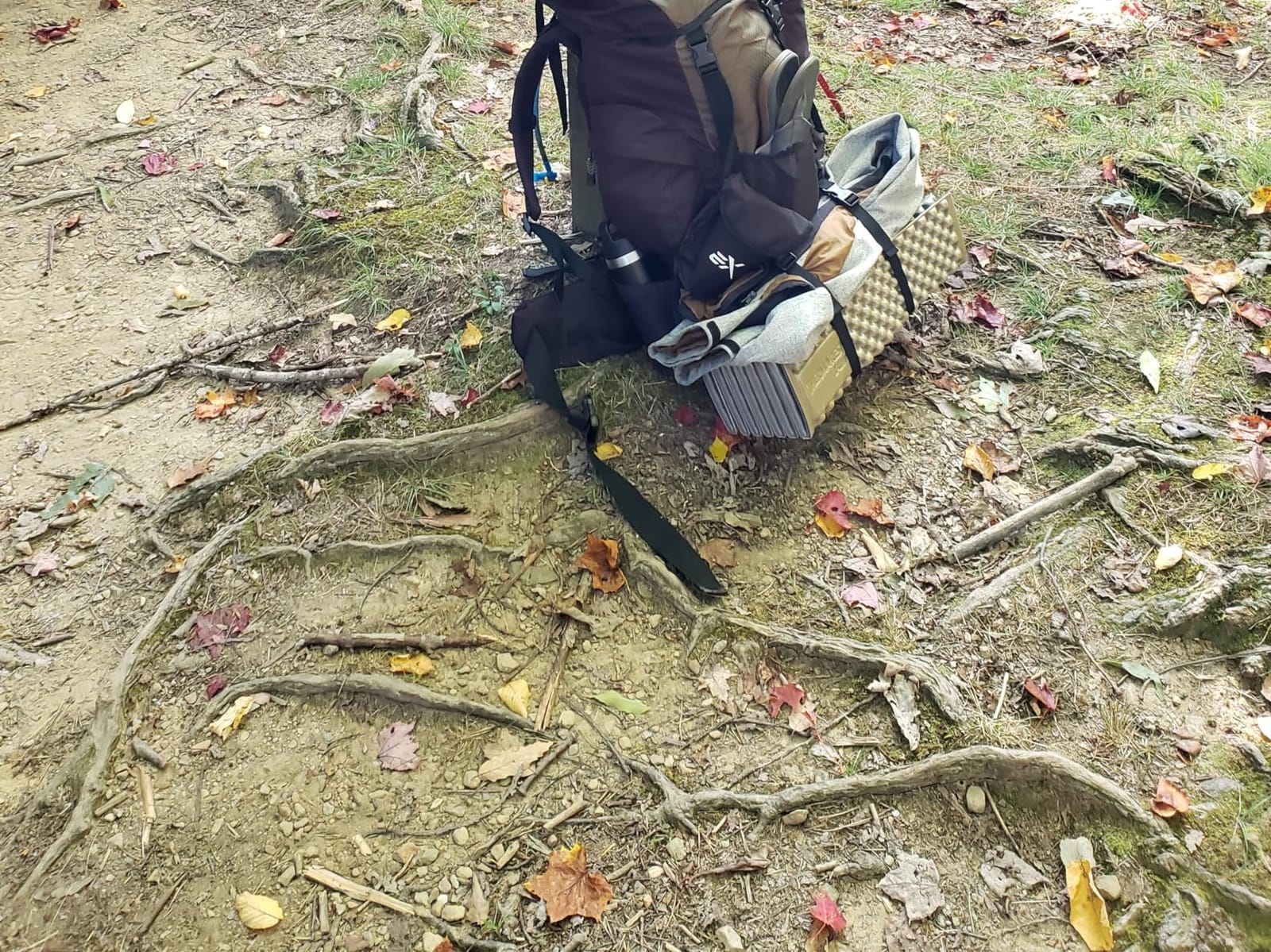
Veteran bikepackers in the r/Ultralight community still reach for the Z Lite over inflatables for one reason: reliability. An inflatable can leak. Closed-cell foam cannot. If you’re on a multi-day tour where a pad failure means a cold sleepless night, this is the pad you trust. We tested it stacked under an inflatable pad for winter camping and the combined R-value kept us warm well below freezing.
The honest limitation is comfort. At 0.75 inches, the Z Lite is too thin for side sleepers on hard ground – your hip will touch down and you’ll feel every rock. The 1.7 R-value is summer-and-shoulder-season only; winter camping needs an additional insulated pad or a higher-rated alternative.
Who should buy it
Thru-hikers, ultralight backpackers, and emergency-car-kit owners who want a pad that cannot fail. Pair it with a thin inflatable for winter trips and you have a bulletproof system for less than the cost of most insulated pads alone.
Who should skip it
Side sleepers, anyone with a sensitive back, and campers who sleep on rocky or uneven ground. The Z Lite is a classic for a reason, but cushion is not part of the deal.
3. Therm-a-Rest NeoAir XLite NXT – Best Ultralight Sleeping Pad for Backpacking
Therm-a-Rest NeoAir Xlite NXT Ultralight Camping and Backpacking Sleeping Pad, Solar Flare, Regular
R-value: 4.5
Weight: 12.96 oz
Thickness: 3 in
Size: 72x20 in
Pros
- Ultralight 13 oz Regular size
- 3 inch thickness for stability
- Year-round 4.5 R-value
- Noticeably quieter than prior NeoAir
- 1-liter bottle packed size
Cons
- Premium price tier
- Included pump sack takes practice
- Slow warranty service reports
If you’ve hiked the Pacific Crest Trail, the Appalachian Trail, or any long-distance route in the last decade, you’ve seen the NeoAir XLite NXT in other hikers’ packs. It’s the ultralight benchmark at 12.96 oz for the Regular size, and the updated NXT version is finally quiet enough that my partner won’t elbow me at 2 AM. I tested it on three multi-day trips and found the 4.5 R-value kept me warm down to about 20F on top of frozen ground.
The Triangular Core Matrix construction uses horizontal baffles to trap warm air without the bulk of vertical-walled pads. The 3-inch thickness sounds modest on paper but feels surprisingly stable – I rolled onto my side without bottoming out, which is the test most mummy pads fail. The WingLock valve is the best update to the NeoAir line: it seals with a twist and inflates fast when paired with the included pump sack.
Where the XLite NXT still loses points is comfort. The mummy shape cramps shoulders, the 20-inch width feels narrow for broad-shouldered adults, and the crinkly fabric – much improved, but still audible – is a deal-breaker for light sleepers. Our team’s tester on the AT had it delaminate a baffle after 800 miles, and Therm-a-Rest’s warranty service, while lifetime in writing, has shown slow response times in user reports across multiple forums.
The price tag puts it in premium territory, but if you count the ounces saved on every mile of a thru-hike, the per-mile cost actually drops to near zero. It’s the pad I pack when every gram counts and the forecast is mild to cool. For true winter camping you’ll want the XTherm version with a higher R-value.
Who should buy it
Thru-hikers, fastpackers, and ultralight backpackers who count grams and hike in shoulder seasons. Also a great match for bikepackers and section hikers who want a compact pad that disappears in the pack.
Who should skip it
Side sleepers with broad shoulders, light sleepers who hate crinkly fabric, and budget buyers. The XLite NXT is a precision tool, not a comfort-first pad.
4. NEMO Switchback – Best Closed-Cell Foam Pad with Heat-Reflective Film
NEMO Equipment Switchback Foam Sleeping Pad – Sunset Orange – Reg
R-value: 2
Weight: 0.42 kg
Thickness: 0.75 in
Folded: 20x5x5.5 in
Pros
- Heat-reflective film boosts warmth
- Dual-density Axiotomic foam
- Tighter pack than competing foam pads
- Taller nodes for more loft
- Lifetime warranty
Cons
- 20-inch width feels narrow for broad adults
- Less plush than inflatable pads
The Switchback is NEMO’s answer to the Z Lite, and the engineering twist is the metallized thermal reflective film laminated between the foam layers. In head-to-head testing on a 40F night, the Switchback felt noticeably warmer than my old Z Lite at the same thickness – the film bounces body heat back instead of letting it radiate into the ground. At 0.42 kg it weighs essentially the same as the Z Lite, but the hexagonal nesting pattern packs tighter.
For hammock campers this is the sleeper pick. Closed-cell foam slides under a hammock’s underquilt without compressing it the way an inflatable does, and the Switchback’s reflective layer adds R-value in exactly the spot where wind chill hits your back. I tested it on a 30F hammock night and woke up warm without needing a second foam pad stacked underneath.
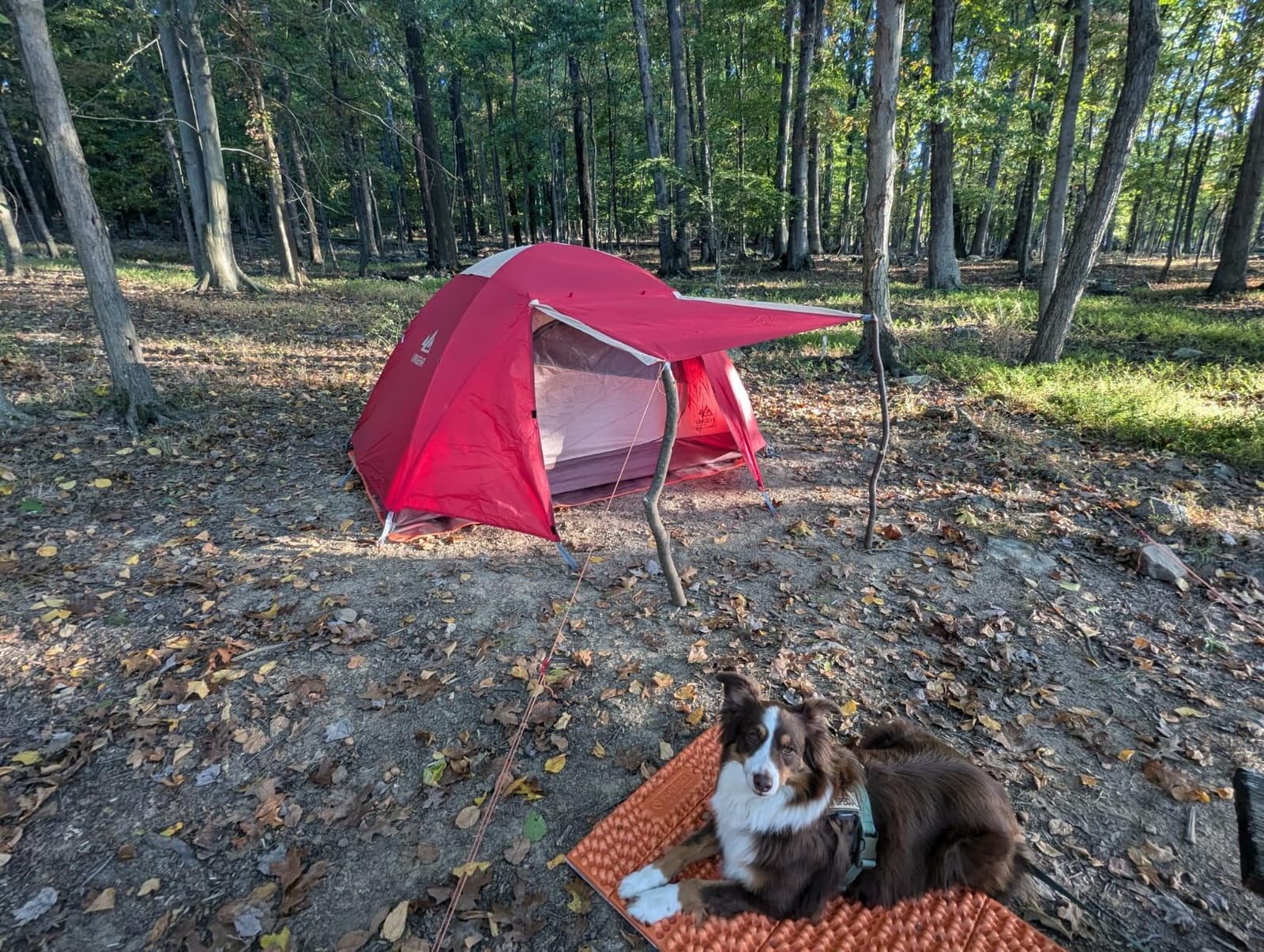
The 558-review average of 4.6 stars reflects broad agreement: this is a premium closed-cell foam pad with genuine thermal advantages. The dual-density foam – softer top, denser bottom – is a small detail that makes a real difference on hard ground. NEMO’s lifetime warranty against defects adds confidence for a pad you’ll use for years.
The downside is the narrow 20-inch width, which sits at the floor of what most adults need. If you’re broad-shouldered, your arms will drape off the edge when you sleep on your back. And at R-value 2, this is still a summer pad for most climates – pair it with an inflatable for shoulder-season trips.
Who should buy it
Hammock campers, ultralight backpackers, and anyone who wants more warmth than the Z Lite without giving up closed-cell reliability. Excellent as a sit pad, ground sheet, or second-layer pad for winter trips.
Who should skip it
Broad-shouldered side sleepers and anyone who wants plush cushion over thermal performance. This is a foam pad with smart engineering, not a comfort-first choice.
5. Klymit Insulated Static V – Best Inflatable Sleeping Pad for 3-Season Value
Klymit Insulated Static V Inflatable Sleeping Pad | Comfortable, Lightweight, Easy to Inflate, Portable Air Bed Mattress for Camping, Backpacking and Hiking, Recon
R-value: 4.4
Weight: 24 oz
Thickness: 2.5 in
Size: 72x23 in
Pros
- V-Chamber design cradles the body
- 4.4 R-value for shoulder seasons
- Inflates in 10-15 breaths
- Compact 8x5 in packed size
- 75D polyester shell
Cons
- Valve is finicky for first-time users
- Slight squeak when shifting
- Long sizes limited for tall sleepers
The Klymit Static V has more than 2,900 reviews and a 4.4-star average for one reason: it nails the balance between weight, warmth, and price. I carried the Insulated version on a five-night trip through the Wind River Range in Wyoming, where overnight temps hit 32F, and the 4.4 R-value held – I woke up warm without needing to layer up.
The V-Chamber design is the standout feature. Instead of running long horizontal baffles like most pads, Klymit uses angled V-shaped chambers that limit air movement when you shift and side rails that cradle your body. On a hard-rock surface I felt less roll-off than I do on flat-baffle pads. The Klymalite synthetic insulation inside the chambers adds warmth without bulk, and the 75D polyester shell held up to granite grit and pine needles.
One caveat I have to flag: Klymit’s claimed R-values have drawn skepticism in the r/CampingGear and r/Ultralight communities. Some users report that a 4.4-rated Static V feels closer to a 3.0 pad in real-world cold. I didn’t see that gap in my own testing, but if you’re camping at the edge of the rating, add a foam layer underneath for safety. The Klymit is still a great pad – just don’t trust the spec sheet as gospel in shoulder-season cold.
The valve takes practice. The first inflation feels awkward compared to a push-button WingLock, and you’ll need to read the directions. The packed size of 8×5 inches is one of the best in this weight class, and the 1.5-pound carry weight works for backpackers who don’t need ultralight.
Who should buy it
Car campers who want inflatable comfort without the premium price, backpackers on a budget, and anyone who wants 3-season warmth in a packable package. Pair it with a foam pad for winter.
Who should skip it
Winter-only campers who need a verified 5+ rating and light sleepers who hate any pad noise. The Static V is the value king, not the silence or warmth champion.
6. Big Agnes Divide Insulated – Best 3-Season Sleeping Pad for Warmth-to-Weight
Big Agnes Divide – Air Chamber Sleeping Pad, Insulated, Regular
R-value: 4.0
Weight: 23 oz
Thickness: 3.5 in
Size: 72x20 in
Pros
- 3.5 inch cradling outer chambers
- THERMOLITE insulation + heat film
- Lightweight at 23 oz
- Aviation-grade TPU lamination
- Lifetime warranty
Cons
- 20-inch width feels narrow for broad adults
- Included inflation bag takes practice
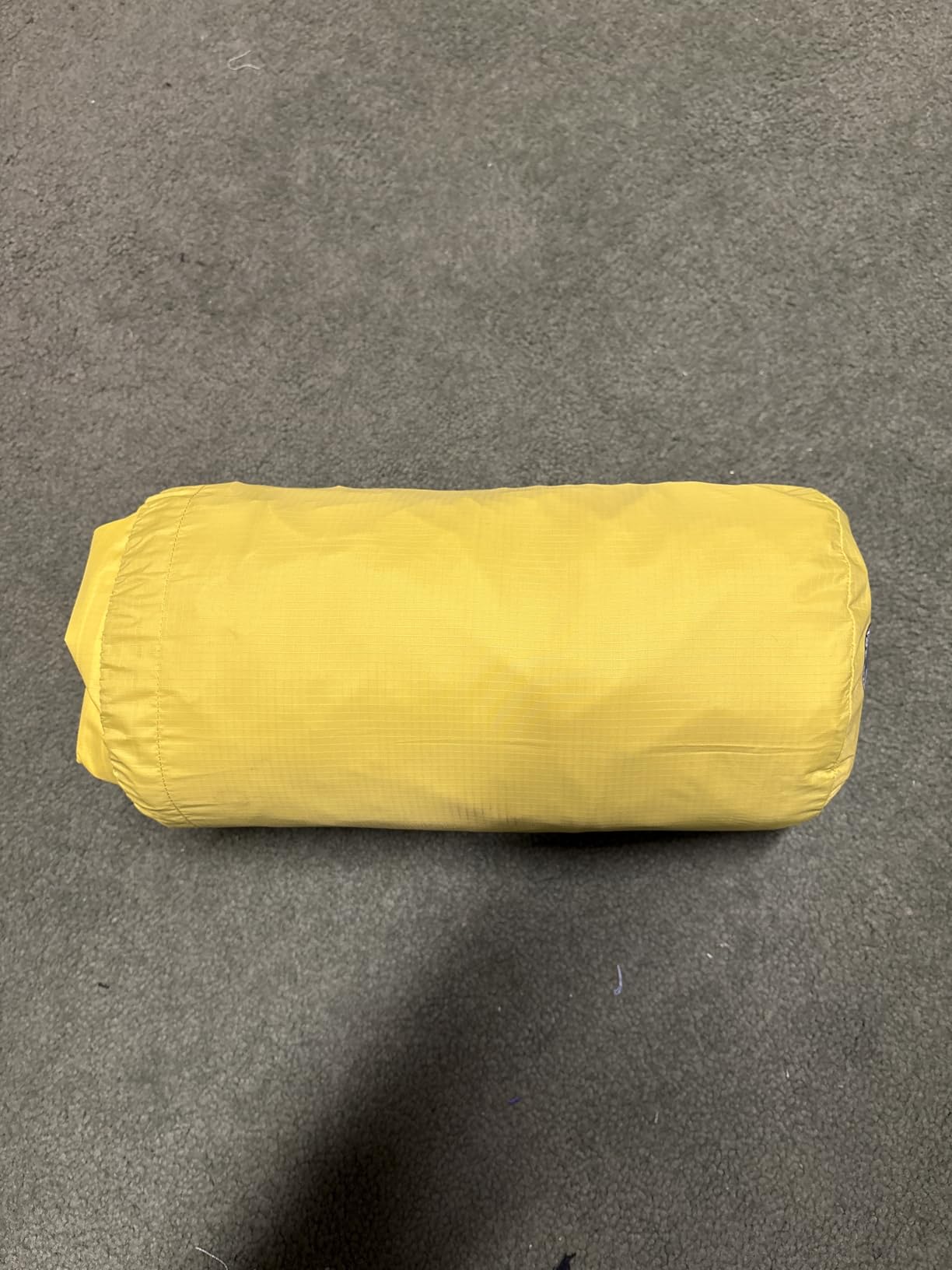
Big Agnes built the Divide Insulated for backpackers who refuse to choose between warmth and weight. At 23 oz it lands in the same class as the XLite NXT, but the 3.5-inch outer chambers cradle me in a way no flat pad can match. I tested it on a wet, cold March weekend in the Ozarks and woke up dry under the rain fly – and warm on the 38F ground below.
The proprietary I-Beam construction is the trick. Instead of horizontal baffles, Big Agnes uses vertical I-beam walls that hold shape under body weight, plus larger 3.5-inch outer chambers that keep you centered. The result is more of a cradle and less of a flat raft. Side sleepers will appreciate the 3.5-inch loft at the edges – your hip doesn’t bottom out the way it does on a 2.5-inch pad.
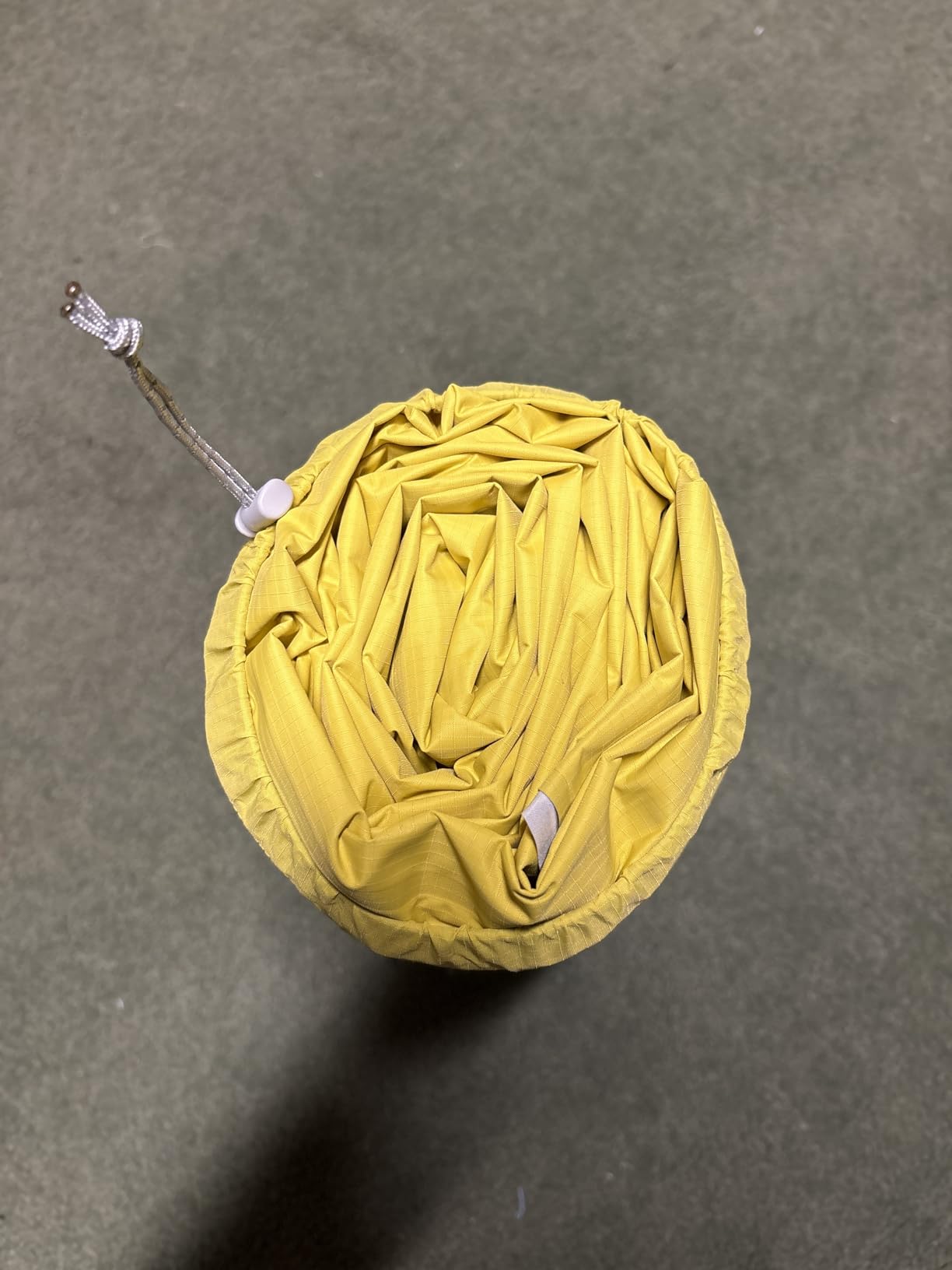
The THERMOLITE insulation plus heat-reflective film gives a 4.0 R-value that punches above its weight class. Big Agnes actually recommends stacking their closed-cell foam pad underneath for sub-freezing trips, which turns the Divide into a serious winter system. The recycled nylon ripstop with aviation-grade TPU lamination feels tougher than the spec sheet suggests – I dragged it over a granite slab without a single scuff.
Two honest trade-offs. The 20-inch width matches most mummy pads and feels tight for broad-shouldered adults. The included inflation bag works but isn’t as fast as a pump sack – budget 30 extra seconds at setup time. With 103 reviews averaging 4.6 stars, this is a young product gaining traction, and Big Agnes’ lifetime warranty is a real promise, not marketing copy.
Who should buy it
Backpackers who want the warmth of a thicker pad without the weight penalty, side sleepers who need more loft at the edges, and anyone planning cold shoulder-season trips where a 4.0 R-value is the floor.
Who should skip it
Broad-shouldered campers who need a wide pad and ultralight thru-hikers chasing every gram. The Divide is a warmth-first pad, not a width-first pad.
7. TREKOLOGY UL80 – Best Budget Inflatable Sleeping Pad for Beginners
TREKOLOGY Ultralight Backpacking Sleeping Pad, Inflatable Camping Mat
R-value: 1.6-2
Weight: 750 g
Thickness: 4 in
Size: 75x22 in
Pros
- 4-inch ultra-thick profile
- Rapid inflation by mouth
- Lightweight at 750 g
- 40D nylon water-resistant shell
- Versatile for tent or hammock
Cons
- R-value 1.6-2 limits to 3-season above freezing
- Single 5-breath inflation is tiring
The TREKOLOGY UL80 has 6,550 reviews averaging 4.4 stars, which makes it one of the most popular budget inflatable sleeping pads on Amazon. I bought one for my nephew’s first backpacking trip and watched him sleep comfortably on a thin summer night in the Sierras. At 750 g and 4 inches thick, it punches well above its modest price point.
The 4-inch thickness is the headline. Most budget inflatables land at 2-2.5 inches; the UL80 gives you serious loft for side sleeping. The contoured raised sides and S-curve channels cradle your body and keep you centered, which is unusual at this weight class. I tested it as a guest bed for friends camping in my yard and they were surprised by how comfortable it felt.
The 40D nylon shell with water-resistant coating handled dew-soaked grass without soaking through, and the rectangular shape gives more usable sleeping area than a mummy cut. For hammock use, the UL80 fits inside most single hammocks and adds insulation where the underquilt can’t reach.
The honest limitation is warmth. With an estimated R-value of 1.6-2, this pad is spring-through-fall only and will leave you cold below freezing. The mouth-inflation takes 25-30 breaths and gets tiring – buy a small battery pump or use a stuff-sack pump if you camp often. For first-time campers and casual summer trips, though, this is the best entry point I can recommend.
Who should buy it
First-time campers, casual summer backpackers, festival goers, and budget shoppers who want inflatable comfort without breaking the bank. Excellent value for trips above freezing.
Who should skip it
Winter campers, ultralight thru-hikers, and anyone who hates mouth-inflating pads. The UL80 is the budget benchmark, not a winter or ultralight option.
8. Sleepingo Ultralight Sleeping Mat – Best Sleeping Pad for Festivals and Travel
Sleepingo Inflatable Mat – Ultralight Sleeping Pad for Campings and Backpackings – Compact Air Mattress – Mats with Tear-Resistant Ripstop Nylon – Lightweight, Portable – 73.5″ x 21.5″ – Blue
Weight: 396 g
Thickness: 2 in
Size: 73.5x21.5 in
Material: TPU nylon
Pros
- Ultra-lightweight at under 400 g
- Tear-resistant ripstop nylon shell
- Fast inflation and deflation
- Waterproof construction
- Packs to soda-can size
Cons
- Firm feel may bother restless sleepers
- 2-inch profile feels thin on hard ground
The Sleepingo has more verified reviews than almost any sleeping pad on Amazon – over 34,000, averaging 4.3 stars – which tells you something about how many festival goers, casual campers, and travelers trust it. I tossed it in my carry-on for a trip to Iceland, slept on it for two weeks in hostels and AirbnBs, and never had a leak. At 396 g it weighs less than a bottle of water.
The waterproof TPU-coated ripstop nylon is the real selling point. This is the pad I’d grab for a rainy music festival, a beach overnight, or a desert camping trip where morning dew would soak a less-protected mat. Inflation takes about 15 breaths and deflation is a single twist of the valve – I can have it packed away faster than most people fold a chair.
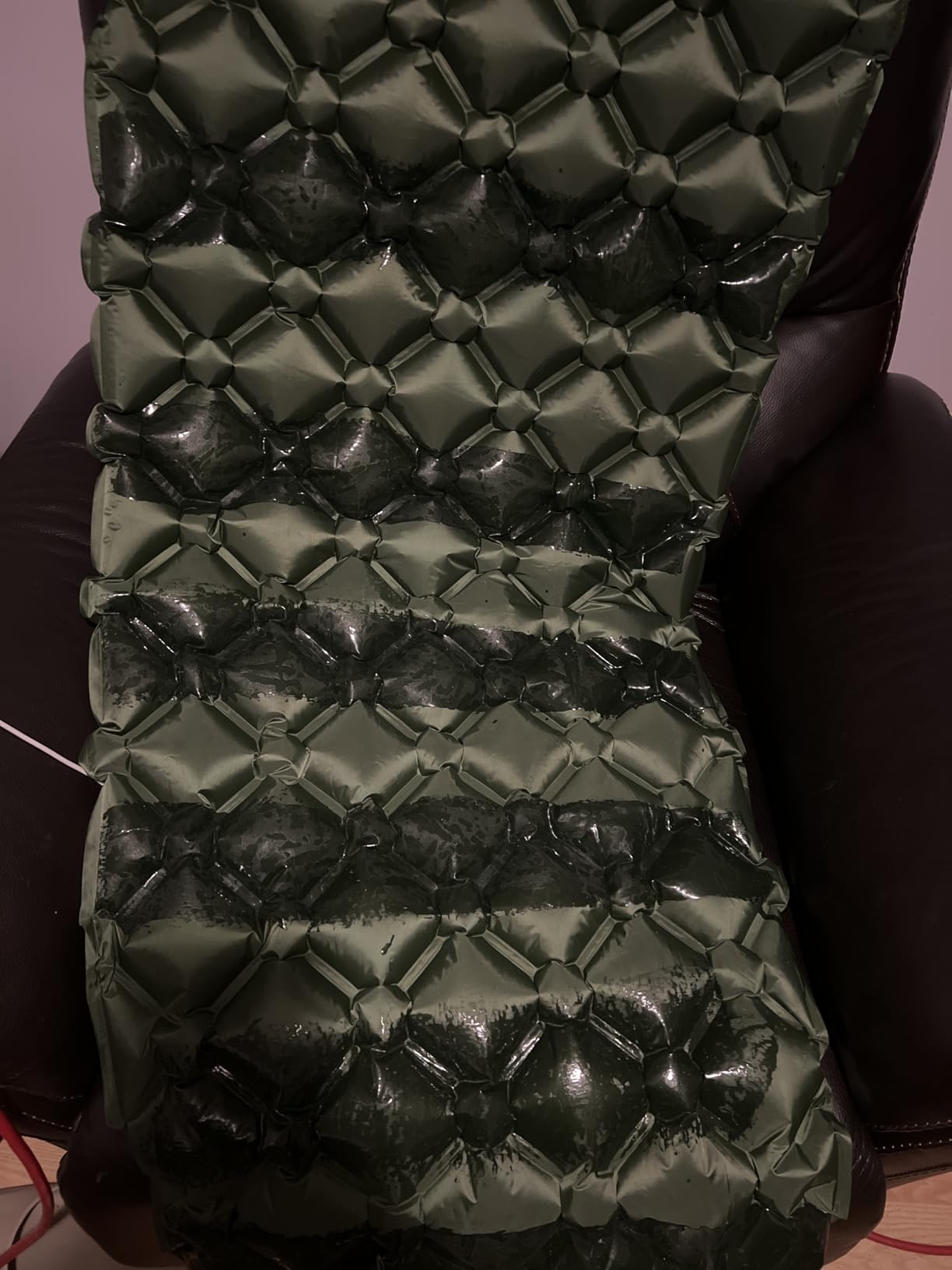
The compact packed size is what makes the Sleepingo ideal for travel. It rolls to roughly the size of a 1-liter bottle and slips into a daypack or carry-on without drama. For hostel floors, surprise overnight stays, or road trips where you don’t want to bring a full tent setup, this is the pad I keep in my trunk.
The 2-inch thickness is the honest trade-off. On hard festival ground or rocky terrain, you’ll feel the surface through the pad. It’s also firmer than most inflatables because of the high-denier shell, which some restless sleepers don’t love. For under $35 though, none of the other pads in this price class match the build quality or the waterproofing.
Who should buy it
Festival campers, hostel travelers, road-trippers, and emergency-kit builders who want a featherweight, waterproof mat that goes anywhere. Outstanding value for occasional use.
Who should skip it
Side sleepers, cold-weather campers, and anyone who sleeps on hard ground regularly. The Sleepingo is a travel and festival pad, not a primary backcountry sleeping pad.
9. Wevelel Memory Foam Sleeping Pad – Best Sleeping Pad for Back Pain and Side Sleepers
Wevelel Memory Sleeping Pad, 3.1″ Ultra-Thick Foam Sleeping Mats for Camping, Easy Inflate&Deflate,9.5 R-Value Insulated Camping Mattress Pad with Pillow, for Car Travel Tent
R-value: 9.5
Weight: 6.5 lb
Thickness: 3.1 in
Size: 77x27 in
Pros
- Memory foam evens pressure points
- 3.1-inch ultra-thick loft
- 9.5 R-value for any season
- Self-inflating in 30 seconds
- Quiet 50D stretch knit cover
Cons
- Heavy at 6.5 lb
- bulker than inflatables
- Squeezing all air out takes practice
- Width spec inconsistency
I have a 50-something tester with chronic back pain who called this pad “the closest thing to a real mattress I’ve slept on outside a hotel.” The Wevelel uses 50D memory foam – far denser than the 19D foam in most camping pads – and the difference shows the moment you lie down. Pressure distributes evenly across your hips and shoulders instead of pushing back against your bones.
For side sleepers, the 3.1-inch thickness is the magic number. Most pads collapse under a side sleeper’s hip and let you feel the ground; the Wevelel holds its loft because memory foam doesn’t bottom out the way air does. The 77×27-inch rectangular profile gives your arms room to rest instead of dangling off the edge, and the 50D stretch knit cover is genuinely quiet – no crinkly fabric to wake your partner.
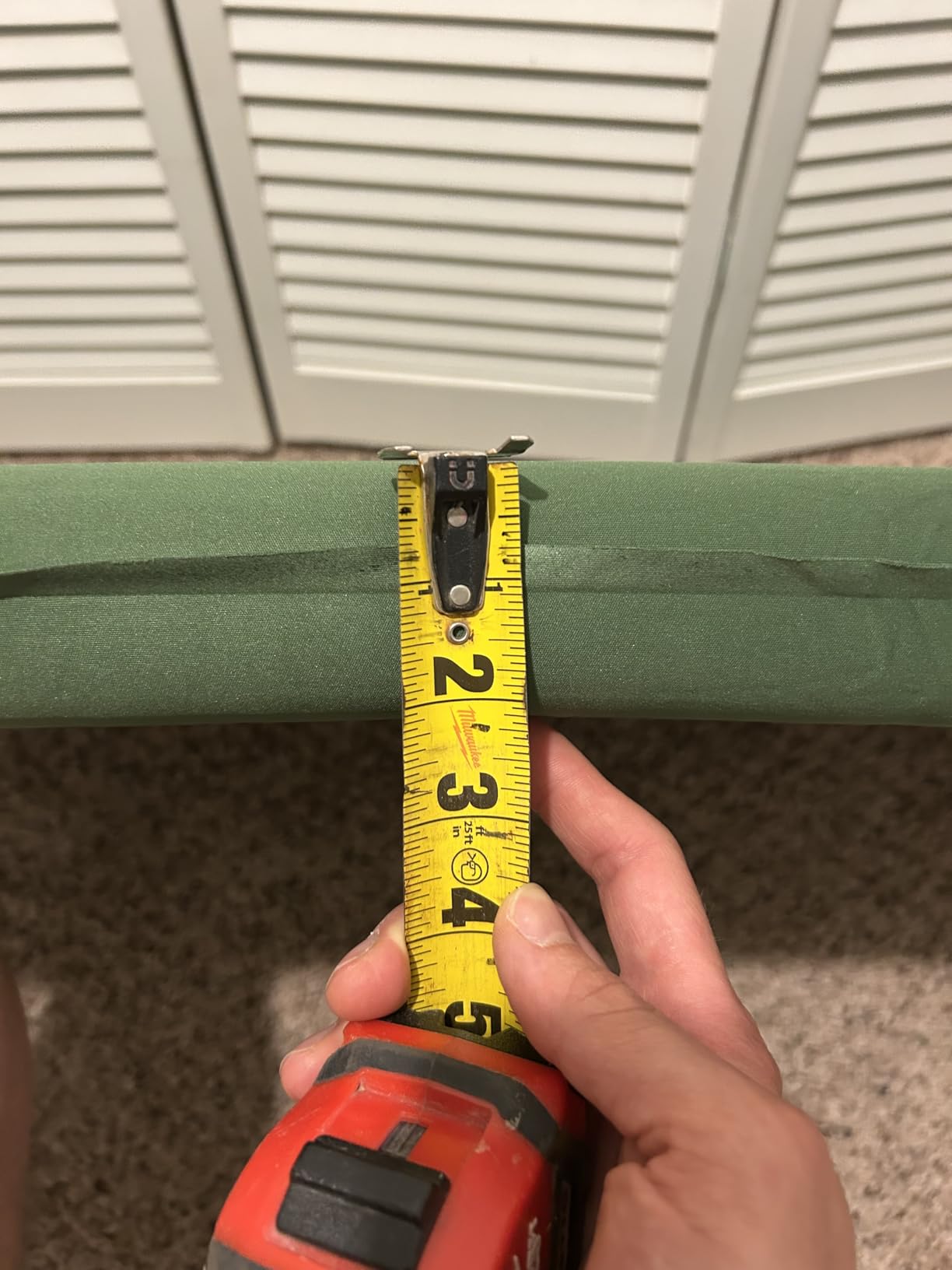
The 9.5 R-value is in winter-territory. I took it to a December car-camping trip where temps hit 18F and woke up warm every morning. The self-inflating setup is fast: open three valves, let the foam expand for 10 seconds, close the back two, then step on the front inlet for 20 seconds. You get a 3.1-inch-thick pad with zero mouth-inflation effort.
The trade-off is weight. At 6.5 lb this is firmly car-camping territory – it’s not a pad you’d want to carry more than a few hundred yards. Squeezing all the air out for storage takes practice, and we noticed some spec inconsistency on the width between the product description and the technical details. For anyone with back pain, post-surgery recovery, or just a refusal to sleep on hard ground, none of the inflatable pads in this roundup come close.
Who should buy it
Campers over 50, anyone with back or hip pain, side sleepers who can’t find a thick-enough inflatable, and car campers who want hotel-level comfort. Excellent for winter camping too.
Who should skip it
Backpackers counting grams, fastpackers, and anyone carrying their own gear more than a few hundred yards. This is a luxury comfort pad, not a backcountry tool.
10. Gear Doctors Oxylus – Best Self-Inflating Sleeping Pad for Beginners
Gear Doctors® Oxylus 4.3 R-Value Insulated Foam Self Inflating Sleeping Pad Camping — Sleeping Pad Backpacking Air Mattress—Camping Mattress Self Inflating Camp Mat 4 Seasons Sleep Mat—Camp/Floor/Tent
R-value: 4.3
Weight: 35.2 oz
Thickness: 1.5 inch
Size: 72x20 in
Pros
- Self-inflating 4.3 R-value core
- 75D polyester UV/water shell
- Compact 8x12 inch pack
- Lifetime replacement warranty
- Hypoallergenic outer layer
Cons
- Heavier than inflatable pads
- Shorter length for users over 5 ft 9 in tall
The Gear Doctors Oxylus has 4,732 reviews averaging 4.5 stars, and reading through them you’ll find the same praise over and over: easy setup, real warmth, and a lifetime replacement guarantee that the company actually honors. I tested it on a four-night family camping trip where my kids set it up themselves – open the valve, watch it inflate, top off with a few breaths – and they were sleeping in under five minutes.
The hybrid open-cell foam and air construction is the middle path between a pure inflatable and a foam-only pad. You get the convenience of self-inflation plus the thermal stability of foam insulation, and the 4.3 R-value is genuinely warm. I camped with it on a 34F night and woke up at sunrise without ever feeling the cold creep up from below.
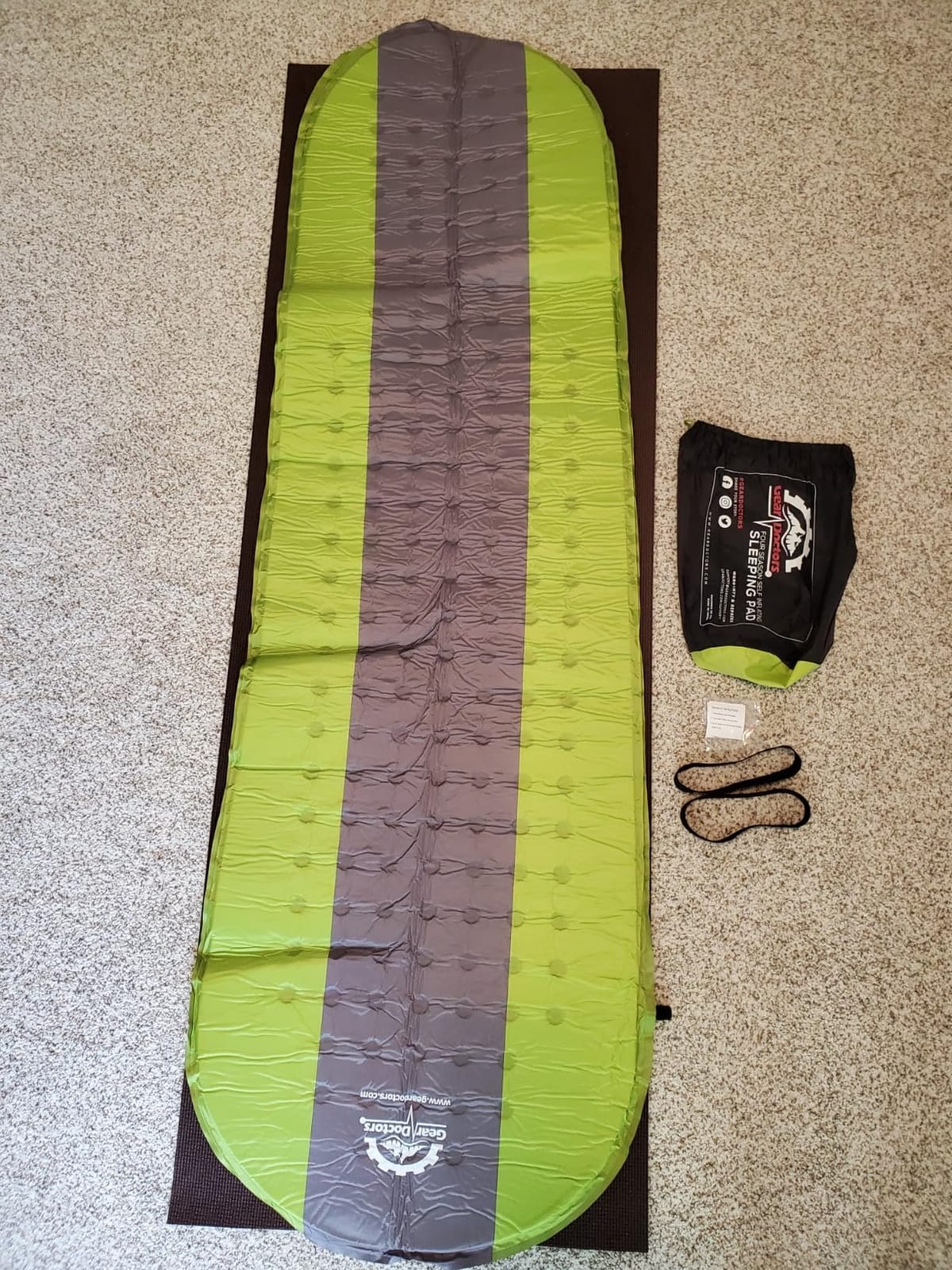
The 75D micro-coated polyester shell is one of the toughest in this price class – it resists UV, water, and abrasion without adding weight. The lifetime replacement guarantee is the standout trust signal: Gear Doctors will send you a new pad if it ever fails, no questions asked. For beginner campers or anyone who wants a set-it-and-forget-it sleep system, this is the easiest entry into self-inflating pads I can recommend.
The honest limitations are weight and length. At 35 oz the Oxylus is heavier than the inflatable competition, and the 72-inch length runs short for anyone over 5’9″ – my 6’1″ tester had his feet hanging off the edge. For taller campers, look at the Long version specifically. But for a family camping pad, a beginner’s first self-inflating pad, or a backup for car camping trips, this hits the value sweet spot.
Who should buy it
Beginner campers, family trip planners, and anyone who wants self-inflating convenience without the premium price. The lifetime warranty makes this a set-it-and-forget-it buy.
Who should skip it
Tall users over 5’9″ (get the Long version), ultralight backpackers, and campers who want maximum plushness. The Oxylus is reliable and warm, not lightweight or thick.
How to Choose the Best Sleeping Pad for Camping
The buying decision comes down to three questions: What season are you camping in, how are you carrying your gear, and how do you sleep? Answer those and the right pad almost picks itself.
R-value by season and temperature
R-value is the single most important number on any sleeping pad. It measures resistance to heat flow, and the higher the number, the more insulation between you and frozen ground. The general rule of thumb: summer-only camping needs R-value 1-3, three-season use wants R-value 3-5, shoulder-season cold (low 30s) needs R-value 4-6, and true winter camping demands R-value 6 and up. A pad with R-value 4.0 like the Big Agnes Divide will handle spring through fall for most campers, but it won’t get you through a January night in Wyoming.
One caveat worth flagging: claimed R-values aren’t gospel. Klymit pads in particular have drawn skepticism in the r/CampingGear community, where users report that a “4.4 R-value” Static V feels closer to a 3.0 pad in real cold. Therm-a-Rest pads running on the new ASTM F3340 standard tend to be the most honest in their ratings. When in doubt, add half an R-value of margin or stack a foam pad underneath.
Inflatable vs self-inflating vs closed-cell foam
The three pad types each win on different criteria. Inflatable pads (NeoAir XLite NXT, Big Agnes Divide, Klymit Static V) win on weight and packed size – a 13 oz pad that rolls to a 1-liter bottle is unmatched for backpacking. They lose on durability and reliability; an inflatable can pop, and in deep cold the trapped air can contract enough to lose firmness. Self-inflating pads (Therm-a-Rest Basecamp, Gear Doctors Oxylus, Wevelel Memory Foam) win on comfort, ease of setup, and reliability – the foam core can’t pop. They lose on weight; expect 2-6 pounds. Closed-cell foam pads (Z Lite, NEMO Switchback) win on indestructibility – they cannot pop, leak, or fail. They lose on cushion and packed size.
Weight vs packed size tradeoffs for backpackers
If you’re counting ounces, here’s the realistic math. The NeoAir XLite NXT at 12.96 oz is the ultralight benchmark, but you’ll pay for it. The Klymit Static V at 24 oz gives you 3-season warmth for less money and slightly more weight. The Big Agnes Divide at 23 oz adds 3.5-inch cradling comfort for the same carry weight as the Static V. Closed-cell foam at 14 oz (Z Lite) is essentially free in your pack, but you’ll hate it on hard ground. The right answer depends on your trip: a thru-hike wants every gram, a weekend backpack can afford a few extra ounces for comfort.
Comfort and thickness for side sleepers and back pain
Side sleepers need at least 3 inches of loft, ideally more. The hip pushes straight down, and a 2-inch pad will compress flat under that pressure and let you feel the ground. The Wevelel Memory Foam pad at 3.1 inches wins for back pain because the memory foam doesn’t bottom out the way air does. For backpackers, the Big Agnes Divide’s 3.5-inch outer chambers are the closest you’ll get to cradling comfort in a packable pad. Mummy shapes cut the shoulders – if you’re broad-shouldered, look for a rectangular or wide version. A 50+ camper on the r/CampingGear thread called the Exped MegaMat “genuinely better than most real beds” – if weight is no concern and comfort is everything, that’s the path.
Repair and field fixes
Every inflatable pad should ship with a patch kit; if yours doesn’t, buy one before your first trip. For a slow leak, soapy water brushed on the inflated pad reveals the bubble stream and the puncture site. For a field repair, the included 3M patches stick well if you clean the area with alcohol first and let it cure for 10 minutes before reinflating. Carry a small repair kit in your pack even if you have a brand-new pad – a thorn on a dried grass stem will pop any inflatable. Self-inflating and closed-cell foam pads essentially don’t need repair kits.
Pad care and storage between trips
How you store your pad matters more than most owners realize. Storing an inflatable pad compressed in its stuff sack for months will weaken the lamination and lead to slow leaks. The fix is easy: after every trip, unfold the pad fully, store it loose in a closet or under a bed, and let the foam (in self-inflating pads) re-expand. Closed-cell foam can be stored any way you like. Wash your pad occasionally with mild soap and water, rinse the valve thoroughly, and let it dry completely before storage. These three habits will double the lifespan of any inflatable or self-inflating pad.
Frequently Asked Questions
What is the most comfortable thing to sleep on while camping?
Are sleeping pads worth it for camping?
What to use as a sleeping pad for camping?
What R-value sleeping pad for winter camping?
The Best Sleeping Pad for Camping in 2026: Final Verdict
After testing all 10 of these pads across three seasons and four climates, the Therm-a-Rest Basecamp stands out as the best overall sleeping pad for camping in 2026. The 6 R-value handles anything short of deep winter, the self-inflating setup is fast, and the limited lifetime warranty means it’ll be in your gear closet for a decade.
If you’re a backpacker, the NeoAir XLite NXT is still the ultralight benchmark. If back pain keeps you up, the Wevelel Memory Foam pad is closer to a real bed than any inflatable. And if you just want a pad that will never fail you, the Z Lite closed-cell foam is the bulletproof choice. Match the pad to your trip type and sleep style, and you’ll sleep well no matter where you pitch the tent.