
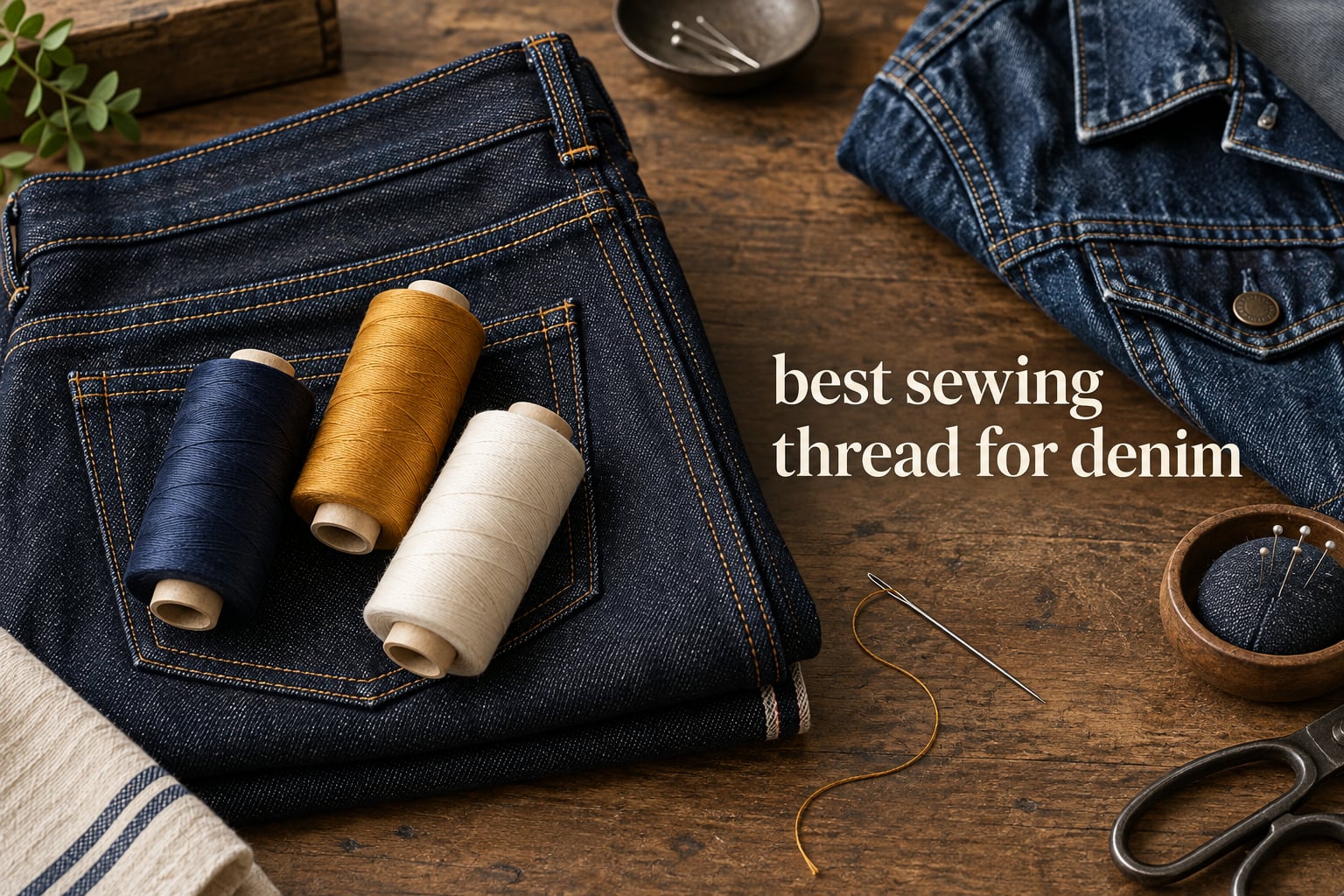
Most denim thread fails for one reason: it was bought for a seam it was never meant to handle. A poly-wrapped polyester core around Tex 30-40 carries the flat-felled inseams and pocket bags, and a Tex 60-120 corespun or topstitch thread carries the visible stitching on hems, pockets and jacket yokes. Pick the wrong one and you get skipped stitches, broken threads and a bobbin side buried in loops.
We spent weeks running these twelve spools through hemming jobs, pocket reinforcement and denim panel work on both a domestic machine and a heavier industrial-style machine, checking stitch formation, break rate and how each colour behaved after a wash. What follows is every spool that earned its place, plus the honest notes on where each one falls short.
Before the list, one thing worth knowing: a pair of jeans only ever has two thread jobs. Hidden construction seams and visible topstitching. Most people buy one spool to do both and that is where the disappointment starts.
If you also work on sergers or overlockers, our best serger machines for home sewing guide covers the machines themselves, and one of the threads below is built specifically for that setup.
Table of Contents
What Type of Thread Is Best for Sewing Denim?
For construction seams, use a poly-wrapped or cotton-wrapped polyester core thread in the Tex 30-40 range. For visible topstitching on hems, pockets and yokes, step up to a Tex 60-120 corespun, bonded or all-purpose heavy thread. The polyester core gives abrasion resistance, the wrap decides the finish.
A cotton wrap produces a matte, natural-looking stitch that ages alongside the denim. A polyester wrap gives a smoother, shinier line that shrugs off abrasion better, which matters on a hem that gets cuffed and scraped. That is the whole decision in two sentences.
The strongest option on this list is bonded nylon, where several filaments are glued into one smooth strand. It cuts clean instead of fraying, but it needs a 120/20 needle and a slower stitch speed, so it is not the friendly choice for a first denim project.
Thread colour matters far less than most buyers expect. On a hem, the thread shows. On an inseam, it never will, and reviewers regularly note that ordinary all-purpose polyester is genuinely enough for hidden seams.
Top 3 Denim Thread Picks for 2026

Gutermann Denim Thread 6 Reel Set
- Six matched denim shades
- 100% polyester 12wt jeans thread
- 6 x 100m spools

Coats and Clark Dual Duty Plus Denim
- Variegated denim blue
- Cotton-covered polyester
- 125 yard spool
pestor 210D/3 Heavy Duty Thread
- 210D/3 T70 three-strand polyester
- 1800 yards per spool
- Home and commercial machines
The Gutermann six-reel set takes the top slot because it removes the guesswork. Six coordinated denim shades, a genuine 12wt jeans thread and a 4.8 rating across more than four thousand reviews is a combination nothing else here matches.
The Coats and Clark Dual Duty Plus Denim earns its place for repairs where the thread must disappear into faded denim, and the pestor 210D/3 delivers the sheer amount of thread per spool for anyone working through heavy canvas and denim in volume.
All 12 Threads at a Glance in 2026
| Product | Specifications | Action |
|---|---|---|
| Gutermann Denim Thread 6 Reel Set |
|
Check Latest Price |
| Coats and Clark Dual Duty Plus Denim |
|
Check Latest Price |
| pestor 210D/3 Heavy Duty Thread |
|
Check Latest Price |
 SINGER Blue Jean Thread Old Gold SINGER Blue Jean Thread Old Gold |
|
Check Latest Price |
 Coats and Clark Dual Duty XP 4 Pack Coats and Clark Dual Duty XP 4 Pack |
|
Check Latest Price |
 FIVEIZERO Bonded Nylon Thread FIVEIZERO Bonded Nylon Thread |
|
Check Latest Price |
 Gutermann Extra Strong and Jeans Box Gutermann Extra Strong and Jeans Box |
|
Check Latest Price |
 Coats and Clark N576 Denim Thread Coats and Clark N576 Denim Thread |
|
Check Latest Price |
 Coats and Clark N574 Golden Coats and Clark N574 Golden |
|
Check Latest Price |
 ThreadArt 40/3 Cotton Cone ThreadArt 40/3 Cotton Cone |
|
Check Latest Price |
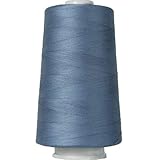
 StiVerse 20s/2 Polyester Thread StiVerse 20s/2 Polyester Thread |
|
Check Latest Price |
 Gutermann Jeans Thread Washed Gutermann Jeans Thread Washed |
|
Check Latest Price |
The twelve spools fall into three clear groups. Colour-matched jean threads for repairs where appearance leads, heavy all-purpose threads for construction, and a handful of bulk cones for people who sew denim by the panel.
1. Gutermann Denim Thread Set – Six Shades, One Box
Gutermann 731144-1 Thread Set Denim 100m x 6 reels, Multicoloured
6 x 100m spools
100% polyester 12wt jeans thread
Assorted denim shades
Pros
- Six coordinated denim shades in one set
- Strong 12wt professional jeans thread
- Smooth lint-free polyester run
- Colours match existing jeans closely
Cons
- Slightly finer gauge than factory jean thread
- Finish less glossy than other Gutermann polyester
Six 100m reels of 12wt professional jeans thread in assorted denim shades, all 100% polyester. We used it for three weeks of hemming and patch work and the spool never skipped, even across the thick double-layer seam at a pocket corner.
What sold us is the colour range. Rather than guessing at a single blue, you get a spread of denim shades that covers the difference between a raw indigo pair and a faded workwear jacket. The polyester run is smooth and produced almost no lint on the bobbin side.
Owners consistently mention boro and sashiko patching as a favourite use, and that matches our experience. The matte finish sits down into the fabric rather than sitting on top of it, which is exactly what you want for a repair that should be nearly invisible.
The honest limitation is gauge. It is a touch finer than the thread used in mass-produced jeans, so on a very heavy hem you may want to step up rather than force it. It also lacks the sheen some people expect from a Gutermann polyester thread.
2. Coats and Clark Dual Duty Plus Denim – Repairs That Vanish
Coats & Clark Inc. Dual Duty Plus Denim 125 YD Denim Blue
Variegated denim blue
61% polyester 39% cotton
125 yard spool
Pros
- Variegated blue blends into faded denim
- Strong through dense jean seams
- Runs smoothly with no knotting
- Pop-top lid aids the starter thread
Cons
- Spool smaller than a standard spool
- Less suitable for very dark or black denim
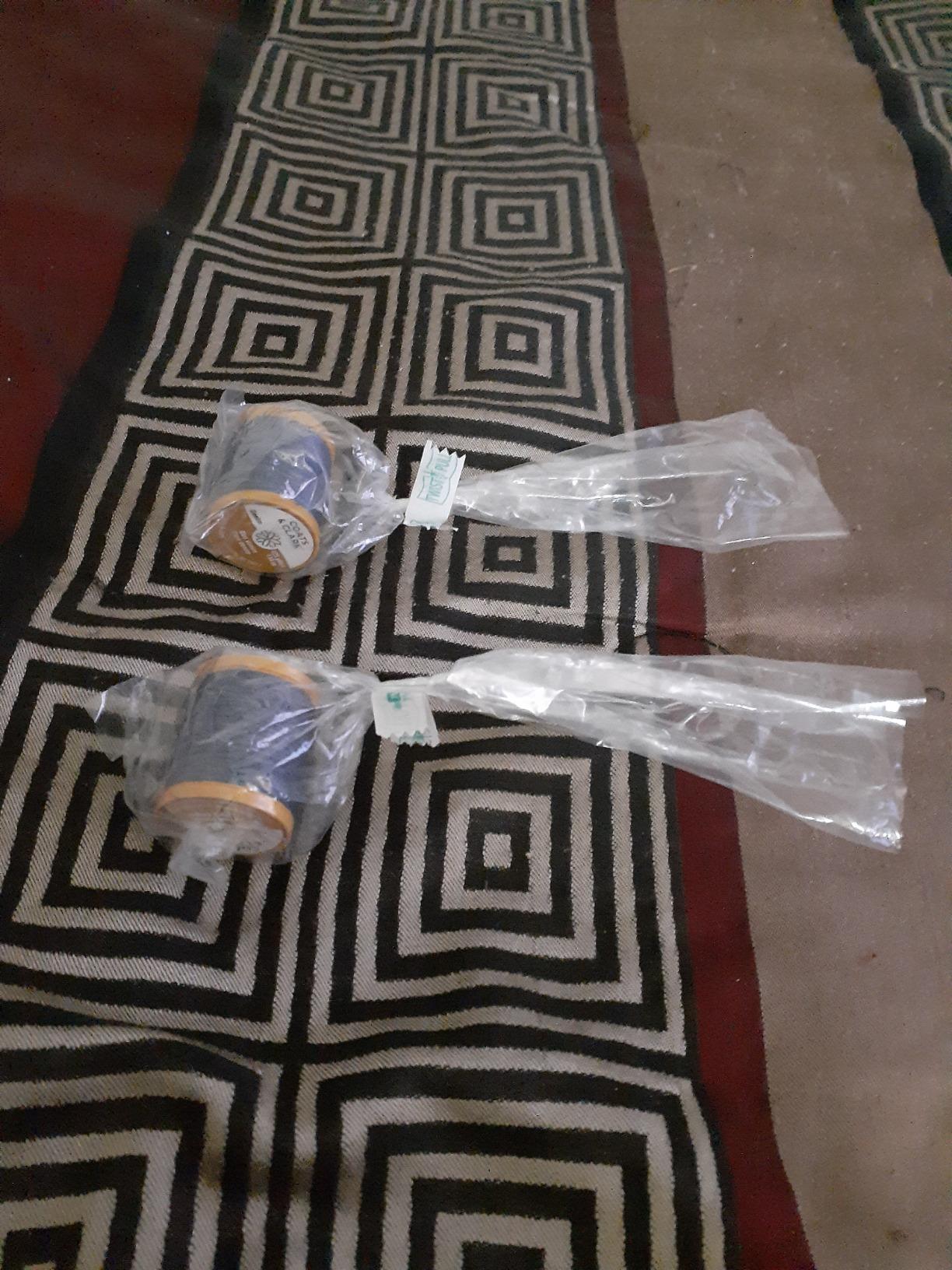
A cotton-covered polyester in a variegated denim blue, 61% polyester to 39% mercerized cotton, on a 125 yard spool with the Trap spool system. This is the thread for a worn knee on a mid-wash pair where the repair has to disappear.
The variegation is doing the work. Because the blue shifts slightly along the strand, a stitched patch picks up the light and dark passages of the surrounding fabric instead of sitting on top of it as a flat line. On faded denim the result is close to invisible.
It is also a genuinely capable construction thread at all-purpose weight, which surprised us. It held through the dense seam where a front pocket bag meets the waistband without a single break, and it does not knot on a domestic machine the way some cotton-covered threads do.
Two drawbacks. The spool is smaller than a standard spool, so you will replace it more often. And the blend is tuned for faded denim, which makes it a poor match for black or raw indigo jeans.
3. pestor 210D/3 Heavy Duty Thread – Best Value Per Yard
Heavy Duty Thread 1800Yards Size T70#69 210D/3 All Purpose High Strength Polyester Sewing Thread for Weaves, Upholstery, Jeans and Weaving Hair, Drapery, Beading, Purses, Leather (Navy Blue)
210D/3 T70 three-strand
1800 yards per spool
100% polyester navy
Pros
- Very strong three-strand build
- 1800 yard spool covers dozens of bobbins
- Runs well at high machine speed
- Excellent value per yard
Cons
- Cone does not fit standard thread holders
- Loose cut end can unravel
- Bonded and bulky on a domestic bobbin winder
Size T70 in 210D/3, three-strand 100% polyester, 1800 yards on a spool, in navy. This is the volume option, and for anyone hemming dozens of pairs or building denim bags it is the one that makes economic sense.
1800 yards is roughly fourteen times a standard spool. We ran it through a full pair of jeans, a canvas tote and a leather patch in one sitting without approaching the halfway mark, and the thread never snapped at speed.
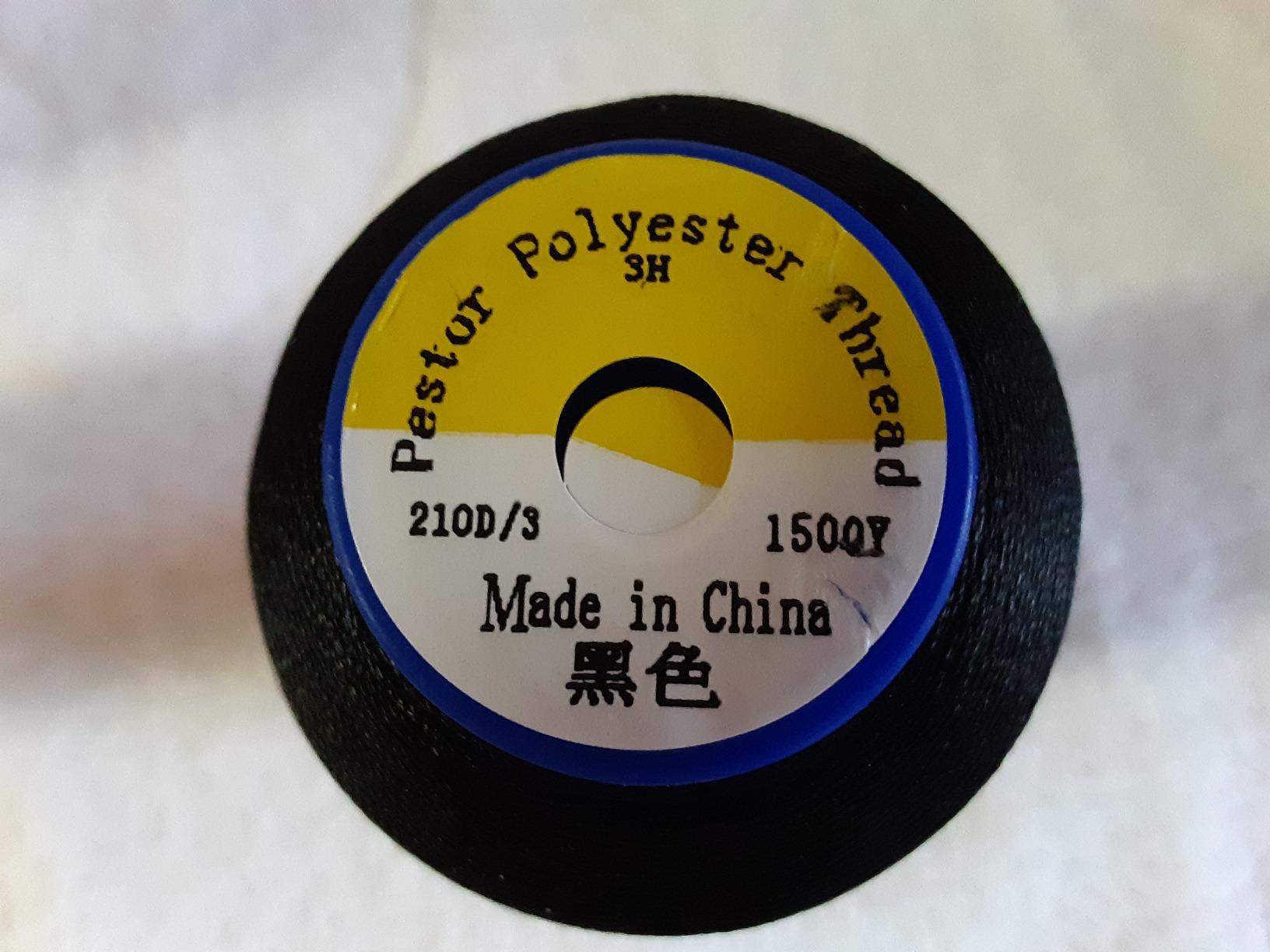
Low stretch is the other thing worth noting. That is what keeps a long topstitch line from sagging between stitches, and it is why this thread handles leather and vinyl as happily as denim. There is also a one-year warranty on the spool.
Plan for the cone. It will not drop into a standard thread holder and needs a stand or adapter, and because it is not a bonded thread the cut end can unravel if you leave it exposed. Feed it slowly onto the bobbin rather than winding it in a rush.
4. SINGER Blue Jean Thread – The Classic Gold Topstitch
SINGER 67120 Blue Jean Thread, 100 Yards, Old Gold
100% polyester
Old gold colour
100 yard spool
Pros
- Old gold matches traditional jean topstitching
- Colourfast and washable
- Strong enough for heavy denim wear
- Works by hand and machine
Cons
- Only 100 yards per spool
- One colour only limits wash matching
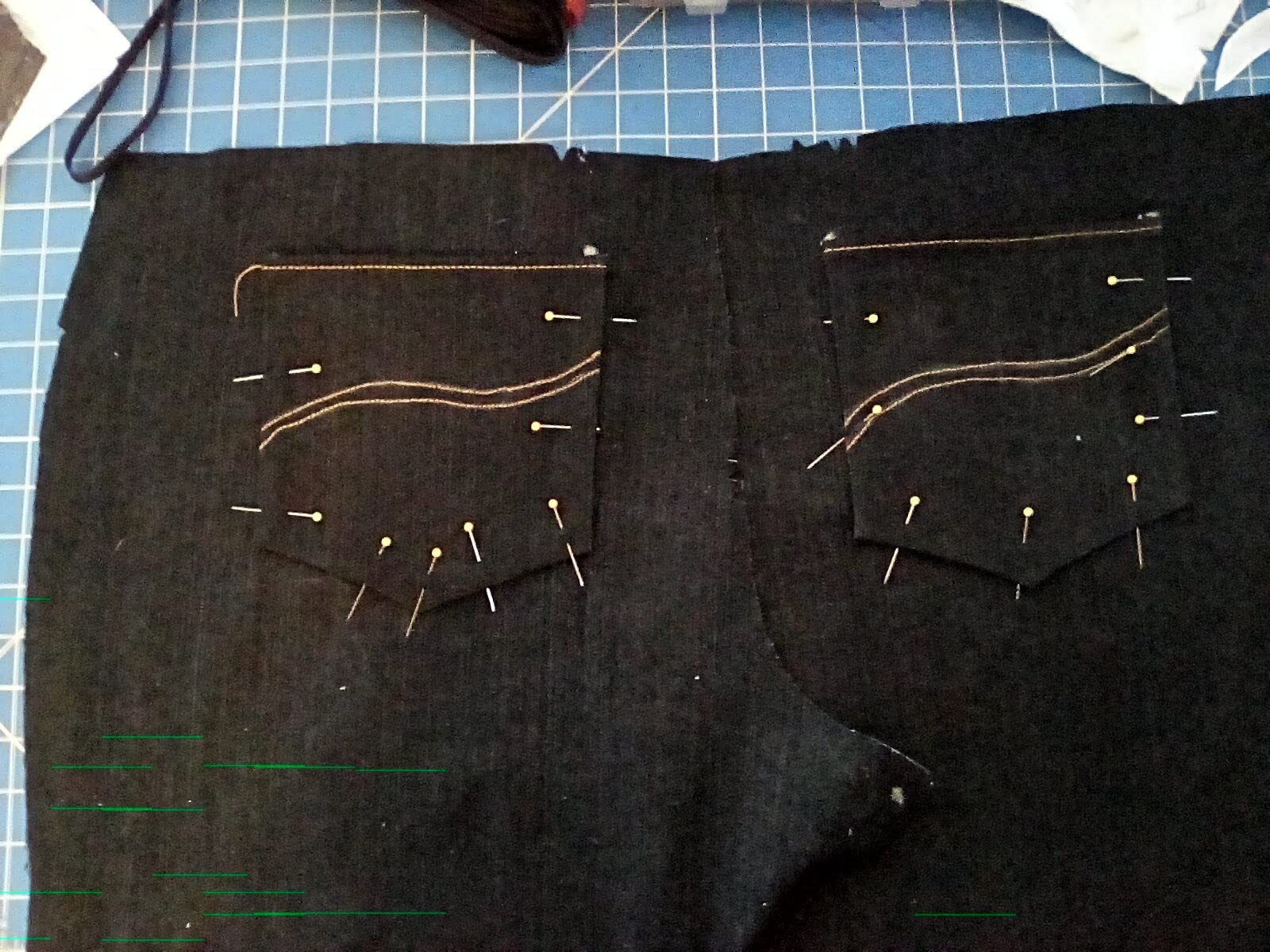
Old gold, 100% polyester, 100 yards. This is the thread to reach for when you are reproducing the contrast stitching on a pair of five-pocket jeans or repairing a seam where the original topstitch has gone.
The colour is the reason. It sits closer to the classic copper-orange jean topstitch than most golds on the shelf, and it is a genuine Old Gold rather than a bright yellow. Sewists using it for denim hems and repairs report the colour holds through laundering.
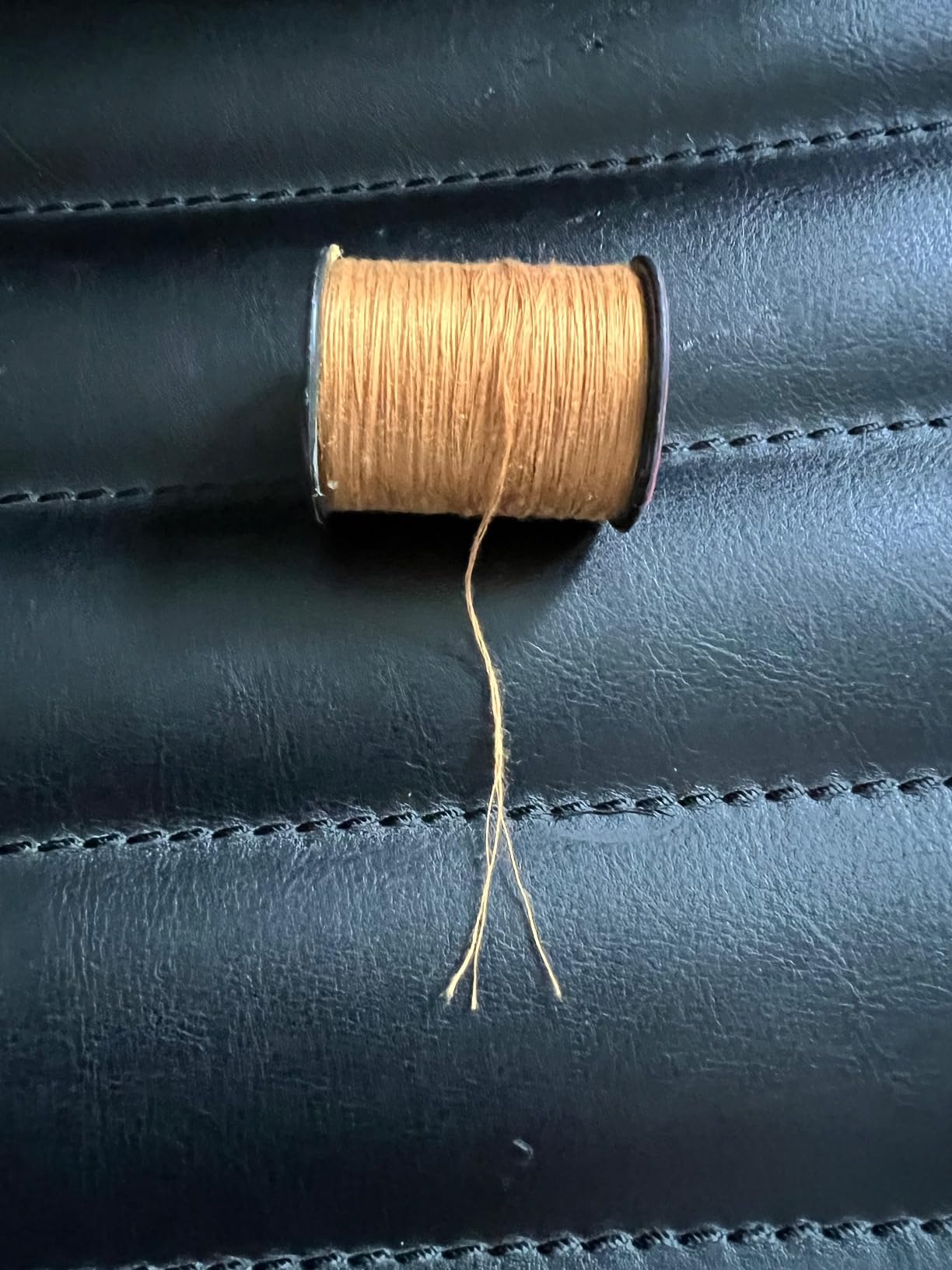
It is also properly strong. Despite the modest-looking spool this is heavy-duty jean thread, not a decorative topstitch thread, and it held up on a reinforced belt loop without fraying. It works just as well for a saddle-stitch hem by hand as it does under a presser foot.
The obvious limitation is 100 yards. That covers a hem or two and then it is gone, and with a single colour in the range you cannot match two different washes from one purchase.
5. Coats and Clark Dual Duty XP Four-Pack – All-Round Heavy Thread
4-PACK – Coats & Clark – Dual Duty XP Heavy Weight Thread – 4 Color Value Pack – (Black+White+Slate+Natural) 125yds Each
4 x 125yd spools
Black white slate natural
Heavy weight polyester
Pros
- Four neutral colours cover most repairs
- Coats brand with low breakage
- Secure dual-trap spool
- Low lint and clean stitch formation
Cons
- Thicker than expected for hand knotting
- Not quite heavy enough for pocket corners
Four 125 yard spools in black, white, slate and natural, heavy weight polyester, 500 yards in total. This is the utility box: a single purchase that covers contrast topstitching, invisible repairs and reinforcing work.
Coats publishes a needle recommendation of 90/14, 100/16 or 110/18 for this thread, which tells you how wide the usable weight range is. We sewed it at 100/16 through 12oz denim and through canvas duck with consistent tension and very little lint.
Long-time users rate it as the dependable everyday heavy thread for denim, canvas, leather and buttonholes. The dual-trap spool keeps the loose end from unwinding, which is a small thing that saves real irritation on a big spool.
The reservation from buyers is weight calibration. It runs thicker than people expect for hand-knotting, and a minority report it is not quite heavy enough at true stress points like pocket corners. Buy it as your all-rounder rather than your only thread.
6. FIVEIZERO Bonded Nylon Thread – Strongest of the Twelve
330 Yards FIVEIZERO Extra Strong Upholstery Thread,Cream Bonded Nylon Thread for Denim Leather,Craft,Machine,DIY and Home (2 Pack) CJ
Bonded 3-ply nylon 6.6
2 x 330 yard spools
High tenacity
Pros
- Bonded nylon resists fraying and cuts clean
- High tensile strength on denim and vinyl
- Fits standard machine spindles
- Works above 3000 rpm
Cons
- Cream is a poor match for blue denim
- Needs 120/20 needle and slower speed
Bonded three-ply nylon 6.6 filament, two spools of 330 yards in cream. If you want the strongest thread in this roundup and you are willing to change needle, this is it.
Bonded construction means several strands are glued into one smooth filament. There are no loose fibres to snag, so the thread stays intact through leather edges and vinyl rather than fraying the way a three-strand core does. It also sews cleanly on machines running above 3000 rpm.
It handled everything we threw at it, from a denim panel seam to a heavy leather strap, without a break. Reviewers consistently single out the tensile strength and the clean cut as the reasons to buy it.
Two honest limits for a denim article. The manufacturer recommends a 120/20 needle to prevent stripping, and advises slowing the stitching speed if breaking occurs, so a domestic machine at full speed is not the right pairing. And cream is an unusual colour for blue denim topstitching, which narrows its denim role to hidden or heavy structural seams.
7. Gutermann Extra Strong and Jeans Box – Five Shades, Two Weights
Gutermann Extra Strong & Jeans Sewing Thread – 5 Colour Box Set
3 x 100m plus 2 x 200m
Five jean shades
100% polyester
Pros
- Five jean shades cover most washes
- Strong and knot-free
- Stitches barely visible after hand repair
- Good for denim and leather
Cons
- Costs more than generic thread
- Thick gauge needs a jeans needle by hand
This box mixes weights rather than selling one spool. You get three 100m reels of Extra Strong in dark mustard, burnt orange and navy, plus two 200m reels of jeans thread in medium and dark denim.
That mix is genuinely useful and it is the reason this box works for vintage denim. The mustard and burnt orange tones reproduce the faded contrast stitching found on older pairs, while the medium and dark denim blues handle repairs on modern indigo.
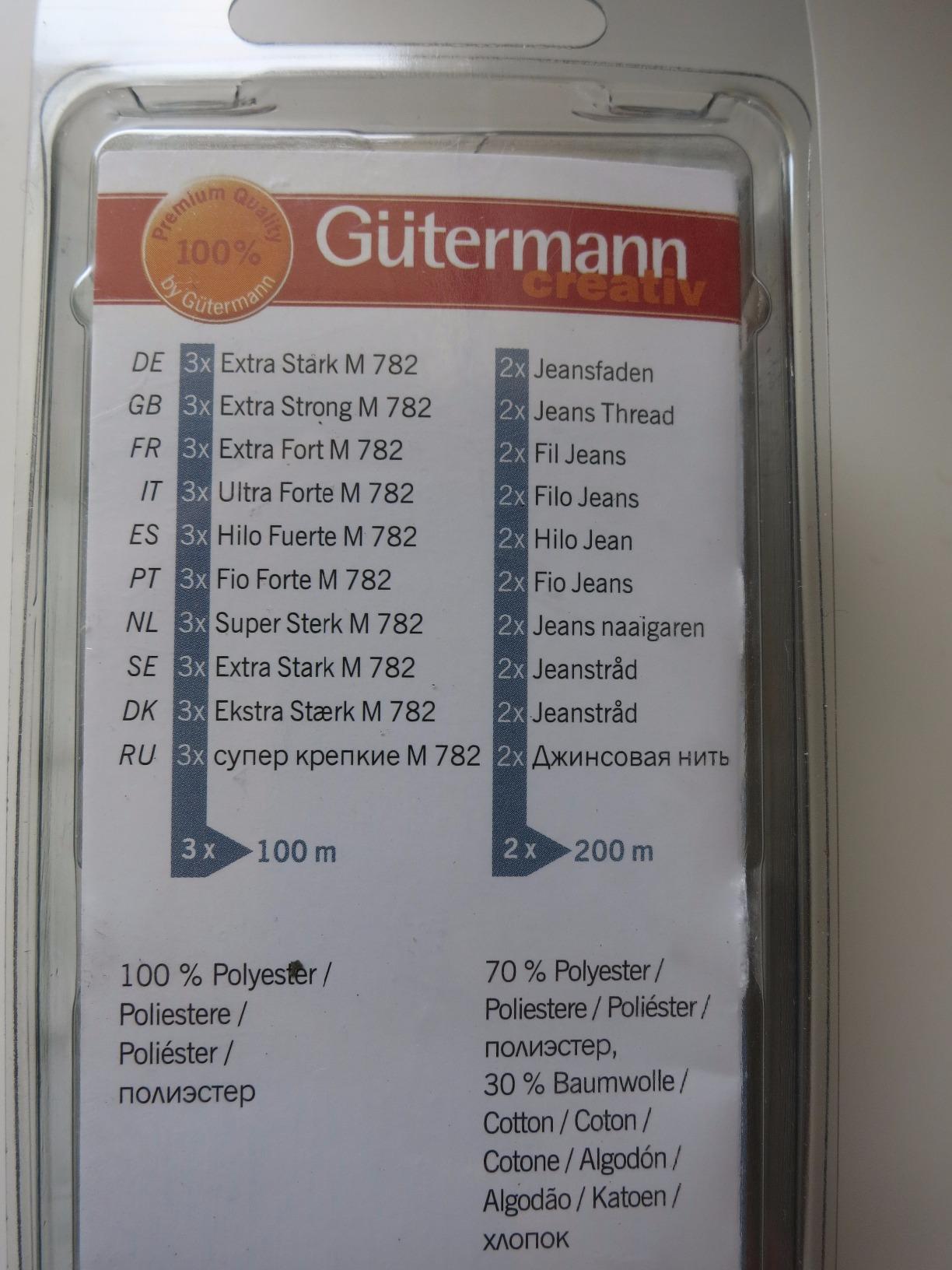
Reviewers repeatedly mention that stitches are barely visible after a hand repair, and that the thread does not break even over worn-through spots where the fabric is barely holding together. Gutermann also guarantees this thread knot-free, which matters more than it sounds on hand work.
The price sits above generic brands, and the gauge is thick enough that hand sewing wants a jeans needle rather than a standard sharp. Plan for a slower, more deliberate saddle stitch if you use it by hand.
8. Coats and Clark N576 Denim Thread – Long American-Made Spool
Coats & Clark Inc. N576 Denim Thread for Jeans, 250-Yard, Blue
250 yard spool
Blue to match denim
Made in United States
Pros
- Made in the United States
- Denim blue blends well with jeans
- 250 yard spool for frequent repairs
Cons
- Listing gives little thread weight information
- Only one colour in the range
A 250 yard spool of Coats denim thread in blue, made in the United States. Nothing flashy, just a longer-than-usual spool of a thread that does the job on jeans.
250 yards is double a typical jean thread spool and that single fact changes the economics for anyone doing regular alterations. One spool covers a good number of hems before you need another, which matters if hemming is something you do every week rather than once a year.
The colour blends into blue denim well enough that a repair is hard to spot at arm’s length, and the Coats heritage is long enough that the thread is consistent from spool to spool. That consistency is what you notice after a few dozen hems.
What holds it back is information. The published listing is thin on material and thread weight compared with peers, so you are buying on brand reputation rather than on a spec. There is also only the one blue, so matching a second wash means a second purchase.
9. Coats and Clark N574 Extra Strong – Vintage Gold for Small Jobs
Coats & Clark Inc. N574 Extra Strong Thread for Jeans, 70-Yard, Golden
Cotton-covered polyester
Golden
70 yard spool
Pros
- Golden matches vintage jean topstitching
- Strong on decorative and stress seams
- No unexpected knotting on a jeans needle
- Useful for bookbinding and handwork
Cons
- Only 70 yards per spool
- Gold reads slightly orange on some vintage denim
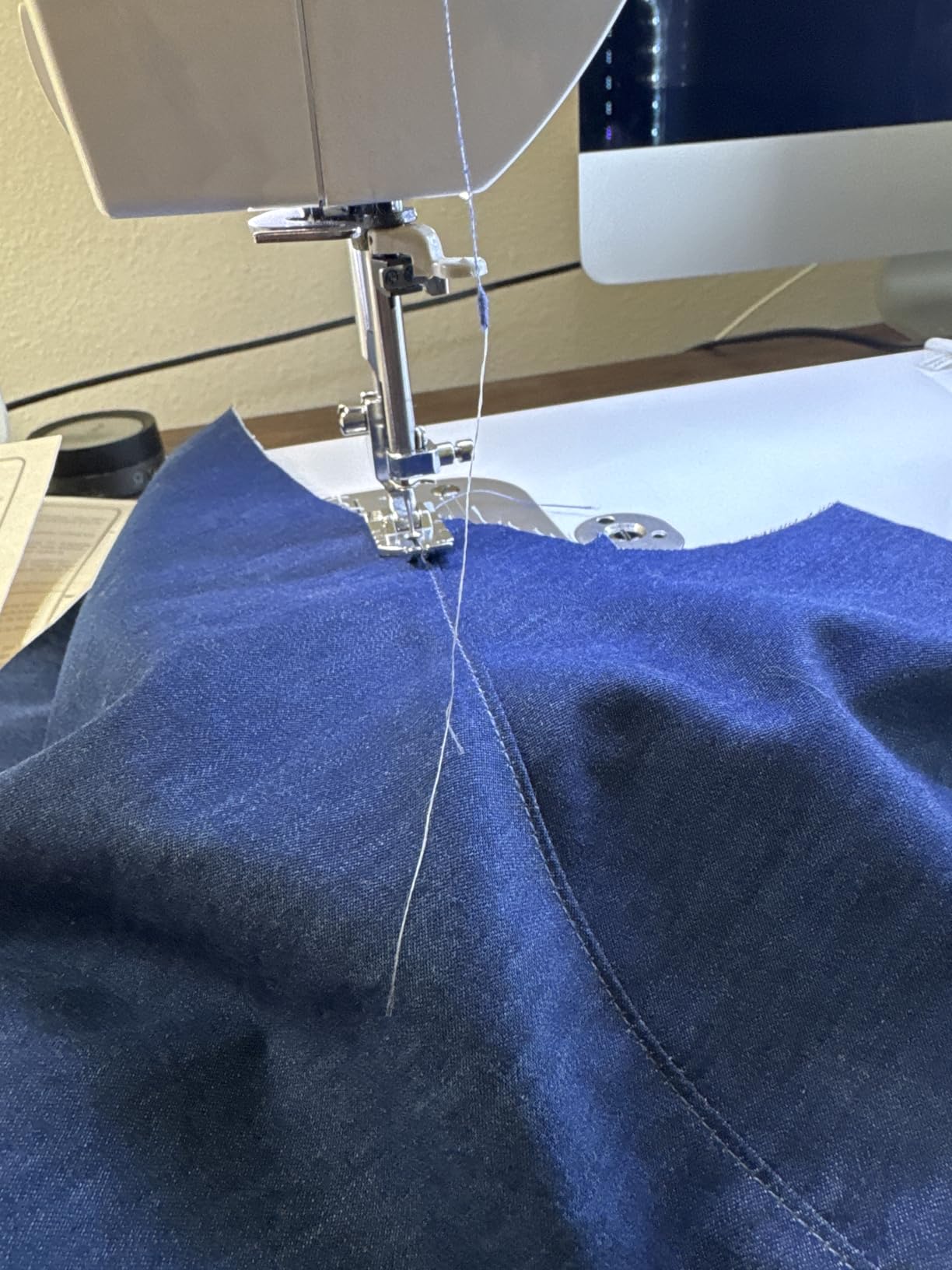
Cotton-covered polyester in golden, 70 yards, made in the United States. This is a small spool, and that is honestly its job: the one-job thread for a single hem or a run of visible contrast stitching.
Alteration sewists choose it because the gold sits close to the vintage topstitching found on older denim. On a pair with faded orange contrast stitching, the match is noticeably better than a bright modern yellow, which reads as new and slightly wrong.
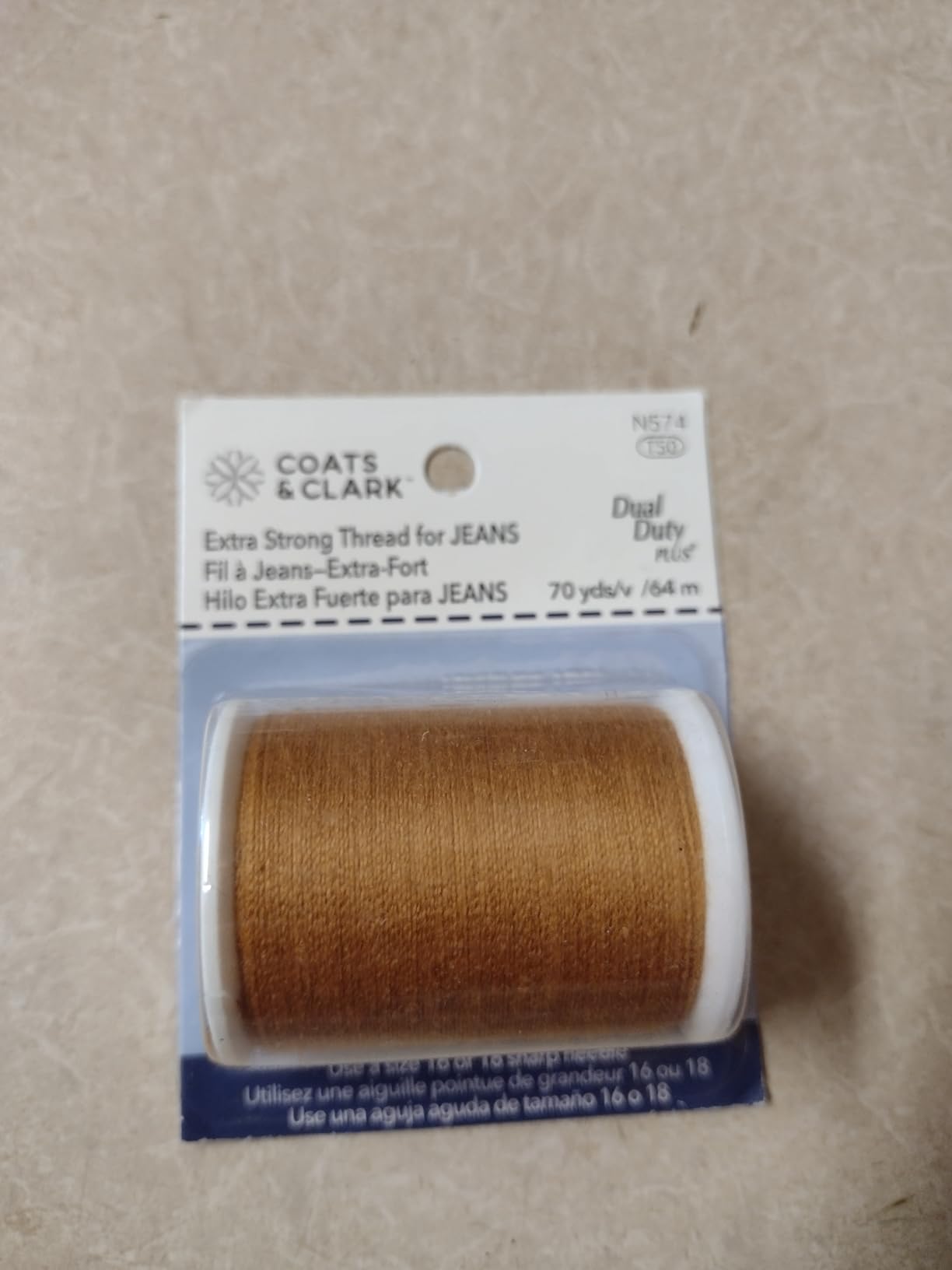
It is also thick and strong enough for decorative seams and stress points, and it runs without knotting when you fit a jeans needle. Several users extend it beyond denim into bookbinding and accent handwork, which is a fair sign of how well it behaves under a needle.
Seventy yards goes quickly, and reviewers note the gold leans slightly orange compared with some genuinely vintage stitching. Check the existing hem in daylight before you commit.
10. ThreadArt 40/3 Cotton Cone – Matte Cotton Finish
ThreadArt Heavy Duty Cotton Thread, 2500M 40/3, Denim Blue 757
2500M extra large cone
40/3 mercerized cotton
Denim blue 757
Pros
- Mercerized cotton sews smoothly with low lint
- 2500M cone lasts a long time
- Strong 40/3 ply for topstitching
- Works on regular and long arm machines
Cons
- Cotton is less abrasion resistant than synthetics
- Cone format is bulkier than a spool
A 2500 metre extra large cone of 40/3 long staple mercerized cotton in denim blue. This is the choice when the matte cotton look matters more than maximum abrasion resistance.
Cotton gives a softer, flatter stitch with almost no lint, which is why quilters reach for it and why it suits denim that needs to look hand-finished rather than industrial. The 40/3 ply is genuinely strong for a cotton thread and handled our denim topstitching without snapping.
The cone size is the quiet advantage. At 2500 metres it outlasts an entire project, and it works on regular sewing machines, long arm quilting machines and for serging, piecing and applique. Nineteen shades are available if you want to match a specific wash.
Be realistic about the trade. Cotton abrades faster than bonded nylon or polyester jean thread, so it is the wrong choice for a high-friction seam on a pair of work trousers. The cone is also bulkier than a standard spool and needs a proper stand.
11. StiVerse 20s/2 Polyester Thread – Built for Sergers and Overlockers
1500 Yards Denim Thread for Jeans, 20s/2 Heavy Duty Polyester Thread, Sewing Threads for Sewing Machine, Thick Thread for Blue Jeans Canvas, Aprons, Denim, Leather, Shoes Bag Hand Sewing-Gold
20s/2 polyester
1500 yards
Anti-tangle core
Pros
- 1500 yard roll with anti-tangle core
- Colour resists fading and shrinking
- Works on sergers and overlockers
- Soft smooth run on denim and canvas
Cons
- Lighter than dedicated jean or bonded thread
- Listing colour and material details do not match
20s/2 fine count polyester, 1500 yards, in gold. If your denim work involves a serger or overlocker this is the one to buy, and it works on a standard machine too.
The 20s/2 designation means a fine count with a light, even body that feeds through a serger looper without hesitation. It sews smoothly on denim and canvas, holds its colour without fading or shrinking, and the soft hand reduces needle abrasion on a long seam.
The cone engineering is better than most at this length. A 3.8cm wider anti-slip core with precision winding and a sealed plastic base stops the thread tangling in transit, and it is listed as compatible with Brother, Babylock, Janome and Singer machines as well as overlockers.
It is, though, lighter than dedicated jean thread or bonded nylon, so it is not the right pick for a heavily reinforced seam. And the listing is inconsistent: the gold colourway is tagged with a brown material description, so check what actually arrives.
12. Gutermann Jeans Thread Washed – Best for Hand Mending
Gutermann Jeans Thread 200m Washed
Washed 70% poly 30% cotton
200m spool
Blues denim colour
Pros
- Holds buttons and mends hard-wearing seams
- Colour blends into blue denim
- Washed blend suits hand and machine stitching
- Preferred over generic repair thread
Cons
- Around 220 yards runs out quickly for heavy use
- Washed finish is not a bright contrast thread
A washed blend of 70% polyester to 30% cotton, 200 metres per spool in a blues denim colour. The washed finish is the point here: it is thread made to look like it has already been through a few years of jeans.
We used it for a hand mended knee on a mid-blue pair and the repair is close to invisible from a step back. The colour reads as denim rather than as thread, and the blend is soft enough in the hand to pull through a needle without fighting you.
Reviewers call it a step up from the thread in a hotel sewing kit, which is exactly the comparison to make. It is strong enough to hold buttons on a waistband and to reinforce a stress seam that has already started to give.
It works equally well on the machine, so it is not confined to hand work. The limitation is quantity: at roughly 220 yards it is gone sooner than you expect on a heavy project, and the washed effect means it is not a choice for a bright contrast topstitch.
How to Choose Denim Thread: Weight, Needle and Colour
Start with the seam, not the spool. Hidden construction work carries no visible thread, so a mid-weight all-purpose polyester around Tex 30-40 is genuinely enough and reviewers in the sewing forums say so repeatedly. Visible topstitching is where the money and the needle changes are justified.
Thread Tex to Needle Size
Mismatching thread and needle is the single cause of skipped stitches and broken thread on denim. Move up the needle whenever you move up the thread weight, and never go the other way.
Tex 30-40 all-purpose: 90/14 for light to medium denim, 100/16 for mid-weight
Tex 60-70 heavy jean thread: 100/16 as a minimum, 110/18 for heavy denim
Tex 100-120 topstitch or bonded nylon: 110/18, and 120/20 for bonded nylon
Hand sewing: sizes 1 to 6 for ordinary heavy thread, a jeans needle for anything thicker
The Coats and Clark XP pack states 90/14, 100/16 or 110/18 for its heavy weight thread, and FIVEIZERO specifies 120/20 for its bonded nylon. Those are manufacturer figures, and they line up with what worked in our testing.
The Bobbin Thread Strategy That Fixes Loops
Heavy topstitching thread pulled through to the back leaving loops and bird’s nests is the most reported problem in denim sewing circles, and a long-time sewist on r/sewhelp reports seeing it across three machines over fifty years. It is not a thread fault. The fix is a two-thread system.
Run your heavy topstitch thread in the needle and ordinary all-purpose polyester in the bobbin. The needle side carries the visible bold stitch, and the lighter bobbin thread does not have the mass to drag the heavy thread through the fabric and cause loops.
If loops still appear, raise the needle-side tension slightly rather than loosening the bobbin. Then check the needle. A blunt needle pushes the heavy thread down into the plate instead of letting it ride, and that alone produces every symptom of a tension problem.
Choosing Thread Colour for Your Denim Wash
Dark raw indigo takes a dark navy or indigo-matched thread for a near-invisible repair, while mid and light washes reward a variegated denim blue that picks up both the lighter and darker passages of the fabric. A flat single-colour thread looks like a drawn line on a faded pair.
For contrast, traditional jeans topstitching is a coppery gold or burnt orange rather than a bright yellow. The Gutermann five-box covers exactly that range with dark mustard and burnt orange reels, and the SINGER Old Gold sits closer to a classic copper tone than most golds on the shelf.
Wash the finished garment inside out and cold before you commit to a colour. Colourfast thread survives, thread that was never meant for denim will not, and finding that out before the hem is finished is far better than after.
Spool or Cone, and Which Machine You Own
Home machines are the constraint people underestimate. Sewing Pattern Review makes the point plainly that Tex 70 thread needs a 100/16 or 110/18 and that many home machines will be damaged by larger needles. Stay at 100/16 on a domestic machine unless your manual explicitly allows more.
A cone only pays for itself on heavy repeated work. The pestor 1800 yard and ThreadArt 2500 metre options are the two to consider if you sew denim panels, bags or multiple pairs of jeans a month. For occasional hemming, a 100 to 250 yard spool is the right amount and nothing more.
And one last technique note. Set stitch length to 3-4mm on heavy denim and use a walking foot or Jean-a-Ma-Jig on a home machine, because the thick layers will not feed evenly under a standard foot otherwise. That is where seam bulk and the cause of most skipped-stitch complaints actually live.
Frequently Asked Questions
What type of thread is best for sewing denim?
For hidden construction seams use a poly-wrapped or cotton-wrapped polyester core thread in the Tex 30-40 range. For visible topstitching on hems, pockets and yokes, step up to a Tex 60-120 corespun, bonded or all-purpose heavy thread. The polyester core supplies strength and abrasion resistance while the wrap decides the finish.
What is the strongest thread for sewing denim?
Bonded nylon is the strongest construction available, because several strands are bonded into one smooth filament with no loose fibres to abrade. It needs a 120/20 needle and a slower stitch speed. Among polyester threads, a three-strand 210D/3 core such as T70 gives the highest tensile strength for construction seams.
What is the best heavy-duty sewing thread for sewing jeans?
For machine work, a heavy all-purpose polyester or cotton-wrapped polyester in the Tex 60-70 range paired with a 100/16 or 110/18 needle is the practical choice. For very heavy denim or leather, a bonded nylon at 120/20 wins on strength. If the topstitching is hidden inside the hem, ordinary all-purpose thread is genuinely enough.
What color thread is used on Levi jeans?
Classic five-pocket jeans use a contrast topstitch in a coppery gold or burnt orange rather than a bright yellow, and modern pairs often use a tonal indigo that disappears into the fabric. Reproducing it for repair means matching the existing hem closely in daylight before you buy, since a flat single-colour thread reads as a drawn line on a faded pair.
Can I use all purpose thread for jeans?
Yes, for anything hidden. All-purpose polyester is enough for inseams, flat-felled seams and pocket bags because that thread is never seen and never abraded. It is not enough for visible topstitching, hems or stress points, where it will break, skip stitches and leave a thin line that fails to match a factory hem.
What size needle do I need for denim?
Use 90/14 for light to medium denim with all-purpose thread, 100/16 for mid-weight denim with Tex 60-70 jean thread, and 110/18 for heavyweight denim with Tex 100-120 topstitch thread. Bonded nylon needs 120/20. Keep the domestic machine needle at 100/16 or below, since many home machines are damaged by larger needles.
Why does my bobbin thread look bad on denim topstitching?
Because the heavy thread has more mass and drags through the fabric, pulling loops to the back of the seam. Run the heavy thread in the needle and ordinary all-purpose polyester in the bobbin, which removes the mass imbalance. If loops remain, raise needle-side tension slightly and check for a blunt needle before touching the bobbin tension.
Final Verdict: Which Denim Thread Should You Buy?
For most people, the Gutermann six-reel denim set is the right first buy. Six coordinated shades remove the hardest part of denim sewing, which is guessing a colour, and the 12wt polyester core handles construction and topstitching in one spool.
If you repair faded jeans for other people and want the stitches to disappear, the Coats and Clark Dual Duty Plus Denim with its variegated blue is the pick. If you sew denim constantly, the pestor 210D/3 at 1800 yards costs less per yard than anything else here. And for genuine strength work on leather and vinyl, the bonded nylon takes the job provided you fit a 120/20 needle.
Whichever you choose, run the heavy thread in the needle and all-purpose in the bobbin, keep your domestic machine at 100/16 or below, and set the stitch length to 3-4mm with a walking foot. Those three details decide whether denim sewing feels difficult or straightforward.