
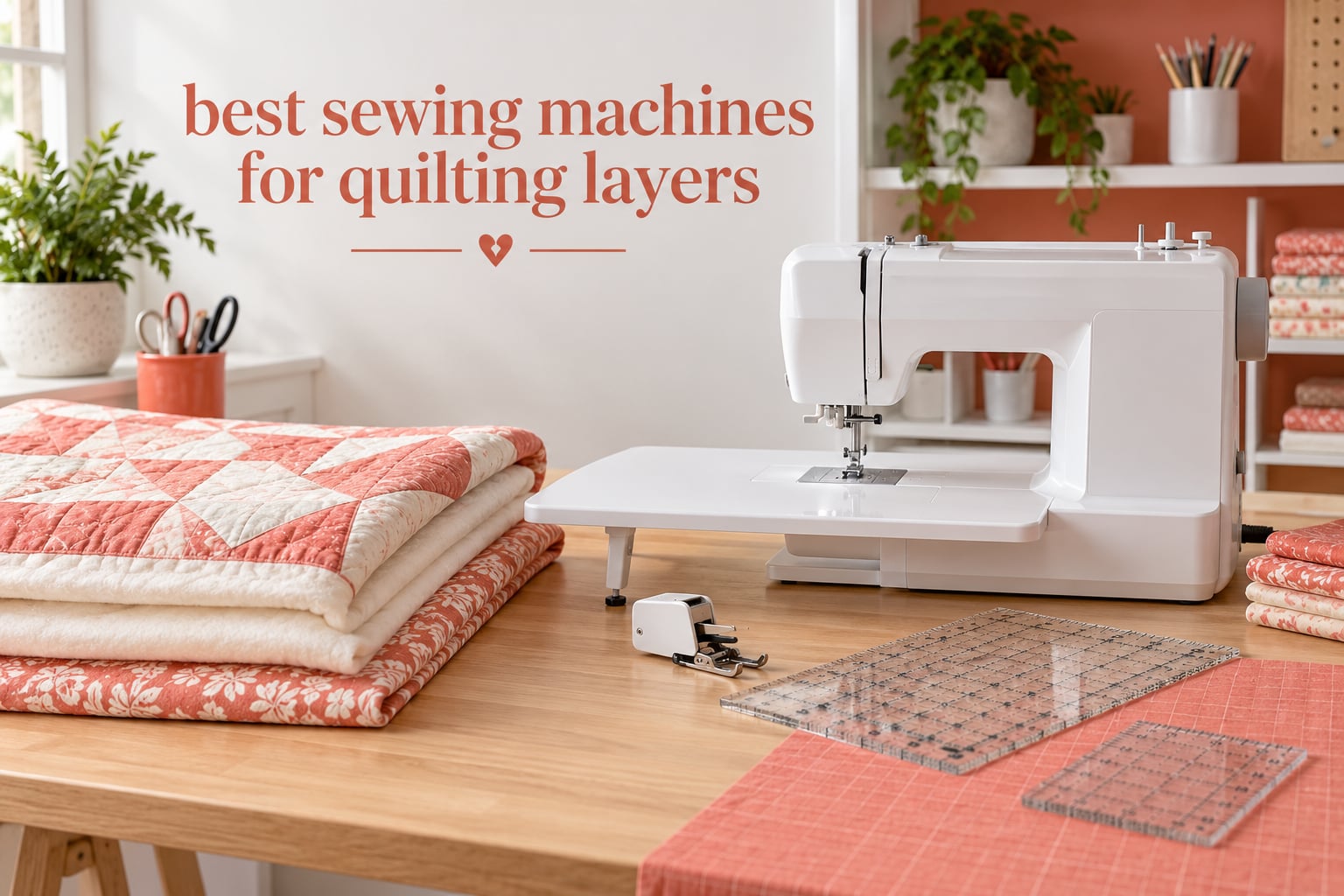
Most quilters use a plain domestic sewing machine with a wide extension table, a walking foot and a quarter inch quilting foot. A dedicated quilting machine is not required to sew thick layers, and the machine that handles batting and a dense quilting cotton best is often the one you already own. What actually decides the outcome is motor power, presser foot lift, an even feed system and throat space, not the price tag or the stitch count on the box.
That is the whole argument of this roundup. We read the spec sheets, the owner reports and the service notes on ten machines, then asked one question of each: will it move a quilt sandwich through without skipping, bunching or breaking thread? The list below covers the entry computerized machines most beginners buy, the straight-stitch industrial workhorses that regulars on r/quilting recommend by default, and the semi-industrial machines people graduate to once they quilt a king.
Two things get said constantly and neither is true. The first is that you need a machine costing several times more before a quilt is possible. The second is that a bigger stitch library means better quilting. Neither survives contact with a real sandwich. A 165-stitch machine with a wide table and a walking foot will piece a queen top more happily than a straight-stitch-only industrial with fifty feet in the box, because piecing is about visibility, feed and a quarter inch seam, not about zigzags you will never use.
What does matter is worth stating plainly. You need enough room to the right of the needle that the quilt is not bunched under your arm. You need a motor and frame that keep pushing when three layers of quilting cotton and batting hit the foot. You need feed that pulls the top and the bottom at the same speed, or the layers drift apart. And you need enough foot lift to get under the seam you just made. Get those four right and the machine brand stops mattering much.
Table of Contents
Top 3 Picks for the Best Sewing Machines for Quilting Layers in 2026
The three machines below cover the most ground for the least compromise. One is the fast straight-stitch quilter, one is the do-everything value pick, and one is the feature-loaded machine for people who also sew garments and decor.

All Ten Machines at a Glance in 2026
Every machine below is written up in full further down. Read the table first if you want the short version: it is ordered as listed, with the same specification detail used in each review.
| Product | Specifications | Action |
|---|---|---|
| JUKI TL-2000Qi |
|
Check Latest Price |
 Brother HC1850 Brother HC1850 |
|
Check Latest Price |
 Brother XR9550 Brother XR9550 |
|
Check Latest Price |
| Singer 9960 Quantum Stylist |
|
Check Latest Price |
 Brother ST150HDH Brother ST150HDH |
|
Check Latest Price |
 Janome JW8100 Janome JW8100 |
|
Check Latest Price |
 Janome MC6650 Janome MC6650 |
|
Check Latest Price |
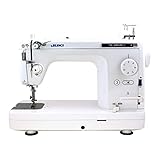 Juki TL-2010Q Juki TL-2010Q |
|
Check Latest Price |
 Juki HZL-F600 Juki HZL-F600 |
|
Check Latest Price |
 Singer 6800C Heavy Duty Singer 6800C Heavy Duty |
|
Check Latest Price |
1. JUKI TL-2000Qi: The Fastest Straight-Stitch Quilter in This List
JUKI TL-2000Qi Sewing and Quilting Machine
1500 SPM
Aluminum die cast arm and bed
Extension table included
5 year limited warranty
Pros
- 1500 SPM for fast long seams
- Aluminum die cast arm and bed cuts vibration
- Extension table included
- LED lights
- Automatic needle threader
Cons
- Straight stitch only so no zigzag or appliqué on this machine
- 25.4 pounds is a two-person lift for some setups
- 5 year warranty is shorter than the 25 year rivals
This is the machine r/quilting regulars name first when someone asks what to buy to quilt, and after reading the specification sheet it is easy to see why. It sews at 1500 stitches per minute, which is the highest figure in this roundup by a wide margin, and the arm and bed are die cast aluminum rather than the plastic shells used on the budget computerized machines.
That frame does a specific job. Vibration is what makes a machine skip on thick layers, because a needle bar that is shaking has a longer path back up through the sandwich. The cast aluminum bed keeps the whole mass rigid, and at speed that rigidity is the difference between a long binding seam that runs true and one you have to unpick in three places.
The extension table is included, which is the second reason this machine sits at the top. A quilt top that hangs unsupported off the back of a machine will pull and twist as you sew, and a wide table lets the weight of the work sit flat. Combined with the speed, this is the machine to own if you are piecing large tops in long seams and want to get through them.
Owners describe it as an industrial style machine with a domestic footprint, and the pedal operation and LED lighting are updates over earlier versions. The automatic needle threader is a genuine time saver when you are restarting a seam every few inches at that speed. The listed weight is 25.4 pounds, which is stable rather than portable, and the body measures 8.6 by 17.8 by 13.8 inches before the table goes on.
Who it suits and who should skip it
Buy this one if you piece big tops, quilt long straight lines with a walking foot, or want the option of thread cones for high volume work. It is the safest single-machine answer for a quilter who does not sew garments much and wants one tool that never bogs down. The free-motion foot is not part of the box, so budget for that separately if you want to try FMQ on it.
Skip it if you need a zigzag for appliqué or any decorative work, because a lockstitch straight stitch machine cannot do it. Also skip it if your sewing space is small or if you carry a machine to guilds and retreats, where 25 pounds is a real inconvenience. Owners who want both straight-stitch quilting and appliqué typically keep a computerized machine alongside it.
What to check before you buy
Confirm what the box does not contain. The walking foot and the free-motion foot are separate purchases on this machine, so budget for both if you intend to machine quilt rather than only piece. The 5 year limited warranty is also the shortest in this group, and at 8.6 by 17.8 inches before the table, plus the table itself, it needs a dedicated surface rather than a shared dining table.
2. Brother HC1850: The Top Rated Machine for Piecing and Quilting Together
Brother HC1850 Sewing and Quilting Machine, 185 Built-in Stitches, LCD Display, 8 Included Feet
185 built-in stitches
Wide table included
8 included feet
10.1 pounds
Pros
- Most owner reviews of any machine here
- 185 stitches plus 8 buttonhole styles
- Wide table and 8 feet in the box
- 25 year limited warranty
- Lifetime technical support
Cons
- 120V corded electric only which matters outside the US
- Plastic used in some areas of the body
- Throat space is domestic standard so big quilts still bunch
With more than five thousand owner reviews, the HC1850 is the machine people actually keep. It is the one that shows up in beginner threads asking for something under a few hundred that sews into batting, and the answer that satisfies most of them is this one rather than a machine built only for quilting.
For layers specifically, three details matter. The wide table is included, so the quilt top can lie flat. The jam resistant drop-in top bobbin keeps tension stable across a long seam instead of drifting halfway down a row. And the advanced needle threader means restarting a seam after a thread break is a ten second job rather than a five minute one, which matters more when you are stitching through four layers.
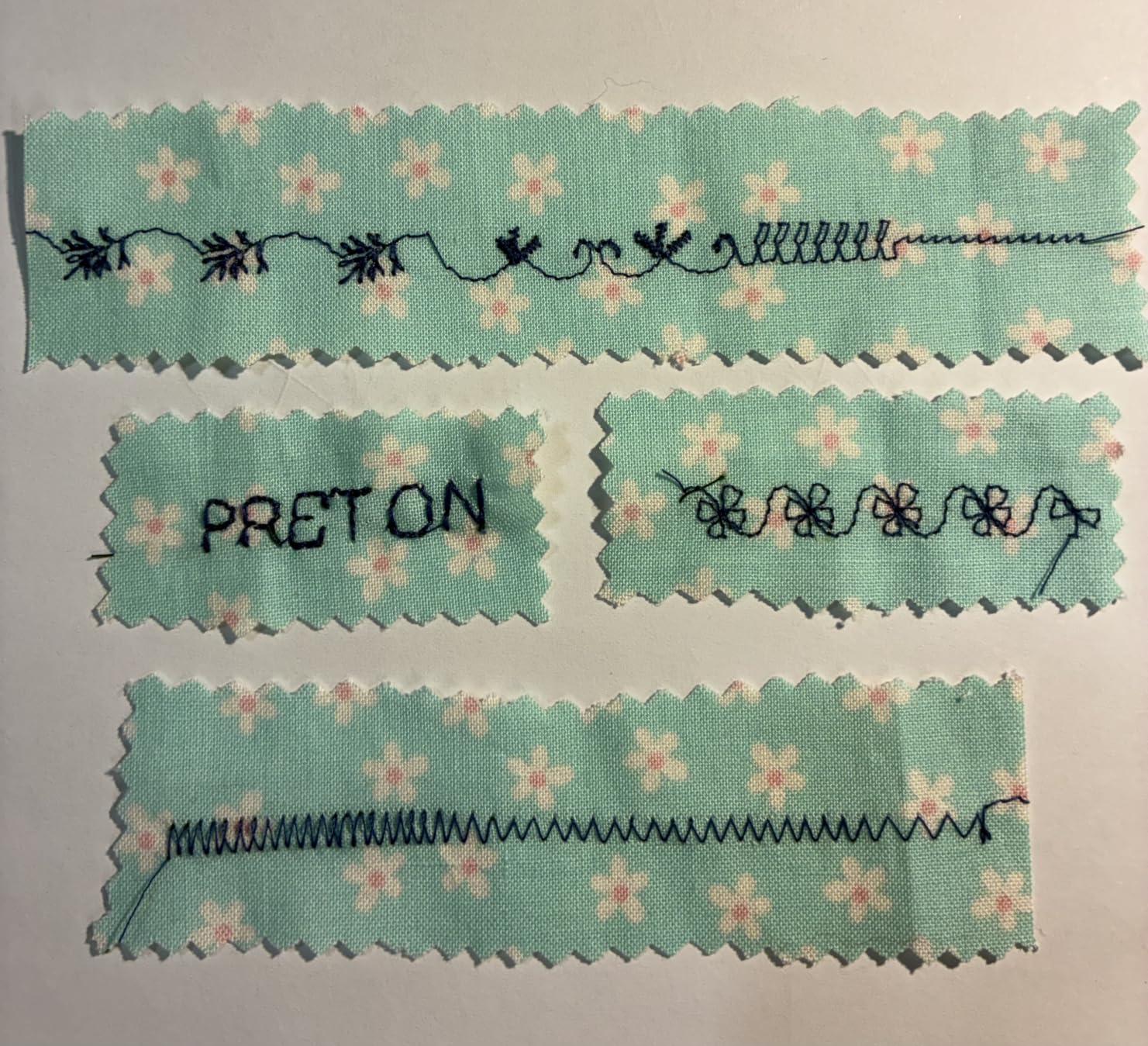
The 185 built-in stitches are not the reason to buy it, but the machine does not feel like a stripped-down version either. Eight buttonhole styles, a circular stitch selection dial and an LCD screen for choosing stitches keep it pleasant for garment work on the days you are not quilting, which matters for anyone using one machine for everything.
It weighs 10.1 pounds, which is the practical number here. Quilters who haul machines to classes, quilt week or guild nights repeatedly cite that weight range as ideal, and this machine sits in the middle of the group rather than at the heavy end.
Who it suits and who should skip it
This is the right pick for a beginner, for someone returning to sewing after years away, and for anyone who wants to quilt without giving up garment and home decor work. The 25 year limited warranty and lifetime technical support are unusually reassuring for a first machine purchase, and the accessories in the box remove the most common early frustration.
Skip it if you plan to free-motion quilt a queen or king quilt regularly. A domestic throat means the bulk sits behind the needle and you are constantly repositioning, which is exactly the frustration that sends quilters looking at semi-industrial machines later on. It is also 120V only, so it is not the machine to buy if you travel internationally with it.
What to check before you buy
Check the electrical supply and the quilt size against the arm. This machine is 120V corded electric only, which rules it out for anyone sewing on an unconverted circuit outside the US. The wide table is included, but it is still a domestic width, so lay a queen quilt flat against the machine before you commit. The 25 year warranty and lifetime technical support are the part of the ownership picture most first-time buyers undervalue.
3. Brother XR9550: The Budget Pick That Handles a Basic Quilt Top Well
Brother XR9550 Computerized Sewing and Quilting Machine 165 Stitches
165 built-in stitches
Wide table and hard case
8 feet included
10.1 pounds
Pros
- Lowest entry point in this roundup
- 165 stitches and 8 buttonhole styles
- Wide table plus protective hard case
- 8 sewing and quilting feet in the box
- 25 year warranty with lifetime support
Cons
- Fewer stitches and less robust body than the HC1850
- 120V corded electric only
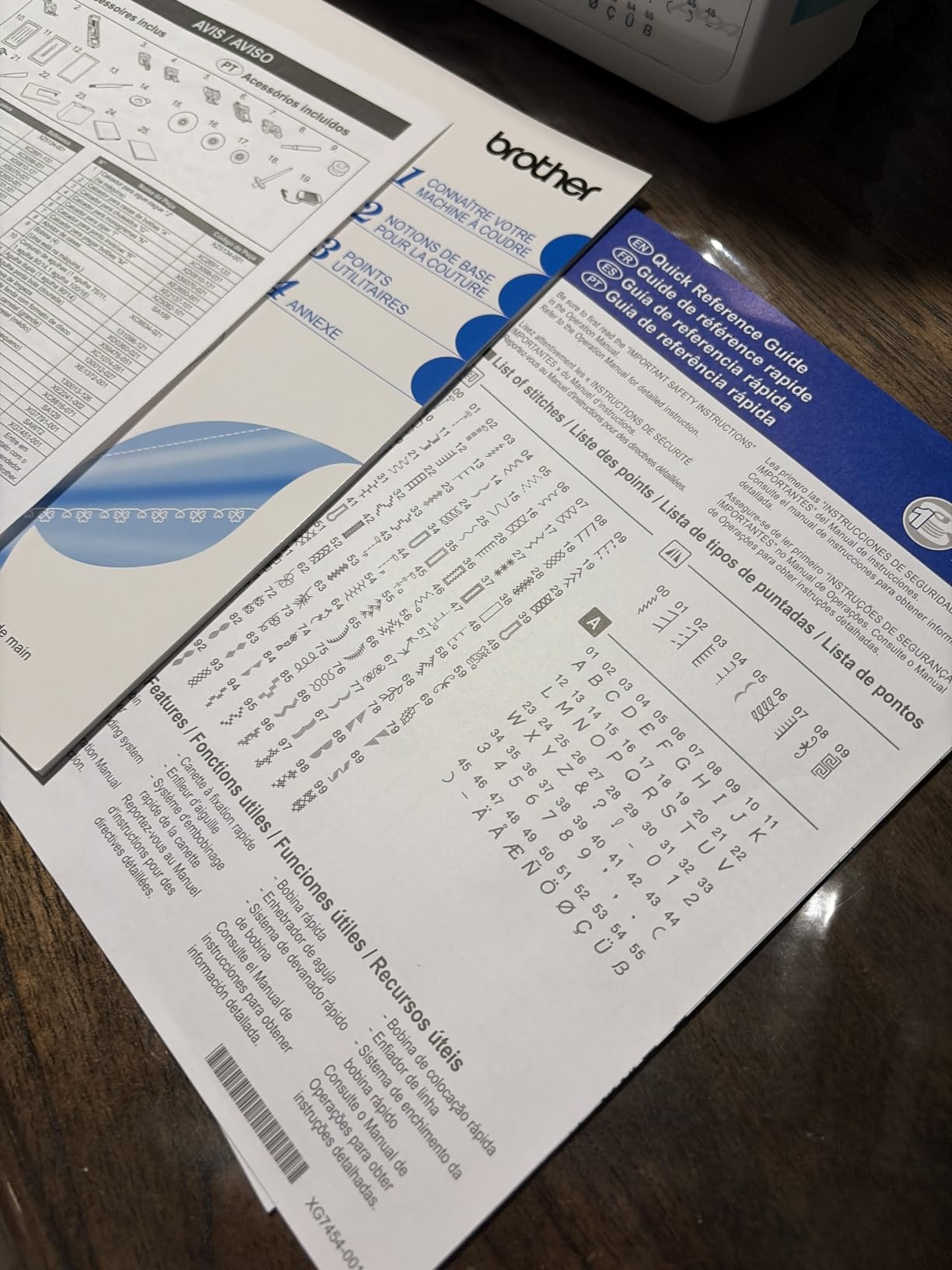
Where the HC1850 is the safe recommendation, the XR9550 is the cheaper way into the same category. It shares the wide table, the jam resistant drop-in top bobbin and the advanced needle threader, and it adds a protective hard case that the more expensive model does not include. If you quilt on a shared table in a community room or store the machine between projects, the case is a real benefit.
It also carries nearly as many owner reviews as anything else here, and reviewers describe a machine that sews through layered fabric without drama as long as expectations are set. The eight included feet cover the basics, including quilting feet, and the LCD screen makes stitch selection painless when you do not know what you are doing yet.
Where it falls short against the HC1850 is body construction. The specification lists metal and plastic rather than the metal build of the more expensive model, and the stitch count is lower. Neither matters much for straight-line piecing, which is what most people buy this machine for, but both are reasons some owners step up after a year.
It weighs 10.1 pounds and measures 13.5 by 20 by 17.9 inches with the table fitted, so it is genuinely portable to a class or a retreat. That makes it a common first machine for quilters who were not sure the hobby would stick, which is a reasonable risk to take before spending real money.
Who it suits and who should skip it
Choose this if your quilting plans are small projects, potholders, oven mitts, book covers, tote bags and lap quilts, and you want the least commitment that still includes a wide table. The hard case means it can live in a car or a cupboard between sessions. It is also a strong gift for someone whose hobby is not certain yet.
Skip it if you already know you will be free-motion quilting large quilts, or if you sew heavy canvas and denim alongside quilting. For those jobs the heavier models in this list exist, and the plastic-heavy shell is not what you want when the motor is being asked to push through many layers at once.
What to check before you buy
Decide whether the hard case is part of the plan rather than a bonus. If you quilt in a shared room, store the machine between projects or travel to guild, that case is the reason to pick this over a machine with more stitches. Leave the foam insert in place inside it, and confirm the 120V corded supply matches your outlet, since this is also US only.
4. Singer 9960 Quantum Stylist: The Machine With the Biggest Stitch Library
SINGER® Quantum Stylist 9960 Computerized Sewing & Quilting Machine
600 stitches and 1172 applications
Large extension table
13 presser feet
15.4 pounds
Pros
- Most reviewed machine in the roundup
- 600 stitches with 1172 applications
- 13 presser feet and large extension table
- Start stop button sews without the pedal
- Mirror imaging and stitch elongation
Cons
- Heaviest of the domestic machines here at 15.4 pounds
- Interface complexity puts beginners off
- Mixed warranty terms across parts and labor
The Quantum Stylist is the machine to buy if your sewing spans quilting and everything else. Six hundred built-in stitches and 1,172 applications, thirteen presser feet and a large extension table make it a complete kit rather than a quilting specialist, and the sheer volume of owner reviews makes its long term behaviour easy to judge.
For quilting specifically, the useful parts are the large extension table for a flat top, the adjustable sewing speed so you can slow down when the layers get thick, and the start and stop button, which lets you sew a short segment without lifting your foot. The top drop-in bobbin with a transparent cover makes a jam visible quickly instead of after unpicking a seam.
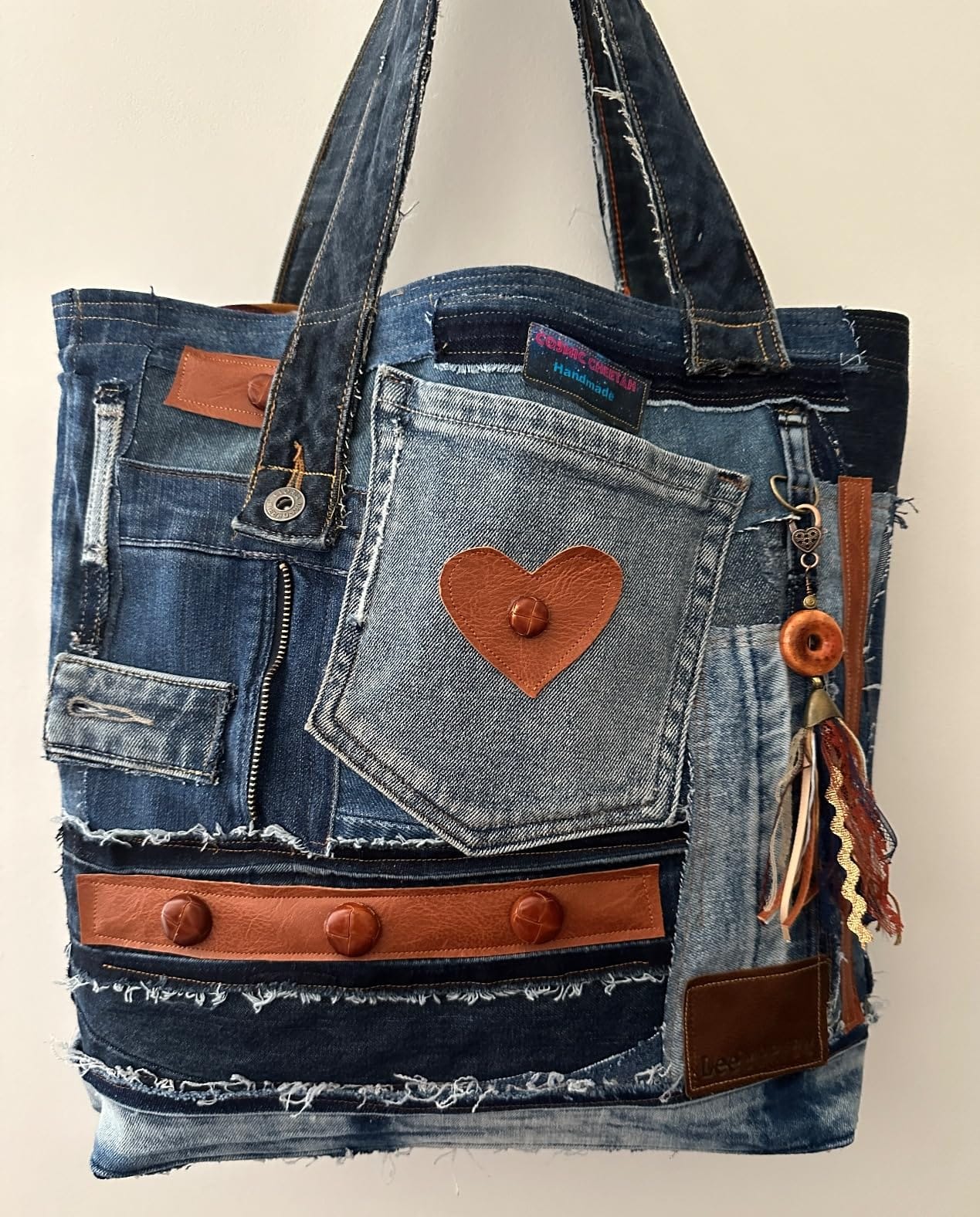
Mirror imaging and stitch elongation are decorative functions rather than quilting ones, but they are why this machine holds its value for people who also make clothing, curtains and bags. The lettering font supports monograms on quilt labels and gift items, which is a small thing that quilters with a large group project tend to appreciate.
It weighs 15.4 pounds, the heaviest of the domestic computerized machines here but far lighter than the industrial ones. The specification lists a 25 year limited warranty with different terms for electronic parts and labor, so read the fine print rather than assuming it matches the 25 year headline figures quoted elsewhere.
Who it suits and who should skip it
This suits the quilter who is really a general sewist first, or a household where one machine has to cover quilting, clothing and home decor. The thirteen included feet mean you are not buying accessories for years, and the start and stop button makes it approachable for anyone nervous about pedal speed control.
Skip it if you want a simple machine with nothing to learn, because the stitch selection interface is the most involved in this roundup. Skip it also if you plan heavy free-motion quilting, since the machine is long and light for that work compared with a dedicated straight-stitch quilter.
What to check before you buy
Try the interface before you buy, because that is the part most likely to disappoint. If the plan is to hand the machine to a beginner with no explanation, the stitch selection process here takes practice. What you do get out of the box is unusual at this price, since 13 presser feet, a large extension table and a start stop button remove most of the accessory buying that a new owner would otherwise do.
5. Brother ST150HDH: The Best Choice for Thick Sandwiches and Heavy Fabric
Brother ST150HDH Strong and Tough Sewing Machine 50 Stitches
50 built-in stitches
Walking foot included
Variable speed control
10.1 pounds
Pros
- Walking foot included which is rare at this level
- Reviewers report 8 plus layers of canvas
- Needle up down and start stop buttons
- Quiet operation and 10.1 pound weight
Cons
- Fewest stitches of the group at 50
- LED work light is dim
- No built-in thread cutter
This is the machine to look at if your quilting cotton is heavy, if you sew dense canvas, or if you make things that are quilted and stuffed such as oven mitts and bags. Reviewers report stitching through more than eight layers of canvas and around five layers of leather, which puts it well beyond ordinary domestic territory for sheer bulk.
The reason is simple: a walking foot is included. A walking foot carries its own feed teeth on top of the bed feed dogs, so the layers above and below the foot are pulled at the same rate and the sandwich does not shift. Combined with the strong body and variable speed control, it is the most forgiving machine here for the person who does not yet have confident technique.
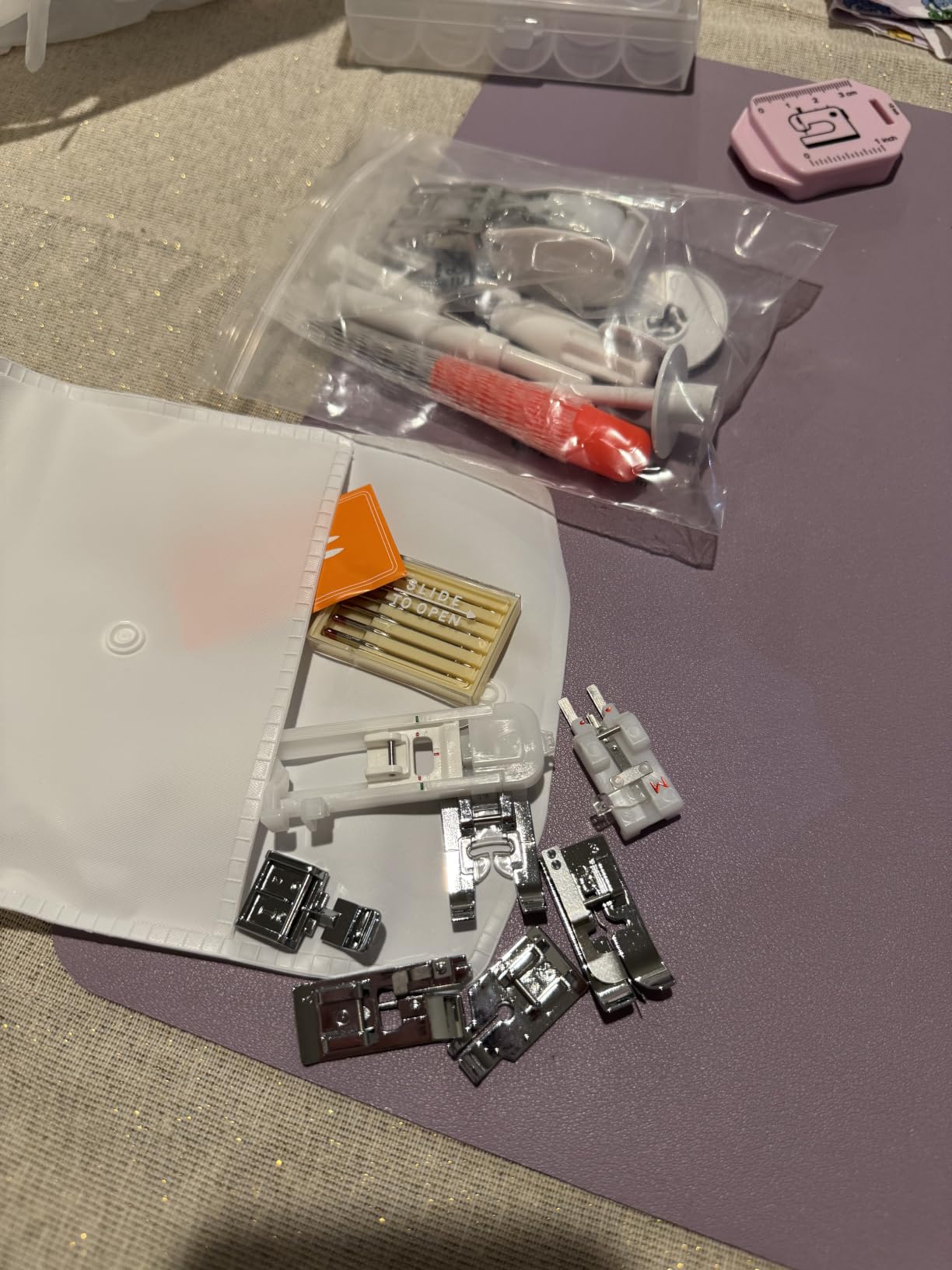
Two small features matter more than they sound. The needle up and down function lets you park the needle in the fabric so you can pivot around a corner of a quilt block without scratching anything or sewing over your own work. The start and stop button does the same job for beginners who find a foot pedal nerve wracking at low speed.
The LCD screen is unusually helpful because it displays the recommended presser foot for the selected stitch, which removes the guesswork for someone learning on their own. At 50 stitches it has the smallest library here, and the work light is dim, so it is not the machine to choose if you sew at night or rely on decorative stitch libraries.
Who it suits and who should skip it
Pick it for small heavy quilted objects, bags, gear and anything that stacks batting with more than one dense fabric layer. It is also a sensible step up for someone whose first machine is a basic model and whose complaint is that the layers slide apart rather than that the machine is too slow.
Skip it if you want decorative stitching, a large extension table for full quilt tops, or any interest in free-motion quilting patterns. Fifty stitches is plenty for construction work and nothing at all for the decorative side of quilting, and the dim light is frustrating on long evening sessions.
What to check before you buy
Check what you are missing rather than what you get. At 50 stitches there is no decorative library at all, and the dim work light matters if you sew in the evening. What is in the box is the part that cannot be added later without cost: a walking foot, a portable 10.1 pound body and a frame rated for canvas and denim. The absence of a built-in thread cutter is the practical trade-off to plan around.
6. Janome JW8100: The Most Complete Box for a New Quilter
Janome JW8100 Fully-Featured Computerized Sewing Machine with 100 Stitches, 7 Buttonholes, Hard Cover, Extension Table and 22 Accessories
100 built-in stitches
Walking foot and quarter inch foot included
Extension table and hard cover
Pros
- Walking foot and quarter inch foot both included
- Uses standard Class 15 bobbins
- Extension table and hard cover in the box
- Metal construction
- Speed control slider and needle up down
Cons
- Throat space is tight for large quilts
- One decorative stitch reported to form imperfectly
- Older design so future support is less certain
What separates this Janome from the cheaper computerized machines is the box contents. Twenty two accessories, including an even feed foot, a quarter inch quilting foot and an extension table. Most rivals make you buy at least the walking foot separately, and the quarter inch foot is the one that makes accurate piecing possible, so having both from day one removes a whole shopping decision.
It also uses standard Class 15 bobbins rather than a proprietary type, which sounds minor until you realise how many replacement bobbins a quilting project consumes. Owners describe smooth sewing through layers and rate the needle threader highly. The 7-piece feed dog system and the jam-proof drop-in bobbin both point at stability across a long seam.
The speed control slider and needle up and down control are the two features you will use every session. The slider lets you drop to a crawl through a thick spot at the start of a seam, and the up and down function makes pivoting at block corners safe. Both are small upgrades over a basic machine and both are things you notice immediately once you have them.
It weighs 12 pounds and includes a hard cover, so it moves between rooms or travels to a guild without drama. The seven one-step buttonholes and 100 stitches cover garment work adequately, which means the machine can be a genuine one-machine household setup rather than a quilting-only tool.
Who it suits and who should skip it
Choose it if you want the accessory question settled on day one, particularly the walking foot and quarter inch foot. It is a strong first machine for someone who plans to piece seriously but has not decided about large bed quilts, and the standard bobbin compatibility keeps running costs low over years of use.
Skip it if a king size quilt is on the plan, because the throat space is the most commonly reported limitation and the machine was not designed around a wide bed. The manual is also not always clear, so if you learn best from a book rather than a screen, the newer models in this list are friendlier.
What to check before you buy
Measure the throat space against the quilt sizes you actually plan to make. The limitation reported most often here is the bed width, not the feed, so a lap or throw quilt is comfortable and a bed quilt is not. Confirm the even feed foot and the quarter inch foot are in the box before shopping for accessories elsewhere, and note that standard Class 15 bobbins keep the running cost low across a long project.
7. Janome MC6650: The Most Throat Space in This Roundup
Janome MC6650 Sewing and Quilting Machine
10 inch throat space
1000 SPM
All metal 10 inch flatbed
25 year warranty
Pros
- 10 inch throat space for large projects
- Independent bobbin winder winds while you sew
- All metal flatbed with aluminum frame
- Extra high presser foot lift and adjustable foot pressure
- 12 included presser feet
Cons
- Heaviest large machine at 24.3 pounds
- Large footprint at 23.9 inches deep
- Manual and shipping packaging reported as weak points
If you quilt queen and king size tops, the number that matters is 10 inches of throat space to the right of the needle, and this machine has it. The all-metal seamless 10 inch flatbed and the aluminum body frame mean the bed does not flex under a heavy sandwich, and the space in front of the needle means a wide quilt section sits flat rather than hanging off the arm.
The independent bobbin winder runs on its own motor, so you can wind a bobbin while the machine is sewing the row you are on. On a project that consumes a bobbin every few minutes, that removes a genuine interruption. It also has an extra-high presser foot lift and adjustable presser foot pressure, which together are what let you get under the lump of a seam allowance you just crossed.
One-push needle plate conversion is a detail experienced quilters care about. You can switch between the straight stitch and zigzag needle plates without hunting for a screwdriver, so the machine is ready for both a long quilting row and an appliqué edge in under a minute. Twelve presser feet are included and six LEDs sit in three locations, which matters when you are matching a thread colour in a dim corner.
It runs at up to 1000 stitches per minute and takes 24.3 pounds on a 23.9 inch deep footprint. That is a dedicated piece of equipment, not a portable one, and it is the machine to buy when quilting has stopped being occasional. The 25 year limited warranty is the longest of the semi-industrial group here.
Who it suits and who should skip it
Buy it if you are quilting large quilts regularly, if you hate re-basting and bunching, and if you want one machine that will still suit you in five years. The 10 inch flatbed also handles a rolled quilt more comfortably than any domestic machine, which matters for anyone who quilts in sections and joins them later.
Skip it if quilting is a hobby you do a few hours a month, because the weight and footprint are difficult to justify without regular use. Skip it also if you need to carry a machine to classes, and check the packaging on delivery, since one report mentions a broken spindle attributed to the shipping box rather than the machine.
What to check before you buy
Measure the floor space and think about the delivery. At 24.3 pounds and 23.9 inches deep, this is a machine that stays where it is put, so plan a dedicated table before it arrives rather than after. Owner reports also mention damage attributed to the shipping carton rather than the machine itself, so inspect the packaging on arrival. The 10 inch flatbed and the 25 year warranty are what you are paying for.
8. Juki TL-2010Q: The Best Value Straight-Stitch Machine With a Thread Trimmer
Juki TL-2010Q 1-Needle, Lockstitch, Portable Sewing Machine with Automatic Thread Trimmer for Quilting, Tailoring, Apparel and Home Decor
Automatic thread trimmer
Knee lifter with 12mm lift
Lockstitch only
38 pounds
Pros
- Highest owner rating in the roundup
- Automatic thread trimmer cuts needle and bobbin thread
- Knee lifter raises the foot to 12mm
- Automatic needle threader
- Built for straight stitch quilting
Cons
- Lockstitch only so no zigzag work at all
- Heaviest machine listed at 38 pounds
- One machine only so piecing and quilting need separate tools
This is the highest rated machine in the roundup, and the reason is the automatic thread trimmer. It cuts both the needle thread and the bobbin thread after a lockstitch, so at the end of a long row you are not left with long tails to trim by hand or with scissors, which is the single most tedious part of straight-line quilting on a machine without one.
The knee lifter lever raises the presser foot by 12mm. That is a bigger number than it sounds: it is the clearance you need to slide the foot over the intersection of four patches at a block corner, which is precisely where a domestic machine jams or damages the seam. Industrial quilters who use these machines daily treat the knee lifter as non-negotiable.
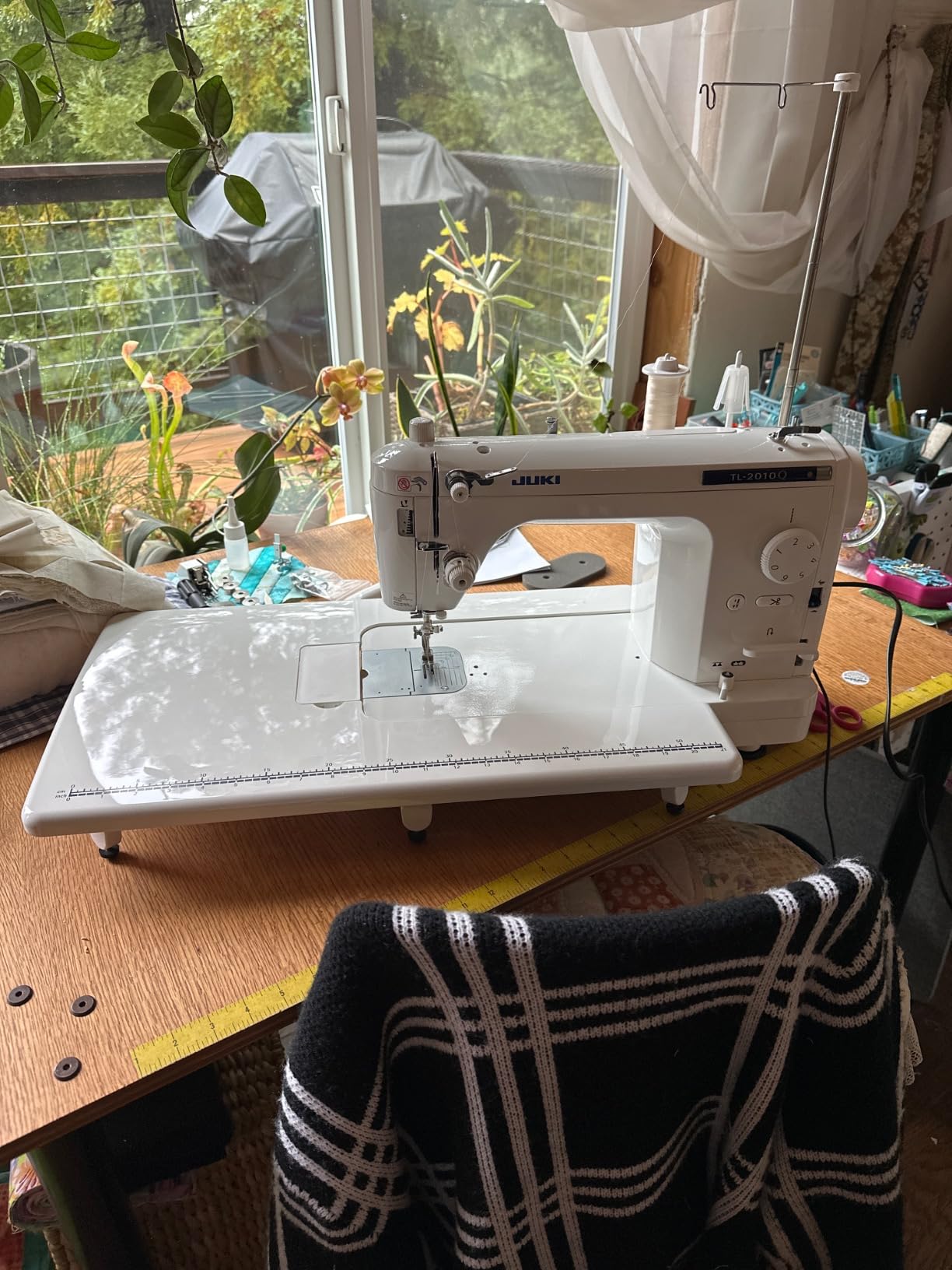
The automatic needle threader handles the rest of the startup routine, so the sequence is thread, drop the foot, sew, trim. Repeatable, fast and far less frustrating than a machine where every seam restart involves rethreading by hand through the tension discs.
The specification lists it as a single needle lockstitch machine, meaning straight stitch only. The listed weight is 38 pounds, by far the heaviest in this group, and the build is portable in the sense that it has handles, not in the sense that you will carry it to a class. Owners consistently treat it as a dedicated quilting tool and keep a second machine for piecing and decorative work.
Who it suits and who should skip it
It suits the quilter who has moved past piecing and now spends hours stitching long rows or binding edges at speed. If your quilting is repetitive, long and straight, the thread trimmer and knee lifter will save more time than any stitch feature ever could. It is also the machine to consider when you already own a computerized machine and want a specialist partner for the sandwich.
Skip it if you want one machine to do everything, because there is no zigzag and no appliqué on this machine. Skip it if you are quilting small projects occasionally, or if the 38 pound weight is a problem in your space. And skip it if you would rather not own two machines, because owners of this style almost always pair it with a domestic computerized model.
What to check before you buy
Decide whether you will really run two machines. Owners of this style almost always keep a domestic computerized model for piecing and decorative work, because a single needle lockstitch machine cannot zigzag or appliqué. At 38 pounds it does not move once it is set down, so the 12mm knee lift and the automatic thread trimmer are the features that justify the dedicated footprint.
9. Juki HZL-F600: The Full-Feature Computerized Juki With a Free-Motion Foot
Juki HZL-F600 Computerized Sewing and Quilting Machine
255 built-in stitches
Independent bobbin motor
Free motion quilting foot included
30 pounds
Pros
- Free motion quilting foot included
- 255 stitches including alphabet
- Independent bobbin motor winds while sewing
- Thread cutter knee lift and extension table included
Cons
- Heavy at 30 pounds
- Some owners report the auto threader failing after months
- Repair parts can take weeks
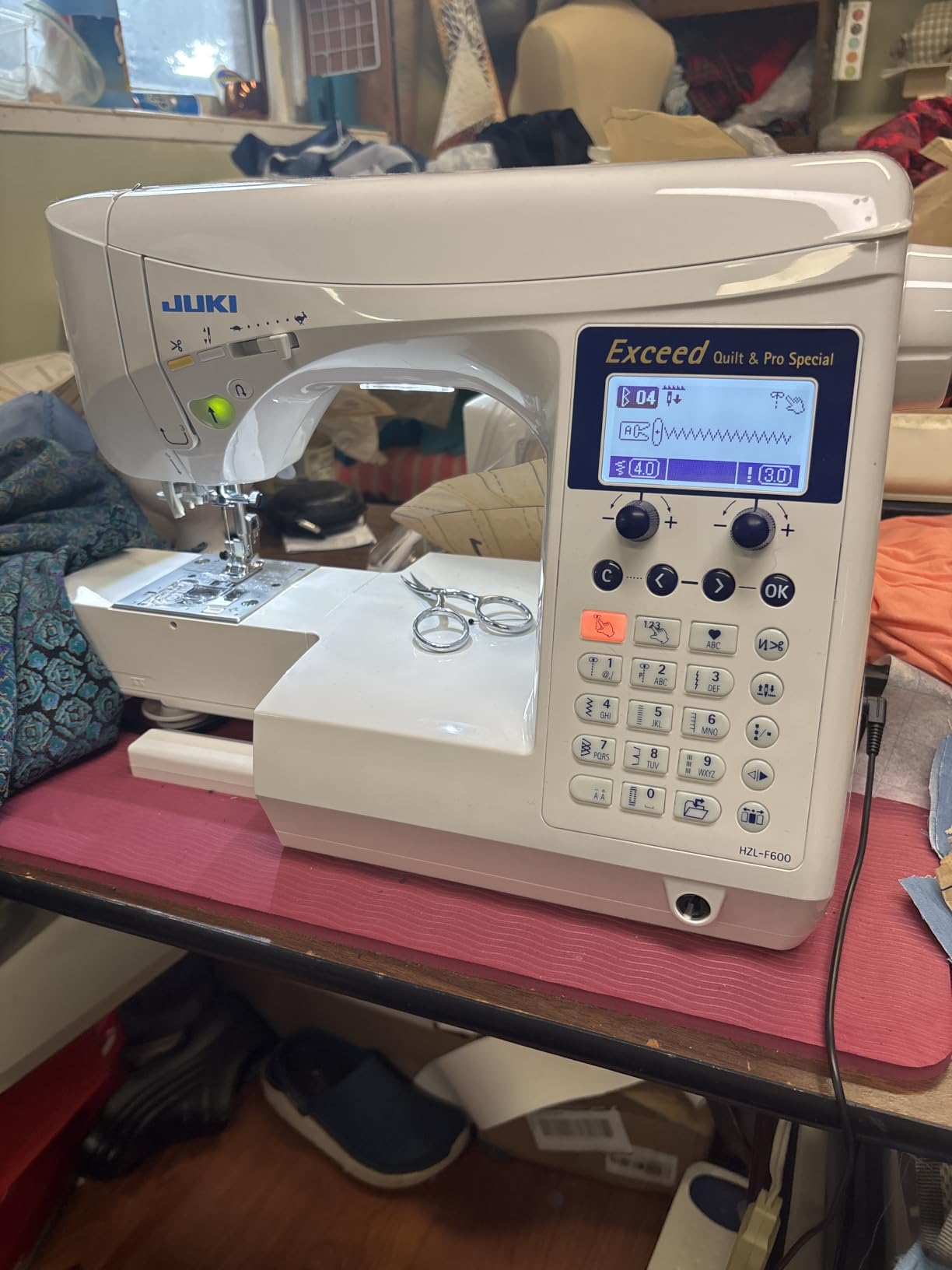
This is the computerized option from the brand most associated with straight-stitch quilting machines, and it fills a gap the two Juki quilting machines leave open. It sews everything they cannot: 255 built-in stitches including letters and buttonholes, zigzag for appliqué, and it ships with a free-motion quilting foot in the box.
That included foot is the reason to look closely. Drop feed for free-motion is only useful if you have a foot designed for it, and buying one separately adds friction at exactly the point where beginners quit. The independent bobbin motor does for computerized sewing what it does on the MC6650, letting you wind while sewing instead of stopping every few rows.
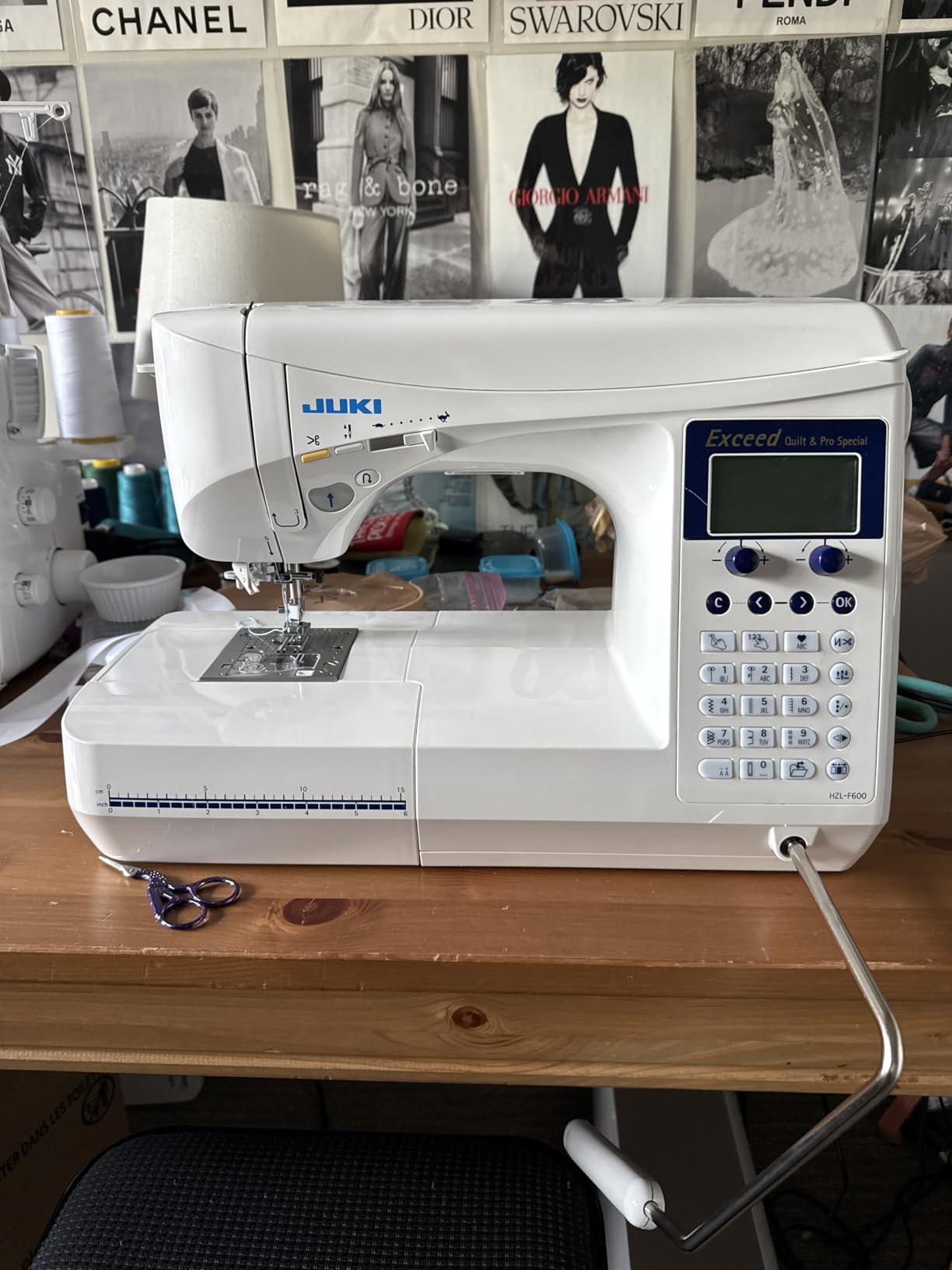
The knee lift, the automatic thread cutter and the extension table complete a genuinely well equipped package. Adjustable presser foot pressure helps when you switch between single layers and a thick sandwich, and two LED lights, one at the needle and one on the bed, cover the two places where poor light causes mistakes.
Owner reports are mostly enthusiastic about buttonhole quality and stitch consistency, and reviewers with long sewing histories single out the build quality. There are also durability notes worth knowing: some owners report the automatic threader failing after several months, and a few report stitch quality issues on four or more layers of denim. At 30 pounds it is a fixed machine, not a portable one.
Who it suits and who should skip it
Choose it if you want a single computerized machine that can quilt and sew garments, if you already prefer Juki build quality, or if you want to start free-motion quilting without buying a separate foot. It is also a sensible bridge for someone who wants the brand experience before committing to a straight-stitch-only specialist.
Skip it if your quilting is only straight-line work, because a dedicated straight-stitch machine will do that faster and with fewer distractions. Note the weight and the reported threader issues if you plan to move it frequently, and check parts availability with a dealer before buying, since some owners report waiting weeks for repair parts.
What to check before you buy
Check the dealer network and the parts timeline first. Owners report waiting weeks for repair parts, and some report the automatic threader failing after several months, which makes support more important on a machine at this level than on a cheaper one. What you get in the box is unusually complete, with a free-motion quilting foot, the knee lift, the thread cutter and the extension table already included.
10. Singer 6800C Heavy Duty: The Fastest Computerized Machine for the Money
SINGER® 6800C Heavy Duty Computerized Sewing Machine with Accessory Kit
1100 SPM motor
586 stitch applications
Drop feed for free-motion
16.6 pounds
Pros
- Motor rated 60 percent stronger than standard
- 1100 stitches per minute
- 10 presser feet including a walking foot
- Drop feed for free-motion sewing
- Built-in thread cutter and tie-off button
Cons
- Warranty service centers are limited in some regions
- Button beeps annoy some owners
- Singer support is inconsistent compared with rivals
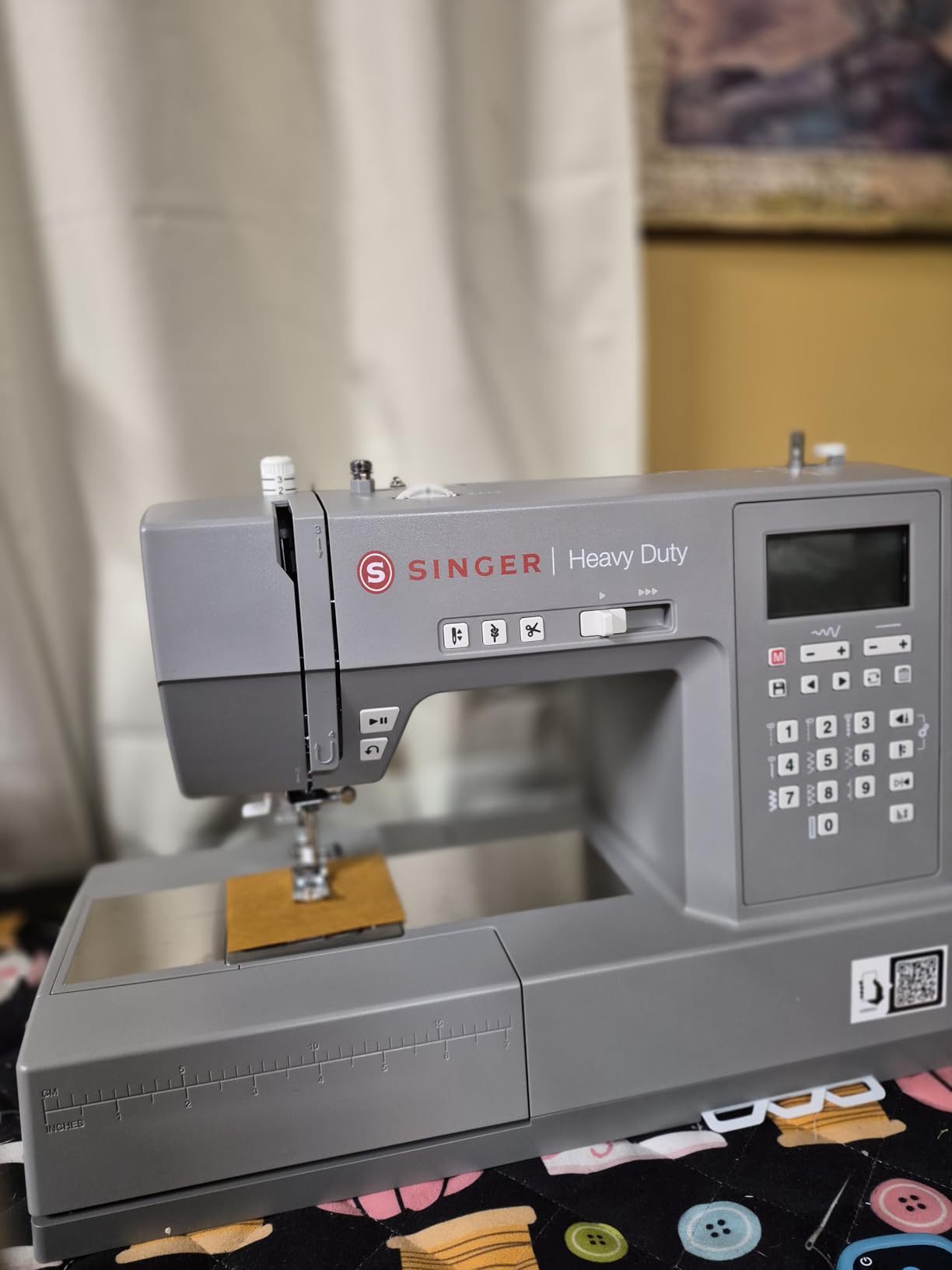
The 6800C is the fastest computerized machine in this roundup, sewing up to 1,100 stitches per minute on a motor the manufacturer rates at 60 percent stronger than standard. For a quilter with a heavy sandwich and a long row to get through, that combination of speed and motor strength is more relevant than the 586 stitch applications on offer.
It also has drop feed for free-motion sewing, which lets you lower or cover the feed dogs and move the quilt manually under a free-motion foot. A walking foot is among the ten included feet, so straight-line machine quilting is covered out of the box. The built-in thread cutter and tie-off button are both practical during a long binding run.
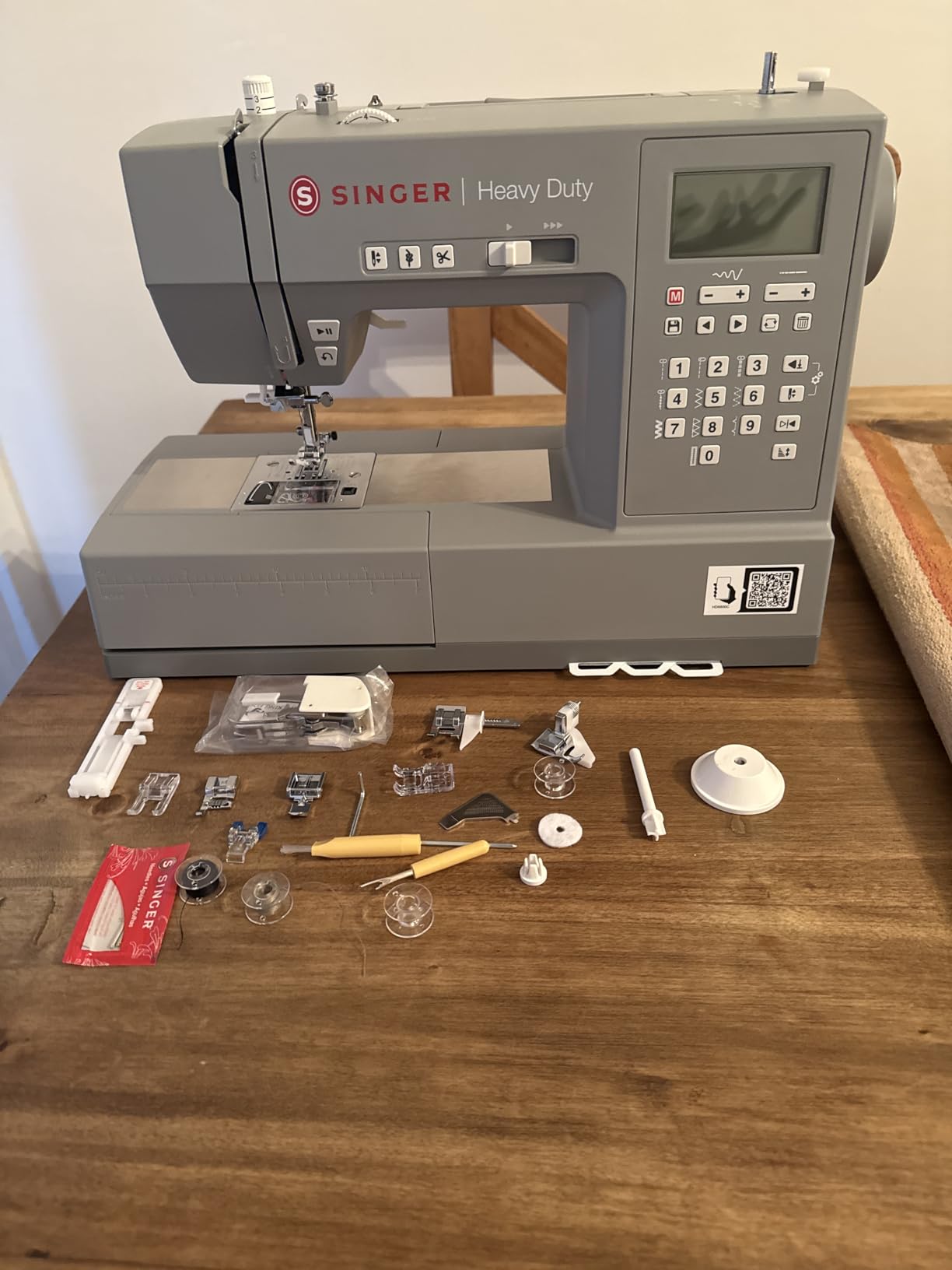
The LCD screen shows stitch images and the recommended foot, which reduces guesswork, and speed control lets you slow through thick intersections and speed up on flat runs. Adjustable stitch length up to 6mm and width up to 5mm cover heavy thread and thick cotton. At 16.6 pounds it is heavier than the Brother domestic machines but still movable between rooms.
The honest caveat is support. Owners report limited warranty service centres in some regions, and the button beeps on the interface come up as an irritation. It is also worth naming that several quilters in community threads describe the current generation of Singer machines as a different proposition from the all-metal machines of the past, and judge on the model rather than the badge.
Who it suits and who should skip it
Pick it if you want speed and a stronger motor without moving to a straight-stitch-only machine, and you still want appliqué, decorative stitching and garment work. The drop feed also means you can try free-motion quilting without buying a second machine, which is a genuine bonus for experimentation.
Skip it if you quilt a lot and serviceability matters most to you, because a limited service network is a poor match for someone who sews daily. The beeps and the LCD-first design are also not ideal if you prefer a machine with almost nothing to learn.
What to check before you buy
Check the service network where you live before anything else. Warranty service centres are limited in some regions, and that matters more on a machine you sew on daily than the headline stitch count suggests. The trade on offer here is speed and motor strength, with 1100 stitches per minute, drop feed for free-motion, a walking foot among the ten included feet and a body you can still move between rooms.
What Actually Makes a Machine Handle Quilting Layers
Quilting fails at a predictable point. You are halfway along a seam, four layers of quilting cotton with batting between them hit the presser foot, and the needle either fails to rise, breaks the thread or rises unevenly and drops a stitch. That failure has four causes, and each one is a specification you can check before you buy rather than discover afterwards.
1. Motor power and frame rigidity. A domestic plastic-bodied machine has a small motor and a light bed, so the needle bar has nothing behind it when the layers resist. A die cast aluminum arm and bed, as on the Juki TL-2000Qi, or an all-metal flatbed as on the Janome MC6650, keeps the mass rigid and lets the machine keep pushing. A machine rated for canvas or denim will handle batting without complaint.
2. Presser foot lift clearance. This is how far the foot raises above the fabric, and it determines whether you can slide the foot across the intersection of four patches. Machines that advertise extra-high foot lift exist specifically because quilters hit a seam junction and jam. A knee lifter that raises the foot to 12mm, as on the Juki TL-2010Q, is the same idea in a more usable form.
3. An even feed system. Feed dogs pull the fabric from below. If the layer on top moves at a different rate from the layer on the bottom, the sandwich shifts and the seam wanders. There are three solutions. A walking foot adds a second set of feed teeth above the fabric, which is why the Brother ST150HDH including one matters. Drop feed or a lowering feed dog lets you stop the lower feed entirely for free-motion quilting. Dual feed, where top and bottom dogs are linked by a belt, is the most complete answer and is the feature to look for on an expensive machine.
4. Throat space. This is the open area to the right of the needle and it decides how much quilt can sit flat. A domestic machine gives you roughly three to four inches, which is workable for small projects. A machine with 8 to 10 inches lets a full block or a wide strip of a queen quilt lie flat. If you have ever had to stop mid-row to pull the quilt out from under the arm and rotate it, throat space was the problem.
Speed is the secondary factor and people get it backwards. A faster machine is better because you travel less slowly through a thick spot, not because you can sew quickly. At 1500 stitches per minute you are still in control, but you are not sitting at one slow stitch per second wondering whether the needle will clear the batting.
How Much Throat Space Do You Need for Quilting?
Map the throat space you need to the size of the quilt you actually intend to make, and buy the smallest machine that covers it. Overspending on throat space for a lap quilt is a common and expensive mistake.
Baby and crib quilts, up to about 30 by 40 inches: a domestic throat of three to four inches is genuinely enough. Machine width is not the constraint at this size, and the entry computerized machines in this roundup handle it comfortably.
Throw quilts, roughly 50 by 60 inches: four to five inches of throat still works, though you will rotate more often. A wide extension table helps more at this size than an extra inch of throat, because it is the unsupported weight behind the needle that causes bunching.
Twin quilts, around 60 by 80 inches: six to seven inches starts to pay for itself. You can sew a full width of the quilt in one pass without pulling the work around, which cuts distortion on large pieces.
Queen quilts, around 80 by 88 inches: eight to ten inches is the comfortable range. This is where a 10 inch flatbed such as the Janome MC6650 starts to make sense, because the whole block fits in front of the needle without constant repositioning.
King quilts, around 100 by 110 inches: ten to twelve inches is the practical target, and a wide flatbed is close to essential. Many quilters at this size quilt in sections and join them, which relaxes the requirement. If you expect to quilt a full king in one piece, a long arm is the honest answer rather than another domestic machine. Our guide to the best long arm quilting machines covers that step up.
One more practical note that is easy to miss: throat space matters most when the quilt is quilted flat on a table. If you roll the quilt into a tube and stitch the roll, the same machine behaves very differently, and a smaller domestic machine can manage work that looks impossible when the quilt is spread out.
Free-Motion Quilting and Stitch Regulators Explained
Free-motion quilting, or FMQ, is how you stitch a quilt top to its batting and backing with a pattern you move by hand. The feed dogs are dropped or covered, the foot becomes a guide rather than a driver, and the machine runs while the quilt moves underneath. The advantage is control over the pattern. The cost is that the machine is now moving at your hand speed through batting, and any variation in speed changes the stitch length.
That variation is the problem a stitch regulator solves. Without one, slow movement makes short stitches and fast movement makes long ones, and the result is a wobbling line across the quilt. Quilters learning FMQ on ordinary machines are usually told to move slowly and keep the feed disengaged, which works but limits the pattern.
There are three levels of solution. A plain free-motion foot with a fixed position is the entry point and costs little. A regulator foot is the middle tier: it senses when the fabric is moving faster than the machine and mechanically slows the needle so stitch length stays even. A full electronic regulator, the type BERNINA markets under its BSR name, uses a sensor in the foot that reads fabric movement and adjusts the machine electronically in real time.
Do you need one? Honestly, most people do not yet. A walking foot gets you a clean straight-line quilt on almost every machine here, and most home quilters never progress beyond that. A regulator earns its cost if you are quilting a large quilt in a single session, if you use decorative patterns where stitch unevenness shows, or if you dislike re-stitching wobbled lines.
The Juki HZL-F600 in this roundup includes a free-motion foot, so you can start FMQ without an extra purchase. The two straight-stitch Juki machines do not, since free-motion is not a function a lockstitch-only machine performs. For a deeper look at the later step, the long arm quilting machine guide covers what changes when you move to a frame-mounted machine with a much larger throat.
Mechanical, Computerized, New and Pre-Owned
The mechanical against computerized argument comes up in every beginner thread, and both sides have a real point. A mechanical machine has fewer failure points because there is no control board, and vintage all-metal models from several decades ago are still in daily use by sewists who bought them second hand. Straight-stitch-only mechanical machines were the traditional quilting choice and they sew through thick layers because the motor is geared simply and the frame is heavy.
The computerized side argues that features like the needle up and down, the speed slider, the LCD recommended foot display and the automatic threader make the difference between sewing and fighting a machine. For a returning beginner who has not sewed in a decade, those features genuinely reduce frustration, and no amount of mechanical simplicity compensates for not being able to find the right stitch.
For quilting specifically, the honest answer is that the thick-layer capability comes from the frame, motor and foot, not from whether a circuit board is involved. Among the ten machines here, the ones that owners describe as effortless through heavy sandwiches include both computerized domestics and straight-stitch machines with no electronics at all.
Pre-owned buying has real merit, particularly for the all-metal mechanical machines that outlast modern electronics. The risks are predictable: a machine that has never been serviced, a bobbin hook worn out of round, or missing feet and accessories that you then have to buy back. If you go this way, ask what the machine is worth as a parts donor and what a service costs before you commit, and make the sale conditional on a test sew of your own fabric.
Owners also report a recurring frustration that is worth budgeting for: some machines come with tension faults from the start, and a service visit on an entry-level model can cost more than the machine is worth to you. That is the strongest argument for buying from a dealer who will stand behind the work, and for choosing a model with a long warranty such as the 25 year cover listed on the Brother and Janome machines here.
Accessories and Maintenance for Thick-Layer Work
You can spend a lot on a machine and still be limited by the feet in front of it. Four accessories change how quilting feels. A quarter inch quilting foot with a guide on the underside makes piecing accurate, because the seam allowance stops being a judgement call. A walking foot feeds layers together on straight-line quilting. A free-motion foot is what makes drop-feed quilting possible. A ruler foot lets you quilt long parallel lines across a large top without marking it.
Precision cutting matters as much as the machine at the other end of the process, so if accurate blocks are your recurring frustration, our guide to the best Cricut cutting machines for crafters is worth a look. If you also finish seams on thick fabric rather than quilting it, that is a different class of machine entirely, covered in our guide to the best serger machines for home sewing.
Thread cones are the fourth thing, and they matter more than most buyers expect. A cone feeds a large volume of thread to a single machine, which suits anyone piecing a large top in one sitting rather than rethreading every few minutes.
Maintenance is mostly discipline rather than expense. Change the needle far more often than most people do, because a dull needle is the single most common cause of skipped stitches through batting and it gets blamed on the machine. Clean lint from the bobbin area on every session, since thread fuzz changes tension behaviour without anyone noticing. Oil the moving parts on the interval the manual specifies, and no more, because over-oiling attracts dust and can cause a service call.
Plan on a professional service at least once a year if you sew weekly, and ask what it costs before you need it rather than after. A machine that has been kept clean needs a smaller job than one that has not, and the difference shows up in the bill.
When a Domestic Machine Stops Being Enough
There is a point where no domestic machine, however good, is the right tool. The signs are consistent: you rotate the quilt constantly, you bast more than you sew because the layers keep shifting, you find yourself rolling the quilt to get it through, or you avoid free-motion work because the pattern comes out uneven.
Two upgrade paths exist. A mid-arm machine sits between a domestic and a long arm, with a bed that drops down to give clearance around a bulky roll of quilt. It is the sensible next step for someone quilting queen and king tops at home. A long arm mounts on a frame and gives a throat measured in feet rather than inches, which is what professional longarm quilting and large studio work depend on.
Neither is a first purchase. A machine in this roundup, plus a walking foot and a ruler foot, will carry most people through years of quilts. Consider the upgrade when the machine is making you avoid the work you want to do, not before.
Frequently Asked Questions
What sewing machine do most quilters use?
Which sewing machine is best for sewing thick layers?
How much throat space do I need for quilting?
Do I need a quilting machine or will a regular sewing machine work?
Is a computerized sewing machine better than a mechanical one for quilting?
What is the rule of 7 in quilting?
Which Sewing Machine Is Right for You in 2026
The short version of 2026‘s field, after all of the above: the JUKI TL-2000Qi is the best sewing machine for quilting layers overall, because 1500 stitches per minute, a die cast aluminum frame and an included extension table cover thick sandwiches and large tops in one machine. The Brother HC1850 is the value pick and the most-reviewed choice here, and it is what most beginners should actually buy. The Singer 9960 Quantum Stylist is the pick when quilting is only part of what the machine does.
Match the rest by project. Small quilted objects and uncertain commitment point to the Brother XR9550. Thick, heavy work with a walking foot already in the box points to the Brother ST150HDH. Getting the accessory question settled once and for all points to the Janome JW8100. Queen and king tops point to the Janome MC6650 with its 10 inch throat. Long straight rows where thread trimming matters point to the Juki TL-2010Q. A computerized machine that can still do free-motion points to the Juki HZL-F600, and speed with a drop feed points to the Singer 6800C.
Whichever one you choose, the accessories matter more than the model number. A walking foot, a quarter inch quilting foot, a ruler foot and a fresh needle will do more for your quilting than any stitch library. Buy from somewhere that services what it sells, change the needle often, and check the long arm guide when the domestic machine starts limiting the size of the quilt you want to make.