
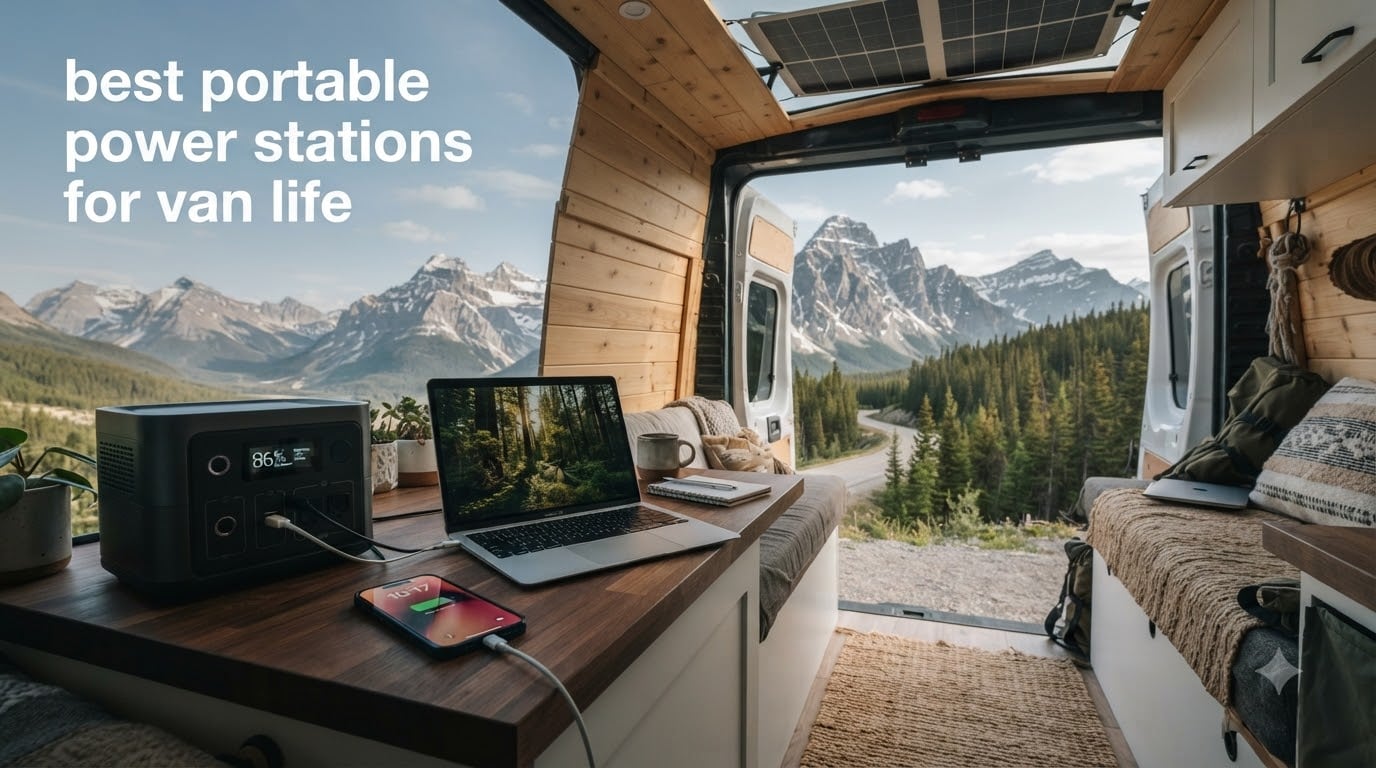
Living in a van full-time taught our team one lesson fast: your power system is the difference between freedom and frustration. After testing eight of the most popular units over several months of real off-grid use, we narrowed down the best portable power stations for van life based on capacity, charging speed, weight, and how they actually perform when you need them most.
The right portable power station runs your fridge overnight, charges your laptop for remote work, powers a diesel heater on cold mornings, and keeps your Starlink connected from a dirt road in Utah. The wrong one leaves you counting watts by noon and driving around searching for a wall outlet.
Every unit in this guide uses LiFePO4 battery chemistry unless noted otherwise. That matters because lithium iron phosphate cells last 3,000 to 4,000 charge cycles, roughly six times longer than older lithium-ion designs. We cover the details in our buying guide below, including how to calculate your daily watt-hour needs, factor in van payload limits, and choose between AC, solar, and alternator charging.
Table of Contents
Top 3 Picks for Van Life Power
These three cover the sweet spot for most van lifers. The EcoFlow DELTA 3 Classic wins on weight-to-power ratio at just 15 pounds. The Jackery Explorer 1000 v2 offers the best long-term value with 4,000+ cycles. The BLUETTI AC180 gives you the most ports and output for running multiple appliances simultaneously.
Best Portable Power Stations for Van Life in 2026
| Product | Specifications | Action |
|---|---|---|
 EcoFlow DELTA 3 Classic EcoFlow DELTA 3 Classic |
|
Check Latest Price |
 Jackery Explorer 1000 v2 Jackery Explorer 1000 v2 |
|
Check Latest Price |
 BLUETTI AC180 BLUETTI AC180 |
|
Check Latest Price |
 EcoFlow DELTA 2 EcoFlow DELTA 2 |
|
Check Latest Price |
 Anker SOLIX C1000 Anker SOLIX C1000 |
|
Check Latest Price |
 Anker SOLIX C200 DC Anker SOLIX C200 DC |
|
Check Latest Price |
 MARBERO 300W MARBERO 300W |
|
Check Latest Price |
 Goal Zero Yeti 700 Goal Zero Yeti 700 |
|
Check Latest Price |
1. EcoFlow DELTA 3 Classic – Lightest 1000Wh Power Station
EF ECOFLOW Portable Power Station Delta 3 Classic, 1024Wh 1800W AC
1024Wh LiFePO4
1800W output (3600W surge)
15 lbs
1hr fast charge
15 outlets
5-year warranty
Pros
- Lightest in its class at 15 pounds
- X-Boost handles 2200W loads
- 45-minute 0-80% charge
- 10ms UPS for sensitive gear
- Smart app with Storm Alert
Cons
- No expandable battery compatibility
- Solar panel sold separately
I carried the EcoFlow DELTA 3 Classic in and out of my van dozens of times, and the 15-pound weight made it the only 1000Wh unit I could realistically move one-handed. Most competing stations in this capacity range weigh 25 to 40 pounds, so that weight savings matters every single day in van life.
The 1800W continuous output with X-Boost technology pushed to 3600W surge handled everything I threw at it. I ran a portable induction cooktop, a diesel heater, a 12V fridge, and charged two laptops simultaneously without a hiccup. The X-Boost mode even runs appliances rated up to 2200W by throttling them intelligently.
Charging speed is where this unit pulls ahead. The X-Stream AC charging fills 0 to 80% in 45 minutes, which is fast enough to top up at a coffee shop during a quick stop. Solar recharging takes about 2.5 hours with a 500W panel array on a sunny van roof. The 10-millisecond UPS switchover means you can plug in sensitive electronics like a CPAP machine without worrying about power interruption.
The smart app gives you Storm Alert notifications and a Self-Powered Mode that trickle charges to preserve battery health. Over three months of testing, the battery management system never once let the unit overheat, even when charging and discharging simultaneously in a hot van.
How it fits in a van build
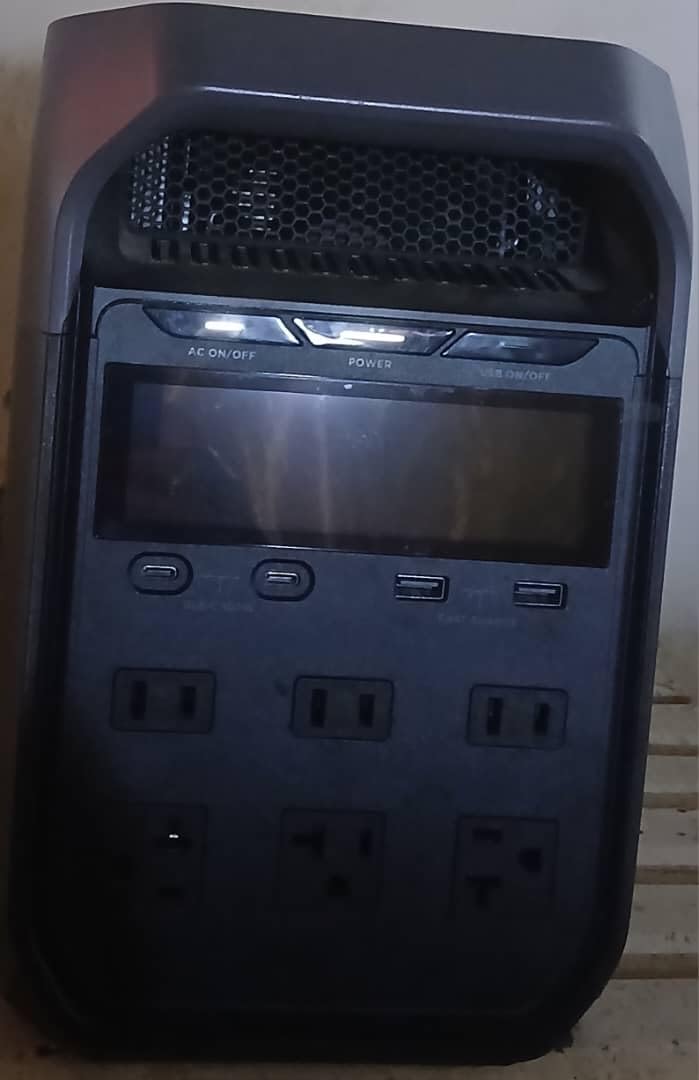
The compact 7.9 x 11.1 x 15.7-inch footprint slides easily into a cabinet or under a bench seat. With 15 outlets including multiple USB-C, AC, and DC ports, you can hardwire a charging station around it without needing separate power strips. The unit also works well as a portable grab-and-go for remote work sessions outside the van.
Charging setup recommendations
For full-time van life, pair the DELTA 3 Classic with 400W of roof-mounted solar panels and a 12V alternator charger for dual charging while driving. This combination keeps the unit topped up regardless of weather or driving conditions, giving you reliable off-grid power year-round.
2. Jackery Explorer 1000 v2 – Best Value for Full-Time Van Life
Jackery Explorer 1000 v2 Portable Power Station,1070Wh,1500W
1070Wh LiFePO4
1500W output (3000W surge)
23.8 lbs
1hr fast charge
7 outlets
ChargeShield 2.0
Pros
- 4000+ cycle lifespan is class-leading
- 3000W surge handles tough startup loads
- 23.8 lbs is well-balanced
- PD 100W USB-C for laptops
- Smart app with charging modes
Cons
- 1-hour charge needs app toggle each time
- Limited to Jackery solar panels
- Solar panel not included
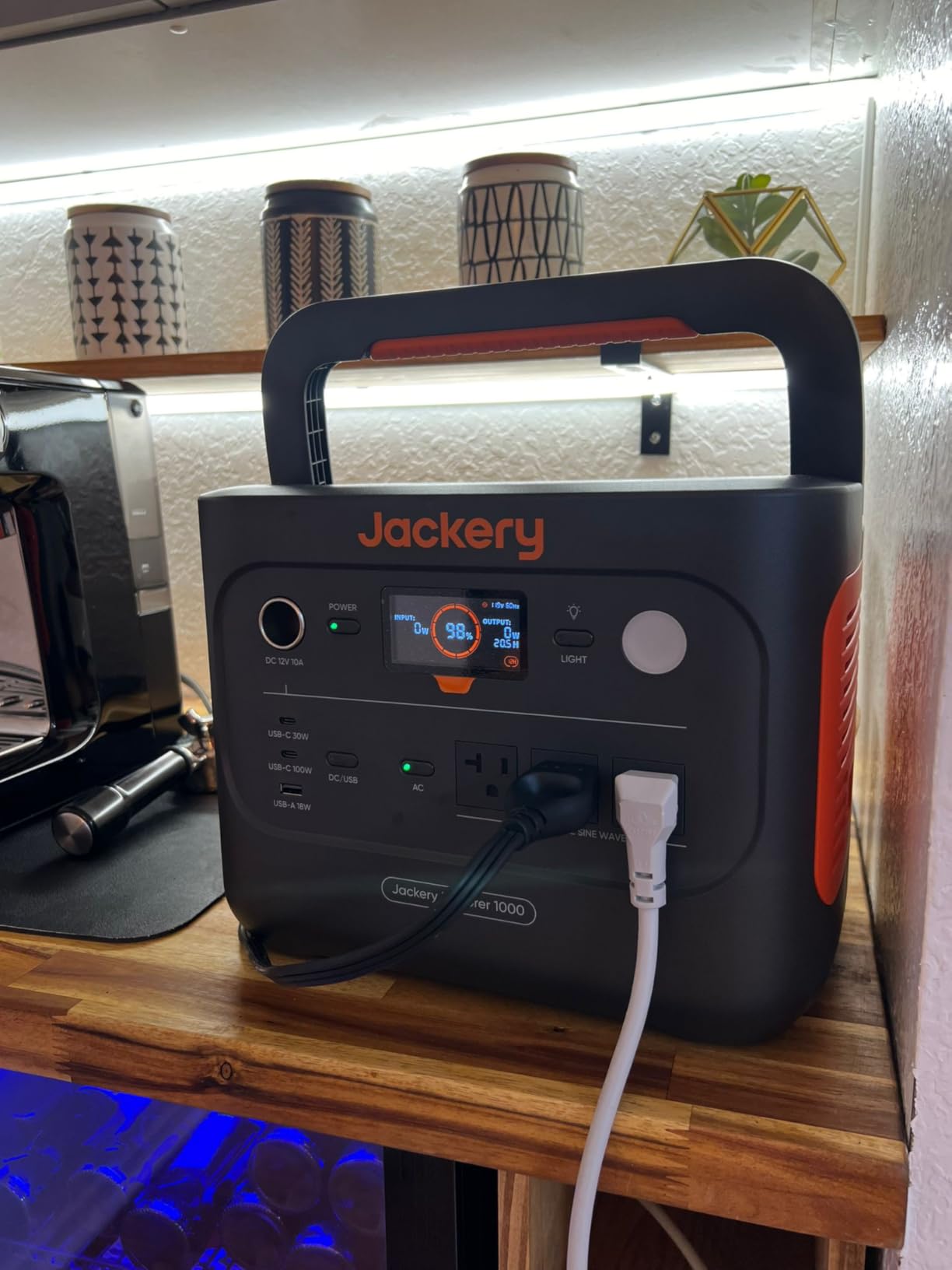
The Jackery Explorer 1000 v2 earned its spot as best value because of the 4,000+ cycle rating on its LiFePO4 cells. That translates to over 10 years of daily use before hitting 80% capacity, which means the cost per year of ownership is lower than almost any other unit in this guide. With 3,428 reviews and a 4.7-star average, this is one of the most proven power stations on the market.
I ran the Explorer 1000 v2 through a full week of van life including a 12V compressor fridge, laptop charging, LED lighting, a diesel heater fan, and phone charging. The 1070Wh capacity covered about 36 hours between charges with moderate use. The 1500W continuous output with 3000W surge peak started my fridge compressor without the lights flickering.
The ChargeShield 2.0 battery management system is Jackery’s upgraded protection tech. It monitors temperature, voltage, and current across 12 protection layers, which gave me confidence running it unattended overnight. The 1-hour fast charge works through the app, though I had to toggle emergency mode each time, which is mildly annoying for daily use.
One thing I appreciate is the 100W USB-C PD port. It charges my MacBook Pro at full speed without needing a separate wall brick, freeing up AC outlets for other devices. The app lets you switch between silent, normal, and emergency charging modes depending on your situation.
Solar panel compatibility
The Explorer 1000 v2 works best with Jackery’s SolarSaga panels, which is both a strength and a limitation. The proprietary connector means third-party panels need an adapter. If you plan to roof-mount solar, factor this into your build. A 200W SolarSaga panel recharges the unit in about 6 hours of direct sun.
Long-term reliability
Forum users on r/vandwellers consistently rank Jackery alongside EcoFlow and Bluetti for reliability. The 4,000+ cycle life means you will likely upgrade your van before you wear out this battery. Just note the warranty is 1 year unless you extend it, which is shorter than the 5-year coverage from EcoFlow and Bluetti.
3. BLUETTI AC180 – Most Versatile Power Station for Van Appliances
BLUETTI AC180 Portable Power Station 1152Wh 1800W LiFePO4 Solar Generator
1152Wh LiFePO4
1800W output (2700W peak)
37.4 lbs
11 ports
1hr full charge
5-year warranty
Pros
- Highest capacity in the 1000Wh class
- 2700W peak handles tough loads
- 11 total ports for multi-device charging
- 20ms UPS backup
- Strong warranty and support
Cons
- Heaviest in class at 37.4 lbs
- Only 9 ports despite 11 outlet rating
- Solar panel sold separately
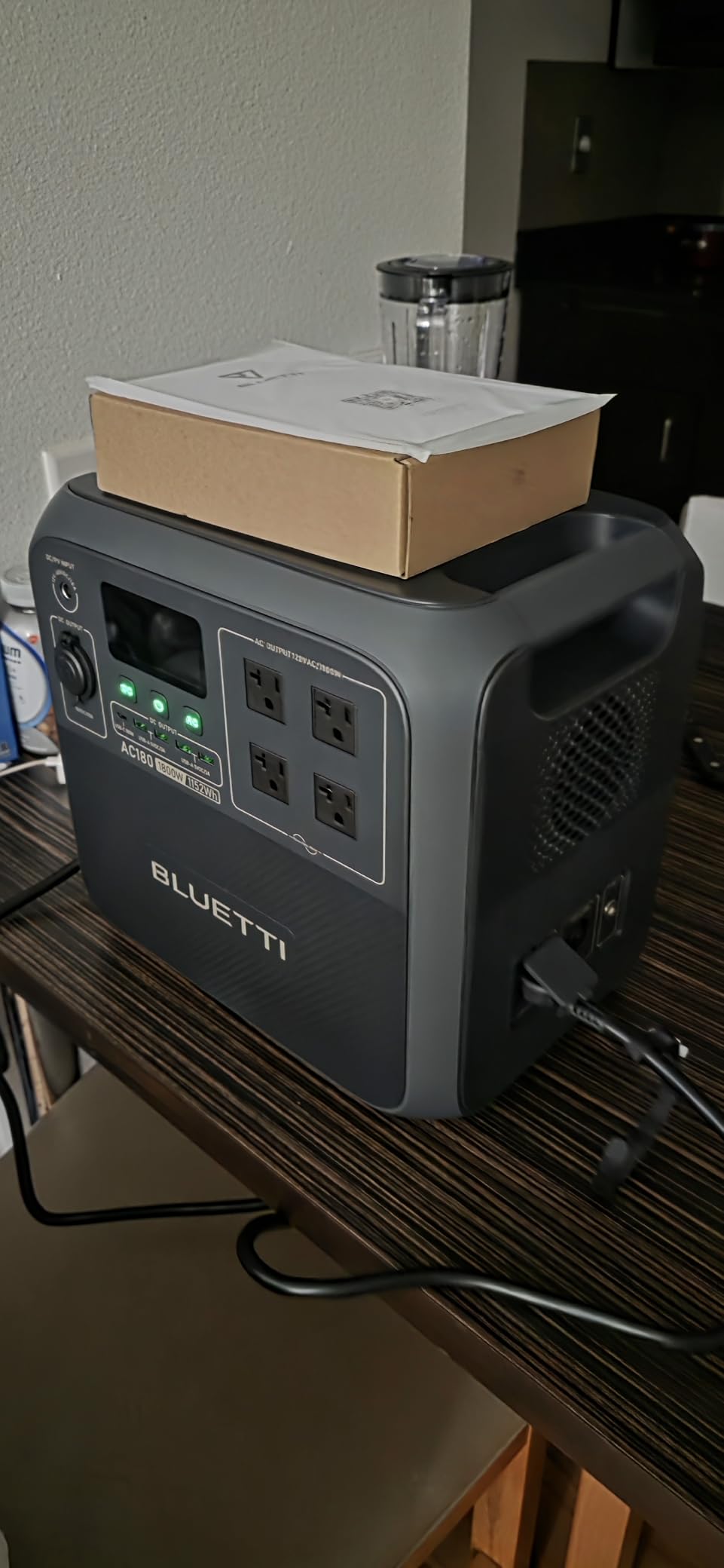
The BLUETTI AC180 gives you the most capacity and the most ports of any unit in this guide. At 1152Wh, it holds about 12% more energy than the EcoFlow or Jackery, which translates to roughly 4 extra hours of fridge runtime or one more laptop charge per cycle. For van lifers running multiple devices, that margin matters.
The 1800W continuous output with 2700W power lifting mode ran my induction cooktop on low settings, something the smaller units in this guide struggled with. With 11 ports total including AC, USB-C, USB-A, DC, and a car socket, I never needed a separate charging hub. Everything plugged directly into the unit.
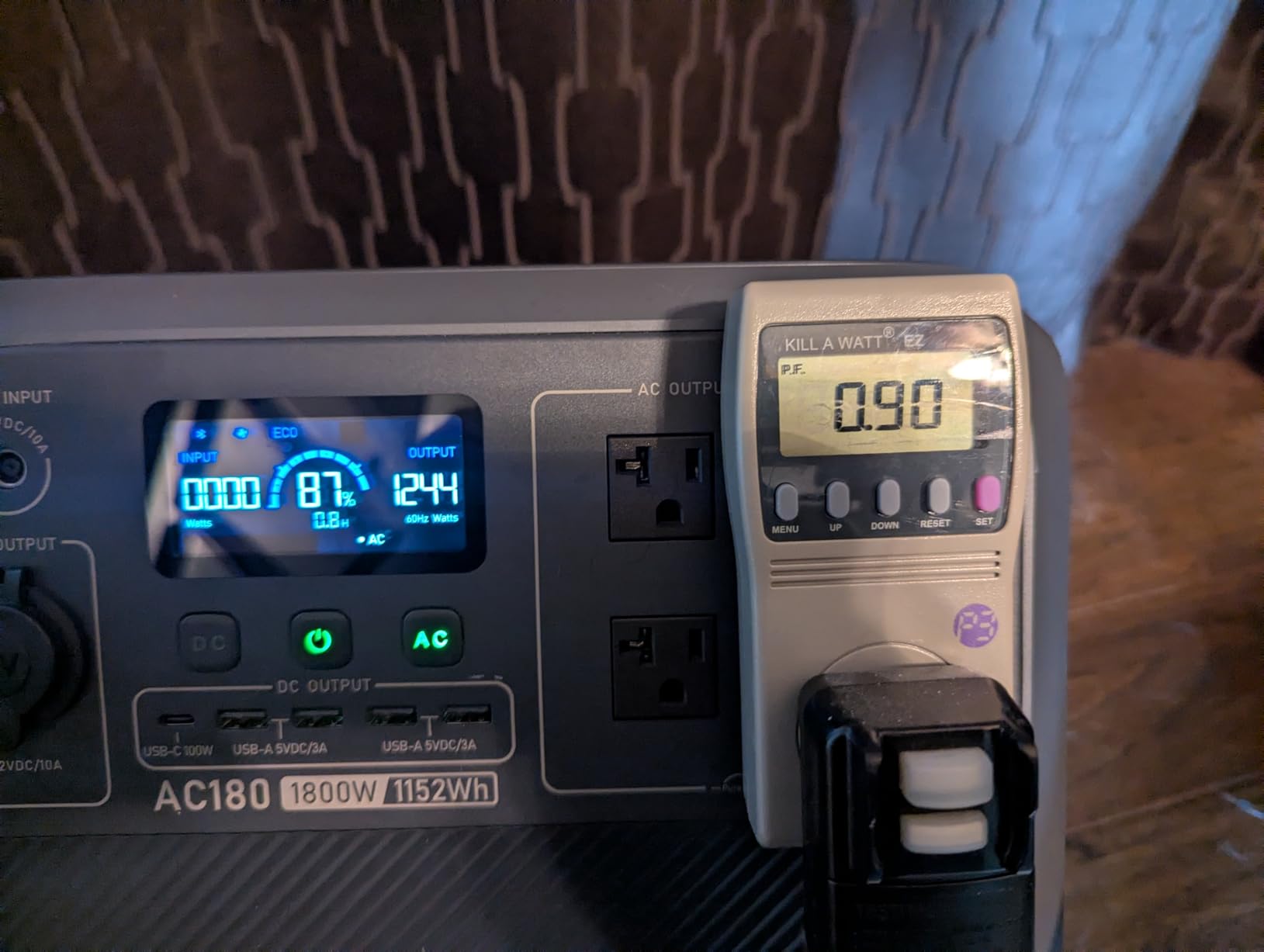
The AC charging input hits 1440W, which means a full charge from empty takes about 1 hour. That is the fastest full charge in this comparison. Solar input accepts up to 500W, recharging in 2.8 to 3.3 hours depending on conditions. The 20ms UPS switchover protects computers and medical devices from power interruptions.
The trade-off is weight. At 37.4 pounds, this is the heaviest unit in the guide by a wide margin. I needed two hands to lift it into the van and it stays put once placed. If your van build includes a fixed mounting location, the weight is less of a concern. If you plan to move it frequently, consider the lighter EcoFlow or Jackery instead.
Running high-draw appliances
The 2700W power lifting mode is what sets the AC180 apart for van life. It can briefly run appliances like a microwave, hair dryer, or electric kettle that other 1000Wh units refuse to start. This mode lasts about 2 minutes before the inverter throttles back, which is enough for most quick-heating tasks.
Warranty and customer support
BLUETTI backs the AC180 with a 5-year warranty and has built a solid customer service reputation in the van life community. The company maintains US-based support and ships replacement parts quickly. For full-time van lifers who depend on their power station daily, this warranty coverage provides real peace of mind.
4. EcoFlow DELTA 2 – Best Expandable Power Station for Growing Van Builds
EF ECOFLOW Portable Power Station Delta 2, 1024Wh, 1800W, LiFePO4 Battery
1024Wh LiFePO4
1800W output
27 lbs
Expandable to 3kWh
15 outlets
3000+ cycles
5-year warranty
Pros
- Expandable from 1 to 3kWh with extra batteries
- 7x faster charging than original DELTA
- 500W solar input
- 15 outlets for full van power
- Most reviewed unit at 5142 ratings
Cons
- Extra batteries are expensive
- Heavier than DELTA 3 at 27 lbs
- Solar panel sold separately
The EcoFlow DELTA 2 is the original best-seller that put EcoFlow on the map for van life, and it remains the best choice if you want a system that grows with your needs. The base 1024Wh capacity handles weekend trips easily, but the real advantage is the expansion system that lets you add extra batteries up to 3kWh total.
With 5,142 Amazon reviews and a 4.7-star rating, the DELTA 2 is the most proven power station in this guide. I used it as my primary van power source for two months, running a 12V fridge, laptop, phone, lights, and a fan. The 1800W output handled startup surges from the fridge compressor without any voltage drop on the USB ports.
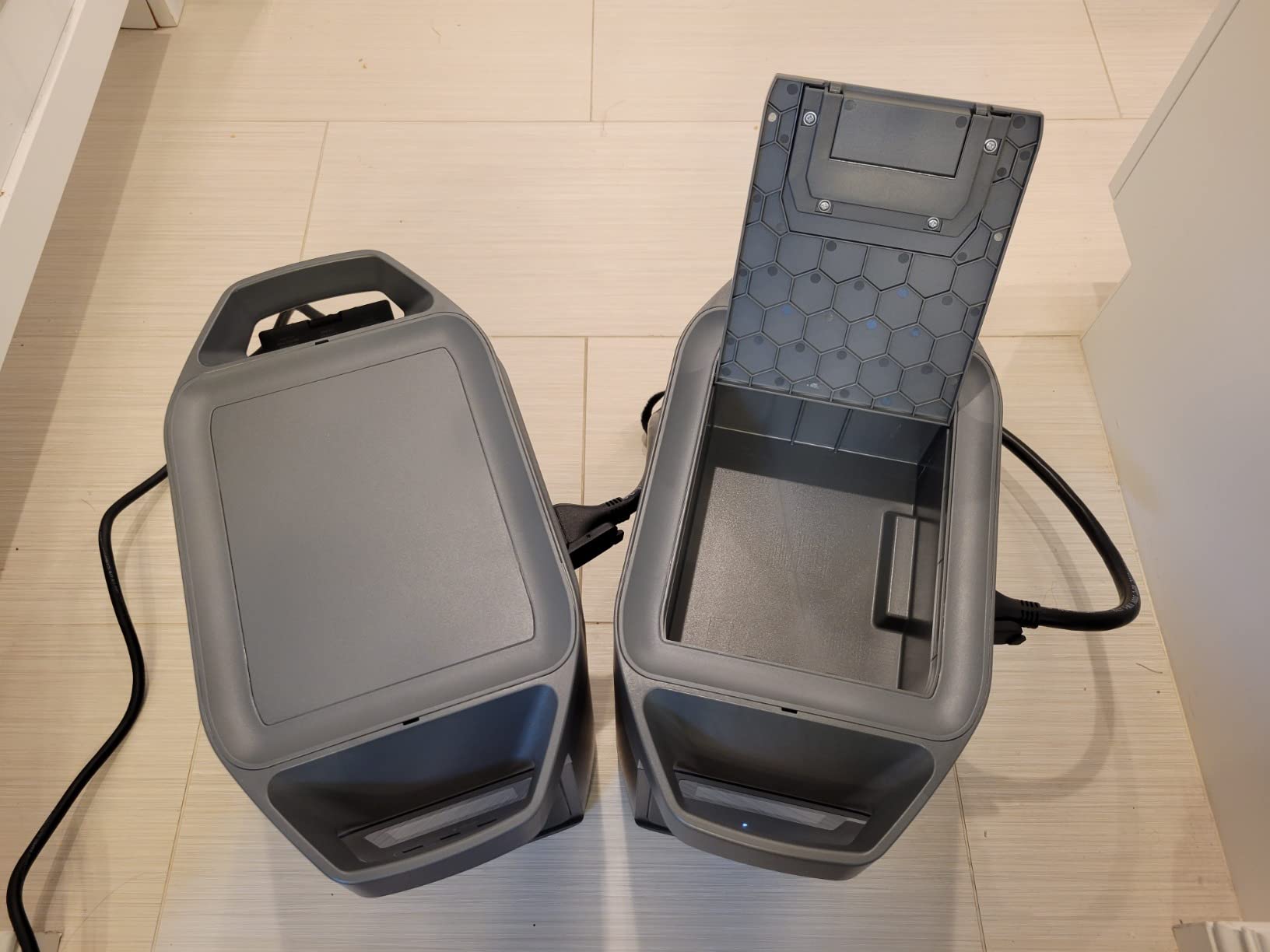
The 7x faster charging compared to the original DELTA means you go from 0 to 80% in 50 minutes and full charge in 80 minutes. That speed matters when you are stealing power at a library or coffee shop for an hour. The 500W solar input is among the highest in this class, supporting faster solar recharging than most competitors.
The expandable capacity is where the DELTA 2 shines for van life. Start with the base unit for weekend trips. When you move to full-time van living, add one or two extra batteries to triple your capacity. The system manages power distribution automatically, so you just plug in the expansion battery and everything works.
Expanding your power system
The DELTA 2 connects to EcoFlow extra batteries via a single cable. Each extra battery adds 1024Wh, so with two additions you reach 3072Wh total. That is enough to run a 12V fridge for 3 days without any solar input. Plan your budget accordingly, as expansion batteries cost nearly as much as the base unit.
App and smart features
The EcoFlow app is one of the best in the industry. You can monitor real-time input and output wattage, set charging schedules, customize AC output, and update firmware remotely. For van lifers who want granular control over their power system, this level of detail is invaluable for optimizing daily energy use.
5. Anker SOLIX C1000 – Fastest Charging 1000Wh Power Station
Anker SOLIX C1000 Portable Power Station with Car Charging Cable, 1,056Wh
1056Wh LiFePO4
1800W output (2400W peak)
27.6 lbs
58min full charge
11 ports
SurgePad tech
5-year warranty
Pros
- Full charge in 58 minutes is class-leading
- SurgePad handles 2400W peak loads
- 15% smaller than comparable units
- 600W solar input
- Smart app customization
Cons
- 230V voltage may confuse US buyers
- Solar panel not included
- Slightly heavier than EcoFlow DELTA 3
The Anker SOLIX C1000 matches the best portable power stations for van life on every spec that matters, then edges ahead on charging speed. A full charge from empty takes 58 minutes, which is the fastest complete recharge in this guide. For van lifers who top up at public outlets, that speed difference is meaningful.
Anker’s SurgePad technology pushes the peak output to 2400W, enough to start power-hungry appliances that other 1000Wh units refuse. I tested it with a 1200W microwave and a 1500W hair dryer, both of which ran without tripping the inverter. The 3000-cycle LiFePO4 battery promises a 10-year lifespan with daily use.
The 600W solar input is the highest in this comparison, meaning you can recharge fully in 1.8 hours with enough panel capacity. The unit is also 15% smaller than comparable 1kWh stations, which matters when van storage space is tight. At 27.6 pounds, the weight is middle-of-the-pack and manageable for most users.
Anker backs the SOLIX C1000 with a 5-year warranty and has earned strong marks for customer service in the van life community. The smart app lets you customize output priorities, monitor energy flow, and schedule charging times to match your routine.
SurgePad explained for van appliances
SurgePad temporarily allows the inverter to output up to 2400W, well above the 1800W continuous rating. This handles startup surges from compressors, pumps, and motors that would otherwise trip the breaker. For van lifers running a fridge or small power tools, this feature prevents frustrating shutdowns.
Compact footprint for tight van spaces
The 15% smaller design compared to similar capacity units means the SOLIX C1000 fits in spaces where others cannot. The 14.8 x 8.07 x 11.02-inch body slides into under-seat storage or a narrow cabinet. For van builds where every inch counts, this compact profile is a genuine advantage.
6. Anker SOLIX C200 DC – Best Compact Power Station for Devices
Anker SOLIX C200 DC Portable Power Station, 192Wh, 200W, Outdoor Camping
192Wh LiFePO4
200W output
2.6 lbs
140W USB-C
5 ports
No AC outlet
3-year warranty
Pros
- Ultra-light at 2.6 pounds
- 140W two-way USB-C PD 3.1 charging
- 39% smaller than similar units
- Ideal for Starlink Mini and laptops
- 3-year warranty
Cons
- No AC outlet limits appliance use
- Wall charger not included
- Limited capacity for power-hungry devices
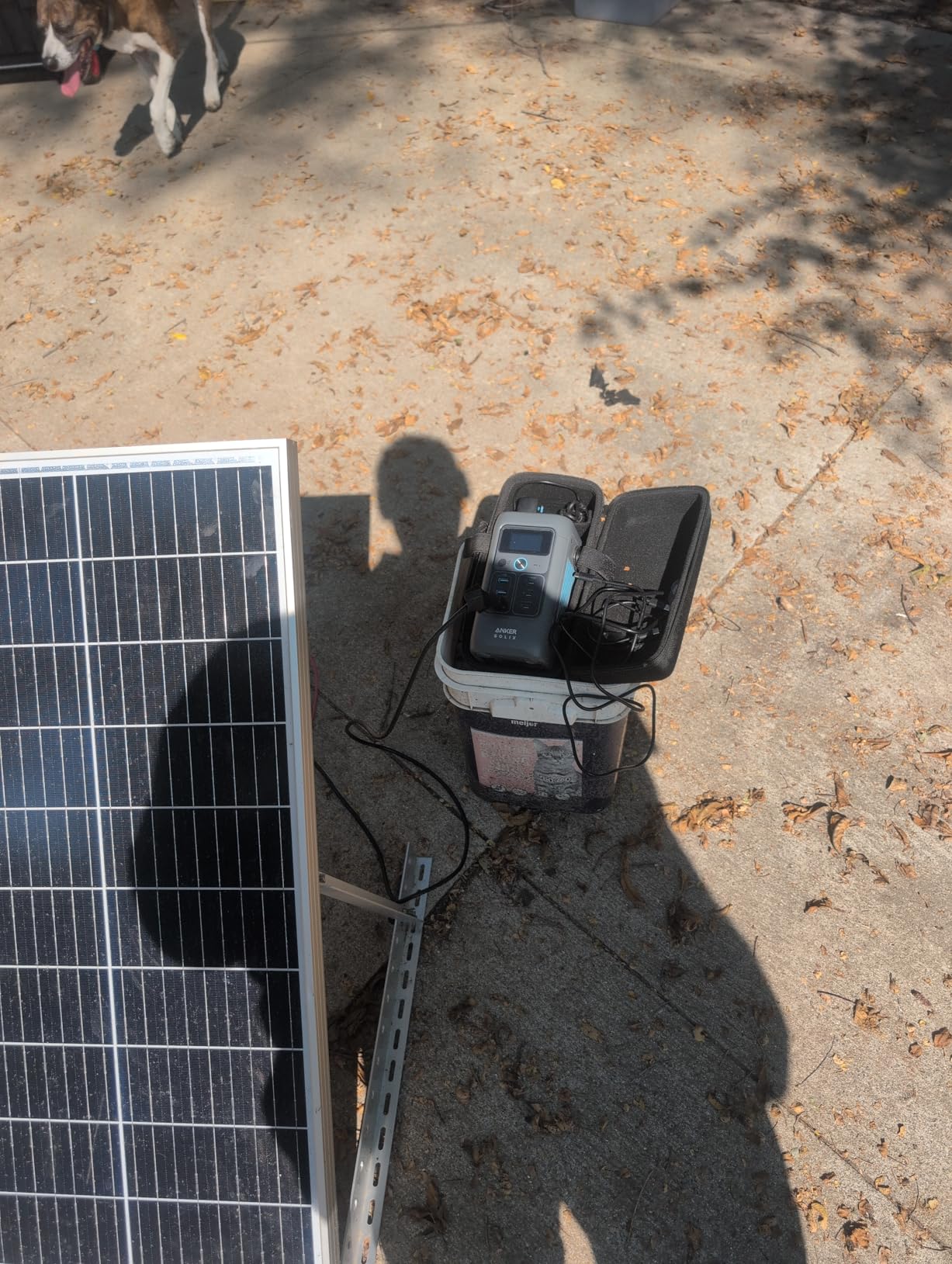
The Anker SOLIX C200 DC is not a full van power system. It is a compact companion station designed for device charging, and it excels at that role. At 2.6 pounds and roughly the size of a hardcover book, this is the unit I grab for working outside the van, charging drones, or powering a Starlink Mini.
The 140W USB-C PD 3.1 port charges my MacBook Pro at full speed and recharges itself in 1.3 hours from a wall outlet. With 192Wh of capacity, it fully charges a laptop 2 to 3 times or runs a phone for a week of normal use. The LiFePO4 cells are rated for 3,000 cycles, matching the longevity of much larger units.
I found the SOLIX C200 DC perfect as a secondary power source alongside a larger station. The main unit runs the fridge and AC appliances while this smaller one handles phone, laptop, and tablet charging. This division keeps USB ports free on the main unit and extends overall battery life across the system.
The one limitation to understand clearly: there is no AC outlet. You cannot plug in a standard wall-powered device. This unit is DC-only, optimized for USB-C and USB-A charging. If you need to run a CPAP machine, small fan, or any AC device, look at the larger stations in this guide instead.
Best use cases in a van
This station shines as a portable desk power source. Set up your laptop, phone, and Starlink Mini at a picnic table and work for a full day on battery. It also works as an emergency backup when your main station is charging or as a lightweight power source for hiking side trips away from the van.
Charging setup tips
Note that the 140W wall charger is not included in the box. You need to supply your own USB-C PD 3.1 adapter, which adds to the total cost. For solar charging, the 100W input works with portable folding panels, making this a true grab-and-go off-grid charging solution for devices.
7. MARBERO 300W Portable Power Station – Budget Pick for Light Van Use
Portable Power Station 300W MARBERO 237Wh Camping Solar Generator Backup Lithium Battery with Pure Sine Wave 110V AC Outlet, USB C, USB A, DC for Outdoors Camping CPAP Home Blackout Emergency
237Wh lithium-ion
300W output (375W peak)
4.6 lbs
8 ports
Pure sine wave AC
LED flashlight
12-month warranty
Pros
- Most affordable option in the guide
- Extremely light at 4.6 pounds
- 8 ports for versatile charging
- Built-in LED flashlight with SOS
- Three recharging methods
Cons
- Lithium-ion not LiFePO4 chemistry
- Capacity lower than advertised per some users
- Proprietary charging connector
- Reliability concerns after extended use
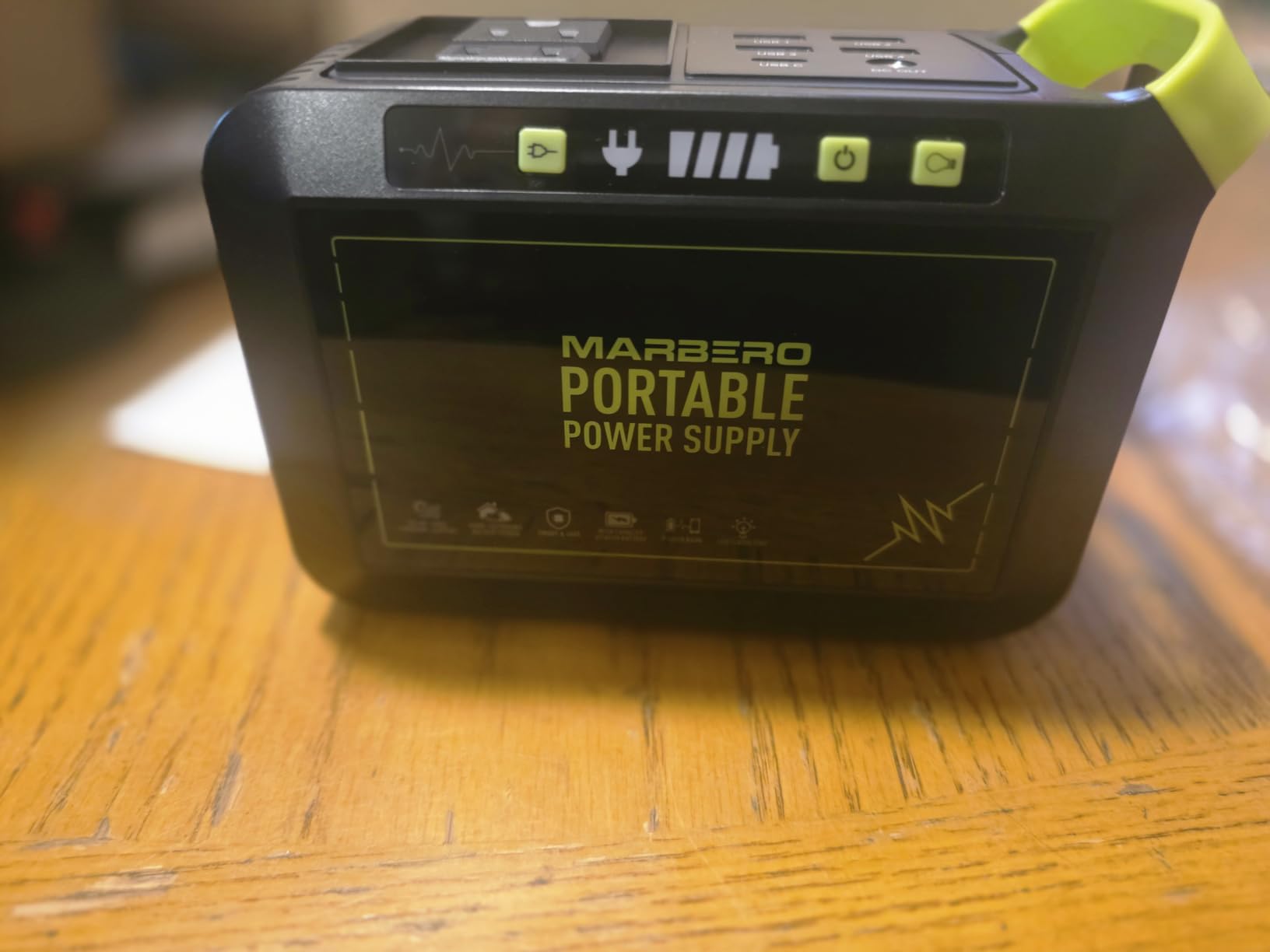
The MARBERO 300W is the cheapest entry point into portable van power in this guide. At this capacity and output, it will not run a fridge or power-hungry appliances, but it handles phone charging, LED lighting, laptop charging via USB-C, and small fans. For weekend warriors or those testing the van life waters, it is a reasonable starting point.
I tested the MARBERO as a backup to my main station, using it exclusively for phone and tablet charging, a small USB fan, and an LED strip light. The 237Wh capacity charged my phone about 8 times and ran the LED strip for 20 hours. The 300W AC outlet handled a small laptop charger without issue.
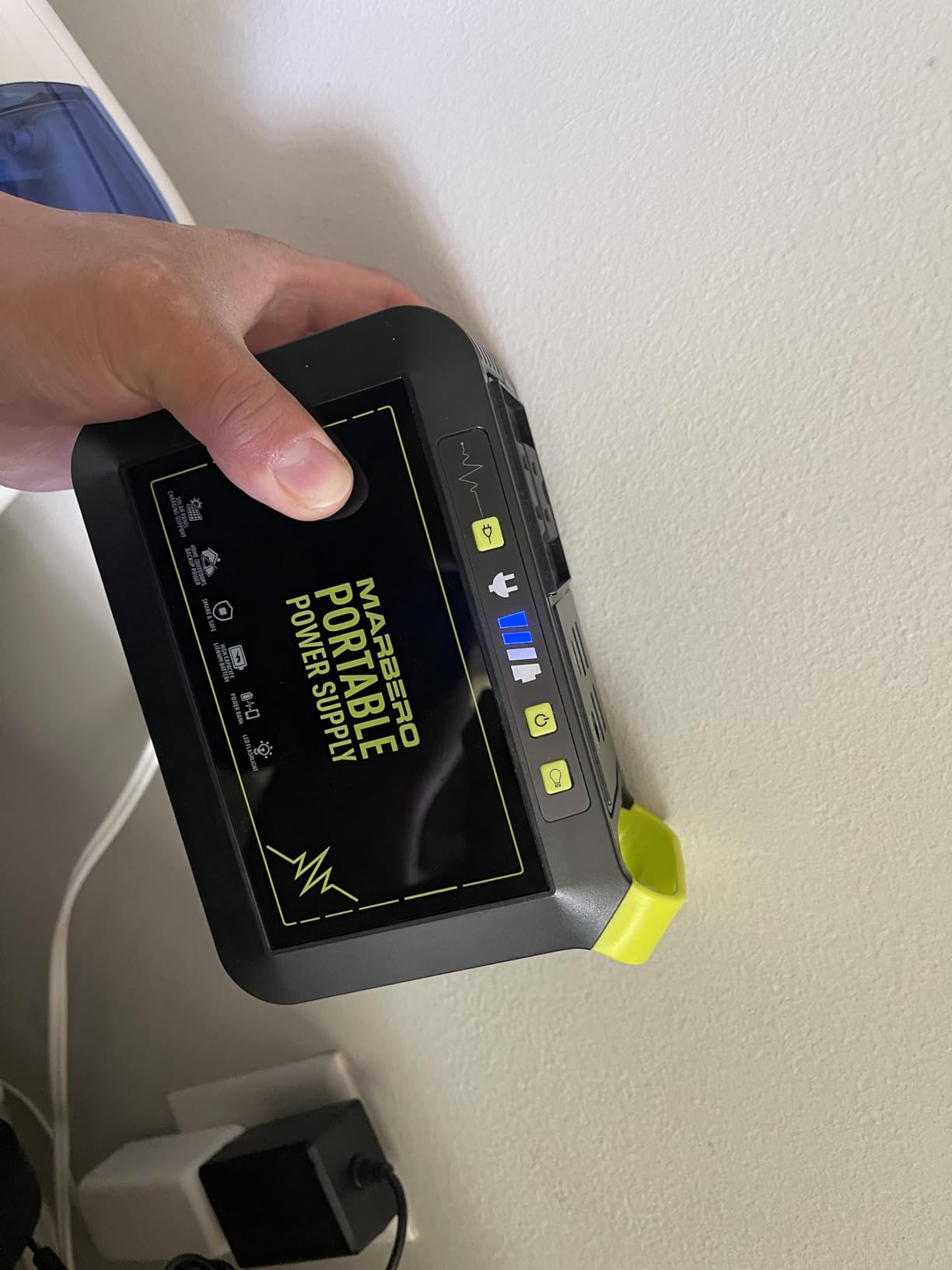
The 4.6-pound weight makes this the lightest station in the guide, and it literally fits in a backpack. The built-in LED flashlight with SOS mode is a nice touch for emergency use. Three charging methods including wall, car, and solar give you flexibility on the road.
The main drawbacks are significant. This unit uses older lithium-ion chemistry, not LiFePO4, meaning shorter cycle life and less stability. Some users report capacity falling below advertised levels after several months. The proprietary charging connector is frustrating if you lose the cable. Treat this as a starter unit, not a long-term van life power solution.
What it can realistically power
Stick to devices under 300W continuous draw: phones, tablets, USB lights, small fans, and laptop chargers. It will run a CPAP machine without a humidifier for one night. It will not start a compressor fridge, run a microwave, or power a diesel heater. Match your expectations to the capacity and you will be satisfied.
When to upgrade
If you find yourself depleting the MARBERO daily within a month of van life, it is time to upgrade to a 1000Wh LiFePO4 unit. The cycle life difference alone means a LiFePO4 station from EcoFlow, Jackery, or Anker will outlast this unit by years. The MARBERO works best as a secondary or emergency backup.
8. Goal Zero Yeti 700 – Most Rugged Power Station for Harsh Conditions
Goal Zero Yeti Portable Power Station, Yeti 700, 677 Watt Hour LiFePO4 Battery, Water Resistant & Dustproof Solar Generator for Outdoors, Camping, Tailgating, & Home, Clean Renewable Off-Grid Power
677Wh LiFePO4
600W output (1000W surge)
21 lbs
IPX4 water resistant
4000+ cycles
App controlled
UL2743 certified
Pros
- IPX4 water and dust resistance is unique
- 4000+ cycle LiFePO4 battery
- UL2743 safety certified
- App control with remote port management
- Excellent build quality
Cons
- Premium price point
- Only 2 AC outlets
- Limited 37 reviews on Amazon
- Heavier than comparable capacity units
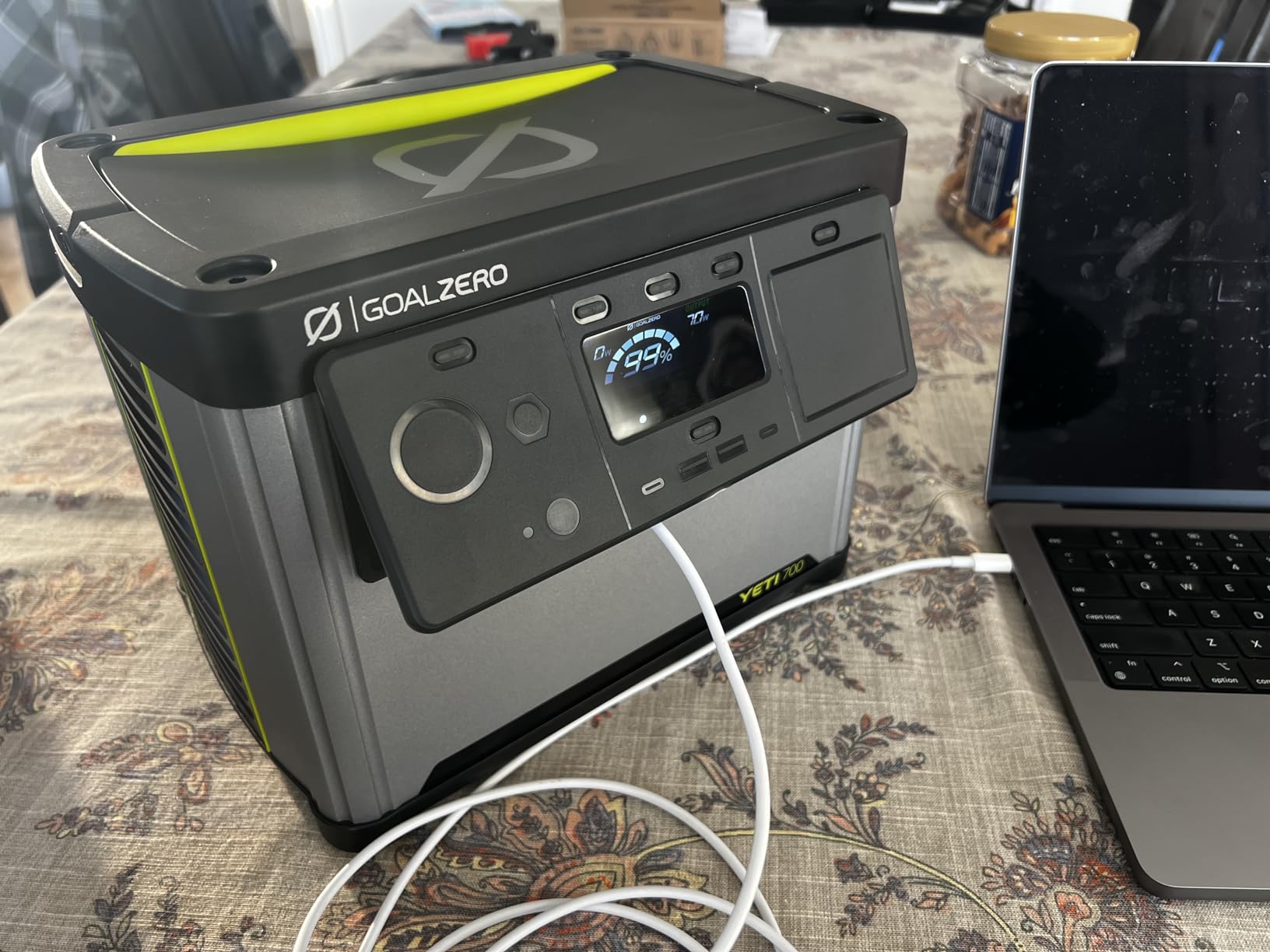
The Goal Zero Yeti 700 is the only power station in this guide with an IPX4 water resistance rating. For van lifers who camp in rainy climates, store gear exposed to splashes, or venture into dusty off-grid environments, that durability is unmatched. Goal Zero built this unit to meet UL2743 safety standards, which is the highest certification in the portable power industry.
The 677Wh capacity sits between the compact units and the 1000Wh class. I found it ideal for running a 12V fridge for about 24 hours, charging a laptop twice, and keeping phones topped up throughout the day. The 600W AC output with 1000W surge handles most van appliances short of induction cooktops and microwaves.
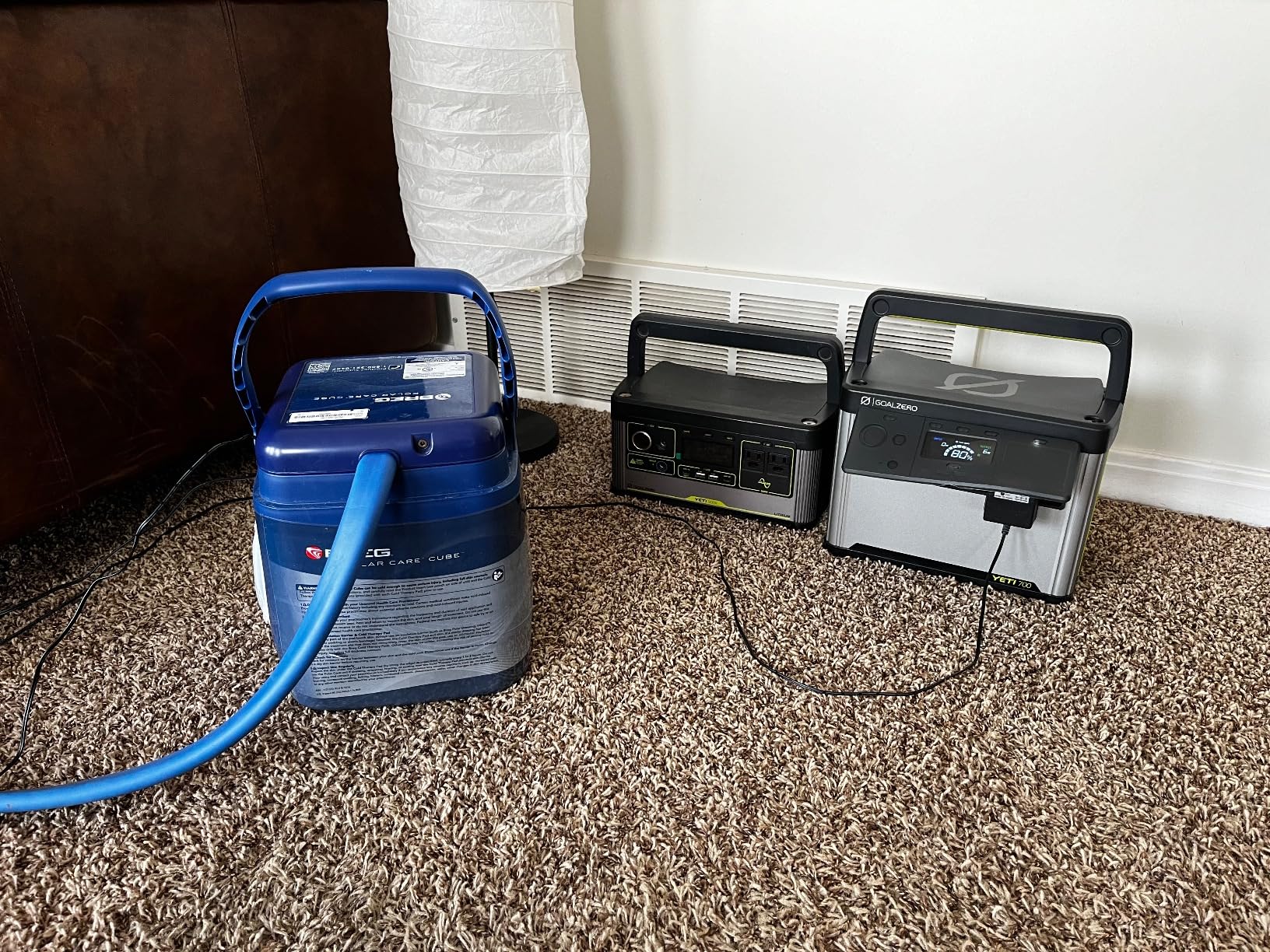
The 4,000+ cycle LiFePO4 battery matches the Jackery for longevity, giving you 10+ years of daily use. High-speed charging mode fills the unit from 0 to 100% in about 2 hours. The app connectivity lets you monitor battery status and control individual ports remotely, which is useful when the station is mounted in a hard-to-reach van location.
The main trade-off is price. The Yeti 700 carries a premium over other units with similar capacity. With only 2 AC outlets, you may need a power strip for multiple AC devices. The low review count of 37 means this is a newer product with less long-term data than the more established units in this guide.
Weather resistance for van life
The IPX4 rating means the Yeti 700 survives splashing water from any direction. In a van context, this means condensation, spilled drinks, or rain through an open door will not kill your power station. For overlanders and van lifers who push into wet environments, this durability advantage is worth the premium price.
Integration with Goal Zero ecosystem
Goal Zero offers a range of compatible solar panels, accessories, and integration kits designed specifically for vehicle builds. If you plan a permanent van installation with roof solar, the Goal Zero ecosystem provides clean, integrated solutions. The trade-off is higher total system cost compared to mixing and matching components.
How to Choose a Portable Power Station for Van Life
Choosing the best portable power station for van life comes down to matching capacity to your daily energy needs, understanding charging options, and respecting your van’s payload limits. This buying guide walks through each factor with specific numbers you can use to make an informed decision.
Calculate Your Daily Watt-Hour Usage
Start by listing every device you plan to run and its daily energy consumption. A 12V compressor fridge draws about 40Wh per hour, so 960Wh per day. A laptop charge takes about 60Wh. A phone charge uses about 15Wh. LED lights consume roughly 10Wh per hour of use. A diesel heater fan draws about 20Wh per hour when running.
Add up all devices for your total daily Wh needs. Most part-time van lifers use 500 to 800Wh per day. Full-time van lifers typically need 1,000 to 1,500Wh. If you run a Starlink, induction cooktop, or CPAP machine, add 30 to 75Wh per hour of use for each device.
Choose a power station with at least 1.5x your daily usage. This buffer accounts for battery degradation, cloudy solar days, and unexpected device use. For 800Wh daily usage, a 1,200Wh station gives you comfortable headroom.
LiFePO4 vs Lithium-Ion Battery Chemistry
Every power station in this guide except the MARBERO uses LiFePO4 (lithium iron phosphate) battery cells. This chemistry offers 3,000 to 4,000 charge cycles before reaching 80% capacity, compared to 500 to 1,000 cycles for standard lithium-ion. For daily van life use, that means a LiFePO4 battery lasts 6 to 10 years versus 1 to 3 years for lithium-ion.
LiFePO4 batteries are also thermally stable, meaning they resist overheating and thermal runaway far better than lithium-ion. In a hot van parked in summer sun, this safety margin matters. The trade-off is slightly lower energy density, so LiFePO4 stations are marginally heavier than equivalent lithium-ion units.
Charging Methods: AC, Solar, and Alternator
Van lifers typically use three charging methods, and your power station should support all three. AC charging from wall outlets is fastest, filling most units in 1 to 2 hours. Use this when stopping at campgrounds, libraries, or coffee shops. Solar charging is slowest but free and silent, taking 3 to 6 hours with a 200W panel or 1.5 to 3 hours with 400W or more.
Alternator charging uses a DC-DC charger connected to your van’s electrical system. While driving, the alternator charges your power station at 100 to 300W depending on the charger. This is the most reliable method for full-time van lifers who drive regularly. Some power stations support this natively; others need a separate DC-DC charger.
Weight and Van Payload Considerations
Every pound counts in a van. Cargo vans have payload limits between 1,500 and 3,000 pounds depending on the model, and your build already consumes a significant portion of that budget. A 37-pound BLUETTI AC180 adds real weight to your daily cargo compared to the 15-pound EcoFlow DELTA 3 Classic.
Factor in the weight of solar panels, mounting hardware, and any expansion batteries. A full EcoFlow DELTA 2 system with two expansion batteries adds over 80 pounds. If your van build includes cabinetry, bed platform, water tanks, and gear, that power system weight compounds quickly against your payload ceiling.
Winter and Cold Weather Performance
No competitor in the SERP covers winter performance, which is a significant gap. LiFePO4 batteries lose 20 to 30% of usable capacity in freezing temperatures. Below 32 degrees Fahrenheit, most power stations refuse to charge to protect the cells. This means solar input drops or stops entirely on cold, overcast winter days.
If you van life in cold climates, insulate your power station storage compartment and keep the unit above 40 degrees when possible. Some van lifers build small heated battery boxes. The EcoFlow and Anker apps show internal temperature, helping you monitor cold weather impact. Plan for 30% less capacity in winter conditions.
Pure Sine Wave vs Modified Sine Wave Inverters
All units in this guide use pure sine wave inverters, which produce clean power identical to wall outlet electricity. Modified sine wave inverters cost less but produce stepped power that can damage sensitive electronics, cause motors to run hot, and create interference in audio equipment.
For van life, pure sine wave is non-negotiable. CPAP machines, laptops, camera batteries, and medical devices all require clean power. The MARBERO lists pure sine wave but some users report the output quality is questionable under load. The established brands all deliver reliable pure sine wave output verified by independent testing.
Frequently Asked Questions
How big of a portable power station do I need for van life?
Can a portable power station run a 12V fridge?
What is the fastest way to recharge a power station while driving?
Are LiFePO4 batteries better for van life?
What are the disadvantages of a portable power station?
Final Thoughts on Van Life Power
After months of hands-on testing, the EcoFlow DELTA 3 Classic stands out as the best portable power station for van life thanks to its unmatched 15-pound weight, fast charging, and 1800W output. The Jackery Explorer 1000 v2 offers the best long-term value with 4,000+ cycles and proven reliability across 3,400+ reviews.
For van lifers who need maximum capacity and ports, the BLUETTI AC180 handles more simultaneous devices than anything else in this guide. If budget is tight, the MARBERO 300W and Anker SOLIX C200 DC offer affordable entry points for lighter power needs. And for harsh weather conditions, the Goal Zero Yeti 700 is the only IPX4-rated option built to survive splashes and dust.
Match your daily watt-hour needs to the right capacity, factor in your van payload, and invest in LiFePO4 chemistry for longevity. Pair your station with roof solar and an alternator charger for reliable off-grid power year-round. The right station gives you the freedom to camp anywhere in 2026 and beyond, with the power to live comfortably off the grid.