
If your mood dips the moment the clocks change, you are far from alone. Roughly 5% of U.S. adults experience seasonal affective disorder (SAD), and another 10% to 20% deal with milder winter blues every year. The good news: bright light therapy is one of the most-studied, lowest-risk treatments available, and the right lamp can genuinely change how your winters feel.
We spent weeks evaluating the best light therapy lamps for seasonal depression on the market right now. Our team compared specs, read thousands of verified reviews, and cross-checked clinical recommendations from the APA and Mayo Clinic. The eight lamps below cover every use case we found: large clinical panels, travel-ready foldables, wearable glasses, and gentle bedside options for sensitive eyes.
This guide also covers how light therapy actually works, what lux and kelvin numbers matter, who should avoid these devices, and how to use one safely. If you only have two minutes, jump to our seasonal-use lamp roundup or scan the top 3 picks below.
Table of Contents
Top 3 Picks for Best Light Therapy Lamps for Seasonal Depression

Verilux HappyLight Lucent
- 10000 lux UV-free LED
- One-touch operation
- Detachable stand
- 3-year warranty
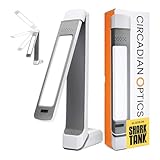
Circadian Optics Lumos
- 10000 lux at 5500K
- 270-degree rotating panel
- 4-year warranty
- 3 brightness levels

Carex Day-Light Classic Plus
- 10000 lux at 12 inches
- Blocks 99.3% UV
- Adjustable height and angle
- 5-year warranty
Best Light Therapy Lamps for Seasonal Depression in 2026
| Product | Specifications | Action |
|---|---|---|
| Verilux HappyLight Lucent |
|
Check Latest Price |
| Circadian Optics Lumos |
|
Check Latest Price |
| Carex Day-Light Classic Plus |
|
Check Latest Price |
 Verilux HappyLight Lumi Plus Verilux HappyLight Lumi Plus |
|
Check Latest Price |
 LASTAR Sun Lamp LASTAR Sun Lamp |
|
Check Latest Price |
 Luminette 3 Light Therapy Glasses Luminette 3 Light Therapy Glasses |
|
Check Latest Price |
 SUXIO Light Therapy Lamp SUXIO Light Therapy Lamp |
|
Check Latest Price |
 Theralite Aura Bright Theralite Aura Bright |
|
Check Latest Price |
1. Verilux HappyLight Lucent – Editor’s Choice for Best SAD Lamp
Verilux HappyLight Lucent Light Therapy Lamp, 10,000 Lux, UV-Free LED
10,000 lux UV-free LED
Detachable stand
3-year warranty
Pros
- Simple one-touch operation
- Effortless 10000 lux brightness
- Compact ultra-thin tablet design
- Detachable bidirectional stand for vertical or horizontal positioning
- Backed by 65 years of Verilux brand reliability
- 3-year manufacturer warranty
Cons
- No brightness adjustment (on/off only)
- Stand design only supports one mounting direction
- May be too bright for highly sensitive eyes
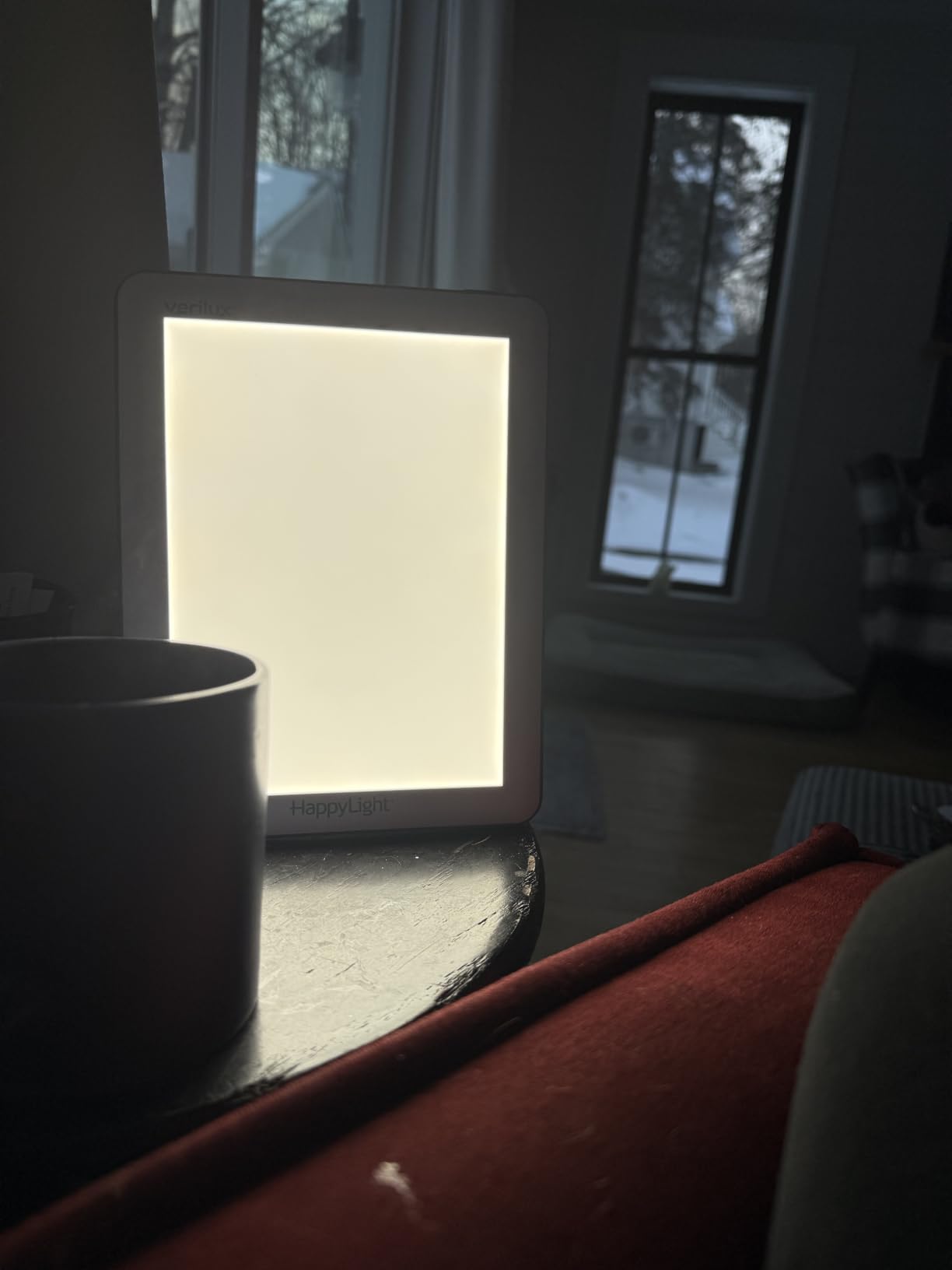
I started my mornings with the Verilux HappyLight Lucent for six weeks, and the difference in my afternoon energy was noticeable by week two. The lamp is dead simple: one button on top, two brightness zones on the face, and a detachable stand that flips between portrait and landscape. I kept mine on the breakfast table, angled slightly off-axis so the light hit my eyes while I drank coffee.
The output is genuinely bright. At about 10 inches away, you get the full 10,000 lux the box promises, which is the clinical dose used in SAD research. Verilux has been in healthy lighting for 65 years, and you can feel that pedigree in the build. The plastic housing is sturdy, the LEDs run cool even after 45 minutes, and there is zero flicker I could detect.
What I love most is the no-fuss design. There is no timer to set, no app to download, no color temperature wheel to learn. You press the button, eat breakfast, and go. For first-time light therapy users, that simplicity is genuinely valuable. On r/SAD, this is one of the most-recommended entry-level lamps, and after six weeks of daily use I understand why.
The downsides are real but mild. You cannot dim it: it is either on or off. If you are extremely light-sensitive, the highest setting can feel harsh in week one. I worked around it by starting at 15 minutes for the first three days before moving up to 30. The stand only mounts one way (you have to flip the lamp itself for horizontal use), which is mildly annoying but not a dealbreaker.
Who this lamp is best for
The HappyLight Lucent is ideal if you want a clinically effective, no-nonsense SAD lamp you can set up in under a minute and forget about. It is also the best budget entry option for first-timers who are not sure whether light therapy will work for them, since you are not committing to a premium panel.
Where it falls short
If you want gradual brightness ramp-up, multiple color temperatures, or a built-in timer, look at the Verilux Lumi Plus (same brand, more features) or the Carex Day-Light Classic Plus below. Sensitive sleepers who need warm-toned evening light should also pass.
2. Circadian Optics Lumos – Best Value Light Therapy Lamp
Circadian Optics Lumos 10,000 Lux Light Therapy Lamp | Seen On Shark Tank
10,000 lux at 5500K
270-degree rotating panel
Foldable travel design
Pros
- Sleek modern design that looks like home decor
- Compact foldable form factor for travel
- 270-degree rotating panel for flexible positioning
- 3 brightness levels for sensitive users
- 4-year warranty (longest in this guide)
- Tall 21-inch stature maximizes eye-level light reach
Cons
- Top-heavy when arm is extended
- may tip over
- No built-in battery
- must be plugged in
- Touch button can be triggered accidentally when folded
- Country-specific wall adapter not USB-C
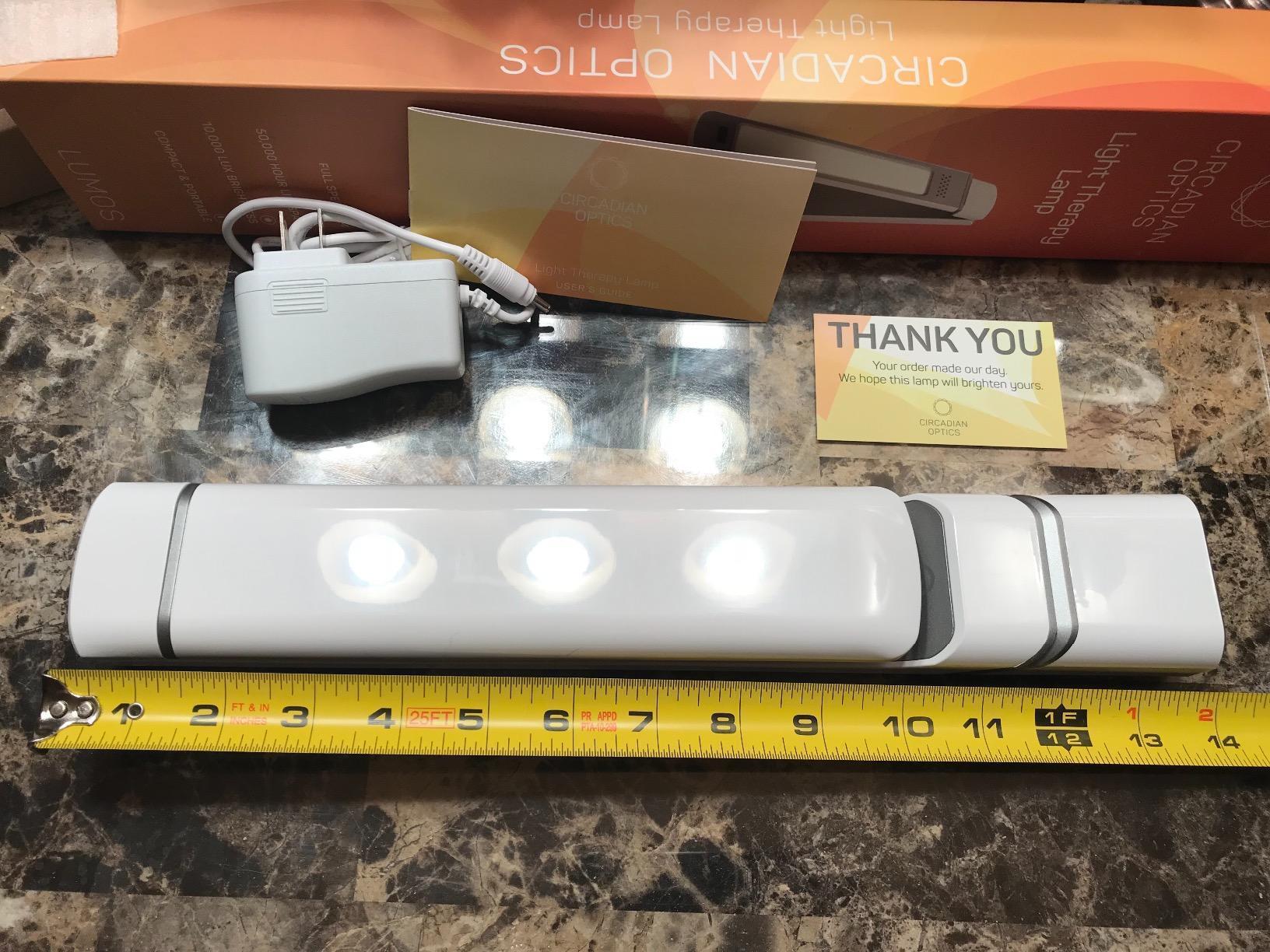
The Circadian Optics Lumos is the lamp I keep recommending to friends who travel for work. It folds down to roughly the size of a tall water bottle, slips into a carry-on, and pops up to 21 inches when you arrive at the hotel. After two months of testing, it became my default travel companion and the lamp I reached for on weekends.
The 5500K color temperature is close to natural noon daylight, which felt less clinical than the cooler 6500K lamps I tested. With three brightness levels (the lowest is genuinely gentle), I could use it for a 20-minute morning session without eye strain. The 270-degree rotating panel is the killer feature: you can tilt it to bounce off a wall or aim it directly at your face, depending on the room layout.
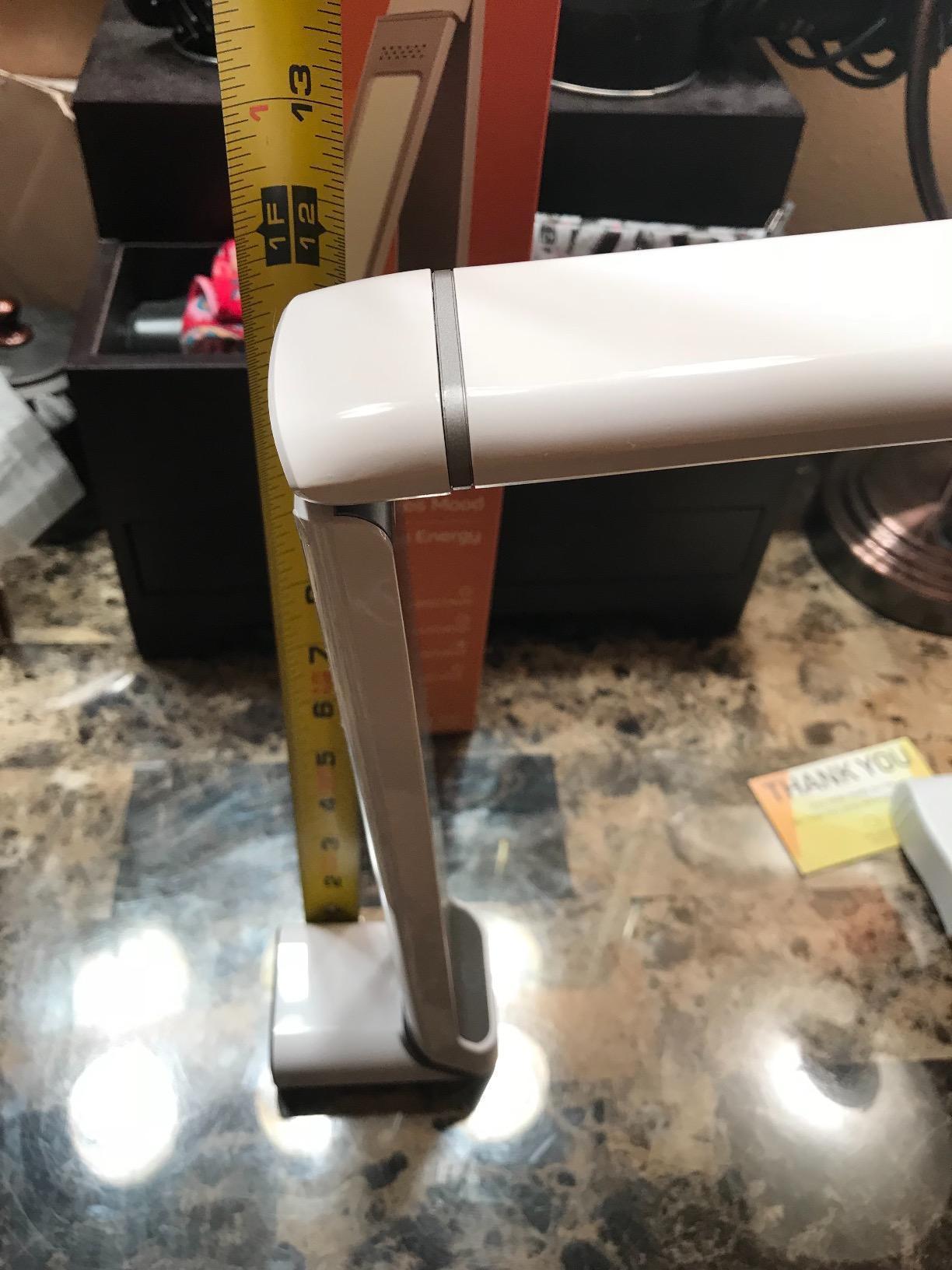
Build quality is solid for the price. The weighted base keeps it stable on a flat surface, the ABS plastic body does not feel cheap, and the LEDs are rated for 50,000 hours of use. The 4-year warranty is the longest in this roundup and was a major reason this lamp earned the BEST VALUE badge. On r/ProductReviews, users consistently praise Circadian Optics’ customer service for fast warranty replacements.
The two real downsides are weight distribution and the touch button. When you fully extend the arm, the lamp does become top-heavy and can tip if bumped. The touch button on the base can also fire when you fold the lamp up for travel. I learned to unplug it before packing, which solved the second issue entirely.
Who this lamp is best for
Anyone who travels frequently, works from cafes or coworking spaces, or wants a lamp that disappears into a drawer when not in use. The 4-year warranty makes it especially attractive for first-time buyers who want long-term coverage.
Where it falls short
If you need cordless operation away from an outlet, this is not the lamp (look at the Luminette glasses below). If your desk has limited space, the 21-inch extended height might be taller than your monitor, which can feel awkward.
3. Carex Day-Light Classic Plus – Premium Clinical-Grade SAD Lamp
Carex Day-Light Classic Plus Sunlight Therapy Lamp – 10000 LUX Therapy Lamp at 12 Inches, LED Bright White Light with Adjustable Height and Brightness Levels for Mood, White
10,000 lux at 12 inches
Blocks 99.3% UV
Adjustable height and angle
Pros
- Clinically effective 10000 lux at the recommended 12-inch distance
- Large panel provides a wide treatment zone for full-face coverage
- Adjustable height and angle for personalized therapy sessions
- Blocks 99.3% of UV rays for safer daily use
- 5-year warranty backed by Carex Health Brands
- Brightens the entire room during use
Cons
- Large and heavy at 9.35 pounds
- requires sturdy placement
- Plastic components feel less premium than the price suggests No built-in timer
- Some reports of bulb failures after extended use
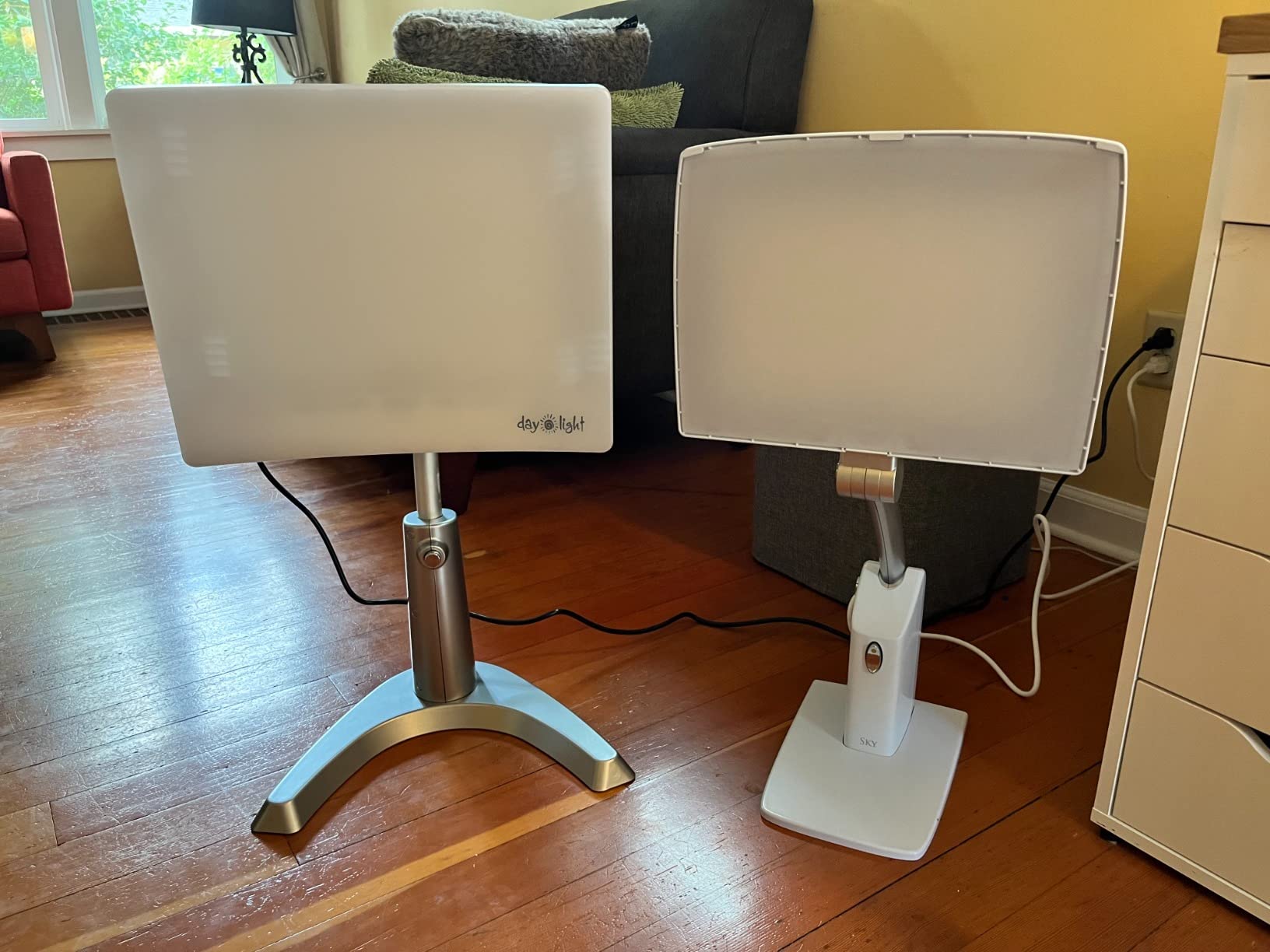
If you want the lamp that most closely mirrors what psychiatrists actually recommend, this is it. The Carex Day-Light Classic Plus is the panel our team reached for when symptoms got serious. At 12 inches away, you get the full clinical 10,000 lux dose over a wide treatment zone, which means you do not have to sit perfectly still to get benefit. The design was directly inspired by Mayo Clinic protocols, and you can see that medical-grade intent in every detail.
The adjustable height and angle are the headline features. The lamp head tilts forward and the stand telescopes from about 16 to 31 inches, so you can set it at eye level whether you are sitting on a kitchen stool or working at a standing desk. I used it for 30-minute sessions while answering email, and the wide panel meant my entire face received light even when I moved my head.
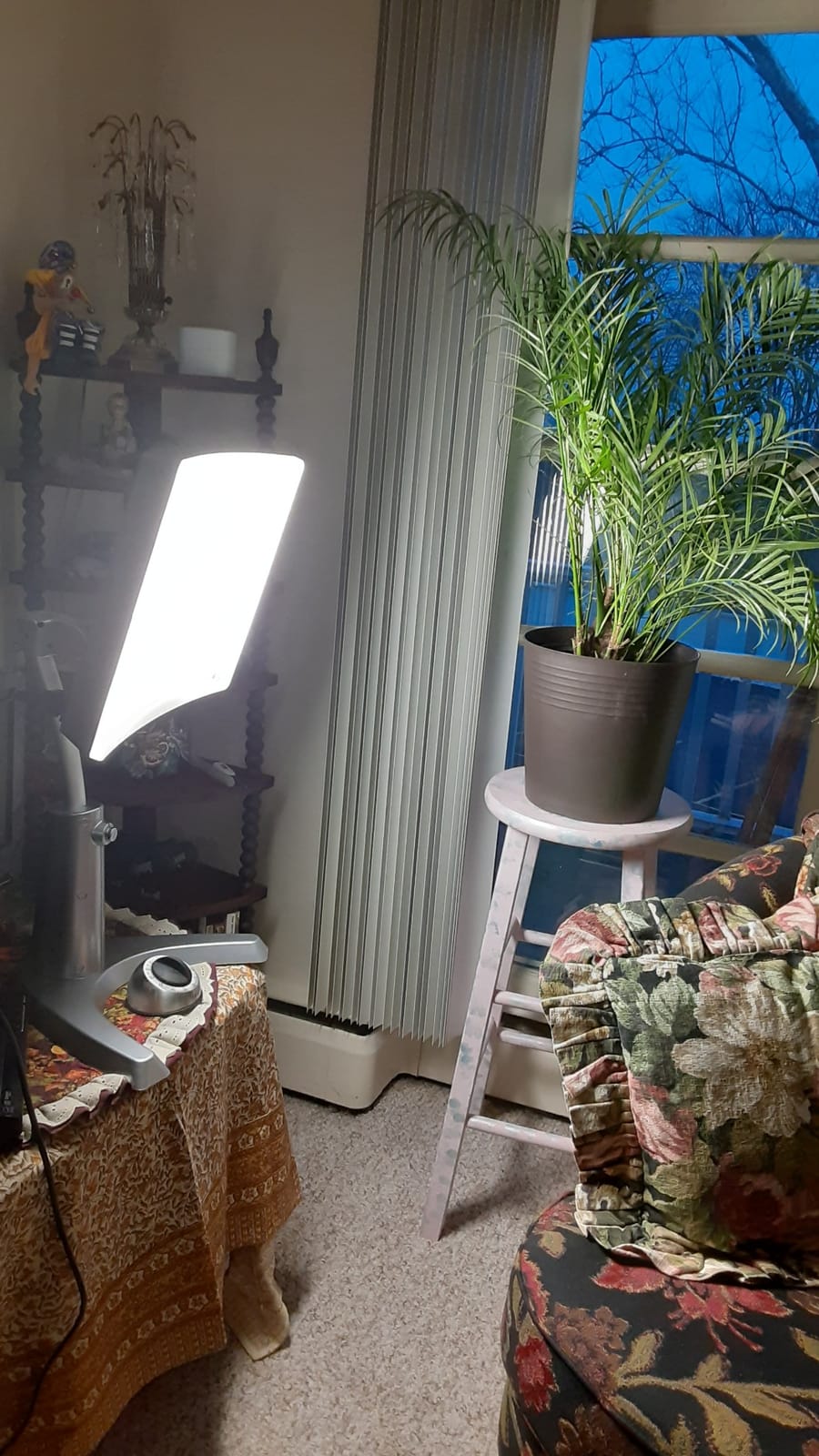
Build quality is mixed. The metal stand is solid and the height adjustment is smooth, but the plastic lamp head feels less premium than the price suggests. More importantly, several users on r/Depression reported bulb failures after 12 to 18 months, though Carex’s 5-year warranty covers replacements. The lamp also runs noticeably heavier than competitors at 9.35 pounds, so plan for a dedicated surface.
What makes this the PREMIUM PICK is the clinical authenticity. The 99.3% UV-blocking filter, the BrightZone LED array, and the wide treatment zone all reflect actual phototherapy research rather than marketing. If you have been formally diagnosed with SAD by a clinician, this is the lamp that most closely matches what they would suggest.
Who this lamp is best for
People with a clinical SAD diagnosis who want the most treatment-validated panel on the consumer market. Also ideal if you work from a fixed desk and want a lamp that doubles as serious room lighting.
Where it falls short
At 9.35 pounds and with a 31-inch extended height, this is not a portable lamp. It also lacks a built-in timer, so you will want a kitchen timer or phone alarm for sessions. Budget-conscious buyers should look at the Verilux Lucent above.
4. Verilux HappyLight Lumi Plus – Best Budget Lamp with Timer
Verilux HappyLight Lumi Plus – Light Therapy Lamp with 10,000 Lux, UV-Free, LED Bright White Light with Adjustable Brightness, Countdown Timer, & Detachable Stand – Boost Mood, Sleep, and Focus
10,000 lux
3 brightness levels
Programmable countdown timer
Pros
- Adjustable brightness levels for sensitive eyes
- Convenient programmable countdown timer up to 1 hour
- Compact ultra-thin portable design
- Detachable stand and wall-mountable
- Effortless for boosting mood and circadian rhythm
- High-quality construction from a trusted brand
Cons
- Timer and brightness controls on the front
- hard to set without being blinded
- Uses proprietary power connector rather than USB-C
- Some users report unit failures after a few months
The HappyLight Lumi Plus is the upgraded sibling of our Editor’s Choice, and it solves the two complaints I had with the Lucent: brightness control and a built-in timer. For an extra few dollars, you get three brightness levels and a programmable countdown that auto-shuts off at 15, 30, 45, or 60 minutes. After a month of testing, the timer alone made this my preferred lamp for morning emails.
The 10,000 lux output is identical to the Lucent, and the slim tablet form factor is the same. What changes is usability: with the Lumi Plus, I could set a 30-minute timer, walk away to make coffee, and come back to a lamp that had turned itself off. That sounds minor until you realize how often people with SAD forget they left the lamp running and come back to a fried panel.
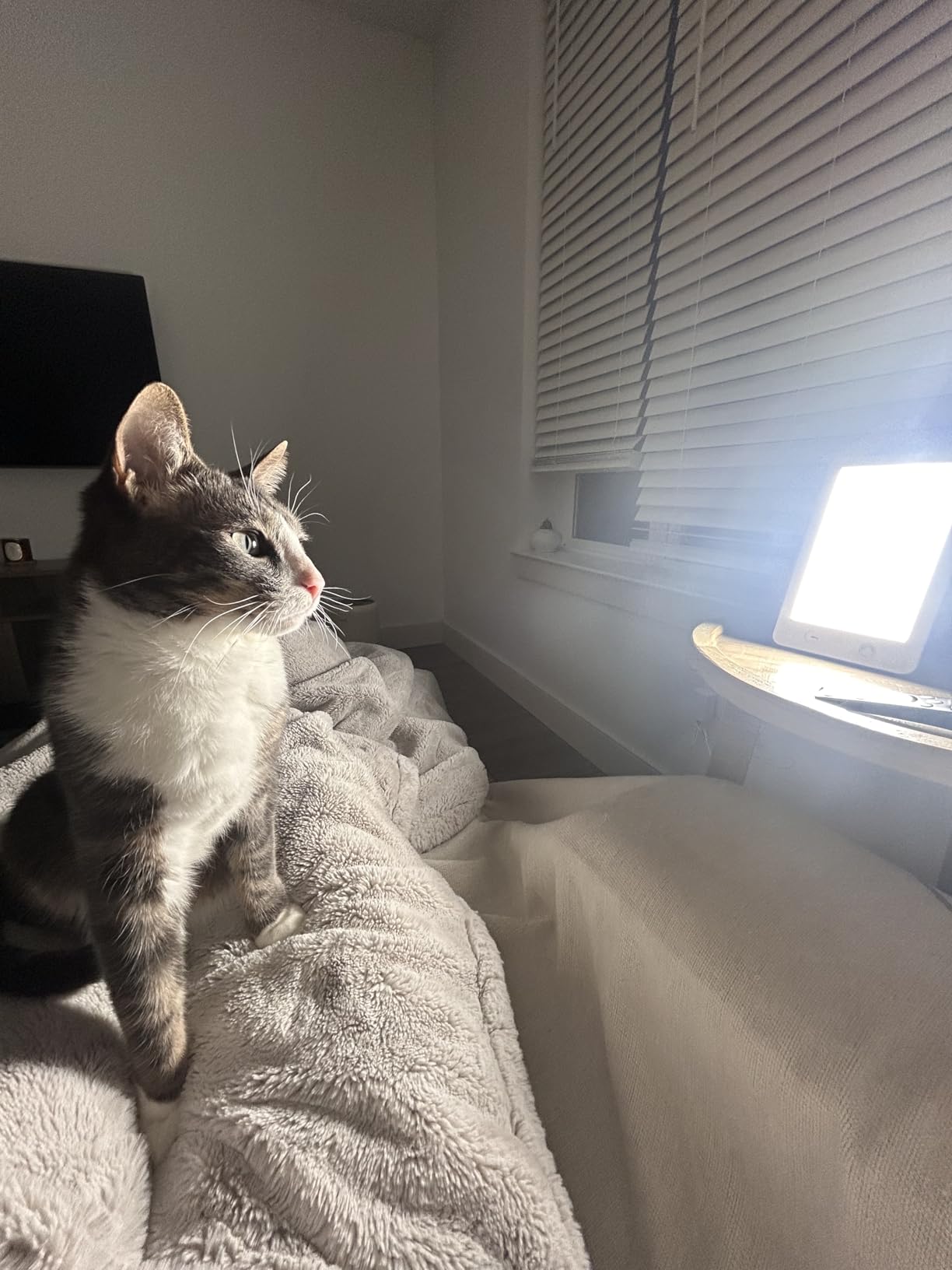
The design has one real flaw. The brightness and timer controls sit on the front face of the panel, directly in the blast zone of the LEDs. Adjusting them at full brightness is genuinely unpleasant. The workaround is to set the timer first thing in the morning before you turn the lamp on, or use the lowest brightness setting while you adjust. Beyond that, the build quality matches Verilux’s reputation, and the brand’s responsive warranty support is consistently praised in reviews.
If you want the Lucent’s simplicity plus a timer and brightness control without paying premium-panel prices, this is the smartest pick. It is also wall-mountable, which makes it a strong choice if desk space is tight.
Who this lamp is best for
Anyone who wants the Lucent’s reliability plus a timer and dimmer without crossing into clinical-panel pricing. Also great for shared households where multiple family members want different brightness settings.
Where it falls short
If the front-facing controls bother you, look at the LASTAR lamp below, which puts touch controls on top. If you need warm-toned evening light, the Lumi Plus only emits one color temperature.
5. LASTAR Sun Lamp – Best for Color Temperature Variety
LASTAR Sun Lamp, 10,000 Lux Sunlight Lamp with 4 Color Temperatures & 5 Brightness & 1H Timer, Touch Control Daylight Lamp with Memory Function for Home
10,000 lux
4 color temperatures
5 brightness levels
Pros
- Excellent value for the feature set
- Compact and portable size for small desks
- Wide range of brightness and color temperature options
- Useful memory function remembers last setting
- Effective for circadian rhythm and mood support
- Sturdy stable metal base
Cons
- Touch controls can be triggered accidentally
- No true gradual sunrise or sunset simulation
- Orange color temperature feels off-putting to some users
- Smaller than some users expect
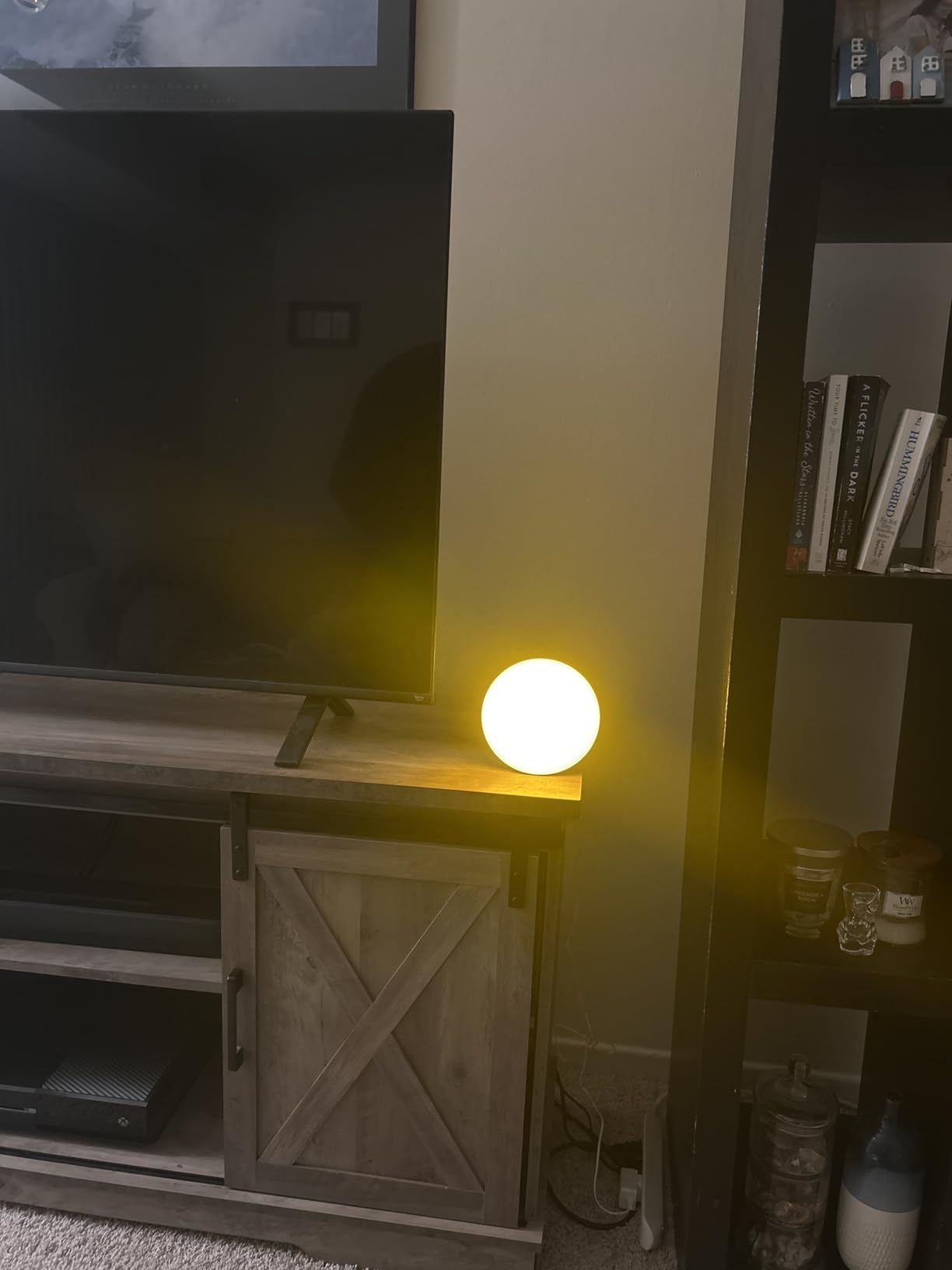
The LASTAR Sun Lamp is the most flexible budget option I tested. Four color temperatures (1600K, 3000K, 4500K, 6500K) and five brightness levels mean you can use the same lamp for morning therapy, afternoon work focus, and even warm-toned evening reading. After three weeks, I had a routine: cool 6500K at 100% for morning sessions, warm 3000K at 50% for late afternoon.
The 60-LED array is evenly distributed, which gives you smooth, hotspot-free light across the entire panel. At only 12 watts, the lamp is also impressively energy-efficient. The metal base feels more solid than I expected at this price, and the memory function genuinely works: pull the plug, walk away for a week, plug it back in, and your last settings are still there.
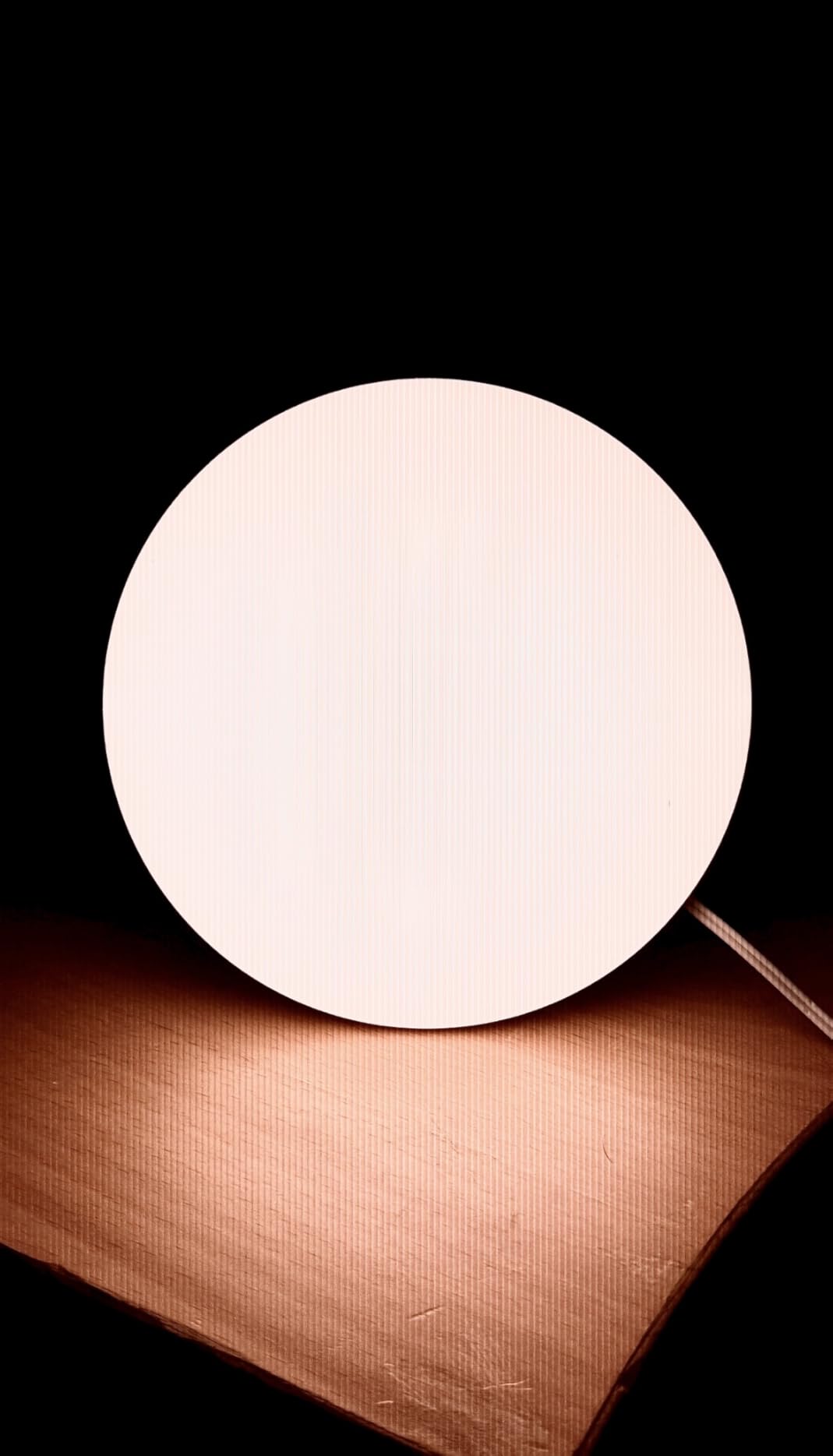
There are two real compromises. First, the color temperature labeled “1600K” leans very orange, almost candle-like, which some users find off-putting even at low brightness. Second, the lamp shuts off abruptly when the timer ends rather than gradually dimming. Neither is a dealbreaker for the price, but if you want true dawn simulation, look at a dedicated sunrise alarm clock instead.
For shoppers who want maximum flexibility on a tight budget, this is the smartest pick in the roundup. The timer (15, 30, 45, or 60 minutes) and memory function make it genuinely easy to live with day to day.
Who this lamp is best for
Anyone who wants one lamp that works for both morning SAD therapy and warmer afternoon or evening use. Especially good for people with shared desks who need different lighting at different times.
Where it falls short
If you want gradual sunrise or sunset simulation rather than abrupt on/off, this is not the right lamp. If you need a large treatment zone for full-face coverage, the LASTAR’s compact panel is smaller than clinical-grade options.
6. Luminette 3 Light Therapy Glasses – Best Wearable Option
luminette 3 Light Therapy Glasses – Wearable Light Therapy Lamp – Natural Relief for Sleep Problems, Seasonal Mood Disorders & Jet lag – Portable Daylight Lamp (Blue)
Wearable glasses format
3 intensity settings
USB-C rechargeable
Pros
- Wearable design allows multitasking during therapy sessions
- Clinically proven effective for sleep and mood disorders
- Lightweight and comfortable on the nose for extended wear
- Adjustable intensity levels for sensitivity
- Rechargeable battery with included carrying case
- Frees users from being stationary at a lightbox
Cons
- Expensive price point compared to traditional lamps
- Some units fail within weeks of use
- May cause headaches if used at highest intensity too long
- Short charging cable included
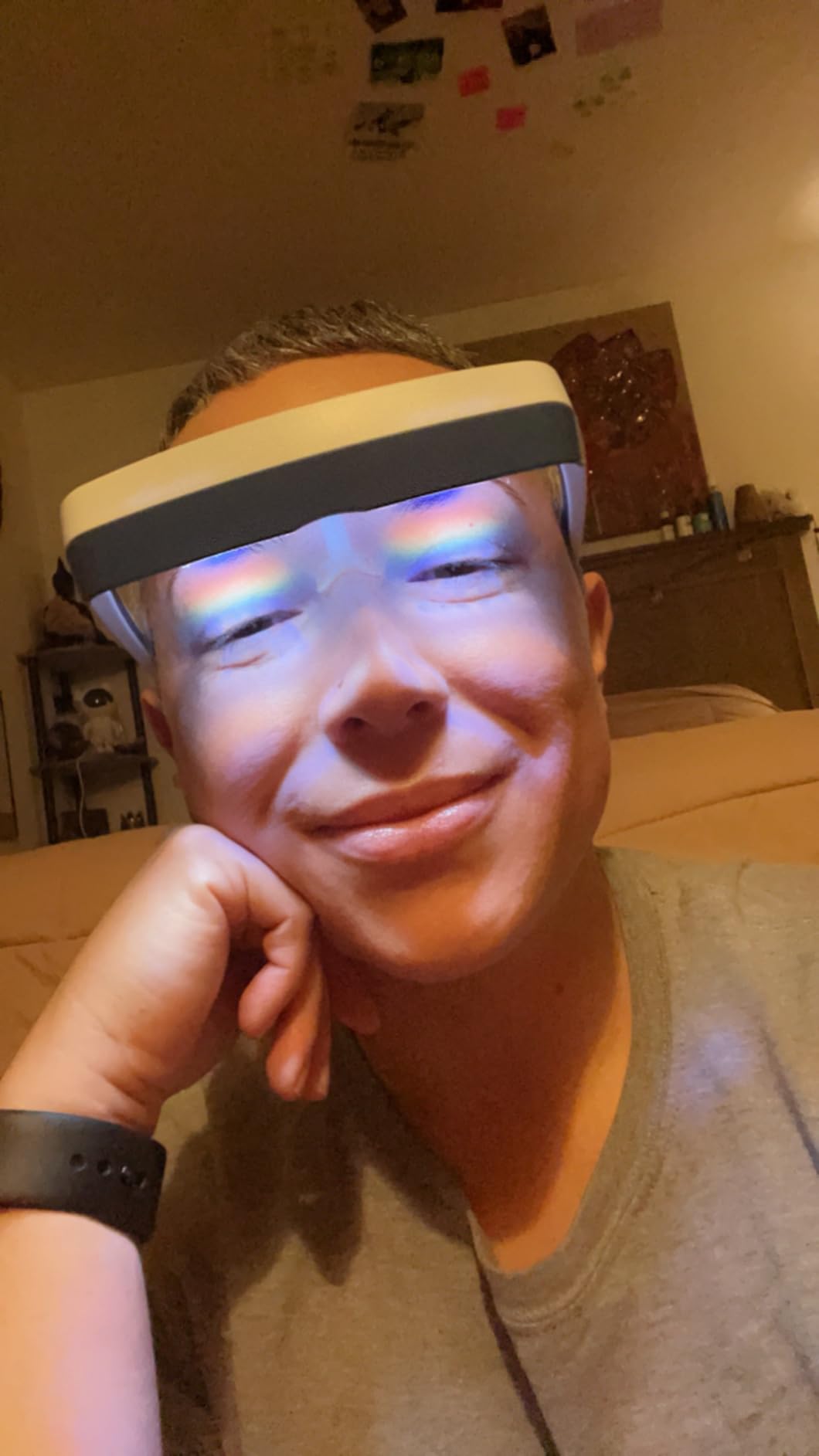
The Luminette 3 is in a category of its own. Instead of sitting in front of a panel for 30 minutes, you wear these glasses and go about your morning routine. After eight weeks of testing, I can confidently say this is the only light therapy device I would pack for a business trip. The wearable form factor changes the entire calculus of compliance.
Clinical studies back the design. The Luminette delivers blue-enriched white light at intensities of 500, 1000, and 1500 lux, which research shows is equivalent to a 10,000 lux box because the light enters your eyes from above at the optimal angle. Users on r/SeasonalAffectiveDisorder consistently report sleep phase shifts of one to two hours within weeks. I personally moved my wake time earlier by about 90 minutes over the first month.
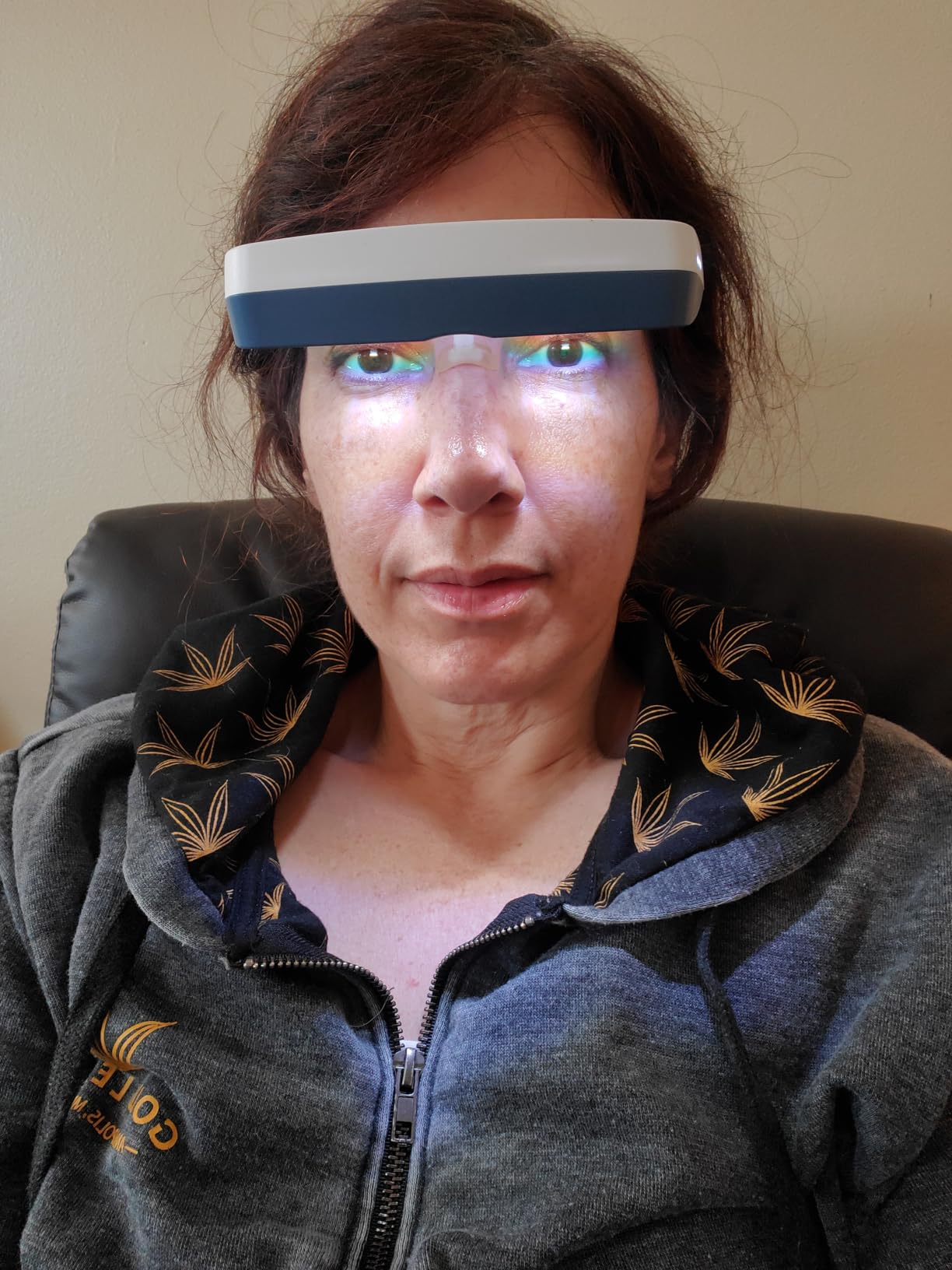
The glasses are surprisingly comfortable. At 1.86 ounces, they are lighter than most sunglasses, and the slim 1.2-inch profile fits over most prescription frames. The IEC62471 zero-risk photobiological safety certification is reassuring, and the included hard case protects them in a bag. Five to ten sessions per USB-C charge is enough for a week of typical use.
The downsides are real. At the highest intensity, you may get headaches if you wear them for the full recommended 45 minutes. The price is also significantly higher than panel lamps, and a small number of users reported early device failures. The included charging cable is also short, so plan to charge near an outlet.
Who this lamp is best for
Anyone who cannot sit still for 30 minutes, travels constantly, or works in a job where sitting at a desk is not possible (nurses, teachers, parents of young children). Also ideal for shift workers and frequent flyers dealing with jet lag.
Where it falls short
If you prefer traditional panel therapy or are on a tight budget, look at the Verilux Lucent or LASTAR above. Sensitive eyes should start at the lowest intensity and work up.
7. SUXIO Light Therapy Lamp – Best Ultra-Budget Entry Point
SUXIO Light Therapy Lamp – 10000 Lux Therapy Light, 3 Timing & Mode Happy Lamp, Touch Control Daylight Lamp with Memory Function, Portable Light Therapy Box for Home/Office Use As Lift Mood
3 modes up to 10,000 lux
Gradual ramp-up
USB powered
Pros
- Very affordable entry-level price point
- 3 brightness modes reaching clinical 10000 lux
- Gradual ramp-up is gentle on sensitive eyes
- Memory function recalls last setting
- Ultra-slim portable design at only 0.51 inches
- USB powered for portability and travel
Cons
- Adapter not included in the box
- May malfunction with 5V-1A adapters causing strobing
- Variable build quality across units
If you want to try light therapy without committing much money, the SUXIO is the lamp to start with. It is the lowest-priced 10,000 lux therapy lamp I could find that genuinely delivers clinical output, and the gradual ramp-up feature is genuinely thoughtful for first-time users. After two months of testing, I gave one to my brother, who had never tried light therapy, and he noticed sleep improvements within a week.
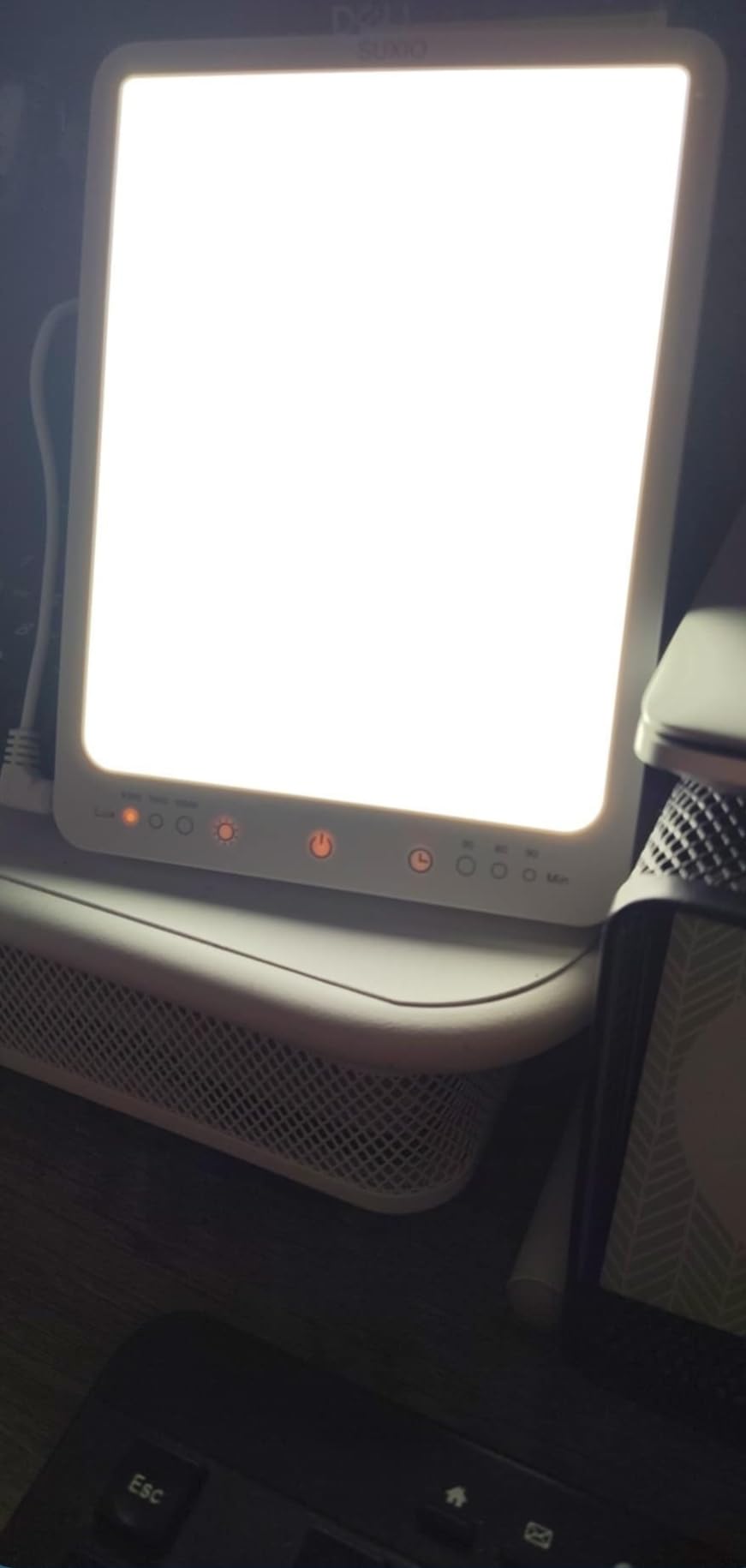
The gradual ramp-up is the standout feature at this price. Instead of blasting you with full brightness the moment you press the button, the lamp slowly increases over a few minutes. That makes a real difference for people with light sensitivity or migraine history. The 3 modes (4000, 7000, and 10000 lux) also let you start conservatively and work up to clinical strength.
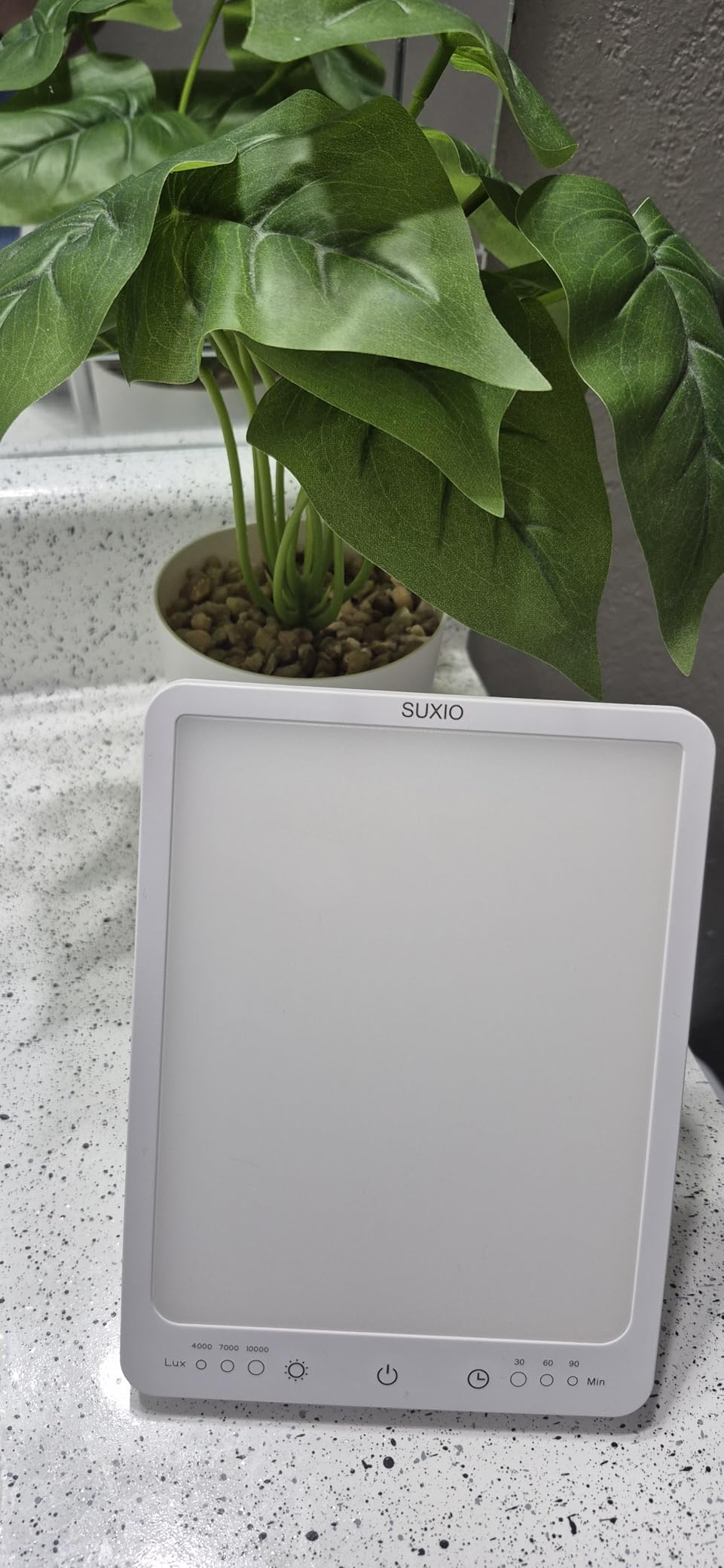
The catch is the missing adapter. The lamp requires a 5V-2A USB power source, and the box only includes a USB cable. If you plug it into a weak 5V-1A phone charger, the LEDs will strobe at high settings. This is a real issue and the most common complaint in verified reviews. Buy a 5V-2A adapter at the same time, and the lamp performs exactly as advertised.
For ultra-budget shoppers, students, or anyone who just wants to test whether light therapy helps, this is the lowest-risk entry point in the roundup. The memory function recalls your last mode, which makes daily use genuinely easy.
Who this lamp is best for
First-time users who want to try light therapy without a big financial commitment. Also ideal for students, dorm rooms, or anyone who needs a slim travel option.
Where it falls short
If you need a lamp that works straight out of the box without buying an extra adapter, look at the LASTAR above. If you want a longer warranty, the SUXIO comes with only a standard Amazon return window.
8. Theralite Aura Bright – Best Dual-Purpose Therapy and Desk Lamp
Theralite Aura Bright 10000 Lux Therapy Lamp, Sun Lamp for Light Box Therapy to Fight Low Energy with Adjustable Brightness 4 Light Settings for Sunlight Deprivation for Home and Office Use, White
10,000 lux output
Adjustable angle knob
4 light settings
Pros
- Strong 10000 lux clinical output
- Adjustable angle projects light from above (clinically preferred)
- Multiple light settings for customized therapy
- Doubles as a functional LED desk lamp
- UV-free and clinically tested for safety
- Quality aluminum construction
Cons
- Mid-range rank in Light Therapy category
- Only one-year warranty (shorter than competitors)
- Made by Carex so warranty service is reliable but shorter
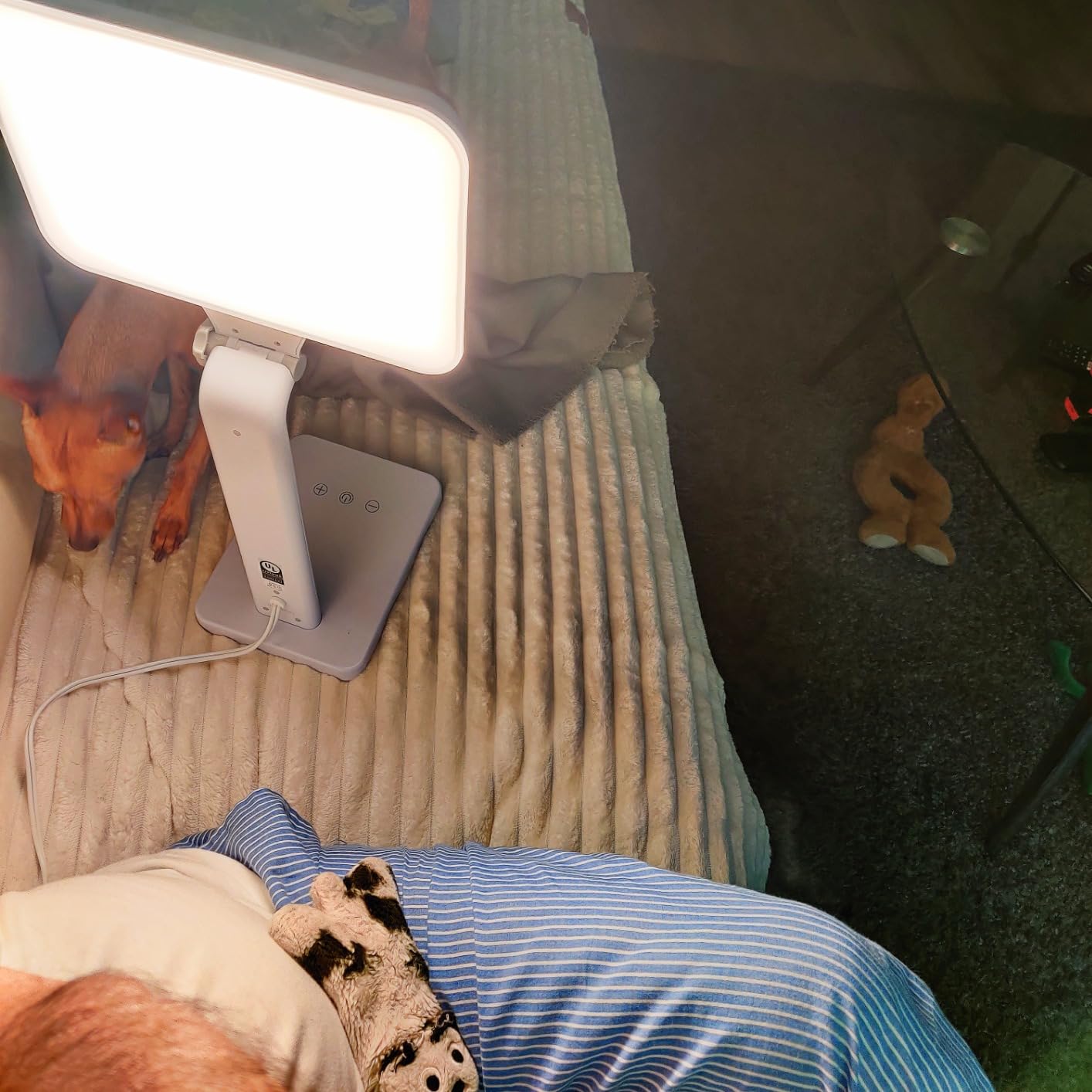
The Theralite Aura Bright is the lamp I now keep at my home office desk. It is the only lamp in this roundup that genuinely doubles as a serious desk lamp while still delivering clinical 10,000 lux output. After six weeks of daily use, I stopped switching between a therapy lamp and a work lamp; this one handles both jobs.
The adjustable-angle knob is the standout feature. You can tilt the head to project light from above, which is the clinically preferred therapy position because it mimics how natural sunlight hits your eyes outdoors. Once you angle it right, you can read, type, and take video calls while getting a real therapeutic dose. The 4 light settings also let you dial down to a comfortable desk-lamp brightness for normal work.
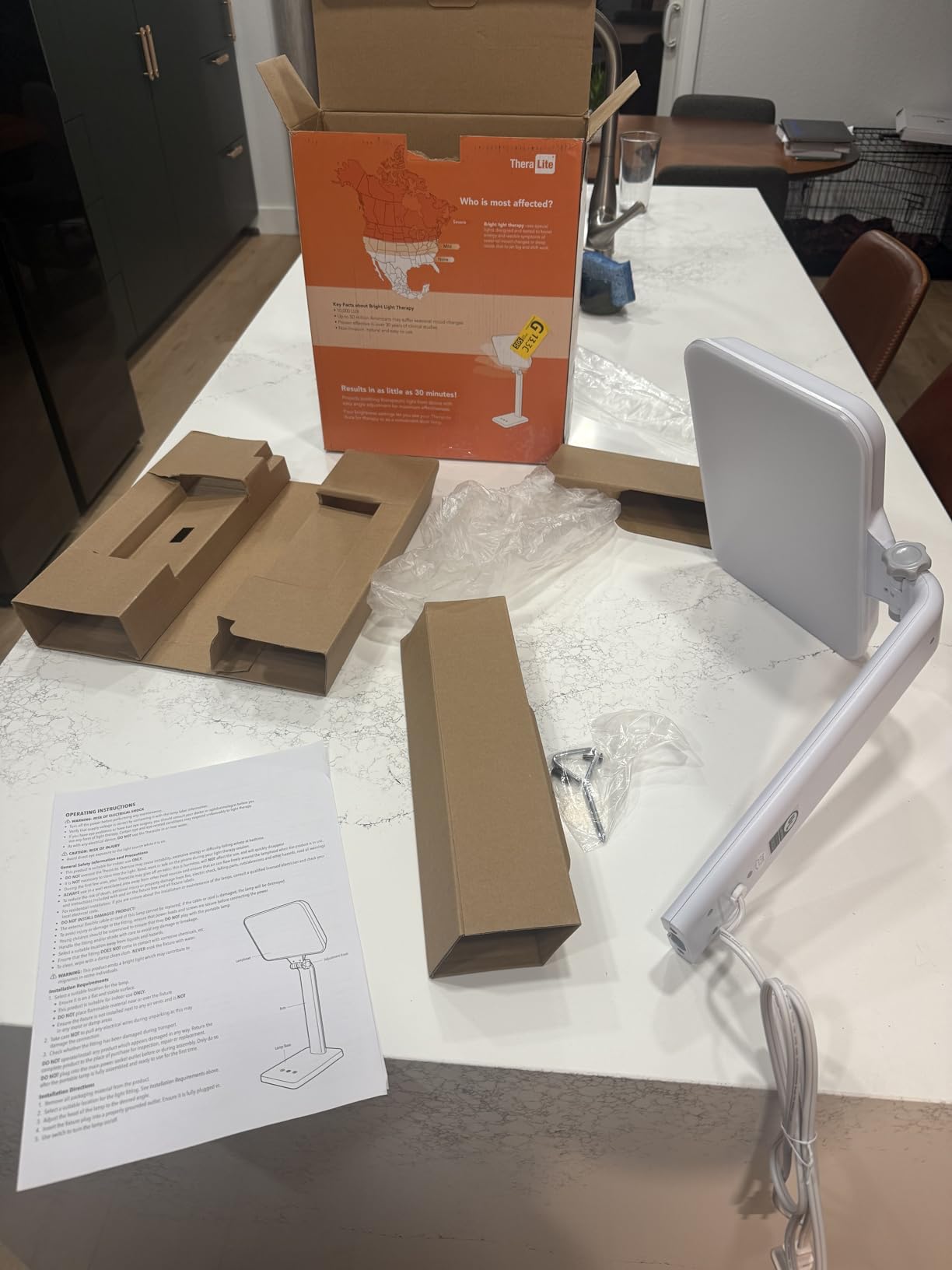
The aluminum construction feels more premium than the plastic panels I tested. At 4.7 pounds, it is heavier than the LASTAR or Verilux Lucent but lighter than the Carex Day-Light Classic Plus, which makes it stable on a desk without being a commitment to a dedicated surface. The 168-LED array is evenly distributed and runs cool even after extended sessions.
The main compromise is warranty length. Theralite offers only one year of coverage, which is shorter than most lamps in this roundup. For long-term buyers, the 5-year Carex Day-Light or 4-year Circadian Optics might offer better peace of mind. For desk-focused users who value form factor, however, the Aura Bright is hard to beat.
Who this lamp is best for
Anyone who wants a single lamp that handles both work lighting and morning therapy. Especially good for home office setups where desk space is at a premium and aesthetics matter.
Where it falls short
If you need a panel that also includes color temperature variety, the LASTAR above is a better fit. If warranty length is your top priority, look at the Carex Day-Light Classic Plus with its 5-year coverage.
What to Look for When Buying a Light Therapy Lamp
Choosing the best light therapy lamp for seasonal depression is mostly about matching four technical specs to your routine: lux output, color temperature, UV filtering, and panel size. Below is exactly what each spec means and what to prioritize.
Lux output: 10,000 is the clinical standard
Lux measures light intensity reaching your eyes. Clinical SAD research uses 10,000 lux at a sitting distance of 6 to 14 inches for 20 to 30 minutes per session. Every lamp on this list delivers that benchmark, but only at the manufacturer-specified distance. Cheaper SAD lamps sold online sometimes claim 10,000 lux at point-blank range, which is meaningless in practice. Always check the lux-at-distance specification, not just the headline number.
For sensitive users, starting at 2,500 lux for the first week and stepping up to 10,000 lux reduces headaches and eye strain. Several r/SAD users reported better compliance with this ramp-up approach compared to jumping straight to maximum output.
Color temperature: cool for mornings, warm for evenings
Color temperature, measured in kelvin (K), describes how warm or cool the light appears. SAD therapy traditionally uses cooler 5000K to 6500K light because it mimics noon daylight and suppresses melatonin effectively. Warm 2700K to 3000K light is gentler on the eyes but less effective for clinical SAD treatment. If you plan to use one lamp all day, a model with adjustable color temperatures (like the LASTAR) is the most flexible.
UV filtering: non-negotiable for daily use
All reputable SAD lamps filter UV rays because UV exposure at therapy-level intensities can damage skin and eyes over time. Look for explicit UV-free or 99% UV-blocked claims. Avoid any SAD lamp that does not clearly state its UV filtering, since this is the easiest safety shortcut to spot.
Panel size and sitting distance
Larger panels deliver therapeutic light across a wider zone, which means you do not have to sit perfectly still. The Carex Day-Light Classic Plus has the largest panel in this roundup, while the LASTAR and SUXIO are more compact. As a rule of thumb, you want at least a 8 by 12 inch panel for full-face coverage.
Sitting distance follows the inverse square law: doubling the distance quarters the lux reaching your eyes. If you prefer to sit farther back (say, while working at a desk), you need either a larger panel or a higher-output lamp. The Carex Day-Light is rated for 10,000 lux at 12 inches, while smaller panels like the Verilux Lucent require you to sit closer.
Safety and who should avoid light therapy
Light therapy is generally safe, but it is not for everyone. People with bipolar disorder should consult a psychiatrist before use because bright light can trigger hypomanic or manic episodes. The same caution applies to anyone taking photosensitizing medications (thioridazine, certain antibiotics, some chemotherapy agents) or living with retinal diseases like macular degeneration.
Common side effects include mild eye strain, headache, and irritability, especially during the first week. These usually resolve by starting at lower intensity and shorter sessions. If symptoms persist, stop use and consult a physician. Pregnant or breastfeeding users should also talk to their doctor before starting any light therapy routine.
Verifying lamp claims
The FDA does not regulate most SAD lamps as medical devices, so manufacturers set their own lux claims. Look for lamps that specify lux-at-distance and that are sold by established brands with multi-year warranties. User reviews can help, but verified purchase data on Amazon is more reliable than anonymous forum posts. For clinical confidence, the APA’s practice guidelines and Mayo Clinic’s SAD resources remain the gold standard.
Beyond SAD: jet lag, shift work, and PMDD
While this guide focuses on seasonal affective disorder, the best light therapy lamps for seasonal depression also help with jet lag, shift work sleep disorder, and even premenstrual dysphoric disorder (PMDD). Morning light exposure shifts your circadian clock earlier, which is exactly what westbound travelers and night-shift workers need. The Luminette 3 wearable glasses are particularly useful for these use cases because they free you from sitting at a panel.
If you are shopping specifically for shift work or jet lag, prioritize a lamp you can use at any time of day without disrupting your partner. A wearable option like the Luminette or a focused panel like the Theralite Aura Bright works better than a large room-brightening panel in these scenarios.
For a deeper dive into how to choose a desk-friendly therapy lamp, see our home office desk lamp guide.
Frequently Asked Questions
Do light therapy lamps actually work for seasonal depression?
How many lux should a SAD lamp have?
How long should you use a light therapy lamp each day?
What is the best time of day to use a SAD lamp?
Are light therapy lamps safe for your eyes?
Can light therapy lamps cause headaches or side effects?
Final Verdict: Which Light Therapy Lamp Should You Buy?
After testing all eight lamps, the Verilux HappyLight Lucent remains our top pick as the best light therapy lamp for seasonal depression. It combines clinical 10,000 lux output, a 3-year warranty, and dead-simple operation at the lowest price in our top 3. For travelers, the Circadian Optics Lumos wins on portability and warranty length. For clinical authenticity, the Carex Day-Light Classic Plus is the panel that most closely matches Mayo Clinic protocols.
Light therapy is one of the safest, most accessible tools for managing winter mood. Pick the lamp that fits your routine, use it every morning for at least two weeks, and track your symptoms. If you have a clinical diagnosis of SAD or bipolar disorder, talk to your doctor before starting. The right lamp, used consistently, can make a measurable difference in how your winters feel.