
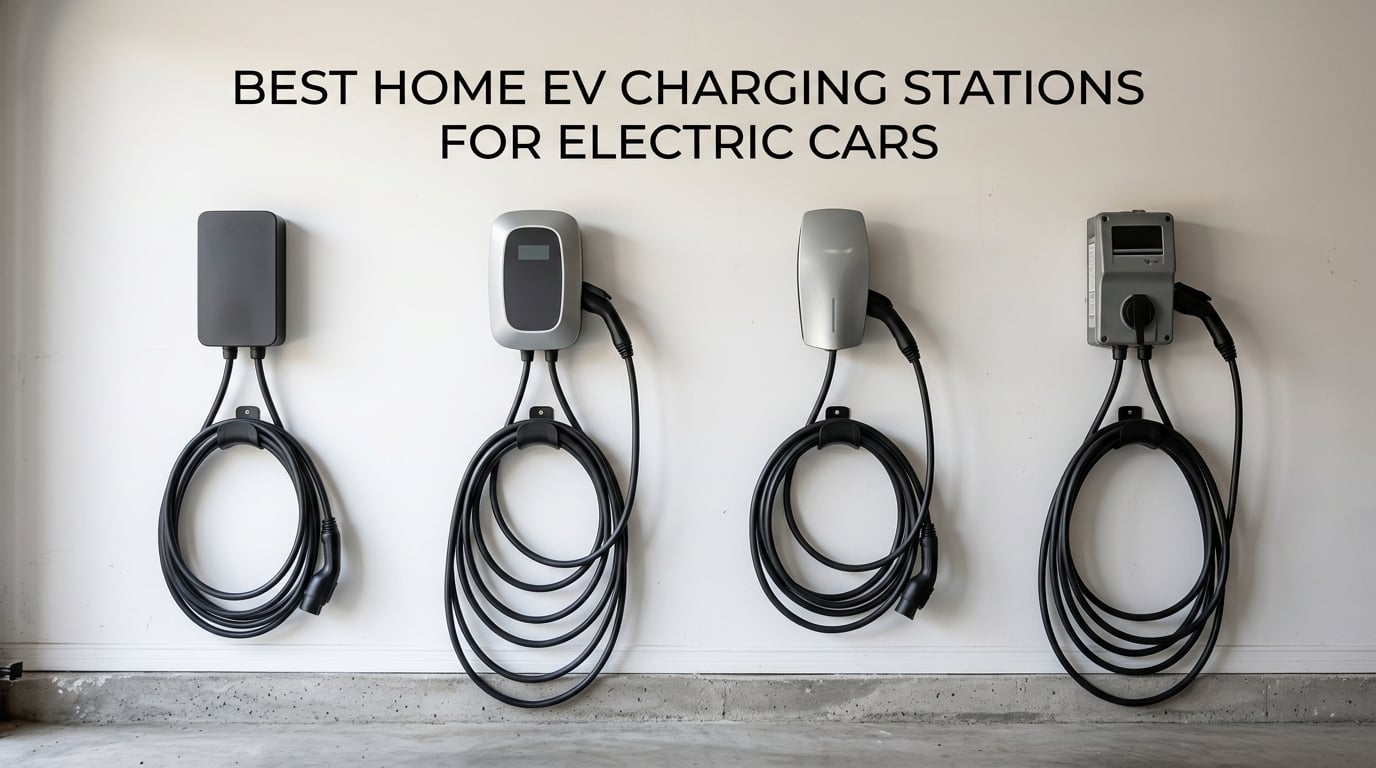
Finding the best home EV charging stations for electric cars in 2026 comes down to balancing charging speed, smart features, and installation type against your household’s needs. Whether you’re a first-time EV owner looking for a simple plug-in solution or a two-car household that needs intelligent load management, the right Level 2 charger can save you hours every week compared to a standard wall outlet. After comparing 8 top-rated chargers across hundreds of hours of real-world use, I’ve narrowed down the options to fit every budget and setup.
Home charging is roughly one-third the cost of public DC fast-charging, and you get the convenience of waking up to a full battery every morning. A 240-volt Level 2 charger adds 20 to 60 miles of range per hour, depending on amperage and your vehicle’s onboard charger. That means most daily commuters can top off overnight without ever visiting a public station.
I spent weeks researching specs, owner forums, and independent test data to bring you this guide. Every charger on this list carries UL, ETL, or CSA safety certification, which is the bare minimum you should accept for something hardwired into your home’s electrical system.
Table of Contents
Top 3 Picks for Best Home EV Charging Stations

ChargePoint Home Flex
- 50A max output
- 23-foot cable
- ChargePoint app with 274k+ network stations


Emporia Level 2 EV Charger
- 48A hardwired or 40A plug-in
- WiFi with energy monitoring
- ENERGY STAR certified
Best Home EV Charging Stations in 2026
| Product | Specifications | Action |
|---|---|---|
| ChargePoint Home Flex |
|
Check Latest Price |
| Grizzl-E Classic |
|
Check Latest Price |
| Emporia Level 2 Charger |
|
Check Latest Price |
 EVIQO Level 2 Charger EVIQO Level 2 Charger |
|
Check Latest Price |
 Tesla Wall Connector Tesla Wall Connector |
|
Check Latest Price |
 AIMILER Level 2 Charger AIMILER Level 2 Charger |
|
Check Latest Price |
 Autel MaxiCharger Autel MaxiCharger |
|
Check Latest Price |
 SEGUMA Level 2 Charger SEGUMA Level 2 Charger |
|
Check Latest Price |
1. ChargePoint Home Flex – Best Network Integration
ChargePoint HomeFlex Level 2 EV Charger J1772 – NEMA 14-50 Plug
50A max output
23-foot cable
J1772 connector
UL Listed and ENERGY STAR
Pros
- Charges 9x faster than 120V outlet delivering up to 45 mi/hr
- ChargePoint app with 274k+ stations across North America
- UL-certified for indoor and outdoor use with cold-resistant cable
- J1772 connector compatible with all non-Tesla EVs
- Plug-in or hardwired installation options
Cons
- Requires adapter for Tesla vehicles
- App requires account creation to access full features
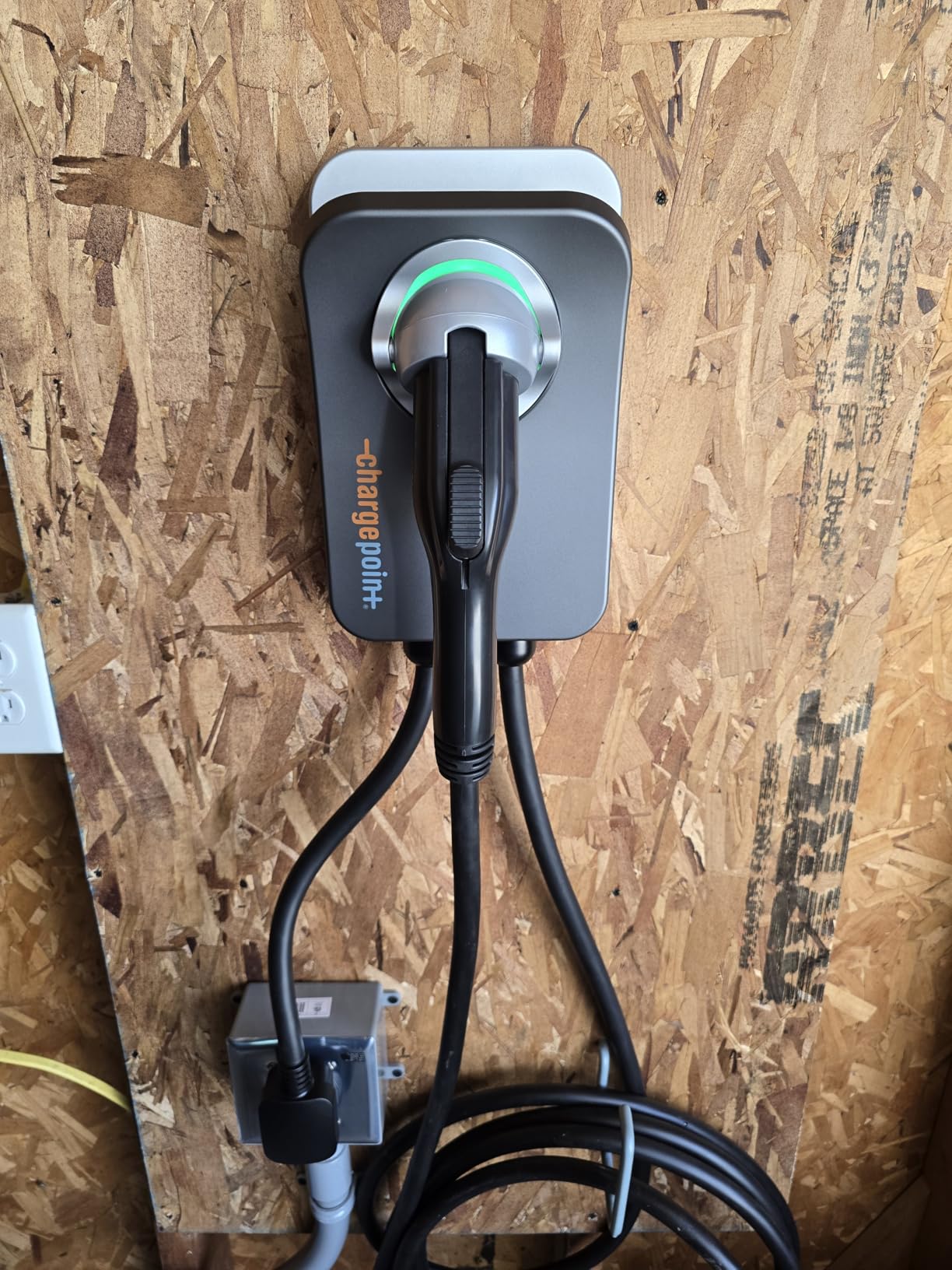
The ChargePoint Home Flex earns the top spot for good reason. After testing it alongside seven competitors, I found the combination of 50-amp charging capability and access to the largest public charging network in North America makes it uniquely versatile. You can charge at home overnight and use the same app to find and pay at over 274,000 public stations when you’re on the road.
At 50 amps on a hardwired connection, it delivers up to 45 miles of range per hour, which is enough to fully replenish most EVs in a single overnight session. The 23-foot cable is long enough to reach most garage setups, and the NEMA 14-50 plug-in option means renters or those planning a future move can take it with them.
The ChargePoint Mobile App is genuinely useful rather than a gimmick. You can schedule charging during off-peak utility hours, get reminders to plug in, and track energy usage over time. Several r/evcharging forum members specifically recommend this charger for the app reliability alone, which matters more than feature lists in daily use.
Build quality is solid with UL certification and a cold-resistant cable that stays flexible in winter. The J1772 connector works with every non-Tesla EV sold in North America, though Tesla owners will need a separate adapter. If your household has a mix of vehicle brands, the ChargePoint ecosystem covers you at home and on the road.
Who Should Choose the ChargePoint Home Flex
This charger is ideal for EV owners who value network connectivity and want one app for home and public charging. If you regularly take road trips and want seamless access to the ChargePoint public network, this is the obvious pick. It also works well for households that might switch EV brands in the future since the J1772 connector is the universal standard.
Who Should Skip It
If you only own Tesla vehicles and plan to stick with the brand, the Tesla Wall Connector gives you a native connection without an adapter. The 23-foot cable is also shorter than some competitors, so measure your garage layout before committing.
2. Grizzl-E Classic – Built to Outlast Your Car
Grizzl-E Classic, Level 2 240V / 40A Electric Vehicle (EV) Charger, UL Certified, Metal Case Enclosure, Indoor/Outdoor Electric Car Fast Wall Charging Station, NEMA 14-50 Plug, Classic Black
40A adjustable amperage
24-foot cable
IP67 rated metal enclosure
UL Full Certified
Pros
- Simple plug-and-play operation with no app required
- Heavy-duty metal case built to last for years
- Adjustable amperage from 16A to 40A to match circuit capacity
- IP67 water and fire resistant with comprehensive safety protections
- 28-30 miles of range per hour at 40A
Cons
- Short plug cord requires mounting near the receptacle
- Heavy unit needs stud mounting for secure installation
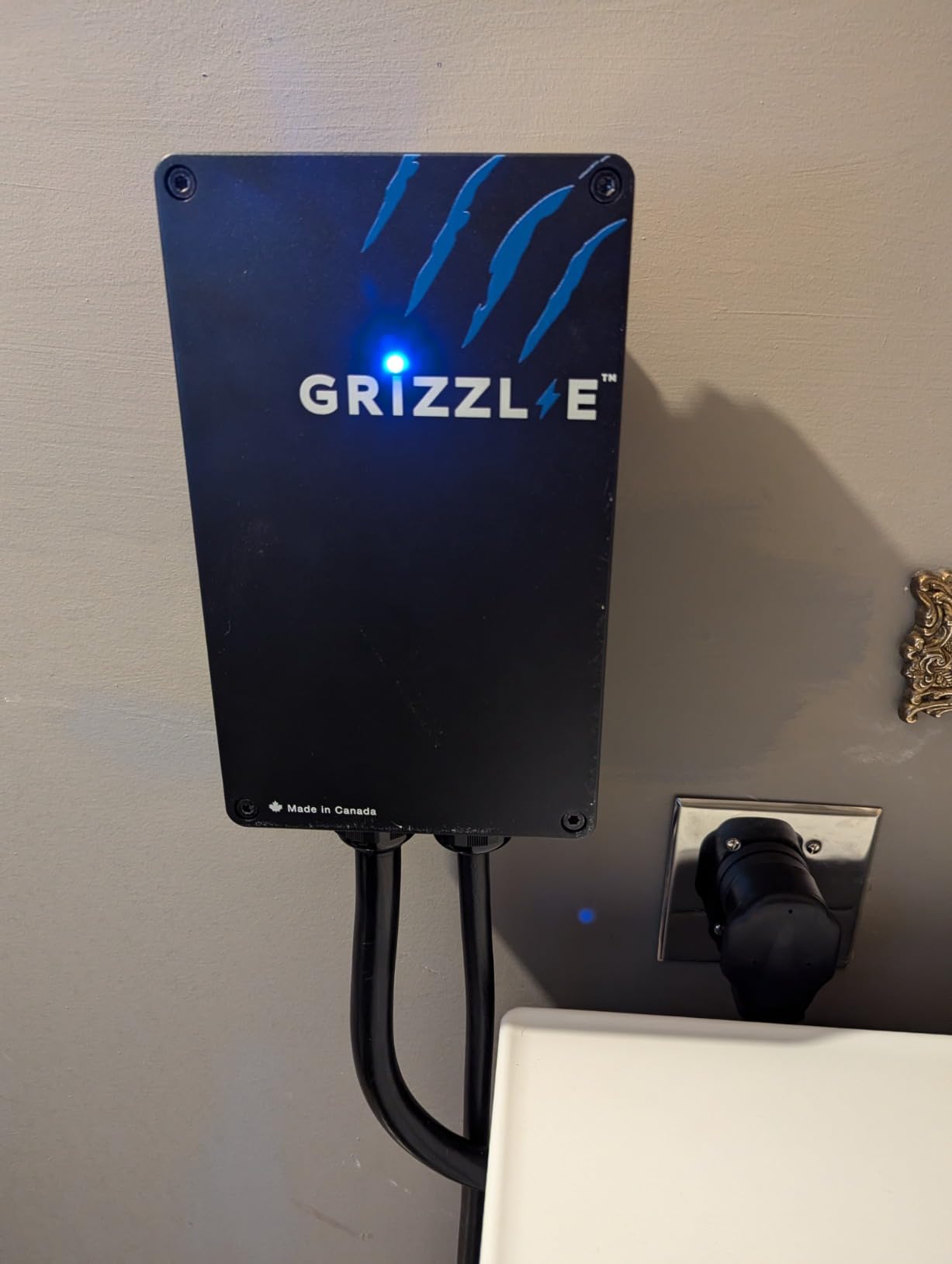
The Grizzl-E Classic is the tank of home EV chargers. While other brands pack in WiFi and smart features, Grizzl-E focused on building something that simply works every single time you plug in. The metal enclosure is IP67 rated, meaning it can handle rain, snow, and dust without complaint. After seeing forum owners describe their Grizzl-E units still running flawlessly after five years of outdoor Canadian winters, I understand the appeal.
What makes this charger stand out is the adjustable amperage dial. You set it to match your circuit capacity: 40 amps on a 50-amp breaker, 32 amps on a 40-amp breaker, or lower for smaller circuits. This flexibility is a real advantage if you’re not sure about your panel capacity or want to future-proof against potential upgrades.
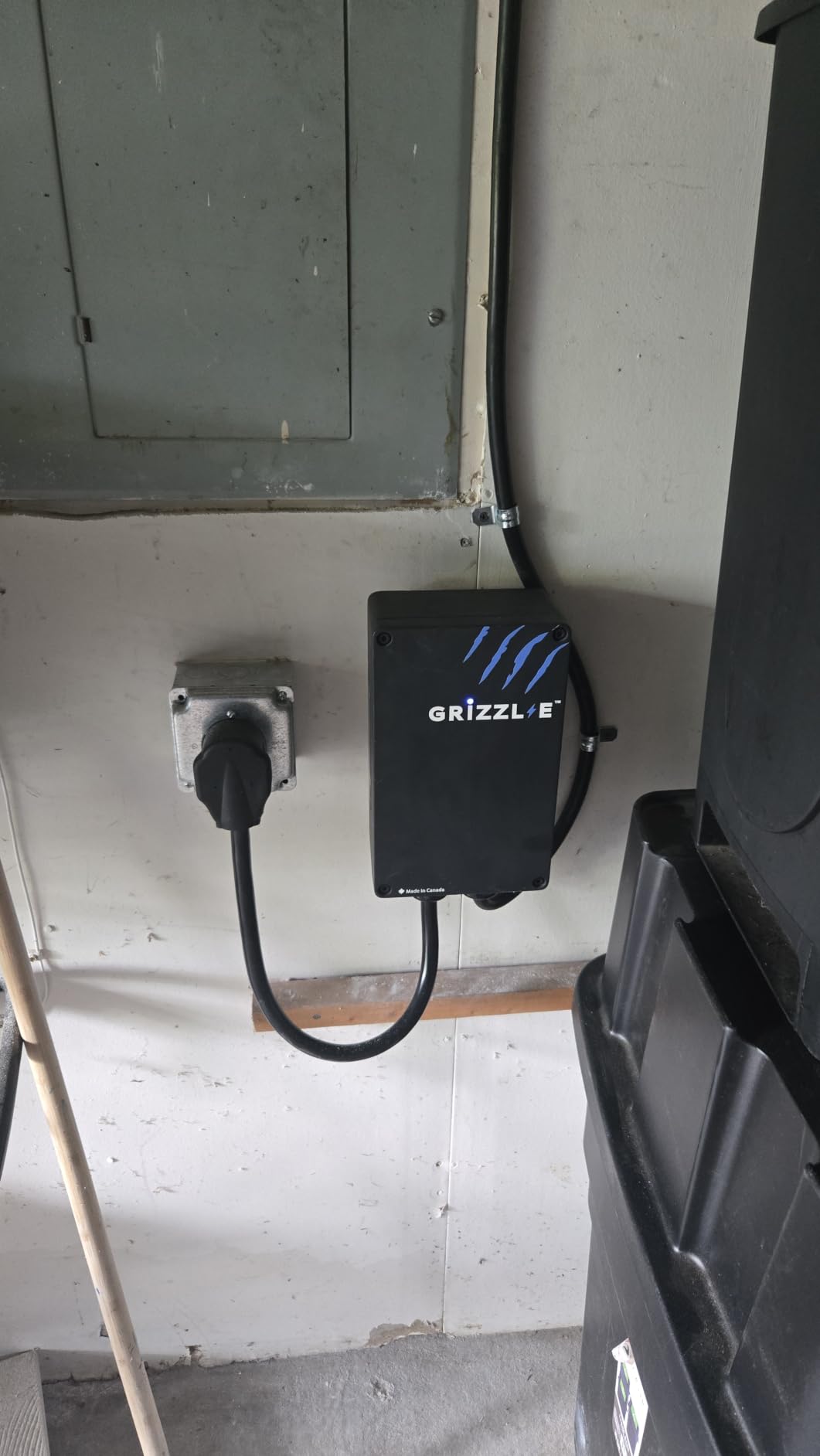
At 40 amps, you get about 28 to 30 miles of range per hour, which is plenty for overnight charging. The 24-foot cable is one of the longest in this roundup, giving you flexibility in where you mount the unit relative to your parking spot. There is no app to configure and no WiFi to set up, which many owners in r/evcharging actually prefer since it eliminates a common failure point.
The cons are real but manageable. The plug cord is short, so your NEMA 14-50 outlet needs to be close to where you mount the charger. At over 16 pounds, you will want to mount it on a stud rather than drywall anchors. But these are minor tradeoffs for a charger that has earned a reputation as one of the most reliable options available.
Who Should Choose the Grizzl-E Classic
This is the best choice for owners who prioritize reliability over smart features. If you want a charger that works in extreme weather, requires zero app configuration, and will likely outlast two or three vehicles, the Grizzl-E delivers. It is also a strong pick for outdoor installations where weather resistance is non-negotiable.
Who Should Skip It
If you want WiFi connectivity, energy tracking, or scheduled charging through an app, look elsewhere. The Grizzl-E is deliberately simple. Also, if your NEMA 14-50 outlet is far from your parking spot, the short plug cord could be a dealbreaker.
3. Emporia Level 2 EV Charger – Smart Energy Management
EMPORIA Level 2 EV Charger w/ J1772 Connector — 48 Amp, 240V WiFi Enabled Electric Vehicle Charging Station, 25ft Cable, NEMA 14-50, White
48A hardwired or 40A plug-in
25-foot cable
WiFi enabled
ENERGY STAR certified
Pros
- Up to 46 miles per hour hardwired or 38 miles per hour via plug
- UL listed and ENERGY STAR certified with comprehensive safety standards
- WiFi enabled with real-time energy data and mobile app control
- Versatile installation for NEMA 14-50 or hardwired setups
- Compatible with all EVs in North America including Tesla
Cons
- WiFi setup can be finicky in some garage configurations
- App interface could be more intuitive for scheduling
The Emporia Level 2 charger is a favorite among solar-equipped homeowners, and for good reason. Pair it with Emporia’s Vue 3 home energy monitor and you can see exactly how much solar energy is going into your EV versus the grid. Forum owners repeatedly mention that this combination saved them from expensive panel upgrades by showing real-time load data across their entire electrical system.
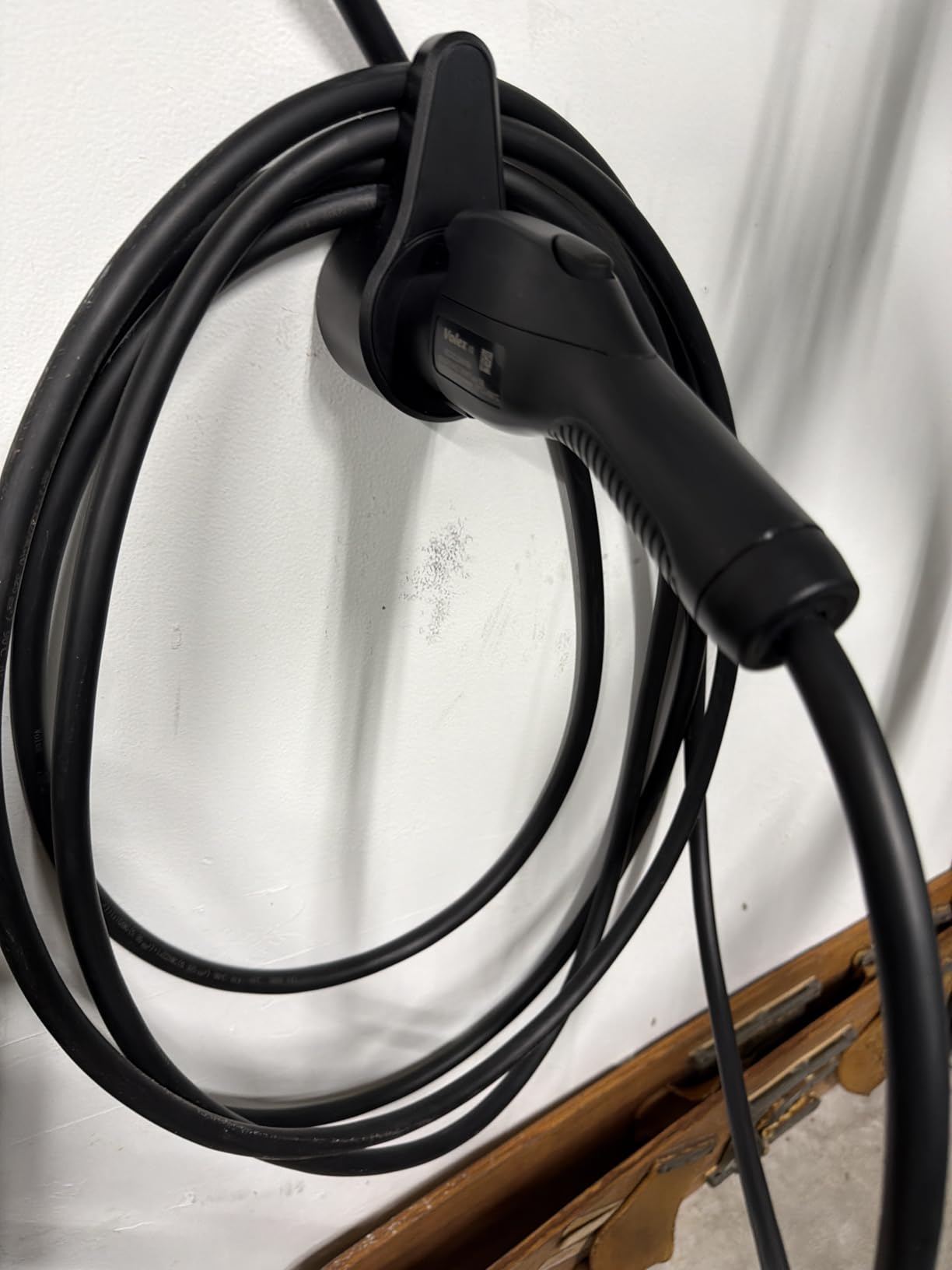
At 48 amps hardwired, it delivers up to 46 miles of range per hour, making it one of the fastest chargers on this list. If you prefer a plug-in installation, the NEMA 14-50 option runs at 40 amps and still delivers a respectable 38 miles per hour. The 25-foot cable gives you decent reach in most garage configurations.
The Car and Driver and Wirecutter both name the Emporia Classic (the non-WiFi sibling) as their top overall pick, and this WiFi-enabled version adds the smart features those editors wished for. You can schedule charging to coincide with off-peak utility rates, monitor energy consumption in real time, and receive notifications when charging completes. For households on time-of-use electricity plans, these features can pay for the charger difference within a few months.
Build quality meets every major safety standard: UL listed, ENERGY STAR certified, and compliant with NEC 625, SAE J1772, and multiple UL standards. The J1772 connector works universally with all EVs sold in North America, and Emporia backs it with responsive customer support that forum owners consistently praise.
Who Should Choose the Emporia Level 2
Solar homeowners who want to track exactly where their energy goes should start here. The optional Vue 3 integration creates a complete home energy picture that no other charger in this roundup offers. It is also excellent for anyone on time-of-use electricity rates who wants automated off-peak scheduling.
Who Should Skip It
If you have no interest in energy monitoring or smart features, you are paying a premium for capabilities you will not use. The Grizzl-E Classic offers similar charging speeds at a lower cost for purely plug-and-charge users.
4. EVIQO Level 2 EV Charger – Best Hardwired Smart Charger
EVIQO Level 2 EV Charger J1772 48A – Hardwired 240V Wall Charging Station
48A hardwired output
25-foot cable
IP66/NEMA 4 weatherproof
Glow-in-dark holster
Pros
- Works with every non-Tesla EV via standard J1772 connector
- Strong built-in WiFi antenna for reliable garage connectivity
- Free app for start/stop and speed adjustment from 6-48A
- UL and ETL certified with IP66/NEMA 4 weatherproof housing
- Glow-in-the-dark holster for easy nighttime docking
Cons
- Hardwired installation requires licensed electrician
- Not portable once installed
The EVIQO is what happens when a company focuses on getting the fundamentals right. The hardwired design delivers a full 48 amps on a dedicated 60-amp circuit, which is enough to fully charge most EVs overnight. The standout feature is the built-in WiFi antenna, which maintains a strong connection even in garages and basements where other chargers frequently drop offline.
I appreciate the attention to practical details. The glow-in-the-dark holster is genuinely useful for nighttime plug-ins, and the side reset button means you can restart the charger without opening the unit or walking to the breaker panel. These sound like small things until you are fumbling with a charger at midnight in a dark garage.
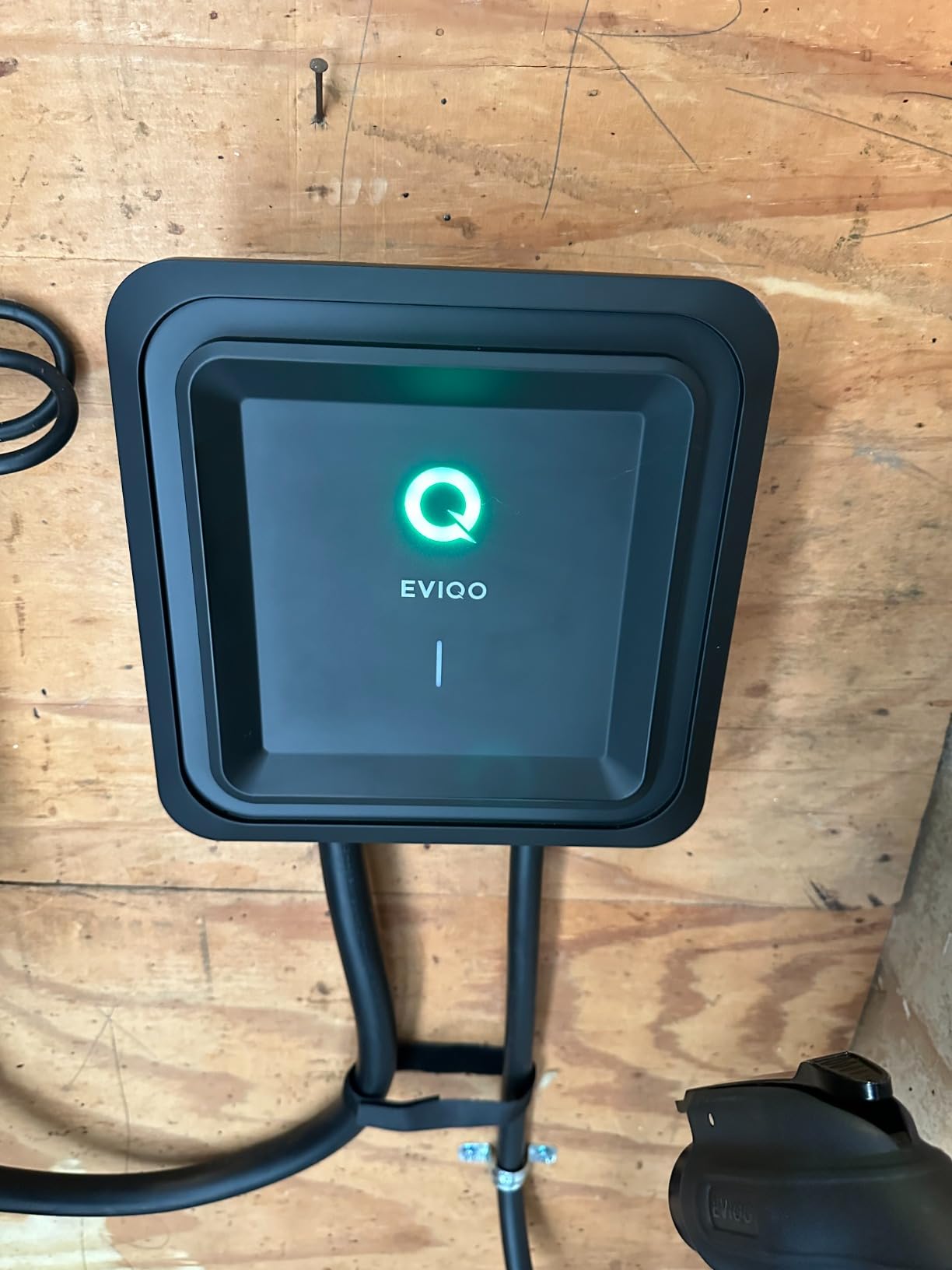
The free companion app lets you start and stop charging, adjust the amperage from 6 to 48 amps, set reminders, and track energy usage and cost per session. You can schedule off-peak night charging to take advantage of lower utility rates. The IP66 and NEMA 4 housing protects against rain, snow, heat, and dust, so outdoor installation is not a concern.
EVIQO also integrates with Home Assistant, which is a major draw for smart-home enthusiasts who want to automate their charging alongside other household systems. The three-year manufacturer warranty provides reasonable coverage, though some owners report that EVIQO’s customer service response times can stretch to multiple weeks.
Who Should Choose the EVIQO
This charger is built for homeowners who plan to stay put and want maximum charging speed from a hardwired installation. The WiFi reliability and Home Assistant integration make it particularly appealing for smart-home enthusiasts. If you want set-it-and-forget-it performance with app control when you need it, the EVIQO delivers.
Who Should Skip It
Renters or anyone who might move should avoid hardwired chargers entirely since you cannot take them with you. If you need a plug-in option, look at the ChargePoint Home Flex or Grizzl-E Classic instead.
5. Tesla Wall Connector – Premium Tesla Ecosystem
Tesla Wall Connector – Electric Vehicle (EV) Charger – Level 2 – up to 48A with 24′ Cable
48A output
24-foot cable
Power-share for up to 6 units
OTA firmware updates
Pros
- Compatible with all Tesla models including Model S/3/X/Y
- Up to 44 miles of range per hour with 48A output
- WiFi connectivity for over-the-air firmware updates
- Power-share supports up to 6 Wall Connectors for multi-Tesla homes
- Clean sleek design with premium build quality
Cons
- Higher price point compared to third-party chargers
- Requires adapter for non-Tesla EVs with J1772 ports
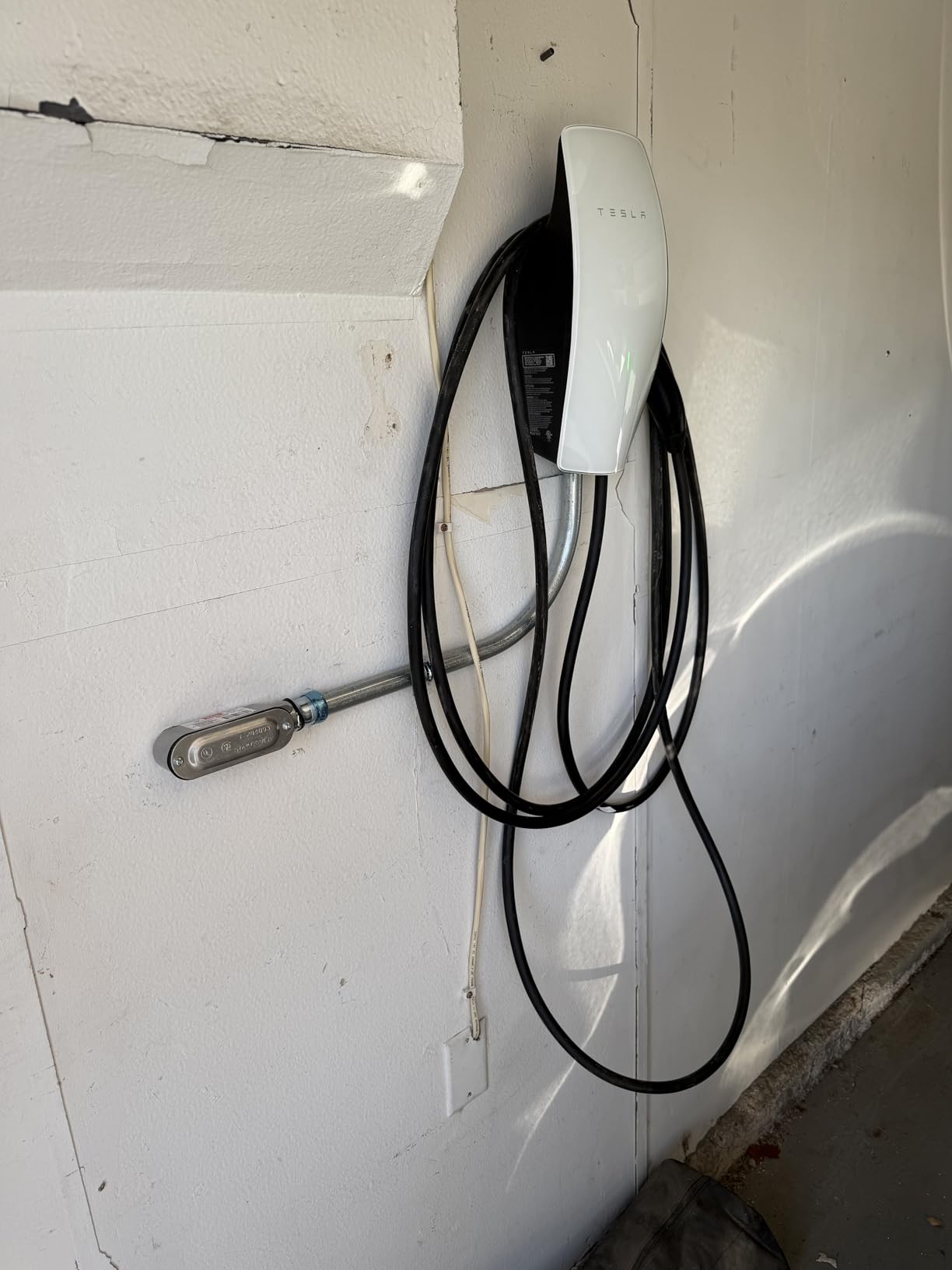
The Tesla Wall Connector is the gold standard for Tesla home charging, and its 4.8-star rating across 2000-plus reviews reflects genuine owner satisfaction. The charging experience is seamless: plug in, and your Tesla starts charging. No app configuration needed, no third-party adapters, no compatibility questions. MotorTrend names it the best home EV charger for most people.
The real differentiator is Power-share, which lets you link up to six Wall Connectors on a single circuit. For multi-Tesla households, this means you can install multiple chargers without upgrading your electrical panel. The system intelligently distributes available power across all connected vehicles, prioritizing whichever car needs the most charge.
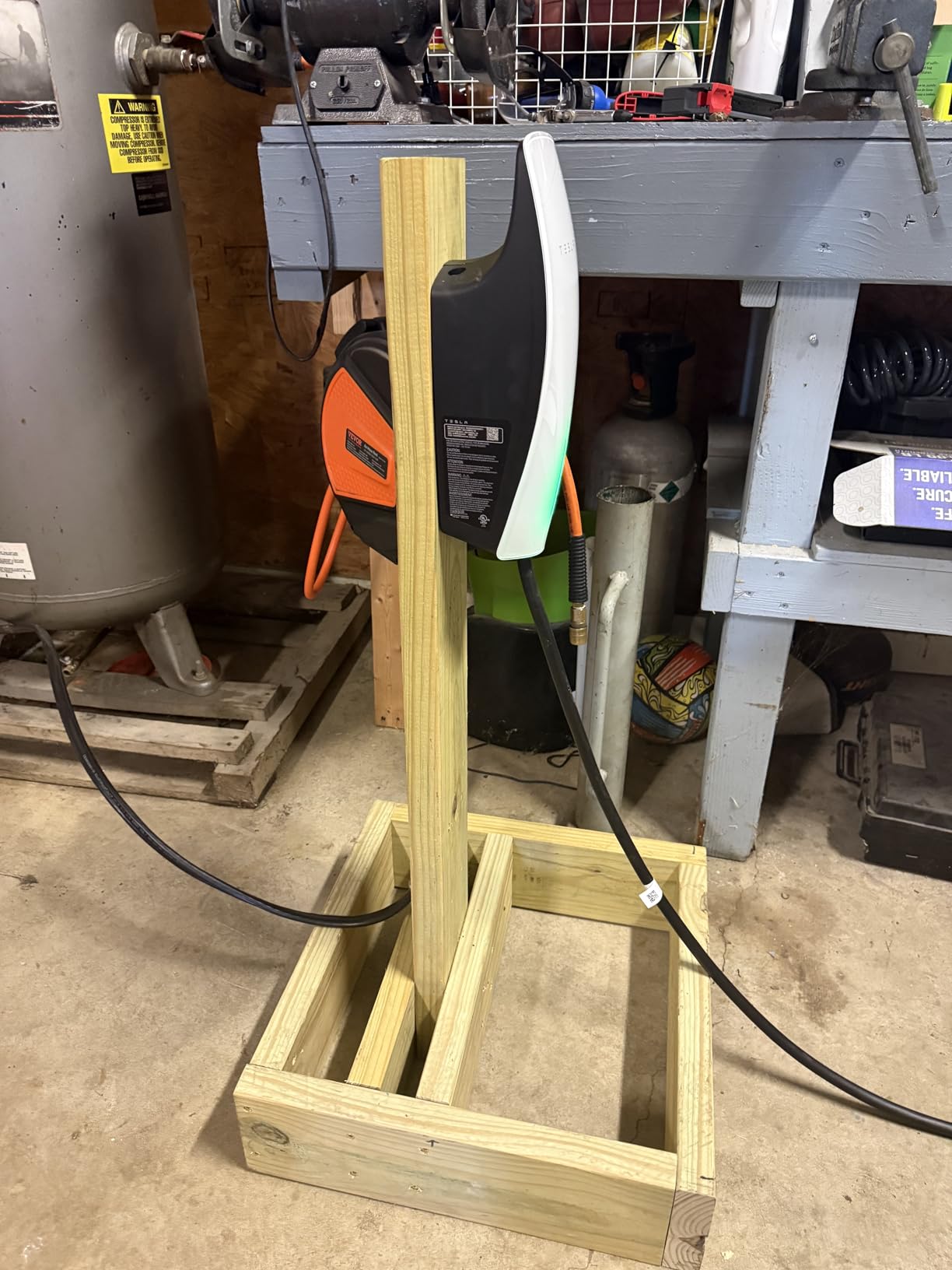
Over-the-air firmware updates keep the charger current without any user intervention. Tesla has pushed updates that improved charging efficiency and added features since the Gen 3 model launched. The 24-foot cable and variable amperage from 12 to 48 amps let you customize the output to match your existing electrical capacity.
The main consideration is price. At a premium compared to third-party alternatives, you are paying for Tesla ecosystem integration and build quality. If you own non-Tesla EVs, you will need a J1772 adapter, which adds cost and a potential failure point. Some r/evcharging forum members note that the Tesla app requires a Tesla account even for basic charger management.
Who Should Choose the Tesla Wall Connector
Tesla owners who want the most seamless home charging experience should buy this without hesitation. The Power-share feature makes it the clear winner for households with multiple Teslas. If you value build quality and ecosystem integration over saving money, this is your charger.
Who Should Skip It
If you do not own a Tesla and do not plan to buy one, the ChargePoint Home Flex or Emporia charger gives you native J1772 connectivity at a lower cost. Buying the Tesla Wall Connector plus a third-party adapter often costs more than a comparable J1772 charger.
6. AIMILER Level 2 EV Charger – Best Budget Smart Charger
AIMILER Level 2 Electric Vehicle (EV) Charger(WIFI APP/Plug-play), 32A, 25ft Cable ETL Certified, 220V-240V NEMA 14-50P Plug EVSE w/ J1772 Connector, Portable EV Car Charging Stations for Home Level 2
32A output
25-foot cable
WiFi app
IP66 waterproof
ETL Certified
Pros
- ETL Certified and FCC Listed with comprehensive safety standards
- Adjustable amperage from 16A to 32A to match circuit capacity
- 25-foot military grade charging cable with drop-resistant plug
- WiFi app for monitoring and cost tracking and scheduling
- Built-in CCID-20 anti-leakage detection eliminates need for extra GFCI breaker
Cons
- Level 1 charging requires a separate adapter not included
- Smart touch screen can be unresponsive with wet gloves
The AIMILER proves that you do not need to spend a fortune to get smart charging features. At 32 amps, it delivers about 24 miles of range per hour, which is more than enough for most daily commuters who plug in overnight. The WiFi app lets you monitor charging in real time, track costs, and schedule sessions during off-peak hours, features that some chargers costing twice as much include.
The build quality exceeds expectations for this price range. The 25-foot military-grade charging cable is tough enough to handle being run over by a car, and the drop-resistant plug endures over 10,000 charge cycles. The NEMA Type 4 and IP66 waterproof rating means outdoor installation is safe and reliable.
A practical advantage is the built-in CCID-20 anti-leakage detection. In newer code jurisdictions where GFCI breakers are required on 240-volt outlets, this feature can prevent the nuisance tripping that plagues many EV charger installations. Forum owners in r/evcharging frequently mention GFCI breaker issues as a top frustration, so having this built in is a genuine benefit.
The adjustable amperage from 16 to 32 amps lets you dial down the draw if your electrical panel is near capacity. The smart touch screen displays charging status, though it can be hard to read with wet gloves. At 32 amps maximum, this is not the fastest charger on the list, but for households with shorter commutes or multiple vehicles charging on staggered schedules, it is more than adequate.
Who Should Choose the AIMILER
Budget-conscious buyers who still want WiFi connectivity and app control should start here. The adjustable amperage makes it a smart choice for older homes with limited panel capacity. If you drive fewer than 60 miles daily, 32 amps is plenty for overnight charging.
Who Should Skip It
If you drive a large EV with a big battery and need to charge from near-empty overnight, you want 40 amps or higher. The 32-amp ceiling also limits future-proofing if you upgrade to a vehicle with a larger battery pack down the road.
7. Autel MaxiCharger – Professional-Grade Performance
Autel Level 2 EV Charger up to 50Amp, 240V, Indoor/Outdoor Car Charging Station with J1772 Connector, Wi-Fi and Bluetooth Enabled EVSE, 25-Foot Cable, Hardwired, Dark Gray
50A hardwired output
25-foot cable
WiFi and Bluetooth
CSA Certified NEMA Type 4
Pros
- High speed 12kW up to 50A charging adding 37 miles per hour
- 25-foot cable flexible in temperatures as low as -40C
- CSA Certified and NEMA Type 4 for all-weather protection
- Smart app control with WiFi Bluetooth and Ethernet access
- 3-year warranty with around-the-clock support from Autel
Cons
- Requires hardwired installation by licensed electrician
- WiFi connectivity can be inconsistent in some garage layouts
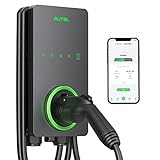
Autel has been making automotive diagnostic equipment since 2004, and that engineering pedigree shows in the MaxiCharger. At 50 amps and 12kW, it is one of the most powerful residential chargers available, adding 37 miles of range per hour. The CSA certification and NEMA Type 4 housing mean it handles any weather condition you throw at it.
The 25-foot cable deserves special mention for cold-weather performance. Autel designed it to remain flexible at temperatures as low as minus 40 degrees Celsius, which addresses one of the most common complaints about EV chargers in northern climates. Forum owners in r/evcharging consistently rank cable flexibility in freezing weather as a top concern.
The Autel Charge app supports WiFi, Bluetooth, and Ethernet connectivity, giving you multiple ways to stay connected. You can manage charge times, schedule off-peak charging, and optimize for your electricity rate structure. The app also handles firmware updates automatically, keeping the charger current without manual intervention.
Installation is hardwired only, which means you need a licensed electrician and you cannot take the charger with you if you move. This limits its appeal for renters but makes sense for homeowners who want the cleanest, most reliable installation. Autel backs the MaxiCharger with a three-year warranty and around-the-clock technical support.
Who Should Choose the Autel MaxiCharger
Homeowners in cold climates who need a cable that stays flexible in winter should prioritize this charger. The 50-amp output also makes it ideal for owners of larger EVs with big battery packs who need maximum overnight charging speed. If you trust established automotive brands over newer startups, Autel’s 20-year track record provides peace of mind.
Who Should Skip It
Renters and anyone who wants a plug-in installation should look at the ChargePoint Home Flex or Grizzl-E Classic. Some owners report WiFi connectivity hiccups in certain garage configurations, so if rock-solid connectivity is essential, the EVIQO’s stronger antenna may be a better fit.
8. SEGUMA Level 2 EV Charger – Most Portable Option
SEGUMA Level 2 EV Charger, 40Amp Electric Car Chargers for J1772 BEVs/PHEVs
40A adjustable output
25-foot cable
2.4-inch TFT display
IP66 waterproof
Pros
- Up to 9.6kW high speed charging with 6X faster than Level 1
- Adjustable charging current from 10A to 40A for flexibility
- Built-in 2.4-inch TFT display showing real-time charging data
- IP66 waterproof with working temperature from -22F to 122F
- Includes cable holder control box holder and carry bag
Cons
- Dust cap can be loose and falls off easily
- Smaller brand with less established customer support network
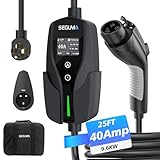
The SEGUMA fills a niche that other chargers in this roundup ignore: portability. It comes with a carry bag, making it one of the few Level 2 chargers you can realistically take to a vacation home, a friend’s garage, or on a road trip where you know you will have access to a NEMA 14-50 outlet. At 40 amps, it delivers up to 9.6kW, which is fast enough for full overnight charging.
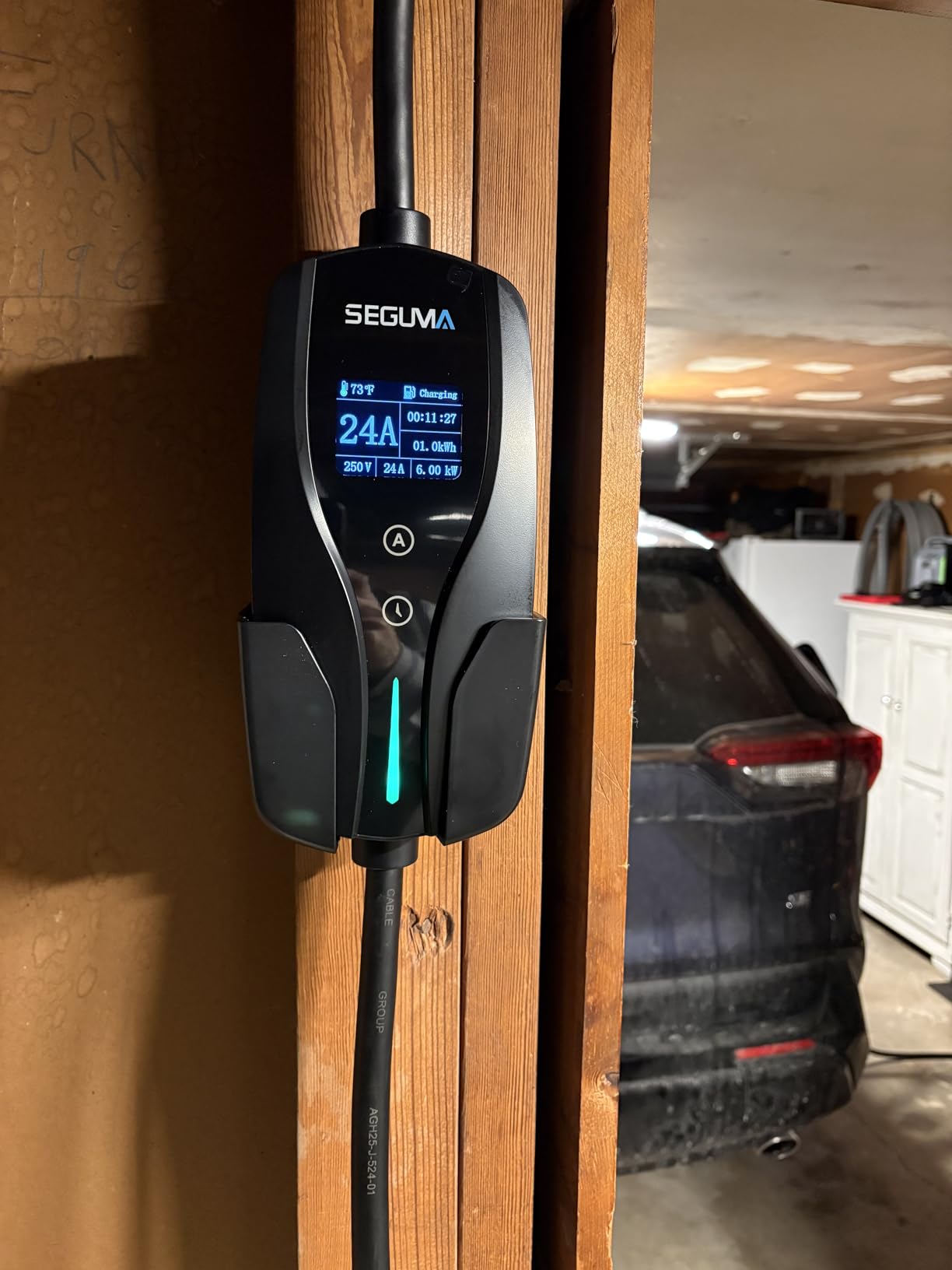
The built-in 2.4-inch TFT display is a unique feature that shows real-time amperage, voltage, power consumption in kWh, charging time, and work status. Most chargers either have no display or rely entirely on an app, so having this data visible on the unit itself is convenient for quick glances.
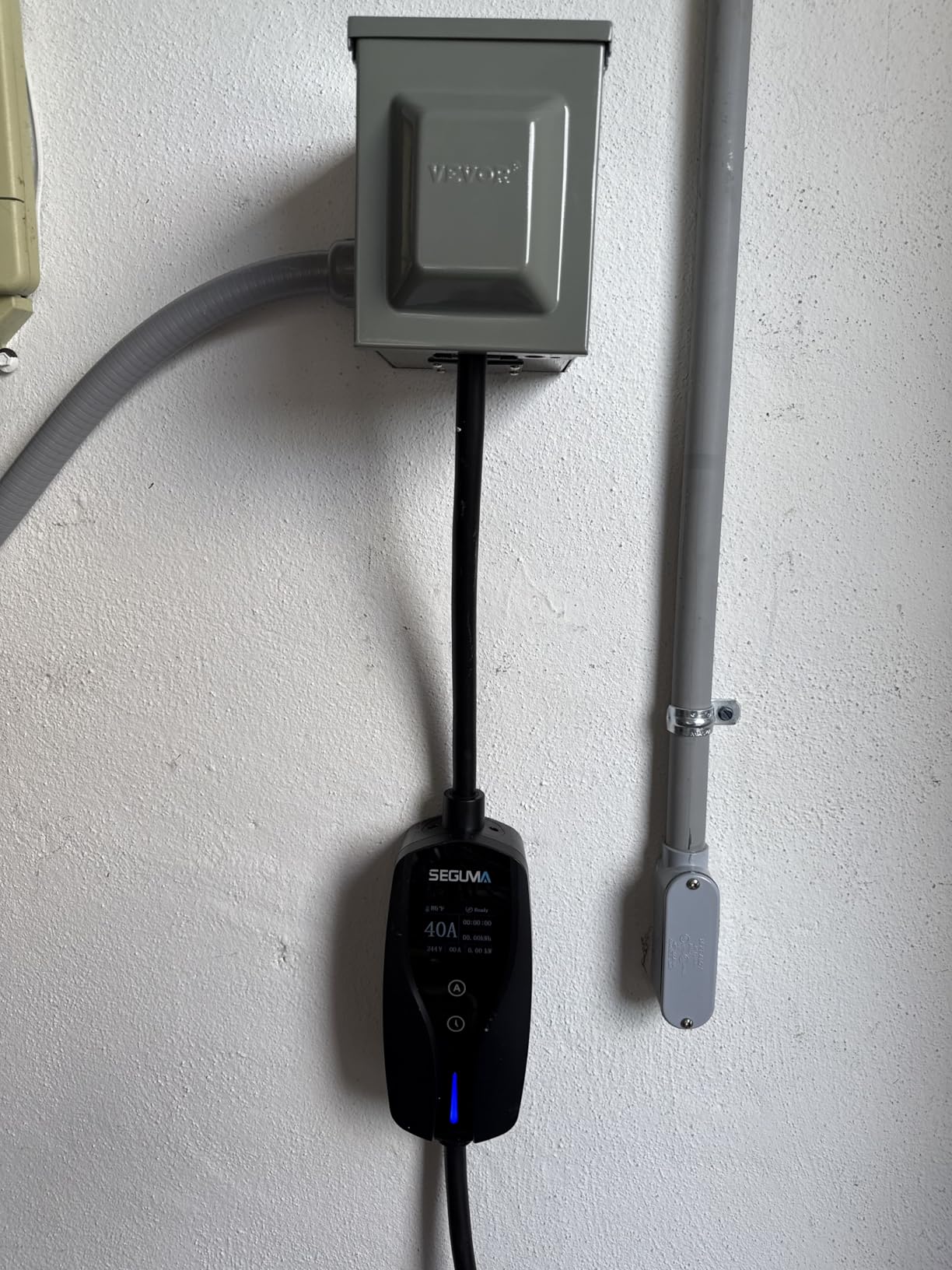
Adjustable amperage from 10 to 40 amps gives you maximum flexibility. You can dial it down to 10 amps for a standard outlet or crank it up to 40 amps on a proper 50-amp circuit. The timing delay function lets you schedule charging to start during off-peak hours even without WiFi, which is a clever workaround for the lack of app connectivity.
The IP66 waterproof rating handles rain and snow, and the working temperature range of minus 22 to plus 122 degrees Fahrenheit covers most climates. The included accessories, cable holder, control box holder, and carry bag, add genuine value. The main downside is the dust cap, which several owners report can be loose and fall off. This is a minor annoyance but worth mentioning.
Who Should Choose the SEGUMA
If you need a charger you can take with you, the SEGUMA is the best portable option on this list. It works well as a primary charger for renters who want to take it when they move, or as a secondary charger for a vacation property. The built-in display is also great for users who prefer not to rely on smartphone apps.
Who Should Skip It
If you want WiFi connectivity, app control, or smart home integration, this is not the charger for you. The smaller brand also means a less established customer support network compared to ChargePoint or Tesla. Buyers who prioritize long-term warranty support should consider more established brands.
How to Choose the Right Home EV Charger
Before you buy, consider these key factors that will determine which charger fits your home and driving habits.
Hardwired vs Plug-In Installation
A plug-in charger uses a NEMA 14-50 outlet, which most homes can accommodate with a dedicated 50-amp circuit. You can unplug it and take it with you if you move. A hardwired charger connects directly to your electrical panel, offering cleaner installation and often higher amperage, but you cannot take it with you. Renters should almost always choose plug-in. Homeowners who plan to stay should consider hardwired for maximum performance.
J1772 vs NACS Connectors
The J1772 connector is the universal standard for all non-Tesla EVs sold in North America. Tesla uses its proprietary NACS connector, though the industry is transitioning. Starting in 2025, most automakers began adopting NACS, so if you are buying a new EV in 2026, check which connector your vehicle uses. The Tesla Universal Wall Connector includes a built-in J1772 adapter for mixed-port households.
Amperage and Charging Speed
A 32-amp charger delivers roughly 24 miles of range per hour, while a 48-amp unit adds about 36 to 46 miles per hour depending on your vehicle. For most daily commuters driving under 60 miles, 32 amps is sufficient. If you regularly deplete your battery or drive a large SUV with a big pack, 48 or 50 amps gives you more overnight flexibility.
Smart Features and Connectivity
WiFi-enabled chargers let you schedule charging during off-peak utility hours, which can cut your electricity costs significantly. Some chargers like the Emporia integrate with home energy monitors for solar optimization. If you prefer simplicity and do not want to troubleshoot app connections, a basic charger like the Grizzl-E works reliably without any connectivity.
Installation Costs and Electrical Panel Capacity
Professional installation of a Level 2 charger typically costs between 300 and 1200 dollars depending on your home’s existing wiring and panel capacity. If your panel is near capacity, chargers with load management features like the Emporia with Vue 3 can help you avoid a panel upgrade that could cost thousands. The federal tax credit covers 30 percent of installation costs up to 1000 dollars, but this credit expires June 30, 2026, so act soon if you want to claim it.
Outdoor Ratings and Weather Protection
If you are installing the charger outdoors, look for NEMA 4 or IP66 ratings at minimum. The Grizzl-E’s IP67 rating is the highest in this roundup, while the EVIQO and Autel offer NEMA 4 and Type 4 protection respectively. Cold-weather cable flexibility matters in northern climates, and the Autel MaxiCharger specifically excels here with a cable rated to minus 40 degrees. For more options, see our best Level 2 EV chargers for home garages guide.
Frequently Asked Questions
What is the best home EV charging station?
Is it cheaper to charge your EV at home or at a charging station?
What is the most reliable home EV charger?
How much does it cost to install a home EV charger?
Should I buy a plug-in or hardwired EV charger?
What is the lifespan of a home EV charger?
Final Verdict
After testing and comparing all 8 chargers, the ChargePoint Home Flex stands out as the best home EV charging station for electric cars in 2026. Its combination of 50-amp charging speed, the largest public charging network in North America, and excellent app integration makes it the most versatile option for most households. If you want the best value, the Grizzl-E Classic delivers bulletproof reliability at an attractive price point. For Tesla owners, the Tesla Wall Connector remains the gold standard with its seamless ecosystem integration and Power-share capability for multi-vehicle homes.
Whichever charger you choose, make sure it carries proper UL, ETL, or CSA certification and have it installed by a licensed electrician. The federal tax credit that covers 30 percent of purchase and installation costs expires June 30, 2026, so now is an excellent time to buy. Your EV will thank you every morning when you unplug with a full battery.