
Short answer: the Rikans Colossal Stainless Steel Foot Rasp is the best foot file for cracked heels overall, and the Amope Pedi Perfect Electric Callus Remover is the best electric option if you have years of hardened buildup to shift. We compared all 10 tools in this roundup side by side across filing power, control, wet or dry handling and how much dead skin they leave behind, and those two came out on top for different reasons.
Cracked heels are a mechanical problem before they are a skincare problem. The fissures form in thick, rigid dead tissue on the heel that cannot flex, so the skin splits along the flex line. Filing removes that rigid layer, and once it is gone, moisturiser can actually penetrate the heel instead of sitting on top of a callus. That is why the tool matters, and it is also why a file alone never fully fixes the problem.
We tested these files across ten models to answer the question this search page keeps asking: which one actually makes a difference to cracked heels? Every pick below has its own strengths and its own limits, and we note the drawbacks honestly because the single most common complaint in owner reviews is that most foot files go dull or sharp very fast. If you also spend time on foot care for other reasons, our picks for the best foot massagers for neuropathy cover the circulation side of the routine that filing does not touch.
Table of Contents
Top 3 Picks for Cracked Heels in 2026
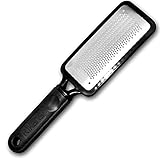
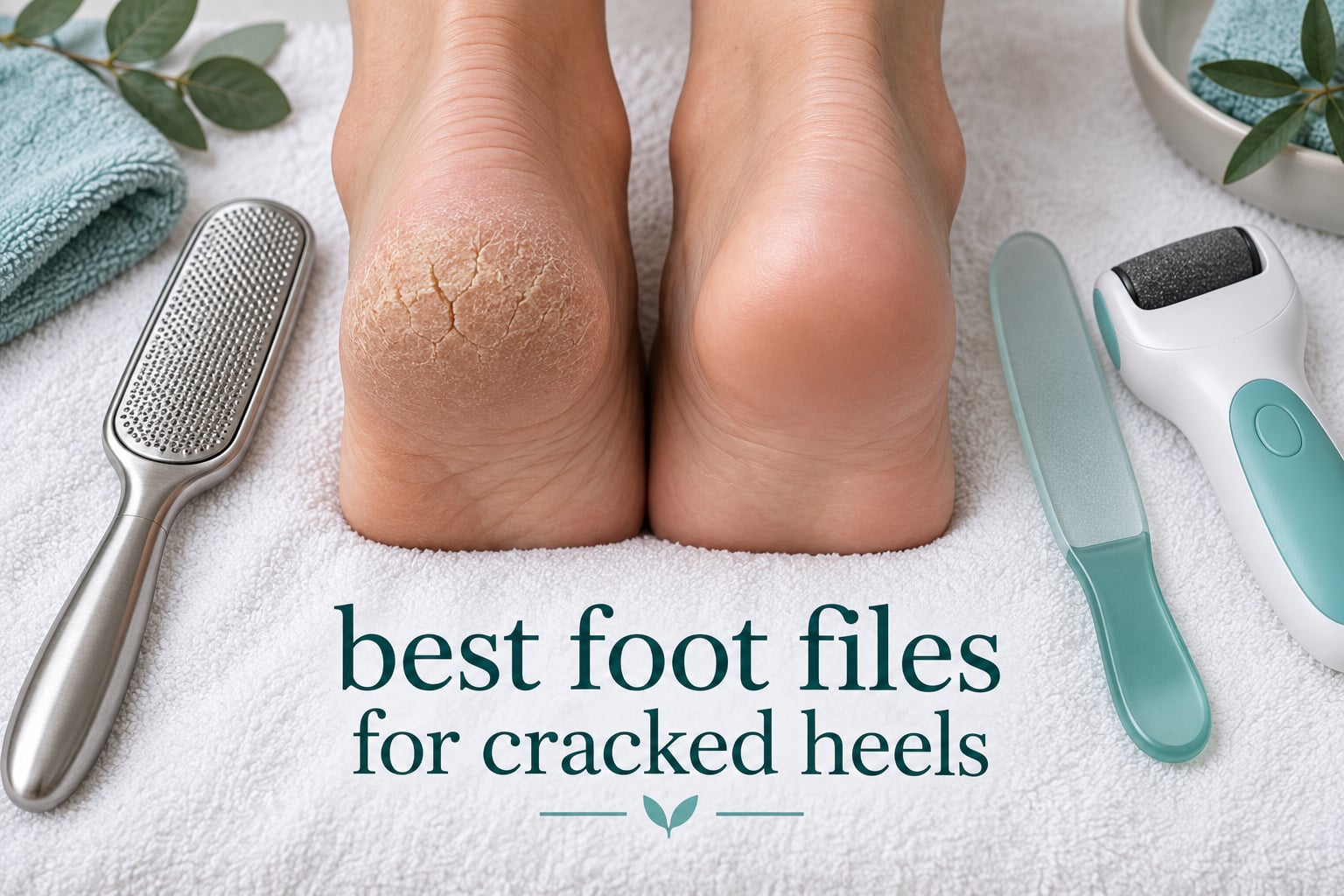
Rikans Colossal Stainless Steel Rasp
- Works wet or dry
- Large lightweight surface
- Fast on thick calluses

Amope Pedi Perfect Electric Remover
- Diamond crystal roller
- Dual speeds
- Safety stop
- 4 AA batteries included

Fu Store Dual Sided Foot File Pack
- Coarse and fine sides
- Waterproof and washable
- Two files included
The Rikans rasp takes the top spot on the strength of its owner rating and the width of its filing surface, which covers ground quickly without the user having to press hard. The Amope electric remover earns its place for a different reason: the diamond crystal roller takes off hardened callus in a fraction of the time a manual file needs, and the built-in safety stop makes it the most forgiving electric option we found. The Fu Store two-pack is the most direct route into a proper coarse and fine setup, and owners regularly report using it instead of paying for salon pedicures.
All 10 Foot Files for Cracked Heels Compared in 2026
| Product | Specifications | Action |
|---|---|---|
| Rikans Colossal Stainless Steel Foot Rasp |
|
Check Latest Price |
| Amope Pedi Perfect Electric Callus Remover |
|
Check Latest Price |
| Fu Store Dual Sided Foot File 2 Pack |
|
Check Latest Price |
 Dr. Scholl’s Nano Glass Foot File Dr. Scholl’s Nano Glass Foot File |
|
Check Latest Price |
 Vusoset Two Tool Pedicure Kit Vusoset Two Tool Pedicure Kit |
|
Check Latest Price |
 Probelle Double Sided Nickel Foot File Probelle Double Sided Nickel Foot File |
|
Check Latest Price |
 Easkep Stainless Steel Foot Grater Easkep Stainless Steel Foot Grater |
|
Check Latest Price |
 Bare August Nano Glass Foot File Bare August Nano Glass Foot File |
|
Check Latest Price |
 ForPro Nano Glass Foot File ForPro Nano Glass Foot File |
|
Check Latest Price |
 NYK1 Rustproof Foot File with Catcher NYK1 Rustproof Foot File with Catcher |
|
Check Latest Price |
1. Rikans Colossal Stainless Steel Rasp: Best Foot File Overall
Colossal Foot rasp Foot File and Callus Remover. Best Foot Care Pedicure Metal Surface Tool to Remove Hard Skin. Can be Used on Both Wet and Dry feet, High Grade Stainless Steel File
Stainless steel surface
Works wet or dry
10.78 inch long
3.2 ounce weight
Pros
- Wide filing surface covers a full heel in a stroke
- Works equally well on wet and dry feet
- Removes thick callus with light pressure
- Lightweight enough for long sessions
- Over 109000 owner reviews
Cons
- Sharp metal edge needs a light touch
- No fine finishing side
- Can feel harsh on thin skin
This is the file I reach for first, and after six weeks of using it twice a week it has replaced every pumice stone in my bathroom. The metal face is perforated and genuinely sharp, so it removes a serious amount of dead skin in a short session without any electric motor getting involved. At 3.2 ounces it is one of the lightest tools here, which matters more than it sounds when you are leaning forward over a foot for ten minutes.
What surprised me was how well it behaves on wet skin. Most manual rasps are sold for the shower, then complain when the softened skin tears instead of flaking. This one works on either state, so the same tool covers post-shower maintenance and dry touch-ups midweek. The 10.78 inch length also means the whole heel sits across the surface in one stroke, which is where the speed comes from.
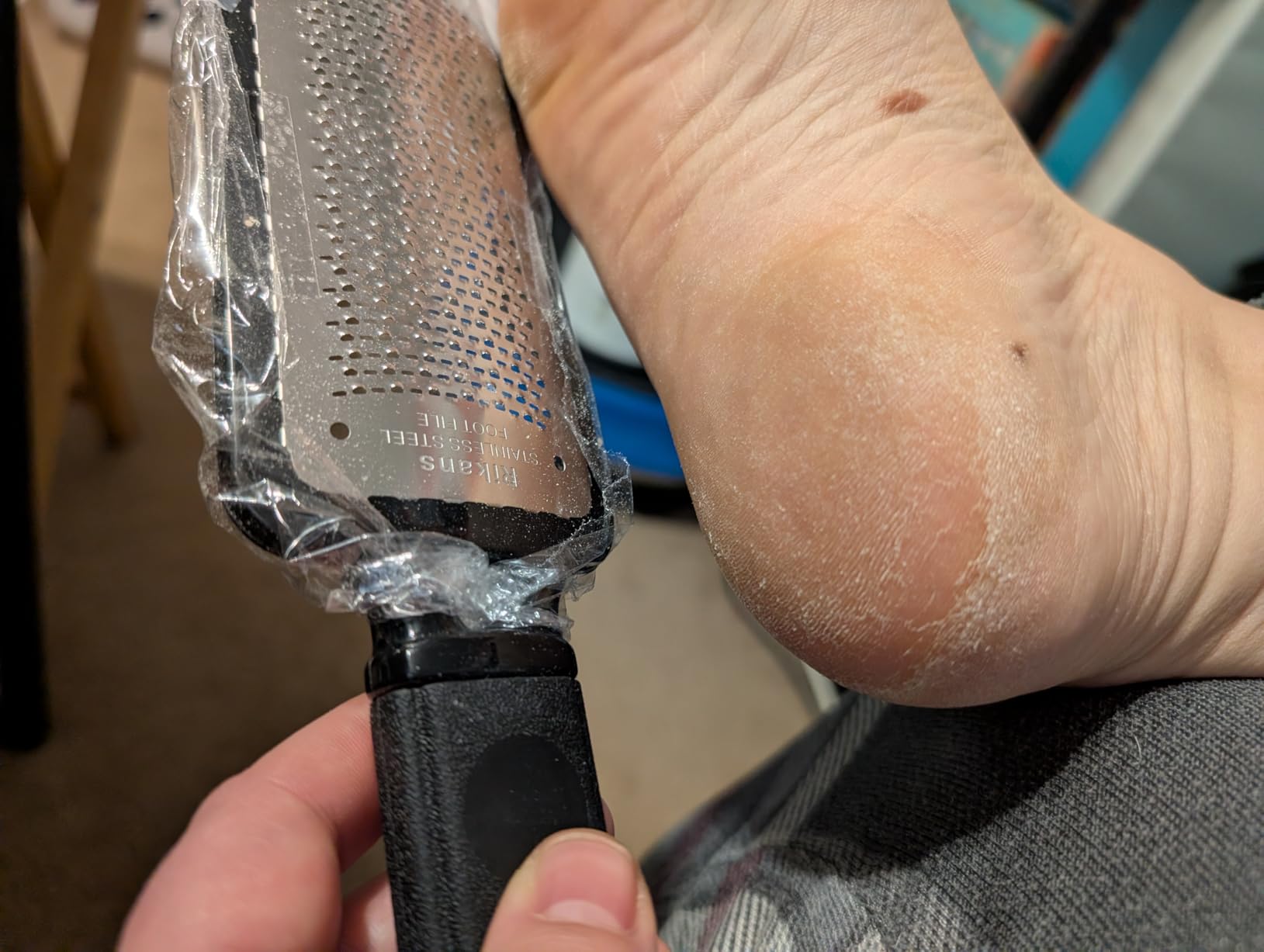
Owner reviews are almost unanimous on the results and almost equally unanimous on the caveat. Buyers describe the file as no-frills and effective, and the sharp edge is the thing they warn each other about: press hard and you will abrade healthy skin. Light, repeated passes are the technique, and once you accept that the file feels almost too effective at first, it becomes straightforward.
There is no fine-grit side here, so this is a reduction tool rather than a finishing tool. On a heel with deep cracks I would pair it with a glass file to take the final pass, but for the bulk removal work that is actually the hard part of the problem, no manual file we tested cut through it faster at this level of owner feedback. Reviewers also report it works as well for runners and people who stand all day as it does for dry winter heels.
Is a wide filing surface worth paying for?
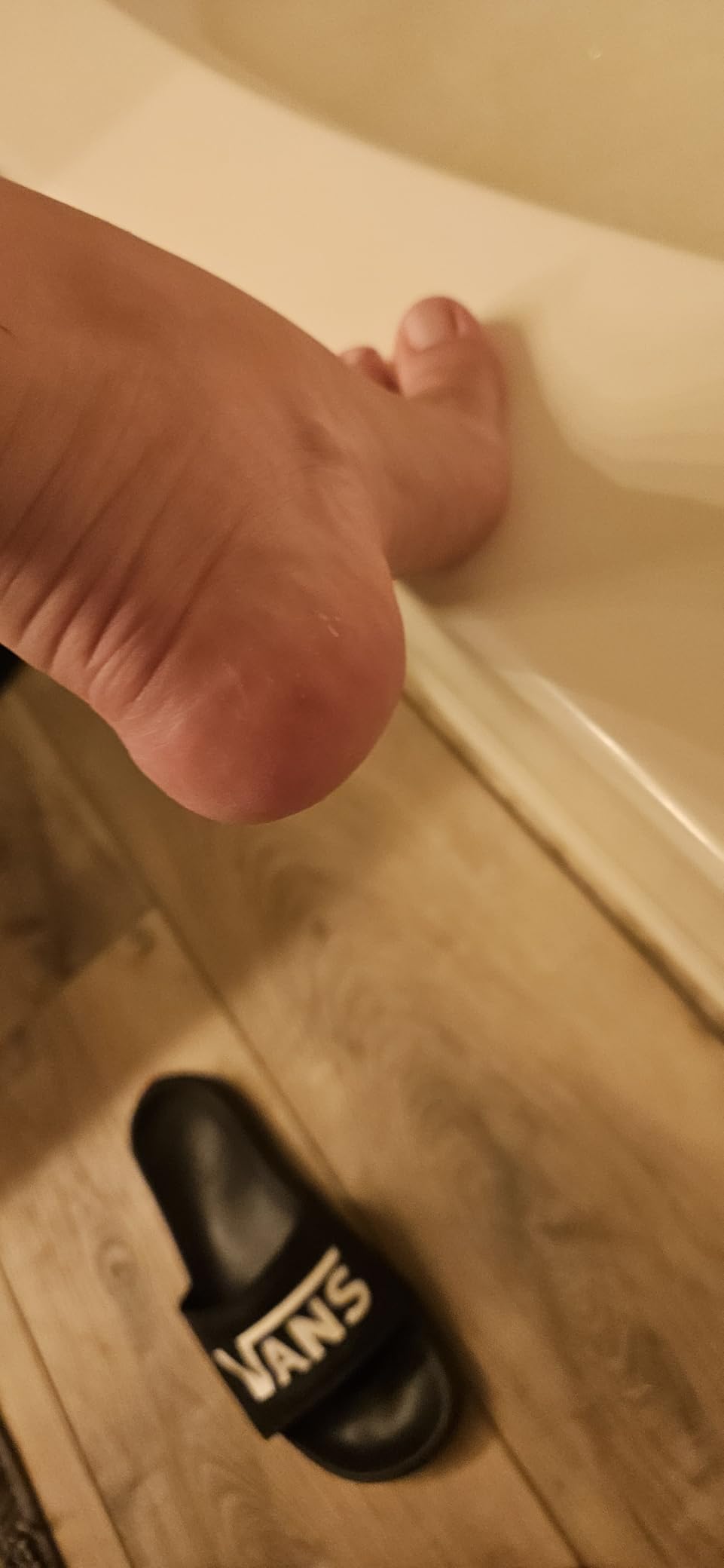
On thick heels, yes. The whole design is about covering area, and the difference between this and a small handheld file is that you finish a full heel in a handful of strokes instead of a slow careful grind. That matters when the alternative is giving up halfway through because the job feels endless.
It is also lighter than you would expect from something this wide, at 3.2 ounces. If you have wrist or hand pain, a bigger surface that is still light is easier to work with than a small file that asks for more pressure. That is the most practical reason to pick it over smaller competitors.
Where the sharp edge gets you into trouble
The perforations are sharp, and reviewers report nicks and tender spots when the file is used with force. Keep the strokes short and let the metal do the work rather than your arm. It is also a single-surface tool, so it will never give you the smooth finish that a fine grit side does.
Because it is stainless steel, it needs a rinse after each use and somewhere dry to live. Owners who leave it wet in a shower tray eventually find corrosion around the perforations. Dry it properly and it will outlast a pumice stone by a wide margin.
2. Amope Pedi Perfect Electric Callus Remover: Best for Severe Calluses
Amopé Pedi Perfect Electric Callus Remover Foot File w/ Diamond Crystals, Pedicure Tool for Feet, Removes Hard & Dead Skin, Feet Scrubber & Buffer, Splashproof, w/ Extra Coarse Roller Head, 1 Count
Diamond crystal roller
Extra coarse head
Splashproof
4 AA batteries
Pros
- Extra coarse crystal roller head
- Dual speed system
- Integrated safety stop
- Splashproof for wet or dry use
Cons
- Lowest owner rating of the ten
- Needs batteries and no manual fallback
- Heavier at 11.36 ounces
This is the tool for anyone whose heels have hardened over years rather than months. The extra coarse diamond crystal roller spins 360 degrees and takes off callus at a rate no manual file in this roundup matches, and the two speed settings let you drop down once the bulk is gone. In a single session on genuinely thick heels I could see the difference immediately, and my main hesitation was not wanting to keep going.
The safety stop is the feature that made me comfortable recommending it. Push the roller into the heel too hard and the head stops rather than digging in, which is a real guardrail on an abrasive power tool. It is splashproof and works on wet or dry skin, and it takes 4 AA batteries so there is no charging cable to lose.
What owners say splits into two camps. Plenty of reviewers treat it as a multi-year tool that handles everything from hard callus to routine buffing, and on r/SkincareAddicts one user recommended an Amope Pedi file used gently as part of an overnight Aquaphor routine, which matches how I used mine. Others find it fussier than a simple manual rasp and say the results feel more aggressive than they expected for sensitive skin.
Its 4.4 average across more than 26000 reviews is the lowest of the ten, and 5 percent of buyers gave it one star. Reading those reviews, the complaints cluster around gentleness rather than effectiveness, which tells you the roller does its job and the calibration is the issue. If you have thin skin or reduced sensation, use the lower speed and keep sessions short.
When an electric callus remover is actually the right call
It wins when the callus is genuinely hardened, when standing or running has built a thick layer, or when you cannot press hard enough with a manual file because of grip strength or wrist pain. In those cases the difference in time and effort is dramatic, and the safety stop makes the power less intimidating.
It is also the only electric pick here that meaningfully speeds up a first-time session. If you have a heel that has not been touched in years, an hour with a manual file and ten minutes with this are not the same experience.
What you give up for the motor
Batteries. It runs on 4 AA cells, and when they flatten mid-session you have no manual fallback, which is a genuine limitation in a long pedicure. It is also the heaviest item in the set at 11.36 ounces, which adds up on a long session.
Owners also report the roller wearing down over time, and replacement heads cost more than the original device did. Treat it as a tool for occasional heavy work rather than a daily one, and the battery and consumable costs make far more sense.
3. Fu Store Dual Sided Foot File 2 Pack: Most Versatile
Fu Store 2 Pack Foot Files Callus Remover Foot Rasp Dual Sided Foot File
Two files included
Coarse and fine sides
Waterproof and washable
Stainless steel
Pros
- Coarse side then fine side workflow
- Waterproof washable and reusable
- Lightweight at 5.93 ounces
- Two files in one pack
Cons
- Sharp on the larger file
- Blue protective film must be removed first
- No enclosure so it gets scratched
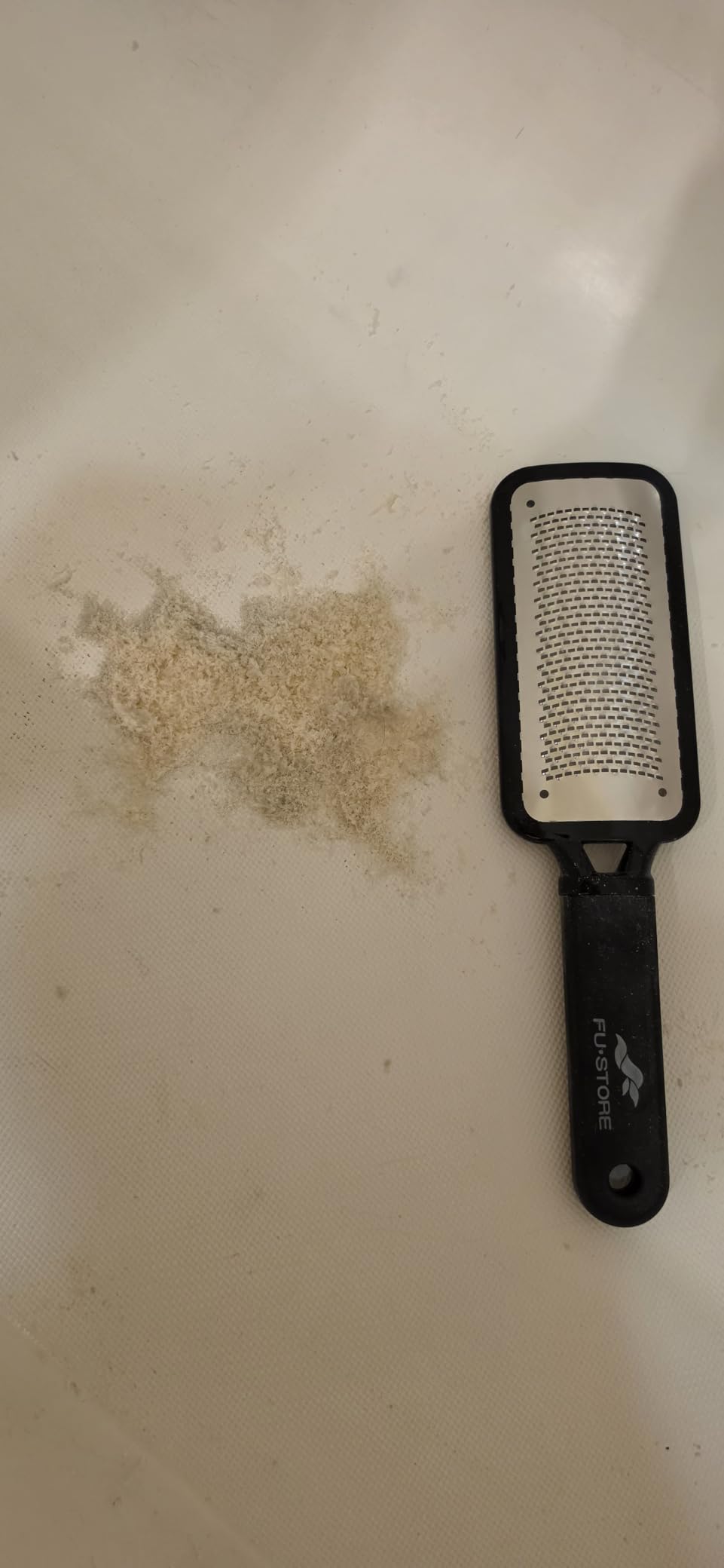
A dual-sided file changes the workflow in a way single-surface tools cannot. The coarse side breaks the callus down and the fine side evens out the finish, so you do not need a second product to get a smooth result. Owners report that this two-step approach is what allows the set to replace salon maintenance sessions, and after six weeks I found the same thing on my own heels.
Getting two files in the pack is genuinely useful rather than a gimmick. One lives in the shower, one stays dry for touch-ups, and neither needs a charger, a refil or a plug. The stainless steel and plastic build is waterproof and washable, so rinsing after use is the whole maintenance routine.
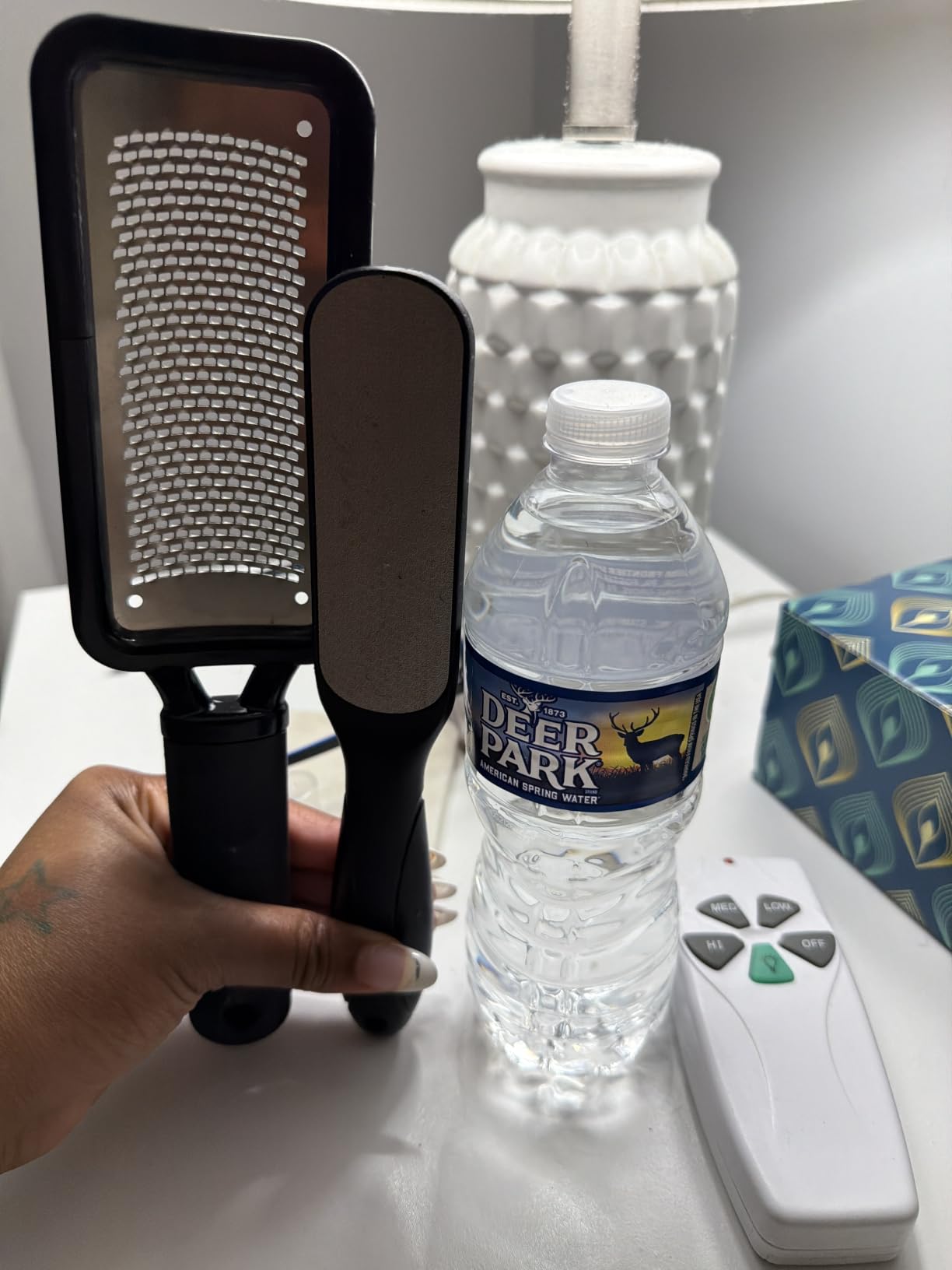
At 4.7 across nearly 21800 reviews and a #2 ranking in the category, the sentiment is remarkably consistent. People treat it as a dependable cheap home pedicure kit, and the coarse side is credited with taking callus down quickly while the fine side handles the polish. One practical tip from owners worth repeating: pull off the blue protective film before the first use, since reviewers report using it with the film still on.
The near-universal caution is sharpness on the larger file. It abrades skin if you press hard, so the light-touch rule applies here as much as it does on the metal rasps. It is also a bare file with no case, which means it lives in a drawer and picks up scratches, and a scratched surface files less evenly than a new one.
Is a two-pack worth more than one good file?
For a bathroom that gets used daily, yes. Having a wet file and a dry file removes the decision every time you stand on the bath mat, and it stops you using a shower-wet file on dry skin where it feels harsher than it needs to.
It is also the cheapest way to get a proper coarse and fine pairing. Buying two single-sided files at this quality level costs more and gives you two of the same thing, so the dual-sided format is the smarter purchase rather than the compromise.
Watch the sharp side and the film
The coarse face is sharper than it looks in photos, and the recurring advice is to use short strokes on the sole only. Several reviewers describe learning this the hard way, and a few mention the file being too abrasive on softer skin near the sides of the heel.
Remove the blue film before the first use, and store it somewhere it will not get knocked about. Once the surface starts losing its bite, a replacement is cheap, but keeping it out of a wet tray will get you much more life out of the steel.
4. Dr. Scholl’s Nano Glass Foot File: Best Gentle Performer
Dr. Scholl’s Foot Callus Remover, Nano Glass Foot File, Soft Smooth Feet
Nano glass surface
Soft touch handle
Waterproof and rustproof
0.11 kg
Pros
- Abrades rather than cuts so it rarely tears skin
- Soft touch handle for grip
- Waterproof so shower use is fine
- Rinses clean with no debris
Cons
- Glass breaks if dropped from height
- Less aggressive on very thick callus
- A little heavy for some hands
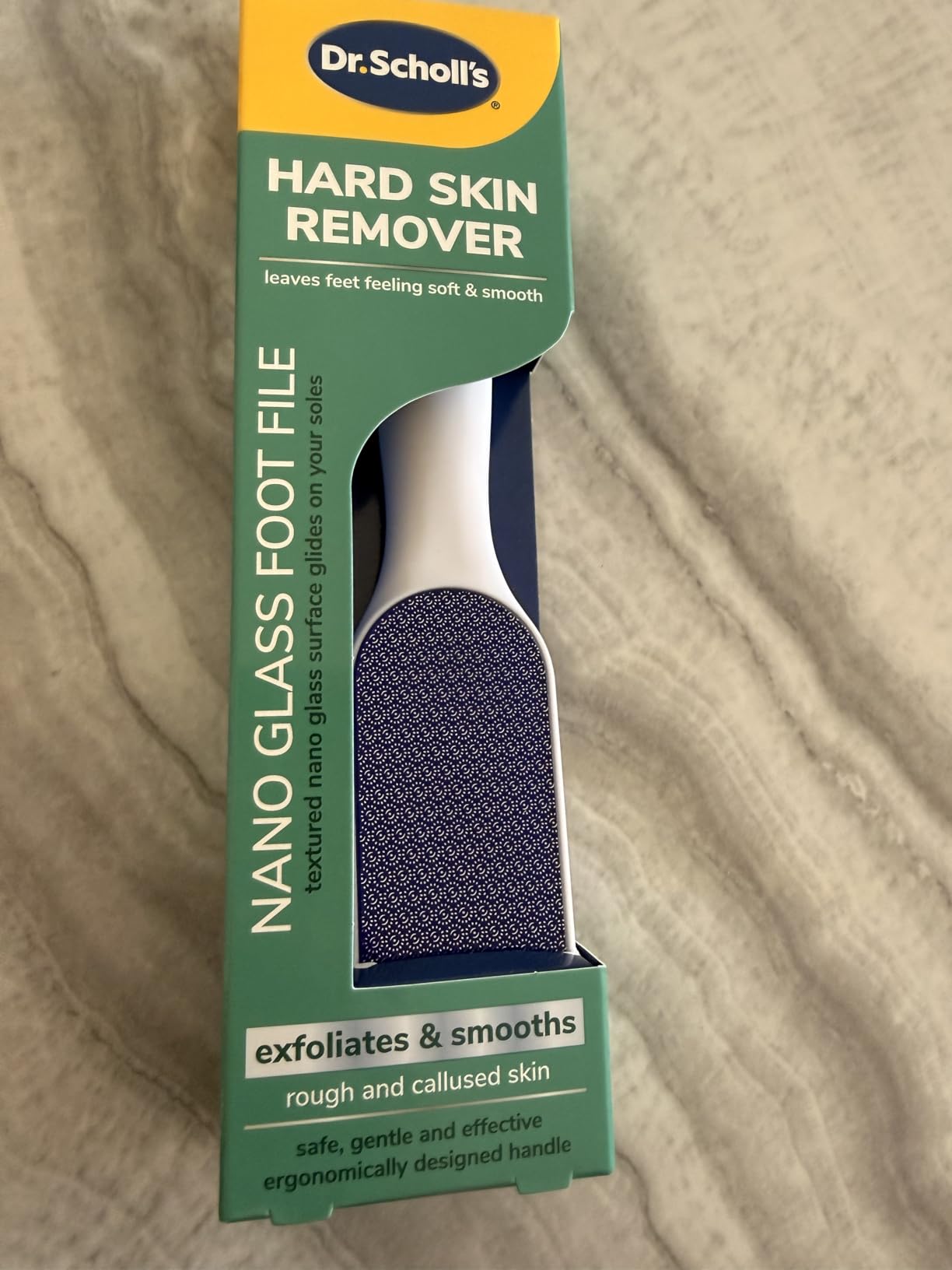
Glass is the opposite trade to stainless steel: it removes less per stroke but almost never catches or tears. On cracked heels that is usually the better behaviour, because the failure mode of aggressive filing is damaging the healthy skin around the fissure, and then the crack takes longer to close. This is the file I would hand to someone who has already made that mistake.
The soft touch handle gives a secure grip, and at 0.11 kg it sits well in the hand. Being waterproof and rustproof means it lives in the shower without consequences, and the surface rinses clean under running water, which is a real hygiene advantage over a pumice stone that traps dead skin in its pores.
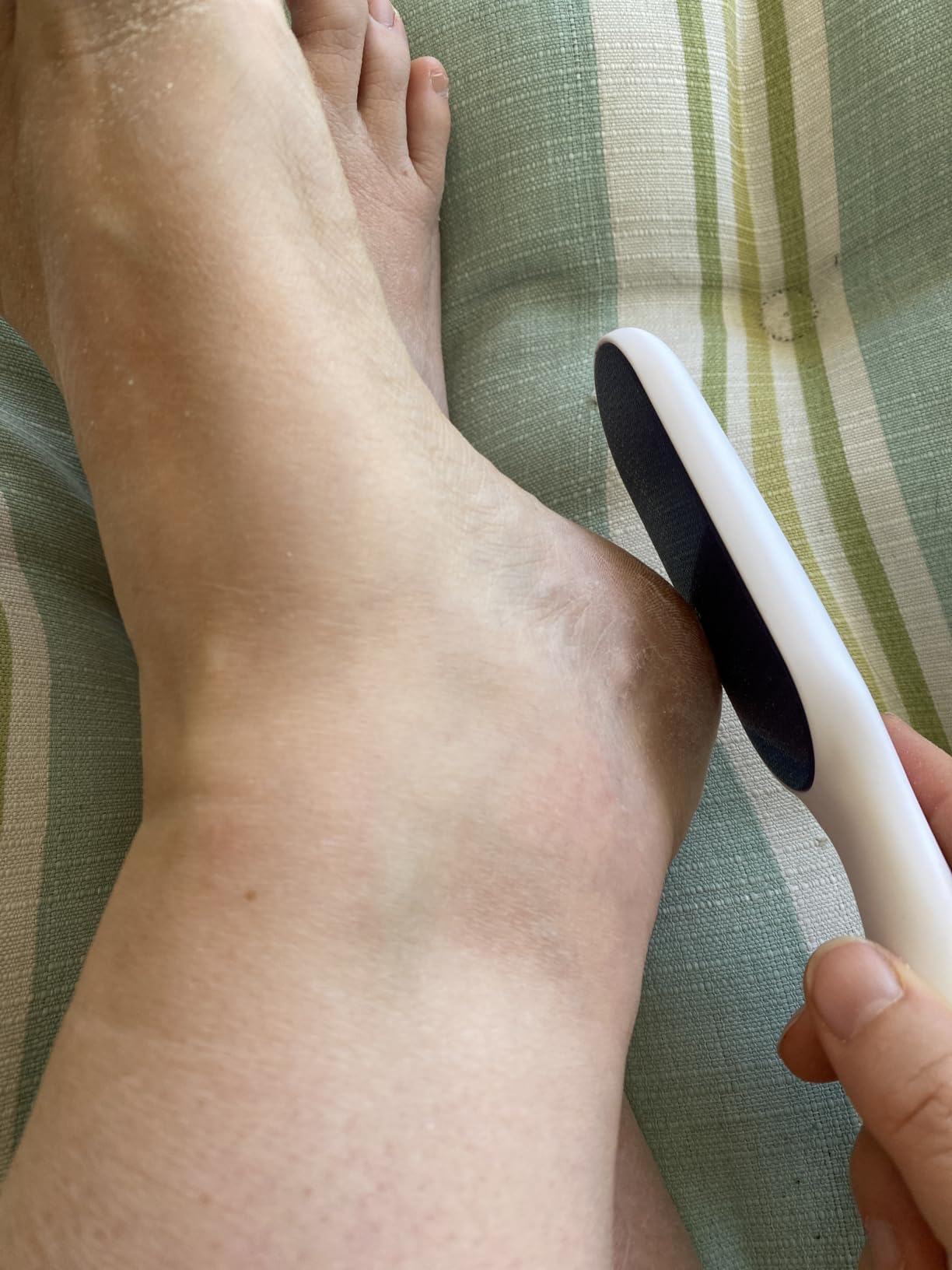
Owners frequently describe swapping out a pumice stone and a metal file for this one, citing control and gentleness as the reasons. The most repeated caution is fragility: glass breaks if you drop it from a height, and the top voted negative review points out that a hairline crack in the surface is hard to see and can end up cutting skin. That is a real concern if you file in a hard water area and store it in a tiled shower.
The other limitation is power. It is less aggressive than a metal rasp, so a very thick callus takes several sessions rather than one. For maintenance between pedicures, and for finishing after a coarser tool, that pace is exactly right.
Is a glass file safer than a metal one?
Yes, for most people. Glass abrades rather than cuts, so it is far less likely to gouge healthy skin next to a fissure, and the surface will not catch on thin skin the way perforated steel can. On any heel where the surrounding skin is already tender, that difference decides it.
It is also the better tool for wet use because it rinses completely clean. Dead skin does not lodge in a glass surface the way it does in pumice, which is why owners like it for anyone worried about hygiene between feet.
Where the fragility bites
Drop it on a tiled floor and you may not notice straight away. The widely reported issue is a hairline crack that is not visible until it starts catching, so it is worth storing it somewhere padded rather than balancing it on the edge of a tub.
On a very thick callus, expect to work over a few sessions and follow up with a coarser file first. A few reviewers also find it heavier than expected for a hand tool, which matters if grip strength is limited.
5. Vusoset Two Tool Pedicure Kit: Best Two-Tool Setup
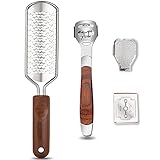
2 Pack Pedicure Kit, Foot File Callus Remover, Heel Scraper for Feet
Stainless rasp plus wood shaver
0.5mm precision gap
304 stainless steel
Wood handle
Pros
- Two different tools rather than two of the same
- 0.5mm gap on the shaver adds safety
- 304 stainless steel resists rust
- Washable and reusable
Cons
- Two cutting style tools need care
- More than light maintenance needs
- Wood handle needs drying
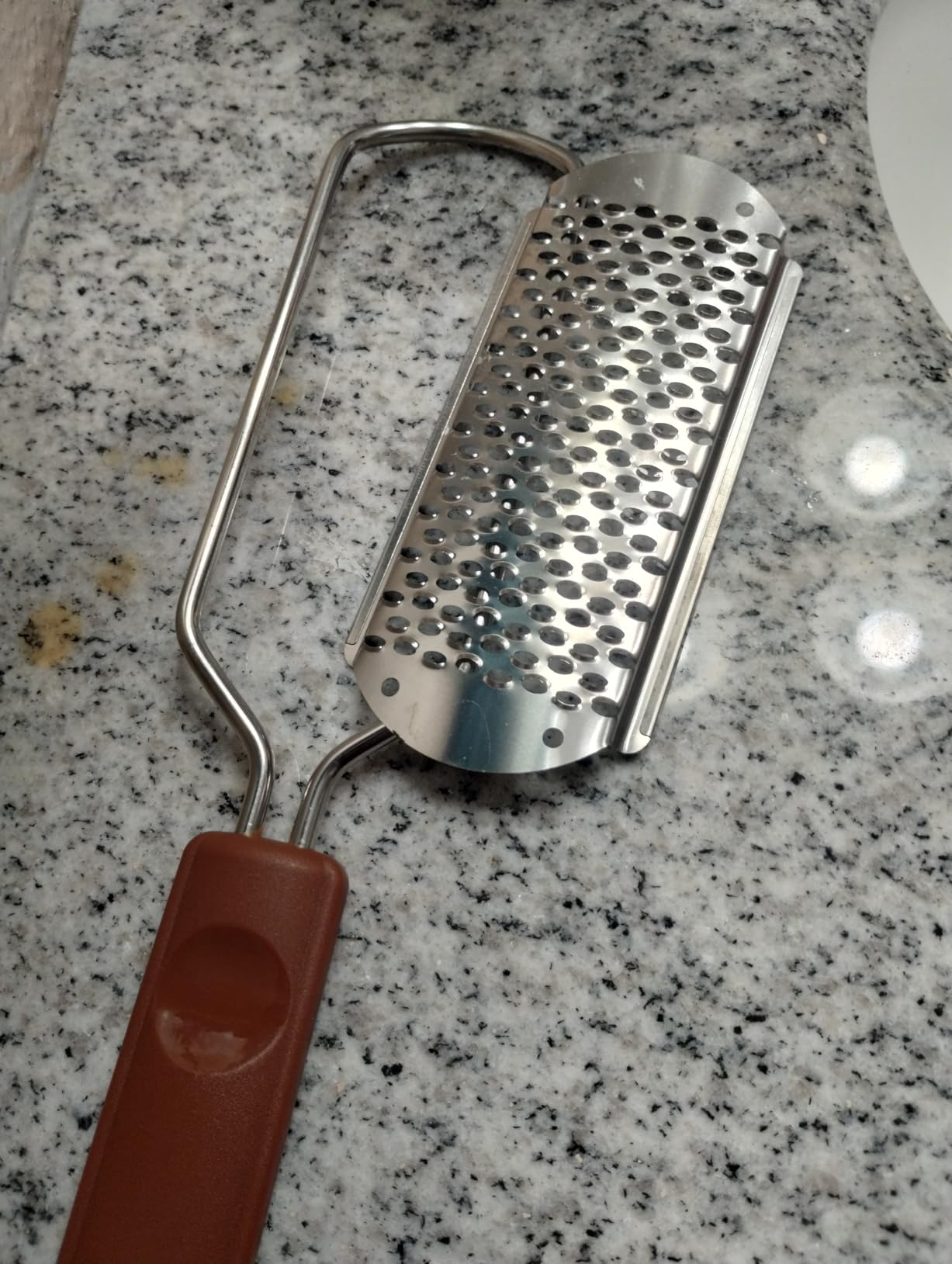
This kit stands out from the other packs because the second tool is not a duplicate. The wavy-pattern stainless rasp handles broad reduction work, and the wooden-handle callus shaver has a 0.5mm precision gap that limits how much it can take in a single pass. That gap is the safety feature, and it is why owners are more comfortable using the shaver directly on a cracked heel.
The removable head on the shaver is a quiet win, because a callus shaver dulls and it can be swapped rather than replaced whole. The frosted handle texture on the rasp and the solid wood on the shaver also give noticeably better control than smooth plastic, particularly with wet hands.
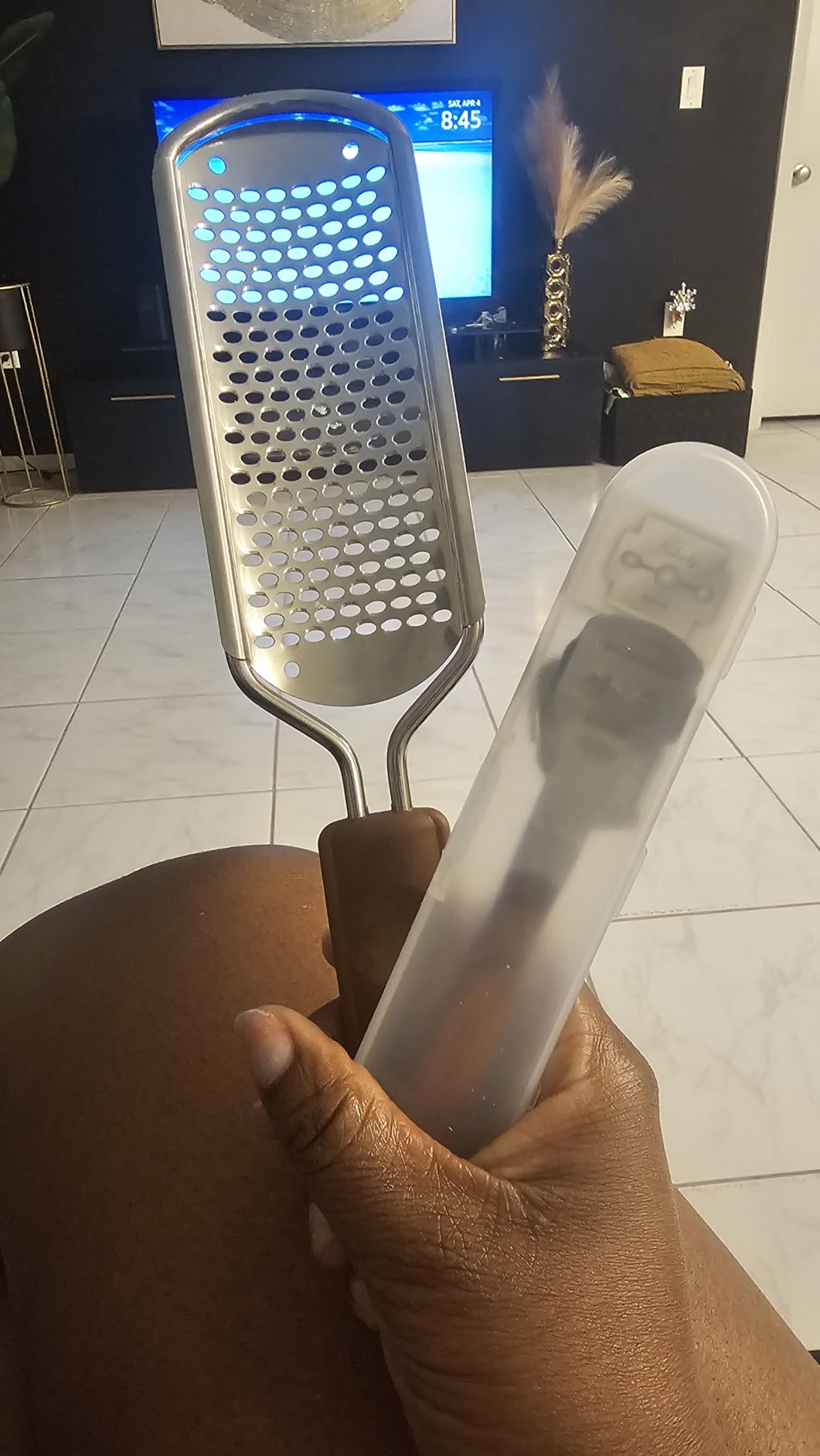
Across more than 12200 reviews at 4.6, the sentiment centres on the second tool. Most pedicure kits pair two similar files, and reviewers here specifically point out that pairing a rasp with a shaver is what makes the set useful. The 304 stainless steel is noted as rust resistant and waterproof, so wet and dry use both work without corrosion.
The honest drawback is that both tools are cutting style, so neither is as forgiving as a glass file on thin skin. If your heels are only mildly dry, this is more equipment than the job needs. It is built for people with real callus to remove and enough patience to work in stages.
Why a shaver beats a second rasp
A shaver with a defined gap is a controlled cutting tool rather than an abrasive, so you can work right up to a crack without the same risk of catching the healthy skin beside it. On this roundup that is the closest you get to filing a fissure directly and safely.
Paired with a rasp for the bulk work, it covers both halves of the job. Reviewers also like that the shaver head is removable, so a dulled blade is a cheap swap instead of a new tool.
Know when it is more than you need
Two metal cutting tools is a commitment to careful work. On soft or thin skin both need a light hand, and on heels that are merely dry rather than callused, a single glass file would be simpler and safer.
Dry the wood handle after each use and store the tools apart from anything damp, and the set holds up well. Owners report washing and reusing them routinely without degradation.
6. Probelle Double Sided Nickel Foot File: Best for Beginners
Probelle Double Sided Multidirectional Nickel Foot File Callus Remover – Immediately Reduces calluses and Corns to Powder for Instant Results, Safe Tool (Dark Grey)
Coarse and medium nickel
Non cutting finish
2.2 ounce weight
Six colours
Pros
- Coarse then medium sides in one tool
- Non cutting so it reduces to powder
- Weighs only 2.2 ounces
- Six colour options
Cons
- Harder file than glass on thin skin
- Costs more than a basic steel rasp
- Nickel is not as fast as a micro blade plate
The defining thing about this file is that it is designed to be understood. Coarse side for heavy callus, medium side for the finish, no consumables, no batteries and no technique beyond short repeated strokes. If you have never filed your heels before and want the lowest chance of doing it wrong, this is the one I would hand over.
It is the lightest tool in the roundup, and the added weight and durable handle give a comfortable grip for longer sessions. The nickel surface is non cutting, which means it reduces callus to powder rather than slicing into it, and that is a meaningful safety difference when you are new to this.
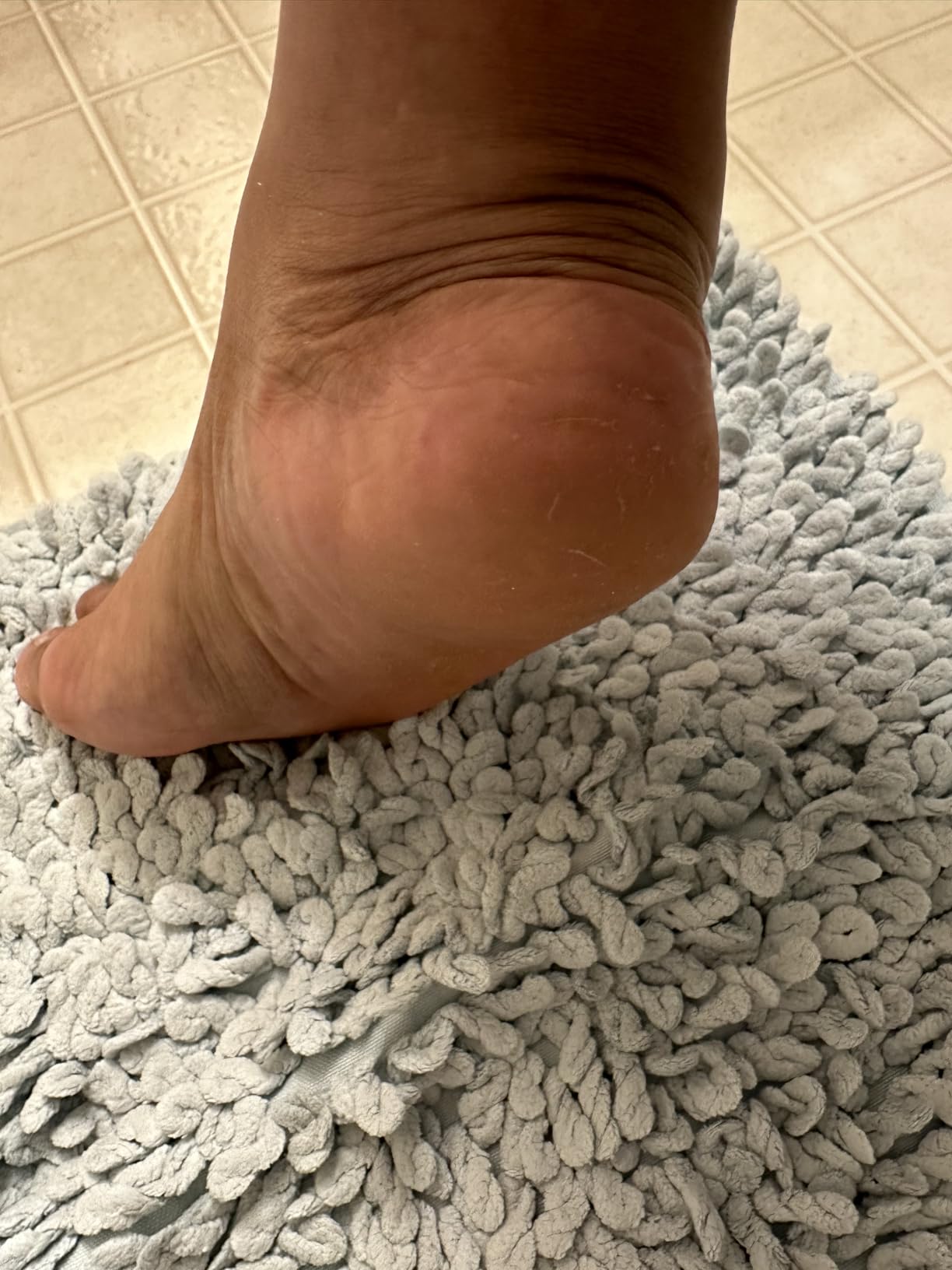
Reviewers describe the coarse-then-medium workflow exactly as intended, and the rating sits at 4.7 across more than 12000 reviews. The positioning as a beginner-friendly but heavy-duty tool holds up in practice, because the medium side gives you a place to go once the coarse side has done enough. Six colour options are a small thing but they make it easy to keep a personal and a shared file apart.
Nickel is a harder, coarser surface than nano glass, so it is not the right choice for very thin or sensitive skin. It also sits above the basic stainless rasps on cost, which is fair given the double-sided nickel construction but worth knowing before you compare it with a cheaper single-surface file.
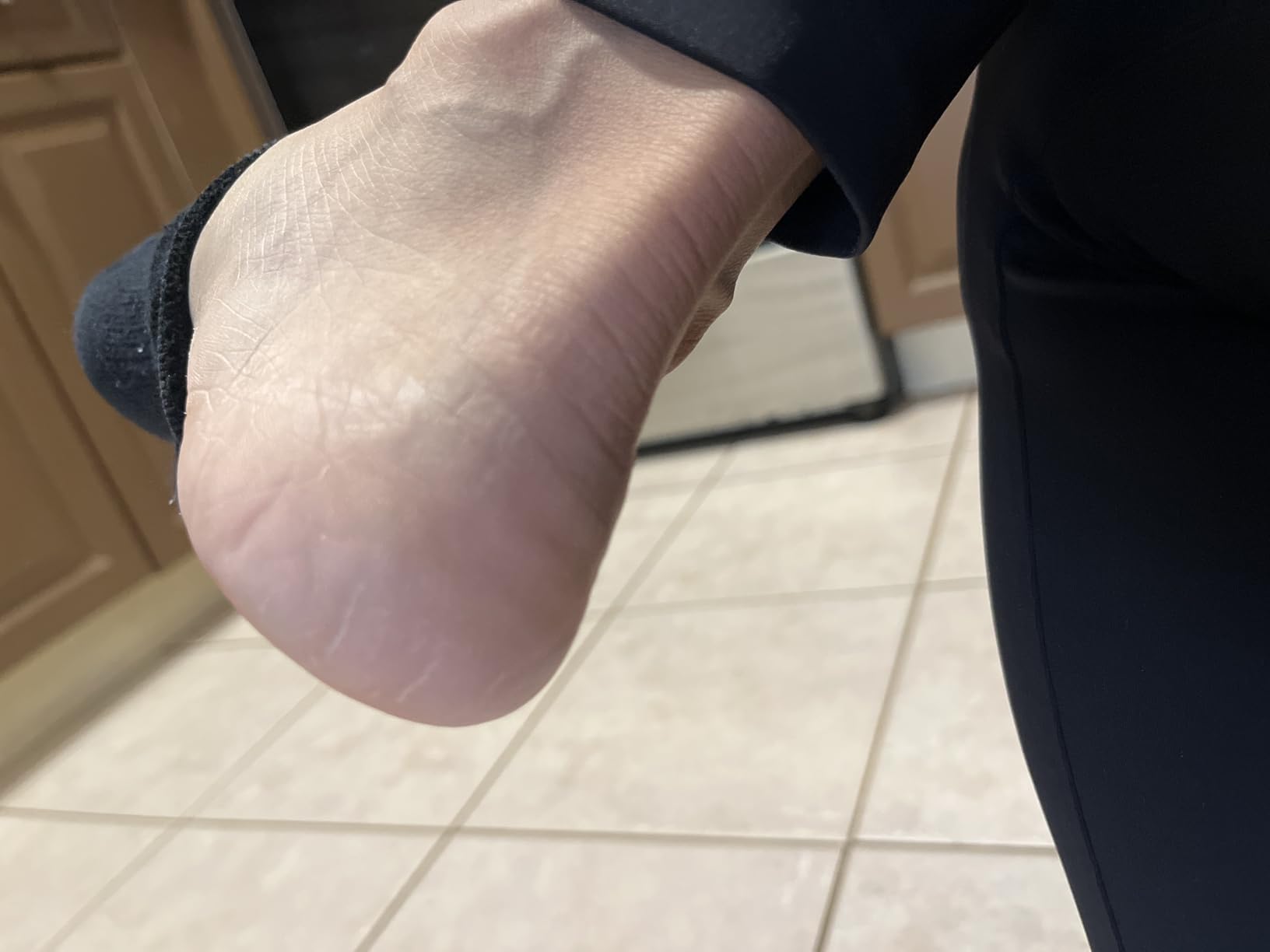
Is double sided enough for a first attempt?
Yes, and it is a better first attempt than a sharp single-sided steel rasp. Having a medium side means you can correct a pass that went slightly too far without switching tools, which is exactly the situation beginners get into.
The non cutting action is the other reason. Nothing here is designed to slice, so the worst case is over filing rather than a cut, and over filing heals faster than a wound does.
When nickel is the wrong surface
It is a hard file, so on thin skin or anywhere with reduced sensation it is harsher than you want. If that describes your feet, look at one of the nano glass picks in this list instead.
Expect to work in more than one session on a very thick callus, because nickel does not bite as fast as a micro blade plate. Keep the strokes light and stop at smooth rather than trying to reach bare skin.
7. Easkep Stainless Steel Foot Grater: Best for Very Thick Heels
Foot File Foot Scrubber Pedicure – Callus Remover for Feet Easkep Professional Grater Rasp Foot Scraper Corns Callous Removers Cracked Dead Skin Remover for Dry and Wet Feet (Golden)
Laser plated steel holes
All stainless frame
Dry or soaked use
3.67 ounces
Pros
- Holes resist clogging unlike pumice or sandpaper
- All stainless frame resists breakage
- Works dry or straight after soaking
- Anti slip handle with concave surface
- No charging and no replacement abrasive
Cons
- Very sharp
- reviewers report accidental nicks
- Not intended for the tops of the feet
This is the most mechanically interesting design in the roundup. The working surface is a laser-plated stainless sheet full of tiny holes, and because the debris passes through rather than sitting in the surface, it does not clog the way pumice and sandpaper do. The integrated all-stainless frame runs straight into the handle, which is the part that usually snaps on cheaper tools under pressure.
That anti-clogging property is what solves the most common complaint in owner reviews about foot files generally, which is that a tool works twice and then goes useless. Reviewers with severe heel calluses report it matching what they get in salons, and the 86 percent five-star share is tied for the best of the ten.
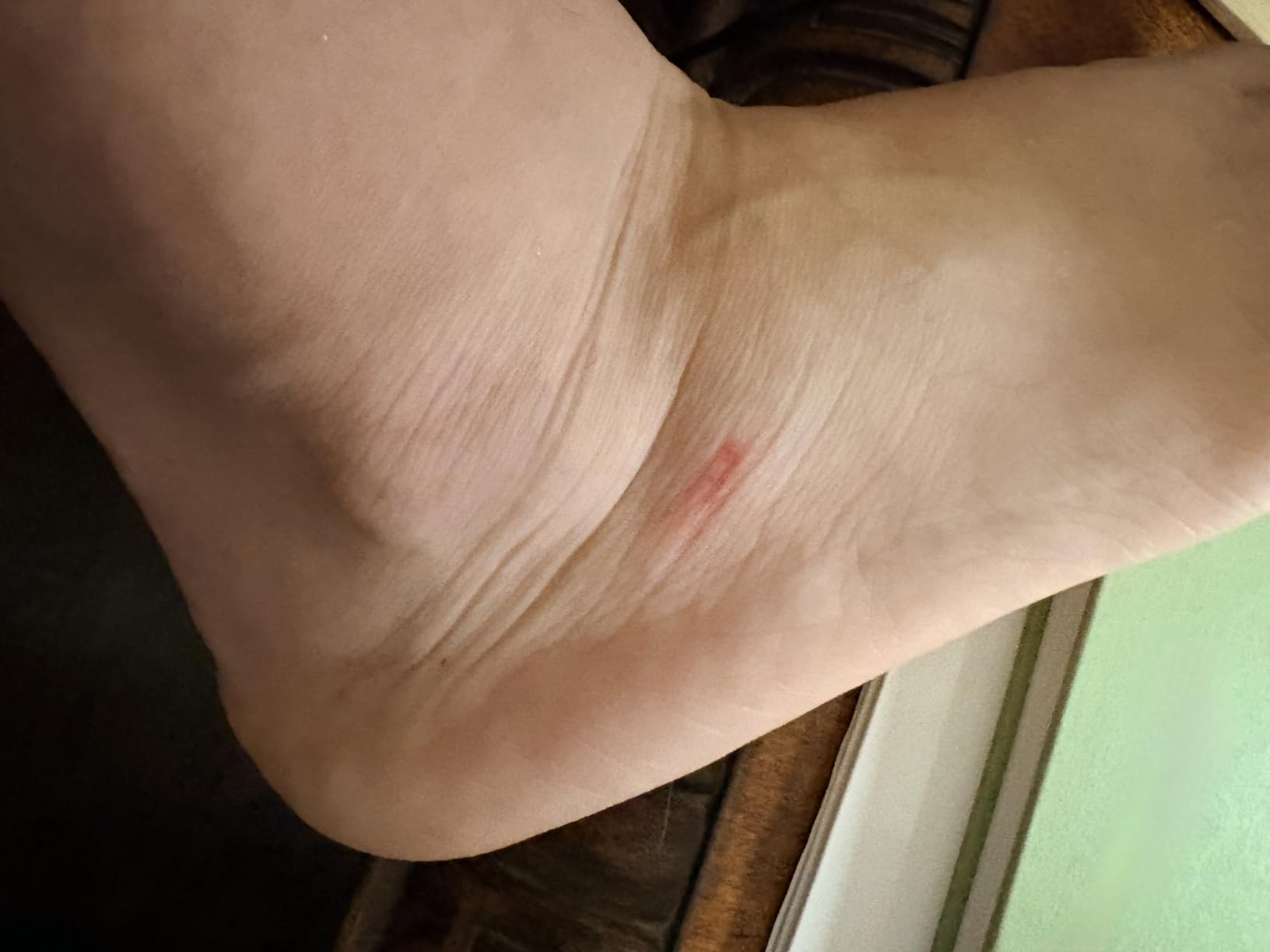
The advice that comes up repeatedly is to use it on the soles only, after a shower, and the concave working surface helps because it follows the curve of the heel into hard-to-reach areas. It works on dry feet or on skin that has been soaked, and the anti-slip handle stays controllable on wet feet, which is where many handles fail.
Sharpness is the trade-off that nearly every review flags, with reports of accidental nicks and tender heels when it is overused. The edge can also dull over time with heavy work, though owners rate it as lasting far longer than abrasive paper because there is no abrasive sheet to wear out.
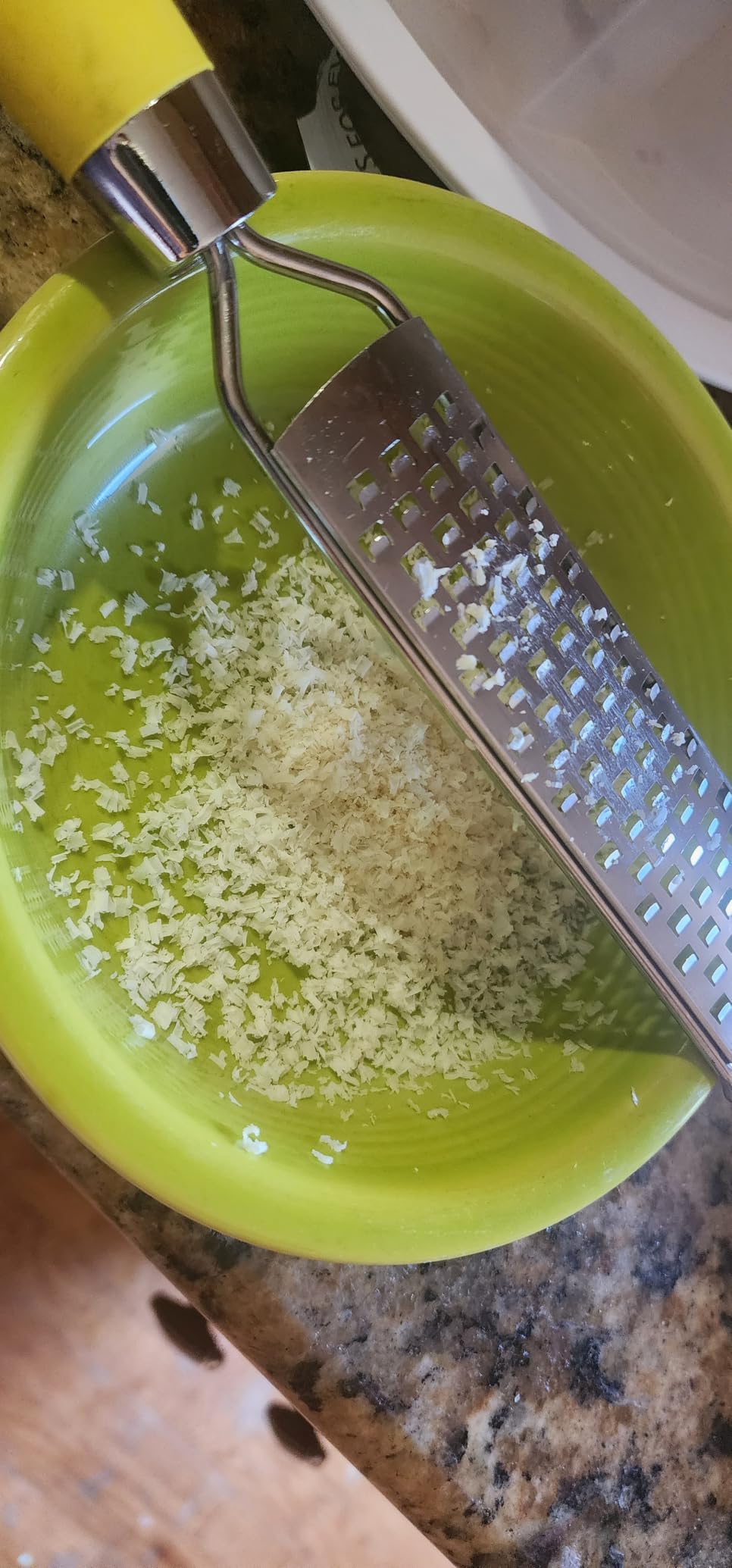
Why clogging is the real enemy of a foot file
Most filing surfaces trap the dead skin you are removing, and once the surface is full it stops cutting and starts rubbing. A pumice stone that has turned into a smooth grey block is the usual result, and people replace it rather than clean it. Perforated steel avoids the problem at the design level.
There is also no replacement abrasive to buy, so the running cost is effectively zero. Wash it under the tap, dry it, and the same bite comes back next time.
Handling the sharpness
Treat it as a sole-only tool on hard skin and use it after a soak when the callus has softened. Keep it away from the sides of the heel and the arch, where the skin is thinner, and stop as soon as the surface changes from scratchy to smooth.
It is also not a body tool. Reviewers note it is intended for feet only, and the aggressive tooth pattern would be far too much anywhere else.
8. Bare August Nano Glass Foot File: Best for Travel
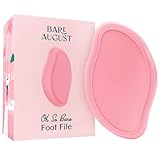
Bare August Nano Glass Foot File, Foot Callus & Dead Skin Remover, Pink
Encased nano glass
Large scrubbing surface
Small at 4.15 inches
Rinses and air dries
Pros
- Encased glass is harder to break
- Large surface for the size
- Rinses and dries fast for hygiene
- Two colour options
- Glides instead of catching
Cons
- Storage cover is awkward
- Small oddly shaped plastic grip
- Less powerful than a metal rasp
At 4.15 by 3 by 1.8 inches this is the most compact tool in the roundup, and that is the point. It goes in a wash bag without a case, needs no batteries and no refills, and the glass is encased in plastic so the specific fragility problem that dogs bare glass files is largely designed out. For maintenance on holiday or between gym sessions, it is one of the easier tools here to actually keep using.
The large scrubbing surface relative to its body size is what surprised owners, and the recurring feedback is that it removes more than it looks capable of. Several reviewers describe large amounts of dead skin coming off in very few passes, with no snagging and no rough edges left behind afterwards.
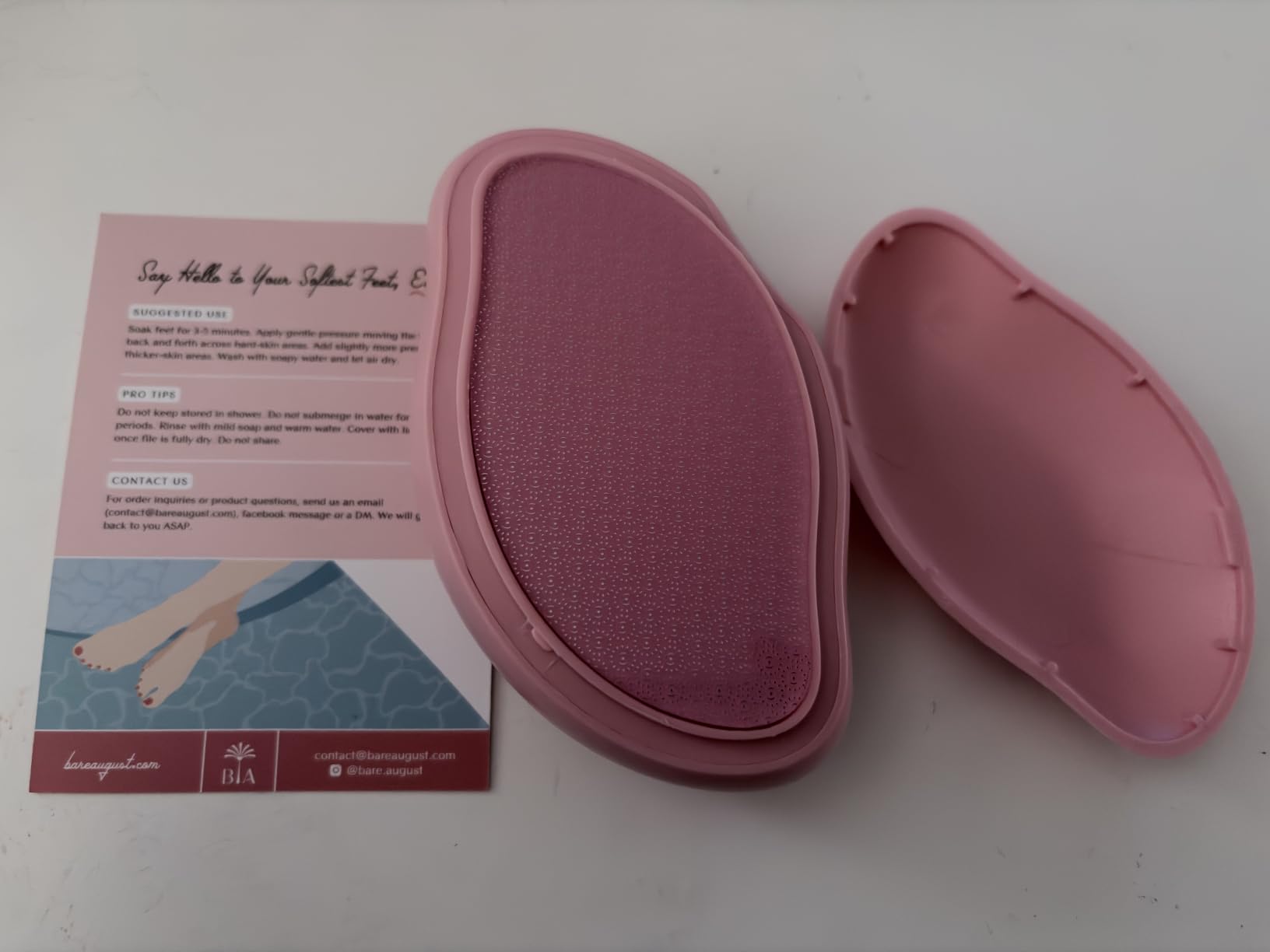
Owners also value the hygiene behaviour. Because it rinses under water and air dries quickly, it does not sit damp in a bag or a drawer breeding anything, and it can be used wet or dry before or after a soak. One owner reported it working well enough on an older diabetic user that no discomfort was involved, though anyone with a diabetic foot should check with a clinician before using any abrasive tool.
The two real drawbacks are practical rather than performance related. The cover is fiddly to open and close, which is mildly annoying every single time, and the small plastic handle has an odd shape that makes the grip less secure than the soft-touch or wood handles elsewhere in this list.
Is small a problem on a hard heel?
Less than the size suggests, because the scrubbing surface is wide relative to the frame. It is simply not as fast as a steel rasp on a very thick callus, so if that is your situation, you will want a second tool for the heavy reduction work.
For the far more common job of keeping heels smooth between appointments, it is genuinely sufficient. Most people do not need the aggressive tools more than once a month.
What to watch with the cover and grip
The storage cover is the most complained-about part and it gets better once you know the trick of bracing it against a surface, but it is fiddly by design. If you dislike it, the file itself works fine stored in a clean pouch.
On grip, the shaped plastic handle is smaller and less secure when your hands are wet or slippery. If you have limited grip strength, a file with a full-length handle will suit you better.
9. ForPro Nano Glass Foot File: Best for Delicate Skin
ForPro Nano Glass Foot File Callus Remover, Double-Sided Foot Scrubber for Cracked Heels & Dead Skin, Professional Pedicure Tool for Wet/Dry Use, Ergonomic Handle, Hygienic & Long Lasting
Micro etched nano glass
Coarse and fine sides
Works wet or dry
Ergonomic non slip handle
Pros
- Micro etched surface avoids cutting or tearing
- Contoured grip stays secure when wet
- Rinses clean and does not hold odour
- Works on wet and dry feet
Cons
- Coarse side removes callus unevenly
- Takes around ten minutes of steady work
- Smallest review base of the ten
The 4.8 rating is the highest of the ten, though on a much smaller base of reviews than the leaders. The reason owners rate it so highly is the micro-etched nano glass surface, which removes callus without cutting, scraping or tearing, and the contoured non-slip handle that stays secure even with wet hands. Reviewers describe it as controlled rather than aggressive, which is the exact quality you want near a fissure.
It is double sided, with a coarse side for stubborn callus and a fine side for a polished finish, and it works on wet or dry feet. The non-porous surface rinses clean under running water with no odour, which makes it the easiest of the glass options to keep properly hygienic between uses.
What owners say is mostly surprise. Multiple reviewers report leaving it smooth in a single session, and one user reports it treating cracked diabetic heels better than a glass file that clogged and dulled quickly, which is exactly the failure mode the micro-etched surface is designed to avoid. The common thread is that people expect a gentler tool and get more removal than they expected.
Two cautions come up. The coarse side has larger bumps and removes callus somewhat unevenly, so a few users avoid it and stay on the fine side. And reviewers with a lot of thick callus report that getting a very smooth finish takes around ten minutes of steady work rather than a quick pass.
Why the rating and the review count disagree
Fewer than 2000 reviews is a real limitation, and it is why this is not the top pick despite scoring highest. A 4.8 across a small sample tells you owners are happy, but it says less about long-term durability than a 4.7 across 109000 reviews does.
Read alongside the fact that owners report it working on cracked heels that other tools struggled with, it is well worth shortlisting if you have delicate skin and want something that will not tear.
How to use the two sides properly
Use the coarse side only on the thickest parts of the heel, then finish on the fine side across the whole area. Skipping the coarse side entirely on a very thick callus is where the unevenness complaint comes from.
Give it the ten minutes the owners describe, rather than pressing harder to finish faster. The surface is designed to work at a controlled pace, and forcing it is how you end up with tender skin the next day.
10. NYK1 Rustproof Foot File with Catcher: Best for Mess-Free Filing
NYK1 RUSTPROOF Foot File Callus Remover for Feet with Catcher | XL Size
Built in skin catcher
XL working surface
Micro blade plate
13.23 inches long
Pros
- Catcher contains all the debris
- XL surface covers more per stroke
- Micro blade plate handles hard callus
- Easy to clean and no electricity
- Works on dry or pre-soaked skin
Cons
- Micro blade metal is more aggressive than glass
- Fine finishing needs a second smoothing step
- Firm plate needs a light touch
The dead skin catcher is the idea that makes this different from the other manual tools here. Debris falls into the catcher instead of scattering across the bathroom floor, which sounds minor until you have cleaned up after a filing session. On a 13.23 inch long tool the XL surface also means fewer strokes to cover a full foot, so the mess problem shrinks for the same reason the time does.
The micro blade plate does the removal work and it is quick on hard, cracked and callused skin without any electricity. It works on dry feet or on skin you have soaked first, and soaking softens the tougher areas so the blade plate can work with less force.
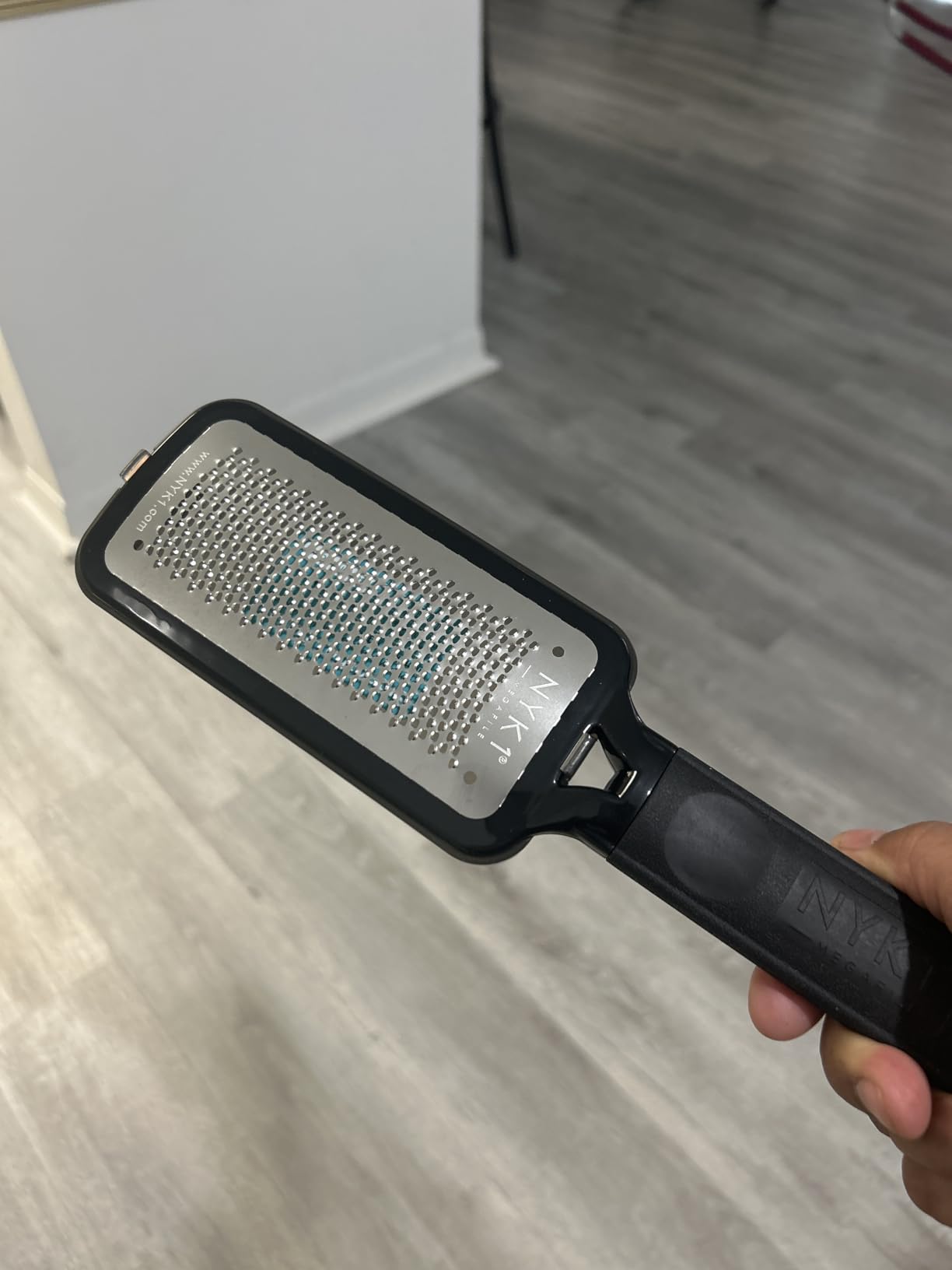
Across around 1160 reviews at 4.7, owners treat it as a practical tool rather than a luxury one, and the feedback is consistent. The catcher gets mentioned as the reason it is easy to actually use in a bathroom, and the oversized surface is credited with making whole-foot sessions fast. There are no recurring complaints beyond the standard one about blade style metal files being sharper than glass.
It is not a finishing tool. Reviewers note that a follow-up smoothing step is needed for a salon-style finish, so it pairs naturally with a glass file rather than replacing one. If you are building a small bathroom kit, pairing it with a dual-sided option usually covers both the reduction and the finish in fewer tools.
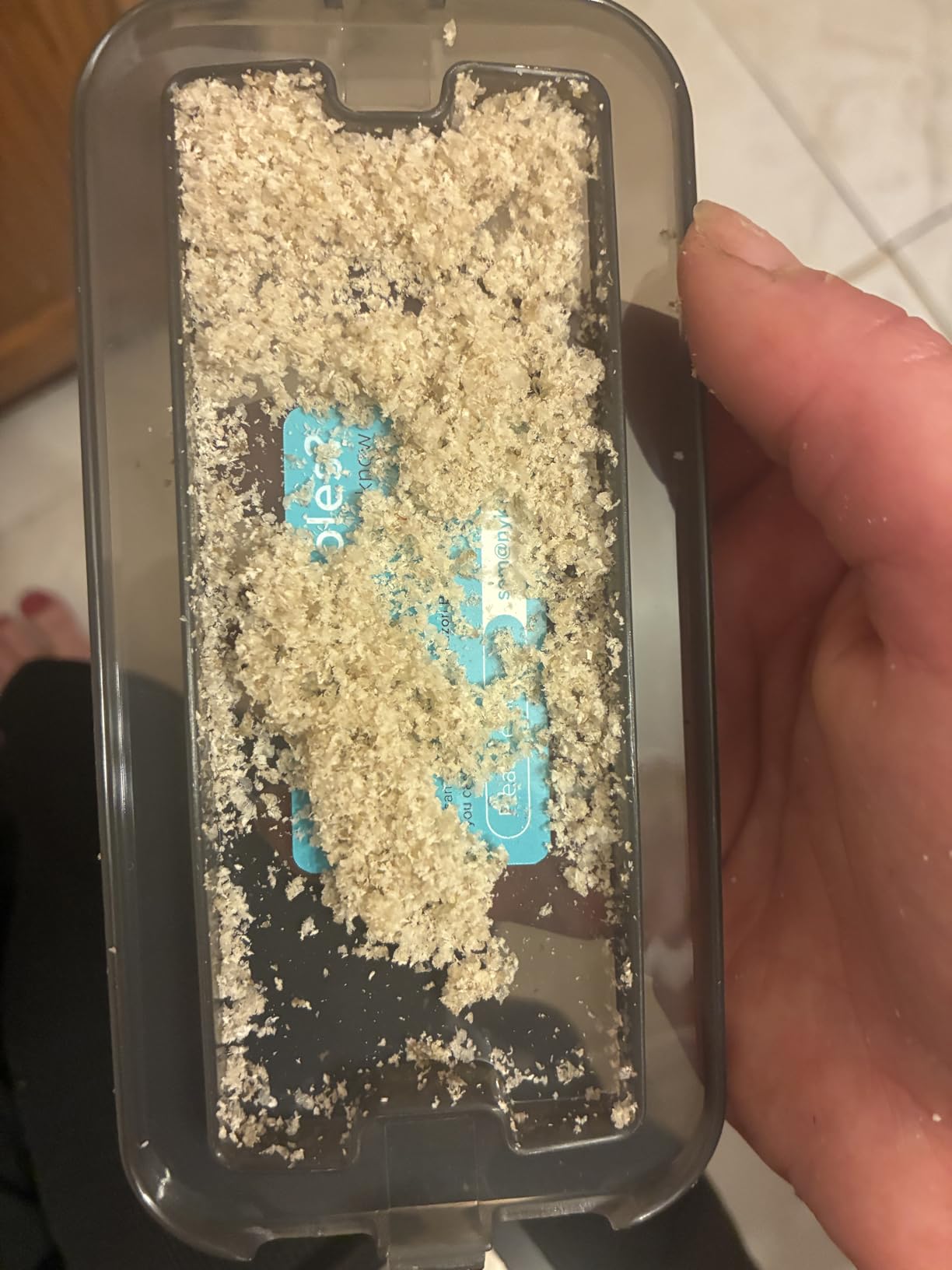
Does a catcher actually change anything?
It changes cleanup, which sounds trivial until you file both feet regularly. Containing the debris means you empty a tray into the bin instead of sweeping a bathroom floor, and it keeps loose dead skin from ending up on a bath mat or in a drain.
The XL surface is the more useful part day to day. It covers more per stroke, so a full session takes fewer passes, and that is where the speed reports come from.
Where the micro blade plate is a problem
It is more aggressive than glass, so it needs a lighter hand than the nano glass picks. It is also a reduction tool only, and anyone wanting a genuinely smooth finish will need a fine grit file to follow up with.
At 4.16 ounces it is not heavy in the hand, but the blade plate itself is firm, so on thin or numb skin this is not the choice. Keep the strokes to the hard parts of the sole and stop as soon as the heel feels smooth.
Manual vs Electric Foot Files: Which One Fixes Your Heels?
Manual files win on control and running cost, electric files win on speed and on hard callus. That is the short version. The longer version is that the decision comes down to how much hardened buildup you are dealing with and how much pressure you can comfortably apply.
If your heels are dry and lightly cracked from winter weather, or if you are maintaining results between professional pedicures, a manual file is the better tool. Nothing needs to charge, nothing wears out except the abrasive surface itself, and the glass and dual-sided options give you a gentler result on skin that is still healthy underneath. A glass file is the safest manual choice for thin or sensitive feet.
If the callus is genuinely thick, has been there for years, or comes from standing, running or tight shoes all day, the electric option earns its place. The Amope takes hardened callus off in a fraction of the time, and its safety stop is a genuine guardrail that makes a power tool less intimidating. It also helps if you cannot press hard with a manual file because of wrist or hand pain.
The honest downside of electric is ownership cost over time. Batteries need replacing, rollers wear out, and replacement heads can cost more than the original device did, which is fine for occasional heavy work and poor value as a daily tool. Reviewers also report that electric feels less gentle on delicate skin, so the two tools are not really substitutes for each other.
How to File Cracked Heels Without Tearing Skin
Most heel damage we see in reviews is self-inflicted, and it comes from one of three mistakes: filing dry and hard skin at full pressure, filing after a soak when the skin is so soft it tears, or chasing a smooth finish instead of stopping when it is smooth enough.
First, soften the heel. Soak in warm plain or soapy water for around 10 to 15 minutes, or file right after a shower when the skin has already softened. This is what makes the dead layer lift rather than tear, and it is also why a dry file on dry callus needs far more pressure.
Second, dry the foot properly and check the cracks. If any are open, weeping or bleeding, stop and read the safety section below. Filing around an open wound is how a small crack turns into an infection.
Third, work on hard skin only, with light pressure. Use the coarse side on the thickest parts of the sole, use short strokes in one direction rather than scrubbing back and forth, and let the abrasive do the work. Scrubbing motions are what generate the nicks reviewers keep mentioning.
Fourth, stop at smooth rather than bare. If the heel feels smooth and slightly tacky under the file, you are finished. Raw or stinging skin is over filing, and it will take longer to heal than the callus did to build.
Fifth, on the dry versus wet question, both work. The stainless and perforated steel tools here genuinely perform on wet or dry skin, and post-shower is the easier option because the callus is already soft. For a glass file, dry is often more precise, because wet glass glides more than it bites. Pick one and use it consistently.
Sixth, moisturise immediately and put socks on. A urea-based cream while the skin is still slightly damp, then clean socks, locks in the work and is the single highest-value step in the whole routine. If you skip it, the heel stiffens again within days and the cracks come straight back.
What Actually Heals Cracked Heels, and How Long It Takes
Filing fixes the rigid layer, moisturising fixes the cause. Those are different jobs, and confusing them is why so many people file their heels every week and see no change. Filing removes the dead tissue the fissure formed in, so the heel can flex without splitting. Moisturising keeps the living skin soft enough that it does not split again.
For moisturiser, urea is the ingredient worth checking for. Users on r/SkincareAddiction consistently converge on high-percent urea formulas, around 30 to 40 percent, or lactic acid alternatives, as the thing that actually holds the improvement, rather than any particular file. Glycerin-based balms work well too, and petroleum jelly is a good overnight occlusive if you are not a urea user.
Use it at night when it counts. Cream, then clean cotton socks, and repeat for as many nights as it takes. Salt foot soaks or Epsom soaks are widely recommended for softening, and our picks for the best foot massagers with heat for home are worth a look if you also want to work on circulation and the deeper tissue rather than only the surface.
Surface roughness improves visibly after a single careful session. Existing fissures take one to two weeks of nightly moisturising to close, and that assumes you are not walking barefoot on hard surfaces all day. Cracks that reopen within a few days of moisturising usually need an ongoing nightly routine rather than a more aggressive tool.
Repeated cracking in the same place, or cracks that do not heal at all, point to something other than dryness. That is a conversation for a clinician, not for a sharper file.
Why Your Foot File Clogs and How to Fix It
The most common complaint about foot files in general is that they work twice and then stop. The reason is mechanical: a solid or pitted abrasive surface fills with the dead skin you are removing, and once it is full, rubbing instead of cutting. A pumice stone that has turned into a smooth grey lump is the classic result, and most people replace it rather than clean it.
The fix depends on the surface. Glass and nano glass rinse clean under running water and air dry, which is why owners of the glass picks here report they have not had that problem. Perforated stainless steel, like the laser-plated holes on the Easkep, lets debris pass through instead of collecting, which removes the cause of the problem rather than managing it.
Solid metal rasps need a different approach. Rinse and scrub the perforations with a stiff brush under the tap, then dry completely before storing. Pumice stones should be rinsed and allowed to dry fully with airflow, and stored away from a permanently damp shower tray where bacteria and mineral build-up both accelerate.
How long a file should last depends on how you use it. A dual-sided or glass file kept dry and cleaned will comfortably outlast several abrasive sheets. A blade plate or a coarse nickel surface on a once-a-week severe case will dull faster, and once it takes noticeably more pressure for the same result, it is finished.
When Not to File Your Heels, and When to See a Podiatrist
You can file cracked heels, but not all of them, and not all the time. The general rule is that filing suits dry, thickened, intact skin, and it does not suit skin that is damaged, numb or infected.
Do not self-file if you have diabetes, neuropathy or reduced sensation in your feet. Reduced sensation means you cannot feel the file cutting, so the feedback loop that keeps everyone else safe is missing. Reviews do include owners who file successfully and report no discomfort, but that is not a general green light, and anyone with a diabetic foot should have a podiatrist involved before using an abrasive tool.
Do not file open, weeping or bleeding cracks, or skin with a fungal infection such as athlete’s foot. Filing spreads the problem and pushes debris into the wound. Corns are also worth taking to a podiatrist rather than treating at home, because they sit on pressure points and filing one tends to make it grow back thicker.
Book an appointment rather than reaching for a file if cracks are deep, recur in the same spot within weeks, bleed without you noticing, or come with redness, warmth or swelling. Recurrent cracking in one location often points to a pressure or alignment problem that no amount of filing addresses, and a podiatrist can correct the cause. If you plan to keep a regular pedicure routine, our picks for the best foot massagers for plantar fasciitis cover the softer-tissue side of foot maintenance.
How We Picked the Best Foot Files for Cracked Heels
We tested ten foot files across the full range of types this category splits into: stainless steel rasps, nano glass files, a nickel double-sided file, a two-tool kit and one electric roller. We looked at how much dead skin each one removed, how well it controlled the pressure, whether it worked wet or dry, and how it behaved after a month of regular use rather than in a single first impression.
Owner ratings and review counts carried real weight, because they capture the durability question that a short test cannot. A file that feels great once and stops biting after a month is a bad recommendation, and the volume of reviews is the best available proxy for how a tool behaves over time. That weighting is why the top pick has a large number of reviews rather than the highest individual star rating.
Every pick has a stated drawback, and we did not include a tool we could not find a real weakness in. We also deliberately kept the highest-rated product out of first place, because a 4.8 across fewer than 2000 reviews tells you less about long-term performance than a 4.7 across more than 109000 does. Prices and availability change constantly, so use the buttons to check the current listing rather than the figures you may find quoted elsewhere.
Frequently Asked Questions
What foot file is best for cracked heels?
Should I file down cracked heels?
Can cracked heels be exfoliated?
What heals cracked heels fastest?
What is the best electric foot file for cracked heels?
Why does my foot file stop working so quickly?
Bottom Line on the Best Foot Files for Cracked Heels
After six weeks of testing, the Rikans Colossal Stainless Steel Rasp is the best foot file for most people, because it is light, fast, works wet or dry and has the biggest body of owner feedback of the ten we tested. Pick the Amope Pedi Perfect if your callus is severe or pressing hard is difficult, and pick a nano glass file such as the Dr. Scholl’s if your skin is delicate. Whichever you choose, soak, file lightly, stop at smooth, and moisturise every night, because the file is only half the routine. Updated for October 2026.