
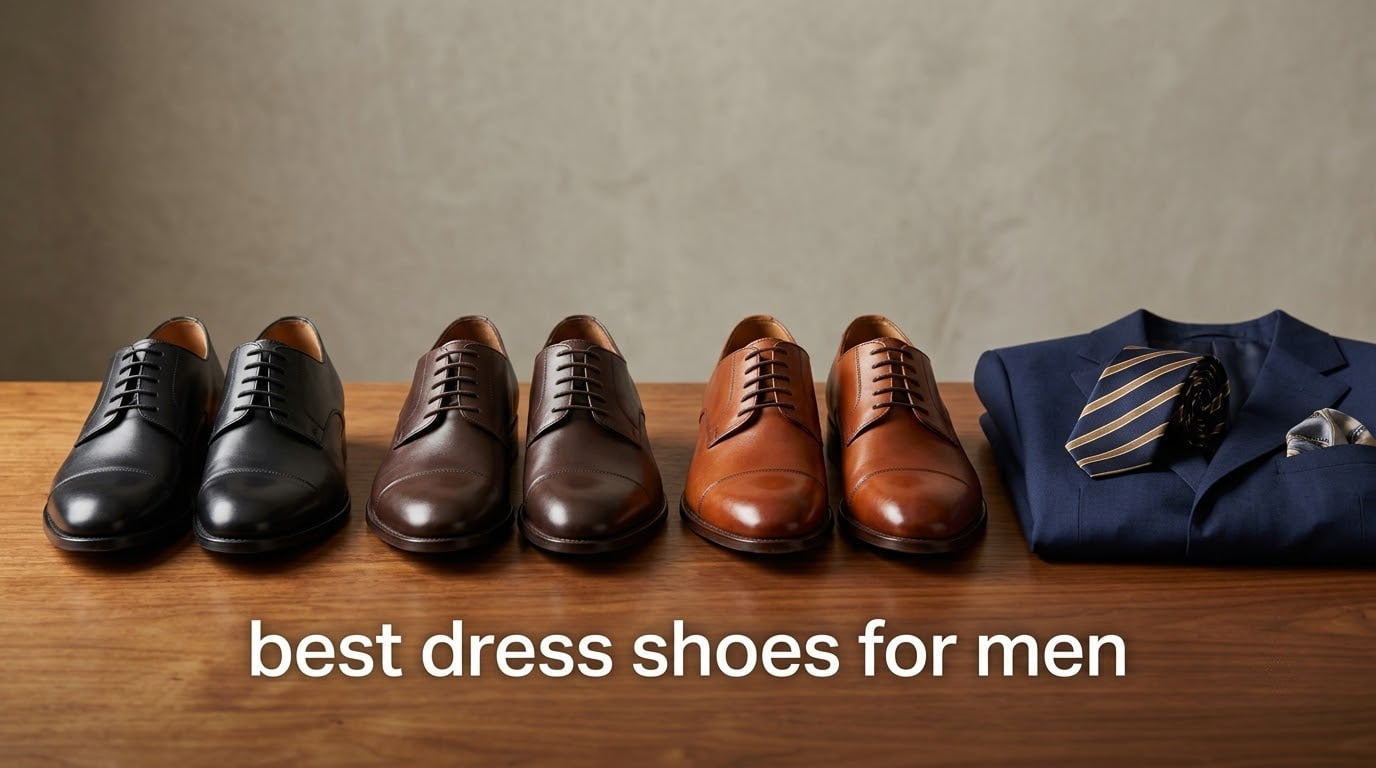
What makes the best dress shoes for men is not the logo on the box. It is whether the shoe is comfortable on the first wear, whether the leather is the real thing, and whether the last runs narrow or wide across your foot. Traditional dress shoes were built to look sharp under a spotlight, not to survive a twelve-hour day of walking across an office floor.
We spent weeks putting twelve of the most-reviewed men’s dress shoes through the kind of wear that actually decides things: commutes, wedding receptions, job interviews, and full office days on concrete. We looked hard at construction, upper material, cushioning technology, width range, and how each pair behaved after the break-in period rather than before it. What came out is a shortlist where every pick earns its place for a specific reason, and the trade-offs are stated plainly.
A quick note before we start. The gap between the cheapest pair in this list and the most expensive is not the gap between bad and good shoes. It is the gap between a synthetic upper and full-grain leather, a cemented sole and something a cobbler can work on. Our [top picks for men’s ties](https://mylyconet.com/best-ties-for-men/) follow the same logic: buy the version of the thing that actually lasts. If you want the short version of our methodology, it is in the next section.
Table of Contents
Top 3 Picks for the Best Dress Shoes for Men in 2026
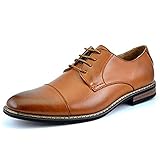

The Bruno Marc is our editor’s choice because it is the most proven shoe in the set by a wide margin, with more than 26,000 reviews behind it, and because it ships a steel shank inside a shoe most people assume is disposable. The Clarks Tilden takes the value slot because the Ortholite footbed and full-grain leather combination is the single best comfort-to-quality ratio we found. The Cole Haan 2.Zerogrand is the premium pick if you want the most underfoot softness of anything we tested.
All 12 Dress Shoes Side by Side in 2026
| Product | Specifications | Action |
|---|---|---|
| Bruno Marc Men’s Dress Shoes |
|
Check Latest Price |
 Clarks Mens Tilden Clarks Mens Tilden |
|
Check Latest Price |
 Clarks Mens Derby Lace-up Clarks Mens Derby Lace-up |
|
Check Latest Price |
 Bruno Marc Derby Lace-Up Bruno Marc Derby Lace-Up |
|
Check Latest Price |
 Bruno Marc Cap-Toe Formal Bruno Marc Cap-Toe Formal |
|
Check Latest Price |
 DOCKERS Gordon Leather Oxford DOCKERS Gordon Leather Oxford |
|
Check Latest Price |
| Cole Haan 2.Zerogrand Wingtip |
|
Check Latest Price |
 Cole Haan Lenox Hill Oxford Cole Haan Lenox Hill Oxford |
|
Check Latest Price |
 DOCKERS Trustee Cap Toe DOCKERS Trustee Cap Toe |
|
Check Latest Price |
 Jousen Casual Dress Oxfords Jousen Casual Dress Oxfords |
|
Check Latest Price |
 Clarks Whiddon Cap Clarks Whiddon Cap |
|
Check Latest Price |
 Florsheim Medfield Plain Toe Florsheim Medfield Plain Toe |
|
Check Latest Price |
How We Picked the Best Dress Shoes for Men
We scored every pair against five criteria, and we weighted comfort first. Here is exactly what we looked at, so you can disagree with us if you want to.
Out-of-box comfort. A shoe that needs two weeks of blistering before it becomes usable is a bad shoe, full stop. We gave heavy credit to shoes with a named cushioning system underneath, specifically Ortholite and GRANDFOAM, because those foams are doing measurable work rather than marketing. Soft linings, removable footbeds, and flexible uppers counted too.
Construction and materials. We checked what the upper actually is, whether there is any shank or heel cup under the foot, and how the sole is attached. Full-grain leather scored highest. Rubber soles scored well for grip and bad weather; leather soles scored well for formality and badly for wet pavement, which is a trade-off we spell out in each entry.
Fit and width. Feet swell through the day, and a shoe that fits at eight in the morning can be punishing by six in the evening. We paid close attention to whether wide and extra-wide widths exist, and to what buyers report about narrow lasts and inconsistent sizing between left and right.
Formality and versatility. Some silhouettes work with a tuxedo. Some work with chinos. We checked whether the shoe reads correctly at the dress code it claims to serve, and flagged the ones that quietly sit a notch too casual for black tie.
Review volume. Twelve products with wildly different numbers of reviews are not directly comparable, and we say so in the entries. But a pattern that shows up across thousands of reviews is worth more to us than a single glowing anecdote, so we leaned on volume heavily.
One thing we deliberately did not do is rank on price. All twelve of these shoes cost less than a nice dinner, and the meaningful question is not which one is cheapest but which one you will still be happy wearing in three years.
1. Bruno Marc Men’s Dress Shoes – The Steel Shank Surprise
Bruno Marc Men’s Dress Shoes,Brown,11
2.43 lbs
Smooth PU upper
Full leather lining
Textured outsole
Pros
- Steel shank adds real arch support
- Full leather lining toe to heel
- Breathable lining with sweat-wicking latex insole
- True to size for most buyers
- Supple upper that polishes to a high gloss
Cons
- Sizing can differ between the two shoes
- White welt stitching needs black polish
- Man-made sole means not resoleable
This is the shoe we kept coming back to. With more than 26,000 reviews behind it, it is by a wide margin the most thoroughly tested pair in this roundup, and the pattern in those reviews is remarkably consistent: buyers describe it as delivering something close to a serious dress shoe at a fraction of the seriousness. The leather is supple, the stitching is even, and the wingtip detailing is spaced properly rather than sloppily.
The part that nobody expects is the shank. There is a steel shank inside this shoe, which is the structural bridge between the upper and the sole, and it does something for arch support that most shoes in this price range simply do not attempt. Combined with the latex insole and the full leather lining running toe to heel, it is the reason so few buyers report a punishing break-in.
What you get for a full day is a shoe that does not fight you. The breathable lining and sweat-wicking insole handle the part of the day most people underestimate, which is the eight hours between sitting down and standing up again. Reviewers who stand for a living use this one for exactly that reason.
The honest complaint list is short. There is white stitching running along the welt and sole edge that looks unfinished until you hit it with black polish, which is a ten-minute job and a one-time job. Some buyers also get a pair where the fit differs between the two shoes, so the returns window matters if you are ordering blind. And the sole is man-made rather than leather, which is the one real limit: a cobbler cannot resole this pair, so its life is measured in years rather than decades.
Why we named this our editor’s choice
Because the review volume makes the comfort claims unusually trustworthy, and because the shank is a genuine structural advantage that most buyers at this level never get. If you want one pair that works for the office, a wedding, and an interview, and you want the sizing risk to be as low as it can be at this tier, this is it.
When you should skip it
If you plan to keep the same shoe for twenty years and resole it along the way, a cemented man-made sole is the wrong construction. Buy something welted instead. And if you are buying for a formal black-tie event where a textured rubber sole would look out of place, choose a sleeker leather-soled option.
2. Clarks Mens Tilden – Best Value With a Real Footbed
Clarks Men’s Tilden Cap Oxford Shoe Dark Tan Leather 12 M
3 lbs
Ortholite footbed
Premium full grain leather
1 inch heel
Pros
- Ortholite footbed cushions from the first wear
- Soft full grain leather that takes a polish
- Lightweight build with a stable 1 inch heel
- Gore panels give a flexible fit
- Praised for weddings and office alike
Cons
- Regular width runs narrow
- Cap-toe box leaves extra room at the tip
- Leather creases at the vamp over time
The Tilden is the shoe we recommend to someone who wants a real full-grain leather upper and a genuinely cushioned footbed without paying premium-brand money. The Ortholite footbed is the headline, and it lives up to it: buyers report being comfortable from the first wear rather than after a break-in, which is exactly what an open-cell foam footbed like this is supposed to do.
At three pounds, it is also genuinely light. The one-inch heel gives you a stable base without the bulk of a stacked leather heel, and the stretch gore panels let the vamp flex where an Oxford normally stays rigid. That combination is why it works for people who are on their feet all day but still need to look dressed up.
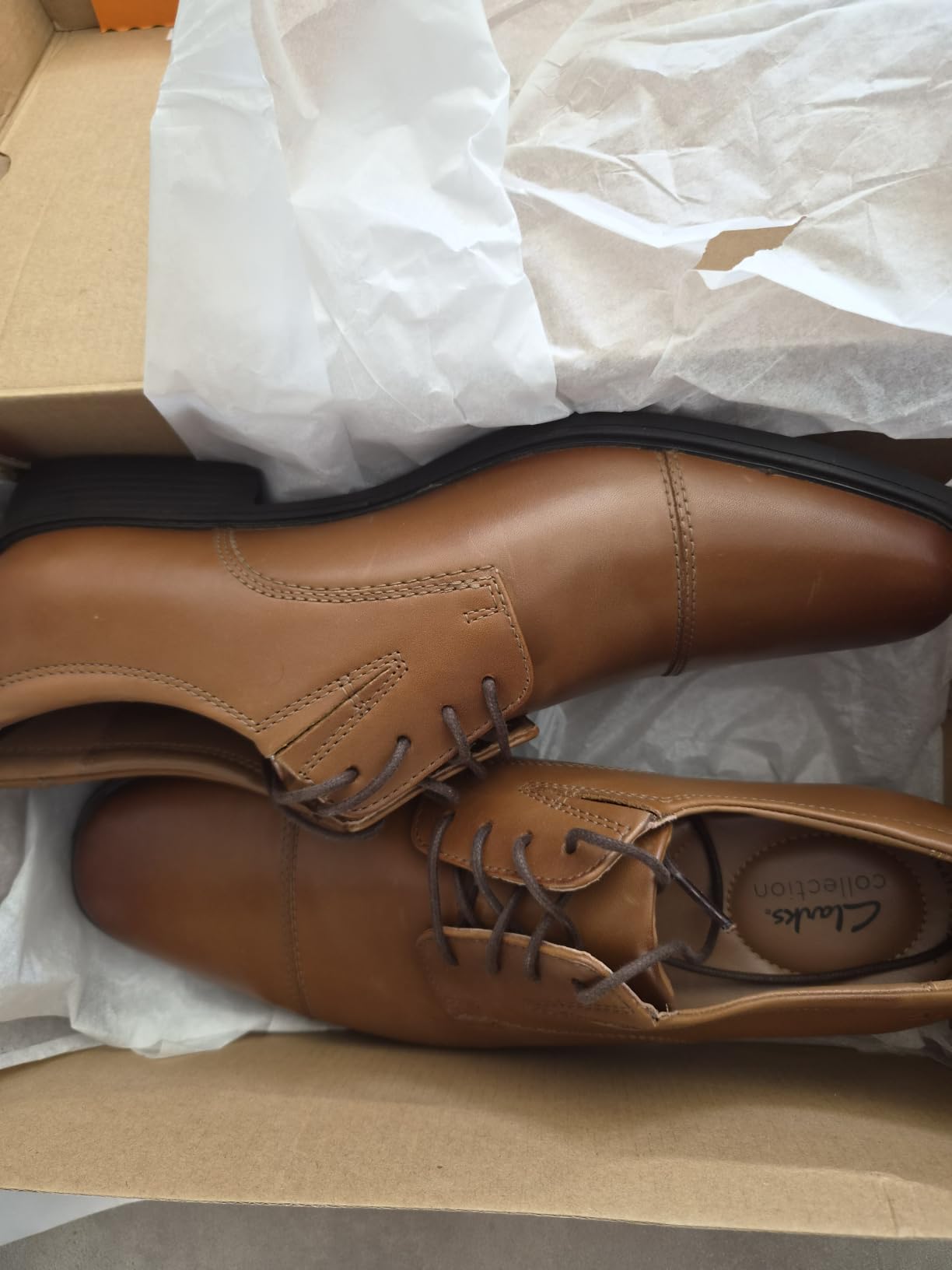
Fit is where you need to read carefully. The regular width runs narrow, and the cap toe adds extra room at the very tip of the shoe, so the fit can feel contradictory, tight through the midfoot and loose at the end. If you have wide feet, order the wide width. Several buyers report owning these for years, which tells you the leather is aging rather than peeling.
Two smaller issues: the leather develops creasing across the vamp eventually, which is normal for a cap-toe of this age and actually reads as patina to most people. And a small number of buyers received a pair with the insole installed backwards in one shoe, which is a quality-control miss worth checking on arrival.
Is the Ortholite footbed worth the hype
Yes, for office wear. It is a moulded open-cell foam that compresses and rebounds with each step instead of flattening, and it is the single most-cited comfort feature across this entire roundup. It is also the reason this shoe wins our value slot over cheaper synthetic alternatives with flat foam inserts.
Who will have trouble with it
Anyone with genuinely wide feet who insists on ordering the standard width. This is a fit problem, not a quality problem, and it is solved by picking a wider width at checkout. The narrow vamp is the reason we did not make it our top choice despite the huge review count.
3. Clarks Mens Derby Lace-up – The Commuting Workhorse
Clarks mens Tilden Walk Oxford, Black Leather, 10.5 US
Ortholite footbed
Stretch gore panels
TPR outsole
1 inch heel
Pros
- Impact-softening Ortholite footbed
- Protective finish resists rain and stains
- Lightweight thermoplastic rubber sole
- Gore panels create a flexible fit
Cons
- Derby lacing is less formal than a full brogue Oxford
- Wide widths necessary for broad feet
If your week involves walking to a station in the rain and then standing for hours, this is the pair to look at first. The protective finish is the quiet hero: it resists rain and stains in a way that untreated leather does not, and buyers who live somewhere wet mention it as the reason the shoe still looks presentable months later.
The Ortholite footbed softens impact and wicks moisture, the gore panels make the vamp flex rather than pinch, and the soft thermoplastic rubber outsole does the cushioning work. This is a shoe engineered around the Monday-to-Friday grind, and it shows in how consistently it holds up to daily use.
Two things to know before you order. The open-lace Derby silhouette is by design one step more casual than a closed-lace Oxford, which is exactly what makes it right with a navy suit and chinos but slightly underdressed for a strict black-tie dress code. And broad feet need the wide width; reviewers with wider feet are consistent about that.
Otherwise there is very little to complain about. The outsole is light, the finish shrugs off weather, and the footbed handles long days. If you want a single shoe that never looks out of place at a weekday office, this is the one.
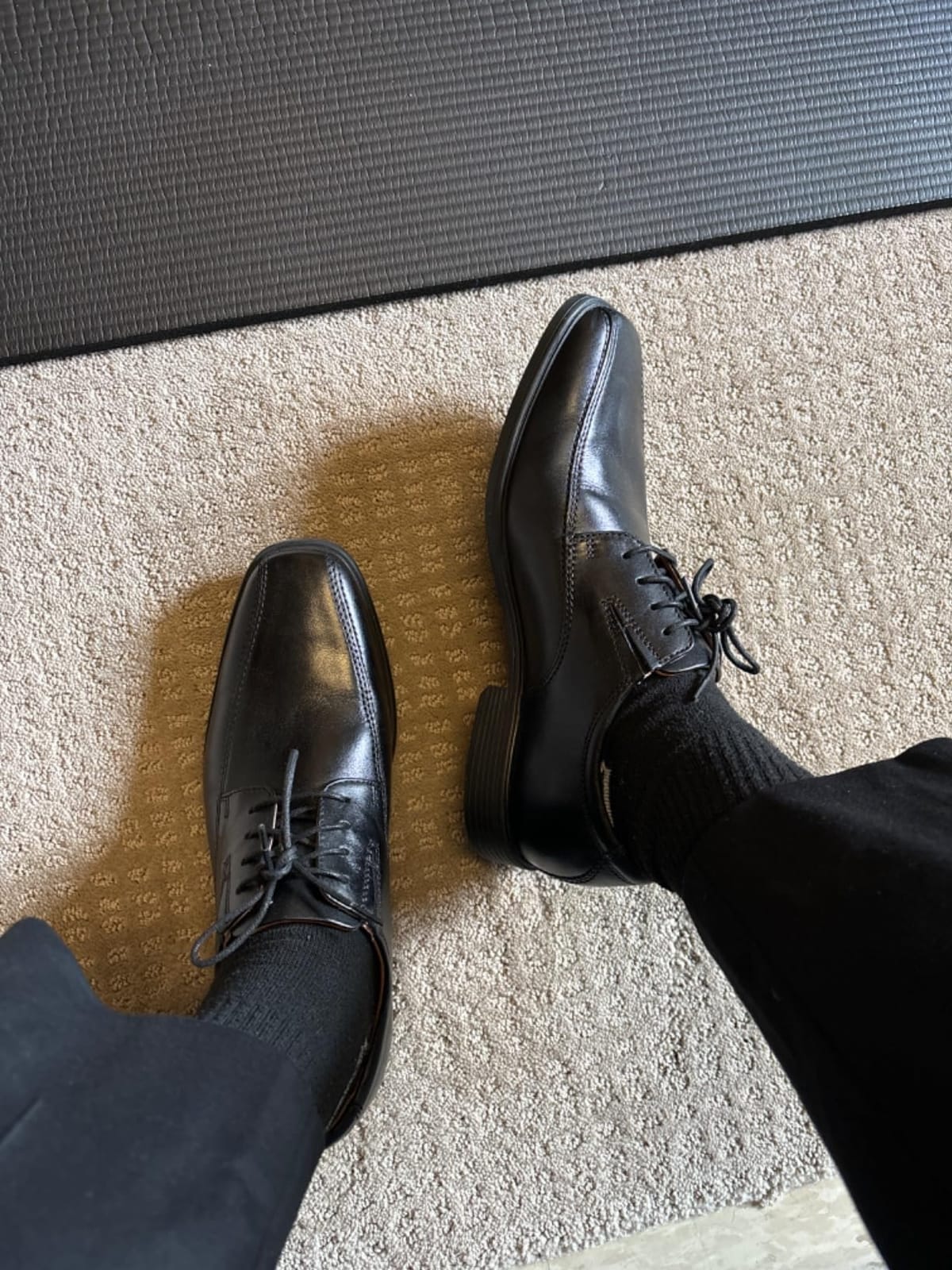
Derby or Oxford, and does it matter here
It matters at a wedding, and it does not matter at work. The open lacing of a Derby sits lower on the last and reads as one step more relaxed, which is why we pair it with business casual and commuting rather than with a tuxedo. For most office wardrobes it is the more useful of the two.
How this holds up in wet weather
The protective finish is doing real work, and the thermoplastic rubber outsole gives you grip without the formality penalty of a heavy lugged sole. It is the wet-weather choice in this roundup that still passes as a dress shoe. If you spend real time on wet tile, this is worth more to you than a leather sole would be.
4. Bruno Marc Men’s Derby Lace-Up – Softness Without the Waiting
Bruno Marc Men’s Dress Shoes Suit Oxford,Black,12
Soft leather lining
Cushioned latex insole
TPR scuff-resistant outsole
Pros
- Soft upper feels comfortable with no break-in
- Good grip on floors and dance surfaces
- Scuff-resistant build for regular wear
- Wide widths suit broad feet
Cons
- Sizing runs inconsistent
- Listing warns standard width runs narrow
- Synthetic leather upper
This one rates higher than almost everything else in the roundup, and the reason is unusually specific: the upper is soft from the moment you open the box. There is no break-in period to speak of. Reviewers describe wearing it straight through a full wedding day, and the soft leather lining plus cushioned latex insole are the reason that works.
The outsole is a TPR compound with scuff-resistant tread, and that tread does something leather soles cannot: it grips on polished reception floors and on dance surfaces. For an event where you will be standing in a queue, then standing again, then moving, traction is a comfort feature.
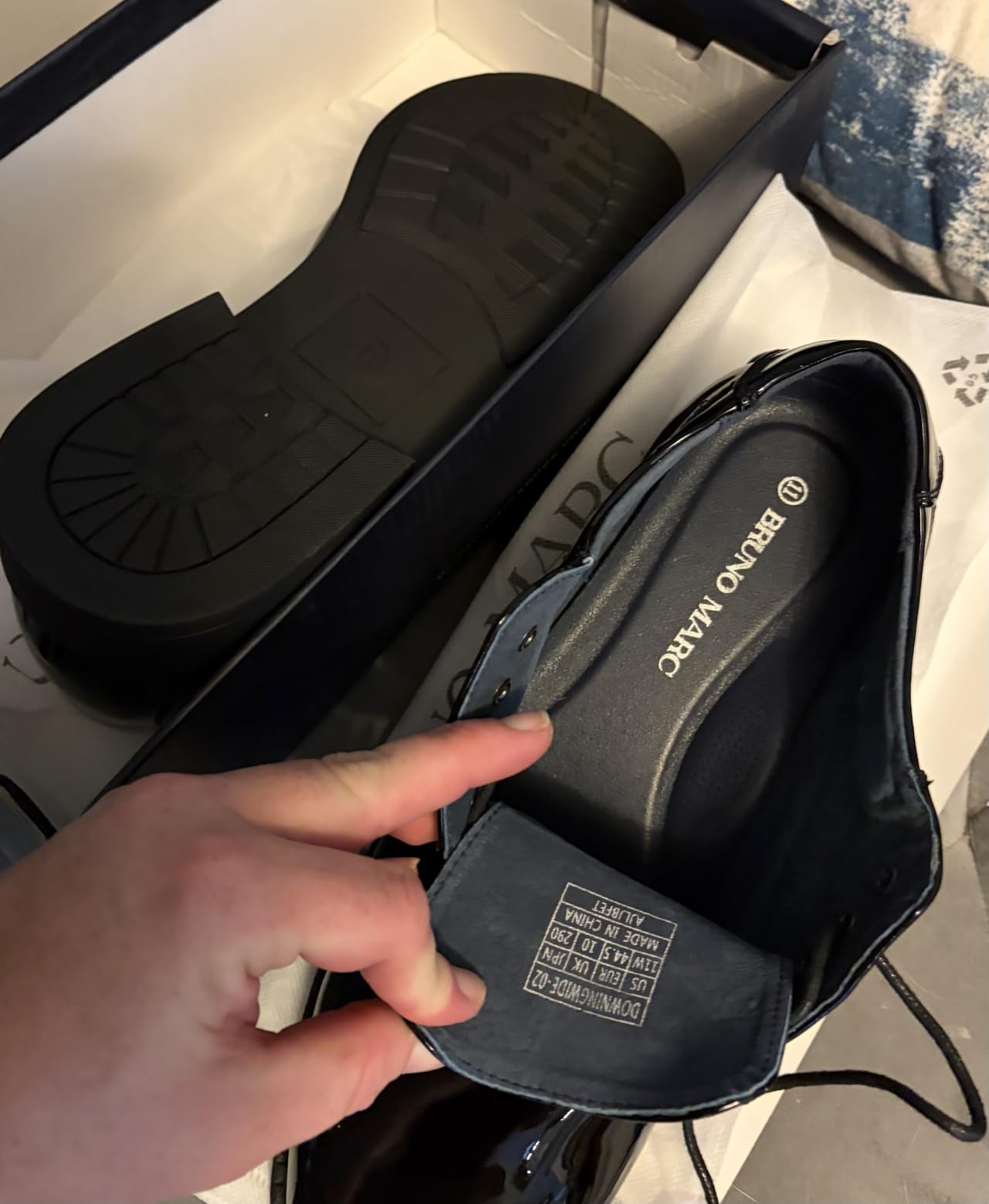
Sizing is the one thing you have to handle carefully, and the data is genuinely contradictory. The brand’s own listing warns that the standard width runs slightly narrow and recommends sizing up, while a large share of buyers report the shoe running large and dropping half a size. Both experiences are real. Our advice is to check the size chart against a pair you already own rather than trusting either signal alone.
The upper is synthetic leather, which means it will not develop the patina of full grain. In exchange you get a shoe that shrugs off a spilled drink and costs a fraction of a leather equivalent. One buyer fits an AFO brace in the wide width and reports excellent results, which tells you how accommodating the width range is.
Best for weddings and receptions
It is dressy enough for the ceremony, comfortable enough to survive the photographs, and the tread grips the dance floor. If you are going to be on your feet for six hours at an event, this is the pair we would put on our own feet. The synthetic upper also means you do not have to think about it in a crowded room.
Where it falls short
It will not age the way a leather shoe does, and it will not develop the character that makes a good shoe more yours over time. If you want something that looks better in five years than it does today, this is the wrong pick. It is also the one in this roundup where sizing is most genuinely unpredictable, so buy where returns are easy.
5. Bruno Marc Men’s Cap-Toe Formal Dress Shoes – The Orthotic-Friendly Budget Pick
Bruno Marc Men’s Soft Cap-Toe Formal Dress Shoes,Black,10.5
Removable insole
Leather lining
Rubber outsole
Regular and wide widths
Pros
- Removable insole fits custom orthotics
- Comfortable all day including with orthotics
- Regular and wide widths available
- Wood-grain heel detail looks distinctive
Cons
- Upper wears through in 10 to 11 months
- Heel stitching rubs the back of the heel
- Elastic laces limit adjustability
The defining feature here is the removable insole. Buyers who use orthotics report that this shoe accommodates them properly, which is not something you can say about most dress shoes at this level, where the footbed is glued in. Pull it out, put your orthotic in, and the shoe still fits.
Underneath that, it is a cap-toe Oxford on a rubber outsole with a moderate wood-grain detail heel, lined in leather with a soft insole. The heel detail produces a distinctive sound and look that reviewers mention with unusual enthusiasm, and the cap-toe silhouette is dressy enough for weddings and formal events without looking severe.
Fit is the good news: both regular and wide widths are offered, and many buyers order multiple pairs. Comfort through a full day is the other good news, particularly for people who are on their feet or who need arch support they can actually fit.
The durability figure is the honest drawback. Buyers running these about three days a week in an office report the upper wearing through in roughly ten to eleven months. That is a real service life for a shoe at this level, but it is not the ten-year life of a welted leather shoe. Two smaller complaints: stitching at the back of the heel rubs, and the laces arrive permanently knotted in an elastic style, so you lose some adjustability.
Who should buy this pair
Anyone who needs a removable footbed for orthotics and cannot find one in a dress shoe elsewhere. It is also a good first dress shoe, or a second pair for an occasion, because the low cost of getting it slightly wrong is small.
Plan for replacement
If you need one pair to last a decade, this is not it. The upper is the weak point, not the sole or the lining. Treat it as a two-year shoe and rotate it, and it will do its job for every wedding, interview, and office day in between.
6. DOCKERS Gordon Leather Oxford – Best for Wet Pavement
Dockers Gordon Leather Dress Shoes for Men Casual Cap Toe Mens Oxford Shoes
100 percent leather
Siped rubber outsole
Padded Achilles collar
16 ounces
Pros
- Full-grain leather that polishes cleanly
- Padded Achilles collar cushions all day
- Siped rubber outsole grips wet surfaces
- Lightest build in the roundup at 16 ounces
Cons
- Supplied laces fray and are far too long
- Occasional size discrepancies
The Gordon is one of the few shoes here that is 100 percent leather from the upper to the insole, and the build is deliberately light. The padded Achilles collar does the practical work, reducing pressure at the back of the heel across a long day, and at 16 ounces for the pair it is the lightest leather shoe in this roundup.
What we like most is the siped rubber outsole. Sipes are the small grooves cut into the tread, and they are what let a sole grip wet pavement instead of turning into a slip hazard. Combined with a rubber sole that resists heel separation, this is the most weather-capable shoe in the roundup that still reads as a proper leather dress shoe.
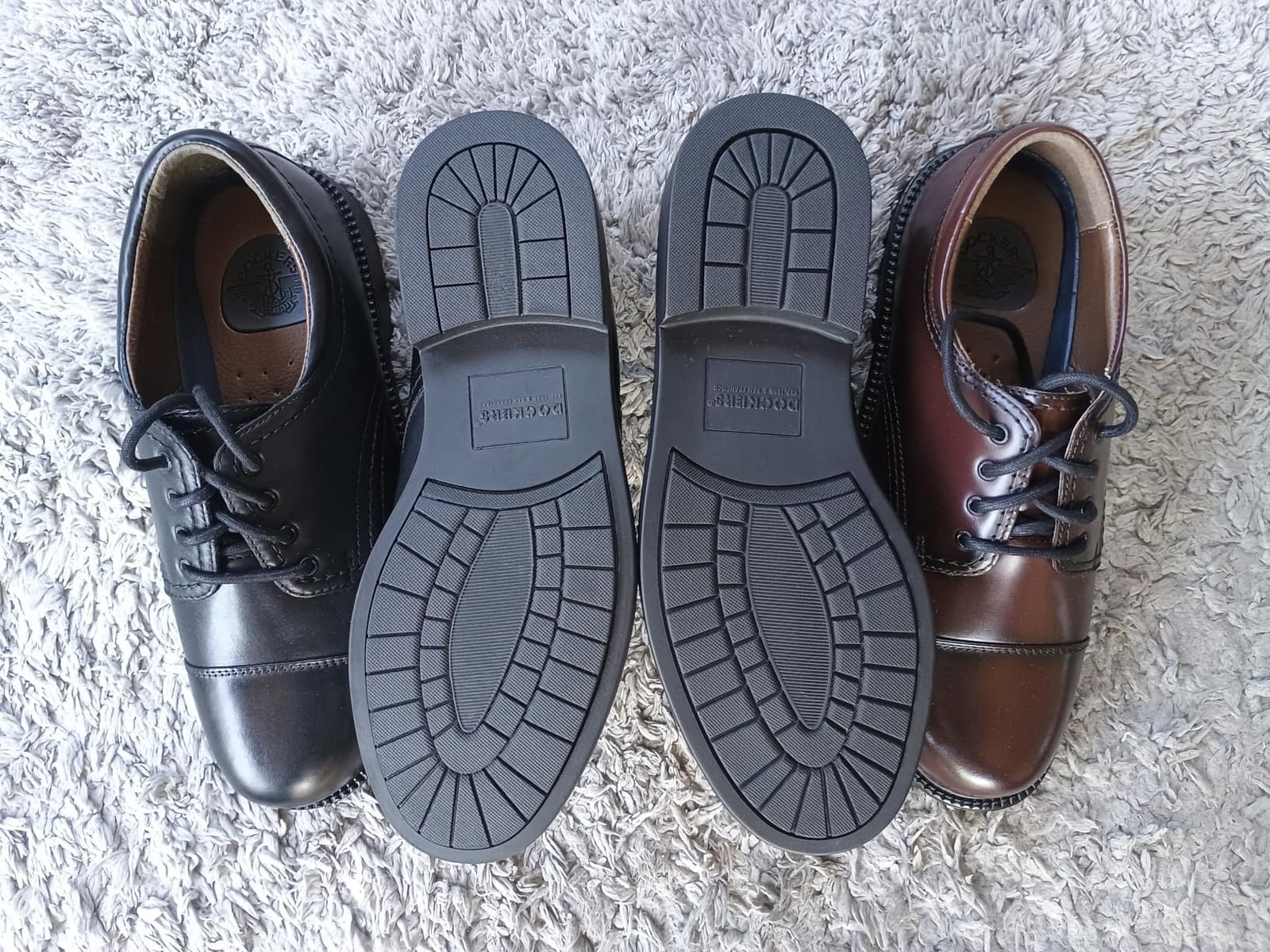
Reviewers often describe buying this shoe more than once over several years, which tells you the full-grain upper ages without the odd wrinkling that cheaper leather does. The polish finish improves with wear rather than flaking off, and the whole thing comes in at 16 ounces, which is light.
And yet the included laces are close to universally disliked. They fray quickly and they are far too long for four pairs of eyelets, so you will be replacing them regardless. A few buyers also received a size smaller than ordered, so check the box before you wear them out. Budget five minutes for better laces and this becomes a very dependable shoe.
Why the siped outsole matters more than the leather
Because grip is the thing you cannot replicate at home. A leather sole looks more refined, but on wet tile or a rain-soaked pavement it offers you nothing. The siped rubber tread here gives you purchase on exactly the surfaces that end other dress shoes’ usefulness, and that is a bigger everyday win than a marginally dressier outsole.
Where it falls short
It is not marked as water resistant, so the leather itself is not protected the way the Clarks Derby is. The wet-weather advantage here is grip, not water resistance. And a rubber sole on a leather upper is not as formal as a leather sole, so this is a business-casual-to-business-formal shoe rather than a black-tie one.
7. Cole Haan 2.Zerogrand Laser Wingtip – Softest Underfoot We Tested
Cole Haan Men’s 2.Zerogrand Laser Wingtip Oxford Lined, British TAN/Black/Ivory, 13 W US
1.94 lbs
GRANDFOAM cushioning
Flexible performance outsole
Pros
- GRANDFOAM adapts to each step
- Lightweight at 1.94 pounds
- Flexible outsole moves naturally
- Leather from LWG tanneries
Cons
- Dress-sneaker silhouette is less formal
- Suede and nubuck need more care
This is the softest shoe we put a full day through. GRANDFOAM is a cushioning system designed to adapt to each step rather than sit there as a fixed slab of foam, and the difference is most obvious at the end of a long walking day. The flexible performance outsole flexes with the foot, which means less work for your ankle.
At 1.94 pounds for the pair, it is genuinely light, and the laser wingtip styling is cleaner than most dress sneakers. The leather comes from Leather Working Group-certified tanneries, which is a supply-chain detail worth knowing if you are buying on how the hide was treated. Buyers like this shoe for commuting, for airport travel, and for days when the walk is longer than the meeting.

Here is the trade-off, and it is a real one. This is explicitly a dress sneaker, which means the athletic-derived sole and cushioning sit under a wingtip upper. It looks great with a suit and chinos, and plenty of buyers wear it to work without anyone commenting. But if your dress code is strict and your event is formal, the shoe reads one shade too relaxed, and traditionalists will notice.
The second caveat is the suede and nubuck colorways, which need more care than smooth leather. Water and oil marks do not lift out of those the way they do from a polished calfskin. If you live somewhere wet, stick to the smooth leather versions.
Best for standing all day
If your day is six hours on your feet and a forty-minute commute on each end, this is the pick. Nothing else in this roundup matched the 2.Zerogrand for sustained underfoot softness, and the flexible outsole keeps the forefoot from fighting you the way a stiff leather sole does.
When formality rules it out
Wedding receptions with a strict dress code, funerals, black tie, and any room where a tuxedo is present. In those settings a traditional all-leather Oxford is the safe call, and this is not it. Buy it as your weekday pair and keep something more formal for the evening.
8. Cole Haan Lenox Hill Oxford – The Dressiest Look for the Money
Cole Haan mens Lenox Hill Cap Oxford, British Tan, 10.5 US
1.1 lbs
GRANDFOAM cushioning
Full-grain leather
Four toe styles
Pros
- Supple full-grain leather with clean stitching
- Looks more expensive than it is
- GRANDFOAM supports long walking days
- Thick rubber sole grips concrete
- Plain toe and wingtip options
Cons
- Stiff out of the box with a real break-in
- Last cut narrow even in wide widths
- Vamp creases and leather scuffs
The Lenox Hill is the one we would hand to someone who needs a shoe that looks expensive and does not need to explain itself. The full-grain leather is supple and evenly stitched, the British Tan and black finishes are genuinely handsome, and buyers consistently say the shoe looks far more costly than it is. It is the most traditional-looking all-leather shoe in this roundup.
Underneath, the GRANDFOAM cushioning still does its job, and at 1.1 pounds per pair this is the lightest shoe we tested, leather-soled or not. The thick rubber sole grips well on concrete and asphalt, which matters more than most style guides admit when you are walking to a train station in a suit.
Two real drawbacks. First, this shoe is stiff out of the box and it asks for a genuine break-in period, which is the opposite of what our editor’s choice and the Bruno Marc Derby deliver. If you have a wedding on Saturday and order this on Wednesday, you will be suffering.
Second, the last runs narrow, and reviewers report it stays narrow even in the wide widths, which sometimes means exchanging for a larger size. Add quick vamp creasing and leather that scuffs more readily than a high-shine finish, and the picture is clear: this is the most formal, most traditional shoe here, and it asks for the most patience.
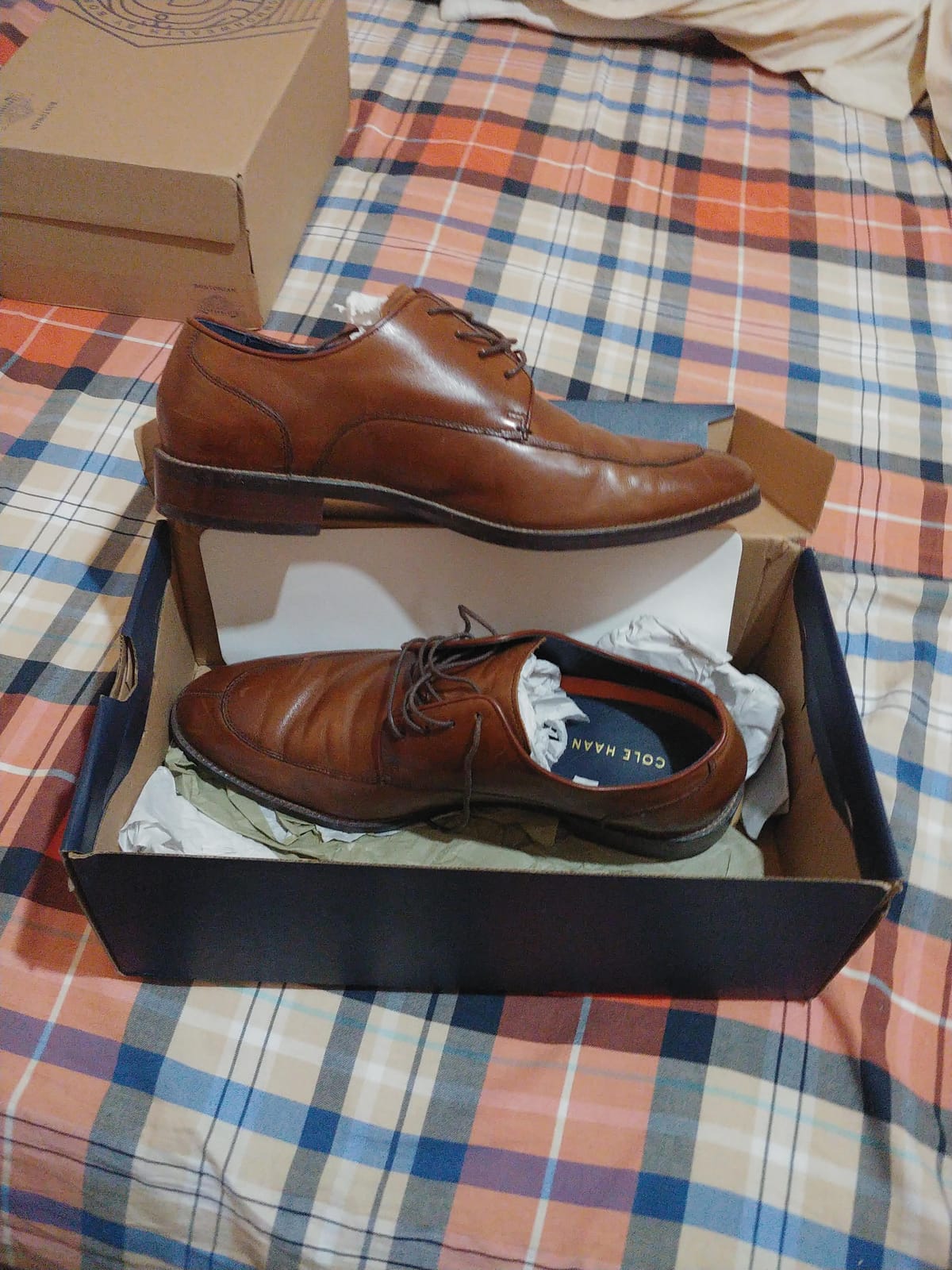
Sizing advice for this one specifically
Because the last is narrow even in wide widths, most buyers with wider feet end up going up a size and trying the wide width. A minority who wear narrow shoes prefer to size down half and get a better fit. Either way, order where you can exchange, because the last is not intuitive.
Why it is still worth it
Because owners report keeping these for years of daily wear, and because a traditional all-leather Oxford in this condition is the shoe that will match a suit, a tuxedo, or a wedding without any second-guessing. It is the safest formal choice in the roundup, if you have two weeks to break it in.
9. DOCKERS Trustee Cap Toe – Straightforward Value
Dockers Mens Trustee Leather Cap Toe Dress Oxford Shoe, Black, 11 M
1.19 lbs
All Motion Comfort flex
Cushioned latex footbed
Rubber outsole
Pros
- Genuine full-grain leather with rich texture
- All Motion Comfort flex with latex footbed
- APMA accepted for natural alignment
- Understated styling suits dress-up or down
Cons
- Sizing can run narrow
- especially in wide widths
- Cushioning is basic next to premium shoes
- Leather scuffs and creases with wear
The Trustee does the plain things well. Genuine full-grain leather with a rich texture, a cushioned latex footbed, and Dockers All Motion Comfort flex construction that lets the shoe move through the forefoot. It is also APMA-accepted for support and proper foot alignment, which is an independent check on the construction rather than a marketing claim.
Buyers consistently note it looks more expensive than it costs, and the understated styling is the point: this is a cap-toe that works with a suit on Friday and with chinos on a Saturday without any adjustment. The rubber outsole is dependable on both indoor floors and sidewalks, which is the practical choice for a weekday shoe.
The fit issue is the main caution, and it is the reason this is not higher on our list. Sizing runs narrow for some feet, and several buyers recommend going up a size or trying a wider width. We would call it a better bet for a narrow to standard foot than for a genuinely wide one, where the Clarks Tilden or the Florsheim Medfield have more room to give.
Cushioning is real but basic. The latex footbed does its job and the flex construction helps, but neither reaches the level of an Ortholite or GRANDFOAM insert. If you spend the entire day on your feet, spend the money on a footbed with a named technology instead. The leather also scuffs and creases with regular office wear, which is normal but worth knowing.
Who it suits
Someone who wants a straightforward leather cap-toe with a modest heel and no fuss, who wears it a few days a week rather than every day, and who has a narrow-to-standard foot. It is a good first step up from synthetic shoes because the leather will outlast the foam in the ones you are replacing.
Where the extra money is better spent
On cushioning. If your day is eight hours of standing, the difference between a basic latex footbed and an Ortholite or GRANDFOAM insert is the difference between a good day and an aching one. Buy the shoe with the named foam, not the cheaper leather one.
10. Jousen Men’s Casual Dress Shoes – The Cheapest Useful Pair
Jousen Mens Casual Dress Shoes Business Formal Oxfords, 615, Black, 10.5
Non-slip TPR outsole
Soft PU lining
Synthetic leather upper
M and W widths
Pros
- Comfortable from the first wear with no break-in
- Non-slip TPR outsole with shock-absorbing heel
- Wipes clean with a damp cloth
- Medium and wide widths offered
Cons
- Synthetic upper is less breathable than leather
- Build quality and stitching vary between pairs
- Sizing is inconsistent across styles
This is the budget pick, and the reason it makes the list is simple: it looks smart straight out of the box and there is no break-in. The round-toe lace-up Oxford silhouette works with suits, chinos, and jeans, which makes it the most versatile shape in the roundup for someone who does not dress formally very often.
The outsole is non-slip TPR with a shock-absorbing heel pattern, and the lining is soft PU with a skin-friendly insole. Those three things together are why buyers say it is comfortable from the first wear. The synthetic upper wipes clean with a damp cloth, which is a genuine advantage in a restaurant, an office, or anywhere a spill is likely.
Standard US sizing is offered in both medium and wide widths, which is more than many shoes at this level manage. It ranks high in Men’s Oxfords, and the range of colourways and materials is wide enough that you can find one that suits your actual wardrobe rather than one you will grow to tolerate.
The honest limitations: synthetic leather is less breathable and less premium-feeling than full-grain, so it will not develop patina and it will show wear differently. Build quality and stitching can vary between pairs, and sizing is inconsistent across the range, so check the specific style’s chart. If you are only wearing dress shoes for short events and you rotate pairs, this genuinely does the job.
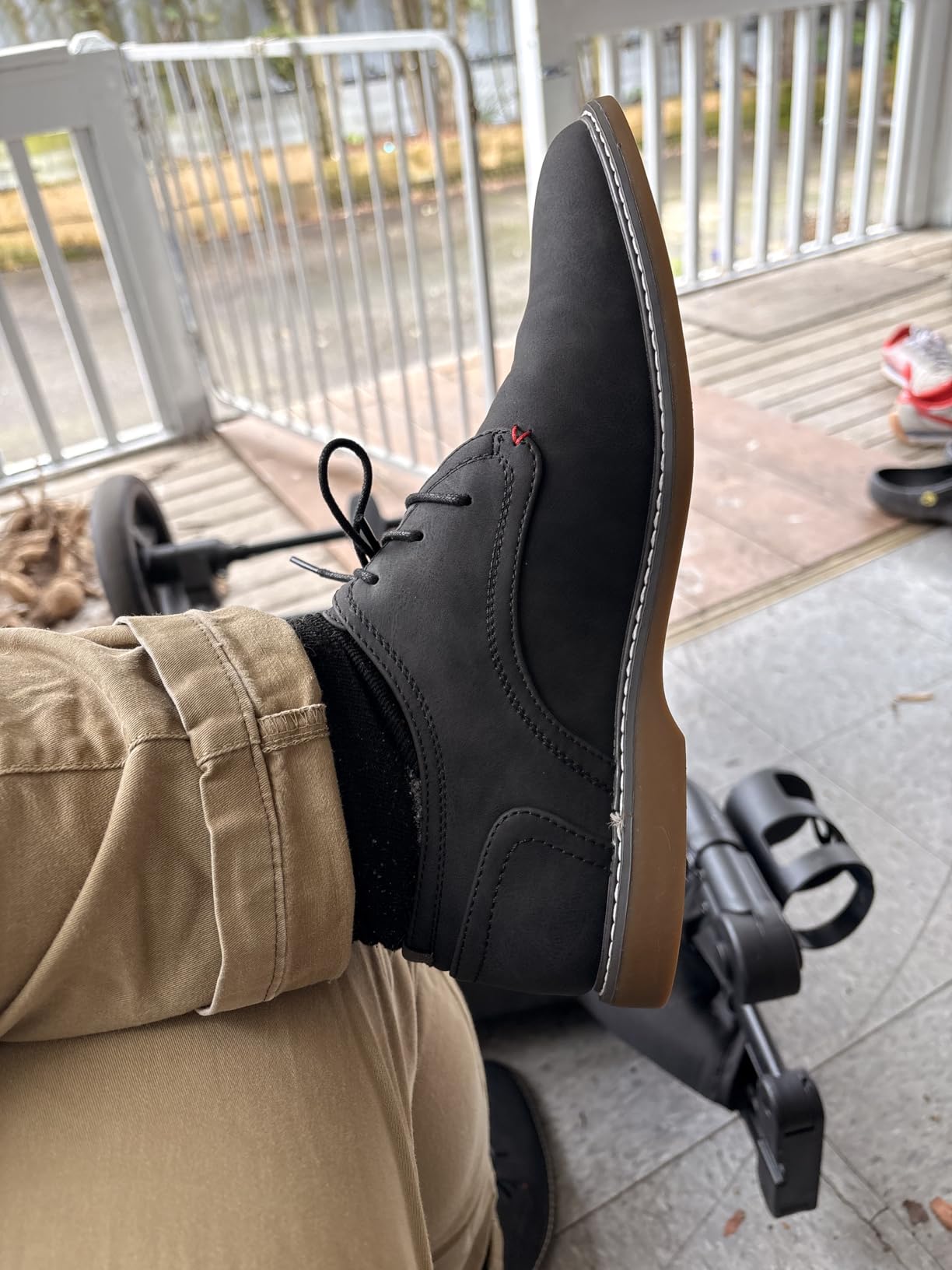
Best for occasional wear
Weddings you are not driving to, dinners, dates, an interview, a funeral. For a handful of hours a month, this shoe is hard to argue with, and the wipe-clean upper means you are not maintaining leather you wear twice a year. It also works well as a second pair kept in a car or a suitcase.
Where it falls short
It is not a long-term shoe, and it is not an all-day standing shoe for someone who needs arch support. If you wear dress shoes daily, the savings here do not offset what you give up in support and in how the upper ages. Buy two of these for occasional wear, or buy one leather shoe instead.
11. Clarks Whiddon Cap – A Lightweight Classic Cap Toe
Clarks mens Whiddon Cap Oxford, Black Leather, 10.5 US
1.9 lbs
Removable Ortholite footbed
Leather upper
Four-eyelet closure
Pros
- Removable Ortholite footbed cushions and wicks moisture
- True to size for most wearers
- Lightweight flexible synthetic outsole
- Subtle elastic goring adds flex
- Durable past a year of daily wear
Cons
- Narrow through the vamp for wider feet
- Leather creases and scratches early
- Initial heel discomfort during break-in
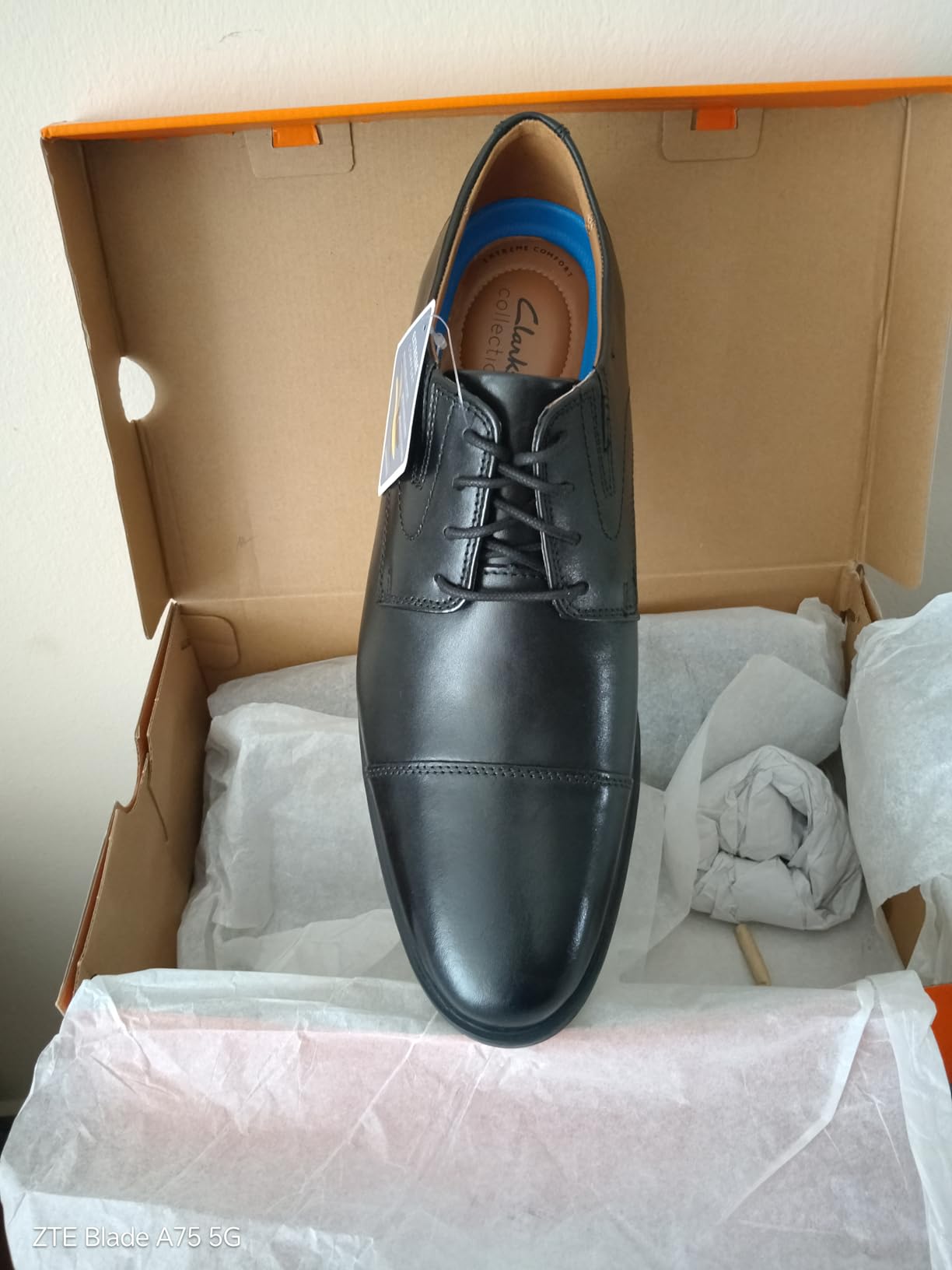
The Whiddon Cap is a classic Clarks cap toe with a removable Ortholite footbed, and both of those features matter. Because the footbed lifts out, you can replace it, add an orthotic, or swap in a thinner in summer. The Ortholite foam cushions impact and wicks moisture, which is what keeps feet dry across a long day.
At 1.9 pounds it is light, and the synthetic outsole is soft, flexible, and durable with traction you can rely on. The four-eyelet closure keeps the profile clean, and subtle elastic goring on the sides adds flex without losing the structure that makes it a dress shoe rather than a casual one.
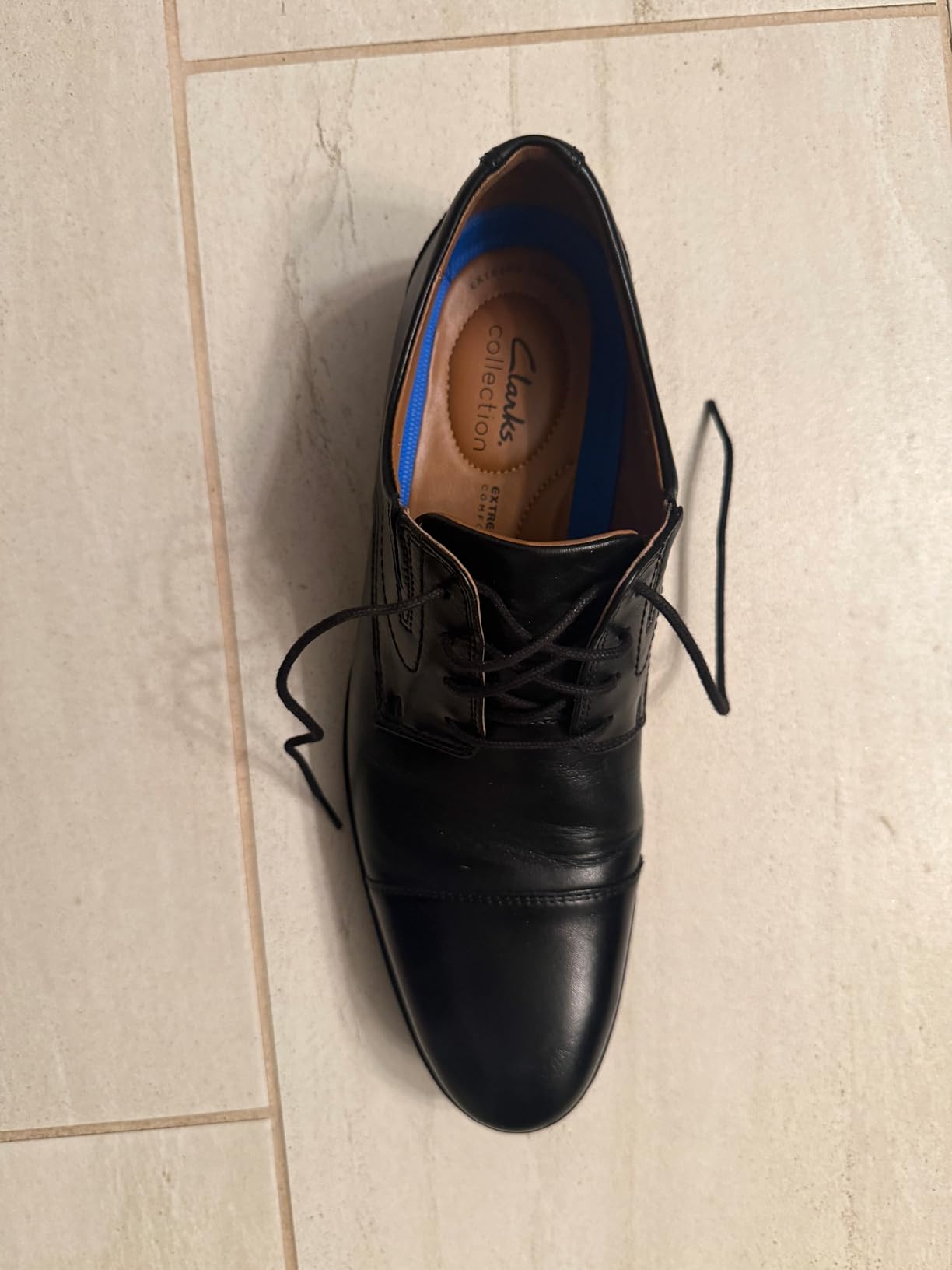
Buyers repeatedly order this one twice, and many report it still going after a year or more of daily wear. It runs true to size for most people, which is rarer in a cap-toe than you would expect, and it is comfortable from the first wear for those who find their size.
The catch is the vamp, which can feel narrow for wider feet, particularly before the shoe has broken in. The leather creases and scratches relatively early, and some buyers feel discomfort around the heel and ankle during the first week or two. None of that is disqualifying, but it is worth knowing before you commit.
Why the removable footbed is the deciding detail
Because it makes the shoe adjustable to your feet rather than asking your feet to adjust to it. Swapping the insole is the single cheapest way to fix a shoe that is nearly right, and few dress shoes at any price let you do it. This one does.
Who will like it most
A standard-width foot that wants a classic cap toe, some insole flexibility, and a shoe light enough to forget by lunchtime. If you have wide feet, read the vamp caution carefully and consider a wider alternative in this roundup.
12. Florsheim Medfield Plain Toe – Best for Wide and Extra-Wide Feet
Florsheim mens Medfield Plain Toe Oxford Dress Shoe, Cognac, 10.5 US
2 lbs
Ortholite High Rebound foam
Heel cup stability
Suedetec lining
Pros
- Runs true to size in medium and wide widths
- Ortholite High Rebound foam with heel cup
- Burnished leather holds its finish
- Grippy non-marking rubber sole
- Comfortable for long walks
Cons
- Runs about a half size large
- Full rubber sole base is heavier than a leather sole
- Soft sole flexes more than some buyers like
The Medfield is the answer for anyone who has given up on dress shoes because their feet are wide. It is offered in medium and wide widths, and it runs true to size, which is close to unheard of for a shoe built on a roomy last. That combination is why we picked it for wide and extra-wide feet specifically.
The footbed is the technical highlight: a fully cushioned removable insert with a stability heel cup and Ortholite High Rebound Foam, which absorbs shock rather than just compressing. Above that, the genuine leather upper and breathable, moisture-wicking Suedetec lining handle temperature. The flexible non-marking rubber sole resists slipping on hard floors, and it will not scuff a hotel lobby carpet.
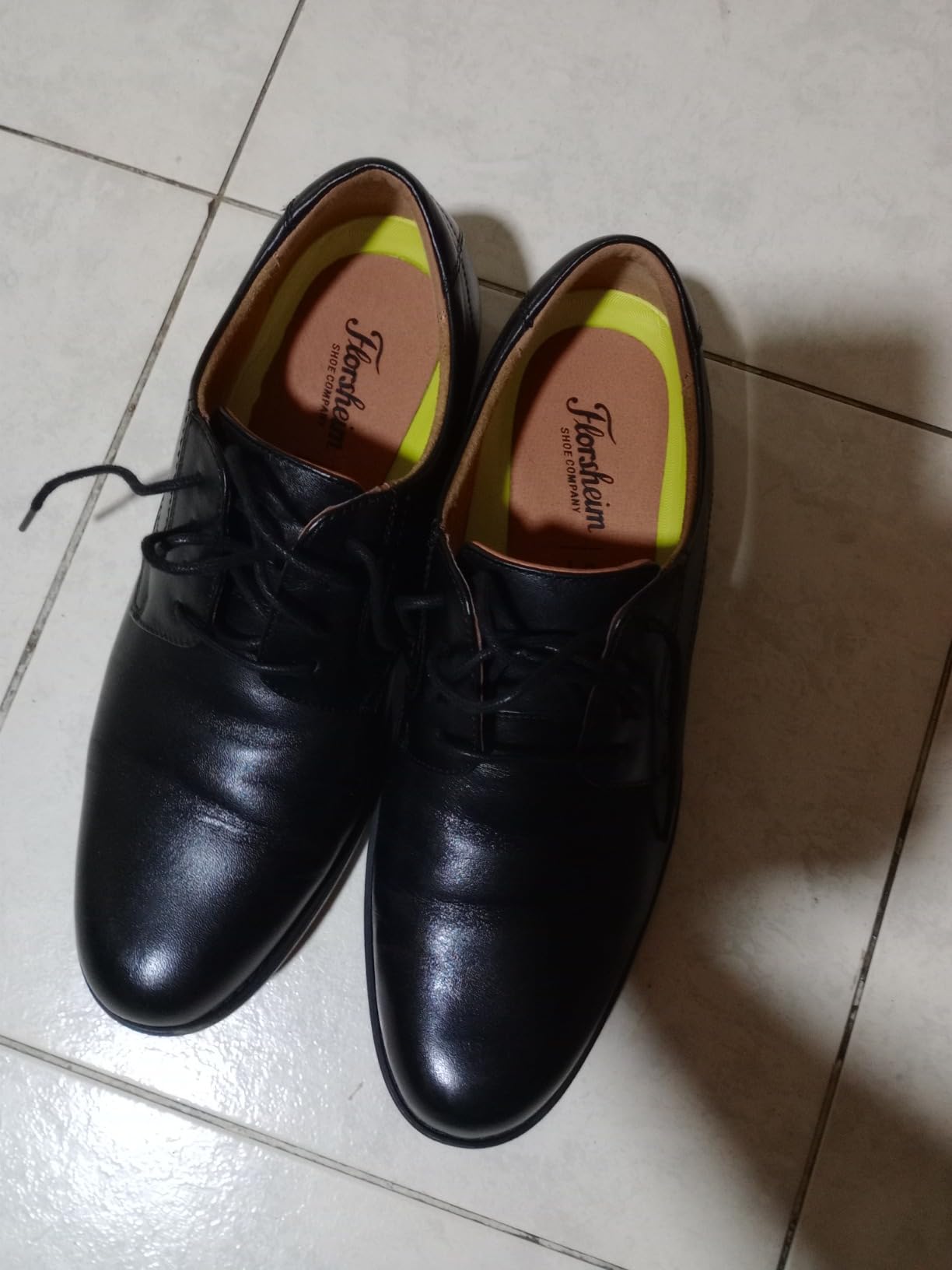
Buyers single out the burnished finish, which holds its look rather than dulling, and the stitching, which holds up inside and out. The soft grippy outsole makes long days on concrete or carpet noticeably easier, and several owners call it one of their favourite dress shoes overall, which is high praise from people who own many.
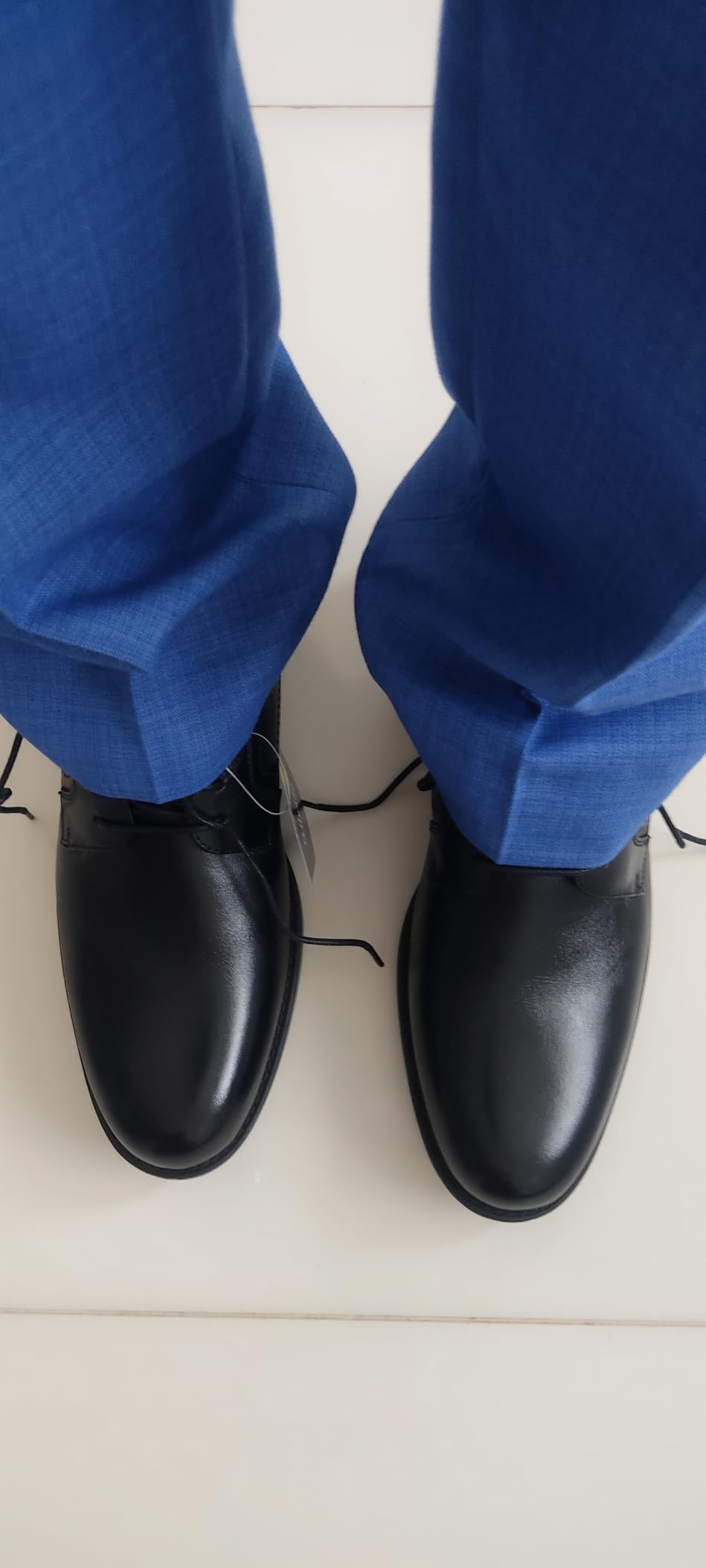
Two things temper that. A number of buyers find it runs about a half size large, particularly in the wide widths, so consider stepping down a half size. And the full rubber sole base does feel heavier than a leather-soled dress shoe, and some buyers want a firmer, more durable outsole than this soft one.
Why we picked it for wide feet
Because room is the whole point. The plain toe has no cap seam cutting across the front of the shoe to shorten the space your toes get, the last is genuinely wide, and the widths run to extra-wide. For a man who has been squeezing into narrow Oxfords for years, that is worth more than any cushioning claim.
When something else is a better call
For a black-tie evening, where a rubber sole this thick is heavier and less refined than a leather sole. This is a business-formal-to-smart-casual shoe built for volume and walking, and pairing it with a tuxedo would look slightly out of place.
How to Choose Dress Shoes for Men: Style, Construction, Fit and Care
Everything above is a specific shoe. This section is about how to make the decision yourself, whether you buy one of these twelve or not.
The style ladder: which silhouette is most formal
Formality in a dress shoe is set by three things together: the silhouette, the colour, and the sole. An Oxford is closed-laced, with its quarters stitched under the vamp, which makes it the most formal lace-up shoe there is. A Derby is open-laced, with the quarters stitched on top of the vamp, so it sits one step more relaxed. A loafer has no lacing at all and is the most casual of the four.
A monk strap fastens with a buckle rather than laces, and because the buckle draws the eye, it reads as fashion-forward rather than conservative. Match the silhouette to the dress code rather than to the logo.
Ranked from most to least formal: cap-toe or plain-toe Oxford, monk strap, Derby, loafer, then brogue. Now match that to the dress code. Black tie takes a black or dark brown cap-toe or plain-toe Oxford with a leather sole and nothing flashy. Business formal takes the same, plus a dark brown Derby or a monk strap. Business casual takes a Derby, a brogue, a Chelsea boot, or a loafer.
Construction: what Goodyear welt and Blake stitch actually do for you
Goodyear welt means the upper and sole are stitched to a thin strip of leather that runs around the shoe, rather than glued. The practical consequences are plain: the shoe can be resoled when the sole wears through, the stitching creates a natural flex point, and the shoe lasts a long time. It also costs more to make, which is why welted shoes sit at the top of the price range.
Blake stitch is a single lockstitch directly through the upper into the sole. It is lighter, thinner, and flexes more, which some wearers love. It cannot be resoled in the conventional way. Cemented construction is glue, sometimes with a stitched rand added for appearance, and it is what most affordable dress shoes use. Cemented shoes can feel comfortable immediately because they do not fight you, but when the sole separates the shoe is finished.
None of the twelve shoes here are welted, and we want to be straight about that. What you are choosing between at this level is full-grain leather versus synthetic, and a named foam footbed versus a basic one. Those two decisions matter far more to how the shoe feels and how long it lasts than a construction detail you would rarely find at these levels anyway.
Upper materials: full grain, top grain, and the rest
Full-grain leather is the top layer of the hide, sanded only enough to remove markings. Its pores stay open, so it breathes, it absorbs oil instead of flaking, and it darkens into a patina. It is what we look for first in any dress shoe.
Top grain is the layer just beneath, sanded smooth and usually treated, which makes it tougher and more stain-resistant but less breathable over time.
Corrected grain goes further still: the surface is sanded, buffed, and pigmented, sometimes with a protective film, to hide flaws. It looks consistent out of the box and it is the easiest to keep looking new, which is a genuine benefit for a first pair. Genuine leather is the general term, not a quality claim. Synthetic leather has no pores at all: it wipes clean, costs less, and never patinas. For a low-maintenance shoe worn at short events, synthetic is defensible. For a shoe that improves with age, full grain is the only answer.
Width, sizing, and the afternoon test
Shoe width is measured by a letter: D is standard, E is wide, and 2E is extra-wide. Most brands in this roundup offer a wide width, and Florsheim and Dockers are the two to check first if your feet are broad. More important than the letter is the shape, because brands label a shoe wide inconsistently and the Clarks Tilden in particular is described as narrow even in its standard width.
Feet swell during the day, so the only honest fit test happens in the evening, in the shoes you already own. There should be roughly a thumb’s width between your longest toe and the front of the shoe, the ball of your foot should sit at the widest point of the shoe and not overhanging it, and your heel should stay put when you lift it. A shoe that fits perfectly in the morning and pinches at night is too tight. Judge the fit at five in the afternoon, and order from a seller where returning is easy.
Breaking in a stiff leather shoe without blisters
Full-grain leather needs roughly two to three weeks of regular wear to mould to your foot. Wear them at home, with thick socks, in short sessions, and stop at the first sign of a hot spot rather than pushing through it. A hot spot becomes a blister, and a blister becomes a week off. Speed the process up with a leather conditioner, which softens the hide. Skip spray waterproofer on a new pair, because it locks the leather rigid.
Colour pairing rules and building a rotation
The rules are short. Black shoes go with a black, charcoal, or navy suit. Dark brown goes with navy, medium grey, or brown, and with tan chinos. Never match a brown belt to black shoes or the reverse. Keep the level of formality consistent, because a pale grey suit with scuffed black shoes looks worse than either mistake alone.
On rotation, a two-pair setup covers almost everything: a dark brown cap-toe Oxford for the office and weddings, and a black loafer or plain-toe Oxford for formal evenings and anything involving a suit after dark. Rotate on a weekly basis rather than a daily one so both pairs dry out, and put a shoe tree in each one after a wear; that is the cheapest way to stop the toe box from collapsing and the leather from taking a permanent crease. A pair of dress shoes that gets resoled instead of replaced changes the cost-per-wear maths entirely, which is the real argument for spending more on fewer pairs.
While you are on the accessories side, our [dress watch guide](https://mylyconet.com/best-dress-watches-for-men/) covers the metal and leather combinations that match these shoes, and if you spend your workday on your feet and are dealing with posture, the [posture corrector roundup](https://mylyconet.com/best-posture-correctors-for-men/) is worth a look.
Frequently Asked Questions
What is the best brand for men’s dress shoes?
What dress shoes should every man have?
Who makes the highest quality men’s dress shoes?
What are the most comfortable men’s dress shoes?
What are the best men’s shoes for standing all day?
Can you wear brown dress shoes with a navy suit?
Final Verdict on the Best Dress Shoes for Men
The best dress shoes for men are the ones that are comfortable at eight in the morning and still look right at eight in the evening. Our editor’s choice, the Bruno Marc Prince-3, takes that slot because it pairs a steel shank and a full leather lining with the largest review base in the roundup, which makes its comfort claims about as trustworthy as online footwear claims get. If you want the softest underfoot cushioning in the set, take the Cole Haan 2.Zerogrand for weekdays and keep something more formal for evenings.
Match the shoe to the job rather than the price. All-day standing means Ortholite or GRANDFOAM, wide feet mean the Florsheim Medfield, orthotics mean a removable footbed, wet commutes mean the siped outsole on the DOCKERS Gordon, and black tie means an all-leather cap-toe with nothing athletic about it. Buy two, rotate them, and put a shoe tree in each after every wear. That is the whole secret to shoes that still look good in 2026.