
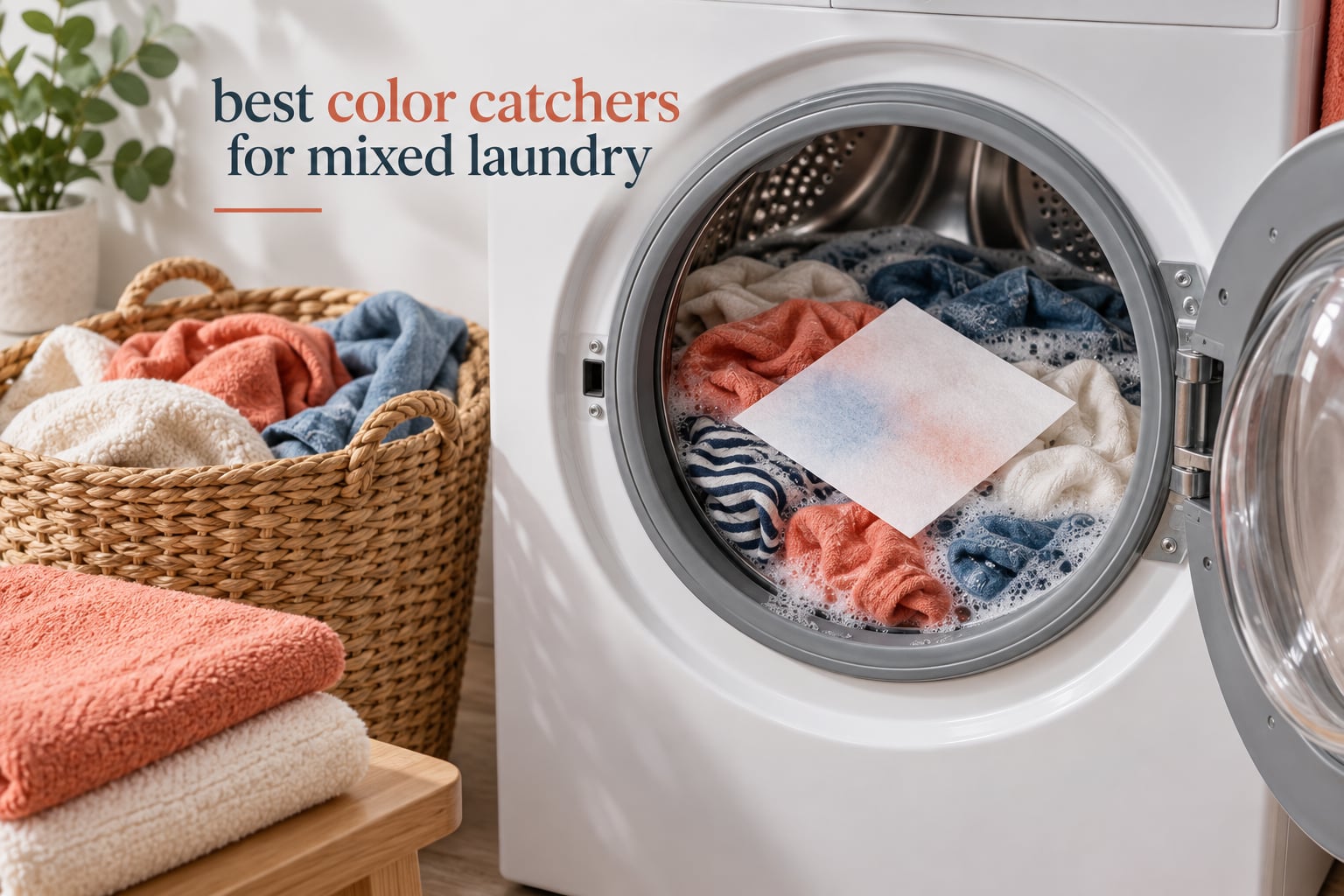
Do color catcher laundry sheets really work? Yes, for the loads you can predict. A color catcher sheet is a single-use sheet holding a PVP polymer that binds loose dye molecules in the wash water, so a forgotten dark sock in a whites load stops tinting everything it touches. It cannot rescue a load containing raw denim or a brand-new red shirt, and it cannot reverse a stain that already set. Used correctly in a normal mixed load, it is the cheapest insurance in the laundry room.
Sorting your laundry by color is still the better answer, and we will not pretend otherwise. But sorting is a habit, and habits fail at 6pm on a Wednesday when the dryer is full and the basket is not. A color catcher sheet is the safety net for exactly that load.
We spent October 2026 reading through tens of thousands of buyer reviews, comparing sheet counts, substrate construction, temperature claims and per-load cost across ten sheets that compete in the same shelf space. What follows is the ranked list of the best color catchers for mixed laundry, plus the placement and machine questions that most guides skip.
If your problem is not dye but odor, our guide to why laundry smells sour after washing covers the causes that look similar but need a different fix.
Table of Contents
Top 3 Color Catcher Picks for Mixed Laundry
Three sheets come out ahead once we weigh rating, review volume, sheet count and how often reviewers report needing a second sheet. Shout wins on evidence, Dylon on protection, Binbata on mesh construction per sheet.

Shout Color Catcher 72 Count
- 72 sheets per carton
- Works at all water temperatures
- Compatible with HE and standard washers
- Carton in 100% recycled paperboard
Dylon Colour Catcher 50 Sheets
- Extra absorbent fibres trap loose dye
- Removes loose dirt to reduce greying
- Effective at all wash temperatures
- Consistent 4.8 rating
Binbata Color Grasper 110 Count
- 110 sheets per pack
- Nano adsorption for dye and brighteners
- High-density 3D rhombus mesh
- Fragrance free
Quick Comparison of All 10 Color Catcher Sheets
Every sheet below does the same job, so compare construction, count per pack and how the sheet behaves in a high-efficiency drum.
| Product | Specifications | Action |
|---|---|---|
| Shout Color Catcher 72 Count |
|
Check Latest Price |
| Dylon Colour Catcher 50 Sheets |
|
Check Latest Price |
| Binbata Color Grasper 110 Count |
|
Check Latest Price |
 Xcleen Color Absorber 120 Count Xcleen Color Absorber 120 Count |
|
Check Latest Price |
 Carbona Color Grabber 30 Sheets Carbona Color Grabber 30 Sheets |
|
Check Latest Price |
 ECO-CLEAN Absorber 168 Count ECO-CLEAN Absorber 168 Count |
|
Check Latest Price |
 Colour Catcher Biodegradable 40 Sheets Colour Catcher Biodegradable 40 Sheets |
|
Check Latest Price |
 DR. EASY Unscented 72 Count DR. EASY Unscented 72 Count |
|
Check Latest Price |
 Zero Trace Color Catchers 80 Sheets Zero Trace Color Catchers 80 Sheets |
|
Check Latest Price |
 Dansib Dye Catcher 200 Count Dansib Dye Catcher 200 Count |
|
Check Latest Price |
What Color Catchers Actually Do
Most textile dyes are not fully locked into the fibre. Reactive dyes bond to cotton through a chemical reaction, but a portion of any dye bath sits loosely on the surface and migrates every time the garment is soaked. Direct dyes, used on synthetics and many blends, are held by weaker forces and give up more easily. Surface pigment, such as the indigo on raw denim, sits loose enough that a single wash can tint the entire water column.
A color catcher sheet handles that loose fraction. The substrate carries PVP, or polyvinylpyrrolidone, a polymer whose nitrogen and oxygen groups form weak bonds with dye molecules. The sheet becomes the more attractive target, the dye stays attached to it, and the sheet comes out of the wash colored. That is the whole mechanism, and it is why sheet construction matters more than brand.
Two corollaries matter more than the marketing. First, a sheet coming out bright pink does not prove it worked well, it only proves dye reached it. Buyers who judge performance by how dramatic the sheet looks can be misled in both directions. Second, PVP captures dye that has already dissolved; it has no effect on dye already deposited inside a fibre.
1. Shout Color Catcher Dye-Trapping Sheets: The Safest Default
Shout Color Catcher Dye-Trapping Laundry Sheets, 72 Count, (1-Pack)
72 sheets per carton
Works at all water temperatures
HE and standard washer compatible
7.04 ounces
Pros
- Locks dye and prevents color runs on mixed loads
- Works at any temperature on whites and colors
- 72 sheets per carton cuts sorting time
- Carton made from 100% recycled paperboard
Cons
- One sheet can be overwhelmed by very new or brightly dyed garments
- Heavily bleeding new items may need a second sheet or separate first wash
Shout has been the default answer for so long that most people have used it without choosing it. That default is earned. At 4.8 stars across more than 40,000 reviews, it has the largest evidence base in the category by an order of magnitude, and no rival comes close to that volume of long-term use reports.
The sheet is plain and unadorned, which suits mixed laundry. Buyers report that whites come out bright and dark garments keep their shade through repeated cycles, and several mention cutting a sheet in half for small loads, which stretches a carton a long way. The carton itself is made from 100% recycled paperboard, a small detail that matters if you buy by the case.
It is also compatible with high-efficiency and standard machines and works at any water temperature, which removes the two caveats that push people toward newer mesh-style sheets. In our comparison it is the option with the least to qualify.
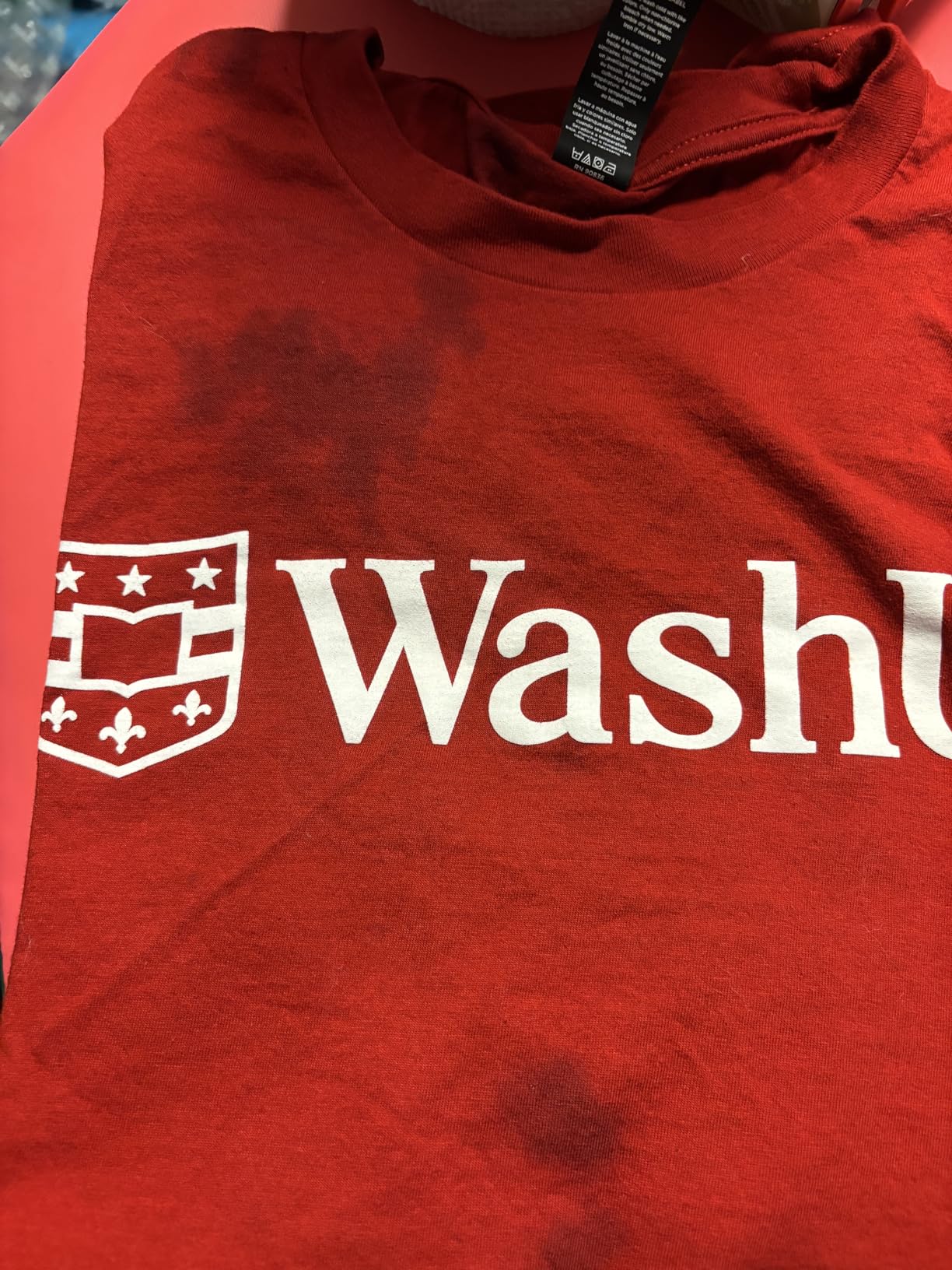
The one consistent complaint is capacity on very new garments. A brand-new red shirt or raw denim releases far more dye than a normal mixed load, and a single sheet can fill before the cycle ends. That is a real limit, not a defect, and it applies to every sheet on this list.
When Shout is the right buy
Pick Shout when you want proven results across many loads rather than a specialty feature. It suits households that do four or five mixed washes a week and want one box to last, and it is the safest recommendation for someone who has never used a dye-trapping sheet before.
It is also the pragmatic choice for a normal laundry routine. Members of r/laundry who mixed entire baskets of fabric reported exactly the result Shout is designed for, nothing bled across the load.
When Shout is not enough
Do not reach for a single Shout sheet on a load containing new denim, a freshly tie-dyed item or an untreated bright red garment. Use two sheets, or give the garment its own first wash. The sheet also has no reversing power, so a stain that already set needs a different treatment entirely.
Quilters working with a fabric bundle should note the same geometry limit that r/quilting posters describe. The sheet needs to sit in water that carries free dye, so drop it in with the load rather than tucking it into a corner.
2. Dylon Colour Catcher Complete Action Sheets: Best All-Round Protection
Dylon Colour Catcher Complete Action Laundry Sheets – 50 Sheets
50 sheets per pack
Extra absorbent fibres trap loose dye
Also reduces greying
Effective at all temperatures
Pros
- Traps loose dye reliably on mixed loads
- Removes loose dirt particles to reduce greying
- Consistent results at every wash temperature
- 4.8 rating across nearly 6000 reviews
Cons
- Higher cost per sheet than most competitors here
- Only 50 sheets in the pack
Dylon is the pick if one feature separates it from the rest of this list: it is built to catch dirt as well as dye. That second function shows up as less greying on whites after many cycles, and reviewers describe whites looking brighter rather than merely unstained. For a household washing mixed loads for years, greying is the slow failure that dye transfer alone does not explain.
The construction is described as extra absorbent fibres that trap loose dye, and buyers back up the performance claim with consistent results across temperature ranges. Rating sits at 4.8 over roughly 5,800 reviews, which puts it level with Shout on satisfaction and well ahead of the value packs on volume.
The tradeoffs are arithmetic. A 50-sheet pack is the second-smallest here, and combined with a higher per-sheet cost, a household doing five loads a week will replace this more often than most alternatives. You are paying for the anti-greying layer, which is a real benefit rather than a marketing line.
What Dylon does better than the alternatives
Greying control is the honest answer. Any household that has watched white towels slowly turn grey over a year of mixed washing will understand what that layer adds. It is also a sensible choice for holiday laundry, where a load mixes a new sweater with last year’s towels.
The British spelling on the carton is not a quirk to worry about. Dylon is the established name in UK and Irish laundry rooms, and the same product appears in both markets.
Where the pack size bites
Reviewers most often complain about cost per wash rather than performance, which tells you the sheet is doing its job. If you wash heavily and want the cheapest protection, a larger-count mesh sheet is the better fit.
Travelers also should know that 50 sheets disappears fast across a two-week trip with a laundromat habit. For that use, a bigger pack travels better unless you are travelling light.
3. Binbata Color Grasper 110 Count: Best Mesh for the Money
Binbata Color Grasper for Laundry 110 Count, Dye Catcher Color Absorber
110 sheets per pack
High-density 3D rhombus mesh
Nano adsorption for dye and brighteners
Fragrance free
Pros
- Rhombus mesh gives more absorption area than flat blockers
- Also captures fluorescent brightener from detergent
- Sheets resist shredding in the machine
- Fragrance free and tested for sensitive groups
Cons
- Occasional durability complaints in very long or heavy cycles
- Sheet dimensions are not published
Binbata is the value pick because of how the sheet is built rather than how many are in the box. A high-density 3D rhombus mesh gives more surface area per sheet than a flat non-woven, and the company describes the adsorption process as targeting free dye particles and fluorescent agents rather than dye alone.
Catching fluorescent brightener is an underrated detail. Modern detergent leaves optical brighteners in the water, and that residue contributes to the dull look people blame on the dryer. A sheet that grabs it as well as dye is doing two jobs per sheet.
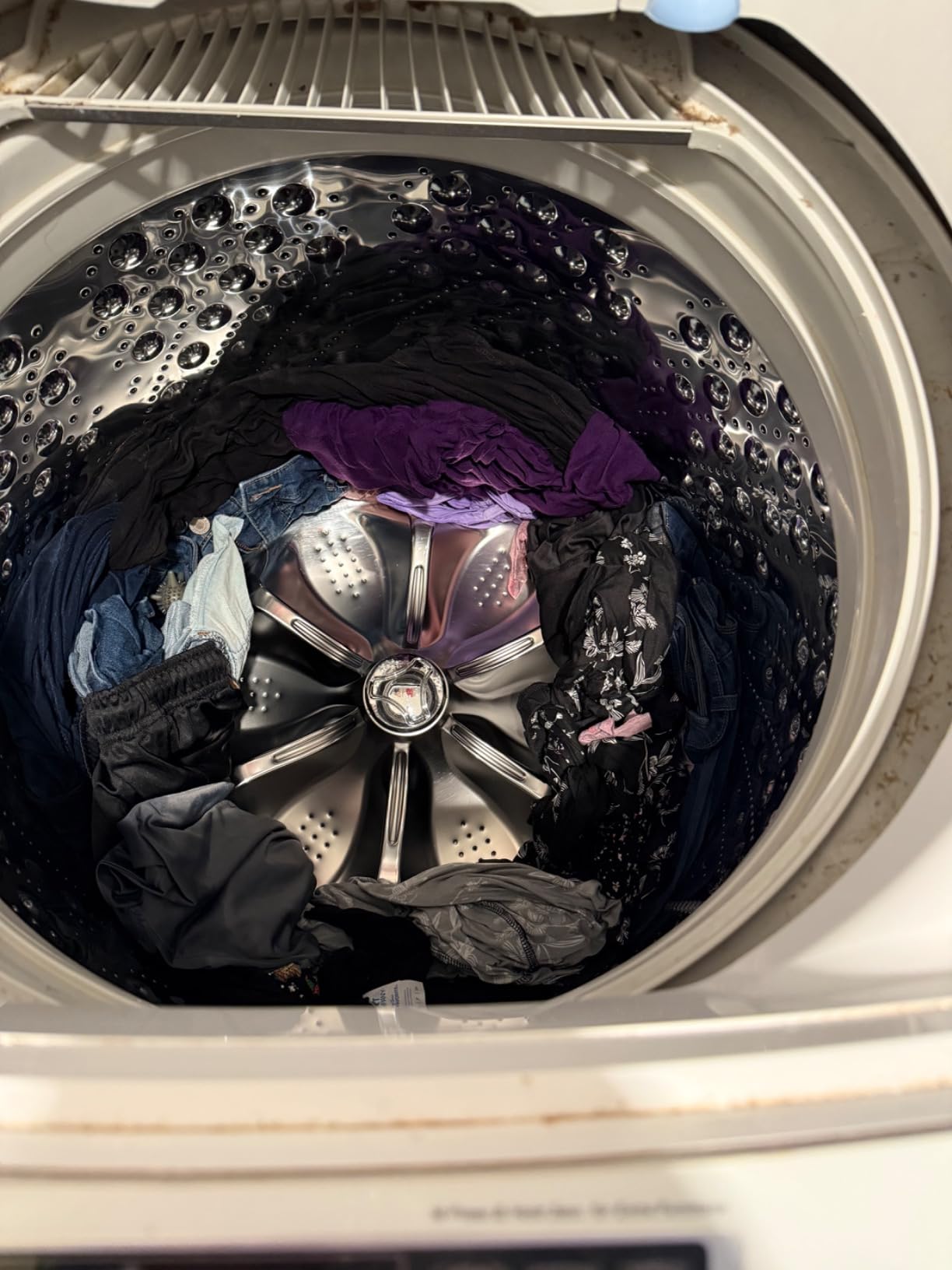
Buyers repeatedly mention that the sheets feel substantial enough not to shred, which matters more in a top-loader with an agitator than in a front-loader. The formula is fragrance free and tested free of harmful substances, which is why it shows up in homes with babies.
The minority complaint is durability on very long or heavy cycles, where sheets occasionally break down. Nothing in the reviews suggests dye gets past them; the issue is debris in the machine after a long soak or a bedding load.
Why the mesh design is worth the switch
If you have used a flat sheet and felt like it filled too quickly, mesh construction is the difference you would notice. Surface area is the binding constraint on how much dye a sheet can hold, and the rhombus pattern buys more of it per sheet of material.
At 4.7 stars across more than 3,000 reviews, the consistency is good. That volume also makes it one of the better-evidenced picks here, and it sits comfortably above the midpoint of this list on review count.
Where it falls short
One cycle of bedding or a heavily soiled load is the weak spot. Shorten the cycle, use a second sheet, or accept that the sheet will not hold every particle released in a two-hour soak.
Be aware that published sheet dimensions are missing, so plan on one per load and do not assume you can split one to save. Testers in r/quilting frequently split sheets for small quilt-binding rinses, and this is not the pack to plan that way.
4. Xcleen Color Absorber 120 Count: Best Budget Buy
Xcleen Color Absorber Laundry Sheets 120 Count, Dye Catcher to Prevent Clothes from Smearing, Fragrance Free Color Trapping Sheets for Home School or Apartment
120 sheets per pack
High-density diamond mesh texture
No harsh chemicals, fragrance or dyes
Works in all machines
Pros
- Diamond mesh locks dye faster than flat sheets
- Sturdy enough not to crumble or shred
- Free of harsh chemicals
- fragrances and dyes
- Large 120-count pack
Cons
- Some buyers want more capacity on very new dark garments
- Absorption can fall short on heavy dye-release loads
Xcleen does the same job as Binbata with a similar mesh approach and a slightly different framing. The diamond pore mesh is marketed as locking dye faster than flat sheets, and reviewers back the sturdiness claim more often than the speed claim. The sheet does not crumble, which is the failure that matters in an impeller drum.
At 120 sheets and no fragrance, fragrance or added dyes in the formula, this is the pick for sensitive skin and for anyone who has reacted to a scented sheet before. It also carries a published weight and dimensions, which tells you it is a compact box rather than a bulky pack.
The category ranking it holds in laundry stain removers reflects steady sales rather than a single spike, and the 4.7 rating across more than 2,800 reviews is consistent with that steady performance.
The limitation is capacity on heavy bleeders. A minority of buyers, and we would include ourselves among them for the heaviest loads, want more absorption from one sheet when washing new black jeans with white towels.
Who should switch to Xcleen
Anyone who reacts to fragrance, washes a lot of small items, or wants a pack that will not run out mid-season. It is also a sensible pick for a student apartment or rental where shelf space is tight.
Compatibility is broad. It is listed for all washing machines and water temperatures, so there is no need to check your drum type before buying.
Where it needs help
Buy a second sheet rather than trusting one for a load with new dark garments. The mesh is good; the capacity ceiling is what you are working around, and it is the same ceiling every sheet in this category has.
If your priority is trapping lint as well as dye, the microfiber option further down handles that better. Otherwise this pack covers most mixed loads without fuss.
5. Carbona Color Grabber 30 Sheets: Best Plant-Based Option
Carbona Color Grabber, Prevents Color Runs in Mixed Loads, 30 Sheets
30 sheets per pack
Dye Shield Technology
Plant-based fibre construction
Unscented, safe in top and front loaders
Pros
- Stops color runs and dye transfer in mixed loads
- Traps grime as well as dye to limit greying
- Plant-based fibres and unscented
- Highest five-star share in the group
Cons
- Only 30 sheets per pack
- Large loads need 2-3 sheets and a mesh bag in front loaders
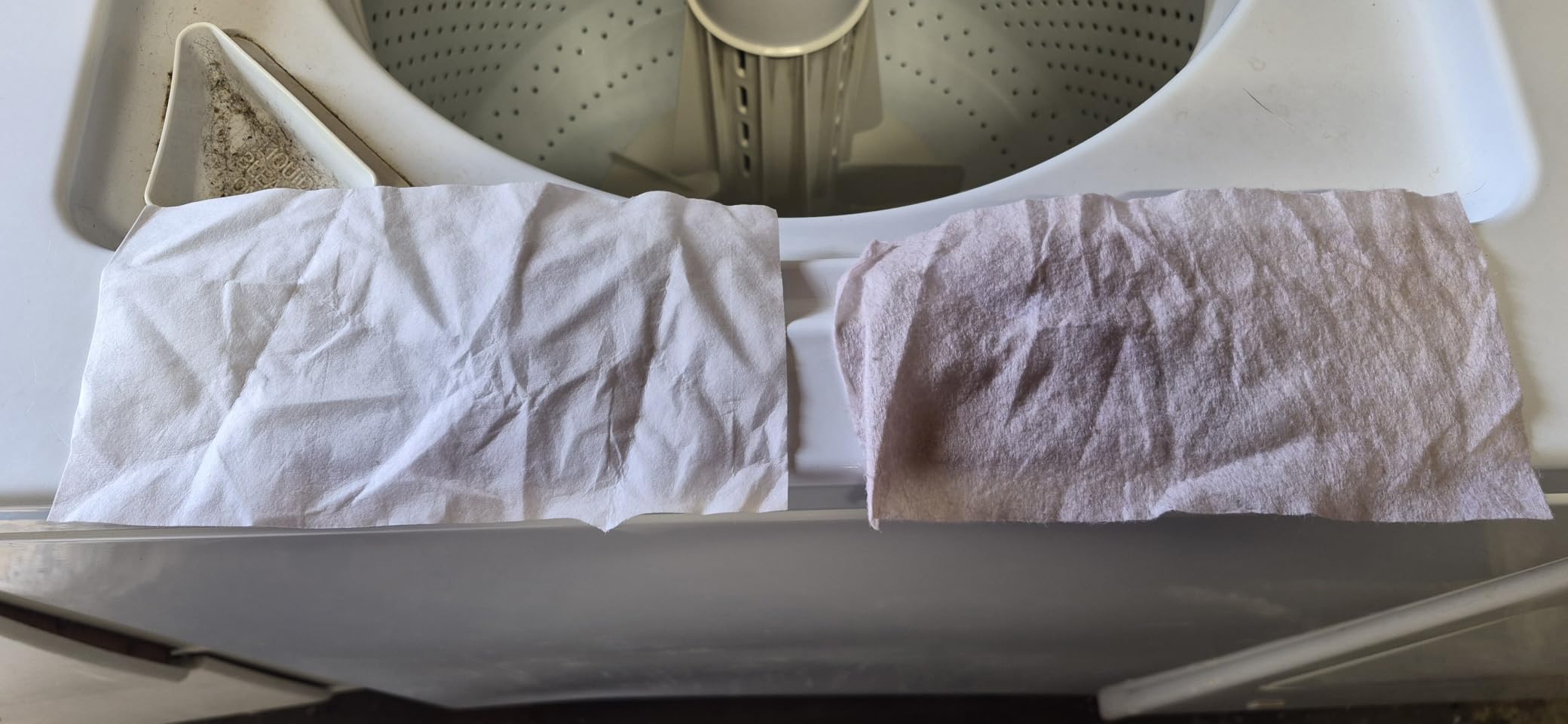
Carbona is the recommendation most often repeated on r/laundry, and it earns its reputation with the highest proportion of five-star reviews in this roundup at 91%. The formula is built on plant-based fibres rather than a synthetic mesh, and it is unscented.
The dye-trapping is described as Dye Shield Technology, and the practical difference reviewers notice is grime capture. Whites stay cleaner over time for the same reason Dylon whites do, though Carbona reaches it with a smaller and cheaper pack.
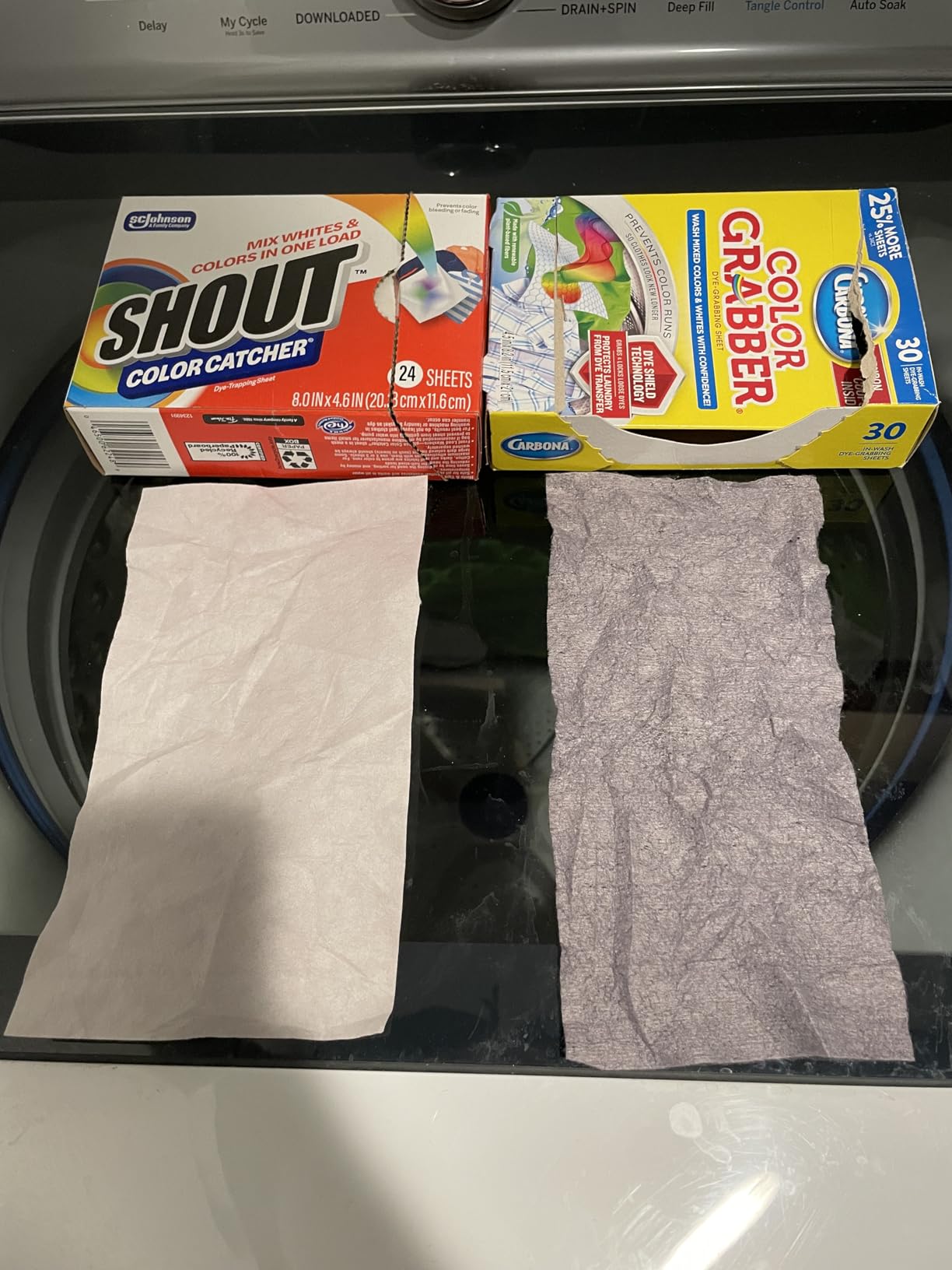
Two further details matter in practice. The sheet is unaffected by bleach, so it works in a wash where you are using an oxygen product, and it is safe in both top-load and front-load machines.
The 30-sheet count is the smallest pack here, which is the whole tension in this product. You get fewer washes per purchase and then spend them carefully.
Why Carbona suits sensitive laundry
Plant-based fibres and no scent is a short, checkable list, and it is the reason to choose this over a mesh sheet. Households avoiding synthetic fragrance, or washing baby clothes and fabric nappies, get a sheet that adds nothing to the water beyond its trapping function.
It is also the sheet hand-dyers mention most often for rinsing. Tie-dyers report washing colours together with a sheet in the load and getting clean rinses, because the sheet grabs the loose pigment before it settles back onto the fabric.
Where the small pack hurts
For a large or heavily soiled mixed load, use two or three sheets rather than one, which erases much of the per-sheet advantage of the pack. Carbona also recommends using a mesh bag in front-loading machines so the sheet does not wrap around the drum.
If you wash daily, the replacement rhythm will annoy you. Pick a larger-count mesh pack instead, or accept a reminder to reorder earlier.
6. ECO-CLEAN 168 Count Absorber Sheets: Best for Heavy Weekly Washing
168 Count Color Abosorber Sheets for Laundry – Dye Catchers Laundry Sheet – Allow Mixed Washes and Prevents Color Runs-Fragrance Free
168 sheets per pack
Microfiber construction
Higher-density extra absorbent layer
Fragrance free
Pros
- Microfiber traps loose dye grime and ink
- Sheets stay intact and never disintegrate
- Also collects lint off other garments
- Works even when cut in half
Cons
- First wash of new garments may need two sheets
- Large box takes more shelf space than a flat carton
ECO-CLEAN is the volume option, and durability is its standout quality in reviews. Buyers single out the microfiber construction as sheets that never shed or disintegrate, which is exactly the failure that makes people abandon dye catchers after one use.
Microfiber also explains the extra claims. The same construction that grabs dye in the water catches lint, ink and grime on the way out, so it earns its place on a bedding load as well as a clothing load.
At 168 sheets, it is the second-largest count in this roundup and far larger than the 30-sheet plant-based pack. For a household doing six or seven loads a week, that is the difference between reordering monthly and reordering every few weeks.
Buyers also report that cutting a sheet in half still works for smaller loads, which effectively doubles the number of washes in the box. That is a real saving if you wash delicates or small children’s loads regularly.
Why durability matters more than capacity
A sheet that breaks apart still traps dye, but it leaves fibre fragments in the drum and in the filter, and most people who have had that experience stop using sheets. Reviews here repeatedly confirm sheets survive long cycles intact, which makes this the safest pick for someone quitting sheets after a bad experience.
The lint-capture claim also makes it useful for dark towels washed with lights, a load type where lint transfer is as visible as dye transfer.
Where it needs a second sheet
First washes of new garments remain the case where one sheet is not enough, and reviewers say so directly. Use two for that wash and save the halves for smaller loads afterwards.
The box is bulkier than a flat carton, so if your laundry shelf is tight, weigh the space against how often you wash before choosing.
7. Colour Catcher Biodegradable Sheets: Best for Low-Waste Washing
Colour Catcher Colour Protection Sheets (1 pack x 40 sheets), Colour Catcher Sheets for Mixed Colour Washes to Avoid Colour Run Accidents, Made of 100% Naturally-Derived and Biodegradable Fibres
40 sheets per pack
100% naturally-derived biodegradable fibres
Guards against micro-bleeding
Works in any cycle
Pros
- Made from naturally-derived biodegradable fibres
- Protects against micro-bleeding as well as obvious transfer
- Preserves colour vibrancy over repeated washes
- Works across all cycles
- fabrics and temperatures
Cons
- Only 40 sheets in the pack
- Higher cost per sheet than the large-count options
This is the sheet for people who dislike the single-use waste problem. Every dye catcher is a disposable item, and this one is made from 100% naturally-derived biodegradable fibres rather than a synthetic mesh. For a household that runs a sheet in every load, that difference accumulates faster than the price gap suggests.
Reviewers value consistent colour protection and mention that their dark garments keep their vibrancy wash after wash. The product also addresses micro-bleeding, the small but constant loss of colour that makes faded-looking garments long before they look damaged.
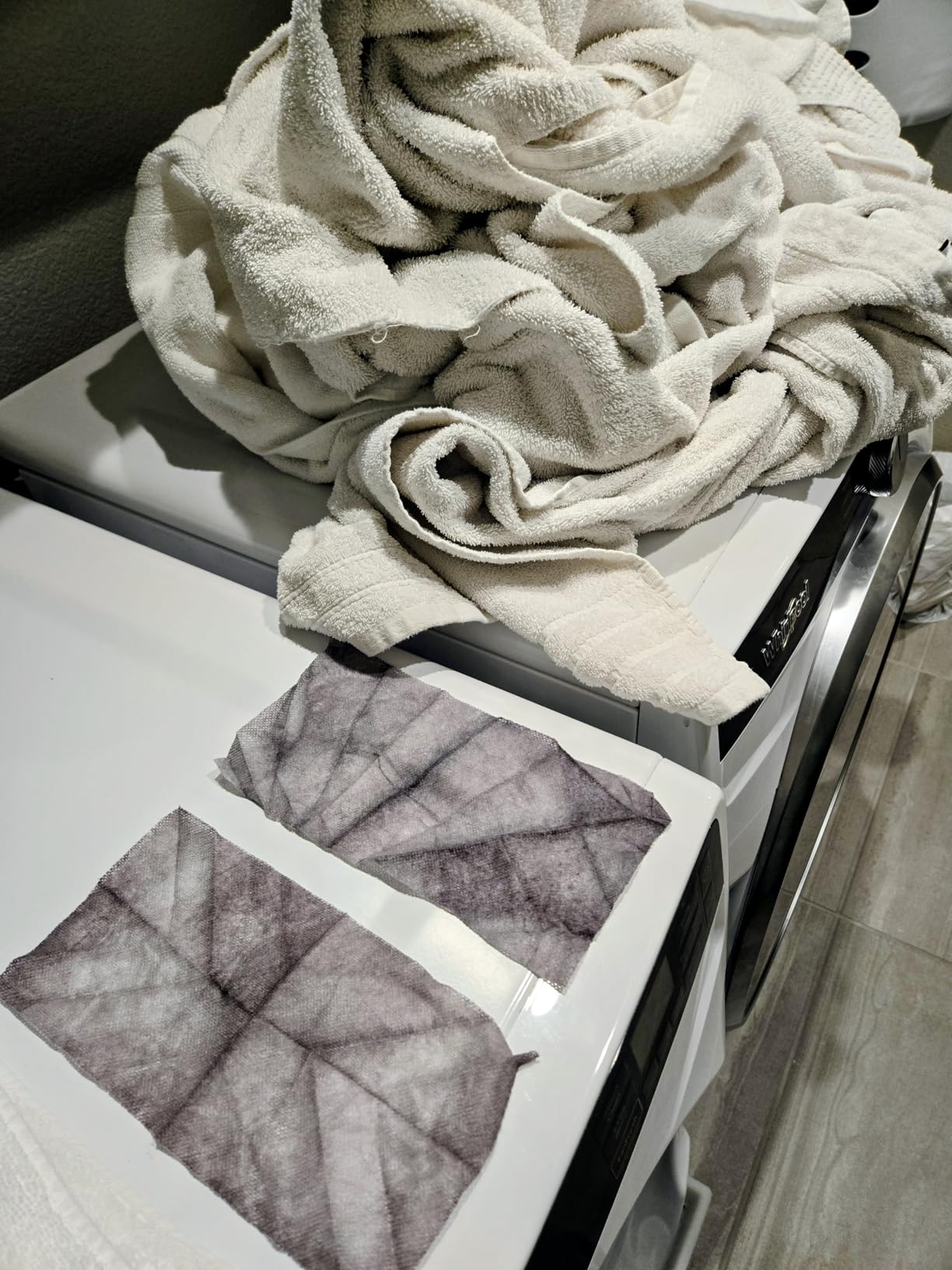
The visible dye on the used sheet is part of the appeal here. Buyers describe checking the sheet after the cycle as their confirmation that the load needed protecting, which is a habit worth keeping even though appearance is not proof.
When the material matters most
Choose this sheet if you wash hand-dyed fabric, natural fibre bedding or anything you plan to wear for years. The colour-retention claim lines up with what quilters and dyers report about keeping colour vibrancy across many cycles.
It is also the better environmental choice if your household uses sheets in every wash. Any reduction in synthetic material in the waste stream is worth something.
Where the pack size works against you
Forty sheets is a small box, and the per-sheet cost lands above the large-count options. If you wash five loads a week, this becomes a purchase you reorder roughly every month or two.
The 4.7 rating across more than 1,100 reviews is solid, but it is a smaller evidence base than the leaders. It is also not the sheet to split in half for a small load, given the count is already tight.
8. DR. EASY Unscented 72 Count Sheets: Best for Dryer Use
DR. EASY Unscented Color Catcher Sheets, 72 Count, Special Pores Texture, Dye & Fluorescent Remover, Safe for Dryer, Compatible with All Washers & HE, Non-Toxic, All Skin Types
72 sheets per pack
Special pores texture
Targets dyes, heavy metals and brighteners
Dryer safe and HE compatible
Pros
- Absorbs dyes
- heavy metals and fluorescent agents
- Unscented with no dyes or printing
- Dryer safe as well as all washers including HE
- Non-toxic and suited to all skin types
Cons
- Lowest-rated product in this roundup at 4.4
- Some reviewers need more than one sheet for large loads
DR. EASY is differentiated less by dye capture than by what else it claims to pull out of the water. Dye, heavy metals and fluorescent agents are all named as targets, and the special pores texture is designed to raise absorption across all three.
The genuinely useful detail is dryer compatibility. Most sheets in this category are a wash-only product, and this one is explicitly safe in the dryer. Members of r/laundry generally treat a used sheet in the dryer as no big deal, but having one designed for it removes the guesswork.
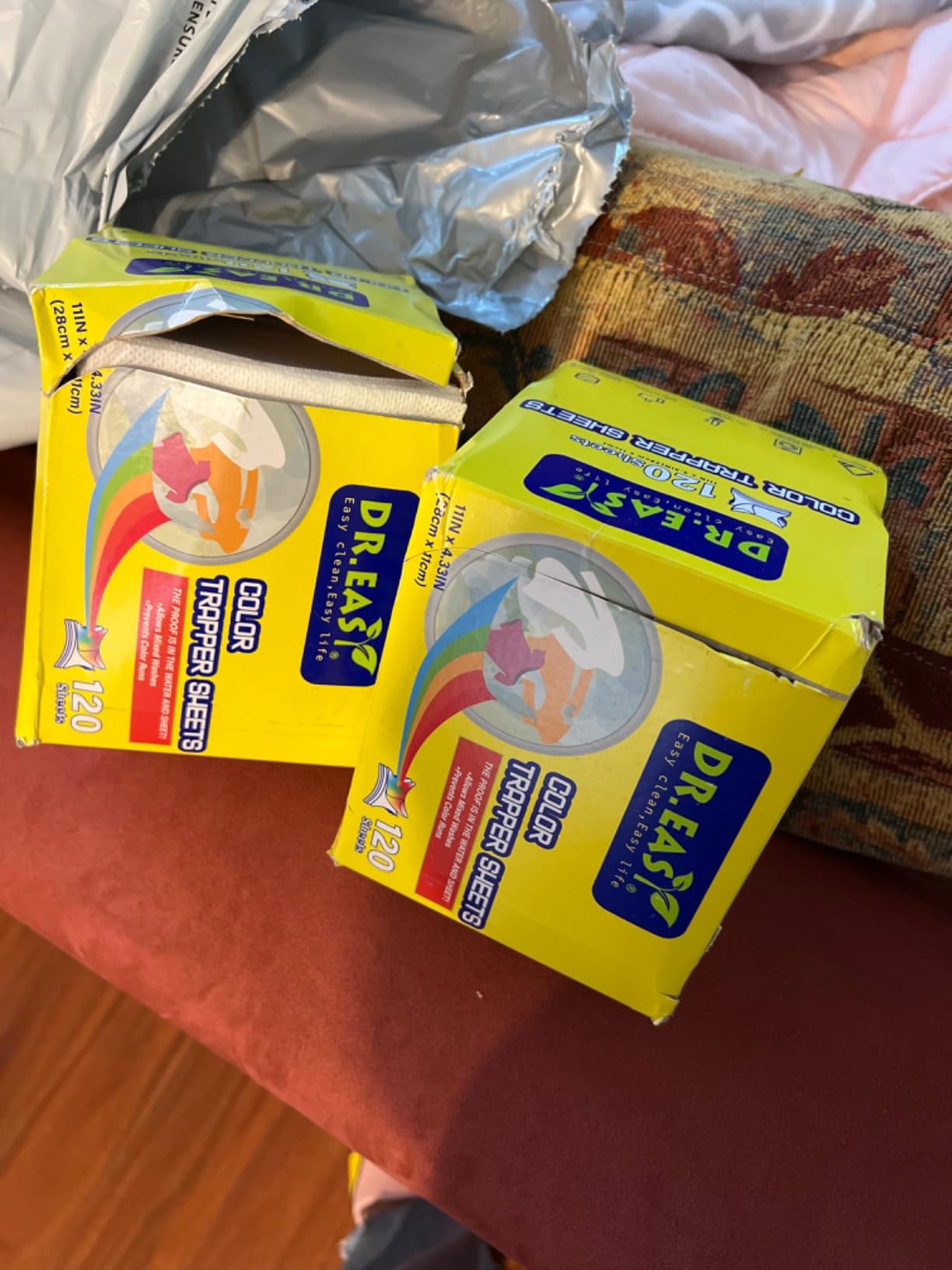
There is nothing in the formula beyond the fibre. No dyes, no printing, no chemicals and no fragrance, which makes it a sensible choice for anyone with sensitive skin or a fragrance-sensitive household.
Be aware that the rating is the lowest here at 4.4, with a larger share of three- and four-star reviews than the leaders. The pattern in the reviews is uneven performance on large mixed loads rather than outright failure.
Why the extra claims are worth something
Fluorescent agent capture matters more than most shoppers expect. Brighteners left in fabric after a wash are what make formerly white towels look dingy, and removing them at the wash stage is simpler than trying to correct it later.
The heavy metal claim is less verifiable from the outside, but the same pore texture that increases absorption for dye increases it for anything else suspended in the water.
Where the rating tells you something
A 4.4 with 528 reviews is a real gap below the 4.8 leaders, and it comes from large-load consistency rather than from a bad formula. If you wash large mixed loads daily, use two sheets and expect to replace the box more often.
If your loads are small and you want a sheet you can also toss in the dryer, this is the one to buy.
9. Zero Trace Color Catchers 80 Sheets: Best for HE and Standard Washers
Zero Trace Color Catchers for Laundry, 80 Sheets
80 sheets per pack
Locks loose dye to stop colour bleeding
HE models supported
One sheet per load
Pros
- Simple drop-in use with one sheet per load
- Compatible with all washers including high-efficiency models
- Works on any wash setting
- Keeps colours vibrant over repeated washes
Cons
- Smallest review base here so long-term evidence is limited
- Around one in five reviews is 1-star
- indicating inconsistency
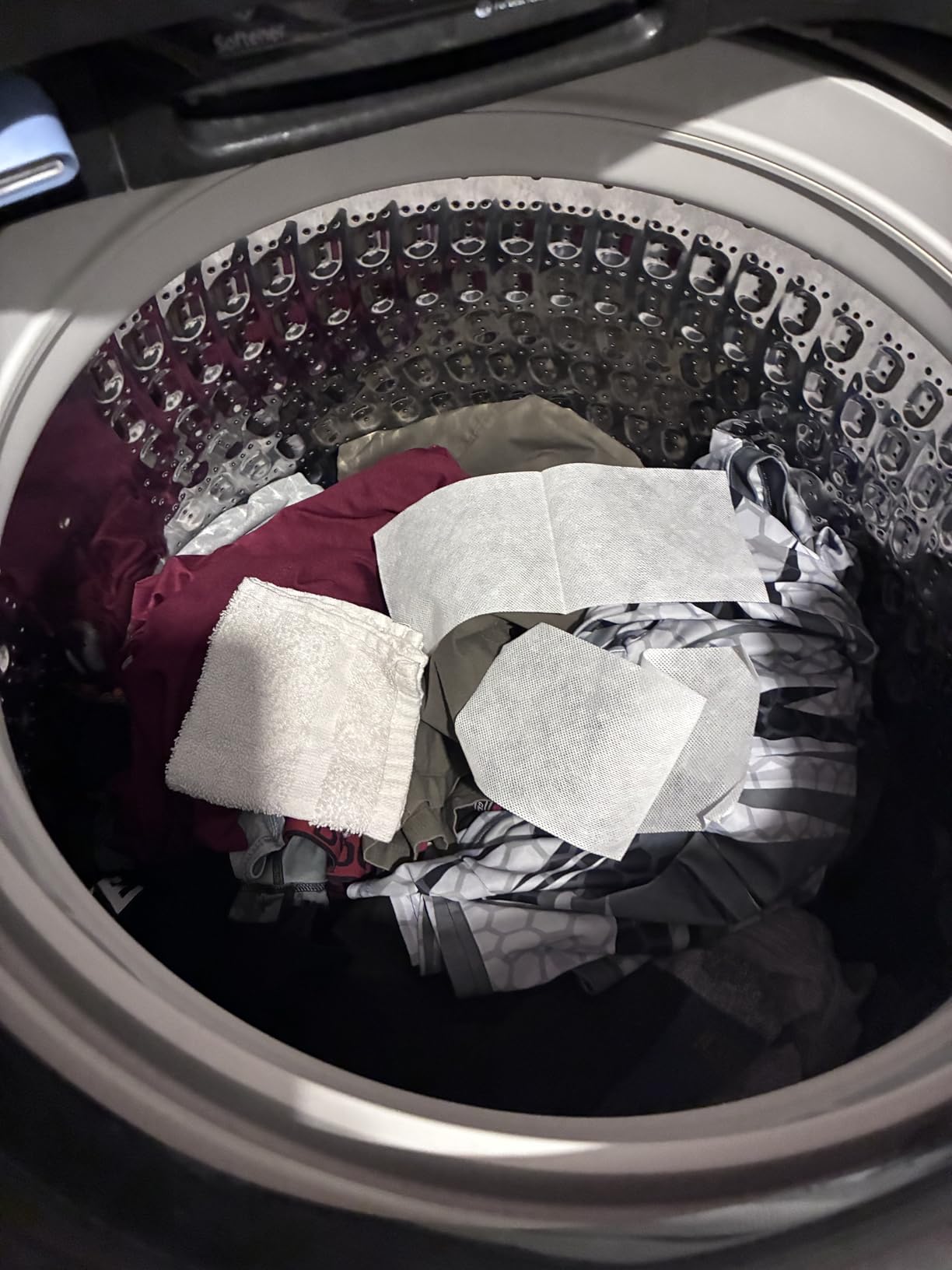
Zero Trace is simple by design. One sheet per load, compatible with all washing machines including high-efficiency models, effective on any wash setting. There is no mesh specification to decode and no recommended sheet count to remember.
The high-efficiency compatibility claim is the most useful thing here. If you have an impeller drum and no brand instructions to check, a sheet that is explicitly approved for HE models removes the doubt that stops people using sheets at all.
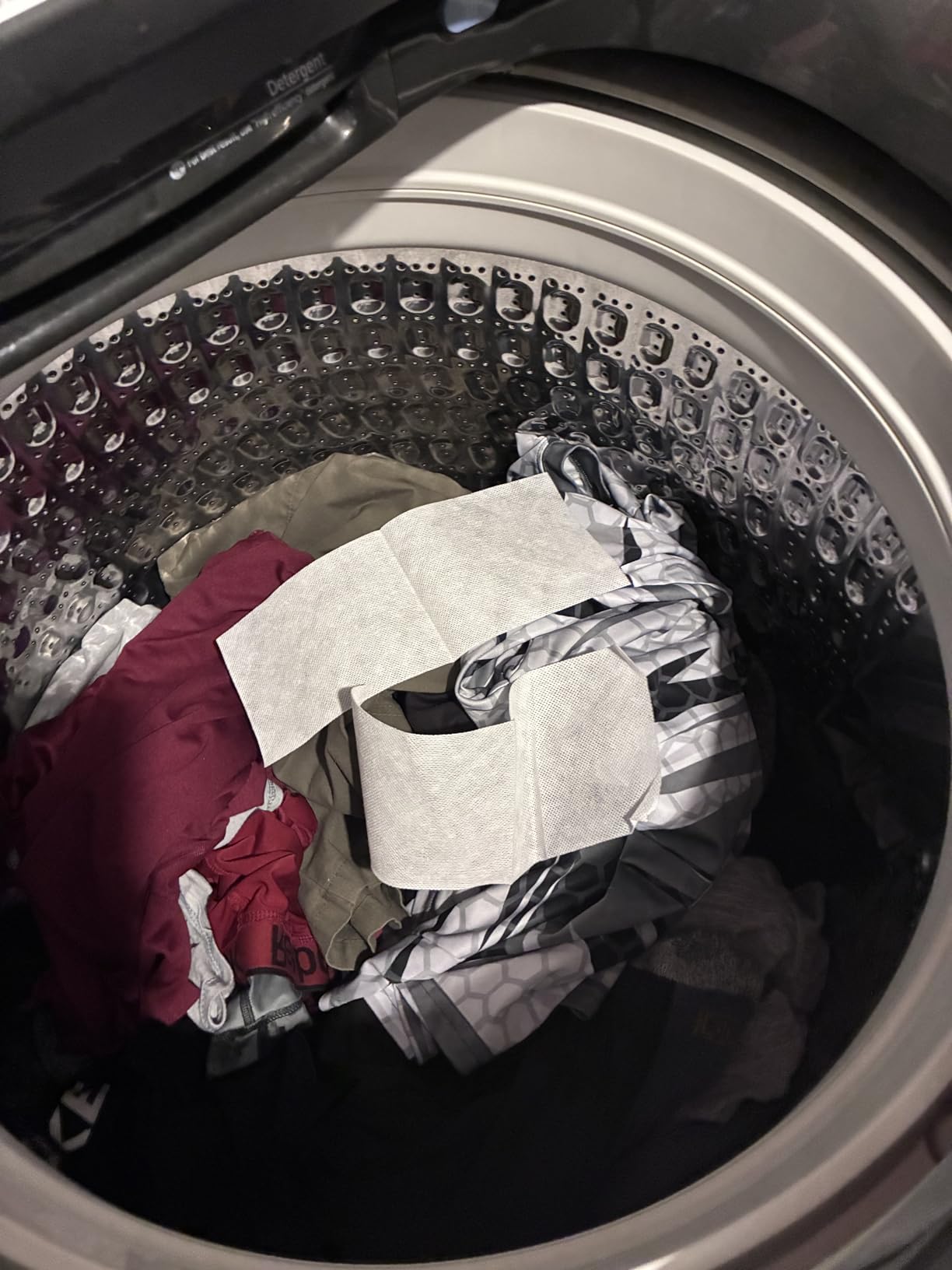
Reviewers who like it report straightforward dye protection and colours that stay vibrant across repeated washes. There is no complaints thread about shredding or mess, which matters in a drum that holds water lower than an agitator washer.
The 80-sheet count sits in the middle of this list. That makes it a sensible middle path for a household that washes most days but does not want to manage four boxes or a monthly reorder.
Why the simplicity helps
Most sheets in this category need a decision. Two or three for large loads, a mesh bag in front loaders, extra sheets for new denim. A single-sheet rule that works across machines removes the decision entirely, and that is where inconsistency shows up in the reviews.
For travel and laundromat laundry, the low commitment is genuinely useful. One sheet per load, no measuring, no leftover half box at the end of a trip.
Where the evidence is thin
With 230 reviews, this is the smallest evidence base here, and roughly one in five reviews is a single star. That split suggests the sheet performs well for many owners and fails for a visible minority, usually on heavily bleeding loads.
Given the low review count, we would not make it the only protection in a house full of new dark garments. For ordinary mixed laundry it does the job, and for anything high-bleed pick a pack with a longer record.
10. Dansib 200 Count Dye Catcher Sheets: Best Bulk Supply
200 Count Color Absorber Laundry Sheets Dye Catcher Guard Sheets
200 sheets across four boxes
Unscented and fragrance free
Extra sheets advised for denim and towels
Large 15.5 ounce pack
Pros
- Largest sheet count here at 200 sheets in four boxes
- Unscented
- suits fabric softener sensitivities
- Owners wash new black and white items together on hot cycles
- Four separate boxes rather than one large carton
Cons
- Lowest average rating here at 4.4 with a small review base
- Some staining still got through in mixed darks and lights
Dansib solves a supply problem rather than a performance problem. Two hundred sheets arrive as four boxes of fifty, so a household doing six loads a week can buy once and forget the category for months. The four-box format also means you can keep a box in the laundry room and one in a suitcase or a holiday home.
Unscented and fragrance free suits people sensitive to fabric softener, and the guidance is practical. Add more sheets for new dark clothes, towels, jeans or large loads, which is the same advice every brand in this category eventually gives.
Owners report washing new black and white items together on hot cycles with no transfer, which is a more demanding test than most mixed laundry. Those reports are balanced by others who found staining still came through when mixing darks and lights.
Why four boxes is a smart format
Separate boxes beat one large carton for anyone spread across more than one laundry room, and they keep the sheets dry and flat instead of compressing in a stack. It is also the only way in this list to have a box at a family member’s place or in a travel bag.
The unscented formula is worth a note for anyone sensitive to softener fragrance. In a mixed load with towels, that sensitivity is not a small issue.
Where the rating gives us pause
This carries the lowest average rating in the roundup at 4.4 on 146 reviews, and one reviewer found the sheet absorbed less colour than its appearance suggested. That is the myth from earlier in this article showing up in a real review, and it is a caution against judging any sheet by how dramatic it looks.
For a load of new garments, use extra sheets as the packaging advises. If consistent performance on unpredictable loads is your priority, one of the better-evidenced picks higher on this list is the safer buy.
How Many Sheets Do You Need Per Load?
One sheet handles a normal mixed load: mostly colorfast clothing, one or two dark items, nothing brand new. That is the load color catchers were built for, and it is where almost all of the review evidence sits.
Two sheets are worth adding for a larger drum, a heavy soiled load, or the first wash of any newly bought dark garment. Three is the practical ceiling for a full drum of new denim or an untreated bright red item, and even then the honest advice is to wash those garments separately the first time.
More than three stops being useful. Once sheets are saturated, additional ones add material to the water rather than capacity, so the commonly repeated claim that two sheets always beat one is only true for high-bleed loads.
How to Use Color Catchers the Right Way
Drop the sheet into the drum with the clothes, not into the detergent drawer. The drawer is flushed at the start of the cycle and the sheet can sit there until the machine refills, while a sheet in the drum is soaked and tumbling from the start, where the free dye is.
Add the sheet at the same time as the detergent and the clothes, before the door closes. Using it for one cycle only is the next rule, because a used sheet has already given up most of its binding sites.
Toss it in the dryer with the load if you dry on a normal cycle. Only one sheet in this roundup is explicitly designed for the dryer, so for anything else, remove the sheet before the dryer if you want to be careful.
Wash in cold or cool water where you can. Less heat means less dye migration, which means less work for the sheet. Very hot cycles on mixed loads defeat the purpose of adding protection in the first place.
Store the box closed and dry. Sheets that absorb humidity from an open package behave differently, and a wet sheet in the drum can tear.
Air-drying after a protected wash gives the sheet and the load a second chance, since the dye is still mobile while the fabric dries. Our picks for the best drying racks for laundry cover setups that leave a mixed load spread out rather than bunched.
If you are staging loads before washing, keep them in baskets rather than piling damp laundry in the machine. Our guide to laundry hampers for bedrooms covers sorting at the point where it actually happens.
Why Some Washing Machines Tell You Not to Use Them
Washing machine manuals do warn against color catchers on some models, and it is the most common reason people search this topic. Two separate people-also-ask questions ask exactly this, which tells you how unresolved the answer is.
The reason is mechanical rather than chemical. An impeller or high-efficiency drum has less water and a tighter gap between the drum and the outer tub. A loose non-woven sheet can fold and press against that gap, and the manufacturer carries the risk of a blocked filter or a damaged seal. Top-loaders with a center agitator are the least affected, since the sheet is churned through the water repeatedly.
The practical response is to check your manual. If the model is approved, use it. If the manual says not to, pick a sheet that is explicitly approved for high-efficiency models, or one that recommends a mesh bag so the sheet cannot reach the drum gap.
Warranty questions follow the same logic. A blocked pump or a torn seal caused by a sheet is not something you want to be explaining afterwards, and the products on this list that state HE compatibility are the ones to choose when your manual is silent.
When Color Catchers Are Not Enough
Raw denim is the clearest case. Indigo sits on the surface of the fibre rather than bonded to it, so a new pair of jeans can release enough dye to tint a full load regardless of how many sheets you use. Wash new denim alone, twice, before it goes anywhere near whites.
A brand-new bright red or saturated garment is the second case. Deep red and dark blue release the most visible dye in the first washes, and a sheet works best on the second and third wash, once the loose fraction has already gone.
Hot cycles are the third. Heat drives dye out of the fibre faster than any sheet can capture it, so a 60C wash of new dark garments is the worst possible pairing.
Stains that have already set are the fourth, and this is the one people most often get wrong. A sheet prevents dye from transferring; it does not lift dye that is already bonded into a fibre. That is the failure case r/laundry describes when a rewashed garment with a color catcher sheet still shows the original stain.
None of that means sorting is unnecessary. Sort your whites, your darks and your colors anyway, and treat a sheet as the net under the tightrope rather than the rope.
Color Catchers vs Sorting, Vinegar and Cold Wash
Sorting laundry by color is still the most reliable method, because it removes the problem rather than managing it. Three buckets works for most homes: whites, lights, and darks plus colors. A sheet earns its place on the load where the buckets were wrong.
Cold washing helps because dye migration scales with temperature. Cool water reduces how much dye leaves the garment, which reduces how much the sheet has to catch. It is a free improvement, not a replacement.
White vinegar on the first wash of a new garment helps set remaining surface dye by shifting the wash chemistry slightly acidic. It does nothing for loose dye already in the water, so the two are complementary at best.
Baking soda is the opposite effect, raising alkalinity and releasing dye. If you already add it to your wash, you are working against a color catcher. Oxygen bleach such as sodium percarbonate can address a stain after the fact, which is where prevention stops and recovery begins.
DIY catchers made from white towels or paper towels capture a small fraction of what a purpose-built sheet does. They are fine for a load you already trust.
If a bleeding garment keeps contaminating the machine, a rinse sink helps you test it without a full cycle. Our utility sink picks for laundry rooms cover that setup.
What to Look for When You Buy Color Catcher Sheets
Sheet count per pack is the number that shapes your bill, and it varies enormously. Forty-sheet packs cost the most per wash and two-hundred-sheet packs the least, so pick a count that matches your weekly number of loads rather than the largest box.
Construction matters more than brand. Mesh or microfiber substrates give more surface area than a flat sheet, which means more dye captured before saturation. Heavy metals, brighteners and lint claims tell you what else the sheet is designed to trap.
Machine compatibility should be confirmed before you buy, especially in a high-efficiency front-loader. Fragrance free and unscented formulas are worth preferring in a house with babies or sensitive skin.
Finally, look at rating against review count rather than rating alone. A 4.8 on a few hundred reviews tells you much less than a 4.7 on thirty thousand, and the same applies to any single star reading in this article.
Frequently Asked Questions
Do color catcher laundry sheets really work?
What is the best color catcher for laundry?
Which color catcher is better, Carbona or Shout?
Why do some washing machines say not to use color catchers?
What are some alternatives to color catchers for laundry?
How many sheets should I use per wash?
Best Color Catchers for Mixed Laundry: The Final Word
Shout Color Catcher is our pick for the best color catchers for mixed laundry, because a 4.8 rating across more than 40,000 reviews is the only evidence base in this category you can genuinely rely on. It works at any temperature, suits HE and standard machines, and needs no second sheet on an ordinary load.
Pick Dylon if greying matters to you, Binbata or Xcleen if you want mesh construction at a lower cost per sheet, Carbona if you want plant-based fibres, and the 168- or 200-count packs if you wash enough that reordering is a nuisance.
Sort your whites, lights and darks, keep a sheet for the load where that plan slips, and give new denim its own first wash. That combination solves more problems than any single box of sheets can.
Reviewed and updated for October 2026. We may earn a commission from purchases made through the links on this page.