
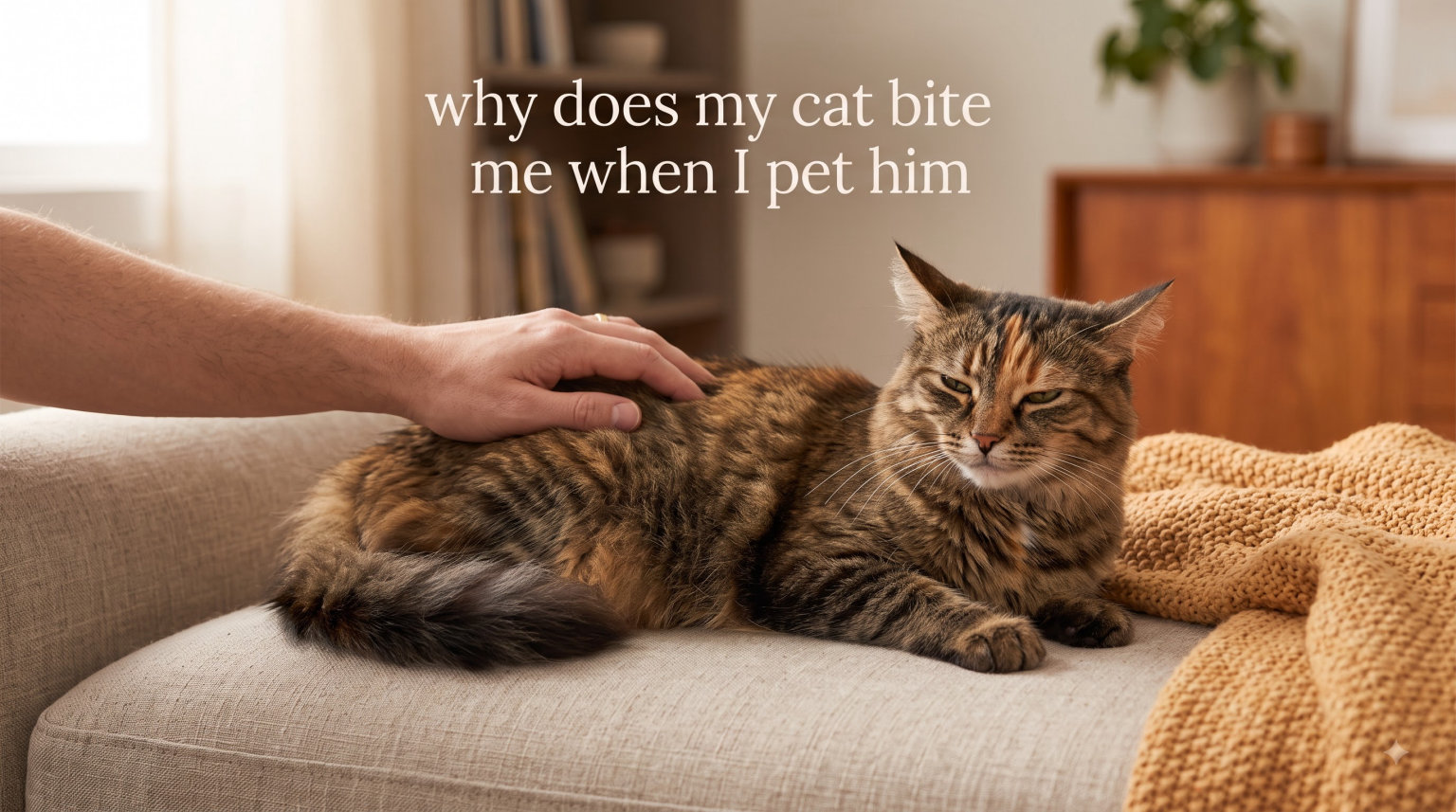
You are sitting on the couch, stroking your cat. The purring is loud, the eyes are half-closed, and everything feels peaceful. Then, out of nowhere, teeth sink into your hand. If this scenario sounds familiar, you are far from alone. Thousands of cat owners ask the same question every single month: why does my cat bite me when I pet him?
The short answer is that biting during petting is one of the most common and normal feline behaviors. Cats bite for a variety of reasons, ranging from affection to overstimulation to underlying pain. Understanding the cause behind the bite is the first step toward preventing it and strengthening the bond you share with your cat.
In this guide, our team breaks down every reason your cat might bite during petting, how to read the warning signs before it happens, and exactly what to do when those teeth make contact. Whether your cat delivers gentle love nibbles or sudden aggressive chomps, you will leave with a clear action plan.
Table of Contents
Why Does My Cat Bite Me When I Pet Him?
Cats bite when being petted for five main reasons: overstimulation, affection (love bites), petting-induced aggression, pain or illness, and play or predatory drive. Each cause has distinct body language signals and requires a different response.
Here is a quick breakdown of the most common reasons:
Overstimulation: Your cat has reached their sensory limit for touch and wants you to stop.
Love bites: Gentle nibbles that signal affection and contentment.
Petting-induced aggression: A sudden switch from enjoyment to irritation during prolonged petting.
Pain or medical issues: Hidden discomfort, injury, or illness makes touching unpleasant.
Play and predatory instincts: Hunting drive kicks in during physical interaction.
Most cats give clear warning signs before they bite. Learning to read those signals is the single most effective way to reduce biting incidents in your home.
Overstimulation: The Most Common Reason
Overstimulation is the number one cause of biting during petting. Cats have a limited threshold for sensory input, and once that threshold is crossed, their nervous system becomes overwhelmed. The bite is their way of saying “I have had enough.”
Think of it like being tickled. At first it might feel fun, but after a while it becomes unbearable and you want it to stop immediately. Cats experience something similar with prolonged touch.
Every cat has a different tolerance level. Some can handle ten minutes of continuous petting, while others reach their limit after just three or four strokes. This threshold can also vary day to day based on the cat’s mood, environment, and stress levels.
Overstimulation biting typically happens after a long, enjoyable petting session. Your cat was genuinely enjoying the attention, but their body eventually said “no more.” This is why so many owners feel confused when the bite comes right after a period of intense purring and relaxation.
Key signs your cat is becoming overstimulated include a twitching tail, ears rotating backward or to the sides, skin rippling along the back, and a sudden tensing of the body. If you notice any of these signals, stop petting immediately and give your cat space.
Love Bites: When Biting Means Affection
Not all bites are negative. Cat love bites are gentle, controlled nibbles that actually signal affection and trust. These soft bites are a behavior cats learn as kittens from their mothers and littermates.
Love bites are typically light and do not break the skin. They often happen when your cat is relaxed, purring, and settled into your lap. Your cat may also lick you before or after the gentle bite, which reinforces the affectionate intent.
Cat behaviorists believe love bites are linked to grooming behavior. When cats groom each other, they sometimes give gentle nips as part of the process. If your cat gives you a love bite, they are treating you like family.
Love bites are usually nothing to worry about. However, some cats can escalate from gentle nibbling to harder biting if they become excited. If the nibbles start getting stronger, simply redirect your cat’s attention with a toy or stop petting for a moment.
Petting-Induced Aggression: Reaching the Threshold
Petting-induced aggression is a specific behavior pattern where a cat accepts petting for a period of time, then suddenly turns and bites or scratches. This is different from overstimulation because the aggression can appear more intense and is often accompanied by vocalization like growling or hissing.
Cat behaviorists use the term “petting threshold” to describe how long a cat can tolerate being touched before reacting. Most cats have a predictable threshold, and once you learn yours, you can stop petting before the bite ever happens.
Here is a simple method to identify your cat’s threshold. Next time you sit down for a petting session, count the strokes. When your cat bites or shows clear warning signs, note the number. Repeat this several times over a week.
Most cats fall into a consistent range. You might find your cat always bites after about eight strokes, for example. Once you know this number, simply stop at five or six strokes. You end the session on your terms, before your cat feels the need to communicate through biting.
This technique alone dramatically reduces biting incidents for many cat owners. It requires no training tools, no special equipment, and no punishment. You are simply respecting your cat’s natural limits.
Pain and Medical Causes to Rule Out
Sometimes biting during petting is a sign that something hurts. Cats are masters at hiding pain, and a sudden bite might be their only way to tell you that a specific area is tender or injured.
Common medical causes include arthritis, dental disease, ear infections, skin allergies, and injuries from falls or fights. If your cat suddenly starts biting when they never did before, or if they react aggressively only when you touch a specific part of their body, a veterinary visit is warranted.
Older cats are especially prone to age-related pain. A senior cat who suddenly begins biting during petting may be developing arthritis or joint stiffness. What feels like a gentle stroke to you can feel uncomfortable on inflamed joints.
Watch for these red flags that suggest a medical cause: biting only when touched near a specific area, sudden personality changes, hiding more than usual, decreased appetite, limping, or excessive grooming of one spot. Any of these signs mean it is time to call your veterinarian.
Never punish a cat for biting due to pain. They are not being mean or aggressive. They are communicating discomfort the only way they know how. A thorough checkup can identify and treat the underlying issue, and the biting often stops once your cat feels better.
Play Behavior and Predatory Instincts
Cats are natural hunters, and that predatory drive does not disappear just because they live indoors. Sometimes what looks like aggressive biting is actually play behavior. Your hand or arm becomes the target because it moves, and movement triggers the hunting instinct.
Play biting is especially common in younger cats and in breeds with high energy levels. Your cat may grab your hand with their front paws, kick with their back legs, and bite in a rapid sequence. This is exactly how cats attack prey in the wild.
The problem with play biting is that it reinforces a dangerous habit. When you let your cat practice hunting on your hands, they learn that biting humans is an acceptable game. This behavior becomes harder to break over time.
The solution is to redirect play biting onto appropriate toys. Whenever your cat gets wound up during petting, offer a wand toy or kicker toy instead. This lets them satisfy their hunting drive without using your body as a target.
Kitten vs Adult Cat Biting: What Changes
Age makes a big difference in why cats bite. Kittens explore the world with their mouths, much like human babies do. Biting is how they learn about texture, pressure, and social boundaries. When kittens bite during play, they are usually just doing what comes naturally.
The critical window for teaching bite inhibition is between three and fourteen weeks of age. During this time, kittens learn from their mothers and littermates how hard is too hard. If a kitten bites a littermate too aggressively, the sibling yelps and stops playing. This teaches the biter to be gentle.
Kittens separated from their litters too early may miss this important lesson. These cats often grow up biting harder than they should because they never learned proper bite inhibition. If you adopted a young kitten, you become their teacher for this skill.
Adult cats, by contrast, usually bite for one of the reasons covered earlier: overstimulation, love bites, petting aggression, or pain. Adult biting is less about learning and more about communication. An older cat who suddenly starts biting is almost always trying to tell you something specific.
Senior cats require extra attention. Changes in biting behavior in an older cat frequently point to age-related health issues. Always take new biting patterns in senior cats seriously and schedule a veterinary checkup.
Warning Signs: Reading Cat Body Language Before the Bite
Cats almost never bite without warning. The signals are there, but most people miss them because they do not know what to look for. Once you learn to read feline body language, you can stop petting before your cat reaches the point of biting.
Here are the warning signs to watch for, listed from earliest to most urgent:
Tail twitching or thumping: A slowly swishing tail is normal, but rapid twitching or hard thumping means your cat is getting irritated.
Ears turning sideways or backward: Relaxed ears face forward. When they rotate like airplane wings, your cat is uncomfortable.
Skin rippling on the back: Also called piloerection, this twitching means your cat’s nerves are firing and touch is becoming unpleasant.
Dilated pupils: Large, dark pupils in a well-lit room signal high arousal or excitement that can tip into overstimulation.
Body tensing or stiffening: A relaxed cat feels soft and heavy. A cat about to bite suddenly feels rigid and light.
Head turning toward your hand: Your cat is tracking your hand with intent. This is often the last warning before a bite.
Vocalization: A low growl, grumble, or change in the purring pattern means your cat wants the interaction to end.
The earlier you catch these signs, the better. If you stop petting at the first tail twitch, you may never reach the bite stage at all. Make it a habit to check your cat’s body every few strokes during a petting session.
One useful trick is to do a quick body scan every five to ten seconds. Check the tail, then the ears, then the eyes, then the muscle tension. This takes about two seconds and becomes second nature after a few sessions. It transforms your ability to predict and prevent biting.
Love Bites vs Aggressive Bites: How to Tell the Difference
Telling the difference between a love bite and an aggressive bite can feel tricky, but there are clear distinctions. The context, intensity, and body language surrounding the bite tell you everything you need to know.
Love bites share these characteristics:
Gentle pressure that does not break the skin
Occurs while your cat is relaxed and purring
May be accompanied by licking or kneading
Your cat’s body remains loose and soft
Ears stay forward and tail stays still or gently swaying
Aggressive or overstimulation bites look and feel different:
Harder pressure that may break the skin
Happens suddenly after a period of growing tension
May include clawing or kicking with back legs
Your cat’s body is stiff, tense, or crouched
Ears are back, tail is thrashing, pupils are dilated
May be followed by growling, hissing, or jumping away
If your cat gives a gentle nibble while purring in your lap with relaxed body language, that is a love bite. If your cat suddenly chomps hard after minutes of escalating body tension, that is overstimulation or petting aggression. The body language before the bite is the most reliable indicator of intent.
How to Stop Your Cat from Biting When You Pet Him
Reducing biting during petting comes down to three core strategies: respecting your cat’s threshold, reading warning signs, and using positive reinforcement. Here is a step-by-step approach that works for most cats.
Step 1: Find your cat’s petting threshold. Count strokes during your next several petting sessions. Note the number when your cat bites or shows clear warning signs. Subtract two to three strokes from that number as your safe stopping point.
Step 2: Pet only safe areas. Most cats prefer being stroked on the head, cheeks, and chin. These areas have scent glands and feel comforting. Avoid the belly, lower back, and base of the tail unless your cat specifically enjoys being touched there.
Step 3: Keep sessions short. Instead of one long petting marathon, offer several short sessions of two to three minutes throughout the day. This keeps your cat well below their overstimulation threshold.
Step 4: Stop at the first warning sign. The moment you see a tail twitch, ear rotation, or body stiffening, remove your hand calmly. Do not jerk away suddenly, which can excite your cat. Simply lift your hand and let the session end naturally.
Step 5: Reward calm behavior. When your cat stays relaxed after a petting session, offer a treat or verbal praise. This reinforces the idea that calm behavior earns rewards, and it builds a positive association with being touched.
Step 6: Try desensitization training. If your cat has a very low threshold, gradually build tolerance by petting for one stroke, pausing, then petting again. Over weeks, slowly increase the number of strokes before pausing. This gentle approach can extend your cat’s tolerance over time.
Step 7: Provide play outlets. Daily interactive play with wand toys burns off excess energy and satisfies hunting instincts. A cat who gets adequate play is less likely to channel that drive into biting during petting.
Consistency is everything. These techniques take time, but most cat owners see noticeable improvement within two to four weeks of regular practice.
What to Do When Your Cat Bites You
Even with the best prevention, bites will still happen occasionally. How you respond in the moment matters more than you might think. The wrong reaction can actually reinforce biting behavior.
When your cat bites, follow these steps:
Freeze and stay still. Do not pull your hand away sharply. Jerky movements trigger the chasing and grabbing instinct and can make your cat bite harder.
Make a short, sharp sound. A high-pitched “ouch” mimics the yelp a kitten hears from littermates. This communicates that the bite hurt and crossed a line.
Stand up and walk away. Remove all attention immediately. Stand up, leave the room, and ignore your cat for several minutes. This teaches that biting ends all interaction.
Do not yell or hit. Never physically punish your cat. This creates fear and damages trust, often making biting worse rather than better.
Do not push your cat away. Pushing can be interpreted as play or a challenge. Simply withdraw and leave.
For the bite wound itself, wash the area with soap and warm water. Cat bites can introduce bacteria deep into tissue, so monitor for redness, swelling, or infection over the following days. If you see signs of infection, seek medical attention promptly.
The key takeaway is that your response should be calm and consistent every single time. Cats learn through repetition. If biting always results in attention ending, your cat will gradually reduce the behavior. If biting sometimes results in continued petting or an exciting reaction, the behavior persists.
FAQ
Why does my cat grab and bite my hand when I pet her?
Why is my cat affectionate and then attacks me?
How to tell if a cat is love biting?
Should I ignore my cat after he bites me?
Conclusion
Understanding why your cat bites when you pet him transforms the experience from frustrating and confusing to manageable and predictable. Most biting comes down to overstimulation, love bites, petting aggression, medical pain, or play drive, and each cause has clear warning signs you can learn to read.
The most powerful tools you have are observation and respect for your cat’s limits. Count your strokes, watch for tail twitches and ear changes, and always stop before your cat feels the need to bite. With consistent practice, you and your cat can enjoy peaceful, bite-free petting sessions that strengthen the bond between you.
Remember that every cat is an individual with their own unique threshold and personality. What works for one cat may need adjustment for another. The question “why does my cat bite me when I pet him” does not have a single universal answer, but with patience and attention, you can find the answer that fits your cat perfectly.