
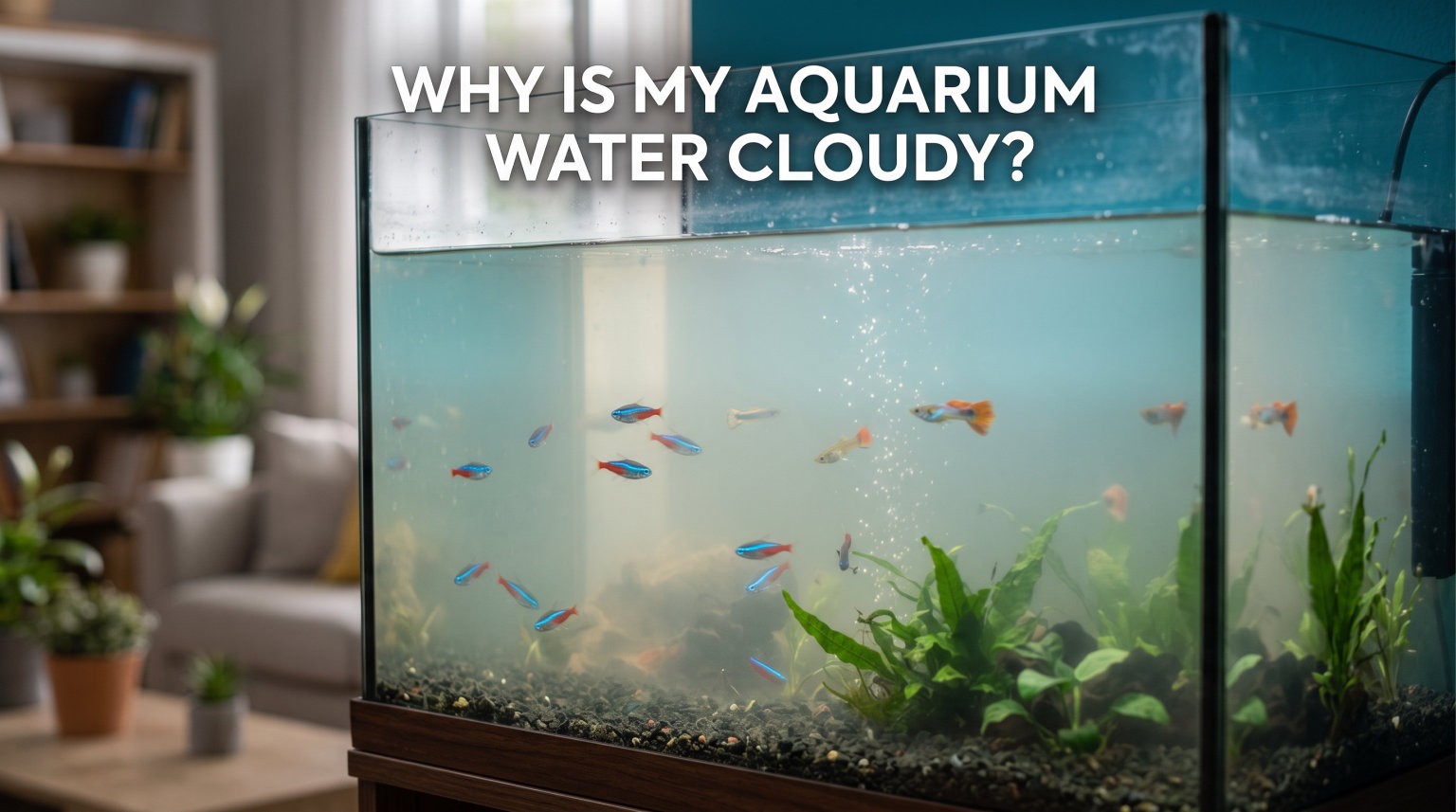
You set up your aquarium, added your fish, and everything looked perfect for a day or two. Then the water turned milky, foggy, or greenish, and now you are wondering why your aquarium water is cloudy and whether your fish are in danger.
The short answer: cloudy aquarium water is almost always caused by a bacterial bloom, and in most cases it is completely normal and temporary. The cloudiness looks alarming, but the bacteria themselves are rarely harmful to your fish.
The real risk is not the cloud. It is what happens when you panic and start doing large water changes, rinsing your filter media in tap water, or dumping chemicals into the tank. Those reactions make the problem worse and drag it out for weeks.
In this guide, I will walk you through every cause of cloudy aquarium water, how to diagnose it by color, what you should never do, and the exact steps to clear it up safely. By the end, you will know whether to act or simply wait.
Our team has pulled together insights from hobbyist forums, aquarium research, and years of collective fishkeeping experience to give you a clear, no-panic action plan for 2026.
Table of Contents
What Causes Cloudy Aquarium Water?
Cloudy aquarium water is caused by one of three things: free-floating bacteria, suspended algae, or particulate debris. The color of the cloudiness tells you which one you are dealing with.
Before you touch anything in your tank, diagnose the problem. The fix for a bacterial bloom is patience. The fix for green water is light reduction. The fix for debris is better mechanical filtration. Doing the wrong fix wastes time and can stress your fish.
Let me break down each cause in detail, starting with a quick color reference you can use to identify your situation in seconds.
Cloud Color Quick Reference Guide
Here is the fastest way to figure out what is going on. Match your cloud color to the cause:
- White or milky cloud: This is a bacterial bloom. Heterotrophic bacteria are multiplying rapidly in response to organic nutrients in the water. Most common in new tanks during the first 2 to 4 weeks. Usually harmless and self-limiting.
- Green water (pea soup): This is an algae bloom. Single-celled algae are reproducing due to excess light and dissolved nutrients. Your tank looks like green soup. Harmless to fish but ugly and persistent.
- Brown or rusty cloud: This points to diatoms, which feed on silicate in the water or substrate. Common in new setups and tanks with high silicate tap water. Often clears on its own as the tank matures.
- Gray haze after setup or cleaning: This is mechanical turbidity, meaning fine dust from substrate, gravel, or filter media is suspended in the water. Clears within hours to a couple days as the filter catches it.
If your water is milky white, keep reading because the next section covers the most common cause in detail.
Bacterial Bloom: The Number One Cause of Cloudy Water
A bacterial bloom is the single most common reason for cloudy aquarium water, especially in tanks that are less than 6 weeks old. When you see milky, white water that appeared suddenly, heterotrophic bacteria are almost always the cause.
Heterotrophic bacteria are different from the nitrifying bacteria that run your tank’s nitrogen cycle. Heterotrophs feed on dissolved organic matter and multiply incredibly fast, sometimes doubling their population in under an hour. When they explode in number, they become visible as a milky haze throughout the water column.
This happens because a new aquarium is a biological blank slate. There are plenty of nutrients from fish waste, uneaten food, and tap water, but the bacteria that normally keep things in balance have not established yet. The heterotrophs take advantage and multiply unchecked.
New Tank Syndrome Explained
New tank syndrome is the informal name for this bacterial bloom phase. It is not a disease or a malfunction. It is the tank’s ecosystem booting up.
During the first few weeks, your tank goes through the nitrogen cycle. Ammonia from fish waste rises first, then nitrite spikes as bacteria convert the ammonia, and finally nitrate appears as another group of bacteria finishes the conversion. The milky bloom usually shows up somewhere in the middle of this process.
The bloom typically lasts anywhere from a few days to 4 weeks. It often gets worse before it gets better, then clears almost overnight once the bacterial population stabilizes and the available nutrients are consumed.
Established Tank Bacterial Blooms
Cloudy water in an established tank that has been running for months points to a different trigger. Something introduced a sudden surplus of organic nutrients.
Common culprits include overfeeding, a dead fish or snail decomposing somewhere in the tank, replacing all your filter media at once (which wipes out your beneficial bacteria), or cleaning filter media in untreated tap water (which kills bacteria with chlorine).
If your established tank suddenly clouds up, look for the source of the nutrient spike before doing anything else.
The Real Danger: Oxygen Depletion
Here is something most articles gloss over. The bacteria in a bloom are not toxic to your fish. The danger is oxygen.
A massive bacterial population consumes dissolved oxygen as it breaks down organic matter. If the bloom is severe and your tank has limited surface agitation or warm water (which holds less oxygen), your fish can suffocate. Watch for gasping at the surface, hanging near the top of the tank, or rapid gill movement.
If you see these signs, increase aeration immediately with an air stone or by raising your filter output to agitate the surface. This is one of the few situations where you should take action during a bloom rather than waiting it out.
Algae Bloom and Green Water
If your tank water is green rather than white, you have an algae bloom, not a bacterial bloom. The water looks like pea soup, and you can barely see your fish through it.
Green water is caused by single-celled phytoplankton that float freely in the water column. They are too small for normal filter media to catch, which is why standard filtration does not clear green water. The algae reproduce rapidly when they have two things in abundance: light and dissolved nutrients.
What Triggers Green Water
The most common trigger is leaving your aquarium light on too long. Experienced aquarists on forums repeatedly identify 8 or more hours of light per day as the tipping point for green water outbreaks. Combine that with excess nutrients from overfeeding or infrequent water changes, and the algae explode.
Green water can also appear after a water change, especially if the new water introduced nutrients or if sunlight hits the tank. Tanks near windows are particularly prone to recurring green water problems.
How to Fix Green Water
Reduce your light. Cut back to 6 hours per day and do a three-day complete blackout if the bloom is severe. Wrap the tank in a towel, turn off the light, and do not feed heavily during the blackout.
A UV sterilizer is the most reliable tool for green water because it kills the single-celled algae as water passes through it. Unlike bacterial blooms, green water responds well to UV because the algae cells are circulating through the filter constantly.
Keep in mind that a UV sterilizer only fixes the symptom. You still need to address the root cause by reducing light and nutrients, or the green water will return the moment you turn the UV unit off.
Silicate and Brown Cloudy Water
Brown or rusty cloudiness is usually caused by diatoms, a type of microscopic organism that thrives on silicate. This is one of the most under-diagnosed causes of cloudy aquarium water because many guides skip it entirely.
Diatoms look like a brown film on your glass, substrate, and decorations. When they bloom in the water column, the tank takes on a murky brown tint. They are extremely common in newly set up tanks, often appearing in the first 1 to 3 weeks.
Where Silicate Comes From
Silicate enters your tank from several sources. The most common is tap water, since many municipal water supplies contain dissolved silicate. Certain substrates, especially sand and some gravels, leach silicate into the water for weeks after setup.
Some aquarium salts and additives also contain silicate traces. If you are mixing water for a brackish or marine tank, check your salt mix.
How Brown Cloudy Water Resolves
The good news is that diatom blooms are almost always self-limiting. Once the available silicate is consumed, the diatoms die off and the brown cloud disappears. This usually takes 1 to 2 weeks.
If your tap water is high in silicate, consider using RO (reverse osmosis) water or a silicate-removing filter media for future water changes. Live plants also compete with diatoms for nutrients, which helps prevent recurrence.
Mechanical Turbidity and Debris
Not all cloudiness is biological. Sometimes the cloud is just dust, sand, or fine particulate suspended in the water. This is called mechanical turbidity, and it is the easiest type of cloudiness to deal with.
If your tank clouded up immediately after setup, within the first day, the cause is almost certainly substrate dust. New gravel and sand release fine particles when first added, and these take time to settle or get caught by the filter.
Identifying Mechanical Turbidity
The cloud from debris is usually grayish rather than white or green. It may look gritty up close, and it often settles partially when the filter is turned off. You might also notice it right after cleaning your filter, re-scaping your substrate, or adding new decorations.
Fixing Mechanical Cloudiness
This one clears on its own as your mechanical filtration catches the particles. Make sure your filter is running properly and that you have fine filter media or filter floss in place to capture small particles.
Rinsing new substrate thoroughly before adding it to the tank prevents this entirely. If you are setting up a new tank, wash sand and gravel in a bucket until the rinse water runs clear. That single step eliminates most setup-day cloudiness.
You can also add a layer of filter floss or polishing pads to your filter temporarily. These catch the finest particles and can clear mechanical cloudiness within hours.
What NOT to Do When Your Water Is Cloudy
The biggest mistake you can make with cloudy aquarium water is overreacting. Almost every experienced aquarist on hobbyist forums tells the same story: the more you mess with a cloudy tank, the longer the cloudiness lasts.
Here are the five things you should never do when your water clouds up.
- Do not do large or frequent water changes. Every water change adds fresh dissolved nutrients and organic matter that feed the bacteria causing the bloom. Hobbyists on Reddit and aquarium forums consistently report that aggressive water changes prolong bacterial blooms rather than clearing them. If you must change water, limit it to 20 to 25 percent.
- Do not rinse your filter media in tap water. Tap water contains chlorine or chloramine that kills the beneficial bacteria living in your filter. If you wipe out your bacterial colony, the bloom gets worse and your tank may re-cycle from scratch. Always rinse filter media in old tank water removed during a water change.
- Do not replace all your filter media at once. Replacing the entire cartridge or all the media removes your biological filtration. Replace media gradually, swapping a portion at a time over several weeks.
- Do not dump chemicals or clarifiers in immediately. Water clarifiers and flocculants can help in specific situations, but they are not a first response. Adding them during an active bacterial bloom can clump bacteria together and worsen oxygen depletion as the clumped matter decomposes.
- Do not keep overfeeding. Excess food is one of the top causes of nutrient spikes that trigger and prolong blooms. Feed only what your fish can consume in 2 to 3 minutes, and remove uneaten food promptly.
If you remember nothing else from this article, remember this: patience is the most effective treatment for a bacterial bloom. Most cloudy tanks clear on their own when left alone.
How to Clear Cloudy Aquarium Water: Step by Step
Now that you know what not to do, here is the step-by-step process to clear cloudy water safely. The right approach depends on the cause, but these steps cover the most common scenarios.
Step 1: Identify the Cloud Type
Before taking action, diagnose the problem using the color guide earlier in this article. White means bacteria, green means algae, brown means diatoms, and gray means debris. The fix is different for each one.
Step 2: Test Your Water
Test for ammonia, nitrite, and nitrate. If ammonia or nitrite is above zero, your tank is still cycling and the bloom is part of that process. High nitrate with clear parameters otherwise suggests overfeeding or overstocking.
Testing tells you whether the cloudiness is a normal part of cycling or a sign of a deeper imbalance. It also confirms whether your fish are in immediate danger from water chemistry.
Step 3: Reduce Feeding
Cut back to small feedings once a day for a few days. Less food means less dissolved organic matter, which starves the bacteria or algae causing the bloom. This single change speeds up clearing significantly.
Step 4: Add Activated Carbon
Activated carbon in your filter absorbs dissolved organic compounds that feed bacterial blooms. It does not kill the bacteria directly, but it removes their food source. Replace the carbon every 2 to 4 weeks since it loses effectiveness over time.
Step 5: Seed the Tank With Beneficial Bacteria
If you have access to an established, healthy aquarium, you can speed up the clearing process by seeding your tank. Take a handful of gravel, a piece of filter media, or some decorations from the established tank and add them to yours. This introduces a ready colony of nitrifying bacteria that helps stabilize the ecosystem faster.
Bottled bacterial supplements are an alternative if you do not have access to an established tank. Look for products containing live nitrifying bacteria, not just enzymes.
Step 6: Use a UV Sterilizer for Green Water
A UV sterilizer is the most effective tool for clearing green water algae blooms. It does not help with bacterial blooms because the bacteria multiply faster than the UV can kill them. Save the UV unit for green water, not white cloudiness.
Step 7: Consider Flocculants as a Last Resort
Flocculants are water clarifiers that bind small particles together into larger clumps so your filter can catch them. They work well for mechanical turbidity and some types of debris cloudiness.
Use flocculants cautiously. They are not ideal during an active bacterial bloom because the clumping process can create oxygen demand as the aggregated matter breaks down. Make sure your filter can handle the increased load before adding a flocculant.
How to Prevent Cloudy Water in the Future
Once your water clears, you want to keep it that way. Prevention comes down to maintaining a balanced ecosystem where bacteria, plants, and filtration work together. Here are the strategies that keep water crystal clear long-term.
Feed Sparingly and Consistently
Overfeeding is the number one cause of recurring cloudiness in established tanks. Feed only what your fish eat in a couple minutes, once or twice a day. Remove any uneaten food after feeding. This prevents the nutrient spikes that trigger blooms.
Add Live Plants
Live plants are one of the best natural defenses against cloudy water. They absorb the dissolved nutrients that bacteria and algae would otherwise feed on. Fast-growing plants like hornwort, water wisteria, and floating plants are especially effective nutrient sponges.
Plants also compete directly with algae for light and resources. A well-planted tank is far less likely to experience green water outbreaks.
Maintain Your Filter Properly
Clean your filter media regularly but gently. Rinse it in old tank water, never tap water, to preserve the beneficial bacteria colony. Replace mechanical media when it starts to degrade, but stagger replacements so you never remove all your biological filtration at once.
Stock Your Tank Gradually
Adding too many fish at once overwhelms your biological filtration and triggers nutrient spikes. Add fish gradually, a few at a time, giving your bacteria colony a chance to grow alongside the increased bioload.
Keep Lighting Under Control
Limit your aquarium light to 6 to 8 hours per day. Use a timer so the schedule stays consistent. Avoid placing the tank in direct sunlight, which fuels algae blooms regardless of your artificial lighting schedule.
Stick to a Water Change Routine
Regular partial water changes of 20 to 30 percent every 1 to 2 weeks keep nutrient levels stable. This prevents the buildup that leads to blooms. Never do a full water change, as it strips your tank of beneficial bacteria and destabilizes the ecosystem.
Frequently Asked Questions
How do I clear up my cloudy fish tank?
How do I make my aquarium water crystal clear?
How long does it take for cloudy fish tank water to clear?
Is it okay if my aquarium water is cloudy?
Conclusion
Cloudy aquarium water looks alarming, but it is almost always a normal part of your tank finding its balance. Whether you are dealing with a milky bacterial bloom, green algae water, brown diatoms, or gray substrate dust, the cause is identifiable and fixable.
The most important takeaway is this: when water clouds up, do less, not more. Avoid large water changes, never rinse filter media in tap water, reduce feeding, and let the ecosystem stabilize on its own. Step in only if oxygen depletion threatens your fish.
Understanding why your aquarium water is cloudy is the first step toward keeping it clear for good. Feed carefully, maintain your filter gently, add live plants, and stock gradually. A balanced tank stays crystal clear with minimal intervention, and your fish stay healthy and stress-free.