
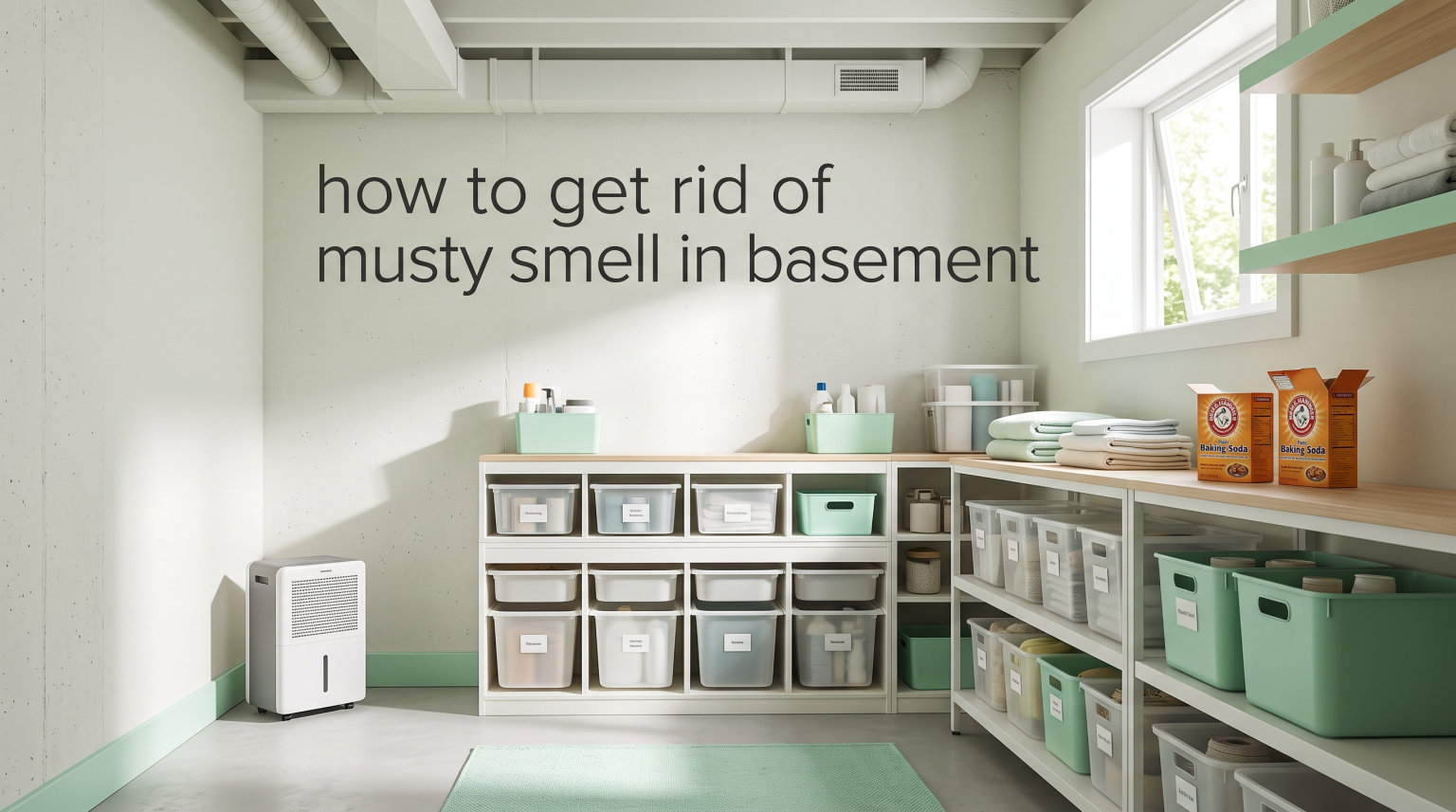
Learning how to get rid of musty smell in basement spaces is one of those home skills that pays back for years. I have helped friends tackle this problem in three different homes, and each time the fix came down to the same core idea: find the moisture, kill the mold, and keep the air moving.
That musty odor is not just unpleasant. It is your house telling you something is wrong. According to the EPA, indoor mold growth can begin within 24 to 48 hours of water exposure, and the smell is usually the first sign you notice. The good news is that most basement odors respond well to a methodical DIY approach.
In this guide, I will walk you through what causes the smell, the seven steps our team uses to eliminate it, and when it makes sense to call a professional. We will also cover the frustrating case of a dry basement that still smells musty, which is one of the most common questions I see on home improvement forums. If you are also fighting pests, our guide on dehumidifiers and moisture control overlaps with several of these techniques.
Table of Contents
What Causes the Musty Smell in Your Basement
That distinctive musty smell comes from microbial volatile organic compounds, or VOCs. These are gases released as mold and mildew grow and metabolize on damp surfaces. You smell them long before you see any visible growth, which is why so many homeowners are caught off guard.
Three conditions have to exist for mold to take hold: moisture, a food source, and temperatures between 60 and 80 degrees Fahrenheit. Basements hit all three naturally because they sit below grade, stay cool, and contain organic material like wood, drywall, cardboard, and dust.
Research from This Old House notes that roughly 60 percent of homes have some form of foundation leak. Even a tiny amount of seepage can keep humidity above the 60 percent threshold where mold thrives. Common culprits include:
Cracks in foundation walls or floors
Condensation on cold pipes and ducts in summer
Poor grading that directs rainwater toward the house
Clogged gutters and downspouts
Dry floor drains or P-traps that let sewer gas escape
The dry P-trap issue gets overlooked constantly. If your basement has a floor drain that rarely gets used, the water in the trap can evaporate. That breaks the seal and lets sewer gases seep in, which often smells musty or earthy. Pouring a quart of water down the drain once a month solves it.
How to Get Rid of Musty Smell in Basement: Step-by-Step Methods
I have organized these methods in the order our team uses them. Skipping ahead usually means the smell comes back within a few weeks. Stick with the sequence and you will get lasting results.
Step 1: Find and Fix the Moisture Source
Before you clean anything, find where the water is coming from. Walk every wall with a flashlight and look for efflorescence (white mineral deposits), dark stains, or actual drips. Check around window wells, sill plates, and where pipes enter the house.
Outside, make sure the soil grades away from your foundation at least six inches over the first ten feet. Clean gutters and extend downspouts at least four feet from the house. These simple fixes stop the majority of basement moisture problems.
Step 2: Run a Dehumidifier
Once you control the source, bring in a dehumidifier. For a typical 1,000-square-foot basement, our team recommends an Energy Star-rated 50-pint model. For larger spaces or very damp basements, an 80-pint unit is the sweet spot. The 80-pint models are the most commonly recommended size on home improvement forums for serious moisture problems.
Set the unit to keep humidity between 40 and 50 percent. Hook it up to a drain hose so it empties continuously into a floor drain or sump pump. Running it 24/7 for the first week is normal, and you should expect the smell to drop noticeably within seven to ten days.
Step 3: Clean Surfaces With Vinegar or Bleach
For hard surfaces like concrete, tile, and painted walls, scrub with a solution of one cup white vinegar per gallon of water. Vinegar is mildly acidic and kills about 82 percent of mold species. It is our go-to because it is safe, cheap, and does not produce harsh fumes.
For tougher jobs or non-porous surfaces, use a bleach solution of one cup bleach per gallon of water. Never mix bleach with ammonia or vinegar. Apply with a spray bottle or sponge, let it sit for 10 to 15 minutes, then scrub and dry. Wear gloves and ventilate the space.
Step 4: Use Natural Odor Absorbers
Once the source is under control, give the air itself a hand. These passive absorbers work around the clock:
Baking soda in open boxes or bowls (replace every 30 days)
Activated charcoal bags, which last up to two years and handle larger spaces
Zeolite rocks, a natural mineral option that traps odors and moisture
White vinegar in shallow dishes, which absorbs odors as it evaporates
Used coffee grounds in breathable containers
Place these around the basement and rotate them as needed. None of these replace fixing the moisture problem, but they give you a faster path to a fresh-smelling space while the dehumidifier does its work.
Step 5: Improve Air Circulation
Stagnant air holds moisture and odors. If your basement has windows, open them on dry days. For basements without windows, run the furnace fan continuously by switching it from Auto to On. This is a trick that came up over and over in homeowner forums, and it works because it keeps air moving through the entire house, including the basement.
Box fans or small circulating fans also help. Aim one at the mustiest corner and run it for a few hours a day. Air movement alone will not eliminate mold, but it speeds up drying and prevents new growth.
Step 6: Seal Foundation Cracks and Concrete Floors
After everything is dry and clean, lock the moisture out. For hairline cracks in poured concrete, use hydraulic cement. It expands as it cures and can even be applied to active leaks. For larger cracks, epoxy injection kits work well.
Cinder block walls benefit from a waterproofing masonry sealer. Bare concrete floors can be sealed with a penetrating concrete sealer to prevent moisture from wicking up through the slab. This is the step most DIY guides skip, and it is one of the biggest reasons smells come back.
Step 7: Address P-Traps and Floor Drains
Walk through and pour about a quart of water down every floor drain, plus a few tablespoons of mineral oil to slow evaporation. The water refills the P-trap and blocks sewer gas. The oil floats on top and prevents the water from evaporating for months.
If your basement has a sump pump, check that the lid is sealed and the discharge line runs at least ten feet from the foundation. An open sump pit can release musty air into the room.
Why Your Dry Basement Still Smells Musty
This is one of the most common frustrations I see. You have run the dehumidifier, mopped the floors, and the walls look dry, yet the smell lingers. There are three usual explanations.
First, VOCs embed in porous materials like carpets, drywall, and stored fabrics. These materials act like sponges, and the smell slowly releases as temperature and humidity change. Pull up any carpet that has been wet, and replace any drywall that shows staining.
Second, the dry P-trap issue we covered earlier. Even a brand-new basement can smell musty if the floor drain has gone dry. This one is easy to fix and often overlooked.
Third, hidden mold behind walls or under flooring. If the smell persists after two weeks of dehumidifier use, cut a small inspection hole in the drywall behind furniture or in the mustiest corner. You might find mold growing on the back side from a long-fixed leak.
How to Prevent Musty Smells From Returning
Once you have cleared the air, the goal is to keep it fresh. Prevention comes down to controlling humidity and water intrusion year-round.
Keep your dehumidifier running on a lower setting during humid months. A 50-pint unit costs about 30 to 50 dollars a year to run, and it is far cheaper than mold remediation. Aim for 40 to 50 percent relative humidity, which you can verify with an inexpensive hygrometer.
Inspect your basement every season for new cracks, water stains, or condensation on pipes. Wrap cold water pipes with foam insulation to prevent summer condensation. Make sure your dryer vents to the outside, not into the basement, and that bathroom exhaust fans in any basement bathrooms vent outdoors.
Outside maintenance matters too. Re-grade soil if it has settled, clean gutters twice a year, and trim back any landscaping that holds moisture against the foundation. If you want a deeper dive into keeping your basement pest-free while you manage moisture, our keeping your basement pest-free guide covers the crossover.
When to Call a Professional for Basement Odors
Most musty smells can be handled with the methods above, but some situations need a professional. Call a certified mold remediation specialist if you see mold covering more than 10 square feet, if the smell returns within a week of cleaning, or if anyone in the home is experiencing respiratory symptoms like persistent coughing, wheezing, or sinus irritation.
You should also bring in a foundation or waterproofing contractor if you find structural cracks wider than a quarter inch, bowing walls, or recurring water intrusion despite your grading and gutter fixes. These point to deeper issues that need professional drainage solutions like a French drain or exterior waterproofing membrane.
For mold testing, hire an independent indoor air quality consultant rather than a remediation company. The remediation company has a financial interest in finding mold, while an independent tester gives you an unbiased reading. Expect to pay 200 to 400 dollars for a proper inspection.
FAQ
Does a musty basement smell mean mold?
What is the best deodorizer for a musty basement?
What absorbs musty smells naturally?
Is a musty smell always mold?
How long does it take to get the musty smell out of a basement?
What kills musty smell in the basement?
Final Thoughts on Eliminating Basement Odors
Learning how to get rid of musty smell in basement spaces is a process, not a single product. Start with the moisture source, run a properly sized dehumidifier, clean affected surfaces, and keep the air moving. With consistent effort, most basements smell fresh within two to four weeks.
If you take one thing from this guide, take this: a dry basement is a fresh basement. The smell is information, and addressing the cause rather than masking the symptom is what makes the fix permanent. Your house will thank you for it.