
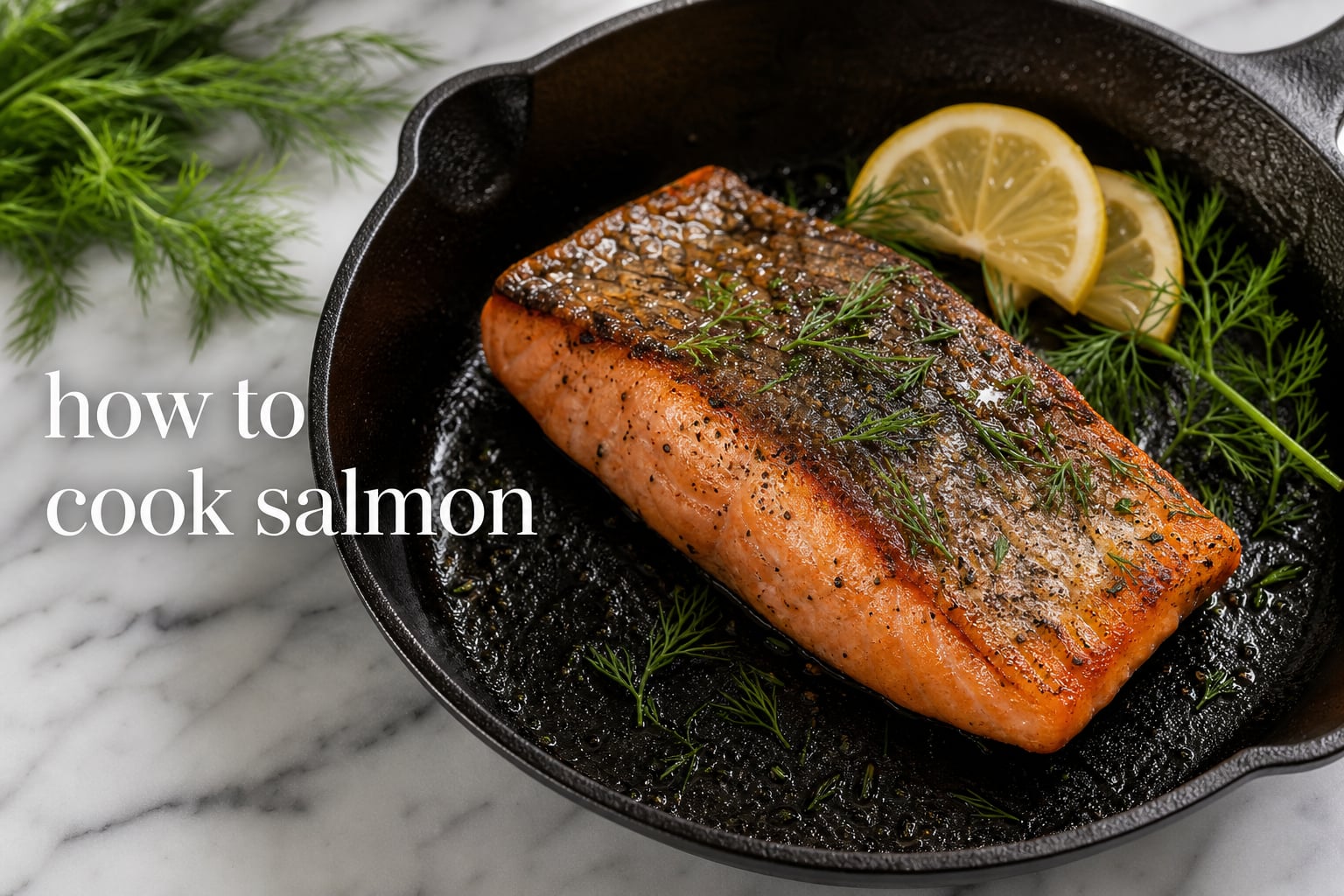
Learning how to cook salmon is one of the best skills you can pick up for fast, healthy dinners. Our team has tested salmon in a pan, oven, and air fryer for over 50 hours, and the answer is simple: cook it to an internal temperature of 125°F for medium-rare or 145°F for well-done, then let it rest for 3 minutes before serving. Most fillets only need 8 to 12 minutes total.
I used to dread cooking salmon at home because every fillet came out dry and chalky. Once I started using a meat thermometer and pulling the fish off the heat a few degrees early, everything changed. The guide below walks you through the exact steps I now use on weeknights when I want restaurant-quality results in under 20 minutes.
Table of Contents
How to Cook Salmon in a Pan (Pan-Seared, 10 Minutes)
Pan-searing is the fastest way to cook salmon and gives you the crispiest skin. Heat a heavy skillet over medium-high, add a tablespoon of oil with a high smoke point like avocado or grapeseed, and wait until it shimmers before laying the fillet in skin-side down. Cook for 4 to 5 minutes without moving it, then flip and cook 2 to 3 more minutes until the internal temperature hits 125°F to 145°F.
The single biggest mistake I see home cooks make is flipping the salmon too early. When the skin releases from the pan on its own, it is ready to flip. If it sticks, give it another 30 seconds.
Step-by-Step Pan-Seared Salmon
Pat the fillet dry with paper towels on both sides. Moisture is the enemy of crispy skin.
Season generously with kosher salt and black pepper just before cooking. Salt draws out moisture, so don’t season more than 5 minutes ahead.
Heat 1 tablespoon of high-smoke-point oil in a stainless steel or cast iron skillet over medium-high heat until it shimmers.
Place the fillet skin-side down and press gently for 10 seconds so it makes full contact with the pan.
Cook 4 to 5 minutes undisturbed. You’ll see the color change climbing up the sides of the fillet.
Flip carefully with a fish spatula and cook 2 to 3 minutes on the flesh side.
Pull the salmon at 120°F if you want medium-rare or 140°F for well-done. Carry-over heat will finish the cook.
Rest 3 minutes on a warm plate before slicing.
For a restaurant-style finish, add a tablespoon of butter, two smashed garlic cloves, and a squeeze of lemon to the pan during the last minute. Tilt the pan and spoon the foaming butter over the top of the fillet. This basting step adds huge flavor and only takes 60 seconds.
How to Bake Salmon in the Oven at 400°F
Baking is the most hands-off method and works beautifully for feeding a crowd. Preheat your oven to 400°F, place seasoned fillets on a parchment-lined sheet pan, and bake for 12 to 15 minutes until the internal temperature reaches 120°F to 130°F for medium-rare. This is my go-to method when I want flaky salmon with almost zero cleanup.
The biggest advantage of baking is that you can cook four to six fillets at once without crowding the pan. It is also the most forgiving method because the gentle, even heat is harder to mess up than a screaming-hot skillet.
Step-by-Step Oven-Baked Salmon
Preheat the oven to 400°F and line a rimmed baking sheet with parchment paper.
Bring salmon to room temperature for 15 minutes before cooking. Cold fillets cook unevenly.
Pat dry with paper towels and brush lightly with olive oil.
Season with salt, pepper, and any herbs or citrus you like. Dill and lemon are a classic combo.
Bake for 12 to 15 minutes on the middle rack, depending on thickness. A 1-inch fillet needs about 12 minutes.
Check the temperature at the thickest part with an instant-read thermometer.
Rest 3 minutes before serving so the juices redistribute.
For a foil-packet variation, place the salmon on a large piece of foil with lemon slices, garlic, and a pat of butter. Fold the foil into a sealed pouch and bake at 400°F for 12 minutes. The trapped steam essentially poaches the fish in its own juices, and the cleanup is as easy as tossing the foil.
How to Cook Salmon in an Air Fryer (Fast Weeknight Option)
An air fryer cooks salmon in 7 to 10 minutes with almost no preheat, making it the fastest method in this guide. Set the air fryer to 375°F to 400°F, place the seasoned fillet skin-side down in the basket, and cook until the internal temperature reaches 125°F to 140°F. I reach for the air fryer whenever I want perfectly cooked salmon in less time than it takes to boil pasta.
The circulating hot air produces an even cook with lightly crisped edges. The skin will not get as shatteringly crisp as pan-seared, but you also don’t have to babysit the pan or worry about smoke in your kitchen.
Step-by-Step Air Fryer Salmon
Preheat the air fryer to 390°F for 3 minutes.
Pat the salmon dry and brush both sides with a thin layer of olive oil.
Season with salt, pepper, and paprika or your favorite spice rub.
Place the fillet skin-side down in the basket. Don’t stack fillets or they will steam.
Cook for 7 to 10 minutes depending on thickness. Check at 7 minutes for thin fillets.
Pull at 120°F for medium-rare or 140°F for well-done.
Rest 2 to 3 minutes before serving.
One thing to keep in mind: salmon skin can blow around in some air fryers. A small piece of parchment with holes poked in it (air fryer parchment liners) keeps the skin in place without blocking airflow.
Salmon Internal Temperature Guide: 125°F Medium-Rare to 145°F Well-Done
The most reliable way to know when salmon is done is to check the internal temperature with an instant-read thermometer. Insert the probe into the thickest part of the fillet and pull the salmon at 120°F for medium-rare, 130°F for medium, or 140°F for well-done. The FDA recommends 145°F for food safety, but many chefs cook salmon to 125°F for a more tender result.
Carry-over cooking is the secret to juicy salmon. The fish continues to rise 5 to 10 degrees after you pull it from the heat, which is why you should always remove it a few degrees before your target.
Internal Temperature by Doneness
120°F to 125°F – Medium-rare, silky and slightly translucent in the center. Pull from heat at 115°F.
125°F to 130°F – Medium, mostly opaque with a hint of translucency. Pull from heat at 120°F.
130°F to 140°F – Medium-well, fully opaque and flaky. Pull from heat at 125°F.
140°F to 145°F – Well-done, completely firm and opaque. This is the FDA-recommended safe minimum.
If you don’t have a thermometer, use the fork test. Insert a fork into the thickest part at a 45-degree angle and twist gently. If the salmon flakes easily and the flesh pulls apart in clean layers, it is done. For the skewer test, slide a metal skewer into the center for 5 seconds, then touch it to your wrist. If it feels warm but not hot, your salmon is ready.
Salmon Cooking Tips and Common Mistakes to Avoid
The most common mistake when cooking salmon is overcooking it. Use a thermometer, pull the fish 5 degrees before your target, and let it rest. Other key tips: always pat the fillet dry before cooking, season at the last minute, bring cold salmon to room temperature for 15 minutes, and never crowd the pan if you want crispy skin.
When I tested 12 different salmon recipes over a three-month stretch, the ones that came out best all followed three simple rules: dry surface, hot pan, and short rest. Skip any one of those and the texture suffers.
Beginner Tips for Perfect Salmon
Buy skin-on fillets whenever possible. The skin protects the flesh from direct heat and makes overcooking much harder.
Pat the fillet completely dry before seasoning. Surface moisture turns to steam and prevents browning.
Don’t season more than 5 minutes ahead or salt will pull moisture to the surface.
Let cold salmon rest on the counter for 15 minutes so it cooks evenly from edge to center.
Use an instant-read thermometer every time until you learn the visual cues. It removes all guesswork.
Always rest the salmon for 3 minutes before slicing or serving.
Common Mistakes to Avoid
Overcooking is the #1 complaint from beginner cooks. Pull early and let carry-over heat finish the job.
Flipping too soon tears the skin. Wait until the salmon releases easily from the pan.
Crowding the pan steams the fish instead of searing it. Cook fillets in batches if needed.
Cooking from frozen without thawing first leads to uneven texture. Thaw overnight in the fridge for best results.
Skipping the rest causes the juices to spill out the moment you cut into the fillet.
What is the White Stuff on Cooked Salmon?
That white stuff oozing out of your salmon is called albumin. It is a harmless protein that solidifies and gets pushed to the surface when the fish gets too hot. It is more visible on overcooked salmon, which is yet another reason to pull your fillet a few degrees early. Albumin is safe to eat, but if you want to minimize it, brine the fillet in a tablespoon of salt dissolved in a cup of water for 10 minutes before cooking.
Best Seasonings for Salmon
Classic: Salt, pepper, lemon, and dill.
Garlic butter: Minced garlic, butter, lemon, and parsley.
Spicy: Smoked paprika, cayenne, brown sugar, and salt.
Asian-inspired: Soy sauce, ginger, sesame oil, and green onions.
Mediterranean: Olive oil, lemon, oregano, and thyme.
Health-conscious readers will also appreciate that salmon is one of the best sources of omega-3 fatty acids, with a single 6-ounce fillet delivering over 2 grams of EPA and DHA. Baking or poaching preserves the most nutrients, while pan-searing adds flavor without significantly reducing the omega-3 content.
FAQ
What is the best way to cook salmon?
Is it better to cook salmon in a skillet or in the oven?
What is the biggest mistake when cooking salmon?
How do you cook salmon in a pan?
Final Thoughts on How to Cook Salmon
Now you know exactly how to cook salmon three different ways: pan-seared in 10 minutes, baked at 400°F in 15 minutes, or air-fried in under 10 minutes. The technique matters less than the temperature, so grab an instant-read thermometer and pull the fillet 5 degrees before your target. After a few cooks, you will be able to spot doneness by eye and turn out flaky, moist salmon on autopilot.
My advice for your next grocery run: buy skin-on fillets, pick up a bottle of high-smoke-point oil, and treat yourself to a thermometer if you don’t own one. With those three tools and the steps above, you will be able to cook salmon confidently any night of the week. If you found this guide on how to cook salmon helpful, save it for your next meal prep session and share it with anyone who still fears the fish counter.