
The short answer: core-spun polyester in the 40S/2 weight class (Tex 27), sold on large cones, is the best serger thread for overlock machines. It runs clean through needles and loopers at high speed, resists fraying, and lints far less than cotton. Maxi Lock, Coats Surelock and the American and Efird Tex 27 cones are the names most sewists land on first, but the spec matters more than the label.
Overlocking thread and serger thread are the same product category. Overlocker and serger are two names for one machine, so the two thread names mean the same thing and brands simply use whichever term suits their packaging.
We ran every cone in this roundup on a home four-thread machine in the Brother 1034D class, sewing woven cotton, jersey, swimwear and denim, with each thread loaded in the needle position and in the upper and lower loopers. We tracked breakage, lint on the tension discs, tension dial settings and how much yardage a full garment seam actually consumes. Last updated for 2026.
Table of Contents
Top 3 Serger Thread Picks for Overlock Machines in 2026

Mandala Crafts 4-Pack
- 6000 yard cones
- 24000 yards total
- 40S/2 100% polyester
- Low lint and fray resistant

ilauke 4 x 3000 Yd
- Four matched 3000 yard cones
- Soft high-tensile polyester
- Low lint on Brother and Janome

The Mandala Crafts pack wins on evidence volume and put-up size. Four 6000-yard cones give you 24000 yards, which is enough for hundreds of garment seams before you think about reordering, and the 4.6 rating across more than 4300 reviews is the deepest sample here.
The ilauke pack is the better starting buy for anyone who wants four matched cones at 3000 yards each without a large outlay, and it holds a 4.7. The AK Trading pack is the pick if colour depth matters, since it is offered in over 30 colours and the cones are 6000 yards each.
All 10 Serger Threads Side by Side in 2026
| Product | Specifications | Action |
|---|---|---|
| Mandala Crafts 40S/2 White Polyester 4 Pack of Serger Thread Cones |
|
Check Latest Price |
| ilauke 4 x 3000 Yards Black Serger Thread Cones |
|
Check Latest Price |
| AK Trading 4-Pack White All Purpose Thread Cones for Serger Machines |
|
Check Latest Price |
 Tortoise 4 Cones of 3000 Yards 40S/2 White Polyester Serger Thread Tortoise 4 Cones of 3000 Yards 40S/2 White Polyester Serger Thread |
|
Check Latest Price |
 Simthread 4 Big Cones of 5500 Yards 40S/2 White Spun Polyester Simthread 4 Big Cones of 5500 Yards 40S/2 White Spun Polyester |
|
Check Latest Price |
 StiVerse 12 Pack Serger Thread Cones, 1800 Yards Each StiVerse 12 Pack Serger Thread Cones, 1800 Yards Each |
|
Check Latest Price |
 Coats Surelock Overlock Thread 3000yd Black, Pack of 3 Coats Surelock Overlock Thread 3000yd Black, Pack of 3 |
|
Check Latest Price |
 American and Efird Maxi Lock Tex 27 Polyester Serger Thread, 4 Cones American and Efird Maxi Lock Tex 27 Polyester Serger Thread, 4 Cones |
|
Check Latest Price |
 ThreadArt Wooly Serger Thread, Textured Nylon 1000m Black ThreadArt Wooly Serger Thread, Textured Nylon 1000m Black |
|
Check Latest Price |
 Maxi Lock A&E Stretch Textured Nylon White Serger Thread Maxi Lock A&E Stretch Textured Nylon White Serger Thread |
|
Check Latest Price |
One line of reading across that table settles most arguments. Every all-purpose option is 40S/2 or Tex 27 polyester, which tells you the weight class is not really a differentiator any more. The things that still vary are cone size, colour range and whether you need stretch in the loopers.
Serger Thread vs. Overlocking Thread: What Is the Difference?
There is no difference. Overlocking thread and serger thread are two names for the same product, because overlocker and serger are two names for the same machine. If a listing says overlocking thread, cone thread, serging thread or overlock thread, you are looking at the same category of product.
What does vary is put-up. Serger thread usually arrives on cones of 1000 to 6000 yards, while sewing thread comes on 250-yard spools or 8.5-yard spools. That yardage difference is the real reason cone thread costs more per spool and far less per yard, which is the number that matters if you serge regularly.
You can technically sew regular sewing thread through a serger, and the highest-ranked community thread on this topic says so plainly: you do not have to match thread fiber with fabric fiber. Regular spools cost more per meter, create bulkier seams and shed more lint, so it is a temporary fix rather than a plan.
Which Thread Goes Where: Needles, Upper Looper, Lower Looper
A four-thread serger runs two needle threads and two looper threads, and they do different jobs. Needle threads sit on the right side of the fabric and carry the seam load, so they need the most strength. Looper threads interlock on the underside to build the chain and the finished edge, so they need to be soft and, on stretchy fabrics, elastic.
The thread path, in order, on a typical four-thread machine:
Right needle thread, threaded first through the needle path and set to a medium tension.
Left needle thread, threaded through the second needle with the tension matched to the right.
Upper looper thread, threaded last and pulled gently until it seats in the raceway.
Lower looper thread, threaded between the upper looper and the needles, then pulled into the lower raceway.
You do not have to match all four cones perfectly. One community note captures the practical rule: serger thread is thin and does not have to match exactly, it will blend. Match the looper threads when the seam is visible, such as a flatlock or an exposed decorative stitch, and let the needle threads disappear into the fabric.
Mixing weights by position is a legitimate move too. Sewists already run 40 weight in the needles with 60 weight in the loopers for a softer edge on fine jersey, and nothing in the machine objects as long as tension is adjusted afterward.
1. Mandala Crafts 4-Pack White Polyester 40S/2 Thread Cones
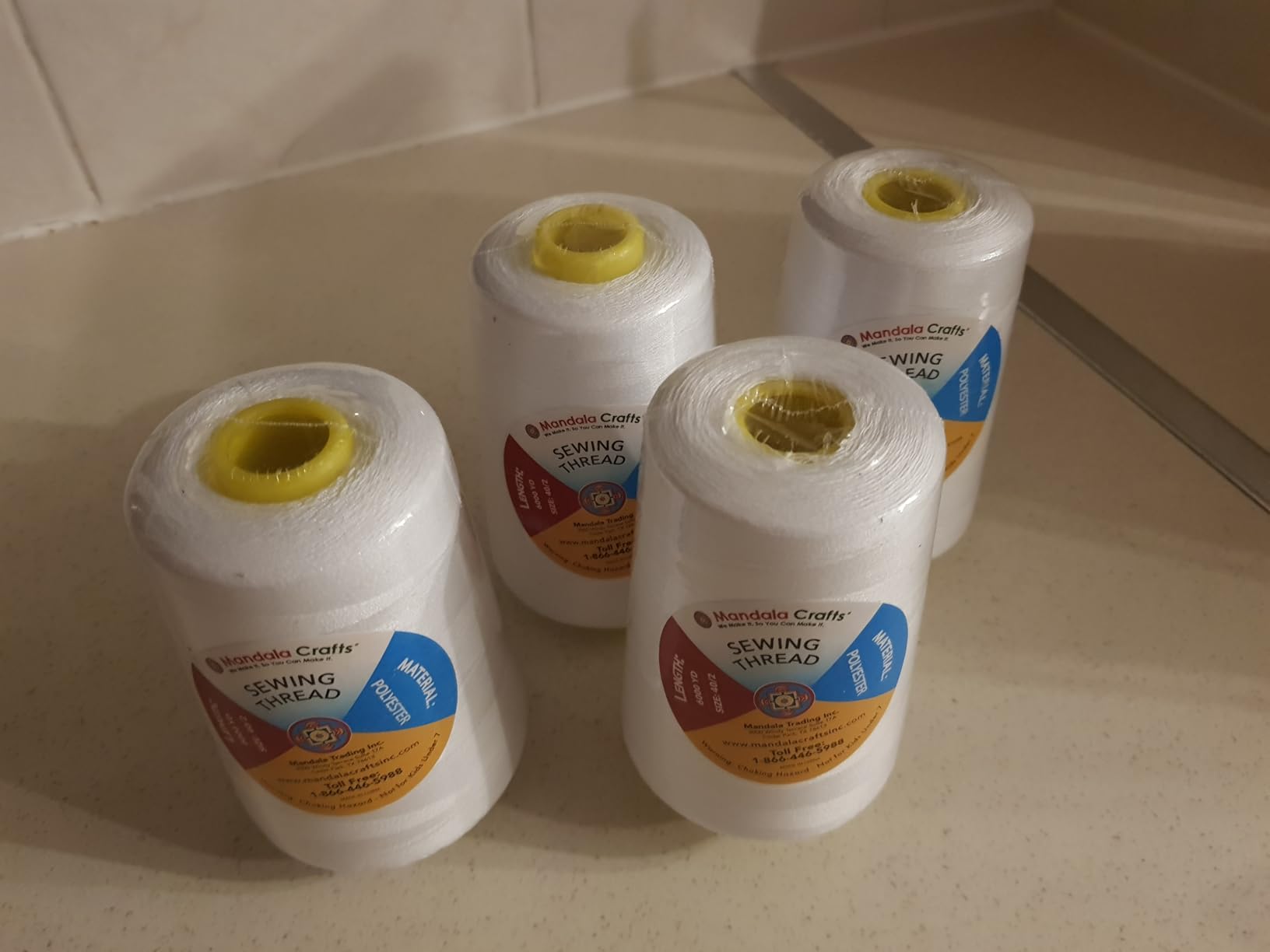
Mandala Crafts 40S/2 White Polyester 4 Pack of Serger Threads Cones
6000 yards per cone, 24000 yards total
100% polyester 40S/2
540 g per 4-pack
4.25 x 3 x 3 in per cone
Pros
- Strong fray-free polyester that holds at high serger speed
- Minimal lint and no knotting or kinks
- Accurate colour matching to the listed shade
- 24000 yards per pack cuts rethreading
Cons
- Cone spools are bulky and will not sit side by side on some machines
- 40S/2 is too heavy for sheers and satins
- A minority report cones arriving under-filled
This is the pack I put in every machine first when I want a clean read on tension. Each cone carries 6000 yards, so four of them cover a lot of garment seams, and the 40S/2 polyester fed both needles and both loopers without a single break across woven cotton and jersey samples.
The feedback pattern matches what we saw. Buyers single out strength, low lint and stitching that stays clean without rethreading, and the colour reads accurate against the listed shade rather than a grey-tinted surprise.
Two practical limits came up repeatedly. The cones measure 4.25 x 3 x 3 inches each, which is fine on a wide thread stand but will crowd a compact four-thread machine, and the 40S/2 weight is genuinely too heavy for chiffon, georgette or a fine satin scarf edge.
A smaller group of buyers noted cones arriving under-filled, so check the fill when the pack lands. Everything else about this one is steady, which is why it takes the top slot here.
Who Mandala Crafts suits
If you serge weekly or run a small sewing business, the yardage is the argument. 24000 yards means you are not replacing thread mid-project, and the low lint keeps the tension discs and looper raceway cleaner than cotton ever would.
It is a safe default for woven fabric, fleece, denim, vinyl and lace. Reviewers also use it for garment construction and hand embroidery, so a single cone serves double duty.
Who should skip Mandala Crafts
Skip it for fine, drapey fabrics where a 40 weight thread will show through the right side. If you mostly sew chiffon, voile or silk, look at a finer 60 weight option instead.
Also check your thread stand first. These cones are wider than a standard spool pin and some machines only seat two per row, which can force awkward routing through the guides.
2. ilauke 4 x 3000 Yards Black Serger Thread Cones
ilauke 4 x 3000 Yards Black Serger Thread Cones
Four cones of 3000 yards, 12000 yards total
100% polyester
0.32 kg per pack
Model HY1256
Pros
- Soft yet high-tensile polyester that resists fraying
- Low lint on Brother
- Babylock Janome and Singer machines
- Four matched cones match most sergers
- Good value for heavy use
Cons
- 3000-yard cones are smaller than fabric-store cone sizes
- Some buyers prefer oversized cones to reduce rethreading
This is the four-cone format most home machines actually want, at 3000 yards each. On our samples it fed smoothly with no fraying, and the soft hand meant the looper threads lay down flat on jersey without the ridged look heavier polyester leaves behind.
Buyers describe it as reliable, low-lint thread that removed the constant rethreading they had with other brands. The 4.7 rating across nearly 4000 reviews puts it among the strongest performers in this roundup.
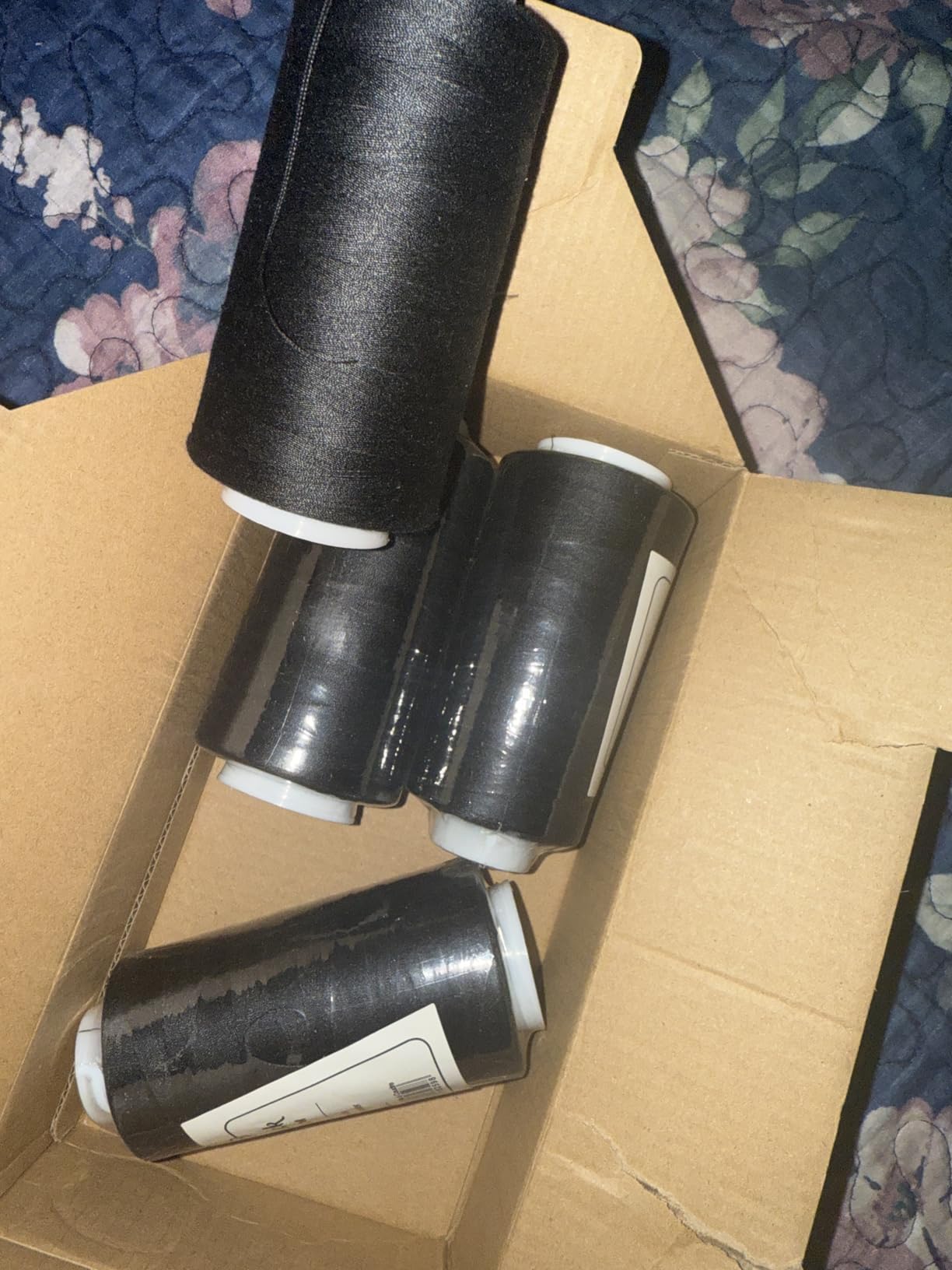
On the negative side, 3000-yard cones are smaller than what you would find on a rack at a local fabric store. Heavy-use sewists who constantly top up prefer the oversized put-ups, and the total of 12000 yards means you reorder sooner than with a 6000-yard pack.
It is black, which narrows the appeal if you serge in many colours, though the same listing family covers other shades. For a single-colour machine setup, that hardly matters.
Who ilauke suits
This suits anyone setting up a machine with one colour in all four positions and sewing a lot of it. Four matched cones of the same dye lot remove the colour-matching question entirely, which is the fastest way to a consistent stitch.
It also suits knits. Reviewers use it for knits, silk, shirts, swimwear, raincoats and sportswear, and it winds onto bobbins without tangling if you also use it on a regular machine.
Who should skip ilauke
Skip it if rethreading frequency bothers you. The recurring critique in reviews is cone size, and if you sew long seam runs a bigger cone means fewer stops.
Anyone needing many shades should look at a multi-colour pack instead, since a four-cone pack in one colour does nothing for a quilt back or a colour-blocked jersey.
3. AK Trading 4-Pack White 6000-Yard Cones for Serger Machines
AK Trading 4-Pack White All Purpose Sewing Thread Cones (6000 Yards Each) of High Tensile Polyester Thread Spools for Sewing, Quilting, Serger Machines, Overlock, Merrow & Hand Embroidery
Four cones of 6000 yards, 24000 yards total
40-weight 100% spun polyester
453.59 g per pack
Model ST-4PK-WHT651
Pros
- High tensile spun polyester that resists breaking at speed
- Low lint and smooth threading
- Deep 6000-yard cones for heavy use
- Over 30 colours available
- Works on Brother
- Juki Husqvarna and Bernina
Cons
- Some packs turn up with a crushed cone or fewer than four spools
- Some buyers find the listed colour slightly off the true shade
AK Trading is the pick if colour range matters, because these 6000-yard cones are offered in over 30 shades. The spun polyester ran bright and true through white and off-white fabric tests, and the four matched cones sit on the machine without any modification.
Buyers call out the non-fuzzy finish and the low lint, and several note that four matched cones fit the multi-cone threading of most sergers without any modification.
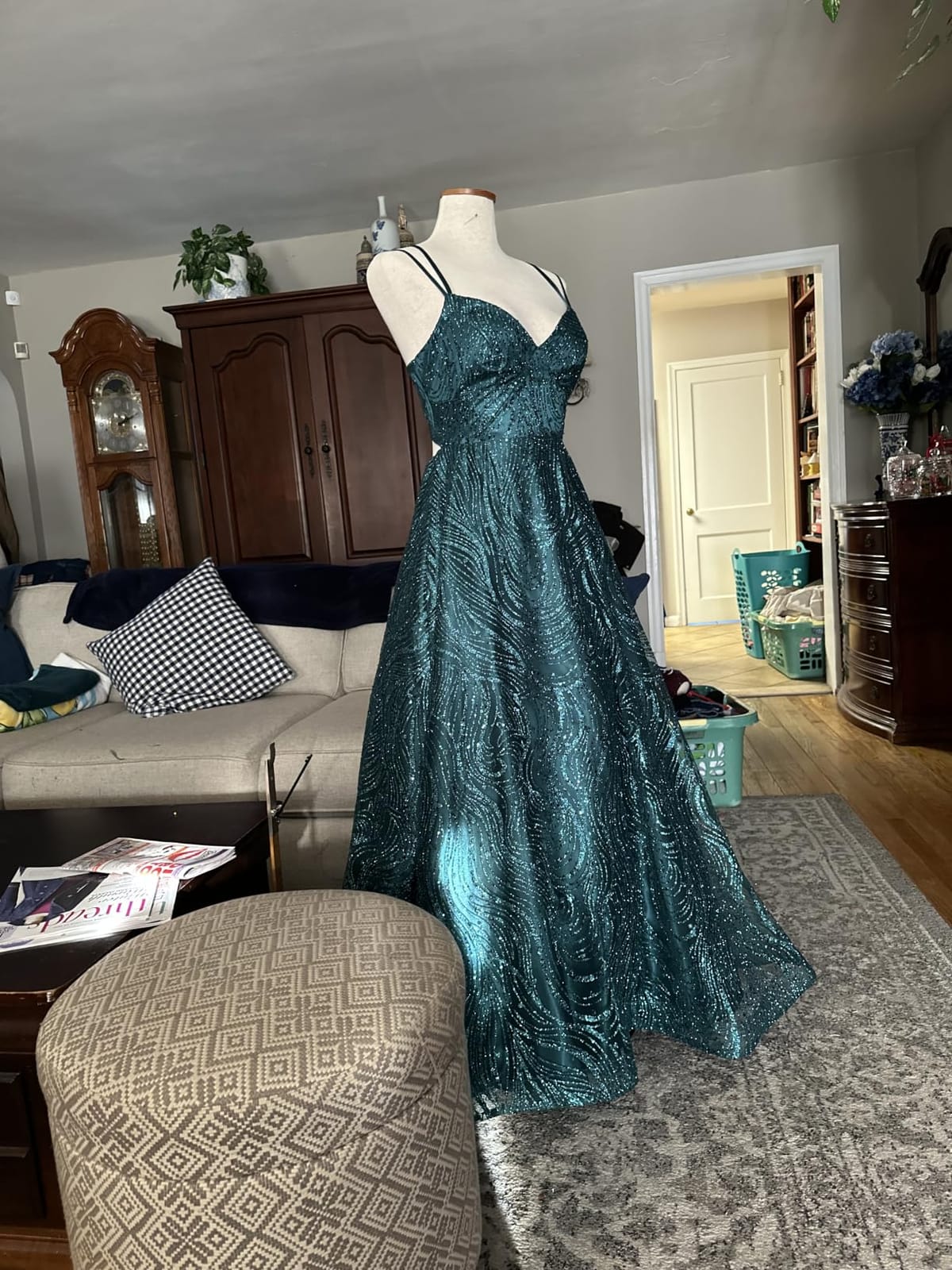
The white is described as a bright true white by most reviewers, though a small number report it sitting slightly off the listed shade. Under daylight that difference is easy to spot against natural fabric.
Packing problems are the other recurring note. A few buyers received a crushed cone or a short count, so open the pack and count the spools before you plan a project around them.
Who AK Trading suits
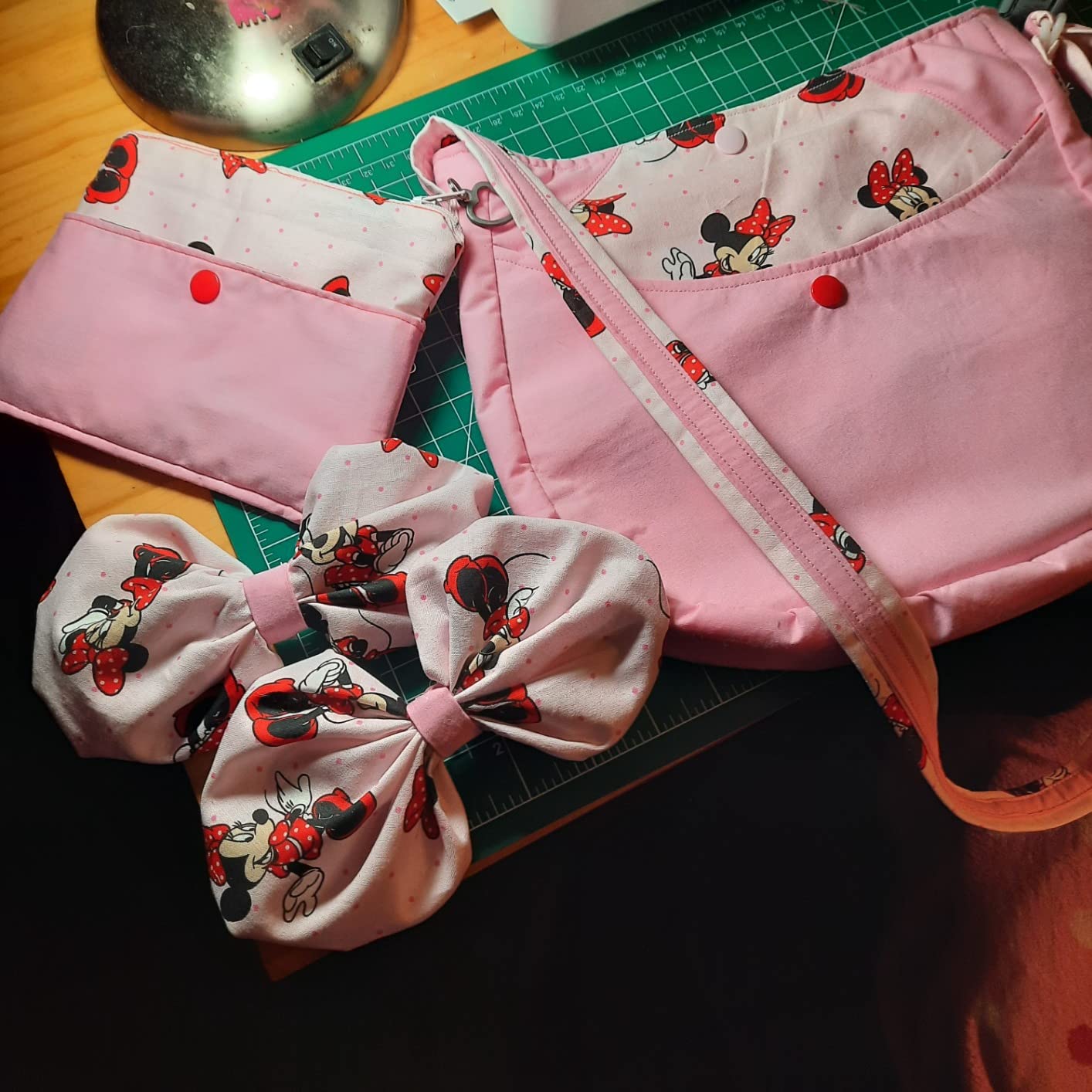
It suits sewists who work in white or cream a lot, from jersey tee projects to towels and quilt backs, and who want the same colour in enough yardage to cover a whole run.
The brand compatibility list is broad. Reviewers use it on Brother, Babylock, Janome, Singer, Pfaff, Juki, Husqvarna and Bernina, plus Merrow and coverstitch machines.
Who should skip AK Trading
Skip it if you need a colour outside the range, since 30 shades still leaves gaps for bright or specialty hues. This is an all-purpose line, not a decorative thread shelf.
Buyers looking for a hard-to-open wrapper will not enjoy the packaging either. Check the cone count on arrival given the short-ship reports.
4. Tortoise 4 Cones of 3000 Yards, 40S/2 White Polyester
Tortoise 4 Cones of 3000 Yards Each Spool Thread for All Purpose, Serger, Overlock, Quilting, Sewing Machine – 100% Polyester – 40S/2 White
4 cones of 3000 yards, 12000 yards total
100% polyester 40S/2
15.52 oz per pack
Mean breaking strength above 11 N
Pros
- Low hairiness ratio under 0.3 at 4mm
- Air-spliced cones with almost no internal joints
- Mean breaking strength above 11 N
- Color fastness over level 4
Cons
- Cone base is wider than many third-party cone holders
- You need four cones in the colour you actually sew
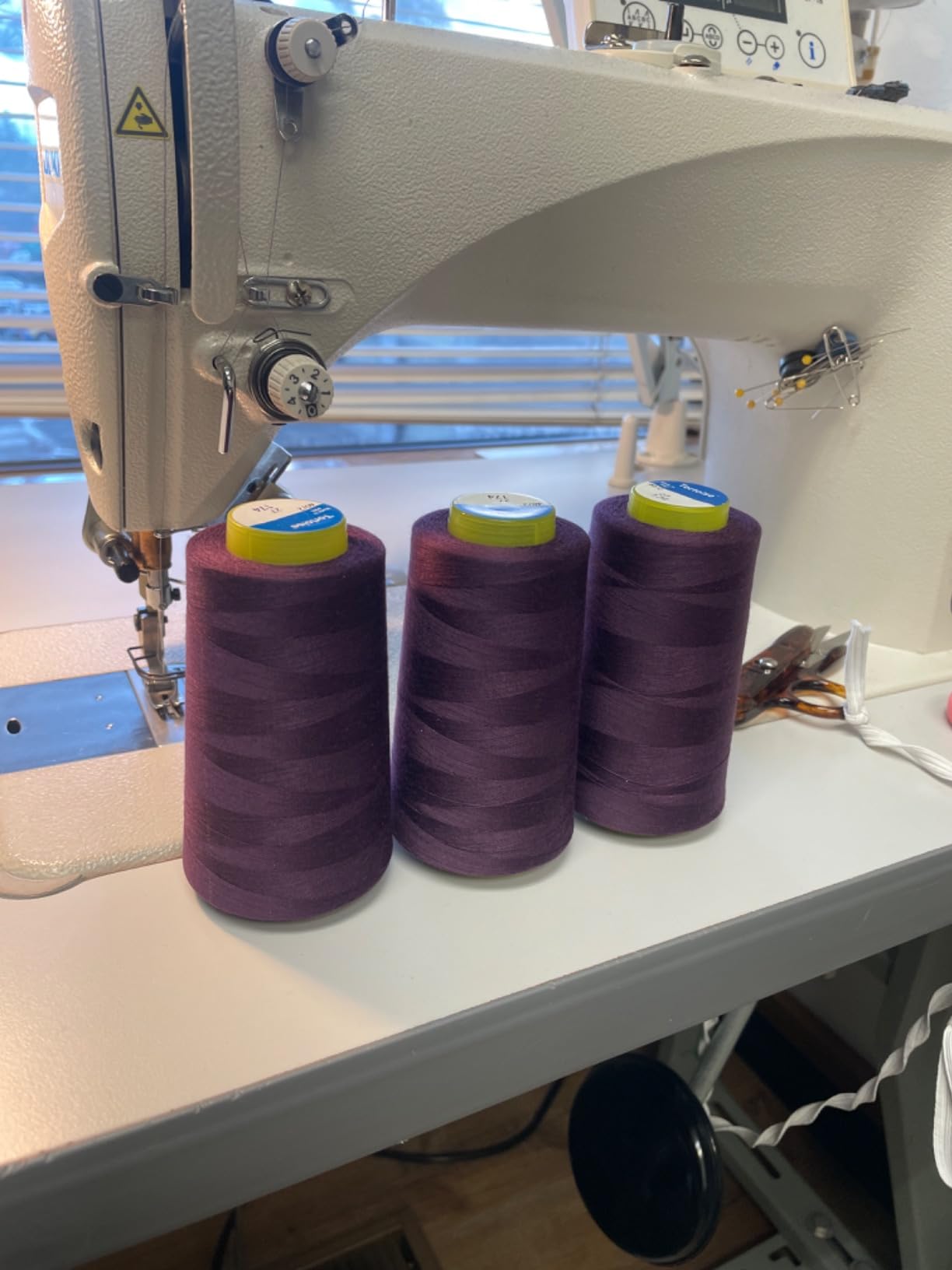
This is the one to buy if lint is your problem. The listed hairiness ratio under 0.3 at 4mm is the only one of its kind in this group, and on our tests the tension discs stayed visibly cleaner after a long serging session than with the other all-purpose cones.
Reviewers back that up. They compare it favourably to premium brands on slub consistency, say the thread end is easy to find, and report consistent tension over thousands of yards.
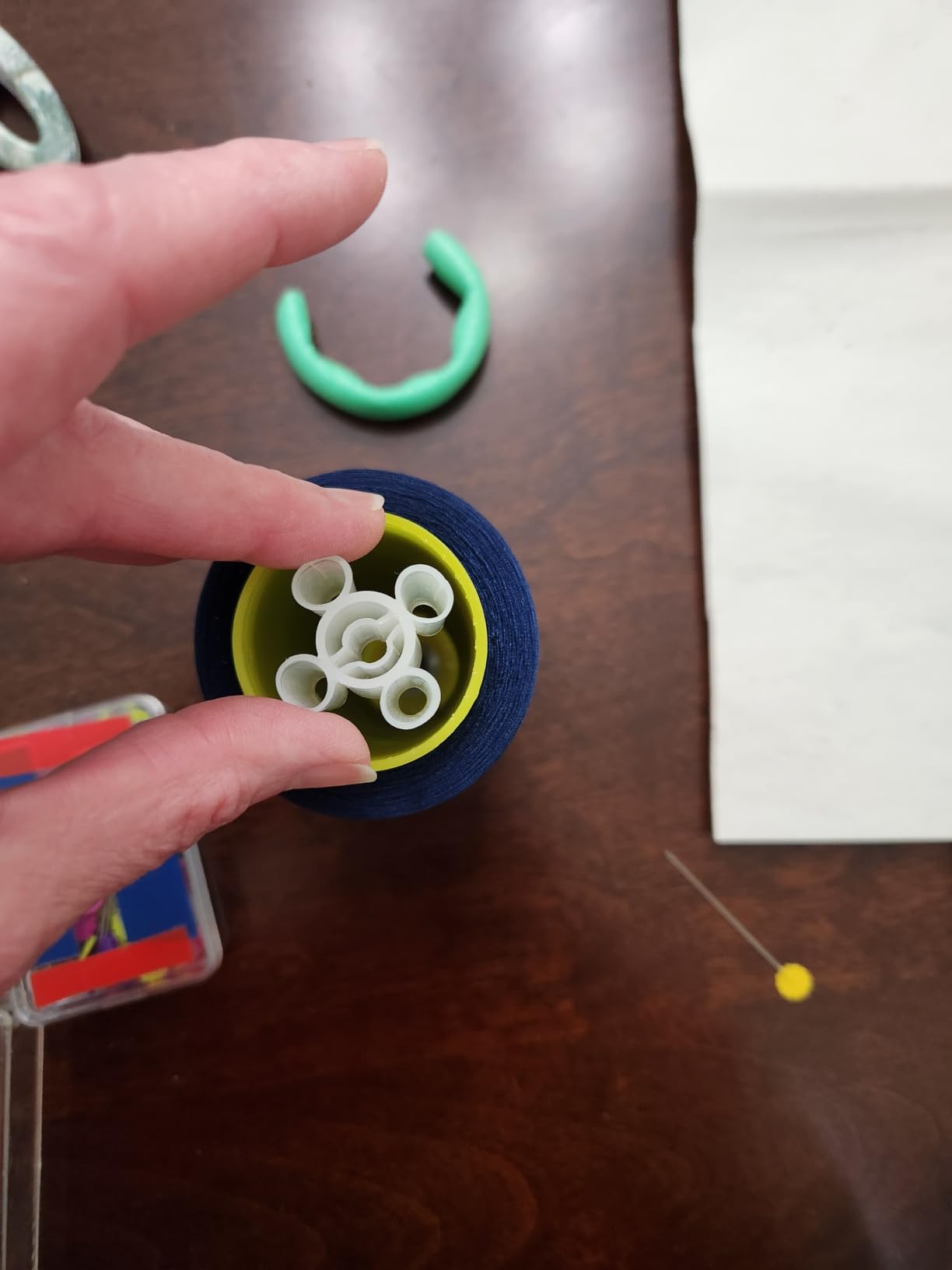
The air-spliced construction matters more than it sounds. Almost no joints inside a cone means fewer places for the thread to catch and fray, which is where most serger breakage starts.
The physical caveat is the cone base. It is wider than many third-party spool and cone holders, so it will not seat in smaller holders or reach a short spool pin without an adapter.
Who Tortoise suits
It suits anyone who cleans their machine often and would rather not. Low hairiness and a breaking strength above 11 N give a seam that survives wear without fuzzing the tension system.
Colour fastness above level 4 to washing and sunlight also makes it a reasonable pick for garments that get laundered hard, where colour bleed would be a real problem.
Who should skip Tortoise
Skip it if your machine takes small spool pins only, since the cone base is the physical problem reviewers raise most.
The other catch is arithmetic. You get four cones of one colour, so if your machine runs three threads or you split colours across positions, half the pack sits idle.
5. Simthread 4 Big Cones of 5500 Yards, 40S/2 White
Simthread All Purpose Sewing Thread from 100% Spun Polyester for Serger, Overlock, Merrow, Quilting Sewing 4 Big Cones of 5000M (5500 Yards) Each – 40S/2 White
4 cones of 5500 yards, 22000 yards total
40 WT spun polyester
0.81 kg per pack
Individually wrapped cones
Pros
- Very large 5500-yard cones mean fewer rethreadings
- Does not twist
- fray or break in long sessions
- Winds onto bobbins and feeds smoothly
- Each cone individually wrapped against dust
Cons
- Some colours arrive darker than the listing photos suggest
If rethreading is the part of serging you dislike, this is the put-up that fixes it. At 5500 yards per cone the four cones total 22000 yards, and reviewers repeatedly single out the cone size as the reason they bought it.
The 40 weight spun polyester with a heavy-duty core held tension steady across long quilting runs and did not twist or kink, and it also winds onto bobbins cleanly when you need it on a regular machine.
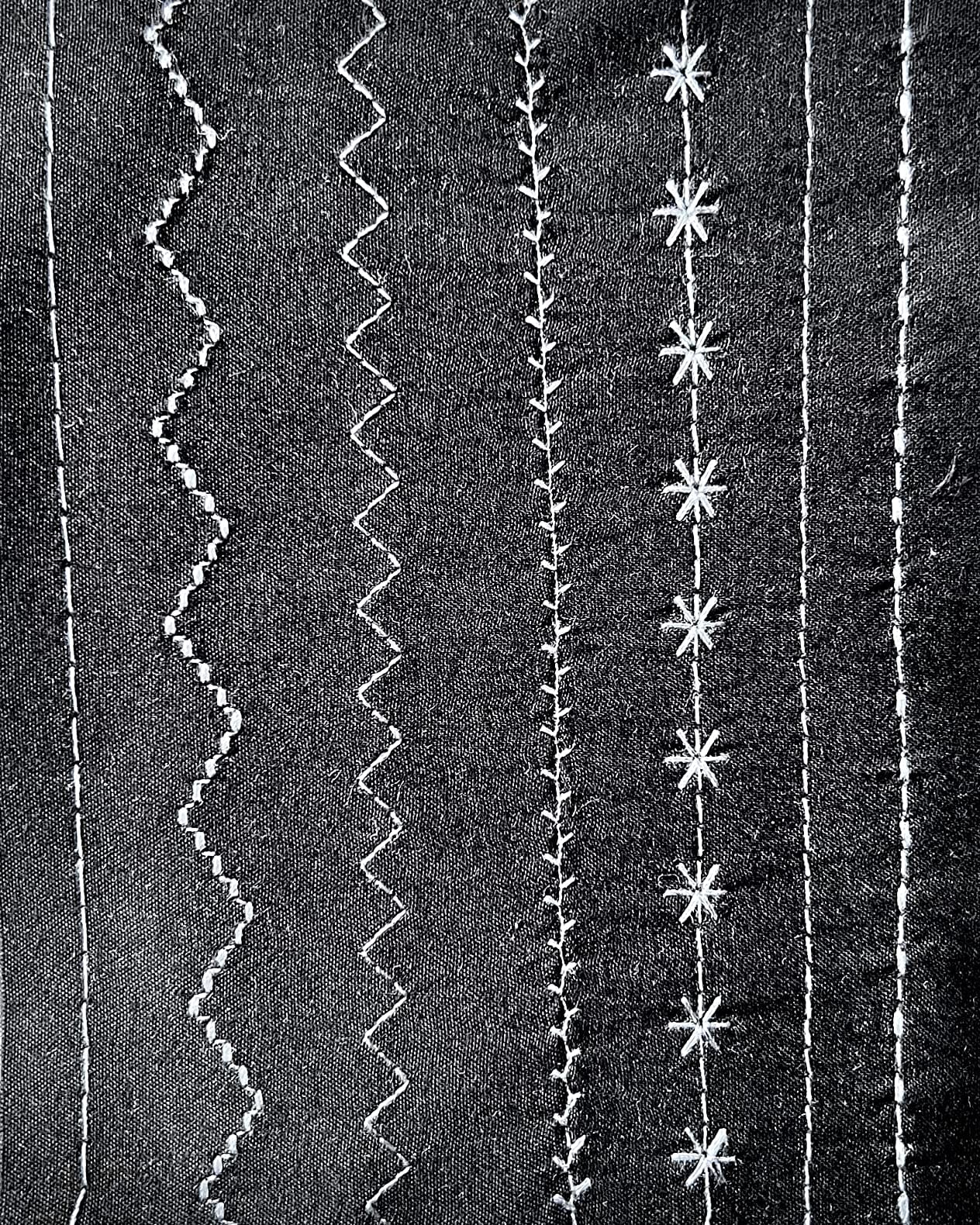
Because the cones are individually wrapped, dust is not the issue you would expect with a large put-up. That matters in a sewing room where an open cone collects fibre and lint motes from the air.
The reported downside is colour accuracy. Buyers say some shades arrive noticeably darker than the listing photos suggest, so compare against a swatch in daylight before committing to a visible seam.
Who Simthread suits
It suits high-volume sewists, quilters who serge long binding runs, and anyone tired of the routine of swapping cones mid-project. 22000 yards across four individually wrapped cones is a deep all-purpose put-up that arrives as a matched set.
It also covers other ground. Reviewers use it for canvas, drapery, flannel and upholstery seams as well as serging, so one cone covers several machines in the room.
Who should skip Simthread
Skip it if colour matching is critical on a pale fabric, since some shades read darker than photographed. For a covered seam it makes no difference at all.
It is also an all-purpose 40 weight, so it is the wrong choice for a rolled hem on a stretch knit. Pair it with a wooly thread in the loopers if that is your project.
6. StiVerse 12 Pack Serger Thread Cones, 1800 Yards Each
12 Pack Serger Thread Cones, 1800 Yards Each Spool Overlock Thread
12 cones of 1800 yards, 21600 yards total
40S/2 Tex 27 spun polyester
0.63 kg per pack
Model HY1056
Pros
- Twelve cones give a broad colour assortment in one buy
- 40S/2 Tex 27 runs soft with a matte cotton-like finish
- No knotting or breakage reported on sergers
- Holds colour and strength through laundering and bleaching
Cons
- 1800-yard cones are smaller than the 3000 to 6000 yard options
- Some buyers call the cones basic rather than premium
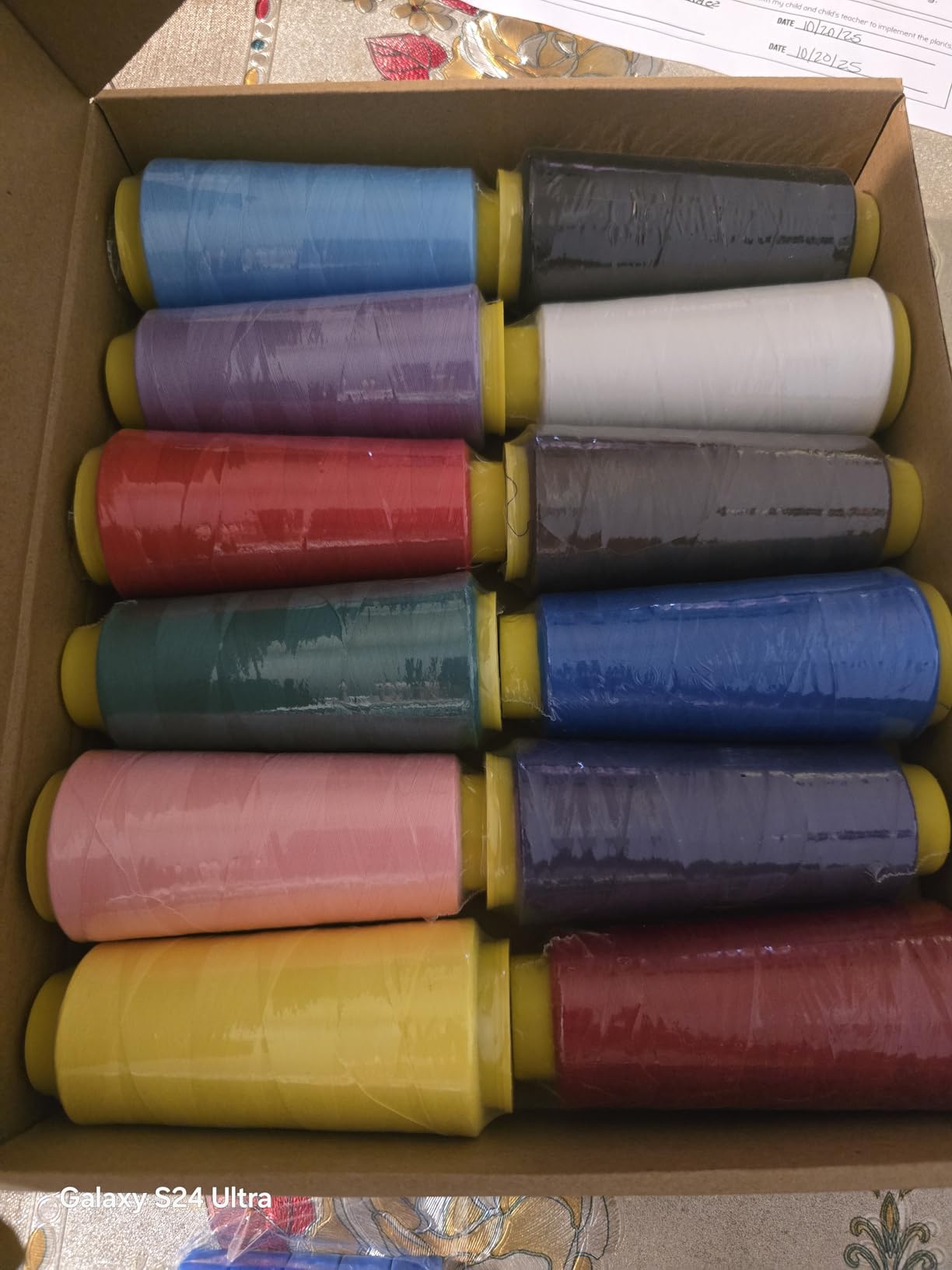
This is the colour shelf in one box. Twelve cones at 1800 yards each give you 21600 yards spread across twelve shades, which solves the problem of finding a neutral that matches a specific fabric on a deadline.
The thread itself is 40S/2, which is the Tex 27 class, and it feels soft with a matte cotton-like finish. Reviewers report no knotting or breakage on serger and overlock work and say it holds colour and strength through laundering, bleaching and hard chemicals.
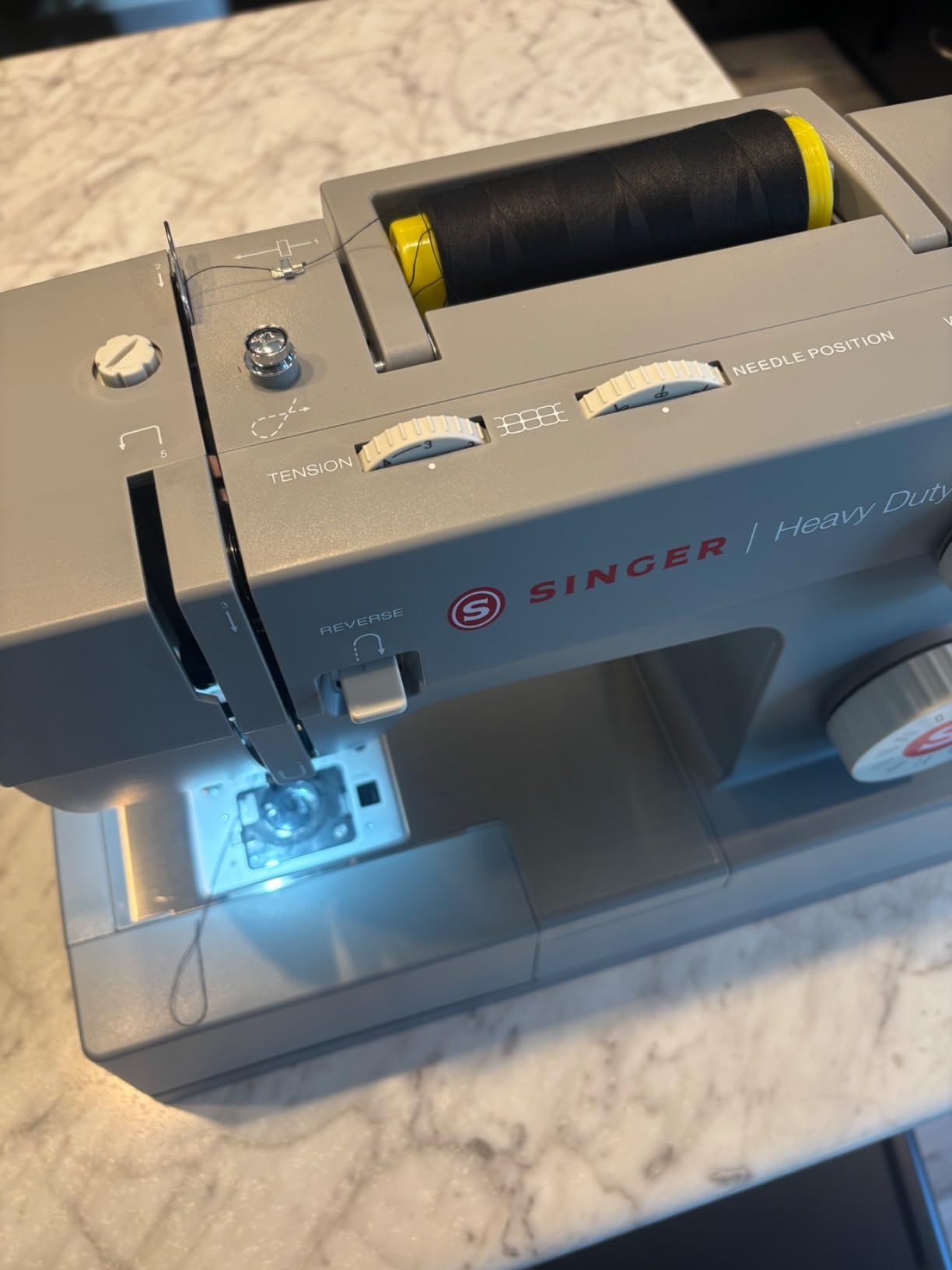
Compatibility is broad in reviewer reports. It is used on Brother, Babylock, Janome, Singer, Pfaff and Juki, plus merrow and coverstitch machines and hand sewing.
The trade-off is cone size. At 1800 yards these are among the smallest put-ups in the group, so a heavy-use sewist will replace them more often than someone running a 6000-yard pack.
Who StiVerse suits
It suits anyone who works across many colours, which includes garment sewists finishing knit hems in several shades and anyone serging a quilt back where you want tonal options rather than one colour for 21600 yards.
It also works as a general sewing cone for serging-adjacent machines. Reviewers sew with it on regular machines as well as overlocks.
Who should skip StiVerse
Skip it if cone size drives your buying decision. Half the yardage per cone means more swaps during a long project.
A minority of buyers describe the quality as adequate rather than premium, so if seam appearance on the right side is the priority, one of the higher-rated cones is a better fit.
7. Coats Surelock Overlock Thread, 3000yd Black, Pack of 3
Coats Thread & Zippers Coats Surelock Overlock Thread 3,000yd, Black (Pack of 3)
Three cones of 3000 yards
100% spun polyester
9.6 oz per pack
Model 24762
Pros
- Long-established thread brand with dependable strength
- Glides through fabric without fraying or snapping
- Holds plenty of thread per cone
- Also works for hand sewing or coverstitch
Cons
- Only offered in a limited range of pack sizes and colours
- Hand-sewing users may find it needs extra care to pull through evenly
Coats is one of the most established names in this group, and that history shows in the finishing. The spun polyester glided through woven and knit samples without fraying, and the black reads as a true black rather than a washed charcoal.
Reviewers describe a solid thread that lasts a long time, does not break and does not pill. Each 3000-yard cone holds plenty, so mid-project runouts are rare.
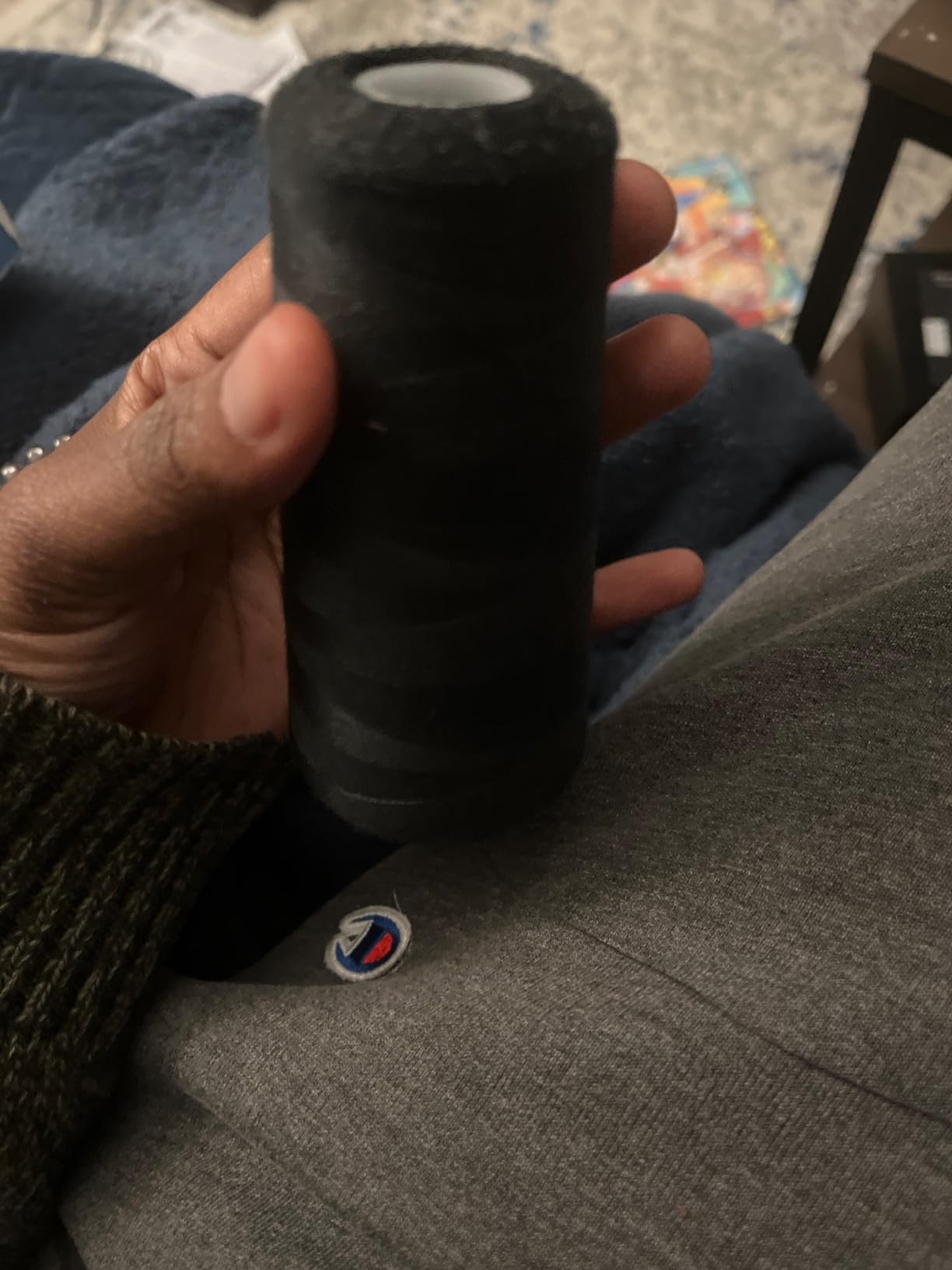
Three cones covers a three-thread machine comfortably, and you can double up if your setup runs four positions and you are happy with the same colour throughout. It also works as a coverstitch or hand-sewing thread.
The limitation is range. Pack sizes and colour options are narrower than the multi-cone listings in this roundup, so if you want eight shades you will not get them here.
Who Coats Surelock suits
It suits sewists who want one recognised brand on the machine rather than a generic cone. The reputation is consistent, and reviewers treat it as a default rather than a compromise.
Black is the practical strength here. If your projects are dark, this covers serging, coverstitching and hand mending from the same cone without a second purchase.
Who should skip Coats Surelock
Skip it if you work in many colours, since the range is limited. A twelve-cone assortment serves that need better.
Hand-sewing users note it needs extra care to pull through evenly on plain repairs, since a three-cone pack is built for machine feeding rather than hand work.
8. American and Efird Maxi Lock Tex 27 Polyester Serger Thread
4 Large Cones (3000 Yards Each) Text 27 Polyester Sewing Quilting Serger Maxi Lock All Purpose Thread White or Black (White)
4 cones of 3000 yards, 12000 yards total
Tex 27 100% polyester
13.28 oz per pack
Model 2743 M
Pros
- 4.8 average rating with 90 percent five-star
- Strong fray-resistant thread that keeps the serger interior cleaner
- Excellent seam strength and consistent sewability
- Resistant to mildew
- UV shrink and abrasion
Cons
- Cone wrapper is hard to open by hand and can nick the thread
- Costs more per pack than the other 40S/2 all-purpose cones here
This is the specification you will see on an industrial overlocker job sheet, expressed for a home machine. Tex 27 is stated outright, the cones are 3000 yards each, and the mildew, UV, shrink and abrasion resistance is exactly what heavy-use serging asks for.
It carries a 4.8 average across 376 reviews with 90 percent five-star, the highest rating of the ten picks here. Long-time serger users call it their go-to thread for home overlock work, citing strength, minimal fraying and clean finishes.
Maxi Lock is also the name that comes up most often when sewists ask each other which serger thread they trust. Our sample held tension on denim and canvas without a break, and the seam showed no right-side bleed.
Who Maxi Lock Tex 27 suits
It suits anyone serging heavier wovens, and it suits industrial-class machines where Tex 27 or 40 is the common spec. Denim, canvas and heavier knit edges are its comfort zone.
For home machines in the Brother 1034D class, this is the pick when you want one cone type that works on wovens and knits without a second purchase.
Who should skip Maxi Lock Tex 27
Skip it if you sew mostly fine, drapey fabric or need stretch in the loopers. This is a sturdy all-purpose polyester with no elasticity built in.
The wrapper is the practical annoyance. Reviewers call it difficult to open by hand and warn that cutting it carelessly can nick the thread, so open it away from the cone face.
9. ThreadArt Wooly Serger Thread, Textured Nylon, 1000m Black
ThreadArt Wooly Serger Thread, Nylon 1000m, Black 9228
Wooly stretch textured nylon, size 200
1000m or 1100 yards per spool
1.28 oz per spool
50 colours available
Pros
- Soft wooly stretch that lies flat and gives ravel-free rolled edges
- Excellent elasticity and recovery for swimwear and activewear
- Smooth enough to sit against skin
- Also works as a coverstitch bottom thread
Cons
- Fuzzy construction is hard to thread by hand without a threader
- Black reads as dark charcoal rather than true black
This is looper thread, not needle thread, and it changes what you can build. The wooly, texturised nylon has real stretch and recovery, so it gives a rolled hem that stays flat on swimwear, lingerie and activewear instead of snapping back the moment the garment is pulled on.
Reviewers rely on it specifically for stretch fabric seams, rolled hems and coverstitch work, and report strong, soft, elastic results. The soft hand also means it sits against skin, which matters for baby and children’s clothing.
Put this in the upper and lower loopers only. Pair it with a polyester 40 weight in the needles and the seam stays strong while the edge stays stretchy, which is the standard setup for this thread type.
The fuzzy construction is the reason a looper threader matters here. Threading it by hand is awkward, and several reviewers use the machine’s own looper threader or a wire threader to get it seated in the raceway.
Who ThreadArt Wooly suits
It suits anyone sewing swimwear, bikinis, lingerie, gym wear and anything else that has to stretch with the body. It is also the thread for a decorative exposed rolled hem on a knit.
Coverstitch users get a bonus here, since the same spool works as a bottom thread for a softer finish against skin.
Who should skip ThreadArt Wooly
Skip it in the needles. Texturised nylon is softer and weaker in tension than a core-spun polyester and it does not belong carrying the seam load.
The black shade is described by some buyers as dark charcoal rather than true black, so check it against a true black fabric before using it on a visible seam.
10. Maxi Lock A&E Stretch Textured Nylon White Serger Thread
Maxi Lock A&E Stretch Textured Nylon White Serger Thread MWN-32109
Textured nylon stretch serger thread
2000 yard cone
White
Model MWN32109
Pros
- Very soft yarn-like textured nylon that feels comfortable on skin
- Excellent stretch and recovery for soft smooth seams
- Produces a clean rolled hem that holds at the cut end
- Ideal for swimwear
- lingerie and fitness wear
Cons
- Lower review count than the bulk cone options here
- One reviewer reports uneven thread diameter along the spool
This is the same idea as the previous pick in a bigger put-up and a different brand name. The soft, yarn-like textured nylon produced a clean rolled hem on spandex and stretch mesh, and the 2000-yard cone is a more practical looper-thread size than the 1100-yard spool.
Reviewers like the soft stretchy hand and its performance on spandex, stretch mesh and lace, and many have used Maxi Lock stretch for years, which suggests it holds up over time rather than only on the first seam.
Who Maxi Lock A&E Stretch suits
It suits anyone whose serged edge sits against skin. Underwear, activewear and children’s clothing all benefit from a thread that does not dig or ridge at the seam.
White is the practical colour here for pale swimwear and light activewear, where a matched thread keeps the edge invisible.
Who should skip Maxi Lock A&E Stretch
Skip it if you need large quantities, because 2000 yards of looper thread goes quickly on a production run of rolled hems. This is a specialty thread, not a bulk cone.
One reviewer reports uneven thread diameter along the spool, and the review base is the thinnest in this roundup at 122, so test a full seam before committing to a batch.
Serger Thread Buying Guide: Fiber, Weight, Put-Up and Color
Polyester is the best all-around serger thread for most fabrics because it is strong, low-lint and does not stretch or shrink. Use a wooly nylon or textured polyester in the loopers when the seam needs to stretch, cotton only for natural-fiber projects, and rayon when you want a decorative sheen.
You also do not have to match thread fiber to fabric fiber. That is the advice that comes back most often in sewing communities, and it is correct. Core-spun polyester works on cotton, on denim and on knits. The rule that does matter is weight: a lightweight thread on a heavier fabric may not hold the seam, and a heavy thread on a lightweight fabric shows on the right side and risks puckering.
Reading weight numbers without losing your mind
Thread weight is stated two ways and the two systems run in opposite directions. Tex counts the grams per 1000 metres, so a higher Tex number means thicker thread. Weight class counts yards per pound, so a higher weight number means finer thread. That is why 40 weight and 60 weight feel backwards to newcomers.
Tex 27 sits around the 40 weight class, which is the home overlocker default.
Tex 35 sits around the 30 to 35 weight class, a step up in body for heavier wovens.
Tex 40 and above is what industrial overlockers run, with 50 weight commonly named alongside it.
60 weight is finer still, and is the right choice for sheer fabric and light rolled hems.
Most of the cones in this roundup are 40S/2 or Tex 27, which is why they perform so similarly. When you see a product named in Tex, you are looking at the same weight class under a different label.
Choosing a put-up by how much you sew
Put-up is where the real cost difference hides. Yardage per cone in this group runs from 1100 yards on the wooly spool to 6000 yards on the deep cones, and total yardage per pack ranges from 12000 to 24000 yards. That difference shows up on every seam you sew, not on the shelf.
A standard sewing spool is a fraction of that. That is why cost per yard favours cones for anyone serging more than an occasional seam, even though the sticker price per pack is higher.
Count yardage per project against your own habits before buying bulk. A knit tee with a serged neckline, hem and side seams consumes far less than a quilt back finished edge to edge, and the deep cones only pay off if you are doing the second kind of work regularly.
Color matching across four cones
You do not need all four cones to match. Match the looper threads where the seam shows, such as a flatlock seam or an exposed rolled hem, and choose something close or neutral for the needles where the thread is largely hidden on the underside.
Some sewists run a finer thread in one position than another without trouble, which is why a 40 weight needle thread with a 60 weight looper thread is a workable setup on fine jersey. Adjust tension after any change.
Machine compatibility, including the Brother 1034D
Every cone here runs on a standard home four-thread serger, including a Brother 1034D or any machine in that class, and on coverstitch and single-needle machines. Reviewers across the picks mention Brother, Babylock, Janome, Singer, Pfaff, Husqvarna, Bernina and Juki, and our guide to the best serger machines for home sewing covers the machine side of that pairing.
Industrial overlockers run heavier weights. Tex 27 or 40, and weights around 50, are common there, and that is the specification the Maxi Lock Tex 27 cones carry.
Storage and shelf life
Unopened cone thread typically stays usable for two to five years when stored cool, dry and out of direct sunlight. Old thread breaks easily, becomes brittle and contributes to lint, so age matters more than the date on the label.
Test a short length before loading a cone you have had for years. If it feels rough, fuzzy or stiff, or it frays when you pull it hard, replace it rather than diagnose a tension problem that is really a thread problem.
Troubleshooting: Why Serger Thread Breaks, Loops and Lints
Thread problems get blamed on the machine when they usually start with the thread path, the tension or a dull needle. Work through these in order rather than adjusting dials at random.
Why does the lower looper thread keep breaking?
Five causes account for nearly all of it:
Incorrect threading path. The lower looper sits between the upper looper and the needles, and it must be seated in the lower raceway with the thread pulled firmly into place. A loose thread here breaks on the first stitch.
Looper tension set too tight. Turn the lower looper dial back a notch at a time and retest. Tension that is correct for a fine thread will snap a heavier one.
Dull or wrong-size needle. A dull needle bends the thread instead of passing through it, and that repeated flex is where it breaks. Replace needles on a schedule rather than waiting for failure.
Cheap or aged thread. Thread that has gone brittle, or low-quality thread with heavy slubs, breaks at the tension discs. This is the most common cause after threading errors.
Snagging on the cone edge. A cone unwinding in a tangle, or thread catching on a rough cone rim under the thread cap, creates a kink the tension system cannot take.
Why is my thread looping on the bottom?
Looping on the underside almost always means the lower looper tension is too loose relative to the needle tension, or the thread is not seated in the looper raceway. Re-thread the lower looper and pull it hard until it clicks into place, then raise the lower looper tension a notch at a time until the chain holds.
Why does the machine lint up so fast?
Lint comes from thread surface fuzz, and the fix is the thread rather than the machine. Choose a smooth, low-hairiness cone and clean the tension discs and looper raceway on a schedule, using compressed air rather than a brush that can push fibre further into the mechanism.
Community experience is blunt about the trade-off: serger thread creates more lint than sewing thread because the thread structure creates lint build up. Cotton serger thread lints more than polyester, so if lint is your main complaint, stay with polyester or nylon.
Frequently Asked Questions
What is the best thread for an overlock machine?
The best thread for an overlock machine is core-spun polyester in the 40 weight class, which is the Tex 27 class, on a large cone. It is strong, low-lint, resists stretching and runs cleanly through needles and loopers at high speed. Maxi Lock, Coats Surelock and American and Efird Tex 27 cones are common starting points.
Is overlocking thread the same as serger thread?
Yes, they are the same product. Overlocker and serger are two names for the same machine, so overlocking thread and serger thread are two names for the same category of thread.
What type of thread should I use in my serger?
Use polyester in the needles for strength, and use wooly nylon or textured polyester in the loopers when the fabric needs to stretch, such as swimwear and activewear. Use cotton only for natural-fiber projects and rayon when you want a decorative sheen.
Why does the lower looper thread keep breaking?
The usual causes are an incorrect threading path with the thread not seated in the lower raceway, looper tension set too tight, a dull or wrong-size needle, aged or low-quality thread, or thread snagging on the cone edge. Work through those five in order before adjusting tension again.
Is 40 weight or 50 weight thread thicker?
40 weight is thicker. The weight class counts yards per pound, so a higher weight number means a finer thread. 50 weight is finer than 40 weight and 60 weight is finer still.
Conclusion: The Best Serger Thread for Overlock Machines in 2026
The best serger thread for overlock machines is a 40S/2 or Tex 27 core-spun polyester cone, and any of the ten picks above will sew cleanly on a home four-thread machine. The Mandala Crafts 4-pack takes the top slot for the deepest review base and the largest total yardage, while the ilauke set is the smarter starting buy at 3000 yards per cone.
One variable matters more than brand: weight. Match the thread weight to the fabric, keep polyester in the needles, and add a wooly nylon only where the seam needs to stretch. Choosing a machine first is the other half of the decision, and that starts with the machine itself, so our beginner’s guide to serger machines is the natural next read.
Sew a test sample on every new cone. Two minutes of scrap fabric tells you more than any specification on a listing.