
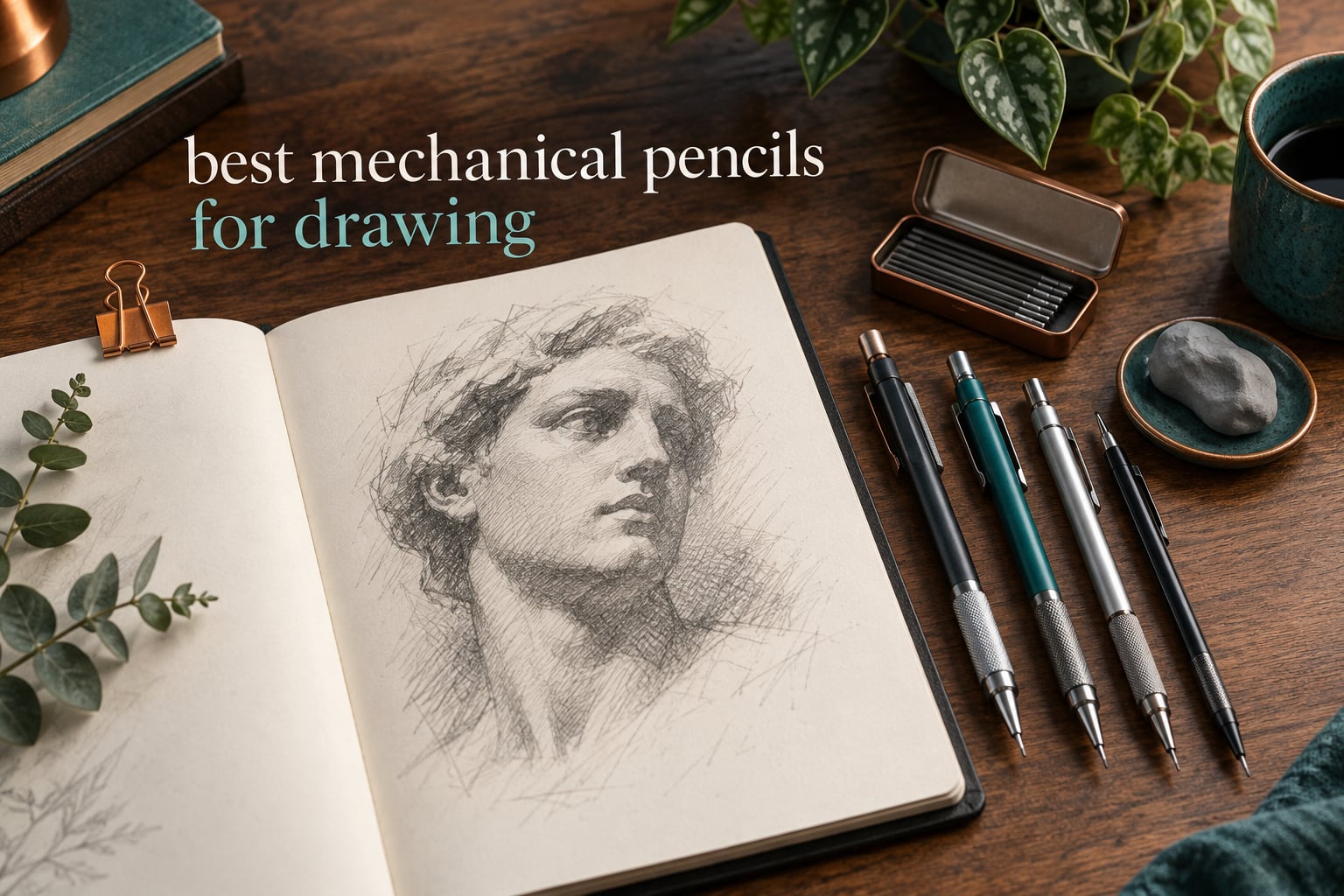
A mechanical pencil for drawing is a graphite-lead pencil that advances lead through a push-button or twist mechanism instead of a sharpener, which means you get a permanently fine point and a repeatable line diameter. After testing and living with these models, the Pentel GraphGear 1000 is the best overall mechanical pencil for drawing in 2026: it has a 4mm sleeve, a retractable tip and a lead hardness window, and it is the one I hand to people who ask once and then stop researching.
That is the short answer. The longer truth is that the best mechanical pencils for drawing split into very different jobs, so the second half of this guide covers the best budget drafting pencil, the best premium metal body, the best anti-break mechanism, the best 2mm lead holder for shading and the best all-in-one kit. I have used every model here across the same three tests: a portrait rough-in, a cross-hatching study and a straightedge architecture sketch.
Three questions decide your purchase faster than any spec sheet: what you draw, how hard you press and how long a session lasts. Answer those honestly and the pick is obvious. If your lines are expressive and you need varying line weight, read the clutch pencil sections first, because that is where most roundups send you to the wrong tool.
Table of Contents
Quick Picks: Best Mechanical Pencils for Drawing in 2026
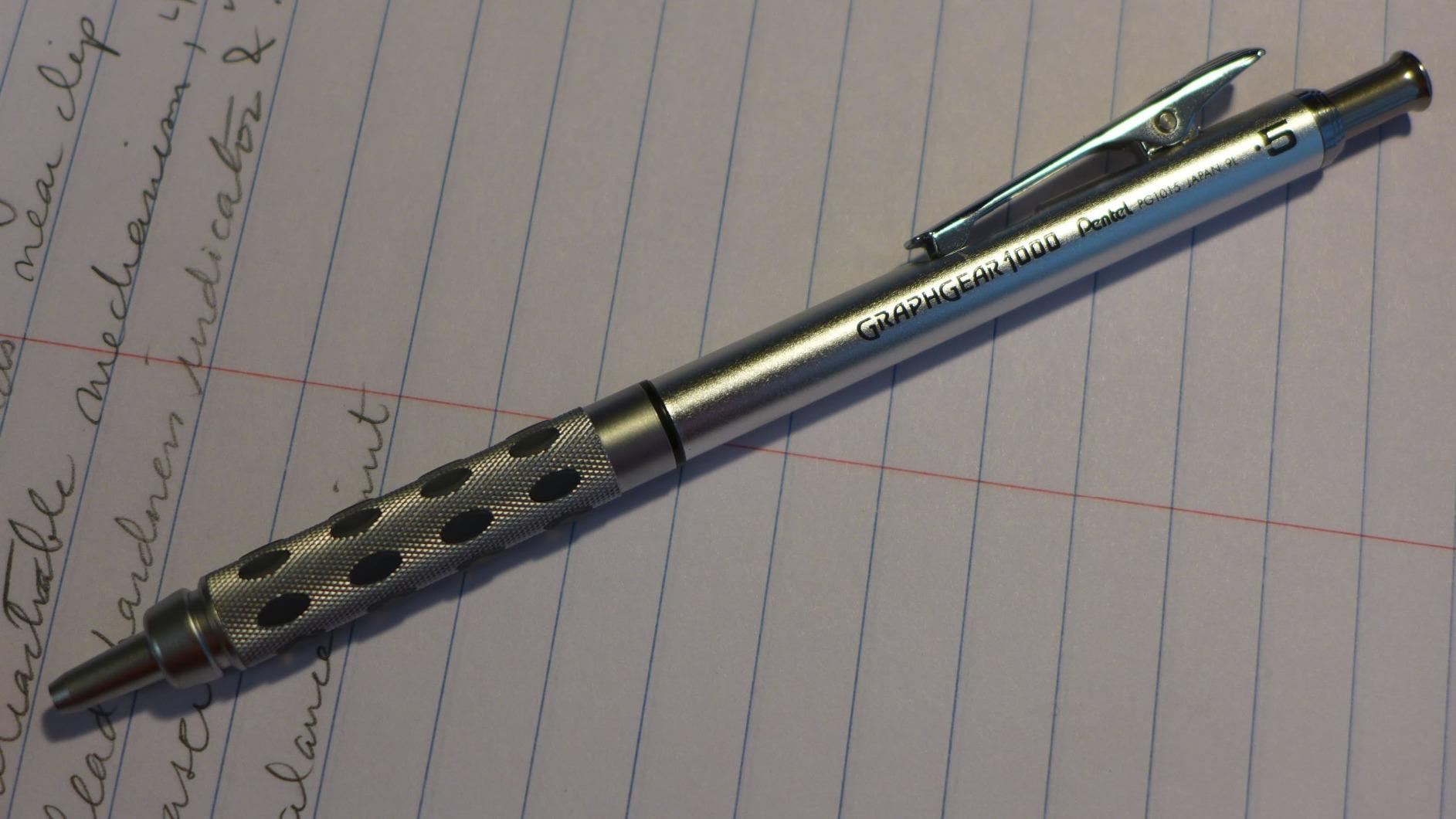
- Pentel GraphGear 1000 (0.5mm shown, 0.3/0.5/0.7/0.9mm available) – best overall; retractable 4mm sleeve and lead hardness indicator.
- rOtring 600 (0.7mm) – best premium metal body; brass mechanism and a long fixed sleeve for ruler work.
- Pentel GraphGear 500 (0.5mm) – budget pick with a drafting-grade 4mm tip and a checkered grip.
- rOtring Rapid Pro (0.7mm) – cushioned lead advance with the highest break resistance in this list.
- ALVIN Draft/Matic DM07 (0.7mm) – lightest drawing tool here at 9.07g, with a cushion point and fixed 4mm sleeve.
- Staedtler Mars Technico (2mm lead holder) – built-in sharpener, widest tonal range for shading and gestural marks.
- Faber-Castell TK9400 (2mm clutch, 2B) – soft dark lead for sketching and value building.
- Four Candies 25-piece kit – one box covering 0.5/0.7/0.9/2mm, four graphite grades and 12 colored leads.
Top 3 Picks for the Best Mechanical Pencils for Drawing in 2026

Pentel GraphGear 1000
- Retractable 4mm tip
- Lead hardness indicator
- Contoured metal grip
- Lifetime warranty
Best Mechanical Pencils for Drawing Compared in 2026
| Product | Specifications | Action |
|---|---|---|
| Pentel GraphGear 1000 |
|
Check Latest Price |
 Nicpro 6-Pencil Art Set Nicpro 6-Pencil Art Set |
|
Check Latest Price |
 rOtring 600 rOtring 600 |
|
Check Latest Price |
 Staedtler Silver Series 925 25-07 Staedtler Silver Series 925 25-07 |
|
Check Latest Price |
 Staedtler Mars Technico 2mm Staedtler Mars Technico 2mm |
|
Check Latest Price |
 Pentel GraphGear 500 Pentel GraphGear 500 |
|
Check Latest Price |
 rOtring Rapid Pro rOtring Rapid Pro |
|
Check Latest Price |
 ALVIN Draft/Matic DM07 ALVIN Draft/Matic DM07 |
|
Check Latest Price |
 Faber-Castell TK9400 Faber-Castell TK9400 |
|
Check Latest Price |
 Staedtler Triplus Micro 3-Pack Staedtler Triplus Micro 3-Pack |
|
Check Latest Price |
 Four Candies 25-Piece Kit Four Candies 25-Piece Kit |
|
Check Latest Price |
 rOtring 300 2mm rOtring 300 2mm |
|
Check Latest Price |
1. Pentel GraphGear 1000: Best Overall Mechanical Pencil for Drawing
Pentel GraphGear 1000 Mechanical Pencil, (0.5mm) Point Size, Black Barrel, 1 Each (PG1015A)
0.5mm point
Metal body
Retractable 4mm tip
Lead hardness window
Limited lifetime warranty
Pros
- Dual-action retractor protects the lead point
- Long 4mm sleeve suits rulers and templates
- Built-in lead hardness indicator
- Chiseled metal grip with soft pads
- Balanced solid metal barrel
Cons
- Heavier than most rivals over long sessions
- Raised knurling can bother tight grips
- Small eraser wears down quickly
This is the pencil I reach for first when someone asks for one recommendation. It comes loaded with Pentel Super Hi-Polymer HB lead, and the same body is produced in 0.3mm, 0.5mm, 0.7mm and 0.9mm with color coded collars, so the model you fall for does not lock your lead size forever.
The dual-action retractor is the part most reviews miss. Push it and the tip extends for use; push it again and the sleeve retracts into the body, which means the lead is not exposed when the pencil sits in a bag or rolls off a desk. For anyone who has lost an afternoon to snapped lead in a pencil case, that matters more than the grip texture does.
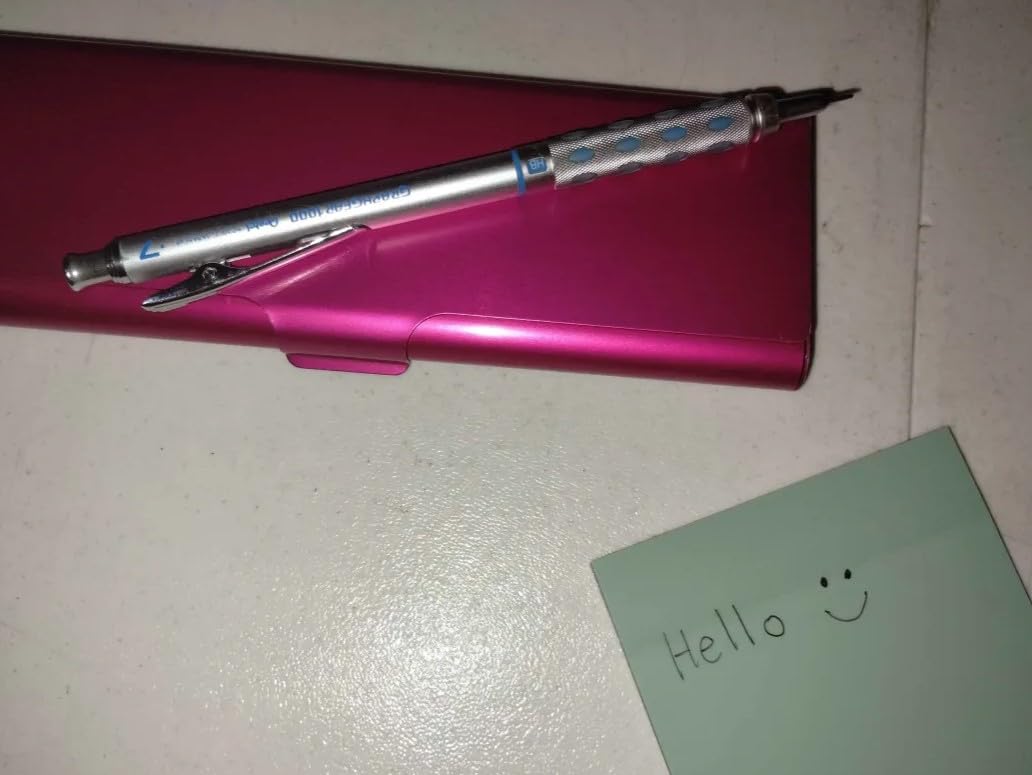
The 4mm sleeve length is the quiet advantage. It holds the lead far enough back that you can drag the pencil along a metal ruler or a template and the lead stays supported rather than skating and snapping. On my straightedge test the GraphGear 1000 produced the cleanest ruled lines of the drafting pencils in this guide.
Balance sits mid-barrel, which is the position most drawing teachers recommend. You can float the tip for a faint line or lean into it for a dark one and the pencil does not want to rotate out of your fingers, which is exactly what happens with front-heavy or back-heavy bodies.
How the lead hardness window changes how you draw
The window on the barrel shows which grade is loaded, so HB, H, 2H and softer grades are readable at a glance instead of guessed at. When I move from an HB rough-in to a 2H construction line mid-session, I am not stopping to roll the pencil and squint at the refill tube.
That sounds like a small thing until you are working from a reference for three hours. Knowing the grade without looking removes one recurring interruption, and it stops the classic mistake of building a whole drawing on what you thought was 2H and then discovering it was HB.
When this is the wrong pencil for you
Skip it if you draw for more than two hours straight and have a sensitive hand. At 0.02kg with a solid metal barrel it is the heaviest model here, and reviewers repeatedly name weight as the reason long sessions get tiring rather than enjoyable.
The chiseled metal grip is also a real divider. If you hold tight and low, the raised texture can press into your fingertips after a while. If that describes you, the ALVIN Draft/Matic or a soft-grip set will treat your hand better even though the mechanism is less refined.
2. Nicpro 6-Pencil Art Set: Best All-in-One Set for New Artists
Nicpro 6PCS Art Mechanical Pencil Set, 0.5/0.7/0.9/2mm Point
0.5/0.7/0.9/2mm
Four pencils plus holder
Metal bodies
Knurled and rubber grips
Pros
- Covers four lead sizes in one purchase
- Includes twelve tubes of refill lead
- Two grip styles for different pencil weights
- Sharpener built into the 2mm cap
- Full metal bodies balance well
Cons
- Included leads and erasers are budget grade
- Metal heft tires some hands
- Mechanism is less refined than a dedicated drafting pencil
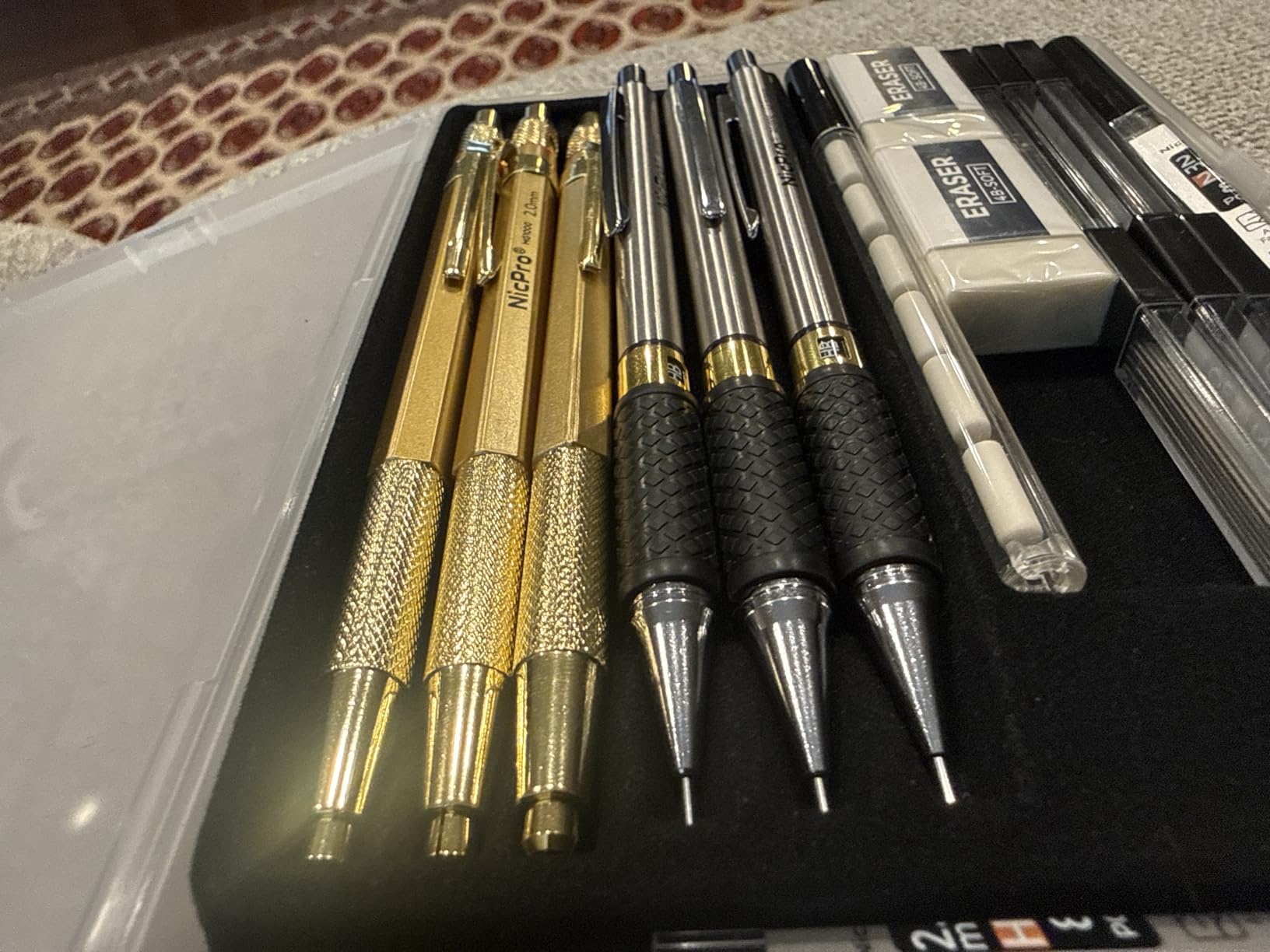
This is the answer to the question nobody asks out loud, which is how many pencils do I actually need. The set gives you 0.5mm, 0.7mm, 0.9mm mechanical pencils plus a 2mm lead holder, twelve refill tubes and a storage case, so a beginner can stop deliberating and start drawing.
Owners of this set consistently point to the two-grip design as the practical win. Some pencils carry a rhombus rubber grip for lighter handling and others a threaded metal grip for pencil-heavy work, which means the set covers both light sketching and heavy technical rendering.
The sharpener tucked into the cap of the 2mm holder is a small, thoughtful addition. It means the thick-lead pencil in the set is usable straight out of the box rather than sitting idle until you buy a separate sharpener, and in practice I reach for that holder more than I expected during broad shading.
Balance is the quiet strength here. Full metal bodies sit heavier than plastic pencils but distribute weight evenly, so there is less wobble when you shade with the side of the lead, which is a real improvement over the soft plastic pencils that pass for drafting tools.
When to choose a set instead of one premium pencil
Choose the set when you are in your first year of drawing, when you do not yet know whether your style leans fine detail or broad shading. Buying one excellent pencil means guessing your own preferences, and guessing wrong is how people end up unhappy with a tool they were told was the best.
A set also solves the tracking problem that forum users complain about constantly. Owning four pencils means four refill tubes to keep straight, and this package keeps them matched to the right sizes in one case instead of scattered across a drawer.
Where the set gives ground against a single specialist pencil
The mechanism is the compromise. Individual units are not as refined as a dedicated drafting pencil, so lead extension can be less consistent, and the included refills wear faster than Pentel or rOtring tubes. Reviewers are candid that these are not the pens to keep for a decade.
If you already draw and know your lead size, spend that money on one good body instead. Sets reward beginners and hobbyists; experience rewards precision.
3. rOtring 600: Best Premium Metal Mechanical Pencil for Drawing
rOtring 600 Mechanical Pencil, 0.7 mm Lead, Silver Metal Barrel – For Technical Writing, Drawing, Sketching
0.7mm lead
Brass mechanism
Fixed long sleeve
Hexagonal knurled metal
Grade indicator
Pros
- Brass mechanism gives precise lead advancement
- Long sleeve resists breakage and shows the page clearly
- Hexagonal barrel will not roll
- Excellent weight balance
- Knurled grip grips without poking
Cons
- Fixed sleeve can bend if dropped tip-first
- Some internal parts are plastic
- Lead extension per click is occasionally uneven
- Harsh transitions on very long sessions
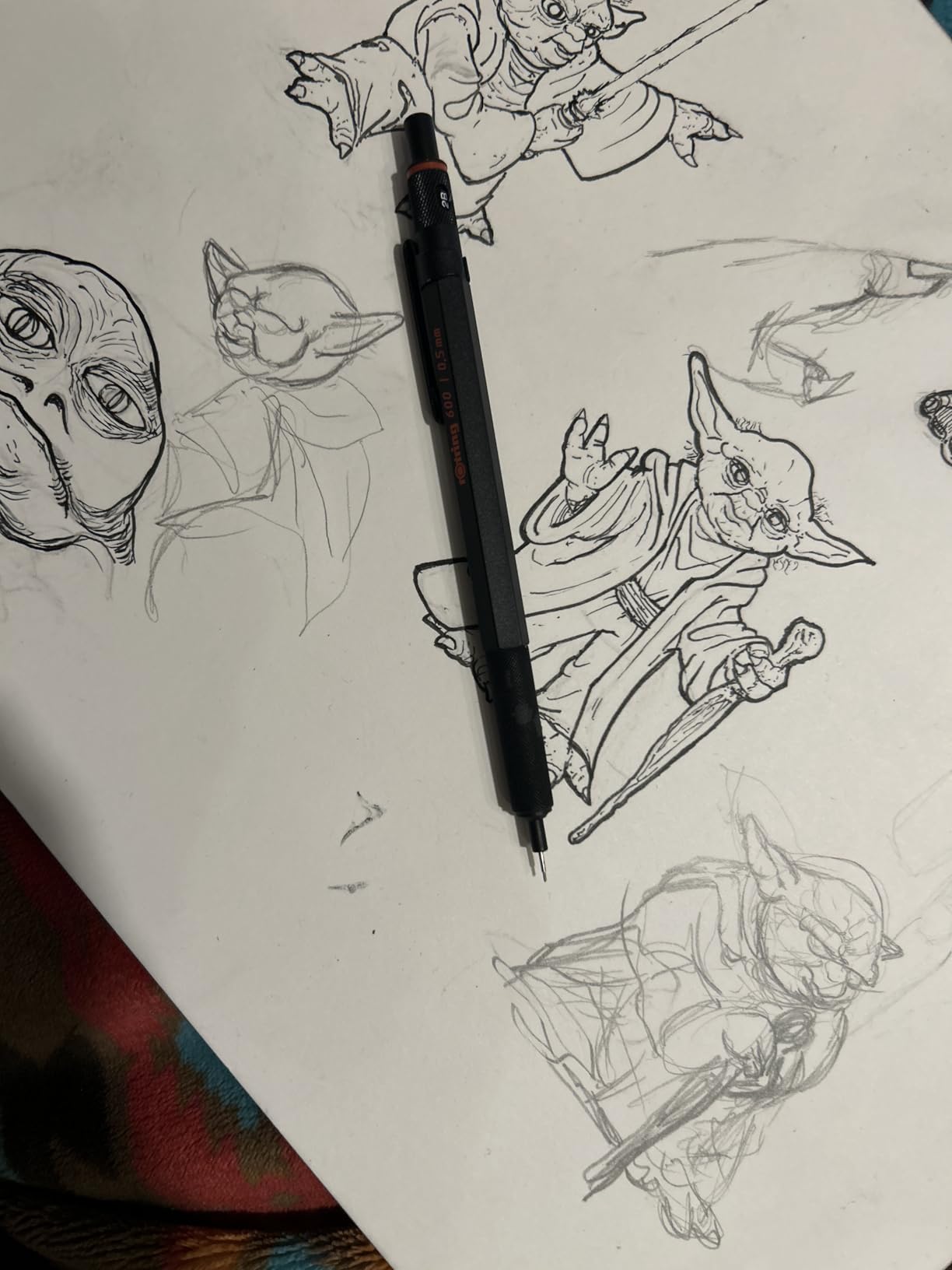
The rOtring 600 in 0.7mm is the pencil that shows up again and again in long-term ownership conversations on r/BuyItForLife, where users describe keeping the same one for two decades. That kind of staying power is the strongest recommendation a tool in this category can earn.
The mechanism is brass, not plastic, and that is why the lead advances evenly. Each click gives a consistent push, so your line diameter stays repeatable from the first stroke of a page to the last, which is the core promise of a mechanical pencil for drawing.
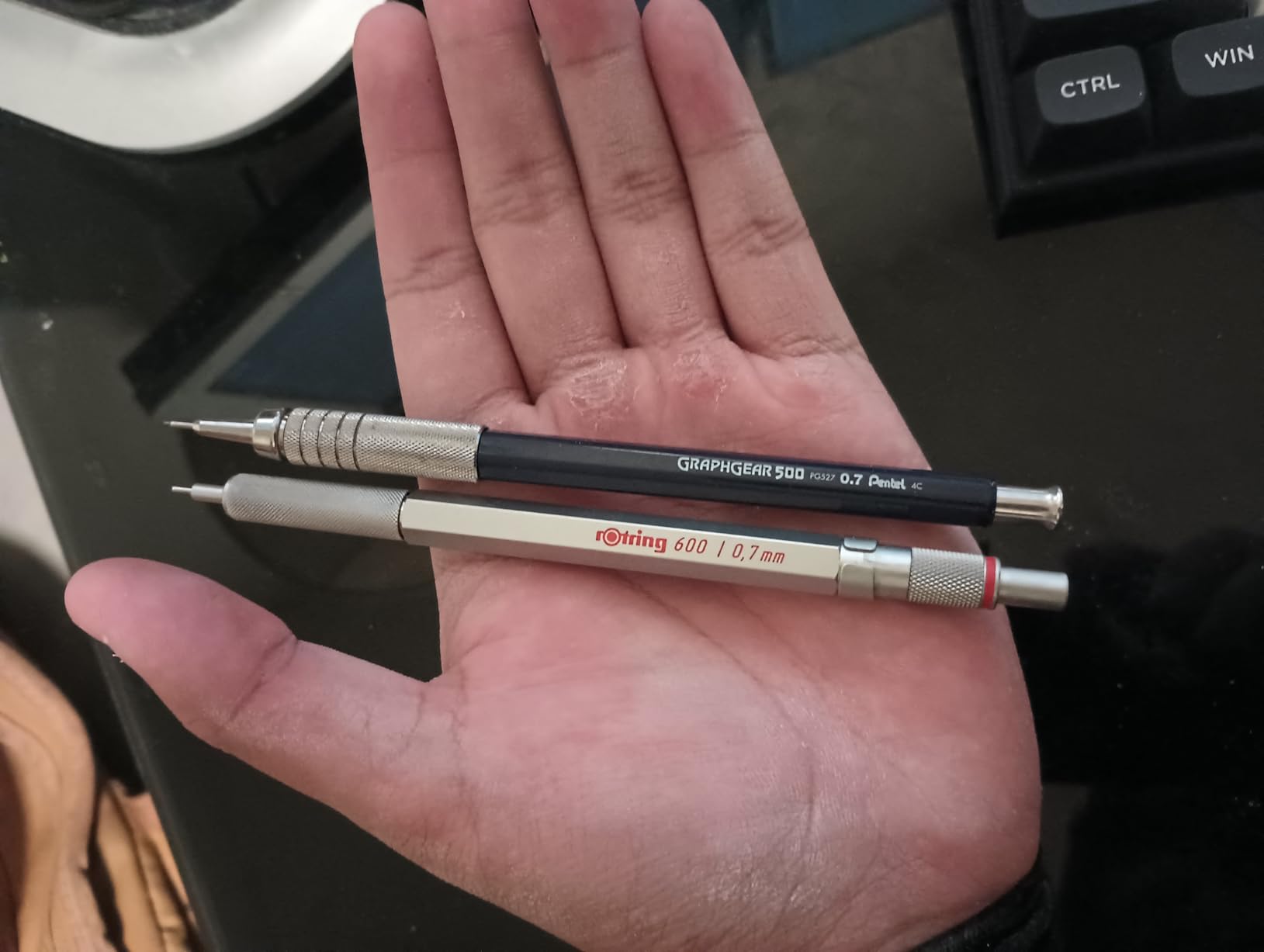
The long fixed sleeve is the second reason this one endures. It braces the lead from further back than a slim drafting tip, so the pencil survives pressure and stays readable against a straightedge, and because the barrel is hexagonal it does not roll off a sloped drawing board.
Weight balance is the underrated feature. At 22.68g it is heavy enough to feel substantial and light enough that the weight sits behind your hand rather than in it, which is why long sessions do not produce the fatigue that lighter plastic bodies avoid but at the cost of control.
Why 0.7mm is the size artists gravitate toward
Users comparing sizes land on 0.7mm again and again as the durable middle ground. It is a step sturdier than 0.5mm without being as blunt as 0.9mm, so a heavy-handed line that would snap 0.5mm simply marks the paper here, and that reliability is what keeps a drawing flowing.
The trade is fine detail. At 0.7mm you will not draw the fine hairline detail that 0.5mm handles, so artists who mix rendering sizes often keep this as their shading and construction tool and pair it with a slimmer model for detail work.
The failure mode to plan for
The fixed sleeve does not retract. If you drop this pencil tip-first on concrete, expect a bent nose, and replacement sleeves are the part owners complain about needing. Keep it away from the edge of a drawing board, or drop it into a case.
Some internal components are plastic despite the brass mechanism, and the angular transitions between hex sections can feel harsh during a marathon writing session. For drawing rather than note-taking, that rarely surfaces.
4. Staedtler Silver Series 925 25-07: Best Value Classic Drafting Pencil
Staedtler 0.7mm Mechanical Pencil Silver Series (925 25-07)
0.7mm lead
Silver metal barrel
Knurled grip
18.14g
Built-in eraser
Pros
- Classic German-made metal barrel
- Knurled grip gives secure control
- Light at 18.14g for long sessions
- Same series covers 0.3mm to 2.0mm
- Built-in eraser under the push cap
Cons
- Less tactile grip detail than newer pencils
- Plain listing with little detail
- Modest review volume
The Staedtler 925 series is the quiet infrastructure of drafting studios and classrooms, and the 0.7mm version is the one most drawers are full of. It does one job well: a round metal barrel, a knurled grip and consistent 0.7mm lead that suits both technical linework and general sketching.
At 18.14g it is one of the lighter metal-bodied options here, and that matters over a long session. If the GraphGear 1000 feels heavy to you by hour three, this is the metal upgrade that will not create that fatigue.
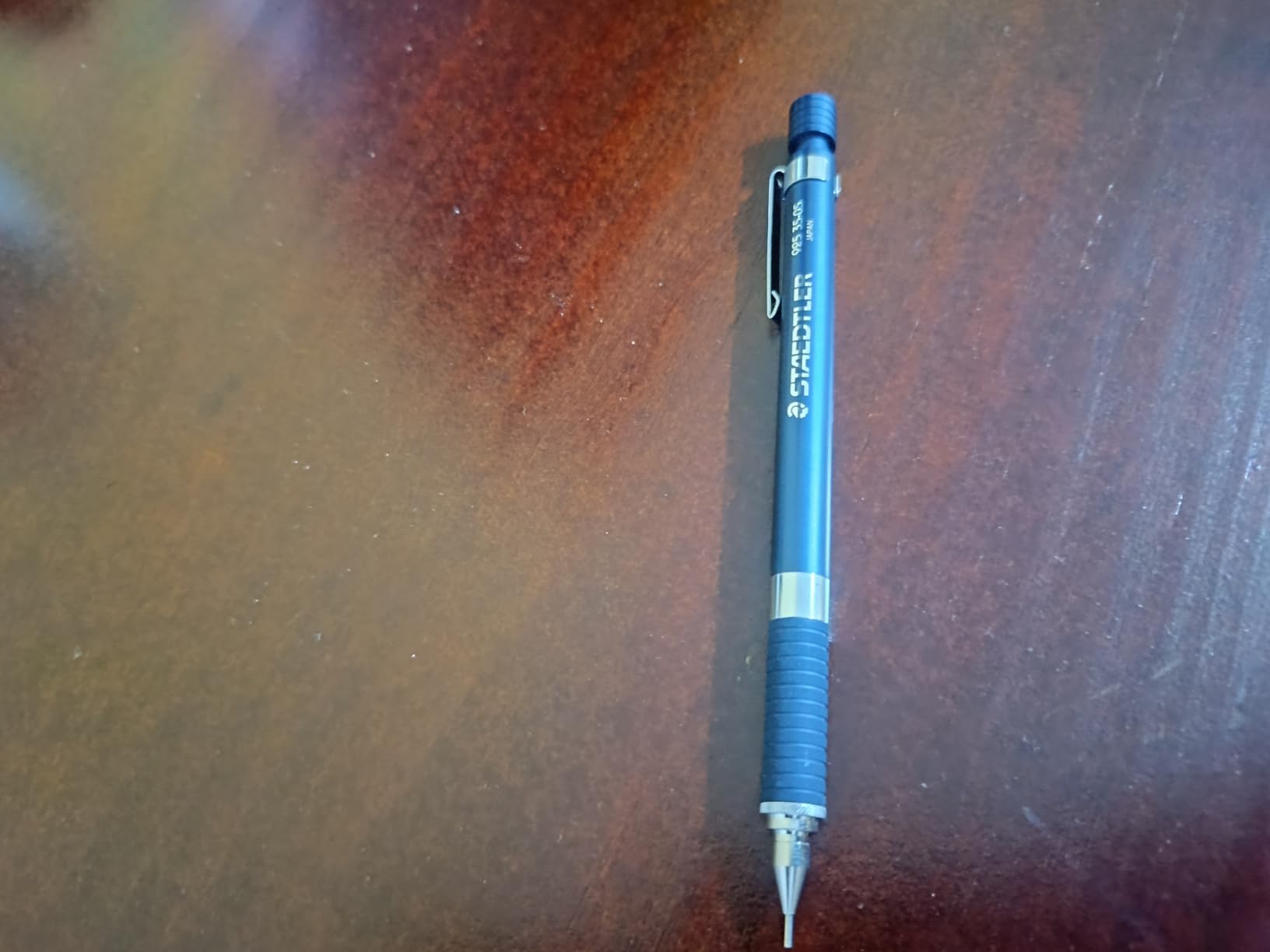
The eraser sits under the push cap, which is the practical feature most owners mention. It is easy to reach with one hand and large enough to actually correct a line, unlike the skinny replaceable erasers that come on many slim drafting pencils and disappear within a week.
Because the series runs from 0.3mm to 2.0mm, buying into it once does not lock you in. A later purchase in a different diameter feels familiar, which matters if you intend to keep one pencil in a bag and another on your desk.
Where this pencil earns its keep day to day
It is a good everyday carry for the pencil that does not get a dedicated desk spot. Round barrels roll, though, so it lives better on a flat work surface or in a case than in a loose pocket next to a water cup.
The knurling is functional rather than refined. It stops slippage during long shading strokes without adding padding, and it will not impress anyone holding it, but it has been doing the same job for decades.
Reasons to look elsewhere
If grip feel matters to your drawing, reviewers note this barrel has less tactile detail than modern drafting pencils. It is a tool rather than an experience, and people who spend hours drawing notice that difference immediately.
If you need a long sleeve for straightedge work, this model does not have one. Go to the GraphGear 500 or the ALVIN Draft/Matic instead, where the 4mm sleeve is the whole point.
5. Staedtler Mars Technico: Best 2mm Lead Holder for Drawing and Shading
STAEDTLER Mars Technico Mechanical Pencil, 2mm (2) Lead Holder with Built-in Sharpener – Drawing & Sketching Pencil with Metal Clip & Push-Button Lead Advance
2mm lead holder
Built-in sharpener
Push-button advance
Metal clip
17.01g
Pros
- 2mm lead gives the tonal range of a wooden pencil
- Sharpener hidden under the push cap
- Precise controlled lead extension
- Solid metal clip
- Clean lines for technical and artistic work
Cons
- Needs regular sharpening
- Bulkier barrel blocks small drawing areas
- Limited styling and features
This is a lead holder rather than a mechanical pencil, and that distinction matters for anyone who draws. A 2mm lead is thick enough to take a real chisel or round point, so you get the line variety and soft darks of a wooden pencil with none of the sharpening pauses.
The built-in sharpener is the feature that decides this model. Pop off the push-button cap and it is there, so the tool is self-contained, and at 17.01g with a firm metal clip it stays put on a board without adding meaningful weight.
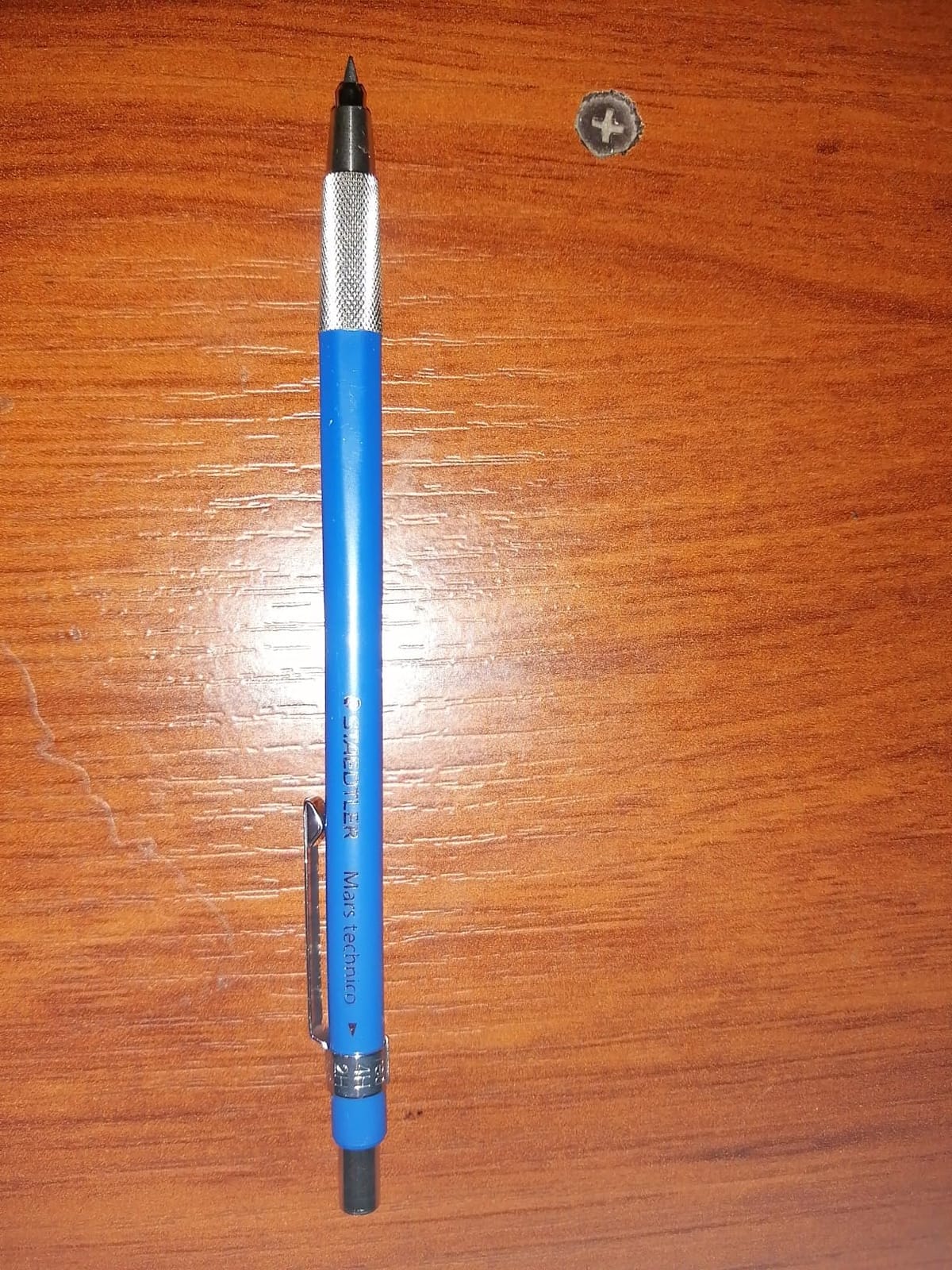
Push-button advance on a holder sounds odd until you use it. Each press extends a controlled amount of lead so you set the point depth deliberately rather than breaking a stub against the paper, which keeps your hands cleaner and your sharpening rhythm predictable.
For shading and broad gestural marks this is the tool I reach for. A 2mm point laid on its side moves a lot of graphite and builds a dark value fast, and unlike a fine mechanical point it leaves a stroke texture that reads as drawn rather than printed.
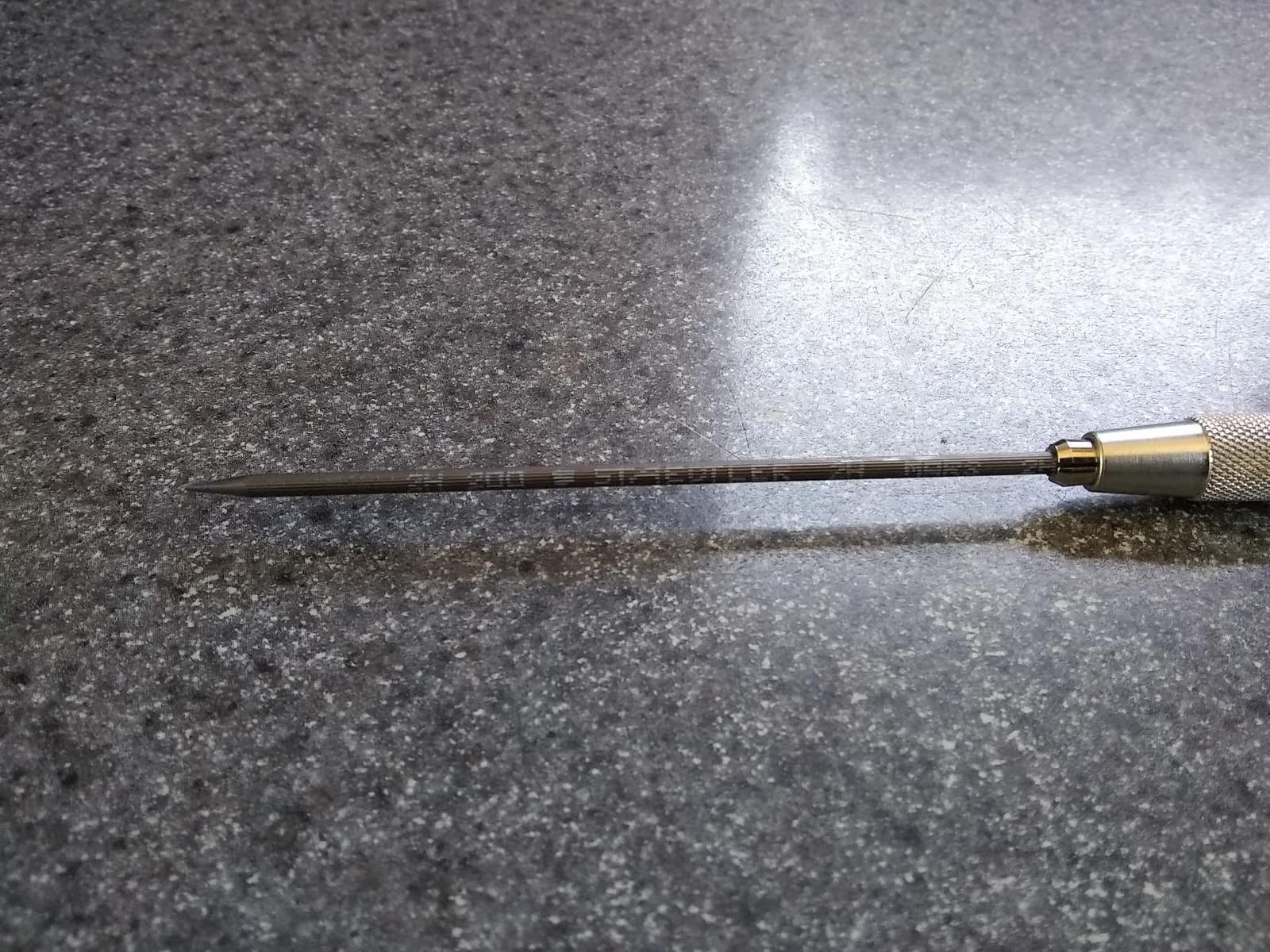
When a 2mm holder beats any mechanical pencil
Choose thick lead when you need tonal range more than line control. Figures, gesture drawing, dark underdrawing and value studies all benefit from a point that can be flattened on its side, which a 0.5mm sleeve physically cannot do.
It is also the better travel companion for sketching if you have a sharpener. The style advantage is not aesthetics, it is texture, because a sharpened 2mm point catches the tooth of the paper and produces marks no thin sleeve can.
The limits you should plan around
Sharpening interrupts flow, and you need somewhere to keep shavings. Users who draw on the move should bring a small sharpener pouch rather than assuming the built-in one solves everything, because it solves lead prep, not cleanup.
The barrel is bulkier than a slim drafting pencil and can physically block a small drawing area. Fine detail and tight corners are also not this tool’s strength; for that you want 0.5mm or 0.7mm lead.
6. Pentel GraphGear 500: Best Budget Drafting Pencil for Drawing
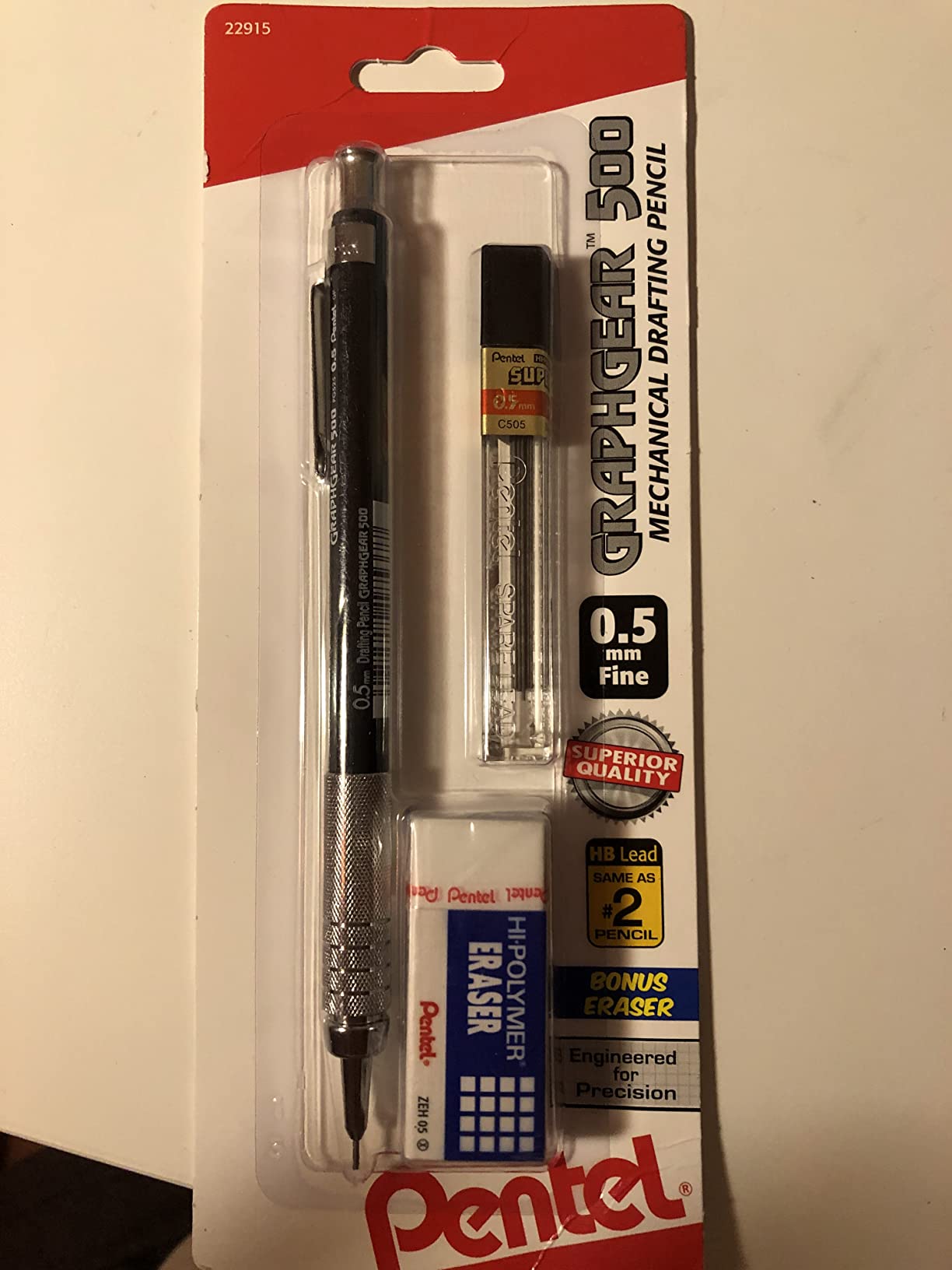
Pentel GraphGear 500 Mechanical Drafting Pencil, (0.5mm), Fine Line, Refill Lead and Mini Eraser (PG525LEBP)
0.5mm fine line
Long metal sleeve
Checkered grip
Weighted at fingertips
4mm tip
Pros
- Drafting features at a low cost
- Long sleeve that rarely jams
- Each click advances a sensible amount
- Checkered grip grips firmly without scratchiness
- Slim barrel balanced at the fingertips
Cons
- Weight sits low in the barrel
- Aggressive knurling is rough on sensitive fingers
- Long fixed tip and clip catch some hand positions
- Plastic barrel can crack on impact
Owners describe this model the same way: premium drafting features without the premium body. You get a long metal lead sleeve, a 4mm tip and a grip that does not slip, and for anyone who needs a reliable fine point this is the model I recommend first.
That long sleeve is the headline. It supports the lead from well back, improves the view of the contact point for detail work, and does not jam the way slim tips do, which is the single most common mechanical pencil complaint in the forums we studied.
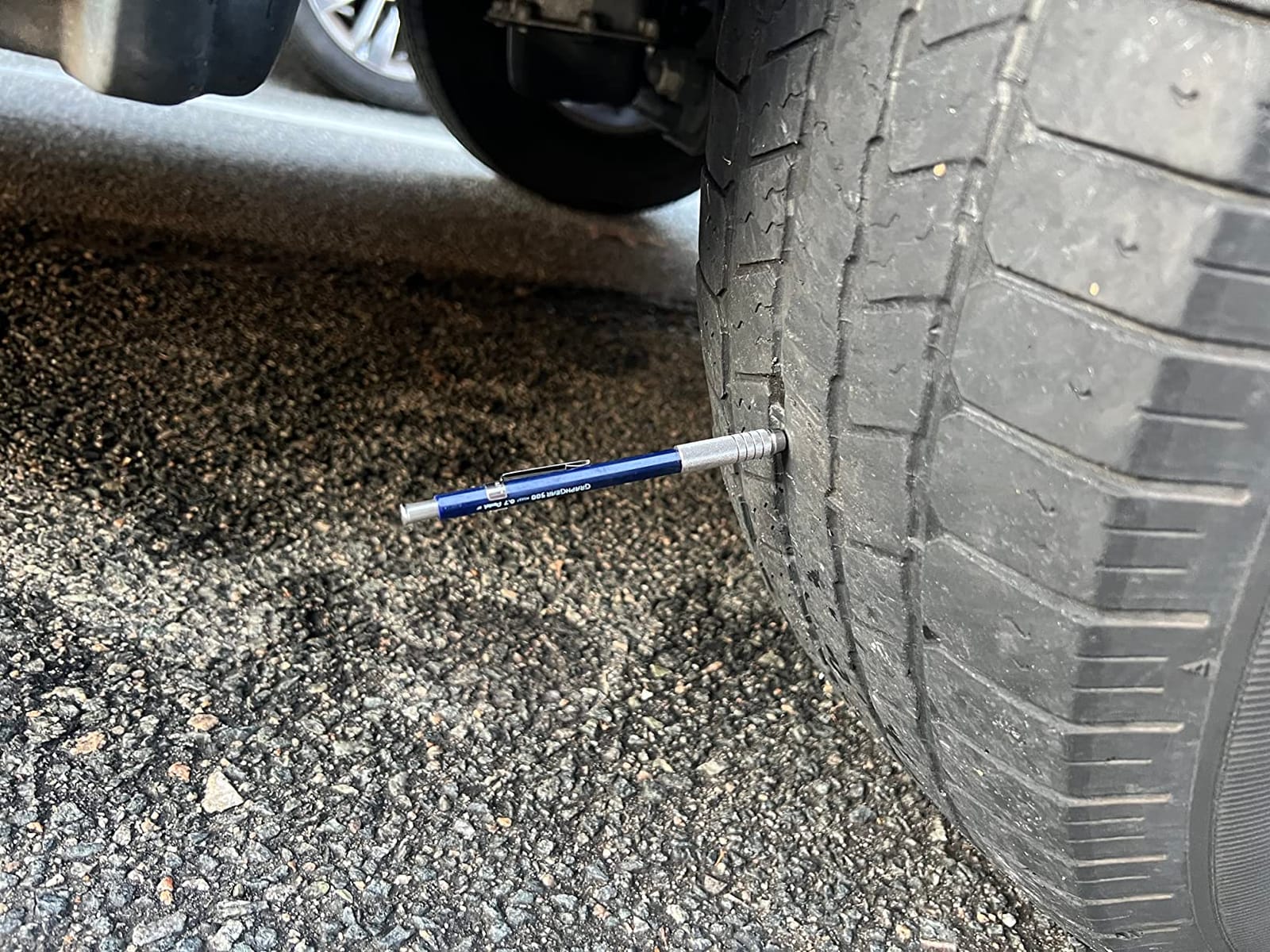
Because the barrel is weighted toward the fingertips, the pencil sits close to your hand where control lives. For template work and ruler drawing that is the difference between a line that tracks your edge and one that wanders as your hand slides.
The color coded size system also means 0.3mm, 0.5mm, 0.7mm and 0.9mm versions look identical apart from the collar. If you later decide 0.5mm is wrong for you, you switch the pencil rather than the whole habit.
Why the balance point is unusual here
Weight low in the barrel is unusual for a drafting pencil and it is the most repeated complaint in reviews. Some hands read that as instability, and if you have used fountain pens or heavily weighted pencils you may prefer the mid-barrel balance of the GraphGear 1000.
Others find it ideal for tripod grip and close-to-the-paper work. It comes down to your hand position, which is why the same barrel can feel excellent to one drawer and wrong to the next.
Where the trade-offs show
The checkered knurling is aggressive. Users with sensitive fingers report that it feels rough over a long session, so if you know your grip gets tight under concentration, pick a softer grip instead.
The barrel is plastic and can crack after heavy impact, and the fixed tip plus permanently attached clip can interfere with certain grip angles. Neither matters in a desk setting; both matter on a drawing board.
7. rOtring Rapid Pro: Best Mechanical Pencil for Heavy Pressure
rOtring Rapid Pro Mechanical Pencil, 0.7 mm, Black
0.7mm lead
Cushioned lead advance
Brass mechanism
Non-slip grip
2-year warranty
Pros
- Cushioned mechanism resists breakage under pressure
- Brass parts for precise advancement
- Non-slip knurled metal grip
- Built-in eraser under the cap
- Backed by a two-year warranty
Cons
- Costs more than comparable drafting pencils
- Fixed sleeve is vulnerable if dropped
- 0.7mm is not suited to the finest detail
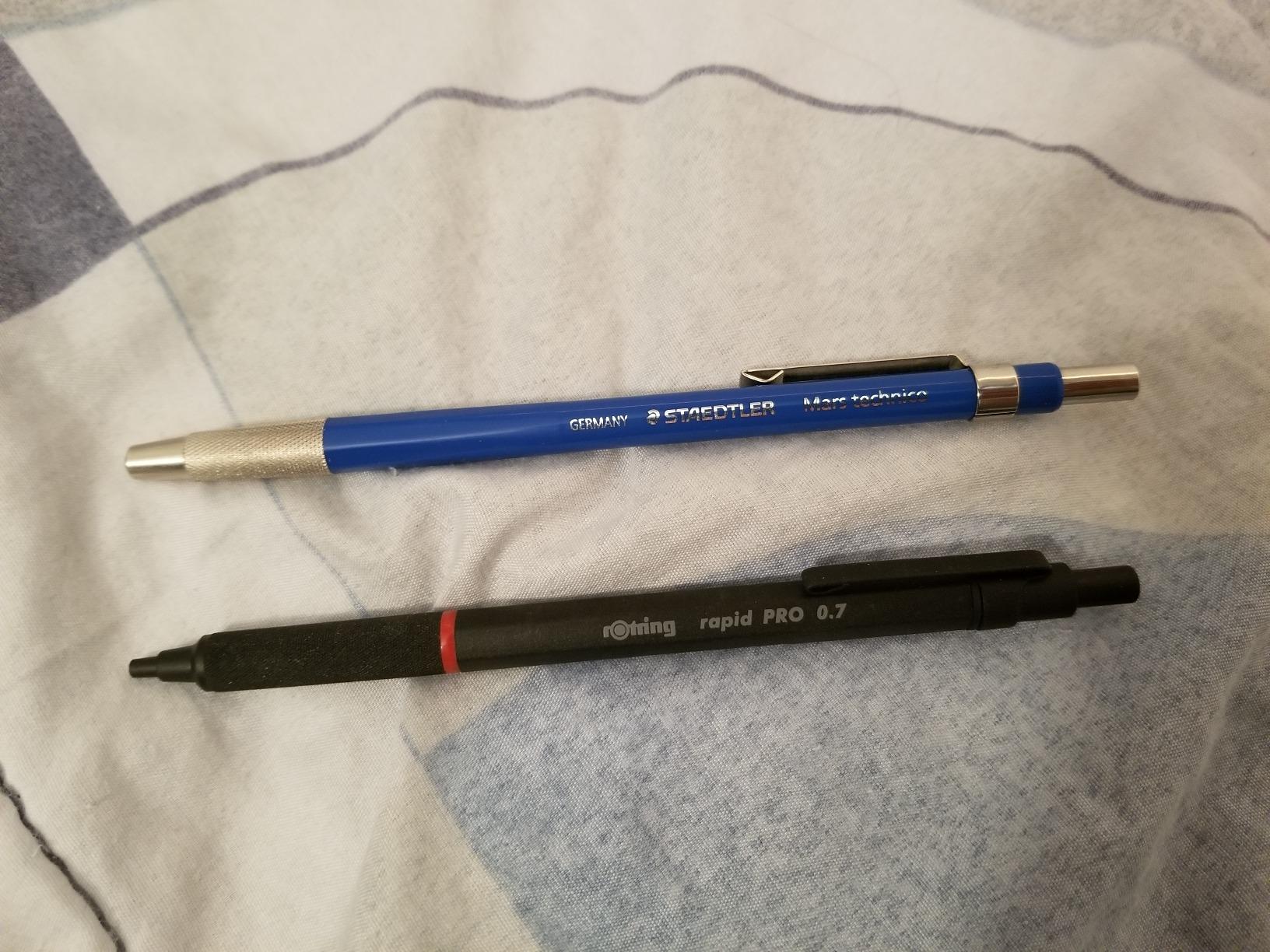
The cushion point is the reason this pencil exists. Instead of driving lead forward rigidly, the mechanism gives slightly as you press, which absorbs the shock that snaps a standard sleeve, and if you draw hard or lean on the pencil this is the difference between finishing a line and stopping to re-seat the lead.
Recent converts on r/mechanicalpencils pick up the 0.7mm Rapid Pro for art and describe it as quickly becoming one of their favorite pencils for drawing. That is the honest consensus: a small group of enthusiastic users, very positive about the mechanism.
The matte black finish is discreet and non-reflective, which matters if you work under strong light where a polished barrel throws glare onto the page. The non-slip knurled metal grip holds position even when your hand is damp or you are working fast.
There is a built-in eraser under the push cap, so you can correct a line without a second tool, and a two-year manufacturer warranty covers mechanism failures that cheaper models leave to you.
When pressure is the deciding variable
Breakage is the number one complaint in this category, and it is almost always a pressure problem. If you build shadows by leaning into the pencil or shade by dragging the side of the lead hard across toothy paper, the cushioned advance here will outlast a rigid mechanism.
For light-handed drafting where you barely touch the page, the cushion is less relevant and the extra cost buys you less than the same money spent on a grip you like.
What you give up for it
It sits at the expensive end of this list and reviewers name that directly. If you are starting out and drawing lightly, this is money you will not feel in your drawing.
Two further limits: the fixed sleeve is exposed and will bend if the pencil lands on its tip, and 0.7mm lead is simply too coarse for very fine detail work like eyelashes or fine hair strands.
8. ALVIN Draft/Matic DM07: Best Lightweight Pencil for Long Drawing Sessions
ALVIN DM07 Draft/Matic Mechanical Pencil, 0.7mm, Stainless Steel Drawing and Design Tool for Students and Professionals, Great for Drafting, Architecture, Engineering, and Art
0.7mm lead
Fixed 4mm steel sleeve
Cushion point
9.07g
Grade window
Pros
- Fixed 4mm sleeve supports lead against straightedges
- Cushion point steadies the tip
- Lightest body in this guide at 9.07g
- Knurled steel grip does not squeak
- Color coded across the Draft/Matic line
Cons
- Metal tip dents if dropped or struck
- Raised semi-jagged grip can hurt tight holders
- Loose indicator window shifts
- Price feels high for a partly plastic body
At 9.07g this is the lightest drawing tool in the guide, and for six-hour sessions that is the feature that decides everything. Metal drafting pencils are comfortable in the hand, but comfort has an upper limit set by mass, and this is the pencil that gets light.
The 4mm fixed sleeve and cushion point do the anti-break work. The sleeve braces the lead against a straightedge for clean ruled lines, and the cushion steadies the tip so lines stay consistent when you are drawing fast or slightly off balance.
Reviewers repeatedly single out the smooth, squeak-free lead advance and the clean lines produced against a ruler, often comparing it favorably to the plastic school pencils most people have in their pencil case. That comparison is the honest one to make.
The rotating lead degree window shows which hardness is loaded. Yellow, black, blue and maroon collars mark 0.3mm, 0.5mm, 0.7mm and 0.9mm across the line, so the family is easy to keep organized on a desk.
Where a light body changes your drawing
Weight shapes pressure control more than most beginners expect. A very light pencil encourages you to move your arm and use the side of the lead for shading, rather than pressing with your fingers, and that habit produces more even values over time.
It also makes this a good travel and urban sketching pencil. It disappears in a bag, it survives a long session without fatigue and the fixed sleeve is long enough to see your line against a notebook edge.
The weak points
The steel tip dents if you drop the pencil or knock it against a hard edge, and dents are not always obvious. Treat it as a desk and field tool, not a construction site tool.
The raised grip is semi-jagged, and users who grip tightly report discomfort, so a grip sleeve solves this cheaply. The indicator window is also loose and can shift, and some buyers feel the price is high for a partly plastic body.
9. Faber-Castell TK9400: Best Clutch Pencil for Dark Sketching and Shading
Faber-Castell TK9400 2mm 2B Clutch Pencil
2mm 2B lead
Twist clutch
Hexagonal barrel
Contoured grip
10g body
Pros
- Soft 2B lead gives dark sketching lines
- Simple twist mechanism has nothing to jam
- Powerful jaw grips hold thick lead
- Hexagonal barrel feels familiar and stable
- Well-known brand with consistent graphite
Cons
- Needs hand sharpening constantly
- Soft 2B wears fast and snaps easily
- Not suitable for fine technical detail
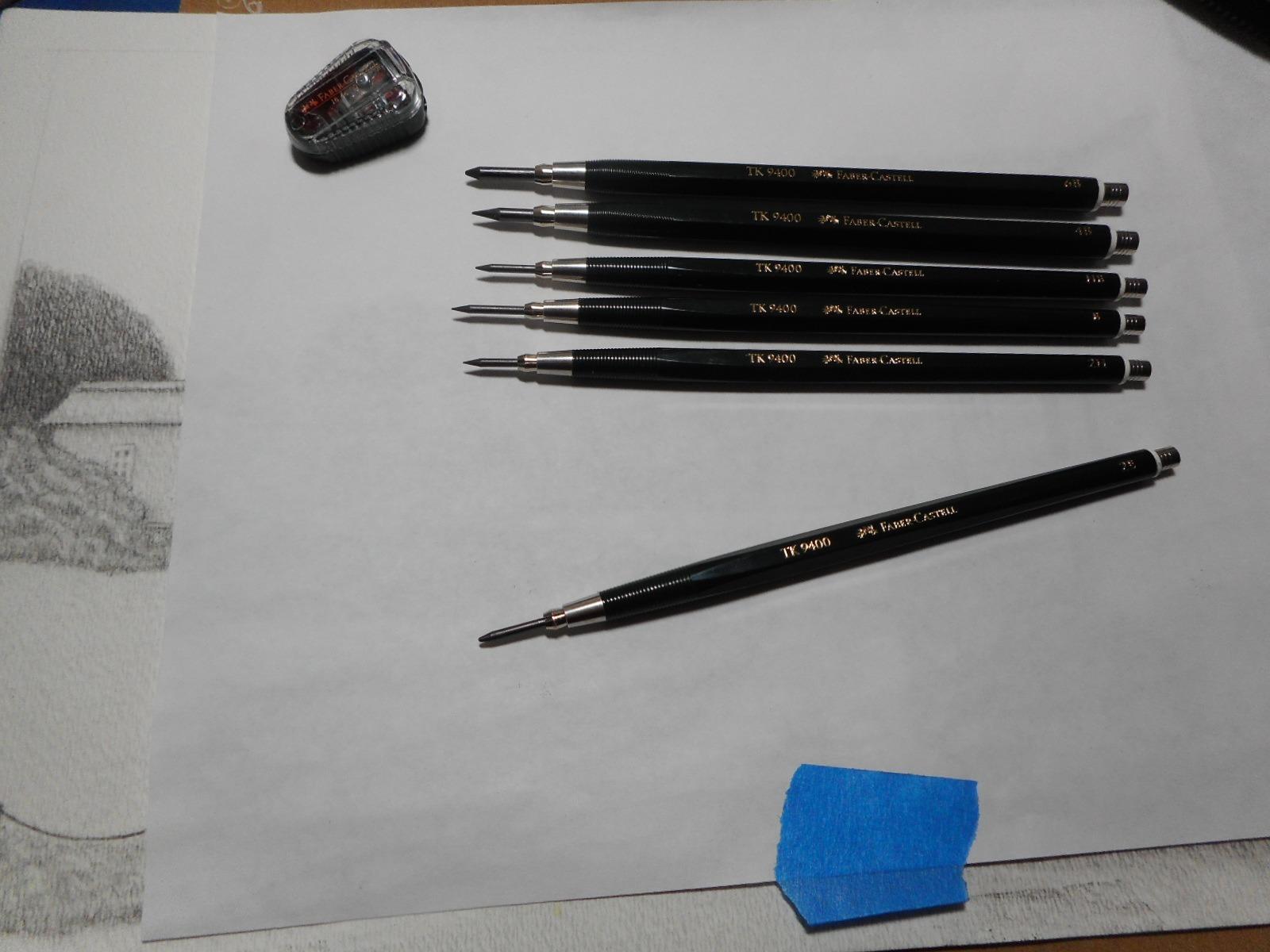
The TK9400 is a clutch pencil, and clutch pencils are the traditional artists’ answer to the mechanical pencil. The barrel holds a thick 2mm lead in a powerful jaw; you twist to advance, and when the point wears you sharpen it with an ordinary sharpener.
That last part is the whole argument for this tool. A sharpened point gives you an expressive line that varies in weight as you turn the barrel, which is something no fixed-sleeve mechanical pencil can reproduce, and it is why community recommendations for expressive sketching keep landing on thick-lead holders.
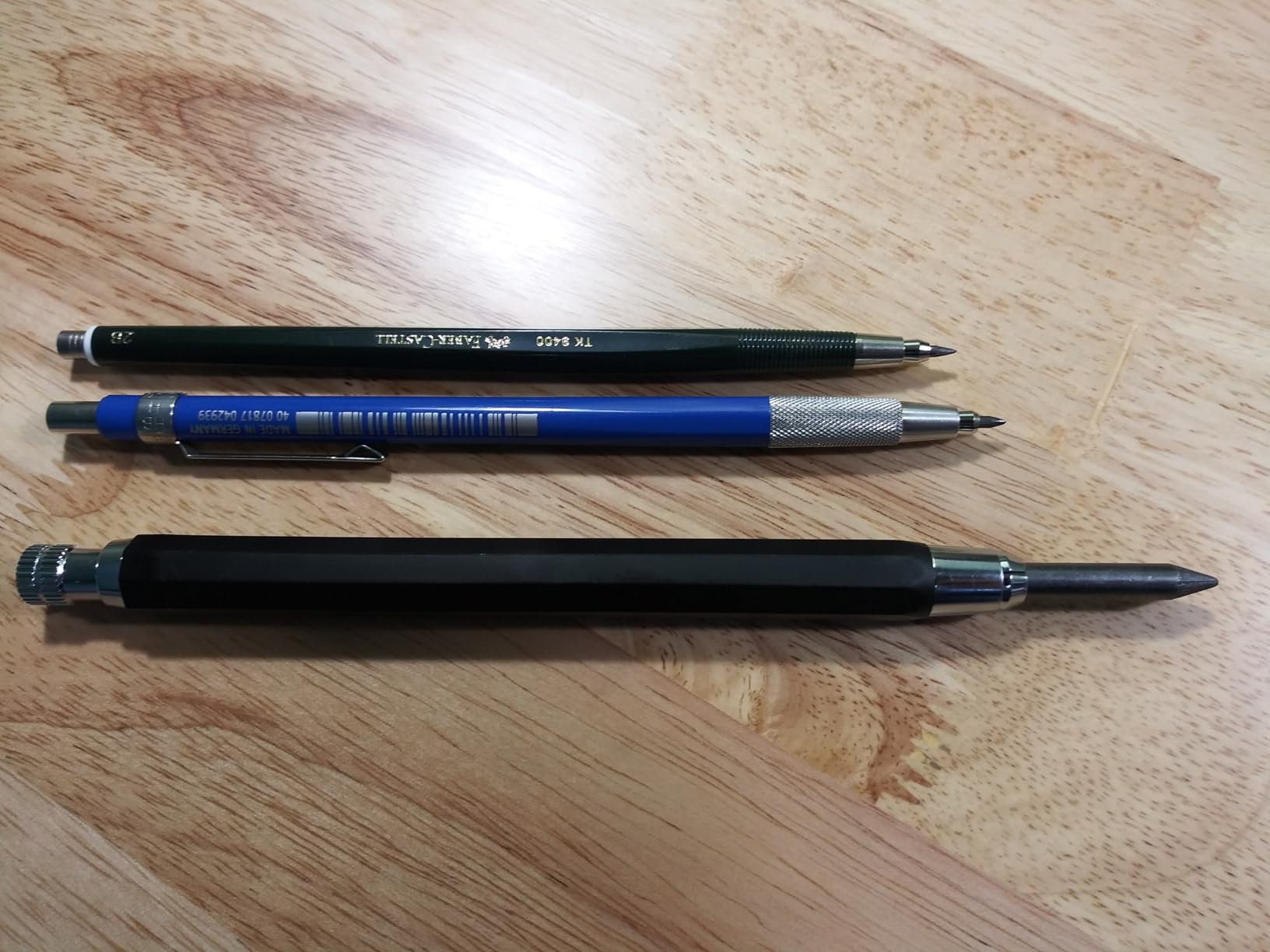
2B is soft and dark, which makes it excellent for sketching and value building where you want graphite to lay down heavily on the first pass. If your drawing needs visible pressure and strong darks early in the process, this lead does that without much fuss.
The mechanism itself is deliberately simple. A twist clutch has fewer moving parts than a ratchet, so there is nothing to jam, and the hexagonal barrel and contoured grip feel familiar to anyone who has used wooden pencils.
When a clutch pencil beats a mechanical pencil
Choose it when line expression matters more than speed. Portraitists, life drawing students and anyone doing gestural work benefit from the way a sharpened point thickens and thins across a stroke, which is a drawing quality mechanical lead simply does not have.
It is also the more forgiving tool on cheap paper. A blunt thick point shrugs off toothy stock where a fine sleeve skips and breaks, so for outdoor sketching and rough newsprint this is the safer choice.
Why it will frustrate some drawers
Sharpening is friction, and reviewers name it as the main constraint. Soft 2B wears down quickly and snaps more readily than hard graphite, so you will be sharpening more often than you want during a fast sketching session.
It is also the wrong tool for precision. If you need consistent fine linework, technical annotation or detail rendering, the 0.5mm and 0.7mm mechanical pencils earlier in this guide are better fits.
10. Staedtler Triplus Micro: Best Mechanical Pencil Eraser for Drawing
STAEDTLER Triplus Micro Mechanical Pencils 0.7mm HB #2, Ergonomic, 3-Pack with Twist-Top Eraser, Drawing & Drafting Tools, Break-Resistant Lead
0.7mm HB lead
Three-pack
Triangular ergonomic grip
Twist-top eraser
Supported metal sleeve
Pros
- Long twist-up eraser that genuinely works
- Triangular grip needs no sticky pads
- Supported metal sleeve reduces breakage
- Smooth 0.7mm lines for drafting and sketching
- Three-pack keeps spares on the desk
Cons
- Upper barrel is cheap-feeling plastic
- Lead durability is standard rather than premium
- No double-knock so lead needs erasing to advance
This is the correction-tool answer. The mini erasers fitted to most drafting pencils wear down in a week and are too small to lift a shaded area, while the extra-long twist-up eraser here is the size people expect from a stationery pencil, and that is where it earns its place.
The triangular grip is the second reason to like it. It is moulded comfort rather than a rubber sleeve or a coating, so it does not go sticky or peel, and it gives you a defined ridge to control the pencil with over a long shading stroke.
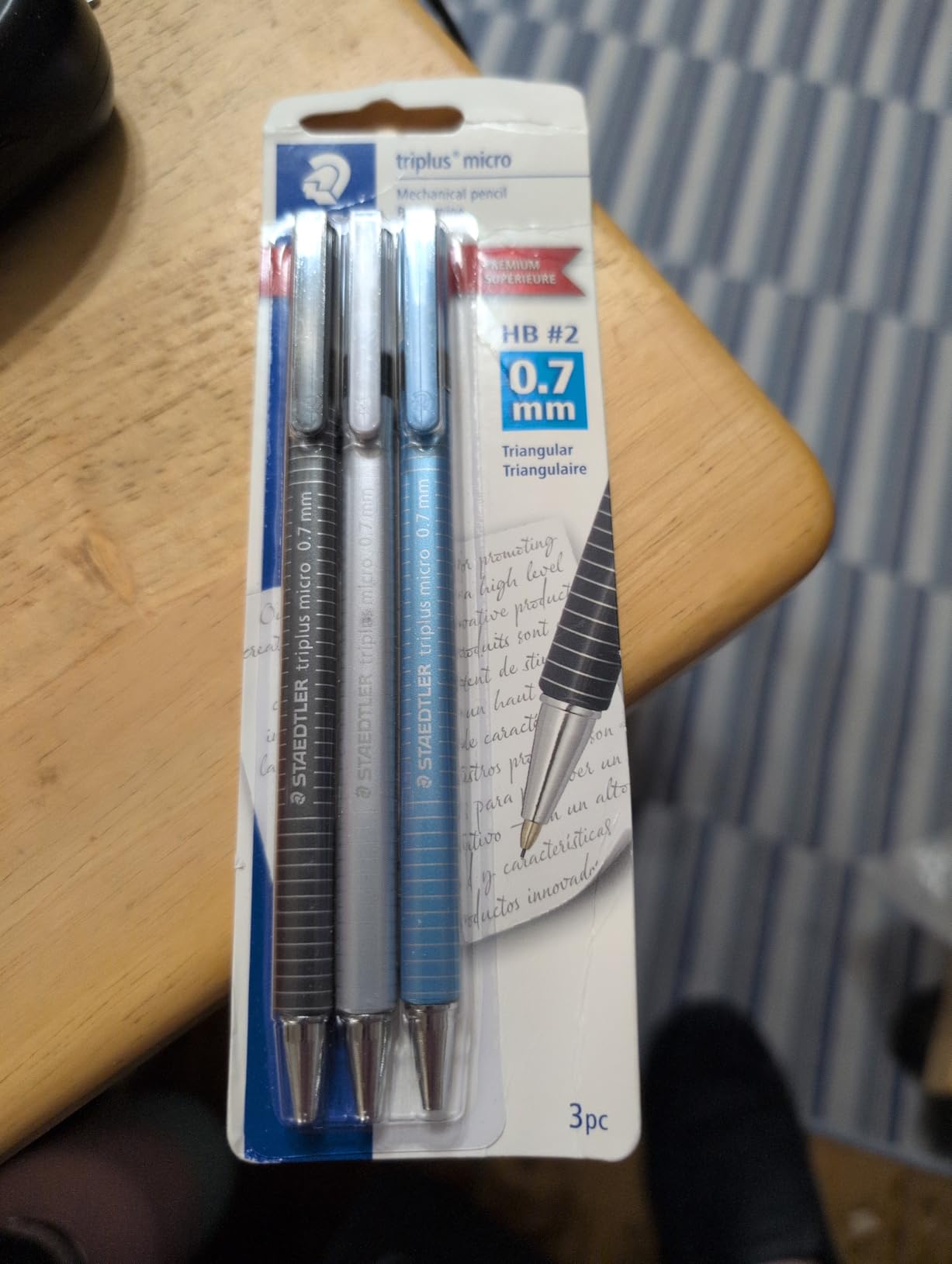
The supported metal lead holder reduces breakage relative to a plain school-box mechanism, and 0.7mm lead lays down a smooth, broader line that suits both drafting and general sketching. For beginners, that combination is forgiving.
Three pencils in the pack is genuinely practical. One lives in the drawing bag, one on the desk and one is a spare, which is a better distribution model than keeping your single good pencil in constant rotation.
Why the eraser matters more than expected
On rough paper, a small hard eraser tears fibres and smears the graphite you were trying to lift. A long soft twist eraser lets you erase a small area cleanly and adjust highlights mid-drawing, which changes how freely you work because mistakes stop being expensive.
For hatching and seamless gradient work, that control is the difference between a drawing you can revise and one you must commit to.
Where it falls short of a drafting specialist
Reviewers are blunt that the upper section around the clip and eraser twist is cheap-feeling plastic, and the lead durability is on par with a standard school pencil rather than with a drafting-grade mechanism.
There is also no double-knock function, so you cannot retract the sleeve to protect the point. If you drop this pencil tip-first, expect to re-seat the lead every time.
11. Four Candies 25-Piece Kit: Best Kit for Colored Lead and Graphite Mixing
Four Candies 25PCS Mechanical Pencil Set, 0.5, 0.7, 0.9 & 2mm, Storage Case
0.5/0.7/0.9/2mm
Graphite and colored lead
Kneaded eraser
Storage case
25 pieces
Pros
- Covers every lead size plus 2mm holders
- Includes HB 2H 2B and 4B with 12 colors of lead
- Anti-slip rubber and textured metal grips
- Kneaded eraser lifts graphite for highlights
- Storage case keeps the kit organized
Cons
- Very large number of pieces is bulky
- Only a 30-day warranty
- Budget-grade mechanisms next to dedicated drafting pencils
- Some pieces duplicate sizes
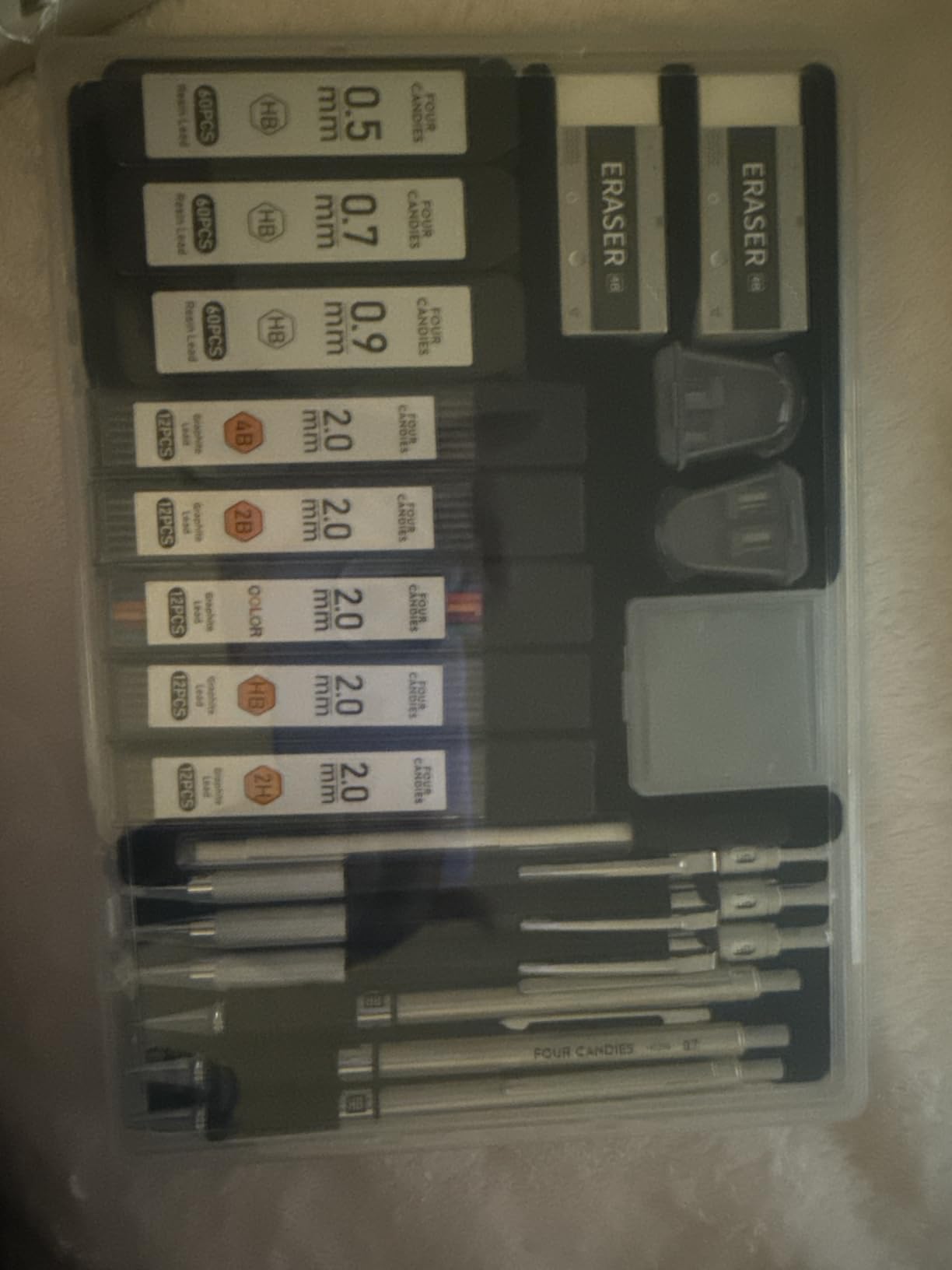
Where the Nicpro set covers sizes, this one covers everything: 0.5mm, 0.7mm, 0.9mm mechanical pencils, 2.0mm lead holders, graphite in HB, 2H, 2B and 4B, and twelve colors of colored lead, all in a storage case with a kneaded eraser.
Colored lead underdrawing is the reason to buy this kit, and no other product here covers it. If your process is to block in values in a colored lead you can erase cleanly, then layer graphite over the top, this is the box that makes that workflow possible without a second order.
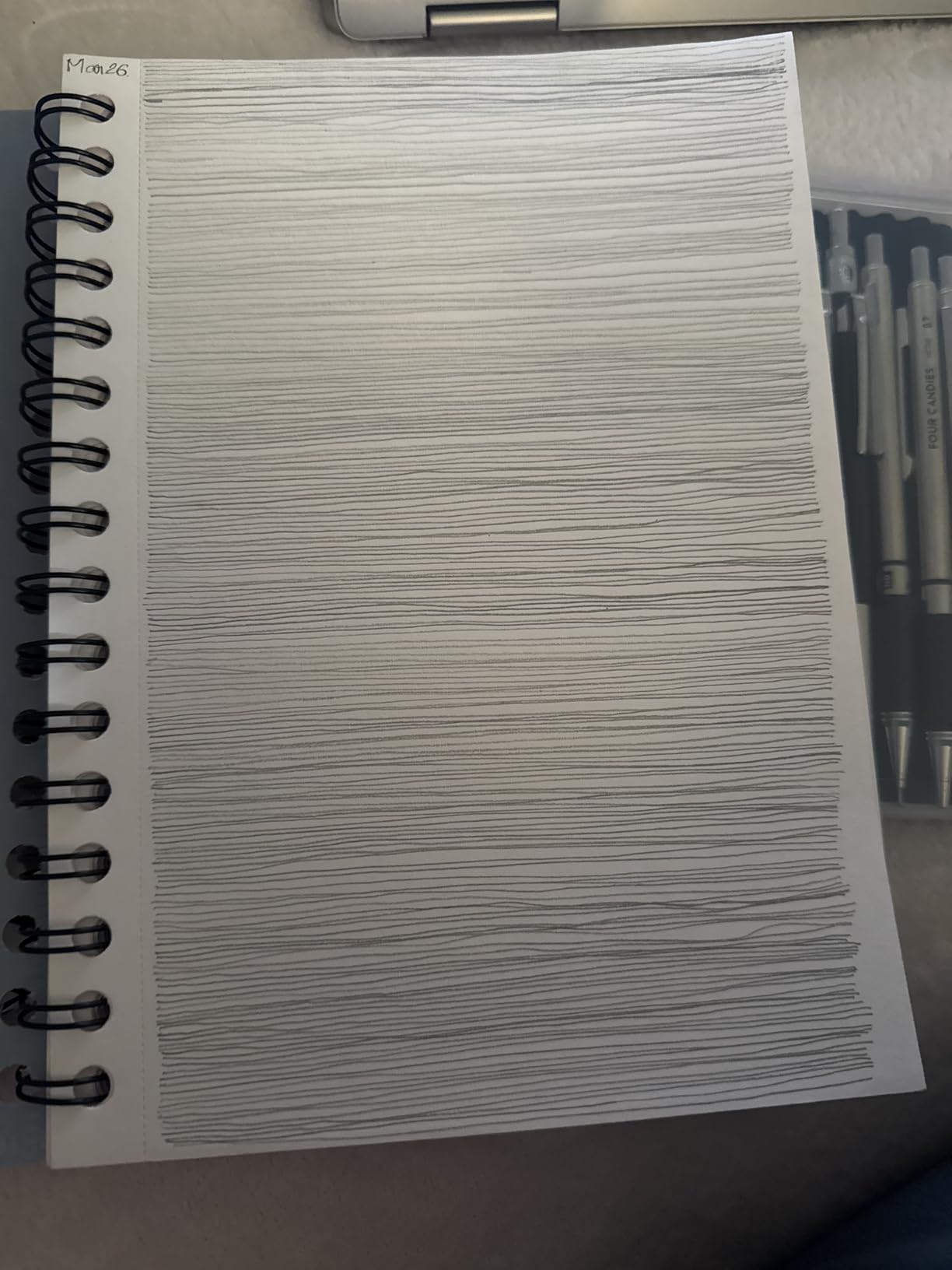
The kneaded eraser is the quiet star for graphite work. It lifts marks rather than scrubbing them, so you can pull highlights back out of a shaded area without dulling the surrounding paper, which a hard eraser cannot do.
Grip choice is mixed across the set, with anti-slip rubber and textured metal options, so you are not locked into one feel. Reviewers specifically note reduced hand fatigue over longer sessions compared with plain plastic pencils.
Who this kit is actually for
Students, illustrators and hobbyists who want one box to open and start. If you draw digitally rather than on paper, colored lead still has a place as an underdrawing reference and you may prefer a tablet workflow, which is covered in our guide to the best drawing tablets for beginners.
Homeschoolers and art-class families get the most from it, because the refill supply alone would take a single user months to work through. If your setup leans more toward typing and note-taking, our picks for the best mechanical keyboards for typing cover the desk around your drawing board.
Where a big kit works against you
The size is the first problem. Owners describe the kit as bulky and unwieldy to carry, so it lives on a desk rather than travelling to a class, and a case that opens to 25 pieces takes real space.
The mechanisms are budget-grade next to the dedicated drafting pencils here, the warranty is only 30 days on something meant for daily years-long use, and some pieces duplicate sizes you already own rather than adding capability.
12. rOtring 300: Best Entry Point to 2mm Lead Holders
rOtring 300 Mechanical Pencil | 2.0 mm | Refillable with Sharpener Under Cap | Black | 1Count
2mm lead holder
Plastic body
Sharpener under cap
Hexagonal feel
Grade indicator
Pros
- Lightweight body with good balance for its class
- Hexagonal barrel mimics the metal rOtring feel
- Built-in sharpener keeps 2mm lead usable
- Lead hardness indicator
- Low cost way into thick lead
Cons
- Built-in sharpener often performs poorly
- Sharpener cap can come loose and release lead
- Thin grip is hard to hold firmly
- Indicator dial drifts from position
- Plastic body is less durable than metal
If you have never drawn with thick lead, this is the cheapest way to find out whether you like it. The rOtring 300 holds 2.0mm lead in a clutch mechanism, keeps a sharpener under the click-off cap and has a grade indicator on the barrel, all in a light plastic body.
The hexagonal barrel is the reason owners describe it as feeling like a more expensive rOtring. That flat-sided shape is familiar from wooden pencils, it stops the holder rolling across a desk and it gives you somewhere to apply controlled pressure when shading.
For someone who wants to try broad value work without buying into a full kit, that combination is genuinely useful. It is the rare budget tool that is not disappointing, provided you do not rely on its sharpener.
The grip zone is thin, which is the main ergonomic limitation. There is less to hold than on a metal-bodied holder, and if you draw with a firm tripod grip you will notice that immediately.
Buy it for one specific reason
Buy it to test whether thick-lead drawing suits you. If it does, the natural upgrade is a metal-bodied holder like the Staedtler Mars Technico with a properly built-in sharpener, and you will already know which lead grade you prefer.
For light urban sketching where a single tool has to do everything, a 0.5mm or 0.7mm mechanical pencil is the more sensible investment because it needs no sharpening at all.
The complaints you can actually fix
The built-in sharpener is the most repeated complaint and it often performs poorly, so plan to keep a separate sharpener nearby. The cap is also reported to come off under light pressure and release the lead, which is messy in a bag.
The indicator dial drifts and does not hold position, so treat it as a rough guide rather than a reliable readout. Plastic construction is the least durable of anything in this guide, and dents at the nose are permanent.
How to Choose a Mechanical Pencil for Drawing in 2026
Four decisions matter more than brand: lead size, lead grade, barrel weight and balance, and the anti-break mechanism. Get these right and the model almost chooses itself. If you are still building a kit from scratch, work through them in this order rather than comparing pencils one by one.
Which lead size should you draw with?
Use 0.5mm if you press lightly and draw detail: faces, hair, fabric and fine linework. Use 0.7mm if you press hard, work fast or shade a lot, because it survives pressure that snaps 0.5mm. A useful rule: choose the size whose diameter matches the pressure you actually use, not the line you wish you drew.
Going thinner is a mistake beginners make constantly. A 0.3mm point sounds more precise but snaps under normal drawing pressure, and the interruptions cost you more time than the extra detail gains. Below 0.5mm belongs to technical illustration and drafting annotation, not to drawing.
What lead grade gives the value you want?
Grade controls darkness, not thickness. HB is the everyday middle, H and 2H give pale construction lines that disappear under shading, and 2B and 4B give the darks that make a drawing feel finished. A complete set is three grades: 2H, HB and 2B.
One warning: there is no universal standard across brands, so a Pentel 2H and a rOtring 2H are not identical. Brands do not share a grading scale, which is a genuine source of confusion, so once you find grades you like in one pencil, buy the matching refill tubes in the same brand.
How much do barrel weight and balance matter?
Weight controls how much pressure you apply. A light body pushes you to move your arm and use the side of the lead, a heavier body invites finger pressure, and anything above roughly 30g will start causing hand fatigue in a multi-hour session. Balance matters as much as mass: a pencil balanced near the fingertips feels precise, one weighted at the far end feels precise for a different reason.
Match the barrel to your hand. Round barrels roll on a sloped board and roll out of a case, so hexagonal or oval bodies are safer for field work. Soft grip sections help long sessions but can feel slippery when your hands are damp.
Which mechanism stops lead jams and breakage?
Three families cover almost everything. A long fixed sleeve braces the lead from far back and resists breakage but does not retract. A retractable sleeve fully withdraws into the barrel for drop and bag protection. A cushion point gives slightly under pressure, absorbing the shock that snaps rigid mechanisms, which is what heavy-handed drawers want.
For mechanism maintenance, clearing a jam takes four steps: retract the sleeve fully, push a clearing pin or thin wire gently into the nose from the barrel end, withdraw any snapped lead fragments, then advance and retract a few times to confirm the clutch moves freely. Keeping a few spare clearing pins in a pencil bag prevents most permanent jams.
Replacement lead is the other recurring headache. Common sizes refill cheaply and widely, while harder H grades and unusual sizes are harder to find and sometimes discontinued, so buying tubes in bulk when your preferred grade is available is a reasonable habit.
Frequently Asked Questions
Is a 0.5 or 0.7 mechanical pencil better for drawing?
Can you use 0.5mm lead in a 0.7mm mechanical pencil?
Which mechanical pencil is of the best quality?
Do mechanical pencils break lead easily when drawing?
Should I buy a mechanical pencil or a clutch pencil for drawing?
The Best Mechanical Pencils for Drawing: Final Word
The Pentel GraphGear 1000 remains the best mechanical pencil for drawing overall in 2026, because a retractable 4mm sleeve, a lead hardness window and a balanced metal barrel solve more failure modes than any rival here. Pick the rOtring 600 if you want brass parts and 0.7mm durability, the Rapid Pro if you press hard enough to snap lead elsewhere, and the Staedtler Mars Technico when you want expressive thick-lead lines.
Start with two pencils, not twelve. A 0.5mm drafting model and a 0.7mm one cover almost every drawing task, and adding a 2mm holder later is when expressive sketching starts to pay off. If you are still setting up the rest of your desk, our picks for the best wireless mechanical keyboards for Mac are a sensible next stop.