
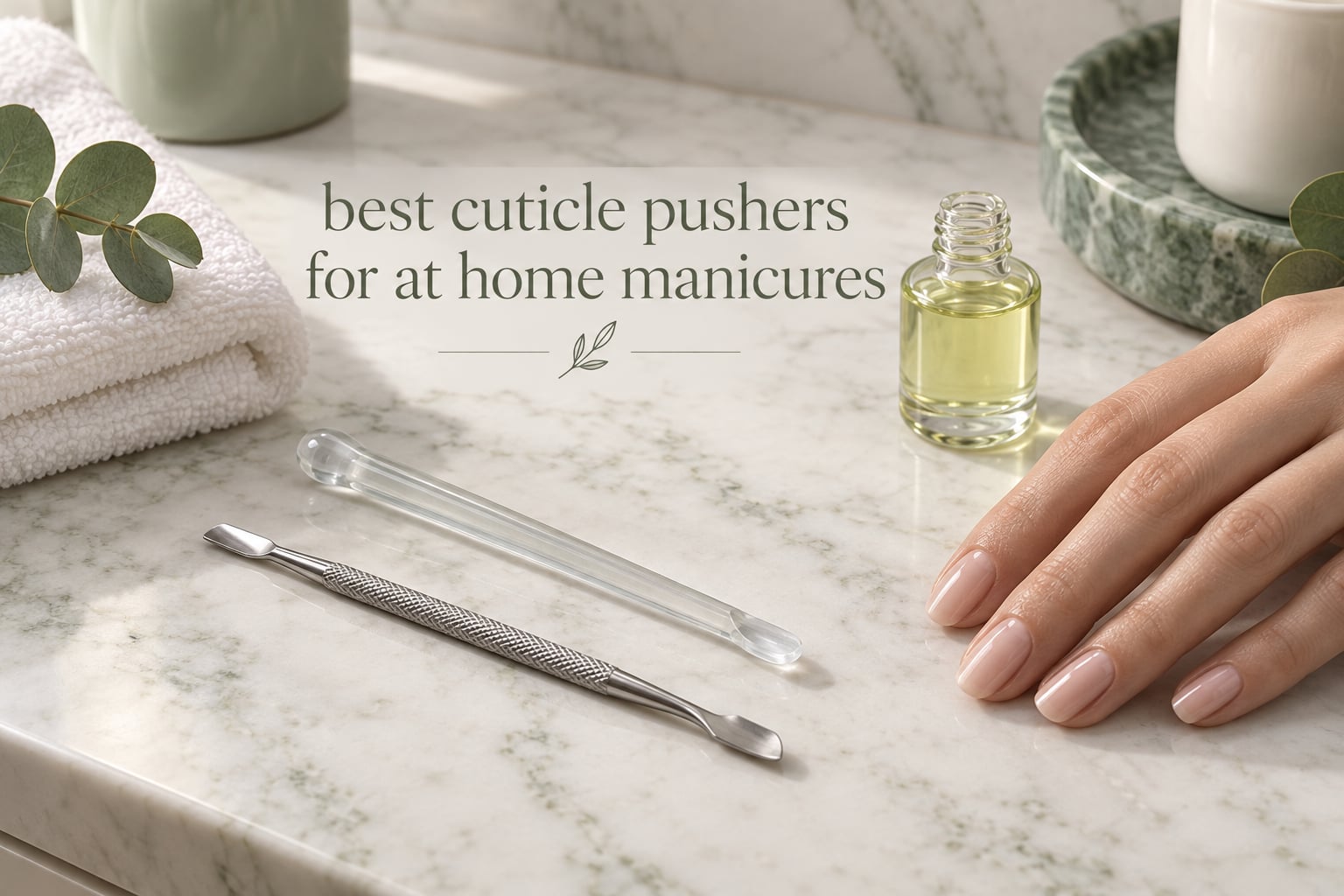
A cuticle pusher is a small manicure tool with a rounded, spoon or slanted tip that pushes dead skin at the base of the nail back toward the nail bed once the cuticle has been softened. We compared 12 of the best cuticle pushers for at home manicures over several weeks of routine use. The GA and EN 2-Piece Stainless Steel Set won on versatility, and the Bona Fide Beauty Czech Glass Pusher is the gentlest place to start.
The category splits into two camps. Stainless steel holds a sharpened edge and handles thick or overgrown cuticles quickly. Glass uses a permanently etched grit surface that removes dead skin without any cutting edge, which is why glass keeps coming up as the beginner-friendly choice in nail forums.
Nothing here replaces soft cuticles. Every method below assumes you work after a warm shower or with a cuticle oil, push gently, and stop before you reach living skin. Our guide to trimming a dog’s nails safely at home covers the same principle: soften, use a blunt working edge, never force it.
Table of Contents
Top 3 Picks for At-Home Manicures

GA and EN 2-Piece Set
- Four heads across two tools
- Stainless steel with rust protection
- Anti-skid ergonomic handle
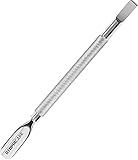
Utopia Care Dual-End Pusher
- 5.5 inch dual-ended design
- 100% stainless steel
- Sanitizable in warm soapy water

opove CP-3 3-Piece Set
- Six functions in three pieces
- Spoon
- triangular
- flat and pointed heads
- Ergonomic non-slip handles
Best Cuticle Pushers for At-Home Manicures in 2026
Below is the quick version. Every tool listed is reusable and cleans with soap and water, and full verdicts follow.
| Product | Specifications | Action |
|---|---|---|
| GA and EN 2-Piece Stainless Steel Multi-Head Set |
|
Check Latest Price |
| Utopia Care Dual-Ended Pusher and Spoon |
|
Check Latest Price |
| opove CP-3 3-Piece 6-in-1 Set |
|
Check Latest Price |
 Bona Fide Beauty Czech Glass Cuticle Pusher Bona Fide Beauty Czech Glass Cuticle Pusher |
|
Check Latest Price |
 FERYES 2-in-1 Pusher and Fork Trimmer FERYES 2-in-1 Pusher and Fork Trimmer |
|
Check Latest Price |
 Gladzy Czech Crystal Glass Cuticle Stick Gladzy Czech Crystal Glass Cuticle Stick |
|
Check Latest Price |
 Maitys 6-Piece Glass Cuticle Pusher Set Maitys 6-Piece Glass Cuticle Pusher Set |
|
Check Latest Price |
 GERmanikure Glass Cuticle Pusher GERmanikure Glass Cuticle Pusher |
|
Check Latest Price |
 Rui Smiths Dual-Ended Stainless Steel Pusher Rui Smiths Dual-Ended Stainless Steel Pusher |
|
Check Latest Price |
 Nghia S-506 Double-Ended Pusher and Cleaner Nghia S-506 Double-Ended Pusher and Cleaner |
|
Check Latest Price |
 Makartt Pink Dual-End Stainless Steel Pusher Makartt Pink Dual-End Stainless Steel Pusher |
|
Check Latest Price |
 butter LONDON Glass Cuticle Pusher butter LONDON Glass Cuticle Pusher |
|
Check Latest Price |
1. GA and EN 2-Piece Stainless Steel Multi-Head Set
GA&EN 2PCS Metal Silver Cuticle Pusher Tool and Scraper Nail Pusher
Two tools and four heads
Spoon, triangular, curved-blade and pointy
3.15 x 0.39 x 0.04 inches, 0.18 ounces
Pros
- Four heads cover pushing scraping cleaning and trimming
- Stainless steel resists rust
- Anti-skid ergonomic handle
- Two tools in one set
- Sanitizes with soap water or alcohol
Cons
- Sharp edges need careful handling
- Too aggressive for beginners
This is the set that stayed on my desk through the whole test. Two slim stainless sticks at 3.15 inches each, and between them you get a spoon, a triangular tip, a curved-blade end and a pointy end.
That combination means I can push, clean under the nail and lift a hangnail without digging for another tool. At 0.18 ounces per stick the pair is light enough to control precisely, which matters more than weight usually does.
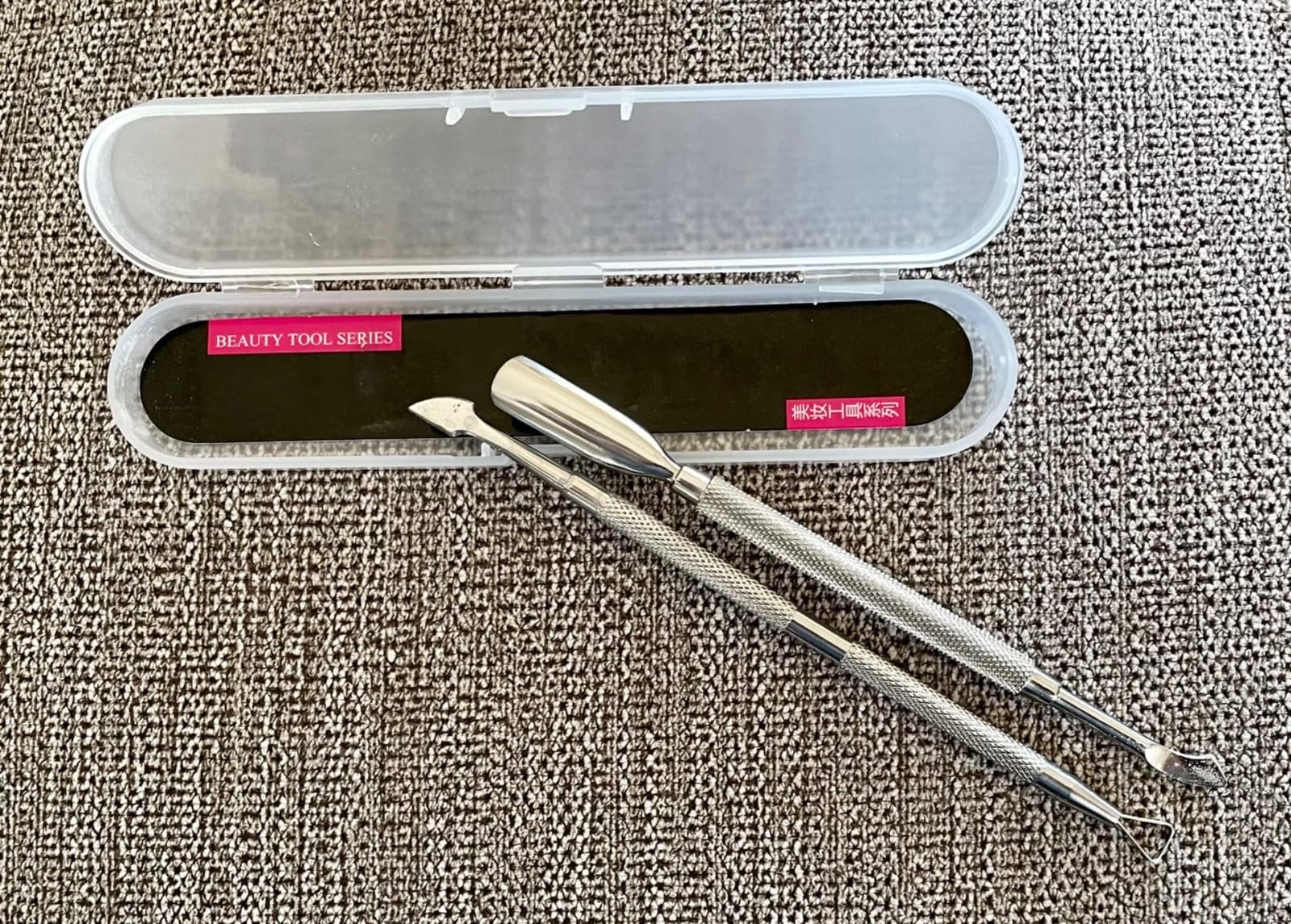
The honest drawback is sharpness. Reviewers describe these heads as very sharp, and I agree. They are efficient on thick cuticles and dead skin around the nail wall, but a beginner pressing down rather than sweeping across will feel the edge.
Both tools are plain stainless steel with rust protection, so they sanitize with warm soapy water and dry fast. They also weigh almost nothing, which makes them easy to keep in a grooming bag.
What to check before you buy
Count the heads, not the sticks. Most listings in this format sell a two-piece pack that gives four working ends, and that is what separates it from a single basic pusher.
Also look for the anti-skid handle in the photos. A smooth polished shaft is what makes a sharp tip dangerous, because it turns in a wet hand.
Who should skip it
Skip this set if you have thin, soft nails or a history of picking at your cuticles. Four sharp stainless heads give you plenty of opportunity to overwork the nail plate.
It is also the wrong first tool if you are nervous. A glass implement with no cutting edge is a gentler place to begin, and the material itself limits how much you can hurt yourself.
2. Utopia Care Dual-Ended Stainless Steel Pusher and Spoon
Utopia Care Cuticle Pusher Tool & Spoon Nail Cleaner
5.5 inch professional pusher
100% stainless steel, dual ends
8 x 3 x 1 inch package, 0.96 ounces
Pros
- Curved pusher end plus a flat cleaner end
- Stainless steel holds an edge for years
- Sanitizes with warm soapy water
- Solid weight at 0.96 ounces
- Long-standing bestseller design
Cons
- Extremely sharp
- can cause cuts
- Can thin natural nails if used often
- No protective case included
This is the long-running default in the category, and the shape is the reason. One end is a curved spoon for pushing the cuticle back, the other a flatter knife-like edge for cleaning and lifting.
At 5.5 inches it is longer than most metal sticks here, and that extra length is genuinely useful. You can see the nail base while your hand stays out of your own line of sight.
Reviews are almost unanimous that it is sharp. For gel and acrylic removal, lifting a hangnail, or cleaning dried product out of the nail groove, that sharpness is a feature rather than a flaw.
The warning that comes up repeatedly concerns natural nails. Owners say the cleaner end will thin the nail plate if you use it often, so treat that end as a cleanup tool rather than part of a weekly routine.
What to check before you buy
Check the total length and the tip pairing. A curved pusher on one end and a flat cleaner on the other is the classic configuration, and it is what makes this worth buying over a single-ended stick.
Expect no case with it. You will want a small zip case or a slotted drawer tray, because a bare sharp tool in a bathroom drawer is a cut waiting to happen.
Who should skip it
Skip it if you are on your first attempt at cuticle work. Reviewers repeatedly describe it as dangerously sharp for beginners, and there is nothing here to soften a slip.
Also skip it if your nails are thin or brittle. The weight and sharpness that make it effective on product removal are not what a fragile nail plate needs.
3. opove CP-3 3-Piece 6-in-1 Stainless Steel Set
opove CP-3 Cuticle Pusher Stainless Steel 3pcs Set, Silver
Six functions across three tools
Spoon, triangular, flat and pointed heads
5.83 x 2.05 x 0.35 inch package, 3.53 ounces
Pros
- Six working heads cover nearly every cuticle job
- Three separate sticks for separate tasks
- Ergonomic non-slip handles
- Stainless steel throughout
- Good when several people share tools
Cons
- More tools than a casual user needs
- Sharp edges require caution
Where the two-piece sets give four heads, this gives six functions across three sticks. You get a spoon head that follows the curve of the nail, a triangular head for polish removal, a flat head for smoothing, and a pointed head for dead skin.
The split into three pieces is more useful than it sounds. A dedicated stick for product removal means you are not dragging dried gel across the same tip you use on your cuticle line every week.
Handles are ergonomic with a non-slip finish, and at 3.53 ounces for the whole package the set has real heft in the hand rather than feeling disposable.
The obvious downside is over-equipment. If you do one weekly push-back after a shower, six heads is more than you need, and more sharp ends means more chances to catch a nail.
What to check before you buy
Count the pieces, not the functions. Some listings advertise six functions but ship two sticks, so check that the package description lists three separate tools.
Look at handle length in the photos. Consistency across all three sticks matters, since you will be switching between them mid-session.
Who should skip it
Skip it if you want a single dedicated pusher. Choosing one stick out of three and leaving the rest in a drawer is a common outcome that costs you shelf space.
Also skip it for beginners who have not softened their cuticles first. A pointed head is a cutting tool in effect, and it belongs in the hands of someone who knows how much pressure a nail plate can take.
4. Bona Fide Beauty Czech Glass Cuticle Pusher
Bona Fide Beauty Czech Glass Cuticle Pusher (Clear), 1Pc with Pouch
Tempered Czech glass
Etched grit on pointed and slanted ends
5.12 x 1.14 x 0.55 inch package, 0.71 ounces
Pros
- Etched grit permanently embedded in the glass
- No cutting edge to gouge the nail plate
- Slanted end pushes pointed end cleans
- Protective tube included
- Lifetime guarantee on the filing surface
Cons
- Glass can break if dropped
- Sits above the metal options
- Very gentle for very thick cuticles
If your cuticle care history is mostly regrets, this is the safest place to restart. The working surface is etched grit rather than a sharpened edge, so the tool abrades dead skin instead of slicing at it.
Two ends do different jobs. The slanted edge pushes the cuticle back and refines the margin, and the pointed end cleans the nail bed and gets into tight corners without any real force.
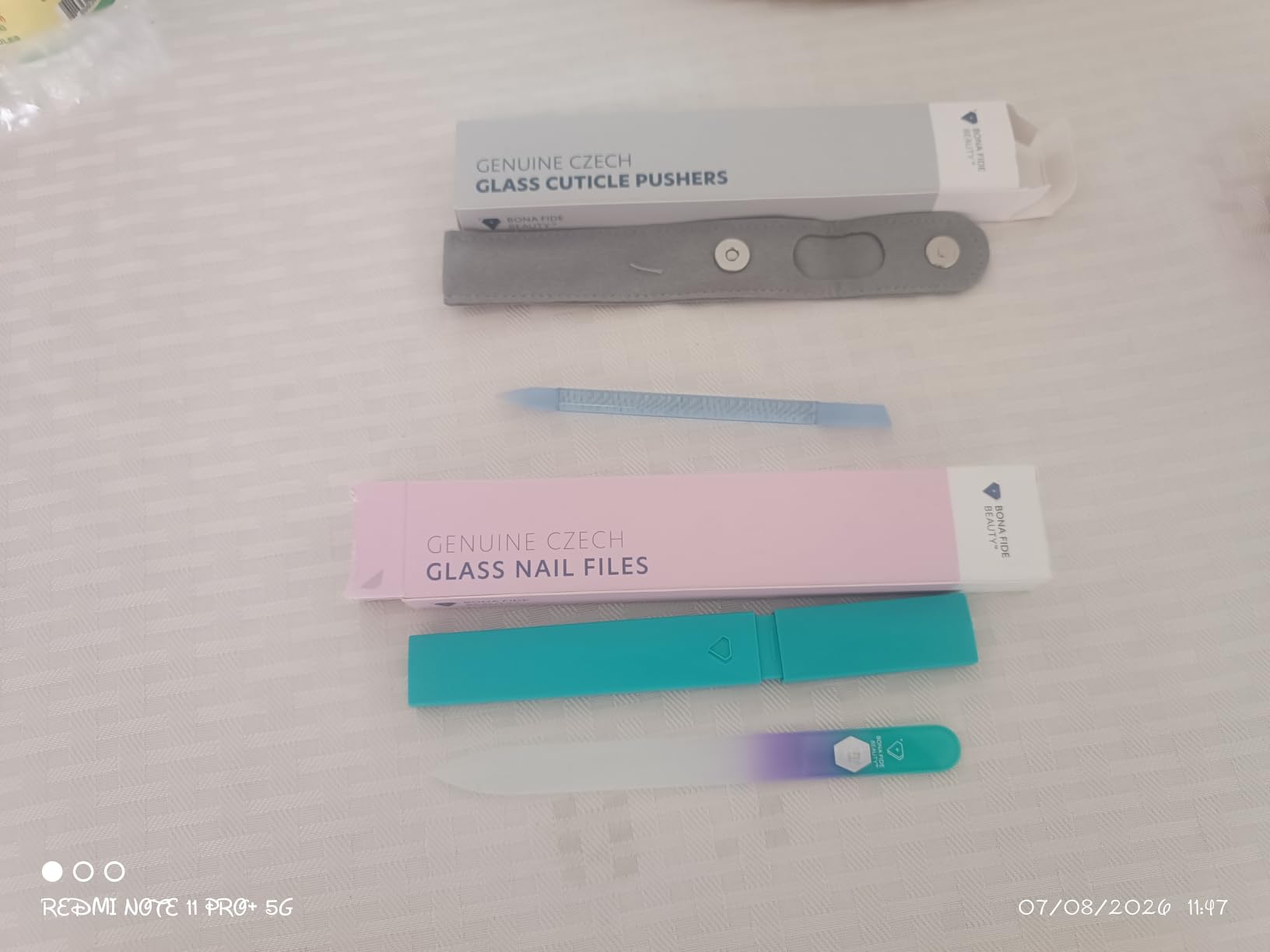
Because the grit is etched into the glass rather than applied as a coating, it does not wear away the way a glued surface can. You rinse it under cool water, dry it, and put it back in the protective tube.
The trade-offs are honest ones. Glass breaks if you drop it on a hard floor, and for genuinely thick or overgrown cuticles reviewers say it is almost too gentle, which means more gentle passes rather than one firm pass.
What to check before you buy
Look for the words etched or permanently etched in the listing. A glass stick with a smooth, unetched surface does almost nothing, and the two look similar in a small photo.
Check that a protective tube or sleeve is included. Glass tools live in that tube between uses, and storing them loose in a drawer bag is how they get broken.
Who should skip it
Skip it if your cuticles are thick and hard, or if you work on gel and acrylic where you need to lift product quickly. A pointed steel end or a proper nipper handles that better.
Skip it if you are clumsy with small objects. Glass has no give, so a fumbled tool ends up on the floor instead of bending away from the impact.
5. FERYES 2-in-1 Stainless Steel Pusher and Fork Trimmer
FERYES Cuticle Pusher with Fork, 2-in-1 Cuticle Trimmer Nail Care Tool, Stainless Steel Cuticle Remover Tool for Manicures and Pedicures – Silver
Surgical-grade stainless steel
U-shaped pusher and fork trimmer
7.01 x 2.01 x 0.39 inch package, 0.95 ounces
Pros
- Fork end handles thick dead cuticle skin
- U-shaped pusher shapes the cuticle border
- Surgical-grade stainless steel
- Textured grip for control
- Compact enough for travel
Cons
- Extremely sharp
- high risk of small cuts
- Needs careful technique
- Too aggressive for sensitive skin
This is the tool for the other end of the spectrum from glass. The fork end is built to sit under and lift dead skin that has gone thick and hard, and users with heavy cuticles report results no gentle tool gives them.
The U-shaped pusher works along the cuticle border in one pass, which suits nails that grow unevenly or that need shaping after a gap has been filled.
The textured grip is the feature I appreciated most. At 0.95 ounces the tool has enough weight to feel stable, and the texture stops it rotating when you push at an angle into resistant skin.
Reviews mention frequent small cuts, and they attribute most of those to technique rather than build quality. If your instinct is to press straight down, this tool will find your skin instead of the cuticle.
What to check before you buy
Look for a fork on one end, not just a second point. A fork has two tines and lifts skin; a second point just scratches.
Check the steel described in the listing. A heavier shaft resists bending when you meet resistance, and a thin one is the difference between control and a lost tool.
Who should skip it
Skip it if you have thin nails, sensitive skin, or any history of infection around the nail fold. This is not the tool to experiment with.
Skip it if you travel with it loose in a bag. A sharp fork end with no case will find something to cut.
6. Gladzy Czech Crystal Glass Cuticle Stick
GLADZY Glass Cuticle Pusher – Manicure Cuticle Stick – Crystal Glass Cuticle Remover – Professional Nail Care Tool – Genuine Czech Quality Premium File Set
Czech Bohemian crystal glass
Permanently etched grit on both sides
6.3 x 1.42 x 0.63 inches, 0.71 ounces
Pros
- Permanently etched grit will not wear off
- Gentle on natural nails
- Slanted side for pushing and trimming
- Pointed end for hard-to-reach areas
- Protective sleeve included
- Lifetime guarantee on the filing surface
Cons
- Glass can break if dropped
- Sits above metal options
- Very gentle for very thick cuticles
The advantage here is exfoliation rather than pushing. Because the grit covers both sides, the same stick files down rough skin along the side of the finger as well as shaping the cuticle line.
Like the other glass options, the grit is permanent rather than a surface coating, so it stays consistent over years rather than fading after a few months.
Reviewers single out how gentle it feels on natural nails. The hardened glass has more mechanical resistance than cheap glass, so it feels solid rather than fragile in the hand.
As with other Czech glass sticks, it is deliberately gentle. If your cuticles are thick and hard you will need a metal tool or an electric file alongside it rather than pressing harder.
What to check before you buy
Confirm both ends carry etched grit. Sticks with one smooth end are for shaping only, and the smooth end will not exfoliate anything.
Check that the sleeve is included. A protective sleeve in the box is the difference between a stored tool and a broken one.
Who should skip it
Skip it if you need heavy removal. The trade for gentleness is that thick cuticles take several sessions rather than one.
Skip it if there are children in the house who might grab it from a drawer. Glass has no flex, so it does not survive being dropped.
7. Maitys 6-Piece Glass Cuticle Pusher Set
Maitys 6 Glass Cuticle Pusher Crystal Cuticle Remover Sticks, 6 Colors
Six glass pushers in assorted colors
Three functions per stick
4.09 inches per stick, 1.45 ounces total
Pros
- Six sticks means one per person
- Three functions on every stick
- Glass will not rust or dull
- Compact length fits a small pouch
- Graduated colors make sticks easy to tell apart
Cons
- Glass can break if dropped
- Shorter sticks can feel cramped for larger hands
- Colors may vary from the listing photos
Six sticks is a lot of tool, and the reason is practical: nobody wants to share a cuticle pusher. Each offers a pointed tip for dead skin at nail edges, a slanted edge for pushing back and exfoliating, and etched glass for smoothing the nail shape.
At 4.09 inches each, these are shorter than the long steel sticks. That makes them genuinely portable, which is the trade if your hands are large and you prefer something with more length to hold.
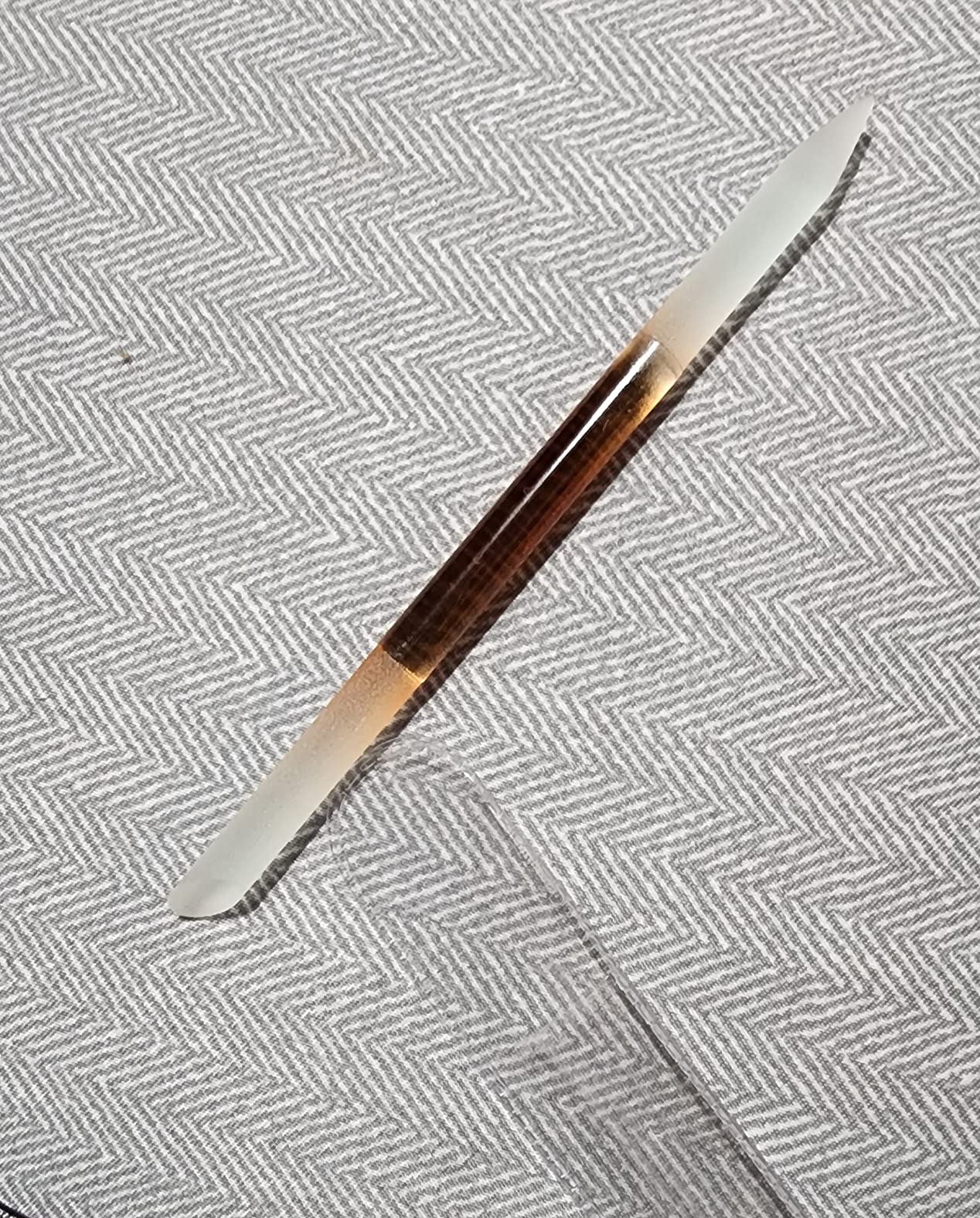
Glass will not rust and it will not dull the way a coated steel file surface can, so all six stay consistent. Total weight for the set is 1.45 ounces.
Reviews mention the colors arriving different from the listing photos, so treat the color as a bonus rather than a reason to choose. The gradient design helps you tell six identical sticks apart at a glance.
What to check before you buy
Count the sticks. Sets described as six-piece should list six individual colors or quantities in the bullet points.
Check the length against the other tools you own. If your current pusher is longer, this will feel like an upgrade in portability and a downgrade in control.
Who should skip it
Skip it if you live alone and do one nail a week. Six glass sticks in a drawer is a lot of breakable inventory for one person.
Skip it if you have very thick cuticles. Every stick here is a gentle glass tool, so you would still need metal for heavy work.
8. GERmanikure Glass Cuticle Pusher with Leather Sleeve
GERMANIKURE Glass Cuticle Pusher, Multipurpose Stick Clear, Leather Sleeve
Clear glass stick with fine pointed tip
Leather sleeve for grip
4.92 x 0.75 x 0.67 inches, 0.2 ounces
Pros
- Non-cutting tip removes only dead skin
- Super fine pointed tip works in tight spaces
- One tool covers push exfoliate hangnails and nail edges
- Leather sleeve gives real grip
- Rated 4.8 across 1156 reviews
Cons
- Glass needs careful handling
- Fixed stick format with no angle adjustment
- Leather sleeve wears with repeated sterilization
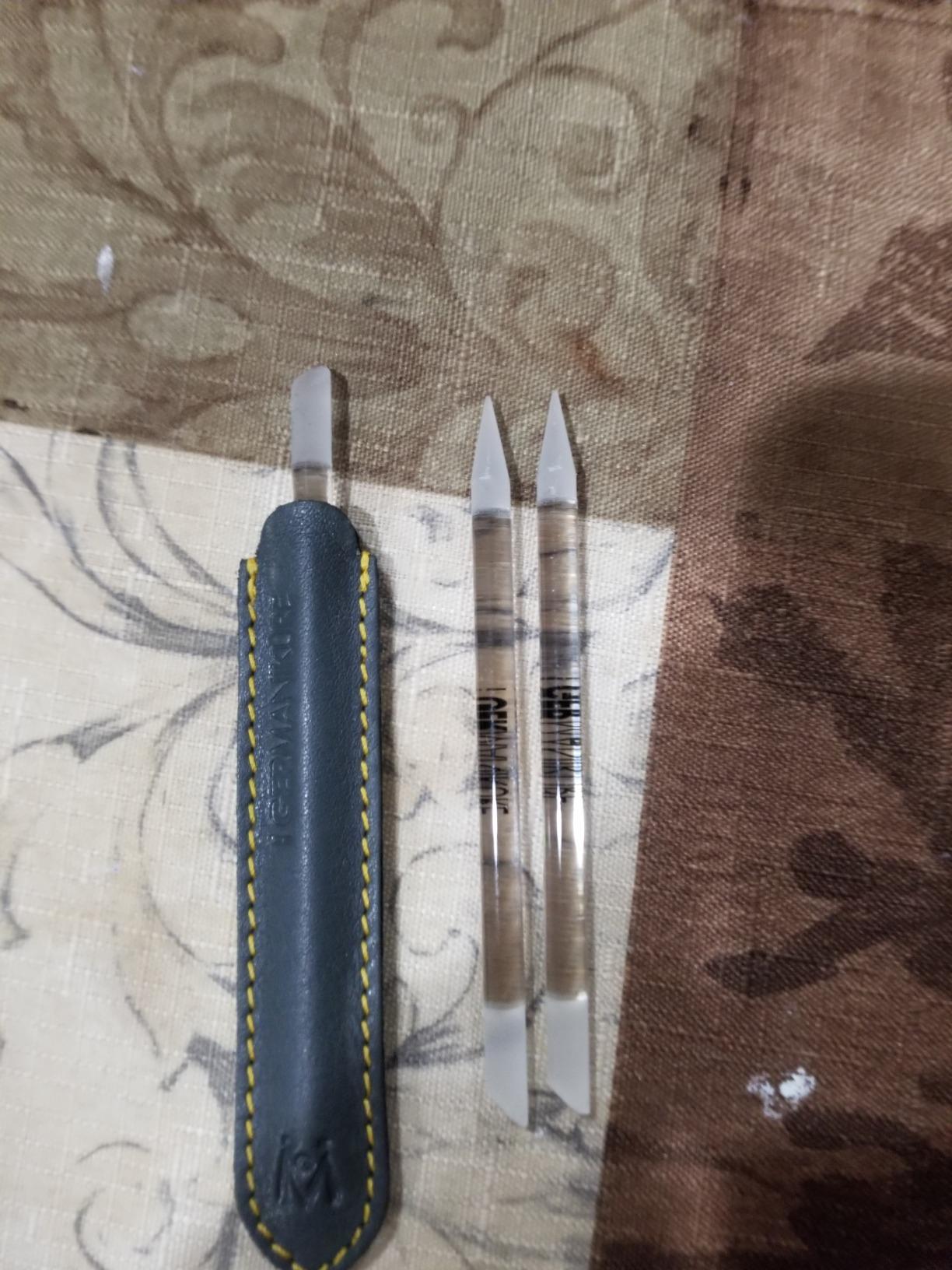
This is the brand that keeps coming up by name when people ask which glass pusher to buy. In nail forum threads on r/RedditLaqueristas the answer is almost always this stick, and the reason is the tip.
That tip is fine enough to work under the free edge and around nail art without touching either. The design is deliberately non-cutting, and owners describe it as taking off dead skin while leaving healthy living tissue alone.
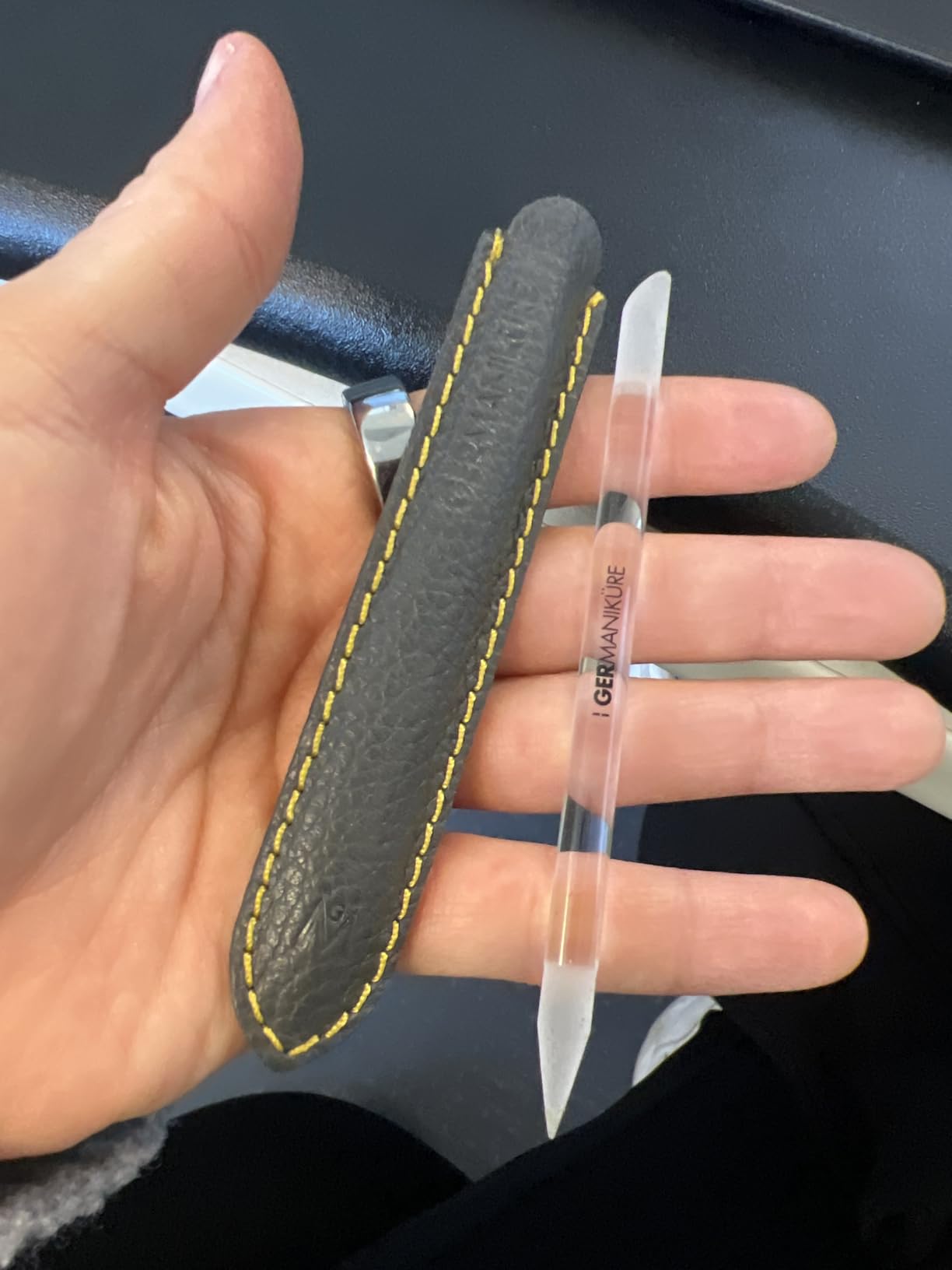
The leather sleeve is what people notice in the hand. It gives friction that bare glass never has, and at 0.2 ounces the whole stick stays light through long grooming sessions.
One stick replaces several implements: pushing, exfoliating calluses, removing hangnails, shaping nail edges, placing small nail art and cleaning up polish mistakes.
What to check before you buy
Pick the sleeve material deliberately. Cork, suede and leather versions are listed, and cork or suede grip well while staying cooler in the hand than leather.
Confirm a sleeve is included. A glass stick shipped bare has no protection and no grip, and it will end up loose in a drawer.
Who should skip it
Skip it if you want one aggressive tool for very thick cuticles. The fine pointed tip is a precision instrument, not a heavy remover.
Skip it if you run a hot sterilization cycle regularly. The leather sleeve is the weak point there, and a suede or cork version ages more gracefully.
9. Rui Smiths Dual-Ended Stainless Steel Pusher
Rui Smiths Rui Smiths Cuticle Pusher Dual Ended Stainless Steel Tool
Push end and scrape end
Hypoallergenic stainless steel, serrated grip
5.87 x 0.24 x 0.24 inches, 0.48 ounces
Pros
- Two ends mean you never set the tool down
- Serrated mid-section grips damp hands
- Hypoallergenic steel resists moisture and holds its edge
- Salon standard used across 30+ countries
- Each unit individually inspected
Cons
- Metal feels cold in long sessions
- Not suited to home autoclave sterilization
- Straight profile lacks spoon curvature
This is the tool I reach for when I do a full prep before polish, because the two ends are genuinely different jobs. One pushes, the other scrapes, and the serrated grip in the middle means I can flip it over with wet hands without setting anything down.
At 5.87 inches and 0.48 ounces it sits in a good middle range: long enough to see what you are doing, heavy enough to feel like a professional implement.
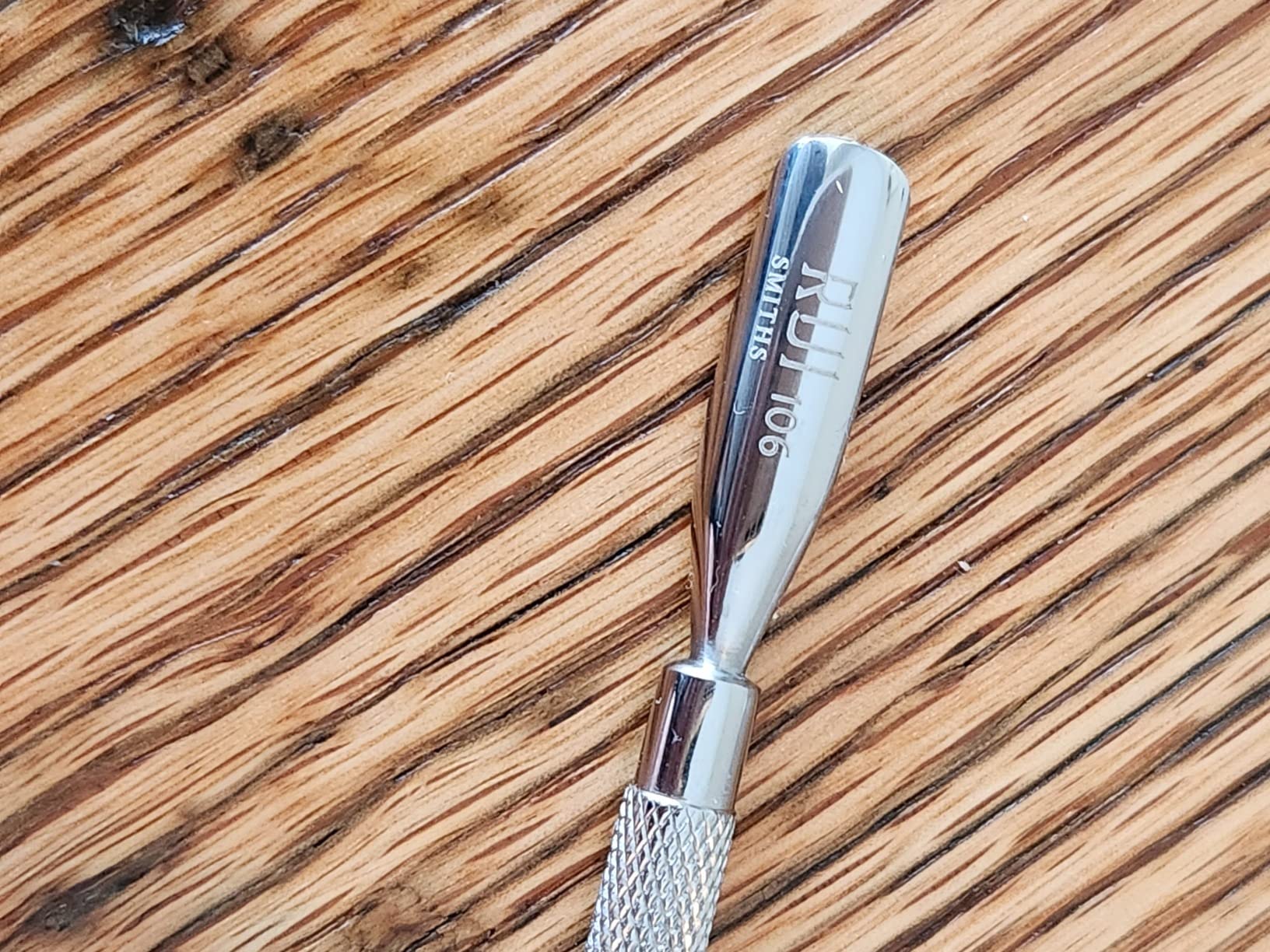
Owners report consistent steel quality and an edge that holds over time. Hypoallergenic stainless is a sensible choice if you react to cheaper plated metals.
The complaints are minor and specific: metal feels cold in a long session, the straight profile is not spoon-curved, and this is not a tool for home autoclave sterilization.
What to check before you buy
Look for a serrated or textured grip section in the photos. That band is what separates a good dual-ended steel tool from a smooth one that rotates under pressure.
Check whether one end is curved. If you like a spoon shape that follows the nail, a straight pusher will feel different and you may prefer a curved model.
Who should skip it
Skip it if small children share your bathroom, because a bare polished steel tool with no case is easy to grab and easy to drop.
Skip it if cold metal bothers you or if you have reduced sensation in your fingers, since a colder tool plus reduced feedback is a poor combination near a sharp edge.
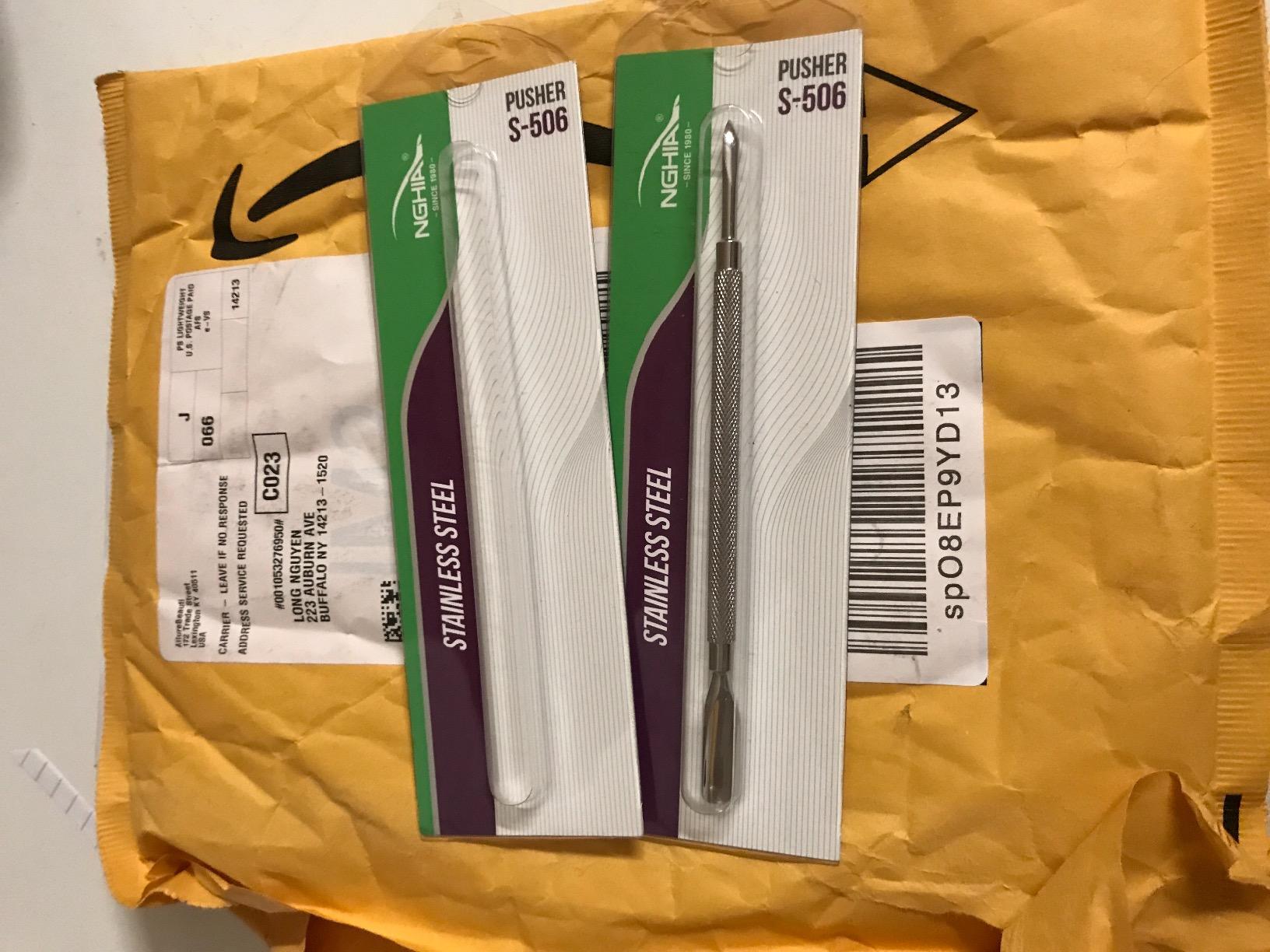
10. Nghia S-506 Double-Ended Pusher and Cleaner
NGHIA Pusher – S-506 (Stainless Steel) | Double–Ended Nail Cleaner and Spoon Pusher | Premium Quality for Nail Care | Ergonomic Design | Suitable for Professional & Home Use
Pointed cleaner and spoon pusher
Premium stainless steel
47 x 8 x 6.2 mm, about 24 grams
Pros
- Two ends cover cleaning and pushing
- Stainless steel built for repeated use
- Very light at roughly 24 grams
- A long-standing choice among nail technicians
- Compact measurements fit a small case
Cons
- Edges less refined than hand-finished tools
- Spoon head is shallow
- No grip texture so it can slip when wet
At roughly 24 grams this is the lightest tool we tested, and that turned out to matter for short sessions. A light tool lets you make small corrections without building momentum, which is exactly the mistake beginners make with something heavier.
The configuration is the classic pairing: a pointed tip that cleans under the nail, and a spoon head that pushes the cuticle.
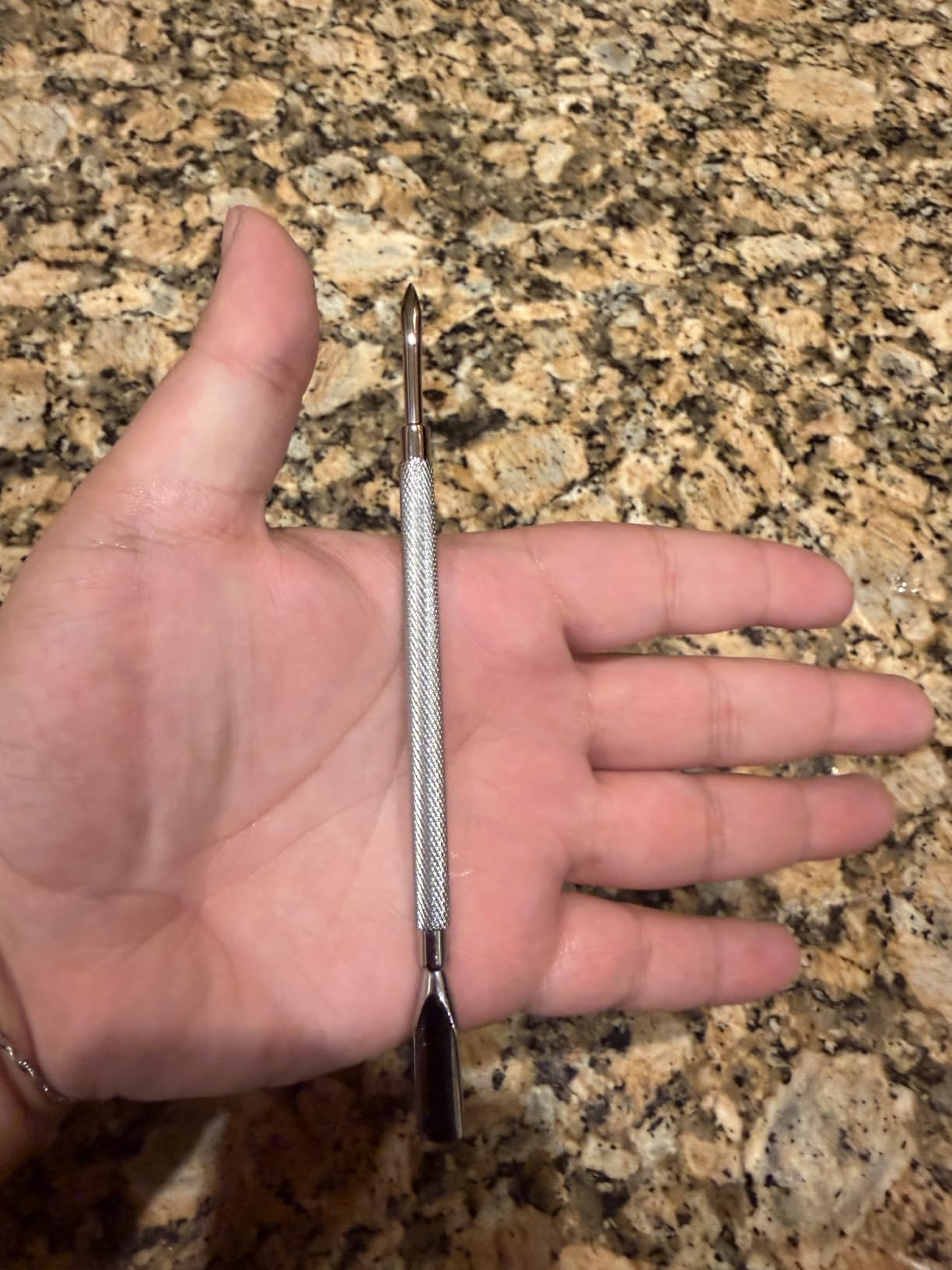
Owners describe it as dependable rather than exciting. It is a nail technician staple for routine maintenance, and reviews emphasise solid stainless build.
Two limitations are worth naming. The edges are less refined than hand-finished premium tools, and the spoon head is shallow, so it suits light work more than heavy removal.
What to check before you buy
Check that the spoon head is properly curved rather than flat. A flat pusher on a lightweight tool pushes less precisely than a curved one.
Note whether there is any grip texture. There is little here, so plan to dry your hands fully before use.
Who should skip it
Skip it if you work on thick cuticles regularly. The shallow spoon head was built for maintenance, and you will want a fork or an electric file instead.
Skip it if you do long sessions. A light tool means more repetition, and repetition against a sharp spoon head is where small nicks happen.
11. Makartt Pink Dual-End Stainless Steel Pusher
Makartt 1-Pack Pink Dual-End Cuticle Pusher, Stainless Steel
Spoon pusher and sharp scraper
Compact at 5 x 0.5 x 0.3 inches
0.634 ounces
Pros
- Dual-ended covers pushing and scraping
- Non-slip handle improves control near the sharp end
- Stainless steel build
- Small enough for a grooming bag
- Good at clearing polish residue and nail glue
Cons
- Sharp end needs a steady hand
- No trimmer or nipper included
- Plastic-coated finish can wear over time
This is the travel pick. At 5 x 0.5 x 0.3 inches and 0.634 ounces it disappears into a small pouch, and the dual head means one tool covers both pushing and scraping while you are away from home.
The non-slip handle is why it feels safer than its size suggests. Reviewers single it out for control, which matters because the sharp scraping end is only useful if it stays where you put it.
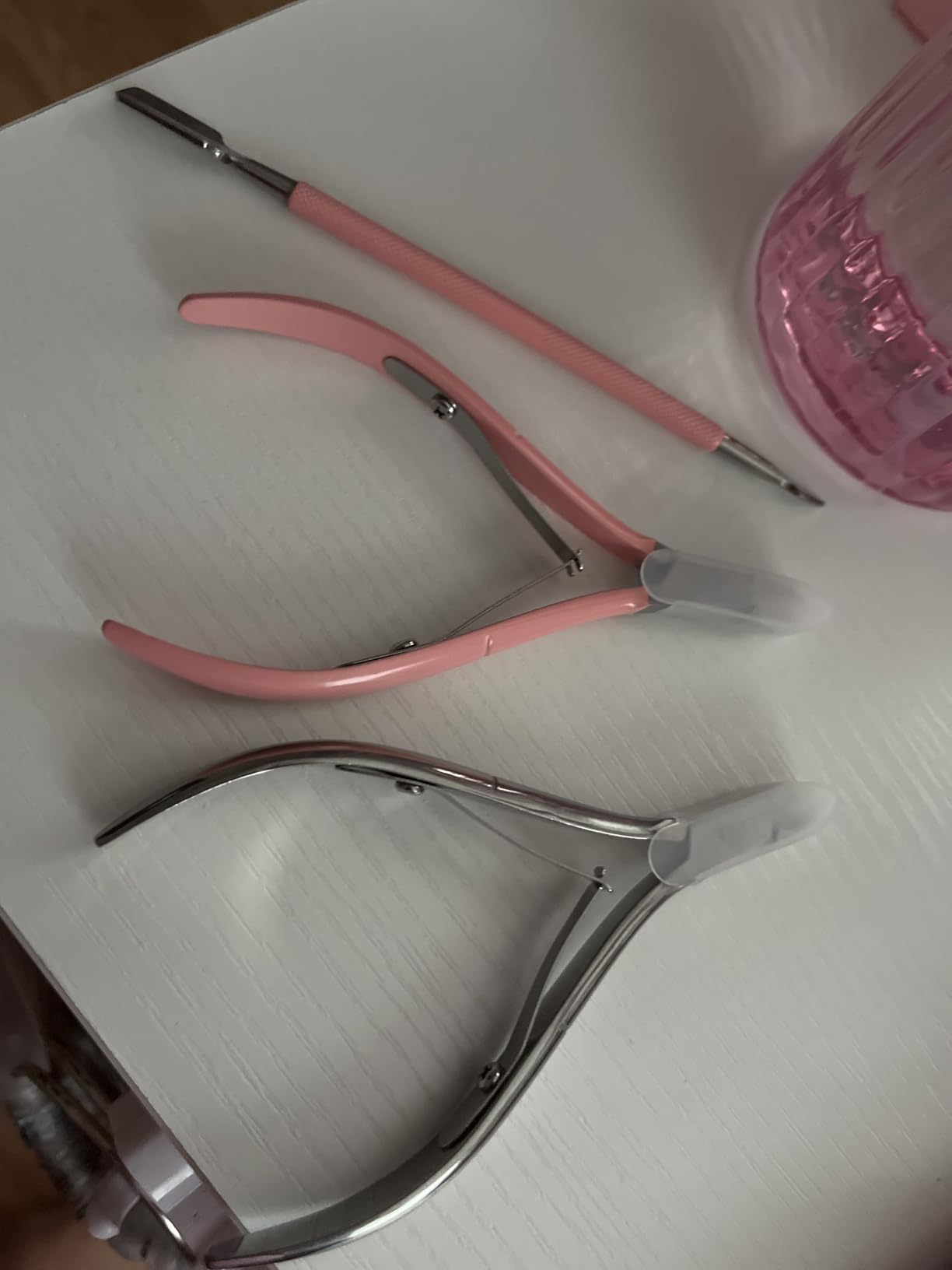
It gets good mention for clearing dried polish residue and false nail glue, and for getting into the side of the nail where skin gathers.
The most common caveat is that it is a companion tool. The maker’s own routine still calls for a separate trimmer after you push, so this does not replace a full kit.
What to check before you buy
Check that the handle is coated or textured. A smooth shaft on a dual-ended steel tool is where the slip happens.
Look at handle width in the photo. Wider handles are easier to control with one hand, which matters for a travel tool you use standing up.
Who should skip it
Skip it if you want a complete manicure kit from one purchase. You will still need something to trim dead skin after the push.
Skip it if you prefer a glass implement for a gentler routine. This is a steel tool with a defined edge, not a grit-surface abrader.
12. butter LONDON Glass Cuticle Pusher
butter LONDON Glass Cuticle Pusher, Signature Glass Collection
Beveled pusher end and pointed end
Czech glass at 0.63 x 0.63 x 5.44 inches
0.48 ounces
Pros
- Two-in-one for under-nail cleaning and pushing
- Czech glass resists splintering
- Wipes clean after each use
- Part of a coordinated at-home glass collection
- Light at 0.48 ounces
Cons
- Glass can chip or shatter if dropped
- Beveled end suits buffing not heavy removal
- Narrow 0.63 inch width gives less grip
This one is built for a light, regular routine rather than heavy work. The beveled end pushes back and buffs away dead cuticle, and the pointed end cleans under the nail.
Glass is the material that makes it feel calm in use. It does not splinter, and the finish wipes clean after every use, which suits a bathroom shelf where tools should be dry by morning.
At 5.44 inches long and 0.63 inches wide it is slim and light at 0.48 ounces. That slenderness is also the main drawback, because there is less surface to grip than a handled steel tool offers.
Reviews are consistent: owners like the gentle finish and the convenience of two ends, and they are equally consistent that this is a light-maintenance tool rather than an aggressive one.
What to check before you buy
Check that it is real glass rather than a glass-coloured plastic stick. Czech glass feels cool and dense; plastic feels hollow.
Consider the wider collection if you already own one glass implement, since owners like matching tools stored together.
Who should skip it
Skip it if your hands are large or you grip tools hard. The 0.63 inch width leaves a narrow target, and a bevelled edge needs control.
Skip it if your cuticles are thick and overgrown. Reviewers describe the bevel as a buffing surface, not a remover.
Glass vs. Stainless Steel vs. Wood: How the Material Changes the Result
Material matters more than brand for cuticle pushers, because it decides how the tip interacts with skin. Glass abrades dead skin through permanently etched grit and has no cutting edge at all. Stainless steel holds a sharpened edge, which makes it fast on thick cuticle and precise for cleanup, but it also has no built-in limit on how hard you can press.
Wooden sticks sit in the middle. A soft wooden tip is less likely to gouge a nail plate than metal, which is why some people in nail forums prefer them, and they are also single-use, splinter, and create waste. That waste is why reusable glass and steel tools keep showing up as the better long-term choice.
A second difference is sterilization. Stainless steel tolerates harsh cleaning and repeated sanitizing without degrading, and salon tools are often autoclaved. Glass survives sanitizing but not impact. Wood and its natural fibres do not handle soaking well and get discarded after a single use.
If your cuticles are thin, your nail beds are sensitive, or this is your first attempt, choose glass. If your cuticles are thick and hard, or you are removing product, choose stainless steel and work gently.
How to Use a Cuticle Pusher Safely, Step by Step
Technique matters at least as much as the tool. A sharp pusher used at the wrong angle will damage a nail bed that a gentle glass tool would never touch.
Soften first. Take a warm shower or bath for ten minutes, or apply a cuticle oil or remover gel and wait. Dry skin resists and forces you to push harder.
Dry your hands fully. Damp skin plus a polished steel shaft is a slip. A textured grip helps more than people expect.
Hold the tool at roughly 45 degrees. The tip should meet the cuticle line at an angle, not flat against the nail plate.
Work from the centre outward. Use small strokes starting at the middle of the nail and moving toward each side, rather than starting at the anchored side wall.
Use light pressure and lift away. Dead skin should come away as a flake. If you are scraping against resistance, you have gone too far.
Stop at the base of the nail. Never push below the cuticle line, and never cut living skin. One session a week is plenty for most people.
Finish with oil. Massage cuticle oil in twice daily afterwards to keep the border flexible rather than crusty.
Two habits prevent most problems. Wipe the tool between fingers so you are not moving debris from one finger to the next, and keep a single tool per person.
What to Look for When Buying a Cuticle Pusher
Most buyers fixate on the brand name. The five details below decide whether a tool works for you.
Tip shape. A spoon or curved tip follows the nail and pushes more precisely than a flat blade. A slanted glass edge is the gentlest option. A pointed or forked tip is a trimming tool and needs more care.
Grip. Look for a textured, serrated or soft-touch section in the photos. Every complaint about sharp tools comes back to the same thing: the handle turned in a wet hand.
Dual-ended versus multi-piece. Two ends on one stick is ideal for travel. A three-piece set is better if several people use tools, or if you want a dedicated piece for polish removal.
Material, honestly labelled. Etched or permanently etched glass grit is the useful detail. A smooth glass end does nothing, and coated files wear down.
Storage. A protective tube, sleeve or case should come in the box. Glass without a tube and steel without a case are both one dropped object away from trouble.
Two things are worth adding to a full kit. A cuticle oil makes every session easier, and if your skin is generally dry, knowing how to figure out your skin type at home tells you whether dryness is the root problem you are fighting with tools.
Pusher or Nipper: Which One Do You Actually Need?
A pusher moves skin. A nipper cuts it. That single difference decides which tool belongs in your bathroom.
Choose a pusher for routine maintenance once a week on softened cuticles, and for cleaning the nail groove. Choose a nipper only for a small piece of dead skin that will not lift with a push, and only if you are comfortable with a cutting tool near your own skin.
For a beginner, a pusher plus a cuticle oil covers almost everything. Many nail professionals advise against home cutting of cuticles altogether, because the skin at that border is living tissue and a cut there can lead to redness, soreness or infection.
Cleaning and Storing Reusable Metal and Glass Tools
Reusable tools last years if you clean them the right way, and fail quickly if you do not.
For stainless steel, wash with warm soapy water after each use, dry fully, and keep it in a dry tray rather than a closed damp container. Alcohol wipes work for a quick pass between fingers. If a steel implement is the kind that takes a separate sharpening step, our note on how to sharpen kitchen knives at home explains how edge angles work, which is the same principle that keeps a pusher’s curved tip effective.
For glass, rinse under cool water, dry, and return it to its protective tube. Avoid sudden temperature changes, since hot water straight from a shower onto chilled glass encourages chipping.
Do not soak leather or suede sleeves, and expect a leather grip to wear sooner than the glass or steel it covers. Cork and suede sleeves age more gracefully under repeated sanitizing.
Frequently Asked Questions
What can I use as a cuticle pusher at home?
What type of cuticle pusher is best?
Is a glass or metal cuticle pusher better?
How do I use a cuticle pusher correctly?
Why should you not push back your cuticles?
What are the common mistakes when using a cuticle stick?
Conclusion
The best cuticle pushers for at home manicures come down to how gentle you need to be. The GA and EN two-piece set wins on versatility, the Bona Fide Beauty Czech glass pusher is the safest starting point, and the GERmanikure stick is the precision option that enthusiasts name most often.
Whichever you pick, soften your cuticles before you touch them, sweep at roughly 45 degrees rather than pressing down, and stop at the base of the nail. One gentle session a week with cuticle oil afterwards will keep your nails looking clean for 2026 and beyond, without the damage that comes from forcing it.