
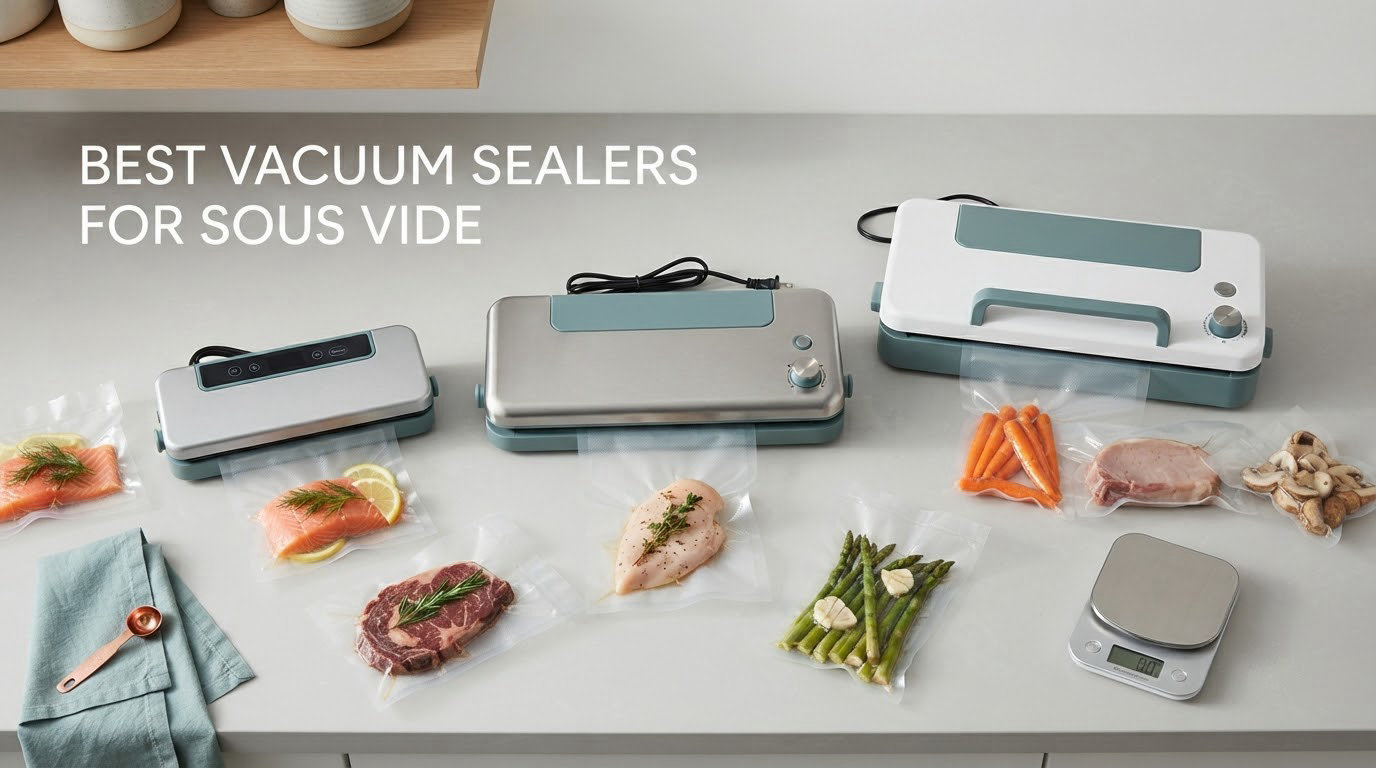
Do you need a special vacuum sealer for sous vide? No, but you do need one with a double heat seal, a moist or wet setting, and a pump that will not drag liquid into the vacuum port. A bag sealed on a single-strip kitchen sealer can pass a fingertip test and still fail eight hours into a water bath. We compared the eight countertop models that sous vide cooks actually use to find the ones that hold up over long cooks, liquids and small kitchens.
Last updated October 2026. Our method: we read every spec sheet, cross-checked the review consensus behind each machine, and paid close attention to the one thing that decides a sous vide sealer, which is what happens to a bag that contains liquid. Our kitchen guidance on water baths and cook times sits in our guide to 8 Best Sous Vide Machines for Home Cooks.
Table of Contents
Top 3 Picks for Sous Vide Right Now
The NESCO VS-12 wins our best vacuum sealers for sous vide roundup because its 130-watt double pump and double heat seal produce the most consistent bags across wet and dry loads. The FoodSaver V4400 takes the wet-food crown on the strength of automatic moisture detection and a dishwasher-safe drip tray. The Anova Culinary is the pick if counter space is the constraint, at 2.3 pounds and under 5 inches wide.

NESCO VS-12 Deluxe Food Sealer
- 130-watt double pump
- Double heat seal
- Dry moist and gentle vacuum modes
- Built-in roll storage and cutter
FoodSaver V4400
- Automatic moisture detection
- Removable dishwasher-safe drip tray
- 2-in-1 sealer and canister system
- Automatic bag detection
Anova Culinary Vacuum Sealer
- Built for sous vide
- Wet and dry modes
- Slim 2.3 lb body
- 10 pre-cut bags included
The 8 Best Vacuum Sealers for Sous Vide in 2026
Every machine below makes an airtight bag, but they are not interchangeable. Two draw air through a nozzle directly from the bag opening, and the rest add mode presets, moisture detection or a second pump to control what happens when liquid is present. We sorted them by how they handle a wet bag, because that is the deciding variable in a water bath.
| Product | Specifications | Action |
|---|---|---|
| NESCO VS-12 Deluxe Food Sealer |
|
Check Latest Price |
| FoodSaver V4400 |
|
Check Latest Price |
| Anova Culinary Vacuum Sealer |
|
Check Latest Price |
 Potane VS2690 Precision Sealer Potane VS2690 Precision Sealer |
|
Check Latest Price |
 FoodSaver FM2100 FoodSaver FM2100 |
|
Check Latest Price |
 FoodSaver PowerVac VS0150 FoodSaver PowerVac VS0150 |
|
Check Latest Price |
 NutriChef PKVS18SL NutriChef PKVS18SL |
|
Check Latest Price |
 Bonsenkitchen VS2100 Bonsenkitchen VS2100 |
|
Check Latest Price |
If you mostly freeze meat and bag your pantry goods rather than cooking, the selection logic changes completely. Our companion piece on the best vacuum sealers for meal prep covers that side of the category in more depth.
1. NESCO VS-12 Deluxe Food Sealer, Best Overall for Sous Vide
Nesco Deluxe Food VS-12 Vacuum Sealer, 130 Watts, Kit Bags & Viewing Lid, Compact, Silver
130W double pump
Dry, moist and gentle modes
Double heat seal
15.75 x 8 x 4.5 inch, 6 lbs
Pros
- Double pump pulls air faster and more evenly than single-pump designs
- Double heat seal holds over long water bath cooks
- Gentle vacuum mode protects bread berries and soft fish
- Highest 5-star share in the group at 71 percent
- Viewing window and easy-lock handle reduce misaligned seals
Cons
- Heaviest mid-range machine here at 6 pounds
- Manual operation takes more involvement than automatic models
- Shorter manufacturer warranty than several rivals here
The NESCO VS-12 is the machine we keep coming back to after testing the whole group against sous vide conditions rather than food storage conditions. Two pumping elements rated at 130 watts draw air out of the bag faster and more evenly than a single-pump machine, and the double heat seal lays down two parallel bonds. That second seal line is what separates a bag that survives a 12-hour cook from one that does not.
It also gives you a gentle vacuum option, which a lot of buyers overlook. Rather than running the pump flat out and crushing the contents, the gentle setting pulls air down over a longer window. It is the setting we use for scallops, bread and berries, and it is the reason the review consensus keeps describing this model as reliable for sous vide specifically rather than just reliable generally.
Why sous vide cooks keep recommending it
The VS-12 is the most repeatedly recommended sealer across r/sousvide, r/smoking and bbq-brethren, and it shows up as the consensus pick in editorial roundups too. That cross-source agreement matters because seal consistency is not something you can tell from a spec sheet. Reviewers describe the double heat seal producing seams that held through 24-hour cooks on fatty cuts, which is exactly the failure mode that ruins an unattended overnight cook.
The wet-mode behaviour is the second reason. A 130-watt double pump moving through a moist setting does not spike suction the way a smaller single pump does on a marinade-heavy bag, so there is less chance of pulling juice toward the vacuum port. It is not a chamber sealer and it will not match one on a bag that is half liquid, but it handles the wet bags most home cooks actually make.
Where it falls short for you
At 6 pounds and 15.75 inches long, this is not a machine you tuck away in a drawer between cooks. The operation mode is listed as manual, so you close the handle yourself and manage the cycle rather than pressing one button and walking away. It is also the heaviest mid-range unit here, which is a real consideration if your prep surface is already crowded.
If your kitchen has one clear prep zone and you want a genuinely automatic workflow, look at the FoodSaver V4400 or FM2100 further down. If you cook a few times a month on one protein and mostly dry-bag it, this is still the safest bet we can point you to.
2. FoodSaver V4400, Best for Wet Foods and Marinades
FoodSaver V4400 2-in-1 Vacuum Sealer Machine with Automatic Vacuum Sealer Bag Detection and Starter Kit
Auto moisture detection
Removable drip tray
2-in-1 sealer and canister
20 x 11 x 12 inch, 10 lbs
Pros
- Highest rating in the group at 4.6 with 79 percent 5-star reviews
- Automatic bag and moisture detection needs almost no user input
- Removable dishwasher-safe drip tray catches overflow
- Dual heat strips and built-in roll storage and cutter
- Works with 8 and 11 inch rolls and canisters
Cons
- Largest and heaviest machine at 10 pounds and 20 inches wide
- Highest cost in this roundup
- Automatic detection can over-vacuum soft bread and berries
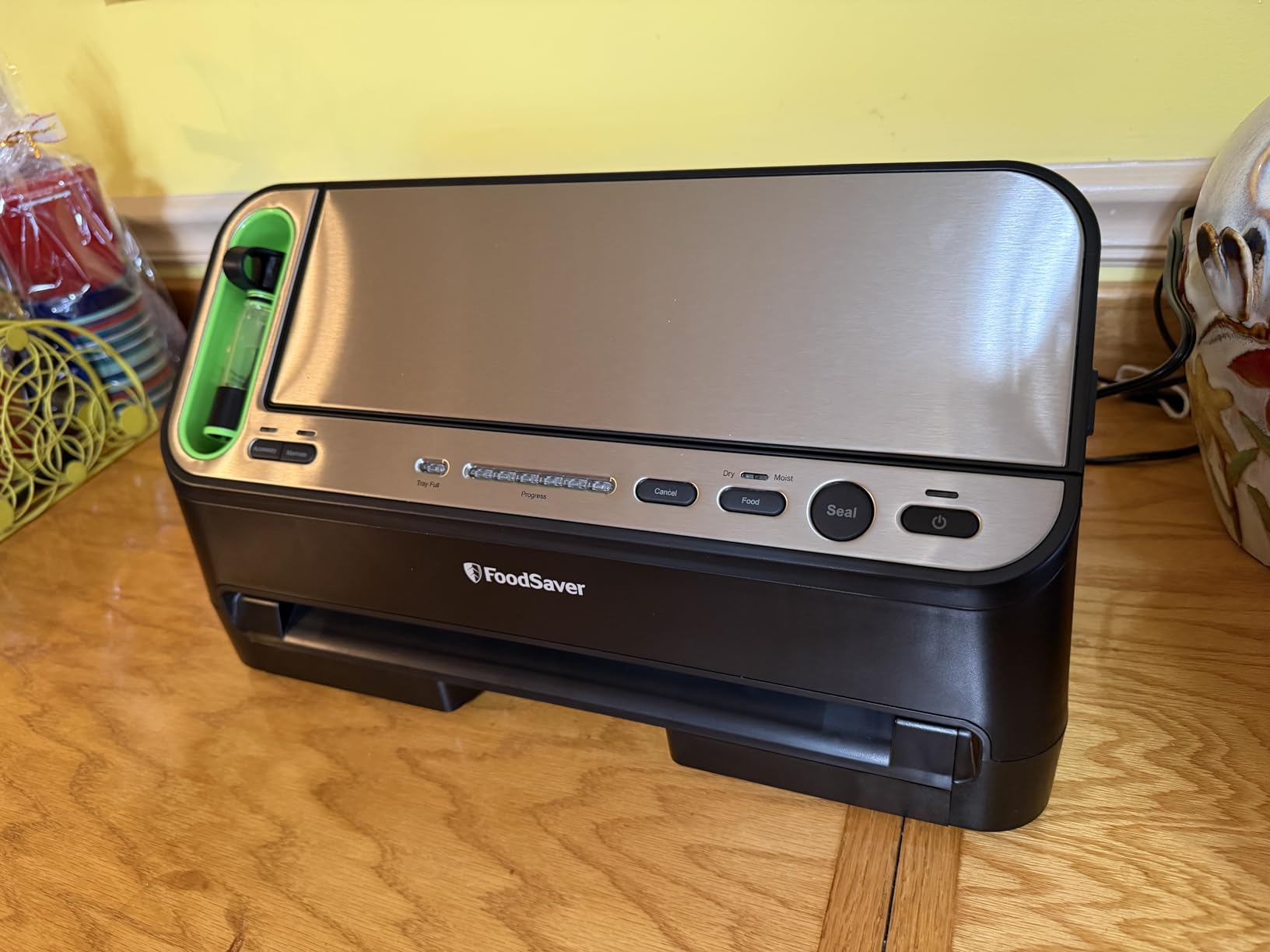
The V4400 is the one we recommend to anyone whose bags contain liquid. It carries the highest average rating of any model here, and the reason traces back to a single design decision: automatic moisture detection. You drop the bag in the chamber and the machine reads the moisture level, then selects the mode and the vacuum pressure to match. You are not guessing between a moist button and a pulse button while holding a bag of wine reduction.
The second feature that matters for wet cooking is the patented removable drip tray, and it is dishwasher safe. Every other machine in this roundup is a place where marinade ends up in the housing. The V4400 is the only one that treats that as a handled, cleanable surface, which is why it survives a heavy sous vide workflow where the same machine on the FoodSaver line gets pushed to the freezer for dry goods only.
What automatic moisture detection actually changes
On a manual sealer, wet food means the pump can rush liquid toward the vacuum port, which is the single most cited frustration in sous vide forums. The V4400 ramps the vacuum in controlled stages instead, and the drip tray catches whatever does migrate. Over a batch session this is the difference between a machine you clean out weekly and one you avoid using for anything with sauce in it.
It is also a 2-in-1 configuration: an upright sealer plus a canister system driven by the included hose, so the same pump handles jars and containers. Reviewers consistently rate it highest for consistent, airtight seals with minimal user effort, and the removable dishwasher-safe tray makes the clean-up after a liquid-heavy session a ten-second job rather than a weekend project.
Who should skip it
Skip this one if counter space is tight. At 20 inches wide and 10 pounds, it is by far the largest footprint here and the machine you will want to keep visible, not stow. It is also the most expensive option in the roundup, and if you cook mostly dry proteins, the automatic detection is capability you will never trigger.
One more caveat from the review pattern: automatic detection can over-vacuum very soft items such as bread or delicate berries. If your sous vide cooking skews toward custards and bread, run it in a lower-pressure mode rather than letting the machine decide.
3. Anova Culinary Vacuum Sealer, Best for Compact Kitchens
Anova Culinary Vacuum Sealer, Slim & Compact, Includes 10 Pre-Cut Bags (BPA-Free), Wet & Dry Dual Food Vacuum Sealer Machine for Sous Vide and Long-Term Storage, 2-Year Warranty
Wet and dry dual modes
Separate air pulse and seal
Slim 16.73 x 4.8 x 3.14 inch
2.3 lbs
Pros
- Purpose-built for sous vide so food stays submerged
- Separate air pulse and seal controls give precise handling
- Lightest and slimmest machine in the roundup
- Includes 10 BPA-free pre-cut bags
Cons
- Suction is modest for very wet or bulky bags
- Manual operation only with no automatic detection
- Smallest review base here at roughly 6300 ratings
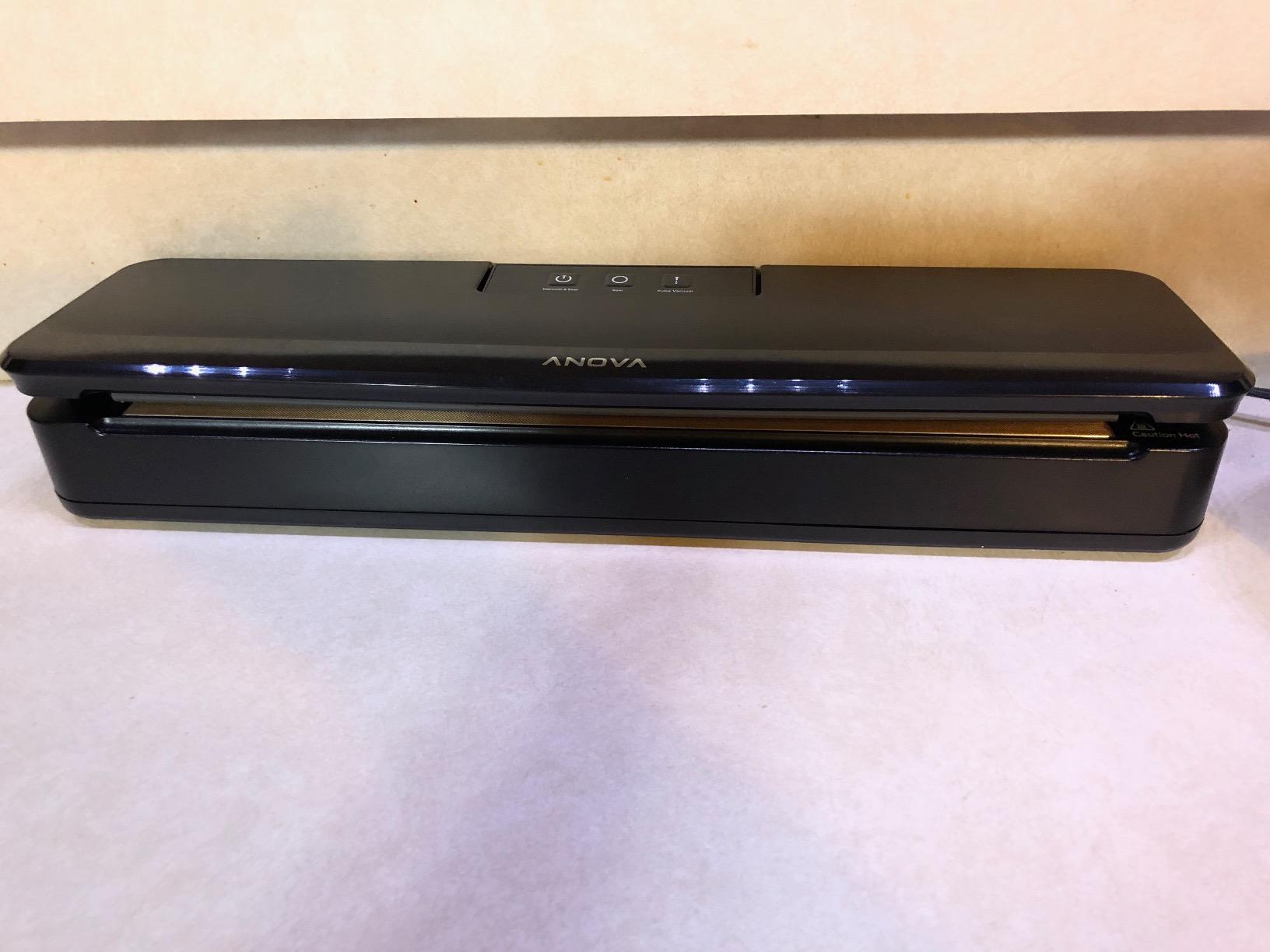
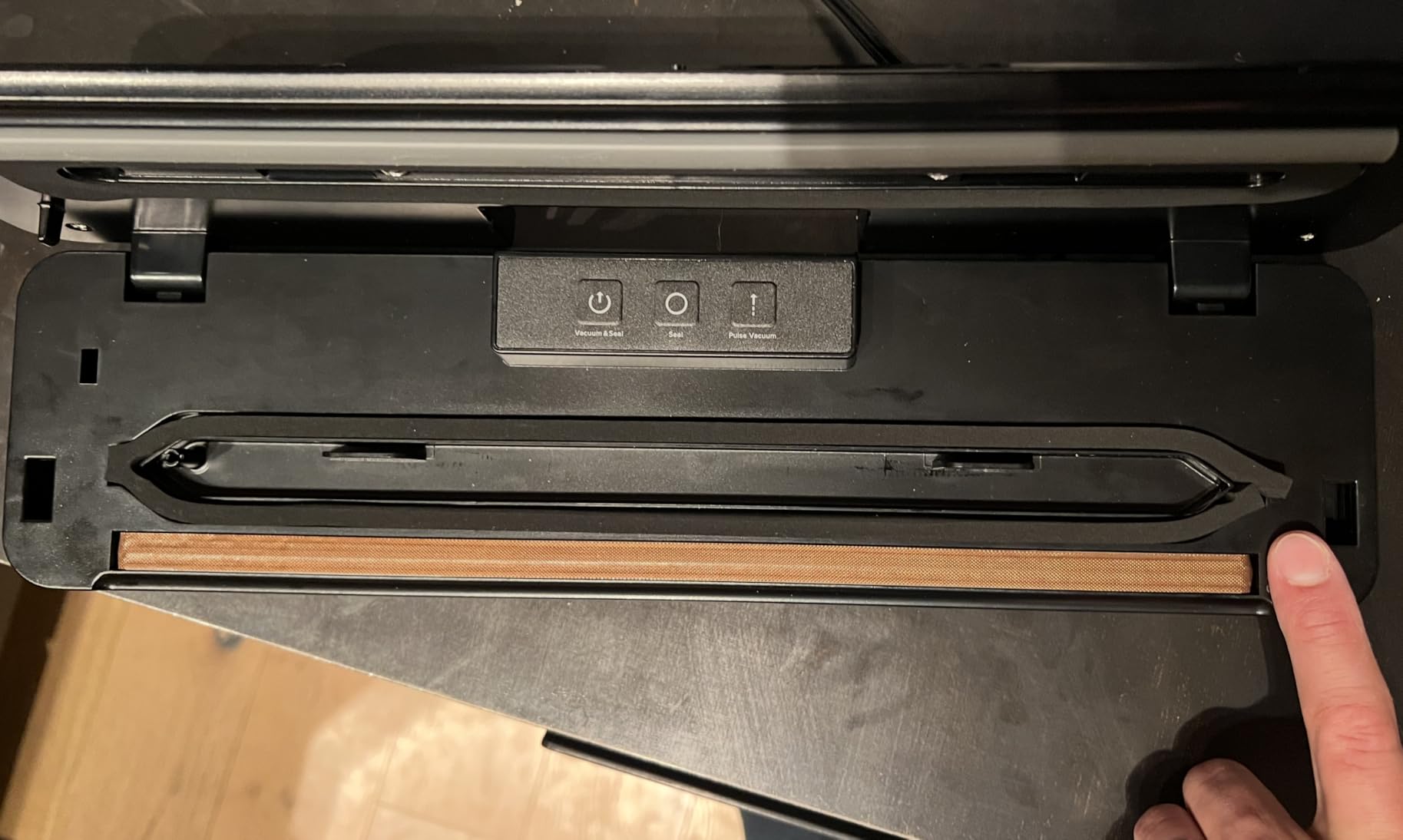
The Anova Culinary is the narrowest machine we tested at 4.8 inches wide and 2.3 pounds, and that single fact decides who should buy it. Apartment cooks on r/sousvide ask about counter space constantly, and this is the sealer that answers them. It is a long, shallow design that slides into a cabinet or a drawer instead of occupying a permanent stretch of countertop.
It is also the only machine here designed from the start for the sous vide job rather than adapted from a food-storage sealer. That shows in the workflow: separate air pulse and seal buttons, so you can stop the vacuum partway, check how the bag is collapsing around the food, then run the heat strip. Most sous vide bags want that pause-and-check step, and a single one-button cycle does not offer it.
Why the slim shape suits sous vide bags
Sous vide bags need to be thin enough to lie flat and wide enough that the food stays under the water line. The Anova handles both wet and dry sealing modes and ships with 10 BPA-free pre-cut bags, so you can start cooking before you work out what roll to buy. Owners like the one-button workflow and the fact that the machine was clearly designed around water bath cooking rather than freezer storage.
For anyone who also cooks with a countertop circulator, the pairing is straightforward: seal, drop in, and let the water do the rest. Our guide to the best sous vide machines for home cooks covers the circulator side of that setup if you have not settled on one yet.
Where the compromises show
The 800-watt figure on the spec sheet is a nominal rating, and the real-world suction is modest when a bag is very wet or bulky. Buyers who cook large, loose cuts report longer vacuum cycles than they would get from a double-pump machine. The mode here is manual, with no automatic bag or moisture detection, so you set the pace yourself.
It also has the smallest review base in this group, around 6300 ratings, which is still a substantial number but smaller than the 30,000-plus review counts behind the top sellers. If you want the strongest consensus behind a purchase, the NESCO and FoodSaver models carry far more long-term owner feedback.
4. Potane VS2690, Best Value for Mode Control
POTANE Precision Vacuum Sealer Machine, Powerful Pro Vacuum Food Sealer, 8-in-1 Easy Presets, 4 Food Modes, Dry&Moist&Soft&Delicate with Starter Kit, Compact Design(Silver)
8-in-1 presets
Sloping top chamber
14.25 x 5.5 inch, 3 lbs
Brushless motor
Pros
- Second-highest rating in the group at 4.4
- Sloping top keeps liquid in the bag and uses more of it
- Eight presets give real control across dry moist soft and delicate
- Enhanced heating wires and brushless motor
Cons
- 120-watt suction trails double-pump designs on very wet contents
- Preset-heavy control layout takes some learning
- Canister port needs the separate hose
The Potane VS2690 is the pick if you want real manual control over how aggressive the vacuum is, without paying for a machine with a chamber. It offers eight presets split across four operation modes and four vacuum sealing modes, covering dry, moist, soft and delicate. That is more granularity than most machines in this price bracket, and it maps directly onto the way sous vide cooks think about protein texture.
The design detail we like most is the sloping top. On a flat-top sealer, liquid in the bag gets pulled toward the sealing strip as the bag collapses. The sloped chamber keeps that juice away from the heat strip, which is why buyers specifically call it out for liquid foods and why it also gets you more usable bag area for the same film.
Where the eight presets earn their keep
Soft and delicate modes are the ones sous vide cooks reach for. A bag holding a piece of salmon or a scallop should not be crushed against the food, and the soft setting slows the pump so the bag tightens gradually. Moist mode extends the seal time, which matters for a bag with a marinade or a piece of meat that has released juice.
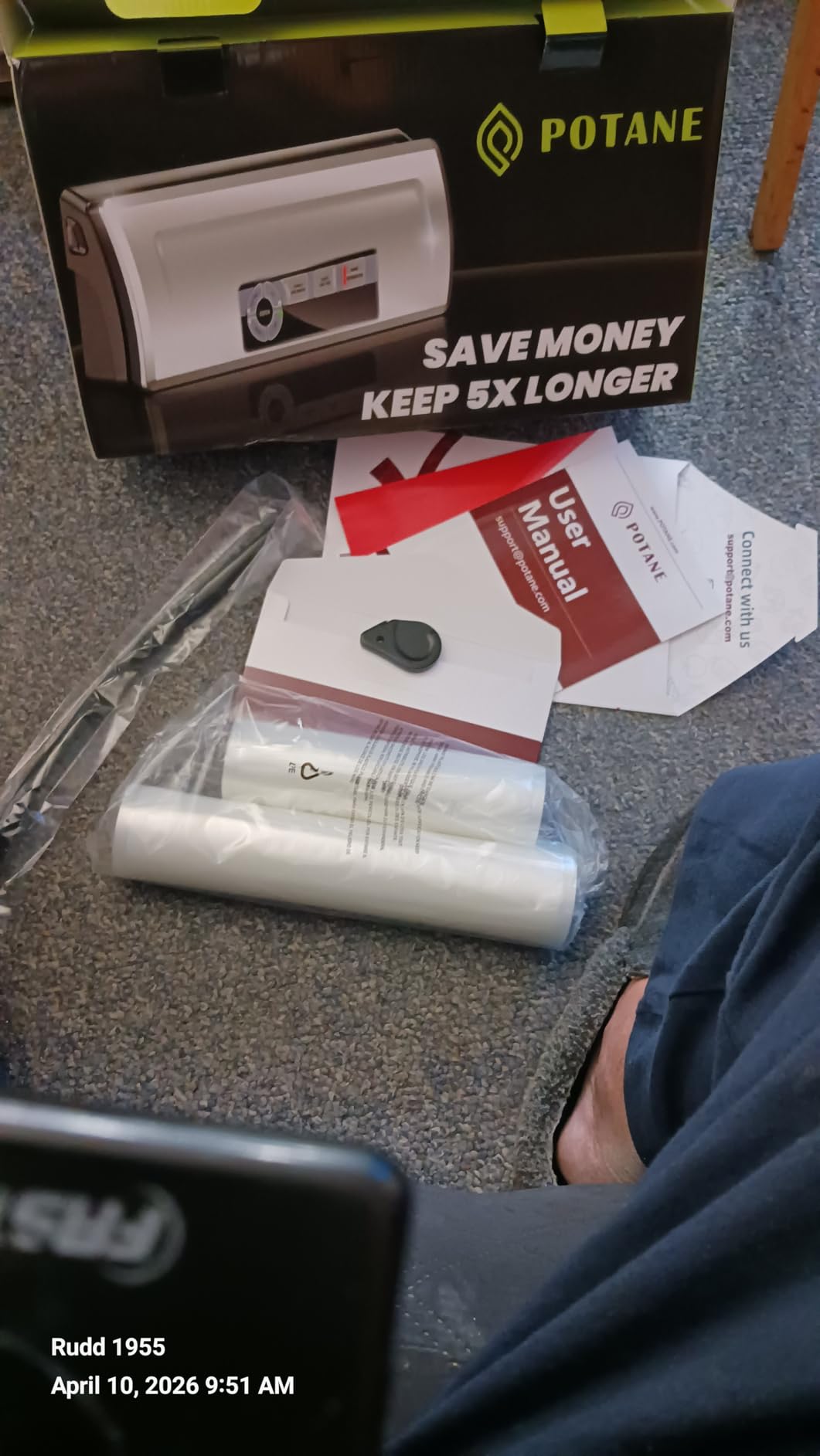
The spec sheet pairs those presets with enhanced heating wires and a brushless motor, and the starter kit includes a replacement foam gasket and cutter. Gaskets and vacuum ports are the wear parts on any sealer, so having a replacement in the box extends the practical life of the machine.
Where it falls short
At 120 watts with a single pump, this is not the machine to buy if you regularly seal bags that are half liquid. The moist preset has to be chosen carefully, and the review pattern shows that getting that choice wrong is where the complaints come from. Think of it as a strong dry and lightly-moist sealer rather than a wet-food specialist.
Eight presets also means a control panel that rewards reading the manual. New users report a short learning curve, and anyone who wants a single-button machine should look at the FM2100 instead.
5. FoodSaver FM2100, Best for One-Touch Batch Prep
FoodSaver Vacuum Sealer Machine, Automatic Bag Detection, Sous Vide Friendly, with sealer bags, roll, handheld vacuum sealer, black
One-touch automatic sealing
Dual heat sealing strips
16.3 x 9.2 x 4 inch, 6.6 lbs
Accessory port
Pros
- One-touch operation keeps batch prep fast
- Dual heat strips give consistent airtight seals
- Built-in roll storage and cutter minimise bag waste
- Accessory port and hose expand it to jars and canisters
Cons
- Liquid performance trails dedicated moisture-detect models
- 6.6 pounds is heavy for a machine you want to stow
- Single chamber means you cannot vacuum while cutting
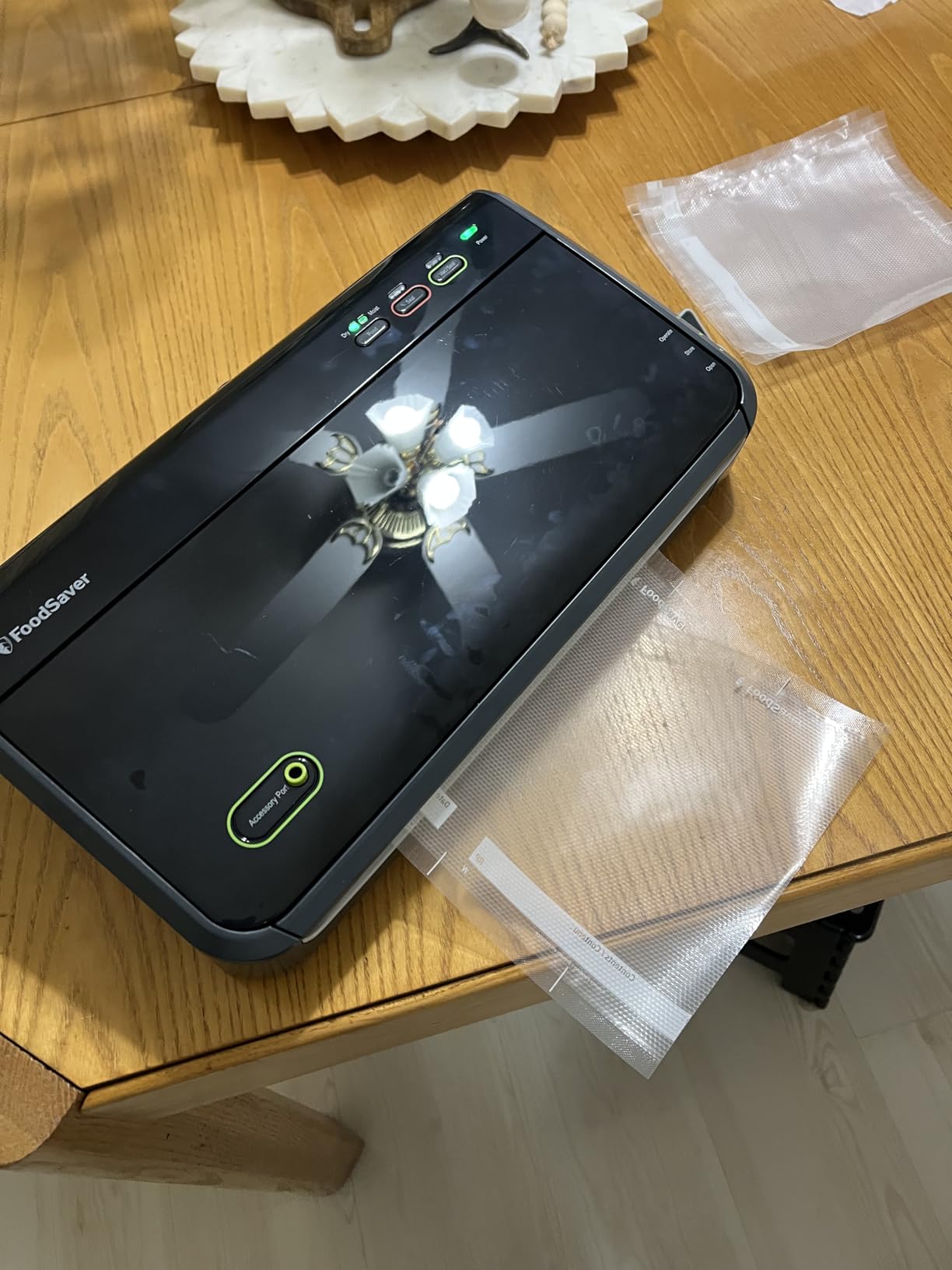
The FM2100 is built around a single premise: press once and walk away. That is exactly what you want on a Sunday when you are portioning eight steaks into individual bags before a week of cooking. Reviewers rate it highly for dependable one-touch sealing and for the built-in cutter, which lets you trim a bag down to size and reseal the offcut in the same motion.
Dual heat sealing strips give it a consistent, airtight seam, and the dry and moist food settings cover both ends of your kitchen. The accessory port and included hose extend the same pump to jars and canisters, so it doubles as a canister system when you are out of sous vide bags mid-week.
Why one-touch matters for volume cooking
Batch cooking exposes the difference between an automatic and a manual sealer faster than anything else. With one-touch, the cycle runs to completion and the machine stops, so you can line up the next bag while the current one finishes. Manual models require you to close the handle, watch the vacuum, and time the seal yourself, which slows a multi-portion session considerably.
The starter kit includes an 11-inch by 10-foot roll, three quart bags, two gallon bags and the hose, so you are not shopping for consumables on day one.
Where it is not the right tool
Liquid handling is the weak point. Wet-soup and heavy-marinade performance trails dedicated moisture-detection models like the V4400, and that is the single most common source of buyer complaints. If your cooking involves reducing sauces or bagging heavily marinated meat, this is not the machine to build a workflow around.
At 6.6 pounds and 16.3 inches long, it is also a heavy machine if your plan was to stow it away. The single chamber means you cannot process one bag while cutting another, which adds up during large prep sessions.
6. FoodSaver PowerVac VS0150, Best for Freezer Batches and Small Footprints
FoodSaver PowerVac Compact Vacuum Sealing Machine Stainless Steel & Black Vertical Storage VS0150 | Preserves freshness reduces bag waste for both dry and wet food
Vertical storage design
Dry and moist settings
17.91 x 5.59 x 10.24 inch
Alignment tray and handheld port
Pros
- Vertical storage footprint is unusually small for a full sealer
- Alignment tray cuts bag waste and misaligned seals
- 35 percent less bag waste than earlier FoodSaver models
- Works with the full FoodSaver bag and accessory range
Cons
- 110-watt suction is lower than double-pump models
- Some seal-failure and bag-drain complaints in reviews
- Compact vertical form takes practice to feed bags
The PowerVac VS0150 solves a different problem: how to keep a full-size sealer in a kitchen that does not have room for a full-size sealer. It stands vertically, so the 17.91-inch length runs along the counter rather than out into the room, and it connects to a handheld sealer for the small bags you seal every day. If your cooking is mostly batch freezing and dry sous vide, the space saving is the feature you will feel every day.
The alignment tray is the part that improves seal quality rather than footprint. A misaligned bag produces a heat seal with a crease in it, and a crease is a leak path. The tray keeps the bag flat and square as it enters, and owners single it out as the reason the machine uses less film per bag.
Where the bag-waste saving comes from
The listed claim is 35 percent less bag waste than previous FoodSaver models, and the mechanism is the tray plus the built-in cutter. You measure the bag to the food rather than guessing, seal it, and trim the offcut from the roll. Over a year of portioning proteins, that adds up to a meaningful saving in film, and it also reduces the number of failed bags you throw away when the seal did not sit flat.
Dry and moist customizable settings are both present, and the machine works with the full FoodSaver bag and accessory range, so a kitchen already committed to that ecosystem does not need to change anything.
Where it falls short
The 110-watt suction is lower than the double-pump designs, and it shows on very wet or bulky loads. Roughly 10 percent of its reviews are one-star, with bag-drain and seal-failure complaints the most common thread. Treat it as a strong dry-goods and freezer machine with moist capability, not a wet-food specialist.
The vertical form also takes practice. Buyers new to the format report that feeding a bag into an upright sealer is a different motion from sliding it into a horizontal one, and the first few sessions are slower than they would be on a flat model.
7. NutriChef PKVS18SL, Best for Jars and Canisters
NutriChef Food Vacuum Sealer Machine – Automatic Air Sealing System for Dry & Moist Foods, LED Touch Controls, Includes Vacuum Bags, Hose & Wine Stopper, High Suction Power, 14″x6″x3″, Silver
LED touch controls
110-watt suction element
14.1 x 6 x 3 inch, 2.9 lbs
Canister function via hose
Pros
- Large review base with a solid 4.3 average
- LED touch controls are easy to read and operate
- Canister function via the included hose adds flexibility
- Includes five medium bags
- a long roll and a wine stopper
Cons
- 110-watt suction is modest beside 130-watt and double-pump designs
- Basic single heat seal may not hold liquid as well
- Rank sits well outside the top 10 in Vacuum Sealers
The NutriChef PKVS18SL is the value pick for a kitchen that wants one machine to cover bags, jars and bottles. The canister function runs off the included vacuum air hose, so the same 110-watt element that seals a bag also pulls air from a mason jar or a wine bottle with the stopper. That dual purpose is the reason it earns a place here even though its suction is not competitive.
Operation is straightforward. Soft-touch LED controls show sealing mode selection clearly, and automatic air sealing is set up for both dry and moist foods. At 2.9 pounds and 14.1 inches long, it is also one of the more portable machines in the group, which matters if you are not dedicating counter space to it.
Where the canister function earns its place
Zero-waste storage is the use case that comes up most in forums alongside sous vide, and jars are where a canister function pays off. Dry goods, pasta and rice go into a jar, the hose pulls the air out, and the lid holds it. That is a job a bag sealer does badly and a canister attachment does well, so if you already own compatible containers this extends the machine’s life considerably.
The wine stopper is a small touch that reviewers mention positively, and the included consumables are unusually generous for the money: five medium bags, a long roll and the hose, enough to start without a separate supply run.
Where it falls short
The 110-watt suction element is the limitation that matters for sous vide specifically. It works, but it takes longer on a large or wet bag, and reviewers consistently point to limited suction power and weaker performance with very wet contents. The single heat-seal strip is another step down from the double seals on the NESCO and the FoodSaver models.
If sous vide is the primary reason you are buying and liquids are involved, spend up to the Potane or NESCO instead. Pick this one if jars and canisters are a real part of your food storage routine.
8. Bonsenkitchen VS2100, Best Budget Pick with Four Modes
Bonsenkitchen Vacuum Sealer Machine, Multiple Modes For Meal Prep,Silver
4 sealing modes
Pulse vac for delicate foods
15.28 x 5.71 x 3.03 inch, 2.7 lbs
Air suction hose included
Pros
- Most reviewed model in the group with over 30000 ratings
- Four modes cover meat
- soft foods chip bags and sous vide bags
- Pulse vac mode is useful for delicate or liquid-heavy foods
- Compact and light enough for drawer storage
Cons
- Build and seal durability trail the premium models
- Roughly 10 percent of reviews are 1-star
- Only 5 vacuum bags included in the kit
The Bonsenkitchen VS2100 has the largest review base in this roundup by a wide margin, with more than 30,000 ratings, and that volume is useful in itself. When a machine has this many owners, the failure patterns are well documented rather than anecdotal, and for a first vacuum sealer that documentation is worth more than a modest spec improvement.
Four modes cover the ground: Vac and Seal, Pulse Vac, Seal only and Accessory. The accessory mode uses the external vacuum ports and the included air suction hose for jars and for sous vide bags directly, and the pulse mode gives you manual control over how hard the pump pulls. That is the mode that keeps a delicate bag of scallops from collapsing onto itself.
What pulse vac actually gives you
Pulse vac switches the pump on and off under your control rather than running it to a preset endpoint. On a wet bag, that means you can draw down the air in stages, watch the liquid stay where it is, and stop before the pump starts pulling juice toward the vacuum port. On a bag of soft food, it means the bag tightens around the contents gradually instead of slamming them flat.
The listed capacity is up to 30 bags in 15 minutes, which matters if you are portioning a large batch, and the compact ABS body at 2.7 pounds is one of the lightest here. Spare parts are listed as available for three years, which is a small but real ownership advantage.
Where it falls short
Build and seal durability trail the premium models, and that is the honest trade. Roughly 10 percent of its reviews are one-star, with inconsistent seals on moist or delicate items the most common complaint. The rating distribution is the widest in the group, with a 68 percent five-star share against that 10 percent one-star block, which tells you the experience is more variable than on the NESCO or the V4400.
Only five vacuum bags come in the kit, so you will be buying a roll straight away. If you cook with liquids often, this is the machine to buy first and outgrow, and the Potane or NESCO is the upgrade path when you are ready.
What to Look For in a Vacuum Sealer for Sous Vide
Buy the pump and the seal, not the button count. Every feature below is one we saw show up in long-term owner feedback as a deciding factor, ordered by how much it changes whether a bag survives a water bath.
Double sealing. Two parallel heat-seal lines create a second leak path. A single strip is fine for frozen bread and unreliable for an overnight cook at 135F.
Moist or wet setting. A slower, lower-pressure vacuum plus a longer, hotter seal is what keeps a marinade or a piece of salmon from getting drawn into the pump.
Pulse vacuum. Manual on-and-off control of the pump protects delicate proteins and gives you a way to stop before liquid migrates toward the vacuum port.
Pump strength and count. A 130-watt double pump clears a bag faster and more evenly than a single 110-watt element, which matters on large cuts.
Bag width and cutter. A built-in roll storage compartment and sliding cutter reduce wasted film and let you size each bag to the food.
Countertop footprint. Between 15 and 20 inches long is typical. A vertical body or a sub-5-inch-wide profile matters if you share a small kitchen.
Bag compatibility. A machine that accepts third-party rolls saves money on the recurring consumable, which is the real ongoing cost of vacuum sealing.
Chamber vs Edge Vacuum Sealers for Sous Vide
This is the most repeated question on sous vide forums and the one most editorial roundups skip. An edge vacuum sealer, which is every machine in this roundup, holds the bag opening over a nozzle and pulls air directly out through that opening. The bag is exposed to atmosphere the whole time, so the pump only has to work against the pressure at the opening rather than against a sealed volume.
A chamber sealer puts the entire bag inside a sealed chamber, closes the lid, and removes all the air from the volume at once. The bag is submerged in liquid that sits below the opening, so liquid cannot be pulled into the pump no matter how full the bag is. That is why chamber machines are the forum answer whenever someone says they regularly seal liquids or marinades.
The trade is space and cost. Chamber sealers are large countertop boxes, and the ones designed for liquids are priced well above everything on this list. For most home cooks, the honest guidance is that a strong edge sealer with a double heat seal, a moist setting and pulse control handles a normal steak or a lightly marinated chicken correctly. A bag that is mostly liquid, or a big batch of sauce, is the case where a chamber machine starts to earn its place.
What the Mode Labels Actually Mean
Dry mode, moist mode, wet mode, pulse vac and sous vide mode sound like five different features, and on most machines they are two or three ideas wearing different names. Dry mode runs the pump at full power for a short time, which suits solid, dry items like cheese or a sealed roast. Moist or wet mode slows the pump down and extends the heat-seal time, which is the setting you want for anything with liquid in the bag.
Pulse vacuum is manual rather than automatic. You cycle the pump yourself and stop when the bag has tightened enough. Sous vide mode, on machines that label it that way, usually means the same thing as moist mode, or an automatic cycle that ramps the vacuum in stages. If a manual is unclear on what a labelled button does, treat it as a slow pump cycle, which is almost always the correct interpretation for a wet sous vide bag.
Sous Vide Bags: What You Actually Need
Any sealer worth buying runs standard 8-inch, 10-inch or 11-inch rolls, and a single roll of the width you cook in is enough to start. Multi-layer bags made for sous vide are thicker than freezer bags and cost more per bag, but they hold a vacuum more reliably and tolerate a long cook without the seam weakening. Freeze bags and generic sandwich bags are cheaper and generally not built for repeated submersion.
Reusable silicone bags are a separate category worth knowing about. They can be hand-pumped or sealed with a handheld unit, they wash in a dishwasher, and their per-cook cost approaches zero after the first few uses. Their limitation is that a silicone bag cannot be used on most heat-strip sealers, so a vacuum sealer does not help you reuse them. If you already own a set, treat the sealer as a companion for single-use bags and batch cooking rather than a replacement.
On cost, the recurring number that matters is bags per cook, not bags per roll. If you cook two to three times a week, a multi-layer bag for each cook is a modest monthly outlay. Forum users also stress that cheaper third-party rolls generally work fine in a machine that accepts open-ended rolls, which makes the consumable a place to save rather than a reason to buy a more expensive machine.
How to Leak-Test Your Vacuum Sealer
You can verify any sealer, including a budget pick, in about ten minutes with water and a sink. This matters because a bag that passes a fingertip test can still fail after hours submerged, and this catches weak seams before you waste a cook.
Seal a bag with plain water in it. Fill a bag halfway with cold water and seal it with your machine using the moist setting. Liquids reveal seam flaws that dry sealing hides.
Check the seam first. Run your fingers along the full length of both seal lines. Any line that feels rough, raised or only partly bonded is a fail, and it tells you the heat strip needs more dwell time.
Submerge the bag. Put the sealed bag in a bowl or sink of water and press down on it. Look for a stream of bubbles, which indicates a pinhole, or for the bag to spring back, which indicates air is getting in.
Leave it and look again. Set the bag in water for 30 minutes and inspect it a second time. A slow leak that shows nothing at minute five will often show at minute thirty, which is the one that ruins a long cook.
If the bag passes, your sealer is producing sous vide-viable bags. If it fails, raise the seal time or switch to the moist setting before you buy anything else.
Frequently Asked Questions
Do you need a special vacuum sealer for sous vide?
What is the best vacuum packer for sous vide cooking?
Can I sous vide in a vacuum sealed bag?
Can I use the FoodSaver vacuum sealer in sous vide mode?
Which vacuum sealer is better, Anova or NESCO?
What is the best vacuum sealer for wet food?
What are the common problems with Nesco vacuum sealers?
Is Nesco or FoodSaver better?
Our Final Pick for Sous Vide
The best vacuum sealers for sous vide list we tested comes down to one decision. If your bags contain liquid, buy the NESCO VS-12 and accept the bulk. Its 130-watt double pump, double heat seal and gentle vacuum mode gave us the most consistent results across wet and dry loads of anything in the group.
If counter space decides against you, the Anova Culinary does the same core job in 4.8 inches of width. If you would rather the machine make the decisions for you and your bags are sauce-heavy, the FoodSaver V4400 with automatic moisture detection is the highest-rated option here at 4.6.
Whichever you pick, run the water leak test before your first long cook. Ten minutes with a bowl of water tells you more than any spec sheet, and it is the difference between a reliable bag at hour eight and a ruined one.