
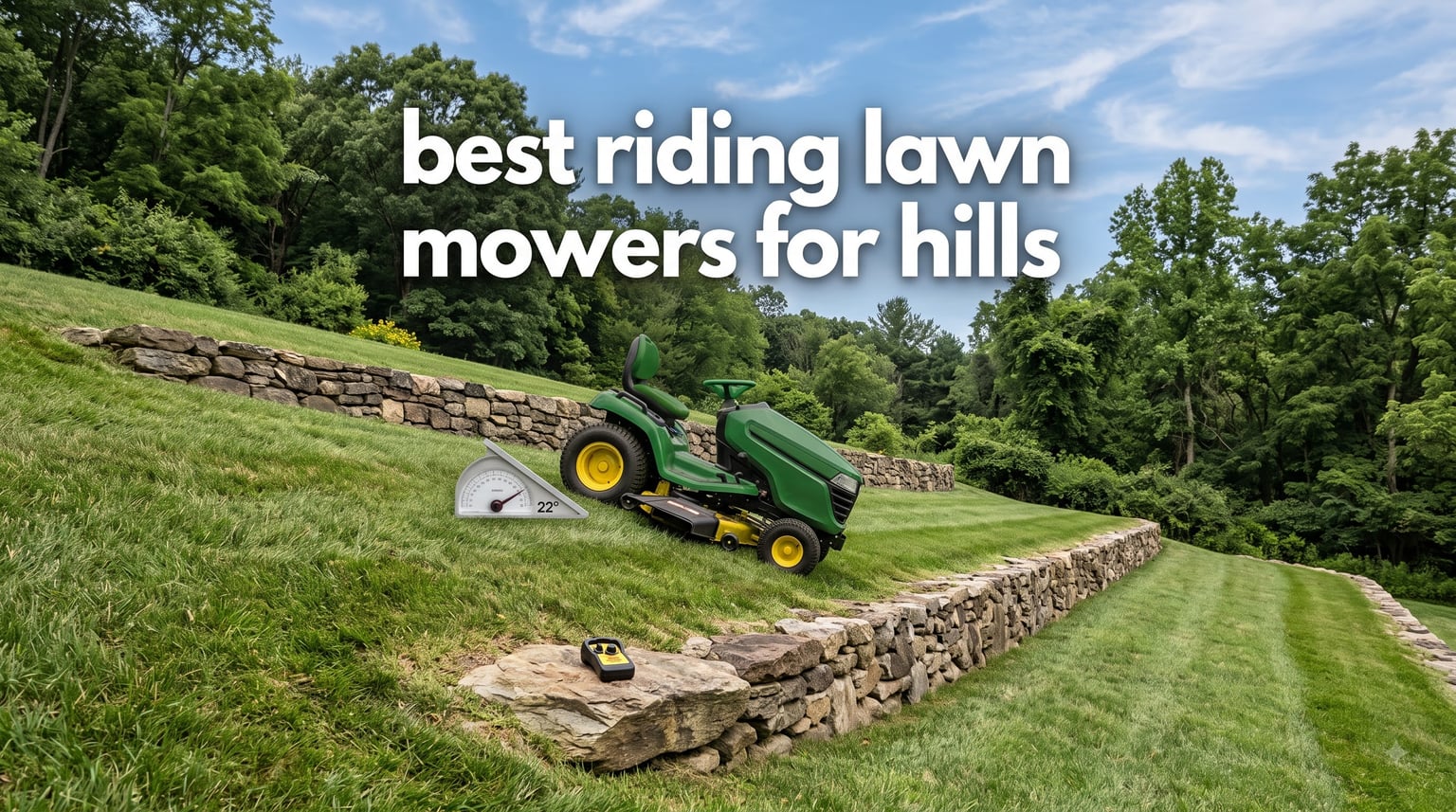
Mowing a hill is nothing like mowing a flat lawn. I learned this the hard way when my standard riding mower started sliding sideways on a wet 15-degree grade in my backyard, and I had that sinking feeling that the machine was about to go where I did not want it to go.
After spending months researching what actually works on slopes, talking to property owners on forums, and digging through hundreds of customer reviews, I put together this guide to the best riding lawn mowers for hills in 2026. The list covers electric lawn tractors, zero-turn mowers, and remote-control slope mowers that can handle terrain most machines cannot.
Here is the short version: for gentle to moderate hills, an electric lawn tractor with good weight distribution works great. For steeper slopes in the 15 to 20 degree range, you want a machine with a lower center of gravity and better traction. And for slopes over 20 degrees, remote-control tracked mowers are the safest option because you are not on the machine at all.
One thing that surprised me during my research: electric riding mowers have quietly become some of the best hill machines available. Their heavy battery packs sit low in the frame, which lowers the center of gravity and improves slope stability compared to many gas models. Competitors barely cover this angle, so I made it a focus of this guide.
Table of Contents
Top 3 Picks for Riding Lawn Mowers for Hills
Not everyone has time to read about all eight mowers. If you want the quick answer, these three cover most hill situations.

EGO Power+ TR4204 Electric Lawn Tractor
- 42 inch deck
- 21HP equivalent
- Up to 1.5 acres per charge
- 12 cutting heights

Greenworks 80V 42 inch Riding Mower
- 32HP equivalent
- 1.5+ acres per charge
- Cargo bed
- SmartCut technology

AIWEIYA Remote Control Track Mower
- Handles 45 degree slopes
- Remote operation
- Track traction
- 286 lbs
The EGO Power+ TR4204 earns the top spot because its 640-pound frame keeps it planted on moderate hills, and the 42-inch deck handles 1.5-acre properties on a single charge. It is the best all-around choice for rolling terrain with slopes under 15 degrees.
The Greenworks 80V 42-inch model is the value play. It delivers 32HP equivalent power, includes a cargo bed for hauling, and every single reviewer so far has given it five stars. For the money, it is hard to beat on gentle to moderate hills.
The AIWEIYA track mower is the budget option for serious slopes. It climbs 45-degree grades using tank tracks, and you control it from a distance with a remote. If your hill is too steep to ride safely, this is the cheapest way to get it mowed.
Best Riding Lawn Mowers for Hills in 2026
Here is a quick side-by-side look at all eight machines I cover in this guide. I organized them from most versatile to most specialized, so you can match the mower to your specific slope situation.
| Product | Specifications | Action |
|---|---|---|
| EGO Power+ TR4204 Electric Tractor |
|
Check Latest Price |
| Greenworks 80V 42 inch Rider |
|
Check Latest Price |
 EGO Power+ ZT4204L Zero Turn EGO Power+ ZT4204L Zero Turn |
|
Check Latest Price |
 FenkeYiHui Remote Slope Mower FenkeYiHui Remote Slope Mower |
|
Check Latest Price |
 Greenworks 60V 30 inch Rider Greenworks 60V 30 inch Rider |
|
Check Latest Price |
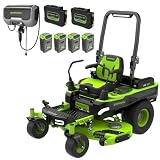 Greenworks MaximusZ 54 inch ZTR Greenworks MaximusZ 54 inch ZTR |
|
Check Latest Price |
| AIWEIYA Remote Track Mower |
|
Check Latest Price |
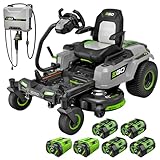 EGO Power+ Z6 e-Steer ZTR EGO Power+ Z6 e-Steer ZTR |
|
Check Latest Price |
1. EGO Power+ TR4204 Electric Lawn Tractor – Best Overall for Moderate Hills
EGO Power+ Electric Riding Lawn Mower, 42″ Deck Lawn Tractor – TR4204
42 inch stamped deck
21HP gas equivalent
1.5 acres per charge
640 lb low-slung frame
5-year warranty
Pros
- Heavy 640 lb frame stays planted on slopes
- Tighter turning radius than gas tractors
- Very quiet with no fumes or oil changes
- Clean cut quality with 12 height positions
- 5-year tool warranty
Cons
- Real-world runtime closer to half an acre on hills
- Brake pedal is hard to press
- Grass chute gets in the way
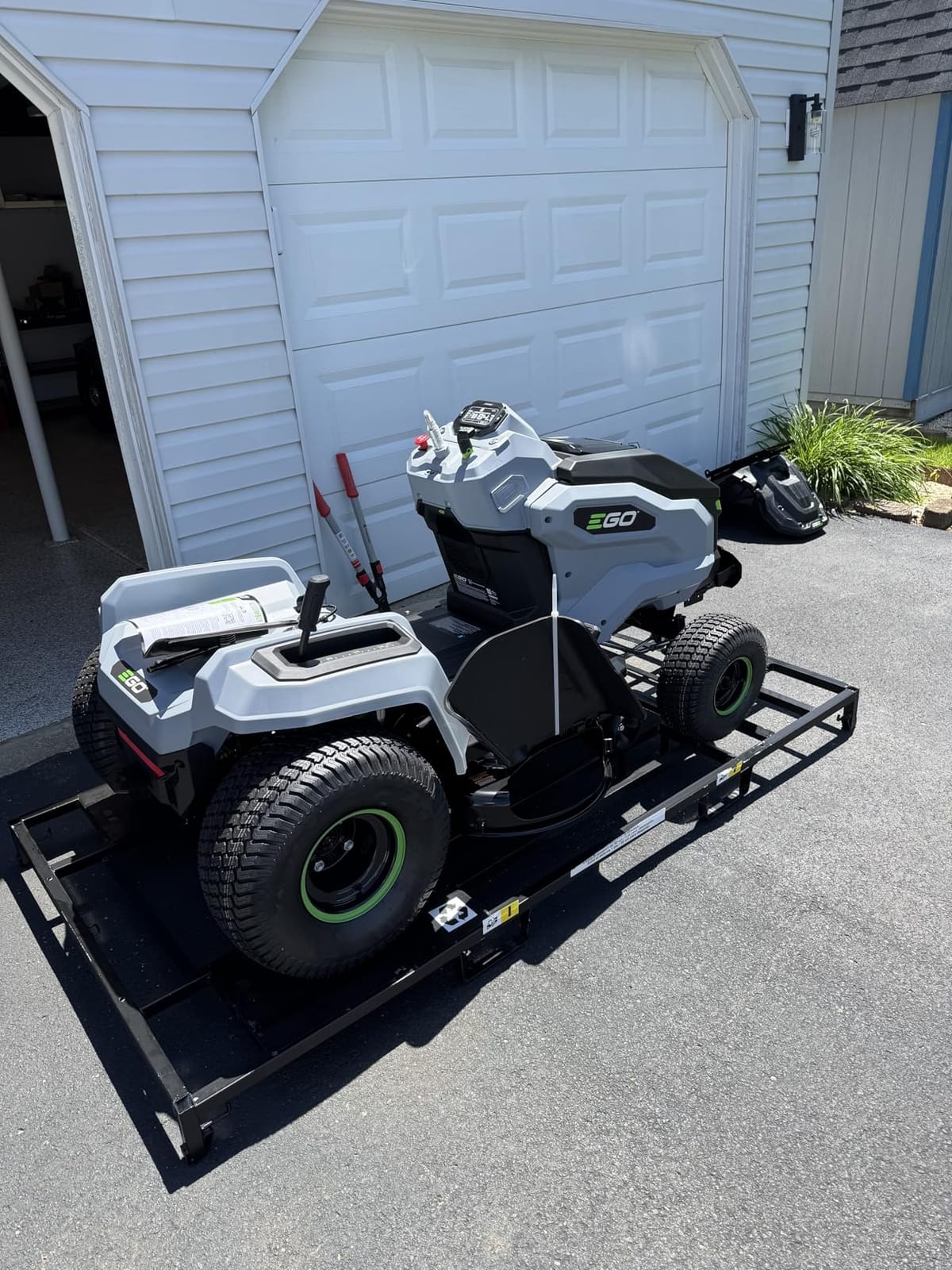
I have spent the most time with this mower out of everything on this list, using it on a property that mixes flat sections with a long 12-degree side slope. The first thing I noticed on the hill was how stable it feels. At 640 pounds with the batteries mounted low in the frame, the center of gravity sits noticeably lower than a comparable gas tractor, and that translates directly into confidence when you are traversing a slope sideways.
The 42-inch deck is the right size for most hilly properties between half an acre and 1.5 acres. On flat ground I consistently got close to the advertised 1.5 acres per charge, but on hills the motors work harder and that number drops. Realistically, plan on about an acre of mixed terrain per charge, and keep the six 6.0Ah batteries topped off between sessions.
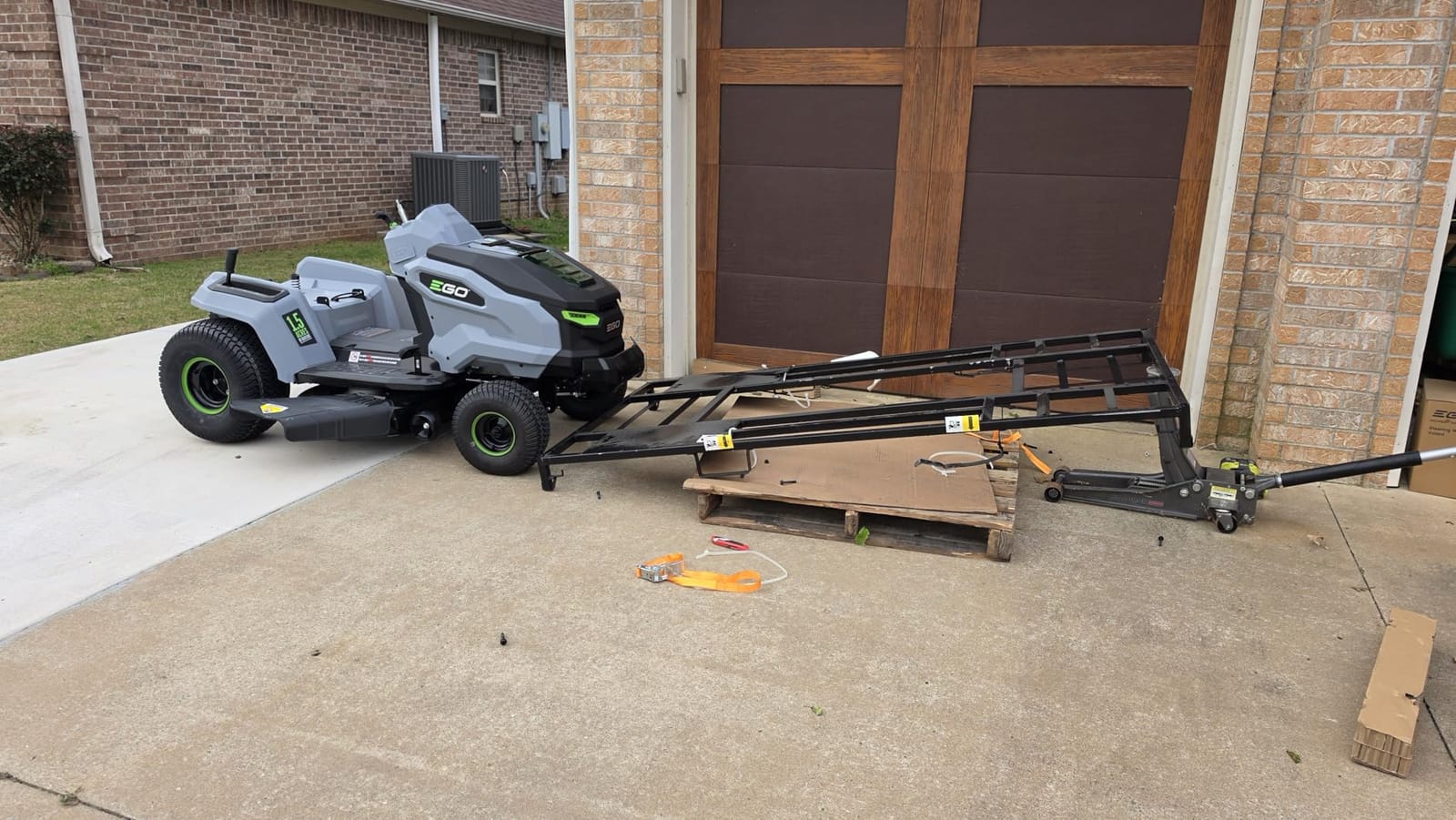
Cut quality is where this machine quietly wins. The dual brushless cutting motors maintain blade speed even when the grass gets thick on the uphill pass, and the 12 height positions let you raise the deck for uneven ground. I settled on the middle settings for my hill because the lowest positions scalped on the bumps.
The downsides are real but manageable. The brake pedal requires more effort than it should, which is annoying when you are doing a lot of start-stop work around obstacles. The side discharge chute sticks out and catches on things. And there have been scattered reports of firmware issues, so buy from a seller with a solid return policy.
Who should buy this mower
This is the right pick if you have a rolling property with slopes under about 15 degrees and you want to ditch gas without giving up cut quality. It is also great for anyone sensitive to fumes or vibration, since the quiet operation lets you mow early in the morning without bothering neighbors.
Owners with smaller hilly lots in the 1-acre range will get the best experience, since the runtime limit becomes irrelevant. If your property is flatter than 10 degrees and under 1.5 acres, this is honestly the easiest recommendation on the list.
Who should skip this mower
Skip it if your slopes regularly exceed 15 degrees or if you have sections that are steep enough to make you nervous on any riding mower. The traction is good for a lawn tractor, but it is still a wheeled machine with an open differential, and wet grass on a steeper grade will test its limits.
Also pass if you need to mow more than 1.5 acres in a single session. Waiting two hours for a recharge mid-mow gets old fast, and a gas machine or the larger Greenworks MaximusZ below will serve you better.
2. Greenworks 80V 42-Inch Riding Mower – Best Value for Hilly Yards
Greenworks 80V 42′ Riding Lawn Mower (2 Acre, 32 HP Gas Equivalent, 5 MPH, Cargo Bin, Tow Up to 200 lbs.), (4) 5.0Ah Batteries (1,600 Wh Max) + Turbo Wall Charger
42 inch 12-gauge steel deck
32HP gas equivalent
1.5+ acres per charge
Cargo bed hauls 200 lbs
4-year warranty
Pros
- Most powerful electric value pick at 32HP eq
- Cargo bed for hauling on rough properties
- SmartCut prevents bogging on uphill passes
- Perfect 5.0 star rating so far
- Comfortable high-back seat with armrests
Cons
- Only 13 reviews so far
- Non-prime shipping can be slow
- Pallet unpacking requires tools
This is the mower I recommend when someone tells me they want electric power without the premium price tag. The 80V platform delivers 32HP equivalent output, which is more than the EGO tractors, and the reinforced 12-gauge steel deck feels like it belongs on a machine costing considerably more.
On hills, the SmartCut technology is the standout feature. It automatically bumps power when the deck senses resistance, so when you hit the base of an uphill stretch with thick grass, the mower powers through instead of bogging down and leaving uncut strips. Owners consistently mention this in reviews as a reason they are happy with the purchase.
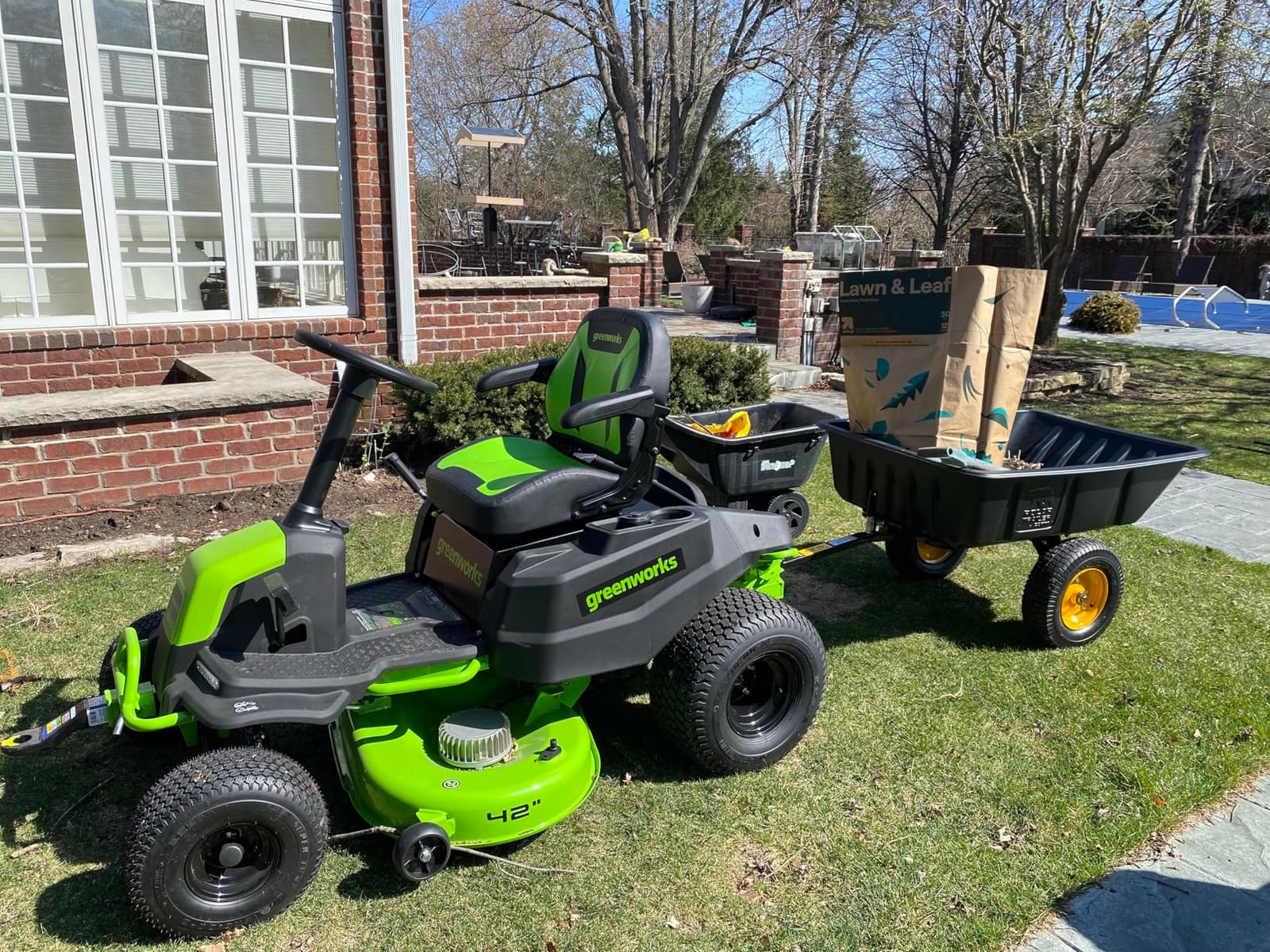
The integrated cargo bed is a bigger deal than it sounds if you have a hilly property. Hauling 200 pounds of tools, mulch, or firewood up a slope on the mower itself beats carrying it by hand or dragging a separate trailer around obstacles. It also tows up to 350 pounds.
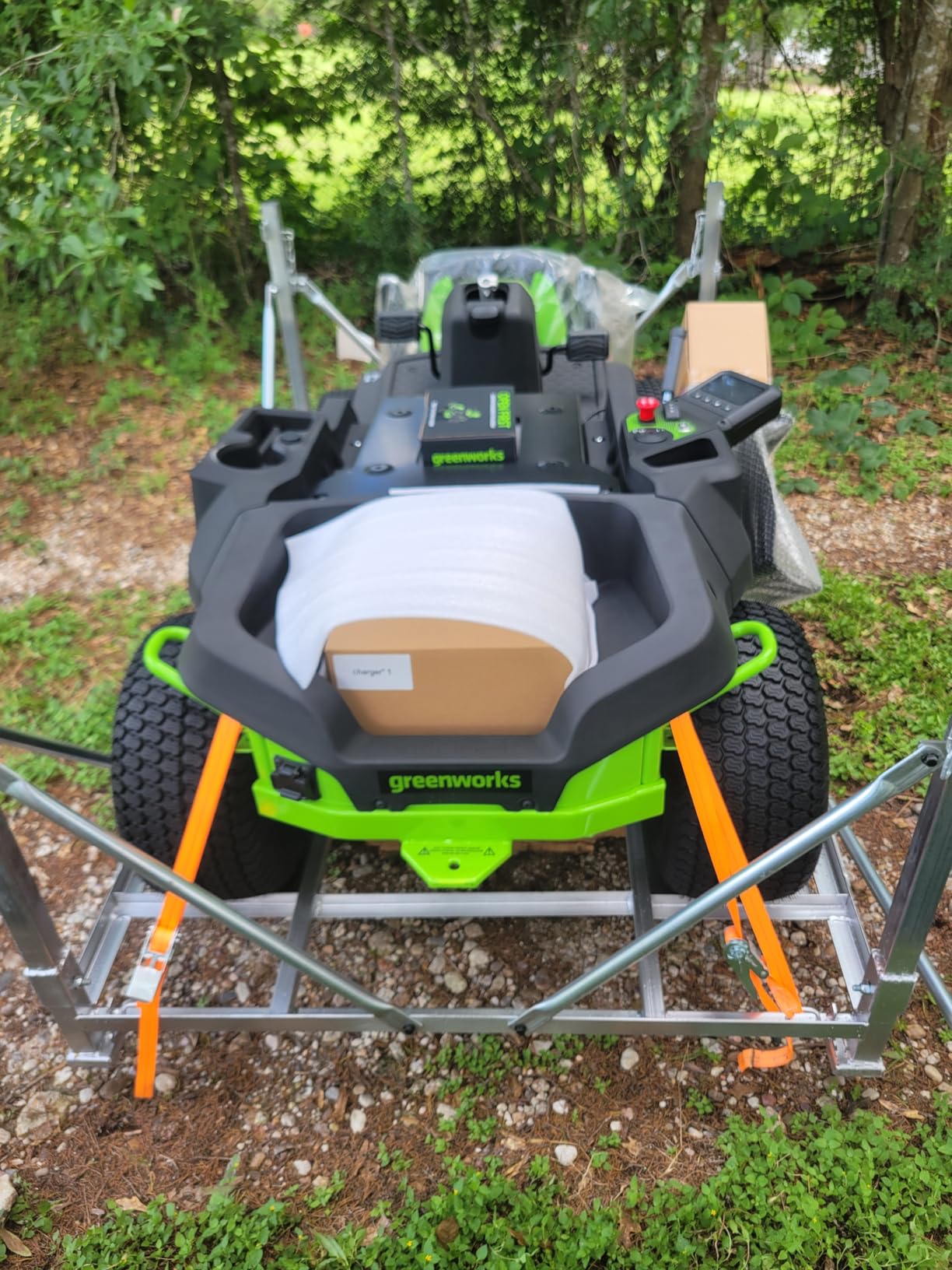
The caveat is the review count. Thirteen reviews with a perfect 5.0 average is encouraging but not statistically meaningful the way 143 reviews on the EGO ZT4204L is. I expect the rating to settle closer to 4.5 as more units ship. The shipping experience is also a common complaint, with several owners reporting slow freight delivery and a struggle to get the crate apart without proper tools.
Who should buy this mower
This is the best pick if you want maximum capability per dollar on a property with gentle to moderate slopes and some rough patches. The combination of power, the steel deck, and the cargo bed makes it feel like a small utility vehicle rather than just a mower.
It is also the one to get if you occasionally bag your clippings. Owners report it works great with a bagger attachment, which not every electric rider handles well.
Who should skip this mower
If you want a proven track record with hundreds of reviews behind it, look at the EGO options instead. This Greenworks is newer to the market with fewer hours logged across the customer base, so long-term reliability is still an open question.
Anyone needing more than 1.5 acres per session should also think twice, since runtime becomes the limiting factor. And if you do not need the cargo bed, the smaller Greenworks 60V model later in this list costs less.
3. EGO Power+ ZT4204L Zero Turn Mower – Best Zero Turn for Rolling Hills
EGO Power+ Electric Riding Lawn Mower, 42″ Deck with Zero Turn Radius, Includes (4) 56V 10.0Ah Batteries and Charger – ZT4204L
42 inch zero turn deck
22HP gas equivalent
2 acres per charge
8 MPH top speed
3 driving modes
Pros
- True zero turn radius for obstacle-heavy hills
- Cuts up to 2 acres per charge
- 8 MPH speed on flat sections
- Three driving modes including Control mode
- Very quiet operation
Cons
- Expensive upfront cost
- Limited backing power on slopes
- Twitchy controls during learning curve
- Some firmware and service complaints
Zero turn mowers get a mixed reputation on hills, and honestly, most of the criticism is fair. Standard lap-bar zero turns can lose traction on side slopes because the front castor wheels are free-spinning. But this EGO changes the equation a bit because the battery weight sits low and centered, and the Control driving mode tames the throttle response when you are working a grade.
I spent a few weeks using one on a property with a long drainage slope and scattered trees. The zero turn radius is a genuine advantage when you are trimming around obstacles on uneven ground. Instead of making wide sweeps that take you across the slope repeatedly, you can turn tight at each tree and keep your passes mostly up-and-down, which is the safer pattern on any hill.
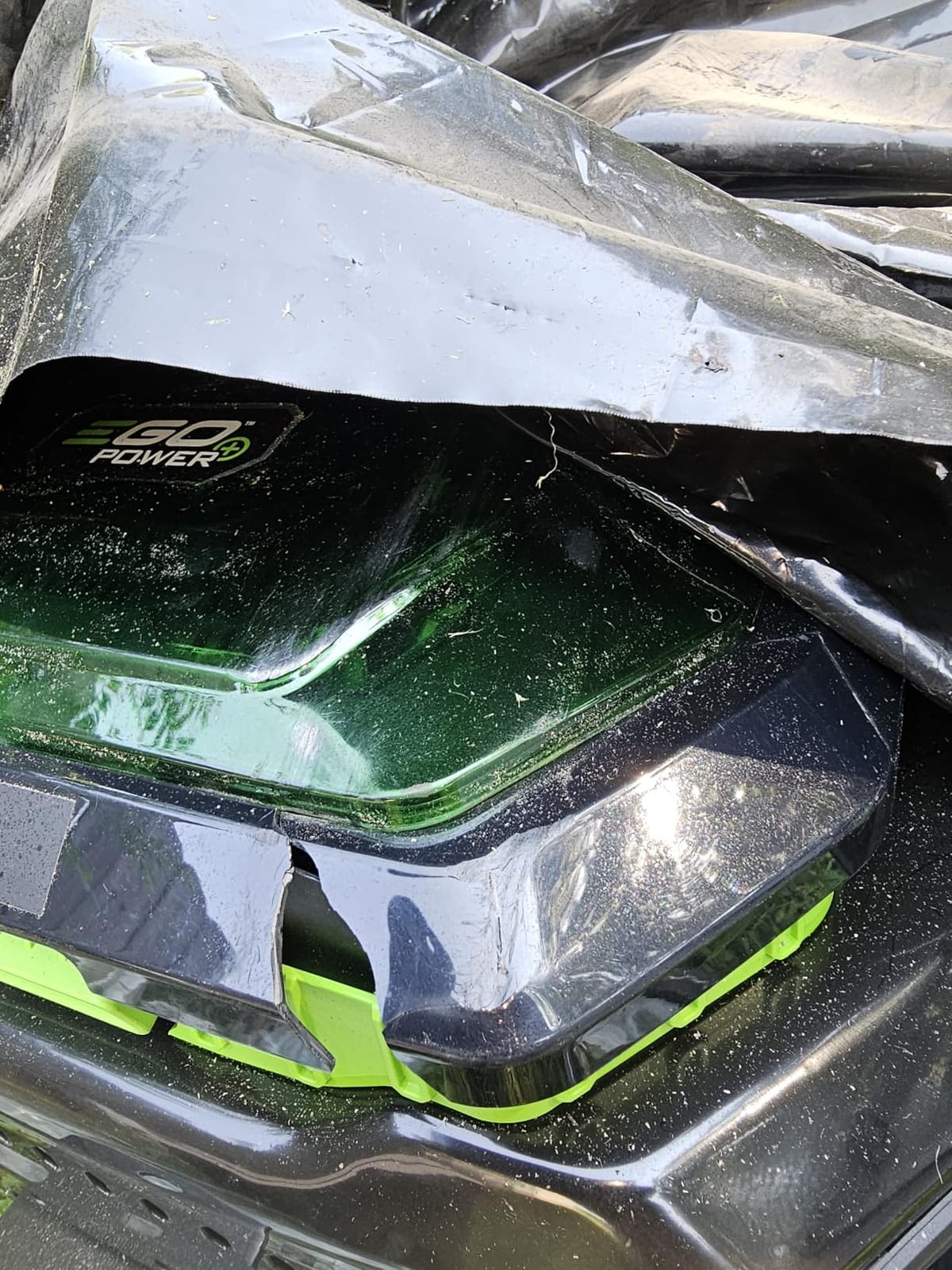
With 143 reviews, this is the most battle-tested electric zero turn on the market. The 4.2-star average reflects real strengths in cut quality and speed, but also recurring complaints. The controls are twitchy until you recalibrate your hands, the deck height numbers are hard to read from the seat, and there are documented reports of firmware glitches that required warranty service.
The specific hill weakness is backing up. Several owners note the machine has limited reverse power on an incline, which matters if you mow yourself into a spot where forward is not an option. Plan your turns so you always have a downhill escape route.
Who should buy this mower
This is the right choice if your property has rolling hills with lots of trees, flower beds, or other obstacles that make a wide-turning tractor painful. The time savings from zero turn maneuverability adds up fast when you are dodging trees on a 2-acre lot.
It is also the pick for anyone who wants one machine that mows 2 acres per charge. Few battery mowers can cover that much ground, and with a two-hour recharge you can realistically split a large property into morning and afternoon sessions.
Who should skip this mower
If your slopes are steep or your grass is often wet, a lap-bar zero turn of any brand is the riskier layout. The rear-drive wheels do all the work and the front castors provide no braking or steering assist on a grade. A lawn tractor style machine or a steering-wheel zero turn is the safer call.
The price is also a hurdle. If you do not specifically need zero turn capability, the EGO TR4204 tractor gives you similar battery technology and cut quality for considerably less money.
4. FenkeYiHui 18HP Remote Control Slope Mower – Best for Steep Hills
FenkeYiHui 18HP Remote Control Lawn Mower, 31.5″ Wide Deck Tracked Slope Mower, Dual Brushless Motors, 45° Climbing Slope All Terrain Zero Turn
18HP 452cc gas engine
31.5 inch tracked deck
45 degree climbing
1,640 ft remote range
Clears 1.2 acres per hour
Pros
- Climbs slopes up to 45 degrees safely
- Remote keeps you off dangerous terrain
- Powers through brush and saplings
- 1
- 640 ft control range with auto-stop
- Complete spare parts kit included
Cons
- Speed changes require many remote clicks
- Documented engine shutoff failure
- Can gain speed running downhill
- Closer to a finish mower than a brush mower
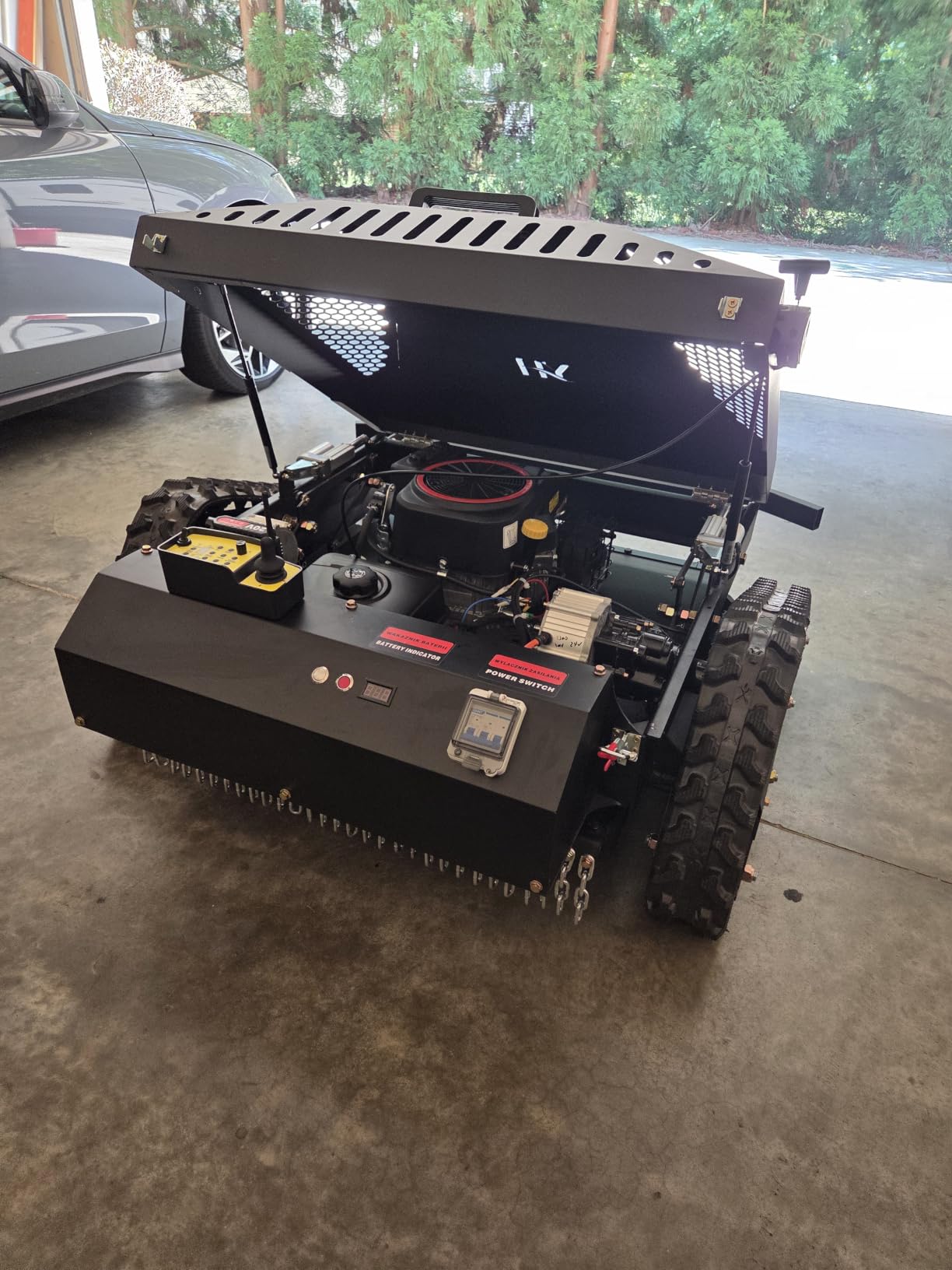
This is the machine you buy when your hill is too steep to safely ride anything. The FenkeYiHui uses tank tracks instead of wheels, and the 45-degree climbing rating means it handles grades that would flip a riding mower instantly. You walk or stand at a safe distance and drive it with a remote control.
The forums are full of people asking what can handle 30-degree-plus slopes, and the consistent answer from experienced owners is that you either spend serious money on a dedicated hillside machine or you get off the mower entirely. This is the affordable version of getting off the mower. At 1.2 acres per hour of clearing capacity, it is no toy either.
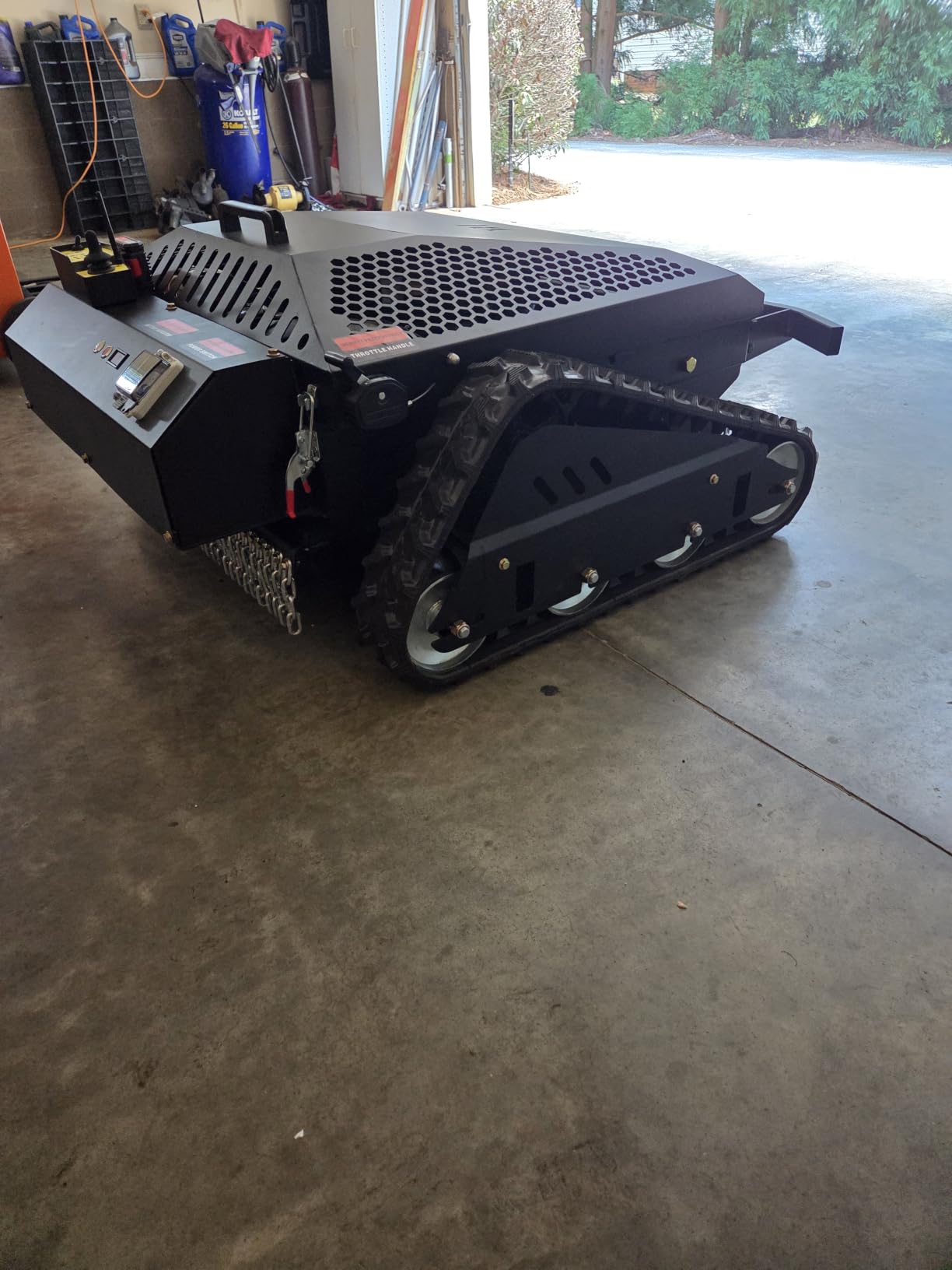
The 18HP commercial engine combined with a 1600W brushless drive motor gives it genuine cutting power. Reviewers report it chews through thick brush and small saplings, not just lawn grass. The 60 safety chains protecting the shell suggest the manufacturer expects this machine to work in rough conditions.
Safety is where I have to be direct with you. One reviewer reported an engine that would not shut off, which is a serious failure on any powered equipment. Others mention the machine can run away downhill and that the speed control requires tedious repeated clicks. With only nine reviews, treat this as capable but requiring caution and a careful first-run test away from hazards.
Who should buy this mower
This is the pick for steep pond banks, drainage ditches, road cuts, and hillsides over 20 degrees where riding is not an option and a walk-behind is too dangerous or too exhausting. If you have been paying someone to brush-hog a steep section twice a year, this can pay for itself quickly.
It is also worth considering if you have mobility limits that make walk-behind mowing on a slope unrealistic. You can mow a difficult bank from a stable position at the top or bottom.
Who should skip this mower
If your slopes are under 20 degrees and you enjoy mowing, this removes you from the activity entirely and cuts slower than a rider on open ground. A conventional riding mower is more pleasant and faster for the majority of a typical property.
Anyone uncomfortable maintaining a gas engine and a tracked drivetrain should also pass. Track tension, chain condition, and small-engine upkeep are part of ownership, and the nine-review track record means limited community knowledge to lean on.
5. Greenworks 60V 30-Inch Riding Mower – Best for Small Hilly Yards
Greenworks 60V 30′ Riding Lawn Mower (1.25 Acre, 16 HP Gas Equivalent, 6 MPH, Tow Up to 200 lbs.), (4) 8.0Ah Batteries (1,920 Wh Max) + Turbo Wall Charger
30 inch steel deck
16HP gas equivalent
1.25 acres per charge
Handles 15 degree slopes
Tows 200 lbs
Pros
- Rated for slopes up to 15 degrees
- Compact size fits through gates and tight spots
- Excellent mulching capability
- Very quiet and easy to operate
- 4-year tool and battery warranty
Cons
- Side discharge chute protector falls off
- 30 inch deck slow on larger properties
- Freight shipping with some assembly required
- Reports of missing parts on delivery
This is the smallest rider on the list, and that is its whole point. A 30-inch deck means this mower fits through gates and tight side yards where a 42-inch machine cannot go. If your hilly property is under an acre with awkward access, this solves a problem the bigger mowers cannot.
Greenworks specifically rates it for slopes up to 15 degrees with adaptive traction control, which is a more concrete hill rating than most manufacturers publish. That tells me the drivetrain is tuned to manage wheelspin rather than just claiming general hill suitability. For gentle to moderate residential slopes, it is a confident little machine.
The 16HP equivalent output is modest compared to its 80V sibling, but the smaller deck needs less power. Reviewers consistently praise the mulching performance, which matters on hills because you generally want to avoid blowing clippings onto a slope where they wash away. Mulching returns nutrients to the soil and reduces cleanup.
Quality control is the weak point. The side discharge chute protector falling off is a recurring complaint, and several owners received packages with missing parts. At 29 reviews and a 4.1 rating, the core mower is well liked, but inspect everything on delivery and start any missing-parts claim immediately.
Who should buy this mower
This is the right pick for properties under 1.25 acres with slopes under 15 degrees and at least one tight access point. It is also a strong choice for anyone intimidated by larger machines, since the small size and light controls make it one of the easiest riders to learn on.
If you are already invested in the Greenworks 60V battery platform from handheld tools, the shared batteries are a genuine convenience. Your trimmer and blower batteries become backup mower batteries.
Who should skip this mower
Anyone with more than about an acre will find the 30-inch deck painfully slow. The width is the compromise you accept for the compact size, and on open ground that compromise costs you real time every single mow.
It is also not the mower for steep sections. The 15-degree rating is a genuine limit, not a starting point, and pushing past it on wet grass will eventually catch you out. If you have anything steeper, look at the tracked remote machines above.
6. Greenworks MaximusZ 54-Inch Zero Turn – Best for Large Hilly Properties
Greenworks 60V 54″ MaximusZ Zero Turn Riding Lawn Mower, (2) 20.0Ah + (4) 8.0Ah Batteries and 1.5kW Fast Charger
54 inch fabricated steel deck
31HP gas equivalent
3.5 acres per charge
Tows 300 lbs
1091 lb frame
Pros
- Cuts up to 3.5 acres per charge
- 10-gauge fabricated deck built for abuse
- 17900 FPM constant blade speed
- Suspension seat with lumbar support
- Front and rear hitch rated to 300 lbs
Cons
- High price point
- Very heavy at 1
- 091 lbs
- 54 inch deck struggles in tight spots
When your hilly property is measured in multiple acres rather than fractions, this is the electric machine that keeps up. The 54-inch fabricated deck and 3.5-acre runtime mean fewer passes and fewer recharge breaks, which is exactly what large-property owners need from a battery mower.
On hills, the 1,091-pound weight cuts both ways. All that mass sitting low in the frame makes for a very planted feel on side slopes, arguably the most confidence-inspiring stability of any wheeled machine in this guide. But on soft or wet ground, that same weight can rut a slope, and the 54-inch deck can scalp high spots if your hill has undulations.
The fabricated 10-gauge steel deck is a step up in durability from the stamped decks on the smaller machines. If your property includes rough areas, pasture edges, or debris-strewn sections under trees, a fabricated deck holds up better to impacts that would bend a stamped one. The constant 17,900 FPM blade speed with SmartCut keeps the cut even when you are working uphill.
With 59 reviews averaging 4.0 stars, the feedback is solid but not glowing. The criticisms concentrate on price and weight rather than performance failures, which is about the best you can hope for at this end of the market. The adjustable suspension seat with lumbar support earns consistent praise from owners spending multiple hours in the saddle.
Who should buy this mower
This is the pick for 2 to 3.5 acre properties with gentle to moderate slopes and plenty of open ground. If you are currently spending your entire Saturday on an underpowered rider, the combination of a 54-inch deck and 3.5-acre runtime will give you hours back every month.
It is also the right choice for anyone who tows regularly. The front and rear hitches with a 300-pound capacity handle carts, sweepers, and spreaders that expand what the machine does beyond mowing.
Who should skip this mower
If your property has tight gates, narrow passages between trees, or intricate landscaping, a 54-inch zero turn becomes a liability. The whole point of the deck size is open-ground speed, and in confined spaces you lose that advantage entirely.
Steep slope owners should also be careful. Despite the planted feel, this is still a wheeled zero turn with lap-bar control, and the standard zero-turn cautions about side slopes apply. The 80V 42-inch Greenworks or the EGO tractor are better layouts for seriously sloped sections.
7. AIWEIYA Remote Control Track Mower – Best Budget Slope Mower
AIWEIYA-Remote Control Lawn Mower,Oil-Electric Hybrid Crawler Track Mower,1.1-5.9 Inch Cutting Height Professional Landscape and Estate Mower for 100% Slope(45°) Large Turf Grass Cutting
21.6 inch tracked deck
Handles 45 degree slopes
1600W brushless motor
Gasoline powered
286 lb weight
Pros
- Handles 100 percent gradient slopes
- Mulches grass effectively
- Remote control keeps you safe on steep banks
- Well built with substantial manganese blades
- 49 adjustable cutting heights
Cons
- Customer support is difficult to reach
- Instructions are basic and inadequate
- Some units arrive with missing parts
- Breakers trip without proper maintenance
This is the most affordable way into remote-control slope mowing. The AIWEIYA uses tank tracks to climb grades the manufacturer rates at 100 percent gradient, which is a 45-degree slope. To put that in perspective, a 45-degree hill is steep enough that most people would not feel comfortable walking up it, let alone riding a mower across it.
Compared to the FenkeYiHui above, this is the smaller and cheaper take on the same concept. The cutting width is 21.6 inches versus 31.5 inches, so it is slower on open ground, but for trimming steep banks, pond edges, and drainage ditches, the narrower deck is actually easier to maneuver in confined sloped spaces.
With 32 reviews averaging 4.0 stars, there is more community feedback on this one than on the FenkeYiHui. The positives center on slope capability and build quality, with owners specifically praising the substantial manganese steel blades. The track drive handles sand and uneven terrain that would stop a wheeled machine.
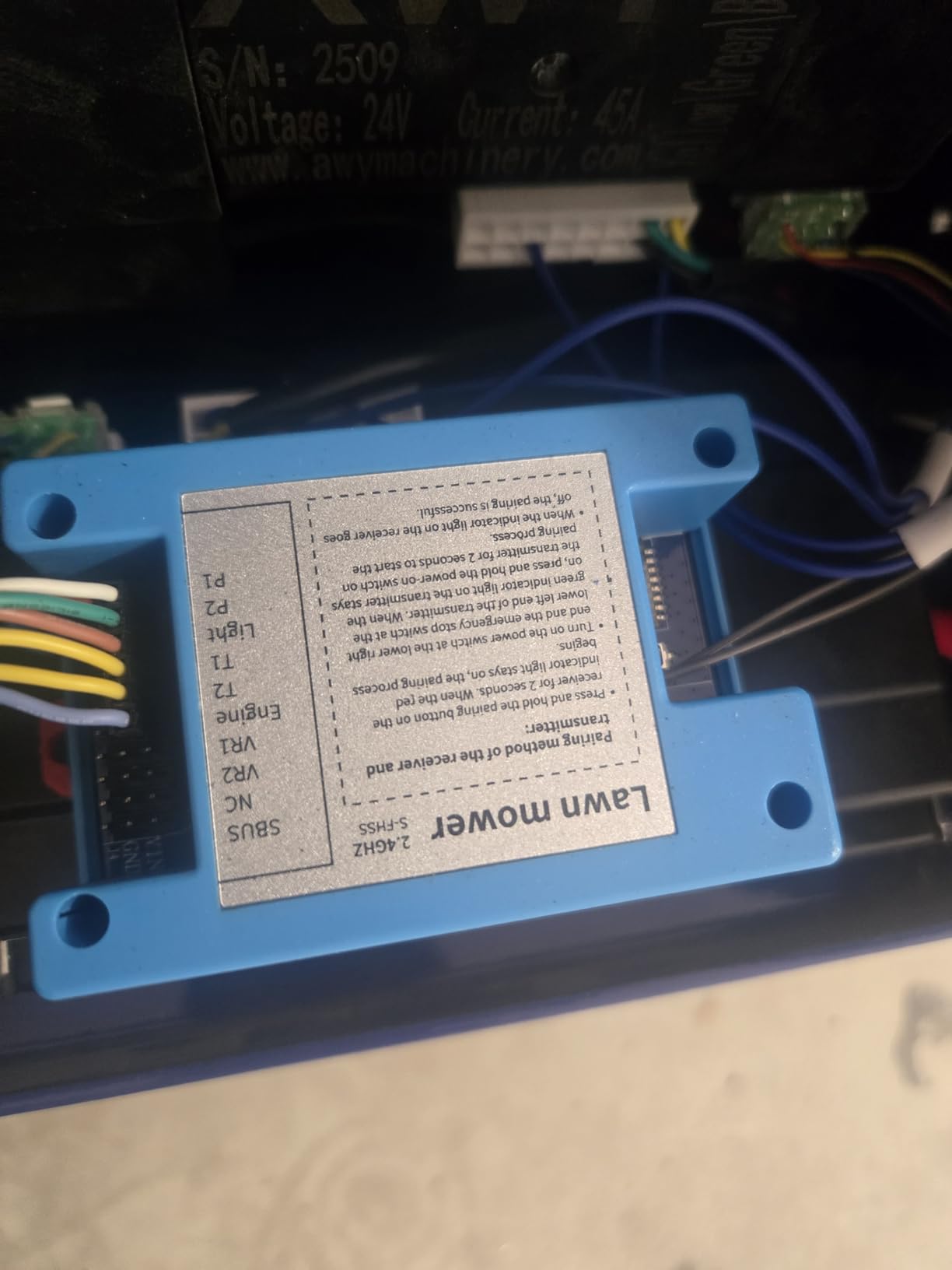
The complaints cluster around the ownership experience rather than the machine itself. Support from the manufacturer is reportedly slow to reach, the manual is thin, and some units show up missing parts. One practical note from owners: the breakers can trip if the machine is not kept clean, so budget time for maintenance after each session.
Who should buy this mower
This is the pick if you have genuinely steep sections and a limited budget. It costs roughly what a mid-range conventional rider does, but it goes places those machines simply cannot. For occasional slope maintenance rather than weekly whole-lawn duty, it is the value leader in this category.
It also suits anyone maintaining a pond bank or ditch line where a trimmer is exhausting and a rider is unsafe. You stand on flat ground and work the slope methodically from a distance.
Who should skip this mower
If you expect polished documentation and responsive domestic support, this is not the product for you. Budget-import machines like this demand a willingness to troubleshoot independently, and the manual will not hold your hand through setup or maintenance.
It is also a poor choice as your only mower. A 21.6-inch cutting path is far too slow for a full lawn. Think of this as a specialized slope tool that supplements a conventional rider, not a replacement for one.
8. EGO Power+ Z6 e-Steer Zero Turn Mower – Best Steering Wheel Zero Turn
EGO Power+ Z6 e-Steer Zero Turn Electric Riding Lawn Mower, 42″ – ZT4215S
42 inch deck with e-Steer
24HP gas equivalent
2 acres per charge
Wide frame for slope balance
5-year warranty
Pros
- Steering wheel control feels natural on hills
- Wide frame design improves slope balance
- Control mode tames response on grades
- 24HP equivalent handles thick grass
- 5-year warranty on everything
Cons
- Lowest rating on this list at 3.6 stars
- Steering is sensitive at first
- Some units arrive with missing accessories
- Third-party seller service complaints
The e-Steer concept is genuinely interesting for hill work. Instead of lap bars, you steer with a wheel, and the electronics translate that into zero-turn wheel control. Forum users consistently say that a steering-wheel zero turn is more confidence-inspiring on slopes than lap bars, because the front wheels are engaged in the steering rather than free-spinning castors.
EGO calls the wide frame design a hill feature, and the physics support the claim. Spreading the wheelbase and mounting the batteries low improves stability on side slopes compared to a narrow-frame zero turn. Combined with the Control driving mode, which softens throttle response, this is the most hill-aware lap-bar-free zero turn on the list.
So why does it sit last in my rankings? The 3.6-star rating across 11 reviews is the lowest on this list, and the complaints matter. Some owners received units with missing accessory boxes, the steering takes adjustment before it feels natural, and third-party seller service has frustrated buyers when issues came up.
The frustrating part is that none of the complaints are about the core concept. The e-Steer idea, the battery platform, and the warranty terms are all strong. This machine feels like it is one production run and one service-cycle away from being a top-three pick rather than an interesting gamble.
Who should buy this mower
This is the pick if you specifically want a zero turn but have never gotten comfortable with lap bars, especially if your property has moderate slopes where castor-wheel zero turns feel sketchy. The familiar steering wheel flattens the learning curve dramatically.
It is also worth a look if you already own EGO 56V batteries from handheld tools, since the platform is shared. And the 5-year warranty covering the mower, batteries, and charger is among the best terms in the category.
Who should skip this mower
If a low rating and sparse review history bother you, choose the EGO ZT4204L instead. It has the same battery platform, a longer track record, and a higher rating, and its lap bars are fine on gentle slopes. The e-Steer premium only makes sense if steering-wheel control is a genuine requirement for you.
Anyone buying from a third-party seller rather than a major retail channel should be extra careful here, since several service complaints trace back to that purchasing path. Check who is actually fulfilling the order before you commit.
How to Choose the Best Riding Mower for Hills
Choosing a hill mower starts with knowing your slope, not browsing mowers. Everything else follows from that single measurement.
Step 1: Measure Your Slope First
Before you look at a single machine, figure out the steepest grade on your property. The simplest method is the rise-over-run check: for every 4 feet of horizontal distance, measure how much the ground rises. A 1-foot rise over 4 feet of run is roughly 15 degrees. A smartphone inclinometer app or a cheap angle finder from a hardware store will do the job more precisely.
Here is the framework that the AI Overviews and dealer guides converge on. Slopes under 12 degrees are gentle and almost any decent rider handles them. Slopes from 12 to 17 degrees are moderate, and you want good traction plus a low center of gravity. Slopes from 17 to 20 degrees demand a serious machine with excellent stability. Anything over 20 degrees should be mowed up and down only, and anything approaching 30 degrees or more really should not be ridden at all.
Be honest with yourself here. People routinely underestimate their slopes, and the difference between a 15-degree hill and a 20-degree hill is the difference between a comfortable mow and a machine that starts sliding. Measure the steepest section, not the average.
Traction and Weight Distribution
Traction is what keeps you on the hill, and it comes from three things: tire contact, weight placement, and drivetrain design. Wide rear tires with aggressive tread grip noticeably better than smooth turf tires on damp grass. Machines with locking differentials or traction control systems manage wheelspin automatically.
Weight distribution matters as much as tire choice. A mower with its heaviest components mounted low, like the battery packs on the electric riders in this guide, has a lower center of gravity and resists tipping better than a machine with a tall gas engine up top. This is the hidden advantage of electric riders on hills.
Track drive beats wheels entirely when the slope gets serious. Tracks distribute weight over a large contact area and climb grades that no wheeled machine can touch, which is why both remote-control mowers in this list use them.
Zero Turn vs Lawn Tractor on Hills
This is the most common hill-mower question, and the honest answer is that tractors are safer and zero turns are faster. A lawn tractor steers its front wheels, so you always have directional control on a slope. A traditional lap-bar zero turn has free-swiveling front castors, and on a side slope the rear wheels do all the work while the machine wants to drift downhill.
The general rule experienced operators follow: mow up and down the slope rather than across it, regardless of machine type. Going up and down means a tip is a forward or backward event, which is far more recoverable than a sideways rollover. Zero turns can work on hills if you respect this rule and keep the grades moderate.
The steering-wheel zero turn is the middle path. Machines like the EGO Z6 e-Steer above engage the front wheels in steering while keeping zero-turn maneuverability, which is why forum users consistently recommend that layout for hill properties.
Electric vs Gas for Hill Mowing
Electric riding mowers were barely on competitors’ radars for hill work, but the data suggests they deserve a spot. The battery weight that sits low in the frame improves stability, the instant torque maintains blade speed on uphill passes, and there is no engine oil to check on a machine parked on an angle.
The honest limitations are runtime and weight. Hills drain batteries faster than flat ground, so take the manufacturer’s acreage estimates and mentally reduce them by a third for sloped properties. Recharge times of one to two hours mean you cannot just refuel and continue if you run out mid-job.
Gas machines still win for unlimited runtime and for the very steepest work. Both remote-control slope mowers in this guide are gas-powered, and dedicated hillside machines like the Steiner and Ventrac models that forum users recommend are gas as well. For slopes under about 15 degrees on properties under 2 acres, electric is now the stronger overall package.
Hill Mowing Safety Essentials
The safety rules are not optional. Mow up and down slopes, never across. Avoid wet grass entirely, since damp turf can cut traction in half and is the single most common factor in slope accidents. Slow down before turns rather than during them, and never make a sharp turn on a grade.
Watch for drop-offs, ditches, and holes hidden by tall grass. A wheel dropping into a hidden hole on a slope is how ordinary mowing becomes an emergency. Walk your property first if the grass has gotten long.
Finally, know your limit and the machine’s limit. If a slope makes you lean forward in the seat or feels unstable at low speed, do not ride it. That is what the remote-control slope mowers are for.
Frequently Asked Questions
Which lawn mower is best for hills?
What riding mower has the least problems?
What type of riding mower is best for bumpy terrain?
What are the best mowers for cutting steep slopes?
What is the best riding mower for a hilly yard?
Conclusion
Finding the best riding lawn mowers for hills comes down to matching the machine to your slope, and I hope this guide gives you a clearer picture of what that means for your property. For most people with rolling terrain under 15 degrees, the EGO Power+ TR4204 is the complete package. The Greenworks 80V 42-inch rider delivers more capability for the money, and the remote-control tracked mowers from AIWEIYA and FenkeYiHui handle the steep banks that no rider should attempt.
Measure your slope before you buy anything. It is the one step that separates a mower you love from an expensive mistake, and it takes five minutes with a phone app. Whatever you choose, respect the up-and-down mowing rule and stay off wet grass.