
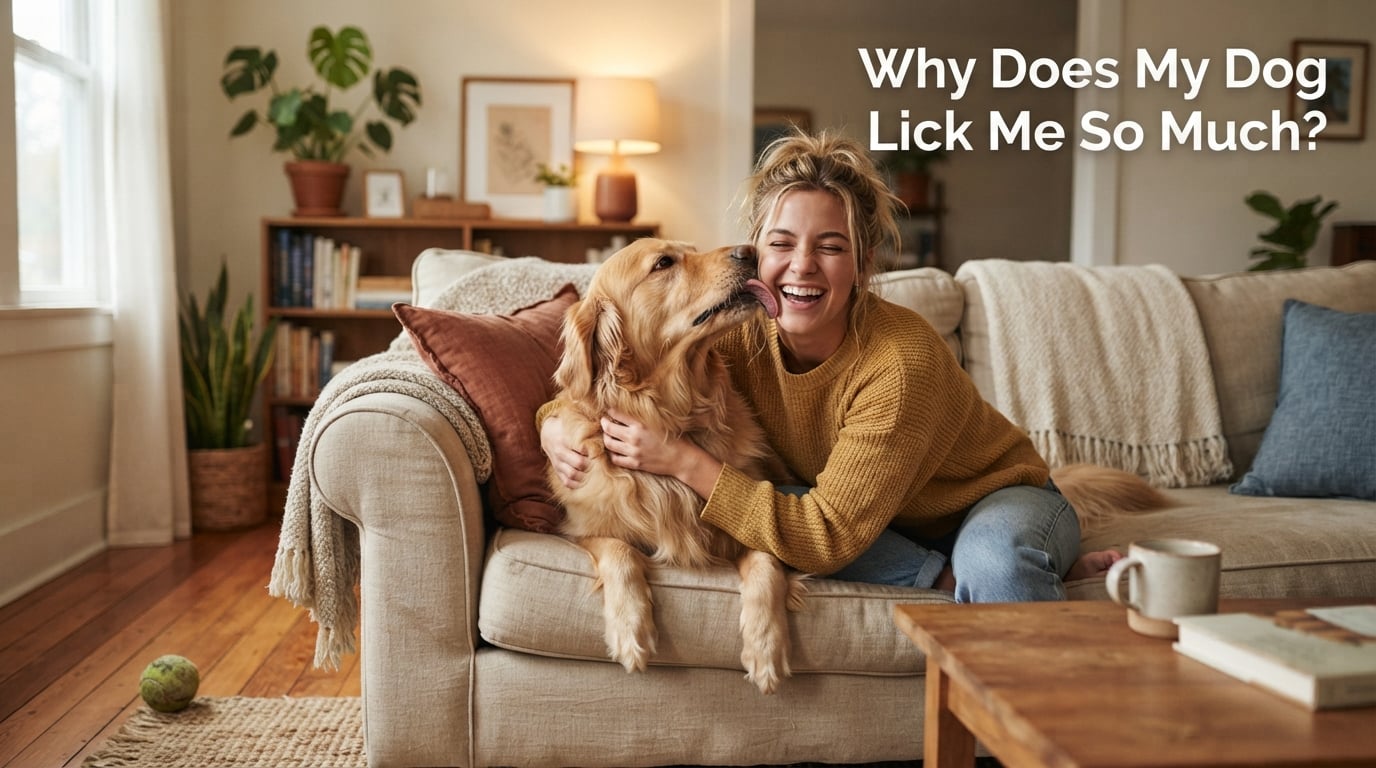
If you have ever wondered why does my dog lick me so much, you are definitely not alone. Dog owners everywhere experience that familiar wet tongue on their hands, face, feet, and ears on a daily basis. Some dogs seem absolutely obsessed with licking every inch of exposed skin they can reach.
The short answer is that dogs lick humans for several overlapping reasons. Here are the most common explanations:
Affection and bonding — licking releases endorphins that help your dog feel close to you
Taste — human skin carries salt, sweat, and food residue that dogs find appealing
Attention-seeking — licking almost always gets a reaction, even a negative one
Stress relief and self-soothing — the repetitive motion calms anxious dogs
Empathy — dogs lick to comfort owners who seem upset or stressed
Exploration — licking helps dogs gather information about where you have been
Hunger — some dogs lick after smelling food on your hands or face
Understanding the specific reason behind your dog’s licking helps you tell the difference between a healthy display of affection and a behavior that might signal anxiety or a medical issue. In this guide, our team breaks down every reason your dog licks you, what each body part means, when to be concerned, and how to reduce excessive licking if it has become too much.
Table of Contents
The Science Behind Dog Licking
Licking is hardwired into your dog’s brain from the moment they are born. Mother dogs lick their puppies to clean them, stimulate breathing, and encourage elimination in the first few weeks of life. This early experience creates a powerful association between licking and comfort.
When a dog licks, their brain releases endorphins and dopamine. These are the same feel-good neurotransmitters that humans experience during exercise or social bonding. The chemical reward makes licking naturally pleasurable and calming for dogs, which is why many turn to it as a self-soothing tool when they feel uncertain or excited.
This means that licking is not a random habit. It is a deeply ingrained communication and emotional regulation tool that serves multiple functions depending on context.
Common Reasons Why Your Dog Licks You So Much
Let’s break down each major reason dogs lick their owners. Most licking falls into one of the categories below, and a single licking session can actually serve several purposes at once.
Showing Affection and Bonding
The most common reason people ask why does my dog lick me so much is also the sweetest one. Licking is a primary way dogs show love. When your dog licks you gently and relaxed, they are displaying the same grooming behavior they would share with a pack member in the wild.
This type of licking strengthens the bond between you and your dog. It is their version of a hug. Some dogs are naturally more orally fixated than others, meaning they use their mouths to connect with the world and the people they love. Breeds like Labrador Retrievers, Golden Retrievers, and Poodles tend to be particularly lick-happy when showing affection.
They Like the Taste of Your Skin
Human skin is surprisingly flavorful to dogs. We have two types of sweat glands that make us taste interesting. Eccrine glands, found all over the body, produce watery sweat rich in salt. Apocrine glands, concentrated in areas like the armpits and groin, release proteins and lipids that carry scent information.
After a workout, on a hot day, or after handling food, your skin becomes a flavor buffet for your dog. Lotion, sunscreen, and soap residue can also attract licking. Some dogs are simply drawn to the salty taste and will lick your arms and hands for minutes on end if you let them.
Attention-Seeking Behavior
Dogs are smart. They learn very quickly that licking gets a response. Even if you push your dog away or say “stop,” that is still attention from their perspective. Over time, licking becomes a reliable way to get you to look at them, talk to them, or physically interact with them.
This is one of the most common patterns dog trainers see. If your dog walks up and starts licking your hand while you are watching TV, they are probably saying “pay attention to me.” The behavior is reinforced every single time you react, which makes it harder to break the longer it goes on.
Stress Relief and Self-Soothing
Not all licking is about you. For many dogs, licking is a coping mechanism. The repetitive motion triggers endorphin release, which naturally reduces stress and anxiety. If your dog starts licking frantically during thunderstorms, car rides, vet visits, or when strangers visit, stress is likely the driving factor.
Reddit users in communities like r/DogAdvice frequently report that their dogs lick more during stressful events. One common observation is that rescue dogs or recently adopted dogs often lick excessively during the first few weeks in a new home as they adjust to their environment. This self-soothing behavior usually decreases as the dog settles in and gains confidence.
Empathy and Emotional Connection
Dogs are remarkably attuned to human emotions. A 2012 study published in the journal Animal Cognition found that dogs are more likely to approach and lick a crying person than someone who is humming or talking. This suggests that licking may serve as a comforting, empathetic response when dogs sense their owner is upset.
If you have ever been sad or stressed and had your dog come over to lick your tears or nuzzle your face, you have experienced this firsthand. Your dog is not trying to taste your tears. They are responding to your emotional state with the comforting tool they know best.
Exploration and Gathering Information
Dogs experience the world through their noses and mouths. When your dog licks your hands after you have been cooking, petting another animal, or touching something new, they are gathering information. Where have you been? What did you touch? Who did you interact with?
Think of licking as a scent-based news report. Your skin carries chemical stories about your day, and your dog is reading every chapter. This exploratory licking is usually brief and focused rather than prolonged and repetitive.
Hunger Cues
Sometimes the answer is simple. Your dog is hungry. Dogs may lick your hands or face after you have eaten because they can smell food residue. Some dogs also lick their owners near typical meal times as a way of saying “feed me.”
If your dog suddenly starts licking more around dinner time, check whether their feeding schedule has shifted. Hunger-driven licking is usually accompanied by other signals like staring at the food bowl, pacing, or pawing at you.
Why Does My Dog Lick Specific Body Parts?
The body part your dog targets can tell you a lot about their motivation. Here is what each area typically means.
Why Does My Dog Lick My Hands?
Hands are the most frequently licked body part, and for good reason. Your hands touch everything throughout the day. They carry food residue, scents from other animals, and concentrated salt from sweat. Hand licking is also a submissive, appeasement gesture in dog language. When your dog gently licks your hand, they may be communicating respect and deference.
Why Does My Dog Lick My Face?
Face licking is one of the most common and intense forms of canine affection. Puppies learn face licking from their mothers, who lick their faces to clean them and show care. Adult dogs replicate this behavior with their human family members. Face licking is often a greeting behavior, especially when you come home after being away.
Some trainers also note that face licking can be an appeasement signal. If your dog approaches and licks your face after you have scolded them or when they sense tension, they may be trying to calm the situation.
Why Does My Dog Lick My Feet?
Feet are a goldmine of scent and taste for dogs. With over 250,000 eccrine sweat glands per foot, your feet produce more sweat and salt than almost any other part of your body. Dogs that are particularly scent-driven find feet irresistible.
Foot licking can also be a submissive greeting. Some behaviorists compare it to the way lower-ranking pack members approach a dominant dog’s paws. If your dog licks your feet when you walk in the door, it is likely a combination of excitement, submissiveness, and curiosity about where you have been.
Why Does My Dog Lick My Ears?
Ear licking is less common but has a clear explanation. The ears contain apocrine glands and ceruminous glands that produce waxy secretions rich in proteins and lipids. Dogs are drawn to the taste and scent of earwax.
Ear licking can also be a grooming behavior. In multi-dog households, dogs often groom each other’s ears as a bonding activity. If your dog licks your ears, they are treating you like a pack member who needs a good cleaning.
Why Does My Dog Lick My Legs?
Leg licking usually comes down to one of two things. After exercise, your legs are covered in salty sweat that dogs love. If your dog goes for your legs right after a run or gym session, taste is the primary driver. Leg licking can also be a calming signal, particularly if your dog licks slowly and rhythmically when you are sitting still.
Why Does My Dog Lick Me at Specific Times?
Timing matters. When your dog licks you can be just as revealing as where they lick you.
Why Does My Dog Lick Me in the Morning?
Morning licking is a greeting ritual. After a full night apart, even if you slept in the same bed, your dog is excited to reconnect. Morning licks combine affection with the excitement of starting a new day together. Your morning skin also carries overnight sweat and body oils that are extra interesting to your dog’s nose.
Why Does My Dog Lick Me When I Get Home?
Coming-home licking is pure excitement. Your dog has been waiting for you, and the moment you walk through the door, they release all that pent-up energy through enthusiastic face and hand licking. This behavior also serves as a scent check. Your dog is reading where you have been and what you encountered during the day.
Why Does My Dog Lick Me After Eating?
If your dog licks you right after you have eaten, they are searching for food remnants. Your fingers, lips, and face carry traces of whatever you just consumed. This is perfectly normal scavenging behavior rooted in your dog’s ancestral instincts.
Why Does My Dog Lick Me When I Pet Them?
This is reciprocal affection. You are showing love by petting, and your dog is returning the favor by licking. It is their way of saying “I appreciate this, and I love you too.” This mutual grooming behavior strengthens the bond between you and your dog every time it happens.
Why Does My Dog Lick Me More Than Anyone Else?
Dogs do pick favorite people. If your dog licks you more than other family members, congratulations, you are likely their primary attachment figure. This is especially common if you are the one who feeds, walks, and trains them most consistently. Your scent is the most familiar and comforting to them.
When Licking Becomes a Problem
Most licking is completely normal. But there are times when excessive licking signals an underlying issue that needs attention.
Signs of Anxiety-Driven Licking
If your dog licks frantically, cannot be distracted, and seems unable to stop, anxiety may be the cause. Look for accompanying signs like panting, pacing, tucked tail, flattened ears, or trembling. This type of licking is different from relaxed, gentle affection. It is urgent and compulsive.
Dogs with separation anxiety may also lick excessively when their owner returns home. The frantic greeting licks are a release of the stress they experienced while alone.
Compulsive Licking and Canine OCD
Some dogs develop compulsive licking disorders that resemble OCD in humans. These dogs lick themselves, objects, or their owners to the point of causing harm. They may create raw spots on their own skin or become so fixated on licking that they ignore food, play, and other activities.
Canine compulsive disorder often requires intervention from a veterinary behaviorist. Treatment may include behavior modification, environmental enrichment changes, and in some cases medication. If your dog’s licking seems beyond their control, talk to your vet about compulsive behavior.
Medical Causes of Excessive Licking
Sudden increases in licking can signal a medical problem. Allergies, skin infections, gastrointestinal issues, dental disease, and pain can all trigger excessive licking as a coping mechanism. If your dog suddenly starts licking you or themselves much more than usual, a vet visit is warranted.
Here is a quick comparison to help you distinguish between normal and problem licking:
Normal licking: Brief, gentle, easily redirected, happens during greetings or petting
Problem licking: Frantic, prolonged, cannot be interrupted, accompanied by other stress signs, causes skin damage
How to Stop Excessive Dog Licking
If your dog’s licking has become overwhelming, here are practical steps you can take to reduce the behavior without damaging your bond.
Stop reinforcing the behavior. The most important step is to stop rewarding licking with attention. When your dog starts licking, stand up, turn away, and leave the room. Return and give attention only when the licking has stopped. Be consistent, because mixed signals will reinforce the behavior.
Redirect to an alternative behavior. Teach your dog a replacement behavior like sitting for attention or fetching a toy. When they approach to lick, ask for the alternative behavior and reward it. Over time, your dog learns that sitting gets attention while licking does not.
Use positive reinforcement training. Reward calm, non-licking behavior with treats, praise, and petting. Clicker training works particularly well for marking the exact moment your dog chooses not to lick. Keep training sessions short and fun.
Increase exercise and mental enrichment. Many dogs lick out of boredom. A tired dog is a well-behaved dog. Add an extra walk, introduce puzzle toys, or enroll in a training class. Mental stimulation is just as important as physical exercise for reducing unwanted behaviors.
Address underlying anxiety. If stress is driving the licking, identify and reduce triggers. Create a safe space for your dog during storms or visitors. Consider anxiety wraps, calming supplements, or professional training for dogs with severe anxiety.
Rule out medical issues. Schedule a vet check to ensure there is no underlying medical cause. Treating allergies, dental problems, or pain can dramatically reduce excessive licking.
If you have tried these strategies for several weeks with no improvement, consult a professional dog trainer or veterinary behaviorist for a customized behavior modification plan.
Is It Safe to Let Your Dog Lick Your Face?
This is one of the most common questions dog owners ask, and the answer requires some nuance. Dog saliva does contain bacteria that can potentially cause infections in humans. However, the risk is relatively low for healthy adults with intact skin.
You should avoid letting your dog lick your face if you have open wounds, if you have a compromised immune system, or if your dog eats raw food. Always wash your face and hands after a licking session, and never let your dog lick areas near your eyes, nose, or mouth if you are concerned about bacteria.
For most healthy adults, occasional face licking from a healthy dog poses minimal risk. Use common sense and practice basic hygiene.
FAQ
How do I say ‘I love you’ in dog language?
What breed of dog licks the most?
Do dogs pick a favorite person?
Do dog licks really mean kisses?
Conclusion
So why does my dog lick me so much? The answer is almost always a combination of affection, taste, attention-seeking, stress relief, empathy, and natural canine communication. Most licking is healthy and normal. It is your dog’s way of connecting with you, gathering information, and managing their own emotions.
The key is learning to read the context. Relaxed, gentle licking during greetings and cuddle sessions is a beautiful expression of your bond. Frantic, compulsive licking that cannot be interrupted may signal anxiety or a medical issue that deserves attention. By understanding what your dog is trying to tell you, you can respond appropriately and strengthen your relationship with your furry best friend.
If your dog’s licking suddenly increases or becomes compulsive, do not hesitate to reach out to your veterinarian. A quick check-up can rule out medical causes and give you peace of mind. Otherwise, enjoy the slobbery affection. It is one of the purest ways your dog knows how to say I love you.