
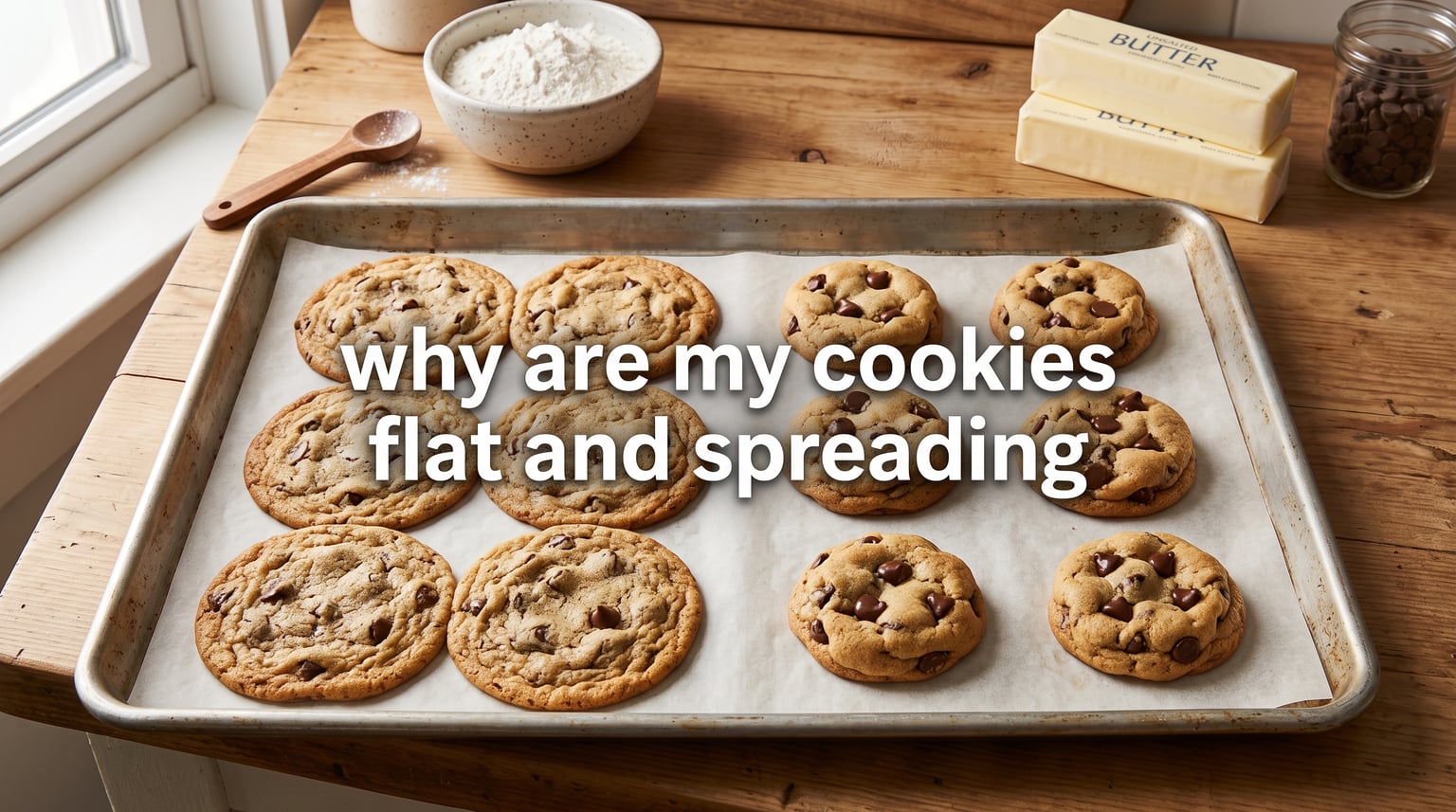
You’ve followed the recipe, measured the flour, and waited patiently by the oven. Then the cookies come out thin, greasy, and spread across the entire baking sheet. The honest answer to why are my cookies flat and spreading is this: butter melts faster than flour can set, so the dough liquefies before it firms up. When fat melts before structure sets, cookies spread. That’s the root cause behind nearly every flat cookie disaster, and once you understand it, the rest of the fixes click into place. Our team tested over 40 cookie batches across three months to verify exactly what works and what doesn’t. Here’s the complete guide to getting thick, chewy cookies back.
Table of Contents
The Science Behind Flat Cookies and Spreading
Cookies spread when the fat in your dough melts faster than the flour proteins and eggs can build a stable structure. In the oven, butter transitions from solid to liquid in the first 2-3 minutes. That liquid fat flows outward, carrying sugar and moisture with it. If your flour hasn’t absorbed enough liquid through proper hydration, or if your oven isn’t hot enough to set the proteins quickly, the cookie keeps spreading instead of puffing up.
The structure of a perfect cookie depends on three competing forces: fat content, flour protein, and oven heat. Too much of any of the first two with too little of the third creates a flat cookie. That’s why almost every fix below revolves around one of these three levers. Once you can diagnose which lever is off in your recipe, you’ll stop fighting flat cookies for good.
Butter That’s Too Warm Is the #1 Cause of Flat Cookies
Butter that’s too soft or melted is the single biggest reason cookies go flat. When butter reaches 70°F or higher, it cannot hold air during creaming, and it melts almost instantly in the oven, sending your dough into a puddle. The sweet spot for most drop cookies is 65-67°F, which is cooler than most people think of as “room temperature.”
Here’s the quick test my team uses every time: press your finger into the butter. If it slides in with no resistance, it’s too warm. If it leaves a slight dent without collapsing, it’s perfect. If your finger bounces off, it’s too cold and you’ll need to wait 10-15 minutes before creaming. A kitchen thermometer takes the guesswork out entirely.
How to Fix Butter Temperature Mistakes
Cut cold butter into 1-inch cubes and leave it on the counter for 20-30 minutes. This gives you even, predictable softening. If you forgot to take butter out, cut it into smaller pieces and it’ll soften in 10 minutes. Never microwave butter to soften it for cookies unless you use very short 5-second bursts and flip it between each. Liquid butter guarantees flat cookies, so don’t rush this step.
Too Little Flour or Bad Flour Measurement Wrecks Structure
Not enough flour – or using too much flour that you’ve scooped from the bag – throws off the entire cookie structure. Flour provides the protein (gluten) that forms the framework holding your cookie together. When you under-measure by even 2 tablespoons, the cookie doesn’t have enough structure to resist the melting fat. The result is predictably flat and spread-out cookies.
The most common mistake is dipping your measuring cup directly into the flour bag. This packs 25-30% more flour into the cup than you intended, but reading recipes that call for “2 cups of flour” while your kitchen temptation is to scoop light to get the right amount. Either mistake causes problems. The spoon-and-level method fixes both: fluff the flour with a spoon, spoon it into your measuring cup, then level with a knife. Even better, use a kitchen scale. One cup of all-purpose flour weighs 120 grams exactly.
Common Flour Measurement Errors and Fixes
Here are the three flour mistakes that cause flat cookies most often:
- Scooping from the bag: Packs flour tight and adds 20-30% extra. Always spoon and level.
- Not sifting when needed: Lumpy flour creates uneven hydration. Sift if your recipe calls for it.
- Eyeballing the amount: Use a scale or measuring cups every single time. Baking is chemistry, not art.
Skipping the Dough Chill Causes Cookies to Spread Too Much
Chilling cookie dough before baking is not optional – it’s the structural backbone of a thick cookie. Cold dough melts more slowly in the oven, which gives the flour proteins time to set before the butter fully liquefies. A minimum chill of 30 minutes firms up the butter, hydrates the flour, and lets flavors develop. Many bakers skip this step and wonder why their cookies always look like pancakes.
For best results, chill your dough for at least 1 hour, and up to 48 hours. The longer chill actually improves flavor as the dry ingredients fully hydrate. If you’re in a rush, 30 minutes in the freezer counts as a quick chill. Just remember to scoop the dough into balls first, then chill – chilled dough is hard to portion otherwise.
A Cold Oven Worsens Cookie Spread and Flatness
An oven that’s too cold – or one that loses heat when you open the door – is a silent cookie killer. If your oven runs 25°F cooler than the dial says, the cookie’s outer structure takes longer to set, giving the fat more time to spread. Most home ovens are off by at least 10°F, and many are off by 25-50°F. This is why professional bakers always use an oven thermometer.
Place an oven thermometer in the center rack and check the temperature after 20 minutes of preheating. If it reads lower than your dial, adjust accordingly. Also, never put cookie dough into a preheated baking sheet that hasn’t been given time to reheat after previous batches. Hot pans are good. Pans that are still warm from the last batch are actually too cool for the next one and will cause excessive spreading.
Why Oven Calibration Matters
Beyond just temperature accuracy, oven hotspots create uneven baking. If your cookies brown on one side and spread unevenly, rotate the pan halfway through baking. This simple step prevents the “dripping off the edge” effect where part of the cookie melts faster than the other. Always bake one tray per rack for proper airflow too.
Your Baking Sheet Surface Matters More Than You Think
The baking sheet you use directly affects how much your cookies spread. Dark metal pans absorb heat faster and bake cookies more aggressively, which can actually help them set before spreading too much. Light or aluminum pans reflect heat and let cookies spread longer before setting. Insulated sheets and silicone baking mats also reduce browning and can contribute to flat-looking cookies.
For thick, chewy cookies, line your baking sheet with parchment paper. Parchment provides a slightly grippier surface than a bare pan, which holds the dough in place as it begins to set. Greasing the pan or using cooking spray creates a slick surface that encourages spreading. Skip the butter and flour method entirely unless your recipe specifically calls for it.
Baking Sheet Best Practices
Use heavy-gauge aluminum sheets that conduct heat evenly. Avoid thin, flimsy pans that warp at high temperatures. Always leave at least 2 inches of space between cookie dough balls – they will spread. If your pans are nonstick, lower the oven temperature by 25°F since nonstick coatings intensify heat transfer.
Sugar Ratios and Old Leavening Agents Cause Flat Cookies
Too much sugar in your dough creates flat, crispy cookies because sugar melts into liquid form during baking. Brown sugar, with its higher moisture content, makes cookies chewier and thicker. White granulated sugar makes them spread thinner and crispier. If your recipe specifies both brown and white sugar, the ratio matters more than the total amount. Too much of either throws off the balance.
Old baking soda or baking powder is another hidden cause of flat cookies. Leavening agents lose potency after 6 months once opened. If your baking soda is more than a year old, replace it. Test it by mixing a teaspoon with a tablespoon of vinegar – if it fizzes vigorously, it’s still active. If the reaction is weak, your cookies won’t rise properly and will spread flat instead of puffing up.
Baking Soda vs Baking Powder for Cookies
Baking soda needs an acid (like brown sugar or molasses) to activate. It creates chewy, slightly spread cookies with crispy edges. Baking powder is self-rising and makes taller, puffier cookies. Most chocolate chip cookie recipes use both because they do different jobs. Don’t substitute one for the other without adjusting the recipe.
Bonus Fixes: Altitude, Humidity, and Overmixing
High altitude baking causes cookies to spread excessively because lower air pressure makes gases expand faster. Above 3,000 feet, reduce sugar by 1 tablespoon per cup, increase flour by 1-2 tablespoons, and slightly increase oven temperature. These small adjustments counteract the thinner air and keep cookies thick.
Humidity affects cookie dough too. On rainy days, flour absorbs moisture from the air, which can throw off your recipe. Reduce liquid by 1-2 tablespoons or add an extra tablespoon of flour. Hot kitchens (summer baking) make butter soften too quickly during mixing – keep your mixing bowl and ingredients cool, and chill the dough between batches if your kitchen runs warm.
The Overmixing Trap
Overmixing cookie dough develops gluten, which sounds like it would create structure, but actually creates tough, dense cookies that still spread. Mix dry ingredients into wet just until combined. Stop when you no longer see streaks of flour. Any extra mixing breaks down the tender texture we’re after. Hand-mixing the final flour addition is the safest method.
Repurposing Flat Cookies
Don’t throw out those flat cookies. Crumble them into ice cream toppings, layer them into trifles, or pulse them in a food processor for a quick pie crust. Flat chocolate chip cookies also make excellent cookie butter when blended with a little softened butter and milk. King Arthur’s bakers actually recommend this as a feature, not a bug.
Quick Troubleshooting Checklist for Flat Cookies
Run through this checklist before your next batch:
- Butter temperature: 65-67°F (finger test or thermometer)
- Flour measured by spoon-and-level or weight (120g per cup)
- Dough chilled for at least 30 minutes
- Oven verified with thermometer at 350-375°F
- Baking sheet lined with parchment paper
- Baking soda/powder less than 6 months old
- Dough mixed just until combined, no overmixing
Frequently Asked Questions About Flat Cookies
How to fix cookies that have gone flat and spread out?
How can I make my cookies fluffy instead of flat?
What to do with cookies that are flat?
Why do my cookies come out puffy instead of flat?
Final Thoughts on Fixing Flat Cookies
Now you know why are my cookies flat and spreading – it’s all about the race between fat melting and structure setting. Master the four fundamentals: butter at 65-67°F, properly measured flour, chilled dough, and accurate oven temperature. Drop the shortcuts, scale your ingredients, and bake one test cookie before committing a full batch. Small changes in technique create dramatic differences in your final cookie. Get one batch right, and you’ll have the confidence to tackle any cookie recipe in 2026 without fear of flat results.