
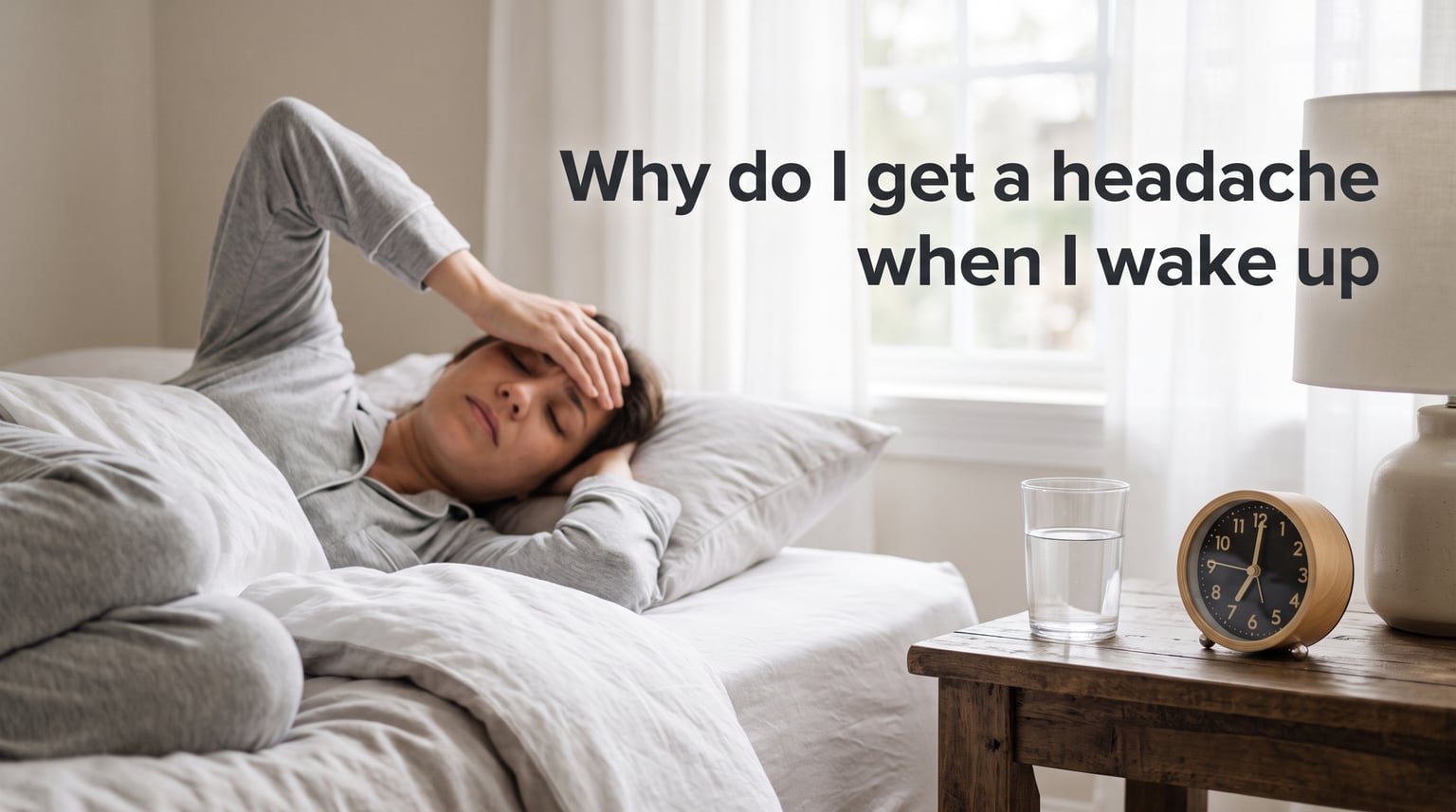
You wake up, open your eyes, and immediately feel that familiar throb or dull pressure in your head. If you find yourself asking “why do I get a headache when I wake up,” you are far from alone. Roughly 1 in 13 people experience morning headaches regularly, and the reasons range from simple dehydration to serious sleep disorders.
The short answer: morning headaches happen because of disrupted sleep, oxygen drops during the night, jaw clenching, overnight dehydration, or poor sleeping posture. Most causes are treatable once you identify the right trigger.
I have spent years researching sleep health and tracking down what actually helps. In this guide, we will walk through every common cause, the types of morning headaches you might experience, practical prevention strategies, and clear warning signs that mean it is time to call your doctor.
Table of Contents
Types of Morning Headaches
Not all morning headaches feel the same. The type of pain you wake up with offers strong clues about what is going on underneath. Understanding your specific headache type helps you target the right fix.
Tension Headaches
These are the most common morning headaches people report. The pain feels like a tight band squeezing around your head, usually on both sides. Tension headaches often stem from poor sleep posture, jaw clenching overnight, or stress that carries into your sleep.
The dull, pressing ache tends to worsen as the morning goes on but rarely includes nausea. Most people describe it as annoying rather than debilitating.
Migraines
Migraines are surprisingly common in the early morning hours. Research shows that migraine attacks peak between 4:00 AM and 9:00 AM due to natural changes in brain chemistry during sleep transitions. The pain is typically throbbing, concentrated on one side of your head, and may come with nausea or sensitivity to light.
If you wake up with a pounding headache that gets worse with movement, a migraine is a likely culprit. Sleep disruptions and changes in your sleep schedule are known migraine triggers.
Cluster Headaches
Cluster headaches have earned the nickname “alarm clock headaches” because they frequently strike at the same time each night, often waking people from deep sleep. The pain is severe and centered behind or around one eye. It can last anywhere from 15 minutes to three hours.
These headaches are less common than tension or migraine types, but they are far more intense. If you experience cyclical patterns of severe eye pain at night, cluster headaches may be the cause.
Hypnic Headaches
Hypnic headaches are rare and almost exclusively affect people over age 50. They wake you from sleep at consistent times, usually between 1:00 AM and 3:00 AM. The pain is diffuse, lasting 15 minutes to 4 hours, and tends to occur on both sides of the head.
Doctors sometimes call these “alarm clock headaches” as well, which can cause confusion with cluster headaches. The difference: hypnic headaches are dull and widespread, while cluster headaches are sharp and one-sided.
Common Causes of Morning Headaches
If you are waking up with a headache regularly, one of these nine causes is likely responsible. We will break each one down so you can identify your specific trigger.
1. Sleep Apnea
Sleep apnea is one of the most serious causes of morning headaches. This condition causes you to stop breathing briefly dozens of times per hour during sleep. Each pause drops your oxygen levels and raises carbon dioxide in your blood, which dilates blood vessels in your brain and triggers pain.
Up to 50% of people who regularly wake up with headaches have some form of sleep apnea. Other signs include loud snoring, gasping or choking during sleep, and daytime exhaustion despite spending eight hours in bed.
If you suspect sleep apnea, talk to your doctor about a sleep study. Treatments like CPAP therapy can eliminate morning headaches almost entirely.
2. Teeth Grinding (Bruxism)
Bruxism is the medical term for clenching or grinding your teeth during sleep. Many people do it without realizing until a partner mentions the grinding noise or a dentist notices worn enamel. The constant jaw tension radiates pain into your temples, forehead, and even your neck.
The resulting headache feels like a dull ache around both temples and often comes with jaw soreness or tooth sensitivity in the morning. Stress is the leading driver of nighttime teeth grinding.
A custom night guard from your dentist is the most effective solution. It cushions your teeth and prevents the jaw tension that leads to morning pain.
3. Insomnia and Sleep Deprivation
Poor sleep quality directly causes morning headaches. When you do not get enough deep sleep or REM sleep, your brain produces more proteins that trigger pain pathways. Even one night of bad sleep can leave you with a pounding headache by morning.
Chronic insomnia makes the problem worse. People who sleep fewer than six hours per night are significantly more likely to wake up with headaches than those who get seven to eight hours.
The fix involves improving your sleep hygiene, which we cover in detail in the prevention section below.
4. Dehydration
You lose water while you sleep through breathing and sweating. By morning, your body is mildly dehydrated, and dehydration is a well-documented headache trigger. Your brain actually shrinks slightly when dehydrated, pulling on the membranes that connect it to your skull.
This cause is easy to overlook because it seems too simple. But studies show that drinking water can relieve headaches within 30 minutes for many people.
Keep a glass of water on your nightstand and drink it first thing when you wake up. You can also hydrate before bed, but avoid drinking so much that you wake up to use the bathroom repeatedly.
5. Caffeine Withdrawal and Alcohol
If you drink coffee daily, your brain adjusts to expect caffeine at certain times. When you sleep past your usual morning coffee time, you can experience caffeine withdrawal headaches. These are typically throbbing and centered behind your eyes.
Alcohol is another major trigger. It disrupts your sleep cycle, dehydrates you, and causes blood vessels to expand. Even a couple of drinks can leave you with a morning headache that is not technically a hangover but feels similar.
Try to limit caffeine and alcohol consumption in the hours before bed. If you drink coffee every morning, keep your schedule consistent, even on weekends.
6. Poor Sleep Posture and Muscle Strain
This is the cause most people overlook. If you sleep with your neck twisted, your head tilted too far forward, or your spine misaligned, the muscles in your neck and upper back tense up for hours. That tension builds overnight and translates into a headache by morning.
Your pillow plays a big role here. A pillow that is too high or too flat forces your neck out of alignment with your spine. Side sleepers need a thicker pillow to fill the gap between their shoulder and ear, while back sleepers need a thinner one.
People who wake up with a headache and neck pain together almost always have a posture or pillow problem. The headache typically sits at the base of your skull or radiates up the back of your head.
Switching to a pillow that supports your natural neck curve can resolve these headaches within days. Pay attention to your mattress too, as a sagging surface throws your whole spine out of alignment.
7. Oversleeping
It sounds counterintuitive, but sleeping too long can cause headaches just like sleeping too little. Oversleeping disrupts your circadian rhythm, confuses your body’s natural clock, and alters neurotransmitter levels in your brain.
This is why many people get headaches on weekends when they sleep in past their normal wake time. The pain is usually a dull, generalized ache that fades within an hour or two.
The solution is simple: stick to a consistent sleep and wake schedule, even on days off. Your body thrives on routine.
8. Stress, Anxiety, and Depression
Mental health has a direct line to morning headaches. Anxiety and depression are both linked to poor sleep quality, muscle tension, and changes in pain sensitivity. People with anxiety disorders are up to three times more likely to experience chronic morning headaches.
When you carry stress to bed, your jaw clenches, your shoulders tighten, and your brain stays in a heightened state of alertness. You might fall asleep but never reach the deep, restorative stages that prevent headaches.
Addressing the root cause through stress management, therapy, or relaxation techniques before bed can dramatically reduce morning headaches over time.
9. Rare Causes: Exploding Head Syndrome and Medication Overuse
Exploding head syndrome sounds alarming but is actually harmless. It involves hearing a loud, imagined noise like a bomb or gunshot as you are falling asleep or waking up. The startle response can trigger a brief headache and significant anxiety, though there is no actual pain from the sound itself.
Medication overuse headaches are more common than most people realize. If you take pain relievers like ibuprofen or acetaminophen more than two or three days per week, your body can start experiencing rebound headaches. These frequently hit in the morning when the medication from the night before wears off.
If you suspect medication overuse, talk to your doctor about a tapering plan rather than stopping abruptly.
How to Prevent Morning Headaches
Preventing morning headaches comes down to fixing the root cause, not just masking the pain. Here are the strategies our team has found most effective.
Stick to a consistent sleep schedule. Go to bed and wake up at the same time every day, including weekends. This keeps your circadian rhythm stable and prevents the neurotransmitter fluctuations that trigger headaches.
Drink water before bed and upon waking. Hydration is one of the simplest fixes. Drink a small glass of water 30 minutes before bed and another immediately when you wake up.
Check your pillow and sleep position. Your pillow should keep your neck aligned with your spine. If you sleep on your side, the pillow should fill the space between your shoulder and ear. Replace pillows every 18 to 24 months as they lose support.
Limit caffeine and alcohol before bed. Stop drinking caffeine at least 8 hours before sleep. Limit alcohol to one or two drinks and avoid drinking right before bed.
Wind down with a screen-free routine. Blue light from phones and TVs suppresses melatonin production. Spend the last 30 to 60 minutes before bed reading, stretching, or listening to calm music instead.
Manage stress before your head hits the pillow. Try journaling, deep breathing exercises, or progressive muscle relaxation. Even five minutes can lower your cortisol levels and reduce overnight jaw clenching.
Consider a night guard if you grind your teeth. If your dentist confirms bruxism, a night guard prevents the jaw tension that radiates into morning headaches.
Improve your sleep environment. Keep your bedroom cool, dark, and quiet. Use blackout curtains if street light enters your room, and consider a white noise machine if outside sounds wake you.
How to Get Rid of a Morning Headache Fast
When you wake up with a headache and need relief right now, try these quick strategies.
Drink a large glass of water immediately. Dehydration is a fast and common trigger, and rehydrating can resolve the pain within 30 minutes.
Take an over-the-counter pain reliever. Ibuprofen, acetaminophen, or aspirin can help, but do not rely on them daily to avoid medication overuse headaches.
Apply a cold or warm compress. A cold pack on your forehead numbs pain and constricts blood vessels. A warm compress on your neck relaxes tight muscles.
Stretch your neck and shoulders. Gently roll your neck, stretch your shoulders, and massage the base of your skull to release tension built up overnight.
Get some fresh air and natural light. Stepping outside for five minutes helps regulate your circadian rhythm and signals your brain that it is time to wake up.
Have a small cup of coffee. If caffeine withdrawal is your trigger, a modest amount of coffee can relieve the headache within 20 to 30 minutes.
When to See a Doctor About Morning Headaches
Most morning headaches are not dangerous. But some warning signs mean you should seek medical attention rather than trying home remedies.
Schedule a doctor visit if you experience any of the following:
Morning headaches that occur three or more times per week
Headaches that are getting progressively worse or more frequent
Pain that is severe enough to wake you from sleep
A sudden, severe headache that feels like the worst of your life (this needs emergency care)
Headaches accompanied by fever, stiff neck, confusion, or vision changes
Headaches following a head injury
New headache patterns after age 50
Morning headaches combined with loud snoring, gasping during sleep, or excessive daytime sleepiness strongly suggest sleep apnea. Your doctor may recommend a sleep study to confirm the diagnosis.
If your headaches come with neurological symptoms like numbness, weakness, difficulty speaking, or loss of balance, seek emergency care immediately. These could indicate a serious condition that needs urgent evaluation.
Keeping a headache journal helps your doctor identify patterns. Track when headaches occur, how long they last, what you ate and drank the night before, and your sleep quality. This information makes diagnosis faster and more accurate.
FAQ
Is morning headache a red flag?
How do I stop waking up with a headache?
Can a pillow cause headaches?
How do you get rid of a morning headache?
Conclusion
Figuring out why you get a headache when you wake up starts with paying attention to the details. Your headache type, timing, and accompanying symptoms all point to specific causes, whether that is sleep apnea, dehydration, teeth grinding, or simply the wrong pillow.
Most morning headaches respond well to simple changes like better hydration, a consistent sleep schedule, and proper neck support. But if your headaches happen frequently or come with concerning symptoms, do not hesitate to see a doctor for a proper evaluation.
Start with the prevention strategies above, track your symptoms in a journal, and give each change a week or two before moving to the next. Your mornings should get better, and the headache-free wake-ups are worth the effort.