
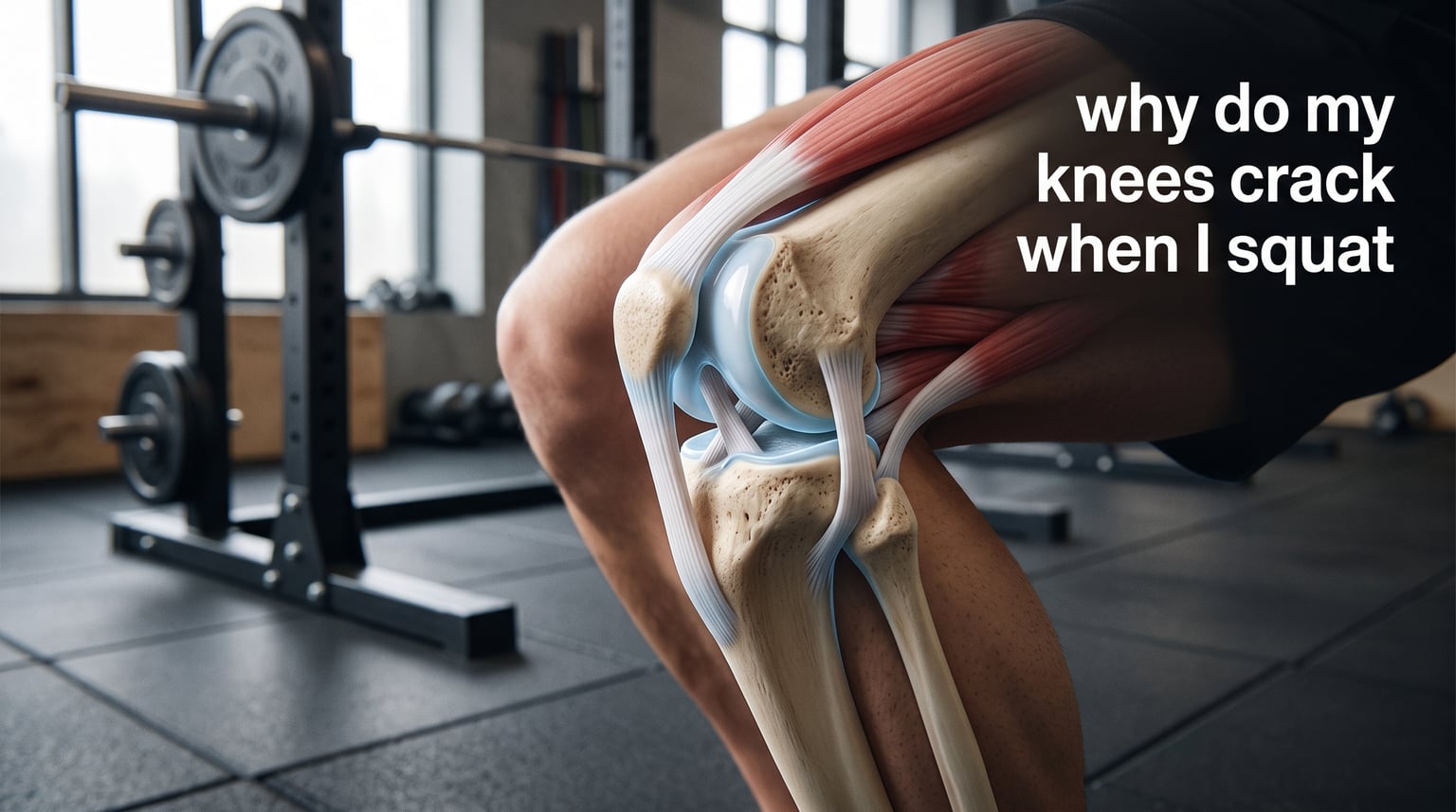
You drop into a squat and hear it. That pop, click, or grinding sound from your knees that makes you wonder if something is seriously wrong. If you are asking yourself why do my knees crack when I squat, you are in very good company.
Knee cracking during squats is one of the most common things lifters, runners, and weekend warriors experience. The good news is that painless knee popping is almost always harmless. The sound usually comes from normal joint mechanics, not from damage building up under the surface.
In this guide, we break down exactly what causes knee cracking, when you should take it seriously, and what you can do to quiet things down. Our team has pulled insights from sports medicine research, physical therapy practices, and real experiences from fitness communities to give you a clear, practical answer.
Table of Contents
What Is Knee Crepitus?
Knee crepitus is the medical term for any popping, cracking, clicking, grinding, or crunching sound that comes from your knee joint during movement. If your knees sound like Rice Krispies when you squat, crepitus is the name for what you are hearing.
The word itself comes from Latin and simply means “rattling.” It does not automatically mean something is broken or damaged inside your joint. In fact, studies suggest that over 90 percent of people experience some form of painless knee crepitus at some point in their lives.
Your knee is a complex hinge joint filled with synovial fluid, a thick liquid that lubricates the moving parts. That fluid, along with tendons, ligaments, cartilage, and bones, creates the conditions for sounds to happen. Most of the time, those sounds are completely normal byproducts of a healthy joint doing its job.
Why Do My Knees Crack When I Squat?
Your knees crack when you squat because of four main factors: gas bubbles popping inside the joint, tendons snapping over bone, cartilage surfaces rubbing together, and the kneecap shifting as it tracks through its groove. Let us look at each one in detail.
Gas Bubbles and Cavitation
The most common cause of knee cracking is something called cavitation. Your synovial fluid contains dissolved gases, including nitrogen, oxygen, and carbon dioxide. When you bend your knee during a squat, pressure changes inside the joint cause tiny gas bubbles to form and then collapse.
That collapse produces the familiar popping or cracking sound. This is the same mechanism behind cracking your knuckles. The sound is harmless, and it typically takes about 15 to 20 minutes for the gases to dissolve back into the fluid before you can crack the same joint again.
Tendons and Ligaments Snapping Into Place
Your knee is surrounded by tendons and ligaments that tighten and shift as you move. When you squat, these connective tissues can flick or snap over bony bumps on your femur or tibia. That snapping creates a clicking or popping sound.
This type of noise often happens when you change direction or start moving after being still. Think of it like a rubber band snapping back into position. It is especially common if your muscles are tight or if you have not warmed up properly before squatting.
Cartilage Wear and Tear
Over time, the smooth cartilage that lines the ends of your bones can develop slight roughness. When these surfaces glide against each other during a squat, the friction can produce a grinding or crunching noise rather than a sharp pop.
Cartilage wear becomes more common with age and is associated with conditions like osteoarthritis. However, some degree of cartilage wear is normal as the years go by, and the presence of grinding sounds alone does not mean you have arthritis. Pain, stiffness, and swelling are the real indicators to watch for.
Patellofemoral Tracking Issues
Your kneecap, or patella, rides in a groove at the end of your thigh bone as you bend and straighten your knee. If the patella does not track perfectly through that groove, it can produce popping or clicking sounds. This is often related to muscle imbalances, particularly weak glutes or tight lateral leg muscles.
Patellofemoral pain syndrome is one of the most common knee conditions among active people. The good news is that tracking issues usually respond well to targeted strengthening and stretching exercises, which we cover later in this guide.
When Is Knee Cracking Normal?
Knee cracking is considered normal when it happens without pain, swelling, or any change in how your knee feels. If you can squat deeply, walk, run, and climb stairs without discomfort, the sounds your knees make are most likely harmless crepitus.
Many fitness enthusiasts report having noisy knees for years or even decades without ever developing a problem. On fitness forums like r/Fitness and r/bodyweightfitness, users frequently share stories of loud, pain-free knee popping during squats that never led to injury.
The key distinction is simple. Painless cracking that has been happening for a long time is usually nothing to worry about. New cracking that appears suddenly, especially after an injury or change in activity, is worth paying closer attention to.
Warning Signs You Should Never Ignore
Knee cracking crosses from normal into concerning territory when it is accompanied by specific symptoms. If you notice any of the following red flags alongside the noise, it is time to see a doctor or physical therapist.
Pain during or after squatting that lingers for hours
Swelling or puffiness around the knee joint
Locking, where your knee gets stuck and will not fully bend or straighten
Catching sensations, where the knee feels like it snags during movement
Instability or a feeling that your knee might give out
Sudden onset of loud cracking after an injury or fall
These warning signs could point to a meniscus tear, ligament injury, or early osteoarthritis. A healthcare professional can evaluate your knee and determine whether imaging or treatment is needed. Do not ignore persistent pain just because cracking on its own is often harmless.
Does Age Matter With Knee Cracking?
Age does play a role in why your knees crack when you squat, and the context shifts depending on where you are in life. Here is how to think about it at different stages.
Teens and young adults in their early twenties often experience knee cracking because their bodies are still developing and their connective tissues are adjusting to growth and training loads. This is almost always harmless, even if the sounds are loud.
Adults in their thirties and forties may notice cracking increasing as years of training accumulate. This is usually related to mild, normal wear patterns and tightness from repetitive movements. Staying active and maintaining flexibility goes a long way.
Adults over fifty are more likely to develop osteoarthritis-related crepitus, where cartilage thinning produces a grinding sound. If you are in this age group and notice grinding paired with morning stiffness or swelling, talk to your doctor about joint health strategies.
How to Stop Your Knees From Cracking
If the sound bothers you or you want to reduce unnecessary wear on your joints, several practical strategies can help quiet your knees. Forum users and physical therapists consistently recommend the following steps.
Warm up thoroughly before squatting. Five to ten minutes of light cardio and dynamic stretches gets synovial fluid flowing and prepares tendons for movement.
Improve your squat form. Make sure your knees track over your toes and your weight stays balanced through your midfoot. Poor alignment increases patellar stress.
Strengthen your glutes and hips. Weak glute muscles let the knees cave inward during squats, which increases friction and noise.
Stretch tight muscles regularly. Foam rolling your quads, hamstrings, and IT band reduces tension that pulls the kneecap off track.
Stay hydrated. Synovial fluid depends on adequate hydration to keep joints lubricated, so drink water throughout the day.
Gradually increase load and volume. Jumping into heavy squats too quickly stresses joints that are not prepared for the demand.
Exercises and Stretches for Healthier Knees
Building a simple routine of strengthening and stretching exercises can dramatically reduce knee cracking. Physical therapists and experienced lifters point to these movements as the most effective for knee health.
Strengthening Exercises
Wall sits build isometric quad strength and improve patellar tracking. Hold a seated position against a wall with your knees at 90 degrees for 30 to 60 seconds. Do three sets, gradually increasing your hold time as you get stronger.
Glute bridges fire up your posterior chain and correct the imbalances that cause kneecap tracking problems. Lie on your back, squeeze your glutes, and lift your hips until your body forms a straight line from shoulders to knees. Aim for three sets of 15 reps.
Step-ups strengthen your quads, glutes, and stabilizers all at once. Step onto a bench or box, keeping your knee aligned over your foot. Do three sets of 10 reps per leg.
Stretches for Knee Health
Standing quad stretches release tension in the front of your thigh. Grab your ankle, pull your heel toward your glute, and hold for 30 seconds per side.
Couch stretches target tight hip flexors, which forum users frequently link to knee clicking. Place your shin against a wall behind you, step the opposite foot forward, and lean into a lunge. Hold for 60 seconds per side.
Calf stretches keep your lower leg flexible and reduce strain on the knee joint. Press your hands against a wall, step one foot back, and press your heel into the floor. Hold for 30 seconds per side.
Should You Keep Squatting If Your Knees Crack?
Yes, you should keep squatting if your knees crack but there is no pain. Squatting is one of the best exercises for building leg strength, and avoiding it out of fear can actually make your knees worse over time. Strong muscles protect your joints, so staying active is protective.
If you feel pain, modify your squat depth, reduce the weight, or switch to variations like box squats or goblet squats that may feel more comfortable. Working with a physical therapist or qualified coach can help you dial in your technique and identify any movement issues contributing to the noise.
FAQ
How do I stop my knees from cracking when I squat?
Is it normal for knees to crack a lot?
Should I stop squatting if my knees crack?
How do you fix crunchy knees?
Can knee cracking lead to arthritis?
Why do my knees crack when I squat but there is no pain?
Final Thoughts on Why Your Knees Crack
So why do my knees crack when I squat? In the vast majority of cases, the answer is simple. Gas bubbles, shifting tendons, and normal joint mechanics create sounds that are completely harmless. Your knees are doing what knees do.
The real question is not whether the noise itself is dangerous, but whether it comes with pain, swelling, or instability. If it does not, you can keep squatting with confidence. If it does, a visit to a physical therapist or doctor will help you get to the root of the issue.
Stay consistent with your warm-ups, strengthen the muscles around your knees, stretch the tight areas, and do not let a little noise keep you from training. Your joints will thank you for the movement, not the silence.