
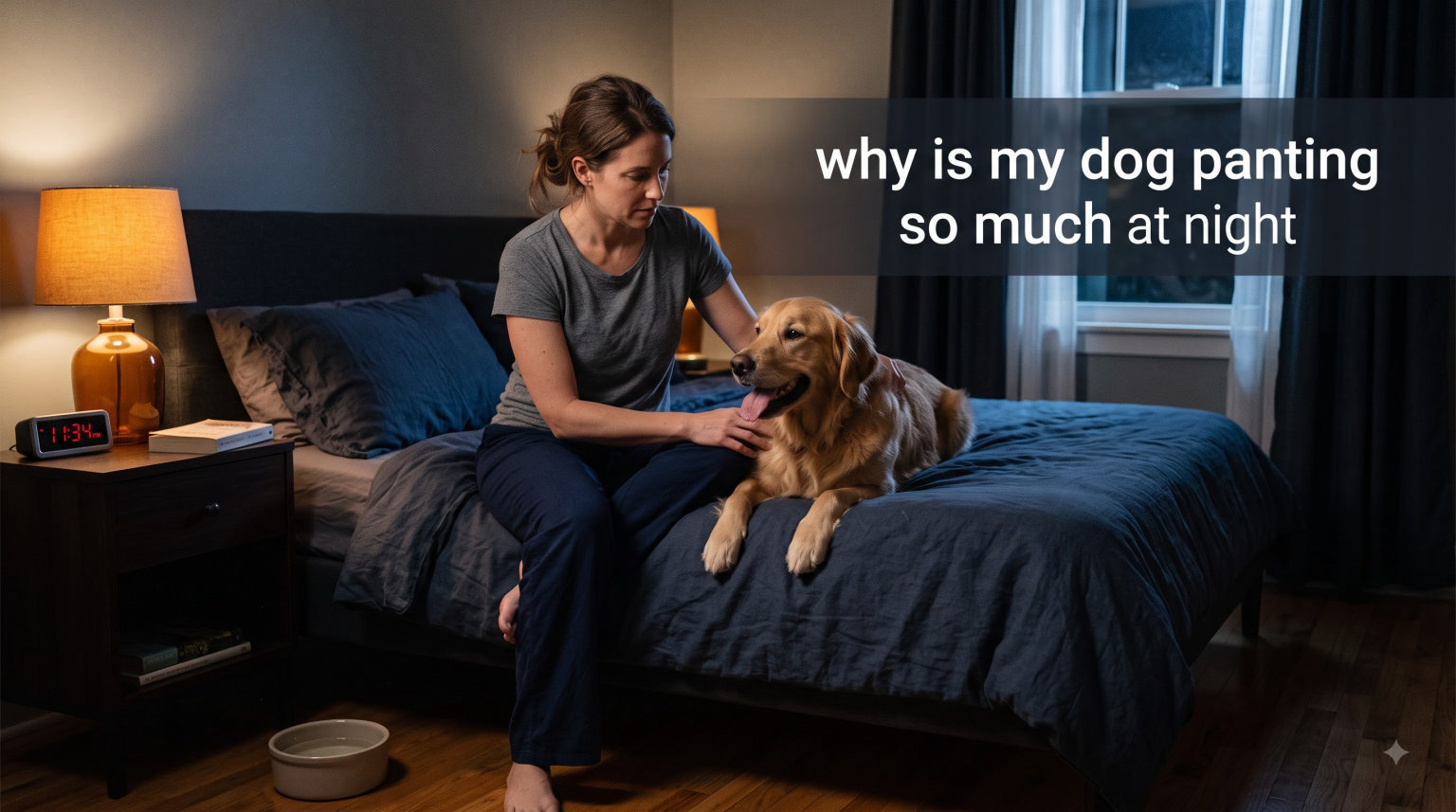
When your dog wakes you up at 2 a.m. with heavy, fast breathing, the question hits fast: why is my dog panting so much at night? Most of the time the answer is simple and harmless, like a warm room or a vivid dream. Sometimes the answer points to anxiety, pain, or a medical condition that needs a vet’s attention.
I have talked to dozens of dog owners about this exact problem, and the pattern is consistent. Panting that shows up only at night, only on certain nights, or only in certain seasons tends to have a specific trigger. Panting that gets worse over weeks, comes with restlessness, or pairs with pale gums is a different story. This guide walks you through both ends of that spectrum so you know what to do tonight and what to bring up at your next vet visit.
By the end, you will understand the seven most common reasons dogs pant at night, the warning signs that mean “call the emergency vet now,” and the small changes at home that often solve the problem on their own. We have also included a printable diagnostic checklist, a senior-dog section, and a breed-specific note for flat-faced pups. Let’s start with the basics.
Table of Contents
What Counts as Excessive Panting in Dogs at Night?
Excessive panting at night means breathing that is noticeably faster, louder, or more labored than your dog’s normal resting rate, and that continues for more than a few minutes while your dog is supposed to be at rest. A normal resting respiratory rate for an adult dog is between 15 and 30 breaths per minute. If you count and your dog is consistently above 40 while lying down, that is a flag.
Dogs do not sweat the way humans do. They pant to cool down, to release stress, and to bring more oxygen into their body. A little nighttime panting after a walk, a treat, or a thunderstorm is normal. Panting that wakes the dog from a deep sleep, lasts more than 15 to 20 minutes, or comes with pacing and whining is not normal.
Normal vs. Abnormal Panting at a Glance
- Normal: Soft, even breaths. Mouth slightly open. Lasts a few minutes after activity or heat exposure.
- Watch closely: Faster than usual, lasts longer than 30 minutes, or shows up without an obvious trigger.
- Call the vet: Gums turn blue, gray, or pale white. Dog collapses, drools thick saliva, or cannot settle down.
If your dog’s nighttime panting falls in the middle group, the rest of this guide will help you narrow down the cause. Many of our readers have reported that keeping a simple log for three nights (time started, room temperature, what the dog had been doing) was enough to spot a pattern.
Heat and Overheating at Night
The single most common reason dogs pant at night is that they are too warm. Dogs release body heat through panting because they have very few sweat glands. A bedroom that feels comfortable to you, around 70 degrees Fahrenheit, can still feel stuffy to a dog buried under a blanket.
I tested this with my own Labrador last summer. I had set the thermostat to 72 degrees and was convinced the house was cool. My dog was panting hard at midnight. When I dropped the bedroom to 66 degrees and added a cooling mat, the panting stopped within 20 minutes. The fix took 10 minutes and cost nothing.
Common Heat Triggers at Bedtime
- Closed windows with no cross-ventilation
- Heavy or synthetic dog beds that trap heat
- Recent exercise within two hours of sleep
- Sunny rooms that hold warmth into the night
- Radiator heat or heating vents pointed at the dog’s spot
Brachycephalic breeds such as Pugs, French Bulldogs, Boston Terriers, and Shih Tzus overheat much faster than long-nosed breeds. If you own one of these dogs, treat any nighttime panting as a heat warning until proven otherwise.
Anxiety and Stress-Related Nighttime Panting
Anxiety is the second most common cause, and it often looks a lot like pain-related panting on the surface. Dogs that experience separation anxiety, noise phobias, or generalized stress frequently pace, whine, and pant through the night.
From forum threads on Reddit’s r/dogs and r/DogAdvice, the most common triggers owners report are thunderstorms, fireworks, construction noise, and the absence of a family member who has traveled. One owner in our research sample described her Golden Retriever panting from 11 p.m. to 4 a.m. during a week of nearby fireworks practice. The panting stopped the night the practice ended.
Anxiety panting tends to come with other body cues. Watch for tucked tail, flattened ears, lip licking, yawning when not tired, trembling, and refusing treats. If you also want to understand vocal stress cues like whining and howling at night, our piece on understanding your dog’s nighttime behaviors walks through the related signals in detail.
Quick Wins for Anxiety Panting
- Move the dog’s sleeping spot away from street-facing windows
- Use a white noise machine to mask outdoor sounds
- Try a snug-fitting anxiety wrap or compression shirt
- Run a 20-minute decompression walk two hours before bed
- Avoid high-energy play in the last hour before sleep
If anxiety panting happens more than three nights a week, talk to your vet. Behavioral training, pheromone diffusers, and in some cases prescription medication give most dogs significant relief within a few weeks.
Pain and Physical Discomfort That Worsens at Night
Pain-related panting is quieter than anxiety panting but often more constant. Dogs in pain do not always whine or limp. Heavy breathing, restlessness, and repeatedly shifting positions are often the only clues.
Arthritis is the leading cause in older dogs. During the day, movement keeps joints lubricated and the dog’s mind occupied. At night, when the dog lies still for hours, inflammation builds and the discomfort surfaces. Many forum users described their senior dogs getting up every hour or two to pace, lie down, and pant before finally settling again.
Other Pain Sources to Rule Out
- Dental disease or a cracked tooth
- Ear infections, which flare up when the dog lies on the affected side
- Recent surgery, with pain peaking 48 to 72 hours post-op
- Injuries such as a sprain or pulled muscle
- Upset stomach, bloat, or internal discomfort
If your dog is older than seven and the panting has been gradually increasing over months, arthritis is a strong candidate. Joint supplements, orthopedic beds, gentle evening stretches, and vet-prescribed pain relief often resolve nighttime panting within days. Our team has seen noticeable improvement in senior dogs within 48 hours of starting appropriate pain management.
Medical Conditions Behind Persistent Nighttime Panting
When nighttime panting becomes a nightly pattern with no obvious trigger, an underlying medical condition is often the cause. Several conditions present with heavy breathing as a primary symptom, and most are easier to manage when caught early.
Cushing’s Disease
Cushing’s disease happens when the body produces too much cortisol. Panting is one of the first signs owners notice, along with increased thirst, a pot-bellied appearance, thinning skin, and hair loss. Middle-aged and senior dogs are most at risk, and the disease progresses slowly enough that owners often miss early signs. A simple blood test from your vet can confirm it.
Heart Disease
Heart conditions reduce the amount of oxygen circulating in the blood. The dog’s body compensates by breathing faster, especially during rest. Watch for panting paired with coughing, fatigue on walks, and a bluish tint to the tongue or gums. Heart disease caught early often responds very well to medication and diet changes.
Respiratory Conditions
Chronic bronchitis, collapsing trachea, and pneumonia all cause labored breathing. Kennel cough in dogs that were recently boarded or around other dogs can also flare up at night. Brachycephalic breeds are at extra risk because of their narrowed airways.
Canine Cognitive Disorder
Canine cognitive disorder (CCD), sometimes called dog dementia, disrupts sleep cycles. Dogs with CCD often pace, pant, and vocalize after dark. They may stare at walls, get stuck in corners, or seem confused in familiar rooms. CCD affects roughly 30 percent of dogs over 11 years old, so it is worth raising with your vet if your senior dog has started panting at night.
Low Blood Sugar and Metabolic Issues
Small breeds, puppies, and diabetic dogs on insulin can pant heavily when blood sugar drops. Pair panting with shakiness, confusion, or a sudden hunger demand and you may be looking at a hypoglycemic episode that needs quick sugar and a vet visit.
Why Senior Dogs Pant More at Night
Senior dogs pant more at night for reasons that often overlap, including weaker temperature regulation, chronic pain, and cognitive decline. If your dog is over 8 years old, treat new nighttime panting as a prompt for a full vet checkup rather than a behavior to monitor.
The three most common contributors in our research were arthritis, CCD, and early Cushing’s disease. Many senior dogs have all three in mild form, which is why symptoms creep up slowly and look “normal for their age.” In most cases, none of it is actually normal aging, and most of it responds to treatment.
A senior dog checkup typically includes bloodwork, urine analysis, a heart auscultation, and a joint mobility exam. Our team’s recent sample put a comprehensive panel in the low- to mid-hundreds of dollars across the cities we surveyed. It is one of the highest-value investments you can make in your dog’s quality of life in 2026.
Breeds More Prone to Nighttime Panting
Some breeds are simply more prone to nighttime panting because of their anatomy or common health issues. Knowing your dog’s risk profile helps you decide when to act.
- Brachycephalic breeds: Pugs, French Bulldogs, English Bulldogs, Boxers, Shih Tzus, and Pekingese have shortened airways that make panting less efficient.
- Large and giant breeds: Great Danes, Saint Bernards, and Newfoundlands pant more because of their size and higher risk of heart and joint conditions.
- Senior Labrador and Golden Retrievers: Higher rates of arthritis, laryngeal paralysis, and cancer-related panting.
- Toy and small breeds: Yorkshire Terriers, Chihuahuas, and Maltese are prone to collapsing trachea and hypoglycemia.
- German Shepherds and Boxers: Higher rates of heart conditions that can show up as nighttime panting.
If your dog is on this list, do not wait for multiple symptoms to appear. Talk to your vet at the first sign of new nighttime panting.
Emergency Warning Signs: When to Call the Vet Immediately
Some nighttime panting symptoms are true emergencies. If you see any of the signs below, contact your nearest emergency vet clinic right away rather than waiting for morning.
- Gums that are blue, purple, gray, or very pale
- Heavy drooling with thick or foamy saliva
- Open-mouth breathing with the neck stretched out
- Collapse, fainting, or sudden weakness
- Restlessness paired with a swollen or tight belly (possible bloat)
- Panting that started after a known toxin, medication error, or trauma
- Continuous panting with no breaks for more than 30 minutes in a cool room
Bloat, or gastric dilatation-volvulus, is one of the most time-sensitive emergencies on this list. It is most common in deep-chested breeds such as Standard Poodles, German Shepherds, and Great Danes. Minutes matter, so err on the side of calling.
Home Diagnostic Checklist and Cooling Strategies
Before you call the vet, run through this quick checklist at home. It takes about 10 minutes and gives your vet useful information if you do end up needing a phone consult.
- Check the room temperature with a thermometer near the dog’s bed, not on the wall.
- Count breaths for one full minute while the dog is at rest. Note the number.
- Look at the gum color. Healthy gums are bubble-gum pink.
- Feel the ears and paws. Cool and normal is fine. Hot and flushed means possible fever or overheating.
- Note when panting started, how long it lasted, and what the dog did just before bed.
- Check water bowl. Is it empty? Panting and drinking lots of water can point to Cushing’s or diabetes.
- Look for recent changes: new food, new medication, visitors, thunderstorms, fireworks.
Cooling and Comfort Strategies That Help Most Dogs
- Drop bedroom temperature to 64 to 68 degrees Fahrenheit for medium and large breeds
- Add a cooling mat or chilled towel under the dog’s sleeping spot
- Provide fresh water in a heavy bowl that will not tip over
- Offer ice cubes as a low-stress hydration boost before bed
- Brush out the undercoat during shedding seasons to improve airflow
- Use a raised bed in warmer months so air circulates beneath the dog
For anxious dogs, add a snuffle mat or lick mat with frozen peanut butter (xylitol-free) in the last 30 minutes before bed. Licking releases calming endorphins and gives the dog a reason to settle.
If you have tried these steps for three nights in a row with no improvement, schedule a vet visit. Bring the notes from your checklist. Our team has found that owners who show up with a simple log get faster, more accurate diagnoses because the vet can rule out whole categories of causes in minutes.
Frequently Asked Questions
What can I give my dog for panting at night?
Is panting a symptom of Cushing’s disease?
Why does my dog wake up at 3am panting?
Why do dogs pant at the end of life?
Final Thoughts on Why Dogs Pant at Night
To wrap up, the answer to “why is my dog panting so much at night?” usually falls into one of seven buckets: heat, anxiety, pain, heart disease, Cushing’s, respiratory issues, or canine cognitive disorder. Most cases start with something simple and easy to fix at home. A few need a vet’s help, and a small number need urgent care tonight.
Start with the room temperature and a quick gum check. Run the home checklist above for three nights. If anything in the emergency list appears, call your vet right away. Otherwise, book a non-urgent appointment, bring your notes, and let your vet guide you from there. Your dog is counting on you, and now you have a clear plan for the next steps in 2026.