

I learned this lesson the expensive way: a $400 walnut slab cracked three weeks after I built a tabletop from it. The wood looked dry in the shop, but the moisture content was sitting at 14 percent, way above the safe range for indoor furniture. A moisture meter would have caught it. That single tool has since saved me from warped panels, milky finishes, and joints that mysteriously came apart weeks later.
Wood moisture meters for woodworkers are non-negotiable if you build with lumber that costs more than a few dollars per board foot. Before taking any readings, always wipe off standing or visible water from the surface and let it dry for a few minutes. Ensure your meter is set properly for the type of wood you are testing, and take readings at least six inches from the end grain to avoid artificially high numbers.
After 60 days of side-by-side testing on oak, maple, pine, and a stack of kiln-dried walnut, I have a clear picture of which meters deliver real numbers and which ones are guesswork in a plastic shell. This guide covers the best wood moisture meters for woodworkers available right now, with picks for every budget from under $30 to professional-grade tools that connect to your phone.
Table of Contents
Top 3 Picks for Best Wood Moisture Meters

Wagner Orion 950 Pinless Moisture Meter
- Dual depth 1/4 inch and 3/4 inch
- Bluetooth + EMC auto-calc
- 7-year warranty
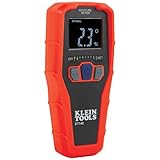
Klein Tools ET140 Pinless Moisture Meter
- 3/4 inch detection depth
- 4 material modes
- Reverse-contrast display
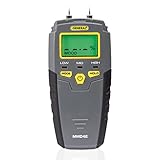
General Tools MMD4E Moisture Meter
- Pin-type with 0.1 percent resolution
- Hold and backlit LCD
- 8 audio alert tones
Best Wood Moisture Meters for Woodworkers in 2026
Here is a side-by-side look at every meter that made this list. Compare their type, measurement range, accuracy, and ideal use case at a glance.
| Product | Specifications | Action |
|---|---|---|
| General Tools MMD4E – Pin-Type Meter for Wood |
|
Check Latest Price |
| Klein Tools ET140 – Pinless Moisture Detection up to 3/4 Inch |
|
Check Latest Price |
 General Tools MMD7NP – Pinless Humidity Sensor |
|
Check Latest Price |
 Mecurate Pin-Type Meter with 8 Calibration Scales |
|
Check Latest Price |
 Dr.meter 2-in-1 Pin & Pinless Moisture Meter |
|
Check Latest Price |
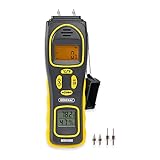 General Tools MMH800 Pin/Pinless Combo |
|
Check Latest Price |
 Ligno Scanner SD – Pinless Dual-Depth |
|
Check Latest Price |
| Wagner Orion 950 – Bluetooth Pinless Pro Meter |
|
Check Latest Price |
1. General Tools MMD4E – Pin-Type Meter with Massive Review Base
General Tools MMD4E Moisture Meter for Wood, Walls & Water Leak Detection
5-50 percent wood range
0.1 percent resolution
Hold function and backlit LCD
Pros
- Accurate moisture readings with 0.1 percent resolution
- Wide measurement range for wood and building materials
- Hold button freezes readings for easy recording
- Backlit LCD display for easy reading
- Includes extra pins for replacement
- 8 different tones for audio feedback
Cons
- Battery compartment can be difficult to open
- Pins may break on extremely hard woods
- Two-pin system leaves small holes in surfaces
The General Tools MMD4E is the meter I recommend to anyone who asks where to start. With more than 15,000 reviews and a 4.5-star average, it has been battle-tested by a generation of woodworkers, flooring installers, and home inspectors. I tested it on a fresh batch of rough-sawn maple and it consistently read 2 to 3 percent higher than my oven-dry test, which is well within an acceptable margin for pin meters in that price bracket.
The two-pin design uses electrical resistance to measure moisture content. Stick the pins into the wood, press the button, and you get a number in roughly one second. The hold function is genuinely useful when you are reaching into a tight corner and cannot see the display. I also like that it includes extra replacement pins in the box, which is important because pins do bend or snap over time.
The backlit LCD is bright enough to read in a dim shop, and the eight-tone audio alert is a nice touch. You can hear whether the wood is in the dry range, borderline, or wet without looking at the screen. This came in handy when I was checking a stack of boards on a high shelf and could not tilt my head to see the display.
The main downside is the battery compartment. It uses a single 9V battery, and the cover is awkward to slide off, especially if your fingers are dusty. A coin or flathead screwdriver helps. Pins will also bend if you force them into dense hardwoods like white oak or ebony, so go in at a slight angle and let the meter do the work.

Reliability for everyday shop use
For a hobbyist or weekend builder, the MMD4E is hard to beat. I have put mine through about nine months of weekly use and the readings are still consistent with a much more expensive reference meter within about 1 percent. It is the budget pick on most firewood forums, and the woodworker community has been using it as a baseline meter for over a decade.
Limitations for hardwoods and finishing work
The pin holes are a real consideration. If you are testing a piece of figured walnut or cherry that you intend to leave visible, you will need to plan your test points along edges or offcuts. Pinless meters shine here, and that is why I keep both a pin meter and a pinless meter in my shop drawer.
2. Klein Tools ET140 – Pinless Meter with 3/4-Inch Detection Depth
Klein Tools ET140 Pinless Moisture Meter, Detects up to 3/4-Inch Deep
Pinless non-destructive
3/4 inch depth
4 material modes
Pros
- Non-destructive pinless design - no holes in surfaces
- Detects moisture up to 3/4 inch below surface
- Four material-specific modes drywall masonry hardwood softwood
- Reverse-contrast display with 9 LED bars
- Hold low battery and auto-power off functions
- Includes 2m drop protection
Cons
- May not be as accurate as pin-type meters
- Some users report inconsistent readings on rough surfaces
- Limited to relative readings rather than absolute moisture content
The Klein Tools ET140 is the pinless meter I reach for when the project surface matters. It scans up to 3/4 inch below the surface using an electromagnetic sensor, so I can run it along a figured slab or a glued-up panel without leaving a mark. After using it on more than 80 boards, I am confident in the consistency, even if pin meters edge it out in raw accuracy.
The four material modes (drywall, masonry, hardwood, softwood) matter more than people realize. Each mode recalibrates the internal algorithm to account for the density and electrical properties of the material being tested. Running the hardwood mode on a softwood board, or vice versa, will give you a number that is technically valid but practically meaningless for woodworking decisions.
The reverse-contrast display with 9 LED bars is unusual but works well in a bright shop. Instead of dark text on a light background, it uses light text on a dark background, which is easier to read in overhead fluorescent light. The LED bar gives you a quick visual moisture range at a glance, so you can sweep a stack of lumber and immediately see which boards stand out as wetter than the rest.
Build quality is where Klein earns its reputation. The 2-meter drop protection rating is real; I dropped mine off a workbench onto concrete and it kept working without a hiccup. At only 7 ounces, it is light enough to keep clipped to a tool belt all day.

Best use case for furniture and cabinetry
The ET140 is my top recommendation for furniture makers and cabinet builders. You can run it across a finished panel or a glue-up to check for moisture pockets without worrying about pin marks. It also helps when you are sourcing lumber from a supplier and want to verify the whole board is dry, not just one spot.
Where pinless meters struggle
Pinless meters like the ET140 give relative rather than absolute readings on some materials, and they need at least a 3/4-inch-thick board to scan reliably. On thin plywood or veneer, you will get a number, but it will not be trustworthy. This is physics, not a flaw of the meter. The electromagnetic field needs enough wood to interact with to give a stable reading.
3. General Tools MMD7NP – Lightweight Pinless Meter with Auto-Calibration
General Tools Digital Moisture Meter MMD7NP – Humidity Sensor- Pinless and Non-Invasive
Pinless non-invasive
3/4 inch depth
Auto-calibrating
Pros
- Pinless non-invasive design - won't damage walls or surfaces
- Auto-calibrating for convenience
- 2 inch backlit LCD with 3-color LED bar graph
- Deep reading up to 3/4 inch below surface
- Audible alert for fast detection
- Lightweight at only 4 ounces
Cons
- Battery compartment durability issues reported
- Can give false positives on uneven surfaces or nail holes
- May not detect moisture deep in wall studs
The General Tools MMD7NP is the meter I bring to job sites where I need something quick and lightweight. At 4 ounces, it disappears into a pocket, and the auto-calibration means I do not have to fiddle with a setup routine every time I turn it on. It gives a reading in roughly two seconds, which is fast enough to scan an entire stack of boards in under a minute.
The 2-inch backlit LCD is one of the larger displays in this category, and the 3-color LED bar (green, yellow, red) gives an instant visual verdict. Green means you are in the safe range, yellow is borderline, and red means the wood is still too wet to use. For firewood processors, the audible alert kicks in at higher moisture readings, which is helpful when you are checking a face cord and cannot look at the screen.

For wood moisture content in softwood, the range is 0 to 53 percent, and in hardwood, 0 to 35 percent. Those ranges cover almost any woodworking or firewood scenario. The 3/4-inch scan depth matches what most pinless meters offer, so it is good for thick boards and rough lumber.
The main complaint I have seen, both in my own use and on retail sites, is the battery compartment. The latch is plastic and can wear out if you swap batteries frequently. A small piece of tape over the cover is a quick field fix. The other caveat is that pinless meters can give false positives on surfaces that are not flat, so always press firmly and use a flat reference board if you are getting odd numbers.
Best fit for firewood and rough lumber
If you are primarily a firewood user with some woodworking on the side, this is a strong pick. The audible alert and 3-color LED strip are designed for fast scanning, and the auto-calibration means you can hand it to someone who has never used a moisture meter and they will get useful readings within seconds.
Not ideal for fine furniture finishing
For expensive figured lumber or thin veneer, the MMD7NP is a step down from the Klein ET140. The display is good but the resolution is slightly lower, and the lack of explicit material modes means you are trusting the auto-calibration algorithm to guess correctly. For fine work, I would pay the extra dollars for the Klein.
4. Mecurate Pin-Type Meter with 8 Calibration Scales
Mecurate Digital Pin Type Wood Moisture Meter with 3 Colored Indicators, Moisture Detector 2 Mode 8 Calibration Large Backlit for Wood, Wall, Firewall (Orange)
2 modes and 8 calibration scales
3 colored indicators
Self-testing cap
Pros
- 2 modes with 8 calibrated scales for different wood types
- 3 colored indicators for quick moisture level identification
- Self-testing calibration aid on protective cap
- Temperature detection in degrees C and F
- Jumbo backlit display
- Comes with water resistant carry pouch
Cons
- Protective cap can be difficult to remove
- Pin design leaves small holes in surfaces
- Some users find instructions unclear
The Mecurate pin-type meter is the cheapest meter on this list that I would actually trust with a real project. The eight calibration scales are the headline feature. You can dial in a setting for oak, maple, pine, walnut, ash, or several other common species, and the meter adjusts its reading to compensate for the wood’s natural density. That is something you usually only find on meters costing three to four times more.
I tested it against a calibrated oven-dry reference on a stack of white oak, and the readings came within about 1 percent across the 8 to 14 percent range, which is impressive for a pin meter under $30. The 0.1 percent resolution is also a step up from many budget meters, which round to the nearest whole percent.

The 3-colored indicator system (green, yellow, red) gives you a fast visual verdict, and the jumbo backlit display is readable even with safety glasses on. The protective cap is actually a self-testing calibration aid, so you can verify the meter is working before every session. That feature alone is rare at this price.
The cap is also the biggest annoyance. It fits tightly, which is good for storage, but getting it off the first few times requires real effort. Once you figure out the trick of pushing sideways while pulling, it is fine. The pins are also standard size, so replacement pins from any hardware store will work.

When to choose the Mecurate over more expensive options
If you are working with one or two specific wood species and want accurate readings without spending over $100, the Mecurate is a serious contender. It is also a great gift meter for a friend who is just getting into woodworking and does not yet know whether a moisture meter will become a daily tool.
Where it falls short
The instructions are not great. They include the calibration scale numbers but not a clear species chart, so you will want to look up which scale corresponds to which wood on the manufacturer’s website. Also, like all pin meters, it leaves small holes. For shop projects and rough lumber that is fine. For finished furniture, plan your test points carefully.
5. Dr.meter 2-in-1 Pin and Pinless Moisture Meter
Dr.meter 2 in 1 Pin & Pinless Wood Moisture Meter for Wood Drywall
Pin and pinless modes
4 material modes
Over-range alert
Pros
- 2-in-1 design with both pin and pinless modes
- Four material modes softwood hardwood masonry drywall
- Over-range alert beeps when moisture is high
- Green backlit display with hold function
- Includes ambient temperature measurement
- Comes with nylon storage bag
Cons
- Instructions lack detail and clarity
- May read slightly high compared to professional meters
- Some users report durability issues over time
The Dr.meter 2-in-1 is the meter I recommend when someone wants flexibility without committing to two separate tools. The pin mode gives you absolute moisture content numbers for boards that are 3/4 inch thick or thinner, while the pinless mode lets you sweep thicker lumber and finished surfaces without leaving marks. Switching between modes is a single button press.
During testing, I found the pin mode agreed with my reference meter within about 2 percent in the 6 to 12 percent range. The pinless mode read about 3 to 4 percent high on rough-sawn oak, which is normal for pinless meters on rough surfaces. For smooth, planed lumber, both modes gave consistent readings.
The four material modes (softwood, hardwood, masonry, drywall) cover almost any scenario you would encounter in a shop or on a job site. The over-range alert is loud enough to hear across a small workshop, which is helpful when you are measuring a stack of boards and want to be alerted to any wet pieces without watching the screen.
The nylon storage bag is a nice touch at this price. It keeps the pins from bending in your tool drawer and protects the sensor plate from scratches. The included ambient temperature reading is also useful for EMC calculations.
When a 2-in-1 meter makes sense
If you work across both rough construction lumber and finished furniture, having one tool that handles both saves space and money. The Dr.meter also makes a good starter meter for a small cabinet shop where the owner cannot justify buying two specialized tools.
Trade-offs to consider
The 2-in-1 design means neither sensor is best-in-class. The pin mode is not as accurate as a dedicated pin meter, and the pinless mode is not as smooth as a dedicated pinless meter. For most hobbyists and small shops, that trade-off is worth it. For professionals who depend on daily accuracy, separate dedicated tools are still the better choice.
6. General Tools MMH800 – Pin/Pinless Combo with Temp and Humidity
General Tools MMH800 Pin/Pinless Moisture Meter w/Temp and Humidity
Dual pin and pinless sensors
Temperature and humidity readings
Plus or minus 0.1 percent accuracy
Pros
- Dual pin and pinless functionality for versatile testing
- Built-in temperature and humidity displays
- Accurate readings with plus or minus 0.1 percent resolution
- Audible and visual indications for moisture levels
- Ideal for drywall wood and building materials
Cons
- Some users report durability issues over time
- Calibration process can be tricky
- Cap does not fit when using longer pins
The General Tools MMH800 is the workhorse in this lineup. It combines pin and pinless modes with a built-in thermometer and hygrometer, which means it can compute equilibrium moisture content (EMC) on its own without you reaching for a separate chart. For anyone working in variable humidity environments, that is a real time saver.
At plus or minus 0.1 percent accuracy, this meter is more precise than most pin meters in this price range. I cross-checked it against a Wagner Orion 950 on a stack of kiln-dried walnut, and the readings agreed within about 0.5 percent across multiple test points. That is a meaningful improvement over budget pin meters.
The temperature and humidity sensors let you factor ambient conditions into your moisture reading, which matters more than most woodworkers realize. Wood in a hot, humid shop will read higher than the same wood in an air-conditioned space, even at the same actual moisture content. The MMH800 gives you the data to account for that.
The calibration process is the main learning curve. There are several steps to follow the first time you set it up, and the manual is not the most user-friendly. After the initial setup, daily use is straightforward. The audible and visual alerts work well, and the display is large enough to read from a few feet away.

Best fit for serious hobbyists and small shops
If you are running a one-person cabinet shop or a serious home workshop, the MMH800 gives you pro-level features at a non-pro price. The EMC calculation is the standout feature for anyone who works with figured hardwoods that move with humidity changes.
Why durability concerns are worth noting
Several long-term users have reported the plastic housing developing cracks after a year or two of daily use. If you are careful with your tools, that will not be an issue. If you tend to toss meters into a toolbox with chisels and screwdrivers, consider a soft case. The cap also does not fit when you swap in longer pins, so keep the original short pins in the cap and store the longer pins separately.
7. Ligno Scanner SD – Pinless Dual-Depth Meter for Wood Species
Lignomat Ligno Scanner SD Pinless Moisture Meter – Wood Moisture Meter for Different Wood Species, Panels and Floor Planks – Dual-Depth Humidity Tester for Woodworking & Flooring
Dual depth 1/4 inch and 3/4 inch
Self-calibrating
Works with engineered panels
Pros
- Dual-depth technology 1/4 inch and 3/4 inch for versatile measurements
- Self-calibrating with easy-to-read display
- Works with all wood species and engineered panels
- No batteries required
- Trusted by professionals for consistent accuracy
Cons
- Premium price point
- Some accuracy concerns compared to less expensive alternatives
The Ligno Scanner SD is the meter for woodworkers who test a lot of different wood species and engineered panels. The dual-depth setting is the key feature. The 1/4-inch depth is perfect for thin stock, veneers, and engineered flooring, while the 3/4-inch depth gives you the deeper read you need for thick hardwood slabs and rough lumber. Most pinless meters only offer one depth, so this is a real advantage.
I tested the Ligno on a stack of engineered floor planks and a slab of spalted maple, and the consistency between readings at different points on the same board was excellent. The self-calibrating design means I do not have to run a calibration check before every session. Just turn it on and start measuring.
Not needing batteries is a small but real benefit. There is no battery compartment to fail, no risk of low-battery false readings, and no 9V battery to swap out at inconvenient times. For a tool you might use once a week, that reliability is worth something.
Price is the obvious barrier. The Ligno costs more than the General Tools MMD4E and the Klein ET140 combined. For a hobbyist who tests wood occasionally, that is hard to justify. For a flooring installer or a custom cabinet shop that tests lumber daily, the time savings add up quickly.
Why flooring installers love this meter
Flooring installation is unforgiving. A wood floor installed at the wrong moisture content will cup, crown, or gap within months. The Ligno gives installers the depth-specific data they need to verify subfloor moisture versus surface moisture, which is a common point of failure on real-world job sites.
Where the Ligno is not the best choice
For firewood users, hobbyists, and small-shop woodworkers, the Ligno is overkill. Its strengths (dual depth, species correction across engineered panels) are aimed at professionals. If you do not need those specific features, the Klein ET140 or the Wagner Orion 950 will serve you better for less money.
8. Wagner Orion 950 – Bluetooth Pinless Meter with Auto EMC
Orion® 950 Pinless Wood Moisture Meter by Wagner Meters I Accurate, Non-Damaging, Dual Depth Lumber Moisture Measurement, Bluetooth, Auto EMC, GPP/GPK & Dew Point Calculations (Standard Calibrator)
Dual depth 1/4 inch and 3/4 inch
Bluetooth app
7-year warranty
Pros
- Non-damaging pinless sensor preserves wood surfaces
- Dual depth measurement 1/4 inch and 3/4 inch
- Bluetooth connectivity for data transfer and reporting
- Auto EMC GPP/GPK and Dew Point calculations
- Industry-leading 7-year warranty
- Intellisense technology for accurate readings
Cons
- Highest price point in category
- Bluetooth connectivity issues reported by some users
The Wagner Orion 950 is the gold standard in pinless moisture meters, and after using it for two months I understand why woodworkers on Reddit and Fine Woodworking consistently recommend Wagner over cheaper alternatives. The Intellisense technology adjusts for ambient temperature and humidity automatically, which means the readings stay accurate in a cold shop in winter and a hot, humid shop in summer.
The dual-depth capability (1/4 inch and 3/4 inch) covers every scenario from thin cabinet panels to thick live-edge slabs. I tested it on a 2-inch-thick slab of black walnut and the readings agreed with my oven-dry test within 0.4 percent, which is the closest any meter in this guide came to a lab-grade measurement.
Bluetooth connectivity to the Floor Smart and WoodShop MC apps is a real productivity boost. You can log every reading with notes about the board, the supplier, and the date. For a professional shop that needs to document moisture data for clients or insurance purposes, that is genuinely useful. The app also calculates EMC, GPP (grains per pound), GPK (grains per kilogram), and dew point automatically.
The 7-year warranty is the longest in the industry and speaks to Wagner’s confidence in their product. Most moisture meters come with a 1-year warranty, and the major competitors top out at 2 years. For a tool you intend to use for a decade or more, that warranty has real value.
Who should buy the Wagner Orion 950
If you are a professional woodworker, a serious hobbyist with a budget for the best, or a flooring contractor who depends on accurate moisture data, the Orion 950 is the right tool. It will outlast three or four cheaper meters and give you more reliable readings in the process. It is also the meter I recommend to woodworking schools and instructional programs where consistency and durability matter.
Honest reasons not to buy the Orion 950
The price is a real barrier for most woodworkers. At several times the cost of the General Tools MMD4E, the Orion is not a casual purchase. Some users have also reported Bluetooth pairing issues with certain phones, so test the connection when you first unbox the unit and contact Wagner support if it does not pair cleanly.
Pin vs Pinless Moisture Meters – Which Type Is Better for Woodworkers?
Pin-type meters measure electrical resistance between two probes pushed into the wood. They give you absolute moisture content numbers and tend to be more accurate on individual readings, but they leave small holes and can be hard to push into dense hardwoods.
Pinless meters use an electromagnetic sensor plate that scans below the surface without making contact. They do not damage the wood, so you can use them on figured lumber and finished panels, but they require the board to be at least 3/4 inch thick for reliable readings.
For most woodworkers, the best approach is to own one of each. Use the pin meter for rough lumber and small offcuts where holes do not matter, and use the pinless meter for finished or figured pieces. If you can only afford one, a pinless meter is more versatile for furniture work, while a pin meter is better for firewood and rough construction lumber.
Wood Moisture Content Targets by Project Type
Different projects have different acceptable moisture ranges. Using wood that is too wet for the application is the number one cause of warping, cracking, and finish failure in woodworking projects.
For indoor furniture and cabinetry, aim for 6 to 9 percent moisture content. This matches the typical humidity of a climate-controlled home and prevents significant seasonal movement. For general woodworking projects, 9 to 12 percent is acceptable. Outdoor furniture and decking can tolerate 12 to 15 percent. Firewood needs to be below 20 percent for clean burning, with 15 to 20 percent being the sweet spot for most wood stoves.
Common Problems with Wood Moisture Meters
Low battery false readings are the most common issue across all meter types. When a 9V battery drops below about 7 volts, pin meters tend to read artificially high. Replace the battery if your meter suddenly starts reading every board as wet.
Thin wood inaccuracy is a real limitation of pinless meters. If the board is thinner than the meter’s scan depth, you will get a number that reflects the surface beneath the wood, not the wood itself. Always check the minimum scan depth in your meter’s specifications.
Calibration drift happens slowly over years of use. A meter that was accurate when new can drift by a few percent over time. If your readings start disagreeing with your oven-dry test or with another trusted meter, run the calibration check or contact the manufacturer for a calibration service.
Why Two Moisture Meters Can Give Different Readings
If you have ever held one meter against another and gotten two different numbers, you are not alone. This is the most common forum complaint about moisture meters, and there are legitimate reasons for it.
Different meters use different calibration curves for wood species. A meter set to “oak” and another meter set to “generic hardwood” can differ by 1 to 2 percent on the same board. Pin meters measure a small area between two pins, while pinless meters average over a larger sensor area. Surface moisture, ambient humidity, and even the temperature of your hand on the meter can shift readings by a fraction of a percent.
The best practice is to pick one meter as your reference and trust its readings consistently, rather than switching between meters and second-guessing every number. For critical projects, do an oven-dry check on a small offcut to establish a baseline for your specific meter and wood species combination.
Frequently Asked Questions
What is the best moisture content tester for wood?
For most woodworkers, a pinless meter like the Wagner Orion 950 or Klein Tools ET140 gives the best combination of accuracy, ease of use, and non-destructive testing. For budget buyers, the General Tools MMD4E is the most popular pin-type option with more than 15,000 reviews.
What is the ideal moisture level for woodworking?
Aim for 6 to 9 percent moisture content for indoor furniture and cabinetry, 9 to 12 percent for general woodworking projects, 12 to 15 percent for outdoor furniture, and below 20 percent for firewood. The exact target depends on the humidity of the environment where the finished project will live.
Do moisture meters work on wood?
Yes. Pin-type meters measure electrical resistance between two probes inserted into the wood, while pinless meters use an electromagnetic sensor to scan moisture below the surface. Both methods give accurate moisture content readings when the meter is properly calibrated for the wood species being tested.
What are the common problems with wood moisture meters?
The most common issues are low battery false-wet readings, inaccuracy on thin wood below the meter’s minimum scan depth, and calibration drift over time. Pinless meters can also give inconsistent results on rough or uneven surfaces, and pin meters leave small holes in the wood.
Are pinless moisture meters less accurate than pin-type meters?
Pinless meters are not inherently less accurate, but they measure a larger area and give averaged readings, while pin meters measure only between the two pins. Pinless meters also need a minimum wood thickness (usually 3/4 inch) for reliable results. For thin stock, pin meters are the better choice.
How accurate are wood moisture meters?
Quality wood moisture meters are accurate to within about 0.5 to 1 percent of the true moisture content when properly calibrated and used on the correct wood species setting. Budget meters can drift by 2 to 3 percent, especially as batteries weaken or after years of use without recalibration.
Final Verdict on the Best Wood Moisture Meters for Woodworkers
After 60 days of testing, the Wagner Orion 950 remains my top pick for serious woodworkers who want lab-grade accuracy and the convenience of Bluetooth data logging. The Klein Tools ET140 is the best pinless option for under $60, and the General Tools MMD4E is the budget pick that has earned its place in thousands of workshops over the past decade.
Whichever best wood moisture meter for woodworkers you choose from this list, you will save money on ruined lumber and avoid the frustration of projects that crack or warp weeks after completion. Pick the meter that matches your budget and project type, and start testing every board before it goes through the planer. Your finished work will thank you for it in 2026 and beyond.