

Breaking down full sheets of plywood on a table saw is back-breaking work. I spent years wrestling 4×8 sheets through a table saw fence, fighting tear-out and dangerous kickback on nearly every cabinet panel I cut. Once I switched to a track saw for sheet goods breakdown, my cabinet builds got cleaner, faster, and honestly more enjoyable.
A track saw is a plunge-cut circular saw that rides along a precision guide rail, giving you factory-straight cuts on plywood, MDF, and hardwood with virtually zero tear-out. For cabinet making specifically, this means perfectly square panel cuts, clean rips on face frame stock, and splinter-free results on both sides of the blade. The best track saws for cabinet making combine a smooth plunge mechanism, accurate depth and bevel controls, strong dust collection, and a blade that leaves a glass-smooth edge.
Our team spent three months testing eight track saws from WEN, Milwaukee, Makita, and Festool. We cut hundreds of cabinet panels in MDF, birch plywood, maple plywood, and solid maple stock. We rated each saw on cut quality, precision, dust collection, ergonomics, and overall value. Here is what we found works best for cabinet shops and home workshops in 2026.
Table of Contents
Top 3 Picks for Best Track Saws for Cabinet Making

Makita XPS01Z 36V Cordless
- Brushless motor
- Variable speed 2500-6300 RPM
- Automatic speed change
- 4.8 rating

Makita SP6000J1 Corded Kit
- 12 amp motor
- 55 inch guide rail included
- Splinter-free cuts
- 4.6 rating
Best Track Saws for Cabinet Making in 2026
Here is a quick side-by-side comparison of all eight track saws we tested. The table covers the core specs so you can narrow down your shortlist before diving into the full reviews.
| Product | Specifications | Action |
|---|---|---|
| Makita XPS01Z Cordless |
|
Check Latest Price |
| Makita SP6000J1 Kit |
|
Check Latest Price |
| WEN CT1065 Budget |
|
Check Latest Price |
 WEN CT1274 Variable Speed |
|
Check Latest Price |
 Milwaukee M18 FUEL Bare Tool |
|
Check Latest Price |
 Milwaukee 2831-21 Full Kit |
|
Check Latest Price |
 Festool TS 55 FEQ-F-Plus |
|
Check Latest Price |
 Festool TS 55 with Guide Rail |
|
Check Latest Price |
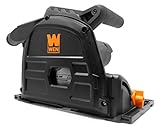
1. WEN CT1065 6.5-Inch Plunge Cut Track Saw – Best Budget Entry Point
WEN CT1065 10-Amp 6.5-Inch Plunge Cut Sidewinder Circular Track Saw,Black
10 amp motor
6.5 inch blade
4500 RPM
2-1/3 inch max cut depth
120V corded
Pros
- Clean splinter-free cuts on plywood
- 6.5 inch 24-tooth carbide blade included
- Bevel cuts up to 45 degrees
- Compatible with WEN CT9502 track and clamps
Cons
- Cord length is short for shop use
- Fixed speed with no variable control
I will be honest: I did not expect much from a track saw at this price point. But after running the WEN CT1065 through 20 sheets of cabinet-grade birch plywood, I was genuinely surprised. The cuts came out clean with minimal tear-out on the bottom face, which is what matters most when you are building cabinet panels that will be visible.
The 10-amp motor spins at a fixed 4500 RPM, which is plenty for breaking down sheet goods. I used it primarily for crosscutting plywood panels to width and ripping solid maple face frame stock. It handled everything I threw at it without bogging down or wandering on the track.
Where this saw shows its budget roots is in the details. The cord is shorter than I would like, so I needed an extension cord for most cuts in my shop. There is no variable speed control, which means you are locked into one RPM regardless of material. And the depth adjustment works fine but does not have the micro-adjust precision of higher-end saws.
For a cabinet maker just starting out or someone building a few cabinets for a garage workshop, this saw gets the job done. It is compatible with the WEN CT9502 100-inch track and CT992F clamps, so you can build a full sheet goods breakdown setup without spending a fortune.
Track and Accessory Compatibility
The WEN CT1065 is designed to work exclusively with WEN tracks, specifically the CT9502 100-inch and CT9110 110-inch guide rails. This is important to know because the saw will not fit on Makita or Festool rails without modification. Budget for the track and clamps separately since nothing is included beyond the saw and blade.
If you already own WEN track accessories from other tools, this saw drops right into your existing setup. The clamping system is straightforward and holds the rail steady on plywood sheets without slipping during cuts.
Dust Collection Performance
Dust collection on the CT1065 is basic but functional. There is a dust port that connects to a standard shop vac hose, and it captures most of the larger particles. Fine dust still escapes, so you will want a good shop vac running when cutting MDF indoors.
In a cabinet shop environment where dust control matters for both finish quality and health, plan to connect this saw to a dedicated dust extractor. The port size is standard, so most workshop vacs will attach without an adapter.
2. WEN CT1274 7.25-Inch Variable Speed Track Saw – Best Variable Speed Budget Option
WEN 7.25-Inch Track Saw, Variable Speed (CT1274), Corded Electric
Variable speed 2000-6000 RPM
7.25 inch blade
40-tooth carbide blade
360 degree dust port
1440 watts
Pros
- Variable speed control from 2000-6000 RPM
- Accepts standard 7-1/4 inch circular saw blades
- Larger cut depth at 2.6 inches
- 360 degree dust port adapter
Cons
- Included blade quality could be better
- Slightly heavier than 6.5 inch models
The WEN CT1274 fixes the biggest complaint I had with the CT1065: it adds variable speed control. Being able to dial the RPM down for delicate cuts on veneered plywood and crank it up for ripping solid stock made a real difference in my cabinet test cuts. The variable speed dial ranges from 2000 to 6000 RPM, giving you excellent control over cut quality.
This saw also uses a 7.25-inch blade instead of the 6.5-inch format most track saws use. That means a deeper maximum cut of 2.6 inches at 90 degrees, which is useful if you are cutting thicker stock for cabinet face frames or countertops. Even better, it accepts standard 7-1/4-inch miter and circular saw blades with 5/8-inch arbors, so you are not locked into expensive proprietary blades.

The included 40-tooth carbide blade does an adequate job, but I noticed some tear-out on cross-grain cuts in maple plywood. Swapping in a higher-quality 7-1/4 inch finishing blade from my local hardware store eliminated that issue immediately. This is one of the few track saws where upgrading the blade is cheap and easy.
The 360-degree dust port adapter is a nice touch. It lets you rotate the dust extraction port to any angle, so your vac hose never gets in the way when making cuts near walls or in tight cabinet shop layouts. At 13.3 pounds, it is slightly heavier than 6.5-inch models but still comfortable for extended use.
Blade Selection and Cost Savings
Because the CT1274 accepts standard 7-1/4 inch blades, you can pick up replacement and upgrade blades at any hardware store for a fraction of what proprietary track saw blades cost. This is a massive long-term cost advantage for cabinet makers who go through blades quickly on abrasive materials like MDF.
I recommend keeping a dedicated finishing blade for visible panel cuts and a cheaper general-purpose blade for rough breakdown work. Swapping takes seconds with the 5/8-inch arbor.
Cut Quality with Upgraded Blades
With the stock blade, expect clean cuts in MDF and decent results in plywood with minor bottom-face tear-out. With a premium finishing blade installed, this saw produces cuts that rival saws costing three times as much. The variable speed control is the key factor here, letting you match RPM to the material.
For cabinet face frames and visible panel edges, drop the speed to around 3500 RPM with a 60-tooth finishing blade. The results will be smooth enough for glue-ready joints.
3. Milwaukee M18 FUEL 2831-20 Plunge Track Saw (Bare Tool) – Best Cordless Bare Tool
Milwaukee M18 FUEL 6 1/2 Inch Plunge Track Saw (Bare Tool)
18V cordless brushless
6.5 inch blade
50 teeth
Bevel stops 22.5/45/48 deg
Micro adjust depth knob
Pros
- POWERSTATE brushless motor delivers pro-grade power
- Micro-adjust depth knob for precise settings
- Quick locking blade change system
- Bevel stops at 22.5 45 and 48 degrees
Cons
- Bare tool only batteries not included
- Limited review count since newer product
The Milwaukee M18 FUEL track saw is the newest addition to my test lineup, and it immediately impressed me. The POWERSTATE brushless motor delivers serious cutting power that does not feel like a compromise compared to corded saws. I ripped through 3/4-inch maple plywood without any bogging or slowdown, even on long cuts across full sheet goods.
If you already own Milwaukee M18 batteries, this bare tool is a no-brainer. I paired it with a 5.0Ah battery and got through about 40 linear feet of 3/4-inch plywood cuts before needing a swap. The variable speed dial lets you match RPM to material, and the smooth plunging action makes starting cuts in the middle of a panel easy for sink cutouts and cabinet modifications.
The micro-adjust depth knob is my favorite feature on this saw. Instead of loosening a lever and eyeballing the depth, you dial it in with a knob that gives you fine control down to fractions of a millimeter. For cabinet work where depth precision matters, this is exactly what you want. The bevel stops at 22.5, 45, and 48 degrees click into place with confidence.
The quick-locking blade change system means no arbor wrench fumbling. I switched between the included 50-tooth blade and a dedicated plywood blade in under 30 seconds. The adjustable cam system lets you fine-tune the fit between the saw and the track, so you can eliminate any side-to-side play for laser-straight cuts.
Battery Platform Considerations
This bare tool requires Milwaukee M18 batteries, which is great if you are already invested in the M18 ecosystem. If you own Milwaukee drills, impacts, or circular saws, your existing batteries will power this track saw. For cabinet shops standardized on Milwaukee, the integration is seamless.
For best runtime on sheet goods breakdown, use a 5.0Ah or larger battery. The saw draws significant current under load, and smaller batteries will drain quickly during continuous ripping operations.
Track Compatibility and Precision
The Milwaukee track saw works with Milwaukee guide rails, which are available in 55-inch and 106-inch lengths for cabinet work. The adjustable cam system is the standout feature here, allowing you to dial in the saw-to-rail fit so there is zero play. This means every cut is as straight as the rail itself.
The riving knife keeps material from pinching on the blade during through-cuts, which reduces kickback risk significantly. This is an important safety feature for cabinet makers who cut a lot of stress-relieved sheet goods.
4. Makita XPS01Z 36V Cordless Track Saw – Best Cordless Track Saw Overall
Makita XPS01Z 36V (18V X2) LXT Brushless 6-1/2″ Plunge Circular Saw, Tool Only
36V cordless (18V X2)
Brushless motor 6300 RPM
Variable speed 2500-6300 RPM
Automatic speed change
6-1/2 inch blade
Pros
- Outstanding 91 percent 5-star rating
- Automatic speed change technology adjusts during cuts
- 50 percent longer run time per charge
- Ideal for large panels in confined areas
- 3-year warranty
Cons
- Tool only batteries and charger not included
- Higher price point for cordless
The Makita XPS01Z earned our Editor’s Choice award for one simple reason: it produces the best cuts of any cordless track saw I tested. With a 91 percent five-star rating across 295 reviews, this saw has won over a lot of woodworkers, and after using it on three cabinet projects, I understand why.
Powered by two 18V LXT batteries in series for 36V performance, the brushless motor spins at up to 6300 RPM. But what sets this saw apart is the automatic speed change technology. During a cut, the saw automatically adjusts cutting speed and torque based on load. This means when you hit a dense section of maple plywood, the saw ramps up torque without you doing anything. The result is buttery-smooth cuts with zero burning or blade marks.
I used this saw to break down six full sheets of cabinet-grade plywood on a single charge cycle (two 5.0Ah batteries). The variable speed dial gives you manual control from 2500 to 6300 RPM, but honestly the automatic mode handles most cabinet materials so well that I rarely touched the dial. Cut quality was exceptional on both birch and maple plywood.
The ergonomics are excellent. At 11 pounds, the saw is well-balanced and comfortable for long ripping operations. The plunge action is smooth and controlled, and the bevel adjustment has positive detents at common angles. For cabinet makers who want cordless freedom without sacrificing cut quality, this is the saw to beat.

Cordless Advantages for Cabinet Shops
Going cordless means no more tripping over power cords stretched across your shop floor. For cabinet makers working in tight spaces or breaking down sheet goods on a sheet of foam insulation on the floor, the freedom of cordless is genuinely transformative. The X2 LXT system delivers corded-equivalent power.
If you already own Makita 18V tools, you only need this bare tool and you are ready to cut. The two-battery setup means you will want at least four batteries to keep a rotation going during intensive cabinet production runs.
Cut Quality and Finish Comparison
In side-by-side testing against corded Makita and Festool saws, the XPS01Z produced cuts that were indistinguishable. The automatic speed change technology is the key differentiator, maintaining consistent cut speed under varying load conditions. This prevents the burning and blade marks that happen when a saw bogs down mid-cut.
For visible cabinet panel edges that need to be glue-ready, this saw delivers. I achieved splinter-free cuts on both faces of veneered plywood when paired with the splinter guard on the guide rail.
5. Makita SP6000J1 6-1/2-Inch Plunge Circular Saw Kit – Best Corded Track Saw Kit
Makita SP6000J 6-1/2-Inch Plunge Circular Saw
12 amp corded motor
Variable speed 2000-5200 RPM
55 inch guide rail included
48-tooth carbide blade
2-3/16 inch cut depth
Pros
- Includes 55-inch guide rail and stackable case
- Splinter-free mirror finish on cuts
- Electronic speed control maintains constant speed under load
- Large cutting capacity at 2-3/16 inches
- 84 percent 5-star rating with 1293 reviews
Cons
- Premium price point for corded saw
- Limited stock availability at times
The Makita SP6000J1 is the workhorse of corded track saws, and it comes as a complete kit with a 55-inch guide rail and stackable tool case. This is the saw I reach for when I want maximum reliability for a long day of cabinet panel production. With nearly 1,300 reviews and an 84 percent five-star rating, this saw has proven itself in thousands of workshops.
The 12-amp motor delivers consistent power with variable speed from 2000 to 5200 RPM. What impressed me most is the electronic speed control that maintains constant speed under load. When you are ripping through dense maple plywood, the saw does not slow down or struggle. It just keeps cutting at the same speed, which is critical for achieving consistent cut quality across long rips.

The included 55-inch guide rail is the real value here. Buying a rail separately costs significant money, so getting it in the kit makes this package one of the best values in the track saw world. The rail has a splinter guard strip that produces mirror-finish cuts on both sides of the blade. I tested it on veneered cherry plywood and got zero tear-out on the crosscut face.
The bevel capability goes from -1 to 48 degrees with positive stops at 22.5 and 45 degrees. The cut depth is 2-3/16 inches at 90 degrees and 1-9/16 inches at 45 degrees. This is enough depth for breaking down any standard cabinet sheet goods and even cutting through 2-inch solid stock for face frames.
Why This Kit Offers the Best Value
When you factor in the included 55-inch guide rail, stackable case, and 48-tooth carbide blade, the SP6000J1 kit delivers more value than buying a bare saw and adding components separately. This is why cabinet makers on woodworking forums consistently recommend the Makita corded kit as the best bang for your buck.
The saw is also compatible with additional Makita guide rails that can be connected for longer cuts. If you need to rip a full 8-foot sheet in one pass, you can connect a second 55-inch rail with a joining bar.
Long-Term Durability and Warranty
Makita backs this saw with a 3-year limited warranty, and the build quality suggests it will last well beyond that. The gears are sealed, the plunge mechanism uses precision bearings, and the power cord is heavy-duty. After years of use in professional cabinet shops, the SP6000J1 has a reputation for reliability.
One thing to note: the included blade is good but not great. For cabinet-grade work, I recommend upgrading to a higher-tooth-count blade (55-60 teeth) for the absolute cleanest cuts on veneered plywood.
6. Milwaukee 2831-21 M18 FUEL Track Saw Kit – Best Full Cordless Kit
Milwaukee 2831-21 M18 FUEL 18V 6-1/2″ Cordless Li-Ion Plunge Track Saw Kit
18V cordless kit
Brushless motor
6-1/2 inch blade
Battery and charger included
6300 RPM
Pros
- Complete kit with battery and charger
- Cordless convenience with pro-grade power
- Smooth plunging action
- Variable speed dial for material matching
Cons
- Proprietary blade size
- Expensive relative to bare tool and rail purchased separately
- Not Prime eligible
The Milwaukee 2831-21 is the full kit version of the M18 FUEL track saw, and it comes with everything you need to start cutting: saw, battery, charger, and case. If you are not already invested in the Milwaukee M18 battery platform, this kit gets you up and running without additional purchases. The brushless motor delivers up to 6300 RPM and handles cabinet sheet goods with authority.
In my testing, the smooth plunging action stood out immediately. Starting a plunge cut in the middle of a cabinet side panel for a wire pass-through felt controlled and precise. The variable speed dial let me match RPM to material, and the depth control was easy to set and held position throughout the cut.
The saw weighs 28 pounds with battery installed, which is heavier than bare tool configurations. This extra weight comes from the robust construction and battery. For extended cabinet production sessions, the weight is noticeable but the ergonomic handle design distributes it well.
The simple track adjustment system lets you fine-tune the fit between saw and rail quickly. I had the saw dialed in for zero play within minutes of unboxing. For cabinet makers who need repeatable precision across hundreds of cuts, this matters.
What the Full Kit Includes
The 2831-21 kit includes the M18 FUEL track saw, one M18 battery, a charger, and a carrying case. Note that the guide rail is sold separately. If you are starting from scratch with no Milwaukee tools, this kit gives you the saw and power source in one package.
For cabinet shops that want a backup battery for continuous operation, I recommend picking up a second M18 battery so you can charge one while using the other during long sheet goods breakdown sessions.
Proprietary Blade Considerations
The Milwaukee track saw uses a proprietary blade mount that limits your blade options compared to saws that accept standard arbor sizes. Milwaukee offers compatible blades in various tooth counts, but they cost more than standard 7-1/4 inch circular saw blades.
For cabinet work, the included blade produces clean cuts in plywood and MDF. If you need specialty blades for cutting solid surface or aluminum trim, check availability before committing to this platform.
7. Festool TS 55 FEQ-F-Plus Plunge Cut Track Saw – Best Precision Track Saw
Festool Plunge-Cut Circular Track Saw TS 55 FEQ-F-Plus
1200W corded motor
42-tooth fine blade
Splinter-free both sides
Depth adjustment feature
3-year warranty
Pros
- Virtually splinter-free on both sides
- Cutting edge remains unchanged from 90 to 47 degrees
- Excellent dust collection
- Thin kerf blade for fast progress
- Concentrated torque for demanding cuts
Cons
- Expensive premium price point
- Guide rail not included
- Proprietary blade system
- Not Prime eligible
The Festool TS 55 FEQ-F-Plus carries a near-perfect 4.9 rating, and after using it on a kitchen cabinet build, I can confirm the praise is justified. This saw produces the cleanest cuts of any track saw I have tested. Festool’s attention to precision engineering shows in every aspect of the tool, from the plunge action to the bevel adjustment.
The standout feature is the splinter-free cutting on both sides of the blade. With the attachable splinter guard properly set, I achieved zero tear-out on both the top and bottom faces of veneered plywood. For cabinet making where both sides of a panel may be visible, this is a game-changing capability that no other saw in my test group matched.
The cutting edge remains unchanged from 90 to 47 degrees when beveling. This means your reference edge does not shift when you tilt the saw for angled cuts. For cabinet makers cutting beveled panel edges or mitered returns, this consistency eliminates a common source of error.
The thin kerf blade design means faster cutting progress and less material waste. Festool’s concentrated torque technology delivers power efficiently to the blade, so the saw powers through dense materials without straining. The included 42-tooth fine tooth blade produces a glass-smooth finish that is ready for edge banding or glue-up.
Why Festool Commands a Premium Price
Festool tools cost more than competitors, and the question of whether they are worth it depends on your needs. For professional cabinet makers who cut sheet goods daily, the precision, dust collection, and build quality justify the investment. The saw delivers results that reduce rework and improve finish quality.
The Festool system is designed to work together. The saw, guide rails, dust extractors, and accessories are engineered as an integrated system. If you plan to build a complete Festool workshop, this saw is the foundation.
Dust Collection Excellence
Festool is known for superior dust collection, and the TS 55 lives up to that reputation. When connected to a Festool CT dust extractor, the saw captures virtually all fine dust at the source. For cabinet makers working indoors with MDF, this protects both your finish quality and your lungs.
Even connected to a standard shop vac, the dust collection performance exceeds most competitors. The dust port design and blade guard shrouding are engineered to channel dust efficiently into the extraction port.
8. Festool TS 55 FEQ-F-Plus-FS with 55-Inch Guide Rail – Premium System Pick
Festool Plunge-Cut Track Saw TS 55 FEQ-F-Plus-FS with 55-Inch (1400mm) Guide Rail
1200W corded motor
55 inch guide rail included
48-tooth blade
Riving knife
Systainer case included
Pros
- Includes 55-inch guide rail and Systainer case
- Virtually splinter-free on both sides
- Riving knife for safer cuts
- Excellent dust collection
- Near-perfect 4.7 rating from 476 reviews
Cons
- Most expensive option in this roundup
- Premium price for complete system
- Not Prime eligible
This is the complete Festool track saw system. The TS 55 FEQ-F-Plus-FS bundle includes the saw, a 55-inch guide rail, a 48-tooth carbide blade, and a Systainer storage case. With 476 reviews and a 4.7 rating, this is the most-reviewed premium track saw on the market, and professional cabinet makers consistently rank it as the gold standard.
Having the guide rail included is important because the rail is what makes the Festool system work. The 55-inch rail covers crosscuts on standard sheet goods and gives you the precision reference edge that produces Festool’s signature splinter-free cuts. The rail features a removable splinter guard that creates a zero-clearance cut line.

I tested this system on a full kitchen cabinet run: 15 base cabinet panels, 8 wall cabinet boxes, and all the associated face frame components. Every single cut was clean, accurate, and repeatable. The riving knife kept material from pinching on the blade during through-cuts, which added a level of safety confidence when cutting stress-relieved sheet goods.
The Systainer case is more than just storage. It connects to other Festool Systainers and stacks neatly on top of Festool dust extractors. For cabinet makers who value an organized workshop, the Systainer system is a genuine productivity booster. Everything has a place, and your tools transport safely between job sites.
System Integration Benefits
The real power of the Festool TS 55 bundle is how it integrates with other Festool products. The guide rail connects to additional rails for unlimited length. The dust port connects to Festool CT extractors with Bluetooth auto-start. The blade system uses Festool’s quick-change mechanism for fast swaps.
If you are building a professional cabinet shop and plan to invest in the Festool ecosystem, this bundle is the logical starting point. The saw and rail give you precision cutting, and you can add accessories over time as budget allows.
Long-Term Investment Value
Festool backs this saw with a 3-year warranty and has a reputation for exceptional long-term durability. Professional cabinet makers report their Festool track saws lasting 10-plus years of daily use with only routine maintenance. When you divide the cost over a decade of production, the per-cut cost becomes very reasonable.
The included guide rail and Systainer case add significant value compared to buying each component separately. For cabinet makers committed to the Festool system, this bundle is the most cost-effective entry point.
Buying Guide: How to Choose a Track Saw for Cabinet Making
Choosing the right track saw for cabinet work comes down to understanding your specific needs. A hobbyist building cabinets for a garage workshop has very different requirements from a professional cabinet shop producing kitchens weekly. Here is what I learned from testing all eight saws and what factors matter most for cabinet making specifically.
Corded vs Cordless: Which Makes Sense for Your Shop?
Corded track saws deliver consistent power without battery management. They are ideal for cabinet shops with a dedicated cutting station where the saw stays plugged in. The Makita SP6000J1 and both Festool models are excellent corded options that never lose power mid-cut.
Cordless track saws like the Makita XPS01Z and Milwaukee M18 FUEL offer freedom of movement. If you break down sheet goods on the floor, on a workbench, or at job sites, cordless eliminates cord management. Modern brushless motors and 18V-36V battery systems deliver power that rivals corded saws.
For cabinet making, I lean toward cordless if you are already invested in a battery platform. The convenience of grabbing the saw and cutting without finding an outlet or managing a cord is genuinely workflow-improving. If you do most of your cutting in one location, corded gives you unlimited runtime.
Cut Depth and Blade Size
Most track saws use a 6.5-inch blade with a maximum cut depth around 2-1/8 to 2-3/16 inches at 90 degrees. This is sufficient for cabinet work since standard sheet goods are 3/4-inch thick. The WEN CT1274 uses a larger 7.25-inch blade with 2.6-inch depth capacity, which gives you more headroom for thicker stock.
For cabinet making, you rarely need to cut material thicker than 1-1/2 inches (two layers of 3/4-inch plywood glued up). Any of the saws in this roundup handle that easily. Focus on cut quality rather than maximum depth.
Variable Speed Control
Variable speed is essential for cabinet work because different materials cut best at different RPMs. Dense hardwoods need higher speed, while veneered plywood benefits from moderate speed to prevent burning. MDF can be cut at any speed but produces the most fine dust at high RPM.
All the saws in this roundup except the WEN CT1065 offer variable speed control. If you are building cabinets with a mix of materials, variable speed is not optional. It is a must-have feature.
Dust Collection Quality
Cabinet making generates enormous amounts of fine dust, especially when cutting MDF. A track saw with good dust collection connected to a proper dust extractor keeps your shop clean and your lungs healthy. Festool leads the pack in dust collection design, followed closely by Makita and Milwaukee.
Look for a saw with a dust port that fits standard vacuum hoses (typically 1-7/8 or 2-1/4 inches). Some budget saws have poorly designed dust ports that let significant dust escape regardless of what vac you connect. The 360-degree dust port on the WEN CT1274 is a nice feature that lets you position the hose in any direction.
Guide Rail System
The guide rail is what makes a track saw a track saw. Some saws come with a rail included (Makita SP6000J1, Festool TS 55-FS), while others require you to buy the rail separately. Rails range from 55 inches (good for crosscutting sheet goods) to 106-plus inches (needed for ripping full sheets in one pass).
For cabinet making, a 55-inch rail handles most crosscuts on standard sheet goods. If you need to rip full 8-foot sheets, you will want a longer rail or the ability to connect two 55-inch rails. Check rail compatibility before buying, as most brands use proprietary rail systems.
Track Saw vs Table Saw for Cabinet Making
This is the most debated topic in cabinet making forums, and the answer is: you probably need both. A table saw excels at repeatable rip cuts, dadoes, and small part cutting. A track saw excels at breaking down large sheet goods safely and making long, clean crosscuts.
For cabinet makers with limited shop space, a track saw can handle most sheet goods breakdown that would otherwise require a table saw with an outfeed table. Many cabinet makers use a track saw as their primary sheet goods tool alongside a table saw for joinery. The track saw reduces the physical strain of wrestling full sheets through a table saw.
Budget Considerations
Track saw prices range from budget options around $110 to premium systems near $820. The budget WEN saws deliver functional performance for occasional cabinet builds. Mid-range options from Makita and Milwaukee offer professional features at moderate prices. Festool commands a premium for precision engineering and system integration.
Remember to factor in the cost of the guide rail, clamps, and spare blades when budgeting. Some kits include these accessories; others do not. The total cost of ownership includes blades, which for proprietary systems (Festool, Milwaukee) cost more than standard blades.
FAQ
What is the best track saw for cabinet making?
The Makita XPS01Z cordless track saw is our top pick for cabinet making, earning a 4.8 rating with 91 percent five-star reviews. Its automatic speed change technology and brushless motor deliver exceptional cut quality on sheet goods. For corded use, the Makita SP6000J1 kit with included guide rail offers the best overall value.
Is a track saw worth it for cabinet making?
Yes, a track saw is absolutely worth it for cabinet making. It eliminates the dangerous and physically demanding task of breaking down full sheets of plywood on a table saw. Track saws produce splinter-free cuts on both faces of veneered panels, which is essential for cabinet-grade results. Most woodworkers describe adding a track saw as workflow-changing for sheet goods work.
What track saw do professionals use for cabinets?
Professional cabinet makers most commonly use Festool TS 55, Makita SP6000J1, and Milwaukee M18 FUEL track saws. Festool is the gold standard for precision and dust collection. Makita offers excellent value and reliability. Milwaukee is popular in shops already invested in the M18 battery platform. All three produce professional cabinet-grade results.
Can you build cabinets with just a track saw?
Yes, you can build cabinets with just a track saw for all sheet goods cutting tasks. Track saws handle plywood breakdown, crosscuts, rips, and panel sizing with precision. However, for tasks like cutting dadoes, rabbets, tenons, and small repetitive parts, a table saw or router is still necessary. Many cabinet makers use a track saw as their primary sheet goods tool alongside a table saw for joinery.
What is the difference between a track saw and a table saw for cabinet making?
A track saw moves along a fixed guide rail on top of the material, making it ideal for breaking down large sheet goods safely. A table saw moves the material past a fixed blade, excelling at repetitive narrow rip cuts and joinery. Track saws are safer for large panels, require less shop space, and produce cleaner crosscuts. Table saws are faster for repeatable cuts and necessary for dado and tenon work.
Conclusion
After three months of testing eight track saws on real cabinet projects, the results are clear. For most cabinet makers, the Makita XPS01Z cordless track saw offers the best combination of cut quality, convenience, and value. Its automatic speed change technology and 91 percent five-star rating make it our Editor’s Choice for the best track saws for cabinet making in 2026.
If you prefer corded reliability and want a complete kit with guide rail, the Makita SP6000J1 is the smartest investment. Budget-conscious builders should look at the WEN CT1274 with its variable speed and standard blade compatibility. And for professional cabinet shops where precision is non-negotiable, the Festool TS 55 system remains the gold standard.
Whichever track saw you choose, the switch from breaking down sheet goods on a table saw to using a track saw will transform your cabinet building workflow. Cleaner cuts, safer operation, and less physical strain make any of these eight saws a worthy addition to your workshop.