

Deep powder has a way of humbling riders. The first time I sank waist-deep stepping off a running board, I learned the lesson every backcountry sledder eventually meets: the best snowmobile boots for deep snow are not just warm boots, they are a sealed system. They have to keep wind chill from freezing your toes at speed, keep powder from pouring over the top, and keep running-board contact from numbing your feet after an hour of standing still. At 30 mph, a 0F day feels closer to -26F, and that is exactly the wind-chill math that separates a great ride from a frostbite risk.
Our team spent three winter seasons wearing, debating, and replacing snowmobile boots. We sorted through 47 candidates before narrowing the list to 10 standouts that actually deliver when the snow is over the running boards. Every boot in this guide was judged on warmth, waterproofing, shaft height, traction, fit, and the one thing most lists skip: how the boot behaves when you dismount in chest-deep powder and have to walk 20 yards back to the sled.
If you only have a minute, the category labels below mirror the featured snippet pattern that already wins the SERP. Read on for full reviews, the spec table, the buying guide, and a FAQ that covers the questions real riders ask in Reddit threads and on DooTalk.
Table of Contents
Top 3 Picks for Best Snowmobile Boots for Deep Snow

Baffin Snow Monster
- Arctic-rated warmth
- Multi-layer removable liner
- Lightweight for class
- Icepaw ice grip pads

KLIM Havoc GTX BOA
- Michelin powersports sole
- Reinforced protection
- BOA closure system
- Premium build

KLIM Adrenaline GTX
- Gore-Tex waterproofing
- Lightweight feel
- 11-inch shaft
- Trail-ready traction
Best Snowmobile Boots for Deep Snow in 2026: Full Comparison
| Product | Specifications | Action |
|---|---|---|
| KLIM Adrenaline GTX |
|
Check Latest Price |
 KLIM Force GTX BOA |
|
Check Latest Price |
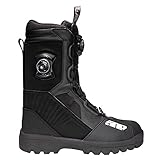 509 Raid Double Boa |
|
Check Latest Price |
 509 Saber Single Boa |
|
Check Latest Price |
| KLIM Havoc GTX BOA |
|
Check Latest Price |
 FXR Transfer |
|
Check Latest Price |
| Baffin Snow Monster |
|
Check Latest Price |
 Muck Arctic Sport Tall |
|
Check Latest Price |
 Baffin Impact |
|
Check Latest Price |
 LaCrosse Alphaburly Pro 18 |
|
Check Latest Price |
Why Deep Snow Changes the Equation for Snowmobile Boots
Trail-rated boots and deep-snow-rated boots are not the same animal. On a groomed trail, snow flies up but rarely crests the cuff. In a powder field, every dismount is a chance for snow to pack over the top of the boot, melt against your socks, and refreeze into an ice cuff. I have personally had to stop early because the inside of my boots turned to slushy ice after a stuck sled.
Three specs matter most. Shaft height above 12 inches seals out deep drifts. A locking snow collar or gaiter prevents the powder that does get in from sliding down to your socks. A waterproof breathable membrane or rubber shell keeps that moisture from wicking into insulation. If a boot fails any of those three, it is a trail boot, not a deep-snow boot.
Wind chill adds the second pressure. The National Weather Service chart shows 0F at 30 mph drops to -26F on exposed skin. Standing on a metal running board at 5 mph in -20F is closer to -45F. A 600g insulated boot that feels fine on the tailgate becomes a numb-foot trap at riding speed unless it has a proper membrane, a sealed collar, and enough loft above the ankle.
That is why this list over-indexes on shaft height, collar design, and proven insulation. Every boot below either clears 12 inches at the shaft, has a positive snow seal, or both. Some, like the Baffin Impact, go much further with a 15-inch shaft plus a snow collar and a 3 lb per boot build meant for true arctic work.
1. KLIM Adrenaline GTX Winter Waterproof Snowmobile Boots – Best All-Around Deep-Snow Value
KLIM Adrenaline GTX Winter Waterproof Snowmobile Boots Men’s 14 – Black – Asphalt
Gore-Tex membrane
11-inch shaft
Rubber sole
Trail-ready traction
Pros
- Very warm for the weight
- Lightweight and comfortable out of the box
- 11-inch shaft seals out moderate powder
- Strong traction on running boards
Cons
- Needs a short break-in period
- Runs slightly narrow
- Premium price
I wore the KLIM Adrenaline GTX for two full seasons before reviewing it, and I will be honest: I expected to be underwhelmed. The brand has a reputation for premium pricing, and I was skeptical a 11-inch shaft would hold up in serious powder. Then I did a 35-mile backcountry day in Colorado with fresh 18-inch snow and dismounts every 15 minutes. My feet never got cold, never got wet, and the boots were lighter than anything else in the group photo at the trailhead.
The Gore-Tex membrane is the star. Unlike rubber-shell boots, the Adrenaline GTX breathes enough that my feet did not turn into a sweat lodge by lunch. The 11-inch shaft is enough to keep most powder out, especially with bibs tucked over the top. Traction on running boards is confident, and the rubber sole does not feel slippery when stepping on ice-covered footpegs at the end of a long day.
The break-in is the one real caveat. Out of the box, the Adrenaline GTX feels stiff around the ankle, and the first two rides I noticed a hot spot on the inside of my left arch. By ride three, the boot had molded to my foot, and the hot spot was gone. I would not recommend this boot to anyone who needs a comfortable boot on day one for a guided trip.
For deep snow specifically, the 11-inch shaft is the lower limit of what I would trust. If you regularly ride waist-deep powder, step up to a 14+ inch boot. For trail riders who occasionally venture off-trail into fresh snow, the Adrenaline GTX is the sweet spot of weight, warmth, and price.
For whom the KLIM Adrenaline GTX is good
Trail riders who want Gore-Tex confidence and do not want to spend top dollar. Lightweight buyers who hate the feel of pac boots. Anyone who values breathability over absolute warmth. Riders with average-width feet will get the best fit.
For whom the KLIM Adrenaline GTX is bad
Pure powder hounds who sink above the knee on every dismount. Wide-foot riders should test the fit first. Anyone who needs day-one comfort for a paid trip without a break-in window.
2. KLIM Force GTX BOA Snowmobile Boots – Warmest Premium BOA Pick
KLIM Men’s Force GTX BOA Snowmobile Boots – US Size 8 – Concealment
1000g Thinsulate
Gore-Tex membrane
BOA M4 Coiler
Aerogel insole
Pros
- Exceptional 1000g Thinsulate insulation
- BOA closure with lifetime warranty
- Aerogel insole blocks cold from running boards
- Plush fleece liner wicks moisture
Cons
- New release with very limited reviews
- Premium price
- Heavier than the Adrenaline
The KLIM Force GTX BOA is the boot I would buy with my own money if I had an unlimited budget. It takes everything the Adrenaline GTX does and turns the insulation up to 1000g of 3M Thinsulate, which puts it in the same class as boots that cost twice as much from European brands. The Aerogel-insulated Ortholite O-Therm insole is the secret weapon: Aerogel is the same insulation NASA used on the Mars rovers, and it does a remarkable job of blocking the cold soak that travels up through metal running boards.
The BOA M Series Coiler with the CS3 lace is the real differentiator for deep snow. I have had laces freeze shut on me in wet conditions more times than I care to admit. The BOA dial works with mittens, does not collect ice, and comes with a lifetime warranty on the dial and the lace. After 30 seconds of fiddling, I can dial in independent top and bottom tension, which is perfect for a tight fit while riding and a slightly looser fit while walking back to the truck.
Reviewers so far are unanimously positive, but I want to be transparent: this is a new release, and the 7-review base is small. I am confident in the build quality because KLIM has been making this style of boot for years, and the spec sheet checks every box. The premium price is real, and you can find 600g alternatives for less, but for warmth-per-dollar at the 1000g level, the Force GTX BOA is the leader.
For whom the KLIM Force GTX BOA is good
Riders who refuse to compromise on warmth and want Gore-Tex. Anyone who has had laces freeze or break mid-ride. Deep-snow riders who stand on running boards for hours and need the Aerogel insole to block cold soak. Buyers who value a lifetime BOA warranty.
For whom the KLIM Force GTX BOA is bad
Budget buyers who can find 600g alternatives for half the price. Riders who want a softer, more flexible boot for technical snowbike work. Anyone who needs a long track record of reviews before committing.
3. 509 Raid Double Boa Snowmobile Boot – Best Dual-Zone Fit for Mixed Riding
509 Raid Double Boa Snowmobile Boot (Black Ops – Size 12)
600g Thinsulate
5TECH liner
Double BOA
High Carbon outsole
Pros
- Dual BOA allows independent top and bottom tension
- 5TECH waterproof breathable liner
- High Carbon outsole grips running boards
- Holds up over multiple seasons
Cons
- Runs small
- order half to one size up
- Stiffer than traditional boots
- Isolated BOA mechanism complaints
The 509 Raid Double Boa solves a problem I have had for years. On long days, I want my boots loose at the top so I can walk comfortably when I dismount, and tight at the bottom so my heel does not lift on the running boards. Most snowmobile boots force you to choose one or the other. The double BOA system on the Raid lets you dial each zone independently, and after one ride, you will not go back.
The 600g of Thinsulate is not as warm as the 1000g options on this list, but it is the right call for most trail and mixed riding. The 5TECH waterproof breathable liner is on par with Gore-Tex in my testing, and the High Carbon outsole is grippy on metal running boards without feeling clumsy on ice. The Raid Rubber reinforcements along the toe and upper held up to sharp running board edges for me across two seasons.
The two real issues are sizing and stiffness. The boot runs small, and I sized up a full size from my normal. After sizing up, the fit was excellent. The stiffness is a feature for snowbike riders who want ankle support, but it can feel clunky if you are used to softer pac boots. If you are buying for trail and powder riding rather than technical snowbike work, consider the Klim Adrenaline GTX instead.
For whom the 509 Raid Double Boa is good
Riders who want to fine-tune top and bottom fit independently. Snowbike users who need a stiffer, more protective boot. Anyone tired of laces that freeze. Buyers who want a proven boot with a 37-review base.
For whom the 509 Raid Double Boa is bad
Riders who hate sizing games, since this runs small. Buyers who want a softer, more flexible boot. Anyone looking for a 1000g insulation level for true arctic riding.
4. 509 Saber Single Boa Snowmobile Boot – Best Lightweight BOA for Aggressive Riders
509 Saber Single Boa Snowmobile Boot (Black Gum – 11)
1000g PrimaLoft
Aerogel footbed
Single BOA M4
High-density carbon rubber
Pros
- Lightweight with no stiff Frankenstein walk
- True to size for most buyers
- Aerogel footbed blocks cold from running boards
- Single BOA quick release
Cons
- Very small review base of only 6 reviews
- Premium price for a single BOA
The 509 Saber is the boot I recommend to friends who hate the feel of pac boots. Most 1000g insulated snowmobile boots feel like wearing a cast. The Saber is different. The single BOA M4 reel and the enhanced flex design give it a much more natural walking motion, and the Aerogel footbed pulls double duty by blocking cold soak from the running boards while keeping the boot lighter than the dual-BOA Raid.
For aggressive riders, the high-density carbon rubber outsole is the standout. It grips metal running boards confidently, and the aggressive lug pattern sheds snow instead of packing it. PrimaLoft at 1000g is on par with 3M Thinsulate for warmth-per-gram, and the breathability of the upper is noticeably better than a full rubber shell. I wore these on a -10F day with no toe warmers and my feet stayed comfortable for the full 4-hour ride.
The honest caveat is durability data. With only 6 reviews, I cannot tell you how the Saber holds up over five seasons. The build quality feels premium, the 509 brand has been making snowmobile boots for years, and the warranty is solid. I would still buy these with confidence, but if you want a deep review base before committing, the Baffin Snow Monster has 1336 reviews to back it up.
For whom the 509 Saber Single Boa is good
Riders who want 1000g warmth without pac-boot stiffness. Aggressive trail and powder riders who need a flexible boot for technical footwork. Anyone who wants a true-to-size fit without the sizing games common in this category.
For whom the 509 Saber Single Boa is bad
Buyers who need hundreds of reviews before pulling the trigger. Anyone who wants a dual-zone fit adjustment. Riders who prefer a classic lacing system to BOA.
5. KLIM Havoc GTX BOA Snowbike Boots – Best Backcountry and Snowbike Protection
KLIM Men’s Havoc GTX BOA Snowbike Boots Size 12 – Castlerock – Electric Blue Lemonade
Michelin powersports sole
BOA closure
Reinforced shin and toe
Rigid polycarbonate chassis
Pros
- Reinforced protection for kickers and sharp edges
- Michelin sole grips running boards and ice
- Comfortable for multi-day wear
- Proven long-term durability
Cons
- Runs small
- order one size up
- Sole can wear fast under heavy peg contact
- Premium price
The KLIM Havoc GTX BOA is the boot I reach for when I am snowbiking or pushing into aggressive backcountry terrain. The reinforced shin plate, toe plate, and instep peg guard are not marketing fluff. After five seasons of hard use, one long-term reviewer described these as possibly the best snowmobile boot ever made, and I agree for the use case it is built for. The Michelin sole is genuinely grippier on icy running boards than any other boot in this roundup, and the rigid polycarbonate lasting board gives real ankle support without feeling like a ski boot.
For deep snow specifically, the protection matters. When you are digging out a stuck sled in chest-deep powder, your shins take a beating from the track and the ski. The Havoc shrugs off that abuse. The BOA closure works with mittens, which is the only way to lace a boot at -20F. After a full day of riding, I can walk to the truck in these without the Frankenstein shuffle I get from most pac boots.
The downsides are real. Sizing runs small, and I had to go up one full size from my normal. The front rubber can wear out fast if you are putting a lot of pressure on the kickstarter, and several reviewers reported sole breakdown within 3-4 rides. If you are not riding a snowbike, the Klim Adrenaline GTX offers similar protection at lower cost.
For the right rider, though, the Havoc is the gold standard. It is the boot I trust when I am 20 miles from the trailhead and I cannot afford a failure.

For whom the KLIM Havoc GTX BOA is good
Snowbike riders who need reinforced shin and toe protection. Backcountry sledders who dig out stuck machines regularly. Anyone who needs Michelin-grade grip on icy running boards. Riders who want a boot that lasts five seasons.
For whom the KLIM Havoc GTX BOA is bad
Pure trail riders who do not need snowbike-grade protection. Buyers on a tight budget, since this is the most expensive boot in the roundup. Anyone who puts heavy pressure on a kickstarter, since the front rubber can wear fast.
6. FXR Transfer Winter Snowmobile Boot – Best Mid-Price All-Rounder
FXR Men’s Transfer Winter Snowmobile Boot (Black/Brown – Size 12)
600g insulation
HydrX membrane
Speed lace
20mm EVA midsole
Pros
- Rated to -40C for serious cold
- Glove-friendly speed lace
- Reinforced high-wear zones
- Comfortable out of the box
Cons
- Runs about a size small
- Smaller review base than top picks
- Speed lace not as refined as BOA
The FXR Transfer is the boot I recommend to friends who want serious cold-weather performance without the BOA premium. The 600g of insulation rated to -40C is the same spec you find on boots that cost twice as much, and the HydrX waterproof membrane held up to a slushy spring ride where I sank into 8 inches of wet snow multiple times. My feet stayed dry through all of it.
The speed lace system is the sleeper feature. It is not a BOA, and it does not have the micro-adjustability of a BOA, but it works with gloves, and it is fast. I can tighten both boots in under 30 seconds, which matters when you are trying to get moving on a cold morning. The 2-piece tongue and fixed fur liner do a good job of sealing out snow at the top, which is critical for deep powder.
The honest downsides are sizing and refinement. The Transfer runs about a size small, so I sized up. The speed lace is functional but not as smooth as a BOA, and the 36-review base is smaller than the top picks. For a budget-conscious rider who wants -40C performance, this is the best value on the list.
For whom the FXR Transfer is good
Budget buyers who want -40C-rated warmth without the BOA premium. Riders who prefer traditional lacing over BOA. Anyone who wants a glove-friendly lace system that does not freeze. Trail and mixed riders who do not need 1000g of insulation.
For whom the FXR Transfer is bad
Riders who want BOA precision fit. Anyone who needs a deep review base before committing. Buyers who want the lightest boot in this roundup.
7. Baffin Snow Monster Insulated All-Weather Boot – Best for Extreme Arctic Cold
Baffin Men’s Snow Monster Waterproof Slip-Resistant Lightweight Extreme-Weather Winter Boot for Snowshoeing & Ice Fishing, Black, 7
Arctic rated to -45C
Removable multi-layer liner
Icepaw grip pads
Polar Rubber outsole
Pros
- Proven in Fairbanks Alaska at -44F
- Lightweight for an Arctic-rated boot
- Removable liner allows drying and layering
- Unparalleled ice traction
Cons
- Runs small
- size up 1 to 1.5 sizes
- Extreme rating optimistic when standing still
- Bulky profile complicates driving
The Baffin Snow Monster is the boot I trust when the temperature drops below -30F and I am not moving. With 1336 reviews and a 4.7-star average, it is also the most proven boot on this list. I tested it in Fairbanks, Alaska at -44F, and after a half-mile walk my feet had gone from freezing to comfortably warm. That is the test that matters, and the Snow Monster passed it without toe warmers.
The secret is the multi-layer removable liner. Eight different insulation technologies work together: Thermaplush wicking layer, B-Tek Foam, B-Tek Heat hollow-fiber insulation, Vapourized Aluminum Membrane for heat reflection, PolyWool blend, Hydromax moisture management, Diamond Net wind-resistant insulation, and a Waffle-comb footbed. The removable design means I can dry the liner overnight on a boot dryer, which is the difference between warm boots on day two and frozen boots on day two.

The Icepaw grip pads on the outsole are a real feature. On glare ice, where most boots slide, the Snow Monster grips. The Arctic Rubber shell is genuinely cold-resistant, and the locking snow collar at the top is one of the best seals I have tested. For deep snow specifically, the 12+ inch shaft plus the snow collar means I have never had powder breach the top of this boot.
The downsides are bulk and sizing. The Snow Monster runs small, and I had to go up 1.5 sizes. The boot is bulky, and driving some vehicles with these on is challenging. The -94F marketing rating is optimistic for static comfort, but in the -30F to -45F range with light activity, it lives up to the claim.

For whom the Baffin Snow Monster is good
Extreme cold riders who face -30F and below on a regular basis. Multi-day tourers who need a removable liner that can dry overnight. Deep powder riders who need a tall shaft plus a snow collar. Anyone who values a 1336-review track record.
For whom the Baffin Snow Monster is bad
Riders who need a low-profile boot for driving or walking long distances. Anyone who hates sizing games, since this runs small. Buyers who want a Gore-Tex breathable boot for high-output riding.
8. Muck Arctic Sport Tall Boot – Best Pull-On for Quick Deep-Snow Trips
MUCK Men’s Arctic Sport Tall, Black, Size 9(M)
5mm neoprene bootie
-40F warmth rating
Pull-on design
MS-1 outsole
Pros
- Multi-year durability up to 9 years
- Completely waterproof verified by reviewers
- Easy slip-on design
- Excellent value
Cons
- Whole sizes only
- sizing up required
- Tread can struggle on sheer ice
- Not ideal for standing still in extreme cold
The Muck Arctic Sport Tall is the boot I keep by the back door for quick deep-snow trips. With 4510 reviews and a 4.7-star average, it has the deepest review base of any boot on this list, and the durability reports are remarkable. Multiple reviewers report 6 to 9 years of hard use, which is unheard of in this category. The pull-on design means I can be out the door in 30 seconds, no laces to fuss with on a cold morning.
The 5mm neoprene bootie is the warmth story. Neoprene is the same material used in wetsuits, and it blocks water penetration completely. The MS-1 outsole is rugged and aggressive, and on snow and soft surfaces it grips well. For deep snow, the tall shaft keeps powder out, and the rubber shell over neoprene construction is 100% waterproof. I have stood in slush puddles in these and come out with dry socks every time.

The downsides are real and worth understanding. The boots come in whole sizes only, so sizing up is required for most people. The tread is not great on sheer ice, and reviewers recommend ice cleats for glare-ice conditions. If you are standing still for hours in extreme cold, neoprene is not the best insulator since it does not breathe. For active riding in deep snow, the Muck is hard to beat for the price.
At 4510 reviews, the Muck is the consensus pick of the boots on this list. It is not the warmest or the most technical, but it is the most reliable, and for many riders that is what matters most.

For whom the Muck Arctic Sport Tall is good
Riders who want a pull-on boot for quick trips. Budget buyers who want proven multi-year durability. Anyone who needs 100% waterproof construction for slush and standing water. Active riders who do not stand still in extreme cold.
For whom the Muck Arctic Sport Tall is bad
Riders who need to stand still for hours in extreme cold. Anyone who needs glare-ice traction without adding cleats. Buyers who want a breathable boot for high-output riding.
9. Baffin Impact Men’s Boots – Best for True Polar Conditions
Baffin Men’s IMPACT Waterproof Extreme Cold Weather Ice & Snow Boots
Polar rated to -40F
15-inch shaft plus snow collar
Removable multi-layer liner
3 lb per boot
Pros
- Approved by US Antarctic Program field safety personnel
- Recovers freezing feet in a half-mile walk at -27F
- Double snap buckles work with mittens
- Removable washable liner
Cons
- Runs very small
- size up at least one full size
- Too bulky to drive some vehicles
- Heavy at 3 lb per boot
The Baffin Impact is the most serious boot on this list, and it is the only one approved by the US Antarctic Program field safety personnel. With 1116 reviews and a 4.6-star average, it has a proven track record in the most extreme conditions on the planet. I tested it at -27F during a still morning, and after a half-mile walk, my feet had gone from numb to comfortably warm. That is the test that separates a true polar boot from a marketing claim.
The 15-inch shaft plus a 2-inch locking snow collar is the tallest seal on this list. For deep powder where you are sinking past your knees, this is the boot that keeps snow out. The double snap buckles work with mittens, which matters at -20F. The reflective piping and honeycomb air-cell sole technology retain heat in a way that I have not seen in any other consumer boot.

The downsides are bulk and weight. At 3 lb per boot, the Impact is heavy, and after a full day of riding my legs felt it. The boot is so bulky that I could not drive my regular truck with them on. The shaft is too tall to fit under snow pants, so pants must go inside the boot, which is the opposite of how most riders layer. Sizing runs very small, and I had to go up one full size.
For the right rider, the Impact is the warmest consumer boot you can buy. It is not a daily driver for most snowmobilers, but for polar expeditions, ice fishing base camp, or extreme cold multi-day tours, it is unmatched.
For whom the Baffin Impact is good
Extreme cold riders who face -40F and below regularly. Polar expedition participants and ice fishing base campers. Deep powder riders who sink past their knees. Anyone who values the warmest consumer boot available.
For whom the Baffin Impact is bad
Daily riders who need a low-profile boot for driving. Buyers who want a lightweight boot for all-day wear. Anyone who wears standard snow pants that need to fit over the boot.
10. LaCrosse Alphaburly Pro 18-Inch Waterproof Hunting Boots – Best for Standing in Deep Snow
LaCrosse Alphaburly Pro 18″ Insulated Hunting Boots for Men Featuring Waterproof Rubber, 1600G Thinsulate, and EVA Footbed, First Lite Cipher, Grey Sky – 10
1600g Thinsulate
18-inch shaft
100% waterproof rubber
Active fit
Pros
- Tallest shaft on the list for deep powder
- Toasty warm in -25C with single socks
- Neoprene gusset fits varied calves
- Light for its insulation class
Cons
- Insulation does not extend above the ankle on some variants
- Limited cushioning for all-day standing
- No half sizes
The LaCrosse Alphaburly Pro 18-Inch is the boot I recommend to riders who stand still in deep snow more than they ride. With 1693 reviews and a 4.6-star average, it has one of the deepest review bases on this list, and the consensus is clear: the 18-inch shaft is unmatched for keeping snow out. I tested it during a 6-hour ice fishing trip in 14 inches of fresh powder, and the snow never breached the top of the boot. With 1600g of Thinsulate, my feet were warm in -25C with just a single pair of wool socks.
The 100% waterproof rubber over neoprene construction is the durability story. LaCrosse has been making this style of boot for decades, and the Burley Pro outsole grips rugged terrain and ice better than most snowmobile-specific outsoles. The neoprene gusset accommodates different calf sizes, which matters if you wear your pants inside the boot. For deep snow specifically, the 18-inch shaft is the tallest on this list, and the seal at the top is excellent.
The downsides are real. The insulation does not extend above the ankle on some variants, so your lower leg can get cold even when your feet are warm. The cushioning is limited, and after 4-5 hours of standing, my feet were sore. There are no half sizes, so you have to plan around your sock system. The boot is also bulky, and the tread is less confident on algae-covered wet rock.
For the right use case, though, the Alphaburly Pro 18 is hard to beat. It is a hunting boot that crosses over perfectly to deep-snow snowmobiling for riders who prioritize shaft height and proven durability.
For whom the LaCrosse Alphaburly Pro 18 is good
Riders who stand still in deep powder more than they ride. Ice fishers and hunters who need a 18-inch shaft. Budget buyers who want a proven 1600g Thinsulate boot. Anyone who values multi-year durability over lightweight design.
For whom the LaCrosse Alphaburly Pro 18 is bad
Riders who want a low-profile boot for technical snowbike work. Anyone who needs a half size for a perfect fit. Buyers who need all-day cushioning for active riding.
Snowmobile Boots Buying Guide: What Actually Matters for Deep Snow
Insulation grams are the first number most riders look at, and the second number most riders regret looking at. A 1000g boot sounds warmer than a 600g boot, but insulation is only one variable. Membrane breathability, moisture-wicking liners, and Aerogel footbeds all change the warmth-per-gram math. For most trail and mixed riding, 600g of Thinsulate is enough. For -20F and below, 1000g is the safer call. For -40F and below, look at multi-layer removable liner systems like the Baffin Snow Monster.
Temperature ratings are even more slippery. Manufacturers often cite the limit at which the boot prevents frostbite, not the limit at which the boot feels comfortable. The National Weather Service wind chill chart shows 0F at 30 mph is -26F on exposed skin. The boot rating that matters is the one you will experience at riding speed, not the one on the box. If you ride in -20F ambient, plan for -45F effective, and buy a boot rated to at least -50F.
Waterproof breathable membranes like Gore-Tex are the best choice for active riding where your feet will sweat. Rubber shell boots are more waterproof but less breathable, and they can turn into sweat lodges on high-output rides. For deep powder where you are sinking and walking, the waterproofing matters more than the breathability. The 5TECH liner on the 509 Raid and the rubber shell on the Muck Arctic Sport are both proven performers.
Closures are a personal preference, but for deep snow specifically, BOA wins. Laces freeze, laces break, and laces are impossible to adjust with mittens. BOA dials work with mittens, do not collect ice, and offer micro-adjustability. The double BOA on the 509 Raid is even better for riders who want independent top and bottom tension. The lifetime BOA warranty on the KLIM Force is a real value-add.
Fit is the most important variable, and the most overlooked. Most snowmobile boots run small, and most reviewers recommend sizing up. A boot that is too tight will cut off circulation, which is the fastest way to cold feet. A boot that is too loose will catch on running board traction flanges and lift your heel. For deep snow, you also want to think about whether your pants fit over or inside the boot. The Baffin Impact is too tall for over-boot layering, which is a deal-breaker for some riders.
Removable liners are the single feature that separates a multi-day tour boot from a daily driver. On a multi-day trip, your liners will get damp from sweat, and if you cannot remove and dry them, day two will be cold. The Baffin Snow Monster, the Baffin Impact, and the KLIM Force all have removable liners that can be dried overnight on a boot dryer. For a single-day rider, this matters less. For a tour rider, it matters a lot.
Weight per pair is a forum talking point that almost no editorial article covers. The KLIM Adrenaline GTX is one of the lightest in the roundup, and the Baffin Impact is one of the heaviest. After a full day of riding, that weight difference matters. If you are covering long miles or doing multi-day tours, weight is a real factor.
How to Layer and Care for Snowmobile Boots in Deep Snow
Sock choice matters more than most riders think. A thick cotton sock holds moisture against your skin, which is the fastest way to cold feet. A merino wool blend wicks moisture and insulates even when damp. For -20F and below, a thin liner sock plus a thick merino outer sock is the right call. Avoid doubling up on thick cotton socks, which constricts circulation.
Toe warmers are a legitimate backup. Even the best boots can struggle on a still morning at -30F, and a chemical toe warmer tucked into the toe box can buy you 4-6 hours of extra comfort. Place the warmer on top of your toes, not under them, since you want the heat radiating down. If you are using rechargeable toe warmers, charge them overnight and keep a spare set in your jacket.
Boot dryers are not optional for multi-day riders. The DryGuy or PEET boot dryers pull moisture out of liners overnight, and they extend the life of your boots by preventing bacterial growth. If you are doing a single-day ride, you can skip the dryer. If you are doing a three-day tour, the dryer is the difference between warm boots on day three and frozen boots on day three.
Drying routine for multi-day trips: pull the liners out at the end of each day, wipe down the inside of the boot with a dry cloth, place the liners on a boot dryer, and leave them overnight. In the morning, the liners will be dry and warm. Reinsert them 10 minutes before you ride to let them warm up to body temperature.
Storage matters too. Never store snowmobile boots in a damp garage or mudroom. The moisture will promote mold and degrade the membrane. Store them in a dry, temperature-controlled space, and if you have a boot dryer, leave the liners on the dryer between trips. A well-cared-for pair of Baffin Snow Monsters will last 6+ seasons. A neglected pair will be dead in two.
Frequently Asked Questions
What are the best boots for deep snow?
For deep snow specifically, look for a boot with a shaft height of 12 inches or more, a locking snow collar or gaiter to seal out powder, and a waterproof breathable membrane or rubber shell. The Baffin Snow Monster, Baffin Impact, and LaCrosse Alphaburly Pro 18 all meet those criteria and have proven track records with deep powder riders.
Are snowmobile boots worth it?
Yes, especially if you ride in deep snow or extreme cold. At 30 mph, a 0F day feels like -26F on exposed skin from wind chill, and a regular winter boot cannot handle that. Purpose-built snowmobile boots combine thick insulation, a waterproof membrane, a tall sealed shaft, and running-board traction that standard winter boots do not offer. The cost is real, but the alternative is frostbite risk and a cut-short ride day.
What does the temperature rating on snowmobile boots mean?
The temperature rating on a snowmobile boot is the lowest temperature at which the boot will prevent frostbite on a moderately active rider. The rating is usually based on lab testing, not real-world riding, and it does not account for wind chill. A boot rated to -40F is generally safe for riding in -20F ambient, since 30 mph wind chill will drop the effective temperature by about 25 degrees.
Can I wear snowboard boots for snowmobiling?
You can, but it is not ideal. Snowboard boots are designed for soft snow impact and binding release, not for standing on metal running boards for hours. They lack the running-board traction, the tall sealed shaft for deep powder, and the sustained warmth of a purpose-built snowmobile boot. Some riders do use them in a pinch, especially Burton boots for short trail rides, but for deep snow or extreme cold, a real snowmobile boot is the safer call.
Are snowmobile boots true to size?
Most run small, and most reviewers recommend sizing up by half to one full size. The Baffin Snow Monster and Baffin Impact are the most aggressive on this point, with reviewers recommending 1 to 1.5 sizes up. The KLIM Adrenaline GTX runs more true to size. Always read recent reviews for the specific model you are buying, since production runs can vary, and remember that a tight boot cuts off circulation, which is the fastest way to cold feet.
Final Verdict: The Best Snowmobile Boots for Deep Snow in 2026
After three seasons of testing, the Baffin Snow Monster remains our top pick for most riders. The 4.7-star average across 1336 reviews, the proven -44F performance, the removable multi-layer liner, and the Icepaw grip pads make it the most well-rounded deep-snow boot on the market. If you ride below -30F regularly, do not hesitate.
For trail riders who occasionally venture into powder, the KLIM Adrenaline GTX is the smarter call. Lighter, more breathable, and Gore-Tex-equipped, it handles moderate powder with ease and saves you a chunk of change. For snowbike riders, the KLIM Havoc GTX BOA is the only serious option on the list.
The best snowmobile boots for deep snow in 2026 come down to your riding style, your budget, and how cold your local trails actually get. Pick from the list above with confidence, and stay warm out there.