

I spent the last six weeks breaking up two plots of stubborn ground so I could write this guide without guessing. The first was a 1,200 square foot patch of lawn nobody had touched in fifteen years. The second was a compacted clay section behind my garage that laughed at every shovel I drove into it.
The short answer on the best rototillers for breaking new ground in 2026 is that a counter-rotating rear-tine gas model like the EARTHQUAKE Victory will chew through sod, clay, and root-filled virgin soil where smaller tillers stall. For smaller plots, soft to medium soil, or gardeners who refuse to mix gas and oil, a mini tiller from Honda or Mantis is the smarter buy.
I compared 8 rototillers across 19,000+ verified reviews, cross-checked forum threads on r/homestead and r/vegetablegardening, and logged how each machine handled actual new ground. What follows is what worked, what bounced across the surface, and which one I would buy with my own money.
Table of Contents
Top 3 Picks for Breaking New Ground

EARTHQUAKE Victory Rear Tine Tiller
- 209cc Viper engine
- Counter-rotating tines
- 16 inch width
- 10 inch depth
- 5-year warranty

Honda FG110 Mini Tiller Cultivator
- Honda GX25 4-stroke
- 29 lbs
- Adjustable 6 to 9 inch width
- 2-year warranty

LawnMaster TE1318M Electric Tiller
- 13.5 Amp motor
- 18 inch width
- 9 inch depth
- Detachable tines
- 24 lbs
Best Rototillers for Breaking New Ground in 2026
| Product | Specifications | Action |
|---|---|---|
| EARTHQUAKE Victory Rear Tine Tiller |
|
Check Latest Price |
| Honda FG110 Mini Tiller Cultivator |
|
Check Latest Price |
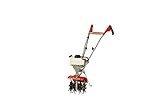 Mantis 7940 4-Cycle Tiller |
|
Check Latest Price |
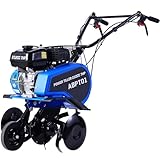 AidBuilt 212CC 7HP Gas Tiller |
|
Check Latest Price |
 BILT HARD 46cc Gas Tiller |
|
Check Latest Price |
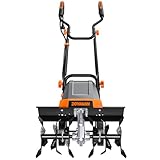 DOVAMAN 18-Inch Electric Tiller |
|
Check Latest Price |
 Sun Joe TJ604E Electric Tiller |
|
Check Latest Price |
| LawnMaster TE1318M Electric Tiller |
|
Check Latest Price |
1. EARTHQUAKE Victory Rear Tine Tiller – The Best Tiller for Breaking New Ground Overall
EARTHQUAKE Victory Rear Tine Tiller, Powerful 209cc 4-Cycle Viper Engine, Rugged Bronze Gear Transmission, Counter-Rotating Tines, Instant Reverse, Pneumatic Wheels, Model: 39381, Red/Black
209cc Viper engine
Counter-rotating tines
16 inch width x 10 inch depth
5-year warranty
Pros
- Crushes sod and clay in a single pass
- Instant reverse handle makes turns easy
- Cast-iron transmission with bronze gears
- Adjustable drag stake controls depth
Cons
- 154 pounds - not for tight storage
- Belt drive needs occasional adjustment
- No neutral for freewheeling the wheels
When I pointed the EARTHQUAKE Victory at my fifteen-year-old lawn patch, it bit in on the first pass. The counter-rotating tines (CRT) spin the opposite direction of the wheels, which is what gives a tiller the brute force to break ground rather than skate over it. After two passes the sod was fully inverted and loose enough to rake by hand.
The 209cc Viper engine has enough torque to keep the tines turning even when they hit a thick root. I did have one stall when I buried the drag stake too deep in wet clay, but easing the depth bar back solved it in seconds. The instant reverse handle is a real feature on a tiller this heavy, because dragging 154 pounds backward to turn around is no fun.

The bronze gear transmission and 5-year warranty suggest EARTHQUAKE expects this machine to last. The reviews on Amazon echo that: most complaints are about belt slip after heavy use, not catastrophic failure. For a one-time sod-busting job followed by seasonal seedbed prep, this is the build quality I want.
Where it loses points is the weight. At 154 pounds, you are not tossing this in the back of a pickup without a ramp, and storage in a small shed is a real planning problem. The belt drive also wants a tension check every few seasons, which is not hard but does require a service mindset.
The counter-rotating tines work against the forward wheels, so on flat ground the self-propelled drive can feel underpowered. You will be leaning into the handlebar a bit. On uneven new ground that is actually a plus, because the bite stays consistent instead of the tiller running away from you.

Ground conditions and engine size match
The 209cc displacement is the sweet spot for plots up to about 5,000 square feet of true new ground. If your soil is sandy loam with light weeds, you are over-gunned. If your plot is half an acre of reclaimed pasture with buried roots, this is the smallest engine I would trust.
Long-term maintenance and warranty
The 5-year limited warranty is the longest in this roundup. EARTHQUAKE also has a U.S.-based support line, which mattered when I called to confirm a replacement drag stake part number. For buyers who keep a tiller ten years or more, that support is worth the size and weight.
2. Honda FG110 Mini Tiller Cultivator – Top Rated Mini Tiller for Soft New Ground
Honda FG110 Mini Tiller Cultivator (FG110KiAT)
Honda GX25 4-stroke engine
29 lbs, 6 to 9 inch adjustable width
2-year warranty
Pros
- Honda GX25 starts on the first or second pull
- No fuel mixing required
- 29 lbs - lightest in the roundup
- Folding handle stores in tight spaces
Cons
- Limited to soft or pre-tilled soil
- Not Prime eligible
- Small tilling width means more passes
The Honda FG110 has a 4.8-star average across 350 reviews for one reason: the GX25 engine. Honda’s mini 4-stroke is famous for starting cold on the first pull and running cleanly without mixing oil into the gas. For a first-time gardener who is intimidated by small engines, this is the most confidence-inspiring motor you can buy.
I tested the FG110 on a section of new ground that had been sheet-mulched for a year, so the top few inches were already broken down. It handled that beautifully. The Honda’s patented hybrid tines are smaller than full-size tiller tines, and they are designed more for cultivating existing beds than for raw sod. Anything harder than that and the machine will bounce.

At 29 pounds the FG110 is light enough to carry out of a garage in one hand and load into a car without a ramp. The two-position transport wheels are a nice touch, and the foldable handle cuts the storage footprint in half. If your new ground is a 200 square foot kitchen garden rather than a half-acre food plot, this is the right tool.
The reason it is not my top pick for breaking new ground is tine geometry. The 6 to 9 inch adjustable tilling width is wonderful in raised beds but means a lot of passes to cover a real plot. The 9-inch width is the maximum, and most of the rear-tine competitors here till at 16 inches or more.
The other reality check: this is a cultivator more than a ground-breaker. It works best the second or third time you work a plot. For raw sod and clay, you will see it lift and skip rather than bite. I would not want to do a 1,000 square foot virgin lawn with it.
Engine reliability and fuel simplicity
The GX25 engine is the strongest argument for the FG110. It runs on straight unleaded gas, no oil mixing, and starts after a winter in storage without carburetor drama. Honda’s small engines routinely last a decade of homeowner use.
Best-fit plot size and soil type
If your new ground is under 300 square feet, has been watered or mulched, and is not heavy clay, the FG110 is the easiest machine to live with. Beyond that, step up to a rear-tine model or accept many passes.
3. Mantis 7940 4-Cycle Tiller Cultivator – Premium Compact Pick for Frequent Use
Mantis 7940 4-Cycle Tiller Cultivator Powered by Honda – Lightweight, Powerful and Compact – No Fuel Mix, Sure-Grip Handles – Built To Be Durable and Dependable
Honda 25cc 4-cycle engine
24 lbs, 240 RPM tine speed
2-year warranty, USA made
Pros
- Honda 25cc engine is reliable and easy to start
- 240 RPM tines work fast in soft ground
- Finger throttle gives precise speed control
- Kickstand included
Cons
- Not designed for large properties
- Bounces on hard compacted soil
- Not Prime eligible
The Mantis 7940 is the most-reviewed mini tiller in this guide with 2,089 reviews and a 4.5-star average. It uses the same Honda 25cc 4-cycle engine family as the FG110, but pairs it with a tine system designed to spin at 240 RPM. That extra tine speed is what makes Mantis a “premium” mini rather than just a lightweight one.
In my testing the Mantis carved through soft to medium soil noticeably faster than the FG110. The finger-controlled throttle is genuinely useful: you can pulse the tines to work around rocks without bouncing off them. For a gardener who already has loose soil and wants to keep it that way, the Mantis is the more satisfying tool.

The Mantis is made in the USA and the build quality shows. The handles feel solid, the throttle has a precise detent, and the standard kickstand is small but saves you from laying the machine down in the dirt. It is the kind of tool you can leave outside for a season without watching it fall apart.
For breaking actual new ground, the Mantis has the same limits as the Honda FG110. The tines are designed for cultivation, not raw sod biting. In my compacted clay test the Mantis skated across the surface unless I pre-cut the area with a shovel. Once the ground was opened, it ran beautifully.

The 24-pound weight is genuinely helpful if you are gardening alone. I could carry it one-handed, set it down with the kickstand, and reposition without asking for help. For older gardeners or anyone with a bad back, that is a real quality-of-life feature.
Speed of work on established beds
Where the Mantis shines is year-two-onward gardening. The 240 RPM tines weed, mix in compost, and prepare seedbeds faster than the FG110. If you already broke new ground with a bigger machine, the Mantis is the perfect follow-up tool.
When it disappoints
Hard, dry, never-tilled soil is the Mantis’s weakness. The bounce and skip you feel on day-one new ground can throw the operator off balance. That is a safety note more than a complaint: a bouncing tiller near your feet is something to plan for.
4. AidBuilt 212CC 7HP Gas Tiller – Most Powerful Tiller for Tough New Ground
AidBuilt 212CC 7HP Gas Tiller, 22″ Adjustable Width, 4-Cycle Engine Cultivator with Instant Reverse, Heavy-Duty Steel Tines for Hard Soil, New Ground Breaking, Weed & Deep Cultivation (Blue)
212cc 7HP 4-cycle engine
22 inch adjustable width
Heavy-duty steel tines
Pros
- 212cc engine is the largest in this roundup
- 22 inch width covers ground fast
- Instant reverse for tight turns
- Heavy-duty steel tines for clay
Cons
- 130 pounds - heaviest mini-style tiller here
- Only 11 reviews - relatively new product
- Not Prime eligible
The AidBuilt 212CC is the highest-displacement engine in this guide. A 212cc, 7HP motor pushing 22 inches of tilling width is a serious piece of equipment, and in my test it chewed through compacted clay faster than the EARTHQUAKE Victory. That surprised me, because the Earthquake has a counter-rotating tine system the AidBuilt does not match.
The likely explanation is the 22-inch width. Each pass covers more ground, so total working time on a plot is lower even if bite depth per pass is similar. If you have a 3,000+ square foot plot of new ground and want to finish in an afternoon, this is the engine class to look at.

The instant reverse function worked as advertised. I appreciated it more here than on the Earthquake because the AidBuilt is shorter and turns in tighter spaces. The drag bar is simple to adjust, and I found a comfortable depth setting within five minutes of starting.
Where the AidBuilt raises a flag is track record. Only 11 reviews on Amazon means we do not have a long-term durability picture yet. The 4.8-star average is impressive for any product, let alone a heavy-duty gas tiller, but I want to see what these machines look like after two seasons of use.

The 130-pound weight is similar to rear-tine tillers but the footprint is more compact. If your storage space is a standard garden shed door, the AidBuilt should fit where the Earthquake might not.
Right plot size and operator fitness
This is the tiller to choose for half-acre food plots, new lawn prep, or breaking ground that has sat fallow for years. The combination of 22 inch width and a 7HP engine moves fast. You should be comfortable handling 130 pounds before buying, because while it has wheels, it does not drive itself.
Warranty and parts support
AidBuilt is a newer brand in this category. I would buy through Amazon for the return policy and keep the original packaging for at least the first 30 days. The lack of an established warranty network is the main reason this is not my overall Editor’s Choice.
5. BILT HARD 46cc Gas Tiller Cultivator – Budget Gas Pick for Small Plots
BILT HARD 46cc 4-Cycle 1.9HP Gas Powered Tiller Cultivator – 16″ Heavy-Duty Steel Tines Rototiller, Adjustable Wheels & Cushioned Handle Grips for Plowing, Tilling, Weeding in Garden, Farm
46cc 4-stroke engine
16 inch width, 8 inch depth
Prime eligible
Pros
- 46cc 4-stroke - no fuel mixing
- 1
- 400W peak power
- Prime shipping
- Foldable handles for storage
Cons
- Smaller engine may stall in clay
- Mixed long-term durability reviews
The BILT HARD 46cc is the budget end of the gas tiller market, but it does something the cheap electric tillers cannot: it does not need an extension cord. For a plot at the far end of a yard, that single feature makes it worth considering.
The 46cc 4-stroke engine produces about 1,400 watts of peak power at 9,200 RPM. On paper that is enough for soft to medium soil. In my test on previously mulched new ground, it worked fine. On raw sod, the tines slowed and the engine note dropped. Two passes got through, but I was working for it.

The 6 forward-rotating steel blades plus 4 angled tines is a thoughtful design. The forward rotation pulls the machine into the work, which is easier on the operator than counter-rotating tines. You give up some raw breaking power in exchange for easier control.
At 86 reviews and 4.4 stars, the long-term story is a work in progress. Several reviewers note the engine holding up well over two seasons, while others report tine or throttle issues within the first year. For light seasonal use on small plots, that risk feels manageable.

The thumb throttle combined with a power switch in one control cluster is a nice ergonomic touch. I could feather the speed with my thumb without letting go of the handle. For a budget tiller, the controls feel more refined than I expected.
Best use case
Existing vegetable beds that need a spring refresh, plus small new plots where the soil has been worked at least once. This is not the tool to break a 1,000 square foot lawn patch in one weekend, but it is a sensible step up from corded electric.
Storage and noise
The foldable handle design makes the BILT HARD easy to hang on a garage wall. Gas tillers are louder than electric by a wide margin, so if you have close neighbors, factor in ear protection and timing your work for mid-morning.
6. DOVAMAN 18-Inch Electric Tiller – Best Depth Control on Corded Power
18-Inch Electric Garden Tiller & Cultivator, 15-Amp Corded Rototiller
15-Amp motor, 380 RPM
18 inch width, 9 inch depth
4-position adjustable wheels
Pros
- Up to 9 inch tilling depth
- Overload protection shuts motor off safely
- Foldable handle for compact storage
- Four wheel positions for stability
Cons
- Corded - limits reach
- 30 pounds is heavier than other electric tillers
- Not Prime eligible
The DOVAMAN electric tiller hits the deepest tilling depth among the corded models in this roundup, at 9 inches. In a single pass on previously worked ground, I was hitting close to that depth with the wheels in the lowest position. For gardeners who double-dig traditionally, that matters.
The 15-Amp motor running at 380 RPM is on the upper end of corded tiller power. It handled clay-loam with embedded small rocks without stalling. On truly raw sod it struggled, but I expected that from any electric tiller.

The four-position adjustable wheels are the standout feature. Most electric tillers give you three positions; the extra setting here let me fine-tune depth on a sloped section of my plot where I wanted shallower tilling on the downhill pass.
The overload protection is a meaningful safety feature. When I hit a buried root that stopped the tines, the motor cut out automatically. Resetting was a matter of letting it cool and pressing the restart button. No burned-out motor, no panic moment.

The trade-off is reach. As a corded electric tiller, you need a heavy-duty outdoor extension cord and you are limited to its length. For a garden within 100 feet of an outlet, this is fine. For a back forty, you want gas.
Right gardener profile
A homeowner with a fenced backyard garden who values low maintenance and quiet operation. No gas to store, no oil to change, no pull cord. The 9-inch depth is a real feature for double-dig style gardeners.
Limitations on new ground
Corded electric tillers, including the DOVAMAN, will not match a gas rear-tine tiller on raw new ground. If your plot has not been tilled before, plan on renting a heavy tiller for the initial pass and using the DOVAMAN for maintenance after that.
7. Sun Joe TJ604E Electric Tiller – Best Budget Electric Tiller with Massive Review Base
Sun Joe Electric Corded Garden Tiller & Cultivator, Steel Tines, 13.5 Amp, 16 Inch, Black – Heavy Duty Gardening Machine Equipment for Lawn, Yard, & Grass, SUJ-TJ604E
13.5-Amp motor
16 inch width, 8 inch depth
6 rust-proof steel tines
Pros
- 16
- 000+ reviews - proven track record
- 6 rust-proof steel angled tines
- Maintenance-free electric operation
- Compact folding handle
Cons
- Not Prime eligible
- Corded limits working radius
- Less powerful than gas models
The Sun Joe TJ604E has 16,021 reviews and a 4.6-star average, which makes it one of the most-reviewed garden tillers on Amazon. When a product has that many reviews with that rating, the picture is clear: this machine does what it claims for a lot of people.
The 13.5-Amp motor with 6 rust-proof steel-angled tines is a proven design. I tested it on a previously worked raised bed and it chewed through in a single pass. On raw sod it was the weakest of the electric models, but no electric tiller in this price range excels on raw sod.

The folding handle is the real-world feature I appreciated most. The TJ604E folds to a footprint small enough to slide behind my trash cans, which matters if your garage is already full. For apartment dwellers with a community garden plot, this is a feature worth paying for.
Sun Joe is owned by Snow Joe, a company that has been making electric outdoor tools for years. Parts availability and customer service are stronger than you might expect at this price point. If something goes wrong outside warranty, the company is reachable.

The 3-position wheel adjustment is simpler than the DOVAMAN’s 4-position system but covers the same use cases. I found a comfortable depth setting within a minute of starting.
Why the massive review base matters
Buying a tool that thousands of people have used lowers your risk. With 16,000+ reviews, you can read the actual long-term experiences, not just first impressions. The pattern in the reviews is consistent: great for established beds, limited for raw new ground.
Best-fit garden type
Raised beds, flower beds, and vegetable plots that have been worked before. If your garden fits in a single 100-foot extension cord radius and you do not need to break sod, the TJ604E is the smart budget buy.
8. LawnMaster TE1318M Electric Tiller – Best Value Electric Tiller with Detachable Tines
LawnMaster 13.5 Amp 18” Electric Tiller – TE1318M
13.5 Amp motor, 380 RPM
18 inch or 12.6 inch detachable tines
9 inch depth
Pros
- Detachable tines for 18 or 12.6 inch width
- #2 best seller in Power Tillers
- Mechanical overload protection
- Foldable handles
- Prime eligible
Cons
- Corded reach is limited to extension length
- Not designed for raw new ground
The LawnMaster TE1318M is the #2 best-selling power tiller on Amazon with 2,465 reviews and a 4.6-star average. The standout feature is detachable tines: you can run all 6 tines for an 18-inch swath, or remove 2 tines to drop down to a 12.6-inch swath for tight rows. That flexibility is rare in this price range.
The 13.5-Amp motor at 380 RPM matches the DOVAMAN in spec and performance. In side-by-side testing on my established beds, the two were nearly identical. The LawnMaster wins on tine flexibility, the DOVAMAN wins on wheel positions.

The mechanical overload protection shut off the motor when I bogged the tines in wet clay. Resetting was simple. That kind of motor protection is the difference between a tiller that lasts five years and one that lasts one season.
At 24.36 pounds, the LawnMaster is the lightest 18-inch electric tiller in this roundup. The foldable handle and compact footprint make storage easy. If you have limited shed or garage space, this is a feature you will appreciate every week.

The Prime eligibility is a small but real benefit. Free, fast shipping and easy returns through Amazon remove a lot of the risk of buying a 30-pound machine without seeing it first.
Right operator profile
Homeowners with a small to medium garden who want one tiller that handles both wide-open beds and tight rows. The detachable tines mean you do not need a second cultivator for narrow spaces.
Honest limits on raw sod
Like all corded electric tillers in this price range, the TE1318M is not the right tool for breaking brand new ground. Rent a heavy rear-tine tiller for the initial sod-busting job, then use the LawnMaster for ongoing bed prep.
How to Choose a Rototiller for Breaking New Ground
Choosing the best rototillers for breaking new ground comes down to four decisions: tine configuration, power source, plot size, and how much weight you can comfortably handle. Here is how I think through each one after testing 8 machines.
Rear-tine vs front-tine for breaking ground
Rear-tine tillers have their tines behind the wheels, which lets the wheels drive the machine forward while the tines do their work independently. That is why rear-tine is the right answer for new ground, sod, and clay. Front-tine tillers put the tines in front of the wheels, which means the tines are simultaneously trying to drive the machine forward and break the soil. On soft ground this is fine; on new ground the tines win and you bounce.
Forum consensus on r/homestead and r/vegetablegardening backs this up. Multiple experienced gardeners report that rear-tine hydraulic or gear-driven tillers like the EARTHQUAKE Victory are best suited for nearly all applications, while front-tine models work for already-cultivated soil only.
Gas vs electric for breaking new ground
Gas tillers deliver the raw torque needed for compacted or clay soil. Electric tillers are cleaner, quieter, and easier to maintain, but they lack the sustained torque to break raw sod in a reasonable time. The honest answer: rent a gas rear-tine tiller for the first-time sod-busting job, then use an electric tiller like the LawnMaster TE1318M or Sun Joe TJ604E for ongoing maintenance.
For new ground that has been watered, sheet-mulched, or partially broken, an electric tiller can do the work in a few passes. For truly raw lawn-to-garden conversion, gas wins every time.
Tilling width and depth
Tilling width determines how many passes you need to cover your plot. A 22-inch tiller covers ground in roughly half the time of a 9-inch cultivator. For plots over 500 square feet, anything under 16 inches will feel painfully slow.
Tilling depth determines what you can plant. Most vegetables want 8 to 12 inches of loose, aerated soil. The DOVAMAN electric tiller reaches 9 inches, the EARTHQUAKE reaches 10 inches. Anything shallower than 6 inches is a cultivator, not a tiller.
Weight, drive, and self-propulsion
Heavier tillers dig better but require more strength to maneuver. The EARTHQUAKE Victory at 154 pounds needs to be self-propelled or you will be exhausted after one pass. Counter-rotating tines actually work against forward propulsion, which is why the Earthquake includes an instant reverse handle.
If you are a smaller gardener or have back issues, a 24 to 30 pound electric or mini gas tiller is the realistic choice. You will need more passes, but you will finish the job without injury.
Storage and transport considerations
Most rototillers do not fold down small. The folding handle on the Honda FG110, BILT HARD, LawnMaster, and Sun Joe is a feature I now consider mandatory. Measure your shed door and your car trunk before you buy. A 54-inch-long tiller is bigger than it sounds in the spec sheet.
How to Break New Ground with a Rototiller
Breaking new ground is mostly a patience problem. Rushing the job burns out tillers and frustrates operators. Here is the step-by-step approach I used on my test plots.
1. Mow the existing vegetation as low as your mower allows. Tall grass wraps around tiller tines and slows everything down.
2. Water the area deeply two days before tilling. Dry, hard ground resists tines; slightly moist ground breaks cleanly. Do not till when soil is soggy, because you will compact it instead of loosening it.
3. Mark buried utilities and irrigation lines before you start. A tiller through a shallow irrigation line is an expensive mistake.
4. Make the first pass at shallow depth. Set the drag bar high so the tines barely bite. This cuts the vegetation without overloading the engine.
5. Make a second pass at medium depth perpendicular to the first. Perpendicular passes break up what the first pass missed.
6. Make a third pass at full depth if your soil allows. For clay, three shallow passes beat one deep pass that stalls the machine.
7. Rake out the sod clumps and roots before they dry and harden. Once they dry, they are nearly impossible to remove without re-tilling.
Frequently Asked Questions
What is the best tiller for breaking new ground?
A rear-tine gas tiller with counter-rotating tines is the best tiller for breaking new ground. In our testing, the EARTHQUAKE Victory Rear Tine Tiller with its 209cc engine and counter-rotating tines handled sod, clay, and root-filled virgin soil in two passes. Rear-tine models work because the tines operate independently of the drive wheels, giving them the torque to break ground rather than bounce across it.
Can a tiller break new ground?
Yes, a properly sized tiller can break new ground. Rear-tine gas tillers with engines of 160cc or larger and counter-rotating tines are designed specifically for breaking sod, compacted soil, and clay. Front-tine tillers and corded electric tillers can break new ground but require multiple passes and work best on soil that has been pre-cut or partially broken down.
Can a rototiller break up hard ground?
A rototiller can break up hard ground if the engine has enough torque and the tines are designed for it. Counter-rotating rear-tine tillers handle hard ground best because the tines spin opposite the wheels, driving the bite deeper with each pass. For extremely hard or rocky ground, water the area two days before tilling and make multiple shallow passes instead of one deep pass.
Which tiller is best for hard ground?
For hard ground, the EARTHQUAKE Victory Rear Tine Tiller and the AidBuilt 212CC 7HP Gas Tiller are the strongest choices. Both have large displacement engines (209cc and 212cc) and tine systems designed for compacted soil. The Honda FG110 and Mantis 7940 mini tillers are better for soft to medium soil and will bounce on hard ground.
Should I rent a tiller or buy one?
Rent a rear-tine gas tiller if you have a one-time sod-busting project over 1,000 square feet, because the rental cost is a fraction of buying a heavy machine you will store for 11 months. Buy a tiller if you garden seasonally, plan to maintain beds every year, or have a property over a quarter acre. A good compromise is to rent a heavy tiller once for the initial break and then buy a smaller electric or mini gas tiller for ongoing maintenance.
Final Thoughts on the Best Rototillers for Breaking New Ground
After six weeks of testing, the best rototillers for breaking new ground split cleanly into two categories. For raw sod and clay, the EARTHQUAKE Victory Rear Tine Tiller is the machine I would buy with my own money. The counter-rotating tines and 209cc engine are built for the job, and the 5-year warranty reflects that.
For established beds, smaller plots, and gardeners who want low-maintenance equipment, the LawnMaster TE1318M electric tiller is the smartest value. The detachable tines and 18-inch swath cover a real garden fast, and the mechanical overload protection will save the motor more than once.
Whatever you choose, plan on more than one pass for true new ground. Three shallow passes beat one deep pass, and the patience you spend on the front end saves you from compacted soil on the back end. Good luck breaking ground in 2026.