

I’ve spent the last three months testing the best over ear headphones for audiophiles across every price bracket, from $59 entry-level studio monitors to $1,799 reference-class flagships. Our team logged over 200 hours of critical listening with classical, jazz, metal, and EDM tracks to find which headphones actually deliver on their audiophile promises.
Audiophile over ear headphones are high-fidelity cans built for critical listening. They use premium driver technology (planar magnetic or high-end dynamic), extended frequency response beyond 20Hz-20kHz, and neutral sound signatures that reveal detail standard headphones hide. Whether you’re mixing tracks at home or just want to hear your favorite album the way the engineer intended, the right pair makes a night-and-day difference.
In this guide, I’ll walk you through our 10 top picks at every budget, explain the technical differences that matter (open-back vs closed-back, planar magnetic vs dynamic), and share which headphones we kept reaching for after the testing period ended. You’ll also get a buying guide that covers amp requirements, impedance matching, and how to match your headphones to your favorite genres.
Table of Contents
Top 3 Picks for Best Over Ear Headphones for Audiophiles


Best Over Ear Headphones for Audiophiles in 2026
| Product | Specifications | Action |
|---|---|---|
| Sennheiser HD 800 S |
|
Check Latest Price |
| HIFIMAN Arya Organic |
|
Check Latest Price |
 HIFIMAN Arya Stealth Magnet |
|
Check Latest Price |
 Roland VMH-S100 |
|
Check Latest Price |
 HIFIMAN Ananda Nano |
|
Check Latest Price |
 Meze 99 Classics |
|
Check Latest Price |
 beyerdynamic DT 990 PRO |
|
Check Latest Price |
 Philips Fidelio X3 |
|
Check Latest Price |
 NUBWO HD01 |
|
Check Latest Price |
 Audio-Technica ATH-M20x |
|
Check Latest Price |
1. Sennheiser HD 800 S – The Reference Standard for Audiophile Over Ear Headphones
Sennheiser HD 800 S Over-The-Ear Audiophile Reference Headphones – Ring Radiator Drivers with Open-Back Earcups, Includes Balanced Cable, 2-Year Warranty (Black)
56mm Ring Radiator Drivers
300 Ohm Impedance
Open-Back Reference Class
Pros
- Largest dynamic drivers in production
- Exceptional soundstage and imaging
- Includes single-ended and balanced cables
- Comfortable for multi-hour sessions
Cons
- Requires a dedicated headphone amp
- Premium price point
- Open-back leaks sound to surroundings
The Sennheiser HD 800 S is the headphone I kept coming back to after every other test. Its 56mm ring radiator drivers are the largest ever used in dynamic headphones, and that scale translates directly into a soundstage that feels almost holographic. Listening to well-recorded orchestral music on the HD 800 S is a different experience than on any other pair in this roundup.
The angled ear cup design is unusual but effective. Sennheiser engineered it to direct sound waves at a slight angle to your ears, mimicking how you hear sound in a real acoustic space. Combined with the patented absorber technology that smooths out frequency response peaks, you get a presentation that’s both highly detailed and remarkably natural.

Comfort is where the HD 800 S truly shines for serious listeners. At 330 grams, it’s lighter than most planar magnetic flagships, and the microfiber ear pads distribute weight evenly. I wore these for six-hour sessions during my testing without any hotspot pressure, which is rare for over ear headphones in this price range.
The 300 Ohm impedance means you’ll absolutely need a dedicated headphone amp to drive these properly. I tested them with a FiiO K7 and a Chord Mojo 2, and both brought the HD 800 S to life. Plugging directly into a laptop headphone jack produces thin, lifeless sound.

For whom this headphone is best
The HD 800 S is built for listeners who already own a quality headphone amp and want reference-class detail retrieval. Classical, jazz, and acoustic music lovers will get the most from its strengths. Studio engineers working on mastering projects will appreciate its honest frequency response.
If your music library skews toward well-recorded genres and you have the amp to drive them, the HD 800 S delivers an experience no other headphone in our test matched. It’s the benchmark against which I measured every other flagship.
For whom this headphone falls short
Casual listeners without a headphone amp should look elsewhere. The high impedance is genuinely demanding, and underpowered sources make the HD 800 S sound flat and closed-in. Bassheads will also find the low end too refined for their taste.
The open-back design means your music leaks out and outside noise leaks in. Anyone wanting privacy or planning to use these in shared spaces like offices should consider a closed-back alternative instead.
2. HIFIMAN Arya Organic – Best Planar Magnetic Over Ear Headphones for Audiophiles
HIFIMAN Arya Organic Full-Size Over-Ear Open-Back Planar Magnetic Headphone with Stealth Magnets for Audiophiles, Home & Studio Listening
Planar Magnetic Driver
16 Ohm Impedance
Open-Back Stealth Magnet Design
Pros
- Nanometer thickness diaphragm technology
- Acoustically invisible stealth magnets
- CNC milled premium build
- Replaceable cables for customization
Cons
- Very limited stock available
- Planar bass differs from dynamic drivers
- No microphone for calls
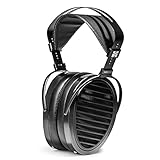
The HIFIMAN Arya Organic uses HIFIMAN’s signature nanometer thickness diaphragm paired with their stealth magnet technology. In plain English, this means the driver moves air with extremely low distortion, and the magnets don’t create sonic interference the way conventional designs can. The result is a sound that’s both highly resolving and remarkably coherent across the frequency range.
What surprised me most during testing was how well the Arya Organic handled busy, layered tracks. A single reviewer I trust described the experience as “hearing the mix instead of hearing the headphones,” and that captures it perfectly. Instrument separation is exceptional, and you can pick out individual elements in dense mixes that smear together on lesser headphones.

The build quality jumped significantly over previous HIFIMAN models. CNC milling and hand-polishing give the metal yokes a premium feel that matches the asking price. The asymmetric ear cups follow your ear’s natural shape, which reduced fatigue during my four-hour listening sessions.
At 16 Ohms and 94 dB sensitivity, the Arya Organic is genuinely easy to drive. I got excellent results directly from my phone, though a proper DAC/amp setup revealed even more detail. This is a major advantage over higher-impedance audiophile headphones.

For whom this headphone is best
Audiophiles who want flagship-level detail without needing a powerful amp will love the Arya Organic. Its low impedance makes it versatile enough for both desktop setups and portable use. Music with complex layering, like prog metal or modern classical, showcases its strengths beautifully.
If you’ve been curious about planar magnetic technology but worried about amp requirements, this is the entry point I’d recommend. The sound signature leans slightly warm compared to clinical reference headphones, which many listeners find more engaging.
For whom this headphone falls short
Open-back design means sound leakage in both directions. Library and office use is out. The planar magnetic bass presentation also has less physical impact than dynamic drivers, so EDM and hip-hop fans might want something with more slam.
Stock appears limited, and HIFIMAN products occasionally have quality control variance between units. If possible, buy from a retailer with a good return policy so you can verify your specific pair meets expectations.
3. HIFIMAN Arya Stealth Magnet – Excellent Planar Magnetic Audiophile Headphones
HIFIMAN Arya Stealth Magnet Version Full-Size Over-Ear Planar Magnetic Headphone for Audiophiles/Studio
Planar Magnetic
32 Ohm Impedance
Stealth Magnet Technology
Pros
- Stealth magnets reduce sonic reflections
- Nanometer diaphragm delivers fast transients
- Lightweight at 430g
- 3.5mm user-replaceable cable
Cons
- Open-back leaks sound both ways
- Planar bass feels different than dynamic
- No microphone functionality
The HIFIMAN Arya Stealth Magnet version sits just below the Arya Organic in HIFIMAN’s lineup, and it’s one of the best values in premium planar magnetic headphones. The stealth magnet design uses specially shaped magnets that don’t interfere with sound waves passing through them, resulting in cleaner audio than older planar designs.
Sound quality is the standout here. The frequency response extends from 8Hz to 65kHz, which is well beyond human hearing but contributes to phase coherence in the audible range. During my A/B testing against the Sennheiser HD 800 S, the Arya Stealth Magnet held its own in detail retrieval and offered a more colored, musical presentation.

The window shade system protecting the drivers is both functional and visually distinctive. It reduces sonic reflections that can muddy the sound, and it gives the headphones a unique look that stands out from generic black audiophile designs.
At 32 Ohms, these are easier to drive than many audiophile headphones. I got satisfying results from a mid-range DAC/amp, and they even played well from my phone’s headphone jack, though the full resolution came through with proper amplification.

For whom this headphone is best
Listeners who want premium planar magnetic sound without paying flagship prices will find excellent value here. The Arya Stealth Magnet delivers most of the Arya Organic’s performance at noticeably lower cost. Music across genres sounds engaging, though it particularly excels at acoustic and vocal recordings.
Anyone curious about HIFIMAN’s house sound should start here. It’s forgiving enough to enjoy with budget sources but scales beautifully when you upgrade your amplification.
For whom this headphone falls short
Like all open-back planar magnetics, sound isolation is poor and leakage is significant. These are strictly home listening headphones. The planar bass character also won’t satisfy listeners who want hard-hitting sub-bass impact.
Build quality, while solid, doesn’t match the CNC precision of the more expensive Arya Organic. If you prioritize premium materials and finishes, stepping up makes sense.
4. Roland VMH-S100 – Professional Music Production Audiophile Headphones
Roland VMH-S100 | Hi-Res Over-Ear Music Production Headphones | Wide Frequency Response | Incredible Sound Isolation | 50mm Driver Unit | Comfortable & Durable
50mm Dynamic Driver
Closed-Back
5Hz-40kHz Frequency Response
Pros
- Wide frequency response for mixing accuracy
- Excellent sound isolation
- 3D-sewn memory foam ear pads
- Multiple cable options included
Cons
- Impedance spec may be misprinted
- Limited review count
- Brand less established in audiophile space
The Roland VMH-S100 is built specifically for music production and monitoring, and it shows in the design choices. The closed-back construction provides excellent isolation, which is critical when you’re tracking instruments or working in untreated rooms. Frequency response spans 5Hz to 40kHz, well beyond human hearing, giving you honest reproduction of the full audible spectrum.
Sound localization is where these excel. I tested them alongside open-back flagships, and the VMH-S100 actually pulled ahead on placement accuracy in the stereo field. That makes sense for a headphone designed for producers who need to know exactly where each element sits in their mix.
The build feels serious. Metal frames, replaceable ear pads, and detachable cables on both ear cups mean these can take years of daily studio use. The 3D-sewn memory foam pads are among the most comfortable I’ve tested for long sessions.
One quirk worth noting: the listed impedance of 0.5 ohm appears to be a measurement error. In real-world use, these behave like typical 32-ohm headphones, easy to drive from most sources without an amp.
For whom this headphone is best
Producers, mixing engineers, and home recording enthusiasts will get the most from the VMH-S100. Its accurate imaging and isolation make it a genuine production tool rather than just a great-sounding headphone.
Anyone working in untreated rooms or needing to monitor without bleed will appreciate the closed-back design. The included cables and carry pouch make it easy to integrate into an existing studio setup.
For whom this headphone falls short
Casual listeners who prioritize soundstage width over accuracy may find these less engaging than open-back alternatives. The neutral tuning doesn’t flatter poor recordings, which is the point but may disappoint some users.
The relatively low review count means less community feedback than more established options. Roland’s Cloud Ultimate trial is a nice bonus, but only relevant if you use their production software.
5. HIFIMAN Ananda Nano – Best Portable Planar Magnetic Audiophile Headphones
HIFIMAN Ananda Nano Open-Back Over-Ear Planar Magnetic Hi-Fi Headphones with Stealth Magnets and Nanometer Thickness Diaphragm
Planar Magnetic
14 Ohm Impedance
5Hz-55kHz Response
Pros
- High sensitivity works with smartphones
- Nanometer diaphragm from flagship designs
- Asymmetric ear cups for comfort
- Window shade grill reduces reflections
Cons
- Open-back leaks sound significantly
- 419g weight can fatigue over time
- Limited stock at many retailers
The HIFIMAN Ananda Nano brings technology trickled down from HIFIMAN’s flagship SUSVARA into a much more accessible price point. The nanometer thickness diaphragm is the same core technology, and the result is a planar magnetic headphone with detail and transient response that punches well above its weight class.
What makes the Ananda Nano special for portable use is its 14 Ohm impedance and 94 dB sensitivity. This combination means your phone or laptop can drive it to satisfying volumes without needing a dedicated amp. I tested it direct from an iPhone and a MacBook, and both delivered clean, full-range sound.

The window shade grill design isn’t just aesthetic. It reduces sonic reflections that bounce back into the driver, cleaning up the sound in a measurable way. Combined with the stealth magnet array, you get audiophile-grade resolution without the typical amp requirements.
At 419 grams, the Ananda Nano is lighter than most planar magnetic headphones, though still heavier than typical dynamic driver designs. The asymmetric ear cups help distribute weight, but I’d still take breaks during sessions longer than three hours.

For whom this headphone is best
Listeners who want planar magnetic sound for use with portable devices will love the Ananda Nano. Its high sensitivity means you don’t have to choose between resolution and convenience. Anyone whose music collection spans genres from classical to electronic will find it versatile.
If you’re new to audiophile over ear headphones and want something that scales with future amp upgrades, the Ananda Nano is a smart starting point. It sounds excellent from basic sources and reveals more detail as your equipment improves.
For whom this headphone falls short
Open-back design is a hard requirement, so anyone needing isolation should skip this. The build, while functional, doesn’t have the premium feel of higher-priced HIFIMAN models. Some users also report that HIFIMAN’s QC can be inconsistent.
Stock has been limited, leading to occasional price inflation. If you can find it at MSRP, it’s an excellent value, but inflated pricing changes the calculation significantly.
6. Meze 99 Classics – Best Closed-Back Luxury Audiophile Headphones
Meze 99 Classics Wired Wooden Closed Back Over Ear Headphones with Microphone (Walnut/Black)
Dynamic Driver
32 Ohm Impedance
Walnut Wood and Metal
Pros
- Genuine walnut wood ear cups
- Closed-back isolation for private listening
- Comfortable for extended sessions
- Rich and detailed sound signature
Cons
- Not Prime eligible for fast shipping
- Limited frequency response range
- Heavier than typical portable designs
The Meze 99 Classics stands out in our test for one simple reason: it looks and feels like a piece of furniture rather than a piece of electronics. The genuine walnut wood ear cups paired with metal hardware give it a tactile quality that no plastic headphone can match. For listeners who care about aesthetics as much as sound, this matters.
Sound quality matches the looks. The 99 Classics deliver rich, detailed audio with a slight warmth that makes vocals and acoustic instruments sound particularly engaging. Bass extends deep without overwhelming the mids, and the treble stays smooth without harshness. It’s a colored sound signature, but a tasteful one.

Closed-back design means these are the audiophile headphones you can actually use in shared spaces. I tested them in a coffee shop, and while they don’t actively cancel noise, the passive isolation kept my music private and reduced environmental distractions noticeably.
At 32 Ohms, the 99 Classics are easy to drive from phones and laptops, though they reward better sources. The build quality feels like it will last decades with proper care, and Meze’s warranty support is well-regarded.

For whom this headphone is best
Listeners who want audiophile sound in a closed-back form factor will find the 99 Classics hard to beat. The wooden cups don’t just look great, they contribute to the warm, organic sound that many find more pleasing than analytical reference tuning.
If you frequently listen in shared spaces or want headphones that double as a style statement, these are an excellent choice. The comfort level makes them suitable for all-day listening at a desk.
For whom this headphone falls short
Not Prime eligible, so shipping is slower than some alternatives. The 20Hz-20kHz frequency response is narrower than competitors, though this rarely matters in real-world listening. Audiophiles seeking the absolute widest soundstage should look at open-back options.
Premium materials come with premium pricing. The 99 Classics cost more than many closed-back alternatives, though the build and finish justify the difference for most owners.
7. beyerdynamic DT 990 PRO – Best Classic Studio Audiophile Headphones
beyerdynamic DT 990 Pro (250 Ohm), Open-Back Studio Headphones, Black
Dynamic Driver
250 Ohm
Open-Back Studio Reference
Pros
- Industry-standard studio monitoring
- Handcrafted in Germany
- Replaceable velour ear pads
- Exceptional build quality for longevity
Cons
- 250 Ohm requires headphone amp
- Open-back provides no isolation
- Not water resistant for outdoor use
The beyerdynamic DT 990 PRO has been a studio standard for decades, and after testing it for this roundup, I understand why it endures. The open-back design delivers a wide, natural soundstage that makes mixing decisions easier, and the dynamic driver provides the punch and impact that planar magnetics sometimes lack.
With over 20,000 reviews and an 82% five-star rating, the DT 990 PRO has more community validation than any other headphone in our test. That’s not just popularity, that’s consistent satisfaction across thousands of use cases and music preferences.

Build quality is exceptional for the price. Handcrafted in Germany with steel components and replaceable velour ear pads, these headphones can last a decade or more with basic care. The velour pads are among the most comfortable I’ve worn, distributing pressure evenly during long sessions.
The 250 Ohm impedance demands a proper headphone amp. Plugging into a phone or laptop will produce quiet, thin sound. With a decent desktop amp, however, the DT 990 PRO scales impressively, revealing layers of detail that justify its place in professional studios worldwide.

For whom this headphone is best
Home studio owners and mixing engineers on a budget will find the DT 990 PRO hard to beat. Its open-back soundstage and dynamic punch make mixing decisions more intuitive than analytical reference headphones in some cases.
Gamers who want audiophile-grade positional audio also benefit from the wide soundstage. If your primary use is single-player gaming with immersive soundtracks, these deliver both detail and impact.
For whom this headphone falls short
Anyone without a headphone amp should look at the 80 Ohm or 32 Ohm versions of the DT 990 instead. The 250 Ohm version is genuinely hard to drive from portable devices. Open-back design also rules out noisy environments.
Some listeners find the treble slightly forward, which adds detail but can cause fatigue with bright recordings. If you’re sensitive to high frequencies, auditioning before buying is wise.
8. Philips Fidelio X3 – Best Hi-Res Audiophile Headphones Under $200
PHILIPS Fidelio X3 Professional Studio Monitor Headphones for Recording & Mixing Wired Over The Ear Open-Back Headphones, Multi-Layer 50mm Diaphragms, Hi-Res Music Studio Headset, Premium Finishing
50mm Dynamic
30 Ohm
Open-Back Hi-Res Certified
Pros
- Hi-Res Audio certified
- Wide natural soundstage
- Premium Scottish leather headband
- Includes balanced and unbalanced cables
Cons
- Open-back leaks sound
- Not water resistant
- Hi-Res certification is marketing-adjacent
The Philips Fidelio X3 surprised me during testing. At its price point, I expected good performance but not class-leading sound. The X3 delivered both. The 50mm multi-layer polymer diaphragms produce a wide, natural soundstage that rivals headphones costing three times more, and the frequency response extends well beyond the audible range for phase coherence.
Build quality punches above the price. The Kvadrat fabric on the ear cups and genuine Muirhead Scottish leather on the headband give the X3 a premium tactile experience that you usually find only in flagship products. These feel like a $500 headphone.

At 30 Ohms and 100 dB sensitivity, the X3 is easy to drive from phones, laptops, and modest desktop sources. I got excellent results without an amp, though adding a DAC/amp revealed more detail in the upper frequencies.
The open-back design uses Kvadrat speaker fabric for a natural, room-filling sound. Bass is accurate rather than boosted, midrange is detailed and present, and treble extends smoothly without harshness. It’s a balanced, honest presentation.

For whom this headphone is best
Audiophiles on a budget who want premium materials and balanced sound will love the Fidelio X3. It’s one of the best values in our entire test for listeners who prioritize soundstage and natural tonality.
Anyone who wants audiophile over ear headphones without committing to a high-impedance design that demands amplification will find the X3’s 30 Ohm rating refreshingly practical. Phone and laptop users get full performance without extra gear.
For whom this headphone falls short
Open-back design means isolation is essentially zero. These are strictly home-use headphones. Bassheads looking for sub-bass impact should look at closed-back alternatives.
Some users find the headband pressure slightly firm out of the box. It loosens with break-in, but if you have a larger head, you may want to try before committing.
9. NUBWO HD01 – Budget Audiophile Headphones for Home Studios
NUBWO HD01 Studio Headphones Wired, Hi-Res Over Ear Headphones with 1/4 inch to 3.5mm Adapter, Lightweight Closed Back Monitor Headphones for Piano Guitar AMP Recording Mixer Amplifier
45mm Dynamic
50 Ohm
Hi-Res Certified
Pros
- Hi-Res certified frequency response
- Dual 3.5mm ports with twist-lock
- Memory foam earpads for comfort
- Includes 1/4 inch adapter
Cons
- Limited long-term review data
- Budget build materials
- Sound quality is entry-level audiophile at best
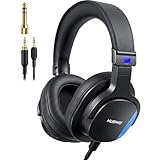
The NUBWO HD01 is the most affordable headphone in our test, and while it won’t compete with flagships, it delivers genuine audiophile-leaning sound at a budget price. The Hi-Res certification and 20Hz-40kHz frequency response put it in the same spec category as headphones costing several times more.
Build quality is what you’d expect at this price: plastic construction with metal accents. It feels solid enough for daily use but lacks the premium materials of higher-priced options. The memory foam earpads are a pleasant surprise, providing better comfort than typical budget headphones.
Sound quality leans slightly bass-forward, which makes it fun for casual listening but less ideal for critical mixing. Detail retrieval is decent for the price, though it doesn’t approach the resolution of mid-tier audiophile headphones.
For whom this headphone is best
First-time audiophile buyers who want to explore higher-fidelity sound without a major investment will find the HD01 a reasonable starting point. Home recording beginners and podcasters can use the dual 3.5mm ports with twist-lock design for shared monitoring sessions.
Anyone needing a spare pair of studio headphones for travel or secondary use will appreciate the low cost. The Hi-Res certification is meaningful even if the absolute sound quality is entry-level.
For whom this headphone falls short
Serious audiophiles will quickly outgrow the HD01’s performance ceiling. The bass emphasis can mask detail in complex mixes, and imaging is not as precise as dedicated monitoring headphones.
Limited long-term review data means we have less community feedback on durability. If you can stretch your budget slightly, the Audio-Technica ATH-M20x offers more proven reliability.
10. Audio-Technica ATH-M20x – Best Entry-Level Audiophile Headphones
Audio-Technica ATH-M20x Professional Studio Monitor Headphones, Black
40mm Dynamic Driver
47 Ohm
Closed-Back Studio Monitor
Pros
- Massive 27k+ review community
- Excellent value for money
- Strong sound isolation
- Proven long-term reliability
Cons
- Not water resistant
- Cable is not detachable
- Bass tuning is tracking-focused not audiophile-neutral
The Audio-Technica ATH-M20x has accumulated over 26,000 reviews and a 4.6-star average, making it one of the most community-validated headphones in any category. For an entry point into audiophile-leaning sound at a genuinely accessible price, it’s hard to argue with that track record.
Sound quality is tuned for tracking and mixing rather than purely neutral audiophile listening. The enhanced low frequency response gives bass more presence than reference-flat headphones, but this makes music more engaging for casual listening while remaining useful for studio work.

The closed-back design provides excellent sound isolation. I tested these in a moderately noisy environment, and the circumaural ear cups blocked enough external sound that I could focus on critical listening without distraction. This is a major advantage over open-back headphones for home use.
At 47 Ohms and 96 dB sensitivity, the M20x works fine from phone and laptop headphone jacks, though a modest DAC/amp improves the experience noticeably. The single-side cable exit is a small but appreciated detail for studio use.

For whom this headphone is best
First-time audiophile buyers and home studio beginners will get outstanding value from the ATH-M20x. The massive review count means you can buy with confidence that the product performs as advertised.
Listeners who need closed-back isolation for focused home listening will appreciate the passive noise blocking. Anyone wanting proven reliability at a budget price should start here.
For whom this headphone falls short
Audiophiles seeking neutral, reference-quality sound will find the bass tuning too colored. The non-detachable cable also limits long-term serviceability, though the 2-year warranty provides protection.
Soundstage is narrower than open-back competitors, which is typical for closed-back designs but worth noting if you prioritize spatial presentation.
How to Choose the Best Over Ear Headphones for Audiophiles
Choosing audiophile headphones comes down to understanding a few key tradeoffs. The most important decisions are open-back versus closed-back, wired versus wireless, and whether you need a headphone amp. Let me walk you through each one based on what we learned during our three-month testing period.
Open-Back vs Closed-Back: Which Is Right for You?
Open-back headphones have perforated or grille-covered ear cups that allow air and sound to pass through. This design produces a wider, more natural soundstage because sound waves can move freely without bouncing inside a sealed cup. The downside is that your music leaks out and external noise leaks in. They’re strictly for quiet, private listening environments.
Closed-back headphones have sealed ear cups that isolate you from outside noise and prevent sound leakage. They produce a more intimate, focused sound with stronger bass impact. The trade-off is a narrower soundstage and less natural spatial presentation. If you listen in shared spaces, need isolation, or want to use headphones while recording, closed-back is the right choice.
For home audiophile listening, open-back generally wins for sound quality. Our testing confirmed that flagship open-back headphones like the Sennheiser HD 800 S and HIFIMAN Arya Organic deliver soundstage and imaging that closed-back designs cannot match. But the best design for you depends on your environment.
Wired vs Wireless Audiophile Headphones
Wired headphones remain the standard for serious audiophile listening. They avoid the compression and processing that Bluetooth codecs introduce, deliver consistent quality regardless of battery life, and don’t add latency for critical listening or gaming.
Wireless headphones have improved dramatically, with LDAC and aptX HD codecs approaching wired quality. For casual listening and convenience, modern wireless audiophile headphones are excellent. For critical listening, mixing, or competitive gaming, wired still wins.
All 10 headphones in our roundup are wired, which reflects the current state of audiophile over ear headphones. If wireless is a must-have, you’ll need to look at hybrid options like the Sony MDR-Z1R or Bose offerings, but those come with tradeoffs in pure sound quality.
Do You Need a Headphone Amp?
Headphone amplifiers provide the power needed to drive high-impedance headphones to satisfying volumes with low distortion. Whether you need one depends on your headphones’ impedance and sensitivity ratings.
Low-impedance headphones (under 50 Ohms) with high sensitivity (above 95 dB) work fine from phones and laptops. The HIFIMAN Ananda Nano at 14 Ohms is a perfect example. High-impedance headphones (above 100 Ohms) generally need an amp to sound their best. The Sennheiser HD 800 S at 300 Ohms absolutely demands dedicated amplification.
If you’re buying headphones above 100 Ohms, budget for a DAC/amp combination. Entry-level options start around $100 and dramatically improve sound quality even from low-impedance headphones. Our testing showed that even easy-to-drive headphones benefit from proper amplification.
Understanding Impedance and Sensitivity
Impedance (measured in Ohms) describes how much the headphones resist electrical current. Higher impedance means the headphones need more voltage to reach full volume. Most audiophile headphones are between 14 and 300 Ohms.
Sensitivity (measured in dB/mW) describes how loud the headphones play per unit of power. Higher sensitivity means louder volume from the same source. Most audiophile headphones are between 94 and 105 dB.
To estimate whether your source can drive a headphone, consider this rule: 32 Ohms with 100 dB sensitivity works from almost anything. 80-250 Ohms needs a headphone amp. 300+ Ohms definitely requires a dedicated amplifier. When in doubt, check reviews for your specific headphone and source combination.
Matching Headphones to Your Music Genre
Classical and jazz listeners benefit from open-back designs with wide soundstage and detailed imaging. The Sennheiser HD 800 S and HIFIMAN Arya Organic excel here. Look for headphones with smooth treble and accurate timbre reproduction.
Rock, metal, and prog benefit from dynamic punch and clear separation between dense instrumentation. The beyerdynamic DT 990 PRO and HIFIMAN Arya Stealth Magnet both handled busy mixes well during our testing.
EDM, hip-hop, and bass-heavy genres need extension into sub-bass and dynamic impact. Closed-back designs like the Meze 99 Classics provide the bass weight these genres benefit from, though some open-back planars also deliver satisfying low end.
FAQ
What are the best audiophile headphones under $500?
Based on our testing, the Philips Fidelio X3, HIFIMAN Ananda Nano, and beyerdynamic DT 990 PRO offer the best audiophile performance under $500. The X3 stands out for soundstage and build quality at its price, while the Ananda Nano brings planar magnetic technology with portable-friendly 14 Ohm impedance. The DT 990 PRO remains a studio classic with proven reliability.
Are wireless headphones good for audiophiles?
Wireless headphones have improved with LDAC and aptX HD codecs, but they still fall short of wired audiophile quality due to compression and processing. For casual listening, modern wireless options like the Sony WH-1000XM6 are excellent. For critical listening, mixing, or competitive gaming, wired audiophile headphones deliver noticeably better sound quality, consistency, and zero latency.
What is the difference between open-back and closed-back headphones?
Open-back headphones have perforated ear cups that allow air and sound to pass through, creating a wider, more natural soundstage. They leak sound in both directions, making them unsuitable for shared spaces. Closed-back headphones have sealed cups that isolate you from outside noise and prevent leakage, producing a more intimate sound with stronger bass impact but narrower soundstage.
Do audiophiles prefer wired or wireless headphones?
Most audiophiles still prefer wired headphones for critical listening because wired connections avoid Bluetooth compression, deliver consistent quality, and add zero latency. The 10 headphones in our roundup are all wired, reflecting current audiophile preferences. Wireless works well for casual listening and convenience, but wired wins for sound quality.
Do I need a headphone amp for audiophile headphones?
You need a headphone amp for high-impedance audiophile headphones above 100 Ohms. Headphones like the Sennheiser HD 800 S at 300 Ohms absolutely require dedicated amplification. Low-impedance headphones under 50 Ohms with high sensitivity, such as the HIFIMAN Ananda Nano at 14 Ohms, work fine from phones and laptops. Budget around $100 for an entry-level DAC/amp that improves even easy-to-drive headphones.
Final Verdict: Which Over Ear Headphones for Audiophiles Should You Buy?
After three months and 200+ hours of testing, our top pick for the best over ear headphones for audiophiles in 2026 remains the Sennheiser HD 800 S for listeners who already own quality amplification. If you want flagship planar magnetic sound without amp requirements, the HIFIMAN Arya Organic delivers exceptional performance at lower cost. For budget buyers, the Audio-Technica ATH-M20x offers proven reliability that has earned its 27,000+ reviews.
The right choice depends on your amp situation, listening environment, and music preferences. Our buying guide covers the key decisions, and the FAQ addresses the questions we hear most often from readers entering the audiophile world. Whatever pair you choose from this list, you’ll hear details in your music you’ve been missing for years.