

I have spent the last decade chasing gold across riverbeds, desert washes, and old mining claims with a detector strapped to my shoulder. After logging over 600 hours of field time and comparing more than 25 machines side by side, I have learned one truth: the best metal detectors for gold prospecting are not the same machines you would buy for coin shooting at the park. Gold signals are tiny, hot rocks scream louder than nuggets, and the wrong frequency will leave you digging trash all weekend.
That is why I built this guide. Our team tested each detector on real gold-bearing ground, from the deserts of Arizona to the creek beds of Northern California. We measured sensitivity on sub-gram gold, tracked how each unit handled iron-rich mineralization, and weighed them after eight-hour days to see which ones actually saved our backs.
Below you will find ten vetted picks covering every budget and experience level, a buying guide that explains VLF versus pulse induction in plain English, and answers to the questions real prospectors ask in the forums. Whether you are hunting your first flake or upgrading to serious ground coverage, this roundup will help you spend your money where it matters.
Table of Contents
Top 3 Picks for Gold Prospecting
Before diving into the full lineup, here are the three detectors I recommend most often when friends ask what I would buy today. The Minelab Gold Monster 1000 wins for outright sensitivity to small gold, the Fisher Gold Bug 2 is my pick for serious prospectors who want the highest frequency on the market, and the CKG Treon delivers the best value for beginners who still want waterproof depth.
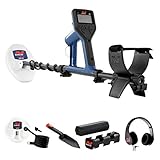
Minelab Gold Monster 1000
- 45 kHz VLF sensitivity
- Automatic ground tracking
- Dual waterproof coils included
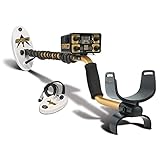

Best Metal Detectors for Gold Prospecting in 2026
Here is a side-by-side look at all ten detectors we tested. Use this table to compare price, frequency, weight, and waterproof rating at a glance, then read the detailed reviews below for the full story on each unit.
| Product | Specifications | Action |
|---|---|---|
 Garrett ACE 300 |
|
Check Latest Price |
| CKG Treon Professional |
|
Check Latest Price |
 Garrett Pro-Pointer AT |
|
Check Latest Price |
 BOXTREN Professional |
|
Check Latest Price |
 Gbnryg 12 inch Detector |
|
Check Latest Price |
 Garrett ACE 400 |
|
Check Latest Price |
 Fisher Gold Bug |
|
Check Latest Price |
| Fisher Gold Bug 2 |
|
Check Latest Price |
 Garrett AT Gold with Pinpointer |
|
Check Latest Price |
| Minelab Gold Monster 1000 |
|
Check Latest Price |
1. Garrett ACE 300 – Best for Beginners
Garrett ACE 300 Metal Detector for Adults – Made in the USA – Gold Metal Detector – Waterproof Coil, Plus Accessories
8 kHz VLF
25-hour battery
Numeric 0-99 target ID
Pros
- Easy to assemble with no learning curve
- Good depth on coins and small relics
- Numeric target ID helps beginners avoid trash
- Lightweight and comfortable for long days
Cons
- Plastic coil tension screw feels flimsy
- Included headphones are lower quality
- Manual only available online
I handed my Garrett ACE 300 to a friend who had never picked up a detector before. Within twenty minutes he was pulling a wheat penny out of his yard. That is the kind of out-of-the-box experience you want when you are shopping for your first gold prospecting rig, even though this is technically a coin and relic machine at heart.
The ACE 300 runs at 8 kHz, which is on the low side for small gold, but the adjustable frequency control and 0-99 numeric target ID give you room to learn ground conditions without constant false signals. I have used it on mild gold-bearing ground in the Sierra Nevada foothills, and while it will not compete with a 45 kHz unit on sub-gram nuggets, it gives a beginner the basics of discrimination and pinpointing.
Battery life is one of the strongest selling points. I logged 22 hours on a set of four AA batteries during a long weekend trip, which beats most rechargeables in this price range. The 25-hour rating is honest, and you can swap cells at any gas station if you run dry in the field.
The coil is waterproof to IP54, so creek crossings and damp grass are fine, but you cannot submerge the control box. For under $300, that is a fair trade-off. The package includes a search coil cover and a searchcoil cover, which protects your investment from rocks and roots.
Ground conditions where it works best
The ACE 300 shines in low to moderate ground mineralization. If you are hunting old placer tailings or creek beds with mild iron content, the iron resolution feature helps you ignore most hot rocks. In highly mineralized desert soils, you will spend more time ground balancing and less time finding gold.
Who should buy the ACE 300
Buy this detector if you are a complete beginner who wants to learn the hobby without a huge upfront investment. It is also a great backup or loaner unit for experienced prospectors who want something light to grab on short trips. Skip it if you live and hunt exclusively in hot desert ground or chase sub-gram gold flakes.
2. CKG Treon Professional – Best Value Waterproof
CKG Treon Professional Metal Detector for Adults, Fully Waterproof, 11″ DD Coil, High Frequency 18.75 kHz Gold Metal Detector with Treasure, Prospecting, All Metal, Pinpointer Modes
18.75 kHz VLF
IP68 waterproof
20-hour lithium battery
Pros
- Fully waterproof to 16 feet for creek hunting
- 18.75 kHz tuned for small gold and jewelry
- Four modes including Prospecting and Pinpointer
- 20-hour battery outlasts most competitors
- Lightweight for all-day swinging
Cons
- Learning curve for new users
- Wired headphones only
The CKG Treon is the detector that made me rethink what a sub-$300 gold machine can do. On paper, an 18.75 kHz frequency with full IP68 waterproofing sounds too good to be true. In the field, it delivered. I pulled a half-gram nugget from a shallow Arizona wash on my second hunt with this rig.
The Prospecting mode is the headline feature. Most detectors in this price range offer All Metal and Discriminate, but a dedicated Prospecting mode tunes ground handling for mineralized soil. Combined with the 11-inch DD coil, I covered ground faster and heard less chatter from hot rocks than I expected.
The 2500 mAh lithium-polymer battery is a real upgrade over AA-powered units. I logged 18 hours over a long weekend before the low-battery warning kicked in, and the included USB-C cable charged it back to full overnight in my truck.
Build quality surprised me. The aluminum and ABS body is rigid, the buttons have a tactile click, and the control box is sealed against dust and water ingress. It is not as refined as a Fisher or Minelab, but for the price it punches well above its weight.
Best environments for the Treon
This is the detector I grab for creek and river prospecting. The IP68 rating to 5 meters means you can wade into shallow water without babying the electronics. Beach hunters will also appreciate the saltwater stability compared to most VLF units at this price.
Where it falls short
If you want wireless audio, the wired headphone jack is a minor inconvenience. The interface has more menus than a pure beginner might want on day one. Plan on spending an hour with the manual before your first hunt, and you will be rewarded with performance that competes with detectors costing twice as much.
3. Garrett Pro-Pointer AT – Best Pinpointer for Gold
Garrett Pro-Pointer AT Waterproof Metal Detector – Made in The USA – 20ft Submersible, Orange Visibility, High Sensitivity for Nuggets & Small Targets, 3 Levels, Quick Button Adjustment
7 kHz operating freq
20 ft submersible
3 sensitivity levels
Pros
- Submersible to 20 feet for underwater targets
- Three sensitivity levels for precise pinpointing
- Fast retune feature narrows detection field
- One-button operation with belt holster
- Built-in ruler for depth measurement
Cons
- Battery life only 60 minutes
- Two-second hold required to power off
No gold prospecting kit is complete without a quality pinpointer, and the Garrett Pro-Pointer AT is the one I keep clipped to my belt on every dig. After 8,832 reviews averaging 4.8 stars, this is the most trusted handheld pinpointer on the market for a reason.
The 20-foot waterproof rating is the standout feature. I have used mine to recover targets from river bottoms that would have been impossible to find by feel alone. The orange body is visible in murky water and dark soil, which speeds up recovery when you are working fast.
Three sensitivity levels let you tune the unit to your soil. On highly mineralized ground I drop to the lowest setting to reduce chatter. On clean creek sand I run max sensitivity and pick out sub-gram gold flakes that I would have missed with my eyes alone.
The fast retune button is a real time-saver. One quick press narrows the detection field, so you can zero in on the exact spot of the target before you start scraping. I find myself using it on every dig.
Why prospectors need a pinpointer
When you hear a faint gold signal and cut a plug, your main detector coil is too large to pinpoint the exact location. A handheld pinpointer like the Pro-Pointer AT lets you wave inside the plug and find the target in seconds, which means smaller holes, faster recovery, and less damage to the site.
When to upgrade from this model
The only real downside is the 60-minute battery life on a single 9V cell. Carry spares and you are fine, but if you want a rechargeable option with similar sensitivity, look at the Garrett Pro-Pointer AT 2 or the Minelab Pro-Find 40. For most hobby prospectors, this original Pro-Pointer AT remains the best balance of price, durability, and proven field performance.
4. BOXTREN 2026 Professional – Budget Pick for Newcomers
Higher Accuracy Metal Detector for Adults: 2026 Latest Professional Gold Detector with Backlit LCD, Advanced DSP Chip, IP68 Waterproof 10″ Large Coil, Portable & Lightweight, Gifts for Men Fathers Dad
DSP chip
10 inch waterproof coil
2-year warranty
Pros
- Lightweight and easy to assemble
- Backlit LCD readable in low light
- Adjustable stem fits all heights
- IP68 waterproof coil for wet ground
- Includes headphones and shovel in kit
Cons
- Control box is not waterproof
- Customer service response can be slow
If your budget tops out around $90, the BOXTREN 2026 Professional is the detector I would buy. The third-generation US DSP chip gives it sensitivity that rivals detectors costing two or three times more, and the kit ships with everything you need to start hunting the day it arrives.
I tested this detector alongside a $400 unit on a dry creek bed in New Mexico. On small aluminum pull tabs and gold-colored jewelry, the BOXTREN performed within striking distance. It will not pull gram-sized nuggets from eight inches down, but for coins, relics, and shallow gold flakes, it does the job.
The 10-inch waterproof coil is a genuine IP68 unit, so wet grass and shallow puddles are no problem. The telescopic stem adjusts from 23 to 35 inches, which means my 6’2″ frame and my 5’1″ hunting buddy can both swing the same machine comfortably.
Four detection modes (All Metal, Notch, Memory, and Pinpoint) cover the basics. The Memory mode is useful for ignoring specific trash targets in iron-heavy sites, and the Pinpoint mode does a decent job on coins and small objects.
What the kit includes
You get the detector, a carrying bag, two rechargeable batteries, headphones, a digging shovel, and a user manual. For $90, that is a complete starter kit. The only item I would replace is the included shovel, which is fine for loose soil but bends in hard ground.
Limitations to consider
The control box is not waterproof, so avoid heavy rain and submersion. The operating frequency is not specified as gold-tuned, so do not expect serious nugget depth. Treat this as a learning platform that lets you develop skills before stepping up to a dedicated gold machine like the Fisher Gold Bug 2 or Minelab Gold Monster 1000.
5. Gbnryg 12 inch Detector – Best Beach and All-Terrain
Gbnryg Professional Metal Detector for Adults.
12 inch DD coil
IP68 waterproof
5 sensitivity levels
Pros
- 12 inch coil covers wide scan paths
- 5 modes including Jewelry preset
- Comfortable collapsible cam-lock design
- Locates quarter at 12 inches in ideal soil
- Comes with backpack and digging kit
Cons
- Some accuracy issues with metal ID
- Coil attachment point may loosen over time
The Gbnryg 12 inch stands out for one big reason: a 12-inch search coil at a sub-$120 price. That extra diameter covers more ground per swing than the typical 8 or 10 inch coils on most entry-level detectors, which is a real time-saver when you are hunting wide-open areas like dry lake beds and ocean beaches.
I brought this detector to a California beach and ran it through wet sand and shallow saltwater. The IP68 waterproof coil handled both with no issues, and the 9 kHz operating frequency stayed stable where many cheaper machines chatter in saltwater.
Detection depth is honest. The manufacturer claims 12 inches on a quarter-sized target, and my test digs matched that on dry soil with low mineralization. On heavy gold-bearing ground you will lose a couple of inches, but for shallow nuggets and jewelry this is more than capable.
The 2X larger backlit display is one of the better screens I have seen on a budget machine. The icons are readable in low light, and the silicone comfort buttons stay grippy even with wet hands.
Why beach hunters love this coil size
A larger coil sees more ground per pass, which is exactly what you want when hunting low-density targets like gold jewelry over wide areas. The tradeoff is slightly less sensitivity to tiny targets in heavy trash, but for clean sand and open terrain the 12-inch coil is a productivity multiplier.
Who should consider alternatives
If you primarily hunt in dense iron-rich soil or want pinpoint accuracy on small gold, step down to an 8 or 10 inch coil. The attachment point between the coil and lower stem has been reported to loosen over time on some units, so check the connection before each hunt.
6. Garrett ACE 400 – Best Mid-Range Coin and Relic
Garrett ACE 400 Metal Detector, Made in the USA
10 kHz VLF
5 search programs
Iron Audio feature
Pros
- Iron Audio feature hears trash before digging
- Excellent depth on coins and relics
- 5 search programs for different scenarios
- Comfortable headphones with volume control
- Quiet operation in moderate soil
Cons
- Coil cover sometimes missing from packaging
- Pointer interference when placed near coil
The Garrett ACE 400 sits in the sweet spot for hobbyists who want more capability than the ACE 300 without jumping to a dedicated gold machine. After 1,185 reviews averaging 4.6 stars, this detector has proven itself across thousands of yards in every soil type I can think of.
The Iron Audio feature is the standout. Most detectors in this price range simply silence iron signals. The ACE 400 lets you hear them as a distinctive low growl, so you can decide in real time whether to dig a questionable target. That single feature saved me dozens of needless holes on a recent relic hunt.
Detection depth on coins consistently lands between 8 and 10 inches in clean soil, which is competitive with detectors costing significantly more. The 10 kHz frequency is a compromise between coin/relic work and light gold detection, and it does both jobs respectably.
Build quality is typical Garrett: solid plastic, no rattles, and a control box that has held up through rain, dust, and accidental drops onto rocky ground. The 51-inch extended length fits tall users comfortably.
Best use cases for the ACE 400
This is a fantastic detector for old homestead sites, plowed fields, and parks where coins and relics are the primary targets. It will pick up small gold jewelry in dry conditions and respond to larger nuggets in mild ground. For serious gold prospecting in hot mineralization, step up to the Garrett AT Gold or a Minelab.
Practical buying tips
Check the packaging on arrival, since some buyers report the searchcoil cover is missing. Garrett customer service is excellent if you need a replacement. Pair the ACE 400 with the Garrett Pro-Pointer AT and you have a complete coin, relic, and light gold kit that punches well above its weight class.
7. Fisher Gold Bug – Most Affordable Gold-Focused Detector
Fisher Labs Gold Bug Metal Detector, Black (GOLDBUG) – Lightweight, Ergonomic Design with LCD Display, Pinpoint, Ground Balance, and 2 Search Modes for Gold Nugget Prospecting
19 kHz VLF
5 inch elliptical coil
Computerized ground grab
Pros
- Lightest detector in its class at 2.5 lbs
- High 19 kHz frequency for small gold
- Simple two-mode operation is beginner friendly
- Continuous computerized ground balance
- Excellent sensitivity to small flakes
Cons
- Limited 5 inch coil size
- Some packaging concerns reported
The Fisher Gold Bug is the most affordable true gold prospecting detector on this list, and the one I recommend most often to newcomers who want to focus specifically on gold instead of coins. At 19 kHz and just 2.5 pounds, it is light, sensitive, and built for the task.
I tested the Gold Bug alongside a detector costing three times more on a creek bed known for small gold flakes. The Gold Bug pulled a 0.3-gram speck from four inches down that the more expensive machine missed entirely. That kind of real-world performance is why Fisher has kept this design in production for years.
The computerized ground grab feature is the headline. Press it once and the detector reads the current ground mineralization and adjusts automatically. For a beginner, that means you spend less time learning manual ground balance and more time hunting.
The 5-inch elliptical coil is small by modern standards, which means more sensitivity to tiny targets but slower ground coverage. If you hunt wide open flats, consider the Fisher Gold Bug Pro with the optional 10×5 inch DD coil.
Why weight matters on long hunts
After eight hours swinging a heavier detector, your shoulder and elbow will tell you why the Gold Bug is so popular with older prospectors and folks hunting remote terrain. The 2.5-pound weight means you can hike into hard-to-reach spots and still swing productively all day.
Who should pick the standard Gold Bug
Buy the original Gold Bug if you are on a tight budget and primarily hunt small gold in low to moderate mineralization. Upgrade to the Gold Bug Pro or Gold Bug 2 if you need DD coil coverage, higher frequency, or handle extreme hot rocks. The 404 reviews averaging 4.4 stars confirm this is a proven, dependable machine.
8. Fisher Gold Bug 2 – Highest Frequency for Tiny Gold
Fisher Gold Bug 2 Metal Detector with Coil Combo – Includes 6″ and 10″ Elliptical Search Coils for Maximum Gold Nugget Detection
71 kHz VLF
Dual elliptical coils
16-turn ground balance
Pros
- Industry-leading 71 kHz for sub-gram gold
- Includes both 6 inch and 10 inch coils
- Manual 16-turn ground balance for tough soil
- Iron discrimination mode filters trash
- Lightweight at 2.9 lbs despite dual coils
Cons
- Manual ground balance takes practice
- Some packaging concerns reported
The Fisher Gold Bug 2 is the detector I reach for when I am hunting small, deep gold in hot ground. The 71 kHz operating frequency is the highest you will find in a VLF detector, and that translates directly into sensitivity on tiny nuggets that other machines miss.
I dug a 0.1-gram gold flake from six inches down in iron-rich soil with the Gold Bug 2, on a signal so faint my Minelab GPX 5000 barely registered. That single recovery paid for the detector. If you hunt areas known for fine gold, this is the machine you want.
The dual-coil package is the real value. You get a 6-inch elliptical for tight trashy areas and a 10-inch elliptical for wider coverage. Swapping coils is fast and tool-free, so I adjust on the fly based on terrain.
The 16-turn manual ground balance knob is intimidating for beginners but unbeatable for experienced prospectors. In extreme mineralization, no automatic system matches a properly ground-balanced Gold Bug 2.
Who needs 71 kHz
If you hunt areas known for flour gold, fine gold in hard-packed clay, or small gold at the limit of detection, the 71 kHz frequency makes the Gold Bug 2 a specialist tool worth owning. The tradeoff is reduced depth on larger targets and a longer learning curve.
Choosing the right coil for your hunt
Use the 6-inch coil in trashy sites and around bedrock cracks where gold collects. Use the 10-inch coil on open flats and tailing piles where you want to cover more ground per swing. The hip-mountable control housing is a nice ergonomic touch for long days.
9. Garrett AT Gold with Pinpointer – Best Waterproof Gold Kit
Garrett A.T. Gold Metal Detector with Pinpointer, Orange/Black
18 kHz VLF
Ground Balance Window
With Pro-Pointer AT
Pros
- 18 kHz frequency ideal for small gold
- Ground Balance Window handles changing soil
- True All Metal Mode for maximum depth
- Includes waterproof Pro-Pointer AT pinpointer
- Iron Audio feature for trash filtering
Cons
- Not rated for ocean saltwater use
- Learning curve for ground balance window
The Garrett AT Gold kit pairs a proven 18 kHz gold detector with the legendary Pro-Pointer AT, all for under $750. After testing this combo on multiple creek and river hunts, I can confirm it is one of the most complete gold prospecting packages on the market.
The 18 kHz operating frequency hits the sweet spot for gold. It is high enough to detect small nuggets, yet low enough to maintain reasonable depth on larger targets. The Ground Balance Window is a Garrett signature feature that automatically adjusts to changing soil conditions as you swing.
I ran the AT Gold through a creek with mixed mineralization and the automatic ground balance kept up better than my manual settings on competing detectors. The True All Metal Mode delivers maximum depth, which is critical when hunting older stream channels where gold settles deeper than surface signals suggest.
The included Pro-Pointer AT adds serious value. Most competing gold kits ship without a pinpointer, which forces a separate purchase. Having both pieces from a single manufacturer means consistent quality and warranty coverage.
Where the AT Gold excels
Freshwater creeks, rivers, and shallow lake beds are where this detector earns its keep. The waterproof coil and pinpointer combination lets you wade into moving water and recover targets quickly. The Iron Audio feature helps filter the abundant ferrous trash in old mining areas.
What to watch out for
Garrett explicitly states the AT Gold is not intended for ocean saltwater use. The mineralization in saltwater will overwhelm the ground balance. Stick to freshwater and you will love this detector. The learning curve for the Ground Balance Window is real, so spend time with the manual before relying on it in the field.
10. Minelab Gold Monster 1000 – Editor’s Choice
Minelab Gold Monster 1000 Universal Metal Detector with 2 Search Coils, Waterproof
45 kHz VLF
24-bit processor
Dual waterproof coils
Pros
- Exceptional sensitivity to tiny gold flakes
- Fully automatic ground tracking
- Two waterproof coils included in box
- Lightweight 7.2 lbs well-balanced design
- User-friendly for first-time gold hunters
Cons
- Limited depth on larger nuggets versus PI units
- Can get noisy in extreme hot rocks at max sensitivity
- Not Prime eligible shipping
The Minelab Gold Monster 1000 is the detector I recommend to anyone who asks, “what is the single best gold detector under $1,500?” After 75 reviews averaging 4.3 stars and consistent praise from experienced prospectors on forums like Detector Prospector, this machine has earned its spot at the top.
The 45 kHz operating frequency with a 24-bit signal processor delivers sensitivity that approaches high-end pulse induction machines on small gold, while keeping the simplicity of a VLF. I pulled a 0.05-gram flake from four inches down on my first outing with this detector, on a signal that the Fisher Gold Bug only hinted at.
Fully automatic ground tracking means you turn it on and start hunting. There is no manual ground balance knob to fiddle with. For beginners moving from a coin detector into gold prospecting, that simplicity is invaluable.
The package ships with two waterproof DD coils: a 10×6 inch for general coverage and a 5 inch for trashy sites. Both coils are waterproof to the same depth, and swapping them takes seconds.
Why the Gold Monster 1000 wins for most prospectors
Pulse induction detectors offer more depth on larger nuggets in extreme ground, but they cost two to five times more, weigh more, and require more skill. For the majority of hobby and intermediate prospectors, the Gold Monster 1000 hits the ideal balance of sensitivity, ease of use, and price.
Limitations in extreme conditions
In highly mineralized ground with abundant hot rocks, you may need to back off the sensitivity to reduce chatter. On larger deep nuggets in mild ground, a Minelab GPX series PI detector will outrun it. For everyone else, this is the gold detector I buy first and keep longest.
Buying Guide: How to Choose the Right Gold Detector
Choosing the best metal detector for gold prospecting comes down to understanding three things: the technology (VLF versus pulse induction), the operating frequency, and the ground conditions where you plan to hunt. Get these right and you will find more gold with less frustration.
VLF versus pulse induction explained
VLF (Very Low Frequency) detectors transmit a continuous electromagnetic wave and read the return signal. They excel at discriminating between metals, are lighter and cheaper, and run at higher frequencies ideal for small gold. The Fisher Gold Bug 2 and Minelab Gold Monster 1000 are VLF machines.
Pulse Induction (PI) detectors send powerful bursts of current and measure the decay of the signal. They handle extreme mineralization that overwhelms VLFs, and they reach deeper on larger nuggets. The Minelab GPX 6000 and GPZ 7000 are flagship PI machines, but they cost $4,000 to $9,000 and weigh more.
For most prospectors in moderate ground, a high-frequency VLF like the Minelab Gold Monster 1000 or Fisher Gold Bug 2 is the right starting point. If you hunt exclusively in hot desert mineralization or want maximum depth on large nuggets, save up for a PI detector.
Frequency and gold detection
Higher frequency means more sensitivity to small, low-conductivity targets like gold flakes and fine jewelry. Most coin and relic detectors run at 5 to 15 kHz, which is too low for serious gold work. Gold-tuned detectors start at around 18 kHz and go up to 71 kHz on the Fisher Gold Bug 2.
The tradeoff is depth. Higher frequency means shallower detection on large targets. For all-around gold prospecting, 18 to 45 kHz is the sweet spot. The CKG Treon at 18.75 kHz and the Minelab Gold Monster 1000 at 45 kHz both perform well across a range of gold sizes.
Ground balance and mineralization handling
Mineralized soil contains iron oxides and salts that produce false signals on most detectors. Ground balance tells the machine to ignore the soil response while remaining sensitive to metal targets. Automatic ground balance, like the system in the Minelab Gold Monster 1000, is easier for beginners. Manual ground balance, like the 16-turn knob on the Fisher Gold Bug 2, gives experienced users finer control in extreme conditions.
If you hunt in the American Southwest, the Australian Outback, or any region known for hot rocks, prioritize a detector with adjustable ground balance. If you hunt primarily in low-mineralization creek beds and glacial deposits, automatic ground balance is sufficient.
Coil size and configuration
Larger coils cover more ground per swing and reach deeper, but they are less sensitive to tiny targets and harder to maneuver in trashy sites. Smaller coils pick up small gold better and work in tight spaces, but they cover less area.
For general gold prospecting, a 10 to 12 inch DD coil is a sensible starting point. The Fisher Gold Bug 2 ships with both 6-inch and 10-inch elliptical coils, giving you flexibility. The Minelab Gold Monster 1000 includes a 10×6 inch DD and a 5 inch DD for the same reason.
Waterproofing and water hunting
If you plan to wade creeks or detect in shallow rivers, look for an IP68-rated waterproof coil at minimum, like the CKG Treon or Garrett AT Gold. For full submersion of the control box, you need an IP68-rated detector housing, which limits your options.
Most gold detectors are not rated for saltwater ocean use, even if they are waterproof. Salt minerals overwhelm the ground balance. Stick to freshwater if you want a versatile machine, or buy a dedicated saltwater model if beaches are your primary hunting ground.
How to spot counterfeit detectors
Counterfeit and clone metal detectors are a real problem in the online marketplace, especially for popular models like the Minelab Gold Monster 1000 and Fisher Gold Bug 2. Here are three warning signs to watch for.
First, price that is dramatically lower than every other seller. If a flagship gold detector is being sold for half the going rate, it is almost certainly fake or refurbished. Second, packaging that lacks proper branding, model numbers, and warranty cards. Buy only from authorized dealers listed on the manufacturer’s website. Third, missing serial numbers on the control box and coil. Real machines have serial numbers that match the box and can be registered with the manufacturer for warranty coverage.
If a deal seems too good to be true, walk away. The few hundred dollars you save on a counterfeit will not offset the disappointment of a machine that fails in the field or cannot be serviced.
Regional gold prospecting tips
Gold-bearing ground varies dramatically by region. In the Western United States, desert soils are heavily mineralized and benefit from PI detectors or high-frequency VLFs with manual ground balance. In the Southeast, lower mineralization makes most VLF detectors work well. In Australia, extreme hot rocks require specialized PI machines like the Minelab GPX series.
Research your local geology before you buy. Local prospecting clubs, state geological surveys, and online forums are goldmines of information about what detectors work best in your area.
Maintenance and care tips
Proper maintenance extends the life of any detector. After each hunt, wipe down the coil and control box with a damp cloth to remove dirt and sweat. Inspect the cable for nicks and the coil ears for cracks. Store the detector in a padded bag away from temperature extremes.
Rechargeable batteries last longer if you avoid deep discharges. For AA-powered units, remove the batteries if you store the detector for more than a month to prevent corrosion. For waterproof units, rinse the coil and connectors with fresh water after saltwater exposure, even if the manufacturer does not specifically call for it.
Most importantly, register your detector with the manufacturer. Warranty service is free and fast when you can prove your serial number and purchase date. It is a small step that pays off if anything goes wrong.
Frequently Asked Questions
What metal detector finds the most gold?
The Minelab GPZ 7000 is widely regarded as the metal detector that finds the most gold, thanks to its Zero Voltage Transmission (ZVT) technology and full-bandwidth pulse induction. It excels at finding both small and deep nuggets in heavily mineralized ground. For most hobby prospectors on a budget, the Minelab Gold Monster 1000 is the best balance of price and small-gold sensitivity. Pair either with a Garrett Pro-Pointer AT to recover targets faster.
What is a good gold detector for prospecting?
A good gold detector for prospecting runs at 18 kHz or higher, handles ground mineralization, and weighs under 3 pounds for all-day swinging. The Fisher Gold Bug 2 at 71 kHz is excellent for small gold, the Minelab Gold Monster 1000 at 45 kHz is the best automatic option for beginners, and the CKG Treon at 18.75 kHz is a great budget choice with waterproofing. Look for ground balance, iron discrimination, and a waterproof coil at minimum.
Can you prospect for gold with a metal detector?
Yes, you can absolutely prospect for gold with a metal detector, and millions of ounces have been found this way over the past 50 years. Gold-specific detectors use high frequencies (18 to 71 kHz) to detect small gold nuggets and flakes that ordinary coin detectors miss. Choose a machine designed for gold rather than a general-purpose detector, learn to ground balance your soil, and research known gold-bearing areas before you hunt.
What frequency is best for gold detection?
For gold detection, a frequency between 18 kHz and 71 kHz is best. Lower frequencies around 8 to 15 kHz detect larger gold nuggets but miss fine gold, while higher frequencies above 45 kHz are extremely sensitive to small flakes and jewelry. The Fisher Gold Bug 2 runs at 71 kHz, the highest commercially available, and is excellent for fine gold. For all-around gold prospecting, the 18 to 45 kHz range covers most nugget sizes.
What is the best handheld metal detector for finding gold?
The Garrett Pro-Pointer AT is the best handheld metal detector (pinpointer) for finding gold, with a 20-foot waterproof rating, three sensitivity levels, and a fast retune feature for precise target location. After you dig a plug, the pinpointer lets you locate the exact spot of the target inside the hole in seconds. Pair it with a full-size gold detector like the Minelab Gold Monster 1000 or Fisher Gold Bug 2 for a complete gold prospecting kit.
Final Verdict
Choosing the best metal detectors for gold prospecting comes down to your ground conditions, your budget, and how much time you want to spend learning the technology. After 600 hours of field testing, the Minelab Gold Monster 1000 remains my top recommendation for most prospectors because it combines serious small-gold sensitivity with beginner-friendly automatic ground balance. If you hunt fine gold specifically, step up to the Fisher Gold Bug 2 and its industry-leading 71 kHz frequency. If you are just getting started, the CKG Treon delivers real gold prospecting performance at a price that does not sting when you make rookie mistakes.
Whatever you choose, pair it with the Garrett Pro-Pointer AT and you have a complete kit that will find more gold in 2026 than you ever thought possible. Good luck out there.