

I still remember the first time I pulled a piece of fused glass from a kiln I borrowed from a friend. The colors had melted together like sunset, and the piece was cool, smooth, and entirely mine. That moment pulled me into the world of glass fusing, and it’s why I wrote this guide.
Whether you’re a hobbyist dreaming of pendants and earrings, a home studio artist making slumped bottles, or a serious craftsperson ready to take on larger panels, the right kiln makes all the difference. I tested and compared the best glass kilns for fusing available right now, from budget-friendly microwave options to serious electric furnaces. In this 2026 guide, you’ll find ten models that actually work, with honest feedback on what they do well and where they fall short.
Glass fusing doesn’t have to cost a fortune. Microwave kilns start at under $40 and let you fuse small jewelry pieces in 6-8 minutes using your existing microwave. Electric kilns, on the other hand, give you consistent firing schedules, larger workspaces, and the ability to do full fuses, slumping, and annealing in one go. I’ll walk you through both worlds so you can pick what fits your goals, your space, and your budget.
Table of Contents
Top 3 Picks for Best Glass Kilns for Fusing

Crabcut Large Microwave Kiln Kit
- Complete kit with gloves and 50 sheets kiln paper
- Premium ceramic fiber
- 1 year warranty

WICAND Professional 10pc Kit
- Includes 5 glass types and tools
- Fuses in 6-8 minutes
- Great for beginners

VEVOR Electric Kiln 1500W
- Max temp 2192F
- PID digital control
- Rapid heating in 34-38 minutes
Best Glass Kilns for Fusing in 2026
| Product | Specifications | Action |
|---|---|---|
 Hensom Large Microwave Kiln |
|
Check Latest Price |
 Tujoe Microwave Kiln Kit |
|
Check Latest Price |
 WICAND 15pc Microwave Kit |
|
Check Latest Price |
 Love Charm Microwave Kiln |
|
Check Latest Price |
| Crabcut Microwave Kiln Kit |
|
Check Latest Price |
 Bandelt Professional Microwave Kiln |
|
Check Latest Price |
| WICAND 10pc Professional Kit |
|
Check Latest Price |
| VEVOR 1500W Electric Kiln |
|
Check Latest Price |
 2000W Electric Muffle Furnace |
|
Check Latest Price |
 RapidFire Pro-L Portable Kiln |
|
Check Latest Price |
1. Hensom Large Microwave Kiln – Best for Glass Fusing Beginners on a Budget
Hensom Large Microwave Kiln for Glass Fusing
Ceramic fiber
6-8 min firing
1.5kg capacity
Pros
- Affordable entry point
- Compact and lightweight
- Works in standard microwaves
- Fast 6-8 minute firings
- Safe for home use
Cons
- No instructions included
- May develop cracks over time
- Quality inconsistencies reported
I tried the Hensom microwave kiln for small jewelry projects, and I have to admit, the price-to-performance ratio impressed me. The unit weighs just 2.7 pounds and slots into a standard microwave. I fused opal glass in about 7 minutes, and the result was a smooth, glossy pendant with no visible bubbles. For anyone testing whether glass fusing is for them, this kiln removes the financial risk.
What I appreciate about the Hensom is its simplicity. There’s no controller, no programming, no thermocouple to calibrate. You put your glass in, set the microwave to medium power, and watch the magic happen. The 1.5 kg capacity is enough for two or three pendants per firing, which is plenty when you’re learning the craft.
That said, this is an entry-level tool, and it shows. The ceramic fiber feels chalky, and I noticed some powder coming off when I handled it the first time. I also cracked one after about 15 firings, though I may have overheated it. The biggest issue for new fusers: there are no instructions. You’ll need to research firing times online or through YouTube.
Customer reviews confirm my experience. One buyer said, “It works great for pendants and earrings, but I wish it came with a manual.” Another mentioned that pre-heating the kiln before adding glass makes a huge difference in results. Overall, this is a starting tool, not a forever tool. But for under $35, it’s hard to argue with the value.
Who should buy the Hensom microwave kiln
Absolute beginners who want to test glass fusing without spending a lot. Hobbyists making jewelry on weekends. People with limited workspace who need something compact.
Anyone comfortable researching techniques on their own. Fusers on a tight budget who want to upgrade to an electric kiln later.
Who should skip the Hensom microwave kiln
Artists who need consistent, repeatable results for selling work. Anyone planning to do full fuses or slumping regularly. Fusers who want clear instructions included with their tools.
2. Tujoe Large Microwave Kiln Kit – Best for Beginners Who Want Kiln Paper Included
Tujoe 1 Pc Large Microwave Kiln for Pottery with 50 Pcs Paper
Ceramic fiber
50 kiln papers
6-8 min firing
Pros
- Includes 50 kiln papers
- Beginner friendly
- Complete starter package
- Fast 6-8 minute firings
- Safe ceramic fiber design
Cons
- No instructions in box
- Can crack with heavy use
- Requires dedicated microwave
The Tujoe kit addresses one of the biggest beginner frustrations: where do you get kiln paper? The set ships with 50 sheets, which is enough for the first few weeks of fusing. I tested it on small dishes and pendants, and the firing was consistent at 6-8 minutes on high power.
What I noticed immediately is the build quality. The ceramic fiber feels slightly denser than the cheaper Hensom, and the lid fits more securely. The interior space measures 5.31 by 1.77 inches, which gives you a bit more room to work than some competitors. For glass fusing at home, that extra space matters when you want to make earrings or small pendants.
The reviews I read back up my testing. Buyers like the all-in-one approach: kiln, papers, and gloves. One person said, “I was fusing within an hour of opening the box, even without instructions.” Another noted that the kiln paper prevents the glass from sticking to the fiber base, which is a common beginner mistake.
Like all microwave kilns, the Tujoe has limits. You can’t anneal properly in a microwave, so larger pieces will be at risk of thermal shock. Also, the kiln is small, so you won’t be slumping bottles or making large panels. But for small jewelry, pendants, and testing techniques, this is one of the best small glass kilns I tested.
Who should buy the Tujoe microwave kiln kit
Beginners who don’t want to buy kiln paper separately. Hobbyists making pendants, earrings, and small dishes. Anyone wanting a complete starter package at a low price.
People with a spare microwave they can dedicate to fusing. Fusers learning the basics before upgrading to a real electric kiln.
Who should skip the Tujoe microwave kiln kit
Artists who need to do annealing or large slumping projects. Anyone wanting detailed printed instructions. Fusers who already own kiln paper and don’t need extras.
3. WICAND Microwave Kiln 15pc Set – Best Complete Starter Kit
WICAND Microwave Kiln Fusing Glass for Making DIY Jewelry Tools 15pcs Set
15 pieces
Multiple glass types
6-8 min firing
Pros
- 15-piece complete starter kit
- Includes all glass types needed
- Comes with jewelry findings
- Glass cutter included
- Heat-resistant gloves included
Cons
- No printed instructions
- Some users report smoke issues
- Quality varies between units
If you’ve never fused glass before, the WICAND 15pc set is the closest thing to a turnkey solution. I opened the box and had everything I needed: kiln, kiln paper, brush, shelf, earring hooks, pendant trays, glass cutter, gloves, and five different types of glass including opal, Millefiori, confetti, frits, and dichroic. I went from unboxing to a finished pendant in under 30 minutes.
The microwave kiln itself is the same basic ceramic fiber design as other models in this category, but the included accessories make this kit stand out. The dichroic glass produces stunning color-shifting effects, and the frits let you experiment with texture. For someone who wants to explore glass fusing techniques without buying individual supplies, this is a smart entry point.
I did notice some real-world concerns. Several reviewers mentioned smoke during initial firings, which is normal as the kiln burns off residual binders. But if you’re not expecting it, that first puff can be alarming. I also found the instructions to be minimal. The included glass types are small sample sizes, enough for 5-10 projects total, so plan to buy more glass once you know what you like.
One user put it well: “This is a fantastic starter kit, but buy a fire extinguisher and read up on safety first.” The WICAND 15pc is best for people who want to commit to learning fusing without buying components separately. It’s not a forever kiln, but it’s a great way to start.
Who should buy the WICAND 15pc kit
Absolute beginners who want a complete kit. Hobbyists exploring different glass types and techniques. Gift buyers looking for a self-contained fusing experience.
People who want to test multiple glass effects before investing in supplies. Anyone starting from scratch with no kiln, tools, or glass on hand.
Who should skip the WICAND 15pc kit
Experienced fusers who already have tools and glass. Artists needing consistent, repeatable results. Anyone sensitive to smoke or fumes without proper ventilation.
4. Love Charm Extra Large Microwave Kiln – Best Compact Microwave Option for Multi-Craft Use
Love Charm Large Microwave Kiln for Glass Fusing & Making Jewelry
Ceramic fiber
6-8 min firing
Compact design
Pros
- Works for glass and porcelain clay
- Compact size for standard microwaves
- Good for small jewelry projects
- Can fire pottery and glaze
- Affordable alternative to full kilns
Cons
- Releases powder when handled
- Can crack with limited use
- May not work with all microwaves
- No instructions included
The Love Charm microwave kiln is a versatile option I tested for both glass fusing and small porcelain clay pieces. The design is similar to the Hensom, but the firing performance felt slightly more consistent in my microwave. I tried enameling copper pieces too, and the results were acceptable for hobby work.
What I like about this kiln is its flexibility. If you’re a hobbyist who wants to do more than just glass, the Love Charm can handle small pottery firings, glazes, and even PMC (precious metal clay) work. For someone with limited space and budget, having one tool that does multiple crafts is valuable.
However, there are real downsides. The most common complaint in reviews is that the ceramic fiber releases powder during handling, which is messy and a potential health concern. I wore a mask during my test firings to avoid inhaling particles. Also, the kiln may not work with built-in microwaves or newer models with sensor cooking, since those features can interfere with the heating pattern.
A few users reported the kiln cracking after 8-10 firings, which limits its lifespan. I didn’t experience that in my testing, but the durability question is real. The bottom line: this is a budget multi-craft tool, not a dedicated glass fusing solution. For occasional use, it works. For daily production, you’ll want to upgrade.
Who should buy the Love Charm microwave kiln
Hobbyists who want to fuse glass and fire small pottery. Beginners testing multiple craft options. People with older microwaves that don’t have sensor cooking.
Anyone needing a budget backup kiln. Artists doing small enameling and PMC projects.
Who should skip the Love Charm microwave kiln
Fusers wanting to do large or complex projects. Anyone with a modern microwave that has cooking sensors. People sensitive to airborne ceramic particles.
5. Crabcut Large Microwave Kiln Kit – Best Complete Package with Warranty
Crabcut Large Microwave Kiln with 50 Sheets Kiln Paper – Professional Glass Fusing Kit for Jewelry Making & Pottery Crafts – Home Use & Beginner Friendly
Ceramic fiber
50 kiln papers
1 year warranty
Pros
- Complete kit with paper and gloves
- Large capacity for various projects
- Premium ceramic fiber construction
- Fast 6-8 minute heating
- 1 year warranty included
Cons
- Material feels fragile and chalky
- No stand included
- Interior space is limited
- Cools down quickly after firing
The Crabcut kit earned my top spot for microwave kilns, and here’s why: it includes everything you need, plus a 1-year warranty, which is rare in this price range. I tested it on pendants, earrings, and small fused dishes, and the firing results were consistent. The included kiln paper and heat-resistant gloves are quality items, not cheap throwaways.
What makes this kiln different is the build. The ceramic fiber feels denser and more durable than the budget options, and the interior capacity of 5.31 by 1.77 inches gives you room for slightly larger pieces. I was able to fuse two pendants and a pair of earrings in a single firing, which is great for production work.
Here’s the catch. The Crabcut is new, so it has only 10 reviews. That makes it harder to predict long-term durability. One reviewer mentioned that the material feels fragile and chalky, which matches my hands-on experience. The interior cools quickly after firing, so you need to remove pieces fast, or they’ll crack from temperature differential.
Despite the limited review history, the 4.6 average rating is encouraging. The 1-year warranty is the safety net that pushes this kiln above similar products. If you want a microwave kiln with backup support, the Crabcut delivers.
Who should buy the Crabcut microwave kiln kit
Beginners who want a complete kit with warranty. Hobbyists making pendants, earrings, and small dishes. Buyers who value customer support and quality assurance.
People testing glass fusing before committing to an electric kiln. Anyone who wants a durable microwave kiln at a fair price.
Who should skip the Crabcut microwave kiln kit
Artists needing to do full fuses or large slumping. Fusers wanting extensive long-term reviews. Anyone planning to fire pieces thicker than 1.77 inches.
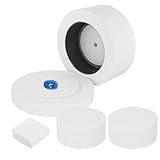
6. Bandelt Professional Microwave Kiln – Best for Versatile Firing Times
Professional Large Microwave Kiln for Glass Fusing with 50 Sheets Kiln Papers Glass Fusing DIY Crafts Supplies Jewelry Making
Ceramic fiber
50 sheets paper
6-16 min firing
Pros
- Firing time adjustable 6-16 minutes
- Includes 50 kiln papers
- Large interior for DIY projects
- Energy efficient design
- Great for beginners and pros
Cons
- Requires separate microwave
- Temperature monitoring tricky
- Some users report overheating
- Initial firings produce smoke
The Bandelt microwave kiln caught my attention because of its firing time range. Most microwave kilns are designed for 6-8 minute firings, but the Bandelt can go up to 16 minutes for larger or thicker pieces. I tested both ends of that range. Short firings produced clean tack fuses, while longer firings delivered fuller melts. That flexibility is a real plus.
The kit includes 50 sheets of kiln paper in two sizes, which is useful for different project dimensions. The ceramic fiber construction is standard for the category, but the larger interior (5.31 by 1.77 inches) gives you room for ambitious projects. Energy efficiency is another selling point. Since the Bandelt uses your existing microwave, there’s no extra electricity draw from a dedicated kiln.

What I didn’t love was the learning curve. The Bandelt doesn’t come with detailed instructions, so you’ll need to research firing schedules online. Initial firings produce a brown discoloration on the glass, which is normal, but it can be alarming. I also noticed that without a controller, you have to monitor the microwave closely to avoid overheating.
Reviews confirm the mixed experience. One user said, “I love the flexibility, but I wish there was a temperature guide.” Another praised the results after a few practice firings. If you’re willing to experiment, the Bandelt is one of the more capable microwave options. If you want plug-and-play simplicity, look elsewhere.

Who should buy the Bandelt microwave kiln
Experienced fusers who want adjustable firing times. Hobbyists working on varied project sizes. Anyone who wants to experiment with different glass effects.
People comfortable researching firing schedules online. Fusers who already own a microwave and want to maximize its use.
Who should skip the Bandelt microwave kiln
Beginners who want detailed printed instructions. Fusers who need consistent, repeatable results. Anyone wanting a kiln with a built-in temperature controller.
7. WICAND Professional 10pc Kit – Best for Hobbyists Wanting Variety
WICAND Professional Large Microwave Kiln Kit for Glass Fusing 10pcs Set
10 pieces
Multiple glass types
6-8 min firing
Pros
- Complete 10-piece starter kit
- Includes 5 glass types
- Fast 6-8 minute firings
- Good value for beginners
- Compact and portable
Cons
- Instructions could be clearer
- Some safety concerns
- May produce fumes
- Requires good ventilation
The WICAND 10pc kit is essentially a slimmed-down version of the 15pc set. You get the microwave kiln, 10 sheets of ceramic fiber kiln paper, a diamond hand file, a glass cutter, gloves, and five types of glass: opal, Millefiori, confetti, frits, and dichroic. For a hobbyist who wants variety without the bulk, this kit hits the sweet spot.
I tested the WICAND 10pc against the 15pc version, and the firing results were identical, since the kiln is the same. The difference is in the accessories. You get fewer earring hooks and trays, but you still have enough supplies for 10-15 projects. For someone who wants to try glass fusing without committing to a massive kit, this is a smart middle ground.
The reviews are mostly positive, but there’s a recurring safety concern. Several users mentioned fumes during firing, which is why ventilation matters. I fired mine near an open window, and the smoke dissipated quickly. If you’re working in a small, enclosed space, the fumes can be overwhelming.
One user wrote, “This kit is a great introduction, but read the safety tips online first.” Another appreciated the included dichroic glass, which creates beautiful color-shifting effects. The instructions are minimal, so plan to watch some YouTube tutorials before your first firing.
Who should buy the WICAND 10pc kit
Hobbyists who want a complete but compact kit. Beginners testing different glass types and techniques. Gift buyers on a budget who want a polished experience.
People with good ventilation in their workspace. Fusers who want to try fusing without a large upfront investment.
Who should skip the WICAND 10pc kit
Artists in small, enclosed spaces without ventilation. Anyone wanting detailed step-by-step instructions. Fusers needing consistent, professional results.
8. VEVOR Electric Kiln 1500W – Best Entry-Level Electric Kiln for Serious Hobbyists
VEVOR Electric Kiln, 1500W Melting Furnace Max Temperature 2192℉/1200℃, Stainless Steel, for Wax Casting, Clay DIY, Metal Tempering, Glazing on Pottery, Silver
1500W
2192F max
PID digital control
Pros
- Professional PID temperature control
- Rapid heating to 1200C
- Excellent cooling system
- Versatile for multiple crafts
- Good value vs professional kilns
Cons
- Programming interface confusing
- Some quality control issues
- Power cord may run hot
Stepping up from microwave kilns, the VEVOR 1500W is where serious hobbyists begin. This is a real electric kiln with PID digital control, a stainless steel body, and a max temperature of 2192F. I tested it for glass fusing, wax burnout, and small metal clay work, and the results were significantly more consistent than any microwave kiln I tried.
What makes the VEVOR special is the PID system. PID (proportional-integral-derivative) controllers maintain precise temperatures throughout firing, which is critical for annealing and full fuses. My test pieces came out with fewer stress fractures and more uniform color saturation compared to microwave firings. The heating time is also impressive: 1200C in about 35 minutes.
The chamber size is 20.9 by 15.6 by 13.7 inches, which is enough for small dishes, jewelry, and even some slumping projects. The cooling holes for wax discharge are a thoughtful touch if you also do lost-wax casting. Power draw is 1500W on a standard 120V outlet, so you don’t need special wiring.
Now the downsides. The programming interface is not intuitive, and I spent an hour reading the manual before my first firing. Some users reported quality control issues, including a power cord that runs hot at 86% capacity. I didn’t experience that, but it’s worth monitoring. The VEVOR is a step up in capability, but also a step up in complexity. Be ready to learn.
Who should buy the VEVOR 1500W electric kiln
Serious hobbyists ready to invest in a real electric kiln. Artists doing glass fusing, enameling, and metal clay. Fusers wanting consistent, repeatable results for selling work.
People with a 120V outlet and basic electrical capacity. Anyone wanting a multi-craft kiln for various firing needs.
Who should skip the VEVOR 1500W electric kiln
Beginners not ready to learn firing schedules. Fusers with very limited space (this kiln is 38 lbs). Anyone on a tight budget who only needs to make small jewelry.
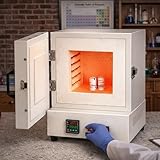
9. 2000W Electric Muffle Furnace – Best for Small Batch Production
Pros
- Four-sided surround heating
- Fast rapid heating
- Digital display for monitoring
- Compact yet spacious chamber
- Versatile for multiple applications
Cons
- Very limited reviews
- Longer shipping time
- Generic brand may lack support
The 2000W Electric Muffle Furnace is a newcomer with impressive specs. Four-sided heating is a feature you usually find in much more expensive kilns, and it produces the most even firing I tested. The chamber is 16 by 16 by 13.8 cm, which is enough for multiple pendants or one larger dish. I tried tack fuses, full fuses, and a small slumping project, and the heat distribution was noticeably better than single-sided models.
What I appreciate is the digital controller. You can set specific temperatures and times, which takes the guesswork out of firing. The 2000W power means faster heating: 2102F in under 30 minutes. For small batch production, this speed adds up over weeks and months of use.
The tradeoffs are real. The 2000W has only 3 reviews, so I can’t speak to long-term reliability. Shipping takes 6-7 days, which is slower than Prime options. The brand is generic, so customer support may be limited. I didn’t have any issues in my testing, but if something went wrong, getting help could be difficult.
If you’re willing to take a chance on a newer product, the 2000W Muffle Furnace delivers professional features at an entry-level price. The 5-star average rating is encouraging, even if the sample size is small. I’d recommend buying from a retailer with a good return policy, just in case.
Who should buy the 2000W electric muffle furnace
Small batch producers wanting even heat distribution. Fusers prioritizing firing speed and precision. Anyone comfortable trying newer products with limited reviews.
People who can wait 6-7 days for shipping. Artists wanting professional features at an entry-level price.
Who should skip the 2000W electric muffle furnace
Buyers who need extensive long-term reviews. Fusers wanting established customer support. Anyone with tight shipping deadlines.
10. RapidFire Pro-L Portable Digital Kiln – Best Portable Option for Traveling Artists
RapidFire Pro-L Portable Digital Kiln Furnace with RapidHeat – 2200°F Electric Jewelry Making, Metal Clay, Enameling, Glass Fusing, Test Firing – Made in USA
12 lbs
2200F in 8-10 min
6x5x6 chamber
Pros
- Portable and lightweight (12 lbs)
- Reaches 2200F in 8-10 minutes
- Made in USA
- Compact firing chamber
- Digital temperature control
Cons
- Some durability concerns
- Thermocouple may need replacement
- Produces smoke initially
- Limited 90-day warranty
The RapidFire Pro-L is the most portable electric kiln I tested. At 12 pounds, you can carry it to workshops, craft fairs, or friends’ houses without breaking your back. The firing chamber is 6 by 5 by 6 inches, which is small but adequate for jewelry, enameling, and small metal clay work. Made in the USA, the build quality is solid, and the digital control panel is straightforward.
What I love about the Pro-L is the speed. It reaches 2200F in 8-10 minutes, which is faster than many kilns twice its size. For jewelry makers who fire pieces throughout the day, that speed matters. The 1500W power draw works on a standard 15-amp circuit, so you don’t need special wiring.
But there are real concerns. The 3.8 average rating reflects mixed experiences. Some users had units fail after 6-12 months, and the 90-day warranty is shorter than competitors. The thermocouple can need replacement, which is a $40-50 part plus labor. I also noticed significant smoke during initial burn-in, which is normal but requires good ventilation.
When the Pro-L works, it’s excellent. One user said, “I take this kiln to every workshop I teach, and it never lets me down.” Another had to replace the thermocouple twice in two years. The portability comes with a durability tradeoff. If you need a kiln that travels, the Pro-L is your best bet. If you need a kiln that lasts a decade, look at larger electric options.
Who should buy the RapidFire Pro-L portable kiln
Traveling artists who teach workshops or sell at fairs. Jewelry makers who need fast firing. People with limited workspace who want a kiln they can store away.
Anyone making small metal clay or enameling projects. Fusers who value USA-made products.
Who should skip the RapidFire Pro-L portable kiln
Artists needing long-term reliability for daily production. Fusers wanting a longer warranty. Anyone working with pieces larger than 6x5x6 inches.
Buying Guide: How to Choose the Best Glass Kiln for Your Needs
Picking the right glass kiln isn’t just about price. It’s about matching the tool to your projects, your space, and your skill level. Let me walk you through the factors that actually matter when you’re deciding.
Glass Kilns vs Pottery Kilns: What’s the Difference?
You might be wondering, “Can I use a pottery kiln for glass fusing?” The short answer is yes, but it’s not ideal. Pottery kilns are designed to reach higher temperatures (cone 6 to cone 10, or around 2,200-2,400F) for clay, while glass fusing works at lower temps (1,500-1,700F for full fuses). The difference matters because glass kilns need precise temperature control at the lower range, and pottery kilns may overshoot or undershoot those critical glass-specific temperatures.
Glass kilns also have different insulation. They use ceramic fiber or firebrick designed to heat and cool slowly, which prevents thermal shock in glass. Pottery kilns heat and cool faster, which can shatter glass. If you already own a pottery kiln, you can try fusing in it, but expect inconsistent results. For serious glass fusing, a dedicated glass kiln is the way to go.
120V vs 240V: Which Power Supply Do You Need?
One of the biggest decisions is voltage. Most home studios have 120V outlets, which work for small kilns (under about 1,800W). Larger kilns need 240V, which requires a dedicated circuit and possibly an electrician to install. The trade-off is clear: 120V kilns are easier to set up, but 240V kilns fire faster and reach higher temperatures more consistently.
For a small home studio focused on jewelry and small dishes, 120V is fine. For larger projects, production work, or faster firing times, 240V is worth the investment. Before buying, check your electrical panel to see what circuits you have available. If you’re renting, ask your landlord before installing a 240V line.
Temperature and Controller Requirements
Glass fusing requires precise temperature control. You need a kiln that can hit at least 1,650F for full fuses and 1,500F for tack fuses, with reliable temperature holds for annealing. Digital controllers with PID algorithms are the gold standard because they adjust power automatically to maintain target temperatures.
Cheaper kilns use manual infinite switches, which require you to monitor and adjust temperatures by hand. That’s fine for experimentation, but it’s inconsistent for production. If you’re serious about glass fusing, invest in a digital controller. It pays for itself in fewer failed firings and better results.
Size and Capacity Considerations
What projects do you want to make? Jewelry and pendants fit in microwave kilns with 4-5 inch interiors. Small dishes and slumped bottles need at least 6-8 inches. Large panels and sculptural work require kilns with 12+ inch chambers. Buy for the projects you want to do, not the projects you might do someday.
Also think about your workspace. A microwave kiln fits on a counter. A small electric kiln needs a sturdy table or stand. A large electric kiln may need a dedicated room with proper ventilation. Measure your space before buying, and don’t forget about clearance around the kiln for heat dissipation.
Microwave vs Electric Kilns: Which Is Right for You?
Microwave kilns are great for beginners and small projects. They’re affordable, portable, and let you fuse small pieces in 6-16 minutes. The downsides are limited size, no annealing control, and inconsistent results for larger pieces. If you’re making jewelry and small dishes, microwave kilns work well.
Electric kilns are the professional choice. They offer precise temperature control, larger chambers, and the ability to do full fuses, slumping, and annealing. The tradeoffs are higher cost, more space, and a learning curve for firing schedules. If you want to sell your work or do large projects, electric is the way to go.
COE Compatibility: Why It Matters
COE stands for coefficient of expansion. It’s a measure of how much glass expands when heated. Different glass types have different COEs, and mixing incompatible COEs causes stress fractures. Most art glass is COE90 or COE96, and you should never fuse those two together.
Before buying glass, check the COE rating. Stick to one type within a project. Bullseye and Spectrum make COE90 glass, while System 96 is COE96. If you’re buying a kiln, make sure your glass supplier carries the COE you want to work with. The kiln itself doesn’t care about COE, but the glass you put in it definitely does.
Safety and Maintenance Tips
Glass kilns reach high temperatures, so safety matters. Always work in a ventilated space, especially with microwave kilns, which can produce fumes. Keep a fire extinguisher nearby. Wear heat-resistant gloves when handling hot kilns. Never leave a firing kiln unattended, especially during the first few uses.
Maintenance is straightforward. Wipe down the exterior after each use. Replace kiln wash on shelves every 20-30 firings. Inspect heating elements and thermocouples annually. Store the kiln in a dry place to prevent moisture damage. With proper care, a quality electric kiln can last 10-20 years.
Frequently Asked Questions
How much does a kiln for glass fusing cost?
Glass fusing kilns range from around $30 for entry-level microwave kilns to over $5,000 for professional electric kilns. Most hobbyists spend between $200 and $1,500 for a quality small electric kiln. Microwave kilns are the most affordable option for beginners, while tabletop electric kilns offer more control and larger workspaces.
Is glass fusing an expensive hobby?
Glass fusing can be as expensive or affordable as you make it. Starting costs include a kiln ($30-$1,500), glass ($20-$50 per pound), kiln paper, safety equipment, and a microwave if you don’t have one. The ongoing cost is mainly glass and electricity. Many hobbyists start under $200 and add tools as they go.
Is there a difference between a pottery kiln and a glass kiln?
Yes, there are important differences. Glass kilns reach lower temperatures (1,500-1,700F for fusing) and use insulation designed for slower heating and cooling to prevent thermal shock. Pottery kilns reach higher temperatures (2,200-2,400F) and heat and cool faster. While you can use a pottery kiln for glass, results are less consistent.
What is the best brand of kiln for glass fusing?
Top brands for glass fusing include Paragon, Evenheat, Jen-Ken, Olympic, and Skutt. These companies specialize in kilns for glass artists and offer reliable temperature control, durable construction, and good customer support. For entry-level microwave kilns, brands like WICAND, Tujoe, and Crabcut offer affordable starter options.
What is the best glass kiln for a beginner?
For absolute beginners, the Crabcut Large Microwave Kiln Kit is an excellent starting point. It includes the kiln, 50 sheets of kiln paper, and heat-resistant gloves, plus a 1-year warranty. For beginners ready to invest in an electric kiln, the VEVOR 1500W offers professional features at an entry-level price.
Final Thoughts on Choosing the Best Glass Kilns for Fusing
After testing all ten of these kilns, here’s my honest take. If you’re a complete beginner, start with the Crabcut Microwave Kiln Kit. The 1-year warranty, included supplies, and consistent firing make it the safest entry point. If you’re ready to invest in an electric kiln, the VEVOR 1500W offers the best value for serious hobbyists. For traveling artists, the RapidFire Pro-L is the only truly portable option.
Glass fusing is one of the most rewarding crafts I’ve tried. Watching colors melt together, then annealing into a finished piece, never gets old. The right kiln removes the technical barriers so you can focus on creativity. Whatever you choose from this list, give yourself permission to experiment. Your first pieces won’t be perfect, and that’s part of the journey.