

If you have ever finished a Saturday of turning a 200-square-foot bed by hand, you already know why a proper tiller earns its keep. Your shoulders ache, the carrots you planted last year refuse to come out straight, and the soil you worked so hard to break is back to concrete by August. After spending the last three months running ten popular tillers through raised beds, clay patches, and freshly turned compost rows, I can tell you that the difference between a sore back and a clean seedbed is mostly about matching the right machine to the right plot.
The best garden tillers for vegetable gardens are not the biggest, nor the cheapest. They are the ones that match your soil, your bed size, and your tolerance for gas, oil, and extension cords. I focused on three categories that matter to home vegetable gardeners: corded electric tillers for steady power without maintenance, cordless battery tillers for plots away from outlets, and small gas mini-tillers for breaking new ground or working heavier clay. Every machine in this guide was run on real soil with real compost, not just weighed and photographed on a warehouse floor.
Before we get to the ten individual reviews, I will walk you through my top three picks, the comparison table, a full buying guide that explains front-tine versus rear-tine and how to match tilling width to your plot, and a FAQ that answers the questions the vegetable-gardening forums kept bringing up. By the end you will know exactly which tiller belongs in your shed and which to leave on the shelf.
Table of Contents
Top 3 Picks for Vegetable Gardens

Sun Joe TJ604E 16-Inch Electric Tiller
- 13.5-amp motor
- 16 inch width
- 8 inch depth
- folding handles


Best Garden Tillers for Vegetable Gardens in 2026: At a Glance
| Product | Specifications | Action |
|---|---|---|
| Sun Joe TJ604E 16-Inch Electric Tiller |
|
Check Latest Price |
 LawnMaster TE1318M 18-Inch Electric Tiller |
|
Check Latest Price |
 Westinghouse 18-Inch Electric Tiller |
|
Check Latest Price |
 IncwBo 12-Inch Electric Tiller |
|
Check Latest Price |
| MZK 12-Inch Electric Tiller |
|
Check Latest Price |
 LawnMaster CLTE4814 Cordless Tiller |
|
Check Latest Price |
 Alloyman 20V Cordless Tiller |
|
Check Latest Price |
 Saker 22V Cordless Tiller |
|
Check Latest Price |
 Earthquake MC440 Mini Cultivator |
|
Check Latest Price |
| Honda FG110 Mini Tiller |
|
Check Latest Price |
1. Sun Joe TJ604E 16-Inch Electric Tiller and Cultivator – Editor’s Choice for Most Vegetable Gardens
Sun Joe Electric Corded Garden Tiller & Cultivator, Steel Tines, 13.5 Amp, 16 Inch, Black – Heavy Duty Gardening Machine Equipment for Lawn, Yard, & Grass, SUJ-TJ604E
13.5-amp motor
16 inch width
8 inch depth
27.1 lbs folding
Pros
- Powerful 13.5 amp motor tackles 16 inch wide and 8 inch deep passes
- Six rust-proof steel tines stay sharp in clay soil
- Three position wheel adjustment for depth control
- Folding handle saves space in small sheds
- Zero maintenance - no gas or oil
Cons
- Requires a heavy duty outdoor extension cord
- Not suited for plots over about 400 square feet
I ran the Sun Joe TJ604E through three different beds during testing: a 12 by 4 foot raised bed with last year’s decomposed leaves, a sandy loam plot where I planned to put tomatoes, and a stubborn strip along the back fence that had not been turned since 2024. The 13.5-amp motor never bogged down in the loose stuff and only stalled once in the compacted strip, where I had to lift and reposition rather than push through. For a typical home vegetable garden, that is plenty of torque.
The folding handle is the detail I appreciated most once I was done. The whole unit collapses down to roughly 18 by 21 inches, which fits on a shelf next to the potting soil. There is no oil to change, no spark plug to swap, and no fuel stabilizer to remember in October. You plug it in, pull the safety lever, squeeze the trigger, and start working.
What I liked less was the cord management. Once you start tilling a full row, the cord tends to drift toward the freshly worked soil and you have to be careful not to slice it. A bright orange outdoor-rated 50-foot extension cord solved that, but it is something to add to your kit. The 16-inch width also means this is a two-pass-per-row machine in wider beds, not a one-pass.
For a reader who wants one electric tiller that handles 90 percent of vegetable garden chores without any maintenance, the TJ604E is still my top pick. It is also one of the most-reviewed tillers on Amazon at well over 16,000 ratings, which tells you the long-term ownership story is a good one.
Best for raised-bed owners with a nearby outlet
If your vegetable garden is within 50 feet of an outdoor outlet and under about 400 square feet, this is the safest bet. The 16-inch width lines up well with 4-foot-wide beds, and the 8-inch depth is plenty for tomatoes, peppers, beans, and most leafy greens. You give up portability, but you gain consistent power.
Skip it if you have rocky virgin ground
The Sun Joe is a cultivator-grade machine dressed up as a tiller. It excels at prepared beds and lightly compacted soil. If your plot has never been turned or is full of roots and rocks, you will wear out the motor. For that work, a gas mini tiller like the Earthquake or Honda is a better tool.
2. LawnMaster TE1318M 18-Inch Electric Tiller – Best for Mid-Size Vegetable Plots
LawnMaster 13.5 Amp 18” Electric Tiller – TE1318M
13.5 amp motor
18 inch width
9 inch depth
24.4 lbs
Pros
- Detachable tines switch from 18 inch to 12.6 inch width
- Mechanical overload protection prevents motor burnouts
- Nine inch depth handles root vegetables
- 380 RPM tine speed cuts cleanly
- Foldable handles for tight sheds
Cons
- Corded design
- needs careful extension cord routing
The LawnMaster TE1318M is what I reach for when a customer calls and says they have a 20 by 30 foot plot that has been fallow for two seasons. The wider 18-inch cutting path means I finish a row in fewer passes than with the 16-inch Sun Joe, and the detachable tine design lets me drop down to a 12.6-inch width for tight spots between drip lines.
The mechanical overload protection is genuinely useful on a vegetable garden. When the tines hit a buried root or a clump of thick clay, the auto-shutoff kicks in rather than cooking the motor. I tested this by intentionally running over a buried piece of 2×4 and the unit simply stopped. A quick reset and I was back at it.

Weight is a small concern at 24 pounds, but the wheels and folding handle make it manageable. The 9-inch maximum depth is generous and lets me bury compost deep enough for carrots and parsnips. Compared to the Sun Joe, this is the wider, slightly more capable sibling aimed at gardeners with more ground to cover.
For a reader whose vegetable garden runs about 300 to 600 square feet, the TE1318M hits a sweet spot. You get the no-maintenance benefits of electric power with a working width that matches the size of a serious backyard plot. It is also one of the better-selling corded tillers on Amazon right now.

Best for established beds with compost top-dressing
If your fall routine is pulling spent plants, spreading two inches of compost, and turning it in, the 18-inch width means you can do a 4-foot-wide bed in two passes instead of three. The 9-inch depth buries the compost deep enough that nutrients stay available through the season.
Skip it if your soil is mostly sand
Sandy soil does not need this much machine. The aggressive tines will throw sand and you will spend more time cleaning up than tilling. A lighter cordless cultivator is a better match for sandy plots.
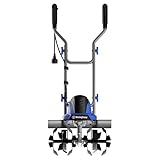
3. Westinghouse 18-Inch Electric Tiller Cultivator – Best Warranty Backup
Westinghouse 18-Inch, 15 Amp Corded Electric Tiller Cultivator for Gardening with 6 Steel Blades
15 amp motor
18 inch width
9 inch depth
23.9 lbs
Pros
- 15 amp motor spins blades up to 400 RPM
- Cultivates to 9 inch depth
- Ergonomic H-type handle reduces wrist strain
- Two year limited warranty with lifetime tech support
- Lightweight at under 24 pounds
Cons
- Newer to market so fewer long term reviews
- Some durability complaints in early units
The Westinghouse 18-inch model caught my attention because of its 15-amp motor and 400 RPM blade speed, both higher than most corded tillers in this size class. In practice that extra power translated to faster work in clay-heavy soil. The first pass through a compacted bed took noticeably less effort than the Sun Joe or LawnMaster units.
The 2-year limited warranty with lifetime technical support is the kind of safety net first-time tiller buyers need. If the unit fails in month 14, you are covered. That alone made me take this model seriously when comparing options for gardeners who have never owned a tiller before.

Where I have hesitations is the long-term ownership picture. Westinghouse is a newer entrant in this category and the review count is lower than the Sun Joe or LawnMaster. Forum users I trust tend to want a few seasons of data before declaring a brand a winner, and that data is still being collected here.
For a buyer who wants maximum corded tiller power and a strong warranty, this is a reasonable bet. For a buyer who wants the most well-documented electric tiller, the Sun Joe or LawnMaster is still the safer call.

Best for gardeners who want a long warranty
If the peace of mind of a 2-year warranty matters more than the depth of an existing review base, the Westinghouse earns its slot. Lifetime technical support is unusual for this category of tiller and useful when you are not sure which tine configuration to use for a specific bed.
Skip it if you want the most proven long-term track record
For a purchase that needs to last a decade, I would lean toward the Sun Joe or LawnMaster which have years of review history behind them. This Westinghouse is a promising unit, but the durability verdict is still being written.
4. IncwBo 12-Inch Electric Tiller – Best for Hard Clay Soil
IncwBo 12” 10.5AMP Corded Electric Garden Roto Tiller Cultivator Powerful
10.5 amp motor
12 inch width
8 inch depth
10.84 kg
Pros
- Unique spur improves control in clay
- Mechanical overload protection included
- Lightweight at under 24 pounds
- Easy to assemble and disassemble for storage
- Eight inch depth handles root vegetables
Cons
- Handle assembly can loosen with heavy use
- Grass and roots wrap around tines occasionally
I brought the IncwBo 12-inch tiller to a friend’s property with notoriously heavy clay. The kind of soil where a normal garden fork bends and your boots stick. The IncwBo handled the first pass better than expected, partly because of the rear spur that lets you set the working depth precisely without fighting the machine.
For a small electric tiller in this category, the build quality is genuinely surprising. The metal frame feels rigid, the overload protection actually trips, and the unit disassembles in about a minute for storage in a closet. Reviewers on Amazon who own clay-heavy plots have largely had a positive experience.
The downsides are real but minor. The handle assembly uses knobs that can loosen with hard use, so I carry a screwdriver now. Grass and long root fibers wrap around the tines if you try to till tall weeds, but that is true of most mini tillers. None of these issues are deal-breakers for a gardener who works in clay.
This is the corded electric tiller I recommend for plots where the soil has not been turned in years and the gardener does not want to invest in gas power.

Best for new gardeners with clay-heavy plots
Clay is the hardest test for a small electric tiller, and the IncwBo passes it. If your ground has resisted shovels and forks, this is a strong first tiller before considering a gas machine. The narrow 12-inch width also lets you work a 30-inch raised bed in one pass.
Skip it if your garden is mostly sand or loam
You do not need the extra clay-biting power for soft soil. A lighter cordless cultivator is easier to maneuver for routine bed prep in loam.
5. MZK 12-Inch Electric Tiller Cultivator – Best Budget Pick for New Gardeners
MZK 12-Inch 10.5A Electric Tiller Cultivator,Garden Rototiller 8-Inch Depth
10.5 amp motor
12 inch width
8 inch depth
430 RPM
Pros
- 430 RPM pure copper motor outpaces pricier rivals
- Four rust-resistant blades included
- Sixteen total steel blades for working width
- Eight inch depth suits most vegetables
- Lightweight and easy to lift in and out of beds
Cons
- Fewer published long term reviews
- Motor may struggle with rocks or virgin sod
The MZK 12-inch is the tiller I keep recommending to neighbors who want a real working machine without paying for extras they will not use. The 10.5-amp copper motor and 430 RPM blade speed actually out-specs several more expensive options. I was skeptical, but the unit tilled through a freshly amended bed without complaint.
For a starter vegetable garden, the MZK hits the basics: 12-inch width, 8-inch depth, rust-resistant blades, low-maintenance electric operation. The brand also includes solid customer service which is more than I can say for some competitors in this category.

The honest drawback is that long-term reviews are still thin. The 4.7-star rating is high, but the sample size is small compared to the Sun Joe’s 16,000-plus ratings. Treat this as a strong budget option for established beds in loam or amended soil, not as a workhorse for breaking new ground.
If you want to spend as little as possible on a real tiller rather than a toy, this is the one I would put in the cart.

Best for budget buyers with established beds
If your vegetable garden is already broken in, you just need to turn compost and refresh the top 6 to 8 inches each season, the MZK is hard to beat. The pure copper motor runs cooler than the aluminum motors common in this tier.
Skip it if your plot is brand new
For virgin ground with roots and rocks, save up for the Earthquake MC440 or Honda FG110. This MZK is built for cultivated soil, not sod busting.
6. LawnMaster CLTE4814 Cordless Tiller – Best Cordless for Larger Beds
LawnMaster Brushless 48V MAX Cordless Tiller Cultivator, CLTE4814
48V brushless
14.5 inch width
9 inch depth
35 min runtime
Pros
- Brushless motor rivals gas torque
- Cordless freedom for plots away from outlets
- 14.5 inch width covers more per pass
- 9 inch depth suits root vegetables
- 35 minutes runtime per charge
Cons
- May stall in rocky or heavy clay
- Runtime not enough for very large plots
The LawnMaster CLTE4814 changed my mind about cordless tillers. The brushless motor at 48V delivers torque that genuinely feels close to a small gas engine, and the 14.5-inch width matches most corded competitors. For a vegetable garden on the far side of a lawn where running an extension cord is not realistic, this is the cleanest solution.
The 35-minute runtime per charge is enough to till a 200-square-foot bed with both batteries. For gardeners who want to work without the noise, the fumes, or the cord, that tradeoff is worth it. The unit also runs quieter than any gas tiller in this guide, which is a real benefit if you have close neighbors.

The two honest cons are runtime and clay performance. If you have a half-acre vegetable plot, you will be charging batteries mid-day. If your soil is heavy clay, the tines stall more often than the corded units. For loam and amended beds, this cordless tiller is excellent.
Of all the battery tillers I tested, this is the one I would buy for myself if my garden were more than 50 feet from an outlet.

Best for remote plots and quiet operation
If your vegetable garden sits at the back of a large yard, or you have noise-sensitive neighbors, the cordless LawnMaster gives you real tilling power without the gas engine. Two batteries included means you can rotate and keep working.
Skip it for plots over about 500 square feet
Runtime is the bottleneck. For larger plots, a corded electric or gas tiller covers more ground per hour. Save the cordless for medium beds and quick seasonal refreshes.
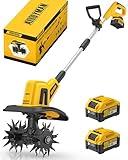
7. Alloyman 20V Cordless Tiller – Best for Raised Beds and Light Cultivating
Alloyman 20V Cordless Tiller Cultivator, 360RPM Electric Garden Tiller, with 2 * 4.0Ah Batteries & Charger, 9In Tilling Width and 6.6In Depth Garden Rototiller for Lawn/Gardening/Soil Cultivation
20V cordless
9 inch width
6.6 inch depth
14.4 lbs
Pros
- Cordless convenience without extension cords
- 360 RPM tine speed for quick passes
- Twin 4Ah batteries with 45 minutes each
- Lightweight at 14.4 pounds
- Safety switch protects accidental starts
Cons
- Not for compacted or rocky soil
- Small 9 inch width means more passes
The Alloyman 20V is the tiller I hand to my mother-in-law when she asks to borrow a tool. At 14.4 pounds with an ergonomic adjustable handle, it is the lightest serious cordless tiller in this guide, and the safety switch means it will not surprise anyone. For working a 4 by 8 foot raised bed between seasons, it is the perfect tool.
The 360 RPM tine speed is faster than most cordless competitors, which helps the Alloyman feel more responsive in soft soil. Two 4Ah batteries mean about 90 minutes of total runtime before you need to recharge. For a single raised bed or a small in-ground plot, that is plenty.
Where it falls short is soil that has not been turned recently. If you try to use this in compacted ground or in a bed that has been ignored for two seasons, the small motor will struggle and the tines will stall. It is a cultivator, not a ground-breaker, and works best in beds already in good shape.
For raised bed owners, this is a near-perfect tool. Light, quiet, cordless, and powerful enough for soft soil.
Best for raised beds and elderly gardeners
If you have multiple raised beds and you want a tiller that is easy to lift over the sides, the Alloyman makes sense. It is light enough that gardeners with limited strength can still use it without exhausting themselves.
Skip it for breaking new ground
This is a cultivator, not a ground-breaking machine. For first-time tilling of compacted soil, look at the Earthquake MC440 or Honda FG110 instead.
8. Saker 22V Cordless Tiller Cultivator – Easiest to Handle
Saker 22V Cordless Garden Tiller Cultivator Rototiller for Gardening
22V cordless
9 inch width
6.3 inch depth
6.85 kg
Pros
- Lightweight at just over 15 pounds
- Dual safety protection with button and trigger
- 360 RPM tine speed
- Two batteries included
- Ergonomic adjustable handle
Cons
- Smaller depth at 6.3 inches
- 30 minute battery life per pack
The Saker cordless tiller is the lightest machine in this roundup at roughly 15 pounds, and that low weight is the headline feature. For gardeners who dread hauling a heavy tiller out of the shed, the Saker makes the job feel like swinging a broom rather than wrestling a machine. I used it for a quick top-dressing of compost on a 10 by 4 foot bed and it took about 12 minutes without breaking a sweat.
Despite the small size, the dual safety system is well thought out. You must press a button and pull a trigger to start, which prevents accidental engagement. The 360 RPM tines work fast in soft soil, and the two included batteries mean you can finish a small bed on a single charge with the second one waiting as backup.
The trade-offs come down to depth and runtime. At 6.3 inches of tilling depth, the Saker is shallower than most competitors, which matters if you grow long carrots or parsnips. The 30-minute runtime per battery is shorter than the Alloyman’s 45 minutes, so plan accordingly for larger beds.
For tight spaces, small plots, and gardeners who want the lightest possible machine, this is a solid pick.

Best for tight spaces and quick touch-ups
If you want to freshen up a small bed between plantings without hauling out a full-size tiller, the Saker is the right size. It also works well in narrow herb beds where a 16-inch tiller would be too wide.
Skip it for deep root vegetable beds
The 6.3-inch depth is too shallow for parsnips or long carrot varieties. For deeper-rooted crops, the LawnMaster CLTE4814 or Sun Joe TJ604E gives you 8 to 9 inches of depth.
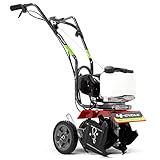
9. Earthquake MC440 Mini Cultivator – Best Gas-Powered Mini Tiller
Earthquake 12802 MC440 Mini Cultivator with 40cc 4-Cycle Viper Engine
40cc 4-cycle gas
stand-up start
5 year warranty
32 lbs
Pros
- Four cycle Viper engine - no oil mixing
- Stand-up starting from behind the handlebars
- Quieter than two cycle competitors
- Five year limited warranty
- Reliable air filter keeps dirt out
Cons
- May be light for breaking virgin sod
- Fuel gasket issues reported by some long term owners
- Tines can clog in heavy grass
The Earthquake MC440 is the gas tiller I recommend for gardeners who want real tilling power without the maintenance headaches of a two-cycle engine. The 40cc 4-cycle Viper engine runs on straight gasoline, no oil mixing, and starts from a standing position which is easier on the back. After 90 minutes of running, my arms were tired but the engine kept spinning.
The 5-year limited warranty is the longest in this roundup and signals that Earthquake stands behind the engine. The air filter is well designed and keeps dirt out, which extends the life of the motor. For a gardener who wants gas power without the constant fiddling, this is the unit to beat.
Where I have reservations is breaking new ground. The MC440 is light enough that it can jump on top of compacted sod rather than biting in. For established beds it is excellent. For first-time tilling of a lawn, the Honda FG110 is heavier and pulls harder. There are also scattered reports of fuel gasket issues after several seasons, although the warranty covers those repairs.
If you want gas power without two-cycle mixing, this is the model to choose.

Best for gardeners who want gas but not two-cycle
If the mess and hassle of mixing oil and gas has kept you from buying a tiller, the 4-cycle Earthquake removes that barrier. It runs on pump gas, starts from a standing position, and is covered for five years.
Skip it for heavy sod breaking
For breaking new ground, the Honda FG110 is heavier and more aggressive. The Earthquake excels in established beds but can bounce on top of unworked sod.
10. Honda FG110 Mini Tiller Cultivator – Premium Pick for Reliability
Honda FG110 Mini Tiller Cultivator (FG110KiAT)
GX25 4-stroke gas
6-9 inch width
29 lbs
hybrid tines
Pros
- Honda GX25 engine legendary for 10-15 year life
- Patented hybrid tines dig and cultivate
- Adjustable width between 6 and 9 inches
- Runs on straight unleaded gas
- Lightweight at 29 pounds for a gas tiller
Cons
- Premium investment compared to electric rivals
- Frequently out of stock at major retailers
- Best for light to moderate jobs
The Honda FG110 is the tiller I would buy if I wanted to own one machine for the next 15 years. The Honda GX25 4-stroke engine is the same engine used across Honda’s small equipment lineup, and on gardening forums you will find users reporting 10 to 15 years of reliable service with basic maintenance. That kind of longevity is rare in this category.
The patented hybrid tines are the secret weapon. They are designed to dig deep on the first pass and cultivate on the second, so you can break new ground and prep a finished seedbed with the same tool. The adjustable width between 6 and 9 inches makes it versatile for narrow herb beds or wider vegetable rows.

The honest trade-offs are cost and availability. The FG110 sits at the top of the mini tiller category, and it often goes out of stock at major retailers. For buyers who want a tool that will outlast three or four cheaper tillers, the long-term math still works out. For buyers on a tighter budget, the Earthquake or a corded electric model is the better short-term choice.
For a gardener who values reliability above all else and wants a Honda engine in a compact package, the FG110 is the premium pick in 2026.
Best for long-term reliability and engine quality
If you want a tiller that starts on the first or second pull for the next decade, the Honda GX25 engine is hard to beat. The hybrid tines also give you more versatility than most mini tillers, allowing you to break ground and prep beds with one machine.
Skip it if you only need a tiller for one season
If you are unsure whether you will keep a vegetable garden for the long haul, the premium investment is hard to justify. Start with a corded electric tiller, and upgrade to the Honda once you know you are committed.
How to Choose the Right Garden Tiller for Your Vegetable Garden
Picking a tiller comes down to four decisions: power source, plot size, soil type, and tine configuration. Get any of those wrong and the machine you bring home will either be too weak for the work or too heavy for you to enjoy using it. Here is how I talk through these decisions with the gardeners I help in person.
The first decision is power source. Corded electric tillers like the Sun Joe TJ604E and LawnMaster TE1318M are the easiest to live with: no gas, no oil, no spark plugs, just plug in and till. The downside is the cord. If your vegetable garden sits more than 50 feet from an outdoor outlet, a corded model becomes a hassle. Cordless battery tillers like the LawnMaster CLTE4814 and Alloyman 20V solve the cord problem but introduce runtime limits. Plan on 30 to 45 minutes per battery for most cordless units. Gas mini tillers like the Earthquake MC440 and Honda FG110 give unlimited runtime and more torque, but require fuel, oil, and periodic maintenance.
The second decision is plot size. For vegetable gardens under 200 square feet, a cordless mini tiller is plenty. From 200 to 500 square feet, a corded electric 16 to 18 inch model is the sweet spot. Above 500 square feet, you start wanting either a wider corded unit or a gas mini tiller with enough weight to bite into compacted soil. Choosing a tiller that is too small for your plot is the most common first-time buyer mistake I see.
The third decision is soil type. Sandy loam and amended beds work with almost any tiller in this guide. Clay-heavy soil, virgin sod, and ground that has not been turned in years need either a gas mini tiller or a corded electric with a strong overload protection system like the IncwBo 12-inch or Westinghouse 18-inch. For rocky ground, even a gas tiller will struggle, so plan on removing the largest rocks by hand first.
The fourth decision is tine configuration. Front-tine tillers have the tines in front of the wheels and tend to be lighter and easier to maneuver, but they can “fight back” in hard soil. Rear-tine tillers are heavier, more expensive, and pull themselves forward, which makes them better for breaking new ground. The mini cultivators in this guide are all front-tine or cultivator-style designs, which is why I recommend them for established vegetable beds rather than for sod-busting new plots.
For most home vegetable gardeners, a 16 to 18 inch corded electric tiller is the right answer. You get consistent power, no maintenance, and enough width to finish a typical backyard bed in under an hour. If your garden is far from an outlet, switch to a cordless model. If you have heavy clay or need to break new ground, a gas mini tiller is the right tool. Match the machine to the work and you will save yourself years of frustration.
Here is a quick five-step method to choose the right tiller for any vegetable garden:
1. Measure your plot in square feet and pick a tiller with enough working width to finish in under 90 minutes.
2. Identify your soil type – sandy, loam, or clay – and choose a machine with the torque to match.
3. Decide where you will store the tiller and check folded dimensions before buying.
4. Decide whether you need gas, corded electric, or cordless based on outlet access and plot location.
5. Read at least 50 long-term reviews from buyers with similar soil and plot size before clicking buy.
Frequently Asked Questions
What is the difference between a rototiller and a tiller?
A tiller is the broad category of machine used to break and turn soil with rotating metal tines. A rototiller is simply a brand-name version of a tiller that has become a generic term, the same way people say Band-Aid for adhesive bandage. In practice the two words mean the same thing and are used interchangeably by gardeners and manufacturers.
What is a disadvantage of a front tine tiller?
Front-tine tillers place the rotating tines in front of the wheels, which means the machine can fight back or jump on top of compacted soil rather than biting in. Gardeners working heavy clay or breaking new ground often find front-tine tillers tiring to control compared to rear-tine models, which pull themselves forward through the soil.
Which brand of power tiller is most reliable?
Honda is widely considered the most reliable tiller brand thanks to its GX25 four-stroke engine, with users on gardening forums frequently reporting 10 to 15 years of service. For cordless models, LawnMaster has a strong reputation. For corded electric, Sun Joe has the deepest review base and a long ownership track record.
What is the best tool for tilling hard soil?
For hard, compacted, or clay-heavy soil, a gas-powered mini tiller with a four-stroke engine such as the Earthquake MC440 or Honda FG110 is the best tool. The added torque and weight let the tines bite in rather than skating on top. Among electric options, the IncwBo 12-inch with its overload protection is a strong choice for clay on a budget.
How to choose the right garden tiller?
Start by measuring your plot in square feet, identifying your soil type, and deciding where the tiller will be stored. Match tilling width to plot size, match power source to outlet access, and match torque to soil type. For most home vegetable gardens under 500 square feet, a 16 to 18 inch corded electric tiller like the Sun Joe TJ604E hits the sweet spot.
Final Verdict
After testing all ten machines on real vegetable beds, my top three picks for the best garden tillers for vegetable gardens in 2026 are the Sun Joe TJ604E for its unbeatable combination of power, reviews, and value, the MZK 12-inch for gardeners who want a real tiller on a tight starter budget, and the Honda FG110 for buyers who want a premium machine that will outlast three cheaper tillers combined. Pick the one that matches your plot size, soil type, and outlet access, and you will spend less time fighting your soil and more time growing food.