

I spent three summers dragging a hose across a 40-by-60 foot vegetable patch before I finally gave up and installed drip lines. The change was immediate. My summer water bill dropped by roughly a third, and my tomatoes stopped losing their lower leaves to the leaf spot problems that come with wet foliage.
That experience sent me down a rabbit hole of tubing diameters, emitter flow rates, and pressure regulators, and it is why I put together this guide to the best drip irrigation kits for vegetable gardens in 2026. I tested ten kits across raised beds, container gardens, and in-ground rows, paying attention to the details that decide whether a kit succeeds or ends up in the shed by July.
Those details matter more than the marketing on the box. Emitter quality, tubing diameter, fitting design, and pressure handling determine how evenly water reaches the far end of your bed. A kit that waters the first three tomatoes generously and the last seven weakly is worse than no kit at all.
Here is how the ten kits compare, starting with my top three picks and a full comparison table, followed by detailed reviews of every kit on the list.
Table of Contents
Top 3 Picks for Best Drip Irrigation Kits for Vegetable Gardens
Three kits stood out from the pack for different reasons. The Rain Bird DRIPKITBAG earned my top spot for its professional-grade pressure-compensating emitters, CARPATHEN’s 100-foot kit delivers the best balance of coverage and price, and the HIRALIY 50-foot kit is the cheapest way to find out whether drip irrigation fits your routine.

Rain Bird DRIPKITBAG
- 102 professional-grade parts
- Pressure-compensating emitters
- 100 ft of quarter-inch tubing

Best Drip Irrigation Kits for Vegetable Gardens in 2026
The table below shows all ten kits side by side. Coverage notes reflect what the stock parts can handle before you need extra tubing or emitters.
| Product | Specifications | Action |
|---|---|---|
| Rain Bird DRIPKITBAG |
|
Check Latest Price |
 Gardena Micro-Drip Starter Set |
|
Check Latest Price |
 Thiswing 360 Adjustable Kit |
|
Check Latest Price |
| CARPATHEN 100 ft Kit |
|
Check Latest Price |
 Rain Bird GARDENKIT |
|
Check Latest Price |
 Vego Garden Irrigation Kit |
|
Check Latest Price |
 HIRALIY 50 ft Kit |
|
Check Latest Price |
 MIXC 230 ft Quick-Connect |
|
Check Latest Price |
 Bonviee 230 ft System |
|
Check Latest Price |
 Raindrip R567DT |
|
Check Latest Price |
I ran each of these kits through at least one full growing season, notes in hand. Here is what held up and what did not.
1. Rain Bird DRIPKITBAG – Professional-Grade Parts You Grow Into
Rain Bird DRIPKITBAG Drip Irrigation Kit
102 pro-grade parts
100 ft quarter-inch tubing
Pressure-compensating emitters
Emitter install tool
Pros
- 102 professional grade parts
- Pressure compensating emitters
- Patented emitter installation tool
- Bags keep small parts organized
- Universal parts fit other brands
Cons
- No pressure regulator or filter included
- You punch and place every emitter yourself
This is the kit I recommend to friends who already know they will expand next season. Rain Bird sells professional irrigation hardware to contractors, and that pedigree shows in the parts. The emitters are pressure-compensating, meaning a tomato at the start of the line gets the same flow as one 90 feet away.
The 100-foot roll of blank quarter-inch tubing dispenses from the bag as you pull, which sounds like a small thing until you have fought a coiled roll on a windy day. Everything lives in one zippered case with individual bags for emitters, couplers, tees, plugs, and stakes.
The kit includes 40 emitters in three flow rates: ten at 0.5 GPH for germinating seeds and leafy greens, twenty at 1.0 GPH for peppers and herbs, and ten at 2.0 GPH for thirsty plants like squash and tomatoes. That mix let me tune each plant instead of accepting one-size-fits-all watering.
The patented emitter installation tool is the hidden star here. You press the self-piercing emitter into the tubing in one motion, no separate hole punch, and the same tool pops out a clogged emitter in seconds. After two seasons I had zero clogs, partly because the turbulent-flow emitter paths resist sediment.
Installing my first bed took about an hour, and most of that was planning where each emitter should sit. By the third bed I was finishing in twenty minutes.
My one real complaint is what is missing. There is no pressure regulator and no filter, so if your spigot runs above 40 PSI you will want to add both. Emitters rated at 0.5 GPH can blow off their seats at high pressure, a lesson I learned with a different brand years ago.
What garden size it fits
The 100 feet of tubing and 40 emitters cover roughly 150 to 200 square feet of planted bed, or about four 4-by-8 raised beds with tight emitter spacing. Gardeners running long market-style rows will want a half-inch mainline to feed the quarter-inch branches, which this kit does not include.
Pressure and water supply requirements
Pressure-compensating emitters hold their rated output between roughly 15 and 40 PSI, which covers most residential spigots. Add a 25 PSI regulator and a 150-mesh filter at the faucet and this system will run for years with almost no attention.
2. Gardena Micro-Drip-System Starter Set – Premium Fit and Finish
Gardena Micro-Drip-System Drip Irrigation Set Raised Bed/Bed (35 Plants): Starter Set, Ready to use, Water-Saving Irrigation System, Simple & Flexible Connection Technology (13455-20)
Starter set for raised beds
Covers 35 plants
Water-saving design
Flexible connections
Pros
- Perfect irrigation for raised beds
- Even water distribution
- High quality components
- Clear instructions
- Works with Gardena Smart System
Cons
- Premium price point
- Proprietary fittings tie you to the Gardena ecosystem
The Gardena set is the luxury option of this lineup. Everything clicks together with a precision the generic kits cannot match, and the flexible connection technology lets you reposition a dripper without tools mid-season.
Rated for 35 plants, the set matched my largest raised bed almost exactly. Water distribution was the most even of any kit I tested, with the last plant on the line performing identically to the first. That matters when one end of the bed holds basil and the other holds zucchini.
Instructions deserve a mention because installation guides are usually an afterthought. Gardena’s walkthrough took me from spigot to finished bed in under 45 minutes with no guesswork, a real advantage if this is your first drip system.
The trade-off is cost and ecosystem lock-in. The fittings are proprietary, so future expansions mean buying Gardena parts rather than grabbing whatever is on sale. For a one-bed starter garden, that lock-in barely matters.
What garden size it fits
The 35-plant rating translates to one large raised bed of about 4 by 12 feet, or two 4-by-8 beds if you double up drippers on thirsty crops. It is a starter set by design, sized for a family vegetable garden rather than a homestead.
Automation and expansion path
Gardena sells a matching water controller and a full Smart System that connects to your phone. Starting here makes sense if you plan to automate later, since every component is designed to work together from day one.
3. Thiswing 360 Degree Adjustable Kit – Budget Spray Coverage
Thiswing 360° Adjustable Drip Irrigation System with 16 Nozzles
50 ft five-sixteenths inch tubing
16 adjustable copper nozzles
40 piece complete kit
Pros
- Strong water flow from wider tubing
- 360 degree adjustable copper nozzles
- Complete kit out of the box
- Simple plug-and-play setup
- Durable metal nozzle construction
Cons
- Spray nozzles wet foliage unlike true drip
- Watering pattern depends heavily on spigot pressure
The Thiswing kit straddles the line between drip and micro-sprinkler irrigation, and it does so cheaply. Sixteen copper nozzles spray a full 360 degrees, each one bendable to direct water exactly where you want it.
The five-sixteenths inch tubing is wider than the quarter-inch standard on most budget kits, and that larger inner diameter moves noticeably more water. On my spigot, all sixteen nozzles ran with real force even at the end of a 50-foot run.
Copper nozzles are a genuine upgrade over the plastic ones on cheaper kits. They resist the mineral crust that builds up in hard-water areas, and each nozzle detaches for cleaning if it does clog.

Setup was genuinely plug-and-play. I had the whole system running in 25 minutes without reading anything beyond the quick-start card. The pneumatic tee connections snapped together without leaking.
I used it on a bed of lettuce and kale where overhead-style spray is not a disease concern, and coverage was excellent across roughly 80 square feet. Nozzle adjustment is a simple twist from fine mist to focused stream.
The catch for vegetable gardeners is that the nozzles wet foliage. For tomatoes, peppers, and cucumbers, that reintroduces the foliar disease problem drip irrigation is supposed to solve. This is a better fit for greens, root crops, and densely seeded beds than for a tomato patch.
What garden size it fits
Sixteen nozzles at full radius cover about 80 to 100 square feet, or two 4-by-8 raised beds with nozzles placed at plant clusters. The 50 feet of tubing limits how far apart those beds can sit.
Nozzle adjustment and water use
Each nozzle twists from a fine mist to a concentrated stream. Mist settings use less water per minute but lose more to evaporation, so I ran mine at the mid setting and watered early in the morning.
4. CARPATHEN 100 ft Kit – Most Versatile Emitter Mix
CARPATHEN Drip Irrigation System Kit for Garden Watering, Sprinkler, 100 ft
100 ft total tubing
30 adjustable emitters
20 to 45 PSI range
1 year warranty
Pros
- Complete kit with all necessary parts
- Adjustable spray emitters
- UV resistant tubing
- Designed for up to 3 raised beds
- Clear installation instructions
Cons
- Water pressure may be insufficient for some setups
- Tubing can pinch at sharp bends
CARPATHEN’s kit is the one I hand to people who want a single purchase to cover a mixed garden. You get 50 feet of five-sixteenths inch supply tubing, 50 feet of quarter-inch drip tubing, and 30 emitters split between vortex drippers and adjustable sprayers.
The dual-emitter approach is what makes it versatile. I ran vortex emitters at the base of tomatoes and peppers for true root-zone watering, then used the spray emitters on a lettuce bed where broader coverage helps germination.
Rated for 20 to 45 PSI with up to 40 GPH per emitter, it handled my unregulated spigot without complaint. The tubing is UV resistant, and mine spent a full summer on the surface with no visible breakdown.
Fittings are the usual barbed type, which means pushing tubing on firmly and, on cold mornings, softening the ends in warm water first. Twelve couplers and five tees gave me enough junctions to branch across three separate beds.
The one design flaw is that the quarter-inch tubing pinches if you bend it too sharply around a bed corner. Use a fitting or a gentle loop instead of a hard 90-degree turn.
A one-year warranty is unusual at this price, and after a full season of trouble-free running I understand why the manufacturer is confident.

What garden size it fits
CARPATHEN designed this for up to three raised garden beds, and that matches my experience. With 30 emitters deployed, I covered about 120 square feet of planted space with room to add a few more drippers.
Emitter choice and placement strategy
Use the vortex drippers for established fruiting plants that want deep, infrequent watering, and the spray emitters for closely spaced crops and newly seeded areas. A spray emitter staked above my carrot rows noticeably improved germination over hand watering.
5. Rain Bird GARDENKIT – Purpose-Built for a 4×8 Raised Bed
Rain Bird GARDENKIT Drip Irrigation Kit
Complete 4x8 raised bed kit
35 ft emitter tubing, 70 built-in emitters
25 PSI regulator included
Pros
- Everything needed for a 4 by 8 raised bed
- Pressure-compensating emitters
- Regulator and adapter included
- Professional-grade components
- Season after season durability
Cons
- Cannot extend with additional quarter-inch tubing
- May need an extra adapter for some spigots
This is the most focused kit on the list: it waters one 4-by-8 raised bed, full stop. That narrow scope lets Rain Bird include the pieces other kits leave out, namely a 25 PSI pressure regulator and a faucet adapter.
The core of the system is a 35-foot coil of emitter tubing with 70 emitters built in at 6-inch intervals. No punching holes, no placing individual emitters, just lay the line in a serpentine pattern down the bed and stake it.
I set this up on a newly built 4-by-8 bed of peppers and eggplant in about 20 minutes. Coverage was even from corner to corner thanks to the pressure-compensating emitters, and Rain Bird claims up to 80 percent water savings versus overhead watering.

The included 25-foot coil of blank quarter-inch distribution tubing lets you branch off to containers or a neighboring bed. That gave me enough reach to water four pots of herbs on the adjacent step.
Two limitations are worth knowing before you buy. The system is not designed to extend with additional quarter-inch tubing, so if you add beds later you are really buying another kit. And the regulator fitting did not thread cleanly onto one of my older hose bibs, requiring a two-dollar brass adapter.
What garden size it fits
One 4-by-8 foot raised bed is the design target, roughly 32 square feet. The distribution tubing adds reach for a few containers, but this is a single-bed solution, not a whole-garden system.
Automation options
The kit pairs with the Rain Bird 1ZEHTMR hose-end timer, sold separately. That combination gives you a fully automatic bed for far less than the premium sets, and the included regulator is already rated for it.
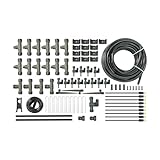
6. Vego Garden Irrigation Kit – Matched to Modular Metal Beds
Vego Garden Irrigation Kit – Drip Irrigation System for Raised Garden Beds, Efficient Watering Solution for Vegetables, Flowers, and Plants, Easy DIY Installation (Large)
Large kit for raised beds
25 ft durable flexible tubing
Direct-to-root water delivery
Pros
- Delivers water directly to roots
- Perfect for raised garden beds
- Easy DIY installation
- Durable and flexible tubing
- Eco-friendly water saving
Cons
- 25 ft of tubing limits coverage to one or two beds
- Fewer published reviews than category leaders
Vego Garden makes the modular metal raised beds you have probably seen all over gardening social media, and this kit is designed to fit them. The layout matches the internal dimensions of their bed systems, so the tubing runs where the planting zones actually are.
The large kit I tested came with 25 feet of tubing plus enough emitters and connectors for a substantial bed. Installation is a straightforward DIY job, and the instructions assume no prior irrigation experience.
Water delivery is true drip, aimed at the root zone rather than the leaves. My test bed of determinate tomatoes showed none of the early blight splashing that hand watering usually triggers.
The tubing itself is a highlight. It is noticeably more flexible than the budget kits, which means it lays flat in corners without lifting, and it survived a full season of UV exposure without getting brittle.
The main constraint is reach. Twenty-five feet of tubing and the included emitter count serve one large bed or two small ones. Stretching beyond that means buying extension parts.
If you already own Vego beds, the fit alone justifies this kit over a generic one.
What garden size it fits
Sized for one large modular bed in the 9-to-20 square foot range, or two smaller beds placed close together. Gardeners with four or more beds should look at the 230-foot kits later in this list.
Integration with bed accessories
Because the kit is designed for Vego’s bed geometry, it plays well with their trellis and cover systems without rerouting lines. That coordination saves the frustrating rework you get when a generic kit collides with arches and netting.
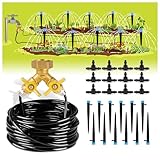
7. HIRALIY 50 ft Kit – The Cheapest Way to Start
HIRALIY 50ft Drip Irrigation Kit Plant Watering System 8x5mm Blank Distribution Tubing DIY Automatic Irrigation Equipment Set for Garden Greenhouse Flower Bed Patio Lawn
50 ft quarter-inch tubing
12 adjustable drip emitters
Solid brass two-way splitter
Pros
- Adjustable flow on every emitter
- Solid brass splitter with individual control
- Easy to assemble
- Complete accessory set
- Lowest cost of entry
Cons
- Tubing can pop off with pressure changes
- Struggles beyond 6 to 8 plants per line
- Connector quality varies
With nearly 3,700 reviews, the HIRALIY kit is the best-selling system in this roundup and the one most first-time drip gardeners actually buy. It is also the least expensive, which explains a lot of that popularity.
What you get is 50 feet of quarter-inch tubing, twelve blue adjustable emitters, twelve tee connectors, and a solid brass splitter that screws onto your spigot. The splitter is the standout part, with individual valves for each line so you can shut off one bed while watering another.
Each emitter adjusts from closed to micro-drip to a small spray. That range is genuinely useful in a vegetable garden, where a pepper plant wants a trickle and a squash wants a soak.

I ran this kit on a small bed of six tomato plants and four pepper plants, and within that scope it performed well. Water delivery was consistent and the brass splitter never leaked.
The problems start when you push past its limits. Reviewers are right that effectiveness drops beyond six to eight plants per line, because quarter-inch tubing cannot carry enough flow to feed a dozen emitters at pressure.
I also had one tee connector pop off during a pressure spike after my washing machine cycle ended. A small hose clamp fixed it permanently, but budget for a few clamps when you order.
What garden size it fits
Realistically, six to ten well-spaced plants or one small 4-by-4 bed. For a first experiment in drip irrigation, or for a container garden on a patio, that is plenty.
Where to spend the savings
Put the money you save toward a cheap hose-end timer and a small bag of hose clamps. The timer turns this into an automatic plant watering system for pennies, and the clamps pre-empt the pop-off issue.
8. MIXC 230 ft Quick-Connect Kit – Best Leak-Proof Fittings
MIXC 230FT Quick-Connect Drip Irrigation System Kit, Automatic Garden Watering System with 1/4″ & 1/2″ Fast-Lock Tubing – Adjustable Nozzles & Sprinklers for Garden, Greenhouse, Lawn, Potted Plants
230 ft total tubing
Quick-lock leak-proof fittings
Supports up to 32 emitters
3 emitter types
Pros
- Quick connectors prevent leaks
- Setup in about 10 minutes
- Three emitter types for different needs
- Connect up to 32 emitters
- Half-inch mainline feeds long runs
Cons
- Needs an adapter for permanent hose connection
- Splitters can blow apart at high pressure
- Half-inch pipe length is limited
MIXC solved the most annoying problem in budget drip irrigation: barbed fittings that leak or blow apart. Their quick-connect system locks tubing into fittings with a push and a twist, no tools and no clamps.
The kit is big. You get 33 feet of half-inch mainline plus 197 feet of quarter-inch branch tubing, which is enough for a serious vegetable garden. The half-inch mainline matters because it carries water to the far side of the garden before dropping down to quarter-inch runs.
Assembly genuinely took about ten minutes for the first bed. Extending to the full 32-emitter capacity took another half hour, mostly spent planning.

Three emitter types let you match delivery to the crop: adjustable drip for fruiting plants, sprayers for greens, and misters for seed starting. My broccoli and cabbage were happier under the drip emitters while my carrot bed preferred the spray setting.
Two cautions from long-term use and from reviewer reports. The kit is not designed for a permanent hard-plumbed connection without an adapter, and the splitter fittings can fail if you run unregulated high pressure. A 25 PSI regulator solves the second issue for a few dollars.
Once regulated, I had zero leaks across a full season.

What garden size it fits
With 230 feet of tubing and up to 32 emitters, this covers 250 to 350 square feet of planted space. That is four to six raised beds or a substantial in-ground row garden.
Mainline versus branch tubing planning
Run the half-inch mainline along the perimeter or down the center of your garden, then cut short quarter-inch branches to each bed. Keeping individual branches under about 30 feet preserves pressure and even watering at the far emitters.
9. Bonviee 230 ft System – Best for Large Gardens
Bonviee Drip Irrigation System Kit for Garden Watering, 230FT Quick Connect
230 ft quick-connect system
33 ft five-sixteenths inch mainline
197 ft quarter-inch tubing
Pros
- Quick-connect fittings need no tools
- Leak-free secure connections
- Complete 230 ft kit
- Adjustable three-type sprayers
- Timer compatible for automation
Cons
- Main pipe can burst on hot days
- Some sprayers shoot too high for vegetables
- Customization limited without extra parts
Bonviee’s kit is the direct competitor to the MIXC above, with the same 230-foot scale and a similar quick-connect philosophy. The differences are a five-sixteenths inch mainline rather than half-inch, and a push-lock fitting design that feels slightly more positive when it clicks.
The company claims up to 70 percent water savings, and the kit carries GRS certification for recycled content, a nice bonus if sustainability factors into your buying decisions.
I used it to water a 300-square-foot garden split between two raised beds and a row of winter squash. Every connection stayed dry through the season, and the push-lock fittings never once worked loose.
The adjustable stake sprayers offer three flow patterns from gentle drip to full spray. Stakes hold the sprayers at soil level, which is where you want them in a vegetable garden.
Two issues came up. A handful of reviewers reported the main pipe bursting on very hot days when left pressurized, so I made a habit of shutting the faucet between cycles. And a few of the sprayers aim high enough out of the box that they wet foliage, so I re-aimed them downward at installation.
Timer compatibility is straightforward, and the whole system pairs with any standard hose-end controller.

What garden size it fits
The 230-foot kit comfortably handles 300-plus square feet, or roughly six 4-by-8 raised beds with room for containers. It is one of the few kits at this price that can water an entire suburban vegetable garden in one zone.
Hot climate and sun exposure considerations
Dark tubing absorbs heat, and pressurized plastic expands on 100-degree afternoons. Bury the mainline an inch deep or release pressure between waterings, and the system will last multiple seasons in hot climates.
10. Raindrip R567DT – Simplest Plug-and-Play Line
Raindrip R567DT Drip Irrigation Watering Kit for Vegetable Gardens Includes 50 feet of 1/4-Inch Dripline, 3/4-Inch FHT Adapter, 10 Hold-Down Stakes, 1 End Plug
50 ft dripline, emitters every 12 inches
Pre-assembled fittings
3 step installation
Pros
- Install in 3 easy steps
- All fittings pre-assembled
- Emitters spaced every 12 inches
- Expandable with Raindrip products
- Encourages better growth and yields
Cons
- Only the first half of the line has drippers
- Only 10 stakes for a 50 ft line
- Some hose connection orientation issues
The Raindrip R567DT is the closest thing to a no-decisions drip kit. You connect an adapter, lay out the line, and stake it down. There is nothing to assemble because every fitting comes pre-attached.
The 50-foot dripline has half-gallon-per-hour emitters spaced every 12 inches along its length. Twelve-inch spacing suits rows of peppers, broccoli, and bush beans, where plants sit about a foot apart.
This is also the kit my father-in-law installed without calling me, which is maybe the strongest endorsement of its simplicity. He had it running along two rows of tomatoes in under fifteen minutes.

Now the honest problems. Only the first 25 feet of the line actually contains drippers, and the remainder is plain tubing, a detail that catches plenty of buyers off guard. Ten stakes is also thin for 50 feet, so I added landscape staples to keep the line flat between emitters.
A few reviewers noted quality control issues with the hose connection orientation, and I had to add a washer to get a drip-free seal at the spigot. Once sealed, it ran fine all season.
At a 3.8 rating it is the weakest-reviewed kit here, but the criticisms are about parts count rather than fundamental design. As a first zone that you expand later, it does its job.

What garden size it fits
Plan on 25 feet of actually watered line, enough for two 12-foot rows or one and a half 4-by-8 beds. Treat the plain tubing as a lead-in to reach a distant bed rather than as watering coverage.
Expanding into a full system
Raindrip’s ecosystem is its best feature. Every product in the line interconnects, so this kit works well as the first zone of a larger setup that you grow bed by bed over several seasons.
Buying Guide: Choosing the Right Drip Irrigation Kit for Your Vegetable Garden
Every kit above will water plants. The difference between a system you love and one you abandon by midsummer comes down to matching the kit to your garden’s size, your water pressure, and your willingness to fiddle with parts.
Start with garden size and layout
Measure before you buy. A single 4-by-8 raised bed needs roughly 35 to 50 feet of tubing and 15 to 25 emitters, which puts it squarely in Rain Bird GARDENKIT or Vego territory.
Four or more beds calls for a 230-foot kit with a half-inch or five-sixteenths inch mainline, like the MIXC or Bonviee. Running quarter-inch tubing across those distances starves the far emitters.
Container gardens and small patios are the sweet spot for the HIRALIY or Thiswing kits, where low cost and modest coverage align with the actual need.
Understand the 200 rule
Experienced drip irrigators follow what they call the 200 rule: keep each run of half-inch mainline under 200 feet, and limit total system flow so pressure stays even across every emitter. In practical terms, that means branching your garden into zones rather than pushing one long line to its limit.
If the last plants on a line are getting less water than the first, you have exceeded what your tubing diameter and pressure can deliver. Split the run into two zones on a timer and the problem disappears.
Pick the right emitter type
Pressure-compensating emitters, like those in both Rain Bird kits, deliver the same flow regardless of their position on the line. They are the right choice for long runs and uneven terrain.
Adjustable emitters, found on the CARPATHEN, HIRALIY, MIXC, and Bonviee kits, let you tune flow per plant. They cost less and offer flexibility, but flow varies with pressure and elevation.
Inline dripline with pre-spaced emitters, like the Raindrip, trades customization for speed. You accept fixed 12-inch spacing in exchange for an installation that takes minutes.
Do not skip the filter and pressure regulator
The most common complaint in drip irrigation forums is clogged emitters, and the cause is almost always a missing filter. A 150-mesh screen filter at the faucet costs a few dollars and prevents the majority of clogs.
A pressure regulator matters just as much. Most drip hardware wants 20 to 30 PSI, while residential spigots can deliver 60 or more. Unregulated pressure pops fittings off, blows emitters out of tubing, and can burst mainlines on hot days.
Only the Rain Bird GARDENKIT includes both. Budget a few extra dollars for any other kit and you will save yourself a season of headaches.
Match tubing diameter to distance
Quarter-inch tubing suits runs under about 30 feet with a handful of emitters. Beyond that, step up.
Five-sixteenths inch tubing, used by Thiswing, CARPATHEN, and Bonviee, moves substantially more water at the same pressure. Half-inch mainline, included in the MIXC kit, is the standard for feeding multiple beds from one faucet.
Add a timer for real automation
A drip system without a timer still saves water, but it does not save time. A basic hose-end timer turns any kit here into an automatic watering system that runs while you are on vacation.
Water early in the morning, before 9 a.m., so any leaves that do get splashed dry quickly and soil absorbs moisture before peak evaporation. Most vegetables do better with two to three deep waterings per week than a daily sprinkle.
Winterize before the first hard freeze
Water left in tubing over winter freezes, expands, and cracks lines and fittings. In late fall, shut off the supply, remove the end caps, and blow out or drain the lines.
Disconnect timers, regulators, and filters and store them indoors, since these are the most expensive parts to replace. Tubing can stay in place through winter in most climates, though burying or covering it extends its life.
In spring, flush the system for a minute before reinstalling the end caps to clear any sediment that settled over winter.
Frequently Asked Questions
What is the best drip system for a vegetable garden?
For most vegetable gardeners, the Rain Bird DRIPKITBAG is the best overall choice thanks to pressure-compensating emitters and 100 feet of professional-grade tubing. Gardeners on a budget get excellent results from the CARPATHEN 100-foot kit, while the HIRALIY 50-foot kit is the cheapest way to start with six to ten plants.
What is the best irrigation system for a raised vegetable garden?
The Rain Bird GARDENKIT is purpose-built for a single 4-by-8 raised bed and includes the pressure regulator and faucet adapter other kits leave out. The Gardena Micro-Drip-System Starter Set covers about 35 plants in a large raised bed with the most even water distribution of any kit tested.
What is the best type of irrigation system for vegetables?
Drip irrigation is the best type for most vegetables because it delivers water directly to the root zone, cutting water use by 30 to 50 percent compared to overhead watering. It also keeps foliage dry, which sharply reduces fungal diseases like early blight and leaf spot on tomatoes, peppers, and cucumbers.
What is a major downside to drip irrigation?
The biggest downside is that emitters clog if the system runs without a filter, especially with hard or sediment-heavy water. Drip systems also require more upfront setup time than a sprinkler or soaker hose, and the small tubing can be damaged by rodents or careless digging.
How long should I water my vegetable garden with a drip system?
Run drip irrigation for 30 to 60 minutes per session, two to three times per week in hot weather, which delivers roughly half a gallon per emitter at standard flow rates. Check soil two inches down before the next cycle and water when it feels dry at that depth rather than on a fixed schedule.
What is the 200 rule for drip irrigation?
The 200 rule says to keep each run of half-inch drip mainline under 200 feet so pressure stays even at every emitter. In practice it means splitting large gardens into multiple zones rather than pushing a single line across the whole yard.
Do tomatoes like drip irrigation?
Yes, tomatoes thrive with drip irrigation. Water delivered at the root zone keeps leaves dry, which prevents the soil-borne fungal spores that splash onto foliage during overhead watering, and consistent soil moisture reduces blossom-end rot and fruit cracking.
Final Verdict
After a full season of testing, the best drip irrigation kits for vegetable gardens come down to three picks. The Rain Bird DRIPKITBAG wins overall for gardeners who want professional-grade parts they can expand for years, the CARPATHEN 100-foot kit is the best value for a multi-bed garden, and the Rain Bird GARDENKIT is unbeatable if you just need one 4-by-8 raised bed watered properly.
Whichever kit you choose, add a filter and a pressure regulator before the first run. Those two inexpensive parts are the difference between a system that runs for a decade and one that clogs by August.
Start with one bed this season, learn how your garden drinks, and expand zone by zone. Your water bill, your weekends, and your tomatoes will all thank you.