
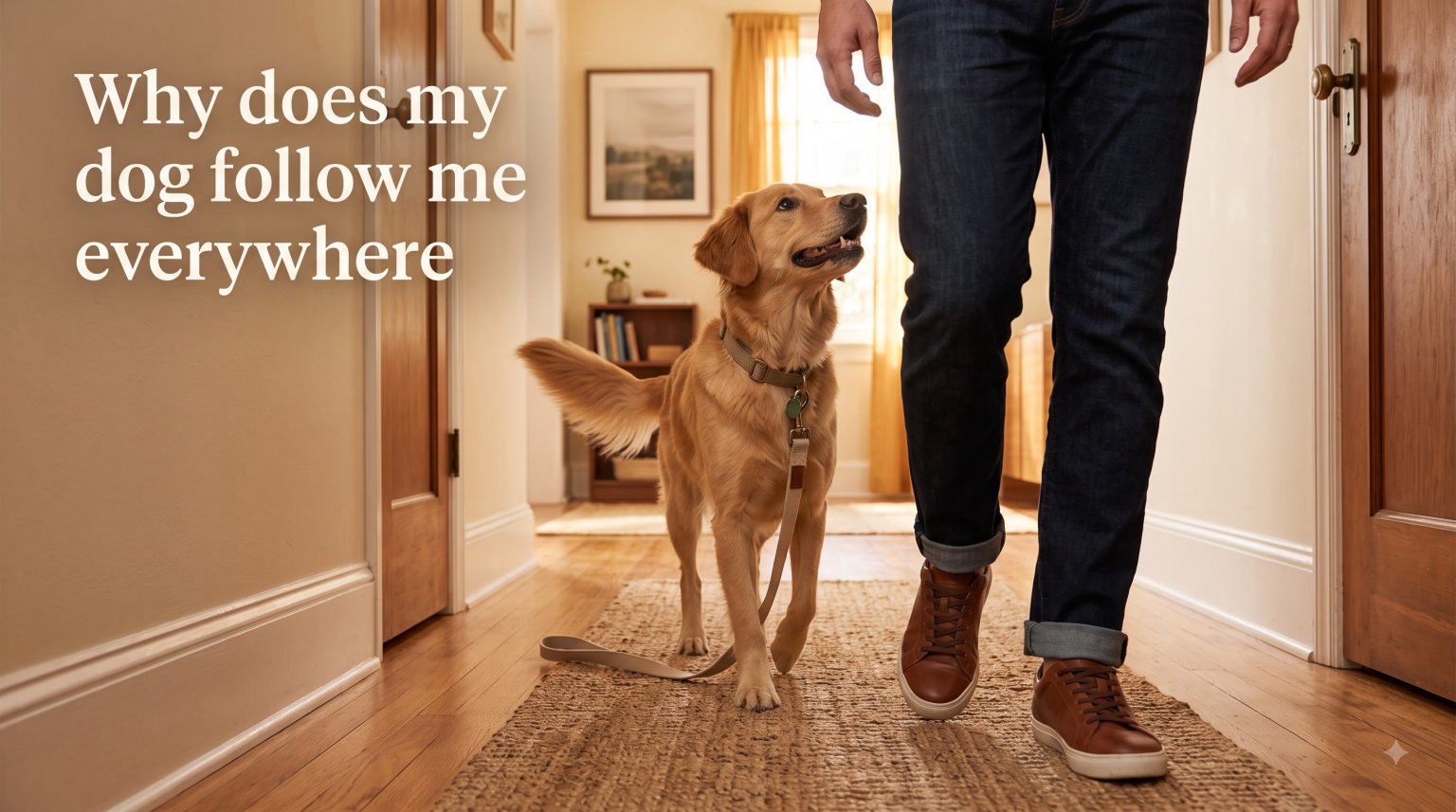
If you have ever tripped over your dog on the way to the kitchen, you have probably asked yourself, “why does my dog follow me everywhere?” The short answer is that your dog follows you because of a mix of love, instinct, curiosity, and learned habits. Dogs are naturally social animals that form strong bonds with their humans, and trailing behind you is one of the most direct ways they express that connection.
Most of the time, this behavior is completely normal and even healthy. The American Kennel Club notes that dogs are pack-oriented creatures who simply prefer to be near the ones they trust. However, there are moments when constant shadowing can signal something deeper, like anxiety or an underlying health issue. Knowing the difference matters for both your sanity and your dog’s wellbeing.
Here is a quick overview of the main reasons your dog follows you everywhere:
Love and social bonding — Your dog feels safe and happy around you
Positive reinforcement — You provide food, treats, walks, and attention
Curiosity and FOMO — Dogs hate missing out on anything interesting
Boredom — Following you is more entertaining than sitting alone
Breed tendencies — Some breeds are genetically wired to stay close
Separation anxiety — Fear of being alone drives constant following
Age or health changes — Puppies, seniors, and sick dogs stick closer
Let me walk you through each of these reasons in detail so you can figure out exactly what is going on with your furry shadow.
Table of Contents
The Science Behind Why Dogs Follow Their Owners
Dogs do not follow you just because it feels nice. There is real biology behind this behavior, and understanding it helps explain why even well-trained dogs cannot seem to let you out of their sight.
One of the biggest drivers is oxytocin, often called the love hormone. Research shows that when dogs and their owners make eye contact or spend time near each other, both release oxytocin. This creates a positive feedback loop. The more your dog stays close to you, the better they feel, which reinforces the desire to keep following you around the house.
Pack mentality also plays a major role. Dogs evolved from wolves, animals that live and hunt in coordinated groups. While your living room is a long way from the wild, your dog still carries that instinct to stay near their family unit. In your dog’s mind, you are the pack, and sticking together is simply what dogs do.
There is also a concept called allelomimetic behavior, which is the scientific term for mirroring. Dogs naturally copy the movements and actions of those around them. When you get up, your dog gets up. When you settle on the couch, they settle nearby. This instinctive mirroring is deeply wired into canine psychology.
Finally, puppies go through an imprinting phase between roughly 3 and 12 weeks of age. During this window, they form powerful attachments to the people and animals that care for them. If you raised your dog from a young pup, there is a good chance they imprinted on you, and that early bond can last a lifetime.
Common Reasons Your Dog Follows You Everywhere
Now let me break down the most common reasons your dog shadows your every move. Most dogs follow for a combination of these factors rather than just one.
Love and Social Bonding
The simplest and most common reason your dog follows you everywhere is affection. Your dog genuinely enjoys your company. You are their source of comfort, safety, and joy, so staying close feels rewarding all on its own.
This kind of following is a compliment. It means your dog trusts you enough to want to be in the same room, even if nothing is happening. Think of it as your dog’s way of saying, “you are my favorite person.”
Positive Reinforcement and Rewards
Dogs are excellent at making associations. If your dog follows you and you pet them, talk to them, toss a treat, or take them outside, you have just rewarded the behavior. Even unintentional rewards teach your dog that sticking close to you leads to good things.
You do not have to stop rewarding your dog, but it helps to be aware of the pattern. If your dog follows you to the kitchen every night at dinner time, they have learned that your movement predicts food. That is smart dog logic, not just clinginess.
Curiosity and Fear of Missing Out
Dogs are nosy in the best possible way. They want to know what you are doing, where you are going, and whether something exciting might happen. If you head toward the front door, your dog wonders if a walk is coming. If you open the pantry, they want to check for dropped snacks.
This curiosity-driven following is completely normal. Your dog simply does not want to miss out on any opportunity for fun, food, or adventure.
Boredom and Understimulation
A bored dog will find their own entertainment, and following you around the house is an easy option. If your dog is not getting enough physical exercise or mental stimulation during the day, they may latch onto your movements simply because you are the most interesting thing available.
This is one of the easiest causes to fix. More walks, puzzle toys, training sessions, and playtime can dramatically reduce attention-seeking following. A tired dog is a more independent dog.
Separation Anxiety
Unlike boredom or affection, separation anxiety is a more serious cause of following. Dogs with separation anxiety follow their owners because they are genuinely afraid of being left alone. This fear goes beyond normal attachment and can cause real distress.
If your dog panics when you close a door, whines constantly when you are out of sight, or destroys things when left alone, separation anxiety may be the culprit. I cover how to tell the difference between a Velcro dog and an anxious dog in the next section.
Age-Related and Health Changes
Sometimes a dog that never used to follow you suddenly starts shadowing you everywhere. This can happen at certain life stages or when something is physically wrong. Puppies follow because they are learning and depend on you completely. Senior dogs may follow because of cognitive decline, vision loss, or pain that makes them seek reassurance.
Any sudden change in following behavior deserves attention, especially in older dogs. It can be an early sign that something health-related is going on, which I discuss in detail later.
Velcro Dogs vs Separation Anxiety: What’s the Difference?
One of the most important distinctions you can make as a dog owner is telling the difference between a happy Velcro dog and a dog suffering from separation anxiety. The AKC and veterinary experts emphasize this point because the two behaviors can look similar on the surface but need very different responses.
A Velcro dog is simply a dog that loves being close to you. They follow you from room to room, lie at your feet while you work, and greet you enthusiastically when you return. The key detail is that a Velcro dog stays relaxed. When you leave the room or the house, they may be a little sad, but they settle down and cope just fine.
A dog with separation anxiety follows you out of fear. The following is frantic, not affectionate. When you leave, the anxiety escalates into real panic. Here are the signs that separate anxiety from normal Velcro behavior:
Velcro dog signs: Relaxed body language, content to snooze near you, handles being alone with minimal fuss, follows out of preference not panic
Separation anxiety signs: Panting, pacing, and whining when you prepare to leave, destructive behavior when alone, excessive drooling, refusing to eat when you are gone, self-injury from trying to escape
If your dog shows the anxiety signs, it is worth consulting a veterinarian or a certified behaviorist. Separation anxiety rarely improves on its own and often gets worse without targeted intervention.
Which Dog Breeds Follow You the Most?
Breed plays a surprisingly big role in how clingy your dog is. Some breeds were literally developed to work side by side with humans all day, and that genetic programming does not switch off just because your dog lives in a house instead of a field.
Herding breeds are notorious followers. Border Collies, Australian Shepherds, and German Shepherds were bred to watch and respond to their handler’s every move. That same instinct that makes them great at herding sheep makes them excellent at shadowing you to the bathroom.
Companion and toy breeds are also big followers. Labrador Retrievers, Golden Retrievers, Pugs, French Bulldogs, and Cavalier King Charles Spaniels were bred for closeness with people. They thrive on companionship and tend to attach themselves tightly to their families.
Working breeds like Dobermans and Boxers often develop strong protective bonds and stay near their chosen person. Even some terriers, despite their independent reputation, can become surprisingly attached.
If you have one of these breeds, expect more following behavior. It is not a training failure. It is quite literally in their DNA.
Why Dogs Follow You at Different Life Stages
The reasons your dog follows you can shift dramatically depending on their age and background. Here is how following behavior looks at each stage of a dog’s life.
Puppies
Puppies follow their humans almost constantly, and this is completely normal. Young dogs are learning about the world, and they rely on you for safety, food, and guidance. Following you is how puppies bond and figure out how life works. Most puppies naturally become more independent as they mature and gain confidence.
Adult Dogs
In their adult years, most dogs settle into a stable routine. They may still follow you to the kitchen or greet you at the door, but they are usually comfortable resting alone for stretches of time. If an adult dog suddenly starts following you more than usual, that change is worth paying attention to.
Senior Dogs
Senior dogs often become more clingy as they age. This can be tied to cognitive decline, sometimes called doggy dementia, which causes confusion and anxiety. Older dogs may also have hearing or vision loss that makes the world feel scarier, so they stay close to the person who feels safe. Pain from arthritis or other conditions can also drive a senior dog to seek comfort near you.
Rescue Dogs
Rescue dogs frequently show intense following behavior, especially in their first few months in a new home. These dogs have often experienced instability, abandonment, or trauma. Their instinct is to stay close to the person who represents safety and consistency. Many rescue dogs become less clingy over time as they learn that their new home is permanent, but some remain Velcro dogs for life.
Why Does My Dog Follow Me to the Bathroom?
The bathroom question comes up constantly in forums and search results, so let me address it directly. Dogs follow you to the bathroom for a combination of curiosity, instinct, and pack behavior.
In the wild, animals are vulnerable when they relieve themselves. Your dog’s instinct tells them that sticking together during vulnerable moments is smart survival behavior. Even though your bathroom poses no real danger, your dog’s instincts do not know that.
Bathrooms are also interesting places to a dog. There are strange smells, running water, and cabinets that might contain treats or trash. Plus, you are behind a closed door, which is essentially a mystery your dog feels compelled to investigate.
It can be annoying, but bathroom following is almost always harmless. If it bothers you, gently closing the door and giving your dog a stuffed Kong or puzzle toy on the other side usually solves the problem over time.
When Following Becomes a Concern
Most following behavior is normal, but there are times when it should raise a red flag. The biggest warning sign is a sudden change. If your dog has always been independent and suddenly starts following you everywhere, something may be wrong.
Sudden clinginess can point to several health issues. Dogs in pain often seek out their owners for comfort. Canine cognitive dysfunction in senior dogs causes confusion that leads to increased attachment. Loss of vision or hearing can make a dog feel disoriented and cling to you for a sense of security.
Watch for these additional warning signs that mean a vet visit is warranted:
Following combined with panting, pacing, or restlessness
Sudden onset in an older dog, especially with disorientation or confusion
Following paired with loss of appetite, vomiting, or lethargy
Excessive vocalization, whining, or trembling alongside the shadowing
Trust your gut. You know your dog better than anyone. If the behavior feels off to you, a quick call to your veterinarian is always a good idea. It is far better to check and find nothing wrong than to miss an early warning sign.
How to Manage a Dog That Follows You Everywhere
If your dog’s following has become overwhelming, there are practical steps you can take to encourage more independence without damaging your bond. The goal is not to push your dog away but to help them feel comfortable on their own.
Start by increasing physical and mental exercise. A dog that has had a good walk, a training session, and some puzzle toy time is far more likely to settle down contentedly instead of trailing you through the house. Mental stimulation tires a dog out just as much as physical activity.
Build independence gradually. Practice leaving the room for just a few seconds, then return before your dog gets upset. Slowly increase the duration over days and weeks. Reward your dog for staying calm and settled while you are out of sight. This teaches them that being apart from you is safe and even rewarding.
Create a comfortable dedicated space for your dog. A cozy bed in a quiet corner, a crate with the door left open, or a mat with a favorite chew toy gives your dog a place that feels like their own. Encourage them to spend short, positive periods there throughout the day.
Use management tools wisely. A baby gate can prevent underfoot tripping hazards. A stuffed Kong or lick mat can keep your dog happily occupied while you cook, work, or use the bathroom in peace.
Avoid accidentally reinforcing anxious following. If your dog whines at the bathroom door and you immediately open it, you have taught them that whining works. Instead, wait for a moment of quiet before reuniting. Reward calm behavior consistently.
FAQ
What breed of dog is the most clingy?
How do you tell if a dog has imprinted on you?
Do dogs pick a favorite person?
Why does my dog follow me to the bathroom?
Why is my dog suddenly following me everywhere?
How do I stop my dog from following me everywhere?
Conclusion
So why does my dog follow me everywhere? In most cases, it comes down to love, instinct, curiosity, and learned rewards. Your dog follows you because you are their family, their safety, and the center of their world. That kind of devotion is worth appreciating, even when it means tripping over a furry body on the way to the kitchen.
The key takeaway is to know your dog’s baseline and watch for changes. A happy Velcro dog is nothing to worry about, but sudden clinginess or signs of panic deserve attention. If you are ever unsure, a quick conversation with your vet can set your mind at ease and keep your loyal companion healthy and happy.