
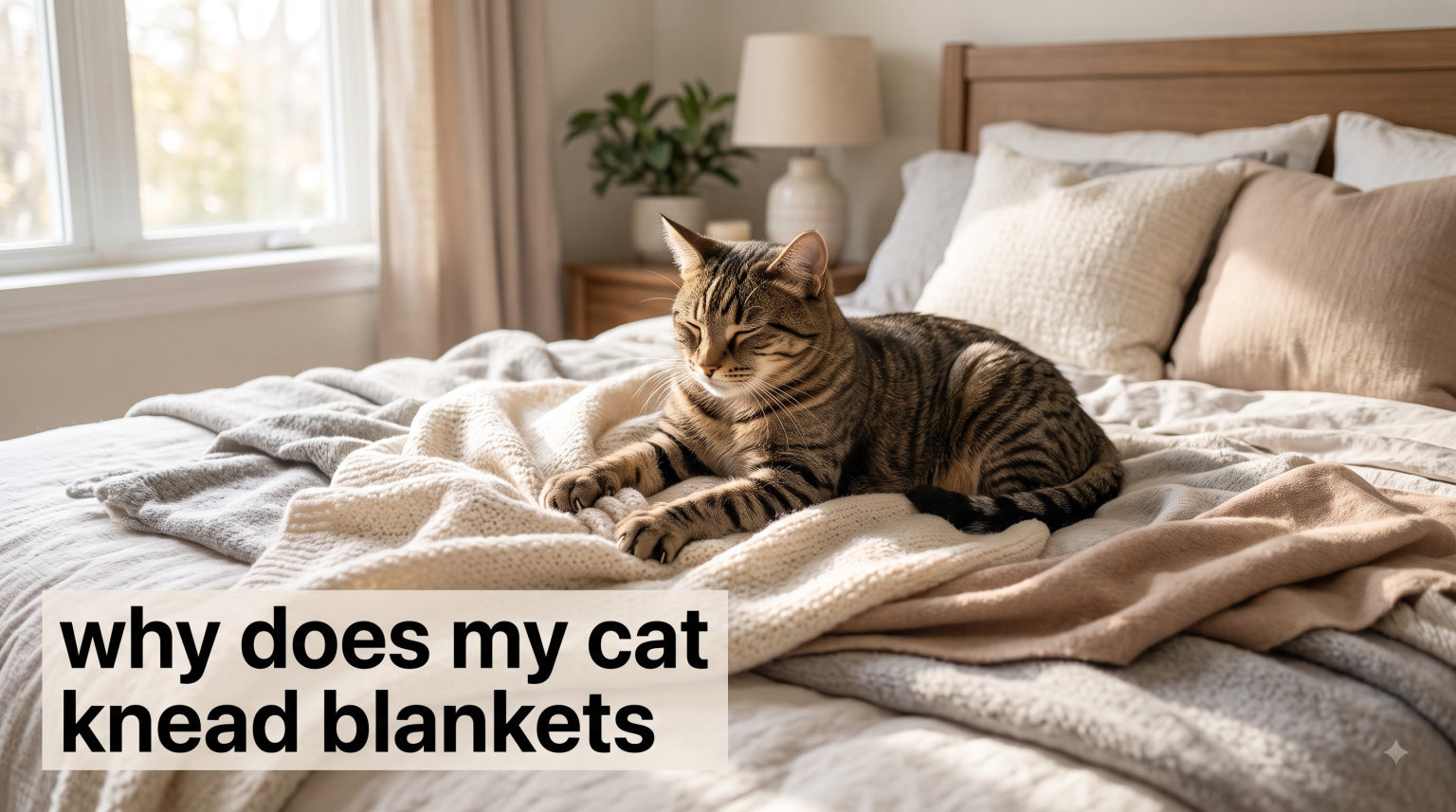
If you have ever watched your cat rhythmically press their paws into a soft blanket while purring, you have witnessed one of the most endearing feline behaviors there is. We have spent years observing cats in homes, shelters, and veterinary settings, and the question we hear more than almost any other is: why does my cat knead blankets?
The short answer is that kneading is a completely normal instinctual behavior rooted in kittenhood. Cats knead to self-soothe, mark territory, prepare sleeping spots, and show affection. But there is fascinating science behind those little paw presses that most articles skip entirely.
In this guide, we break down every reason your cat makes biscuits on blankets, what their mood tells you while they do it, and when you might want to pay closer attention. Whether you have a new kitten or a senior cat who just discovered your favorite fleece throw, you will understand exactly what is going on in that furry head.
Table of Contents
What Is Cat Kneading? (Making Biscuits Explained)
Cat kneading is the rhythmic, alternating pressing of the front paws into a soft surface. Most cats push their right and left paws in sequence, often extending and retracting their claws with each press. The motion looks a lot like a baker working dough, which is why cat lovers affectionately call it “making biscuits.”
Some cats knead with all four paws. Others stick to the front two. A few cats even knead while standing, swaying their whole body side to side. The behavior almost always targets something soft: a blanket, a pillow, your lap, or a plush cat bed.
Kneading is not random. It is a deeply wired instinct that starts the moment a kitten is born. When kittens nurse, they knead their mother’s belly to stimulate milk flow. That early association between pressing paws and comfort, warmth, and food never fully leaves a cat.
It is also completely normal. Every domestic cat has the instinct to knead, even if some do it more than others. If you are wondering why does my cat knead blankets specifically, the softness of the fabric mimics the surfaces that trigger the behavior most strongly.
Why Does My Cat Knead Blankets?
Cats knead blankets for five main reasons, all of which trace back to natural feline instincts:
Kittenhood nursing instinct: Pressing paws into something soft recreates the comfort of nursing from their mother.
Comfort and self-soothing: The rhythmic motion releases feel-good hormones like dopamine and oxytocin that calm your cat down.
Territory marking: Cats have scent glands in their paw pads, and kneading deposits pheromones that claim the blanket as theirs.
Sleep preparation: Kneading flattens and shapes a surface into a comfortable nesting spot, just like wild cats prepare resting areas.
Affection and bonding: When a cat kneads your blanket or your lap, they are showing trust and love in the most instinctual way they know.
Most of the time, a cat kneads for a combination of these reasons at once. A purring cat pressing into your fleece blanket is simultaneously soothing themselves, marking the blanket, and showing you affection. Let us look at each reason in more detail.
Reason 1: The Kittenhood Nursing Instinct
The root of all kneading behavior goes back to the first days of a cat’s life. Newborn kittens are blind and deaf, but they can feel and smell. To get milk from their mother, kittens press their paws into her belly in that same rhythmic, alternating motion. This stimulates milk letdown and ensures they get enough to eat.
That early experience wires the brain to associate kneading with three things: warmth, safety, and being fed. Even years later, when an adult cat presses their paws into a soft blanket, those same neural pathways fire. The blanket feels like their mother’s belly, and the brain responds with comfort and contentment.
This is also why early-weaned cats tend to knead more intensely as adults. Forum discussions on Reddit’s r/cats and r/CatAdvice consistently confirm that cats separated from their mothers too early often knead, suckle, or chew on blankets well into old age. The behavior becomes a lifelong self-soothing mechanism that helps them feel secure.
If your cat was a rescue kitten or came from a large litter, you might notice especially enthusiastic kneading. That is their way of recreating the comfort they may have missed out on during those critical early weeks.
Reason 2: Comfort, Self-Soothing, and the Dopamine Response
One thing most articles about cat kneading completely skip is the hormonal response happening inside your cat’s brain. Kneading is not just a habit. It is a chemical event.
When your cat presses their paws into a soft blanket rhythmically, their brain releases dopamine and oxytocin. Dopamine is the reward and pleasure chemical. Oxytocin is the bonding and relaxation hormone, the same one humans release when hugging someone they love.
Together, these hormones create a wave of calm. That is why kneading almost always comes with purring, drooling, and a glazed, blissful look in your cat’s eyes. They are literally giving themselves a dose of natural comfort chemicals.
This self-soothing function explains why stressed or anxious cats knead more. A cat who is adjusting to a new home, dealing with a new pet, or feeling overstimulated will often find a blanket and start making biscuits. It is their way of regulating their nervous system and bringing themselves back to a calm baseline.
Reason 3: Territory Marking with Paw Scent Glands
Cats are territorial animals, and they communicate primarily through scent. Your cat’s paw pads contain scent glands that release pheromones, which are chemical signals other cats can detect but humans cannot smell.
Every time your cat kneads a blanket, they are pressing those scent glands into the fabric and leaving a chemical signature behind. This tells other cats (and reminds your cat) that this blanket, this bed, and this space belong to them.
This is why cats often knead your blanket specifically rather than their own bed. Your scent is all over your bedding, and your cat is mingling their scent with yours. In feline communication, this is a powerful act of bonding and ownership. They are essentially saying, “This person is mine, and this blanket is part of my territory.”
Multi-cat households see this behavior a lot. Cats will take turns kneading the same spots to keep their scent fresh and maintain the territorial hierarchy. It is completely peaceful, instinct-driven behavior that helps keep the peace.
Reason 4: Preparing a Sleeping Spot (Nesting Instinct)
In the wild, cats do not have plush beds. A wild cat preparing to sleep will press down tall grass, leaves, or brush to create a flat, comfortable resting spot. This nesting behavior protects them from sharp objects underneath and helps them settle in for a safe rest.
Your housecat has the same instinct. When they knead a blanket before lying down, they are going through the motions of preparing a nest. They press and shape the fabric until it feels right, then curl up and settle in.
This explains why kneading so often happens right before sleep. You might notice your cat knead intensely for a minute or two, then immediately flop down and close their eyes. The kneading served its evolutionary purpose: making the surface safe and comfortable.
It also explains why cats knead in circles, rotating their body as they press. This is the same motion a wild cat would use to flatten a circular nest in the grass. Even though your living room blanket is already soft, the instinct to prepare the spot remains hardwired.
Reason 5: Affection and Bonding with You
When a cat kneads your lap, your chest, or the blanket you are lying under, they are showing you deep affection. Remember that kneading is tied to the comfort and safety of kittenhood. By making biscuits on you, your cat is treating you the way they treated their mother.
This is one of the highest compliments a cat can give. Cats do not knead people they fear or distrust. If your cat climbs into your lap and starts kneading, they feel safe with you, bonded to you, and emotionally secure in your presence.
Many cat owners report that their cats knead more when the owner is sick, sad, or stressed. The cat senses the emotional shift and responds with the most comforting behavior they know. It is a genuinely empathetic response rooted in the bonding hormones released during kneading.
So if you have been asking whether your cat’s kneading means they love you, the answer is yes. They are showing you love in the purest, most instinctual way they have.
Why Cats Prefer Certain Blankets (Fleece, Wool, and Texture)
If you have ever wondered why your cat ignores half your blankets but goes wild for one specific fleece throw, you are not alone. This is one of the most common questions in cat forums, and the answer comes down to texture.
Cats knead surfaces that feel similar to their mother’s fur. Fleece, sherpa, faux fur, and soft wool all mimic that warmth and pliability. Smooth cotton sheets or stiff fabrics do not trigger the same instinct, which is why your cat walks right past them.
Texture also matters because of the claws. During kneading, cats extend and retract their claws rhythmically. Fabrics that let the claws sink in slightly, like knit blankets and loose fleece, feel satisfying and natural. Tight, flat weaves can feel uncomfortable or fail to engage the claws properly.
Scent plays a role too. Once your cat kneads a blanket, they leave pheromones on it. That blanket now smells like “theirs,” and they will keep coming back to refresh the scent. This is why cats develop favorite blankets over time. The more they knead it, the more it smells like home.
If your cat has ruined a favorite blanket with kneading, the solution is not to take it away. Provide a designated kneading blanket with a similar texture, and redirect them there. We cover exactly how to do this in the management section below.
How to Read Your Cat’s Mood While Kneading
Kneading is usually a sign of contentment, but cats also knead when they are stressed. Learning to tell the difference helps you respond to what your cat actually needs.
A happy, relaxed kneading cat will show several signs at once. Their eyes may be half-closed or slowly blinking. Their body is loose and heavy. They are purring steadily, sometimes drooling slightly, and their claws extend and retract gently rather than digging in hard.
Here are the signs your cat is kneading out of pure contentment:
Slow blinking or half-closed eyes
Deep, rhythmic purring
Relaxed, heavy body posture
Gentle claw extension without aggressive digging
Slight drooling in some cats (a sign of deep relaxation)
Tail still or slowly swaying, not thrashing
A stressed kneading cat looks different. Their body may be tense, their eyes wide open, and their ears rotated slightly back. The kneading may be faster and more frantic, with claws digging in hard. The purring, if present, sounds higher-pitched and less steady.
If your cat’s kneading looks frantic or compulsive rather than relaxed, take a step back and assess their environment. Something may be causing anxiety, such as a new pet, a move, loud noises, or a change in routine. We cover when to be concerned in the next section.
When Kneading Might Indicate a Problem
Kneading is normal and healthy in almost every case. But there are a few situations where the behavior shifts from charming to concerning, and knowing the difference matters.
Compulsive kneading is the main red flag. If your cat kneads the same blanket for extended periods without stopping, seems unable to disengage, or shows signs of distress when interrupted, this could point to underlying anxiety. Compulsive behaviors in cats often develop when a cat feels chronically stressed or lacks environmental enrichment.
Suckling and chewing during kneading deserves attention too. While mild suckling is common in early-weaned cats and usually harmless, excessive blanket chewing can cause gastrointestinal blockages if your cat swatches fabric. If your cat eats blanket material, talk to your veterinarian.
Here is a quick comparison to help you tell normal kneading from problem kneading:
Normal: Kneads for 1 to 5 minutes before settling down to sleep.
Normal: Kneads your lap when you sit together, then relaxes.
Possibly concerning: Kneads frantically for 20+ minutes and cannot stop.
Possibly concerning: Eats or shreds fabric while kneading.
Concerning: Kneading started suddenly in an older cat with no prior history.
Concerning: Kneading is paired with excessive grooming, hiding, or appetite changes.
If you notice any of the concerning patterns, a visit to the vet is a smart move. Sudden behavior changes in adult or senior cats can sometimes signal pain, neurological issues, or cognitive decline. It is always better to check than to assume.
How to Manage and Redirect Cat Kneading
You cannot and should not stop your cat from kneading. It is a healthy instinct that keeps them emotionally balanced. But you can manage the behavior so it does not destroy your furniture or hurt when they knead your bare skin.
The single most effective step is keeping your cat’s claws trimmed. Blunt claws cause far less damage to blankets and far less pain when your cat kneads your lap. Trim the tips every 2 to 3 weeks, or ask your vet or groomer to do it if your cat is not cooperative.
Next, provide designated kneading surfaces. Get a soft fleece blanket or a plush mat specifically for your cat and place it where they like to knead. When they start kneading an off-limits blanket, gently pick them up and move them to the designated spot. Over time, they learn where kneading is welcome.
Here are the most effective management techniques we recommend:
Trim claws regularly: Every 2 to 3 weeks to minimize damage and pain.
Provide a dedicated blanket: Fleece or sherpa in a similar texture to their favorite.
Use a thick lap pad: A folded towel on your lap protects skin from claws.
Redirect gently: Move your cat to the right surface without scolding.
Never punish kneading: It damages trust and increases anxiety, which makes kneading worse.
Offer enrichment: Puzzle feeders and play sessions reduce anxiety-driven kneading.
Punishment is never the answer. Yelling at or pushing away a kneading cat breaks their trust and can increase anxiety, which actually makes compulsive kneading more likely. Positive redirection always works better than correction.
For cats who knead aggressively due to anxiety, look at the bigger picture. Make sure they have vertical spaces to retreat to, consistent feeding times, and plenty of play. A cat whose environmental needs are met kneads out of contentment, not stress.
FAQ
Should I let my cat knead my blanket?
Should you pet a cat while kneading?
Do unhappy cats knead?
Why does my cat randomly knead my blanket?
Is it normal for cats to knead blankets?
Why does my cat only knead on a specific blanket?
Are cats happy when they knead?
Conclusion
So why does my cat knead blankets? Because it is one of the most natural, instinctual, and emotionally meaningful things a cat can do. Kneading connects your cat to the comfort of kittenhood, helps them self-soothe through hormone release, marks their territory with pheromones, prepares their sleeping spot, and shows you affection in the purest way they know how.
The next time your cat climbs onto your blanket and starts making biscuits, you can feel confident knowing exactly what is happening in their body and brain. Trim those claws, provide a dedicated kneading surface, and let them do their thing.
And if you ever notice the kneading shift from relaxed to frantic, you now know the signs to watch for and when a vet visit makes sense. Understanding this one behavior opens a window into your cat’s entire emotional world, and that connection is what makes sharing your home with a cat so rewarding.