
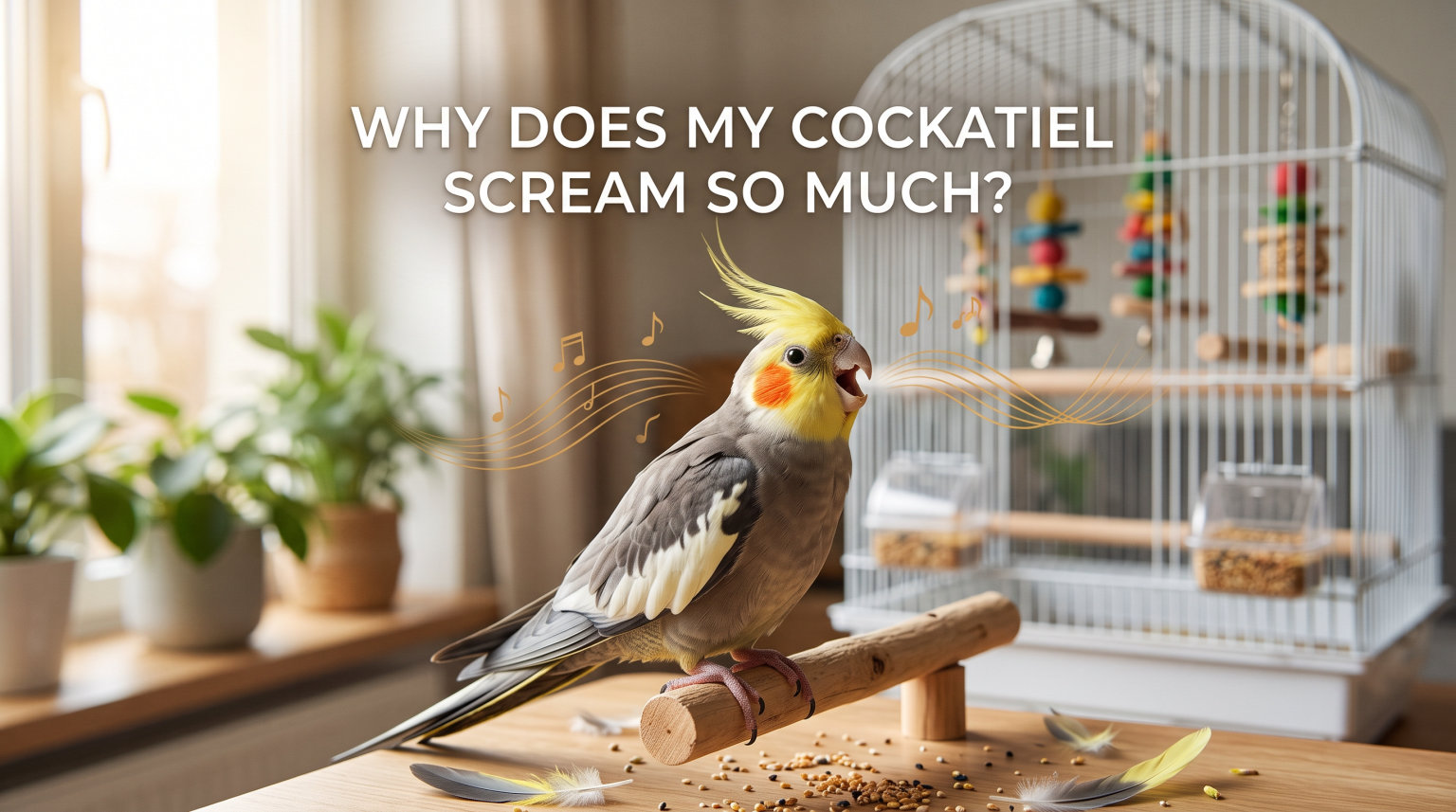
That piercing screech at 6 AM. The relentless contact calls every time you walk out of the room. The full-volume screaming that makes you wonder if your bird is in distress or just being dramatic. If you are asking “why does my cockatiel scream so much,” you are far from alone.
Cockatiel screaming is a natural vocalization behavior that these birds use to communicate with their flock, express needs, signal alarm, or cope with hormonal changes. Understanding which trigger applies to your bird is the key to addressing it.
Our team has spent years working with cockatiel owners and studying avian behavior, and we can tell you that most screaming has a specific, identifiable cause. Once you figure out the “why,” the “what to do about it” becomes much clearer.
In this guide, we will break down every common reason your cockatiel screams, help you tell the difference between normal and problematic vocalization, and walk you through practical solutions you can start using today.
Here is a quick summary of why cockatiels scream so much:
Flock calling — your bird is trying to locate you or stay in contact when you leave the room
Attention-seeking — screaming has been rewarded with attention, even negative attention
Boredom — not enough mental stimulation, toys, or out-of-cage time
Hormonal changes — seasonal surges that make birds more vocal and territorial
Fear and alarm — your bird spotted something unfamiliar or perceived a threat
Health issues — pain, illness, or discomfort causing distress vocalizations
Table of Contents
What Counts as Normal Cockatiel Vocalization
Cockatiels are naturally vocal birds. In the wild, they live in large flocks and use sound constantly to stay connected, warn each other of danger, and coordinate movement. Your pet cockatiel carries those same instincts, even if it has never seen another bird.
Normal vocalization includes cheerful chirping, whistling, gentle chatter, and the occasional louder call. Most cockatiels are especially vocal at dawn and dusk, which mirrors the feeding and flocking behavior of their wild counterparts.
A brief burst of loud calling in the morning or evening is usually nothing to worry about. Cockatiels also tend to get noisier when they hear running water, other birds outside, or household activity that excites them.
What crosses into excessive territory is when the screaming is constant, happens at unusual hours, or seems triggered by your movements around the house. That is when it helps to dig deeper into the cause.
Why Does My Cockatiel Scream So Much? Common Causes
Let us look at each of the most common reasons for cockatiel screaming in detail. Most birds fall into one or more of these categories.
Flock Calling
This is the number one cause of cockatiel screaming, and it is completely natural. In the wild, flock members call back and forth to stay together. When you leave the room, your cockatiel cannot see you and instinctively calls out to confirm you are still nearby.
Reddit owners consistently report that flock calling is the most common form of screaming they deal with. Your bird is not being difficult — it is literally checking on you the only way it knows how.
Flock calling sounds like a sharp, repetitive contact call. It usually stops or quiets once you respond or return to the room. This type of screaming tends to get worse in single-bird households where the cockatiel bonds exclusively with its human owner.
Attention-Seeking Behavior
Cockatiels are smart, and they learn quickly. If screaming gets a reaction — even you walking over to say “be quiet” — the bird learns that screaming equals attention. Over time, the behavior gets reinforced and more frequent.
This is one of the trickiest causes to address because well-meaning owners accidentally reward it. Any response, including scolding, counts as attention from your bird’s perspective.
Attention-seeking screaming tends to be loud, persistent, and triggered by specific situations. If you are on the phone, talking to someone else, or not actively engaging with your bird, the screaming starts up.
Boredom and Lack of Stimulation
Cockatiels are intelligent and active birds that need mental engagement. A cage with nothing to do becomes a recipe for screaming. Without toys to chew, puzzles to solve, or space to fly, your bird will find ways to entertain itself — and vocalizing is one of them.
Boredom-related screaming often comes with other signs like feather destruction, repetitive pacing, or listlessness. The screaming may seem random and happen regardless of where you are in the house.
Shreddable toys, foraging opportunities, and regular out-of-cage time can make a dramatic difference. We have seen owners report significant noise reduction simply by rotating toys weekly and adding natural branches for chewing.
Hormonal Changes
Hormones play a bigger role in cockatiel screaming than most owners realize. Seasonal hormonal surges can make both males and females more vocal, territorial, and restless.
Reddit users report that hormonal screaming often kicks in around 9 to 12 months of age as the bird reaches sexual maturity. It can also cycle with the seasons, particularly during longer daylight hours in spring and summer.
Hormonal screaming often comes with other telltale signs. You might notice your bird displaying mating behavior, becoming territorial over a specific spot or object, or showing increased aggression. Managing light exposure and avoiding triggers can help reduce hormone-driven vocalization.
Fear and Alarm Responses
Sometimes a scream is a genuine alarm. Cockatiels are prey animals, and their instinct is to sound the alarm when they sense danger. A new object in the room, a strange noise, a pet walking by, or a shadow outside the window can all trigger an alarm call.
Alarm screaming is usually sharp, sudden, and accompanied by body language changes. Your bird may flatten its crest against its head, widen its eyes, or try to move away from whatever startled it.
Identifying and removing the trigger is the fastest fix here. Over time, desensitization can help your bird feel more confident about harmless stimuli in its environment.
Decoding the Scream: Types and What They Mean
Learning to read your cockatiel’s different vocalizations is like learning a new language. Here is a quick guide to help you identify what each type of scream likely means.
Contact call — A short, sharp, repetitive sound. Your bird wants to know where you are. Usually stops when you answer or return.
Alarm scream — A loud, sudden burst, often with a flattened crest and wide eyes. Something scared your bird. Look for the trigger.
Attention scream — Persistent, loud, and seems to happen when you are busy or distracted. Stops temporarily when you respond, then resumes.
Hormonal screech — Often accompanied by display behavior like wing drooping, strutting, or rubbing against objects. More common during breeding season or long daylight hours.
Distress or pain vocalization — A sound that is different from your bird’s usual calls. May be accompanied by lethargy, fluffed feathers, or changes in eating and droppings. This one warrants a vet visit.
How to Reduce Cockatiel Screaming: Practical Solutions
Now for the part you came here for. Here is a step-by-step approach to reducing cockatiel screaming, drawn from avian behavior experts and experienced owners.
Step 1: Establish a Flock Call
Instead of letting your bird scream to find you, teach it a specific, quieter contact call. Whistle a simple tune or say a specific phrase every time you leave the room. Your cockatiel will eventually mimic that sound instead of screaming.
Consistency is everything here. Respond to the quiet call immediately so your bird learns it works. Ignore the loud screaming contact calls once your bird knows the alternative.
This technique is recommended by behavior consultants and works because you are giving your bird a more acceptable way to accomplish the same goal — staying in contact with you.
Step 2: Reward Quiet Behavior
The most powerful tool you have is positive reinforcement. When your bird is quiet, calmly playing, or using an acceptable vocalization, reward it with attention, a treat, or verbal praise.
The flip side is that you must stop rewarding screaming. This means no eye contact, no talking to the bird, and no walking over when it screams. Any response, including telling the bird to stop, reinforces the behavior.
Be patient. Behavior change takes time, and there may be an extinction burst where the screaming temporarily gets worse before it improves. Stick with it.
Step 3: Provide Mental and Physical Enrichment
A bored cockatiel is a noisy cockatiel. Make sure your bird has a rotating supply of shreddable toys, foraging puzzles, and opportunities to chew. Natural branches like unsprayed apple or willow are excellent enrichment options.
Aim for at least one to two hours of supervised out-of-cage time daily. Flying or even active climbing and exploring burns energy that might otherwise go into screaming.
Background noise like a radio or television at low volume can also help. It provides ambient sound that makes the environment feel less isolating for a single bird.
Step 4: Manage Light Exposure and Hormonal Triggers
Cockatiels need 10 to 12 hours of uninterrupted darkness each night. Excessive light, especially artificial light in the evening, can trigger hormonal surges that lead to increased screaming.
Cover the cage or use a dark, quiet room for sleep. Be consistent with the schedule. Avoid stroking your bird’s back, tail, or under the wings, as this mimics mating behavior and can keep hormones elevated.
Remove any objects your bird treats as a nest, such as dark enclosed spaces, paper at the bottom of the cage, or cozy hiding spots. Nesting behavior and the screaming that accompanies it often decrease once these triggers are gone.
When Screaming Signals a Health Problem
Not all screaming is behavioral. Sometimes it is your bird’s way of telling you something hurts. Cockatiels hide illness remarkably well, as showing weakness is dangerous for prey animals in the wild.
If the screaming is new, sounds different from your bird’s usual vocalizations, or comes with other symptoms, consider a medical cause. Watch for fluffed feathers, lethargy, changes in appetite, abnormal droppings, or sitting at the bottom of the cage.
Sudden onset of screaming in a normally quiet bird should always prompt a vet visit. An avian veterinarian can rule out pain, illness, or discomfort that might be driving the behavior.
Do not assume a behavioral cause until a health issue has been ruled out. Our team has seen cases where what looked like attention-seeking screaming was actually a bird in pain from an undiagnosed condition.
Night Frights: A Special Cause of Cockatiel Screaming
Cockatiels are prone to a phenomenon called night frights, where they panic in the dark. A sudden noise, a shadow, or even a draft can trigger a thrashing, screaming episode that is terrifying for both bird and owner.
During a night fright, your bird may flap wildly around the cage, crash into bars, and scream intensely. This is not the same as normal daytime vocalization — it is genuine panic.
To prevent night frights, use a small night light near the cage so your bird can see if startled. Cover the cage partially rather than fully, leaving a gap for dim light. Avoid placing the cage near windows where outside movement could cast shadows.
If a night fright happens, turn on a light calmly, speak softly to your bird, and let it settle before approaching. Check for injuries, as thrashing birds can bruise or break feathers.
FAQ
How do I get my cockatiel to stop screaming?
Do cockatiels make a lot of noise at night?
How do you know if a cockatiel is angry?
What is the main cause of death of cockatiels?
Conclusion
Figuring out why your cockatiel screams so much takes patience and observation, but the payoff is a happier bird and a more peaceful home. Most cockatiel screaming comes down to a handful of causes: flock calling, attention-seeking, boredom, hormones, fear, or occasionally a health issue.
Start by watching when the screaming happens and what triggers it. Match the cause to the right solution — a flock call for contact screaming, enrichment for boredom, light management for hormones, and a vet visit for anything that seems off.
Your cockatiel is not trying to drive you crazy. It is communicating the only way it knows how. With the right approach, you and your bird can find a quieter, happier balance in 2026.