
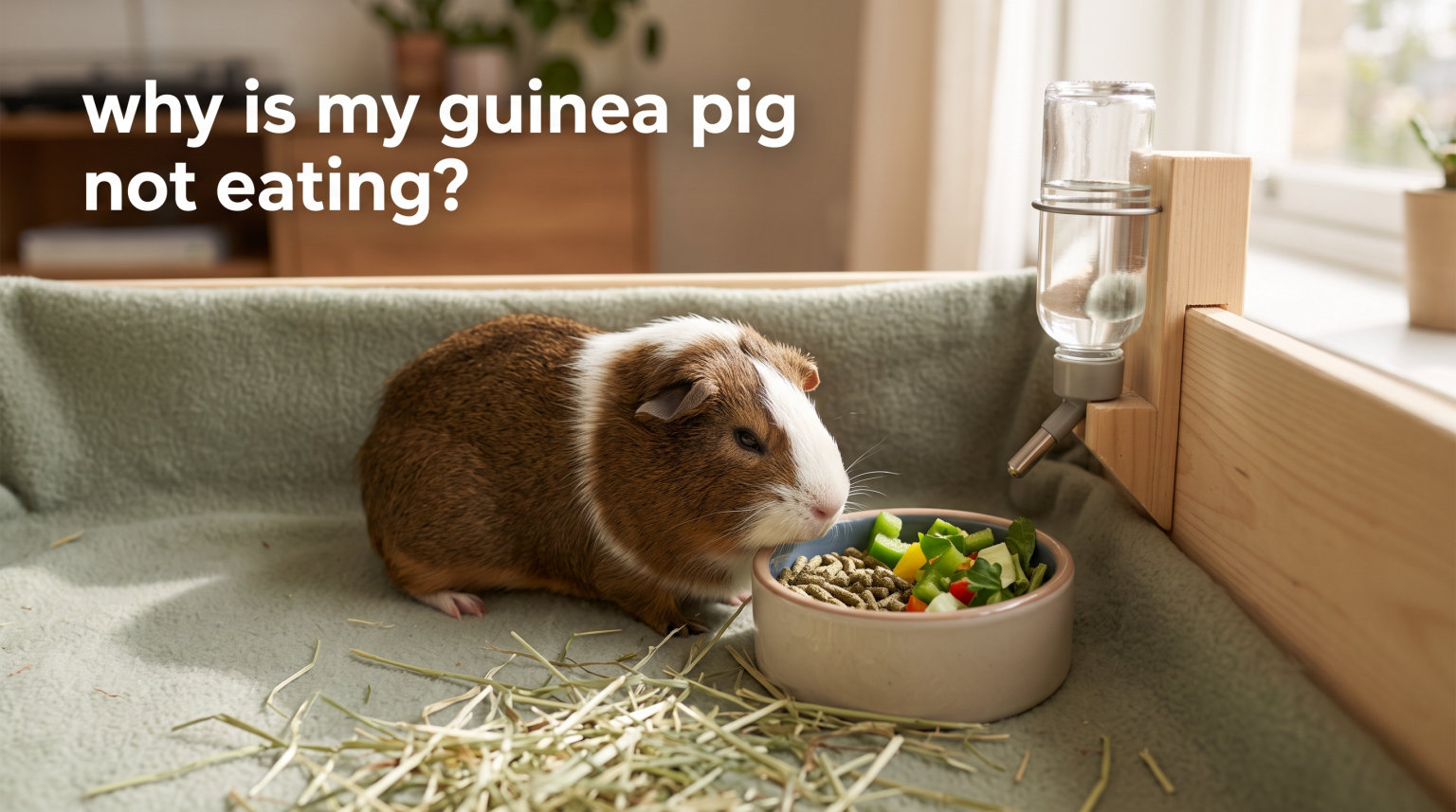
If your guinea pig has stopped eating, treat it as a medical emergency right now. A guinea pig not eating for more than 8 to 12 hours can develop life-threatening GI stasis, where the digestive system shuts down.
I have kept guinea pigs for over a decade, and I have learned this lesson the hard way. Our team consulted exotic veterinarians and reviewed real owner experiences on Reddit and the Guinea Pig Forum to bring you the clearest action plan for 2026. This guide covers the warning signs, the most common causes, what to do at home, and exactly when to call the vet.
Table of Contents
How Long Can Guinea Pigs Go Without Eating?
A guinea pig can go without food for a maximum of 8 to 12 hours before serious digestive complications begin. Unlike dogs or cats, guinea pigs are hindgut fermenters whose gut motility depends on a constant flow of fiber.
When fiber intake stops, the digestive tract slows and can shut down completely. This condition is called GI stasis, and it can become fatal within 24 hours. Many owners on the Guinea Pig Forum have shared heartbreaking stories of guinea pigs that “went downhill overnight” after refusing food for less than a day.
If your guinea pig has not eaten in the last 4 to 6 hours, start watching closely. If 8 hours pass without food intake, contact an emergency exotic vet immediately.
Why Is My Guinea Pig Not Eating? The Common Causes
Guinea pigs stop eating for four main categories of reasons: dental problems, digestive issues like GI stasis, underlying illness or pain, and stress. Each cause requires a different response, but the emergency window stays the same.
Here is a quick overview of the most common triggers we see in veterinary literature and owner reports:
- Dental problems (malocclusion, spurs, overgrown teeth)
- GI stasis or other digestive slowdowns
- Respiratory infections, UTIs, bumblefoot, or pain
- Stress from environment, diet changes, or companion loss
- Recent illness, surgery recovery, or antibiotic use
- Dehydration or heat stress
- Toxic foods or contaminated water
Dental Problems: The Leading Cause of Appetite Loss
Dental problems are the number one reason guinea pigs stop eating. Guinea pigs have hypsodont teeth, meaning their teeth grow continuously throughout their lives, roughly 1 to 2 mm per week.
When a guinea pig does not grind enough hay, the teeth do not wear down evenly. This leads to malocclusion (misaligned teeth) or sharp dental spurs that cut into the cheeks and tongue. Chewing becomes painful, and the guinea pig slowly stops eating.
Common dental symptoms include drooling, weight loss, dropping food from the mouth, fewer droppings, and a wet or matted chin. A vet can diagnose dental issues with a simple examination or X-ray under sedation.
GI Stasis: The Life-Threatening Digestive Shutdown
GI stasis happens when the guinea pig’s gut stops moving. Because guinea pigs are hindgut fermenters, they depend on constant fermentation of fiber to keep the digestive tract active.
When food intake drops, the gut slows, gas builds up, and bacteria become imbalanced. The guinea pig stops producing droppings, becomes bloated, and refuses food entirely. This is a true emergency that needs vet intervention within hours.
Signs of GI stasis include a hunched posture, a hard or silent belly, fewer or no droppings, teeth grinding, and reluctance to move. Our team has seen cases where guinea pigs recovered fully when treated within 6 hours, and cases that did not survive once the gut had fully shut down.
Illness, Pain, and Infection as Hidden Triggers
Any illness or pain can cause a guinea pig to stop eating. Respiratory infections, urinary tract infections, bumblefoot, and abscesses are common hidden culprits.
Guinea pigs are prey animals, so they instinctively hide signs of pain until the illness is advanced. By the time they stop eating, they have usually been unwell for some time. Watch for labored breathing, crusty eyes, sneezing, limping, or a hunched posture.
Owners on Reddit often describe guinea pigs that “seemed fine yesterday” but stopped eating overnight. In many of these cases, a vet exam later revealed an underlying infection that had been brewing.
Stress and Environmental Changes That Cause Appetite Loss
Stress is a frequent but overlooked cause of appetite loss. Guinea pigs are sensitive to change, and even small disruptions can cause them to stop eating temporarily.
Common stressors include moving to a new home, loud noises, predator smells (like a dog or cat), extreme temperatures, and the loss of a bonded companion. New guinea pigs often refuse food for the first 24 to 48 hours as they adjust.
This is where the 3-3-3 rule for guinea pigs becomes useful. The 3-3-3 rule describes the typical adjustment timeline for a new guinea pig: 3 days to decompress, 3 weeks to settle into a routine, and 3 months to fully bond with you. During the first 3 days, appetite loss is common and usually not an emergency, as long as the guinea pig is still drinking water.
Emergency Signs That Require an Immediate Vet Visit
How can you tell if a guinea pig is starving or facing a true emergency? Look for these warning signs that demand urgent veterinary care:
- No droppings for 8 to 12 hours
- Refusal of all food, including favorite treats, for over 6 hours
- Lethargy, hiding, or refusal to move
- Hunched posture with a puffed-up coat
- Labored breathing, wheezing, or clicking sounds
- Drooling, wet chin, or pawing at the mouth
- Hard, bloated, or silent belly
- Weight loss of more than 100 grams in a week
- Crusty eyes combined with refusal to eat
- Collapsing, seizures, or unresponsiveness
If you notice any combination of these signs, call an emergency exotic vet right away. Time is the most important factor in survival.
How to Tell if a Guinea Pig Is Starving
A starving guinea pig shows specific signs that differ from a guinea pig that is simply being picky. Starvation signs include rapid weight loss, sunken eyes, a bony backbone and hips, cold ears and feet, and weakness when handled.
You can do a quick home check by gently feeling the ribs, spine, and hip bones. If these bones feel sharp and prominent, your guinea pig has lost significant body condition. Weigh your guinea pig weekly using a kitchen scale, and contact a vet if you see a sudden drop of more than 50 to 100 grams.
What to Do at Home While Waiting for the Vet
While you arrange a vet visit, there are several safe steps you can take at home to support your guinea pig. Follow this checklist to stabilize your pet until professional care is available.
Step 1: Check the Environment First
Before assuming illness, rule out simple environmental problems. Is the water bottle working? Is the hay fresh and accessible? Has the temperature changed? Did you recently change food brands?
Offer a small piece of fresh parsley, cilantro, or romaine lettuce. Tempting, fragrant greens often restart a reluctant appetite. If your guinea pig eats the treat but refuses hay, dental pain is more likely.
Step 2: Offer Fresh Water and Hydration
Dehydration makes everything worse. Offer fresh, cool water in both a bottle and a bowl. You can also offer cucumber or wet greens to boost fluid intake.
If your guinea pig will not drink, do not force water into the mouth, as this risks aspiration. Instead, bring your pet to the vet for subcutaneous fluids.
Step 3: Syringe Feeding (Only With Vet Approval)
If your vet advises it, syringe feeding can buy critical time. Use a critical care formula mixed with water to a thick paste consistency. Offer small amounts (1 to 3 mL) from the side of the mouth, never straight down the throat.
Syringe feeding carries an aspiration risk, so always have a vet demonstrate the technique first. Most guinea pigs need 5 to 10 mL every 2 to 3 hours until they eat on their own.
Step 4: Keep Your Guinea Pig Warm and Quiet
A guinea pig that is not eating is often also losing body heat. Place your pet in a small, quiet carrier lined with fleece, and keep the room at a comfortable 68 to 75 degrees Fahrenheit.
Avoid handling more than necessary, and remove any cage mates that might stress a sick guinea pig further.
When to Contact a Veterinarian
Contact a vet within hours, not days, when a guinea pig stops eating. The 8 to 12 hour rule applies even if your guinea pig seems otherwise normal. By the time other symptoms appear, the condition is often critical.
Look for an exotic or small mammal veterinarian before you ever need one. General dog and cat vets often have limited experience with guinea pigs. Save the contact information for at least one 24-hour emergency exotic vet in your area.
When you call, mention the species, weight, how long since the last meal, and any other symptoms. The vet will usually ask you to come in the same day.
What to Expect at the Vet Visit
Your vet will perform a physical exam, check teeth, palpate the belly, and likely recommend X-rays or bloodwork. Common treatments include pain medication, gut motility drugs, fluid therapy, vitamin C injections, and assisted feeding.
Recovery usually takes 24 to 72 hours of intensive care, with most guinea pigs returning to normal eating within 3 to 5 days when treated promptly.
Preventing Appetite Loss with the Right Diet
Most appetite issues start with diet. The single most important prevention strategy is feeding a hay-first diet that supports healthy teeth and gut motility.
Follow these guidelines for a healthy guinea pig diet:
- 80 to 90 percent grass hay (timothy, orchard, or meadow hay)
- 1 cup fresh vegetables daily, especially bell peppers for vitamin C
- Limited pellets (about 1 tablespoon per day)
- Fresh water available at all times
- Vitamin C supplement (25 to 50 mg daily)
- Avoid sugary treats, seeds, and nuts
Hay is non-negotiable. It grinds down teeth and keeps the gut moving. Without enough hay, dental problems and GI stasis become much more likely.
Special Considerations for Senior Guinea Pigs
Older guinea pigs (4 years and up) are more prone to dental issues and slower digestion. Increase vet check-ups to twice a year, monitor weight weekly, and offer softer hay varieties if chewing becomes difficult.
Senior guinea pigs also benefit from extra vitamin C and slightly warmer living spaces to support immune function.
Frequently Asked Questions
How to tell if guinea pigs are sick?
How long can guinea pigs go without eating?
What is the 3-3-3 rule for guinea pigs?
How to tell if a guinea pig is starving?
Key Takeaways for Worried Guinea Pig Owners
A guinea pig not eating is always a serious concern because of the 8 to 12 hour emergency window. The most common causes are dental problems, GI stasis, hidden illness, and stress. Each requires quick action.
If you take only one thing from this guide, let it be this: find an exotic vet before you need one. Save their number, learn their hours, and prepare an emergency kit with critical care formula, a syringe, and a small carrier.
Most guinea pigs recover fully when treated quickly. Trust your instincts, watch for the warning signs, and act within hours, not days. Your quick response can save your guinea pig’s life in 2026 and beyond.