
If you open your dishwasher and get hit with a wave of funky odor, you are not alone. I have dealt with this problem in three different rentals, and I can tell you the fix is usually simple once you know what to look for.
This guide shows you exactly how to get rid of the smell in a dishwasher using methods I have tested personally. We will cover what causes the odor, how to clean every part that traps grime, and how to keep it fresh between washes.
Table of Contents
Why Your Dishwasher Smells: Common Causes Explained
Dishwasher smells come from trapped food, bacteria, mold, or plumbing issues. Identifying the type of odor helps you target the right fix.
The most common culprit is food particles stuck in the filter. Every cycle washes bits of pasta, rice, and grease through the drain, and some of that debris gets caught. After a few days, it starts to rot and produces a sour or rotten smell.
Mold and mildew on the rubber door gasket is the second biggest source. The gasket stays damp after every cycle, and if the door stays closed, that moisture creates a perfect home for black mold spores. This is what causes that musty, wet-dog smell many people describe.
If your dishwasher smells like sewage, the issue often runs deeper. A dried-out P-trap in the drain under your sink, a clogged drain hose, or a problem with the garbage disposal connection can let sewer gas back up into the tub. Running the garbage disposal before starting the dishwasher usually clears this.
A fish smell with no obvious source is usually bacterial growth in biofilm along the door seal or spray arm holes. A chemical or plastic smell after running a cycle can mean a new part is off-gassing, or that detergent residue is baking onto hot surfaces.
What Different Dishwasher Smells Mean
Rotten food smell points to the filter or drain. Musty smell means mold on the gasket. Sewage smell means plumbing or P-trap issues. Fish smell means bacteria buildup in hidden spots. Chemical smell means residue or new parts off-gassing.
Quick Fixes You Can Try Right Now
These three quick fixes take less than 10 minutes and work for mild odors. I use them between deep cleans.
First, run hot water at your kitchen sink for 30 seconds before starting the dishwasher. This primes the drain line and clears any dry P-trap that could be sending sewer gas into the tub. It is the simplest trick that solves the sewage smell for most people.
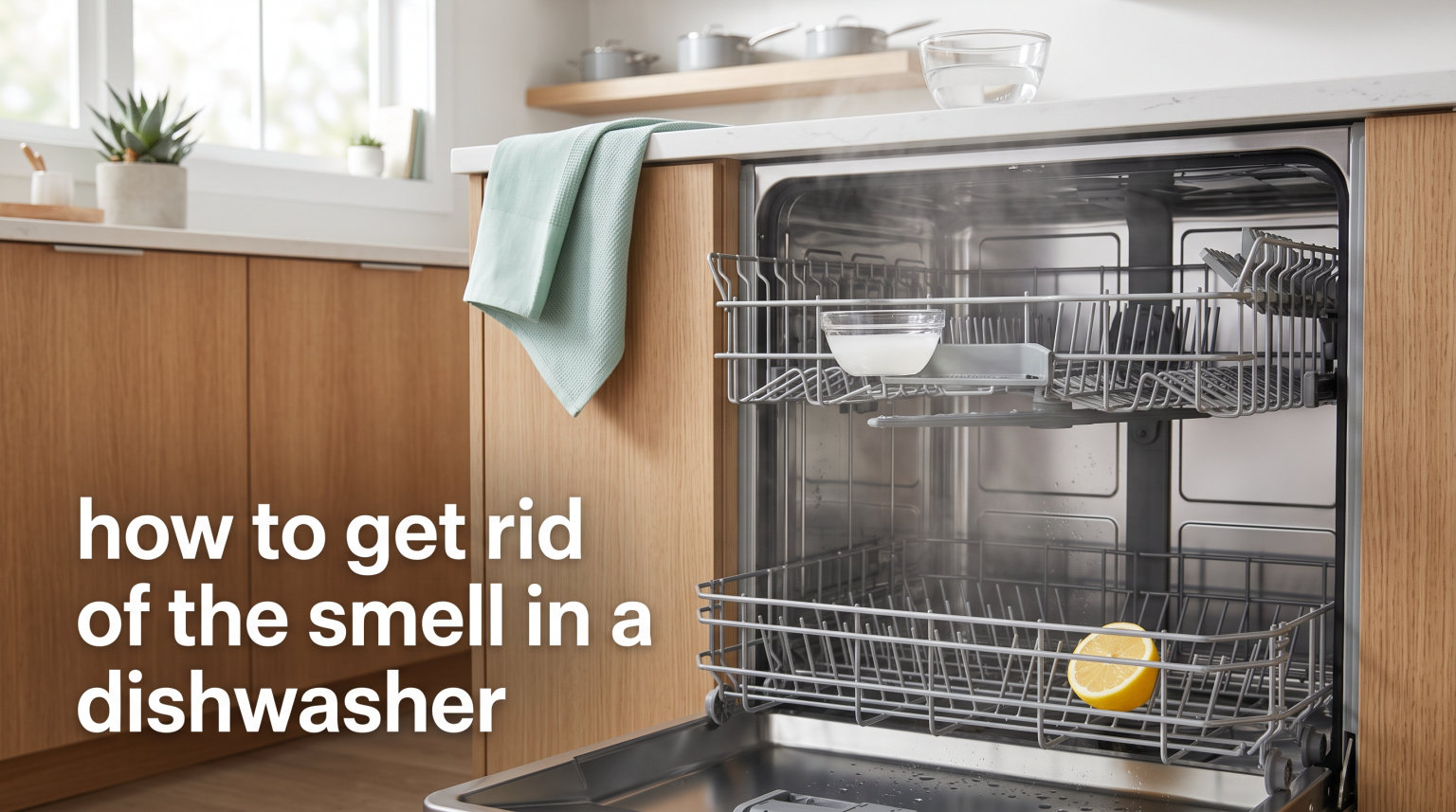
Second, place a dishwasher-safe bowl with 1 cup of white vinegar on the top rack and run a hot cycle. Vinegar breaks down light grease and kills odor-causing bacteria. You will notice the difference the next time you open the door.
Third, squeeze half a lemon into the bottom of the tub and run a short cycle. The citric acid freshens the smell naturally and adds a clean citrus note. You can also drop the used lemon halves on the top rack.
Step-by-Step Guide to Deep Clean Your Dishwasher
A proper deep clean takes about 45 minutes and uses items you already have at home. I run this routine every month and it has kept my current dishwasher odor-free for over two years.
Step 1: Empty the Dishwasher Completely
Remove every dish, rack, and utensil. Pull out the bottom rack first, then the top rack and the silverware basket. Set them aside and leave the door open for a few minutes to air out the tub.
Step 2: Remove and Clean the Filter
The filter sits at the bottom of the tub, usually under the spray arm. Twist it counterclockwise to unlock, then lift it out. Rinse it under hot running water and scrub gently with an old toothbrush to remove trapped debris and slime.
Soak the filter in a bowl of warm water with a tablespoon of baking soda for 15 minutes if it has heavy buildup. Rinse thoroughly before reinstalling. Most dishwasher smells disappear once this single step is done because the filter traps most of the gunk.
Step 3: Scrub the Spray Arms and Interior
Inspect the spray arm holes for clogs. Use a toothpick or small pin to clear any blocked holes, then rinse the spray arm under running water. Food particles often pack into those tiny holes and restrict water flow.
Wipe down the interior walls, door, and tub floor with a damp cloth dipped in white vinegar. Pay attention to the corners where debris collects. Avoid using bleach on stainless steel interiors, as it can cause pitting over time.
Step 4: Clean the Door Gasket Seals
Pull back the rubber gasket around the door and inspect for mold, food bits, and moisture. Mix equal parts water and white vinegar in a spray bottle, then spray the gasket generously.
Scrub the entire gasket with a soft-bristled brush or old toothbrush, working the solution into every fold. Wipe clean with a dry cloth. Mold on the gasket is the most common cause of that persistent musty smell, and this step fixes it for most people.
Step 5: Run a Vinegar Cycle
Place 2 cups of white vinegar in a dishwasher-safe bowl on the top rack. Run the hottest cycle your dishwasher has, with the dry setting turned off so the vinegar stays inside longer.
The vinegar loosens grease, dissolves soap scum, and kills odor-causing bacteria throughout the machine. Do not add any detergent during this cycle. Run it once a month as preventive maintenance.
Step 6: Follow Up With a Baking Soda Cycle
For stubborn smells, follow the vinegar cycle with a baking soda treatment. Sprinkle 1 cup of baking soda across the bottom of the tub and run a short hot cycle.
Baking soda neutralizes acidic odors and absorbs any remaining smell. The vinegar and baking soda combo is the most popular DIY method on cleaning forums, and it consistently ranks as the top home fix.
Step 7: Clean the Drain and Drain Hose
If odors persist after all the above steps, the drain hose may be the problem. Disconnect the hose from the back of the dishwasher or under the sink and check for clogs or stagnant water.
Pour a mixture of hot water and baking soda through the hose to clear buildup. Reattach securely and run a test cycle. If the hose is cracked or kinked, replace it. For deeper plumbing issues, calling a licensed plumber is the safer move.
How to Prevent Dishwasher Smells Between Uses
Prevention is easier than deep cleaning. I follow these four habits and rarely deal with bad smells anymore.
Scrape dishes before loading them. You do not need to rinse, but large chunks of food should go in the trash or garbage disposal. Less debris means less material for bacteria to feed on inside the machine.
Leave the dishwasher door cracked open after every cycle. This lets moisture escape and prevents mold from forming on the gasket and interior walls. Many newer dishwashers have an air-dry option that helps with this automatically.
Run hot water at the sink for 30 seconds before starting the dishwasher. This ensures the first wash is hot and clears the drain line. Cold water cycles do not clean as well and leave more residue behind.
Clean the filter once a month. Most people never touch it, but it is the single biggest odor source. Set a phone reminder to check it on the first of every month. If you cook most days, check it every two weeks instead.
For extra freshness, place a few drops of essential oils like peppermint or tea tree on a small cloth and leave it on the top rack between cycles. Natural odor eliminators like peppermint oil work as well as commercial fresheners and add a clean scent.
When to Call a Professional
Call a licensed technician if the smell persists after a full deep clean, or if you notice water pooling at the base of the dishwasher. These can signal a failing drain pump, cracked hose, or sewer line issue that home cleaning cannot fix.
If your dishwasher is still under warranty, schedule a service through the manufacturer before attempting any internal repairs. For sewage smells that do not clear after running hot water through the sink drain, a plumber can check the P-trap and vent stack.
Frequently Asked Questions
How to freshen up a stinky dishwasher?
What can I use in my dishwasher to deodorize it?
Can I put baking soda in my dishwasher to make it smell better?
Will vinegar help a smelly dishwasher?
How often should I clean my dishwasher?
Why does my dishwasher smell bad after running?
Final Thoughts
Now you know exactly how to get rid of the smell in a dishwasher using simple tools and methods that actually work. Start with the filter, work through the gasket and spray arms, then finish with a vinegar and baking soda cycle. Most odors clear up in under an hour.
Stick to the monthly routine and you will rarely deal with bad smells again. If the odor keeps coming back after a full deep clean, the issue is likely in the drain hose or plumbing, and it is worth calling a professional to check.