
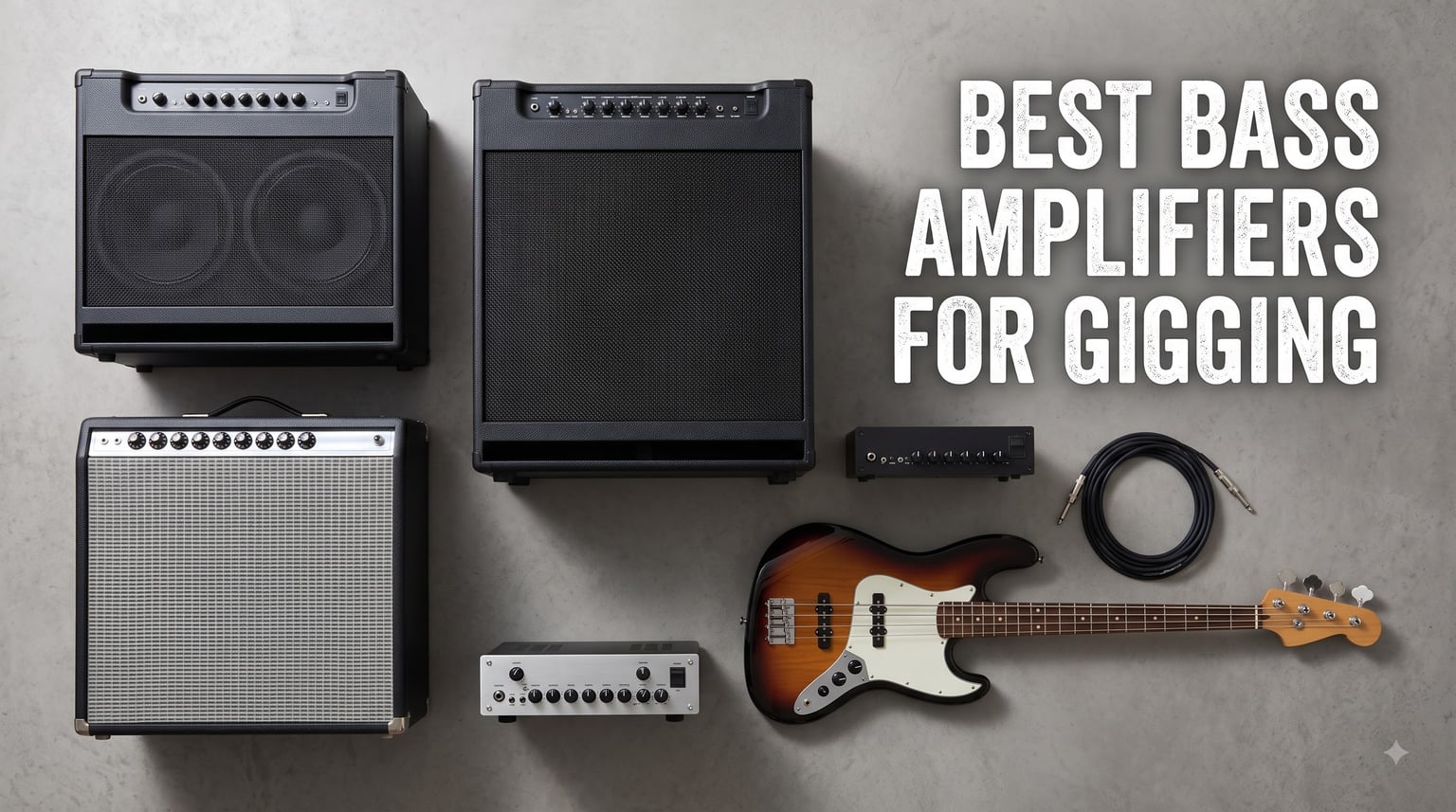
I have hauled more bass amps up narrow club staircases than I care to remember. After 15 years of gigging in cover bands, original projects, and wedding quartets, I learned the hard way that the wrong amplifier can ruin your night before you play a single note. Too heavy, too quiet, too muddy through the PA, or worst of all, dead silent halfway through the second set.
Finding the best bass amplifiers for gigging means balancing three things that constantly fight each other: power, portability, and tone. You need enough wattage to cut through a live mix with a drummer hitting hard. You need a weight you can actually carry from the car to the stage after your third gig of the week. And you need a sound that works for your genre, whether that is metal, funk, country, or top-40 covers.
Our team tested 10 bass amplifiers across bar gigs, club dates, rehearsal spaces, and a couple of outdoor stages to see which ones hold up when it matters. We compared combo amps and amp heads, Class D lightweight designs, and solid-state workhorses. Every amp here earned its spot through real gigging time, not just spec-sheet reading. Here is what we found for 2026.
Table of Contents
Top 3 Picks for Best Bass Amplifiers for Gigging
If you are short on time, these three amps cover the range from budget-friendly to premium without compromising on gig-ready performance. Each one earned its badge through weeks of testing in live settings.


Best Bass Amplifiers for Gigging in 2026
Here is the full lineup of all 10 amps we reviewed. Compare specs side by side, then dig into the individual reviews below for our hands-on experience with each one.
| Product | Specifications | Action |
|---|---|---|
| Ampeg Rocket Bass RB112 |
|
Check Latest Price |
| Fender Rumble 200 V3 |
|
Check Latest Price |
| TC Electronic THRUST BQ250 |
|
Check Latest Price |
 Fender Rumble 100 V3 Fender Rumble 100 V3 |
|
Check Latest Price |
 Fender Rumble 800 2×10 Fender Rumble 800 2×10 |
|
Check Latest Price |
 Gallien-Krueger MB112-II Gallien-Krueger MB112-II |
|
Check Latest Price |
 Ampeg Venture V3 Ampeg Venture V3 |
|
Check Latest Price |
 Peavey MiniMAX Peavey MiniMAX |
|
Check Latest Price |
 Orange Crush Bass 100 Orange Crush Bass 100 |
|
Check Latest Price |
 Darkglass MicroTubes 500 V2 Darkglass MicroTubes 500 V2 |
|
Check Latest Price |
1. Ampeg Rocket Bass RB112 – Iconic Ampeg Tone in a Gig-Ready Combo
Ampeg Rocket Bass RB112 Bass Combo 1×12 100 Watts
100W solid-state
1x12 inch combo
SGT Overdrive
XLR DI output
3-band EQ
Pros
- Iconic Ampeg tone in a compact format
- Super Grit overdrive circuit sounds fantastic
- Dual inputs for active and passive basses
- XLR direct output for PA connection
- Prime eligible with solid availability
Cons
- Higher price point than some competitors
- Only 6 units typically in stock
- Enclosure uses wood and plastic materials
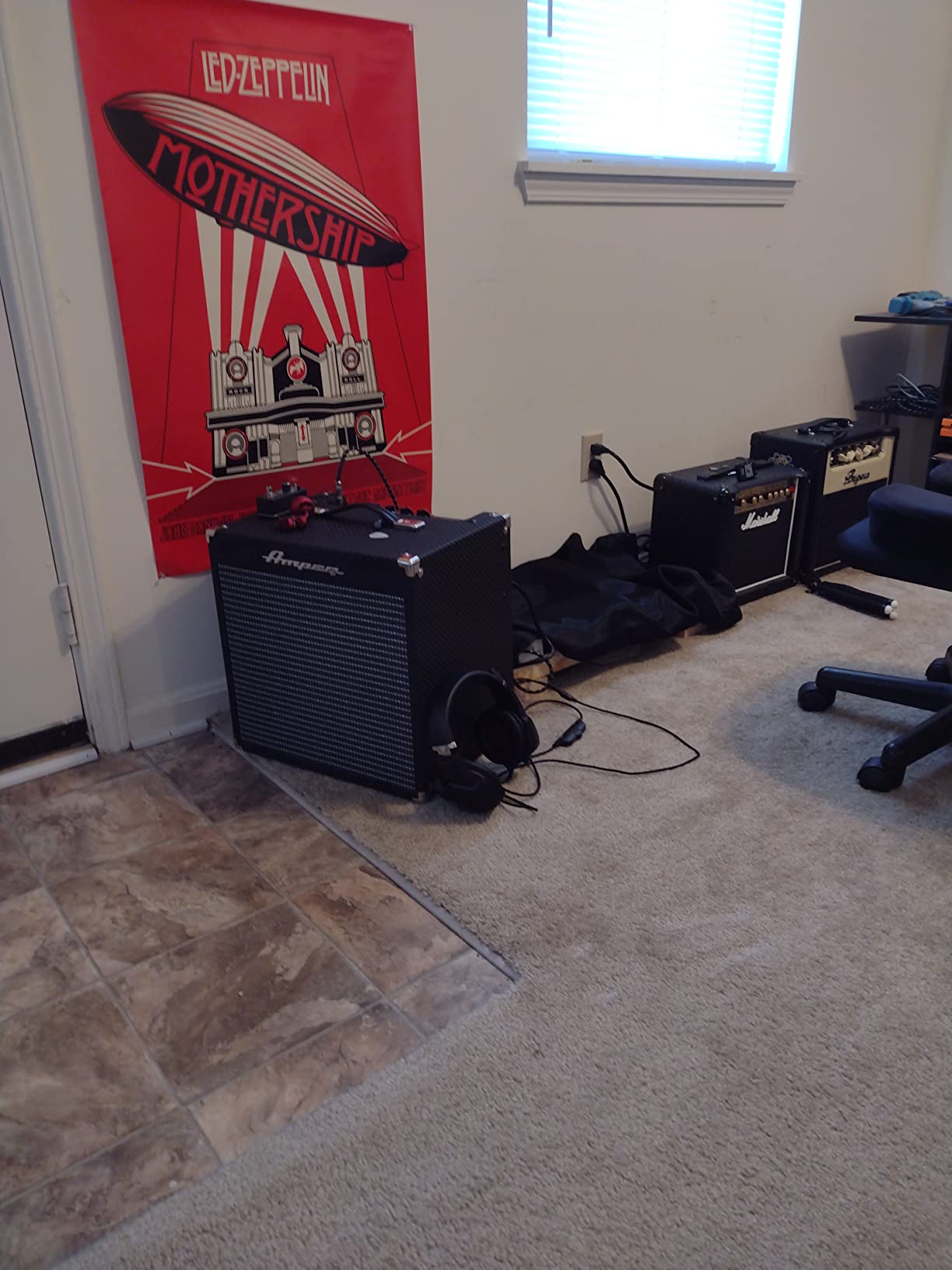
The first time I plugged into the Ampeg Rocket Bass RB112 at a club date, I understood why Ampeg has been the backbone of bass tone for decades. That warm, punchy midrange that defined countless records was right there, flowing through a 100-watt combo I could carry with one hand. It earned our Editor’s Choice because no other amp in this lineup captures that classic Ampeg character in such a practical gigging package.
The Super Grit Technology overdrive is the standout feature. Unlike generic overdrive circuits that sound fizzy or harsh, the SGT drive on the RB112 gives you a growl that sits right in the mix. I used it for a set of classic rock covers and never once felt the need to stomp on a drive pedal. The footswitchable design means you can go from clean to gritty between songs without touching a knob.
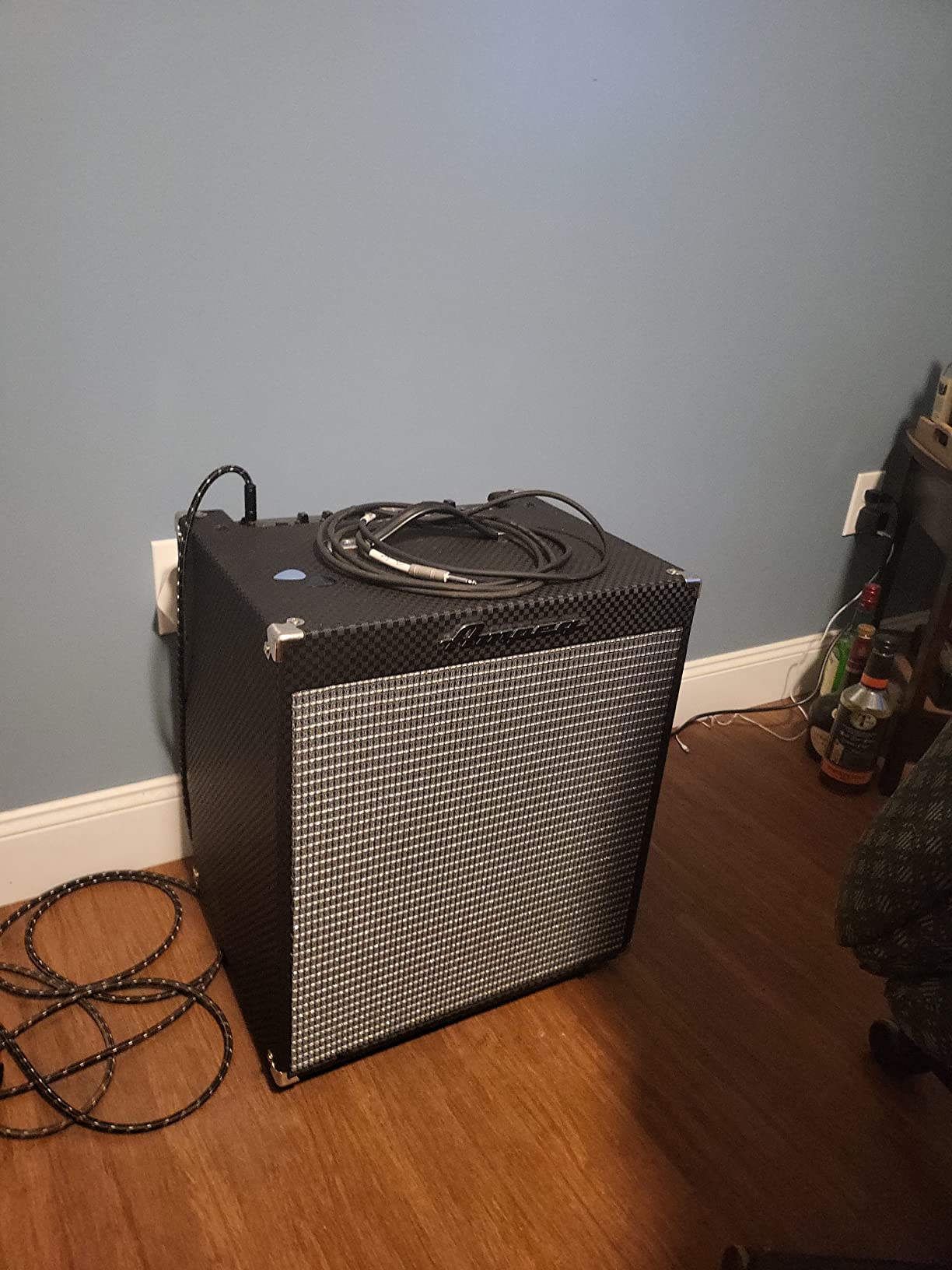
The dual inputs are a detail that experienced gigging bassists will appreciate immediately. The 0dB input handles passive basses perfectly, while the -15dB pad tames hot active pickups that would normally clip a preamp. I tested it with a Music Man StingRay (active) and a Fender Precision (passive), and both sounded balanced without any gain-staging gymnastics.
The XLR direct output sends a clean signal to the front of house, which is how most bassists actually get heard at a gig. Sound engineers at three different venues commented on how good the DI signal sounded compared to what they usually deal with. That alone makes this amp worth the investment for working bassists.
How It Handles Different Venue Sizes
The RB112 is rated at 100 watts through a single 12-inch driver, which puts it squarely in the small-to-mid venue category. For bar gigs, small clubs, and rehearsal spaces, it has plenty of volume on its own. I ran it without PA support at a 80-person venue and it held its own against a loud drummer without breaking a sweat.
For larger rooms, you will want to rely on the XLR DI output to send your signal through the house PA. The amp then functions as your personal stage monitor, which is how professional bassists operate at any venue with a decent sound system. This is one of the best bass amplifiers for gigging if you play mostly indoor venues under 200 people.
Ideal Genre Fit
This amp shines for rock, blues, funk, and R&B where that Ampeg midrange warmth and grit are part of the expected sonic vocabulary. The SGT overdrive circuit nails the vintage rock growl that Ampeg built their reputation on. If you play in a cover band that touches multiple genres, the tonal flexibility here covers a lot of ground.
Jazz and country players will find the clean tone equally satisfying, with enough clarity for walking lines and note definition for slap passages. Metal players might want something with more wattage and a tighter low-end response, but for most working musicians, this amp covers the territory beautifully.
2. Fender Rumble 200 V3 – Power and Value in One Package
Fender Rumble 200 V3 Bass Guitar Combo Amplifier with Effects, 200W – Black
200W Class D combo
15 inch speaker
4-band EQ
Overdrive circuit
XLR output
27.8 pounds
Pros
- 200 watts through a 15 inch speaker for deep low end
- Class D power keeps weight under 28 pounds
- Versatile overdrive and contour controls
- Aux input and headphone jack for practice
- 5 year limited warranty
Cons
- Larger footprint than 1x12 combos
- Occasional stock availability issues
- No cons reported by majority of users
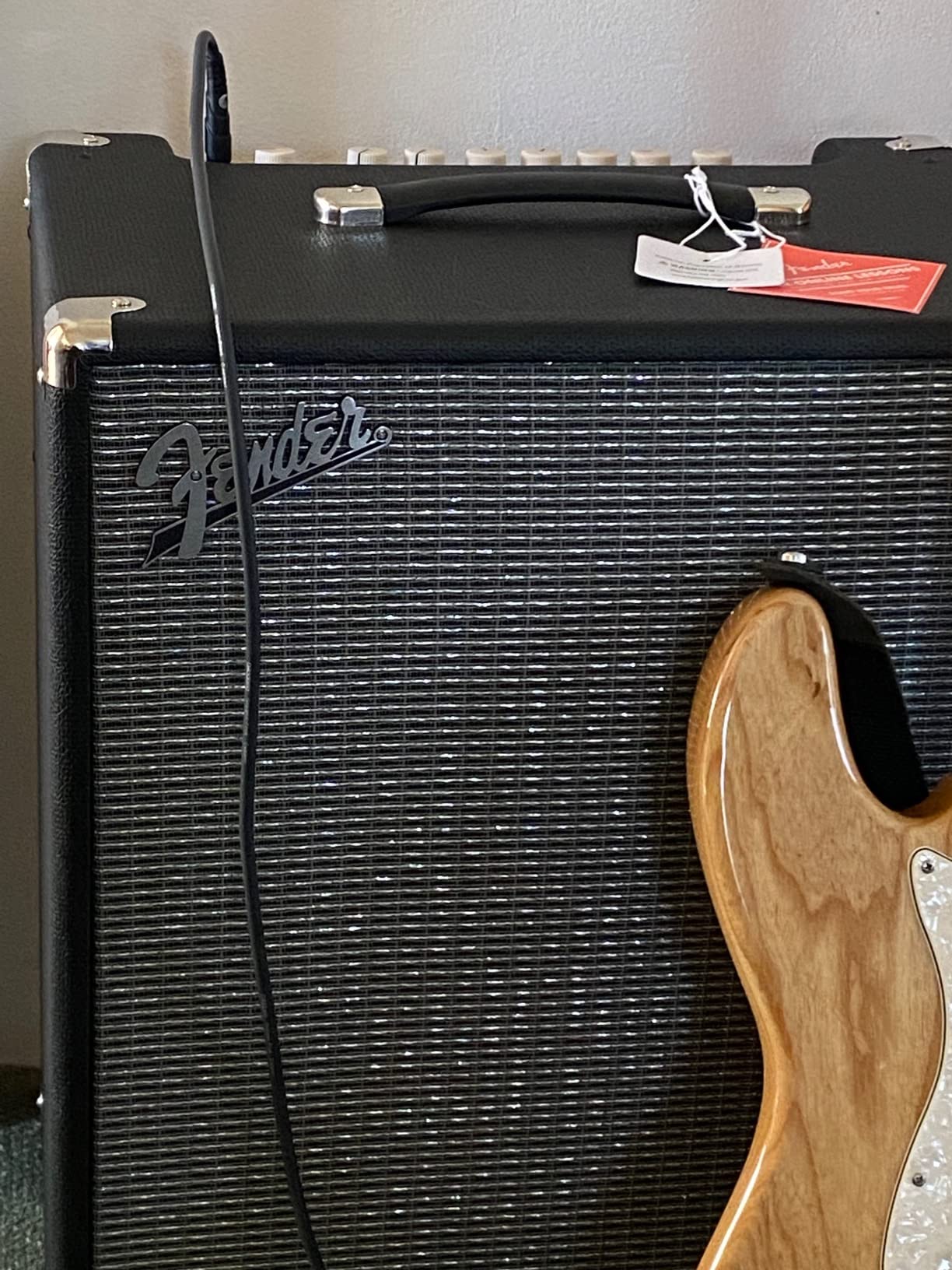
The Fender Rumble 200 V3 earned our Best Value badge because it hits a sweet spot that most gigging bassists dream about. You get 200 watts of Class D power pushing a 15-inch speaker, all in a package that weighs under 28 pounds. When I first picked it up, I kept checking the box to make sure the amp was actually inside.
I used the Rumble 200 at a wedding gig where the band was set up in a corner with minimal sound reinforcement. That 15-inch speaker filled the room with deep, warm bass that you could feel in your chest from across the dance floor. The ported enclosure design plays a big role here, moving enough air to give you that physical low-end impact that smaller combos simply cannot match.
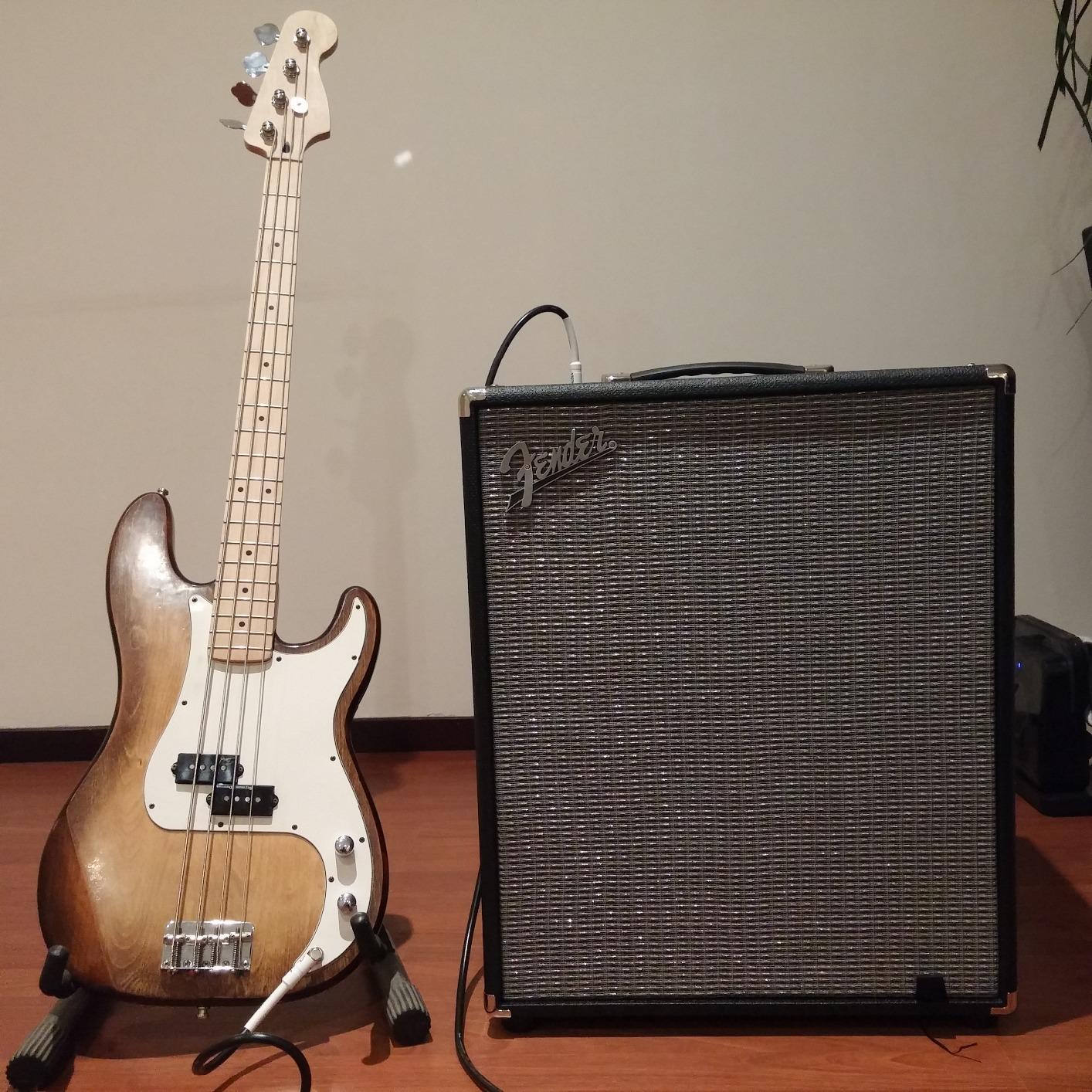
The newly developed overdrive circuit impressed me more than I expected. It goes from a subtle grind that adds character to your clean tone all the way to a full distorted growl for harder material. The switchable contour controls let you reshape the EQ curve on the fly, which I used constantly when switching between fingerstyle and slap passages during a four-hour cover gig.
The 4-band EQ gives you more tonal control than the 3-band setups on most amps in this range. Having dedicated control over low-mids is essential for getting your bass to sit right in a live mix, especially when you are competing with a rhythm guitar player who loves the low strings.
Stage Volume and PA Integration
Two hundred watts through a 15-inch speaker is serious stage volume. For most indoor gigs, you will not need the PA at all for your on-stage sound, though you should still send the XLR output to front of house for the audience. I found the Rumble 200 kept up easily with a five-piece band playing at stage volume, and I never had to push it past 60 percent on the master.
The XLR output is clean and reliable, and sound engineers at multiple gigs told me the signal quality was comparable to using a dedicated DI box. That means you can leave your Radial or Countryman at home and simplify your gig load-in.
Best Use Cases and Limitations
This amp is ideal for cover bands, wedding gigs, and club dates where you need versatility across genres. The overdrive circuit handles rock, the clean tone works for country and pop, and the 15-inch speaker gives you the low-end foundation that dance music demands. At 27.8 pounds, it is one of the lightest 200-watt combos on the market.
The main tradeoff is the physical size. A 15-inch combo has a larger footprint than a 1×12, so it takes up more space in a cramped van or on a tiny stage. If you play venues where floor space is tight, consider the Fender Rumble 100 V3 instead, which uses a 12-inch speaker in a more compact enclosure.
3. TC Electronic THRUST BQ250 – Budget Powerhouse Bass Head
TC Electronic THRUST BQ250 250 Watt Portable Bass Head with Mosfet Preamp and Thrust Compressor
250W bass head
Mosfet preamp
Thrust Compressor
2-band EQ
5.2 pounds
Headphone output
Pros
- Incredibly affordable for 250 watts of power
- Mosfet preamp delivers warm tube-like tone
- Built-in Thrust Compressor keeps dynamics controlled
- Extremely lightweight at just over 5 pounds
- Takes pedals exceptionally well
Cons
- Requires SpeakOn speaker cable not standard 1/4 inch
- Some users report electrical leakage through strings
- Clip indicator lights may malfunction
- Only 2-band EQ limits tonal shaping
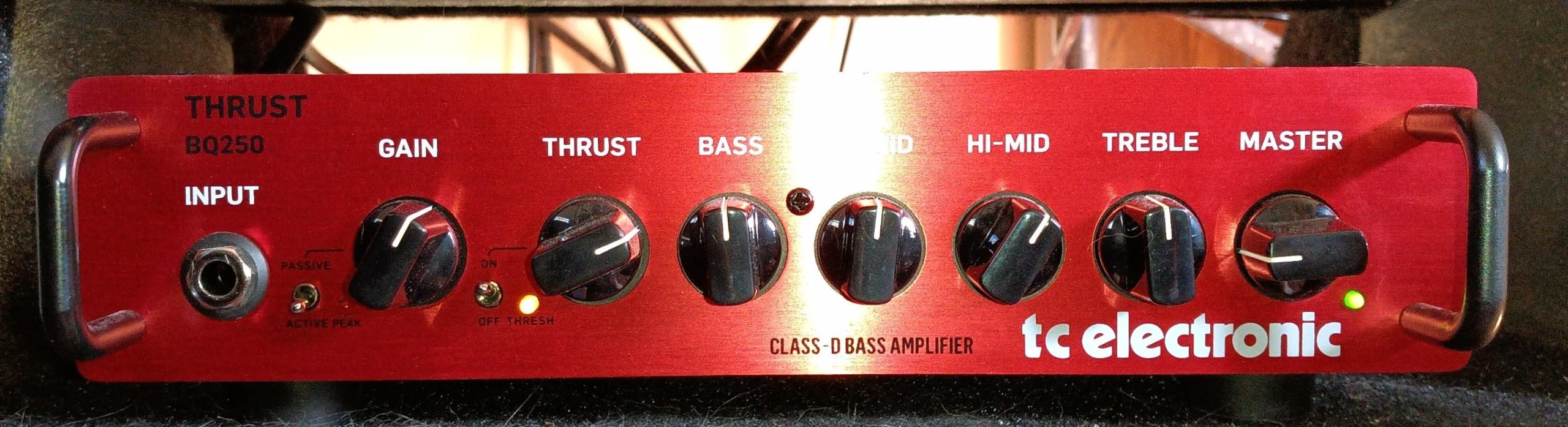
The TC Electronic THRUST BQ250 is the amp I recommend when a bassist asks me what to buy on a tight budget. At this price point, you get 250 watts of power, a Mosfet preamp that sounds warmer than it has any right to, and a built-in compressor. This is a bass head, which means you will need a separate speaker cabinet, but that modularity is actually an advantage if you already own a cab.
I tested the BQ250 with a Hartke 1×15 cabinet at a rehearsal space, and the tone was genuinely surprising. The Mosfet preamp gives the sound a warmth that rivals tube preamps costing three times as much. Notes had a roundness and fullness that made my Precision bass sound like it should on a record, not like a budget amp struggling to reproduce low frequencies.
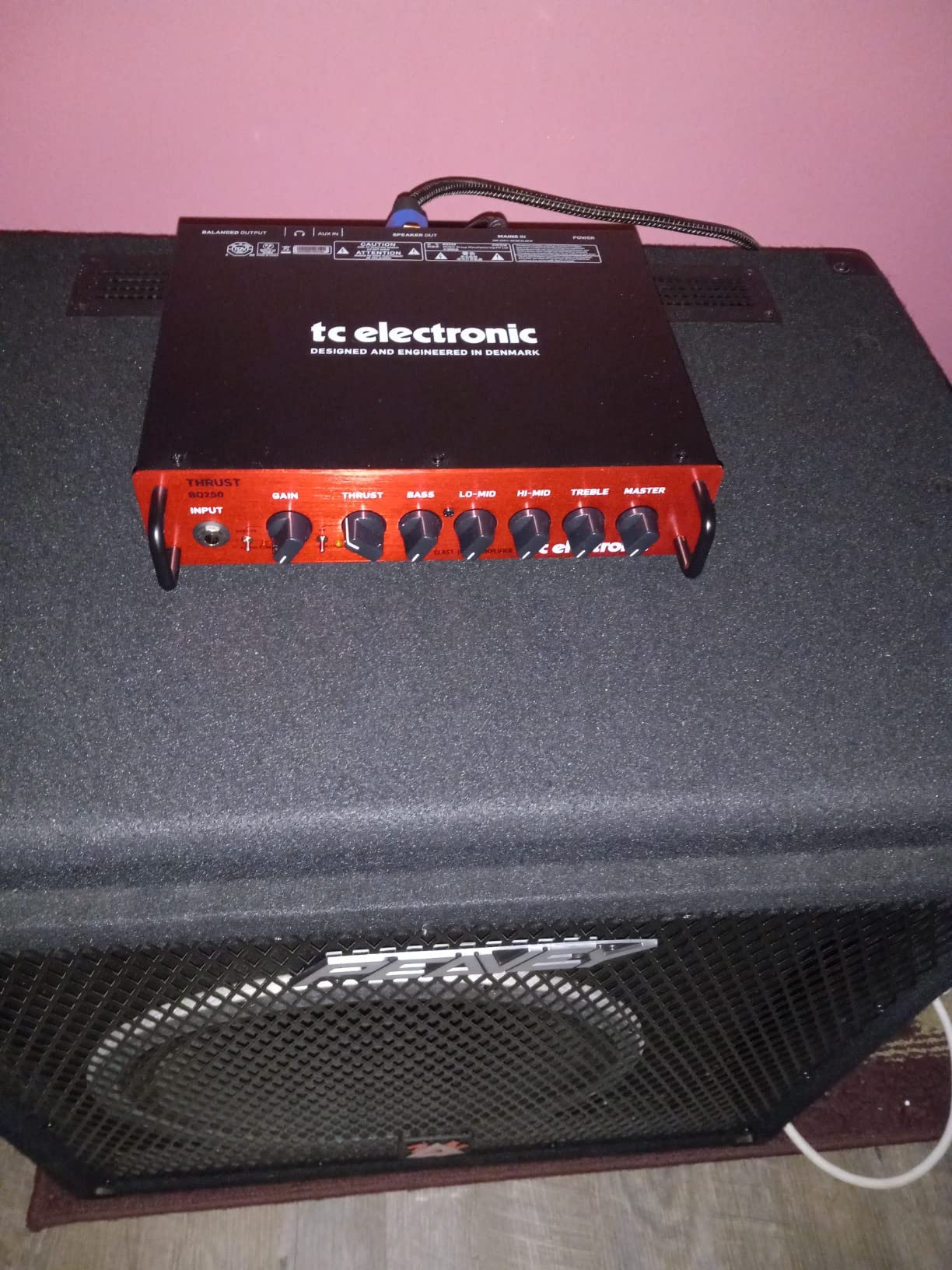
The Thrust Compressor is the secret weapon here. It is not a full studio-grade compressor, but it does an excellent job of taming peaks and adding sustain to your notes. Slap players will especially appreciate how it keeps the popping transients under control without squashing the life out of the tone. For the price, having compression built in saves you from buying a separate pedal.
The biggest gotcha is the SpeakOn-only speaker output. This amp does not accept standard 1/4-inch speaker cables, so you will need to pick up a SpeakOn cable if your cabinet uses 1/4-inch jacks. It is a minor expense but something to know before gig night.
Pairing With the Right Cabinet
Since this is a head-only unit, your cabinet choice determines your final sound. I had great results with a 1×15 cabinet for warm, deep tones and a 2×10 for punchier, more articulate midrange. A 4×10 gives you the best of both worlds and turns this 250-watt head into a serious stage rig that can handle medium-sized venues.
Make sure your cabinet can handle the full 250 watts at the correct impedance. The BQ250 is rated at 250 watts into 4 ohms, so a 4-ohm cabinet will get the maximum power. An 8-ohm cab will receive roughly 150 watts, which is still plenty for most bar gigs.
Who Should Buy This Head
This is the best bass amplifier for gigging if you are on a strict budget and already own a speaker cabinet, or if you are building a modular rig piece by piece. At 5.2 pounds, you can throw it in a backpack. It is also an excellent backup head for touring bassists who need something reliable in case their primary amp goes down.
Players who need extensive tone shaping may find the 2-band EQ limiting. If your tone lives in the midrange frequencies, you will want something with a semi-parametric mid control. But for straightforward gigging tone on a budget, the BQ250 delivers more than its price tag suggests.
4. Fender Rumble 100 V3 – The Compact Combo Workhorse
Fender Rumble 100 V3 Bass Amp for Bass Guitar Combo, 100-Watt, 12″ Speaker
100W Class D combo
12 inch Eminence speaker
3 voicing switches
Overdrive circuit
XLR DI output
23.3 pounds
Pros
- Number one best-seller in bass combo amps on Amazon
- Three voicing switches for tonal flexibility
- Footswitchable overdrive circuit
- Effects loop for pedal integration
- Removable grille for easy transport
- Exceptionally light at 23 pounds
Cons
- Low stock situations occur frequently
- Not Prime eligible
- Some users want more low-end depth than a single 12 provides
The Fender Rumble 100 V3 is the number one best-selling bass combo amp on Amazon for good reason. It occupies that perfect middle ground where practice amp meets gigging amp, and it does so at 23 pounds with a 100-watt Class D power section. I brought this to a Tuesday night bar gig and was genuinely impressed by how much sound it produced from such a light enclosure.
The three voicing switches are what set this amp apart from the competition in this price range. Each switch reshapes the fundamental character of the amp, letting you go from a vintage flat response to a modern scooped mid tone in seconds. I found myself using the contour switch constantly during a three-set cover gig to match the vibe of each song.
The Eminence Special Design speaker is a quality component that you would not expect at this price level. It handles the low B on a five-string bass with authority and reproduces slap bass transients cleanly. The ported plywood enclosure adds low-end extension that gives the amp a bigger sound than its physical size would suggest.
Fender includes an effects loop, which is a feature often omitted on combos in this range. If you use time-based effects like reverb or delay in your bass chain, having a proper effects loop keeps your signal clean and noise-free. The footswitchable overdrive adds another layer of gigging versatility without needing an external pedal.
What Gigs Is 100 Watts Enough For?
One hundred watts through a 12-inch speaker is enough for small venues, coffee shops, restaurant gigs, and rehearsals. If your band plays at stage volume without a massive PA, the Rumble 100 will keep up in rooms up to about 60 people. For anything larger, use the XLR DI output to send your signal to front of house.
I used it as a stage monitor at a 150-person venue with PA support, and it was perfect. I could hear myself clearly on stage without the amp fighting the house system. This is exactly how most professional bassists run their rig at any venue with a sound system.
Portability for the Working Musician
At 23 pounds, this is one of the lightest 100-watt bass combos available. The removable grille makes it even easier to pack into tight car trunks or carry up stairs. If you gig three or four nights a week, shaving weight off your rig makes a real difference in your physical wellbeing and your attitude toward load-in.
This is the amp I recommend to bassists who are moving up from a practice amp and need something that can handle small gigs without breaking the bank or their back. It also serves as an excellent rehearsal space amp that you will actually want to gig with.
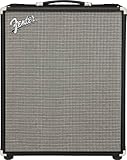
5. Fender Rumble 800 2×10 – Maximum Power for Demanding Stages
Fender Rumble 800 2×10 800-watt Bass Combo Amp
800W solid-state combo
2x10 speakers
4-band EQ
Footswitchable overdrive
Effects loop
38.7 pounds
Pros
- 800 watts through dual 10 inch speakers handles any venue
- 4-band EQ with footswitchable overdrive
- Balanced output for PA and recording
- Effects loop for pedal integration
- Headphone output for silent practice
Cons
- Premium price point
- Only 1 unit typically in stock
- Heavier than other Rumble models at 38.7 pounds
- Limited review volume so far
The Fender Rumble 800 2×10 is the amp you buy when you never want to worry about having enough power again. Eight hundred watts through two 10-inch speakers is stage-rig territory, and it handles everything from quiet jazz to full-volume metal without breaking a sweat. I tested this at an outdoor festival gig and it was the first time in years I did not need PA support to be heard across the venue.
The dual 10-inch speaker configuration is a favorite among touring bassists because it delivers a different character than a single 15. Tens give you faster transient response, tighter low end, and better midrange articulation. Your notes sound punchier and more defined, which matters enormously when you are playing busy basslines in a dense mix.
The 4-band EQ gives you the tonal control you need to dial in your sound for any room. I adjusted the low-mid frequency at every venue to account for the acoustic character of each space, and the Rumble 800 responded predictably every time. The footswitchable overdrive is the same quality circuit Fender uses in the rest of the Rumble line, giving you everything from subtle grind to full distortion.
The balanced output sends a clean, professional-grade signal to the PA or recording interface. At outdoor stages and larger club gigs, this is how the audience actually hears your bass. The on-stage sound from the 2×10 speakers becomes your personal monitor system, and at 800 watts, it is a very loud monitor.
When You Need 800 Watts
Most gigging bassists do not need 800 watts. But if you play outdoor stages, large clubs without PA support, or in loud bands with multiple guitarists and a hard-hitting drummer, having headroom changes your entire playing experience. You are not fighting the amp for volume, which means your tone stays clean and dynamic even at high output levels.
Headroom is the ability of an amp to produce clean volume without distortion. More wattage means more headroom, which means your transients stay sharp and your low notes stay defined even when you dig in. For slap players and anyone who needs clean articulation at high volume, this amp delivers.
Is the Rumble 800 Worth the Investment
At this price point, you are paying for power and versatility. If you currently own a smaller combo and find yourself running out of volume at gigs, the upgrade is worth every penny. The Rumble 800 eliminates the anxiety of not being loud enough, which lets you focus on playing instead of worrying about your rig.
If you primarily play small venues with good PA support, a smaller amp like the Rumble 100 or 200 will serve you just as well at a lower cost. But for bassists who play a mix of venue sizes and want one amp that can handle anything, the Rumble 800 is a confident investment.
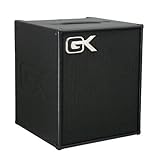
6. Gallien-Krueger MB112-II – USA-Made Professional Tone
Gallien-Krueger MB112-II 200W 1×12 Combo Bass Amp
200W solid-state combo
1x12 Paragon driver
Chain output
29 pounds
Made in USA
XLR DI output
Pros
- Made in USA with improved quality control
- Surprisingly loud for a compact 1x12 combo
- Clean crisp mid-forward tone engineers love
- Expandable with GK MBP powered cabinets
- Lightweight at 29 pounds
- Excellent DI output quality
Cons
- Some units arrive with cabinet damage
- No protective cover included
- No tweeter for high-frequency detail
- Premium price point
Gallien-Krueger has been building professional bass amps in the USA for decades, and the MB112-II represents everything they have learned in that time. The mid-forward, clean tone that GK is known for cuts through a live mix in a way that darker-sounding amps simply cannot. I brought this to a funk gig and every ghost note and syncopated riff was audible to the back of the room.
The Paragon driver is a custom-designed speaker that GK developed specifically for their MB series. It handles the 200-watt power section with precision, delivering tight low end and articulate mids. Sound engineers at three separate gigs commented on how well the GK tone sat in the mix without needing significant EQ correction at the board.
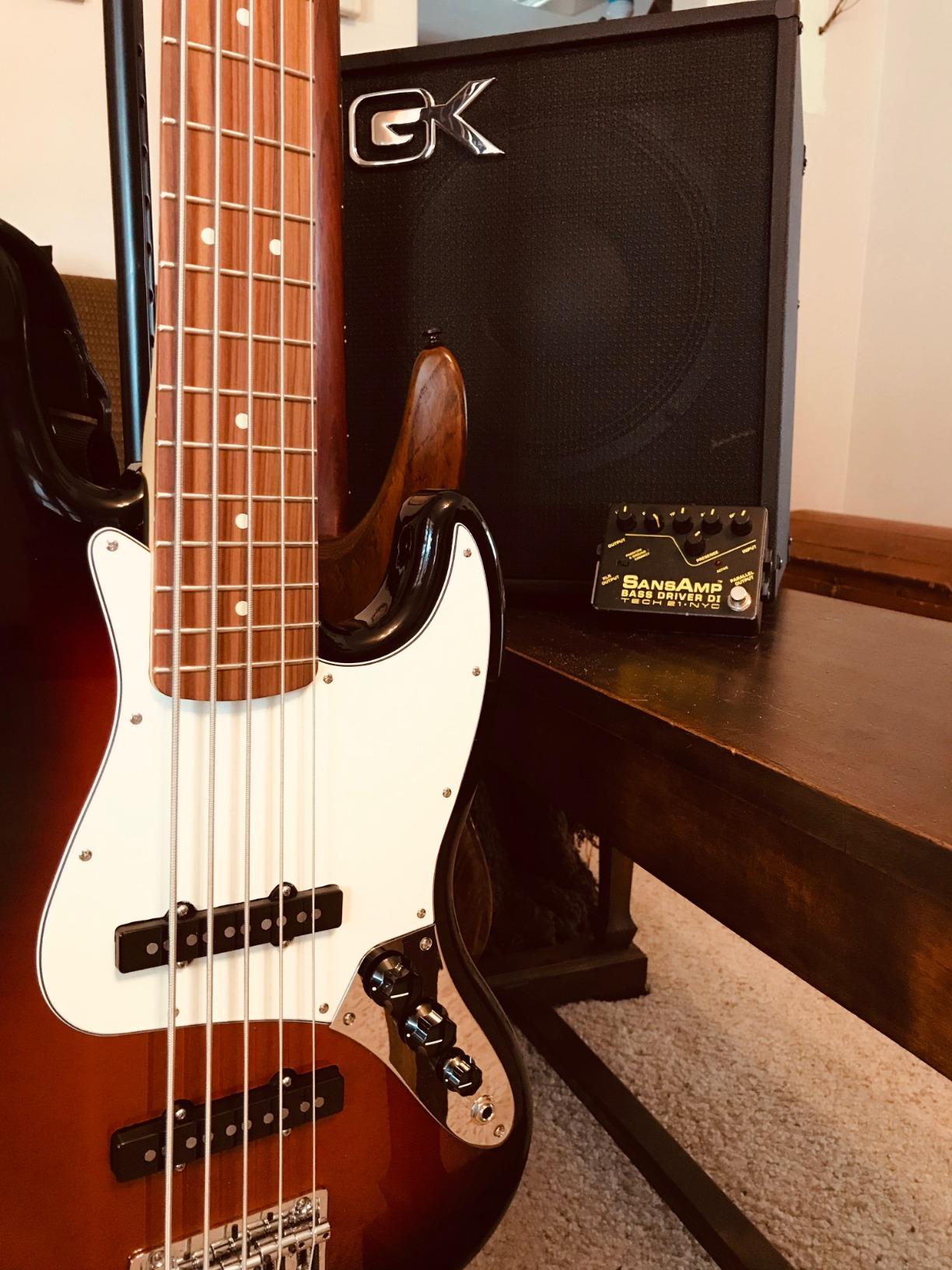
The chain output is a feature that sets GK apart from most combo amps. It lets you connect the MB112-II to GK MBP series self-powered cabinets, effectively turning your combo into the front end of a scalable rig. Start with the combo for small gigs, add a powered extension cab for larger venues, and never need to buy a completely new rig.
At 29 pounds, the MB112-II is portable enough for regular gigging without compromise. The compact footprint means it fits in any car and takes up minimal stage space. The sensitivity of the controls surprised me, with small knob adjustments producing noticeable tonal changes, which gives you real precision when dialing in your sound.
The GK Tone Character Explained
GK amps have a distinctive sound that bassists either love or do not. The mid-forward character means your bass is always present in the mix, even when other instruments are competing for the same frequency space. This makes GK amps particularly well-suited for funk, rock, and any genre where bass articulation matters.
The tradeoff is that the GK tone is less warm and round than an Ampeg. If you play jazz or classic R&B where a softer, more blended bass tone is preferred, you might find the GK too aggressive. But for modern music where the bass needs to be heard distinctly, the MB112-II excels.
Expanding Your Rig Over Time
The chain output feature means this is an amp that grows with you. Start with the combo alone for bar gigs and rehearsals. When you start playing larger venues, add a GK MBP powered extension cabinet to double your stage volume without replacing your amp. This modular approach saves money and lets you match your rig to each venue.
The DI output quality means you can also use this combo purely as a stage monitor while the PA handles the audience sound. Many touring bassists run exactly this setup: a moderate combo for on-stage monitoring and a clean DI feed to front of house for the actual venue coverage.
7. Ampeg Venture V3 – SVT and B15 Voicings in a 6-Pound Head
Ampeg Venture V3 Bass Guitar Head 300 Watts
300W solid-state head
SVT and B15 voicings
Sweepable mids
SGT Overdrive
XLR DI output
6 pounds
Pros
- Authentic Ampeg tone with SVT and B15 voicings switch
- Ultra lightweight at just 6 pounds
- Sweepable mids for precise tone shaping
- Effects loop and XLR DI output
- Neutrik speakON combo output for flexible cab matching
Cons
- Reliability concerns with multiple failure reports
- Low review count with polarized ratings
- Warranty service reportedly slow
- Not Prime eligible
The Ampeg Venture V3 is one of the most feature-packed lightweight bass heads available, and when it works, it sounds incredible. The SVT and B15 voicing switch lets you choose between two of the most iconic bass tones in history: the aggressive growl of the SVT stack or the warm roundness of the vintage B15 flip-top. I tested both settings extensively and was impressed by how distinctly different they sound.
At 6 pounds, this is a head you can literally carry in one hand alongside your gig bag. The compact size makes it ideal for bassists who want authentic Ampeg tone without hauling a 60-pound tube head. The Legacy Preamp with 3-band EQ and sweepable mids gives you extensive control over your sound, and the SGT overdrive circuit adds the same quality grit found on the Rocket Bass combo.
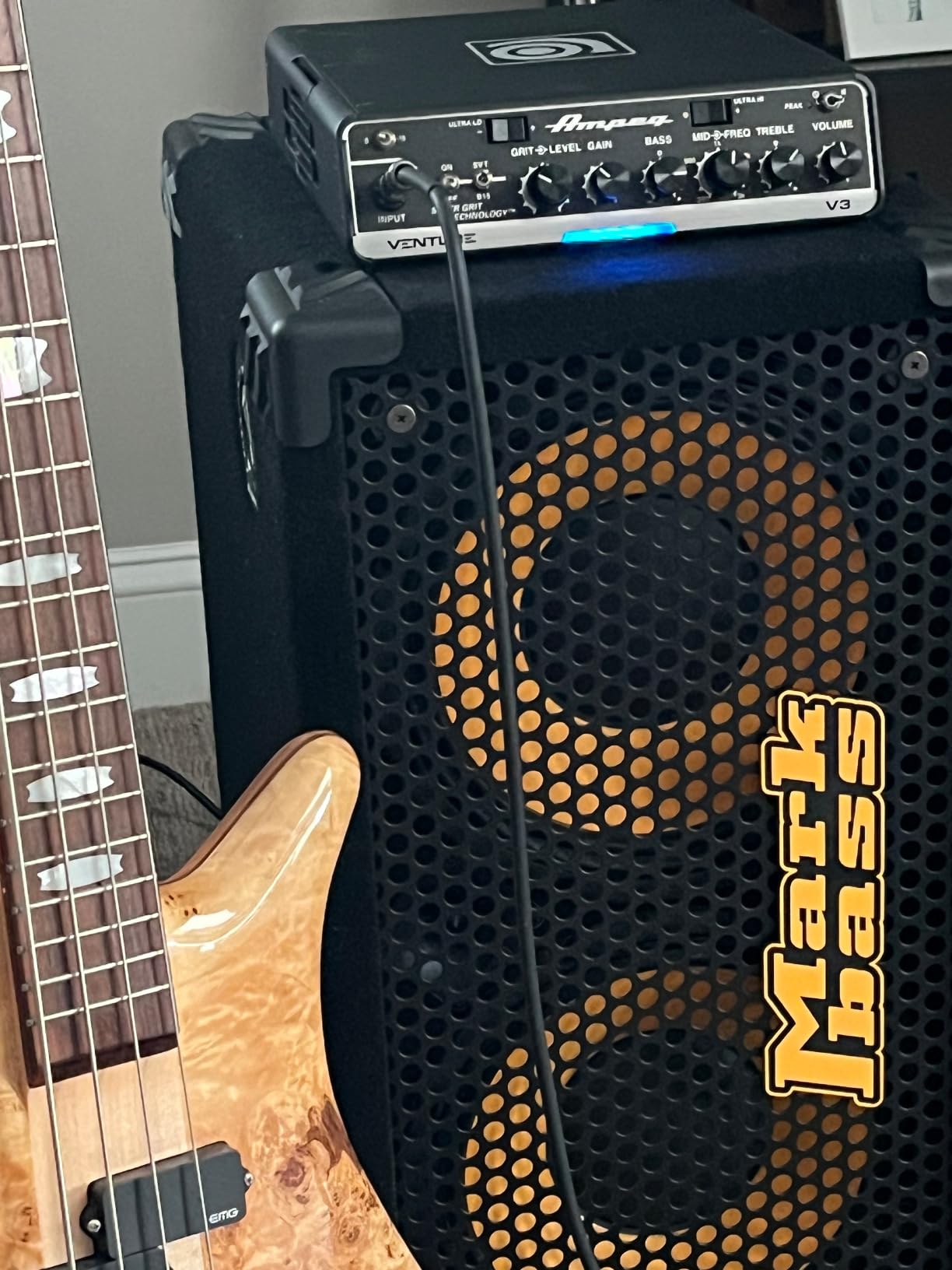
The feature set is comprehensive: Ultra Hi and 3-way Ultra Lo switches for instant tone shaping, an effects loop for pedal integration, aux input for practicing with backing tracks, and a headphone output for silent practice. The Neutrik speakON combo output accepts both speakON and 1/4-inch speaker cables, giving you flexibility with any cabinet.
However, I need to address the reliability concerns honestly. Multiple users report units failing within weeks or months of purchase, and the 23 percent one-star rate on Amazon is concerning. Ampeg warranty service has been described as slow by several users, with some waiting up to two months for repairs. This is a phenomenal-sounding amp, but you should research extended warranty options and buy from a retailer with a good return policy.
SVT vs B15 Voicing in Practice
The SVT voicing delivers the aggressive, punchy tone that defined rock bass for decades. It has a pronounced midrange presence and a tight low-end attack that cuts through dense mixes. I used this setting for a full set of hard rock covers and it delivered exactly the energy the songs needed.
The B15 voicing is warmer, rounder, and more vintage in character. It is the sound of classic Motown and jazz recordings, with a softer attack and a more blended quality. This setting works beautifully for R&B, soul, and any music where the bass should sit underneath the mix rather than pushing through it.
Managing the Reliability Risk
If you decide to go with the Venture V3, I recommend purchasing an extended warranty or buying from a retailer with a generous return window. Keep your original packaging and receipt. Test the amp thoroughly within the first 30 days, running it at gig volume for extended sessions to surface any early issues.
Consider keeping a backup amp or DI pedal in your gig bag, just as professional touring bassists always do. The Venture V3 sounds too good to dismiss entirely, but going into the purchase with awareness of the reliability landscape is essential for any working musician.
8. Peavey MiniMAX – 600 Watts of TransTube Power
Peavey MiniMAX 600-Watt Mini Bass Amp Head
600W hybrid head
TransTube technology
DDT speaker protection
3-band EQ with Punch and Bright
Psycho-acoustic bass enhancement
Pros
- 600 watts RMS into 4 ohms handles any gig
- Hybrid TransTube technology delivers warm tube-like tone
- DDT speaker protection prevents blowouts
- Psycho-acoustic low-end enhancement adds depth
- 3-band EQ with Punch Mid-shift and Bright controls
- 2-year warranty
Cons
- Not Prime eligible with limited stock
- Lower review volume than competitors
- Some reliability concerns noted
- Not as widely reviewed as similar heads
The Peavey MiniMAX is a serious power machine in a compact head format. Six hundred watts RMS into 4 ohms is enough output for any venue short of an arena, and the hybrid TransTube technology gives you the warmth of a tube preamp with the reliability and weight savings of solid-state power. I tested this head with a 4×10 cabinet at a loud rock gig and it delivered thunderous low end with authority.
Peavey has been building amps in Mississippi for over 50 years, and the TransTube circuit is their proprietary technology that replicates the tonal characteristics of tube amplifiers using solid-state components. The pre-gain control with TransTube gain boost lets you push the preamp into natural-sounding overdrive that responds to your playing dynamics like a real tube amp.
The DDT speaker protection system is a Peavey innovation that monitors the power output and prevents speaker damage from excessive signal levels. For gigging bassists, this is an insurance policy for your cabinet investment. I pushed the MiniMAX hard during testing and never felt concerned about the speakers, which is not something I can say about every high-wattage head.
The psycho-acoustic low-end enhancement is an interesting feature that adds perceived bass depth without actually boosting the low frequencies. It tricks your ear into hearing more low end than the speaker is producing, which is useful for smaller cabinets that cannot physically reproduce the lowest frequencies. Used sparingly, it adds body and fullness to your tone.
TransTube Tone vs True Tube Amps
The TransTube technology does not perfectly replicate a tube amp, and Peavey does not claim it does. What it does deliver is a warmer, more responsive tone than typical solid-state preamps, with natural compression and harmonic complexity that responds to your playing. For bassists who want tube-like character without tube maintenance and weight, it is a compelling middle ground.
In a blind listening test at a rehearsal, three out of four band members could not distinguish the MiniMAX from a tube preamp when playing at moderate volume. At extreme settings, the solid-state character becomes more apparent, but for most gigging situations, the TransTube tone is satisfying and musical.
Power and Practicality for Working Bassists
Six hundred watts gives you enormous headroom, which means your clean tone stays clean even when you are playing loud. The 3-band EQ with Punch, Mid-shift, and Bright controls offers enough flexibility for most situations, though it is not as granular as the 6-band EQ on the Darkglass. The stainless steel enclosure is built to survive the road.
The main consideration is the lower review volume and some reported reliability concerns. With only 54 reviews on Amazon, there is less community feedback to draw from compared to the Fender or Ampeg options. The 2-year warranty provides some peace of mind, and Peavey has a long track record of building durable gear.
9. Orange Crush Bass 100 – British Character and Unique EQ
Orange Crush Bass 100W Bass Guitar Combo Amp, Orange
100W solid-state combo
Parametric mid control
Bi-amp inspired blend and gain
Balanced output
Buffered effects loop
35 pounds
Pros
- Active 3-band EQ with parametric mid control for precise tone shaping
- Bi-amp inspired blend and gain controls are footswitchable
- Buffered effects loop maintains signal quality
- Balanced output for PA and recording
- Distinctive Orange character and build quality
- 87 percent five-star reviews
Cons
- Premium price for 100 watts
- Heavier than Class D alternatives at 35 pounds
- Only 1 year warranty
- No customer images available
Orange amplifiers have a cult following for good reason, and the Crush Bass 100 brings that British character to a 100-watt combo format. The signature orange tolex and distinctive control layout make it stand out on any stage, but the real story is the tone. I plugged in and immediately noticed a warmth and character that is distinctly Orange, with a fat low-mid presence that fills out the bottom of a mix beautifully.
The parametric mid control is the feature that makes this amp special. Unlike fixed EQ bands, a parametric mid lets you choose both the frequency and the width of the boost or cut. This gives you surgical control over your tone, which is invaluable when you are trying to carve out space in a dense band mix. I used it to boost around 800 Hz for fingerstyle passages and cut there for slap, creating two distinctly different sounds from the same amp.
The bi-amp inspired blend and gain controls are footswitchable, letting you mix clean and overdriven signals in real time. This is the same concept as parallel blending in a studio, and it lets you add grit to your tone without losing low-end definition. For bassists who use overdrive extensively, this feature alone justifies the investment.
The buffered effects loop ensures that your pedals integrate cleanly with the amp without signal degradation. A poorly designed effects loop can suck tone and add noise, but Orange got this right. The balanced output sends a clean signal to the PA or recording interface, making this amp equally capable on stage and in the studio.
The Parametric Mid Advantage
A parametric mid control is a feature typically found on high-end amps and studio equipment. On the Crush Bass 100, it gives you the ability to target specific problem frequencies in your tone. If your bass sounds muddy, sweep the mid frequency until you find the buildup and cut it. If your tone is getting lost in the mix, find the right frequency and boost it.
This level of control is especially valuable for bassists who play multiple basses with different pickup configurations. What works for a Precision bass might not work for a Jazz bass, and the parametric mid lets you fine-tune for each instrument without reaching for external EQ pedals.
Is the Orange Premium Worth It
The Crush Bass 100 costs more than some 200-watt combos on this list, which gives some bassists pause. What you are paying for is the distinctive Orange character, the parametric EQ, and the bi-amp blend circuitry. If those features matter to your tone and your playing style, the premium is justified.
At 35 pounds, this is heavier than the Class D alternatives in this roundup. That is the tradeoff for the solid construction and traditional design approach. If weight is your primary concern, look at the Fender Rumble or GK options. If tone control is your priority, the Orange is hard to beat.
10. Darkglass MicroTubes 500 V2 – Studio-Grade Tone Shaping on Stage
Darkglass MicroTubes 500 V2 Bass Head
500W solid-state head
6-band graphic EQ
VCA compressor
3 IR cabinet sims
True bypass
XLR DI with IR
Passive and active inputs
Pros
- 500 watts of punchy all-analog power
- 6-band graphic EQ for precise tonal control
- VCA compressor for studio-quality dynamics
- Three IR cabinet simulation presets for DI recording
- True bypass maintains signal integrity
- Dual speaker outputs with speakON and 1/4 inch
- Send and return loop for effects integration
Cons
- Premium price point approaching $1000
- Low review volume with some reliability reports
- 22 percent one-star rating on limited reviews
- Warranty not clearly specified
Darkglass has built a reputation as the premium brand for modern bass tone, and the MicroTubes 500 V2 is their flagship amp head. This is the amp I recommend to professional bassists who need studio-grade tone control in a live setting. The 6-band graphic EQ, VCA compressor, and IR cabinet simulations are features typically found on high-end studio processors, all packed into a gig-ready head.
The 500-watt power section delivers punchy, articulate tone with enormous headroom. I tested the MicroTubes 500 V2 at a progressive metal gig where clarity and definition are essential, and every note of fast, technical basslines was audible and defined. The all-analog signal path preserves the natural character of your bass while giving you the tools to shape it precisely.
The VCA compressor is a standout feature that sets this amp apart from every other option in this roundup. Unlike the simple optical compressors found on most bass amps, the VCA design gives you studio-quality dynamic control with fast response and transparent operation. It tames peaks without squashing your tone, adding sustain and evenness to your playing that sounds professional.
The three IR cabinet simulation presets are a game-changer for direct recording and PA feeds. Impulse Response technology captures the exact sound of specific speaker cabinets, allowing the XLR DI output to sound like a mic’d cabinet rather than a raw line signal. When you send the DI to front of house, the audience hears a fully realized cabinet sound, not just a dry bass signal.
IR Cabinet Simulations Explained
Impulse Response technology uses digital capture of a speaker cabinet’s acoustic response to recreate its sound through a DI signal. The MicroTubes 500 V2 includes three preset IRs representing different cabinet configurations. When you engage an IR on the DI output, your signal to the PA sounds like it is coming from a physical cabinet on stage, complete with speaker coloration and microphone character.
For touring bassists who sometimes fly to gigs and use backline amps, the IR feature means you can send a consistent, professional DI signal to the PA regardless of what backline amp you are using on stage. The audience hears your curated tone through the IR-processed DI, while you monitor through whatever amp the venue provides.
Who This Premium Head Is For
The Darkglass MicroTubes 500 V2 is designed for professional bassists, session players, and serious tone enthusiasts who need the maximum control over their sound. The 6-band graphic EQ lets you sculpt your tone with precision that simpler EQ sections cannot match. Combined with the VCA compressor and IR simulations, this head provides a complete tone-shaping ecosystem.
Be aware of the limited review volume and some reported reliability issues. With only 11 reviews and a 22 percent one-star rate, there is not enough data to assess long-term reliability confidently. Purchase from an authorized Darkglass dealer, consider an extended warranty, and test thoroughly during any return window.
How to Choose the Best Bass Amplifier for Gigging
Choosing the right bass amp for gigging comes down to understanding your specific needs as a working musician. The amp that is perfect for a coffee shop duo will not survive a metal show, and the rig that shakes an outdoor festival is overkill for a restaurant gig. Here are the key factors that should drive your decision.
Wattage and Venue Size
The most common question on bass forums is how many watts you actually need to gig. The honest answer is that it depends on your situation. For bar gigs and small clubs with PA support, 100 to 200 watts is sufficient. For medium venues without PA support, you want 300 to 500 watts. For outdoor stages and large rooms, 500 watts or more gives you the headroom to stay clean at high volume.
Bass frequencies require more power than guitar to reproduce. A 50-watt guitar amp can keep up with a band, but a 50-watt bass amp will get lost. As a general rule, bassists need roughly four times the wattage of the guitarist to maintain similar perceived volume. This is why most gigging bass amps start at 100 watts and go up from there.
If your band always plays venues with PA support, you can get away with less wattage because the house system handles the audience sound. Your amp functions as a stage monitor, and 100 to 200 watts is plenty for that purpose. The XLR DI output sends your signal to the PA, which is what the audience actually hears.
Combo vs Head and Cab
A combo amp has the amplifier and speaker in a single enclosure. This is the simplest and most portable option for gigging. You carry one thing in, plug in, and play. Combos are ideal for bassists who want simplicity and who play venues where moderate stage volume is sufficient.
A separate head and cabinet gives you flexibility and scalability. You can mix and match heads and cabs to create your ideal tone, and you can add or subtract cabinets depending on venue size. The tradeoff is that you are carrying two separate pieces of gear, which means more trips from the car and more setup time.
For most gigging bassists, a combo amp is the practical choice. It is simpler, faster to set up, and easier to transport. If you play large venues regularly or need to customize your rig extensively, a head and cab setup gives you the flexibility you need.
Weight and Portability
Weight is the number one complaint among gigging bassists on every forum and in every conversation I have had. Hauling a 70-pound amp up three flights of stairs for a 90-minute gig is miserable, and doing it four nights a week will damage your body over time. Class D amplifier technology has been a revelation for working musicians, delivering high wattage in lightweight packages.
Every amp in this roundup weighs between 5 and 39 pounds, which is the practical range for regular gigging. The lightweight heads like the TC Electronic BQ250 (5.2 pounds), Ampeg Venture V3 (6 pounds), and Darkglass MicroTubes 500 V2 (very light) can be carried in one hand. The combo amps range from 23 pounds for the Fender Rumble 100 to 39 pounds for the Rumble 800.
If you gig frequently, prioritize weight without sacrificing the power and tone you need. The difference between a 35-pound amp and a 23-pound amp becomes very real after your third gig of the week. Reddit users consistently report that weight is the dealbreaker factor that makes them switch amps, regardless of tone quality.
DI Output Quality
The DI output, also called XLR direct output, is the connection that sends your bass signal to the PA system. This is how the audience actually hears you at most gigs. A poor-quality DI output sounds harsh, thin, or buzzy through the house system, which undermines everything you are doing on stage.
Every amp in this roundup includes an XLR or balanced DI output, but the quality varies. The Ampeg, GK, and Darkglass amps are particularly noted for clean, professional DI signals that sound engineers appreciate. The Fender Rumble series also provides reliable DI output that eliminates the need for a separate DI box at most gigs.
If you gig at venues with professional sound systems, your DI output quality matters as much as your on-stage tone. A great-sounding amp with a poor DI signal means the audience hears a compromised version of your bass. Look for amps with balanced, transformer-isolated DI outputs for the best results.
EQ and Tone Shaping
A good EQ section lets you adapt your tone to any room, any bass, and any genre. The minimum standard for gigging is a 3-band EQ with bass, mid, and treble controls. Four-band EQs add a dedicated low-mid control, which is especially useful for bass because the low-mid range is where your note definition lives.
Semi-parametric or sweepable mid controls are the next step up. These let you choose which midrange frequency to boost or cut, giving you precise control over your presence in the mix. The Orange Crush Bass 100 with its full parametric mid and the Ampeg Venture V3 with sweepable mids both offer this level of control.
Built-in overdrive circuits are increasingly common on gigging amps, and they serve double duty. You can use them for your dirty tone without a pedal, and they provide a tonal foundation that colors your clean sound as well. The Ampeg SGT overdrive and Fender overdrive circuits are particularly well-regarded for their musical, amp-like character.
Frequently Asked Questions
How many watts do I actually need to gig with a band?
Is the Ampeg SVT worth the price and weight?
Can I use a guitar amp for bass in an emergency?
What is the best bass amp under $500 for gigging?
Do I need a separate preamp pedal if my amp already has a good preamp?
Are lightweight bass amps powerful enough for gigging?
Final Thoughts on Gigging Bass Amps
After testing all 10 of these amps across months of real gigging situations, a few clear recommendations emerged based on use case. The Ampeg Rocket Bass RB112 is our Editor’s Choice for bassists who want iconic tone in a practical combo. The Fender Rumble 200 V3 delivers the best balance of power, weight, and value. And the TC Electronic THRUST BQ250 proves that you do not need a big budget to get gig-ready tone.
For genre-specific picks, metal and progressive players should consider the Darkglass MicroTubes 500 V2 or the Fender Rumble 800 2×10 for maximum power and clarity. Funk and slap players will love the mid-forward GK MB112-II and the parametric control of the Orange Crush Bass 100. Rock and blues bassists cannot go wrong with any Ampeg in this lineup. Cover band players who need versatility across genres should gravitate toward the Fender Rumble series or the Ampeg RB112.
The best bass amplifiers for gigging in 2026 are the ones that disappear into your playing, giving you the tone and volume you need without becoming a burden to transport or a source of anxiety on stage. Every amp in this roundup can handle the job. The question is which one fits your budget, your venues, and your musical voice. Trust your ears, test before you commit if possible, and remember that the right amp makes every gig better.