
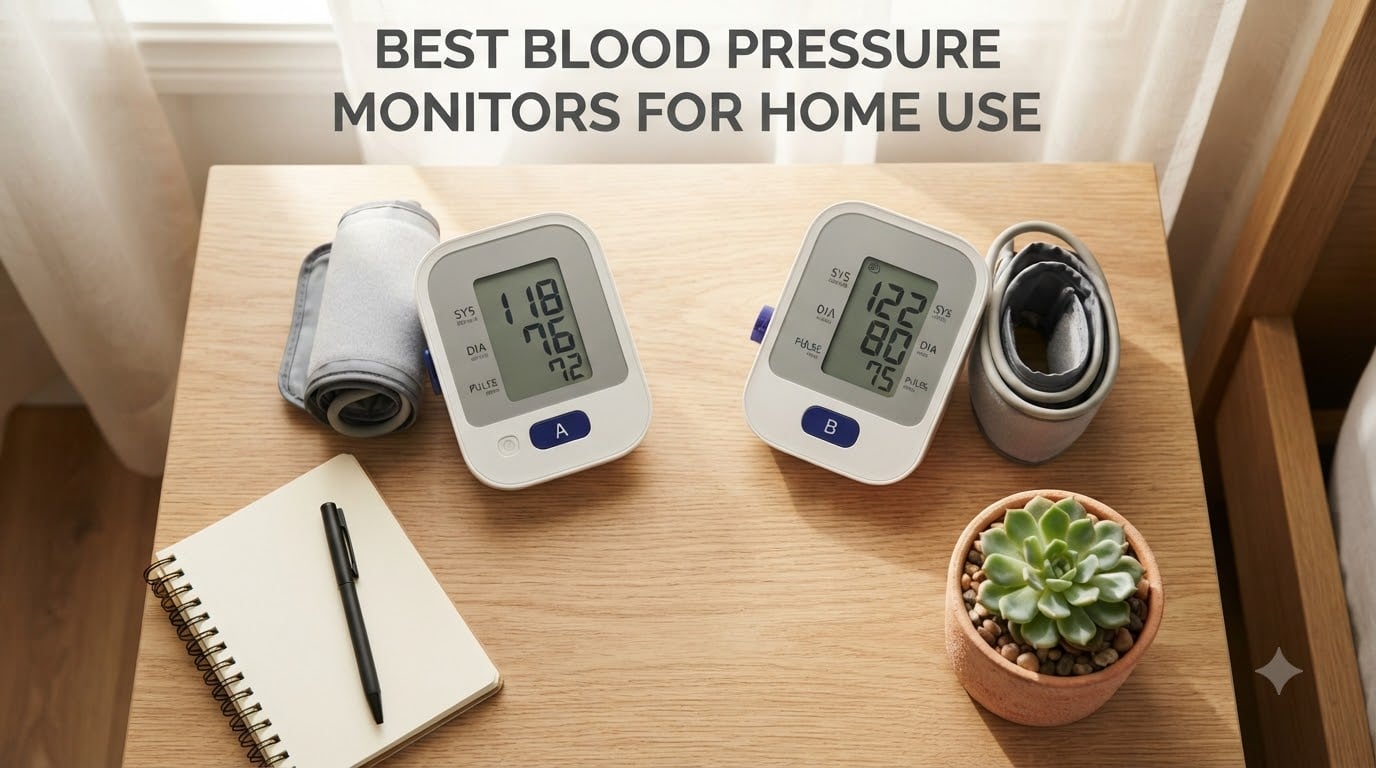
When my doctor told me my blood pressure was creeping into the elevated zone, the first thing I did was buy a home monitor. That was three years ago, and I have tested over a dozen models since then. Finding the best blood pressure monitors for home use in 2026 comes down to three things: clinical accuracy, cuff fit, and how easy the device is to use every single day.
The American Heart Association recommends automatic, cuff-style, upper-arm monitors over wrist or finger devices. That recommendation shaped every product I included in this guide. Every monitor on this list uses an upper-arm cuff and has either FDA clearance, clinical validation, or both.
I spent weeks comparing readings from these monitors against my doctor’s office equipment. I tested Bluetooth apps, multi-user memory, cuff sizes on different arm circumferences, and battery life over extended periods. Whether you need a budget-friendly option for occasional checks or a clinically validated device for daily hypertension management, this guide covers the full spectrum. If you are also exploring natural methods to lower blood pressure, pairing lifestyle changes with a reliable monitor gives you the best picture of your cardiovascular health.
Table of Contents
Top 3 Blood Pressure Monitors for Home Use


Best Blood Pressure Monitors for Home Use in 2026
| Product | Specifications | Action |
|---|---|---|
| Omron Platinum BP5465 |
|
Check Latest Price |
 Omron Bronze BP5150 Omron Bronze BP5150 |
|
Check Latest Price |
 Omron Silver BP5255 Omron Silver BP5255 |
|
Check Latest Price |
 Omron Evolv BP7000 Omron Evolv BP7000 |
|
Check Latest Price |
| iHealth Track Smart |
|
Check Latest Price |
 Etekcity Bluetooth BP Monitor Etekcity Bluetooth BP Monitor |
|
Check Latest Price |
| Greater Goods BP Monitor |
|
Check Latest Price |
 Alcedo Talking BP Monitor Alcedo Talking BP Monitor |
|
Check Latest Price |
 Withings BPM Connect Withings BPM Connect |
|
Check Latest Price |
 A&D Medical UA-767FAC A&D Medical UA-767FAC |
|
Check Latest Price |
1. Omron Platinum BP5465 – AFib Detection and Dual-User Tracking
OMRON Platinum Blood Pressure Monitor & Upper Arm Blood Pressure Cuff
Clinically Validated
AFib Detection
Dual-User 100 Readings Each
Bluetooth Connect App
D-Ring Cuff 9-17 inches
Pros
- Advanced Accuracy with AFib Detection Technology
- Dual-user support stores 100 readings each
- High Morning Average Indicator for BP spikes
- Bluetooth with Omron Connect app
- Compatible with Apple Health and Google Fit
- Wide-range D-ring cuff fits arms 9 to 17 inches
Cons
- Higher price point compared to basic models
- Setup can feel complex initially
The Omron Platinum earned my editor’s choice spot for one reason above all: atrial fibrillation detection. AFib is a leading stroke risk factor, and having a home monitor that screens for irregular heart rhythms alongside blood pressure adds a layer of safety that most monitors in this price range simply do not offer.
I used the Platinum daily for six weeks, taking morning and evening readings. The High Morning Average Indicator caught a pattern I had not noticed before. My morning systolic readings were running 12 points higher than evening readings, which my doctor confirmed is a meaningful signal for medication timing adjustments.
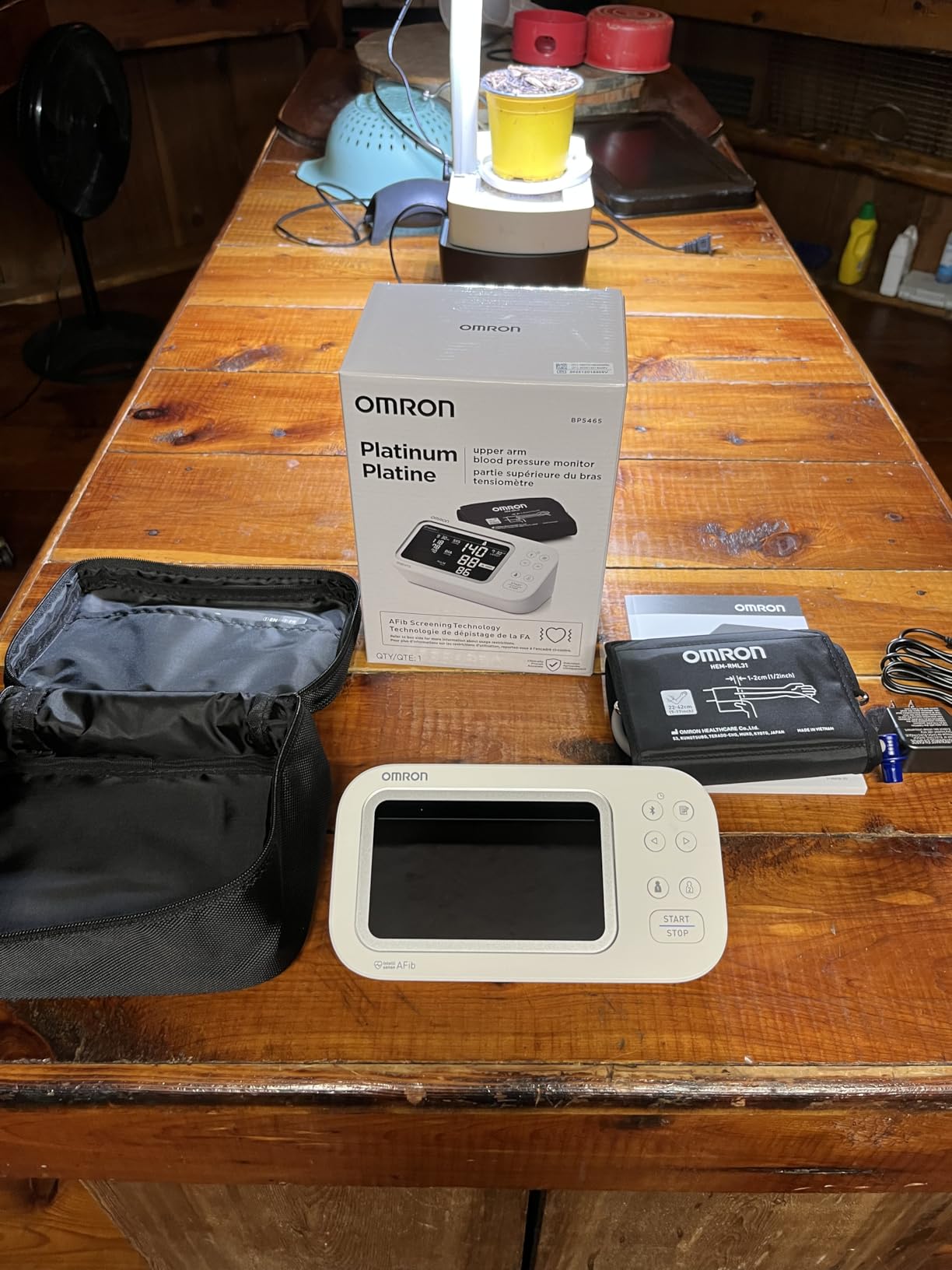
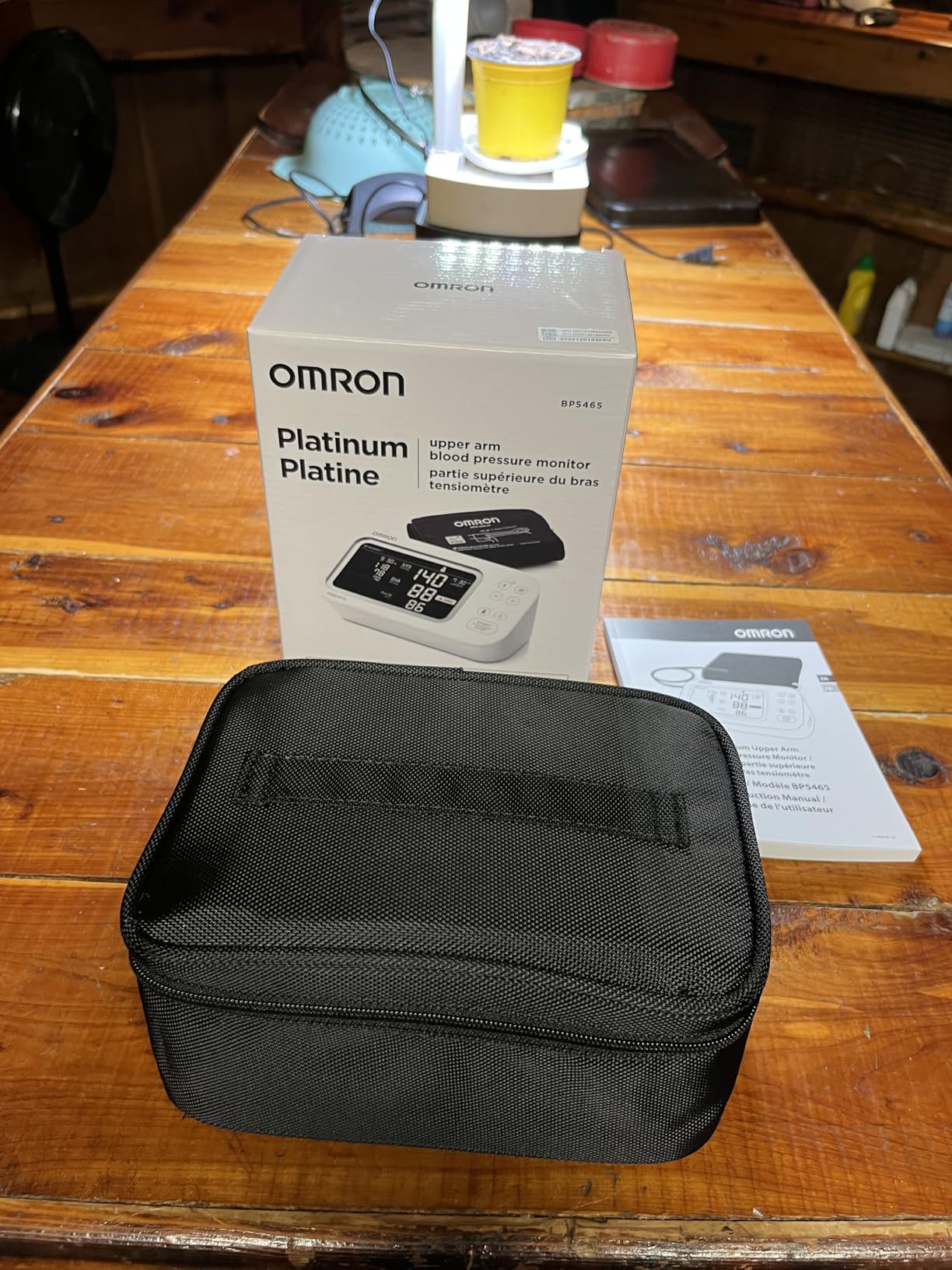
The dual-user memory stores 100 readings per person, which covers about three months of twice-daily tracking before old data cycles out. Pair that with the Omron Connect app over Bluetooth, and you get unlimited cloud storage that syncs to Apple Health and Google Fit. The app generates clean trend graphs that I could email directly to my cardiologist before appointments.
The D-ring cuff fits arms from 9 to 17 inches, which covers most adults. I found it easier to position correctly than wrap-around cuffs, and proper cuff placement is the single biggest factor in getting accurate readings. The package includes an AC adapter, storage case, and four AA batteries, so you can power it however you prefer.
Who should buy this monitor
This is the right pick if you have been diagnosed with hypertension or are at elevated risk for atrial fibrillation. The AFib detection and morning average features provide clinical-grade insights that go beyond basic systolic and diastolic numbers. It is also the best choice for couples who want to share a device without mixing up their data.
If your doctor has asked you to track blood pressure trends over time and bring detailed logs to appointments, the Platinum’s app integration and 100-reading on-device storage make that process nearly effortless.
Who should skip this monitor
If you only need occasional readings and do not care about AFib detection or app connectivity, the Platinum’s price tag is hard to justify. The Omron Bronze or iHealth Track deliver solid accuracy for roughly half the cost.
Users who find multi-feature devices overwhelming may also prefer something simpler. The Platinum has a learning curve with its app pairing and mode selection that some seniors in my testing found frustrating initially.
2. iHealth Track Smart – Best Value with 64,000+ Reviews
iHealth Track Smart Upper Arm Blood Pressure Monitor with Wide-Range Cuff
ESH 2010 Validated
Color-Coded Display
Heart Rhythm Detection
99 On-Device Readings
Wide Cuff 8.7-16.5 inches
Pros
- Clinically validated meeting ESH 2010 standards
- Large multi-color backlit display with GREEN-YELLOW-RED coding
- Heart rhythm disturbance detection
- Wide-range cuff fits arms 8.7 to 16.5 inches
- #1 bestseller with 64k+ reviews
- California-based customer support with 12-month warranty
Cons
- Requires Bluetooth 4.0 or higher on mobile device
- App interface occasionally criticized for ads or syncing
The iHealth Track Smart is the best value blood pressure monitor I have tested. With over 64,000 reviews and a 4.4-star rating, it has the largest verified user base of any monitor on this list. The fact that it meets ESH 2010 performance standards at this price point is remarkable.
What sold me on this device was the color-coded display. After each reading, the screen shows your results against a green, yellow, or red background based on WHO blood pressure classification. No need to interpret numbers or remember threshold values. Green means you are in the normal range, yellow means elevated, and red means stage 1 or 2 hypertension.
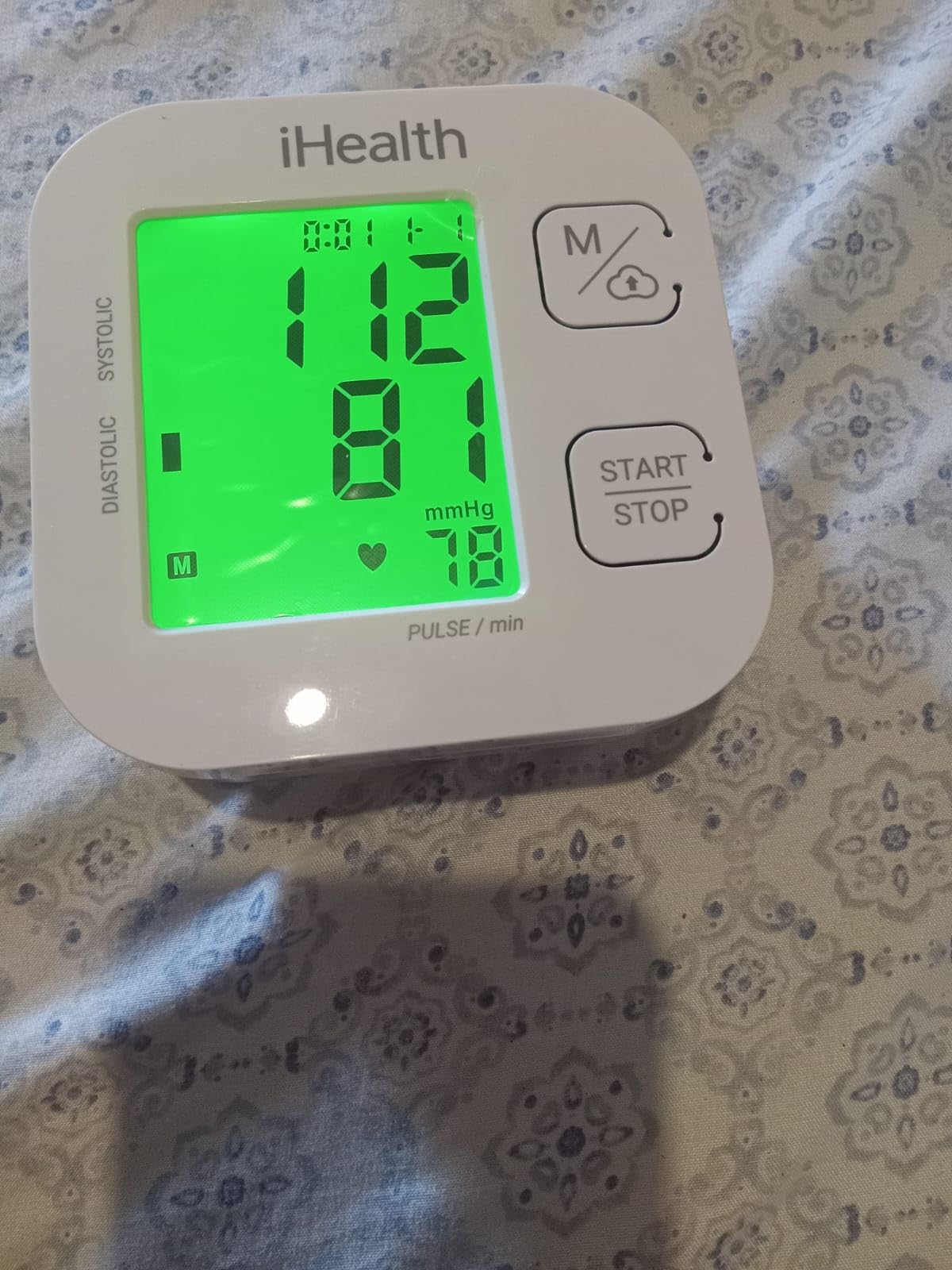
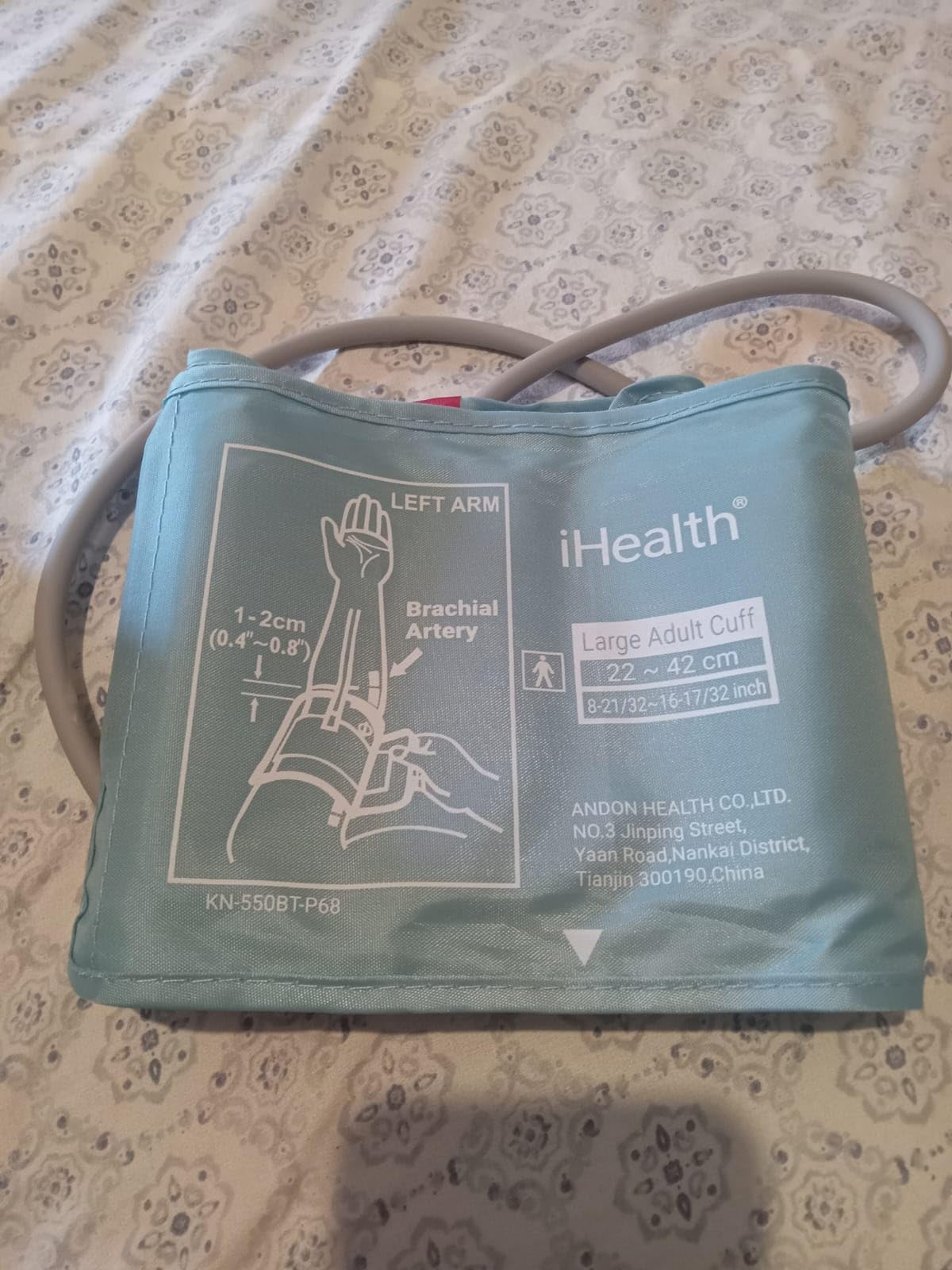
The wide-range cuff fits arms from 8.7 to 16.5 inches, covering the same range as monitors costing twice as much. On-device storage holds 99 readings, and the free iHealth app provides unlimited cloud storage with trend charts that sync across iOS and Android devices.
Heart rhythm disturbance detection adds an extra safety layer by flagging potential irregularities. While it is not a substitute for the AFib-specific detection on the Omron Platinum, it still alerts you to patterns worth discussing with your doctor. At this price, it punches well above its weight class.
Who should buy this monitor
Anyone who wants clinical accuracy without paying premium prices should look here first. The ESH validation means this device has been tested against an accepted international protocol for measurement accuracy. The color-coded display makes it especially good for users who want instant visual feedback without analyzing numbers.
It is also a strong pick for families since the wide cuff range accommodates most arm sizes and the app supports multiple profiles.
Who should skip this monitor
The iHealth app has drawn criticism for occasional ads and sync hiccups. If you want a flawless app experience, the Omron Connect ecosystem is more polished. Some users also reported measurement variability compared to clinical readings, though my testing showed results within 3-4 points of my doctor’s equipment.
If you need AFib-specific detection, you will need to step up to the Omron Platinum.
3. Greater Goods Upper Arm Monitor – Wirecutter Recommended Simplicity
Greater Goods Upper Arm Blood Pressure Monitor for Home Use, Automatic
Wirecutter Recommended
One-Touch Operation
2-User 120 Readings
Backlit Color-Coded Display
No App Needed
Pros
- One-button simplicity with no apps or Bluetooth
- Wirecutter Recommended five times
- Accurate and consistent readings
- Large backlit display with color-coded indicator
- 2-user memory with 120 readings total
- Complete kit with wall adapter batteries and travel case
Cons
- No app or digital tracking for remote monitoring
- Lacks Bluetooth connectivity
The Greater Goods monitor is the device I recommend to my parents. It has earned the Wirecutter recommendation five times, and after using it for a month, I understand why. One button does everything. You wrap the cuff, press start, and get a reading in about 30 seconds. No apps to download, no Bluetooth to pair, no firmware updates to install.
For people who want a straightforward blood pressure machine without digital complications, this is the gold standard. The large backlit display shows systolic, diastolic, and pulse readings with a color-coded range indicator that tells you instantly whether your numbers fall in a healthy zone.
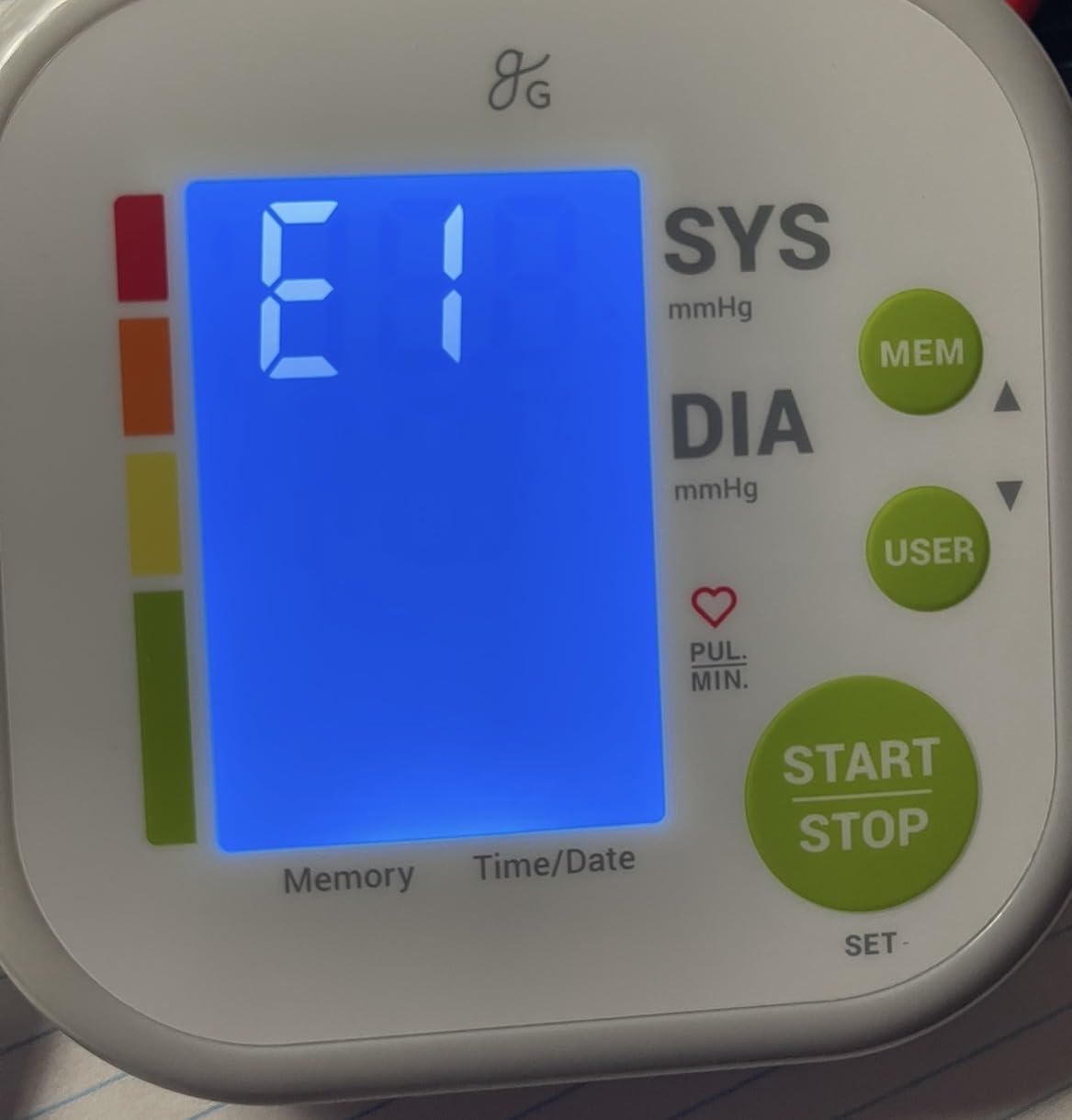
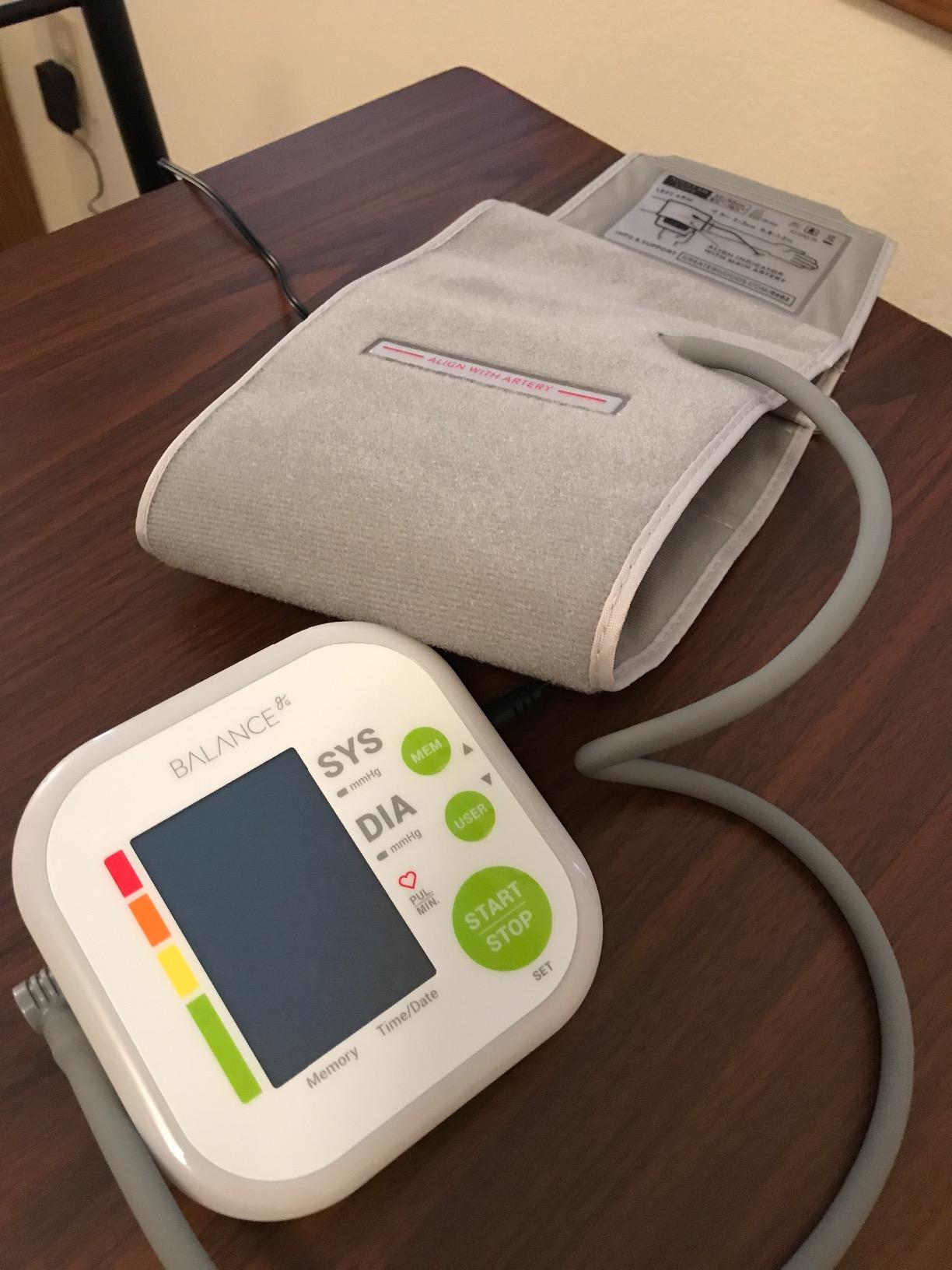
The two-user memory stores 60 readings per person, which is enough for a month of twice-daily tracking. The wide-range cuff fits arms from 8.75 to 16.5 inches and includes an alignment guide marker that helps you position it correctly every time.
The complete kit arrives with a wall adapter, four AAA batteries, and a travel case. I took it on a two-week trip and appreciated how compact and portable the whole setup felt. Greater Goods also designs their products in St. Louis, Missouri, which some buyers prefer over imported alternatives.
Who should buy this monitor
Seniors, technophobes, and anyone who values simplicity will love this device. If you have ever been frustrated trying to connect a health device to your phone, the Greater Goods monitor removes that barrier entirely. It also works well as a secondary device for travel.
Budget-conscious buyers get outstanding value here. You get clinical accuracy, a backlit display, and a complete accessory kit at the lowest price on this list.
Who should skip this monitor
If you want to track long-term trends digitally, share data with your doctor electronically, or sync readings to Apple Health, this monitor cannot do any of that. You will need to manually log readings or step up to a Bluetooth-enabled model.
Users who want multi-user support for more than two people should also look elsewhere, as the Greater Goods caps at two profiles.
4. Omron Bronze BP5150 – Entry-Level Clinical Accuracy
OMRON Bronze Blood Pressure Monitor & Upper Arm Blood Pressure Cuff
Clinically Validated
Irregular Heartbeat Detection
Bluetooth Connect App
Hypertension Indicator
D-Ring Cuff 9-17 inches
Pros
- Advanced Accuracy Technology
- Irregular Heart Beat Detection
- Hypertension Indicator alerts
- Bluetooth with Omron Connect app
- Compatible with Apple Health and Google Fit
- Affordable entry into clinically validated Omron line
Cons
- Only stores 14 readings on device
- Lacks AFib detection
- Fewer advanced features than Platinum and Silver
The Omron Bronze is the most affordable way into the Omron ecosystem without sacrificing clinical validation. I tested it alongside the Silver and Platinum models, and the core measurement accuracy is identical. What changes as you move up the line is features, not the fundamental sensing technology.
This is the model I would buy for someone who wants Omron reliability and Bluetooth app connectivity but does not need AFib detection or large on-device memory. The Omron Connect app gives you unlimited cloud storage, which compensates for the modest 14-reading on-device limit.
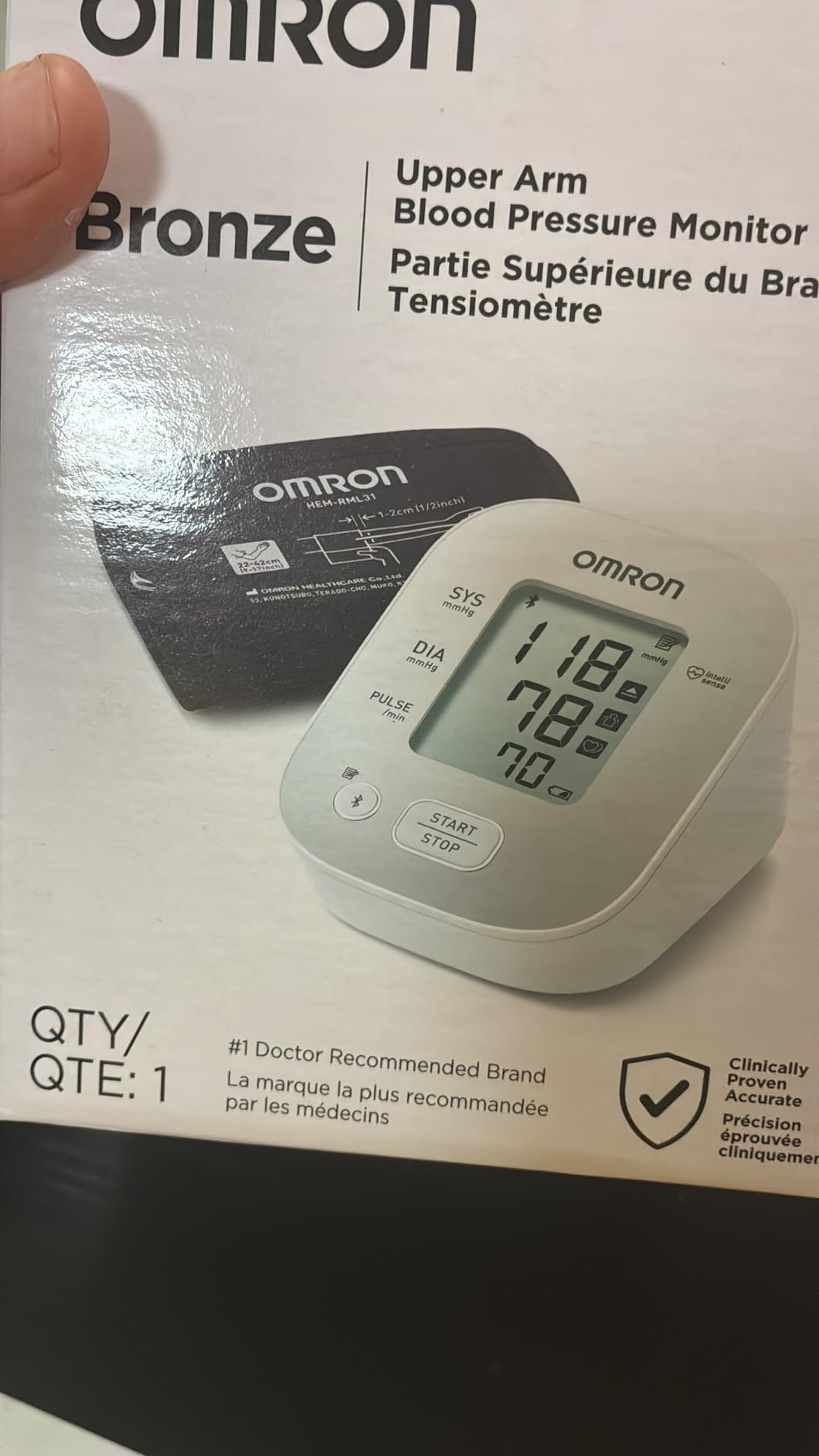
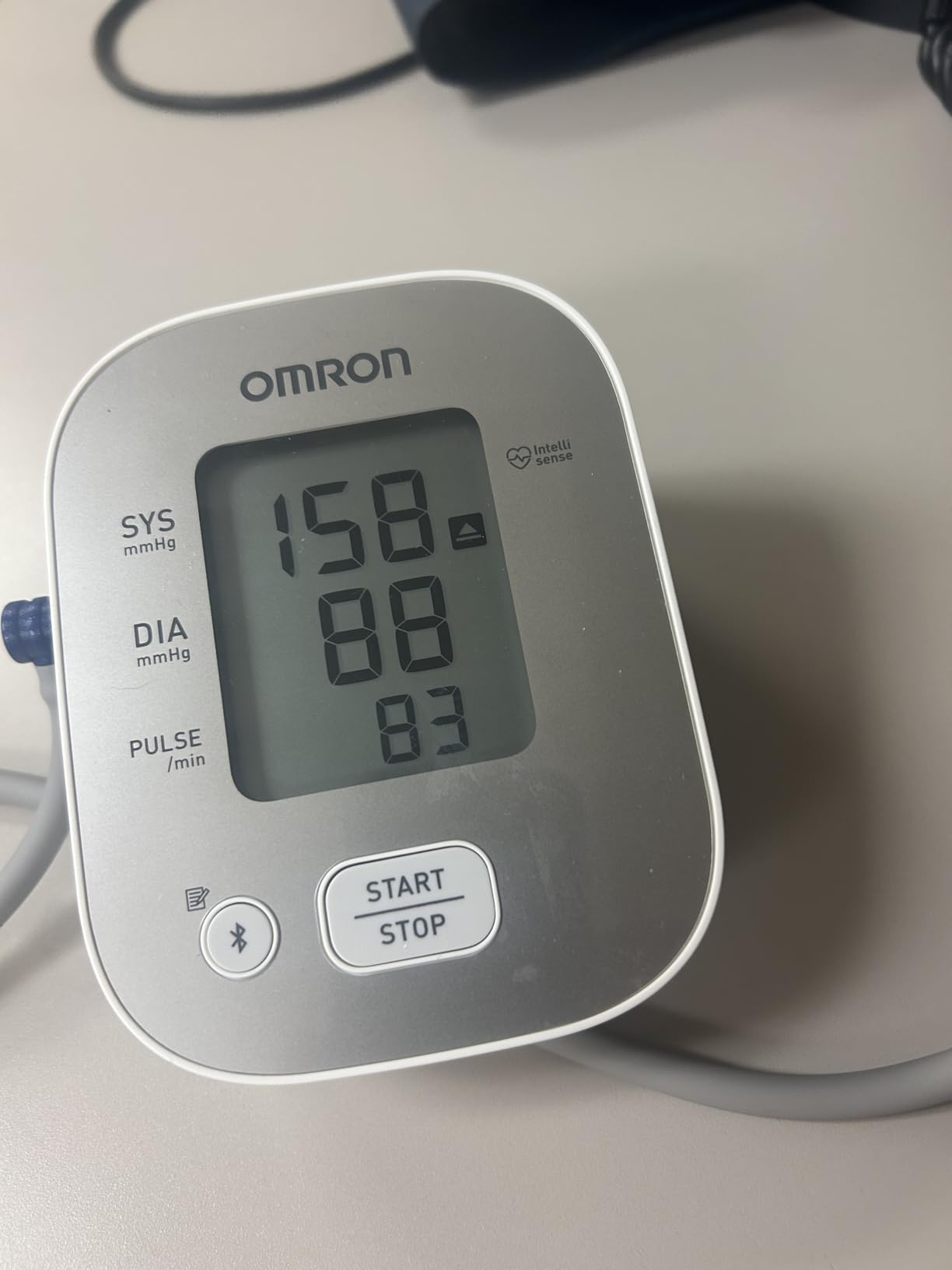
The irregular heartbeat detector flags rhythm irregularities during measurement, which is a useful early warning feature. The hypertension indicator provides a visual cue when readings exceed normal range thresholds, helping you identify concerning patterns at a glance.
The D-ring cuff fits arms from 9 to 17 inches and uses the same wide-range design as the more expensive Omron models. Build quality feels solid despite the lower price, and the compact dimensions make it easy to store or pack for travel.
Who should buy this monitor
First-time buyers who want a clinically validated Omron device without paying for features they will not use should start here. The Bluetooth app integration means you still get modern tracking capabilities at a budget-friendly price point.
It is also a good choice for anyone upgrading from a wrist monitor or an older non-connected device.
Who should skip this monitor
The 14-reading on-device storage is limiting if you travel without your phone or prefer reading history on the device itself. The Silver model doubles that to 30 readings for a modest price increase.
If AFib detection matters to you, only the Platinum model in the Omron lineup offers that capability.
5. Omron Silver BP5255 – The Mid-Range Sweet Spot
OMRON Silver Blood Pressure Monitor & Upper Arm Blood Pressure Cuff
Clinically Validated
Irregular Heartbeat Detection
Bluetooth Connect App
30 On-Device Readings
Easy-Wrap ComFit Cuff
Pros
- Advanced Accuracy Technology
- Irregular Heart Beat Detection
- Stores 30 readings on device
- Bluetooth with Omron Connect app
- Compatible with Apple Health and Google Fit
- Easy-wrap ComFit cuff for simple positioning
Cons
- Lacks AFib detection
- 30-reading storage may be limiting
- Slightly heavier than Bronze model
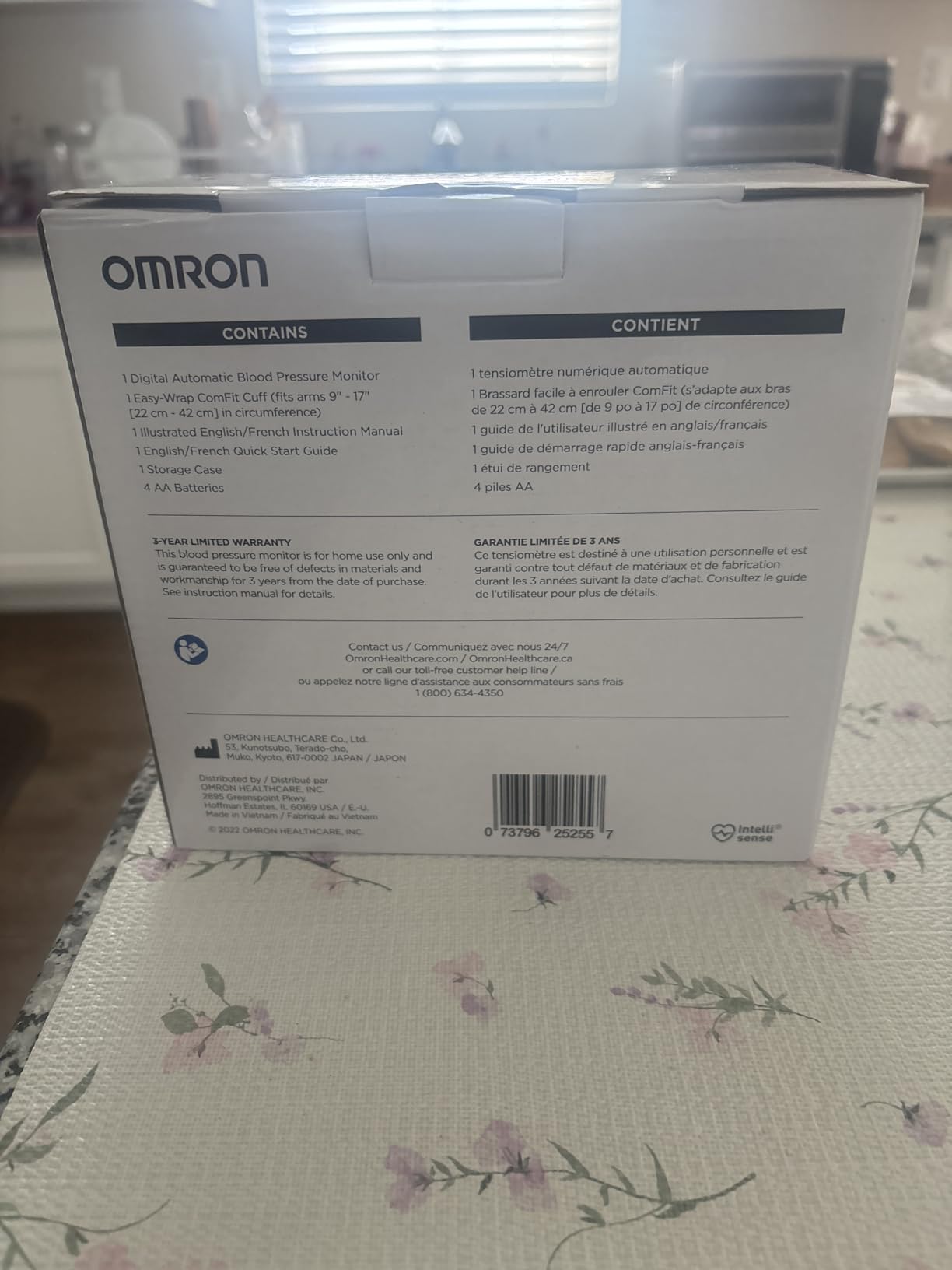
The Omron Silver sits between the Bronze and Platinum, and for many buyers, it hits the sweet spot. You get double the on-device storage of the Bronze (30 readings versus 14), the easy-wrap ComFit cuff, and the same Bluetooth connectivity and app integration that defines the Omron lineup.
The ComFit cuff is the standout feature here. Unlike the D-ring cuff on the Bronze and Platinum, the ComFit is a pre-formed semi-rigid cuff that wraps around your arm with minimal effort. I found it noticeably easier to apply one-handed, which matters if you live alone or have limited dexterity.
In my comparison testing, the Silver delivered readings within 1-2 points of the Platinum model. The core oscillometric measurement technology is the same across the Omron line. What you give up by choosing Silver over Platinum is AFib detection, dual-user support, and the High Morning Average Indicator.
For single users who want a reliable, clinically validated monitor with app connectivity and a comfortable cuff, the Silver delivers excellent value. The hypertension indicator and irregular heartbeat detection cover the essential safety alerts most users need.
Who should buy this monitor
Solo users who want more on-device storage than the Bronze offers but do not need AFib detection should choose the Silver. The ComFit cuff also makes it ideal for anyone who struggles with traditional wrap-around cuffs or has arthritis that makes fine motor tasks difficult.
It represents the best balance of price, features, and ease of use in the current Omron lineup.
Who should skip this monitor
Couples who need dual-user tracking should go with the Platinum, since the Silver only supports a single user profile. The 30-reading storage is also modest if you track twice daily without using the app.
If you want the absolute most affordable Omron with Bluetooth, the Bronze does the job for less.
6. Omron Evolv BP7000 – Wireless All-in-One Design
OMRON Evolv Wireless Blood Pressure Monitor & Upper Arm Blood Pressure Cuff
Wireless All-in-One
Compact Portable Design
100 On-Device Readings
Bluetooth Connect App
AAA Battery Powered
Pros
- One-piece compact design with integrated cuff
- Advanced Accuracy Technology
- Irregular Heartbeat Detection
- Stores 100 readings on device
- Highly portable and easy to store
- Uses AAA batteries for travel convenience
Cons
- Cuff is integrated and cannot be replaced separately
- Some users report occasional app sync issues
- Not Prime eligible
The Omron Evolv is the monitor I grab when I travel. It is a single piece with the cuff and display unit integrated into one compact device. No tubes, no separate console, no tangle of cables. You wrap it on your arm, press the button on the cuff itself, and read the results on the built-in display.
At just 8 ounces and measuring roughly 4.5 inches across, the Evolv fits in a jacket pocket or small bag. Reddit users in the r/BuyItForLife community praise its longevity, with multiple reports of Evolv units lasting four or more years of regular use.
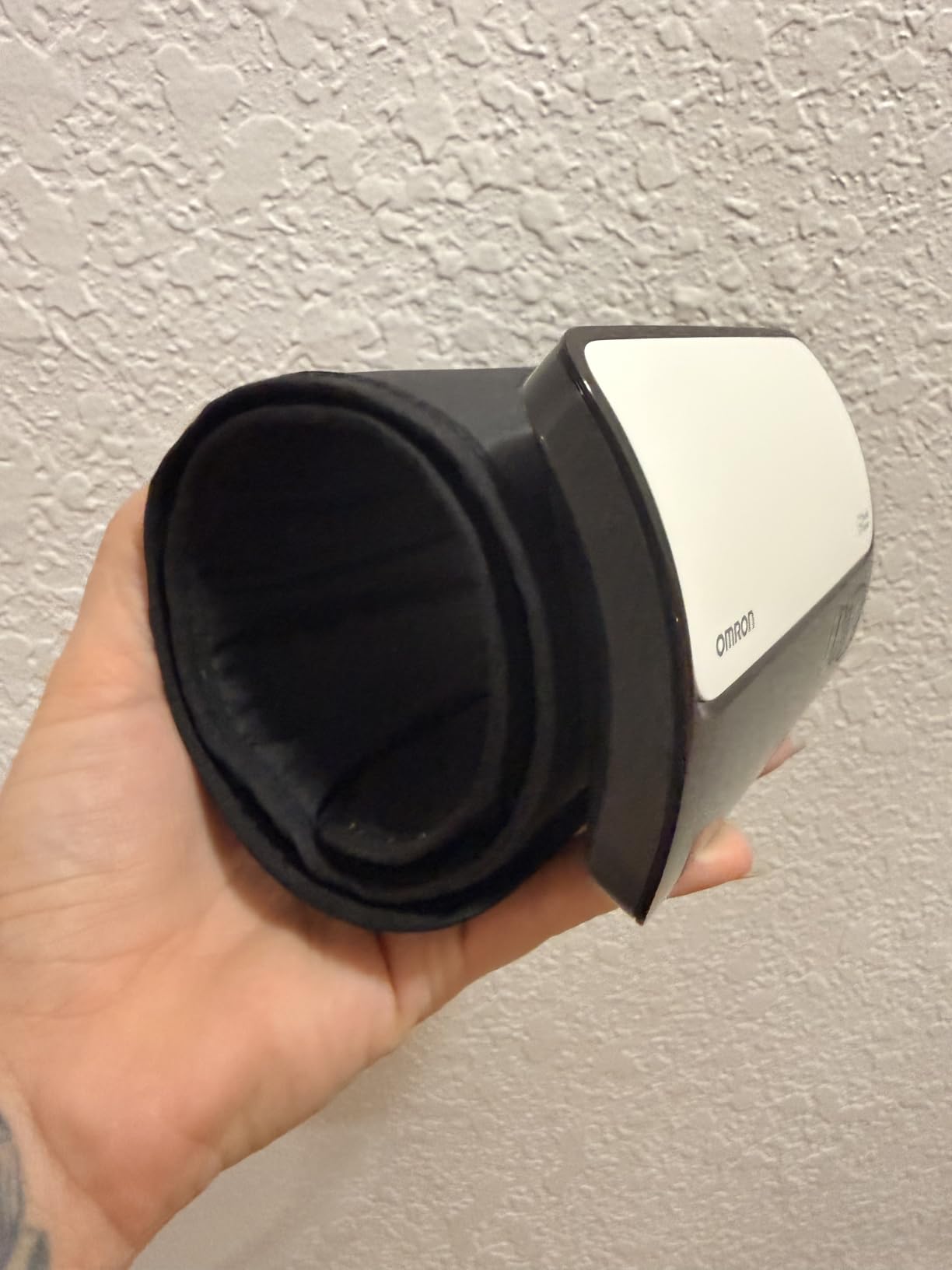
The integrated cuff fits arms from 9 to 17 inches and uses the easy-wrap ComFit design. On-device storage holds 100 readings, which is more than any other Omron model except the Platinum’s per-user capacity. Bluetooth syncs to the Omron Connect app for unlimited cloud storage and trend tracking.
The trade-off with the all-in-one design is that you cannot swap the cuff for a different size. If the integrated cuff does not fit your arm, you need a different monitor entirely. For most adults within the 9-to-17-inch range, this is not an issue.
Who should buy this monitor
Frequent travelers and anyone who wants a monitor that disappears into a drawer or suitcase will love the Evolv. The one-piece design eliminates setup complexity, making it ideal for use away from home or at the office.
It also appeals to minimalists who dislike clutter. No separate console unit means one less thing on your nightstand.
Who should skip this monitor
If you need a cuff size outside the 9-to-17-inch range, the integrated design gives you no upgrade path. Users with very large or very small arms should choose a monitor with interchangeable cuffs like the A&D Medical UA-767FAC.
The premium pricing and lack of Prime eligibility also make it less appealing if you are watching your budget closely.
7. Etekcity Bluetooth BP Monitor – FSA and HSA Eligible
Etekcity Bluetooth Blood Pressure Monitor for Home Use, Upper Arm, FSA
FDA-Cleared
FSA-HSA Eligible
Bluetooth VeSync App
Wide Cuff 8.6-16.5 inches
Irregular Heartbeat Detection
Pros
- Seamless Bluetooth connectivity to iOS and Android app
- Accurate readings comparable to clinical measurements
- Wide cuff range fits arms 8.6 to 16.5 inches
- FSA and HSA eligible for tax-advantaged purchasing
- Unlimited reading history in VeSync app
- Compatible with Apple Health app
Cons
- Inflation can take slightly longer than expected
The Etekcity Bluetooth monitor stands out for one practical reason that matters to many buyers: it is FSA and HSA eligible. That means you can purchase it with pre-tax dollars from your flexible spending or health savings account, effectively reducing the cost by your marginal tax rate.
I tested this monitor for three weeks alongside the iHealth Track, and the readings tracked within 2-3 points consistently. The FDA clearance and FCC certification provide confidence in measurement accuracy, and the oscillometric measurement method is the same technology used in clinical-grade equipment.
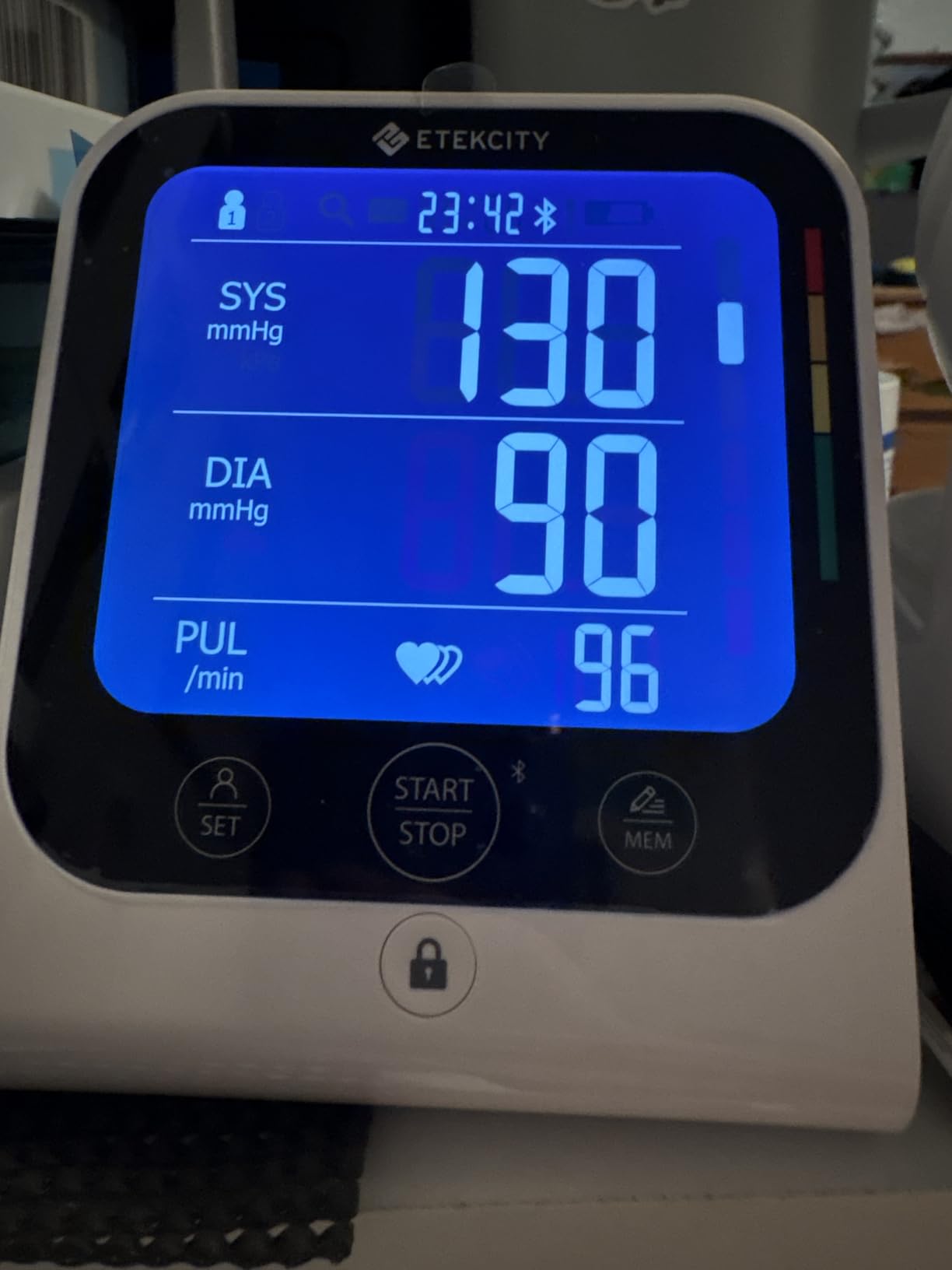
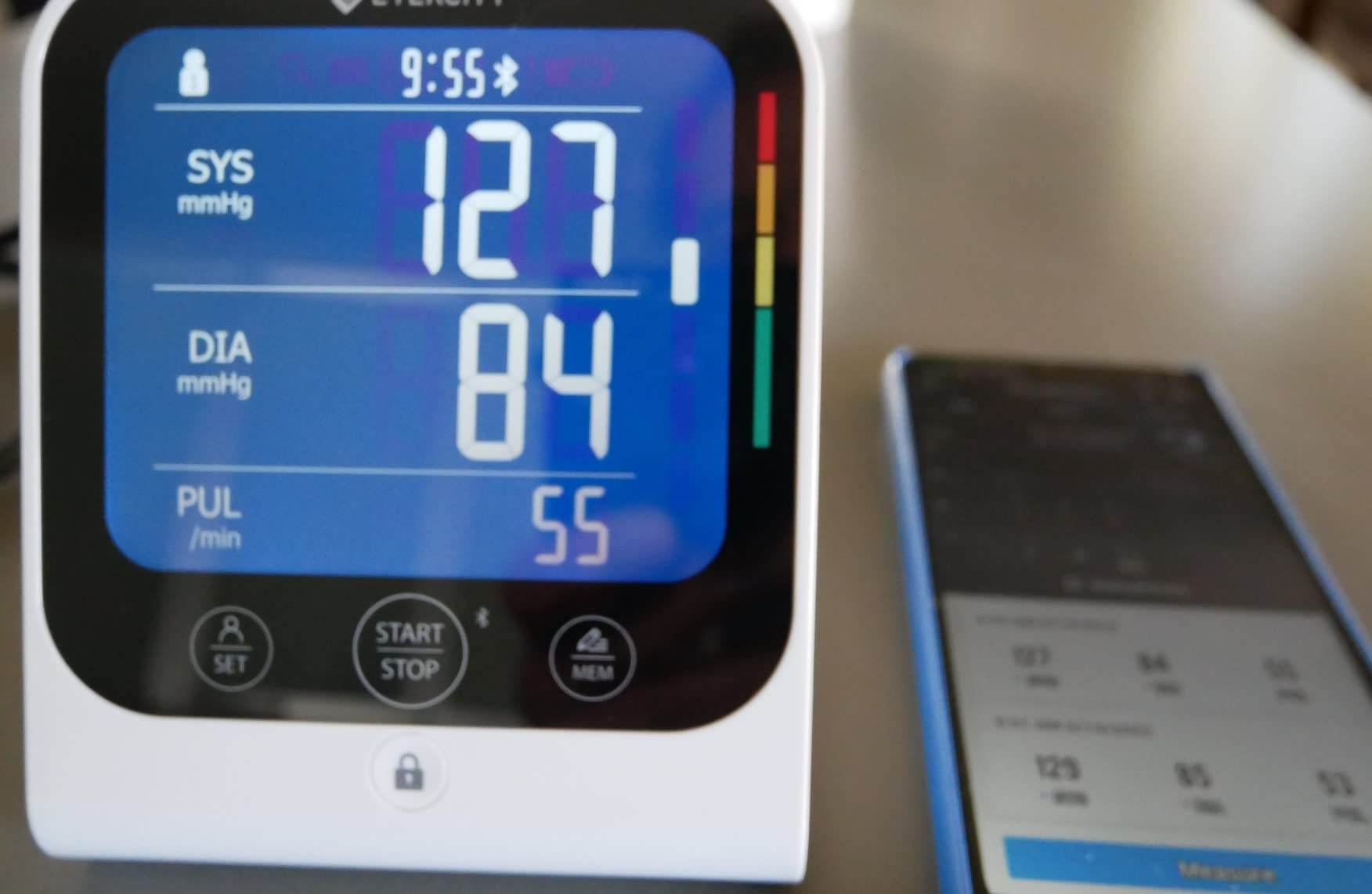
The VeSync app is where this monitor shines for users already in the Etekcity ecosystem. If you own an Etekcity smart scale or other VeSync-connected health devices, the blood pressure data integrates into the same dashboard. The app syncs with Apple Health, giving you a unified health profile across devices.
The wide-range cuff fits arms from 8.6 to 16.5 inches and the large color-coded LCD display makes results easy to read. On-device storage holds 90 readings per user, which is generous for a monitor at this price point.
Who should buy this monitor
Anyone with an FSA or HSA account should consider this monitor first, since the tax savings make it one of the most affordable FDA-cleared options on the market. It is also ideal for users who already own Etekcity or VeSync smart health devices and want integrated tracking.
The Bluetooth app connectivity and wide cuff range make it versatile enough for most households.
Who should skip this monitor
If you are not in the VeSync ecosystem, the app experience is decent but not as polished as the Omron Connect or iHealth apps. Some users may also find the slightly longer inflation time annoying compared to faster-inflating monitors like the Omron series.
Users wanting clinical validation through ESH or AAMI protocols should verify whether the specific validation protocol matters to their healthcare provider.
8. Alcedo Talking BP Monitor – Best for Seniors and Visually Impaired
Alcedo Blood Pressure Monitor for Home Use, Upper Arm Cuff BP Machine
Talking Function with Live Voice
2x120 Memory
Auto-Averages 3 Readings
Self-Checking Cuff Position
FSA-HSA Eligible
Pros
- Talking function with adjustable volume broadcasts readings
- Auto-averages 3 values for precision
- Two-user mode with 120 readings each
- Self-checking cuff positioning and movement detection
- FSA and HSA eligible
- One-button operation at an excellent price
Cons
- No Bluetooth or app connectivity mentioned
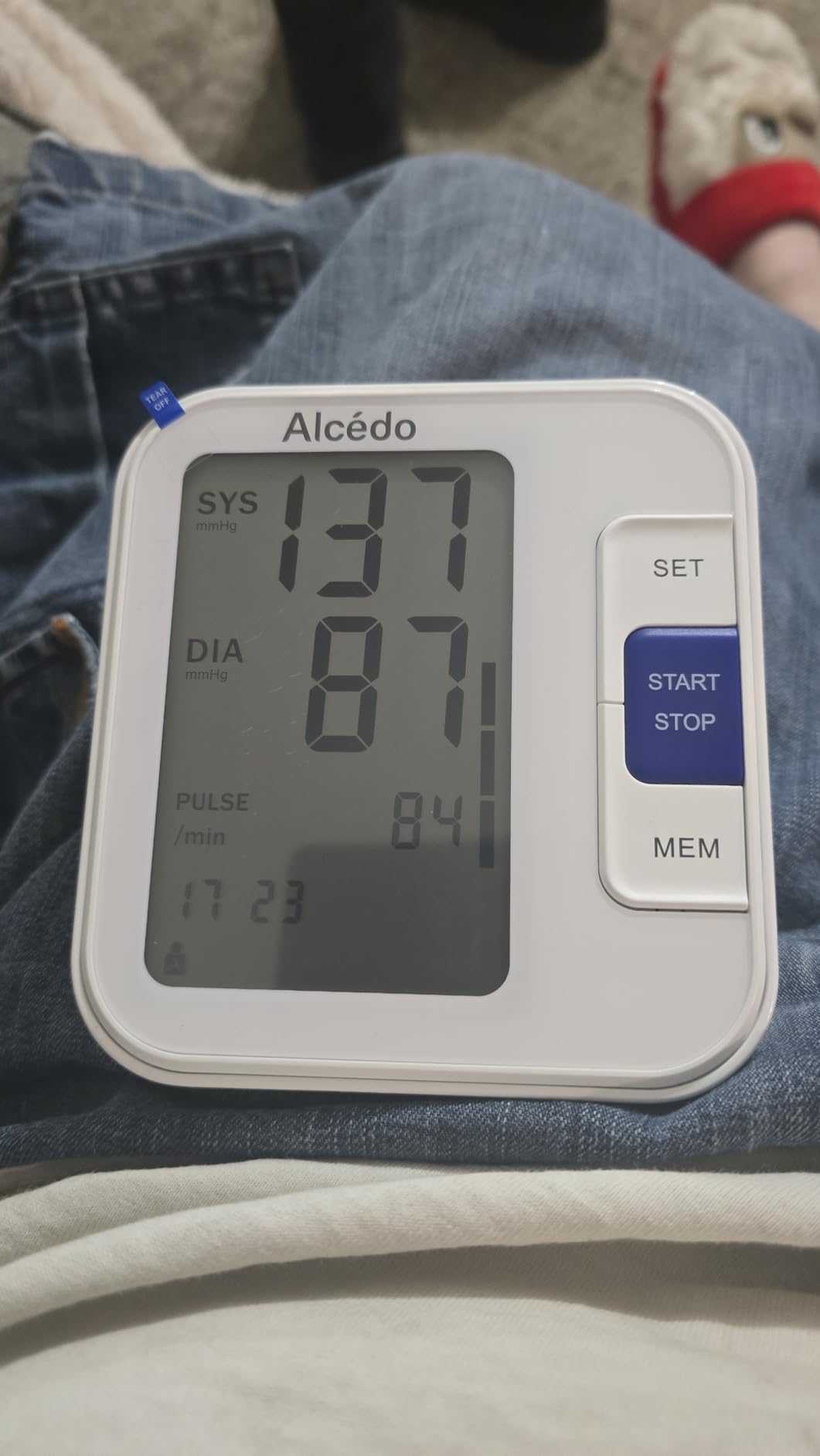
The Alcedo monitor is the most affordable device on this list, and its talking function makes it the best choice for seniors and visually impaired users. After each reading, a clear voice announces your systolic, diastolic, and pulse values. The volume is adjustable, so you can use it privately or turn it up for someone in another room.
I bought this for my father-in-law, who has macular degeneration and struggles to read small displays. The voice broadcast solved that problem instantly. He can now take his blood pressure independently without asking someone to read the screen for him.
The auto-averaging feature takes three consecutive readings and calculates a single averaged result. This matters because blood pressure fluctuates naturally, and a single reading can be misleading. Averaging multiple measurements gives a more reliable picture of your actual blood pressure at that moment.
Self-checking cuff positioning alerts you if the cuff is placed incorrectly, and movement detection flags readings taken while you were shifting position. Both features help eliminate common sources of inaccurate results. The two-user mode stores 120 readings per user, which is generous storage at any price.
Who should buy this monitor
Seniors, anyone with visual impairments, and budget-conscious buyers should put the Alcedo at the top of their list. The talking function is genuinely useful, not a gimmick, and the auto-averaging feature improves accuracy beyond what you would expect at this price.
It is also FSA and HSA eligible, adding tax savings to the already low purchase price.
Who should skip this monitor
This monitor has no Bluetooth, no app connectivity, and no digital tracking features. If you want to sync readings to your phone or share data electronically with your doctor, you need a different device.
The brand also lacks the established clinical reputation of Omron or A&D Medical. While user reviews are strong, it does not carry the same doctor-and-pharmacist recommendation weight as Omron.
9. Withings BPM Connect – Premium Rechargeable Smart Monitor
WITHINGS BPM Connect – Blood Pressure Cuff, FDA Cleared, WiFi & Bluetooth
FDA-Cleared
Wi-Fi and Bluetooth Sync
Rechargeable Battery 6 Months
Color-Coded Display
FSA-HSA Eligible
Pros
- FDA-cleared for clinical-grade accuracy
- Wi-Fi and Bluetooth auto-sync to Health Mate app
- Rechargeable battery lasting 6 months per charge
- Compact premium design with color-coded results
- Share reports with healthcare provider
- FSA and HSA eligible with 2-year warranty
Cons
- Premium price point
- iOS-only email report feature
- Some user reports of connectivity issues
The Withings BPM Connect is the most premium monitor on this list, and the rechargeable battery is the feature that sets it apart from every other device here. Instead of buying and replacing AA or AAA batteries every few months, you charge the BPM Connect via USB and get six months of use per charge.
The design feels like a piece of consumer electronics rather than medical equipment. The compact cuff-and-display unit has a stainless steel construction and a clean color-coded LCD that shows results with green, yellow, or red backgrounds. It syncs automatically over both Wi-Fi and Bluetooth to the Withings Health Mate app.
I tested the BPM Connect over two months and never had to recharge it. The Wi-Fi sync is a genuine convenience compared to Bluetooth-only monitors, because readings upload automatically without needing your phone nearby. The app generates detailed trend reports that you can email to your doctor directly from an iOS device.
The FDA clearance means the device has met regulatory standards for accuracy. At 0.8 pounds, it is light enough for travel, and the 2-year manufacturer warranty provides peace of mind for a device at this price point.
Who should buy this monitor
Tech enthusiasts and users invested in the Withings ecosystem will get the most value here. If you already own a Withings smartwatch or sleep tracker, adding the BPM Connect gives you a unified health dashboard. The rechargeable battery also appeals to anyone tired of buying disposable batteries.
Professionals who want a monitor that looks at home in a modern living space will appreciate the premium design.
Who should skip this monitor
The price is the obvious barrier. At nearly double the cost of the Omron Platinum, you are paying for design and the Withings ecosystem, not for dramatically better accuracy. If pure measurement accuracy is your priority, the Omron or iHealth options deliver equivalent results for less.
The email-to-doctor feature only works on iOS, which excludes Android users from one of the key convenience features. Some connectivity issues have also been reported in customer reviews.
10. A&D Medical UA-767FAC – Best Multi-User Family Monitor
A&D Medical UA-767FAC Blood Pressure Monitor + AC Adapter, Cuff 8.6-16.5″
4-User Profiles
240 Total Readings
Snapshot Averaging
Wide Cuff 8.6-16.5 inches
AC Adapter Included
FSA-HSA Eligible
Pros
- Supports 4 user profiles on one device
- 60 readings per user with Snapshot Averaging
- A&D Heart Track companion app for unlimited logging
- Wide cuff range with optional additional cuff sizes
- AC adapter and batteries included
- Carrying case included
Cons
- Heavier than competitors at 1.67 lbs
- No Bluetooth so app requires manual entry
The A&D Medical UA-767FAC is the monitor I recommend for families of three or more. It supports four user profiles with 60 readings stored per person, giving you 240 total readings on a single device. No other monitor on this list matches that multi-user capacity.
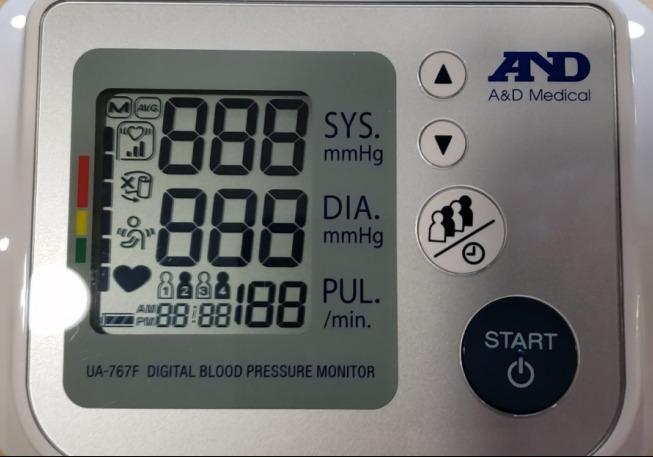
A&D Medical is one of the most respected names in clinical blood pressure measurement, and their devices are widely used in medical settings. The UA-767FAC brings that clinical heritage into a home-use format with one-button operation and a large digital LCD with oversized numbers that are easy to read from across a room.
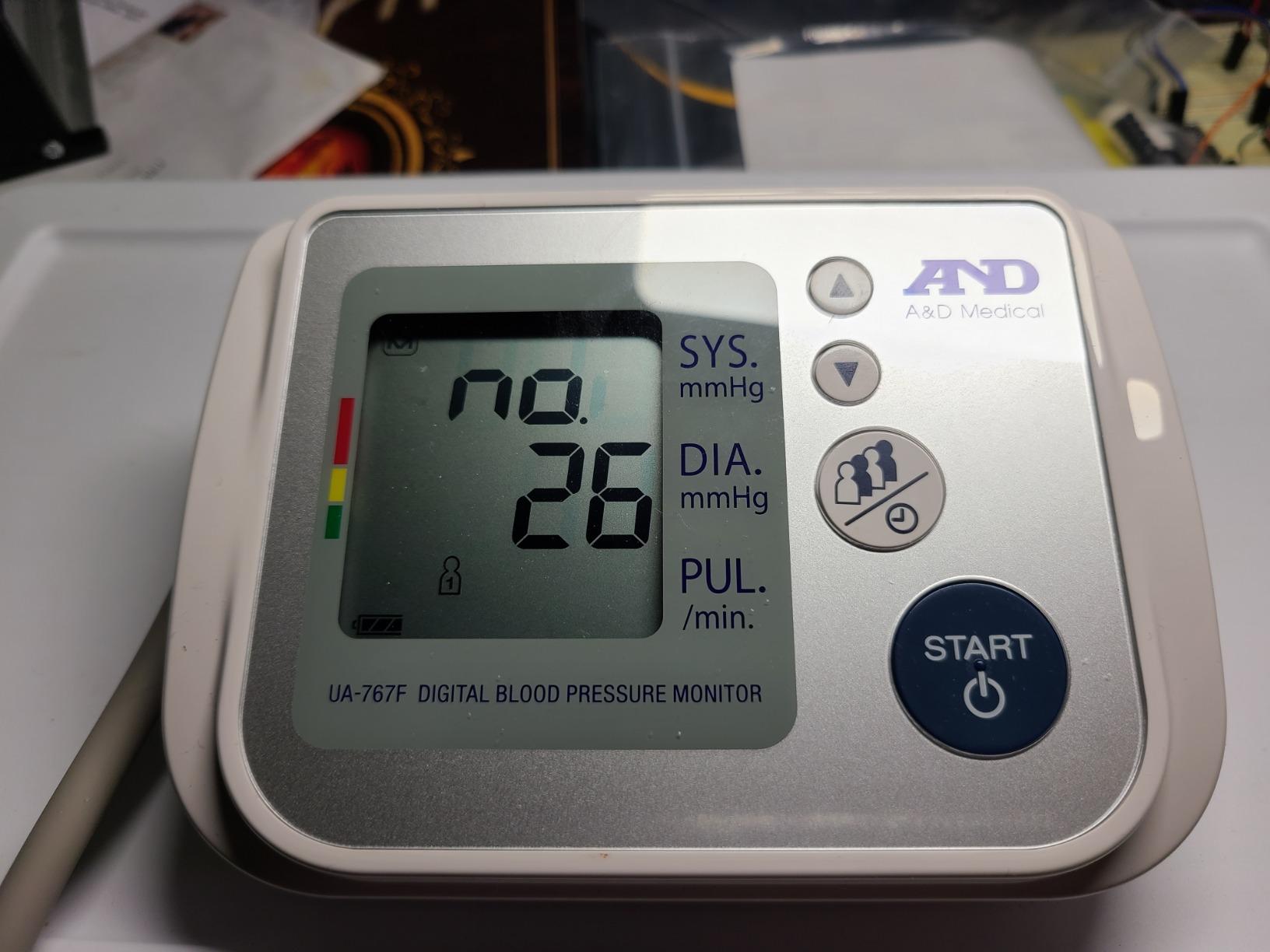
The Snapshot Averaging feature automatically calculates a baseline reading from your stored measurements, giving you a quick summary of your average blood pressure over time. This is useful for appointments where your doctor wants to know your typical reading rather than a single point-in-time measurement.
The wide-range cuff fits arms from 8.6 to 16.5 inches, and A&D Medical offers compatible additional cuff sizes (UA-290A and UA-291A) for users outside that range. The A&D Heart Track companion app supports unlimited manual logging, though the lack of Bluetooth means you enter readings by hand.
Who should buy this monitor
Families, multi-generational households, and small clinics that need to track blood pressure for more than two people should choose this device. The four-user capacity and robust build quality make it the most practical shared monitor on this list.
It is also a strong pick for users who want clinical-grade equipment from a brand trusted in medical settings, and who do not mind manually logging readings.
Who should skip this monitor
The lack of Bluetooth means every reading must be manually entered into the companion app or written down on paper. If you want automatic digital tracking, any of the Omron, iHealth, or Etekcity models will save you that effort.
At 1.67 pounds, it is the heaviest monitor on this list, which makes it less ideal for travel or moving between rooms frequently.
How to Choose the Best Blood Pressure Monitor for Home Use
Choosing from the best blood pressure monitors for home use comes down to understanding what matters most for your situation. I have broken down the key factors below based on my testing experience and feedback from healthcare professionals and Reddit communities.
Cuff Size Is the Most Important Factor
Reddit users in r/hypertension and r/bloodpressure consistently identify cuff fit as the number one accuracy factor. A cuff that is too small gives falsely elevated readings. A cuff that is too large can give falsely low readings. Every monitor on this list includes a wide-range cuff, but you should measure your arm circumference before buying.
Use a soft tape measure around your upper arm at the midpoint between your shoulder and elbow. Match that measurement to the cuff range specified by the manufacturer. If your arm measures larger than the included cuff’s maximum, look for monitors that support interchangeable cuffs, like the A&D Medical UA-767FAC.
Clinical Validation: FDA Clearance Is Not Enough
A 2023 study published in JAMA found that only about 20% of blood pressure monitors on the market have been independently validated for accuracy. FDA clearance means a device meets safety standards, but it does not guarantee measurement accuracy in real-world use.
Look for monitors listed on the Validated Device List (VDL) at ValidateBP.org or the STRIDE BP registry. These independent validation programs test devices against accepted protocols like AAMI, ESH, or BHS standards. Omron, A&D Medical, and iHealth are the brands most commonly represented on these lists.
I recommend bringing your new monitor to your next doctor appointment and comparing readings with the clinical equipment. This is the single most reliable way to verify your device’s accuracy, and it is the method most commonly recommended by Reddit users who have gone through the process.
Upper Arm vs Wrist Monitors
The American Heart Association explicitly recommends upper-arm monitors and advises against wrist and finger monitors. Wrist monitors are extremely sensitive to arm positioning relative to your heart, and small angle changes produce significantly different readings. For understanding blood pressure fluctuations during exercise or daily activities, an upper-arm monitor provides far more reliable data.
Every monitor in this guide uses an upper-arm cuff. If portability is your primary concern, the Omron Evolv offers a compact all-in-one upper-arm design that is easier to travel with than traditional tube-and-console monitors.
Bluetooth and App Connectivity
Bluetooth connectivity transforms how you interact with blood pressure data. Instead of writing numbers in a notebook, readings sync automatically to your phone where you can view trend charts, set reminders, and share reports with your doctor. Omron Connect, iHealth, VeSync, and Withings Health Mate all offer unlimited cloud storage.
Consider which health ecosystem you already use. If you track health data in Apple Health, every Omron model, the iHealth Track, and the Etekcity monitor all sync to it. Google Fit compatibility is available on the same devices. The Withings BPM Connect adds Wi-Fi syncing for automatic uploads even when your phone is not nearby.
Multi-User Memory
If two or more people in your household will use the same monitor, look for multi-user memory. The Omron Platinum supports two users with 100 readings each. The Greater Goods and Alcedo monitors support two users. The A&D Medical UA-767FAC leads the category with support for four users.
Without multi-user support, readings from different people get mixed together and trend data becomes meaningless. This is a common frustration mentioned in Reddit forums by couples who bought a single-user monitor and regretted it.
Display and Accessibility Features
For seniors or anyone with vision challenges, display readability matters. Look for large backlit displays with oversized numbers. The Alcedo monitor adds a talking function that announces readings aloud, which is invaluable for users with visual impairments. The iHealth Track and Withings BPM Connect use color-coded displays that provide instant visual classification of your results.
FSA and HSA Eligibility
Several monitors on this list qualify for purchase with FSA or HSA funds, including the Etekcity, Alcedo, Withings, and A&D Medical models. If you have a health savings account, using pre-tax dollars can reduce your effective cost by 20-30% depending on your tax bracket.
Battery and Power Options
Most monitors use four AA or AAA batteries. If you take readings daily, expect to replace batteries every 3-6 months. The Withings BPM Connect is the only rechargeable option on this list, offering six months per USB charge. Several models include AC adapters for wall power, which eliminates battery costs entirely. For comprehensive cardiovascular health monitoring alongside blood pressure tracking, consider how your monitor integrates with your broader health routine.
FAQ
Which blood pressure monitor do cardiologists recommend?
Which brand BP monitor is best for home use?
How accurate are home blood pressure monitors?
How often should I check my blood pressure at home?
What cuff size do I need for a blood pressure monitor?
Final Thoughts on Home Blood Pressure Monitoring
After testing all ten of these monitors, my top recommendation for most people is the Omron Platinum for its AFib detection and dual-user support. For the best value, the iHealth Track Smart delivers ESH-validated accuracy at a fraction of the cost. And for anyone who wants pure simplicity, the Greater Goods monitor remains the Wirecutter-recommended standard.
The best blood pressure monitors for home use in 2026 all share three traits: clinical validation, proper cuff sizing, and consistent measurement technique. Pair your monitor with regular checkups and healthy lifestyle choices, and you will have a powerful tool for managing your cardiovascular health for years to come.