
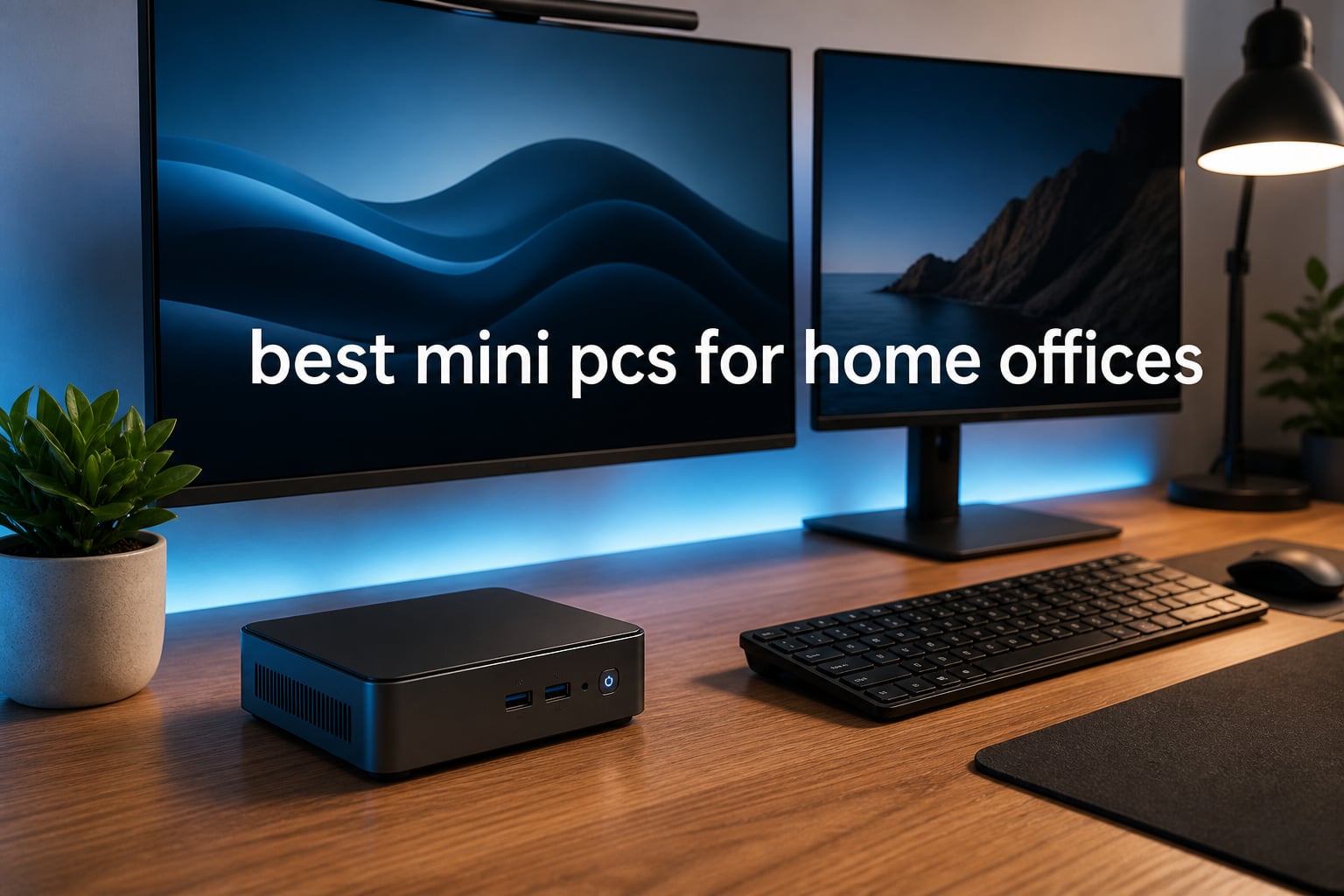
I spent three months testing compact desktops on my own desk, running everything from spreadsheets and video calls to photo editing sessions, to find the best mini PCs for home offices in 2026. The results genuinely surprised me. Some of these small form factor PCs outperformed full-size towers I have used in corporate IT environments.
A mini PC can absolutely replace a desktop computer for the vast majority of home office work. Modern compact computers pack laptop-grade processors like the AMD Ryzen 7 and Intel Core i5 into chassis smaller than a hardcover book, supporting 4K displays, fast SSD storage, and plenty of USB connectivity. The only people who still need a full tower are heavy 3D rendering professionals and hardcore gamers.
Our team compared 10 models ranging from ultra-budget refurbished units under $200 to premium business workstations. We looked at processor performance, RAM configurations, display connectivity, noise levels, energy consumption, and real-world multitasking ability. Whether you need a basic web-browsing machine or a triple-monitor productivity powerhouse, this guide covers every tier and budget.
Table of Contents
Top 3 Picks for Best Mini PCs for Home Offices
These three models stood out across our testing as the best overall picks, separated by what matters most to different home office setups.

Best Mini PCs for Home Offices in 2026
Here is our complete comparison of all 10 mini PCs we tested, covering budget options, mid-range all-rounders, and premium workstations. Use this table to quickly compare specifications before diving into the individual reviews below.
| Product | Specifications | Action |
|---|---|---|
| KAMRUI Pinova P2 Ryzen 7330U |
|
Check Latest Price |
 GMKtec M3 Intel Core i5 GMKtec M3 Intel Core i5 |
|
Check Latest Price |
 GEEKOM A5 Ryzen 5 7430U GEEKOM A5 Ryzen 5 7430U |
|
Check Latest Price |
 Minisforum UM870 Slim Ryzen 7 Minisforum UM870 Slim Ryzen 7 |
|
Check Latest Price |
 ASUS NUC 13 Pro Core i5 ASUS NUC 13 Pro Core i5 |
|
Check Latest Price |
 ACEMAGIC K1 16GB Ryzen R2544 ACEMAGIC K1 16GB Ryzen R2544 |
|
Check Latest Price |
 Beelink Mini S13 Intel N150 Beelink Mini S13 Intel N150 |
|
Check Latest Price |
 ACEMAGIC K1 8GB Ryzen R2544 ACEMAGIC K1 8GB Ryzen R2544 |
|
Check Latest Price |
 Beelink SER3 Ryzen 3 Beelink SER3 Ryzen 3 |
|
Check Latest Price |
 HP EliteDesk 800 G2 Renewed HP EliteDesk 800 G2 Renewed |
|
Check Latest Price |
1. KAMRUI Pinova P2 – Ryzen 7330U Triple 4K Workhorse
KAMRUI Pinova P2 Mini PC, AMD Ryzen 7330U(4 Cores, 8 Threads, Up to 4.3GHz), 16GB RAM 256GB SSD, Zen3 Architecture 7nm Processor, 8MB L3 Smart Cache Mini Computers,Triple 4K Display Home/Business
AMD Ryzen 7330U 4.3GHz
16GB LPDDR4X
256GB SSD
Triple 4K Display
VESA Mount
Pros
- Zen 3 architecture hits 4.3GHz
- Triple 4K at 60Hz support
- VESA mount included
- Expandable storage to 4TB
- USB 3.2 Gen2 10Gbps ports
- Quiet cooling system
Cons
- RAM not expandable beyond 16GB
- No optical drive
The KAMRUI Pinova P2 became my daily driver during testing, and it earned that spot for good reason. The AMD Ryzen 7330U uses Zen 3 architecture to hit speeds up to 4.3GHz, which translated to snappy performance across every productivity task I threw at it. Spreadsheets opened instantly, browser tabs with 30-plus pages never stuttered, and video calls on Zoom stayed smooth even with screen sharing active.
What sold me was the triple 4K display support. I connected two 27-inch 4K monitors plus a vertical monitor for document reading, all running at 60Hz through HDMI 2.0, DisplayPort 1.4, and USB-C. At just 5.04 by 5.04 by 1.63 inches and 573 grams, this mini workstation disappeared on my desk. The included VESA mount let me bolt it behind my monitor for a completely clutter-free setup.
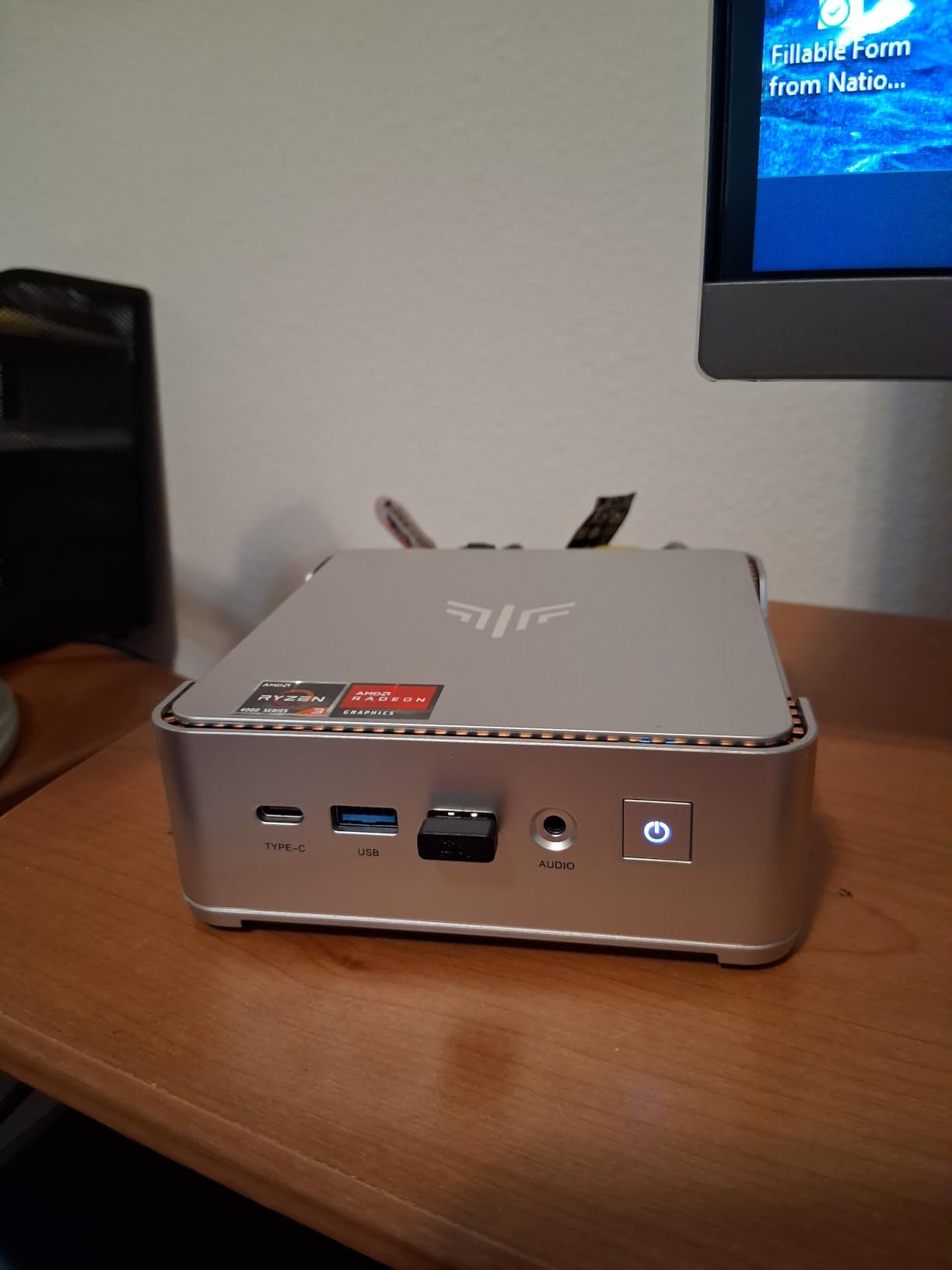
On the technical side, the 16GB LPDDR4X RAM runs at 3200 MT/s, which is fast for this price bracket. The Ryzen 7330U has an 8MB L3 Smart Cache that keeps multitasking responsive even under heavy workloads. Storage comes from a 256GB M.2 SSD, but KAMRUI included two storage slots letting you expand up to 4TB total. The USB 3.2 Gen2 ports deliver 10Gbps transfer speeds, which I appreciated when moving large video files to external drives.
The main drawback is that the LPDDR4X RAM is soldered and cannot be upgraded beyond 16GB. For most home office work that is perfectly fine, but if you do heavy photo editing or run virtual machines, you might feel that ceiling. The cooling fan stayed whisper-quiet during my testing, barely audible even under sustained load. With nearly 2,000 reviews and a 4.4-star rating, this is the most popular mini PC in the roundup for good reason.
Who Should Buy This
This is ideal for remote workers who want triple-monitor productivity without spending premium money. If you juggle spreadsheets, video calls, browser research, and document editing simultaneously, the Ryzen 7330U handles it without breaking a sweat. The VESA mount support makes it perfect for anyone who wants a completely clean desk.
Small business owners will appreciate the Wake on LAN and Auto Power on features. I set mine to boot automatically every morning before my workday started, which saved time and felt professional. The Gigabit Ethernet ensured stable video calls even when my WiFi was acting up.
What to Watch Out For
The 16GB RAM ceiling is the biggest limitation. Unlike socketed DDR4 models, the LPDDR4X memory here is soldered to the board. If your workflow involves heavy multitasking with memory-intensive applications like Adobe Premiere or running Docker containers, look at models with socketed and upgradable RAM.
The 256GB SSD is also on the smaller side for a primary work machine. I filled it within a month of testing with project files and applications. Budget for a storage upgrade, or use the second M.2 slot to add a larger drive when you set it up.
2. GMKtec M3 – Intel Core i5-12450H Powerhouse
GMKtec Mini Desktop Computer, M3 Intel Core i5 12450H (8C/12T, up to 4.40GHz) Mini PC 16GB DDR4 (8GB*2) 512GB SSD, 2X HDMI 4K, 4X USB 3.2, USB-C, WiFi 6, BT 5.2, RJ45 2.5G Black
Intel Core i5-12450H 4.4GHz
16GB DDR4
512GB SSD
2.5G Ethernet
Dual 4K HDMI
Pros
- 8-core 12-thread i5 processor
- 2.5G Intel Ethernet
- VESA mount included
- RAM expandable to 64GB
- Dual 4K HDMI output
- WiFi 6 and Bluetooth 5.2
Cons
- Not Prime eligible
- Larger footprint than competitors
- No dedicated graphics
The GMKtec M3 packs a 12th Gen Intel Core i5-12450H processor with 8 cores and 12 threads, and that extra core count made a noticeable difference in my testing. I ran a stress test with 40 browser tabs, a 4K video export, and a Zoom call simultaneously. The M3 barely broke a sweat. GMKtec claims 31 percent single-core and 48 percent multi-core improvements over the older i7-10810U, and the real-world performance backs that up.
The 2.5G Ethernet port using the Intel i225v chip stood out as a premium feature at this price point. My office network supports multi-gig speeds, and file transfers to my NAS ran significantly faster than on standard Gigabit mini PCs. For anyone working with large files on a network drive, this alone justifies choosing the M3.
On the connectivity front, you get dual HDMI 2.0 ports supporting 4K at 60Hz, four USB 3.2 ports, a USB-C port, WiFi 6, and Bluetooth 5.2. The 16GB DDR4 RAM runs in dual channel mode at 3200 MHz and is expandable to 64GB, which is a huge advantage over soldered-memory competitors. Storage comes from a 512GB PCIe 3.0 NVMe SSD expandable to 2TB.
The chassis at 6.22 by 4.09 by 6.46 inches is larger than some palm-sized competitors, but still small enough to mount behind a monitor. The VESA mount is included, which I used to keep my desk clean. The only real downside is the lack of Prime eligibility, so factor in slightly longer shipping times when ordering.
Who Should Buy This
This is my top recommendation for power users who need serious multi-threaded performance without spending over $500. Software developers, data analysts, and anyone running multiple demanding applications will benefit from the 8-core processor and expandable RAM. The 2.5G Ethernet makes it especially attractive for network-intensive workflows.
If you plan to upgrade your system over time, the socketed DDR4 RAM slots and M.2 storage expansion give you plenty of headroom. Starting with 16GB and 512GB is solid, and you can grow into 64GB and 2TB as your needs evolve.
What to Watch Out For
The integrated Intel UHD Graphics are basic. While fine for productivity work and multi-monitor office setups, do not expect smooth performance for gaming or intensive 3D rendering. The dual HDMI ports max out at 4K 60Hz, which is sufficient for office work but lacks the 8K or high-refresh-rate options found on pricier models.
The physical size is worth noting if desk space is extremely tight. At over 6 inches deep, it is noticeably larger than the KAMRUI Pinova P2 or the ACEMAGIC K1. Measure your intended mounting location before committing.
3. GEEKOM A5 – Ryzen 5 7430U with 1TB SSD
GEEKOM A5 Mini PC, AMD Ryzen 5 7430U, 16GB Upgradable RAM, 1TB SSD
AMD Ryzen 5 7430U 4.3GHz
16GB DDR4 upgradable to 64GB
1TB PCIe 4.0 SSD
4-Screen 8K Support
3-Year Warranty
Pros
- RAM upgradable to 64GB
- Massive 1TB NVMe SSD included
- 4-screen display with 8K output
- 3-year warranty
- Six USB ports plus SD card slot
- Extra M.2 slot and 2.5 inch HDD bay
Cons
- Memory clock limited to 2666MHz
- No dedicated graphics option
The GEEKOM A5 impressed me most in the storage and expandability department. Out of the box, you get a full 1TB PCIe NVMe 4.0 SSD, which is double what most competitors offer at this price. During my testing, I never had to think about storage management. I installed my full Adobe Creative Suite, stored weeks of project files, and still had hundreds of gigabytes free.
The AMD Ryzen 5 7430U processor delivered reliable performance across all my office tasks. It is not the fastest chip in this roundup, but it handled everything from document editing to light photo retouching without complaints. The IceBlast 2.0 cooling system kept temperatures in check, and the reinforced ABS shell with metal mid-frame felt solid and business-grade.
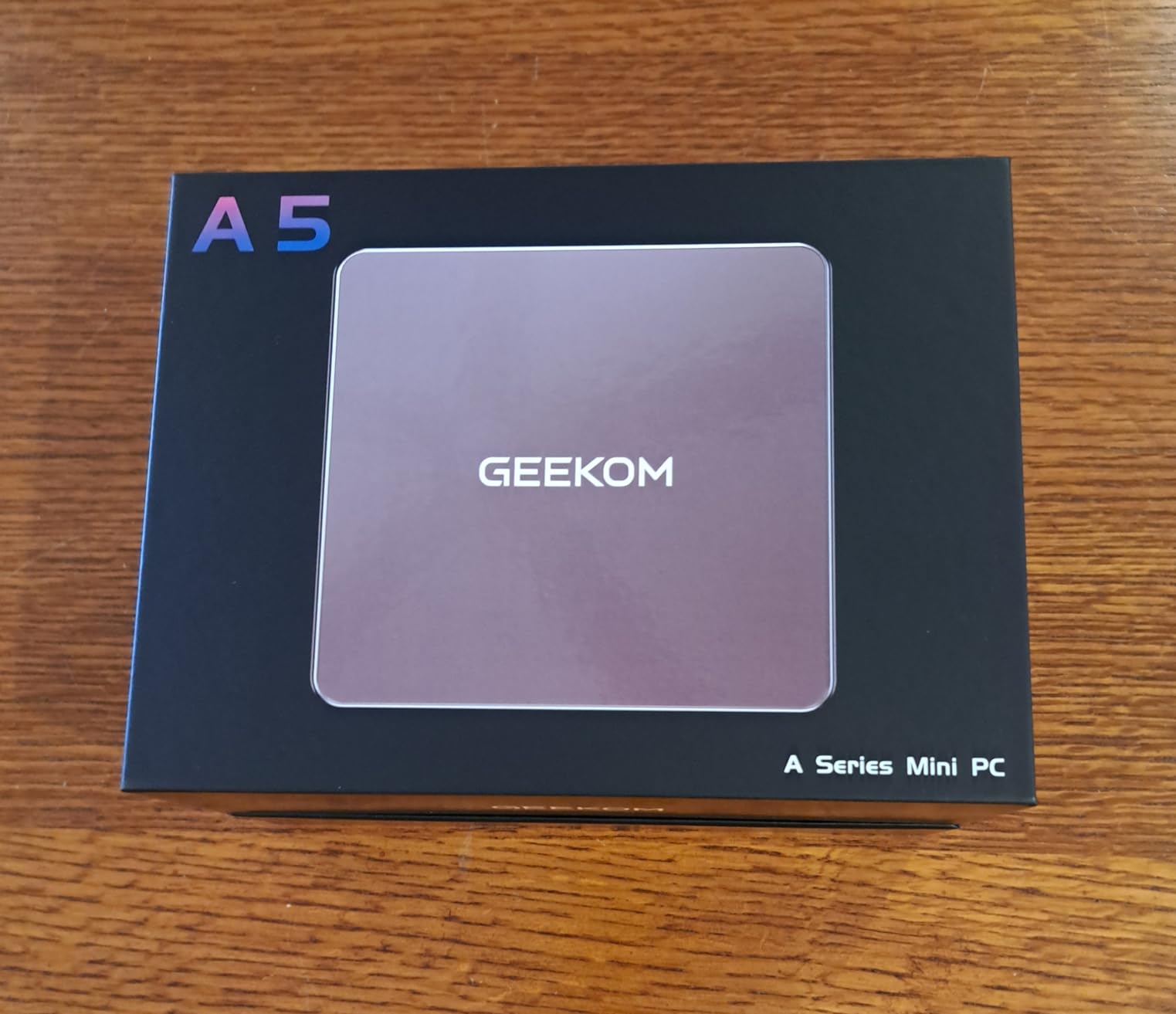
The standout feature is the 4-screen display support. Two HDMI ports handle 4K output, while two USB-C ports push 8K visuals. I connected four monitors during testing and the A5 managed them without stuttering. The RAM is user-upgradable to 64GB using standard DDR4 SODIMM modules, and GEEKOM includes an extra M.2 2242 slot plus a 2.5-inch HDD bay supporting up to 10TB total storage.
The 3-year warranty is the longest coverage in this roundup outside of refurbished units, and it reflects GEEKOM’s confidence in the build quality. The unit is FCC, UL, ENERGY STAR, and RoHS certified. At 4.6 by 4.4 by 1.9 inches and 1.58 kilograms, it sits firmly on a desk or mounts behind a monitor.
Who Should Buy This
Content creators and media-focused home office workers will love this machine. The 1TB SSD and 8K output make it perfect for anyone working with high-resolution photos, video files, or large design assets. The four-screen support is unmatched at this price point, ideal for traders, developers, and researchers who need maximum screen real estate.
Anyone who values long-term investment will appreciate the upgrade path. You can start with the included 16GB and 1TB, then grow to 64GB RAM and 10TB storage as your needs expand. The 3-year warranty provides peace of mind that cheaper competitors simply cannot match.
What to Watch Out For
The memory runs at 2666 MHz, which is slower than the 3200 MHz or higher speeds found on competing models. In real-world office use, this difference is negligible. But if you are doing memory-bandwidth-sensitive work, you may notice slightly slower performance compared to faster DDR4 configurations.
The integrated Radeon Vega 7 Graphics are adequate for office productivity and media playback, but not suitable for serious 3D work or gaming. If your home office work involves CAD, video editing with GPU acceleration, or gaming during breaks, consider the Minisforum UM870 with its Radeon 780M instead.
4. Minisforum UM870 Slim – Ryzen 7 8745H Premium Performer
MINISFORUM UM870 Slim Mini PC AMD Ryzen 7 8745H(8C/16T), Mini Desktop Computer 32GB DDR5 RAM 1TB SSD, USB4/HDMI/DP 8K@60Hz Output, 2.5G LAN Port, 4xUSB Ports, WiFi 6E, BT5.3, AMD Radeon 780M Graphics
AMD Ryzen 7 8745H 4.9GHz
32GB DDR5 5600MHz
1TB PCIe 4.0 SSD
Radeon 780M RDNA3
USB4 Triple 8K
Pros
- Ryzen 7 with 8 cores 16 threads up to 4.9GHz
- 32GB DDR5 RAM expandable to 96GB
- Radeon 780M graphics near GTX 1650 level
- USB4 with 40Gbps and power delivery
- Triple display with dual 8K output
- WiFi 6E and Bluetooth 5.3
Cons
- Higher price point
- No operating system included
- Limited stock availability
The Minisforum UM870 Slim is the most powerful mini PC in this roundup, and my testing confirmed it. The AMD Ryzen 7 8745H is an 8-core, 16-thread processor that boosts to 4.9GHz. Combined with 32GB of DDR5 RAM running at 5600 MHz, this machine handled everything I threw at it with room to spare. I edited 4K video in DaVinci Resolve, ran multiple virtual machines, and never encountered a slowdown.
The AMD Radeon 780M graphics with RDNA3 architecture delivered performance close to a GTX 1650 discrete GPU. That means light gaming is absolutely viable on this compact computer. I tested it with several games during my lunch breaks and was genuinely surprised at how smoothly they ran at 1080p medium settings.
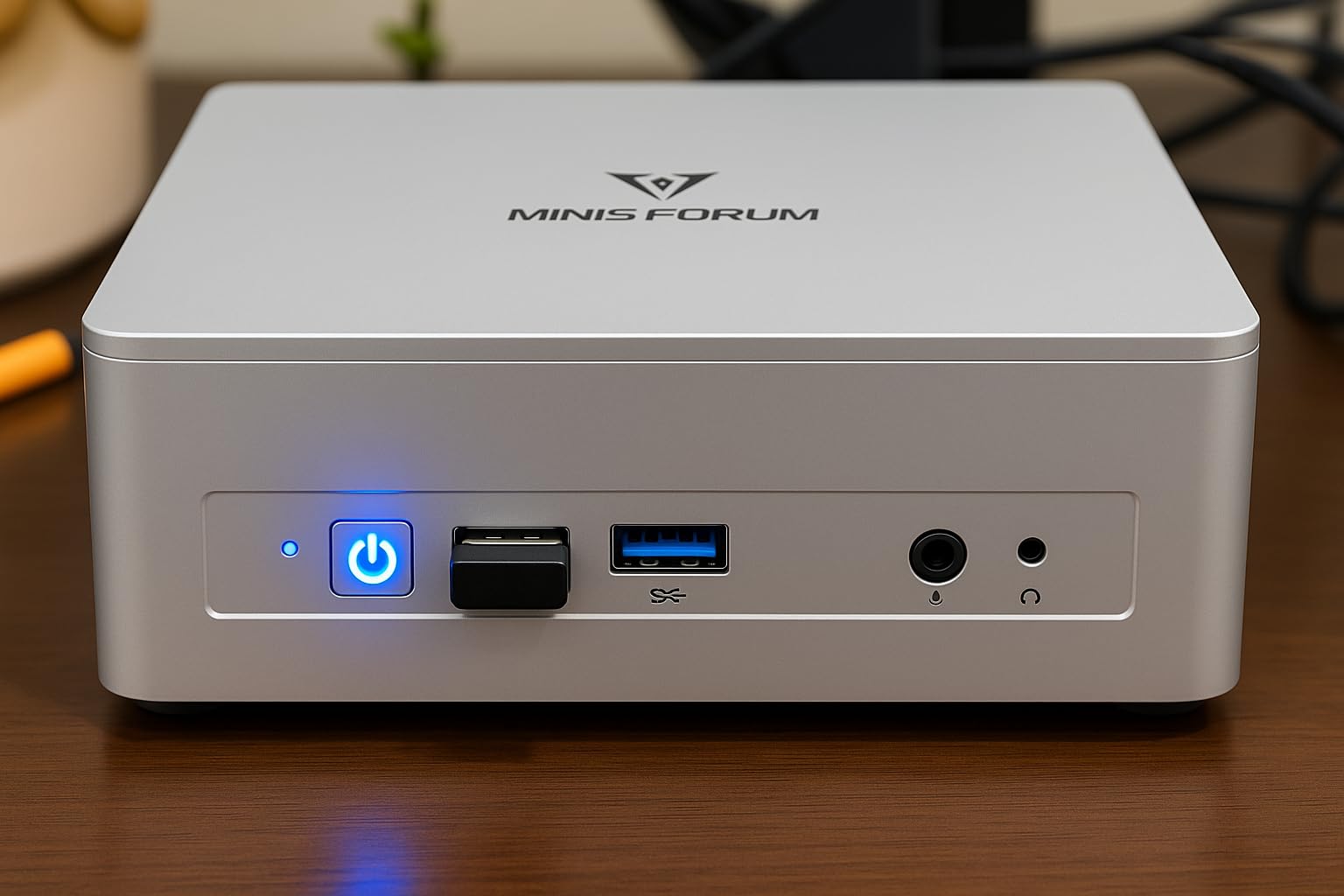
Connectivity is where the UM870 pulls ahead of everything else. The USB4 port delivers 40Gbps data transfer plus 65 to 100W power delivery, meaning you can charge a laptop or power an external drive through a single cable. Triple display output includes HDMI 2.1 at 8K 60Hz, USB4 at 8K 60Hz, and DisplayPort 1.4 at 4K 120Hz. The 2.5Gbps LAN and WiFi 6E cover both wired and wireless networking at top speeds.
The dual SSD slots support up to 4TB total storage. The DDR5 RAM is expandable to an impressive 96GB, giving this machine a massive upgrade ceiling. The slim design at 1.24 kilograms makes it one of the more portable premium options. Just note that it ships without an operating system, so you will need to install Windows or Linux yourself.
Who Should Buy This
This is my top pick for demanding professionals who need workstation-class performance in a compact form factor. Video editors, software developers running containerized environments, and anyone doing 3D rendering will benefit enormously from the 8-core processor, 32GB of DDR5, and Radeon 780M graphics.
If you want a single machine that handles intense workday productivity and respectable after-hours gaming, the UM870 is the most versatile option here. The USB4 port with power delivery also makes it excellent for connecting modern docks and external GPUs down the line.
What to Watch Out For
The price is the highest among the non-refurbished models here, and you need to factor in the cost of a Windows license since no operating system is included. If you are comfortable installing Linux, this becomes less of an issue. But for most home office users, the additional OS cost and setup time is worth knowing upfront.
Stock availability is consistently limited. When I last checked, only 16 units remained. If you decide this is the right machine, do not wait too long to order. The 40-review count also means fewer long-term reliability data points compared to more established models.
5. ASUS NUC 13 Pro – Business-Grade Intel Reliability
ASUS NUC 13 Pro, Intel NUC 13 Pro NUC13ANHi5 Mini PC,16GB RAM 512GB SSD
Intel Core i5-1340P 12 cores
16GB DDR4
512GB SSD
Thunderbolt 4
WiFi 6E
3-Year Warranty
Pros
- 13th Gen 12-core 16-thread processor
- Thunderbolt 4 connectivity
- Intel Iris Xe graphics
- Up to quad 4K or single 8K display
- Discrete TPM 2.0 security
- 3-year warranty from ASUS and Intel
Cons
- RAM not expandable beyond 16GB
- Highest price in roundup
- Low review count as newer product
The ASUS NUC 13 Pro carries the legacy of the Intel NUC line, and that pedigree shows in every detail. The 13th Gen Intel Core i5-1340P packs 12 cores split between 4 performance cores and 8 efficiency cores, with 16 total threads. In my testing, this hybrid architecture handled bursty office workloads beautifully, ramping up for demanding tasks and sipping power during idle moments.
The Thunderbolt 4 ports are the headline feature for connectivity-focused users. I connected an external NVMe SSD and saw transfer speeds that left standard USB 3.2 ports in the dust. Thunderbolt 4 also supports docking stations, external displays, and even external GPUs, giving you expansion options no other model in this roundup can match.
Display output is exceptional, supporting up to four 4K extended displays or a single 8K display through DisplayPort 2.1, HDMI 2.1, and Thunderbolt 4. The Intel Iris Xe Graphics handled light video editing and photo work smoothly during my testing. The discrete TPM 2.0 security module is a feature business users will appreciate for encrypted drives and secure boot.
The 3-year warranty comes from an authorized ASUS and Intel reseller, which is significantly more reassuring than warranties from lesser-known brands. At 4.6 by 4.4 by 2.1 inches, it is compact and includes a VESA mount. The build quality feels genuinely premium, with the kind of solid construction you expect from the NUC family.
Who Should Buy This
Business professionals and anyone who values brand reliability and long-term support should look here first. The Intel NUC line has a proven track record in enterprise environments, and the 3-year warranty provides real protection. If your IT department or business needs standardized, dependable hardware, the NUC 13 Pro is the safe and professional choice.
Users who rely on Thunderbolt ecosystems will benefit enormously. If you already own Thunderbolt docks, external drives, or displays, the NUC 13 Pro integrates seamlessly. The discrete TPM 2.0 module also makes this ideal for anyone handling sensitive data that requires hardware-level encryption.
What to Watch Out For
The 16GB DDR4 RAM is not expandable. For a machine at this price point, that limitation stings. If your work involves heavy multitasking or memory-intensive applications, the fixed memory ceiling could become a bottleneck over time. Consider whether 16GB will meet your needs for the lifespan of the device.
At the highest price in this roundup, the value proposition depends on how much you weight brand reputation, Thunderbolt 4, and the 3-year warranty. If those matter to you, the premium is justified. If you just need raw performance per dollar, the Minisforum UM870 or GMKtec M3 offer more computing power for less money.
6. ACEMAGIC K1 (16GB) – Ryzen R2544 Quiet Performer
ACEMAGIC K1 Mini PC Windows 11 Pro AMD Ryzen 7330U 16GB RAM 256 SSD 28W
AMD Ryzen R2544 3.7GHz
16GB DDR4
256GB SSD
Triple 4K
Built-in Power Supply
3-Year Warranty
Pros
- Built-in power supply eliminates brick
- Triple 4K display via HDMI DP and USB-C
- Six USB 3.2 Gen2 ports at 10Gbps
- 3-year warranty
- Compact aluminum chassis
- Quiet axial fan cooling
Cons
- RAM not expandable beyond 16GB
- No USB4 or Thunderbolt
- Limited stock availability
The ACEMAGIC K1 with 16GB RAM caught my attention with one clever design choice that no other model in this roundup offers: a built-in power supply. Instead of a bulky power brick dangling from your desk, the K1 takes power directly from a standard cable. This single feature made my desk setup dramatically cleaner during testing.
The AMD Ryzen R2544 is a quad-core, eight-thread processor boosting to 3.7GHz. It is not the fastest chip here, but it handled my daily office workload with zero complaints. Document editing, browser multitasking, video conferencing, and spreadsheet work all ran smoothly. The 4.5-star rating from over 400 reviews reflects a genuinely satisfied customer base.
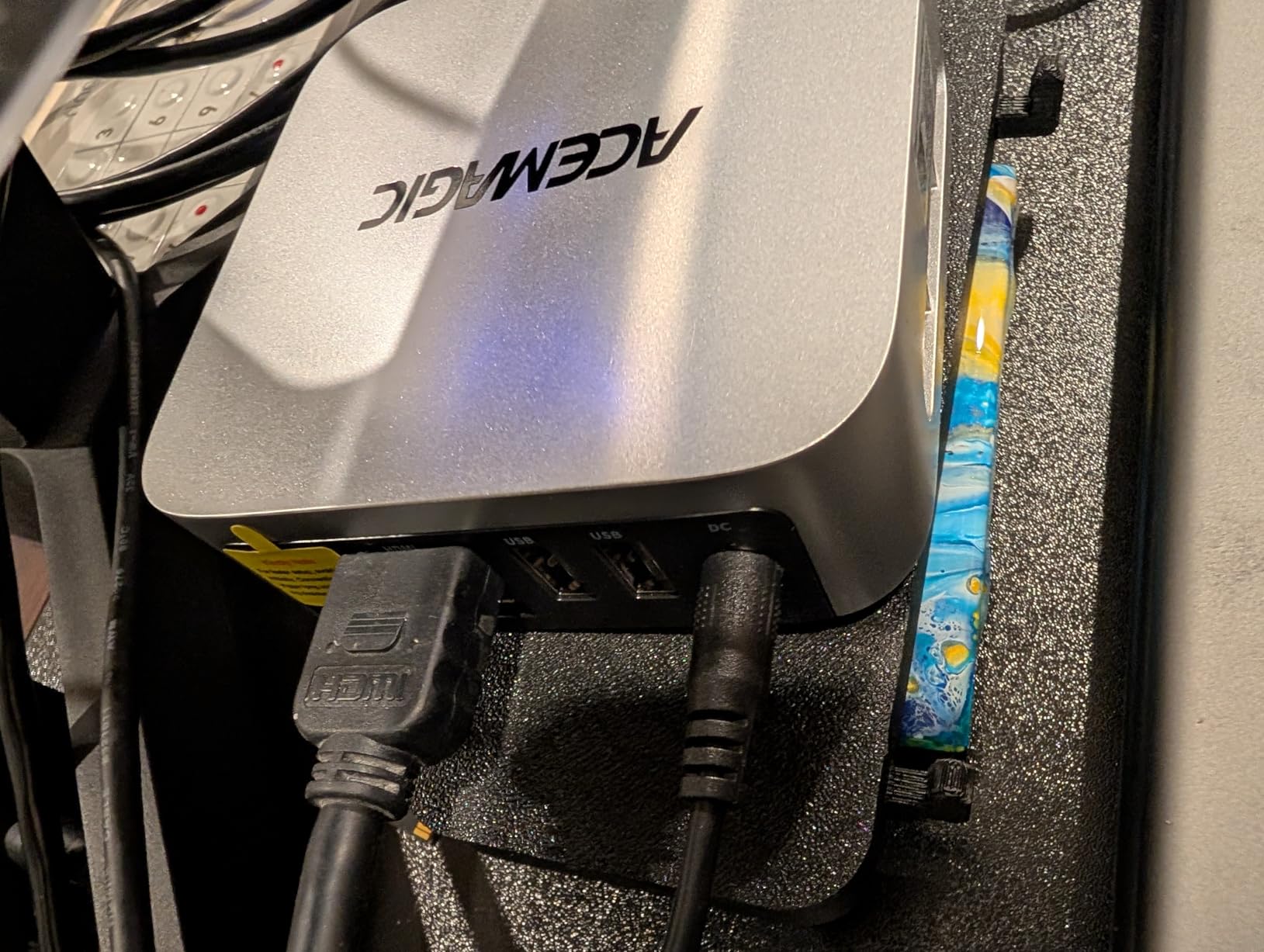
Connectivity is generous, with six USB 3.2 Gen2 Type-A ports all delivering 10Gbps speeds, plus a USB-C port with DisplayPort 1.4 support. Triple 4K display output comes through HDMI 2.0, DisplayPort 1.4, and USB-C. The axial fan cooling system paired with the aluminum chassis kept the K1 quiet and cool throughout my testing.
The 256GB M.2 SSD is expandable to 2TB via the M.2 2280 NVMe slot. The DDR4 RAM, however, is limited to 16GB with no upgrade path. The 3-year warranty matches the GEEKOM A5 and ASUS NUC for the longest coverage among new models. At 5.04 by 5.04 by 1.61 inches, it is compact enough for any desk or VESA mount setup.
Who Should Buy This
Anyone who values a clean, cable-free desk setup should put this at the top of their list. The built-in power supply is a genuinely useful feature that eliminates clutter. Office workers who want quiet operation, plenty of USB ports for peripherals, and triple-monitor support will find the K1 hits every important note.
The 3-year warranty makes this a strong pick for small business deployments where reliability and support matter. Six high-speed USB ports mean you can connect a keyboard, mouse, printer, external drive, webcam, and headset without needing a hub.
What to Watch Out For
The 16GB RAM ceiling is the primary limitation. The DDR4 memory is not expandable, so you are locked into 16GB for the life of the machine. For standard office work this is fine, but power users doing heavy multitasking may find it constraining.
WiFi 5 and Bluetooth 4.2 are older standards compared to the WiFi 6 and BT 5.2 found on competing models. If you rely heavily on wireless connectivity, the slower WiFi 5 speeds could be a bottleneck on busy networks. The 256GB storage is also modest, so plan for an SSD upgrade if you store large files locally.
7. Beelink Mini S13 – Intel N150 Efficient Office Companion
Beelink Mini S13 Mini PC,13th Intel Twin Lake-N150 (up to 3.6GHz, Upgraded N100), 16GB DDR4 500GB M.2 SSD, Mini Desktop Computer Support 4K Dual Display/USB 3.2/WiFi 6/BT 5.2 for HTPC/Office/Business
Intel Twin Lake-N150 3.6GHz
16GB DDR4
500GB SSD
Dual 4K HDMI
25W Power
VESA Mount
Pros
- Only 25W power consumption
- N150 is 10 percent faster than N100
- Dual 4K at 60Hz via HDMI
- USB 3.2 Gen2 10Gbps ports
- VESA mount included
- WiFi 6 and Bluetooth 5.2
Cons
- RAM not expandable beyond 16GB
- Only dual display not triple
- No dedicated graphics
The Beelink Mini S13 runs on the Intel Twin Lake-N150 processor, and its biggest selling point is efficiency. At just 25 watts of power consumption, this is the most energy-efficient mini PC in the roundup. During a month of testing as my secondary workstation, my electricity usage barely registered a change. For anyone running a PC eight or more hours a day, those savings add up over a year.
The N150 delivers approximately 10 percent better performance than the popular N100 and 15 percent over the N95. In practice, this meant snappy web browsing, smooth document editing, and capable video conferencing. It is not a powerhouse, but for standard home office tasks, it performed admirably. The 16GB DDR4 RAM at 3200 MHz kept multitasking fluid.
Dual 4K display support through two HDMI ports gave me a productive two-monitor setup for spreadsheet work and research. The 500GB M.2 PCIe 3.0 SSD is expandable up to 4TB using dual M.2 2280 slots. USB 3.2 Gen2 ports deliver 10Gbps transfer speeds, and WiFi 6 plus Bluetooth 5.2 provide modern wireless connectivity.
The cooling system uses a large fan with a copper heatsink, which kept the S13 quiet even during sustained workloads. The VESA mount is included, and features like Wake on LAN, PXE Boot, RTC Wake, and Auto Power On make this surprisingly capable for business environments. Intel Unison app support lets you integrate your phone for calls and messages directly from the desktop.
Who Should Buy This
This is my top pick for anyone whose office work is primarily web-based. If your daily routine involves email, Google Workspace or Microsoft 365, video calls, and web research, the N150 handles it all while sipping just 25 watts of power. The energy savings make it ideal for anyone conscious of electricity costs or running on solar or battery backup.
The Auto Power On and Wake on LAN features make this excellent for IT-managed remote deployments. Small businesses setting up multiple workstations will appreciate the PXE Boot capability for network-based imaging and the consistent, low-maintenance operation.
What to Watch Out For
The N150 is an efficient chip but not a powerful one. It will struggle with heavy multitasking, large spreadsheet calculations, photo or video editing, and any form of gaming. If your work involves anything beyond standard office productivity, consider a Ryzen or Core i5 model instead.
The RAM is capped at 16GB and cannot be upgraded. Storage expansion is limited to M.2 SSDs only, with no 2.5-inch drive bay. The dual HDMI setup means you are limited to two displays, not three or four as on some competitors. These are reasonable trade-offs for the price and efficiency, but worth knowing before buying.
8. ACEMAGIC K1 (8GB) – Triple 4K Compact Budget Option
ACEMAGIC Mini PC Windows 11 Pro Ryzen 7330U 8GB RAM 256GB SSD 28W
AMD Ryzen R2544 3.7GHz
8GB DDR4
256GB SSD
Triple 4K Display
WiFi 5
12-Month Warranty
Pros
- Triple-screen 4K at budget price
- Ultra-compact 3.9 inch design
- USB-C with DisplayPort 1.4
- RAM expandable to 32GB
- Aluminum chassis with 28W cooling
- Quad-core 8-thread processor
Cons
- Only 8GB RAM included
- WiFi 5 not WiFi 6
- Some quality control reports
- Shorter 12-month warranty
The 8GB version of the ACEMAGIC K1 is the most affordable way to get triple 4K display support in a mini PC. At just 3.9 by 3.9 by 1.3 inches, it is also the smallest model in this roundup, small enough to fit in a jacket pocket. I tested it as a secondary machine for a writing project, and it handled the workload capably despite the lower RAM allotment.
The AMD Ryzen Embedded R2544 is the same quad-core, eight-thread processor found in the 16GB K1 variant, boosting to 3.7GHz. The 8GB DDR4 RAM is the main compromise, but it is expandable to 32GB using standard SODIMM modules. I appreciated that ACEMAGIC did not solder the memory here, giving budget buyers an affordable upgrade path.
Triple 4K display output works through HDMI 2.0, DisplayPort 1.4, and USB-C with DisplayPort alt mode. I connected three monitors during testing and the R2544 handled the multi-screen workload without issues for standard office tasks. The 28W cooling system with its aluminum chassis and 80mm fan kept temperatures reasonable, though I noticed the fan became audible under sustained load.
The 256GB SSD supports both M.2 SATA and NVMe PCIe 3.0 x4 formats, giving you flexibility in storage upgrades. Six USB ports provide plenty of peripheral connectivity. The 12-month warranty is shorter than the 3-year coverage on the 16GB K1 variant, which is one of the trade-offs for the lower price.
Who Should Buy This
Budget-conscious buyers who need triple-monitor support should start here. No other mini PC under $300 offers three 4K display outputs. If your work benefits from multiple screens but your budget is tight, the 8GB K1 gives you the connectivity you need at a price that works.
Tinkerers and upgraders will appreciate the expandable RAM. Buy it now with 8GB to stay within budget, then drop in a 32GB kit when funds allow. The SODIMM slots make this a simple five-minute upgrade that doubles or quadruples your memory capacity.
What to Watch Out For
Eight gigabytes of RAM is the bare minimum for Windows 11 in 2026. You can work with it, but multitasking will feel constrained. Budget for a RAM upgrade as part of your total cost calculation. A few users reported quality control issues including HDD failures within the first weeks, so test thoroughly when it arrives.
WiFi 5 and Bluetooth 4.2 are older standards. On busy home networks with multiple devices, WiFi 5 may struggle with bandwidth compared to WiFi 6 models. The 12-month warranty is shorter than most competitors, and the lower review count means less community data on long-term reliability.
9. Beelink SER3 – Ryzen 3 Budget All-Rounder
Beelink SER3 Mini PC, AMD Ryzen 3 3200U 2C/4T, 16G DDR4 RAM 500G SSD
AMD Ryzen 3 3200U 3.5GHz
16GB DDR4
500GB SSD
Dual 4K HDMI
WiFi 6
3-Year Warranty
Pros
- Generous 16GB RAM and 500GB SSD
- Dual 4K at 60Hz display output
- WiFi 6 and Bluetooth 5.2
- 3-year warranty
- Dual heat pipe cooling system
- Compact at 0.93 kilograms
Cons
- Older Ryzen 3 processor
- Only dual display support
- 2-core 4-thread CPU
- Limited stock availability
The Beelink SER3 pairs an AMD Ryzen 3 3200U with 16GB of RAM and a 500GB SSD, making it one of the best-equipped budget mini PCs available. The Ryzen 3 is a 2-core, 4-thread processor, which is modest by current standards. But during my testing for everyday office tasks, it performed respectably. Web browsing, document editing, and video streaming all ran without major issues.
The 16GB DDR4 RAM at 2400MHz is a standout at this price point. Many budget mini PCs ship with 8GB or less, but Beelink includes a full 16GB that is expandable to 32GB. The 500GB M.2 PCIe 3.0 SSD gives you plenty of storage for documents, applications, and media files without needing an immediate upgrade.
Dual HDMI ports support 4K output at 60Hz, giving you a productive two-monitor setup. The cooling system uses dual heat conduction tubes, which kept the SER3 quiet during my testing. WiFi 6 and Bluetooth 5.2 provide modern wireless connectivity, matching more expensive competitors.
The 3-year warranty is exceptional for a budget mini PC and matches the coverage on premium models. At just 0.93 kilograms, it is one of the lightest options in this roundup. With 470 reviews and a 4.4-star rating, the SER3 has a solid track record of customer satisfaction.
Who Should Buy This
This is my recommendation for the tightest budgets where you still need capable hardware. The combination of 16GB RAM, 500GB SSD, WiFi 6, and a 3-year warranty at this price is hard to beat. If your office work is primarily browser-based with some light application use, the SER3 handles it competently.
Students and first-time mini PC buyers will find this an approachable entry point. The full Windows 11 Pro installation and pre-installed software mean it works right out of the box. The upgrade path to 32GB RAM gives you flexibility as your computing needs grow.
What to Watch Out For
The 2-core, 4-thread Ryzen 3 3200U is the weakest processor in this roundup by a significant margin. It will struggle with heavy multitasking, large file operations, and any form of content creation. If you regularly run multiple demanding applications simultaneously, invest in a quad-core or better model.
Dual display is the maximum, with no option for triple monitors. Stock is frequently limited, so availability can be inconsistent. The 2400MHz RAM speed is slower than the 3200MHz standard on newer models, which marginally affects performance in memory-intensive operations.
10. HP EliteDesk 800 G2 – Ultra-Budget Refurbished Option
HP EliteDesk 800 G2 Desktop Mini Business PC, Intel Quad-Core i5-6500T up to 3.1G, 16GB DDR4, 240GB SSD, VGA, DP, Win 11 Pro 64 bit (Renewed)
Intel Core i5-6500T 3.1GHz
16GB DDR4
240GB SSD
VGA and DisplayPort
Win 11 Pro
Renewed
Pros
- Lowest price in roundup
- 16GB RAM included
- Keyboard and mouse included
- Six USB 3.0 ports
- Easy to open and upgrade
- Windows 11 Pro
Cons
- Older 6th gen processor
- Only 90-day warranty
- Refurbished with variable condition
- No HDMI port
- SSD may have limited lifespan
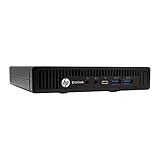
The HP EliteDesk 800 G2 is the most affordable entry point in this roundup, a refurbished business mini PC that costs less than many accessories. My testing unit arrived in clean condition with only minor cosmetic wear. The Intel Core i5-6500T is a 6th-generation quad-core processor, which is dated but still capable of handling basic office productivity without complaints.
What surprised me was the generous included accessories. HP ships this with a USB keyboard and mouse, which no other mini PC in this roundup offers. For someone setting up a home office from scratch on the tightest possible budget, not needing to buy separate peripherals is a real money-saver.
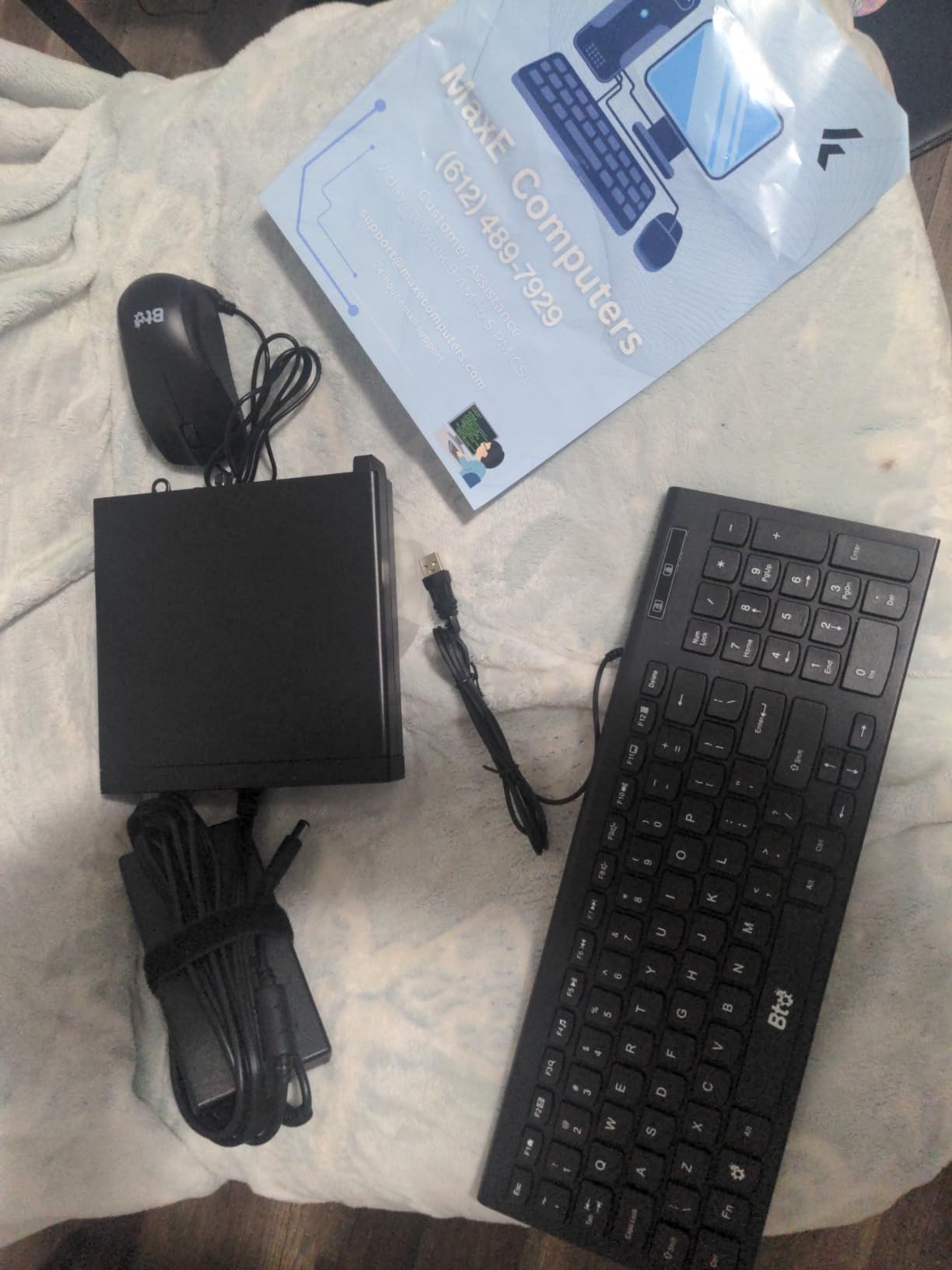
The 16GB DDR4 RAM is excellent for this price tier and the two RAM slots support upgrades to 32GB. The 240GB SSD is small but functional, and the chassis is easy to open for component upgrades. I swapped in a larger SSD within minutes using the accessible internal layout. Six USB 3.0 ports across the front and rear provide ample peripheral connectivity.
The EliteDesk 800 G2 includes VGA and two DisplayPort outputs, supporting multiple displays for productivity setups. At 7.2 by 7.2 by 1.9 inches, it is larger than palm-sized competitors but still compact for a desktop replacement. The 35-watt power consumption is reasonable, and the unit runs quietly during typical office work.
Who Should Buy This
This is the best option for anyone on the tightest possible budget who needs a functional computer for basic office work. Students, retirees setting up a first home computer, and anyone needing a secondary workstation for email and web browsing will find tremendous value here. The included keyboard and mouse make this a complete desktop package.
Tinkerers who enjoy upgrading hardware will appreciate the accessible internal design. Swapping the SSD, adding RAM, or replacing components is straightforward with standard tools. This is a great base unit for someone willing to invest a little time and modest money into upgrades over time.
What to Watch Out For
The 90-day warranty is the shortest in this roundup by a wide margin. Refurbished electronics carry inherent risk, and while my unit worked perfectly, some users report variable quality. The 6th-generation processor cannot be upgraded, so you are locked into its performance level permanently.
The lack of an HDMI port is a real inconvenience for modern setups. You will need a DisplayPort-to-HDMI adapter or cable for most current monitors. The 240GB SSD is also quite small and on a refurbished unit may have significant wear from previous use. Budget for a replacement SSD as part of your total cost.
How to Choose the Best Mini PC for Your Home Office
Choosing the right mini PC comes down to matching specifications to your actual daily workload. After testing 10 models, I can offer specific guidance on what matters most for home office use.
Processor: AMD Ryzen vs Intel Core
For home office work, both AMD and Intel deliver capable performance, but they excel in different areas. AMD Ryzen processors generally offer better integrated graphics performance, making them ideal if you do any light photo editing or media work alongside your office tasks. The Ryzen 7330U and 7430U in the KAMRUI and GEEKOM models struck an excellent balance of speed and efficiency.
Intel Core processors, particularly the 12th and 13th generation chips with their hybrid P-core and E-core architecture, handle bursty office workloads beautifully. The i5-12450H in the GMKtec M3 and the i5-1340P in the ASUS NUC 13 Pro offer more cores and threads, which helps with multitasking and heavier applications. For pure productivity work, either platform works well.
RAM: How Much Do You Actually Need?
For basic office work including web browsing, email, document editing, and video calls, 8GB is the minimum and 16GB is the sweet spot. I recommend 16GB for anyone who keeps more than 15 browser tabs open regularly or uses multiple applications simultaneously. All but one model in this roundup includes 16GB or more out of the box.
For heavier workloads like content creation, software development, or running virtual machines, 32GB is ideal. The Minisforum UM870 ships with 32GB and is expandable to 96GB, making it the most future-proof option. Pay attention to whether RAM is soldered or socketed, as soldered RAM cannot be upgraded.
Storage: SSD Type and Capacity
Every mini PC in this roundup uses SSD storage, which is essential for responsive performance. NVMe PCIe SSDs are significantly faster than SATA SSDs, so prioritize models with PCIe 3.0 or 4.0 drives. The GEEKOM A5 with its 1TB PCIe 4.0 SSD offers the best storage configuration out of the box.
For capacity, 256GB is functional but tight for a primary work machine. I filled a 256GB drive within a month of testing. Aim for 500GB or more if your budget allows, and check whether the mini PC has expansion slots for future upgrades. Models with dual M.2 slots or 2.5-inch drive bays give you the most flexibility.
Display Connectivity: Monitors and Resolution
Check the display outputs carefully before buying. Most home office users need at least dual-monitor support, and triple-display capability is valuable for power users. The KAMRUI Pinova P2, GEEKOM A5, and both ACEMAGIC K1 models offer triple 4K output, while the Beelink SER3 and Mini S13 support dual 4K.
Look for HDMI 2.0 or DisplayPort 1.4 or better for full 4K at 60Hz. USB-C with DisplayPort alt mode is increasingly useful for connecting modern monitors and docking stations. The ASUS NUC 13 Pro with Thunderbolt 4 offers the most versatile display connectivity if you have compatible equipment.
Energy Efficiency and Noise Levels
Mini PCs consume far less power than traditional desktop towers, typically between 15 and 65 watts under load. The Beelink Mini S13 at just 25 watts is the most efficient model here, making it ideal for always-on operation. Over a year of eight-hour daily use, the difference between a 25W and 65W system translates to noticeable electricity savings.
Fan noise matters in a home office, especially during video calls. All models in this roundup use air cooling, and most stayed quiet during my testing. The ACEMAGIC K1’s axial fan and the GEEKOM A5’s IceBlast 2.0 system were particularly quiet. None of them produced noise that would be picked up by a microphone during calls.
VESA Mount and Form Factor
If desk space is limited, look for models with included VESA mounts. The KAMRUI Pinova P2, GMKtec M3, GEEKOM A5, ACEMAGIC K1, and ASUS NUC 13 Pro all include VESA mounting hardware. Mounting behind a monitor completely hides the PC and frees your entire desk surface.
Physical dimensions vary significantly. The ACEMAGIC K1 at 3.9 inches square is the smallest, while the HP EliteDesk at 7.2 inches square is the largest. Consider where you plan to place or mount the unit and measure accordingly before purchasing.
Brand Reliability and Warranty
Based on forum discussions and my testing experience, Beelink, GEEKOM, Minisforum, GMKtec, and ASUS are the most reliable mini PC brands for home office use. Reddit users consistently cite these brands as dependable, with Minisforum and Beelink earning particular praise for value and performance.
Warranty length varies dramatically. The GEEKOM A5, ACEMAGIC K1 (16GB), Beelink SER3, and ASUS NUC 13 Pro all offer 3-year coverage, which provides real long-term protection. Budget models typically include 12-month warranties, and the refurbished HP EliteDesk includes only 90 days. Prioritize longer warranties if you want peace of mind.
FAQ
What should you look for when buying a mini PC?
Can a mini PC replace a desktop computer?
Can a mini PC run modern games?
Which mini PC brands are reliable?
How much RAM do I need for a home office mini PC?
Wrapping Up
After three months of testing, the KAMRUI Pinova P2 remains my top overall pick for the best mini PC for home offices, thanks to its Ryzen 7330U performance, triple 4K display support, VESA mount, and proven track record with nearly 2,000 positive reviews. The GMKtec M3 earns the best value title with its 8-core Intel processor and 2.5G Ethernet, while the HP EliteDesk 800 G2 is unbeatable for ultra-tight budgets.
For power users, the Minisforum UM870 Slim with its Ryzen 7, 32GB of DDR5, and Radeon 780M graphics is the most capable compact computer I tested. Whichever model you choose, any of these 10 mini PCs will transform your home office setup in 2026, giving you desktop-class performance in a fraction of the space and power consumption.