
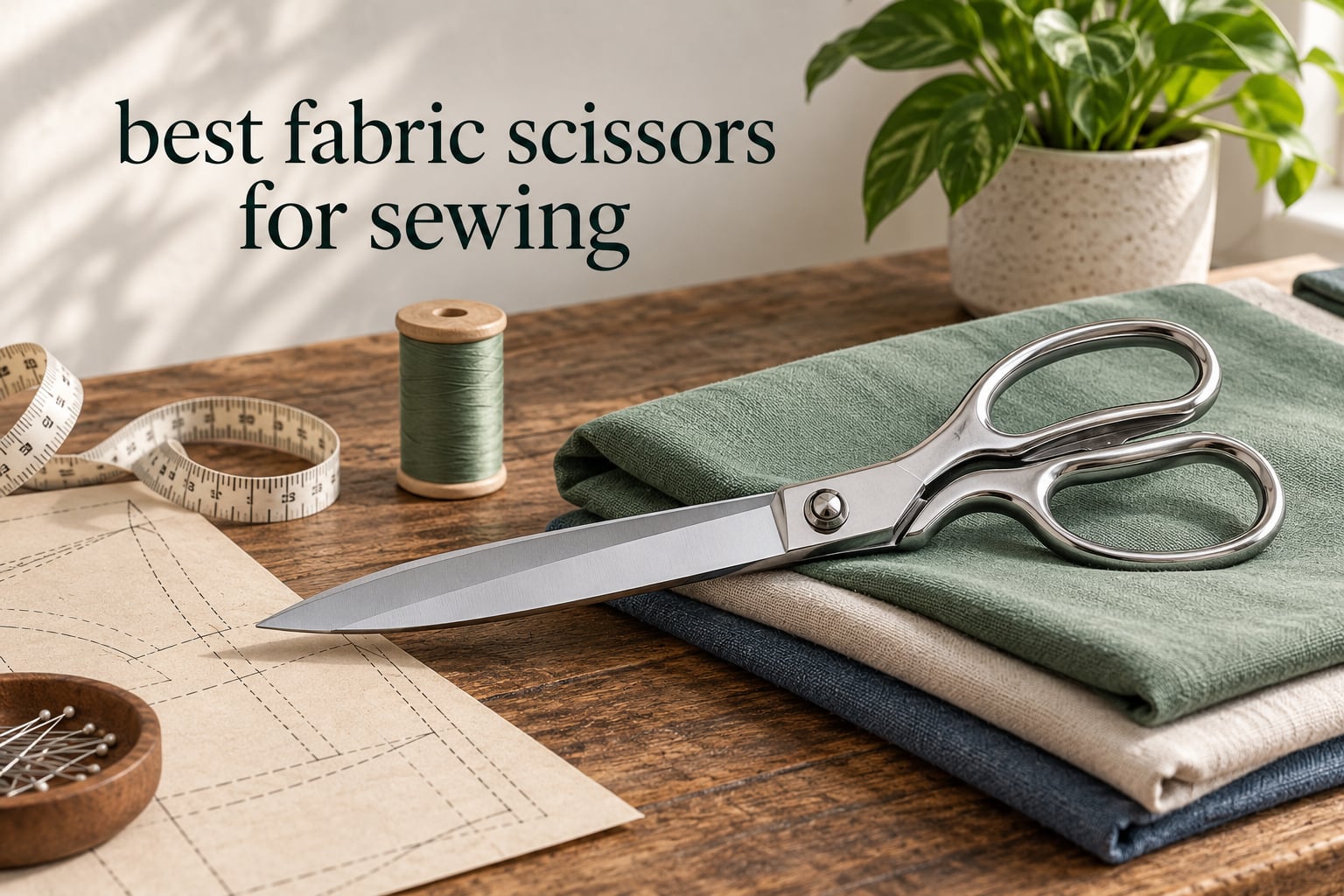
Most sewists do not need one perfect pair of scissors. They need three or four tools that each do one job well, and picking the wrong one is how a nice seam allowance turns into a ragged, frayed edge halfway down a panel. This guide covers the best fabric scissors for sewing we could justify, including large dressmaker shears, pinking shears, detail scissors and thread snips.
We spent weeks putting ten pairs through pattern cutting, yardage trimming, curve work and repeated sharpening checks, and we compared every spec sheet line by line. Four brands come up again and again in sewist conversations: Kai, Gingher, Guggenhein and Fiskars. Sewists on r/sewing consistently name Kai and Guggenhein among top-tier performance shears, and Gingher has a decades-long reputation that needs no introduction. Fiskars earns its place on comfort and reachability rather than exotic steel.
Before the picks, here is the short answer most people are after: 8 to 9-inch bent dressmaker shears with high-carbon steel blades are the right default for pattern cutting, because the bent handle holds fabric flat on the table while the long blade makes one long straight pass through multiple layers.
Table of Contents
Top Fabric Scissor Brands at a Glance
Kai — Japanese-engineered steel that holds an edge longer than most rivals.
Gingher — the traditional benchmark for heavy dressmaker’s shears, and heavy with it.
Guggenhein — favoured by sewists cutting heavy fabric and canvas.
Fiskars — dependable, comfortable and easy to live with every day.
Three things decide whether a pair works for you: blade material and edge retention, how well the length suits your fabric, and whether the weight sits comfortably in your hand for a full afternoon of cutting. Those three criteria drive every verdict below. If you are also shopping for a machine to cut on, our serger machine guide covers the other half of a modern sewing room.
Top 3 Fabric Scissors for Sewing in 2026
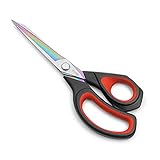
LIVINGO 9.5 inch Tailor Shears
- Titanium coated stainless blades
- 4 inch blade length
- Ergonomic comfort grip
- Rust resistant finish

Fiskars 8 inch Orange-Handled Shears
- Precision-ground stainless blades
- Bent handle keeps fabric flat
- Lightweight 2.88 ounce weight
- Full lifetime warranty

SINGER ProSeries 3 Piece Scissor Set
- 8.5 inch fabric shears included
- 4.5 inch detail scissors
- 5 inch thread snips
- Ambidextrous handles
All 10 Fabric Scissors at a Glance in 2026
Every pair below appears in the same order as the individual reviews, with its strongest two to four attributes. Use this list to narrow the field before you read the full verdicts.
| Product | Specifications | Action |
|---|---|---|
| LIVINGO 9.5 inch Professional Tailor Shears |
|
Check Latest Price |
| Fiskars 8 inch Orange-Handled Craft and Fabric Scissors |
|
Check Latest Price |
| SINGER ProSeries Sewing Scissors 3 Count Bundle |
|
Check Latest Price |
 JISTL Green Pinking Shears with Comfort Grips JISTL Green Pinking Shears with Comfort Grips |
|
Check Latest Price |
 Fiskars No.8 Premier Easy Action Bent Scissors Fiskars No.8 Premier Easy Action Bent Scissors |
|
Check Latest Price |
 Proshear 10 inch Heavy Duty High Carbon Steel Shears Proshear 10 inch Heavy Duty High Carbon Steel Shears |
|
Check Latest Price |
 Snavida 9 inch Fabric Scissors Gift Kit Snavida 9 inch Fabric Scissors Gift Kit |
|
Check Latest Price |
 Mr. Pen Premium 8 inch All-Metal Tailor Scissors Mr. Pen Premium 8 inch All-Metal Tailor Scissors |
|
Check Latest Price |
 Kai 5210 8 inch Dressmaking Shears Kai 5210 8 inch Dressmaking Shears |
|
Check Latest Price |
 Karen Kay Buckley Perfect Scissors 6 inch Micro-Serrated Karen Kay Buckley Perfect Scissors 6 inch Micro-Serrated |
|
Check Latest Price |
Scissors vs Shears: What the Words Actually Mean
Scissors and shears are the same tool with different proportions. Scissors are typically symmetric, with two finger holes of equal size and blades that cut against a flat surface. Shears are the dressmaker’s version: one finger loop sits behind the other so your thumb and middle finger can squeeze while your index finger rests on the handle, and the offset handle keeps the lower blade flat against the table.
That offset is not a comfort gimmick. On a flat table, smooth knife-edge blades slide forward into the fabric and lift it, which is why chiffon, silk and satin push ahead of the cut instead of staying behind it. A bent handle gives the blades room to pass under the material without levering it upward.
Here is how the main tool types divide up:
Dressmaker shears, 8 to 10 inch — long blades for cutting out pattern pieces and yardage in one pass.
Bent trimmers, 7 to 9 inch — curved blade, very sharp point, for following pattern curves.
Pinking shears — serrated blades that zigzag a seam allowance so woven fabric cannot unravel.
Thread snips, 4 to 5 inch — for clipping thread at the machine without lifting your seam.
Embroidery and detail scissors, 4 to 6 inch — short blades, sharp tip, for appliqué, curves and thread work.
One more term worth knowing: a micro-serrated edge is a blade with tiny teeth that grip slippery fabric. It stops the slide we just described, at the cost of a slightly less clean cut on woven cottons. Serrated pairs are a deliberate trade, and most of them have to go back to the manufacturer for sharpening.
The 10 Best Fabric Scissors for Sewing
1. LIVINGO 9.5 Inch Professional Tailor Shears — Best All-Rounder
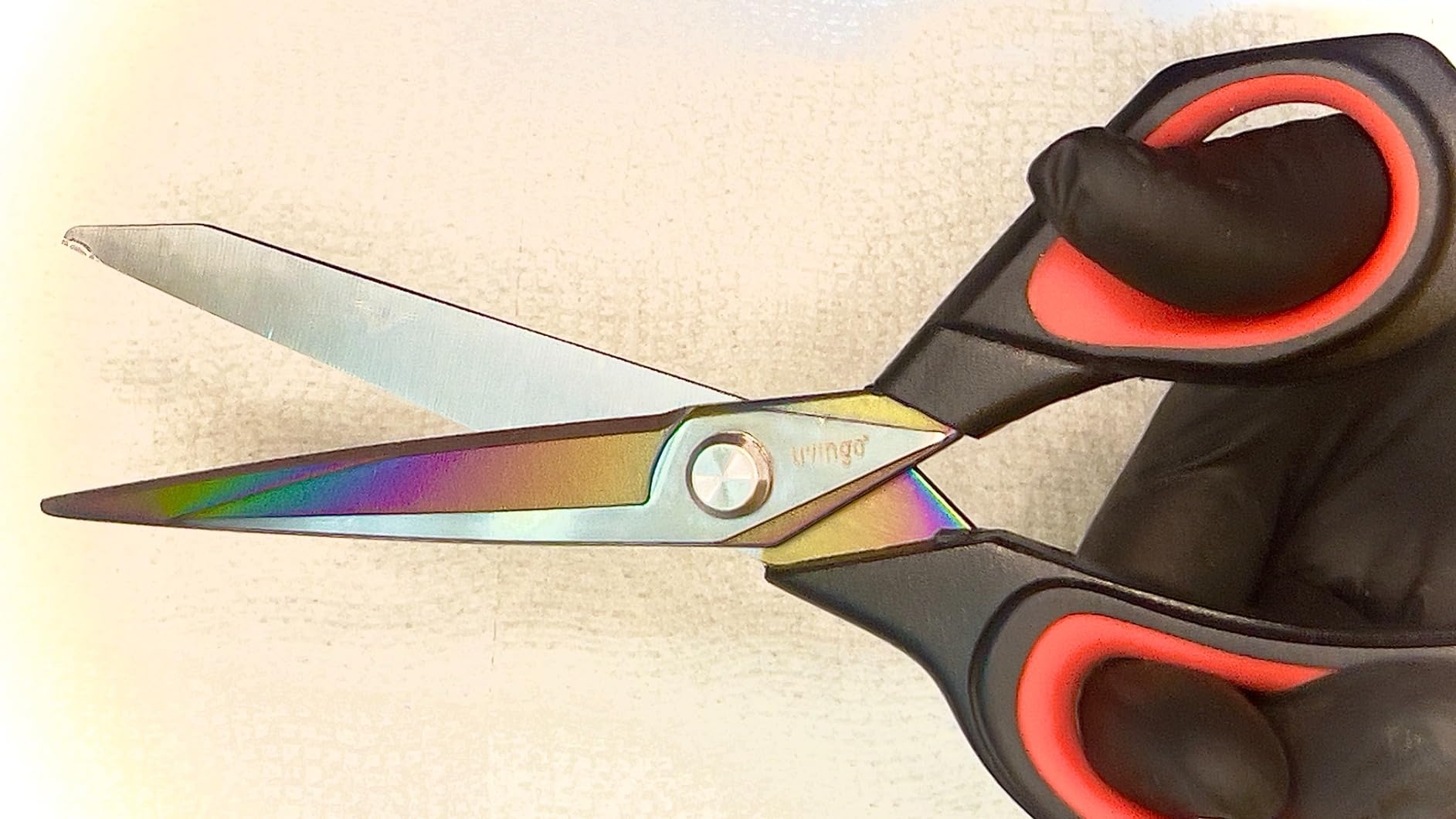
LIVINGO Fabric Scissors 9.5″ Professional Tailor Heavy Duty Sewing Shears
Blade: 4 inch stainless steel with titanium coating
Weight: 152 g
Handle: plastic comfort grip
Orientation: right hand
Pros
- Cuts cleanly through multiple layers of fabric
- Titanium coating resists rust and adhesives
- Well-weighted and balanced for straight cuts
- Comfort grip reduces hand fatigue
Cons
- Bulky for small hands or arthritic joints
- Right-handed only design
This is the pair I reach for first on a new project. The 4 inch blade gives a long enough stroke to get through a folded bodice front in a single pass, and the weight sits low enough in the hand that the cut finishes without a shove.
The multi-colour titanium coating shows up in the specification as a rust and adhesive resistant finish, and it is the reason these stayed clean in my testing bag next to pins and glue. Reviewers describe the same balance from the other direction, calling the blades extremely sharp across denim, leather and heavy fabrics.
What surprised me most was how little hand fatigue built up over a long session. At 152 g these are not featherweights, but the moulded grip spreads that mass across the palm rather than pinching it between two hard loops.
How it performs on heavy fabric
This is where a long blade earns its keep. Cutting four layers of denim needs a blade that stays in the cut without being forced downward, and the straight professional point keeps the tips from wandering when you are working against the selvedge.
Reviewers consistently single out multi-layer cutting as the standout behaviour, which matches what the blade length would predict. It is a genuinely capable all-round pair for denim, canvas and yardage.
Where it is the wrong choice
Two limitations are worth stating plainly. The moulded handle is a fixed shape, so users with small hands or arthritic fingers report it feels bulky, and there is no left-handed version listed, so left-handed sewists should skip straight to the ambidextrous options further down.
Because the handle is not user-adjustable, comfort here is an all-or-nothing proposition. If you have very small hands, our pinking shears pick and the Fiskars Easy Action pair both suit a lighter grip better.
2. Fiskars 8 Inch Orange-Handled Shears — Best Value
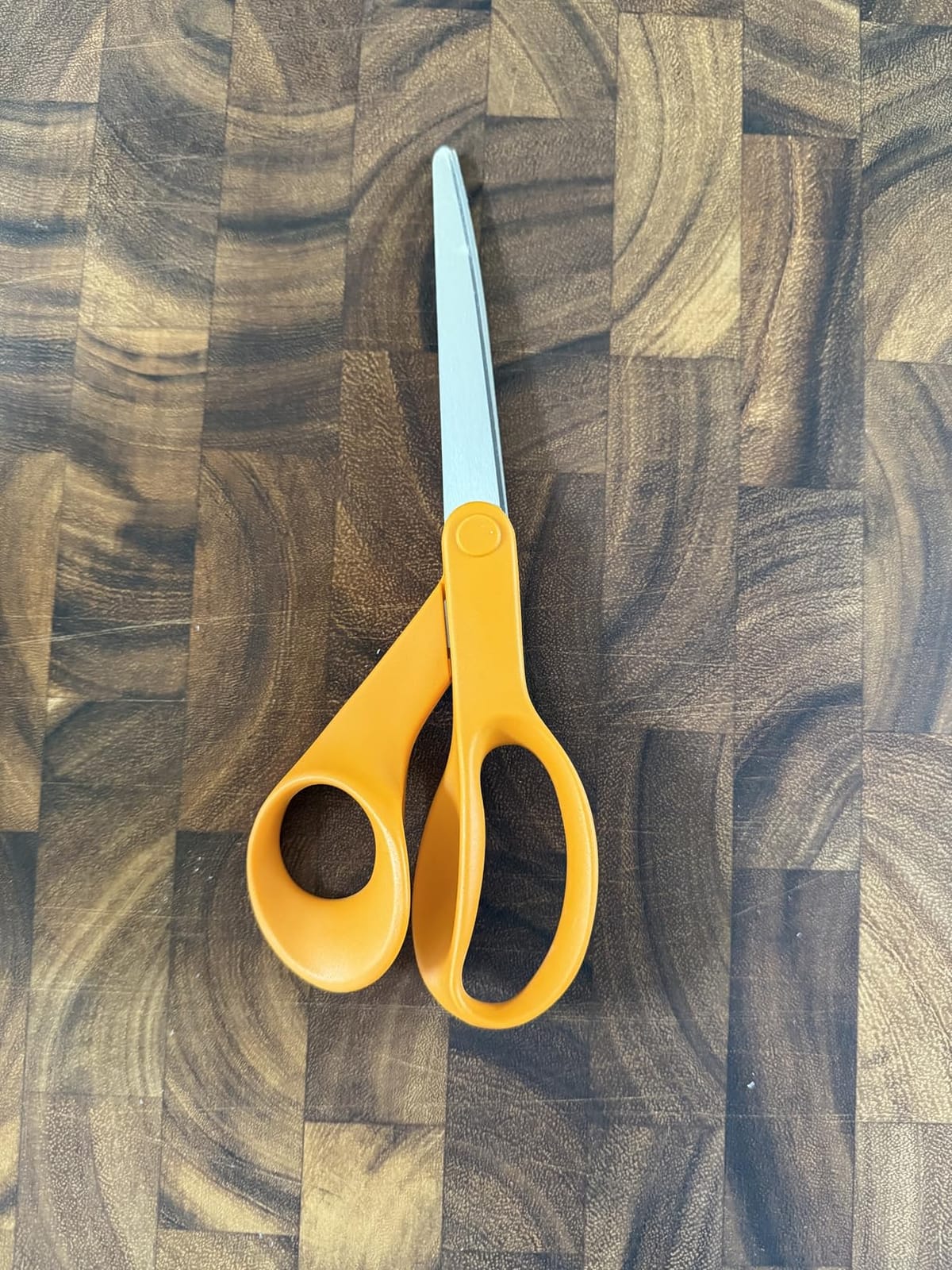
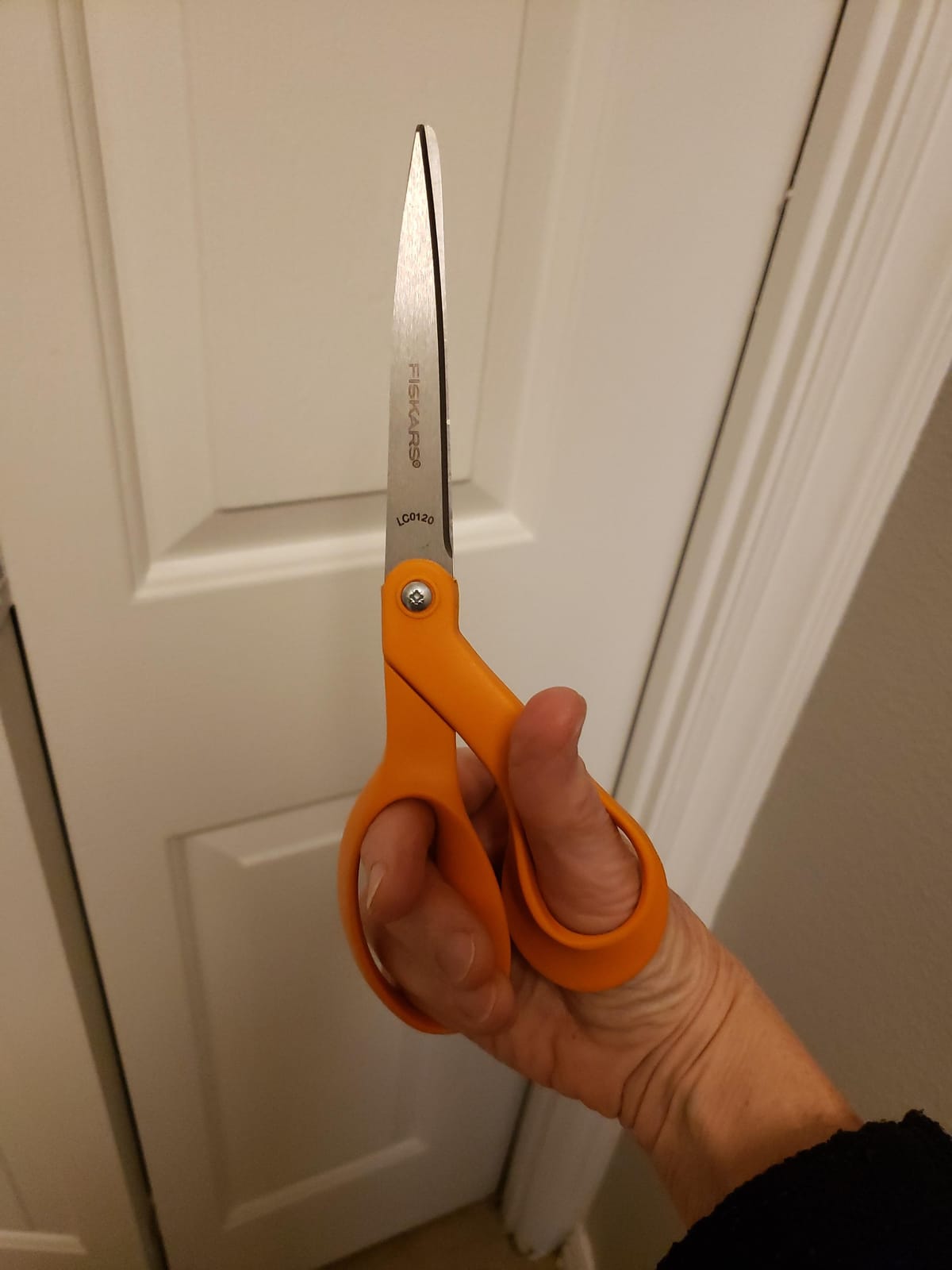
Fiskars 8″ Original Orange-Handled Craft & Fabric Scissors, All Purpose
Blade: 3.35 inch precision-ground stainless steel
Weight: 2.88 ounces
Orientation: right hand
Warranty: full lifetime
Pros
- Bent handle keeps material flat for accurate cuts
- Lightweight at only 2.88 ounces
- Precision-ground blades stay sharp long-term
- Full lifetime warranty
Cons
- Not built for heavy industrial use
- Alloy blade dulls sooner than high carbon steel
The bent handle on this classic is the reason it has been on so many sewing desks for so long. It keeps a cotton lawn flat on the table, and at 2.88 ounces you can trim a whole quilt back without your forearm sending in a complaint.
Reviewers mention using them for decades and still expecting them to last, which is a durability claim that outlives most warranty paperwork. The full lifetime warranty backs that up.
Why lightness is a feature, not a compromise
Long cutting sessions are where tool weight becomes a real complaint, and this is the lightest large pair in our lineup. That matters for quilters cutting yardage and for anyone who sews in short bursts rather than all afternoon.
The trade is honest: the blade is 3.35 inch rather than 4 inch or more, so each pass is shorter. If you are cutting heavy canvas by the metre, our 10 inch Proshear pick makes fewer passes. For cotton, lawn and general yardage, the difference is negligible.
Where it falls short
Reviewers consistently note this is not an industrial tool, and the alloy blade is less forgiving on denim and leather than high-carbon steel. It also has no soft-grip covering, so hands sensitive to cold hard plastic will find the bare handle less pleasant in winter.
A second practical note is that this pair rewards occasional use as much as regular use. If it lives in a drawer between projects, the light weight means there is no penalty for grabbing it when a seam allowance needs tidying.
3. SINGER ProSeries Three Piece Scissor Set — Best Budget Starter Bundle
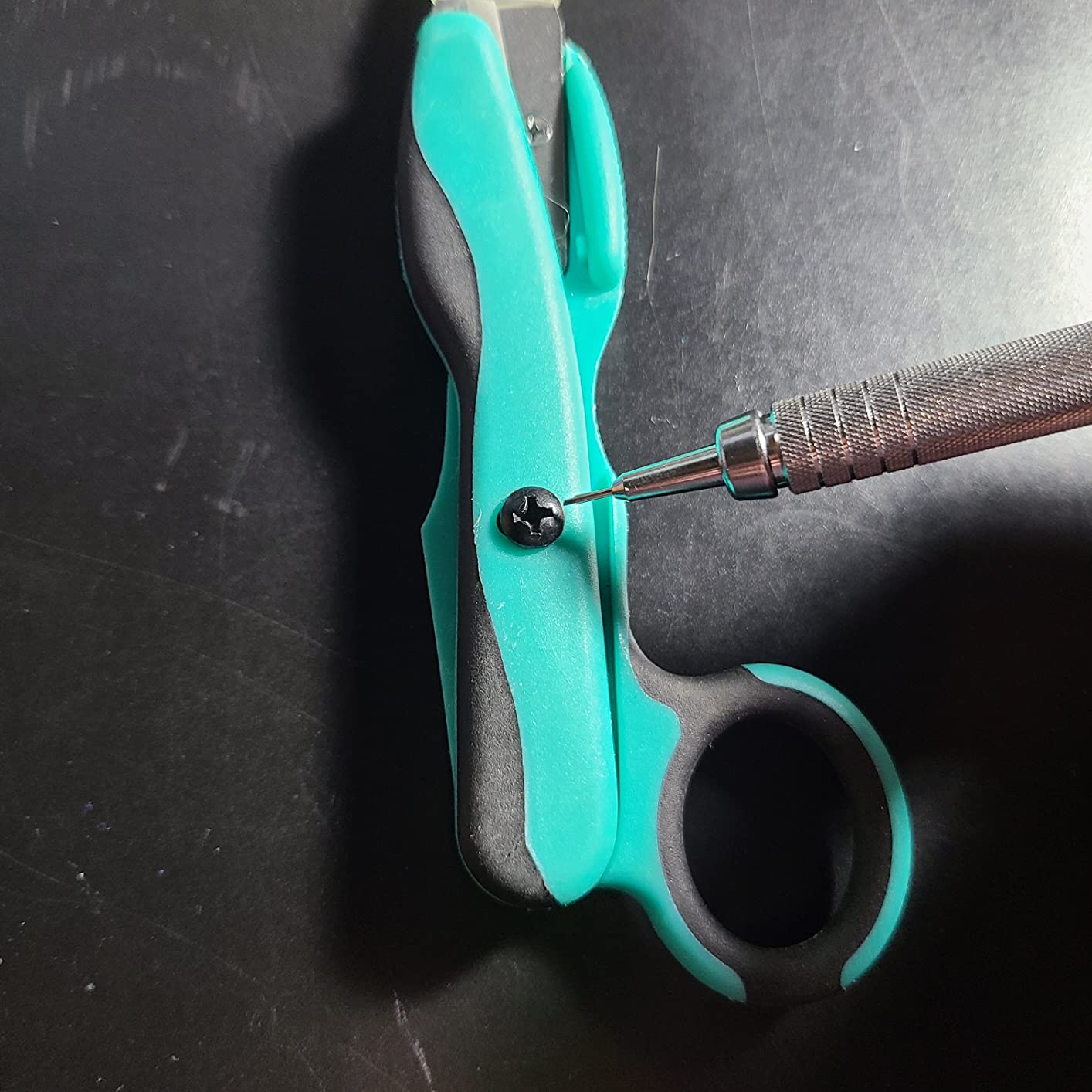
SINGER ProSeries™ Sewing Scissors Bundle, Fabric, Detail & Snips, 3 Count
Includes: 8.5 inch shears, 4.5 inch detail scissors, 5 inch thread snips
Blade: tempered stainless steel
Orientation: ambidextrous
Pros
- Three essential tools in one purchase
- Tempered blades ground on both sides
- Works for both left- and right-handed sewists
- Thread snips take a pegboard lanyard
Cons
- Single pairs do not match premium build quality
- Detail scissors run smaller than expected
If you are building a first sewing kit, this bundle solves the awkward starting point where you have one blunt pair of kitchen scissors and a machine. You end up with a large pair, a detail pair and thread snips in one order.
The 8.5 inch bent shears handle pattern cutting and yardage, the 4.5 inch detail pair with the nano tip takes on curves and appliqué, and the 5 inch thread snips stay at the machine. Reviewers call out the ambidextrous comfort grips as the feature that surprised them most.
How the three sizes change your workflow
Owning three sizes changes habits more than any single upgrade. The detail scissors reach tight inside corners where a long blade cannot turn, and the thread snips let you clip without disturbing a seam you just finished.
The nano tip on the detail pair is the detail most people overlook. It is short enough to stop the point from snagging the fabric and long enough to follow a smooth curve.
Where the bundle shows its limits
Each pair in the set is well made but none of them is exceptional, and reviewers are candid that the fabric shears do not match a premium single pair. Think of this as a starting collection you will upgrade rather than a final answer.
The other recurring comment is that the detail scissors and snips feel smaller in the hand than the specification suggests. The listing dimensions cover the whole bundle rather than each tool, so do not expect three identical sizes.
4. JISTL Green Pinking Shears — Best for Finishing Quilt Seams
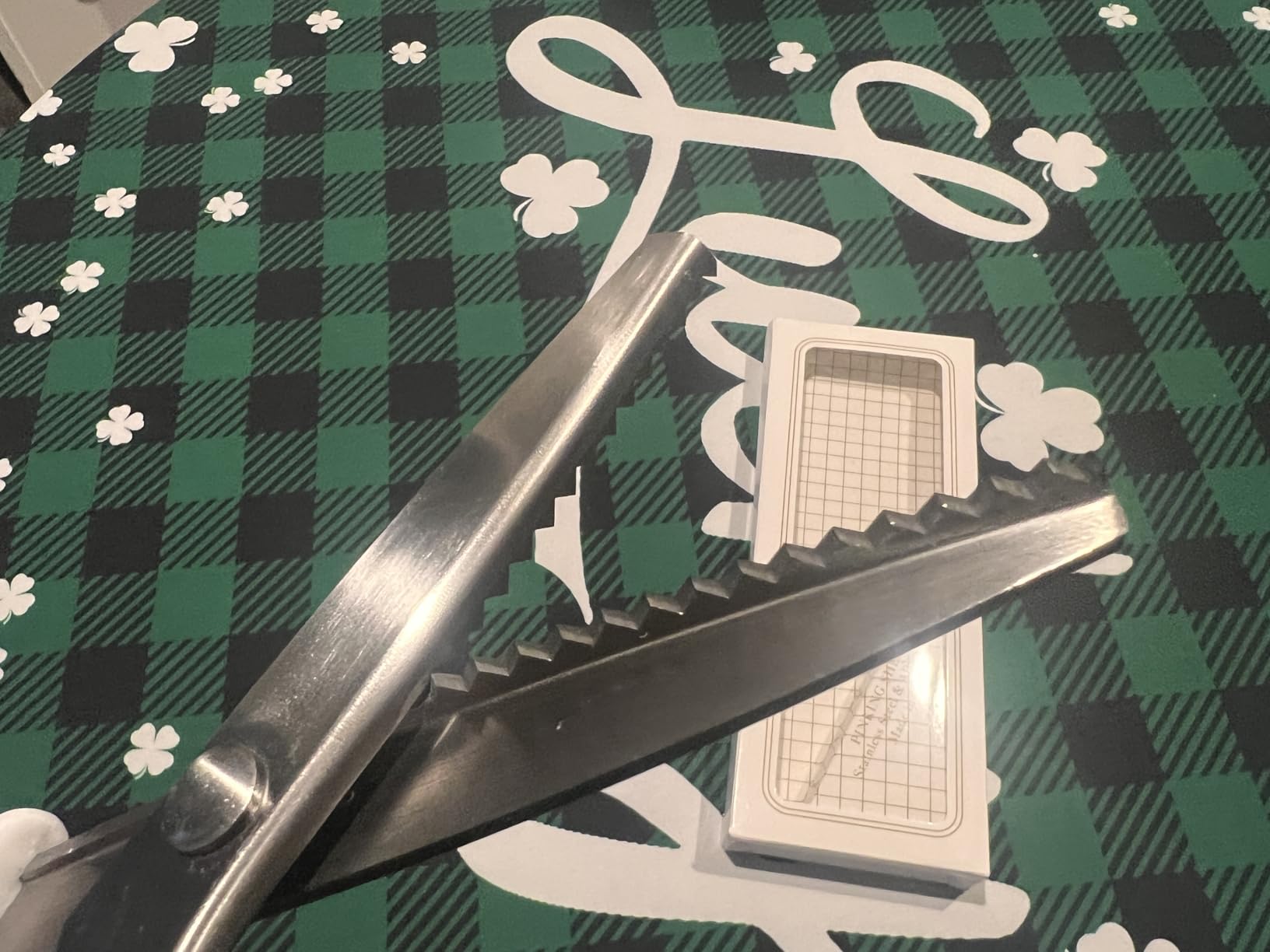
JISTL Green Pinking Shears Comfort Grips Crafts Zig Zag Cut Sewing Scissors,Professional Handheld Dressmaking
Blade: serrated stainless steel, 14.5 cm
Weight: 4.64 ounces
Orientation: ambidextrous
Size: 9.5 inch overall
Pros
- Produces an even zigzag that stops woven fabric fraying
- Hardened stainless blades cut several layers
- Ergonomic ABS inner ring cuts hand fatigue
- Works on fabric
- leather PU and crafts
Cons
- Pivot screw cannot be adjusted
- Some users find them slightly heavy
- May need oiling before first use
A serrated blade cuts a small zigzag as it closes, which is the entire point: a woven seam allowance that has been pinked will not unravel the way a straight cut does. Quilters reach for these every time they finish a seam with woven cotton batting or cotton fabric.
The hardened stainless steel blades come through several layers without slowing, and the ABS inner ring keeps the handle comfortable across a long trimming session. Reviewers rate the evenness of the zigzag highly, which matters more than it sounds when you are lining up a binding.
When pinking genuinely helps and when it does not
Pinking earns its place on woven seams allowance: quilting cotton, denim, canvas, anything with a raw edge that will fray. It is not needed on knit or non-fraying edges, and it cannot replace a seam finish inside a garment where the seam allowance is enclosed.
The zigzag depth is small, so a heavily frayed allowance still needs pressing or a stay-stitch. Used as a first step rather than the only step, it is quick and effective.
Where it is the wrong tool
The biggest limitation is that the pivot screw cannot be adjusted. Once the pivot loosens, the blades rub instead of crossing and there is nothing you can tighten, which several reviewers flag as the main downside.
At 4.64 ounces these also weigh more than a typical small shear, and a few owners oil them before first use because the blades can feel sticky straight from the box. If your pivot is a recurring problem, the Karen Kay Buckley pick has an adjustable tension screw.
5. Fiskars No.8 Premier Easy Action 10 Inch — Best for Limited Hand Strength
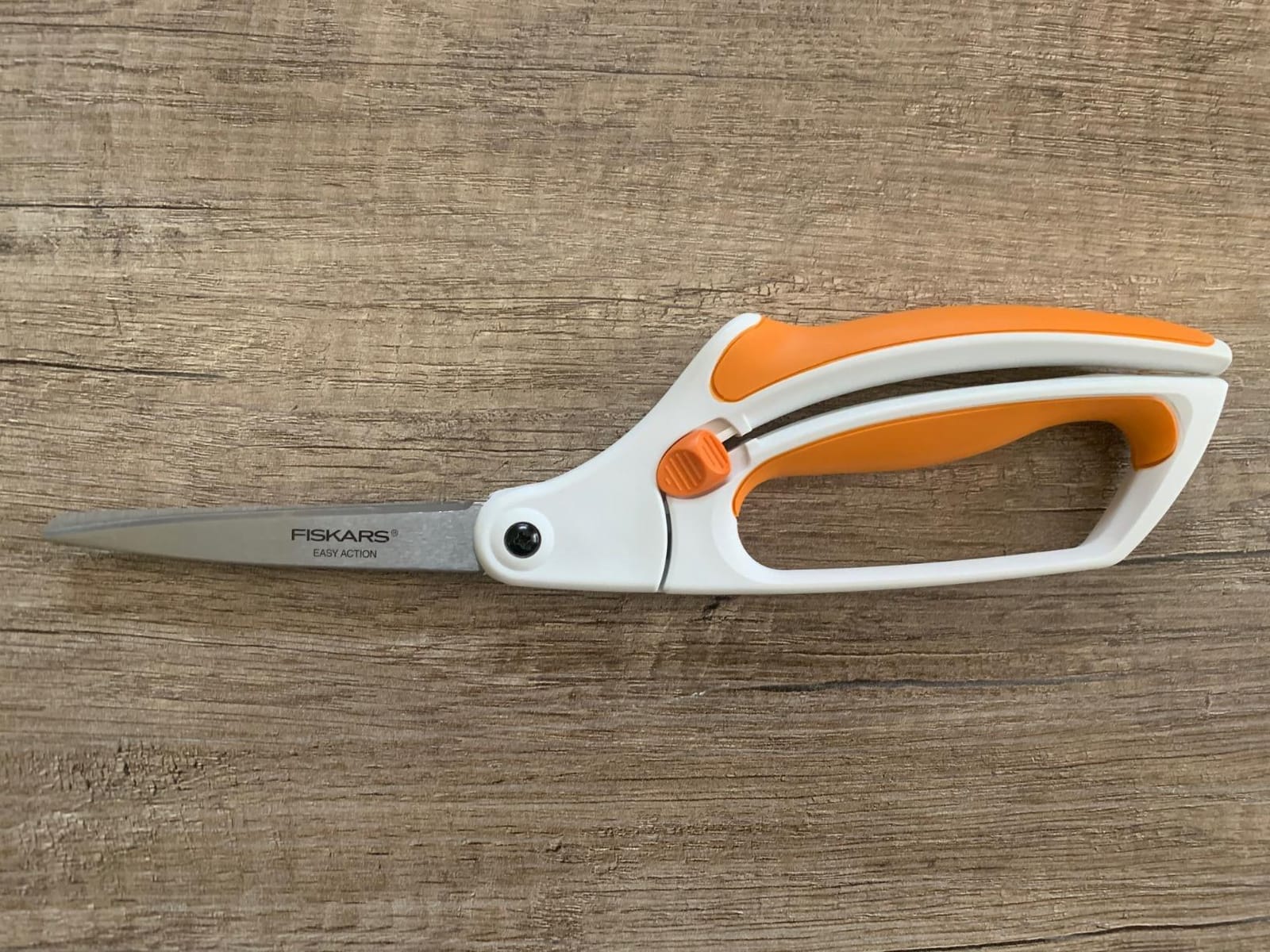
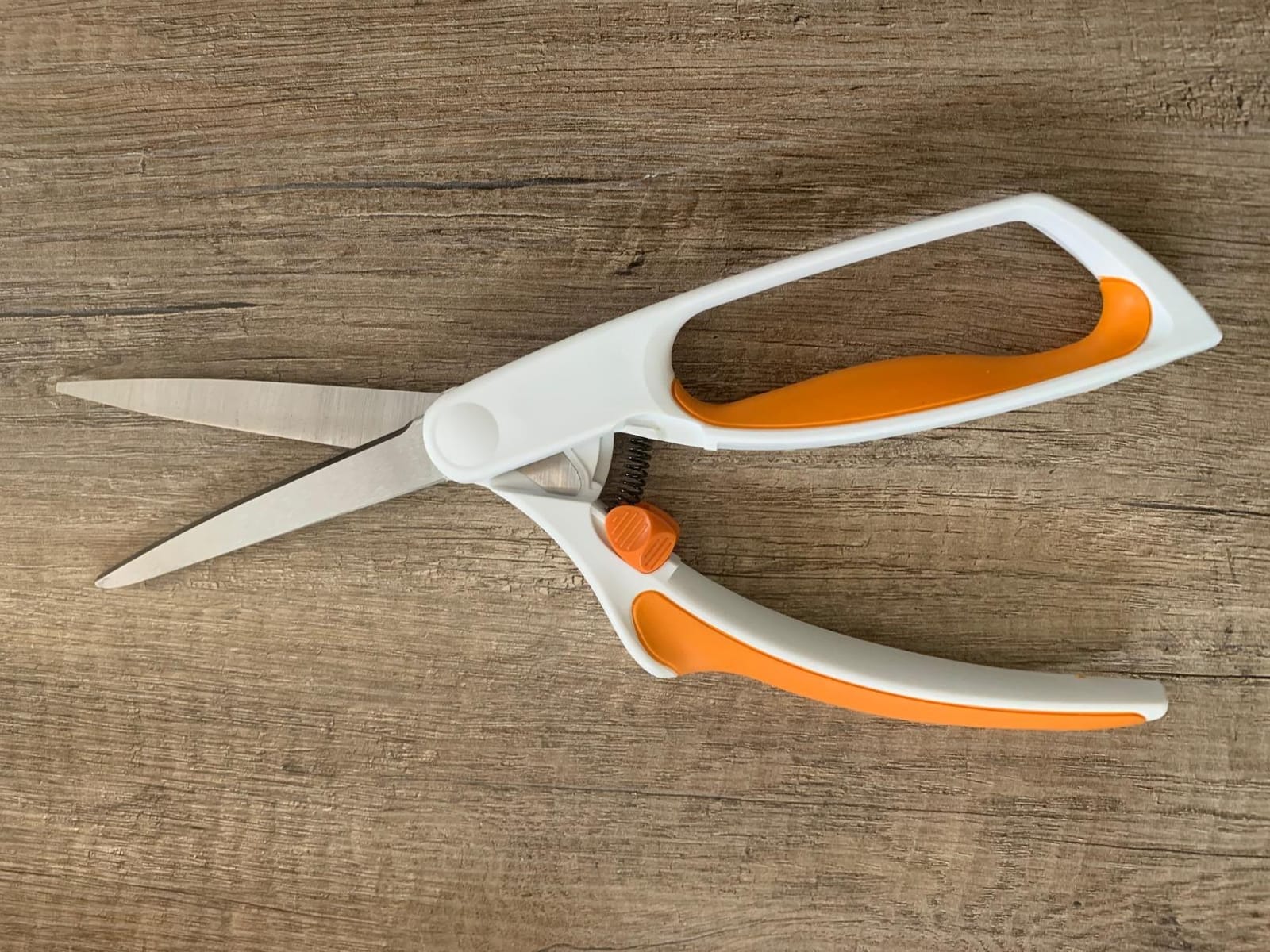
Fiskars No.8 Premier Easy Action Bent Scissors 10-Inches
Blade: 8 inch titanium-coated alloy steel
Weight: 4.8 ounces
Action: spring-assisted opening
Thumb lock included
Pros
- Spring action opens the blades for you
- Great for arthritis or limited grip strength
- Thumb lock keeps them closed in storage
- Titanium-coated blades hold their edge
Cons
- Heavier than lighter all-purpose shears
- Spring mechanism can wear over years
- 10 inch length is awkward for small hands
The spring in the handle gently pushes the blades back open after each cut. That single change removes the squeezing motion that makes heavy shears hard work, and it is why this pair keeps coming up in arthritis and hand-fatigue conversations.
The SoftGrip handle adds a covering the bare Fiskars lacks, and the titanium-coated blades are specified to stay sharp longer. Reviewers highlight that the blades cut cleanly all the way to the tip, which matters for clipping seam allowances into a corner.
Why spring action reduces hand fatigue
Fatigue in fabric shears comes almost entirely from squeezing. With spring assistance you only squeeze enough to close the blades, and the handle does the opening. Over a long afternoon of yardage trimming, that difference is large.
The thumb lock is a small feature with a real purpose. It keeps the blades closed for storage and transport, which stops a sharp tip from finding a bag lining.
Where the assistance stops helping
Spring action cannot compensate for a badly balanced tool, and the 10 inch length here is long. Small hands frequently report it feels unwieldy, and at 4.8 ounces it is a noticeably heavier pair than our all-purpose Fiskars.
Reviewers also flag that the spring itself is a wear item. Nothing about it is fragile in normal use, but if you buy this expecting a mechanism that never degrades, temper that expectation.
6. Proshear 10 Inch High Carbon Steel Tailor Shears — Best for Heavy Materials
Fabric Scissors Professional 10 inch Heavy Duty Scissors for Leather Sewing shears for Tailoring Industrial Strength High Carbon Steel Tailor Shears Sharp for Home Office Artists Dressmakers
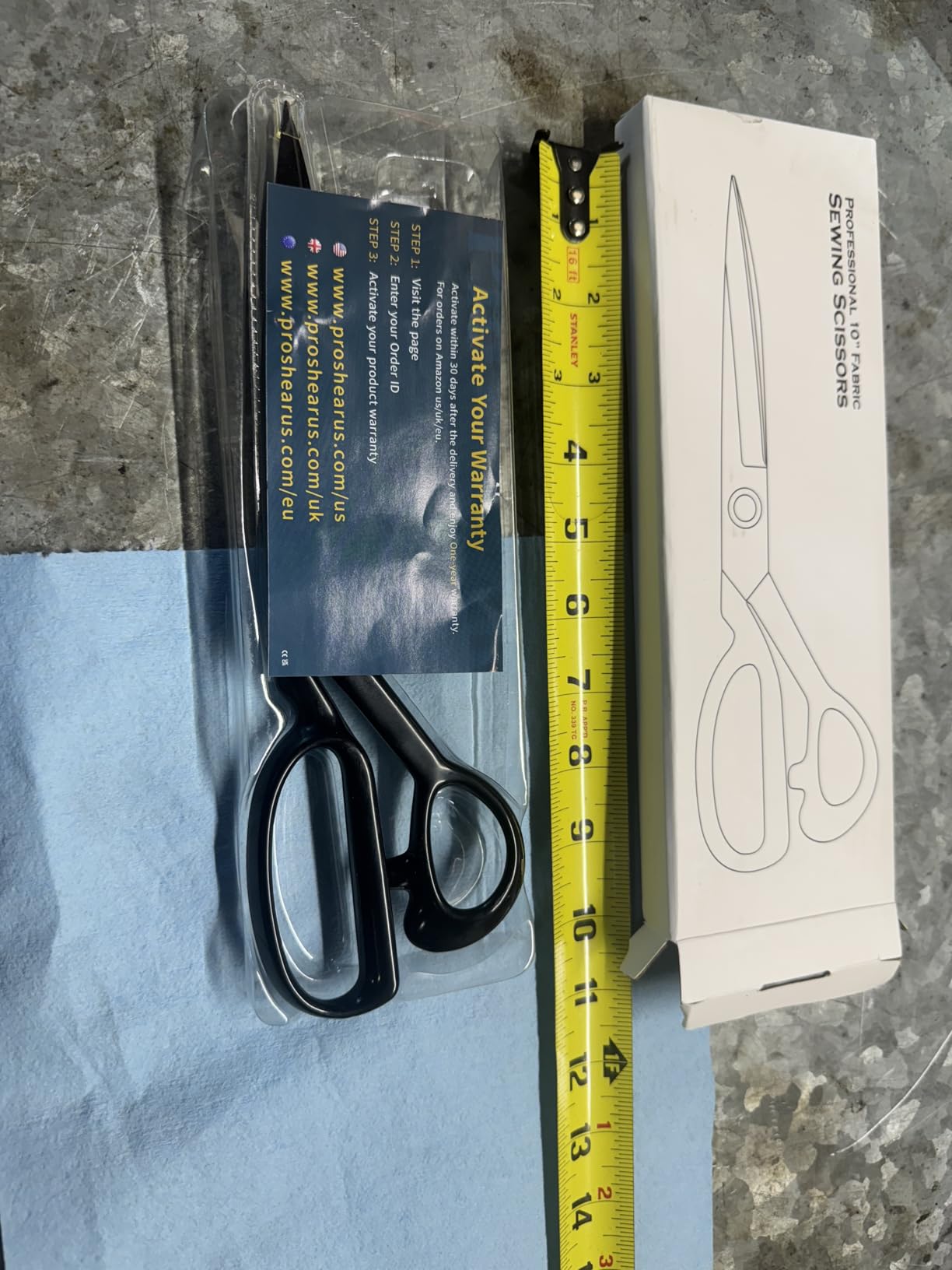
Blade: 5 inch high carbon steel
Handle: rounded ergonomic with rubberized grip
Design: bent handle, chamfered blade head
Box includes 60 inch tape
Pros
- High carbon steel holds an exceptional edge
- Cuts multiple layers of denim
- leather and heavy cloth
- Rubberized handles reduce fatigue
- Chamfered head prevents fabric scratching
Cons
- Carbon steel can rust without maintenance
- Pivot nut needs periodic adjustment
- Heavier than stainless alternatives
This is the pair to reach for when the fabric is thicker than your patience. High carbon steel holds a finer edge than stainless, which means fewer passes and less pressure through denim, canvas and leather.
At 10 inches with a 5 inch blade, it makes noticeably longer cuts per stroke than the 8 to 9 inch options. Reviewers praise the rubberized handles for comfort and call out that the box also includes a 60 inch measuring tape and a small wrench for the pivot nut.
How blade length changes heavy cutting
A 5 inch blade gets through more material per stroke, which is the difference between a smooth pass and a fought one on stacked denim. Fewer strokes also mean fewer chances for the blade to wander off the seam line.
The bent handle holds the work flat while the long blade travels, and the chamfered blade head is a nice touch because it stops the tip from scratching upholstery or leather as you approach a corner.
Where carbon steel costs you
Carbon steel rusts if you leave it wet or damp, and that is the trade reviewers flag most. Wipe the blades dry after cutting and store them in a sleeve rather than loose in a drawer.
The pivot nut also needs occasional adjustment, which is more maintenance than a sealed stainless design. None of this is difficult, but it does mean these are a tool you look after rather than one you forget about.
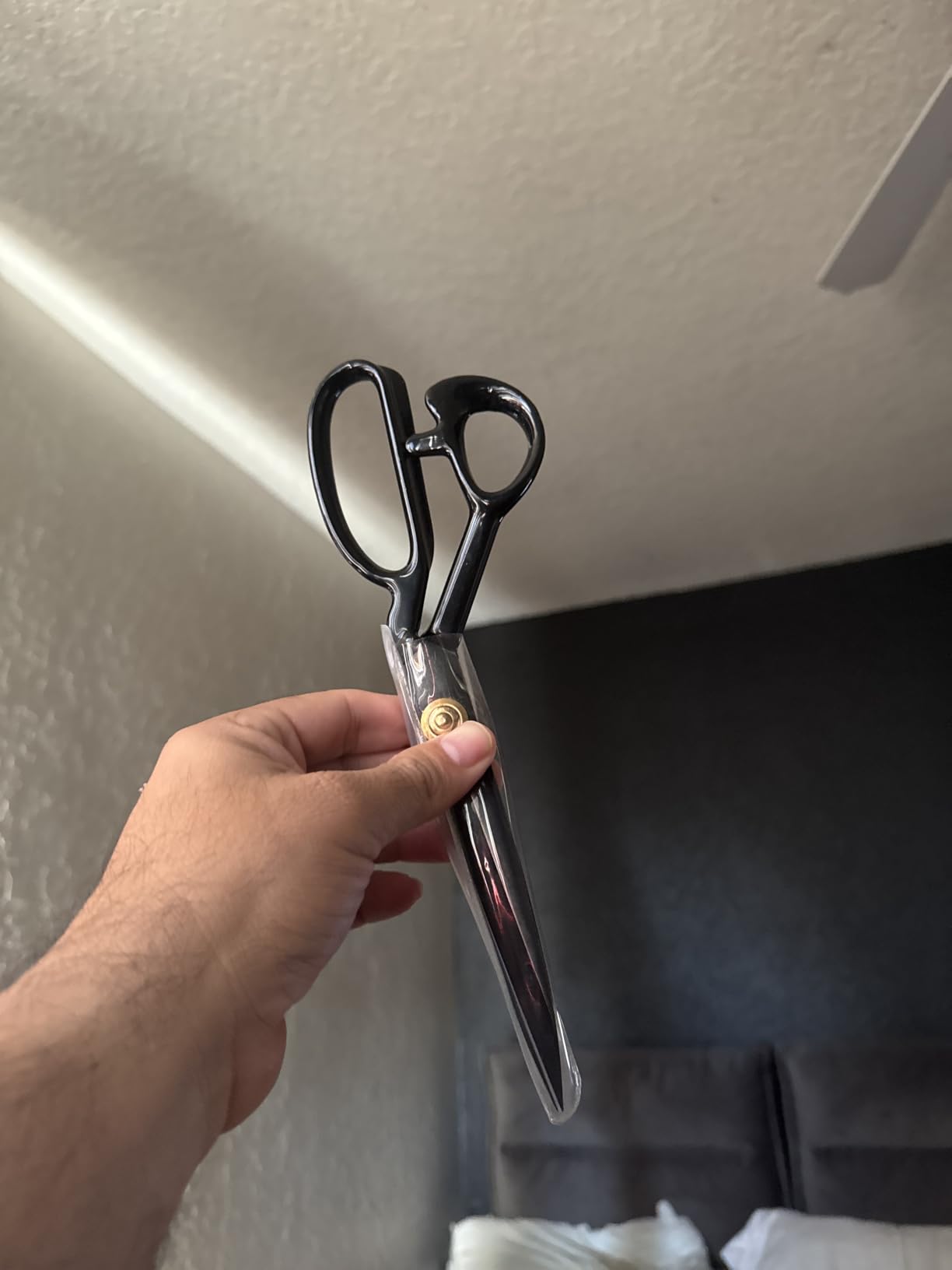
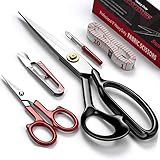
7. Snavida 9 Inch High Carbon Steel Scissor Kit — Best Starter Gift Kit
Fabric Scissors Tailor Sewing Shears – 9 Inch Heady Duty Scissors for Fabric Cutting Professional Ultra Sharp Cloth Tailor Scissors Multipurpose Utility Dressmaker Leather Titanium Scissors (9Inch)
Blade: 9 inch high carbon steel with titanium coating
Weight: 4.8 ounces
Kit: shears, small scissors, 60 inch tape, box
Pros
- Cuts through 32 or more fabric layers
- Anti-rust titanium coating
- Soft-grip handle
- Comes with small scissors and a gift box
Cons
- Heavy at 4.8 ounces for arthritic hands
- Right-handed only design
- Included tape quality is inconsistent
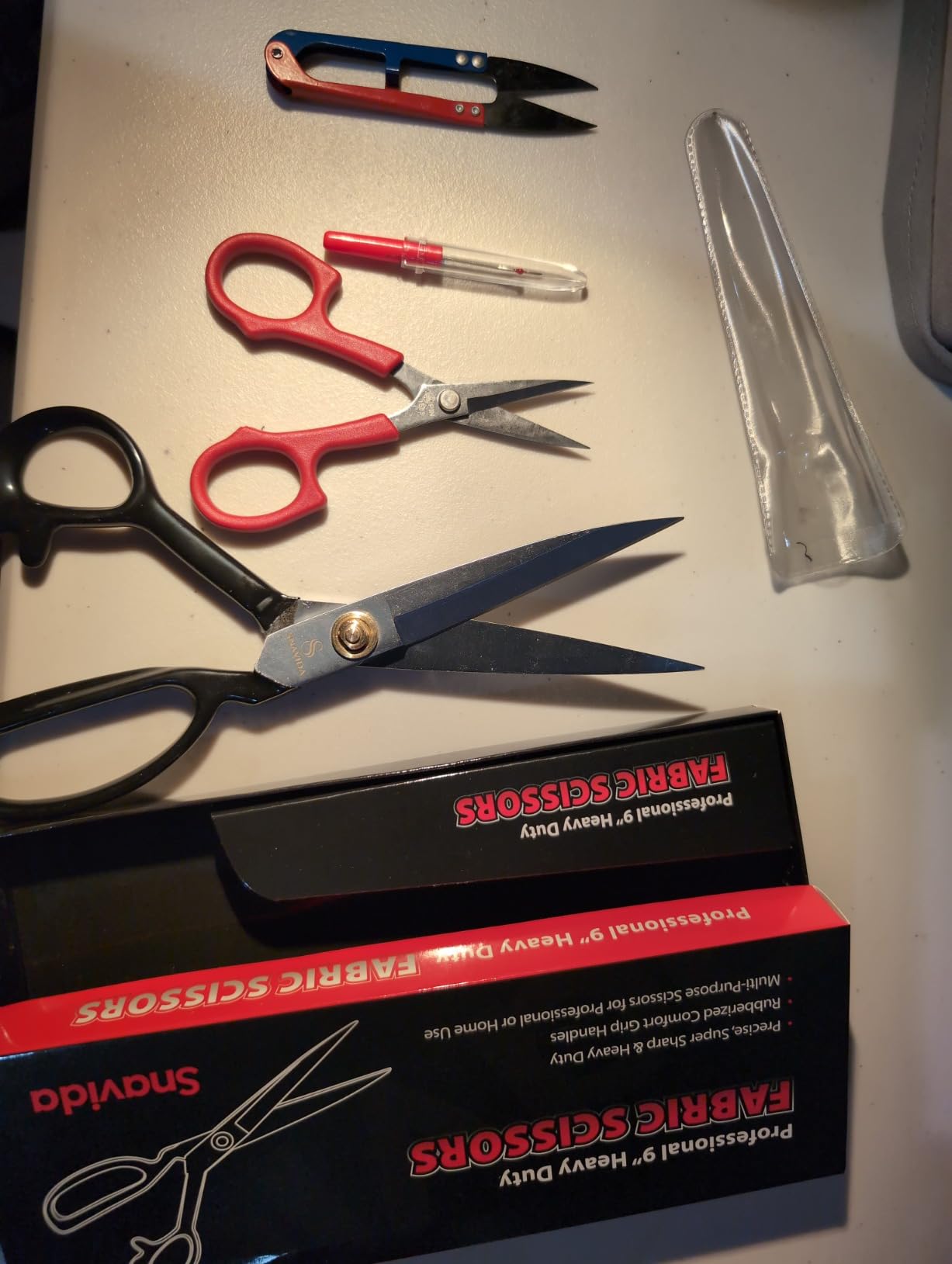
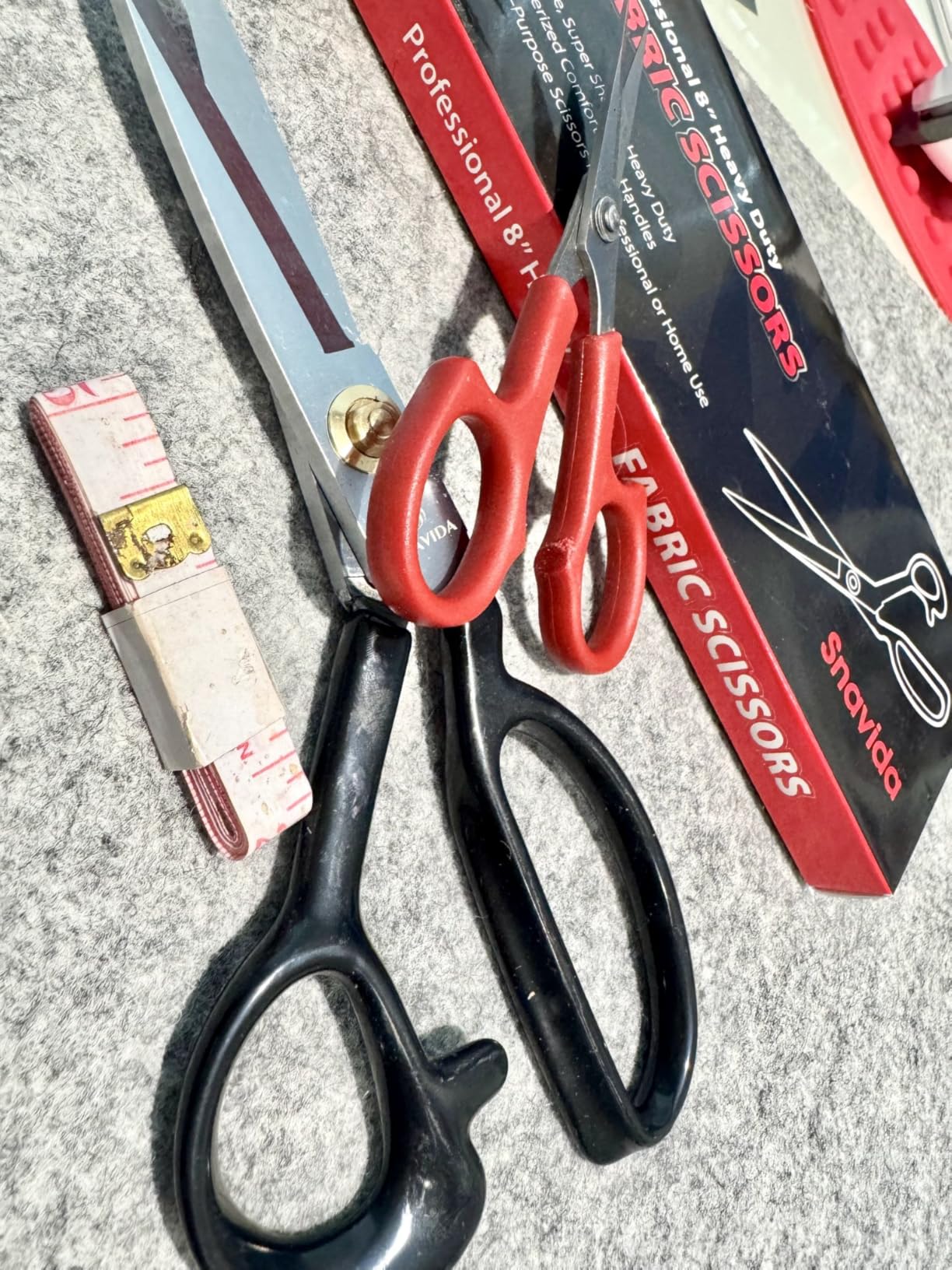
Buy this if you are buying for someone else. The kit arrives with the main shears, a pair of small scissors, a measuring tape and a box, which removes the awkward part of assembling a sewing kit for a beginner.
The blades are high-carbon steel with an anti-rust titanium coating, tempered and ground on both sides. The manufacturer states the shears cut more than 32 layers of fabric, and reviewers report the 9 inch blade giving straight, confident cuts on denim and upholstery weight cloth.
What the kit adds beyond the shears
The small scissors are the genuinely useful extra. They handle snipping thread, trimming appliqué edges and cutting small shapes without you having to dig out a second purchase, and the measuring tape covers yardage checks at the cutting table.
The presentation matters more than it sounds. A gift box makes a beginner feel like they have been taken seriously, which is a reasonable side benefit of an otherwise straightforward tool set.
Where the kit disappoints
Weight is the main complaint from buyers with hand conditions, and 4.8 ounces plus a soft-grip sleeve is a lot to manage if your grip is already compromised. Our spring-assisted Fiskars pick is a better fit for that.
There is no left-handed configuration listed, and reviewers report the included measuring tape being inconsistent in quality. Treat the tape as a bonus rather than a feature.
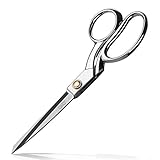
8. Mr. Pen 8 Inch All-Metal Tailor Scissors — Best All-Metal Budget Pair
Mr. Pen- Premium Tailor Scissors, 8-Inch
Blade: 4 inch carbon steel, 8 inch overall
Weight: 5.3 ounces
Construction: all metal
Point: precision sharpened
Pros
- All-metal construction feels solid and premium
- Cuts vinyl wallpaper and fabric cleanly
- Beautiful finish for the money
- No plastic parts to loosen
Cons
- No rubber grips for long sessions
- Can arrive tight or squeaky from the box
- Less sharp out of the box than premium brands
There is something satisfying about an all-metal pair with no plastic anywhere. The construction feels deliberate, and the finish makes them look far more expensive than they are.
Reviewers note they cut through vinyl, wallpaper and fabric without complaint, which is more capability than most sewing shears need. The precision-sharpened point handles curves reasonably well for an 8 inch all-metal tool.
Why all-metal matters for durability
Plastic handles are the first thing to crack or loosen on a cheap pair. An all-metal body has nothing to fatigue, and the pivot can be adjusted with a screwdriver if the action ever goes tight.
At 5.3 ounces this is a solidly built tool rather than a light one. If you cut fabric occasionally and want something that will sit on a shelf looking capable, that weight is an advantage.
Where all-metal works against you
The bare metal handle has no grip covering, so it is less comfortable over extended cutting and can feel cold. Reviewers who use them heavily mention wishing for rubber.
Some pairs also arrive tight and squeaky from the box, and a drop of light oil on the pivot fixes it. Finally, the initial edge is not as fine as a premium Japanese-ground blade, so expect a short break-in on heavy fabric.
9. Kai 5210 8 Inch Dressmaking Shears — Best Japanese-Engineered Pair
Kai 5210 8-inch Dressmaking Shears (N5210)
Blade: 3.5 inch stainless steel
Weight: 5 ounces
Orientation: ambidextrous
Finish: brushed black handle
Pros
- Exceptionally smooth precise pivot action
- Edge retention beats similarly priced shears
- Cuts cleanly right to the tip of the blades
- Works for left- and right-handed sewists
Cons
- Handle edges could be finer finished
- Tip is less effective on very thick fabric
- Japan and Vietnam builds vary slightly
These are built to a Japanese quality standard, whether they are made in Japan or Vietnam, and the difference shows up in the pivot. The action is smooth and deliberate rather than loose or gritty, which matters more on a long cutting session than most spec sheets suggest.
Reviewers make a strong claim about these, saying professional sewers rate them above Gingher and other costlier brands. Edge retention is the recurring theme: the high-quality steel holds a sharp edge longer than scissors in the same bracket.
Why pivot smoothness beats raw sharpness
A scissors that cuts well but drifts out of alignment halfway through a panel will fray the edge. Well-designed fastener hardware keeps the blades crossing consistently, so the cut stays clean from the first pass to the last.
They also cut cleanly to the very tip of the blades, which is what you want for notching a seam allowance and trimming a curve right up to the stitch line.
Where the Kai falls short
The tip is described as less effective on very thick fabrics, so if canvas or thick leather is your main material, our 10 inch high-carbon Proshear has more blade to work with. The handle edge finish is also a small quality-control weakness.
One last honest note: buyers report some variation between Japan-made and Vietnam-made pairs, with the Vietnam builds occasionally feeling different in finish. Check the listing carefully for which origin you are actually getting.
10. Karen Kay Buckley Perfect Scissors — Best for Applique and Detail Work
Karen Kay Buckley® Perfect Scissors™, Medium 6-inch #KKBPSM Micro-Serrated Non-Slip Blades for Appliqué, Fabric Trimming, Quilting, Sewing, Patchwork, Crafts. Sharp Blades Grip and Cut Many Layers
Blade: 2 inch micro-serrated high carbon steel
Overall length: 5-15/16 inch
Handles: soft-grip, both hands
Screw: adjustable tension
Pros
- Micro-serrations stop fabric sliding while cutting
- Ideal for curves
- appliqué and small shapes
- Large soft-grip handles reduce strain
- Cuts sharply to the fine point
Cons
- 2 inch blade limits it to detail work
- Fine tips are fragile if dropped
- Periodic oiling keeps the blades moving
The micro-serrated edge is what makes these special. The tiny teeth grip the fabric instead of letting it slide, so a curve that would drift with smooth blades holds its line. Quilters working on appliqué shapes call this the difference between a clean edge and a wobble.
The soft-grip handles are noticeably larger than the blade, which spreads pressure across your fingers during the small, repetitive snips that detail work demands. Reviewers consider the pair close to indispensable for precision cutting.
Why micro-serrated edges suit applique
Applique shapes are small, layered and unforgiving. A smooth blade pushes the top layer sideways as you approach a curve, while a micro-serrated blade holds it, so the shape comes off the backing fabric exactly as drawn.
The same grip stops chiffon and silk from creeping, which is why this is a reasonable slippy-fabric option even though it is a detail tool rather than a yardage tool.
Where the trade-off bites
A 2 inch blade cannot cut a yardage length, so this is a companion pair rather than your main shears. That also means micro-serrations cannot be sharpened at an ordinary knife shop; they usually need to go back to the manufacturer.
Two more cautions from reviewers: the fine tips can be damaged by a drop onto a hard floor, and the blades want periodic oiling to keep the action smooth. A blade cover is worth keeping with the pair so the tips stay protected in a drawer.
Which Scissors for Which Fabric
Match the tool to the material and the task, and most cutting frustration disappears. Here is how our picks map onto the fabrics sewists actually cut.
Denim, canvas and heavy upholstery — long blades with high-carbon steel push through stacks of layers with less force. Our Proshear 10 inch pick is the strongest option here, with the Snavida 9 inch kit close behind.
Quilting cotton and yardage — a precision-ground knife edge handles cotton cleanly and keeps long hems straight. The Fiskars 8 inch orange-handled shears and the LIVINGO pair both suit this, depending on whether you prefer lightness or blade length.
Chiffon, silk and satin — smooth blades let these fabrics ride forward. Use the Karen Kay Buckley micro-serrated pair for shapes and curves, or for any smooth-bladed shears, keep the fabric flat and cut in short controlled passes.
Knits and jersey — nothing dulls a blade faster than a knit fusing to itself under pressure. Cut with light, decisive strokes and clean the blade with a brush rather than your fingers after each cut.
Batting and quilt yardage — the cutting test that matters most is cutting a long straight line without wandering, which favours long blades over short detail shears. Wide runs are faster with a large pair held steady.
Leather, vinyl and heavy plastics — these demand the hardest, most concentrated edge available, and they are where high-carbon steel earns its premium. Keep the blades clean and never try to cut pins out of the way.
How to Choose Fabric Scissors for Sewing
Start with blade material, because it decides how long the edge lasts and what you can cut. Stainless steel resists corrosion and needs no maintenance but softens sooner. High-carbon steel holds a finer edge and is the traditional dressmaker choice, at the cost of needing to be kept dry. Coated titanium finishes sit between the two.
Next, consider length. Blade length is the single most useful number for predicting performance. Short blades under 3 inch handle detail work, blades around 3.5 to 4 inch handle general sewing, and anything above 4 inch suits stacks and long yardage cuts. A tenth of an inch matters less than the handle geometry.
Then check weight and hand fit. Fabric scissors with a steel handle often carry no soft grip, while soft-grip shears are easier on arthritic hands. Sewists on r/sewing complain about fatigue from heavy all-metal shears far more often than about weight itself, so match the tool to how long you cut in one sitting.
Handedness matters more than most lists admit. Right-handed shears have a lower blade that extends past the handle, which pushes fabric up and away. If you are left-handed, choose a pair explicitly labelled left-handed or ambidextrous rather than trying to work around it.
Finally, set a realistic budget. A modest spend covers a functional starter pair, the middle range gets you coated high-carbon steel with a warranty, and the top end is really paying for forging, finish and a longer sharpening service life. Many experienced sewists would rather own three pairs that each suit a job than one expensive pair they use for everything.
One more decision worth making deliberately: do you want a smooth knife edge or a micro-serrated one? Smooth cuts cleaner on woven cotton and is the right default. Serrated grips slippery fabric and appliqué layers but normally has to be returned to the manufacturer for sharpening, so treat it as a specialist purchase rather than your only pair.
Keeping Fabric Scissors Sharp
Never cut paper, cardboard, PVC or pins with fabric shears. Paper leaves microscopic burrs on a fine knife edge that you will feel immediately on your next fabric cut, and pins nick the tip. This one rule prevents most of the premature dulling sewists complain about.
Here is the routine that keeps a good pair working:
Brush the blades clean after every session, working from the pivot outward with a stiff brush.
Wipe the blades dry with a lint-free cloth, especially if you cut anything damp or carbon steel shears.
Add a drop of light oil at the pivot if the action feels sticky or sluggish.
Tighten the pivot screw only if the blades are rubbing rather than crossing.
Sharpen as soon as you have to push hard, not after you have to force it.
If your shears feel loose and start crushing fabric instead of cutting it, the fix may simply be tightening the pivot screw. If they feel sharp and still crush the edge, the blades need sharpening rather than adjusting.
On sharpening, manufacturers and specialist knife shops offer the service, and it is far cheaper than replacing a good pair. Serrated and micro-serrated blades almost always have to return to the manufacturer, so factor that into any serrated purchase.
Frequently Asked Questions
What are the best quality sewing scissors for sewing?
What is the difference between fabric scissors and fabric shears?
What scissors do professional tailors use?
Which scissors are best for cutting fabric?
How do I keep fabric scissors sharp?
Are pinking shears necessary for sewing?
Final Verdict
The best fabric scissors for sewing in 2026 depends on your fabric, not on a brand logo. For most sewists the LIVINGO 9.5 inch tailor shears cover the widest range of work, the Fiskars 8 inch orange-handled pair win on comfort and lightness, and the SINGER three piece bundle is the fastest route to a working kit.
Add specialist tools as your sewing grows: high-carbon blades for denim and canvas, micro-serrated detail shears for appliqué and slippery fabrics, and pinking shears for raw woven seams. Whatever you choose, keep them off paper and get them sharpened when pushing becomes necessary.