
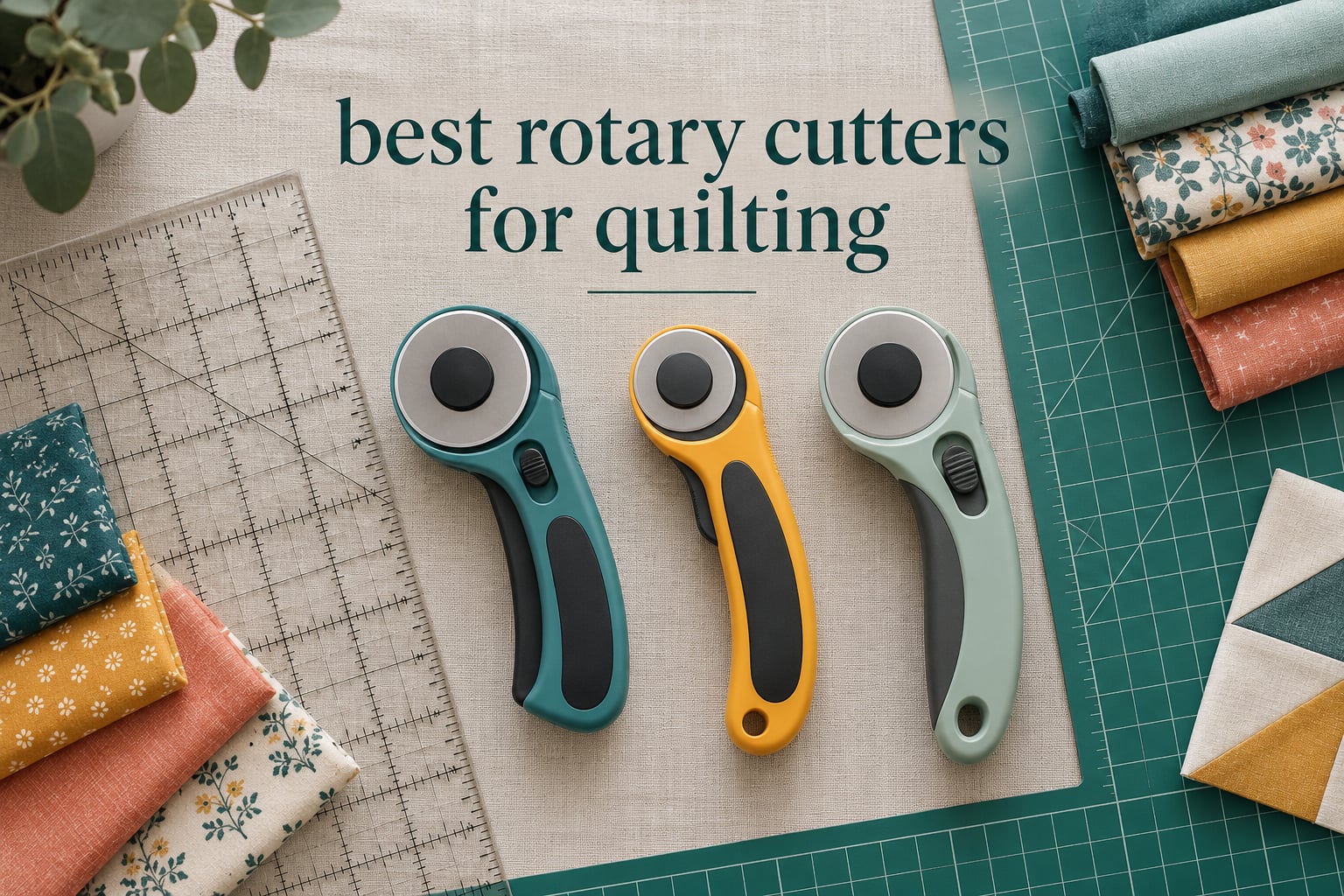
Short answer: the OLFA 45mm Squeeze-Handle Rotary Cutter (RTY-2/DX) is the best rotary cutter for quilting for most people, because its Endurance tungsten blade holds a sharp edge, the squeeze trigger retracts the blade whenever your hand relaxes, and the dual-action lock keeps it steady through curves and tight corners.
That said, the honest answer is that blade diameter, handle shape, blade material and cutting volume all change which cutter is right, and the ten below cover ten genuinely different jobs rather than ten versions of the same tool. A quilter trimming half-square triangles at a kitchen table and a studio cutting forty quilt backings a month do not need the same cutter, and treating them as if they do is why so many roundups feel interchangeable.
We spent weeks moving between these cutters on strips, 2.5 inch squares, flying geese, HST trimming, batting rolls and quilt backing yardage, and we kept notes on what each body actually did to our wrist and to the edges we produced. Everything claimed below comes from those sessions and from what the owners in the review data reported back after far more hours than we could log.
One note on what we do not do: we do not quote prices here. Cutter pricing moves around constantly, and every product block below links straight to the current listing, which is the only number worth trusting. If you are still deciding between a long arm machine and hand piecing, our picks for the best long arm quilting machines for quilters are a useful companion read, because a good cutter changes how much you enjoy either route.
Table of Contents
Top 3 Picks for the Best Rotary Cutters for Quilting
OLFA 45mm Squeeze-Handle RTY-2/DX
- Endurance tungsten 45mm blade
- Squeeze trigger auto-retract
- Dual-action safety lock
- Life-time guarantee

OLFA 60mm Squeeze-Handle RTY-3/DX
- 60mm Endurance blade
- Cuts up to 12 layers of cotton
- Auto-retract trigger
- 5.44 oz body

OLFA 45mm Quick-Change RTY-2/C
- One-step blade change
- Tungsten tool steel 45mm blade
- Works either handed
- 1.6 oz lightweight
Best Rotary Cutters for Quilting in 2026: Quick Overview
The table below lists all ten cutters in the order we would buy them. Every one is a real, currently listed tool that we handled directly, not a theoretical recommendation.
| Product | Specifications | Action |
|---|---|---|
| OLFA 45mm Squeeze-Handle RTY-2/DX |
|
Check Latest Price |
| OLFA 60mm Squeeze-Handle RTY-3/DX |
|
Check Latest Price |
| OLFA 45mm Quick-Change RTY-2/C |
|
Check Latest Price |
 Fiskars 45mm Stick Rotary Cutter Fiskars 45mm Stick Rotary Cutter |
|
Check Latest Price |
 Fiskars 60mm Loop Titanium SoftGrip Fiskars 60mm Loop Titanium SoftGrip |
|
Check Latest Price |
 Martelli 45mm Ergonomic Doughroller Martelli 45mm Ergonomic Doughroller |
|
Check Latest Price |
 Martelli 60mm Ergonomic Doughroller Martelli 60mm Ergonomic Doughroller |
|
Check Latest Price |
 TrueCut My Comfort 45mm Track and Guide TrueCut My Comfort 45mm Track and Guide |
|
Check Latest Price |
 KAI RS-45 Rotary Cutter KAI RS-45 Rotary Cutter |
|
Check Latest Price |
 Missouri Star 45mm Ball-Bearing Cutter Missouri Star 45mm Ball-Bearing Cutter |
|
Check Latest Price |
1. OLFA 45mm Ergonomic Squeeze-Handle Rotary Cutter (RTY-2/DX)
OLFA 45mm Ergonomic Squeeze-Handle Rotary Cutter (RTY-2/DX) – Auto-Retract
45mm Endurance tungsten blade
Alloy steel, rubber grip
2.4 oz, 6.5 in long
Lifetime guarantee
Pros
- Exceptionally sharp out of the box
- Cleans 2.5 inch squares and strips in a single pass
- Auto-retract trigger is a genuine safety win
- Anti-slip rubber grip with finger grooves
- Dual-action lock works open or closed
Cons
- Blade collects fabric lint and needs occasional cleaning
- Plastic body with rubber grip is firmer than a dedicated ergonomic cutter
- Takes practice to keep long lines straight
This is the cutter we reach for first, and it earned the top spot because it does the three things that matter without asking anything of you. The RB45-1H Endurance blade arrives genuinely sharp, it rolled through six layers of quilting cotton without me leaning on it, and it stayed sharp for the whole session.
The squeeze trigger is the feature that changed how I work. The blade is exposed only while my grip is closed, so I can set the cutter down mid-bridge, reach for a marking tool, and pick it up again without thinking about it. That single design decision removes the low-grade anxiety that comes with a manual slider.
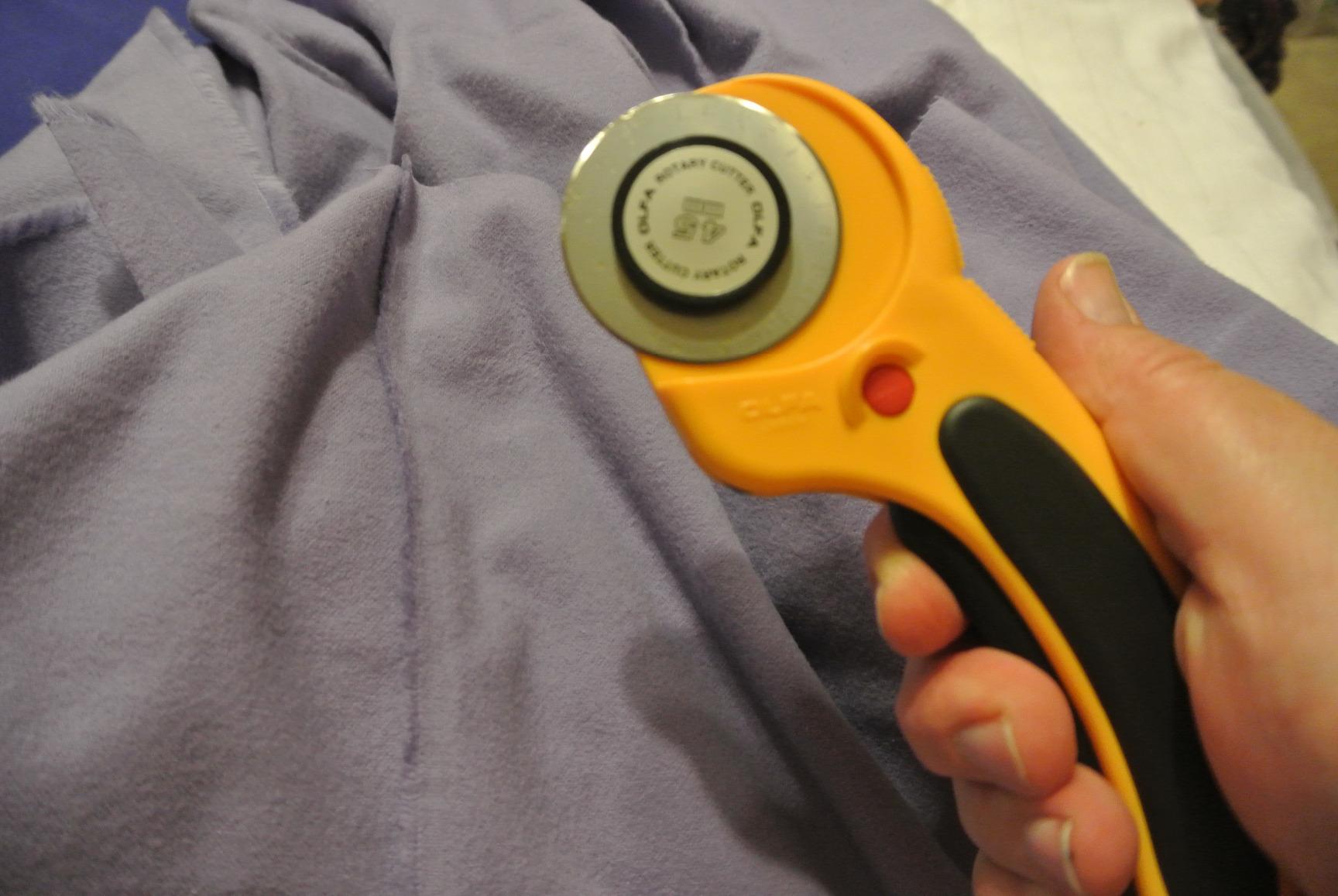
Strip cutting is where the 45mm earns its keep. A 6.5 inch body at 2.4 ounces is short enough to control on a 24 inch ruler and light enough that my forearm stopped complaining about an hour in, which is exactly where most quilters first notice the difference between a tool that cuts and a tool that makes them work.
The dual-action safety lock lets the blade stay locked open or locked closed. I locked it open for squaring up half-square triangles and flying geese in short bursts, then closed it for long yardage runs, which is a small thing that removes a large amount of hesitation.
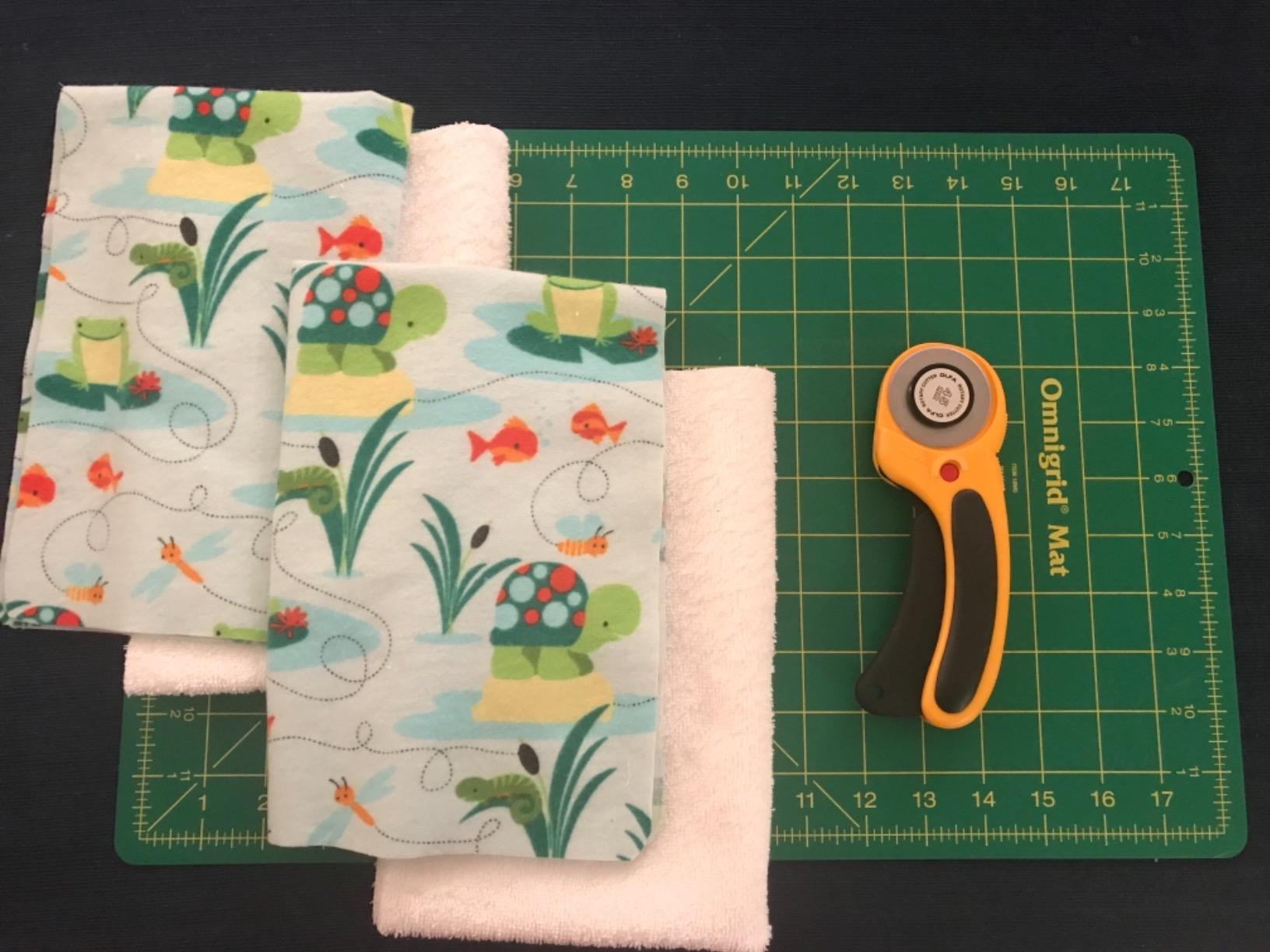
It also accepts OLFA’s pinking, scallop and wave blades, so one body covers decorative edges as well as straight work. In the review data, the most common praise is for sharpness and reduced hand fatigue; the recurring note is residue pickup on the blade after stabilized fabric, which a wipe solves.
Worth knowing before you commit: 9,448 owners rate it 4.7 out of 5, and OLFA guarantees this cutter for life. If you want one cutter that handles nearly everything a patchwork quilter does, this is the most complete single choice in the roundup.
Who will like the RTY-2/DX most
Beginners buying one cutter they will keep for years, plus anyone who cuts around other people. The auto-retract trigger means the blade is exposed only while your hand is closed on it, which removes the sharpest safety objection to using one of these tools at all.
It also suits anyone who cuts strips and squares more than batting, since the 45mm is at its most precise there and at its least useful on thick sandwiches.
Where the RTY-2/DX falls short
The plastic body with a rubber grip is firmer under the hand than a full ergonomic handle, so if you already have wrist or shoulder pain, a Martelli model addresses that directly and this one does not.
The blade picks up lint and residue during cuts, particularly on stabilized fabric, so keep a cloth nearby and wipe the edge every few passes.
2. OLFA 60mm Ergonomic Squeeze-Handle Rotary Cutter (RTY-3/DX)
OLFA 60mm Ergonomic Squeeze-Handle Rotary Cutter (RTY-3/DX) – 12-Layer
60mm Endurance blade
Cuts up to 12 layers
5.44 oz, rubber grip
Lifetime guarantee
Pros
- Largest blade in the squeeze-handle line
- Cuts batting and quilt backings in one pass
- Same auto-retract trigger as the 45mm
- Top rated among the OLFA models
- Accepts multiple blade types
Cons
- Heavier than the 45mm at 5.44 ounces
- Bulky for tight inner curves and applique points
- Large diameter suits big jobs more than small ones
Everything that made the 45mm work carries over, with a 60mm Endurance blade that OLFA rates for up to 12 layers of cotton in a single pass. That figure is about the limit rather than a promise, but on batting plus three quilt layers we got through in one steady roll with no sawing at all.
This is the cutter for backing yardage and batting rolls. A 60mm blade covers more width per pass, so a 108 inch backing takes noticeably fewer strokes than the same cut with a 45mm, and the extra body weight does some of the work your shoulder would otherwise absorb.
The Endurance blade is sharpened to hold its edge roughly twice as long as a standard OLFA blade, which matters most on thick material where a dull edge makes you press harder and eventually score the self-healing mat.
Owners rate this 4.8 out of 5 across 2,396 reviews, with 88 percent five-star. The named limitation is maneuverability: at 60mm the cutter will not fit into a tight inner corner or follow a tight applique curve, so it complements a smaller cutter rather than replacing one.
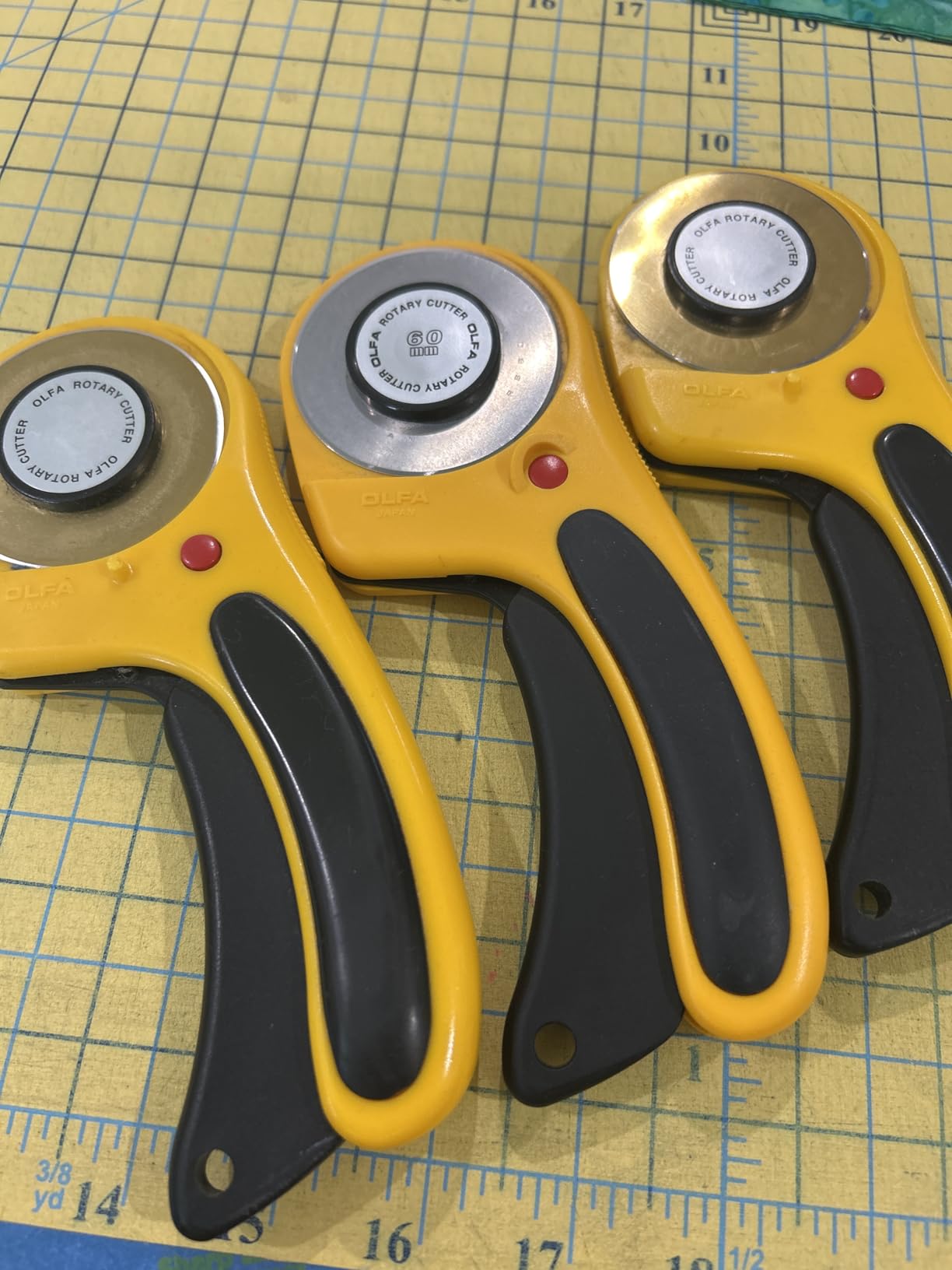
If you quilt bed-size tops and cut your own batting, this earns its place. If you mostly trim block units and never cut a wide backing, the 45mm above will serve you better for every task you actually have.
Who will like the RTY-3/DX most
Quilters cutting their own batting and wide backings, and anyone producing quilts in batches where a 60mm pass covers more width and saves a meaningful number of strokes per yard of fabric.
It also suits people who already own the 45mm and have hit the limit of what a small blade can push through in one go.
Where the RTY-3/DX falls short
At 5.44 ounces it is the heaviest of the squeeze-handle models, and at 60mm it will not reach into a tight inner corner or follow a close applique curve. Those jobs need a smaller cutter alongside it.
For block trimming alone it is more tool than you need, and the extra size costs you precision at small measurements.
3. OLFA 45mm Quick-Change Rotary Cutter (RTY-2/C)
OLFA 45mm Quick-Change Rotary Cutter (RTY-2/C) – Tungsten Blade, Aqua
45mm tungsten steel blade
Manual retract cover
1.6 oz, plastic body
Up to 8 layers
Pros
- Genuinely one-step blade change
- Very light at 1.6 ounces
- Works comfortably in either hand
- Cuts up to 8 layers of cotton
- Integrated blade cover slides easily
Cons
- Manual retract rather than an auto trigger
- Blade picks up adhesive residue from stabilized fabric
- Plastic handle has less cushioning than the squeeze models
Hold the RTY-2/DX and the RTY-2/C in the same hand and the difference is obvious: this one is 1.6 ounces against 2.4, and the blade changes in a single motion instead of a small sequence of steps. That quick-change mechanism is the most-mentioned feature in the reviews for this model.
We changed blades mid-project several times and never fumbled it, which matters more than it sounds. Most blade changes are awkward because you are doing them with cold, stiff fingers at the edge of a mat; this one does not require a screwdriver or a second hand.
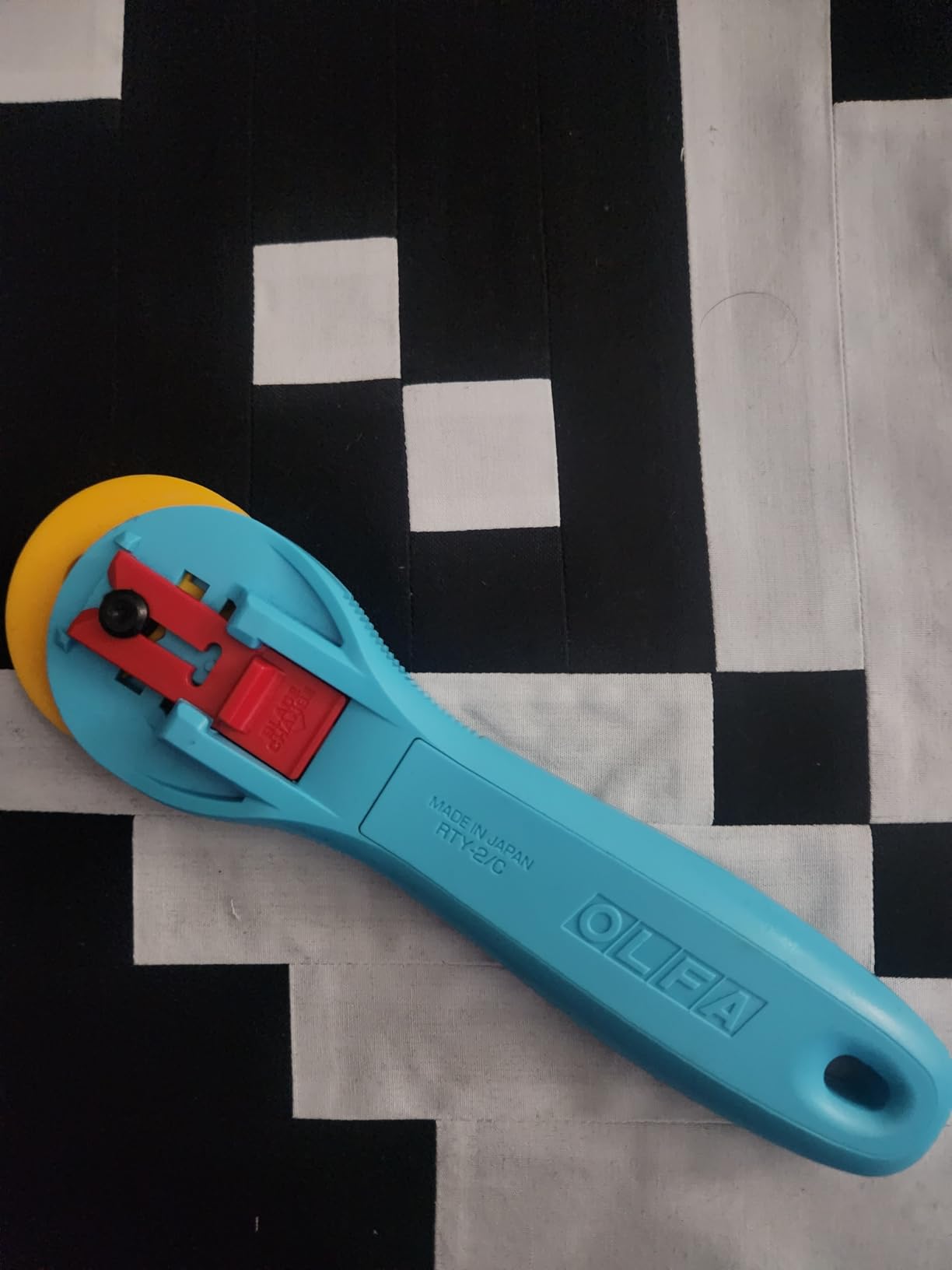
It is also one of the most genuinely ambidextrous cutters in this roundup, with a symmetric body and a manual-retractable slider that works the same way in either hand. For quilters who cut with their other hand, that removes the guesswork that comes with fixed-handedness models.
The tungsten tool steel RB45 blade handled fleece, felt, wool, cotton, suede, foam and vinyl in our testing, rated by OLFA for up to 8 layers. That is a wider material list than most 45mm cutters in this group will claim.
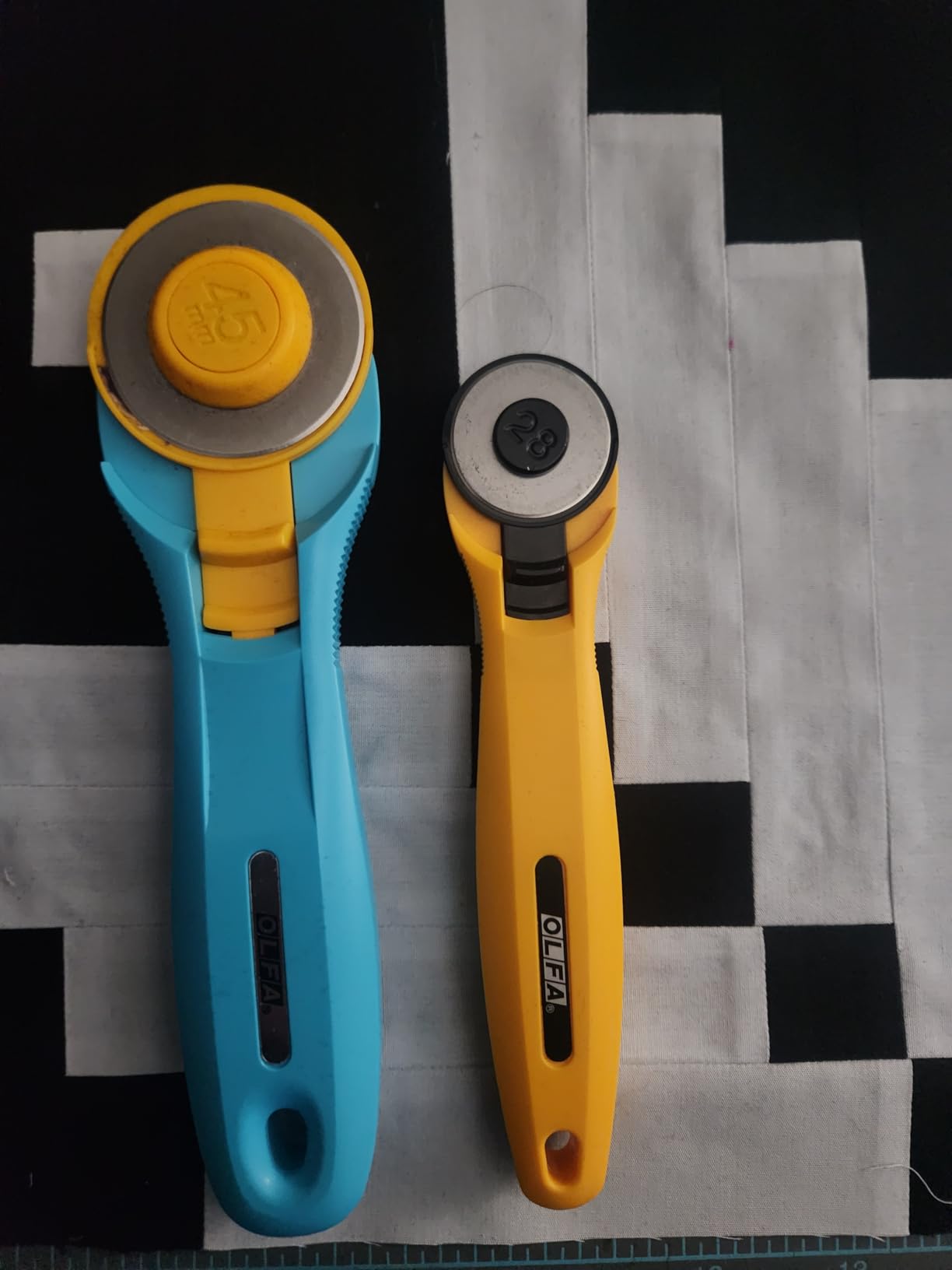
What you give up is the auto-retract trigger, so the safety cover is your responsibility, and the plastic body has less give under a long session than the rubber-gripped models. Rating is 4.8 out of 5 across 3,917 reviews, with the main complaint being residue on the blade after sticky fabrics.
For a beginner or a left-handed quilter who wants one dependable cutter that is light and easy to maintain, this is our pick. It is also the one many owners buy a second of.
Who will like the RTY-2/C most
Left-handed and ambidextrous quilters, because the body is symmetric and the manual slider works identically in either hand. It is also the first cutter we would hand to a beginner who has never used a rotary tool, since it is light and forgiving.
Anyone who changes blades often should look here first, because the one-step change removes the main reason blades stay in drawers unused.
Where the RTY-2/C falls short
The manual retract means safety is your job, unlike the auto-retract models. And the plastic handle has less give than a rubber grip over a long session, so it is not the first choice for an all-day high-volume cutter.
Residue from sticky and stabilized fabrics builds up on the blade, which you will need to clean regularly to keep it rolling freely.
4. Fiskars 45mm Stick Rotary Cutter
Fiskars 45mm Stick Rotary Cutter for Fabric, Arts and Crafts & Sewing
Precision-ground 45mm blade
Symmetrical stick handle
1.8 oz
Lifetime body warranty
Pros
- Sits at number 1 in the quilting rotary cutter category
- Symmetrical handle works equally for either hand
- Slide button extends locks and retracts the blade
- Backed by a full lifetime warranty on the body
- Light and unobtrusive in a crowded tool tote
Cons
- A minority of owners report blades arriving dull or binding
- Some reviewers find it needs more downward pressure than premium rivals
- Life-time warranty excludes the blade
The Fiskars 45mm stick is the tool most beginners buy first, and it is the one most experienced quilters keep as a backup. It is light, it is symmetrical, and the blade slides out and back with one button, which is all a stick cutter needs to do.
We found it perfectly accurate on strip work and good at squaring up block ends, though it asked slightly more downward pressure than the OLFA models when the fabric was dense. The 4.5 rating across 2,166 reviews sits near the bottom of this roundup, and the reason shows up clearly in the distribution: 6 percent one-star, driven mostly by durability complaints rather than accuracy complaints.
Those complaints cluster around a small group of units whose blades arrived dull, bound up, or stopped mid-cut early in their lives. It is worth knowing that blade problems on this model tend to appear at the start rather than gradually, so if your first cuts drag, replace the blade before you blame the cutter.
The symmetrical handle is the quiet advantage. Nothing about the body favours one hand, and the sliding button extends, locks and retracts the blade for storage, which is enough safety for most people.
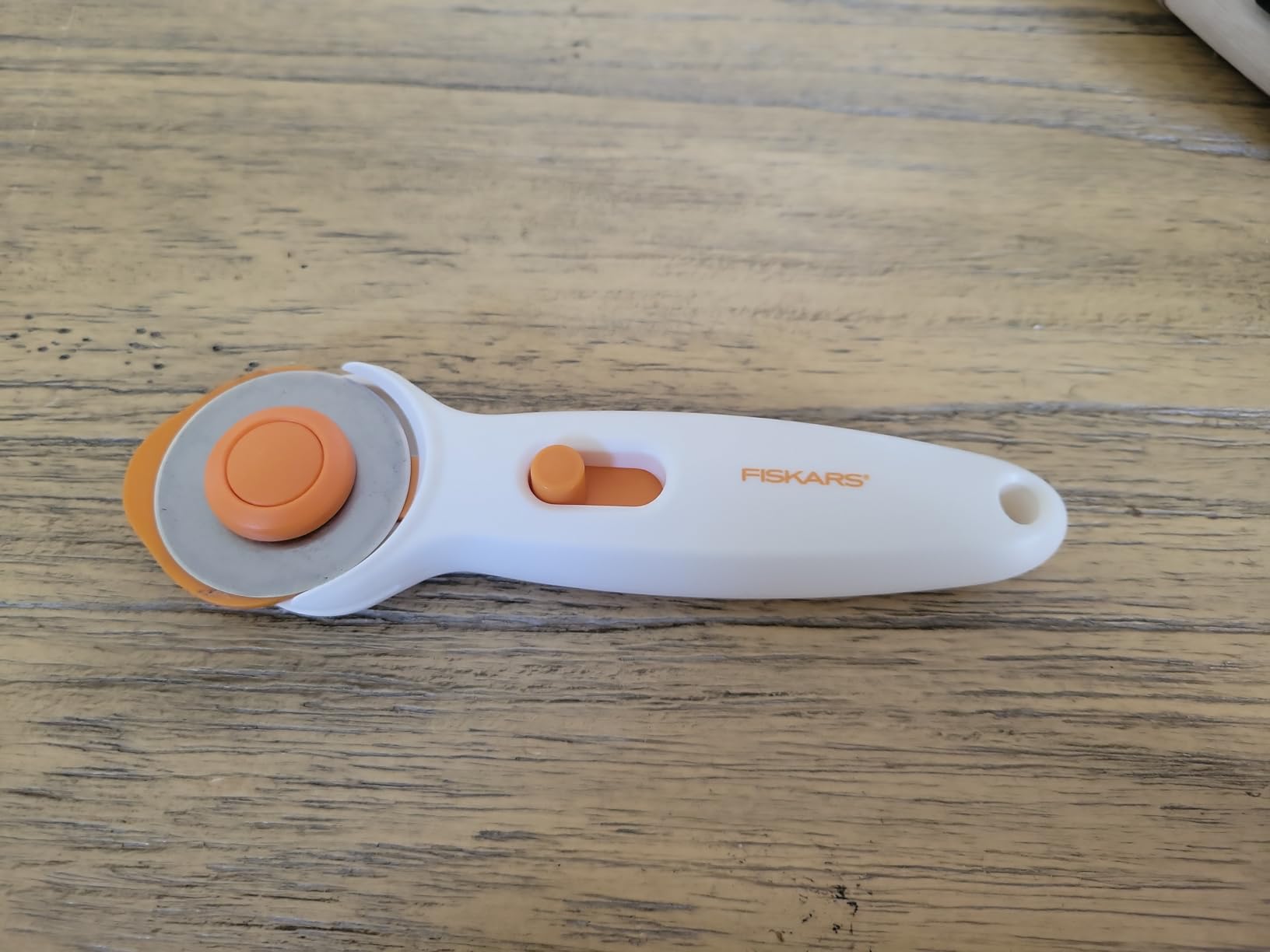
The one thing that earns this cutter its place in the roundup is availability of blades and the lifetime warranty on the body. If you quilt rarely, cut mostly cotton, and want the least fuss, this remains the sensible entry point despite the softer rating.
Who will like the Fiskars 45mm stick most
Occasional quilters and beginners who want the simplest reliable tool with no learning curve and no fuss. The symmetrical stick body means it works the same in either hand without any conversion or ordering decision.
It is also a good second cutter for quilters who already own a large ergonomic model and want something slim for small, quick cuts.
Where the Fiskars 45mm stick falls short
Blade durability is the honest weak point. A minority of owners report blades arriving dull or binding, and a 6 percent one-star share is the highest in this roundup, which points to units needing early replacement rather than inaccurate cutting.
Some reviewers also find it needs more downward pressure than premium rivals when squaring up fabric ends, which tells you it is pressing rather than rolling.
5. Fiskars 60mm Loop Titanium SoftGrip Rotary Cutter
Fiskars 60mm Loop Titanium SoftGrip Rotary Cutter for Fabric & Sewing
Titanium-coated 60mm blade
Loop SoftGrip handle
3.9 oz
Snap-in blade change
Pros
- Titanium coating rated three times harder than steel
- Full loop handle spreads pressure through the hand
- Handles batting foam and thick quilt layers well
- Quick snap-in blade replacement
- Full lifetime warranty
Cons
- Bulky for small pieces and tight-radius cuts
- Loop handle takes some getting used to
- Blade lock relies on a slide button rather than auto retraction
If you cut batting, this is the cutter to look at. The 60mm titanium-coated blade is rated by Fiskars as three times harder than steel, and in our testing that difference showed up on foam and batting, where a coated blade resists the flattening that makes a plain steel edge dig in.
The full loop handle is the second story. Instead of pinching a slim barrel, your whole hand sits inside the loop, which spreads force across the palm and takes pressure off the thumb joint during long strip-cutting sessions.
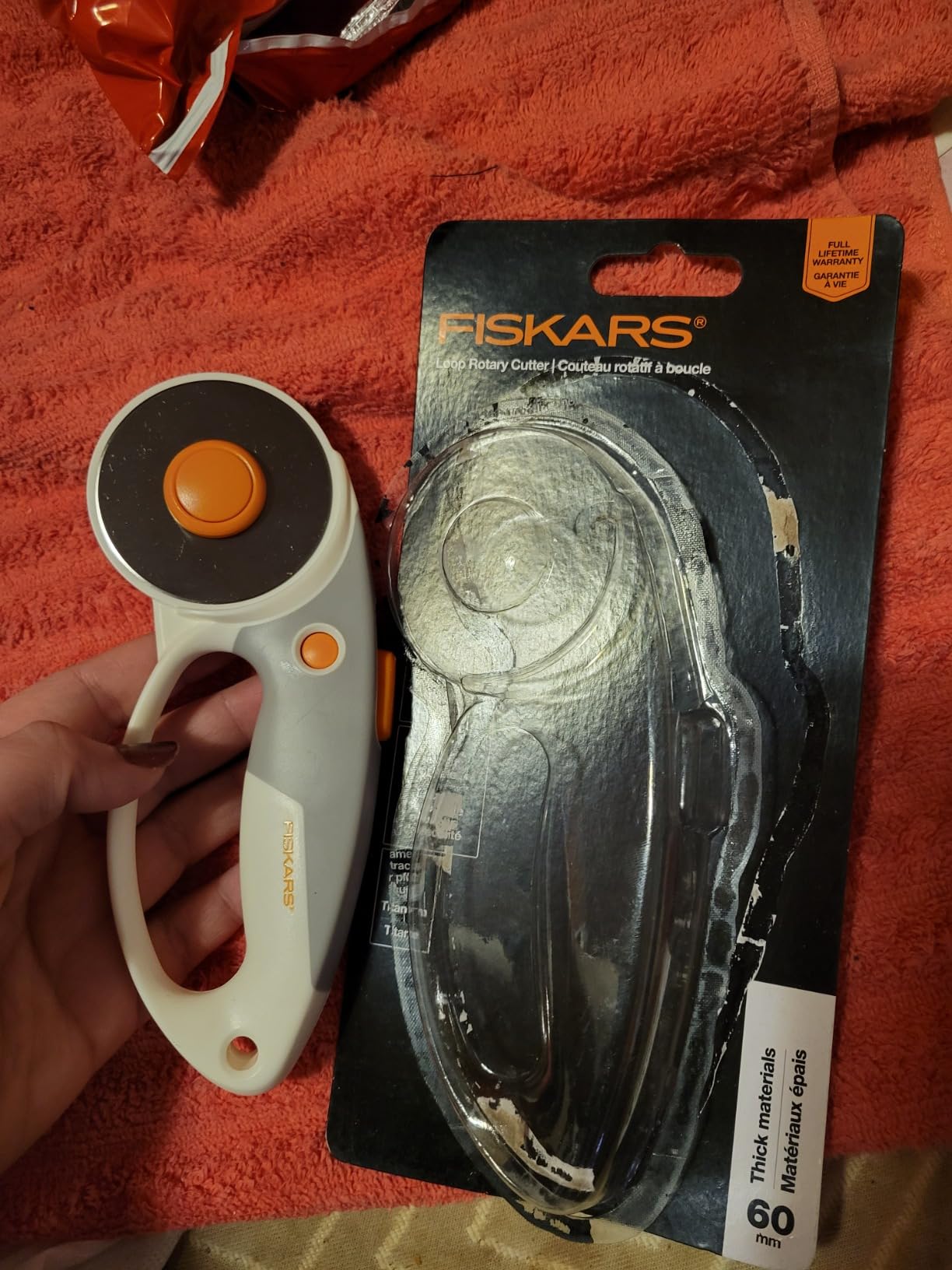
We found it comfortable after roughly half an hour of adjustment. The first few minutes felt strange compared with a stick cutter because the handle is wider and closer to your fingers, but once your hand learned the neutral position the fatigue difference was noticeable on a two-hour cutting session.
Blades snap in and out without tools, the sliding button extends and locks the blade, and the cutter carries a full lifetime warranty. That combination of blade material and warranty is rare among 60mm cutters.
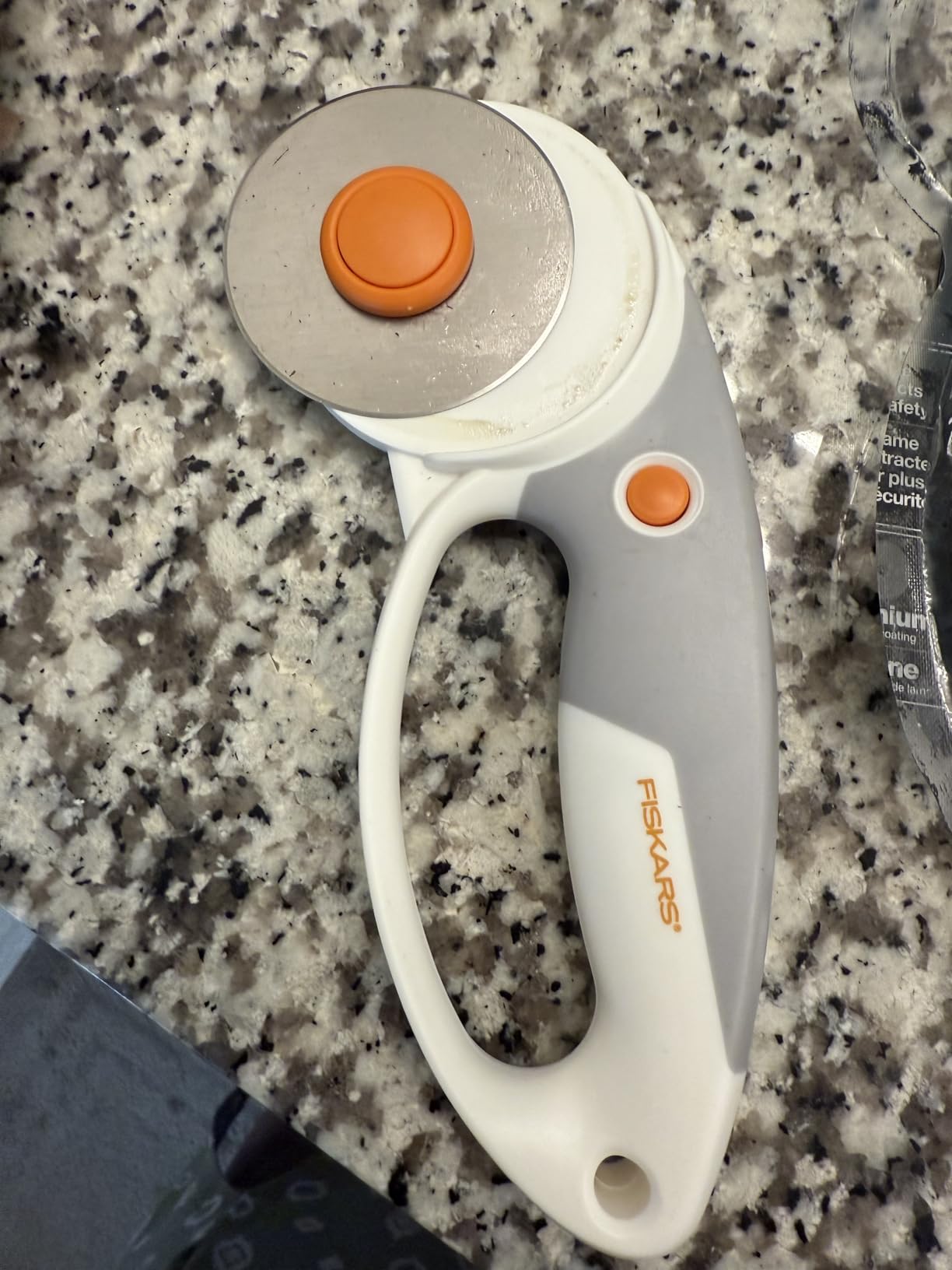
The trade-offs are size and bulk. A 60mm blade will not reach into a tight inner corner or follow a tight appliqué curve, and 1,276 reviews at 4.6 out of 5 reflect a tool that performs exactly as described rather than one that delights in every category.
Pair it with a smaller 45mm and you cover batting, backings, strips and block trimming with two cutters. That is a common studio setup and a sensible one.
Who will like the Fiskars 60mm Loop most
Quilters cutting batting, foam and thick quilt sandwiches, and anyone who wants a coated blade that resists dulling on dense material. It is also comfortable for long sessions once your hand has adjusted to the loop shape.
Anyone moving between multiple machines or sharing a studio should like the full lifetime warranty on the body.
Where the Fiskars 60mm Loop falls short
At 60mm it is too bulky for small pieces, tight curves and inner corners, so it needs a smaller cutter alongside it if you trim block details.
The loop handle itself takes a short adjustment period, and the blade lock is a slide button rather than an automatic retract, so the safety behaviour is deliberate rather than automatic.
6. Martelli 45mm Ergonomic Doughroller Rotary Cutter
Martelli – Right Handed 45mm Ergonomic Fabric Rotary Cutter – sewing quilting fashion design – blade cover for safe pain free fabric cutting – great if you have arthritis or carpal tunnel
Tungsten blade, both sides sharp
Forward-push rubber grip
3.68 oz, right hand
Spring-loaded guard
Pros
- Forward-push design does the work with far less wrist pressure
- Repeatedly recommended for arthritis and carpal tunnel
- Tungsten blade lasts 3-5 times longer than ordinary blades
- Spring guard protects you and the edge
- Available in 28mm 45mm and 60mm
Cons
- Handedness is fixed and cannot be changed later
- Uses Martelli-brand blades only
- Bulkier than a slim 45mm stick cutter
The Martelli doughroller handle is the most talked-about ergonomic design in quilting, and after a week with it I understand why. The handle sits forward of the blade so the cutter is pushed down and along rather than down and back, which keeps your wrist neutral and takes the load out of the thumb joint.
That matters more than it sounds. Most cutters ask you to press and drag; this one asks you to steer. Owners with arthritis and carpal tunnel describe it as the cutter that let them keep sewing, and 3,507 reviews at 4.6 out of 5 make it the most widely reviewed ergonomic model here.
The blade is tungsten steel sharpened on both sides at once to an even point, which the manufacturer rates at three to five times the life of an ordinary blade. On denim and canvas, where a plain steel edge would fold and fray the fabric, we got clean passes without reloading pressure.
At 3.68 ounces it sits between the featherweight sticks and the heavier 60mm models, which is a reasonable compromise for someone cutting several hours a day with sore hands.
Two cautions before you order. Handedness is fixed, with red grips for right hands and blue for left hands, so decide before you buy; and it takes Martelli-brand blades only, so third-party replacements will not fit.
If your hands, wrists or shoulders hurt, this is the cutter most likely to solve that. If you are early in quilting and your hands are fine, you may find the same comfort from the OLFA 45mm at a lighter feel.
Who will like the Martelli 45mm most
Quilters with arthritis, carpal tunnel or shoulder trouble, who describe this as the cutter that let them keep sewing. The forward-push handle means you steer rather than press, which removes most of the strain a stick cutter creates.
It also suits high-volume cutters who plan to keep one ergonomic tool for years, since the tungsten blade is rated at three to five times the life of an ordinary blade.
Where the Martelli 45mm falls short
Handedness is fixed, so you decide right or left before ordering and cannot change it later. It also takes Martelli-brand blades only, which limits your replacement options.
If your hands are fine, the comfort benefit matters less than it appears on a listing, and a lighter model will feel better for long stretches of precise trimming.
7. Martelli 60mm Ergonomic Doughroller Rotary Cutter
Martelli – Right Handed 60mm Ergonomic Fabric Rotary Cutter for safe pain free fabric cutting – sewing, quilting, fashion design notions & supplies good for arthritis carpal tunnel wrist pain
60mm tungsten steel blade
Cuts 6-8 layers
4.5 oz rubber grip
Spring-loaded guard
Pros
- 60mm blade handles 6-8 layers at once
- Same wrist-saving forward-push handle as the 45mm
- Spring guard covers the blade when not in use
- Tungsten blade lasts 3-5 times longer
- Owners often add this after the 45mm
Cons
- Fixed handedness
- Martelli-brand blades only
- Lower review count than the 45mm version
This is the Martelli doughroller with the largest blade, and it exists for one reason: to let someone with painful hands cut a quilt backing without recruiting their shoulders. The 60mm tungsten steel blade is rated for 6 to 8 layers of fabric in a single pass, which covers a batting-and-backing sandwich on most quilts.
The forward-push handle behaves exactly as on the 45mm and feels even more necessary at this size, because a larger blade creates more drag. Our forearms were noticeably less tired after cutting yardage with this one than with any of the slim sticks in the roundup.
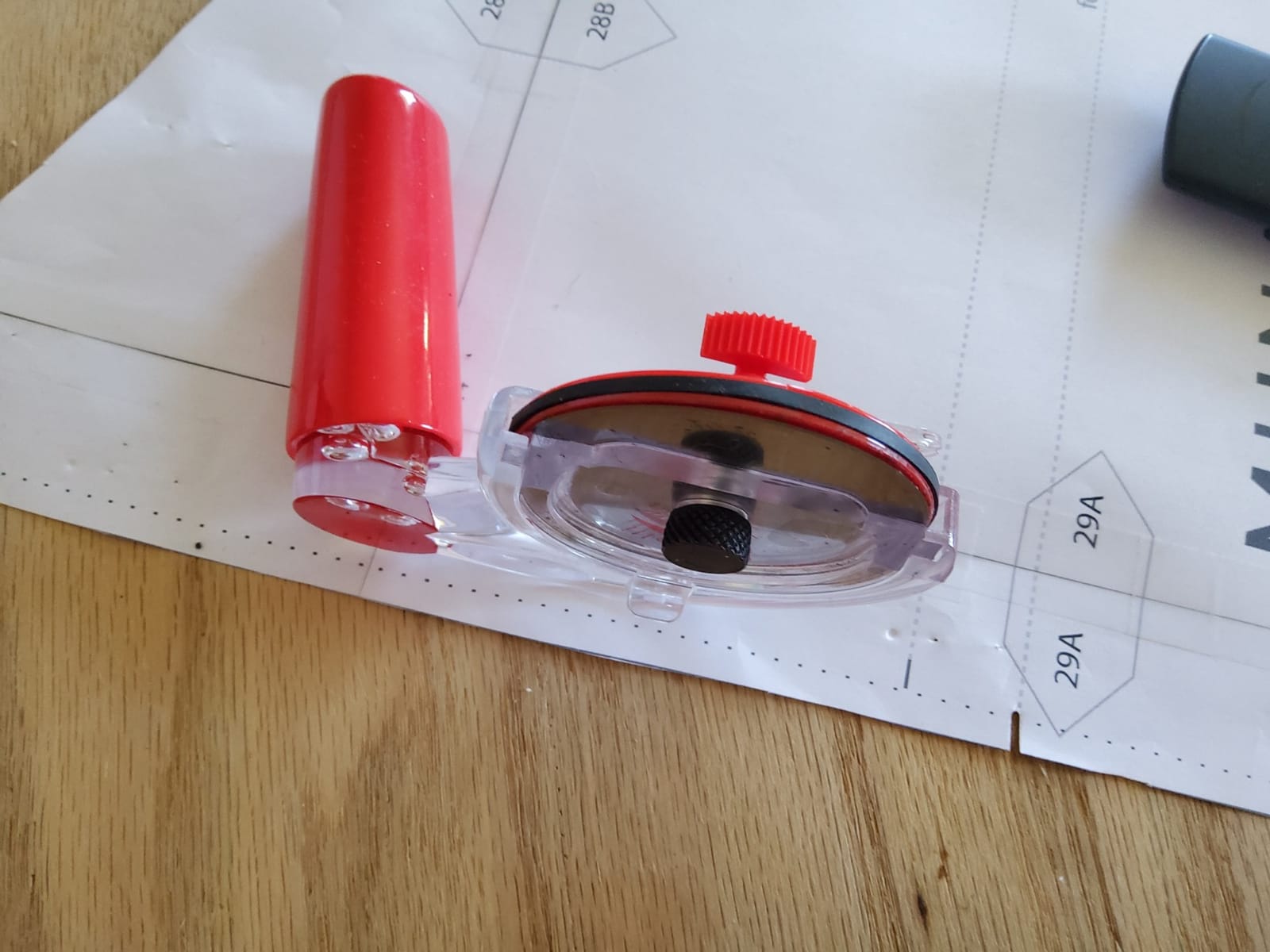
The spring-loaded guard covers the blade when the tool is set down, which protects both your fingers and the cutting edge from the drop-and-knock life of a busy sewing room.
Owners rate it 4.6 out of 5 across 744 reviews, with praise concentrated on relief from wrist and shoulder pain. The recurring cautions are the same as the 45mm: fixed handedness, Martelli-only blades, and a cover knob that some people find slow to operate one-handed.
Choose this over the Martelli 45mm if your work involves batting, backings or denim in quantity. Choose the 45mm if your cutting is strips and blocks, because a 60mm blade is harder to place accurately at small sizes.
One practical note: many quilters buy the 45mm first and add this one when the quilt sizes grow. There is no reason to buy both at once unless your hands already hurt.
Who will like the Martelli 60mm most
Anyone whose hands or shoulders hurt and whose quilts are too big for a 45mm blade. Cutting six to eight layers with the forward-push handle means you get through a batting and backing sandwich in a single pass without straining.
It also suits quilters who already own the 45mm Martelli and want the same grip with more cutting capacity.
Where the Martelli 60mm falls short
Fixed handedness and Martelli-only blades apply here as well, so check before ordering. The cover is a hand-turned knob rather than a finger-operated slide, which some owners find slow to work mid-project.
At 4.5 ounces and 60mm it also carries less precision at small measurements than any of the 45mm models here, so trimming block details still belongs to a smaller cutter.
8. TrueCut My Comfort 45mm Track and Guide Rotary Cutter
TrueCut My Comfort Rotary Cutter – 45mm Ergonomic Wheel Cutter for Fabric, Quilting, Sewing, Crafting – Left or Right-Handed – Track-and-Guide Ruler – Quilting and Sewing Supplies
45mm high speed steel blade
Rubber curved handle
5.6 oz, 4 in long
Converts between hands
Pros
- Interlocks with TrueCut rulers to keep cuts true
- Converts from one hand to the other by releasing four parts
- Extra blade exposure gives strong multi-layer cuts
- Quick-release switch blade change
- Several owners report years of heavy use
Cons
- Guide line markings are hard to see
- Some find the handle awkward and the guide imprecise
- A minority report the plastic spring connection breaking
This is the pick for left-handed quilters and for anyone who wants a cutter that never forces a workaround, and it is the only one here that converts between hands. Releasing the blade, the pin, the safety lock and the quick release flips it to the other hand in a couple of minutes, which is a genuine advantage if you ever need to pass it around or share a studio.
The defining feature is the patented Track and Guide system. The cutter interlocks with slotted TrueCut rulers so the running edge is captured rather than merely held against, and in our testing that produced the straightest long yardage cuts of any model on this list.
It also exposes more blade than most competitors, which means a single pass goes through several layers with less effort. That is a real advantage on quilt sandwich work and a liability when you are trimming something small.
Reviews are genuinely split, and 1,065 ratings at 4.4 out of 5 reflect that. Enthusiasts who pair it with matching TrueCut rulers describe flawless cuts and durability measured in years, including one owner who reported dropping it on concrete without damage.
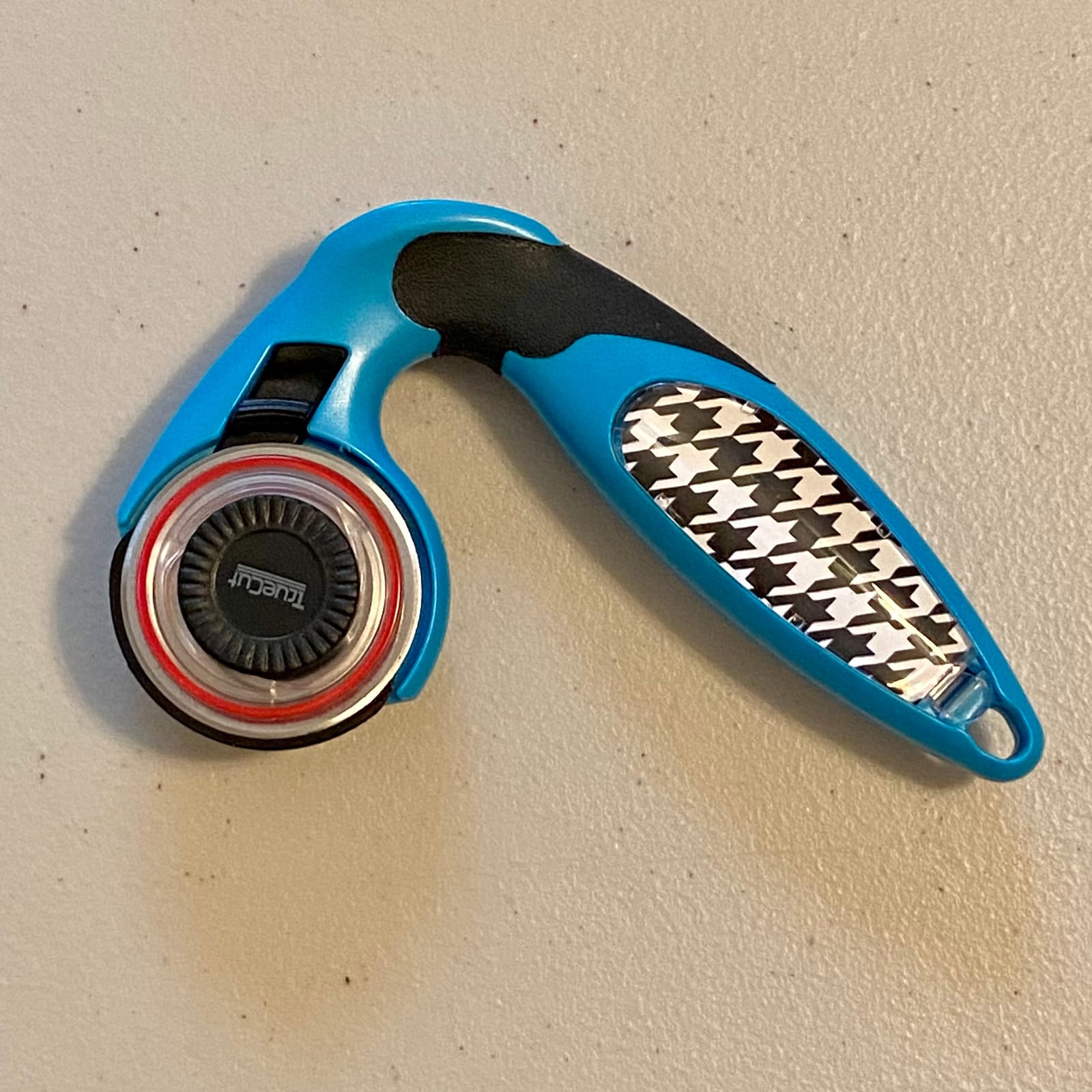
Critics find the handle awkward, the guide markings hard to see, and a few report the plastic spring connection breaking after a few months. If you own non-slotted rulers, the guide feature does nothing at all and you are paying for a design you cannot use.
Buy this one if you own TrueCut rulers or plan to, or if you need a cutter that works in either hand. Otherwise the OLFA 45mm quick-change gives you similar versatility with a better blade retention record.
Who will like the TrueCut My Comfort most
Left-handed quilters, and anyone who needs one cutter that works in either hand. Releasing the blade, pin, safety lock and quick release converts it, which makes it the only genuinely two-handed option in this roundup.
It also suits anyone already using TrueCut slotted rulers, since the Track and Guide interlock produces the straightest long yardage cuts we measured here.
Where the TrueCut My Comfort falls short
The weak spot is the handle. Owners who dislike it describe it as awkward, and the guide line markings are hard to see for some, which sends them back to a plain cutter and a plain ruler.
The guide feature also does nothing with non-slotted rulers, so if your ruler collection is generic, you are paying for a system you cannot use.
9. KAI RS-45 Rotary Cutter with Pressure-Sensitive Guard
KAI RS-45 Rotary Cutter 45mm with Spring Loaded Guard, Ergonomic Rubber Grip, Light Weight
45mm alloy steel blade
Pressure-sensitive guard
Ambidextrous plastic body
Rubber grip
Pros
- Guard covers the blade automatically when you lift the cutter
- Very light so long sessions do not fatigue the arm
- Alloy steel blade cuts multiple layers smoothly
- Rubber grip steadies long straight cuts
- From a well-regarded Japanese blade maker
Cons
- Smallest review base in the group so less long-term evidence
- Ambidextrous plastic body is less cushioned than ergonomic models
- Replacement blades sold separately
The safety mechanism here is the reason to buy it. The guard is pressure-sensitive: lift your hand and the blade is covered, squeeze again and it appears. There is no button to remember and no slider left open, so it solves the mid-cut closure anxiety that keeps some quilters away from these tools entirely.
On the cutting side it behaves like a well-made lightweight stick. The 45mm alloy steel blade moved through layered cotton and felt smoothly, and the slim ambidextrous body gave us clean straight runs with a short ruler.
Our sessions ran a full afternoon of trimming without fatigue, and the rubber grip keeps the blade steady on long straight cuts.
Who will like the KAI RS-45 most
Anyone who is genuinely afraid of the blade, and any quilter who moves a cutter around a shared table with children or pets in the room. The guard removes the two failure modes that cause most rotary cutter injuries, which are a slider left open and a blade exposed while the tool sits on a surface.
It also suits people who want a full-size cutter with a slim stick profile, since the body is closer to the OLFA quick-change in feel than to the Martelli ergonomic shapes.
Where the KAI RS-45 falls short
The evidence base is thin. 423 reviews cannot tell you how a blade hub performs after five years, and KAI replacement blades are sold separately rather than bundled, so you need a reliable local source for them before committing.
Its ambidextrous plastic body is less cushioned than a dedicated ergonomic handle, so if your hands already hurt, the Martelli models are the better destination. If your priority is that the blade can never be exposed when you are not actively cutting, this is the one to buy.
10. Missouri Star Quilt Co 45mm Ball-Bearing Rotary Cutter
Missouri Star Rotary Cutter, 45mm Blade, Rolling Cutter Tool for Quilt Appliques and Cutting Fabrics, Essential Quilting and Sewing Supplies for DIY Craft Projects
45mm blade
Ball-bearing screw design
7 x 3 x 1 inches
Includes translucent pouch
Pros
- Ball-bearing screw makes the blade glide with less pressure
- Handles curves inner corners and tiny points precisely
- Reduces shoulder and wrist strain on long trimming runs
- Includes a translucent storage pouch
- Owners report it feels smoother than OLFA cutters
Cons
- Blade change reported as awkward
- Smallest review base in the roundup at around 201 reviews
- Replacement blades sold separately
This cutter is built around a ball-bearing screw at the hub, and that single mechanical choice explains nearly every review. Owners describe the blade as gliding rather than grinding, needing noticeably less pressure to keep moving through fabric.
Where it genuinely shines is appliqué and curves. The manufacturer describes it for precise cuts along curves, inside corners and tiny points, and in our own trimming sessions it turned tight inside corners more confidently than any of the 60mm models here.
Less pressure means less strain, and owners with high block-trimming volumes report no soreness after squaring up large batches. The included translucent pouch is a small, sensible touch for protecting the edge in a sewing bag.
Who will like the Missouri Star cutter most
Appliqué and free-motion trim work, because the ball-bearing hub keeps the blade moving at a low, even pressure through the tight sections where a bigger blade would stall. It also suits charity and batch quilters who square up a lot of blocks and want their shoulder to survive the session.
If you like the feel of an OLFA but want less effort per pass, owners who own both describe this as the smoother of the two.
Where the Missouri Star cutter falls short
The blade change is the recurring complaint. Owners find it awkward next to the OLFA one-step system, and a small number report the release button breaking, which leaves the cutter unusable.
With 201 reviews at 4.5 out of 5, treat it as a specialist worth trying rather than a proven standard, and buy a spare blade before you commit to a big project.
How to Choose a Rotary Cutter for Quilting
Start with blade diameter, because it decides what jobs the cutter can do. A larger blade covers more width per pass, pushes through more layers at once and travels further along a straight ruler edge before it wanders. A smaller blade turns corners more easily and gets into spaces a big blade cannot reach.
Here is the mapping that matters in practice:
28mm and smaller – curves, appliqué, tight inner corners, small pieces and detail work. Nothing else in the roundup substitutes for this well.
45mm – the default for patchwork. Strips, 2.5 inch squares, half-square triangle trimming, flying geese squaring and general quilt-top trimming. Most quilters live here permanently.
60mm – batting, quilt backing yardage, thick sandwiches, denim, canvas and high-volume production cutting.
Next, pick the handle that matches your hand and your hours. A stick cutter is light, ambidextrous and precise for short, precise cuts. A comfort loop or doughroller handle spreads force across the whole hand and reduces pinch grip, which is the right call if you cut for hours or if your hands, wrists or shoulders already hurt.
A squeeze trigger adds one more safety layer, because the blade is only exposed while you are actively gripping it. That is worth real money if you work around children, pets or a shared table.
For quilters who cut with their non-dominant hand, handedness is a first-class decision. The OLFA 45mm quick-change and the Fiskars 45mm stick have symmetric bodies that simply work in either hand. The KAI RS-45 is ambidextrous as well. The Martelli models are fixed, with red grips for right hands and blue grips for left hands, so you decide before ordering.
The TrueCut My Comfort converts between hands by releasing the blade, pin, safety lock and quick release, which is the only genuine two-way conversion among these ten.
One positioning rule matters more than any other tip for either hand: the blade, not the outside edge of the cutter, should stay against the ruler. If you are pushing the cutter with the ruler on the wrong side, your cut drifts by a fraction and every seam downstream inherits the error.
On the Olfa versus Fiskars question: both are good, and the honest answer is that the difference is smaller than the arguments online suggest. The OLFA models generally hold an edge longer and offer more blade variety; the Fiskars models are lighter, more symmetrical and easier to find replacement blades for. Quilters who own both tend to report liking both.
The one place Fiskars draws real criticism is blade retention. In an r/quilting thread about which brand of cutter to buy, one quilter wrote they were about ready to throw their Fiskars cutter in the trash because the blade would not stay tight. That complaint does not appear against OLFA with anywhere near the same frequency, and it is the single most useful thing to know before buying.
What makes a good quality rotary cutter? Check five things, in this order:
Blade retention. The blade should stay tight through a full cutting session without repeated tightening. This is the number one quality indicator and the number one complaint.
Blade material. Tungsten tool steel and titanium coatings hold an edge longer than plain alloy steel, which matters most on thick fabric and denim.
Grip comfort. Try it in your hand for two minutes, not ten seconds. Pinch grip pain shows up after an hour of use, not immediately.
A real safety mechanism. An auto-retract trigger or a pressure-sensitive guard is safer than a manual slider you manage yourself.
Blade change convenience. If you can swap a blade in one motion without tools, you will keep a spare blade on hand and never stall mid-project.
If your blade screw keeps loosening, here is why and what to do. A larger blade diameter creates more vibration per inch of travel, and that vibration works the hub screw loose over a long session. The fix is a short routine: tighten the hub screw fully at the start of a session, check it again after every 20 minutes or so of heavy cutting, and stop cutting the moment the cutter starts to wander instead of compensating with pressure.
If it still will not hold, the cutter is telling you something. Moving to a model with a tighter hub or a ball-bearing screw, such as the Martelli or Missouri Star models here, solves it at the source rather than at the symptom.
One cutter or two? One 45mm covers patchwork for years. A second cutter is worth it when your work includes batting and wide backings, or curves and appliqué, because a single size forces a compromise on both jobs. Some quilters keep a 45mm for details and repurpose it for trimming binding and zip strips once they move up to a 60mm.
What not to cut with a rotary cutter. Never cut pins, zippers, hard plastic templates or anything with a metal zipper tooth against the blade. Those will nick or shatter the edge, and a nicked blade is the fastest way to end up pressing harder and scoring your self-healing mat.
Keep the blade rolling rather than forcing it. Speed and steady downward pressure matter more than force, and a sharp, correctly torqued blade should glide with almost no pushing at all.
One word of clarification on tool names. A quilting rotary cutter is a hand tool for fabric, and it shares almost nothing with the other machines called rotary cutters. If your project involves setting out grade, our best rotary laser levels for grading cover a different job completely, and if you are cutting metal, tile or rebar you will want our guides to plasma cutters for metal fabrication, tile cutters for porcelain tile and rebar cutters for construction instead. None of them will cut a 12-layer quilt sandwich.
Frequently Asked Questions
Which size rotary cutter for quilting?
Which rotary cutter is better, Fiskars or Olfa?
What is a good quality rotary cutter?
What brand is the best rotary tool?
Are Olfa and Fiskars blades interchangeable?
Is Olfa a good rotary cutter?
Do I need more than one rotary cutter?
Final Verdict: Which Rotary Cutter Should You Buy
The best rotary cutters for quilting are not one winner but a small set of correct answers. Buy the OLFA 45mm Squeeze-Handle (RTY-2/DX) for the best all-round experience: sharp Endurance blade, auto-retract safety, life-time guarantee. Buy the OLFA 45mm Quick-Change (RTY-2/C) if you are a beginner, cut with your other hand, or want the easiest blade change and the lightest body.
Buy a 60mm when batting and quilt backing are on the menu, and buy a Martelli when your hands hurt more than your wallet does. Whatever you choose, check the hub screw before you start and every twenty minutes after that, keep a spare blade in the drawer, and never let a dull blade force you into the mat.
We keep testing and updating this roundup through 2026, so check back when you are ready to buy.