
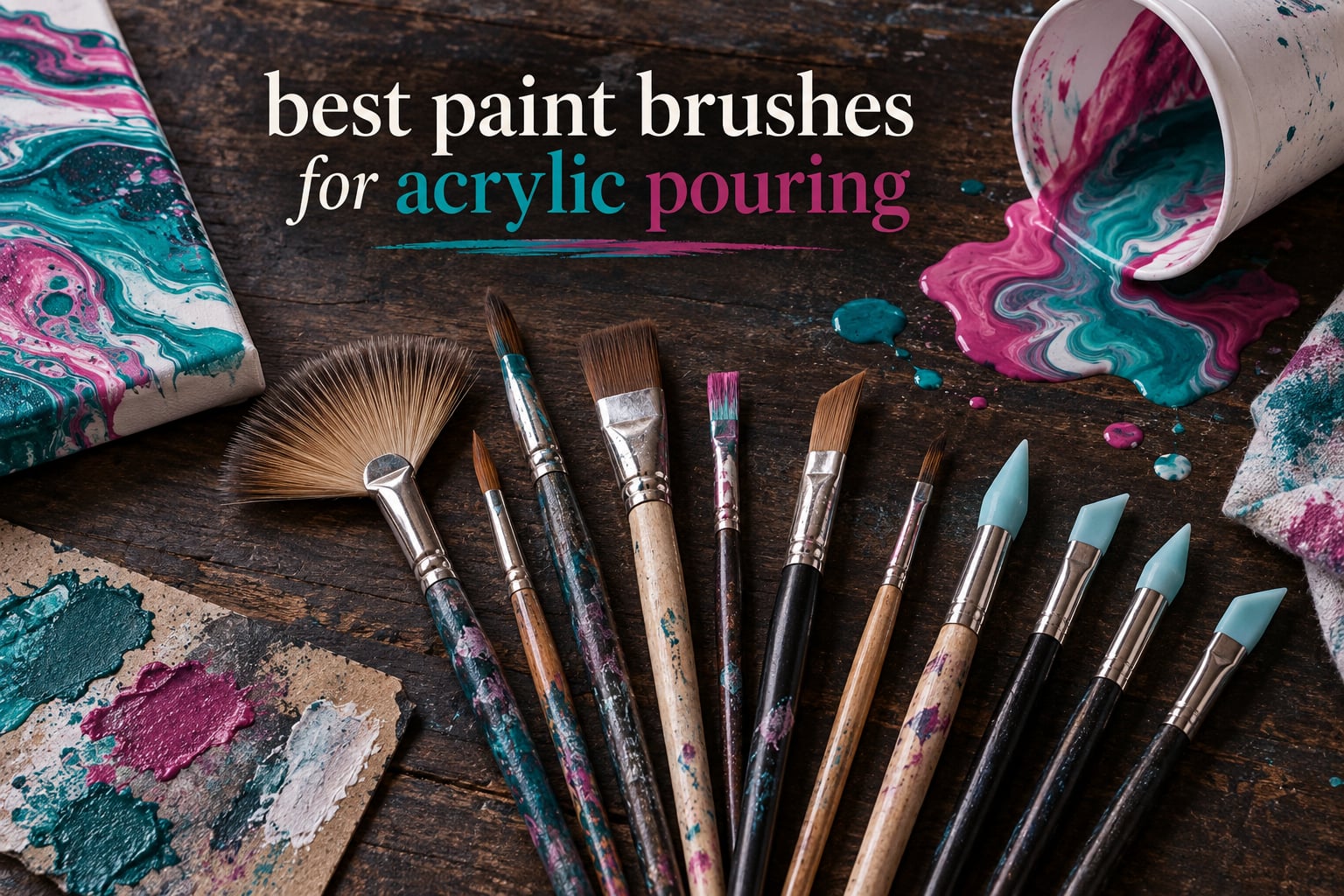
Search for the best paint brushes for acrylic pouring and you will land on pages about general acrylic painting. Those guides explain which bristle holds a stroke on canvas. That is a different job from pouring, where a brush does not deposit color so much as move, drag, split and flick paint that has already been thinned with pouring medium.
We spent weeks running the same ten tools through flip cup pours, swipe patterns, string pulls and flood pours to see which ones hold up. Four of them are silicone color shapers, four are natural or synthetic hair fans, one is a wide paddle flat and one is a pouring kit. That mix is not accidental. It is what the technique actually demands, and it is why picking a brush by brand name alone gets you nowhere.
So here is the honest split before we get into the list. Painting brushes are built to put pigment down in a controlled stroke. Pouring brushes are built to survive thick, sticky paint that dries inside the ferrule overnight. If you only buy one thing from this guide, buy a silicone color shaper for cells and swipes, then add a fan brush for feathering. Everything else is optional.
We updated this guide for 2026, and every rating, review count and material claim below comes straight from the manufacturer listing and the buyer reviews attached to it.
Table of Contents
Top 3 Pouring Brush Picks
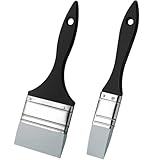
Outus Silicone Color Shaper Set
- 1 inch and 2 inch pair
- Flat pointed tip
- Wipes clean after paint dries

Golden Maple Six Fan Brush Set
- Six fan sizes 2 to 12
- Stiff natural hair
- Copper crimped ferrules
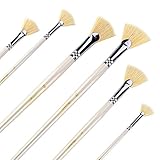
Amagic Hog Bristle Fan Set
- Six sizes plus storage case
- Anti-shedding hog bristle
- Long wooden handles
Best Paint Brushes for Acrylic Pouring in 2026
Ten tools, ranked by how much pouring work each one actually does. Rows are ordered the same way the reviews run below.
| Product | Specifications | Action |
|---|---|---|
| Outus Silicone Color Shaper Set |
|
Check Latest Price |
 QWORK Silicone Color Shaper Pair QWORK Silicone Color Shaper Pair |
|
Check Latest Price |
 Nezyo Silicone Paint Brush Nezyo Silicone Paint Brush |
|
Check Latest Price |
 Falling in Art Silicone Duo Falling in Art Silicone Duo |
|
Check Latest Price |
| Golden Maple Six Fan Brush Set |
|
Check Latest Price |
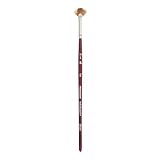 Princeton Velvetouch 3950 Fan 10/0 Princeton Velvetouch 3950 Fan 10/0 |
|
Check Latest Price |
| Amagic Hog Bristle Fan Set |
|
Check Latest Price |
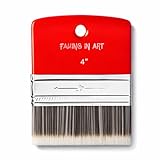 Falling in Art 4 Inch Flat Paddle Falling in Art 4 Inch Flat Paddle |
|
Check Latest Price |
 GACDR Seven Fan Brush Set GACDR Seven Fan Brush Set |
|
Check Latest Price |
 Potchen 30 Piece Pouring Kit Potchen 30 Piece Pouring Kit |
|
Check Latest Price |
What Brush Shapes Acrylic Pouring Actually Needs
Pouring needs four brush jobs, and no single shape does all four well.
A fan brush is the swipe and feather tool. Its bristles splay on contact, so dragging it across wet paint leaves many thin parallel lines instead of one solid edge. That is exactly what a swipe pattern is. A filbert cannot do it because its bristles stay together and leave a single wide stripe.
A silicone color shaper is the cell and torch tool. It carries almost no pigment of its own, so it pushes paint across the surface instead of dragging it. Because silicone is non-absorbent, paint slides off rather than soaking into the head, which is what makes cells appear when you pass it through a wet pour.
A wide paddle or mop style flat is your flood and coverage tool. It holds a large volume of paint and spreads it in an even sheet without brush marks. This is the one shape where holding capacity matters more than tip softness.
A small round or liner is for touch-ups on a cured pour, pulling a string through dried paint, or adding detail lines. It is the least pouring specific shape, and it is the easiest to borrow from a general painting set.
One thing worth flagging, because beginners get this wrong constantly: the tool most people call a basting brush is usually not a paintbrush at all. A silicone wedge, a plastic scraper or a dedicated swipe tool does the basting and torching. Forgetting that distinction is why so many people buy a fifth brush they never pick up again.
1. Outus Silicone Color Shaper Set: The All-Rounder
Outus Silicone Paint Brushes Color Shapers for Acrylic,1 Inch, 2 Inch
Silicone color shaper
1 inch and 2 inch
Round handle
Acrylic and enamel
Pros
- Flat pointed tip gives clean edges on gels and pastes
- Two sizes in one pack
- Wipes clean with soap and water even after paint dries
- Applies glue and gesso without brush marks
Cons
- One report of the metal core separating from the silicone
- Silicone deforms in mineral spirits or turpentine
- A spreading tool rather than a color depositing brush
This is the set we keep reaching for. The Outus pair gives you a 1 inch and a 2 inch silicone shaper in one pack, which covers both a tight torch line and a broad swipe in the same session.
In practice the 1 inch is the cell tool. You load it with a small amount of paint, lift most of it back off, then pull the flat edge lightly through wet paint and watch the color separate. The 2 inch is the swipe tool, wide enough to cross a small canvas in two passes.
What sells it is the cleanup. Buyers describe wiping these down with soap and water even after paint has dried, and the same head applies glue, gesso and varnish without leaving brush marks. That versatility is why it earned the top slot rather than a purpose-built pouring tool.
The rating is 4.7 across 1005 reviews, with 84 percent five-star. Most of the criticism clusters around two things: a single report of the metal core beginning to separate from the silicone, and the fact that solvent mediums will permanently deform a silicone tip. Neither matters if you stay in water-based acrylic.
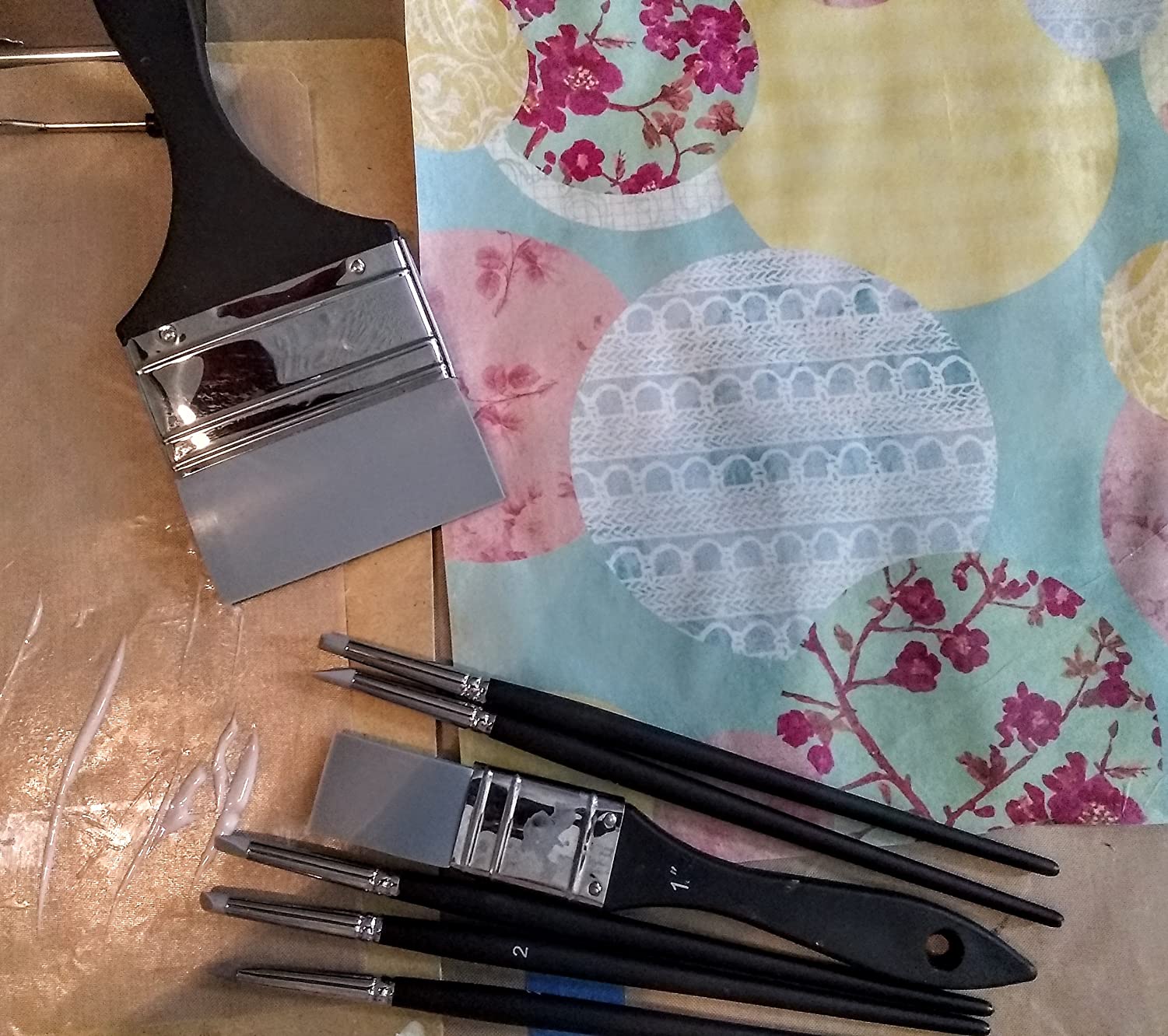
What you get in a pour
Two sizes means you can do a swipe and a torch line without reloading, which is the single biggest time saver in a flip cup session. The flat pointed edge holds a clean boundary between colors when you drag it straight through a wet band.
Because the head holds almost no paint, you control the amount by how much you wipe off on the edge of the cup. That predictability is what makes it repeatable across a series of panels.
Where it falls short
It is not a painting brush and will never look like one. If your pour needs texture, tooth or visible bristle marks, this contributes nothing, and you will need a fan or a paddle alongside it.
Keep it away from mineral spirits, turpentine and any oil-based cleanup. The silicone head deforms permanently, and a warped edge loses the very precision that made it useful.
2. QWORK Silicone Color Shaper Pair: Best For Cells
QWORK Paint Brush, Silicone Color Shaper Brush, 2 Pcs (1 inch,2 inch) Solid Flat Flexible Acrylic and Water Based Painting Tool for Move and Remove Acrylic Paints
Silicone color shaper
1 inch and 2 inch
Flat bristle
Multicolor set
Pros
- Flat pointed edge gives precision with gels and pastes
- Wipes clean even after paint has dried
- Doubles as a squeegee across canvas
- Works with acrylic enamel and oil
Cons
- Not a staining brush
- it moves paint rather than laying color
- Silicone deforms in solvents such as turpentine
- One report of ferrule separating from the silicone head
The QWORK pair is the highest rated silicone option in this group at 4.8 across 303 reviews, with 89 percent five-star. It is the closest sibling to the Outus set but comes in a slimmer, simpler package.
Where it earns its place is cell work. The flat pointed tip gives you a defined leading edge, so when you push it through a wet band of two colors it separates them cleanly instead of smearing the boundary.
Buyers also use the wider head as a squeegee, pulling a mixed sheet of paint across a panel in one pass to set up a base layer before any detail goes on top. It handles gel and paste media well, which matters if you thicken your pour for texture.
The compromise against the Outus is durability reporting. The QWORK draws a specific mention of a metal ferrule separating from the silicone head after light use, and the same solvent caveat applies as with every silicone shaper here.
Cell work and edge control
The pointed flat edge is the reason this one rates highest. A rounded silicone tip smears the boundary between two colors, while a flat one lifts one color away from the other in a clean line.
Because the head is non-absorbent, the amount of paint it carries is entirely under your control. Wipe it on the rim, and it carries almost nothing, which is how you get small open cells rather than a blended mud.
Where it falls short
It moves and removes paint. It does not stain or hold pigment, so if your design depends on dry-brushed texture you will be disappointed by the result.
Two sizes per pack means there is no dedicated wide tool for flooding a large surface. You would still want a paddle or mop flat for that step.
3. Nezyo Silicone Paint Brush: Best On Glass And Acrylic Sheet
Nezyo Silicone Paint Brush, Wide Craft Brush for Art and Resin
Single wide silicone head
1 inch flat
Non-scratch surface
For acrylic and resin
Pros
- Firm yet flexible silicone head
- Smooth surface will not scratch canvas or glass
- Keeps fingers clear of sticky paint and glue
- Wipes clean with soap and water after drying
Cons
- Single brush pack so a second size must be bought separately
- A tool for moving paint rather than depositing it
- Handle is not built for heavy pressure
Glass is where silicone earns its keep. Acrylic sheet and sealed panels scratch easily under bristle drag, and a hard plastic edge will not score them the way a hog hair fan can once the paint starts drying mid-swipe.
The Nezyo is a single 1 inch wide flat head with a firm but flexible silicone construction. Weights aside, the important detail is that the surface is described as smooth and non-scratching, which is exactly what you want on glass or acrylic sheet.
It rates 4.8 across 253 reviews. Buyers like that it keeps their fingers out of sticky mediums, which sounds minor until you have torched a pour and reached for a second tool with wet hands.
The same heads get used for resin work, scraping excess resin from small mold cavities, and blending color with even distribution. None of that is pouring, but it tells you the tool is genuinely durable rather than disposable.
Why glass and acrylic sheet need this
A drying pour on glass gets tough fast, and bristle tips drag through it instead of gliding. A silicone edge rides over the surface and keeps the line you intended rather than tearing it.
If your pours go onto acrylic sheet, cell work, torching and surface prep all behave better with a non-marring edge, and this is the only tool in the list built that way.
Where it falls short
One brush per pack means you cannot do a wide swipe and a tight torch line with the same tool, so you end up buying a second size anyway if you pour often.
The handle is not designed for heavy pressure or large quantities of paint. Try to force a thick flood pour through it and you will be fighting the tool rather than the paint.
4. Falling in Art Silicone Duo: Best For Blending
Falling in Art 2Pcs Silicone Paint Brush Set, Flat Shaped Painting Tool
Two flat silicone brushes
1 inch and 2 inch
Wooden handle
For acrylic gouache and oil
Pros
- Soft flexible heads blend acrylics and move glaze
- Metal ferrule keeps the head attached
- Comfortable handles for detailed pattern work
- Rinses clean with soap and water
Cons
- Build quality described as mid-tier rather than premium
- Should not be soaked for long periods
- Not suited to solvent based mediums
This is the softest silicone option in our list, and softness is what makes it a blending tool rather than a separating tool. If you want colors to merge smoothly instead of staying in distinct bands, this is the pair to buy.
Buyers describe the flexible heads gliding through wet acrylic while staying firm enough to drag nearly dry paint for texture, which covers both ends of a pouring session. At 4.7 across 359 reviews it sits mid-pack on rating, but the reported durability detail is the one that matters here: reviewers single out the sturdy metal ferrule that keeps the silicone head from loosening, which is the exact failure mode other silicone tools show.
The 2 inch head is also usable as a small squeegee, and the wooden handles give you more grip than the plastic ones on similar sets when your hands are coated in paint.
Blending versus separating
Soft silicone feathers a transition. Push it through two colors and you get a soft merge rather than the crisp split that produces open cells.
If you want both effects in one pour, use the 2 inch for a blended background transition and keep a firmer shaper for the separated accents on top.
Where it falls short
Several buyers describe the build quality as mid-tier rather than premium. It will not sit next to a professional brush in a display and it will not last as long under daily use.
Do not soak it. Long soaks and any contact with mineral spirits or turpentine will damage the silicone permanently, and the head will not recover its shape.
5. Golden Maple Six Fan Brush Set: The Most Versatile
Golden Maple 6PC Artist Fan Paint Brush, Great for Acrylic Oil Painting
Six fan brushes
Sizes 2 to 12
Birch wood handles
Acrylic and oil
Pros
- Six fan sizes in one set
- Stiff flexible natural hair with strong color holding
- Copper crimped ferrules resist loosening
- Lightweight lacquered birch handles
Cons
- Small fan sizes splay and lose their point faster
- Occasional reports of brushes arriving bent or frayed
- Stiff hog hair is poor for watery washes
Fan brushes are the shape pouring cannot do without, and this set gives you six of them from size 2 up to size 12 in one purchase. That range means a fine feather for a small cup and a broad texture brush for a large panel.
The hair is described as hog bristle natural hair, which holds stiffness in thick paint. That stiffness is exactly what a swipe needs, because a soft synthetic fan collapses into a smear under a heavy mixed pour.
At 4.6 across 1472 reviews this is one of the better-reviewed sets available. Reviewers like the copper crimped ferrules for holding the fan shape and the featherweight lacquered birch handles, and the set gets used as much for dry brushing texture as for pouring.
Keep it out of solvents and clean it immediately. Natural hair and acrylic are a difficult pairing when paint is left to dry, and you can read more about that trade-off in our guide on why acrylic paint cracks as it dries.
Choosing the right size from the set
Use sizes 4 through 8 for swipe work on a standard square canvas. Small fans lose their point quickly under thick paint, so reserve sizes 2 and 4 for detail touch-ups rather than the main swipe.
The larger sizes give you texture and dry-brush effects when you drag them lightly across a semi-dry surface, which is a cheap way to add interest to a flat pour.
Where it falls short
Natural hair and acrylic are a losing long game. Forum users on r/acrylicpainting are consistent about this, steering newcomers toward synthetic for good reason, and hog bristle is the material acrylic ruins most quickly.
A few reviewers also reported brushes arriving bent or frayed in the packaging, so inspect the fan shape the moment the set arrives.
6. Princeton Velvetouch Series 3950 Fan 10/0: The Best Value
Princeton Velvetouch, Series 3950, Paint Brush for Acrylic, Oil and Watercolor, Fan, 10/0
Synthetic fan brush
Size 10/0
Velvetouch wood handle
Watercolor gouache oil acrylic
Pros
- Premium synthetic hair holds shape and springs back
- Velvetouch handle gives precise control
- Tips keep their point for fine line work
- Noticeable step up from budget brushes
Cons
- Single brush purchase so other sizes cost extra
- A few buyers report the tip beginning to splay
- Not every size in the range is listed here
If you only ever buy one bristle brush for pouring, make it a synthetic fan. The Princeton Velvetouch 3950 is the pick here because synthetic hair shrugs off acrylic in a way hog bristle cannot, and the fan shape is the only shape that feathers properly.
Size 10/0 is on the larger side of the fan range, which suits swipe and texture work across a decent panel rather than tiny detail passes.
Reviewers repeatedly single out the spring in the hair and the way the tip holds a point, plus the smooth Velvetouch handle, which matters when your hand is resting on the edge of a wet pour. It rates 4.6 across 878 reviews.
The compromise is that this is a single brush, not a set, so if you want both a fine and a broad fan you are making two separate decisions and two purchases.
Why synthetic wins for pouring
Acrylic polymerises inside natural hair and turns it brittle. Synthetic filaments do not absorb water the same way, so they rinse clean and keep springing back after a full pour rather than going limp.
The spring matters more in pouring than in painting. A collapsed fan paints one wide stripe; a springy fan splits into fine parallel lines, and that split is the swipe.
Where it falls short
A few buyers report the tip beginning to splay after repeated use, so expect the fine feathering to degrade if you keep it in thick drying paint.
It is a bright-style synthetic and not a dedicated pouring tool, so you are choosing it for versatility. Dedicated pouring brushes are simpler objects with fewer things to go wrong, and some pourers prefer them.
7. Amagic Hog Bristle Fan Set: Premium Pick Across Six Sizes
Amagic Fan Brush Set – Hog Bristle Natural Hair – Artist Soft Anti-Shedding Paint Brushes for Acrylic Watercolor Oil Painting, Long Wood Handle with Case, Set of 6
Six fan brushes
Sizes 2 to 12
Hog bristle
Long handle with case
Pros
- Six fan sizes plus a storage case and sleeves
- Hog bristle holds stiffness when wet
- Long handles keep a light controlled hand
- Strong review volume across owners
Cons
- Several reports of brushes arriving frayed or bent
- Stiff hog hair suits thick media only
- Mixed sizes are awkward for a class
With 2113 reviews the Amagic set has the largest body of owner feedback of anything in this guide, which makes its failure points unusually well documented. That is useful when you are deciding whether it suits your pouring.
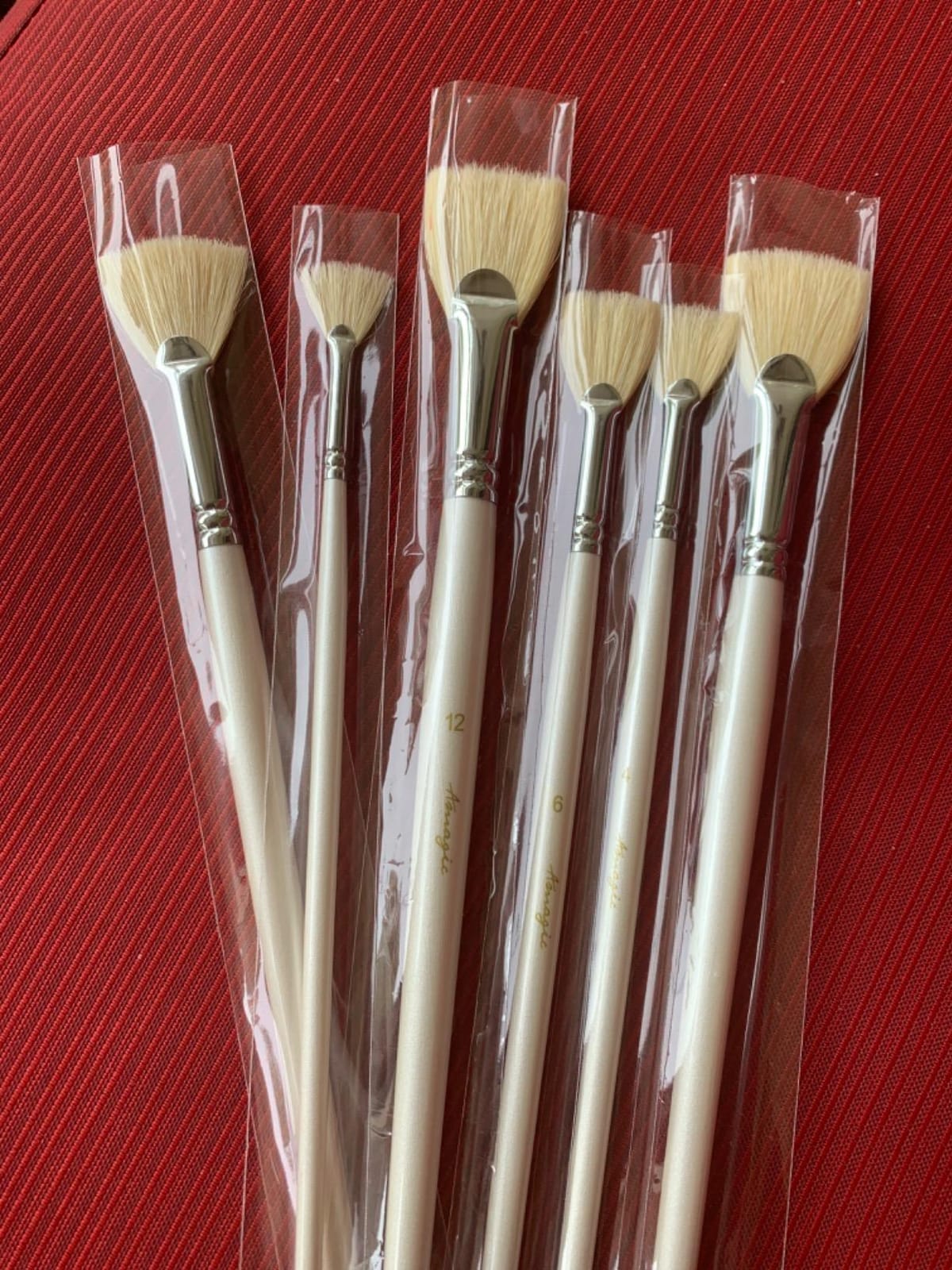
Like the Golden Maple set, these are hog bristle fans in sizes 2 through 12. The difference is packaging: this one ships with a plastic storage container and individual sleeves, which matters more than it sounds because paint left wet in a sealed sleeve is how brushes die.

Owners consistently point to shape retention when wet as the reason to pick this over a cheaper fan, which is the property that decides whether a swipe comes out crisp or mushy.
Long handles keep a light, controlled hand when dabbing and feathering, and the ferrules are described as aluminum crimped and anti-shedding, so fewer fibers end up in a pour you plan to seal.
Swipe pattern and shape retention
A hog bristle fan holds its arc under thick mixed paint, so a swipe drawn through a flip cup pour keeps the parallel line structure that defines the technique.
The range from 2 to 12 covers everything from a hairline string pull trail to broad texture work on a large panel, so one purchase covers most of a pourer’s brush needs.
Where it falls short
Arriving bent or frayed is the most repeated complaint, and several buyers attribute it to the price point rather than random luck. Check the fans before your first pour.
Hog bristle plus acrylic is the same durability problem as the Golden Maple set. Rinse it the moment you finish, and never leave it loaded overnight.
8. Falling in Art 4 Inch Flat Paddle: Best For Large Pours
Falling in Art 4 Inch Flat Paddle Paint Brush
4 inch paddle flat
Nylon flagged bristle
Stainless steel ferrule
Acrylic and oil
Pros
- Holds a large volume of paint and spreads it evenly
- Soft tips snap back into shape quickly
- Flip it over to pull sharp straight lines
- Washes clean and handles heavy gesso and varnish
Cons
- Heavier than expected from the bristle weight
- A few pieces reported with loose or dipped bristles
- One review had a head come apart after light use
A four inch paddle flat is the tool you reach for when the pour is bigger than the cup. It carries a large volume of mixed paint and lays it down as an even sheet, which is the fastest way to cover a wide surface without brush marks.
Reviewers use it for broad coverage, blending, varnishing and texture work in acrylic and oil, and several describe it as a daily tool rather than an occasional one.
The bristle is flagged nylon, which combines soft tips that spring back with a firm body that will not collapse. That combination is what lets one brush both spread a flood and pull a defined edge.
Flipping it over and drawing the straight edge along the surface produces a sharp line, which is the trick pourers use to clean up a boundary between two colors before it dries.
Flood pours and coverage
Paint capacity is the deciding factor here. A fan holds a little and spreads it, a paddle holds a lot and spreads it, which is what you want when covering a large panel in one pass.
The handle includes a hole for hanging and is shaped to hold paint near the ferrule, reducing drips as you carry a loaded brush across the room.
Where it falls short
It is heavier than expected because of the bristle weight. On a large panel with your arm extended, that weight shows up in your wrist faster than you would expect.
Quality varies between pieces, with reports of loose bristles out of the box and one head coming apart after a single light use. Inspect the bristle edge before loading it with a full pour.
9. GACDR Seven Fan Brush Set: Best For Texture And Impasto
GACDR Fan Brush Set, 7 Hog Bristle Brushes for Acrylic and Oil Painting
Seven fan brushes
Sizes 2 to 14
Hog bristle
Birch wood handles
Pros
- Hog bristles hold shape when wet instead of splaying
- Seven sizes cover detail through broad texture
- Long wooden handles give balance and control
- Stiff enough to stir thick pigments
Cons
- Handles measure around 11.5 to 12 inches
- Very stiff and holds little thin paint
- Not the softest option for delicate washes
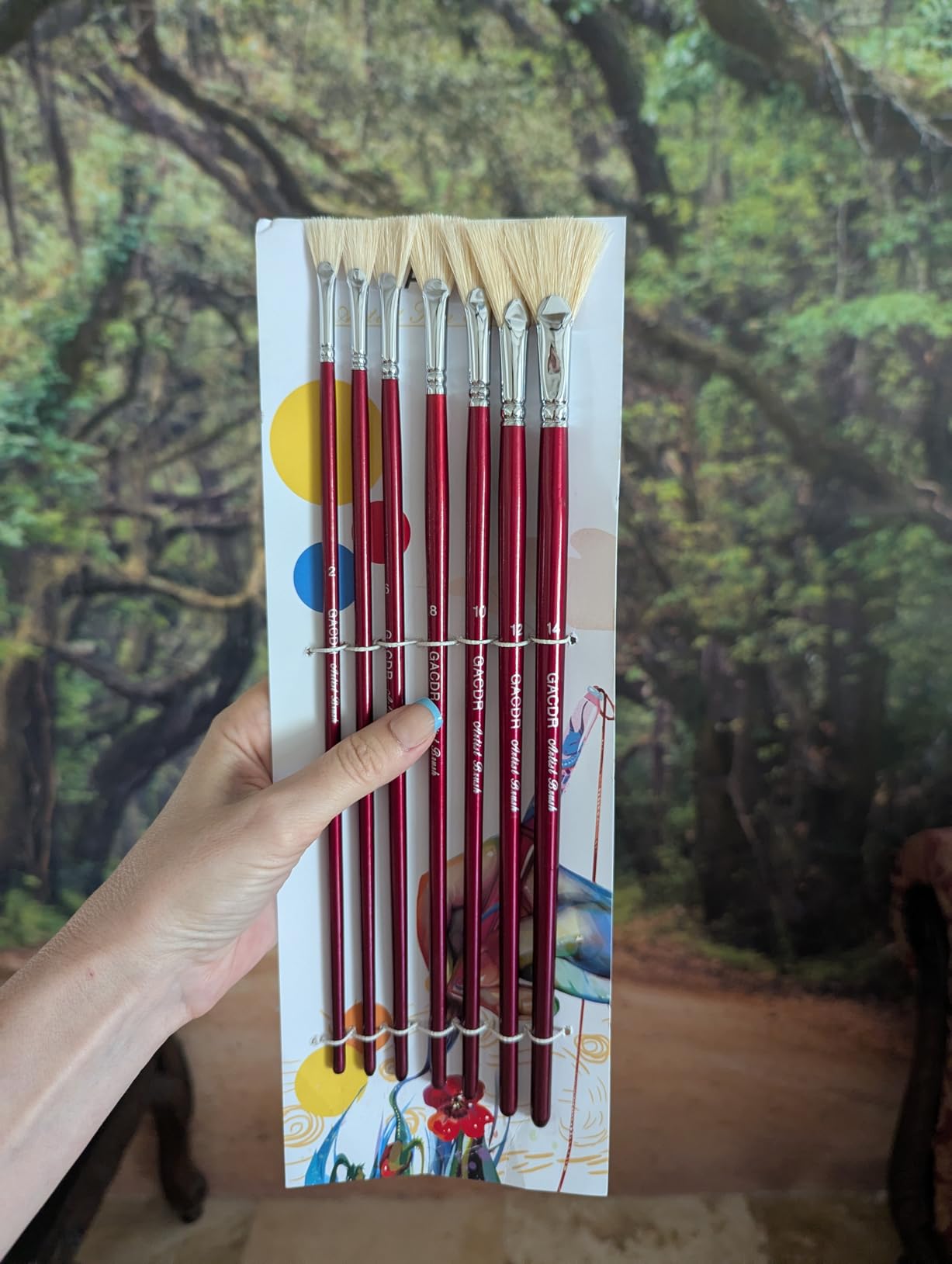
This is the widest size range in the guide, running from 2 up to 14, and the stiffness is the point. GACDR hog bristles are stiff enough to stir thick pigment and pull genuine texture rather than a smooth swipe.
If your pouring includes a thickened pass, an impasto detail or a loaded mark over the top of a cured pour, that stiffness is useful rather than a limitation.
Owners consistently identify shape retention when wet as the deciding advantage over cheaper fan brushes, and the copper crimped ferrules resist loosening over repeated use.
At 4.5 across 703 reviews it carries the lowest rating of the three fan sets here, and the reason shows up in the reviews: the handles run roughly 11.5 to 12 inches, which several users find unwieldy.
Texture work over swipes
Very stiff hog hair holds a lot of pigment and holds it on the surface. Drag it lightly across a wet surface and you get broken texture rather than a clean line.
That makes it a finishing brush rather than a pattern brush, useful for adding tooth and movement to a pour that has already dried partway.
Where it falls short
Long handles are not universal. If you work on a small panel at a table, a handle this length gives you less control than a shorter brush does.
It holds relatively little glaze or thin paint, so it is the wrong tool for anything delicate and watery. Use it for body, not for finesse.
10. Potchen 30 Piece Pouring Kit: Best Starter Bundle For Beginners
Potchen 30 Pcs Acrylic Pouring Tools, 25 Swipe Accessories and 5 Brushes
30 piece kit
16 scrapers and 9 swipe tools
5 brushes included
For acrylic pouring
Pros
- Wide variety of sawtooth and pointed swipe shapes
- Clear and white tools show the paint underneath
- Also works for gelli plate and clay carving
- A low cost way to try many swipe tools
Cons
- The five included brushes draw criticism for shedding
- Scrapers can be thin and flimsy
- Sharp edges can cut fingers
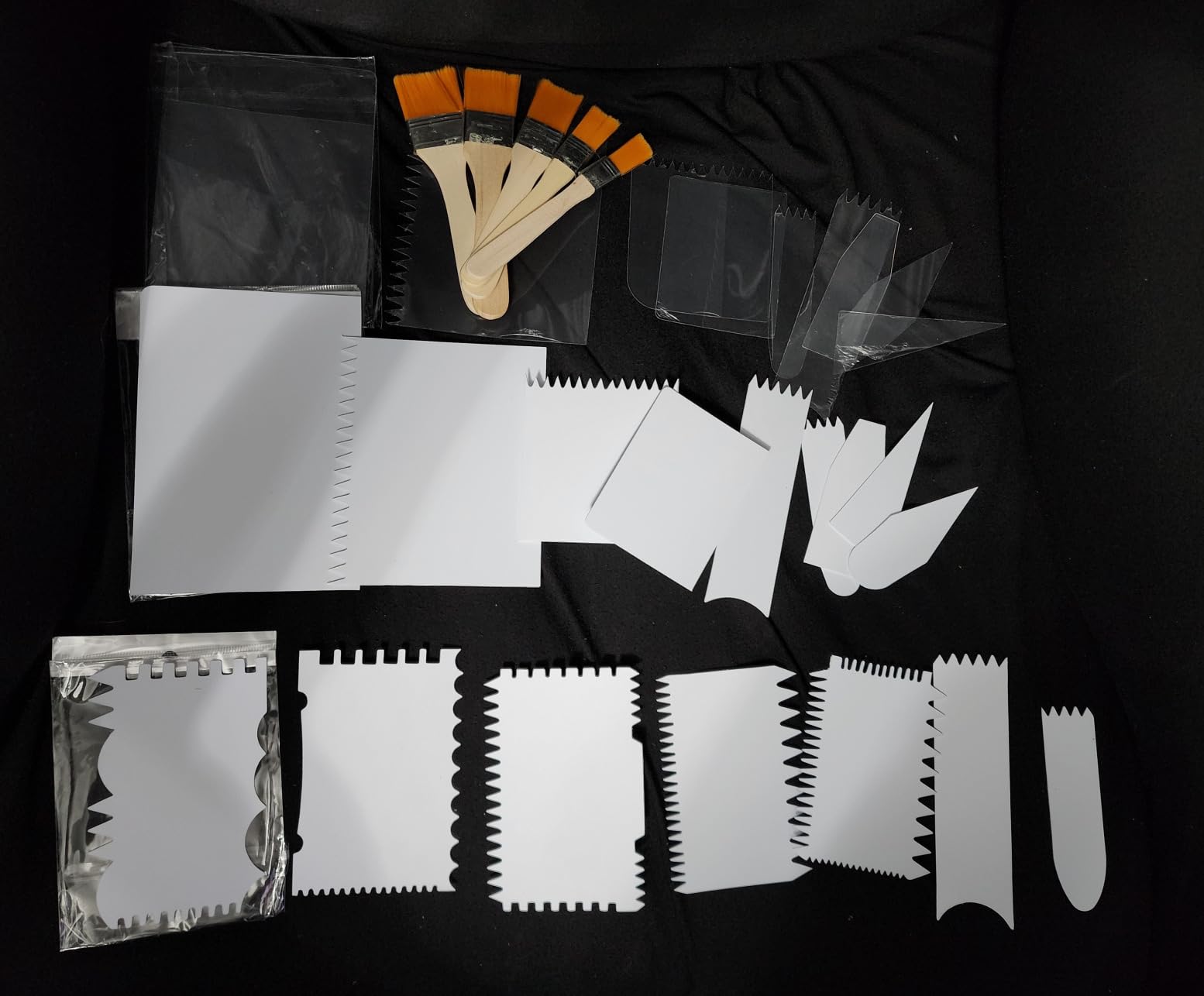
Almost every pour needs a swipe tool that is not a brush. This kit bundles 16 white scrapers, 9 clear plastic swipe accessories and 5 paintbrushes, which covers the tool gap that frustrates first-time pourers.
The irregular sawtooth and pointed edges are the reason to buy it. Different tooth profiles produce different swipe patterns, and trying four or five shapes by hand teaches you more in one afternoon than reading about it will.
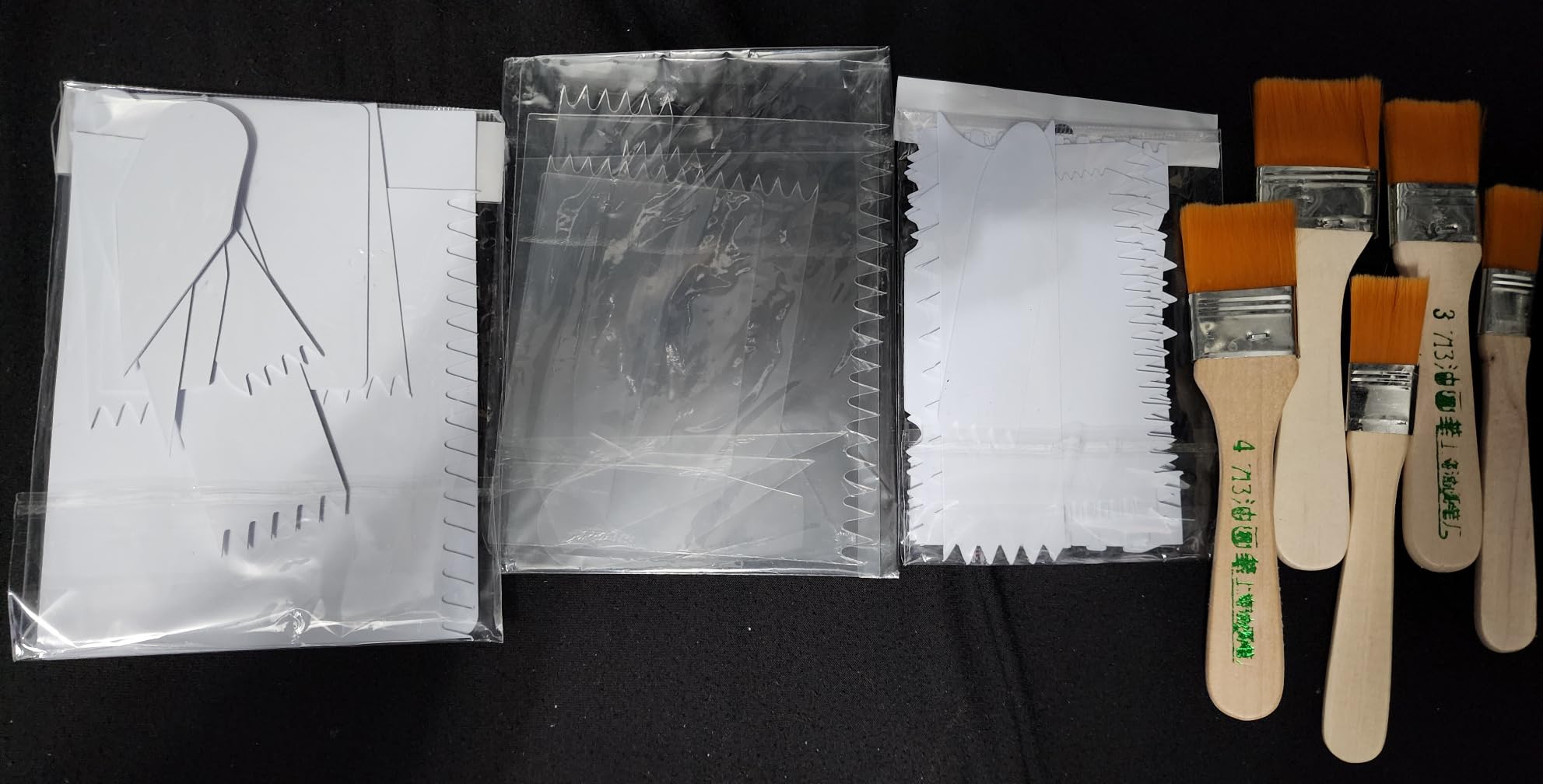
Because the clear and white tools are translucent, you can see the paint underneath as you drag, which makes it far easier to control pressure than an opaque tool.
It rates 4.2 across 208 reviews, and the rating distribution is telling: 60 percent five-star but 8 percent one-star. The split is entirely about the brushes, not the tools.
What the swipe tools actually do
A sawtooth edge pulled through a wet band breaks the colors into repeating lines. Different tooth depths and spacings give you everything from a fine ripple to a wide ribbon effect.
The pointed tools work as string pull and drip tools, dragging a thin line of one color through another before it sets, which is the same technique you would do with a fan but with far more control.
Where it falls short
The five bundled brushes are the weakest part of the set, with reported bristle shedding and imprecise application. Treat them as extras and buy a proper brush separately.
The scrapers are thin and sharp. A few buyers report cuts, so keep the edges pointed away from your working hand and away from children.
How To Choose A Pouring Brush
Seven criteria decide whether a brush works for pouring. Most people get stuck on brand, which is the least useful of the seven.
1. Bristle material comes first
Synthetic wins for pouring, and the reasoning is not close. Acrylic polymerises inside natural hair and the hair goes brittle and splits. On r/acrylicpainting the consensus is consistent, with users steering beginners toward synthetic specifically because of it.
Hog bristle still earns its place when you want texture or a stiff swipe through thick paint. Just expect a shorter life and rinse it immediately.
2. Shape decides the technique
Fan for swipe and feather, silicone shaper for cells and torching, paddle flat for flood and coverage, small round for touch-up. Buying a general painting set means you get none of these in the right proportion.
If you pour on glass, weight the silicone tools heavily. On canvas or wood panel, a fan set earns its place faster. We covered how sealing behaves on wood in how to seal acrylic paint on wood.
3. Width and volume
Match the width to the surface. A 1 inch and 2 inch silicone pair covers most 12 by 12 panels. A 4 inch paddle covers a large sheet in one or two passes, which is where the heavy-body paint used in pours starts to matter.
4. Ferrule quality
The ferrule is the crimp that holds the head to the handle. Reviews across these products repeatedly mention loosening or separation, and that failure is far more common than bristle wear. Copper and stainless steel crimps hold better than thin plated ones.
5. Handle length
Long handles give balance and let you keep a light hand. They also become unwieldy on small panels, which is the single most repeated complaint about the seven-brush set in this guide.
6. Your pouring medium
Floetrol thins paint without changing how it behaves, so any brush works. Silicone oil changes surface tension, and the interaction with brush material is the expert angle most guides skip.
If you use silicone oil, non-absorbent silicone tools are the right call, because they let you push cells around without loading the head. Solvent-based mediums are a different matter, and silicone deforms permanently in mineral spirits or turpentine.
7. Surface
Glass and acrylic sheet need non-marring edges because a drying pour tears under bristle drag. Canvas tolerates more, and wood panel is the most forgiving of all three. Our guide to brushes for dry brushing effects covers how bristle stiffness changes a mark on a dry surface.
How To Clean Brushes After Acrylic Pouring
Cleaning is where pouring brushes are lost. Paint used thick dries hard, and dried acrylic in a ferrule does not come out.
Rinse while the paint is still wet, every time. Do not batch your cleanup at the end of a session, because thick paint starts setting within minutes on a warm surface.
Work soap and warm water through the bristles from base to tip, then comb them back into shape with your fingers. Paint that has already gone gummy needs a second pass rather than more force.
Silicone tools rinse with soap and water, and buyers across these products report that they wipe clean even after paint has dried. That is the main reason to keep one in the kit: it is the tool you can still use at midnight.
Never leave a loaded brush sealed in a wet sleeve overnight. The storage cases that come with some fan sets are useful for dry storage only.
Retire a brush when paint is baked into the ferrule, when the fan no longer returns to a point, or when bristles begin shedding into the pour. For natural hair sets that moment comes sooner than most people expect.
Frequently Asked Questions
Do I need special brushes for acrylic pouring?
What brush do you use for a swipe in acrylic pouring?
Are silicone brushes better for acrylic pouring?
What causes cells in acrylic pouring?
What can I use instead of silicone oil?
How do you clean brushes after acrylic pouring?
Can I add olive oil to my acrylic paint?
How do you avoid brush strokes when painting with acrylics?
Final Thoughts
The best paint brushes for acrylic pouring are not the ones with the longest spec sheet. They are the tools that match the technique you actually pour with, and that is why the silicone color shaper set takes the top spot here: it does cells and swipes, cleans without solvents and will not collapse under thick paint.
Our starter kit recommendation for 2026 is short. Buy the Outus silicone pair for cells and torching, add one synthetic fan for swipes and feathering, and pick up a swipe tool set if you plan to make more than a handful of pours. That covers ninety percent of what fluid art asks a brush to do, and it leaves the paddle flat until you are working on panels larger than a square canvas.