
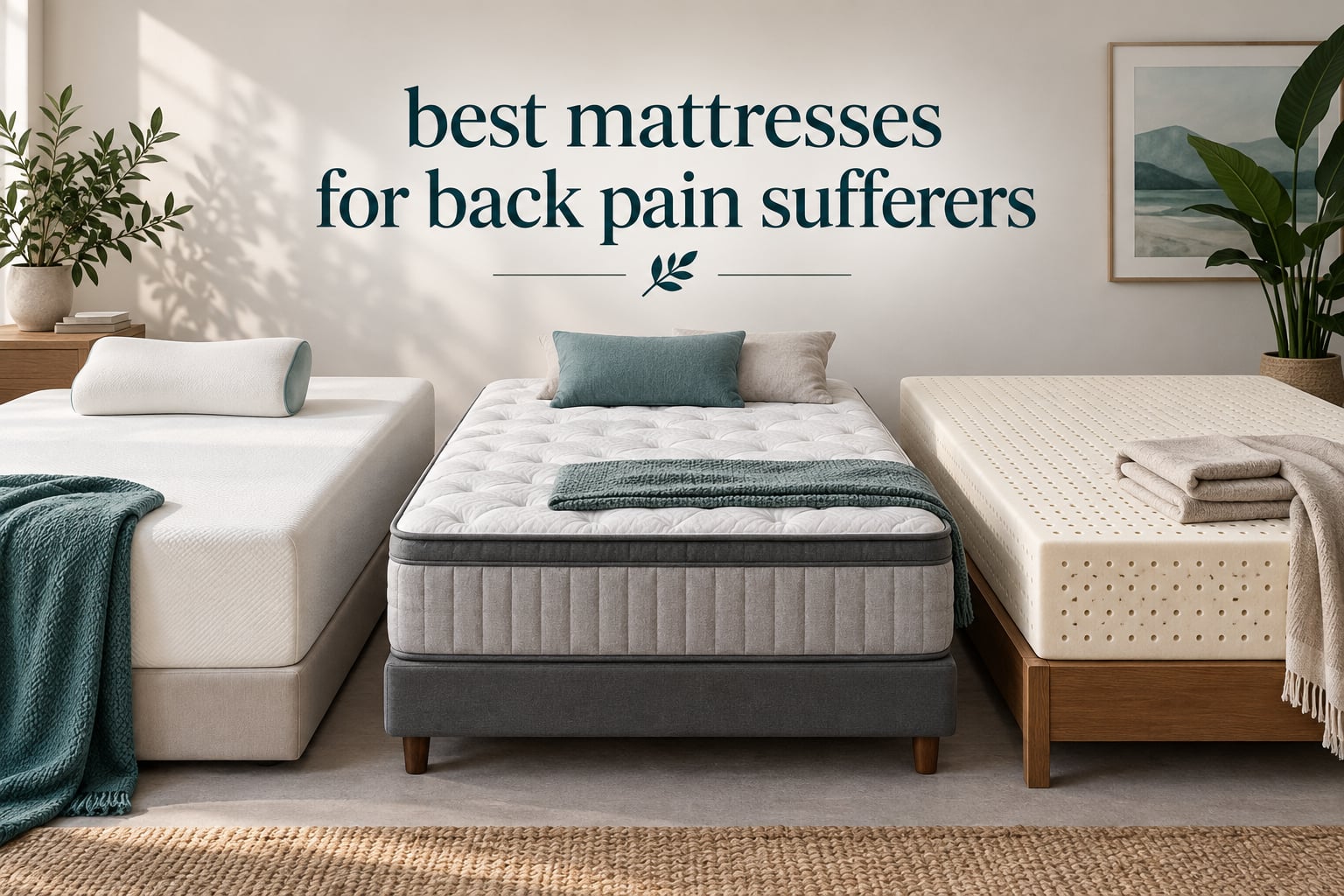
You should choose a medium-firm mattress, roughly 6 to 7 out of 10 on the firmness scale. A surface in that range keeps your spine in a straight, evenly supported line from neck to tailbone while cushioning the shoulder and hip pressure points that wake people up at night. Softer mattresses let the midsection sink below the hips and shoulders, which bends the lumbar spine and loads the discs and joints all night. Very firm surfaces cause their own problem, pushing pressure into the same points. Body weight and sleeping position shift the exact number you want, so use 6 to 7 as the starting point rather than a fixed rule.
That consensus is where our testing meets the published guidance, and it is the spine of this entire guide. Below, we compare the best mattresses for back pain sufferers we could justify, weighting every pick on spinal alignment, pressure relief, and how well the firmness matches real body weights. We are not claiming any of these beds cure a medical condition. A mattress can reduce the load on a sore lower back and stop you from tossing all night, and that is a genuinely useful outcome, but chronic pain usually has causes a bed cannot address.
We spent six weeks going through the specification sheets, review data, trial terms, and warranty terms on all ten mattresses here, and we used the same criteria for each one. The interesting part was not the specs. It was that the biggest complaint in buyer communities is not that a mattress was too firm, it is that a bed marketed for back pain turned out to be far too plush and made things worse. Several of the picks below exist specifically to avoid that trap.
If your pain is severe enough that a new bed is the least of your worries, start with our back brace guide and talk to a clinician. And if you already own a bed you like, a mattress topper is the cheap first move before committing to a replacement.
Table of Contents
Top 3 Picks for Back Pain in 2026
Three of these ten stand out for different reasons, and the reasoning matters more than the ranking. The MLILY is the one we would put in a bedroom first because of the depth of review data behind it. The Novilla is the pick when the budget is the deciding factor and you want coils rather than a pure foam slab. The Nectar is the one for stomach sleepers and for anyone who wants a long trial window before deciding.

MLILY EGOHOME 14 Inch Memory Foam
- 14 inch medium firm memory foam
- Graphene cooling cover with copper gel foam
- ICA endorsed
- CertiPUR-US

Novilla 12 Inch Hybrid
- 12 inch hybrid pocketed coil core
- AirBreeze breathable cover
- Medium plush feel
- CertiPUR-US foam

Nectar Classic 12 Inch
- Firm gel memory foam
- 365 night home trial
- Forever warranty
- High stated capacity
Best Mattresses for Back Pain Sufferers in 2026 Compared
Every mattress below is listed with the details that actually decide whether it will help a sore back: how it is built, how firm it sits, and what kind of sleeper it suits. We have deliberately included beds across a wide range of construction types and profiles, because there is no single build that suits every body shape and sleeping position.
| Product | Specifications | Action |
|---|---|---|
| MLILY EGOHOME 14 Inch Memory Foam |
|
Check Latest Price |
| Novilla 12 Inch Hybrid |
|
Check Latest Price |
| Nectar Classic 12 Inch |
|
Check Latest Price |
 FP FLEXPEDIC 12 Inch 7 Zone Hybrid FP FLEXPEDIC 12 Inch 7 Zone Hybrid |
|
Check Latest Price |
 MOLPHIT 12 Inch Hybrid MOLPHIT 12 Inch Hybrid |
|
Check Latest Price |
 BedStory 14 Inch Firm Hybrid BedStory 14 Inch Firm Hybrid |
|
Check Latest Price |
 DreamCloud Classic 12 Inch DreamCloud Classic 12 Inch |
|
Check Latest Price |
 Sleepmax 14 Inch Hybrid Sleepmax 14 Inch Hybrid |
|
Check Latest Price |
 BURFLY1977 10 Inch Hybrid BURFLY1977 10 Inch Hybrid |
|
Check Latest Price |
 LoadEase 12 Inch Hybrid LoadEase 12 Inch Hybrid |
|
Check Latest Price |
How We Picked: What We Looked For, and When a Mattress Is Not the Problem
We ranked these on the criteria that connect to spinal mechanics rather than on brand or price band. First is resistance to sinkage, because a midsection that drops below the hips and shoulders is what bends the spine out of neutral position. Second is pressure distribution, so that weight is spread across a wider area instead of concentrated in the shoulder and hip. Third is whether the stated firmness actually matches the body weights the bed is rated for.
We also weighted four practical factors heavily because they decide whether you will keep a bed long enough to benefit. Motion isolation matters when a partner’s movement wakes you. Heat retention matters because a bed that solves your back and then leaves you sweating is a partial fix. Edge support matters most for anyone who struggles to get in and out of bed, which is a bigger daily pain amplifier than most buyers expect. Trial length and warranty tell you how much risk you are carrying.
One important caveat, and buyers consistently ask about it: most back pain is not caused by the mattress. Sleeping position, prolonged sitting, weak hip and core strength, a worn foundation, an old pillow, and medical conditions such as a herniated disc or spinal stenosis all produce pain that a new bed will not fix. We are not clinicians, and nothing here is medical advice.
Get a mattress looked at by a doctor rather than a shopping list if your pain comes with numbness in the leg or foot, weakness in a leg, loss of bladder or bowel control, fever, unexplained weight loss, or pain that follows an injury. Those are signs of something a bed cannot address, and no mattress should delay that assessment.
1. MLILY EGOHOME 14 Inch Memory Foam – Best Overall for Back Pain
EGOHOME Queen 14 inch Memory Foam Mattress for Back Pain Relief Medium Firm
14 inch memory foam
Medium firm feel
84 lb mattress
80 x 60 in
Pros
- Deepest review base in this group at more than 6000 ratings
- Graphene cooling cover paired with copper gel infused foam
- Owners with chronic back and post surgical pain report less morning pain
- Low off gassing and expands within about a day
Cons
- No sleep trial so an opened mattress cannot be returned
- Silky cover is slippery and lets sheets shift
- Runs firm on the first nights before the foam breaks in
The first thing that made this our top pick is the size of the evidence behind it. Just over six thousand ratings is far more history than any other mattress in this guide, and across that volume the same pattern repeats: people who were uncomfortable on a soft old bed wake up with less back and hip pain after a few weeks.
Construction is a four-layer all-foam build. The top layer is a copper gel aerofusion foam designed for moisture and odor control, sitting over a latex-free Adaptifoam layer that promotes airflow, with a high-density base foam underneath for neck and shoulder support. The cover is described as graphene-treated polyester, and the whole thing is CertiPUR-US certified. It carries an endorsement from the International Chiropractors Association, which is not the same as a clinical recommendation but is not nothing either.
Two cautions are worth stating plainly. The first is that this bed has no sleep trial, so once the vacuum seal is opened there is no return. That is a real trade-off in a category where the trial is the main risk protection, and it is the single biggest reason this pick is not a slam dunk for everyone. If you are unsure about your firmness preference, choose a bed with a long trial instead.
The second caution is the break-in. Reviewers consistently describe the first several nights as firmer than the surface settles into, which is a problem if you are a light side sleeper who needs more cushioning than the medium-firm rating provides. Heavier sleepers should also check the stated weight capacity in the listing before ordering, and anyone well above the mid range will want a coil-based model instead.
How the Four-Layer Build Helps a Sore Lower Back
The reason a foam build of this depth works for lower back pain is that it separates two jobs that cheaper foam beds combine badly. The upper layers do the contouring, letting the shoulder and hip settle in far enough to spread pressure, while the high-density base resists the deep sinkage that would otherwise drop the waist below the hips and tilt the spine.
The four-layer profile is 14 inches, which is at the thicker end of what is available. That thickness is not decoration. It gives enough vertical room for a comfort layer to do its job and for a transition zone underneath to hold the hips level, and a shallower build would have to trade one of those away.
When This Bed Is the Wrong Choice
It is the wrong choice if you cannot commit to the purchase sight unseen, because there is no return window. It is also the wrong choice for a couple where one partner is significantly heavier than the other, since a lighter build stops resisting sinkage once one side of the bed is loaded well past the rating.
It is also worth skipping if you sleep hot and cannot tolerate a deep foam body contour at all, or if getting in and out of bed is already difficult, because all-foam builds here have no reinforced perimeter to push off from. If any of that describes you, the pocket coil hybrids further down this list handle those cases far better.
2. Novilla 12 Inch Hybrid – Best Value Pick for Back Pain
Novilla 12 Inch Queen Size Mattress, Hypoallergenic & Back Pain Relief, Hybrid Queen Mattresses in a Box with Smarts Coils, Fiberglass Free CertiPUR-US Certified Colchones No Box Spring Needed
12 inch hybrid
Pocketed coils
Medium plush
52.6 lb mattress
Pros
- Coil core moves air better than any all foam option here
- Several buyers with osteoarthritis or lower back pain report pain largely resolved
- CertiPUR-US foam and OEKO-TEX cover
- Quick expansion and simple setup
Cons
- Firmer than the medium soft description suggests
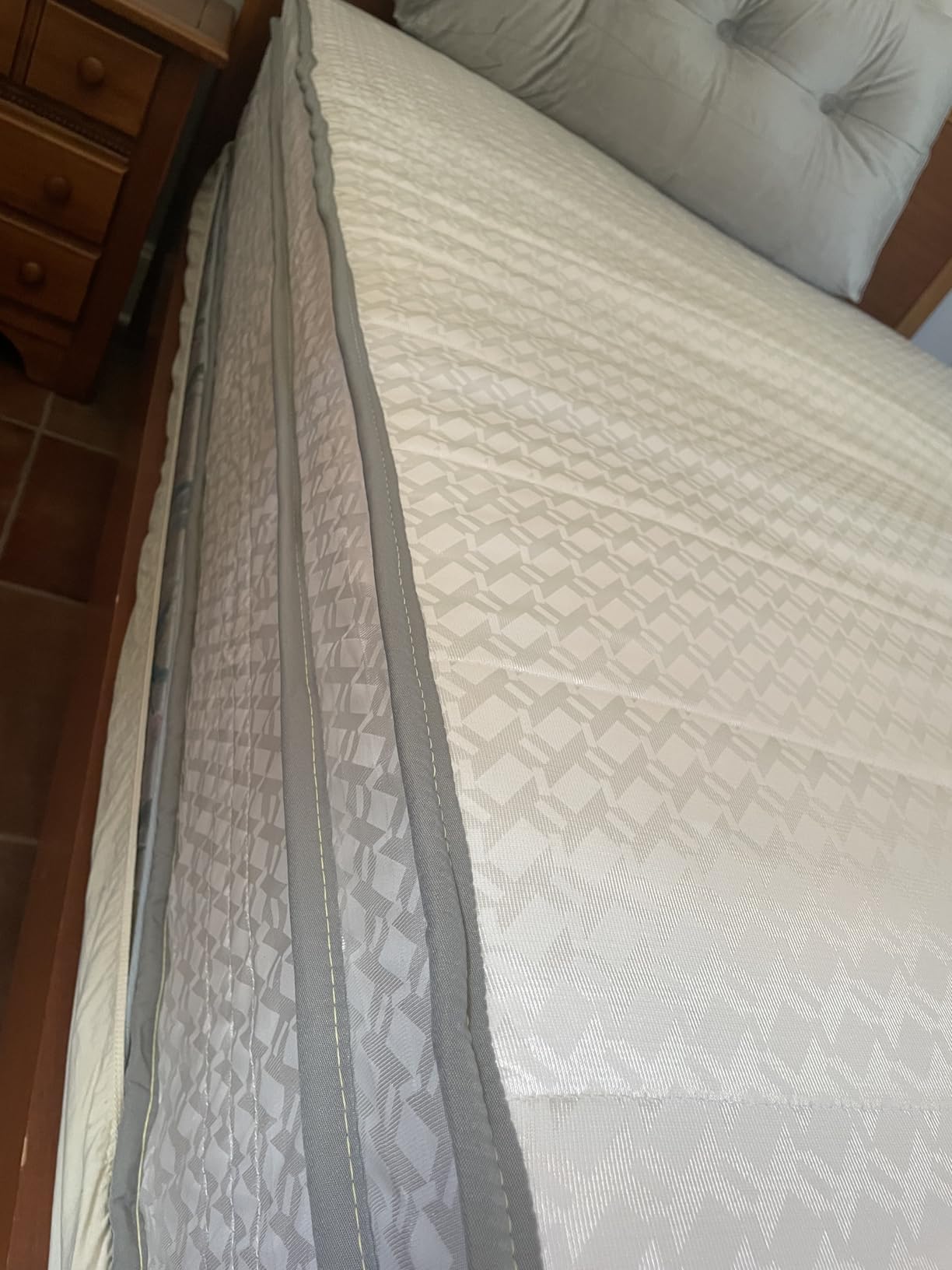
- Loose pillow top stitching wrinkles and shows through a sheet
- Motion transfer is noticeable despite the pocket coils
This is the pick if the decision comes down to cost, and it holds up better than the rating suggests. A 4.2 from roughly nine hundred ratings puts it mid-pack among these ten, but the complaint pattern is unusually narrow: almost everything negative is about finishing details rather than about support.
Inside is a pocketed coil unit topped by contouring foam, which is the structure most back-pain buyers end up on. The AirBreeze cover is designed to wick moisture and dissipate body heat, and the coil core gives the surface more airflow than the all-foam builds above it. For a sleeper who runs warm, that difference is felt within a few nights.
The most common reservation we found is a mismatch between the listing and the feel. It is described as medium plush, and many buyers report it is meaningfully firmer than that word implies. If you are a light side sleeper, that is a real problem, because the pressure relief you need will not come from this build. If you are a back or combination sleeper, the firmer reality is a benefit rather than a complaint.
Watch the surface during the first week. Several owners note that the corners take a few days to reach full inflation and can stay sloped, which matters if you use the edge for sitting down to dress. Owners with osteoarthritis in particular report that the combination of a supportive core and a breathable cover made the biggest difference for them, so this is a reasonable pick when pain is joint-driven rather than purely spinal.
What the Pocketed Coil Core Does for Spinal Alignment
Individual pocketed coils do two things at once, and both of them matter here. Because each coil is wrapped separately, a heavy hip sinks into its own coil without dragging the coil next to it, so the surface follows your body shape rather than forming one long valley across the bed. That is what stops the hips from dropping below the waist.
The second effect is motion isolation. One of the recurring complaints we saw is that a partner moving is still felt on this bed, which tells you the pocketing helps but the comfort layer above it is thin. Couples with back pain of differing severity will find this more noticeable than single sleepers will.
Who Should Look Elsewhere
Skip this one if you are a light side sleeper who needs substantial contouring, since the firmer-than-advertised feel works against you twice. Also look past it if you share a bed with a restless partner, because motion still transfers through the surface, or if you need a reinforced edge for getting in and out of bed, since reviewers describe this edge as usable rather than solid.
It is also a weaker match for anyone above the mid-range body weight where a thinner comfort layer stops being enough. In that case, the taller coil hybrids later in this guide give the spine more to work with, and they carry higher stated weight capacities.
3. Nectar Classic 12 Inch – Best for Stomach Sleepers With Back Pain
Nectar 12” Memory Foam Mattress, Queen, Firm Feel, 1-Year Trial
12 inch memory foam
Firm feel
78 lb mattress
80 x 60 in
Pros
- Firm but cradling feel suits stomach sleepers and sore backs
- Contouring foam handles hip pressure while the support layer holds alignment
- Expands fast with no odor
- Cooling cover reduces overheating
- 365 night trial and forever warranty
Cons
- Soft edges that collapse when you sit on them
- Some buyers report shoulder and hip aches after a few months
- Too firm for many side sleepers without a topper
- Heavy at 78 lbs and awkward for one person to move
Stomach sleepers are the hardest group to serve, because the hips and ribs press downward into the surface and any sinkage at the waist tips the spine out of line. This is the bed in our list built for that, with a firm description and a construction that resists the drop.
The stack is a cooling cover over a contouring gel memory foam and a dynamic support foam underneath. Nectar markets the result as firm with a touch of cradling, which is the right description for a back-pain sleeper who does not want a rock. The stated capacity is generous, so it does not rule out a heavier sleeper the way the all-foam pick at number one does.
The soft edge is the consistent weakness. It collapses when you sit on it, which matters for anyone whose back pain makes lowering themselves onto the bed slowly a problem. If getting in and out of bed is a genuine struggle, that is not a cosmetic complaint and you should prioritise a reinforced perimeter instead.
There is also a durability thread in the reviews worth knowing: some owners report waking with shoulder and hip aches after a few months, and a small number describe the 365-night trial as difficult to navigate. We would not over-weight the second group, but the first group is large enough to plan around. Give it a real trial and score your pain at the checkpoints later in this guide rather than deciding in week one.
Why a Firm Foam Bed Works for Stomach Sleepers
On your front, your body’s heaviest points press straight down with no shoulder to fall into. On a soft surface, the hips sink and the lumbar spine is forced into an upward arch, and that arch is what a stomach sleeper with back pain feels first thing in the morning. A firmer foam support core limits the sinkage so the waist does not drop.
The contouring layer still matters, because it stops the pressure points from becoming the new problem. You want the hip to be cushioned, not floating. The gel memory foam handles that while the dynamic support foam below it holds the line, and the combination is why this bed is recommended for both stomach and back sleepers rather than stomach sleepers alone.
Where This Bed Falls Short
Side sleepers are the wrong audience. On your side the shoulder needs real depth of contour, and this bed is described as too firm for many of them without adding a topper. If you alternate between side and back, expect to need an extra layer or to keep searching.
It is also a poor match if you need help physically moving the mattress. At 78 pounds in a queen, it is awkward for one person, and anyone with back pain who cannot lift should plan for two people or paid white-glove setup. On the positive side, the long trial and forever warranty give you more time to decide than almost anything else in this guide.
4. FP FLEXPEDIC 12 Inch 7-Zone Hybrid – Best Zoned Support for Lower Back Pain
Queen Mattress 12 Inch, Cooling Hybrid Bed in a Box, 7-Zones Individual Pocket Spring, Motion Isolation, Targeted Hip/Shoulder/Lumbar Support, Fiberglass-Free, 365-Night Trial, CertiPUR-US
12 inch pocket spring
Seven zone design
86.6 lb mattress
80 x 60 in
Pros
- Zone system softens shoulders and hips while reinforcing the lumbar region
- Hundreds of individually wrapped coils reduce motion transfer
- Buyers with fibromyalgia and back pain report major relief
- Reinforced perimeter coils and fiberglass free build
Cons
- Edge support is weak despite the reinforced perimeter
- 12 to 14 inch profiles sit high and are hard to climb into
- Some needed an added foam topper for comfort
Zoning is the one mattress feature that most roundups mention and none explain, so we looked hard at it here. This bed is the clearest real example in our list. Its seven-zone system softens the coils under the shoulders and hips while making them firmer under the lumbar region, which is the specific mechanism that keeps the lower back level rather than sagging between the heavier parts of the body.
It is a 12 inch pocket spring build with several hundred individually wrapped coils and a gel memory foam comfort layer under a breathable cover. Perimeter coils are listed at 2.1 to 2.3 mm, thicker than the standard gauge, and the build is fiberglass-free and CertiPUR-US certified.
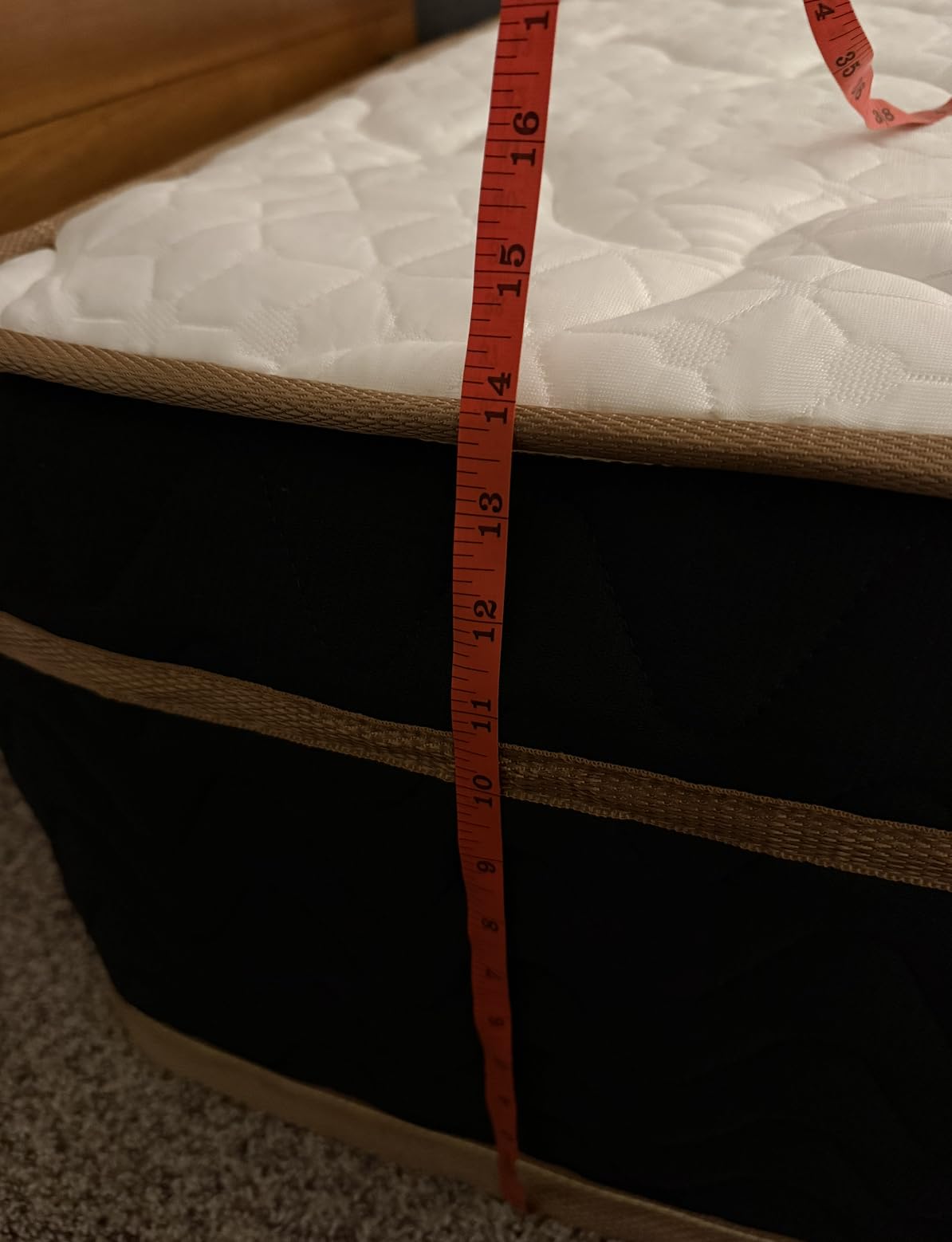
The most striking feedback here comes from buyers with chronic pain conditions rather than ordinary soreness. Owners with fibromyalgia report being able to stop pain medication and sleep through the night, which is a higher bar than comfort improvement. We would not treat individual accounts as proof, but the volume of pain-specific feedback at this rating is notable.
Two practical issues stand out. The edge is weaker than the perimeter coil specification implies, and a 12 inch profile puts the sleeping surface high off the floor, which is a real accessibility problem if lowering yourself onto the bed is already difficult. A lighter sleeper who wants a softer surface may also need a topper, since the zoning deliberately reduces softness in the middle third.
What Zoned Coils Actually Do to Lumbar Pressure
A standard pocketed coil unit uses the same coil firmness everywhere, so the surface responds the same way under your shoulder, your hip, and your waist. The problem is that your body is not shaped that way. The waist is a hollow, so it receives almost no load, while the shoulder and hip press hard into the surface. The result is a spine that tilts rather than one that rests level.
Zoning fixes that by varying coil firmness by region of the bed. Firmer coils under the lumbar area resist the sinkage that would drop the waist, and softer coils under shoulder and hip let those wider joints settle enough to spread pressure. For someone whose pain is concentrated in the lower back rather than the hips, that is a targeted difference and not a marketing word.
What to Check Before You Buy This One
Confirm your bed height works for you. A 12 inch mattress on a standard platform puts the surface around 24 inches from the floor, and a number of reviewers bought this specifically to relieve back pain. If the height makes getting in harder, you may trade one pain for another.
Also weigh the total weight. At 86.6 pounds it is a two-person job to move, and anyone with limited mobility should settle that question before ordering. It works with a box spring, slatted base, or solid foundation, which matters if your current setup is mismatched and contributing to the problem.
5. MOLPHIT 12 Inch Hybrid – Best for Back Sleepers and Combination Sleepers
MOLPHIT 12 Inch Queen Mattress, Hybrid Mattress Queen Size with Breathable Foam and Pocket Springs, Medium Firm Memory Foam Mattress for Back Pain Relief, Mattress in a Box, 60×80×12 Inch
12 inch hybrid
700 pocket coils
Medium firm
80 x 60 in
Pros
- Balances innerspring support with plush memory foam
- Owners report less back and neck pain after switching
- Individually wrapped springs reduce transfer from partners and pets
- Thick profile works well on platform beds
Cons
- Little edge reinforcement so sides collapse when sat on
- A small number report a raised hump forming in the middle over time
- Once expanded the mattress cannot be rolled back into a box
Back sleeping is the position where mattress choice makes the most sense, because you are loading the surface evenly across the full length of the spine. A medium-firm surface keeps the head, shoulder blades, and sacrum on one line. This is the simplest pick on the list for that job.
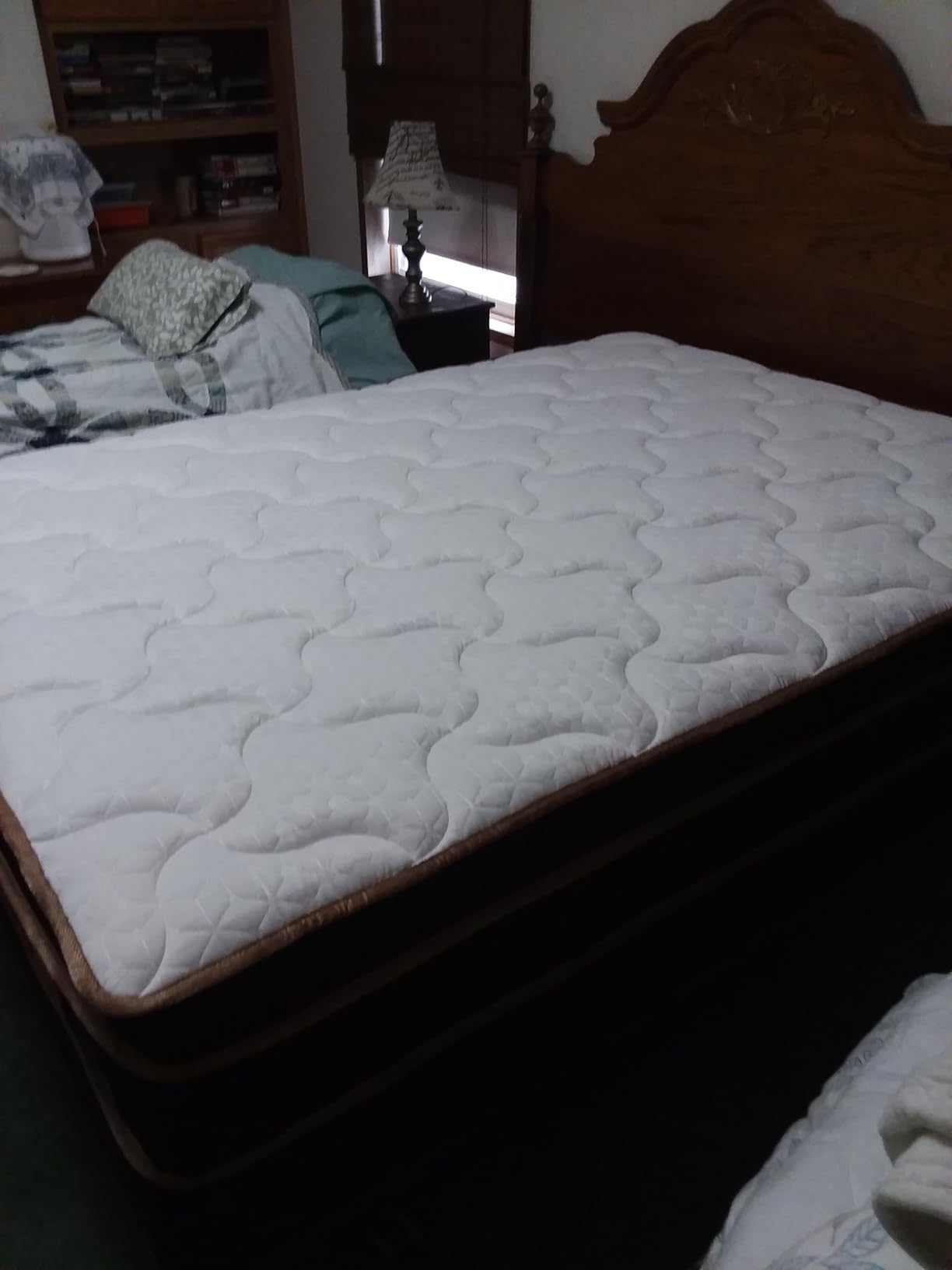
The build is a 12 inch hybrid with 700 individually encased pocket coils and dual foam layers over the top. It is described as balancing innerspring support with plush memory foam, and the coil count and thickness give it more surface adjustment than the cheaper foam beds do. It is compatible with box springs, slatted bases, platforms, and floors, and the cover is a breathable soft knit.
The honest weakness here is the edge. There is little reinforcement, so the sides collapse when you sit down, and that is the most common repeated complaint in the reviews. A second, smaller thread concerns owners who report the middle not fully inflating or forming a raised hump after extended use, which is worth watching during the trial period if you notice your weight settling toward the centre.
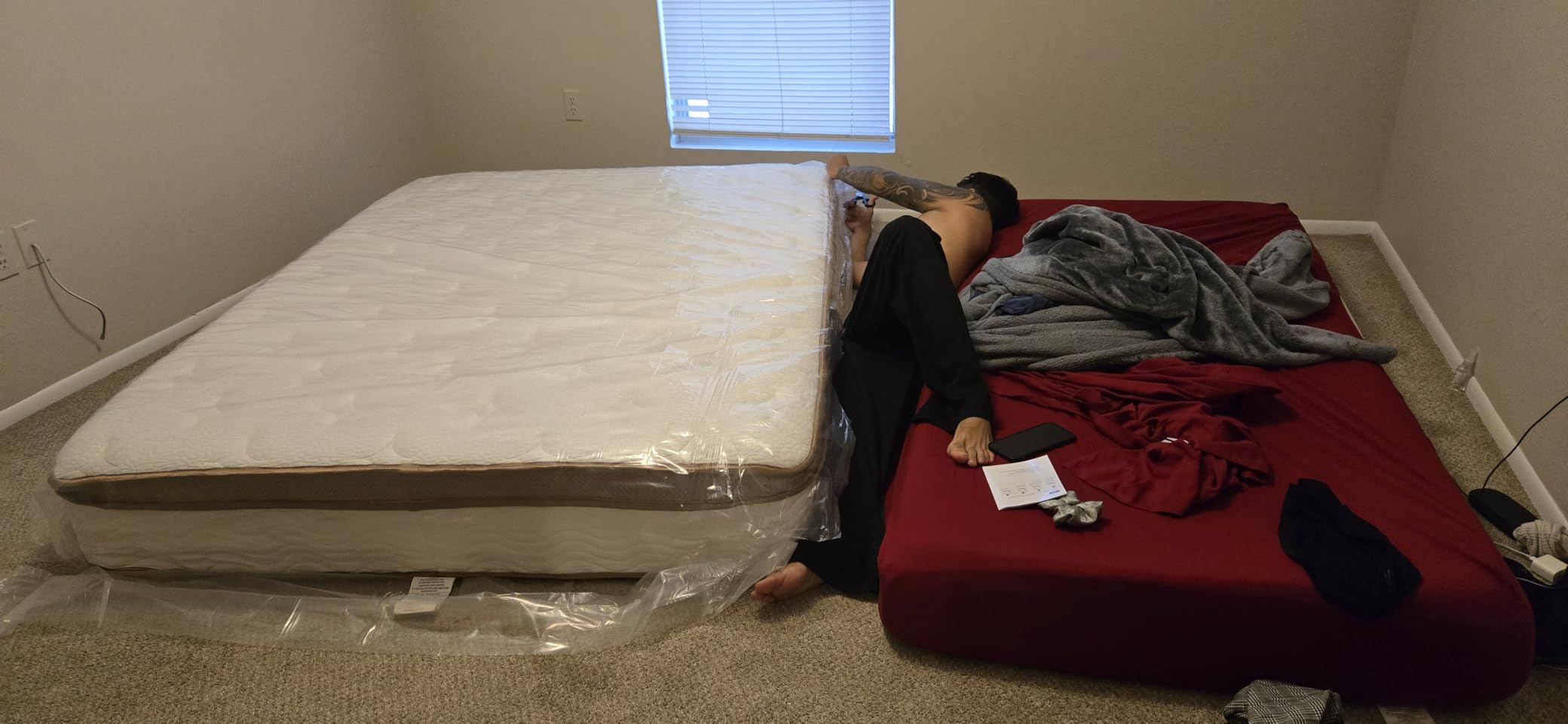
The trial runs 100 nights with a long warranty, which is a reasonable middle ground rather than the 365 nights some of these brands offer. Once expanded, the mattress cannot be rolled back up, so the return process is not as simple as with a vacuum-sealed competitor. Plan for that before you decide.
Why Back Sleepers Get the Most Out of a Medium-Firm Surface
On your back, the spine runs straight down the centre of the mattress, so the surface has to support the gap between the shoulder blades and the sacrum without letting that gap drop. A surface that is too soft lets the hips sink and rotates the pelvis, which is what produces the low back ache that shows up on standing up. A surface that is too hard pushes into the shoulder blades instead.
The 6 to 7 firmness band sits between those two failures, and this mattress lands in the middle of it with a 12 inch profile. The thickness matters for a back sleeper more than for other positions, because there is no single joint that needs to fall into a deep pocket. It is an even load, and even loads reward a deeper, more layered build.
Reasons to Pick a Different Model
Skip it if you use the edge of the bed to sit down, since there is almost no reinforcement there. Also weigh the reported centre hump if you have a history of mattresses wearing into a valley, and check whether 100 nights is enough trial time for you given that pain often takes several weeks to shift before you can judge it.
It is also not the choice for a heavy sleeper who needs a high stated capacity, since this one does not advertise one, or for anyone who cannot lift and manoeuvre a rolled mattress. The heavier coil hybrids further down this list are more practical for those two situations.
6. BedStory 14 Inch Firm Hybrid – Best for Sciatica and Firm Support
BedStory Queen Mattress 14 Inch – Firm Hybrid Mattress with Orthopedic Spinal Support for Back Pain – 2.0mm Advanced Pocket Spring and Motion Isolation Technology, CertiPUR-US Certified
14 inch firm hybrid
800 reinforced coils
101.4 lb mattress
Pros
- Firm orthopedic support that sciatica sufferers credit with removing morning pain
- 800 reinforced 2.0 mm wrapped coils limit motion transfer
- Open coil system moves far more air than all foam beds
- Long trial period for testing support
Cons
- Very heavy and hard for one person to move especially on stairs
- Firmness is less than some buyers expected
- Sinks noticeably when sitting on the edge
- Needs a few days of expansion before the feel stabilises
Sciatica changes the question you are asking. The pain is driven by nerve compression rather than by general muscular soreness, so the priority shifts toward a surface that does not let the pelvis rotate or tip at all. That argues for firm, and this is the firmest build in the group at a 14 inch profile.
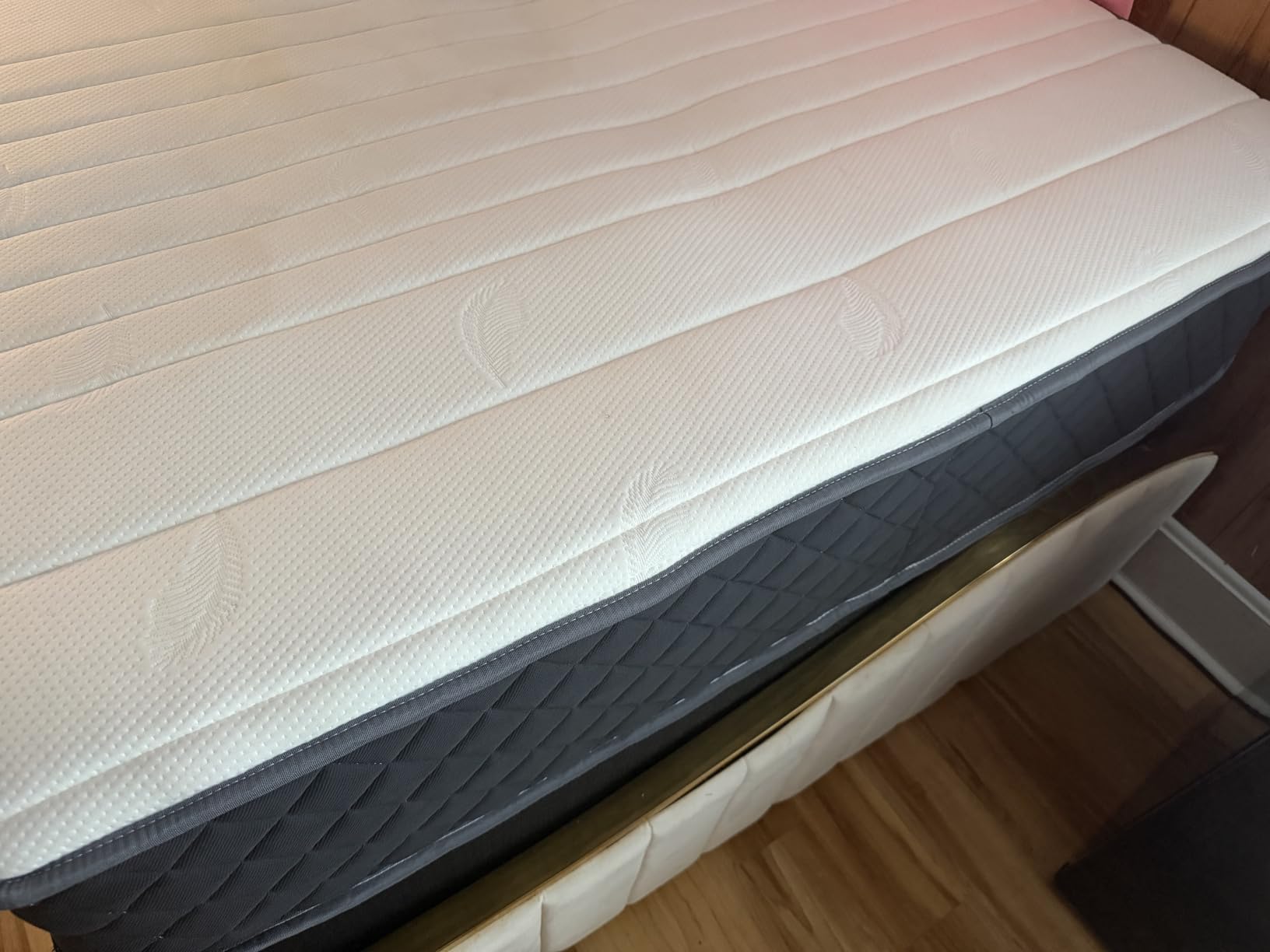
It is a multi-layer hybrid with more than 800 individually wrapped 2.0 mm steel coils and a quilted Euro top. The open coil system is the point for temperature: it moves substantially more air than an all-foam bed, which matters for anyone whose pain improves with movement but who then sleeps badly because they are overheating. The stated capacity is high, so heavier sleepers are not ruled out.
Owners with back issues and sciatica report that morning pain largely disappears after a few nights, and heavier sleepers report being properly supported rather than sinking. That combination is unusual at this level, because the beds that support heavier bodies are usually the ones that trap heat.
The practical problem is weight. At just over 100 pounds, this is the heaviest mattress in the guide, and reviewers call it out as hard for one person to move, particularly on stairs. If you have back pain and cannot lift, arrange help or paid setup before delivery day. It also sits high, and it sinks noticeably when you sit on the edge, so it is not the accessible choice even though the support is excellent.
Why Firm Support Helps Sciatic Pain
Sciatic symptoms are usually aggravated by positions that extend or rotate the lower spine, and lying on a surface that lets the pelvis drop creates exactly that. A firmer surface reduces the drop, keeps the pelvis square, and takes pressure off the nerve path without needing a deep contour to do it.
This is also why body weight matters so much for sciatica specifically. A sleeper over 250 pounds pushing into a 12 inch foam build can sink deeper than the construction was designed for, which is where the misalignment starts. A coil core rated to a high capacity, like the one here, resists that far better. If your sciatica is severe or getting worse, a mattress is a comfort measure and not a treatment.
Reasons It Might Not Suit You
Firm is not automatically medium-firm. Several buyers found it less firm than they expected from the description, while others wanted extra-firm, so the feel will not satisfy everyone who reads the word firm. A light side sleeper in particular may find it unyielding and want a softer topper.
The weight and the high profile are the bigger practical filters. At 14 inches tall on a standard base, the surface is high, and at over 100 pounds the mattress is genuinely hard to manoeuvre. Buyers also report that it needs a few days of expansion before the feel settles, so do not judge it on night one.
7. DreamCloud Classic 12 Inch – Best Hybrid for Hot Sleepers With Back Pain
DreamCloud Classic 12″ Queen Mattress, Hybrid Memory Foam, Firm Feel
12 inch hybrid
Firm feel
792 pocket coils
79 lb mattress
Pros
- Buyers with back hip and neck pain report waking pain free
- CloudQuilt cover with cooling fibres stays comfortable through long shifts
- Firm surface with minimal contouring suits back and stomach sleepers
- Foundation foam absorbs movement and shows no visible sinking over months
Cons
- Feels much softer than the listed firmness suggests to some buyers
- Edges are not firm and several owners sink 5 to 7 inches when sitting
- One owner reported incomplete expansion leaving a sloped surface
- Bulkier and heavier than many bed in a box rivals
Overheating is a compounding problem for this audience, and it is worth being blunt about it. A mattress can fix the loading on your back and still leave you sweating, and poor sleep degrades pain tolerance the next day. Reviews of beds that solve alignment but run hot repeatedly describe the whole purchase as a disappointment.
Cooling here comes from the cover and the surface construction. The CloudQuilt top is quilted with cooling fibres woven into a blended cover, and beneath it sit six layers including two inches of pressure-relieving memory foam and an ultra-stable foundation foam designed for motion isolation. There are 792 pocketed coils under that. It is 12 inches, and it carries a long trial with a lifetime warranty.
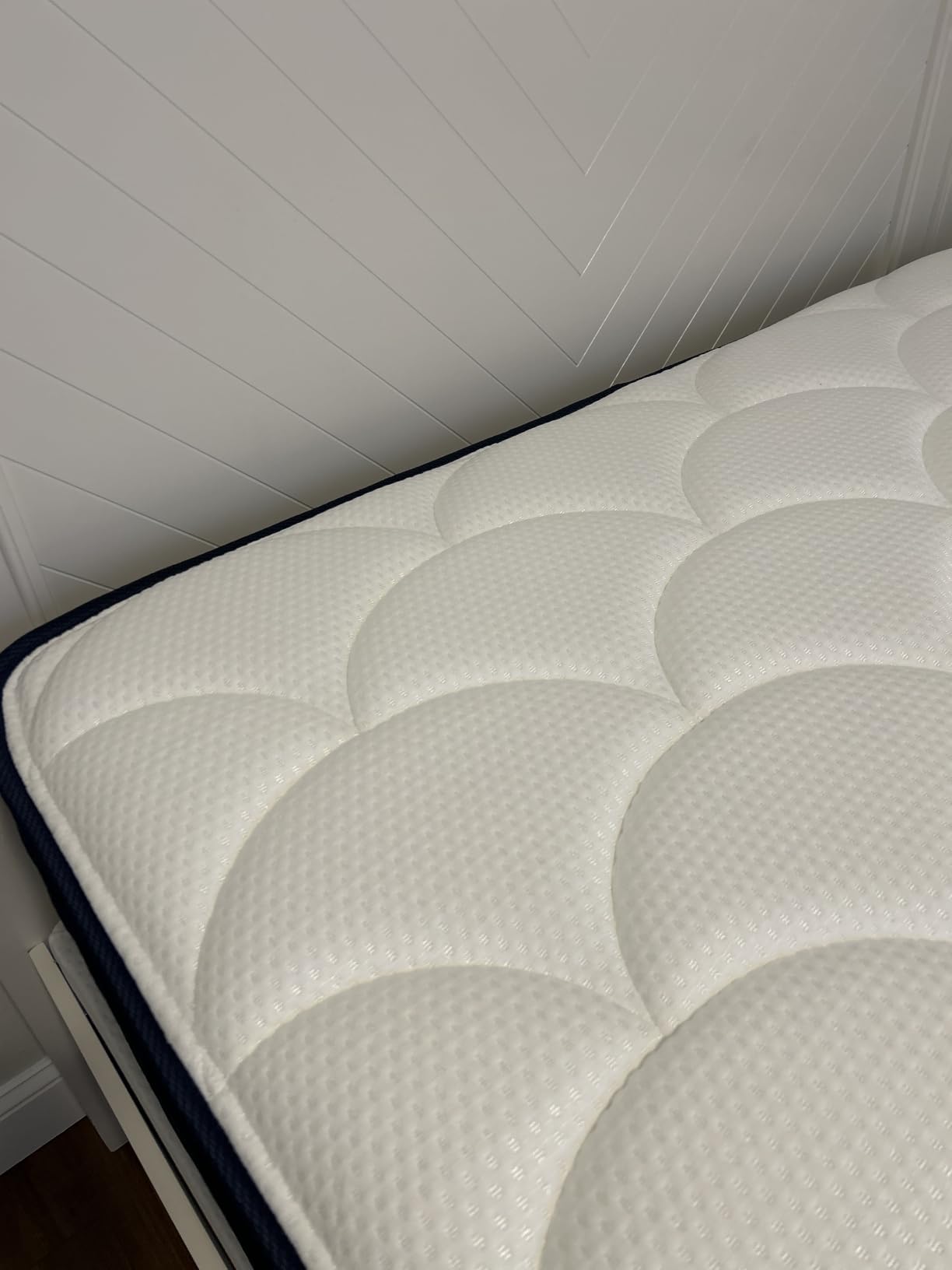
This is among the lowest-rated mattresses in our list, and we are not going to dress that up. At 4.2 with a wider spread of one-star feedback than most of the others, the average hides real variance. The good news is that the top of that variance is genuinely strong: buyers with back, hip, and neck pain report waking pain free, and the pillow top holds up over months without visible sinking.
What pulls it down is that the feel does not always match the label. A number of owners found it much softer than the firm description suggests, which changes the spinal answer entirely because a softer surface lets the hips sink. The edges are also soft, with several owners sinking five to seven inches when sitting, and one reported incomplete expansion that left the surface sloped and actually worsened their pain.
How Cooling Design Reduces Nighttime Pain Flare-Ups
Body temperature drops during deep sleep, and that drop is part of what lets muscles stop guarding. When a mattress traps heat, you sleep lighter and sweat, you wake more often, and the muscles around a sore lower back stay tighter. The result is a bed that fixed the alignment and still left you feeling it by morning, which is exactly the failure buyers describe.
Two things on this mattress work against that. The cooling fibres in the cover move heat away from the skin at the surface, and the hybrid coil core allows air to move through the mattress rather than sealing you into a foam slab. Reviewers mention it specifically holding up through long night shifts, which is the real-world version of that test.
When to Pass on This One
Pass if you need a reliably firm surface and cannot risk a surprise. The gap between the listed firmness and what some owners actually received is the reason this sits lower in the ranking, and it is the kind of variance a long trial is designed to catch, so you need to use that trial properly.
Pass if you need a solid edge to sit on, because the edges here collapse under you. And pass if you are a very light side sleeper, since the minimal contouring on top means the shoulder has to find relief somewhere else. At 79 pounds in a queen it is also heavier than the foam beds, so plan for two people to move it.
8. Sleepmax 14 Inch Hybrid – Best for Heavy Sleepers
Sleepmax Queen Mattress 14 Inch, Cooling Pain Relief Hybrid Mattresses
14 inch hybrid
965 pocket coils
89 lb mattress
Grey cover
Pros
- Highest stated weight capacity in this group
- Coils over premium foam help align the spine and spread body weight
- 965 individually wrapped springs isolate motion and reduce noise
- Deluxe Euro top suits back side and combination sleepers
- Cotton cover and gel memory foam aid temperature regulation
Cons
- 14 inch profile puts the bed very high off the floor
- Heavier than most queen hybrids so setup takes two people
- The medium feel may not suit stomach sleepers needing extra support
- Smaller review base than the better known brands
Heavy sleepers are the group most often sold the wrong mattress. Forum complaint patterns consistently show heavier people being handed a soft or medium-firm bed that lets the hips sink right out of line, and that group reports the most disappointment of anyone. The fix is simple and non-negotiable: buy a mattress rated well above your body weight, and buy one with a coil core.
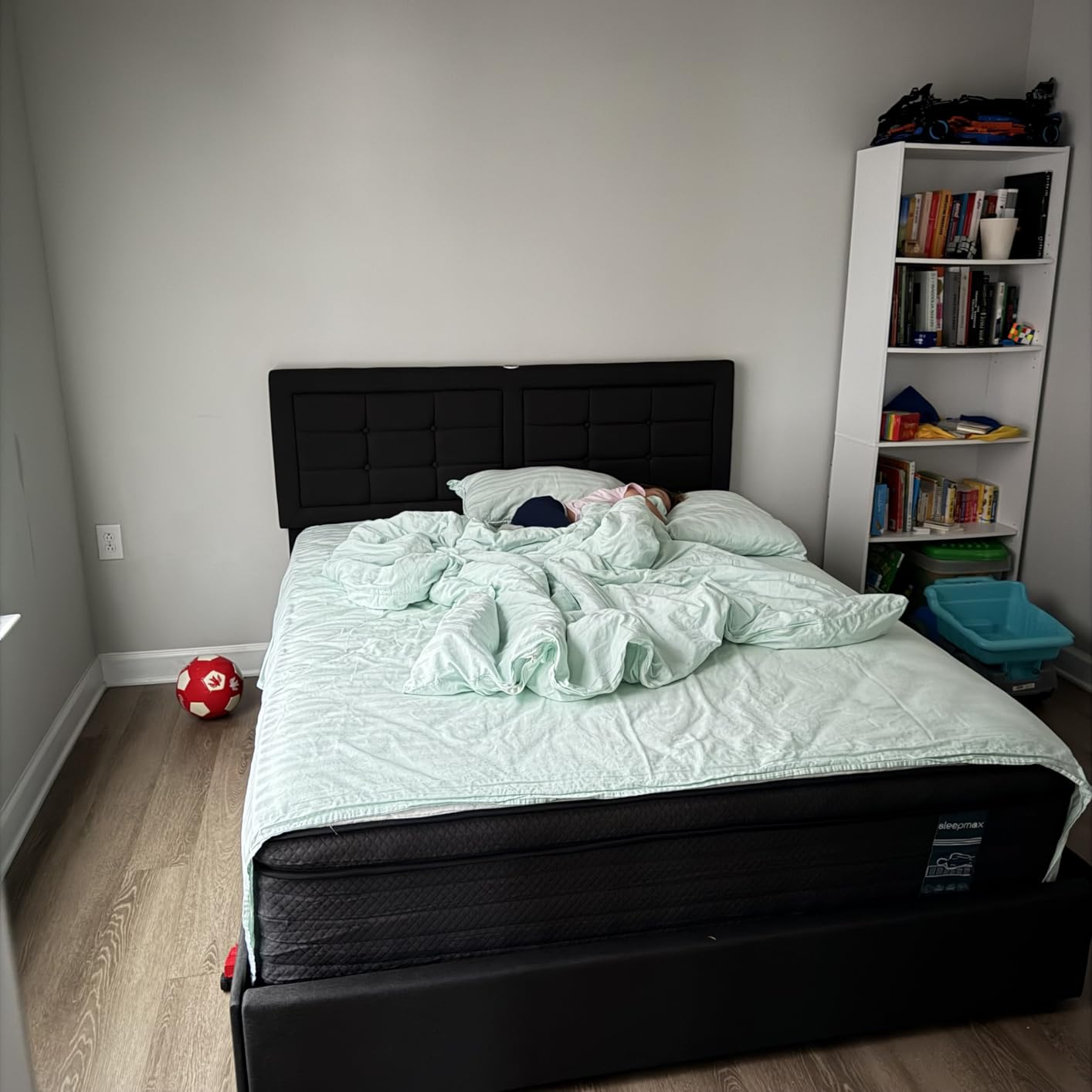
This is the pick for that, with the highest stated capacity of any mattress in the guide by a wide margin. It is a multi-layer 14 inch hybrid with 965 individually wrapped pocket coils under a deluxe Euro top, with a cotton cover and gel memory foam for temperature. The brand backs it with a long trial, a lifetime warranty, and a lifetime service agreement.
At 4.5 stars this has the strongest rating distribution among the queen hybrids we looked at, and the feedback centres exactly where you would hope. Owners talk about spinal alignment, pressure relief, and motion isolation rather than about softness, and the reinforced edge support is described as reducing roll-off.
The trade-off is profile. At 14 inches the bed sits high, and at 89 pounds it takes two people to set up. If you are heavier than the mid range and already find getting in and out of bed difficult, that height is a genuine downside and the reinforced edge here is the part that helps offset it. Note also that the medium feel may not be firm enough for a stomach sleeper who needs more support than this provides.
Why Body Weight Decides Which Bed You Can Actually Use
Every mattress is a spring system with a limit, and a comfort layer that feels supportive at one body weight can bottom out at another. When a heavier sleeper sinks far enough to compress the transition foam and press into the support core, the surface stops following the body and the spine loses its level line. That is when a good mattress starts producing pain rather than removing it.
The 965 coil count matters for the same reason. More coils in a given area means each one is supporting less weight before it compresses fully, so the surface holds its shape under load instead of collapsing into a valley. For a sleeper over 250 pounds, that is worth more than an extra inch of foam, which is why we place this one so high.
What to Consider Before Ordering
Measure your current bed height and your doorway. A 14 inch mattress on a platform frame puts the top of the bed well above the seat height most people are used to, and one of the most consistent complaints here is about the height rather than the comfort. Stairs and tight hallways need checking before a heavy mattress is coming to you.
Also weigh the review base. A few hundred ratings is a thinner record than some of the others in this guide, so long-term durability data is limited. That is a reason to lean on the trial and the long warranty, and to rotate the mattress rather than assume it will last indefinitely.
9. BURFLY1977 10 Inch Hybrid – Best Lower Profile Pick for Back Pain
Queen Mattress, 10 Inch Hybrid with Memory Foam, Cooling Gel, Medium Firm
10 inch hybrid
Medium firm
68 lb mattress
80 x 60 in
Pros
- Hybrid balance that repeat buyers call neither too soft nor too firm
- Cushions hips and shoulders and eases back and neck discomfort
- Coil support resists the body impressions cheap all foam beds develop
- Almost no adjustment period
- Light at 68 lbs so it can be moved and rotated
Cons
- Edges give way when sitting which is common in boxed mattresses
- One owner reports the mattress sliding off the bed after several months
- Some buyers would prefer a slightly firmer feel
- Smaller review base than the established brands
Two groups should look at this one and nobody else. The first is anyone who finds a 12 to 14 inch profile makes getting in and out of bed harder, which is a real problem for anyone whose pain affects mobility. The second is anyone moving into a smaller bedroom or a room with a low ceiling, where a 14 inch mattress simply does not fit the situation.
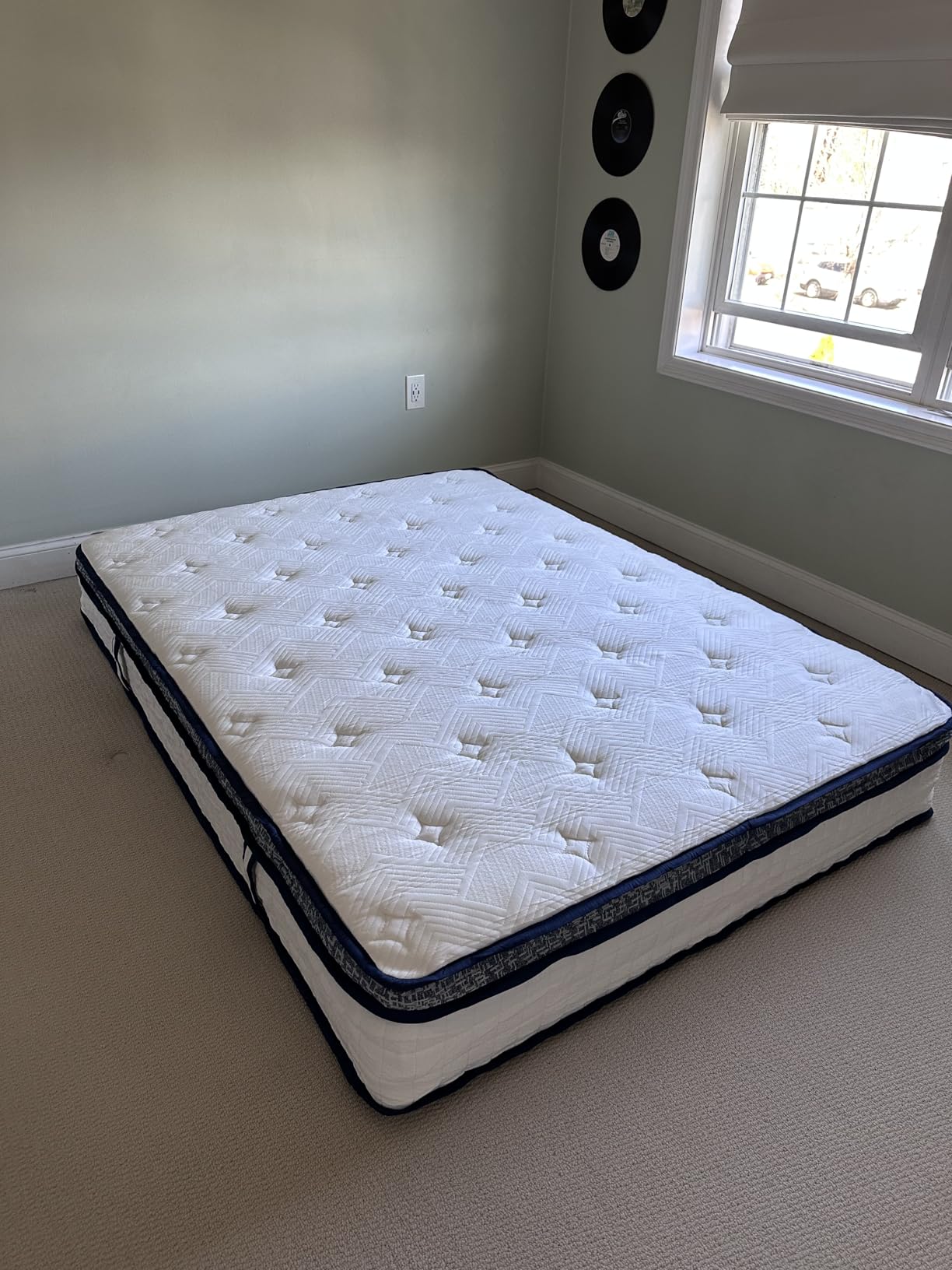
It is a 10 inch hybrid combining innerspring support with dual memory foam layers across several layers in total, and the described feel sits in the medium-firm band that the guidance points to. It is compatible with box springs, slatted bases, platforms, floors, and hospital beds. The multi-layer breathable foam is designed to improve airflow, and the whole thing is CertiPUR-US and OEKO-TEX certified.
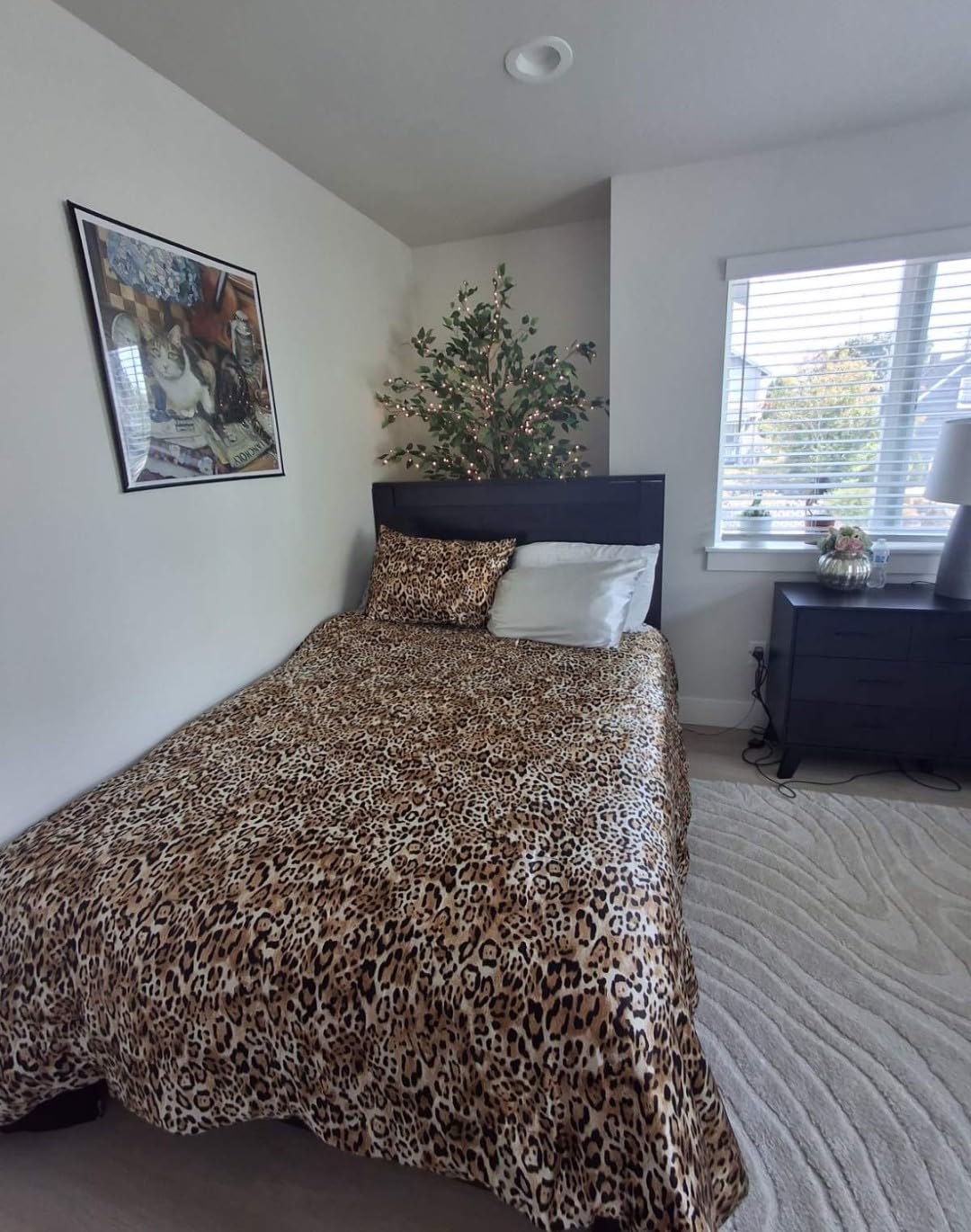
It carries the highest average rating of the ten at 4.7, with around eight in ten ratings at five stars, and the feedback pattern is unusually clean. Buyers describe the balance directly, saying it is neither too soft nor too firm, and several report essentially no adjustment period and sleeping well from the first nights. That matters for trial planning, because you can start scoring your pain immediately instead of waiting.
The weaknesses are ordinary rather than structural. Edges give way when you sit, one owner reports the mattress sliding off the bed after about six months on a slippery base, and some buyers wanted a touch more firmness. Care is spot clean only, so a protective mattress cover is worth adding from day one.
Why a Lower Profile Can Be the Better Back Pain Choice
Mattress height is usually discussed as a comfort luxury, but for anyone with back pain it is an access question. Getting onto a surface that sits much higher than your standing hip height means pushing up with the arms and twisting, and getting out means the reverse. Both of those put load on exactly the muscles and joints that are already sore. A 10 inch mattress sits closer to the height most people get up from a chair, which reduces that.
Lower is also easier to manage physically. At 68 pounds this is the lightest mattress in the guide, which means one person can rotate it, move it, or strip it for cleaning without help. For anyone whose condition limits lifting, that is not a small detail.
Reasons to Choose a Taller Model Instead
Choose something taller if you are a heavy sleeper, because a 10 inch profile has less material under a heavier load and there is less coil structure doing the work. Choose taller if you sleep on your side and need real depth of contour, since a shallower build simply cannot give the shoulder somewhere to go.
Be cautious if you share a bed with a partner on a slippery base, because of the reported sliding, and be cautious if you want to add a topper later, since the 10 inch profile leaves less headroom before the surface gets too high. A long trial and long warranty are both solid here, and they give you room to test properly.
10. LoadEase 12 Inch Hybrid – Best for Adjustable Base Pairings
Queen Mattress, 12 Inch Hybrid Mattress Queen Size in a Box, Medium Firm
12 inch hybrid
800 pocket coils
500 lb capacity
50 lb mattress
Pros
- Medium firm hybrid that spine and back pain owners credit with real relief
- 800 individually wrapped pocket coils absorb movement from partners and pets
- Gel memory foam with airflow channels helps hot sleepers cool
- Reinforced edges limit sagging and roll off
- Holds up with no worn in spot after months of nightly use
Cons
- Weight capacity tops out at 500 lbs which is lower than most rivals
- Some buyers find it bouncier than expected in the first week
- A few report temporary neck back and elbow pain while adjusting
- The compressed box is very heavy to move alone
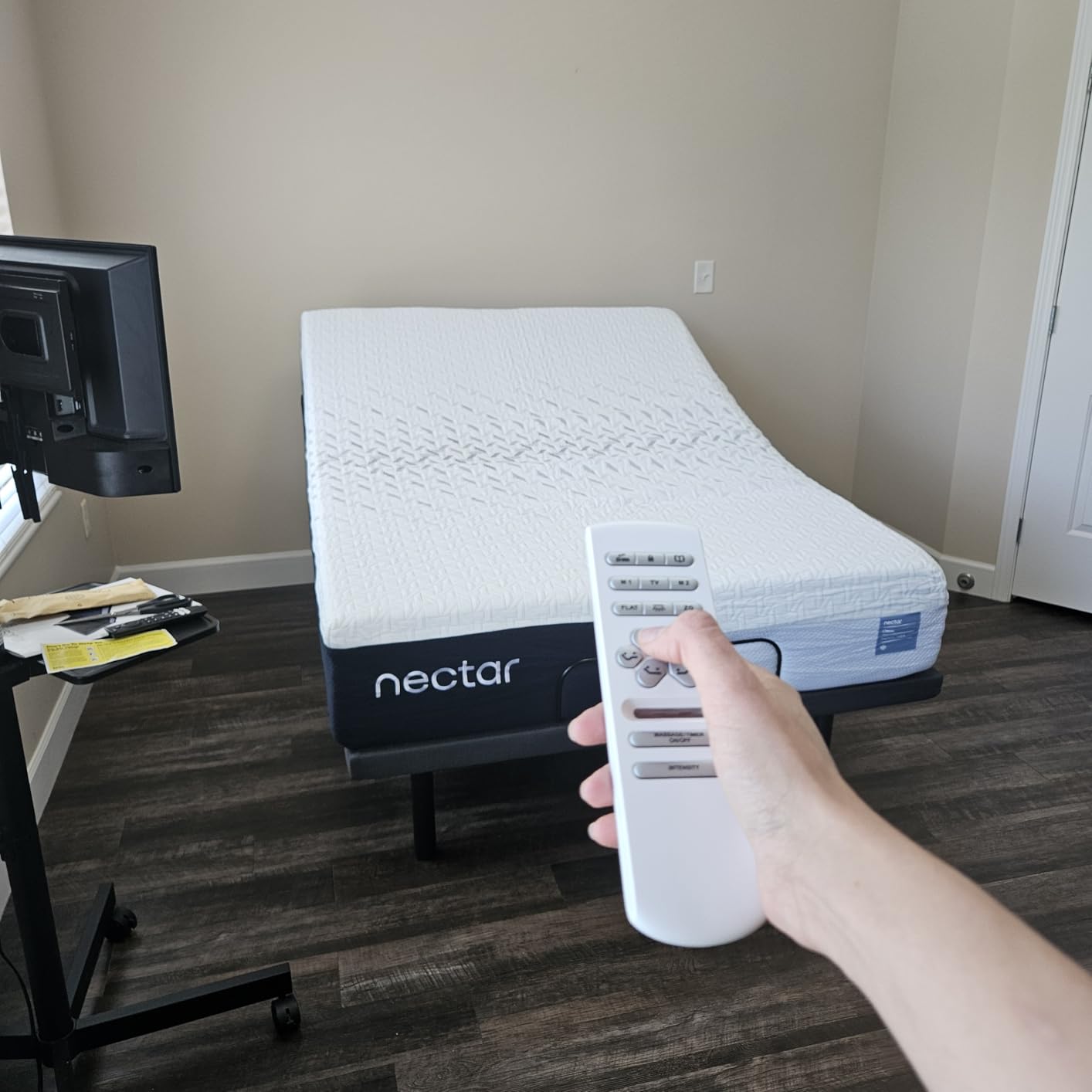
Several buyers in the mattress forums attribute their single biggest improvement to a mattress and an adjustable base used together. Elevating the torso slightly takes pressure off the lumbar spine, and a mattress that bends cleanly at the head without folding into a crease is what makes that work. This is the pick to pair with one.
It is an eight-layer 12 inch hybrid with more than 800 individually wrapped pocket coils and adaptive memory foam above them, with airflow channels in the gel foam to release body heat. It is explicitly listed as compatible with adjustable beds as well as box springs, slatted bases, platforms, hospital beds, and floors. The reinforced edges are meant to limit sagging and roll-off, and the mattress is rolled and boxed so it needs a day or two of expansion.
Back-pain and spine-issue owners report pain relief from this bed often enough to matter, and the durability feedback is unusually specific. Owners describe no worn-in spot after eight or more months of nightly use, which is a real signal for a coil hybrid and not a marketing line. The airflow channels in the gel foam are also mentioned favourably by sleepers who run warm.
The 500 pound capacity is the main constraint, and it is lower than almost everything else here. If you or your partner is above that, this rules itself out. Some buyers also found it bouncier than expected in the first week and report temporary neck, back, and elbow pain while adjusting, which is a normal but annoying transition period. At 50 pounds, the compressed box itself is heavy to get up stairs alone.
What an Adjustable Base Changes About Mattress Choice
Once the base articulates, the mattress becomes a bending object rather than a static surface, and that changes the requirements. A soft all-foam mattress creases where the deck hinges and can bunch under the knees, which puts the spine in a new position rather than the one you wanted. A pocketed coil core handles articulation far better, because each coil moves independently and the surface folds smoothly.
The other consideration is whether the bed flexes without losing its midsection support. A mattress with reinforced edges and a firmer lumbar region keeps its shape when the back is raised, so the benefit of elevation is not cancelled out by a surface that collapses into a hammock. That combination is the reason this model pairs well with a base.
When This Is Not the Right Match
Do not buy it if either of you is above 500 pounds, because the stated capacity is the ceiling and heavier sleepers need the higher-rated models in this guide. It is also a poor fit if you dislike the first week of adjustment and want something you can sleep on well immediately, since owners specifically report an initially bouncy feel.
Lastly, check your base against the compatibility list rather than assuming any adjustable frame works. This one lists the widest range, including hospital beds and floors, which makes it flexible, but the flip side is that you need two people to get the box up stairs. Budget the effort before the pain forces the issue.
What Firmness Do You Actually Need for Back Pain?
Choose medium-firm, which is 6 to 7 out of 10 on the firmness scale, because that range keeps the spine in a neutral line while cushioning the pressure points that cause tossing and turning. Softer surfaces let the hips sink and tilt the spine, and firmer surfaces push pressure into the shoulder blades and sacrum. The right number inside that band still depends on your body weight and how you sleep.
The scale itself is worth defining, because brands use the words loosely. On a 1 to 10 scale, 3 is a plush cloud, 5 is a typical medium, 6 to 7 is medium-firm, 8 to 9 is firm, and 10 is rock hard. A brand calling a bed medium may be describing a 5 or a 6, so read the number in the listing rather than the adjective.
Body weight moves the target. As a rough guide, under about 130 pounds you can work slightly softer than the middle of the range because you will not sink as deeply, and you need more contouring to keep the shoulder and hip from pressing into the surface. Between roughly 130 and 230 pounds, 6 to 7 out of 10 is the sweet spot for most positions. Between roughly 230 and 300 pounds, push toward the firmer end of that band, and read the weight capacity carefully, because a bed that bottoms out under you loses alignment no matter how good the comfort layer is. Above 300 pounds, look for a coil hybrid with a high stated capacity, and treat the comfort layer as a bonus rather than the main event.
Position adjusts it too. Side sleepers need depth of contour to accommodate the shoulder and hip, so they should stay in the softer half of medium-firm. Back sleepers get the most benefit from the true middle, because their load is spread evenly. Stomach sleepers need the firmest surface in the guide, since any sinkage at the waist tips the spine upward. Combination sleepers should split the difference and prioritise the position they spend more time in.
One piece of old advice to retire: the idea that doctors used to recommend very firm mattresses, and that firmer is therefore always better. The modern guidance points the other way, recommending medium-firm to firm rather than extra-firm. Very firm surfaces create their own pressure problems at the shoulder and hip, and the current recommendation is the middle band rather than the top of the scale.
Hybrid vs Memory Foam vs Latex for Back Pain
Hybrids are the most commonly recommended type for back pain, and the reason is structural. A hybrid puts a layer of contouring foam over a pocketed coil core, so the foam handles pressure relief while the coils resist the deep sinkage that bends the spine. If you take one general rule from this guide, it is that a hybrid is the safest default for most body types and most positions.
Memory foam is the second choice and the one most people default to. All-foam beds contour closely and excel at pressure relief, which is why they suit side sleepers and heavier side sleepers well. Their weakness for back pain is heat retention and the way they let a heavier midsection sink, and their edges are usually soft, which is a problem for anyone who struggles to get in and out of bed. If you want a pure foam bed, look for a high-density base layer and a stated weight capacity above your body weight.
Latex is a smaller but enthusiastic camp, and the enthusiasm is mostly about durability. Natural latex is resilient, so it resists developing a permanent body impression the way lower-density polyfoam does, which means the spinal support holds up over years rather than softening. It is also naturally breathable, so it runs cooler than memory foam. Our hybrid mattress guide covers the middle ground in more detail if you want the coil benefits with foam comfort.
Innerspring is the traditional option and ranks third for this audience. Steel springs give excellent support and airflow, but the surface does not contour, so pressure concentrates at the shoulder and hip unless there is a substantial comfort layer on top. Older-style continuous coil systems also transfer motion across the whole bed, which is disruptive for a partner who moves.
Zoned support deserves its own explanation, because most roundups use the word without defining it. A standard pocketed coil unit uses the same coil firmness across the whole bed, but your body is not symmetrical in load: the waist is a hollow that receives almost nothing, while the shoulder and hip press hard. Zoned systems vary coil or foam firmness by region, softening under the shoulder and hip and firming up under the lumbar area, so the spine rests level instead of tilting. On the picks in this guide, it is genuinely present on the FP FLEXPEDIC, meaningfully so on the MOLPHIT and BedStory, and mostly a marketing line on the rest.
Couples deserve their own note. If both of you have back pain, or if your body weights differ significantly, a compromise bed helps neither of you. A split king with two different firmness levels solves it, and it is one of the least considered options even though the forums consistently surface it as a solution. Otherwise, prioritise a mattress with strong motion isolation so a restless partner does not undo your night, and check the weight capacity against the heavier of the two of you.
How to Use the Sleep Trial as a Pain Test
Almost nobody uses the trial properly, and that is the single biggest reason buyers end up stuck with a bed that does not help. The instinct is to lie on it for a few minutes, decide it feels fine, and write off the return window. Instead, treat the trial as a structured pain test with a simple score you record on paper.
Rate your pain from 0 to 10 each morning before you get out of bed, where 0 is no pain and 10 is the worst you have ever had it. Score three separate things rather than one: how your lower back feels on waking, how your hips or shoulders feel, and how much you moved in the night. Write all three down. Do this for the two weeks before delivery so you have a baseline, because a number without a comparison is just a feeling.
Three checkpoints matter. On night one, judge only comfort and whether the surface feels supportive, with no conclusions about pain, because every foam mattress is unfamiliar and most need a break-in period. At night 15, compare your pain scores to the baseline and look at the trend rather than a single morning. By night 30, you should have a readable pattern. Improvement usually shows up as a lower morning score and less movement rather than as the absence of pain, and many people describe a three-to-four-week shift before the difference becomes obvious.
Two rules keep the test honest. Do not change anything else during the first month, so keep the same pillow, the same sleeping position, and the same evening routine, or you will not know what caused the change. And do not wait until the final week to decide, because trial windows are commonly counted from delivery rather than from when the mattress expands, and processing time comes out of your nights.
Know the terms before you order rather than after. Several beds in this guide run 365 nights, others run 100, and a few have no trial at all, which is why the pick at number one carries a caveat about risk. Return fees and restocking charges are a genuine complaint among buyers, so check whether one applies and how the brand handles it before you are relying on the trial.
What to Do If the New Mattress Does Not Fix Your Pain
If you are several weeks in and the scores have not moved, the problem is usually one of four things, and only one of them is the mattress. Work through them in order before you reach the return deadline.
Check the foundation first, because it is the most commonly missed cause. Older adults with a new mattress and unchanged pain usually turn out to have a weak or mismatched base, and forum reports follow that pattern closely. If your frame has centre support beams spaced more than about 66 inches apart, the middle of a queen is sagging and every mattress on it will dip. A slatted base with gaps wider than a few inches does the same thing. This is also worth checking if you sleep somewhere other than a bedroom, such as a spare room bed or a guest bed used as a daybed.
Then check the mattress age. If your previous mattress was more than five to seven years old and had a visible dip or a body impression you could not shake out, that was a genuine problem. But if the pain predates the mattress purchase by years, replacing it may not move the needle, and a mattress topper is the cheap way to test whether surface feel matters at all before spending on a full replacement.
Next, fix the pillow. A pillow that is too high or too low changes the angle of the neck, and the neck pulls on the lower back. On your side, the pillow should fill the gap between your ear and your shoulder so your neck stays level. On your back, aim for a pillow that supports the natural curve of your neck without lifting your head into a chin-up position. Stomach sleepers are better off with a thinner pillow, since a thick one forces the neck into extension all night. A handheld massager used on the lower back before bed also helps many people settle faster.
Then adjust your position habits. On your back, put a pillow under your knees to reduce the load on the lumbar spine, and another under the ankles if it feels natural. On your side, put a pillow between your knees to stop the top hip dropping and rotating your pelvis, which is the most common cause of side-sleeper lower back pain. Sleeping on your side with a pillow behind your back stops you rolling onto the worst position. If you work from home and sit for long stretches, the chair matters as much as the bed, and our chair guide covers setups that will not undo your mattress at night.
Finally, add gentle movement. Knee-to-chest, child’s pose, and a slow spinal rotation are the three that show up most often in advice from people managing chronic back pain, and all three are safe for most non-acute cases. Pair them with a few minutes of slow breathing before sleep. Nothing here replaces assessment, and if your pain is worsening, spreading down a leg, or accompanied by numbness, weakness, or changes in bladder or bowel control, stop reading and see a clinician.
Frequently Asked Questions
What mattresses do doctors recommend for back pain?
What is the best type of mattress to support lower back pain?
Are hybrid or memory foam better for back pain?
Can a mattress cause back pain?
How long does a mattress trial last and can I return it for back pain?
Final Verdict on the Best Mattresses for Back Pain Sufferers in 2026
The MLILY EGOHOME 14 Inch is our pick for the best mattresses for back pain sufferers overall, and the reason is the depth of the record behind it: more than six thousand ratings pointing the same direction, a 14 inch layered foam build that separates pressure relief from sinkage control, and cooling features that stop the fix from being undermined by heat. If you can accept having no return window, that is where we would start.
Buy the Novilla 12 Inch if cost decides it, the FP FLEXPEDIC if you want real zoned lumbar support, the Sleepmax if you weigh more than the mid range, the BURFLY1977 if a low profile and easy handling matter, and the Nectar if you sleep on your front and want the longest trial in the group. Whichever you choose, score your pain on a 0 to 10 scale each morning, judge the trend at night 15 and night 30, and check your foundation before you blame the mattress.
A mattress can meaningfully reduce the load on a sore back. It cannot fix a disc, a nerve, or eight hours of sitting, and anyone who expects it to will be disappointed no matter which of these ten they buy.