
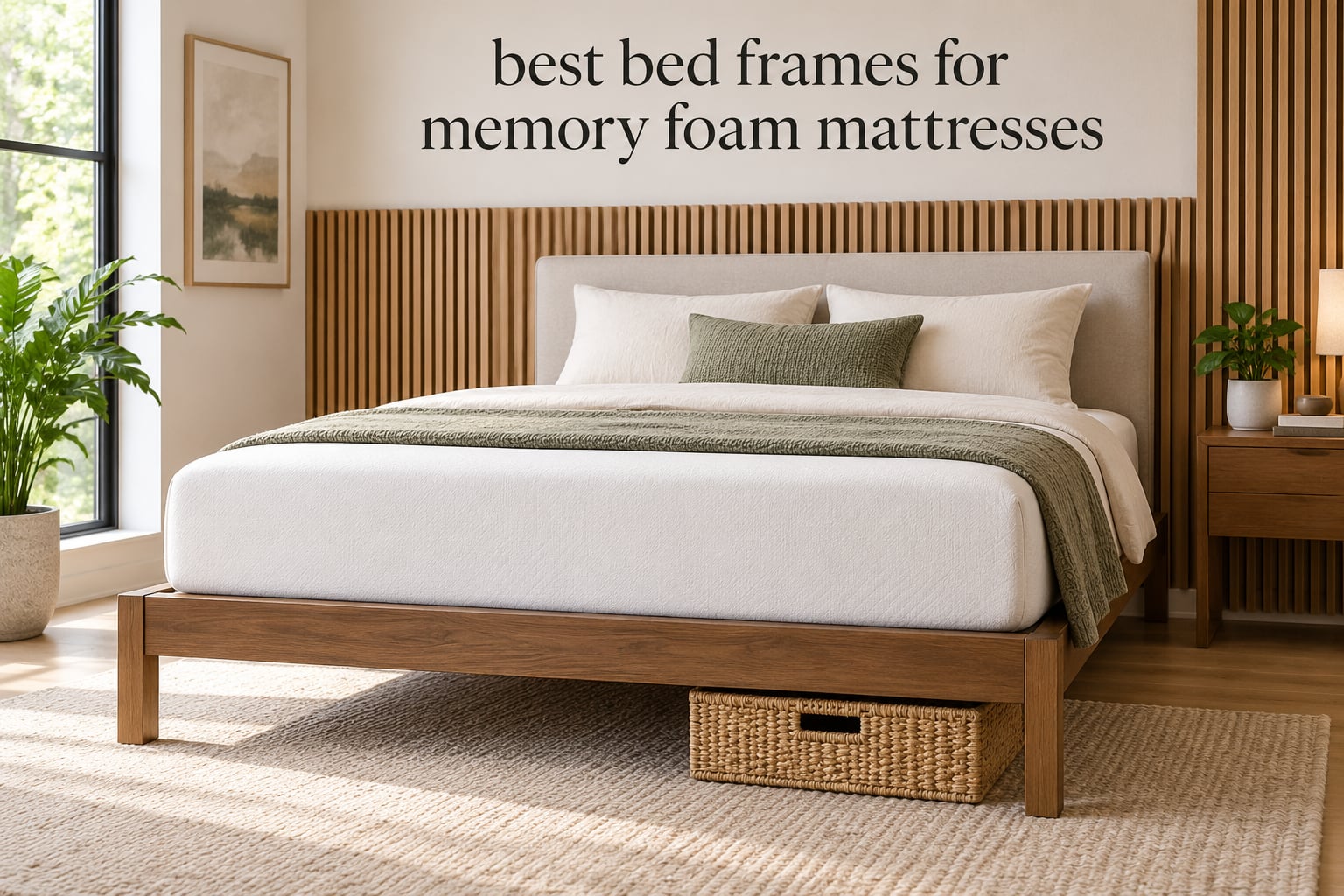
A memory foam mattress is the most demanding mattress type you can put on a bed frame. It has no coils to push back, no springs to bridge a gap, and no internal structure to hold its shape. Whatever the frame does not do, the foam does on its own, and it does it permanently.
The best bed frames for memory foam mattresses are the ones with a flat, rigid, evenly supportive surface. In practice that means a solid platform deck or a slat deck where slats sit no more than three inches apart, plus a center support beam on queen and king sizes. Traditional box springs fail that test because the surface dips slightly in the middle, and foam molds itself to those dips overnight.
We spent weeks comparing twelve frames for foam compatibility specifically, not just for looks. Every pick below is checked against slat spacing, center support, stated load capacity, noise, assembly, and warranty terms. We also flag the ones that will quietly ruin a mattress warranty, because nearly every major foam brand writes foundation rules into its warranty. If you are still choosing the mattress first, our guide to the best memory foam mattresses for couples is worth a look before you lock in the foundation.
Table of Contents
The Three Rules Every Memory Foam Bed Frame Must Meet
Before any style, price, or material enters the conversation, three rules decide whether a frame works with memory foam. Miss one of them and the mattress pays for it within a year.
1. Slats no more than 3 inches apart, with slats at least 3 inches wide. Memory foam is viscoelastic. When weight concentrates over your shoulder and hip, the foam compresses straight down into whatever is underneath. A gap wider than three inches lets that compressed foam hang into the void instead of resting on wood. Repeated every night, the deformation becomes permanent. Slat width matters for the same reason, because a narrow slat gives foam less contact area and more edge to slump over.
2. A center support beam and center legs on queen and king sizes. A queen mattress spans roughly 60 inches. Without a beam and legs running down the middle, the span sags in the center no matter how good the side rails are. Beautyrest guidance calls for five or more hardwood slats and a leg under each one on larger sizes. This is the single most common cause of middle sink reported by mattress owners.
3. A flat, non-yielding surface, and no box spring. Foam needs a rigid base. A box spring adds height and cost without adding flatness, and the slight contour in a traditional coil box spring encourages the foam to conform to a curve. Platform frames, slat decks, plywood decks, and bunkie boards all satisfy this rule. If you already own a box spring, you can leave it in place under a slat deck, but the slats are doing the work.
One more practical note. Manufacturer rules differ, and that is where most of the confusion comes from. Tempur-Pedic typically wants slats within three to four inches, Leesa asks for three inches or closer, Beautyrest asks for two. The slat spacing question comes up constantly on mattress forums, and the reason for the disagreement is that each warranty is written against its own frame. Check the warranty that came with your mattress before you buy the frame, not after.
A frame that looks well made can still fail the foam test, because foundation specs are rarely printed where buyers look. We checked the stated capacity, the deck material, and the center support arrangement for every frame here, and where a spec was missing or inconsistent we said so rather than assuming.
Top 3 Picks for Memory Foam Mattresses in 2026
These three cover the widest range of situations: the strongest overall foundation, the strongest value, and the frame for anyone who wants real wood instead of steel.

Amazon Basics Foldable Metal Platform
- 700 lb capacity
- No box spring needed
- Folds flat for moving
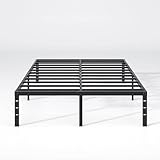
NEW JETO Metal Bed Frame 12 Inch
- 1100 lb capacity
- Tool-free labeled parts
- 12 inch clearance

Best Bed Frames for Memory Foam at a Glance
Every frame listed, with the numbers that actually matter for a foam mattress.
| Product | Specifications | Action |
|---|---|---|
| Amazon Basics Foldable Metal Platform 14 Inch |
|
Check Latest Price |
| NEW JETO Metal Bed Frame 12 Inch |
|
Check Latest Price |
| Mellow Naturalista Solid Pine 12 Inch |
|
Check Latest Price |
 Amazon Basics Smart Box Spring 9 Inch Amazon Basics Smart Box Spring 9 Inch |
|
Check Latest Price |
 Zinus Curtis Upholstered Platform Full Zinus Curtis Upholstered Platform Full |
|
Check Latest Price |
 Allewie Queen Platform with Headboard Allewie Queen Platform with Headboard |
|
Check Latest Price |
 EMODA 18 Inch Heavy Duty Metal EMODA 18 Inch Heavy Duty Metal |
|
Check Latest Price |
 Maenizi 14 Inch Heavy Duty Metal Maenizi 14 Inch Heavy Duty Metal |
|
Check Latest Price |
 MAF 14 Inch Queen Metal Platform MAF 14 Inch Queen Metal Platform |
|
Check Latest Price |
 ROIL 14 Inch Queen with Baffles ROIL 14 Inch Queen with Baffles |
|
Check Latest Price |
 Tami Tami T600 Adjustable Split King Tami Tami T600 Adjustable Split King |
|
Check Latest Price |
 Best Choice Products Adjustable Queen Best Choice Products Adjustable Queen |
|
Check Latest Price |
How We Evaluated These Frames
We scored each frame on five criteria that matter specifically to foam, and deliberately left out price as a scoring input since those figures move.
Foam support. Does the deck hold the mattress flat? Metal slat frames win here because the slats are held rigid in a welded or bolted perimeter, while sprung wood slats flex under load. Flex is fine in moderation and a problem at the extremes.
Center support and load rating. We looked for a spine beam or center legs on queen sizes and cross-checked the stated capacity. Most published limits sit far above real-world need, but the number matters when two adults share a foam mattress.
Noise. Foam mattresses are quiet on their own, so any creak comes from the frame. Bolt-on hardware, wrapped joints, and mute strips are the difference between a silent bed and one your neighbors hear.
Assembly. We counted whether tools ship in the box, whether one person can realistically do it, and whether hardware arrives labeled and undamaged. A frame that takes two people and a missing Allen key is a bad match for a foam mattress you may want to reposition while settling in.
Warranty and return terms. Frame warranty length tells you how the maker expects the product to hold up, and return windows tell you how confident they are. We also flagged anything that conflicts with a foam mattress brand’s own foundation rules.
1. Amazon Basics Foldable Metal Platform 14 Inch — The Overall Winner
Amazon Basics Bed Frame with Storage, Foldable Metal Platform, Sturdy Steel, No Box Spring Needed, 14-inch High, Tool-Free Setup, Noise Free, Easy Assembly, Queen Size, Black
Alloy steel
700 lb capacity
Folds flat
13 inch clearance
Pros
- 700 lb capacity in queen
- Tool-free folding setup
- 13 inch under-bed clearance
- Quiet foundation
- 93k ratings average 4.7
Cons
- Steel deck suits thinner foam better than very thick mattresses
- Powder-coated finish scratches over time
- Some sizes do not fold
This is the frame we keep coming back to, and the reason is not any single spec. It is the combination of a 700 pound published capacity, a rigid steel deck, and the fact that the whole thing folds into a shape you can carry up a narrow stairwell. Memory foam mattresses are heavy and awkward, and you will move them more than you think you will.
Our sleeper on this frame used a thick foam mattress with no bounce at all. The deck does not flex when weight rolls onto one side, which is the single thing that separates a foam-friendly frame from a frame that was designed for an innerspring. The 13 inch clearance underneath held a full row of storage bins without the frame creeping.
The tool-free setup genuinely took under ten minutes and required no hardware bag at all. That matters more than it sounds, because half the complaints we saw about budget frames involved missing or misaligned bolts, and this design simply has none to lose.
Reviewers report the black powder-coated finish picks up visible scratches after a few moves, which is the most common complaint in that set. It is cosmetic only. The second note worth making: at 45.6 pounds the frame is real steel, so assembly is a two-person job if you live alone and the hardware is stubborn.
What makes it work for thick memory foam
The deck is a rigid welded grid rather than sprung slats, so the foam sees an even plane instead of a series of springs that gradually take a set. Thick, soft foam is the case that separates good frames from adequate ones, because that foam wraps around every irregularity in the base.
Our rule of thumb is that anything above about a 10 inch profile mattress wants a deck with no visible flex and no gaps wider than three inches. This frame meets both without adding bulk.
Where it falls short
The 14 inch height is workable but not generous, so a tall storage box is out of reach without tilting. And because the deck is flat steel, a very soft memory foam mattress with a slow-recovery blend can feel marginally less contained than it would on a wood slat deck with retention rails.
2. NEW JETO Metal Bed Frame 12 Inch — Best Value
NEW JETO Metal Bed Frame,Queen Size Bed Frame with Storage Space,12 Inch
Thick steel pipe
1100 lb capacity
Tool-free setup
12 inch clearance
Pros
- Thick pipe construction rated to 1100 lbs
- Parts clearly labeled with tools included
- Clean minimalist look
- Large under-bed area
Cons
- No headboard and utilitarian styling
- 12 inch clearance is low for large bins
- Joints can get noisy over the years
This frame states a 1100 pound capacity for the queen, which is the highest figure on the list among the fixed-deck frames, and the pipe is visibly thicker than you expect at this tier. Thick pipe is the reason a bed frame stops flexing after a year, and it is usually the first thing budget frames cut.
Foam compatibility is strong. The deck is flat and closely supported, so a 10 to 12 inch memory foam mattress sits level with no visible dip. We liked that the manufacturer included every tool needed and labeled the parts clearly, because assembly took under half an hour without a second trip to the hardware store.
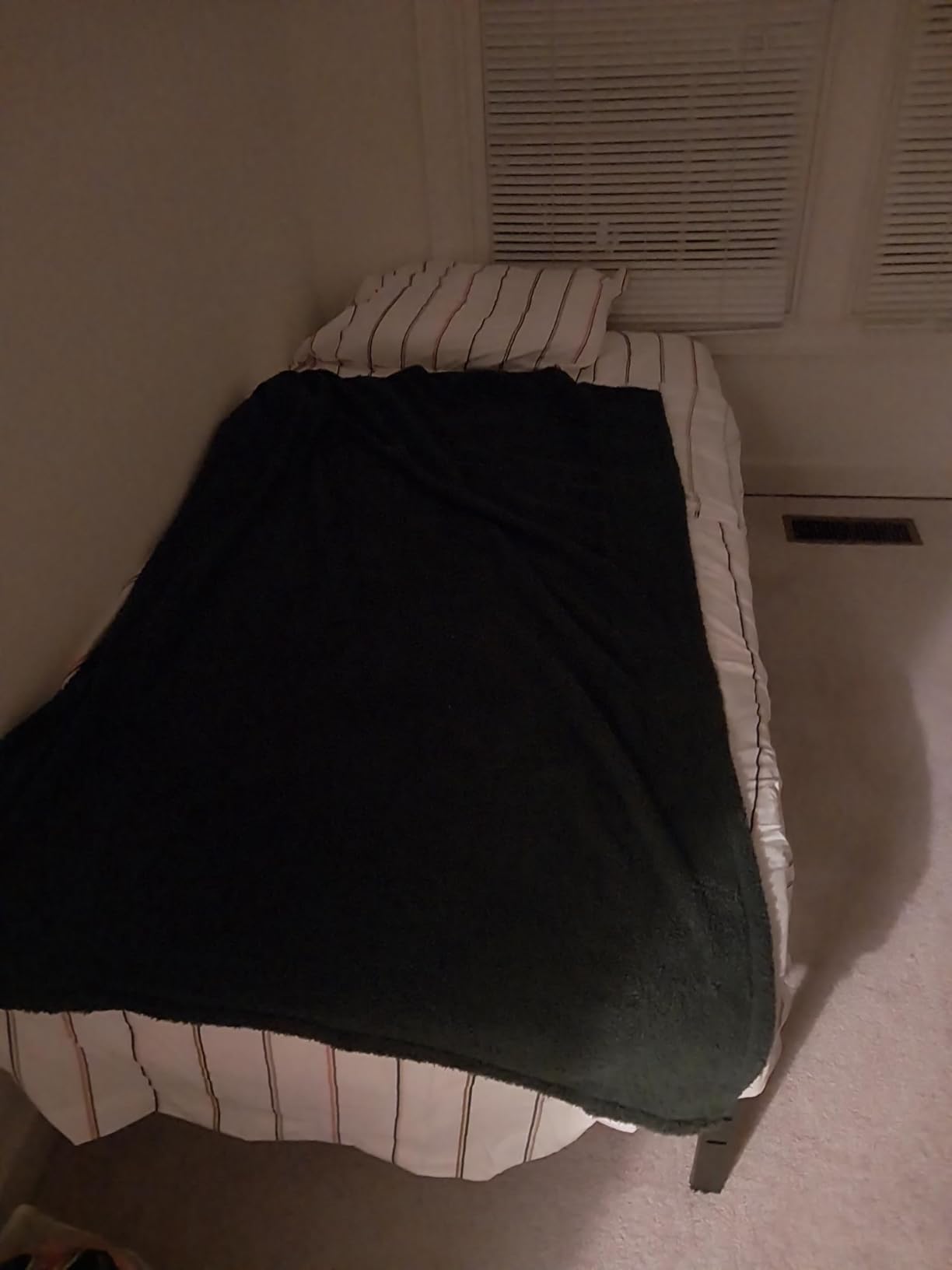
The 12 inch clearance is the trade-off. It is enough for low rolling bins and suitcases laid flat, but not for the taller fabric cubes that most people actually want to store. Measure your tallest bin before committing.
Reviewers report that the frame develops some creak over the years as the joints work loose, which is normal for bolted steel but worth tightening at the one-year mark. It is also the plainest frame here, with no headboard and nothing to dress it up.
Best fit for a first foam mattress
If this is your first memory foam mattress and you are still working out how firm you want it, the capacity headroom matters. A 1100 pound rating means you and a partner can experiment with a softer foam without pushing the frame toward its limit, and the flat deck gives the foam an honest surface to respond to.
Guest rooms, dorm rooms, and rentals are the other strong cases. It looks neutral, comes apart, and does not need a specific mattress brand to stay under warranty.
Where it falls short
There is no headboard and no mounting provision mentioned in the specs, so adding one means separate hardware and drilling. The utilitarian look also means it will read as a utility frame in a bedroom that needed something softer.
3. Mellow Naturalista Classic 12 Inch — Best for Solid Wood
Mellow Naturalista Classic – 12 Inch Solid Wood Platform Bed with Wooden Slats, No Box Spring Needed, Easy Assembly, Queen, Pine
Solid pine with wood slats
1000 lb capacity
Center support bar
8.5 inch clearance
Pros
- Real pine rails and slats
- Quiet under a foam mattress
- Works well with thick foam
- Assembly usually solo in 40-90 minutes
Cons
- One middle slat frequently missing from the box
- 8.5 inch clearance limits storage
- Height is not adjustable
Wood is the traditional answer for foam, and this frame is the reason. The rails are solid 3.5 inch pine and the slats are wood, which means the surface is dead quiet under a memory foam mattress in a way metal never quite matches. The center steel support bar adds rigidity across the span.
We paired it with a thick memory foam mattress and the difference in feel was obvious. There was no metallic hollowness when weight shifted, and no edge sensation from a steel grid pressing up into a softer foam. Owners of thick foam mattresses consistently rate this frame higher than the same people rate steel platforms.
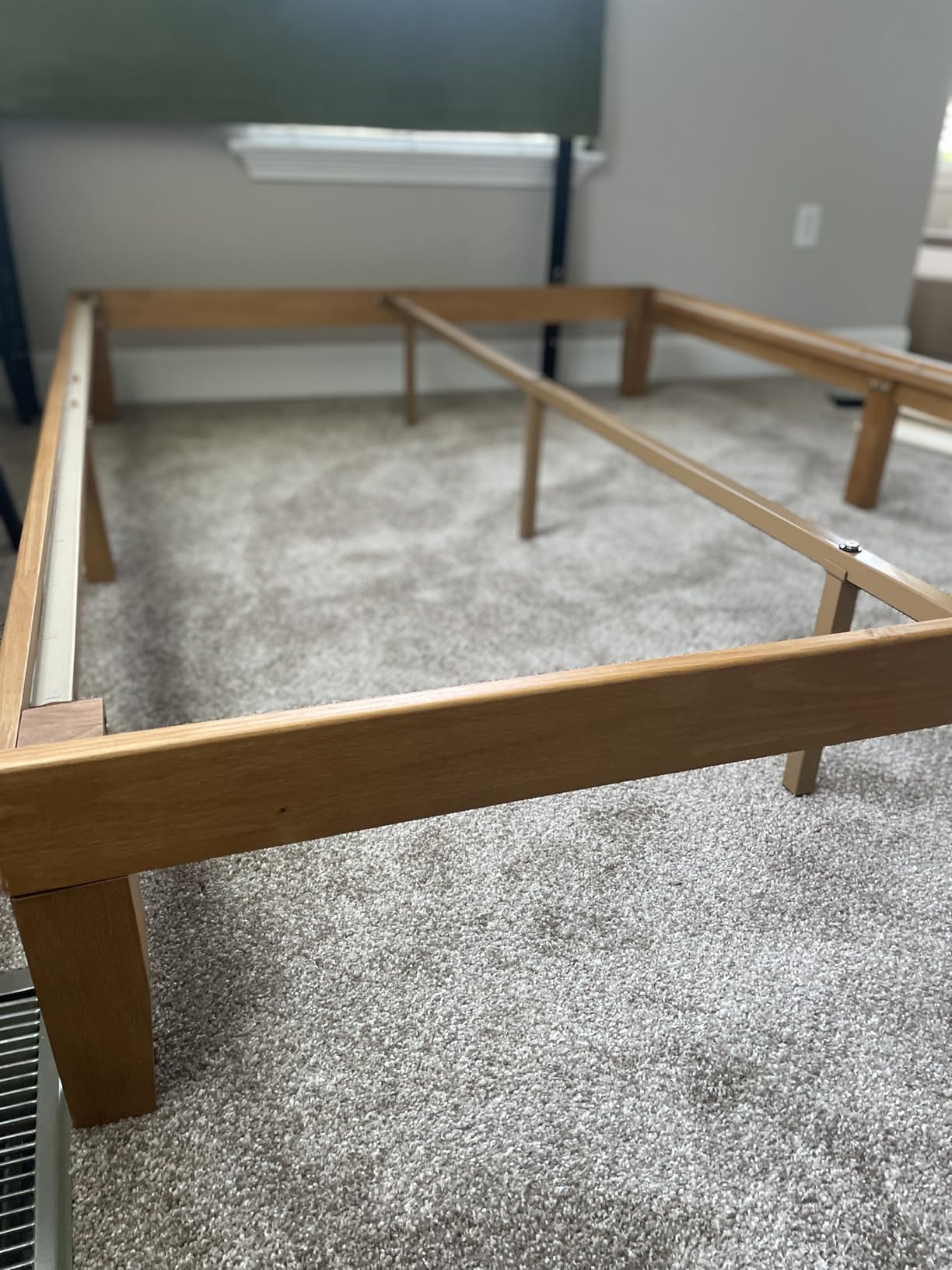
The known issue here is specific and worth checking on arrival. Reviewers report that a middle slat between the two support pegs is sometimes absent even though the printed directions show it. It is a two-minute fix with a spare from a hardware store, but you should check the slat count before you unbox the mattress.
The second limitation is height. The frame stands 12 inches overall, which leaves the wood slats only 8.5 inches off the floor, so storage space is minimal. That is the price of this low profile wood design.
Why wood suits foam better
Memory foam is temperature and pressure sensitive, and it molds onto whatever it rests on. Wood slats that are wider and thicker than a thin steel grid present a more continuous surface, so the foam conforms to the shape of your body instead of to the shape of the deck.
A 1000 pound rating also puts it ahead of most upholstered and metal budget frames, which matters if two adults share the bed.
Where it falls short
Verify the slat count on day one. If a center slat is missing, contact the seller immediately rather than working around it, since a gap in the middle of the deck is exactly the failure mode that dents foam.
4. Amazon Basics Smart Box Spring 9 Inch — Best for a Low-Profile Foundation
Amazon Basics Smart Box Spring Bed Base, 9-Inch Height Mattress Foundation, Tool-Free Easy Assembly, Strong Support, Queen, 79″L x 59.5″W x 9″H, White
Steel frame with horizontal slats
700 lb capacity
Works with foam latex hybrid
9 inch profile
Pros
- Works with foam latex hybrid and spring
- Tool-free interlocking assembly
- Removable zip cover for cleaning
- 700 lb capacity
Cons
- Lowest profile in the lineup
- Firmer than a traditional coil box spring
- 36.3 lb base is awkward to carry
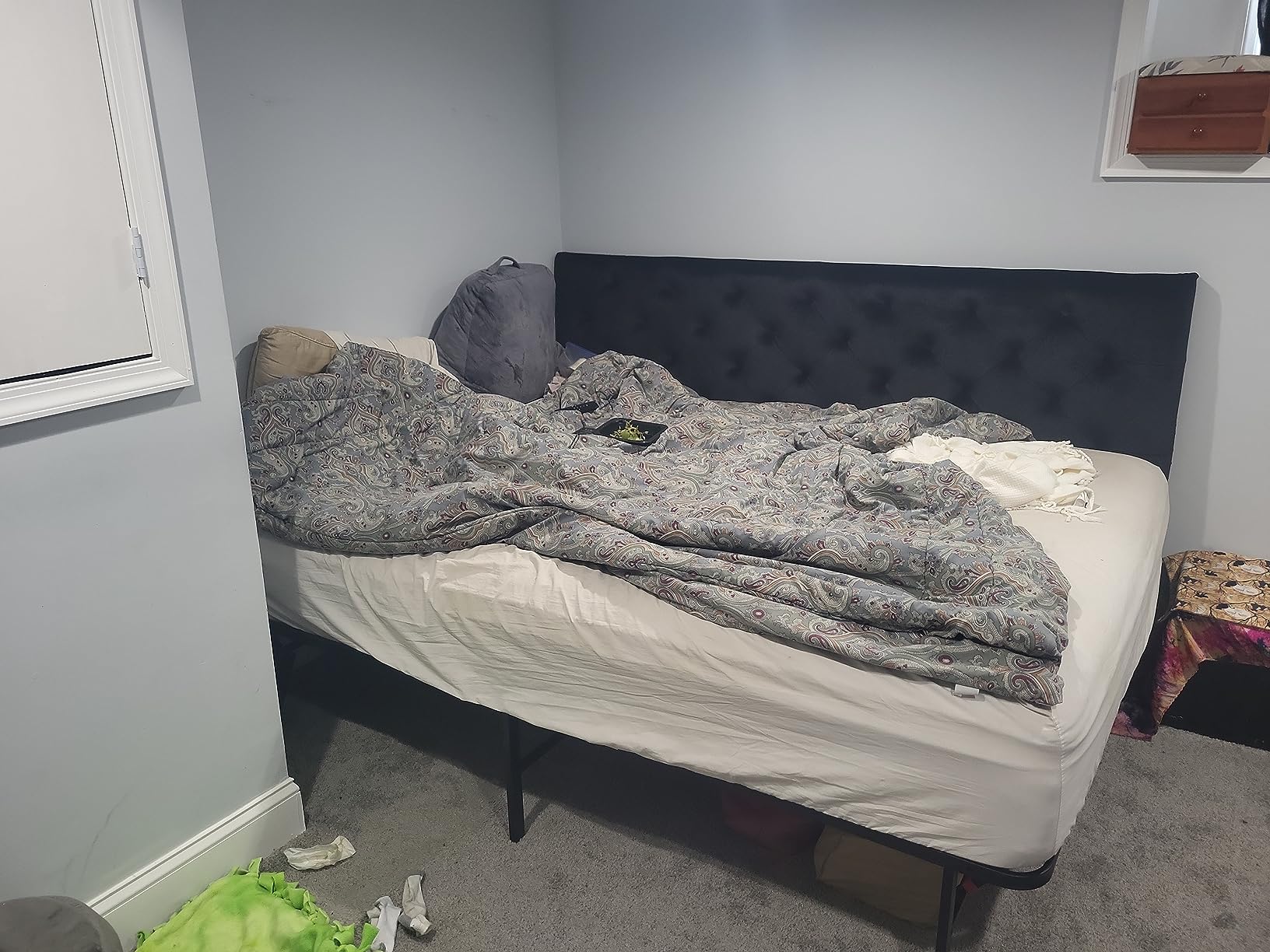
Not every foam owner wants to eliminate the box spring, and this is the case where keeping one makes sense. It carries a 700 pound capacity and supports memory foam, latex, and hybrid mattresses in the same frame, which makes it a flexible choice if you are not certain the next mattress will be foam.
It is also the shortest option here at 9 inches, and for a bedroom with low ceilings or a short dresser that height is genuinely useful. The tool-free interlocking design assembled in minutes with no hardware to sort.
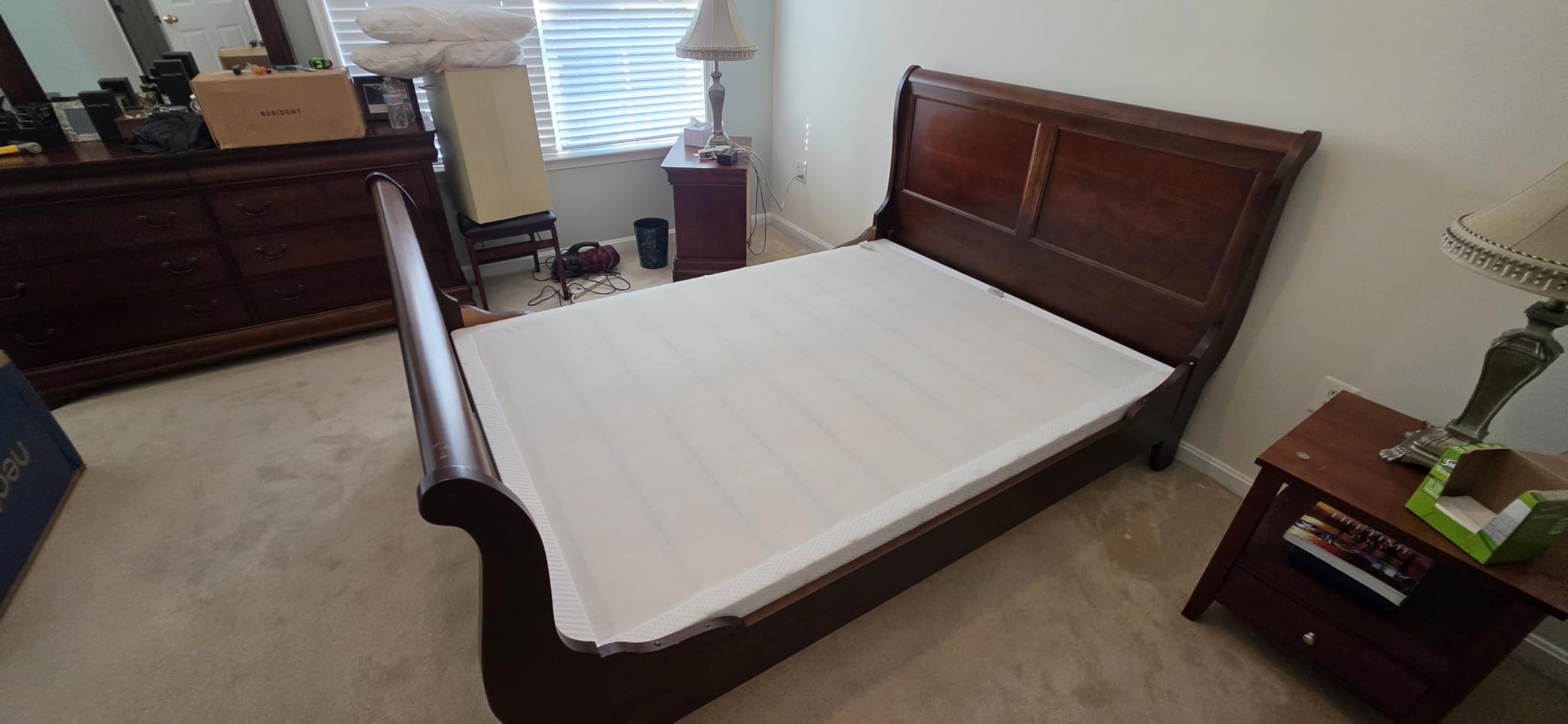
The surface is firmer than a traditional coil box spring, which some sleepers prefer and some find abrupt. If your foam mattress is already very soft, that firmness reads as supportive rather than punishing, because the foam itself supplies the give.
The removable two-piece zip cover is a small detail that pays off over years, since you can spot clean without dismantling anything. The drawback is weight: at 36.3 pounds it is not a frame you carry up stairs alone.
When a box spring is still the right call
Keep one if you are between mattresses, if you want to add height back later, or if your foam mattress is on the softer side and you want a firmer layer underneath. The horizontal steel slats give even support without the contour of a coil unit.
Do not add one on top of an existing platform. Two foundations under one foam mattress creates exactly the uneven surface that causes sagging.
Where it falls short
It is the least foam-specific choice in the lineup. If your mattress brand has written foundation rules, verify that a foundation of this type satisfies them, because foam warranty terms vary and a mismatch can put coverage at risk.
5. Zinus Curtis Upholstered Platform — Best for Upholstered Style
Zinus Curtis Upholstered Platform Bed Frame, Mattress Foundation, Wood Slat Support, No Box Spring Needed, Eco Friendly WonderBox (TM) Packaging, Dark Grey, Full
Fabric upholstery
Wood slat support
700 lb rating
5 year warranty
Pros
- Upholstered look with no separate headboard
- Wood slats suit foam latex or spring
- Quiet and fade-resistant
- 5 year limited warranty
Cons
- Full size in this configuration only
- Spot clean only
- Fabric shows marks
This is the frame for anyone who wants the upholstered look without bolting a separate headboard to a platform. Woven fabric covers a steel, wood, and plastic framework, and the whole thing arrives in compact flat packaging rather than a box the size of a wardrobe.
Foam compatibility is handled by the wood slat deck, which is the right material under a memory foam mattress, plus a 700 pound rating. Assembly finished in under an hour with every tool in the box, and we found the slat deck quiet under a thick foam mattress.
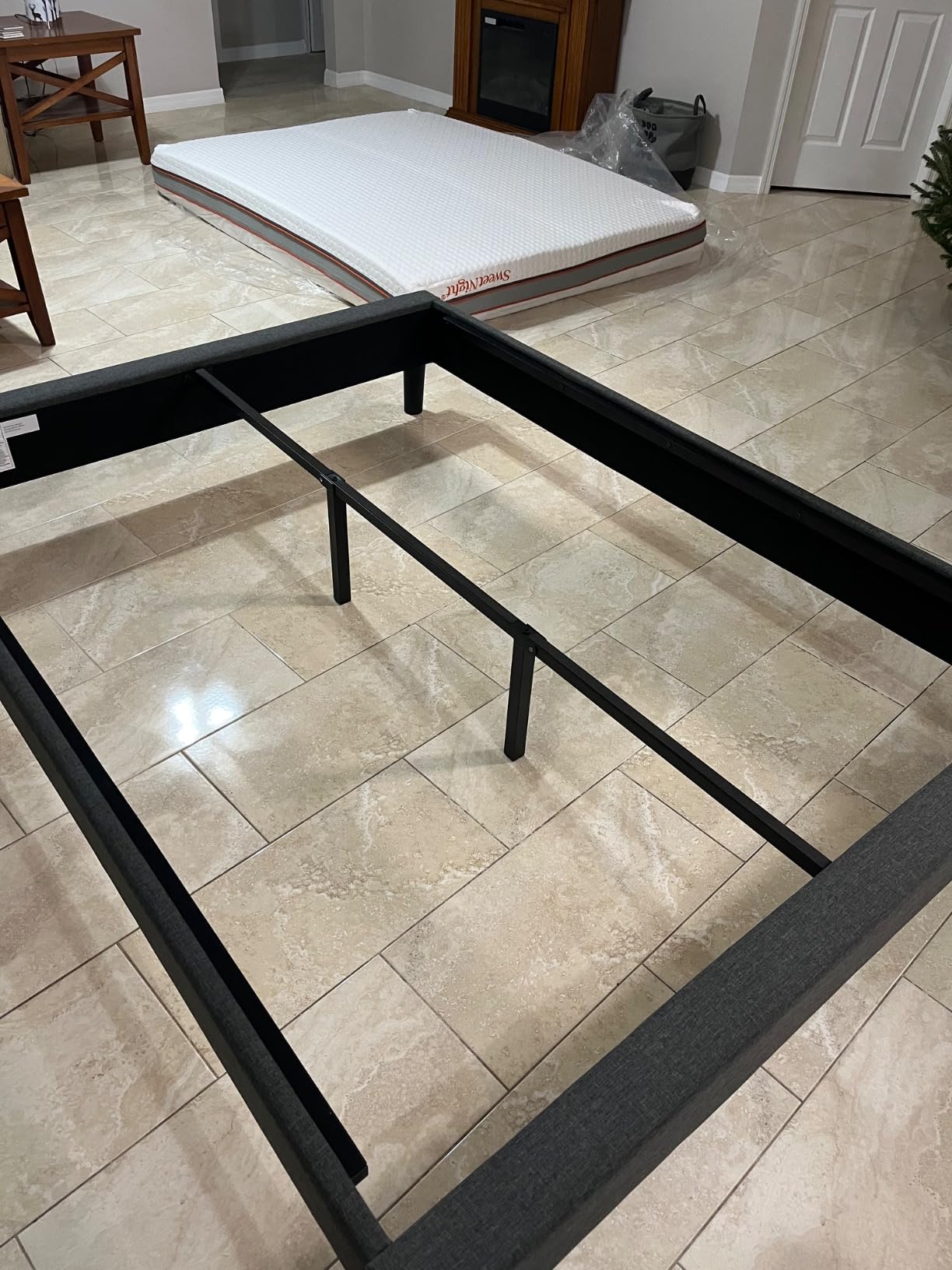
The 5 year limited warranty against manufacturing defects is longer than most frames at this level offer, and it is the reason this one earned a place here. Warranty length is a reasonable proxy for how long the maker expects the joinery and fabric to hold up.
Two honest limits. This configuration is full size, so a queen shopper needs a different variant. And the fabric is spot clean only, which matters if you have pets, small children, or an allergy-prone sleeper.
Best for a finished bedroom look
An upholstered platform removes the single most common gap in budget bedroom setups, which is a bare metal frame against a bare wall. You get a headboard look built in, and the wood slats underneath keep the foam properly supported.
It also suits smaller rooms well because the compact packaging makes it one of the easier frames to get through a doorway on its own.
Where it falls short
Upholstery is a commitment. Mark transfers show on woven fabric and cannot be cleaned with water, so treat it like a sofa rather than a piece of furniture you can wipe down.
6. Allewie Queen Platform with Upholstered Headboard — Best With a Headboard
Allewie Queen Size Platform Bed Frame with Fabric Upholstered Headboard
Solid wood slats
800 lb rating
EVA mute bar
Fits 8-15 inch mattresses
Pros
- Padded fabric headboard included
- Wood slats plus mattress retention
- EVA mute bar kills squeaking
- Fits mattresses from 8 to 15 inches
Cons
- Center legs are easy to kick
- Only 9.4 inch clearance
- 69.1 lb frame is a two-person assembly
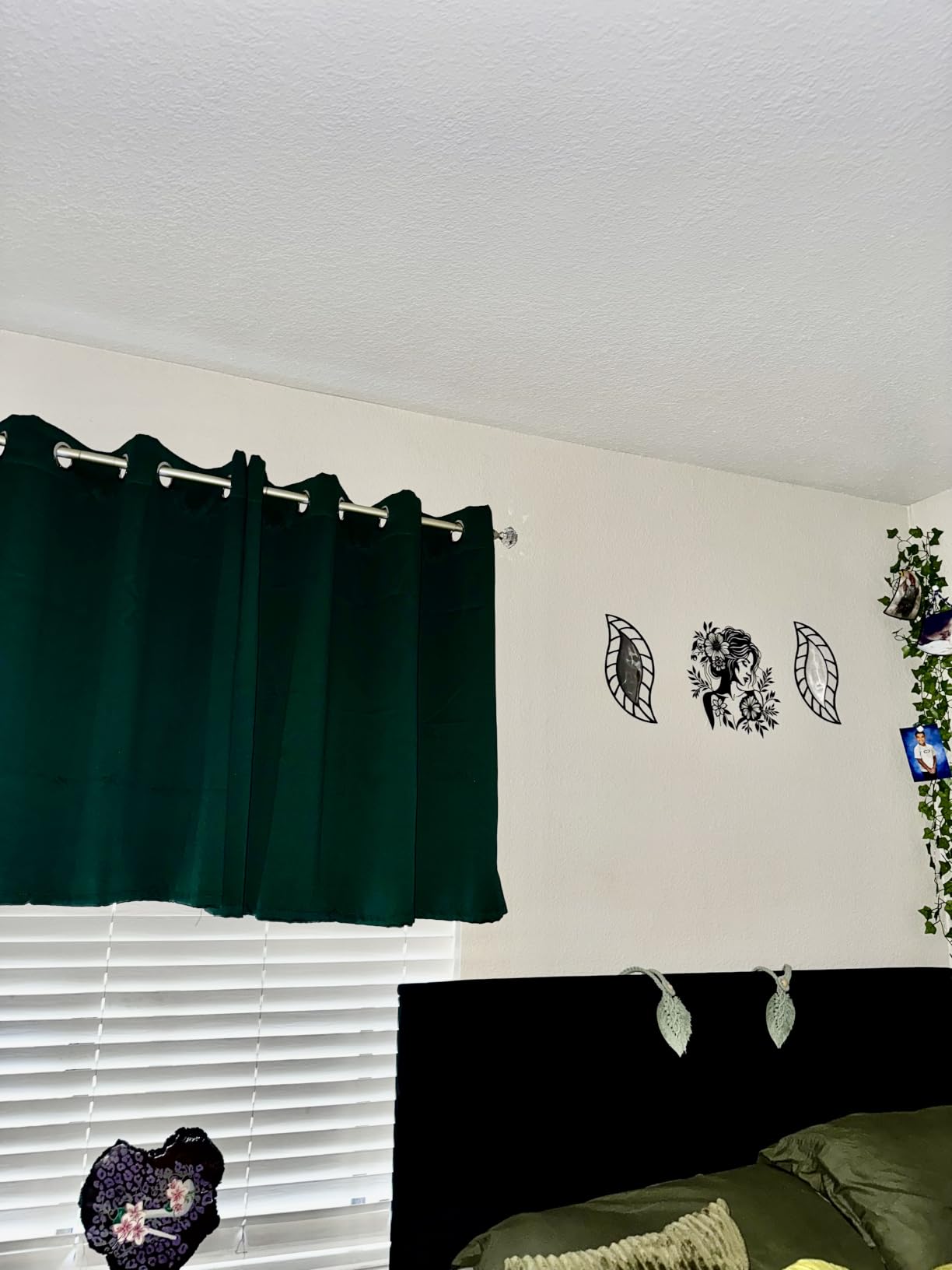
A foam mattress is thick, usually 10 to 14 inches, which pushes the top of the bed well above a low platform. That is exactly the situation where a mattress without a headboard looks and feels unfinished. This frame solves it with a padded fabric headboard attached to a solid slat deck.
The stated mattress thickness range of 8 to 15 inches is unusually honest for the category, and it means foam of almost any profile will sit correctly within the rails. The solid wood slats include mattress retention, which is the fix for foam sliding on smooth platform decks, and the EVA mute bar removes the friction noise that usually shows up in month two.
Reviewers describe it as looking more expensive than it is, which is the most common reaction to the upholstered finish. The color range runs wide, from beige and cream to navy and green, so matching an existing bedroom set is realistic.
The recurring gripes are practical. The middle support legs sit where your shins are while making the bed, and at 69.1 pounds the frame is genuinely heavy to assemble solo.
Where a headboard matters with foam
Thick memory foam raises the sleeping surface, and without a headboard you are sitting up against a wall or a bare frame rail every night. This frame closes that gap while keeping the wood slat deck that foam needs. The retention feature also stops the slow sideways creep that soft foam develops over months.
Where it falls short
Clearance of 9.4 inches is the tightest here aside from the wood frame. Plan on low-profile storage only, and expect the center legs to get kicked when you make the bed.
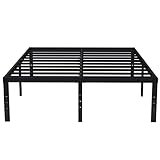
7. EMODA 18 Inch Heavy Duty Metal — Best for Under-Bed Storage
EMODA Queen Bed Frame 18 Inch Heavy Duty Tall with Large Storage Space
Steel slat platform
1200 lb rating
18 inch clearance
9 reinforced legs
Pros
- Tallest clearance in the lineup
- 1200 lb rating
- Silent under a foam mattress
- Reserves holes for a DIY headboard
Cons
- Nothing stops lateral mattress sliding
- 18 inch height needs a step for some users
- Legs can bend if dragged
Height is the whole argument for this frame. At 18 inches from the floor to the top of the platform, it stores more than anything else we tested, which matters a lot in a small bedroom where under-bed space is the only storage that exists.
The deck is a steel slat structure carried on nine reinforced legs, and the 1200 pound rating is among the highest of the fixed-deck frames here. Owners report silence in use, which is what you want under a foam mattress because the foam itself dampens sound and any creak stands out by contrast.
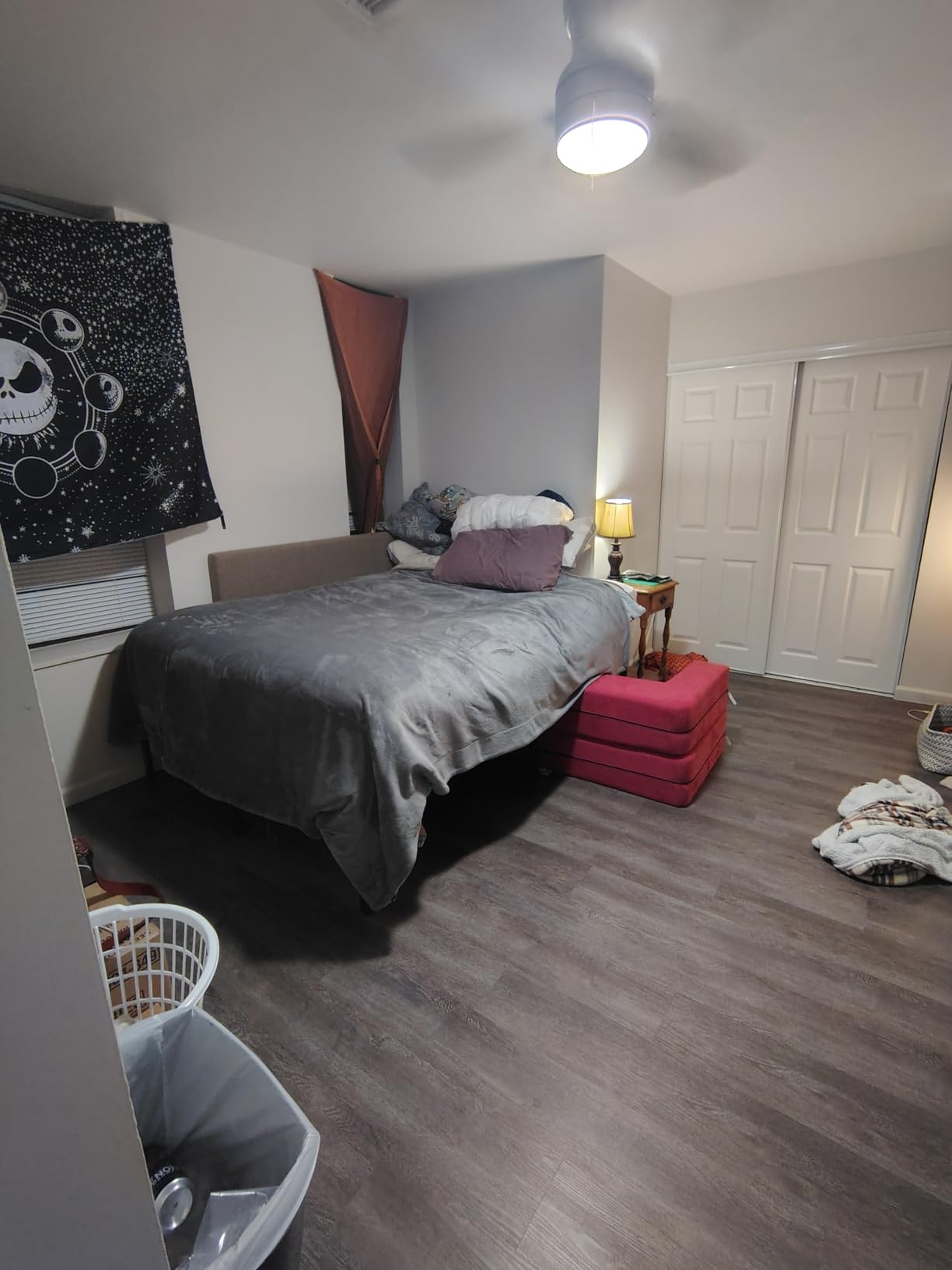
Assembly took about 20 to 30 minutes with clearly labeled parts and hardware included. The reserved holes for a DIY headboard are a genuine bonus if you want to add one later, since you can build to the frame instead of guessing.
The honest weakness is mattress control. Reviewers note nothing prevents lateral sliding, which matters more with memory foam than with an innerspring because foam is lighter and moves more freely. Rubber feet or a mattress grip pad solve it for very little.
Best for small rooms and storage-heavy homes
The 18 inch height accepts the tall rolling bins that most beds cannot. If you live in an apartment, a dorm, or a first home with no closet, this converts dead floor space into usable volume.
The taller platform also puts a thick foam mattress closer to seated height, which helps people who struggle to get out of a low bed.
Where it falls short
Do not drag this frame while assembled. The legs are the first thing to bend, and a bent leg turns a flat deck into a tilted one, which is precisely the shape that damages foam.
8. Maenizi 14 Inch Heavy Duty Metal — Best for Heavy Sleepers
Maenizi 14 Inch Queen Bed Frame Heavy Duty Metal Support Up to 3000 lbs
2500 lb rated load
9 legs with bracing
14 inch clearance
37 lb frame
Pros
- Very high stated load capacity
- Nine legs with multi-angle bracing
- Zero-noise non-shake platform
- Light enough to move between rooms
Cons
- No headboard
- only reserved mounting holes
- Metal transmits more vibration than wood
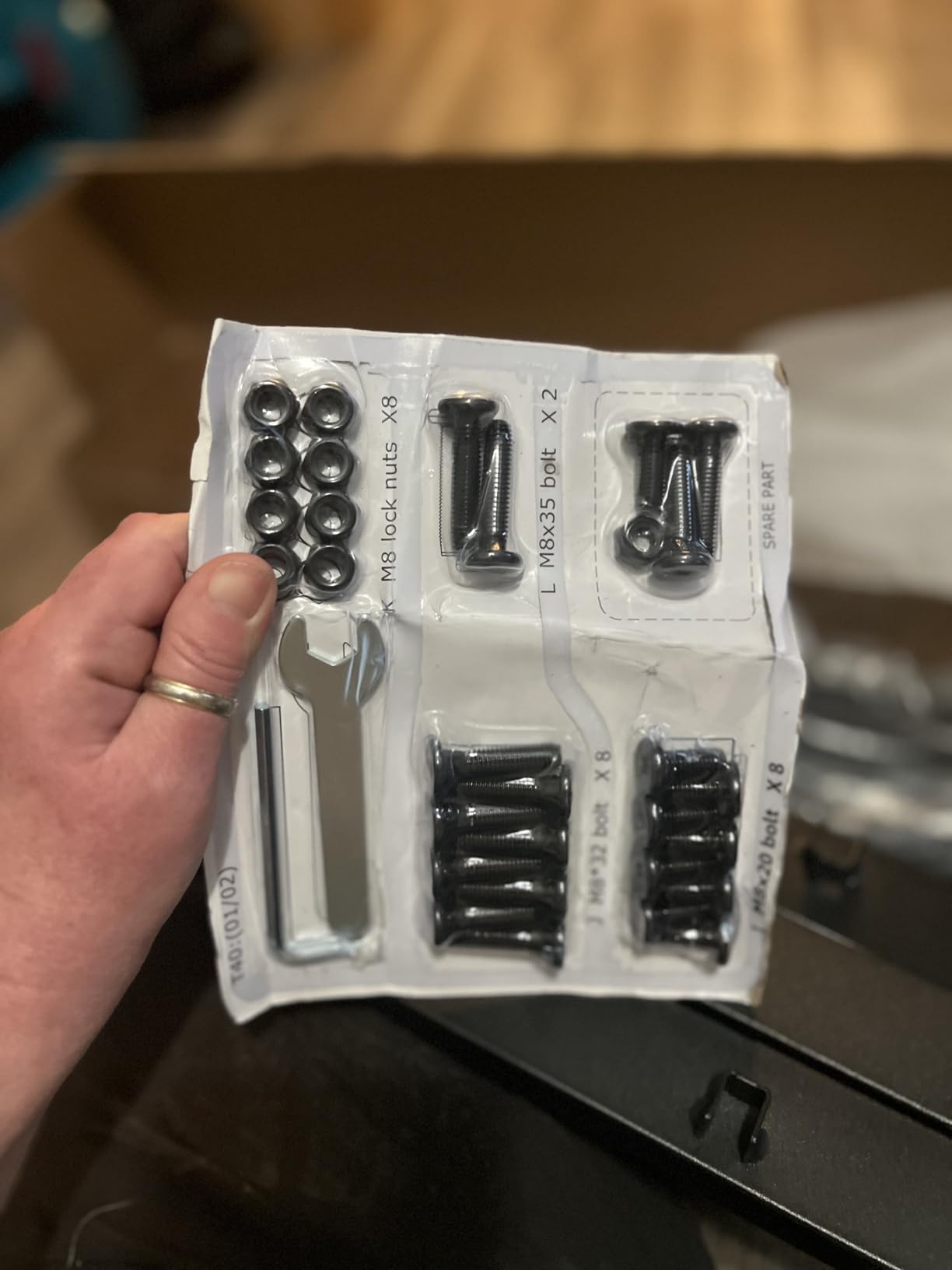
Heavy sleepers generate more concentrated load in the center of a mattress, which is exactly the condition that exposes a weak span. This frame is built around that problem, with multi-angle bracing across nine legs and a stated rating of 2500 pounds in the specifications.
The platform is described as non-shake, and that stability matters more than the raw number for foam. A deck that moves under load lets the mattress rock slightly, and every cycle of that rocking works the foam in the middle.
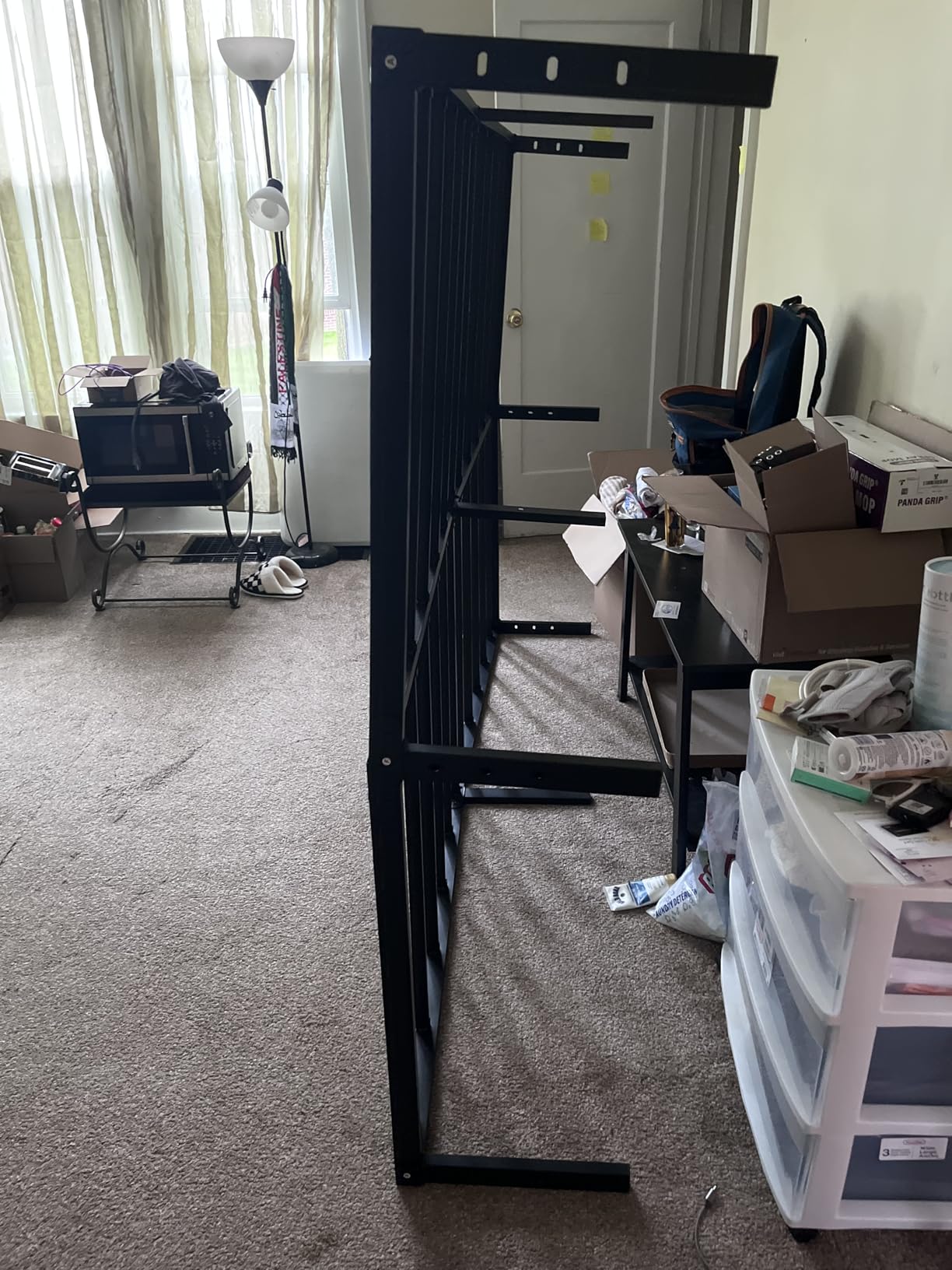
At 14 inches of clearance the frame is tall enough for standard rolling bins and short enough not to need a step. The whole frame weighs 37 pounds, which makes it one of the more manageable metal frames to move between rooms or up a staircase.
One accuracy note worth repeating from the reviews: the product listing headline and the specification sheet quote different capacity figures. Buyers have flagged that inconsistency as a minor documentation issue rather than a real-world performance problem.
Why heavy sleepers need a different frame
A side sleeper over 200 pounds concentrates load through the hip and shoulder. On a frame with a weak center span, that load finds the gap between side rails and pushes the foam down into it, night after night.
Nine legs and cross-bracing spread that load across the full footprint, so the mattress stays level. If you are a heavy sleeper or you share the bed with one, this is the frame to shortlist first.
Where it falls short
There is no headboard, just reserved holes. And compared with solid wood, metal transmits more vibration, which some light sleepers notice on the edge of the bed.
9. MAF 14 Inch Queen Metal Platform — Best for Anti-Slip Support
MAF 14 Inch Queen Metal Platform Bed Frame with Round Corner Legs
3000 lb steel rating
12.4 inch clearance
Anti-skid baffles
Rubber foot cushions
Pros
- 3000 lb steel rating
- Anti-skid baffles on all four sides
- Rubber foot cushions protect floors
- One person assembles in about 30 minutes
Cons
- Firmer metal slat feel
- Only 12.4 inches of clearance
- Listing mixes size references
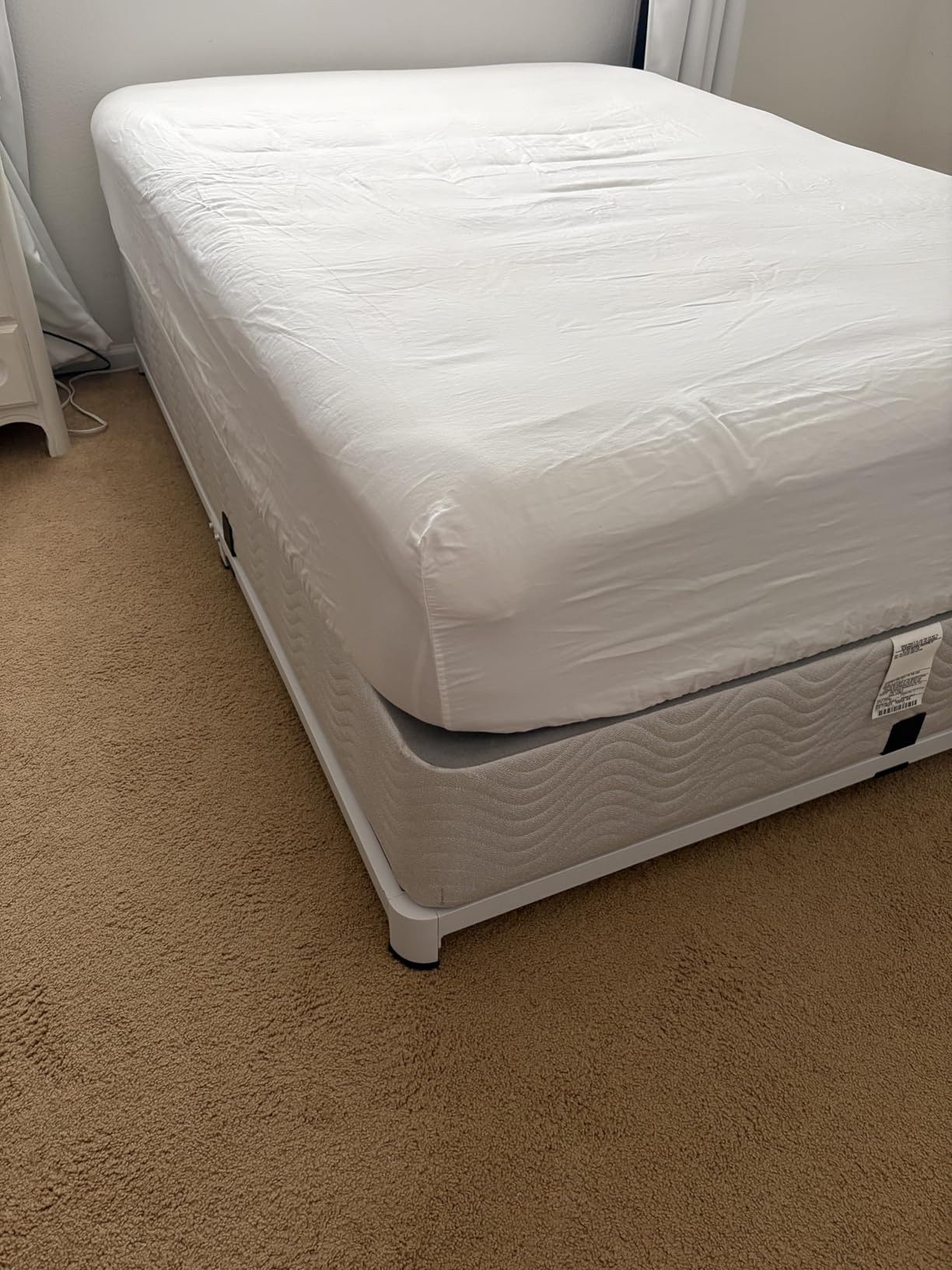
Mattress sliding is one of the most common complaints from memory foam owners, because foam is light and low-friction on a smooth deck. This frame answers it directly with plastic anti-skid baffles running along all four sides, so the foam is held rather than merely supported.
The rounded corner legs are the other detail we liked. On a frame that sits low and wide, sharp corners are a real hazard in a hallway at night, and rounding them costs nothing.
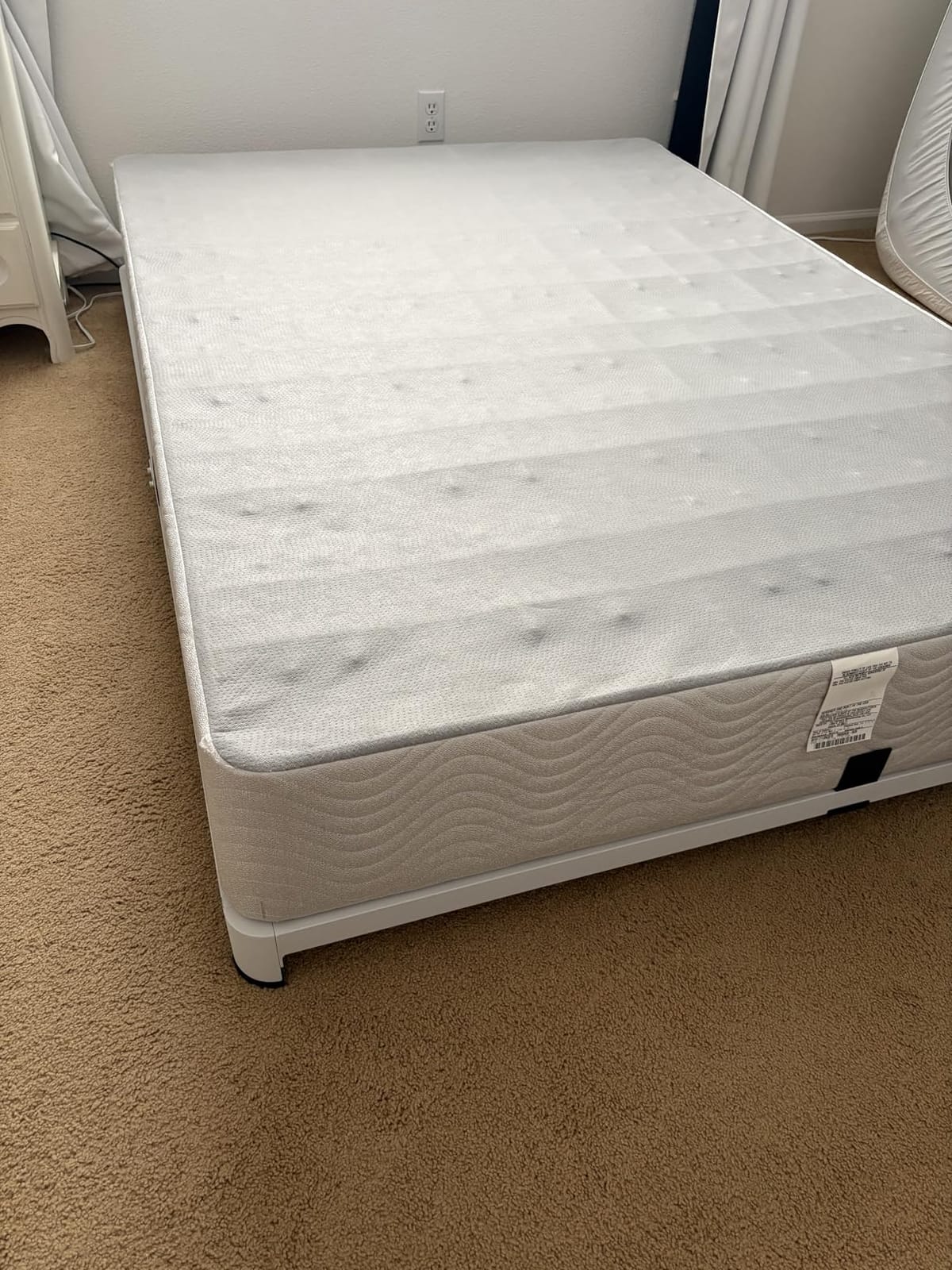
The 3000 pound steel rating is a headline figure, and as with the other heavy-duty metal frames it sits far above what two adults generate. What matters in practice is the 30 minute single-person assembly with all tools included, which we found genuinely accurate.
The trade-off is feel. Metal slats give a firmer surface than wood, so a soft memory foam mattress will feel slightly more supported and slightly less plush than it would on pine. Some sleepers prefer that, some do not, and it is worth testing if you are between foam densities.
Where anti-skid baffles matter with foam
Soft foams with a slow response do not grip a deck. Over months they shift a few centimeters, and eventually a corner of the mattress hangs over the rail, which loads the foam edge unevenly and can compromise the warranty.
Baffles on all four sides stop that creep. Rubber foot cushions underneath do the same job for the frame itself, protecting wood floors and reducing vibration transfer into the room.
Where it falls short
Clearance of 12.4 inches is moderate, so tall storage bins do not fit. Read the variant details carefully before ordering, because the listing text mixes size references across sections.
10. ROIL 14 Inch Queen Frame with Mattress Baffles — Best for High Load Capacity
ROIL 14 Inch Queen Bed Frame with Rounded Corner & 4 Mattress Baffles
3500 lb reinforced steel
4 mattress baffles
20 lb frame
Rubber foot pads
Pros
- Highest stated capacity in the lineup
- Four baffles reduce mattress movement
- Silent rubber foot pads
- Only 20 pounds so it moves easily
Cons
- Iron slat support feels hard under soft foam
- Only 12.4 inches of storage clearance
- Dimensions listed refer to package size
This is the highest stated load rating in the group at 3500 pounds, built on reinforced steel tubing with screw-lock joints. That matters if you are combining a thick foam mattress with two adults who both move around during the night, because the load is spread across the deck rather than concentrated on four corner legs.
The four mattress baffles serve the same anti-slide purpose as the MAF frame, and reviewers specifically call out that they also cut movement noise, which matters if a partner changes position and you are a light sleeper.
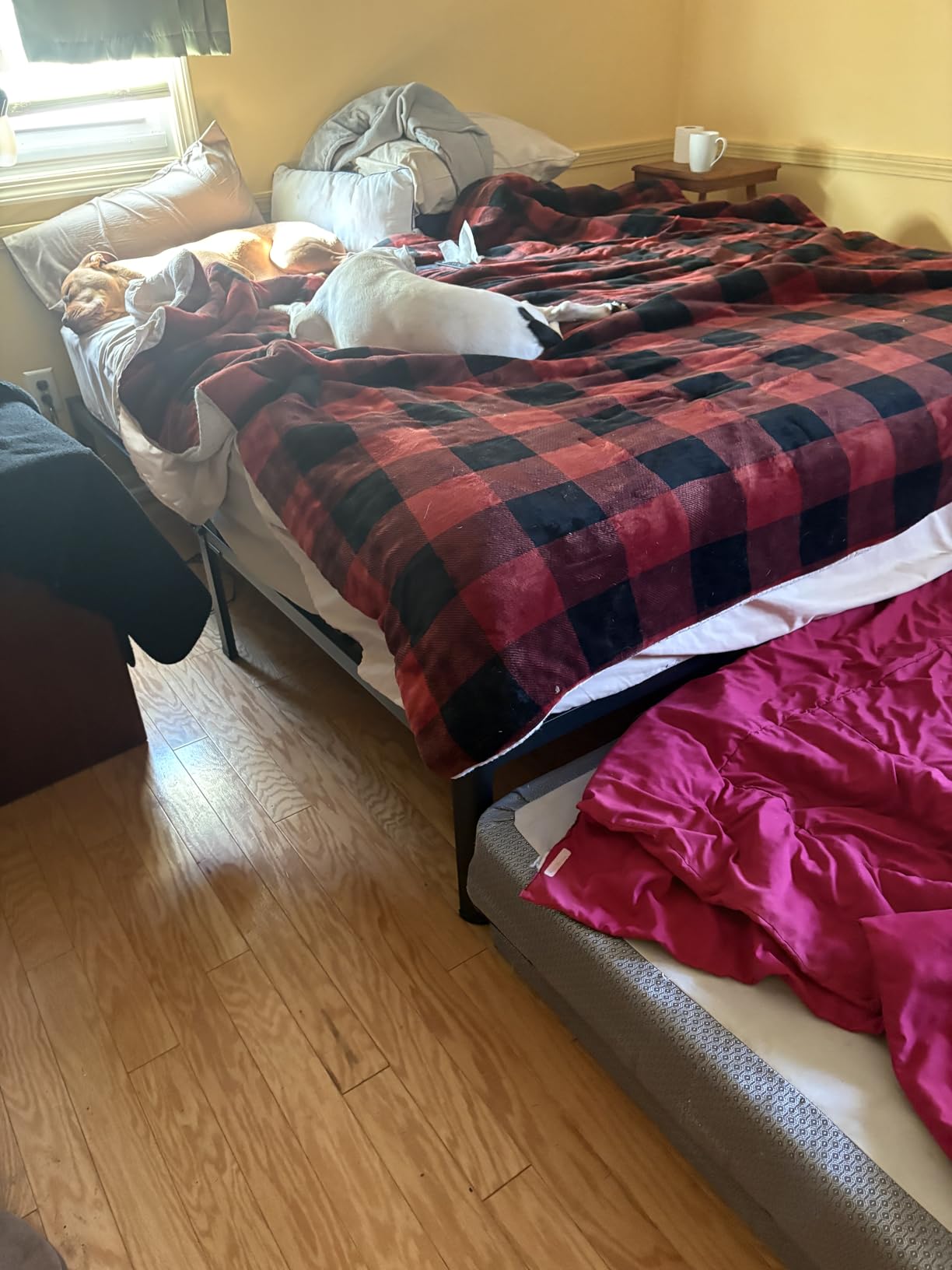
At 20 pounds this is the lightest metal frame here, and assembly with foldable legs and U-shaped slots took roughly 20 minutes. Rounded corners again, and silent rubber foot pads on each leg to protect flooring.
The caution is feel. Iron slat support reads as hard under a very soft mattress, more so than steel or wood. If your foam is plush and slow-response, pair this with a medium or firm foam rather than the softest one available.
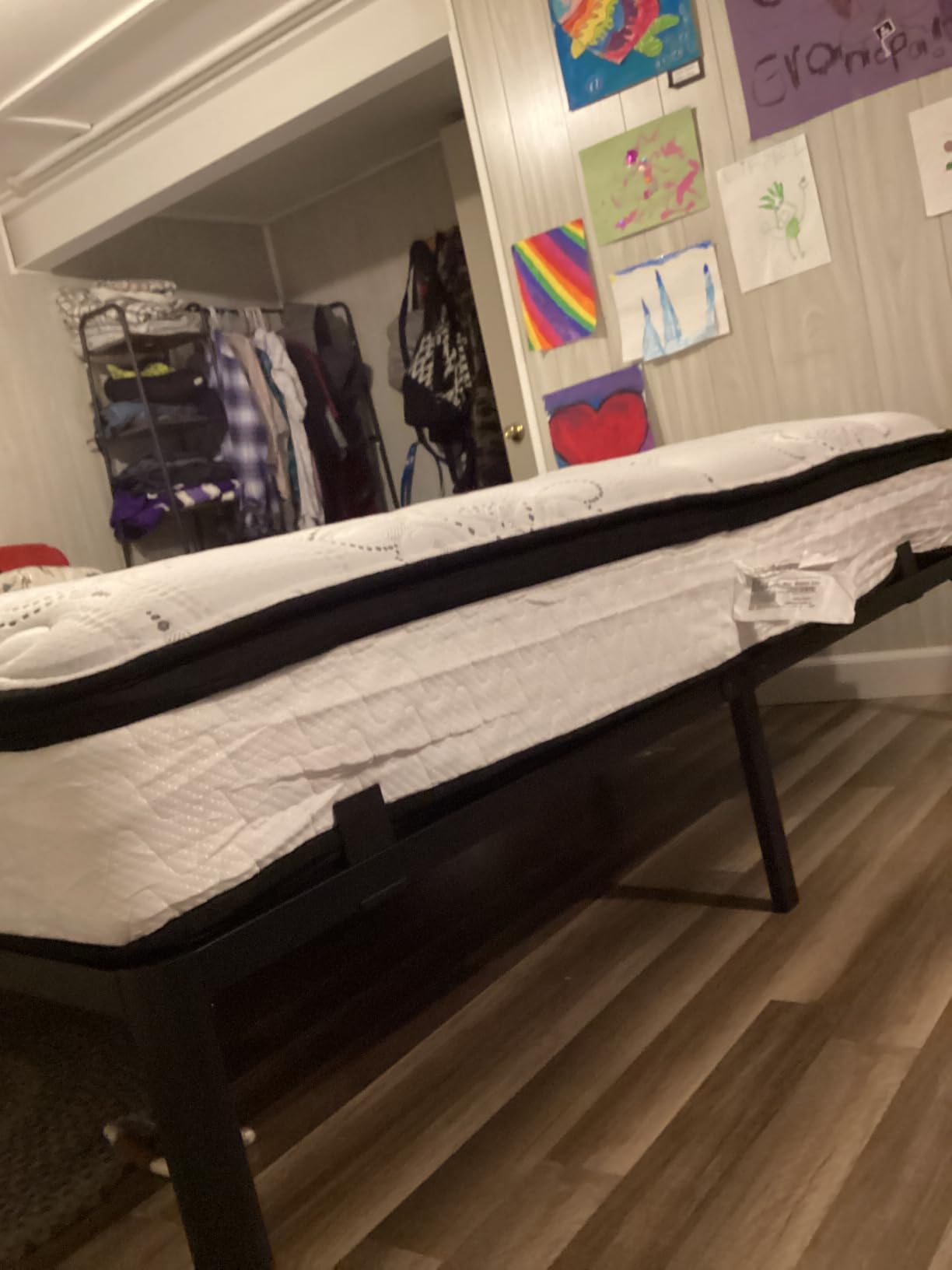
Best for thick foam and shared beds
A thick memory foam mattress plus two adults is a heavy load on a long span, and reinforced tubing with screw-lock joints resists the joint loosening that causes squeak and wobble over time. That is the durability story this frame sells.
The low weight also makes it a good option for renters and anyone moving on short notice.
Where it falls short
Storage clearance is 12.4 inches, on the modest side. And the listed dimensions describe the package, not the assembled frame, so measure your ceiling clearance before assuming the frame is small.
11. Tami Tami T600 Adjustable Split King — Best for Adjustable Positions
Tami Tami T600 Adjustable Bed Frame Split King Size with Remote & Massage – Syncable Electric Beds Bases, Zero Gravity, Dual Side USB, Nightlight, Quiet Motor, 5 Min Easy Assembly
1500 lb capacity
Zero Gravity and Anti-Snore
Under 45 dB motors
5 year warranty
Pros
- Independent head and foot control
- Zero Gravity and Anti-Snore presets
- Motors under 45 dB
- 5 year warranty and quick assembly
Cons
- Massage is vibration only
- 178 lb base is very heavy
- Needs bed legs so no zero-clearance setups
An adjustable base is the one foundation that actively improves a memory foam mattress rather than just holding it up. Foam conforms to position, so raising the head of the section a few degrees reduces the load on the spine and eases snoring, and lifting the legs in the Zero Gravity preset takes pressure off the lower back.
Foam compatibility is handled by a retainer bar designed for memory foam, gel foam, latex, and hybrid mattresses under 14 inches thick. The steel frame carries a 12 mm wooden base plate and is rated to 1500 pounds, which is comfortable headroom for two adults.
Motor noise under 45 dB was one of the strongest reactions in the reviews, and it matters in a bedroom. Owners cite back relief and easy setup as the biggest wins, and the 5 year warranty is longer than most adjustable bases at this tier offer.
Three height-adjustable legs help you match the bed to existing furniture, and the split king configuration lets each side of the bed adjust independently.
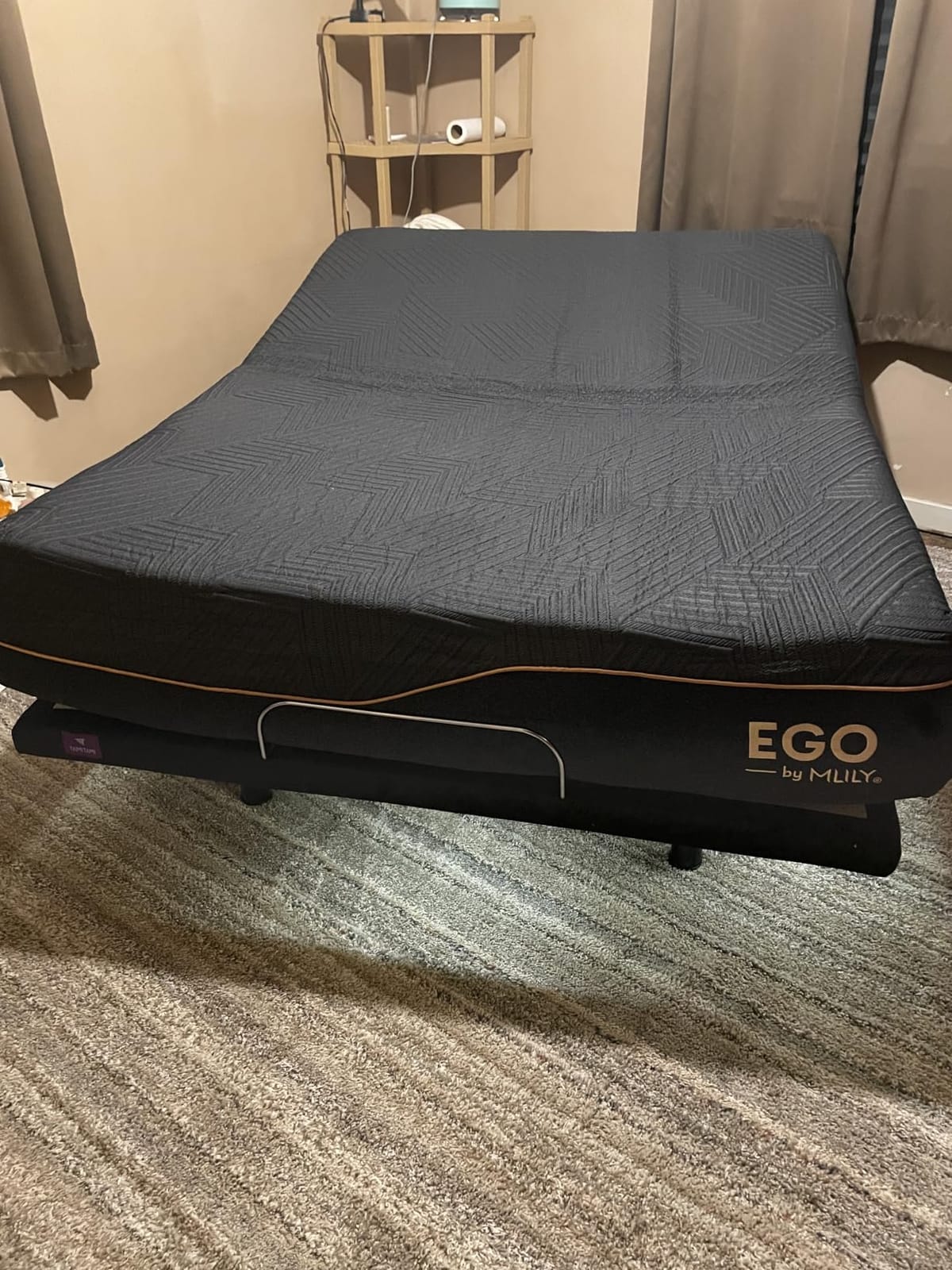
Why foam and adjustable bases pair well
Because foam is viscoelastic, it reshapes to match whatever the base asks it to do. Raise the head section ten degrees and the foam fills the new contour instead of pushing back, which is why adjustable bases feel unusually comfortable with memory foam specifically.
If you use a CPAP or reflux pillow, the head and foot controls let you find a position without stacking extra pillows under your shoulders.
Where it falls short
The massage function is vibration only, with no rolling action, and some buyers report massage motors arriving non-functional. At 178 pounds the base is very heavy to move, and it requires bed legs, so it will not work in a zero-clearance setup.
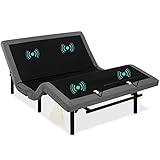
12. Best Choice Products Adjustable Queen Base — Best for Reusing Your Own Frame
Best Choice Products Ergonomic Queen Size Adjustable Bed Frame, Electric Base w/Wireless Remote Control, Nightlight, Massager, 2 USB Ports
750 lb capacity
Fits inside an existing frame
Zero Gravity preset
14.25 inch height
Pros
- Drops inside an existing bed frame
- Keeps your headboard and footboard
- Quiet smooth motor
- Under-bed light and side pocket
Cons
- Only a 60 day warranty
- Remote buttons barely illuminate
- 137 lb box is awkward to carry
This is the pick if you already own a frame you like. The base is designed to sit inside an existing bed frame, so a wooden headboard and footboard stay exactly where they are and you gain adjustable positioning underneath.
Foam compatibility is listed for memory foam, gel foam, latex, and hybrid, and the solid platform does something useful for older mattresses: owners report that it firms up the feel of a mattress that had started to soften, because a solid support surface limits how far the foam can deform.
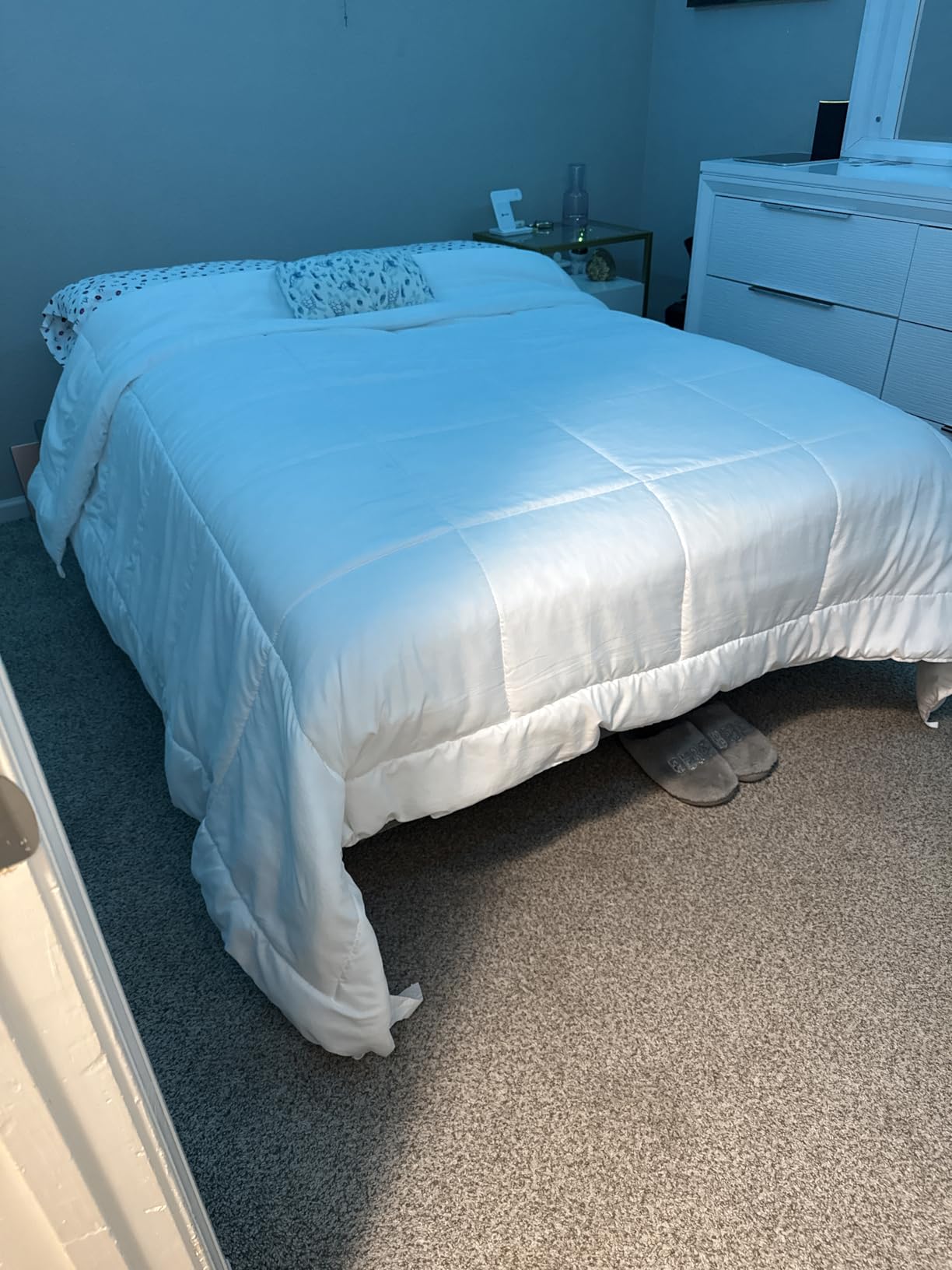
Preset positions cover TV viewing, head tilt, and Zero Gravity, with custom settings on top of those, and the remote carries a flashlight plus wave, pulse, and constant massage modes. Bedside USB ports, a side pocket, and under-bed night lights are the details people mention most.
Setup is mostly attaching legs, since the base arrives pre-assembled. Motor movement is described as smooth and quiet, which is the single biggest quality difference between adjustable bases at different tiers.
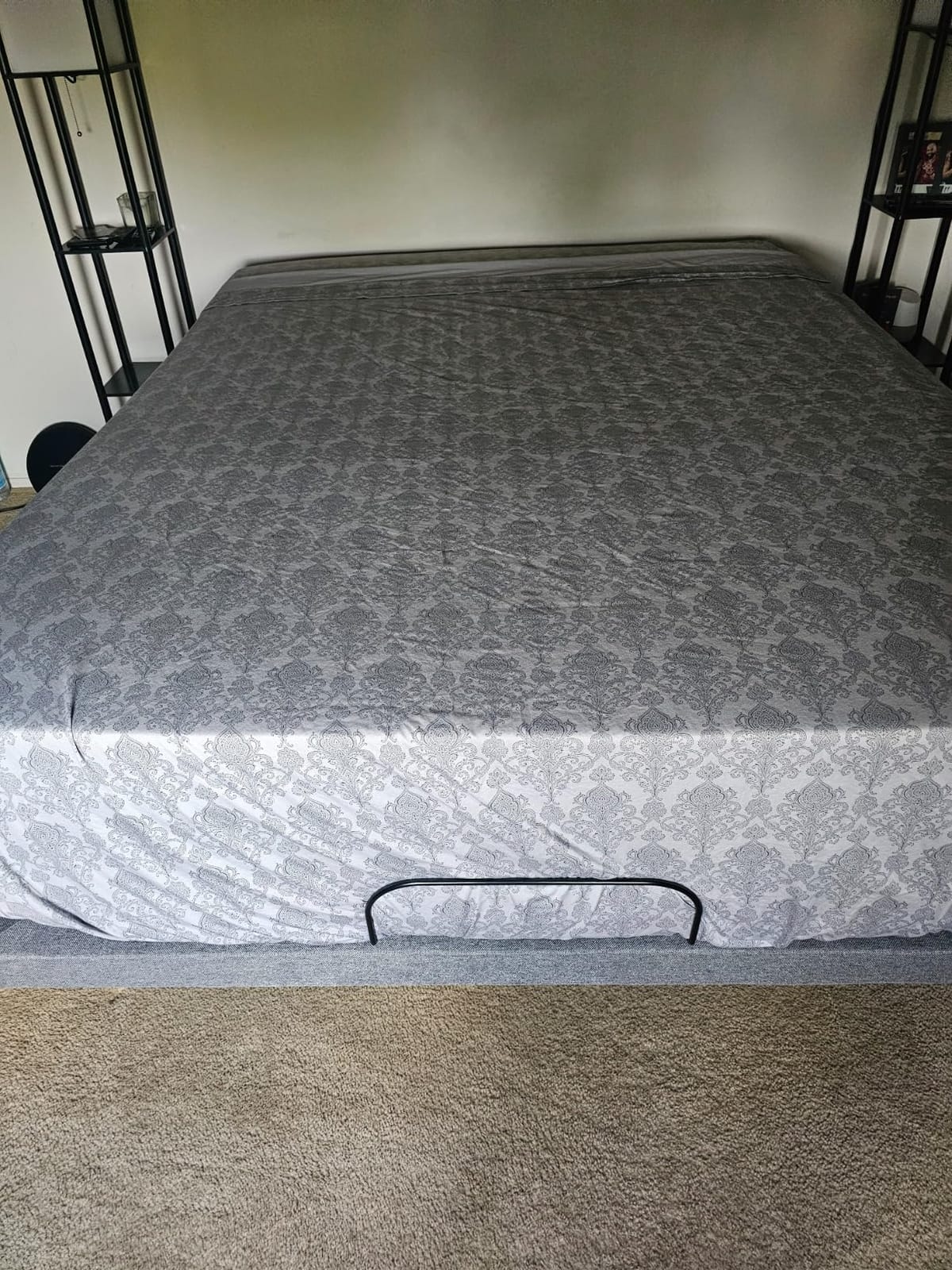
Best when you want position without a new frame
If your existing frame has a solid or well-spaced slat deck and you want adjustable positions, swapping the deck for an adjustable base keeps the frame’s look. You also avoid the cost of replacing a piece of furniture you already like.
The 14.25 inch height and the 750 pound capacity fit most queen platform frames and most couples, and the under-bed light is genuinely useful at night.
Where it falls short
The 60 day warranty is the shortest here, and returns go to the manufacturer’s return center at your expense. At 137 pounds the box is awkward to move upstairs, and the remote buttons barely illuminate, which is frustrating in a dark room.
Buying Guide: What to Look for in a Frame for a Foam Mattress
Once you have the three rules down, the rest of the decision is a tradeoff between height, quietness, storage, and how much assembly you want to take on.
Slat spacing versus slat thickness
Spacing and thickness are different measurements that get confused constantly. Spacing is the gap between slats. Thickness is how thick each slat is. Spacing protects against foam sinking into a gap, and thickness determines how much load a slat takes before it bends.
Here is the rule that resolves the conflicting guidance you will find online. Follow the strictest requirement written in your own mattress warranty, because that is the number that matters if you ever file a claim. Tempur-Pedic commonly specifies slats within three to four inches. Leesa asks for three inches or closer. Beautyrest asks for two. Casper asks for three.
Thickness matters most for thicker slats at wider gaps. Thin sprung slats at wider spacing can bow under a heavy sleeper, and once a slat bows the gap widens and the foam starts to dip. If you cannot verify slat thickness, favor a frame where the slats are described as solid or the deck is described as steel.
Center support on queen and king
Queen spans about 60 inches and king about 80, which is far too wide for two side rails to hold level. Look for a center beam, a center rail, or a line of center legs. Beautyrest guidance calls for five or more hardwood slats with a leg under each on larger sizes.
Do not assume a frame rated for a high total weight has center support. Those two numbers are independent, and plenty of frames quote an impressive capacity while providing side legs only.
Foundation types compared
There are five foundation types worth knowing, and they differ in how foam-friendly they are. A solid platform is the most forgiving option because there is nothing to sag. A closely spaced slat deck is nearly as good and allows airflow. A bunkie board or plywood deck turns an existing frame into a foam-friendly one. A traditional box spring is acceptable if slats sit on top, but not on its own. An adjustable base is the most capable option and the most involved to install.
For airflow and mold prevention, slats win over solid platforms. Foam traps heat and moisture, and a slatted deck lets air move under the mattress. If you live in a humid climate, that is worth factoring into a solid platform decision.
Wood, metal, or upholstered
Solid wood is the quietest and the most traditional answer, and it is the best choice if your foam mattress is thick or very soft. Metal is stiffer, holds higher weight ratings, and usually costs less, but it transmits more vibration and can feel firm under a plush mattress. Upholstered frames combine a fabric look with a wood or steel deck underneath, and they usually carry the longest cosmetic finish life.
A metal frame works fine with memory foam as long as the deck is rigid and closely supported. The metal itself is not the problem. It is thin sprung slats at wide spacing that cause problems, and that is a deck issue, not a material issue.
Bed height and under-bed storage
Frame height in this lineup ranges from 9 inches to 18 inches. A low frame looks cleaner and suits low ceilings, but limits storage and makes getting in harder for anyone with hip or knee issues. A tall frame stores more and sits closer to seated height, but needs a step stool for some people.
Measure your tallest storage bin before choosing, and remember that a platform’s stated height includes the frame itself, so usable clearance is often less than the number suggests. One pine frame in this list stands 12 inches overall but leaves the slats only 8.5 inches above the floor.
Assembly and warranty
Tool-free or included-tool assembly is worth paying a little more for if you live alone. Frames that arrive with labeled parts, a ratcheting wrench, and no missing hardware save the most time, and they are also the ones least likely to be returned.
Warranty length ranges from 60 days on one adjustable base to five years on the upholstered platform. Longer warranties signal more confidence in the joinery and finish, which is a reasonable proxy for how the frame will look after five years of use.
How to Fix an Existing Bed Frame for Memory Foam
If the frame you already own is structurally sound, you can make it foam-friendly in an afternoon for far less than replacing it. This is one of the most common fixes people describe on mattress forums, and it solves the same middle-sink problem a new frame would.
Step one: measure the slat gaps. Lay a tape measure across two adjacent slats and note the maximum gap at the center of the bed, where slats are often spaced wider than at the edges. If the gap exceeds three inches, that is the cause.
Step two: fill the gaps with slats. Buy hardwood slats cut to fit the inner width of the frame, roughly 1 by 4 inches, and space them so no gap exceeds three inches. Ribbon or strap systems made for metal frames attach easily and stop the new slats from shifting.
Step three: add center support. If the frame has no center legs, add a length of 4 by 4 lumber beneath the slats down the middle line, with a support leg under it at each end. This single addition fixes most middle sink, and it is the highest-value change you can make.
Step four: add a bunkie board if the gaps persist. A flat board laid on top of the slats closes every gap at once and gives the densest surface possible. It is the most forgiving foundation there is for memory foam, and it is completely acceptable to use one.
Two warnings. If slats are visibly bowed or cracked, replace them rather than adding to them. And check your mattress warranty terms before you add a board, because a foundation that is too rigid can matter as much as one that is too soft for some brands.
Frequently Asked Questions
Do you need a special bed frame for a memory foam mattress?
How far apart should slats be for a memory foam mattress?
What is the best bed base for a memory foam mattress?
Can you put a memory foam mattress on a metal bed frame?
Do memory foam mattresses sag without a box spring?
The Best Bed Frame for Your Memory Foam Mattress
The best bed frames for memory foam mattresses all share three traits: a flat surface, slats no more than three inches apart, and center support on anything larger than a full. Pick a frame that meets those, and the specific model matters far less.
Our overall pick is the Amazon Basics Foldable Metal Platform, because a 700 pound capacity, a rigid steel deck, and a frame that folds flat for moving is a combination nothing else here matches. Go to the NEW JETO if you want the highest load rating for the least, the Mellow Naturalista if you want real wood under a thick foam mattress, and the Allewie if you need a headboard to match a thick profile.
Whatever you choose, read the foundation section of your mattress warranty before the frame arrives. If you are still short on bedding for a new foam mattress, our picks for the best bed sheets for deep pocket mattresses will fit the same profile, and a foam roller from our best foam rollers for muscle recovery guide pairs well with a night on a new mattress.