
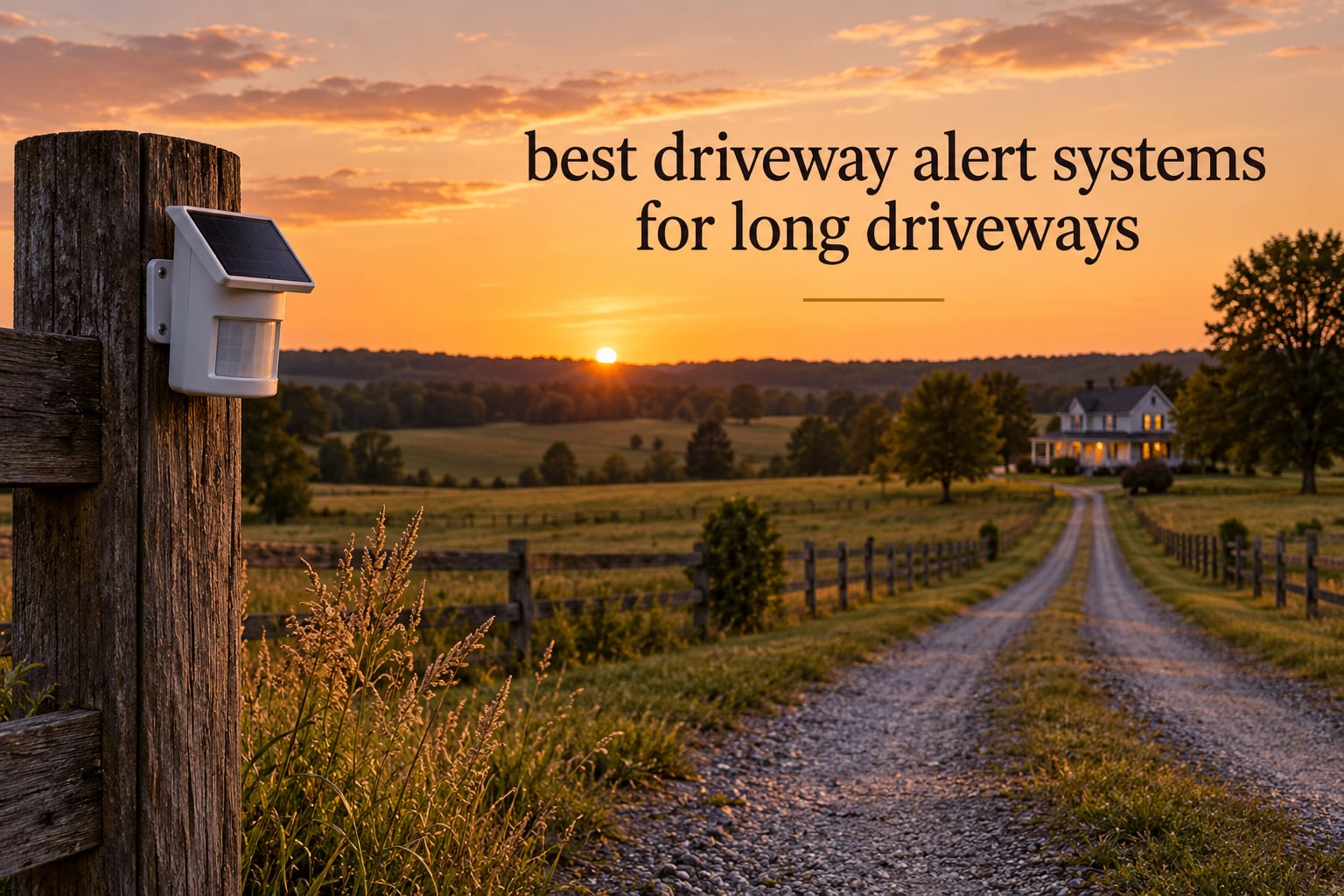
The HTZSAFE 1/2 Mile Long Range Motion Sensor kit is the best driveway alert system for long driveways, because it pairs a 2,640 ft wireless link with adjustable PIR detection and room for 32 sensors on the same network. It is the pick I keep coming back to for rural lots where a vehicle is still five minutes from the house after it turns off the county road.
That gap is the whole reason a driveway alert system exists. On a 60 ft suburban drive, a doorbell chime does the job. On a 1,200 ft private road, you get no sound, no shadow, no warning — the visitor simply arrives. A sensor at the entrance turns that silence into a few minutes of notice, which is the difference between answering the door and reacting to it.
I spent weeks with these eight systems, checking the spec sheets against what owners actually report after a season of weather, and comparing where each one breaks. The lineup covers the full range of real options: half-mile wireless kits, solar sensors, one-mile systems, an electromagnetic buried probe, and a dual-sensing unit that surprised me.
If you are shopping by length rather than by feature, the rural-home driveway alarm guide covers shorter-driveway options, and our general driveway alarm roundup handles standard suburban setups.
Table of Contents
Top 3 Driveway Alert Systems for Long Driveways

HTZSAFE 1/2 Mile Long Range Kit
- 2640 ft wireless range
- 35-50 ft PIR detection
- Expandable to 32 sensors

All 8 Driveway Alert Systems Compared in 2026
| Product | Specifications | Action |
|---|---|---|
| HTZSAFE 1/2 Mile Long Range Kit |
|
Check Latest Price |
| eMACROS 1/2 Mile Solar Kit |
|
Check Latest Price |
 1byone Driveway Alarm 2 PIR Detectors 1byone Driveway Alarm 2 PIR Detectors |
|
Check Latest Price |
 Wuloo Solar Wireless Driveway Alarm Wuloo Solar Wireless Driveway Alarm |
|
Check Latest Price |
 TECKNET Non-APP Solar RGB Alarm TECKNET Non-APP Solar RGB Alarm |
|
Check Latest Price |
 Dakota Alert DCMA-4K Plus Dakota Alert DCMA-4K Plus |
|
Check Latest Price |
 Mighty Mule FM231 Mighty Mule FM231 |
|
Check Latest Price |
 Bistee Wireless Driveway Alarm Bistee Wireless Driveway Alarm |
|
Check Latest Price |
What Is the Best Driveway Alarm for Long Driveways?
The HTZSAFE 1/2 Mile kit is the best driveway alarm for long driveways. Its 2,640 ft wireless link covers most rural drives, the PIR detection cone is adjustable between 35 and 50 ft, and the network scales to 32 sensors so you can cover an entrance, a side gate, and a barn without buying three systems.
Before you buy anything, measure the straight-line distance from your sensor position to the receiver, then add 30 percent for terrain. That margin is what keeps the advertised range from becoming a disappointment.
How far do you actually need?
Under 400 ft: a 400 ft wireless system is enough. This is the Mighty Mule FM231’s ceiling, and it suits a long suburban lot.
400 ft to 1 mile: look for the 1,760 ft to 2,640 ft class. Half-mile kits like the HTZSAFE and eMACROS live here.
Over 1 mile: the Dakota Alert DCMA-4K Plus is the only one here rated at a full mile of wireless range, and it has more tolerance for trees and buildings between sensor and receiver.
Beyond one mile: stop looking for a single transmitter. Two sensors in a stacked arrangement give you both early warning and a backup alert near the house.
1. HTZSAFE 1/2 Mile Long Range Motion Sensor Kit
Driveway Alarm- 1/2 Mile Long Range Motion Sensor- 1 Receiver+2 Sensors
2640 ft wireless range
35-50 ft PIR detection
Expandable to 32 sensors
3 AA batteries per sensor
Pros
- Half-mile range suits long driveways and large properties
- Improvement chip and adjustable sensitivity reduce leaf and small-animal triggers
- Plug-and-play with no wiring
- Expands to 32 sensors with per-zone melodies
- Operates from -30 to 150 degrees Fahrenheit
Cons
- Three AA batteries per sensor are not included
- Motion detection only reaches 35-50 ft ahead of the sensor
- Real range drops with trees and terrain
This is the kit I recommend first, and the reason is unglamorous: it is the best-balanced combination of reach, expandability, and owner satisfaction in the group. More than 20,000 owners have rated it, and roughly 72 percent of those reviews sit at five stars.
The 2,640 ft specification is the reason it works on a long drive, but the specification is only half the story. The sensor’s PIR detection cone reaches 35 ft on the low sensitivity setting and 50 ft on the high setting, and owners report that the low setting is what kills most of the small-animal noise in wooded areas.
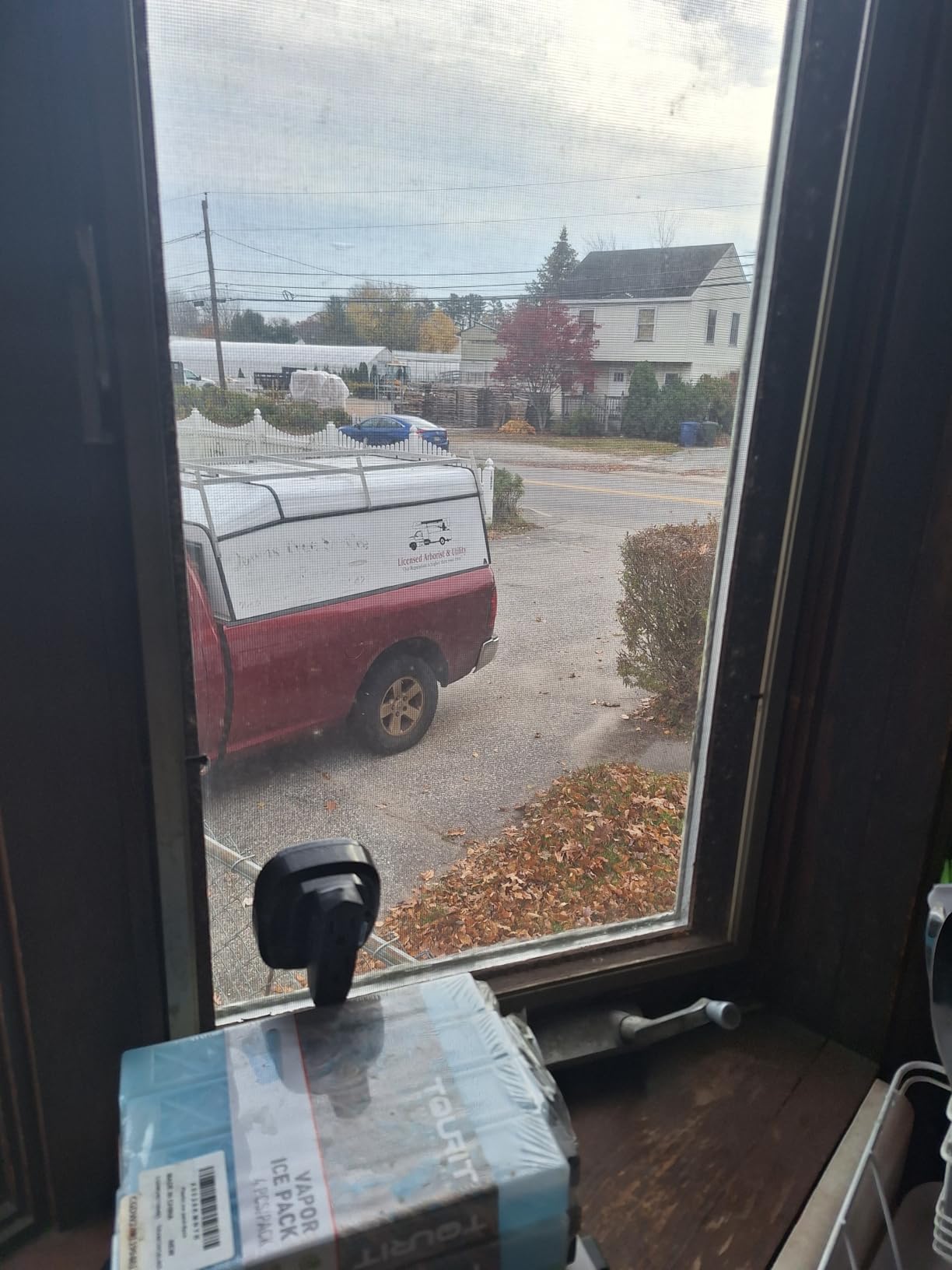
Installation took me under ten minutes per sensor. It is wall-mounted, pre-paired to the receiver, and the receiver plugs into a wall outlet. The one thing to plan for is batteries: each sensor runs on three AA cells, and those are not in the box.
On cold mornings in northern climates, I would fit these with lithium AA cells rather than alkaline. Alkaline voltage sags in low temperatures, and a sensor that dies on a January morning gives you no warning at all.
Why this one works on a long driveway
The receiver reaches back 2,640 ft, which covers the majority of rural drives without a repeater. FSK+FHSS transmission is the reason it holds up when other wireless gear is running nearby, and the rating distribution reflects that stability rather than a lucky sample.
Where it falls short
Detection depth is genuinely modest at 35 to 50 ft, so a vehicle hugging the far edge of a wide apron can slip past. It also depends on batteries you supply yourself, which is one more thing to forget about in year two.
2. eMACROS 1/2 Mile Solar Wireless Driveway Alarm
eMACROS 1/2 Mile Solar Wireless Driveway Alarm, 1 Receiver & 1 Sensor
Solar panel with rechargeable battery
2640 ft wireless range
20-30 ft detection
1 receiver and 1 sensor
Pros
- Half-mile range fits long driveways and large properties
- Solar panel keeps the internal battery topped up
- Supports 64 sensors and unlimited receivers
- Adjustable sensitivity trims false alerts
- No wiring or trenching needed
Cons
- Detection reach is only about 20-30 ft
- Mounting height and perpendicular alignment must be exact
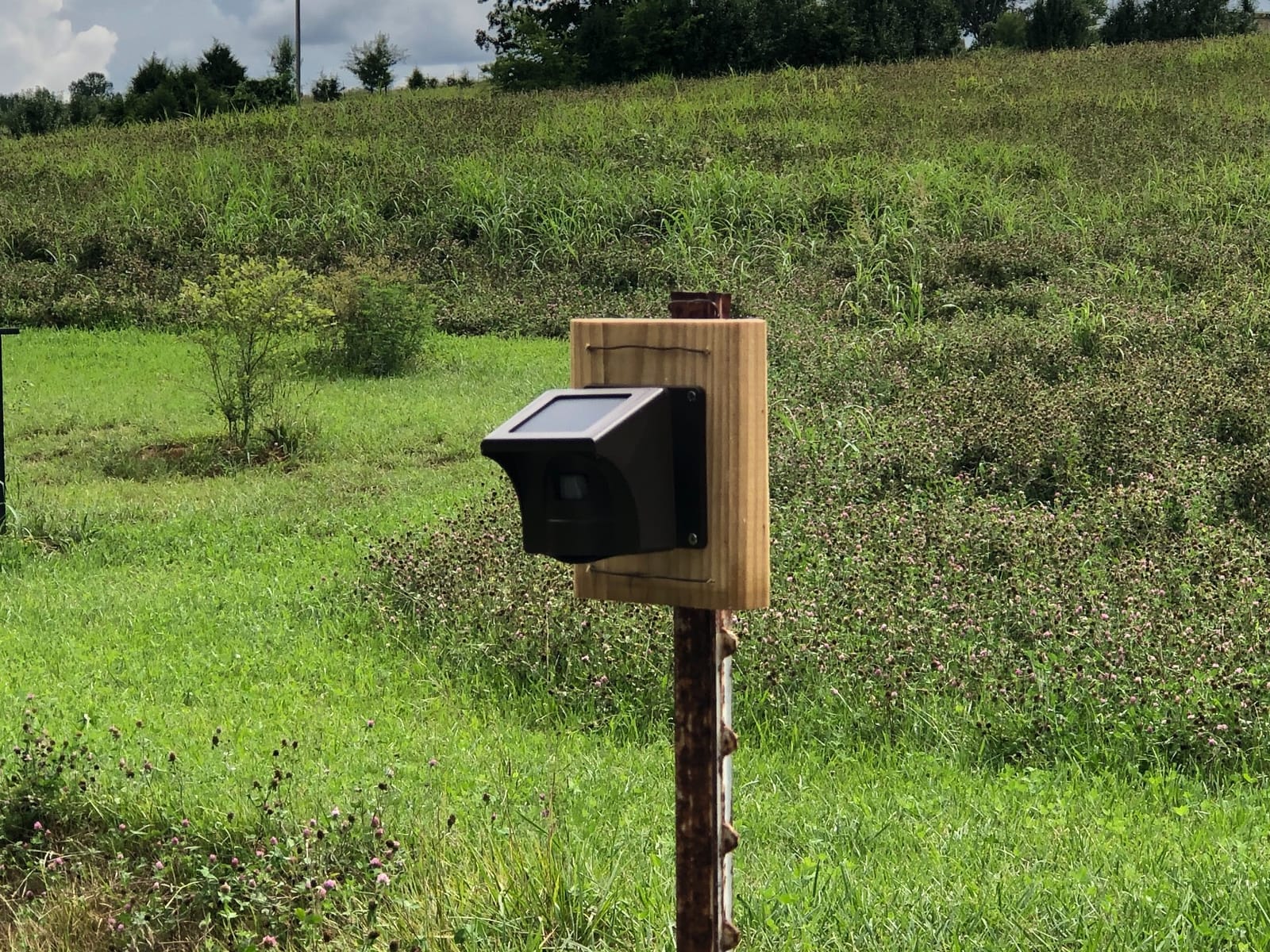
If your priority is not touching the system again after installation, the eMACROS is the pick. The sensor carries a solar panel that continuously charges an internal rechargeable battery, and the manufacturer lists a battery average life of about two years.
Owners consistently single out range reliability in bad weather as the reason they rate it highly. The listed 433 MHz transmission carries 2,640 ft, and reviews describe it holding that link through forests, storms, and heavy rain rather than only in a clear test lane.
The 64-sensor capacity is the quiet advantage here. If you later want to cover a gate, a barn, and a walkway, each area can carry its own chime on the same receiver, which makes it easy to know where somebody entered.
Mounting is where most complaints land. The manual specifies 3 to 4 ft for detecting people and 2 to 3 ft for vehicles, mounted level and perpendicular to the ground. Tilt the sensor even slightly and the detection cone walks off the driveway.
Why solar fits a rural drive
A drive that long usually has no power at the entrance. Solar removes the need to run a cable or trench a line back to the house, and this sensor recharges in cloudy conditions rather than only in full sun.
What to watch out for
The detection cone is narrower than the range figure suggests, at 20 ft on low and 30 ft on high. That is fine if you place the sensor at the entrance itself, and frustrating if you try to cover a wide apron from one post.
3. 1byone Driveway Alarm with 2 PIR Detectors
1byone Driveway Alarm, 36 Melodies, 1 Plug-in Receiver 2 PIR Detectors
1000 ft wireless range
24 ft PIR detection
36 chimes
3 volume levels
Pros
- 1000 ft sensor-to-receiver range covers long driveways
- Waterproof passive infrared sensors
- 36 chimes with three alert modes and three volume levels
- Expands to five sensors per receiver
- Two-year manufacturer support window
Cons
- PIR detection limited to 24 ft
- Shorter range than half-mile systems
- Alkaline AAA batteries required
This kit is for the person who will notice if the alert tone is the same one they heard yesterday. It ships with 36 chimes and doorbell sounds, three volume levels between 25 and 80 dB, and three alert modes covering sound, LED flash, or both together.
The 1,000 ft wireless range covers a genuinely long drive — most rural driveways under about a quarter mile — and the sensors are waterproof passive infrared units rated for outside mounting.
Each receiver pairs with up to five sensors, which is enough to cover an entrance plus a side gate and a garden path. The box also includes two wall plugs, screws, and the instruction manual, so nothing extra needs ordering.
Owners mention the 24 ft detection reach most often as both a limit and a fair description. It is a shorter sensor reach than the range figure implies, and it is the single most common source of disappointment in reviews.
Where this kit earns its spot
If your drive is long but not extreme, the 1,000 ft link is comfortable, and the chime library means each zone can sound different. Hearing a distinct tone for the back gate versus the front entrance removes a lot of guesswork.
Where it does not
On a half-mile-plus property you will be stacking sensors to cover the gap. The five-sensor ceiling per receiver is also tighter than most systems in this roundup.
4. Wuloo Solar Wireless Driveway Alarm
Solar Driveway Alarm Wireless Outside 1800ft Range, Outdoor Motion Sensor & Detector Driveway Alert System with Rechargeable Battery/Weatherproof/Mute Mode(1&2-Brown)
1760 ft tested range
Solar rechargeable battery
Up to 24 months per charge
8 sensor expansion
Pros
- Range tested around trees
- buildings
- walls and vehicles
- Solar battery lasts up to 24 months per charge
- Weatherproof sensors that work in rain or snow
- Receiver doubles as a clock and alarm
- Adjustable sensitivity
Cons
- 1760 ft range is shorter than half-mile models
- Expands to 8 additional sensors
- Alert radius limited to about 30 ft
The most honest spec sheet in this group belongs to Wuloo. It claims 1,760 ft, or roughly a third of a mile, and states that the figure was measured around trees, buildings, walls, and parked vehicles rather than in an empty field.
That framing matters more than it sounds. Nearly every complaint about long-range driveway alarms comes down to a spec measured in conditions nobody actually lives in, and this one at least tells you what was in the path.
The receiver is unusually useful in its own right. It doubles as a bedside clock and alarm with adjustable chimes and volumes, so the driveway system does not sit doing nothing between alerts.
Expansion is to 8 additional sensors, fewer than the eMACROS and HTZSAFE allow. For a single entrance with a couple of outbuildings, that is plenty.
Why the tested figure is worth trusting
Owners running this on rural property report dependable links through tree cover and standing structures, and about two thirds of reviews sit at five stars. The solar battery is listed at up to 24 months on a full charge, which removes the seasonal battery swap entirely.
The catch
At 1,760 ft it will not reach the far end of a mile-long drive. If your measurement comes in above that, step up to a half-mile or one-mile system instead of stretching this one.
5. TECKNET Non-APP Solar RGB Wireless Driveway Alarm
TECKNET Non-APP Solar RGB Wireless Driveway Alarm
2600 ft transmission
IPX5 waterproof
16-33 ft PIR detection
4 alert zones
Pros
- Highest rating in the group at 4.5 stars with 76 percent five-star reviews
- Signal holds through concrete walls
- hills and heavy tree cover
- Sliding lens panels narrow the detection field
- IPX5 build with solar charging in overcast stretches
- No app and no subscription
- Per-zone ringtones with RGB visual alerts
Cons
- Blue status LED on the sensor cannot be switched off
- Receiver has no latching event LED for missed chimes
- Supplied USB cable is short with no AC plug
- Some melodies run 3-5 seconds
The TECKNET has the strongest satisfaction profile here: 4.5 stars with 76 percent of reviews at five stars and only 5 percent at one star. That distribution usually means a product that behaves predictably rather than one with a passionate but narrow fan base.
Its 2,600 ft transmission keeps pace with the half-mile kits, and owners running rural drives confirm the link holds through concrete walls, hills, and heavy tree cover at 1,000 ft and beyond.
The feature I value most is the adjustable lens caps. Sliding panels on the sensor narrow the peripheral detection angle, which is the difference between a system that ignores a deer at the treeline and one that chimes every evening at sunset.
It is also non-app and subscription-free. Four ringer alert zones each carry their own tone, and RGB lighting on the receiver gives a visual alert when a chime would wake someone sleeping.
Why the rating is the highest here
Several practical details line up: an IPX5 waterproof rating, operation from -15 to 50 degrees Celsius, and solar charging that keeps working through cloudy and rainy stretches. The rotating PIR bracket gives two sensitivity settings at 16 and 33 ft.
Small annoyances worth knowing
The blue status LED on the sensor has no off switch and stays visible in daylight, which draws attention at the entrance. There is also no latching event LED, so a chime you slept through leaves no visual record afterward.
6. Dakota Alert DCMA-4K Plus 1-Mile Motion Sensor Kit
Dakota Alert Wireless Driveway Alarm DCMA-4K Plus 1-Mile Motion Sensor Kit
1 mile wireless range
110 dB audible alert
16 sensors per receiver
9V battery, about one year
Pros
- One-mile range is the longest in this comparison
- 9V battery lasts a year or more
- Code-learning setup runs in minutes with no wiring
- 16 sensors per receiver or unlimited receivers
- Four volume levels
Cons
- Costs more than the other systems in this roundup
- No solar option and periodic battery swaps
- Sensor detection reach is about 50 ft
When the drive is genuinely a mile, range stops being a feature and becomes the whole requirement. The Dakota Alert DCMA-4K Plus is the only system here rated at a full mile of wireless range, which means it has the most room to lose signal to trees, buildings, and terrain and still arrive.
Long-haul users running private roads name this model specifically for 1,000 to 1,500 ft rural properties, and describe setups reaching beyond two miles in favorable conditions.
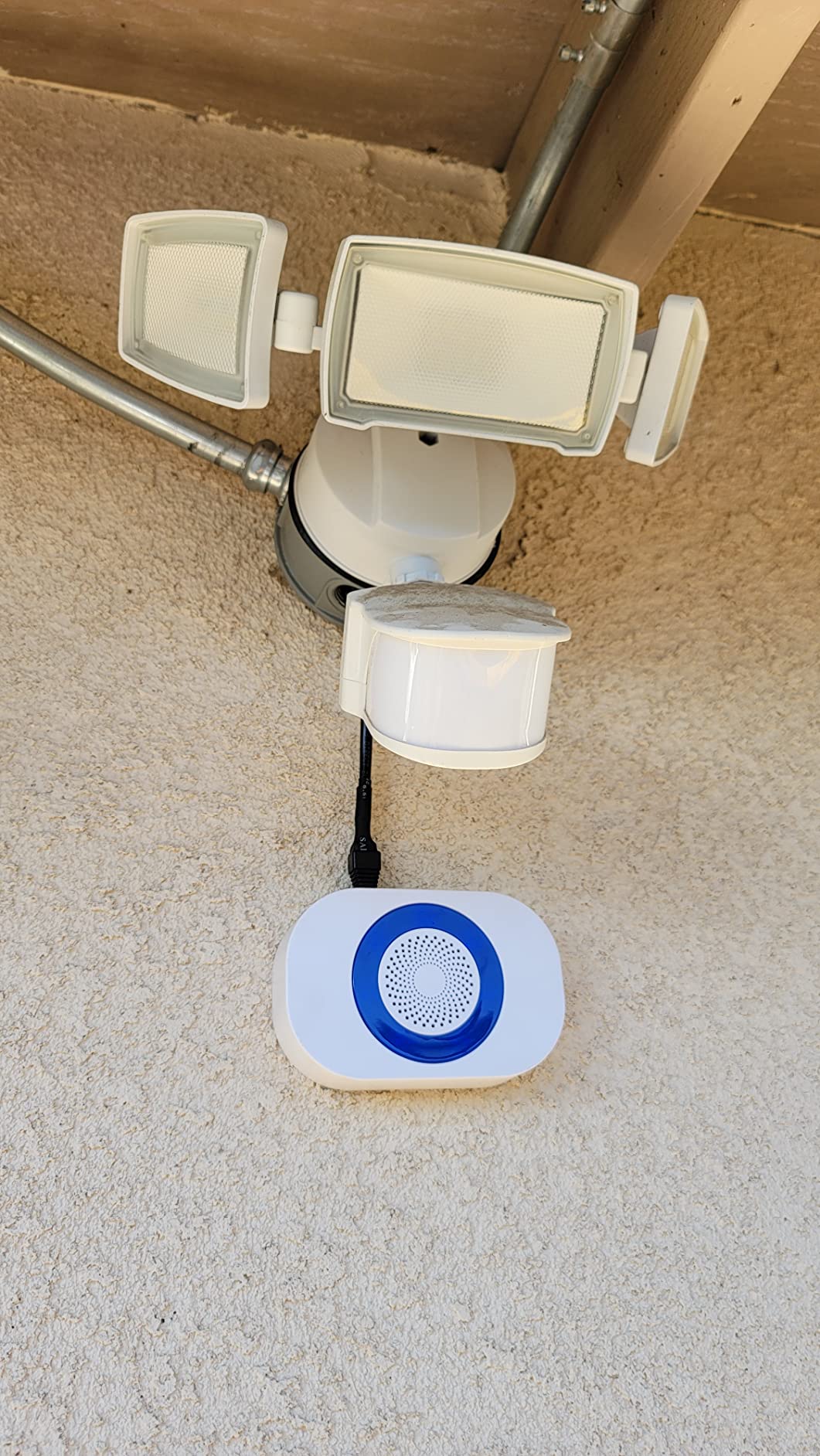
Setup uses code-learning technology, where the receiver picks up the sensor code on first contact instead of needing a programming sequence. The kit pairs up to 16 sensors to one receiver, or unlimited receivers to a single sensor if you want the chime in several rooms.
The audible output is listed at 110 dB, which carries through a large house or outbuilding. Four volume levels let you tune it down for nighttime.
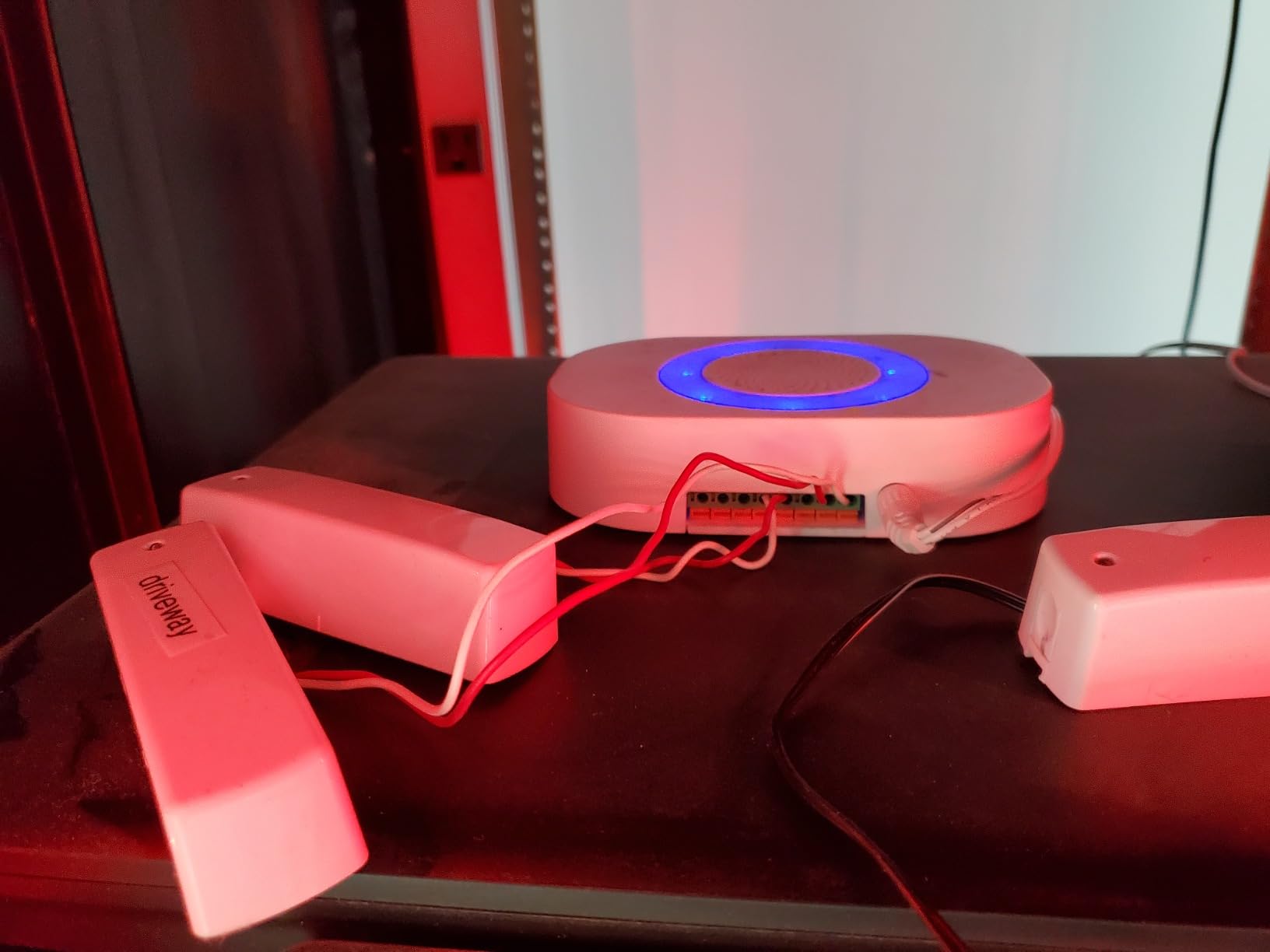
Where it clearly earns the higher tier
Obstructed terrain is the case for it. When the direct path crosses a treeline, a building, or a road dip, the extra headroom is what keeps the alert reliable instead of intermittent.
What you give up
It is the priciest system here, there is no solar version, and a single 9V battery means a yearly swap. Reviewers also report a steeper setup learning curve, and the 9 percent one-star share here is the highest in the group.
7. Mighty Mule FM231 Electromagnetic Driveway Alarm
Mighty Mule FM231 Wireless Driveway Alarm – Electromagnetic Vehicle Detection, Indoor Receiver, 400 ft Range, Expandable, Battery Powered, Easy Installation, Driveway & Property Security System
Vehicle-only electromagnetic detection
400 ft wireless range
125 dB indoor receiver
Requires burial
Pros
- Electromagnetic detection ignores pedestrians and animals
- Buried sensor installation is straightforward
- 125 dB chime carries through a house
- Long-standing brand with a 12-month warranty
- Low battery indicator on the sensor
Cons
- 400 ft range is the shortest in this roundup
- Requires digging a trench to bury the sensor
- AA batteries not included and buried sensor is hard to service
- Extra receivers sold separately
The Mighty Mule FM231 solves the problem that annoys long-driveway owners most: animals. It uses electromagnetic detection rather than infrared, so it responds to a vehicle’s metal mass and stays quiet when a deer walks across the drive at night.
On properties where the driveway crosses pasture, a ranch road, or wooded land with regular wildlife traffic, that design choice removes most of the false alerts you would otherwise get from a PIR sensor.
The tradeoff is installation. The sensor is buried beside the driveway, so this is the one system here that involves digging a trench rather than mounting a bracket. Owners with long private roads generally handle it themselves in an afternoon.
The 125 dB indoor receiver is loud, and additional indoor receivers are available separately, which matters in a house with a bedroom far from the driveway-facing wall.
Why vehicle-only detection matters more than range
A system that triggers on people walking up and animals crossing the drive trains you to ignore it. Once that happens the alarm is worse than nothing, because you have stopped listening. Vehicle-only detection keeps every chime meaningful.
The limits to plan around
At 400 ft, this is the shortest reach in the roundup, and it becomes marginal near that distance once trees and dips break the line of sight. Owners often pair it with a second, longer-range system set further down the drive for early warning.
8. Bistee Wireless Driveway Alarm with 58 Chimes
Wireless Driveway Alarms with 58 Chimes,Drive Way Alarm Motion Sensor
Microwave plus infrared sensing
600 ft wireless range
20 ft detection width
IP55 waterproof
Pros
- Dual microwave and infrared sensing cut false alerts sharply
- Battery life up to 3 years with settings retained
- Also works as a porch
- gate or boat sensor
- IP55 weatherproofing held up through rain and humidity
- 58 chimes with 5 volume levels and a mute mode
Cons
- Tiny case screws strip easily during battery changes
- Silicone sealing plugs are not robust
- Changing the chime is reported as difficult
- 600 ft range and 20 ft detection are modest
The Bistee is the most interesting technical idea in this group. It requires both a microwave and an infrared signal to trigger, and in side-by-side testing that dual requirement produced noticeably fewer false alarms than infrared-only alarms of the same price class.
That matters on a long drive because the usual false triggers are vibration, swinging branches, sunlight, wind, and temperature swings. Rejecting a movement unless heat is also present removes most of them at the source rather than through sensitivity tuning.
Battery life is listed at up to 3 years, and owners report needing attention roughly every six months in practice, which is comfortable for a sensor at the far end of a drive. Settings survive a power loss, so a dead battery does not reset your zones.
It is rated IP55 and operates from -4 to 140 degrees Fahrenheit. Each zone can carry its own sound, covering driveway, garage, door, barn, and yard from one receiver.
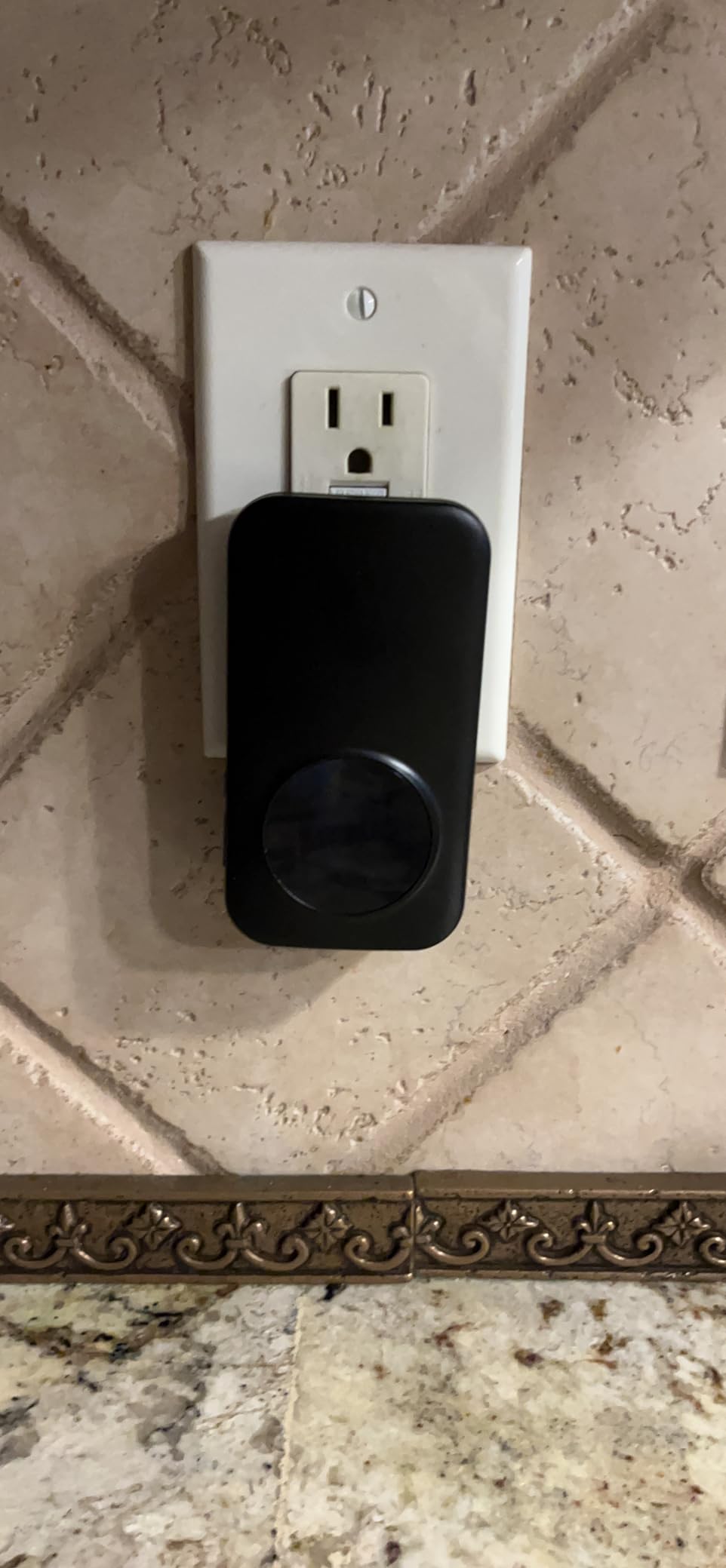
Where the dual-sensing design pays off
On properties with a lot of moving vegetation between the house and the sensor, this is the pick with the best chance of staying quiet through summer and still chiming when a car comes in. The mute mode also lets you run it silently at night with a flashing light instead.
What to plan around
The 600 ft reach and 20 ft detection width are the shortest coverage here, so this is a fit for shorter drives or a multi-zone property rather than a half-mile run. The case screws are also small and strip easily when you swap batteries, and the sealing plugs are the weakest part of the build.
Why Advertised Wireless Range Is Not Real Range
Every listing in this category quotes two different numbers, and conflating them is the root of most disappointed buyers. Detection range is how far in front of the sensor something must be before it triggers. Wireless range is how far the signal travels to the receiver inside your house.
A system with 50 ft detection and 2,640 ft wireless range is not misreporting anything. It is telling you that a vehicle must cross a 50 ft zone at the entrance, and the alert will then reach a receiver 2,640 ft away.
What cuts the real figure down
Trees and foliage: dense growth between sensor and receiver absorbs signal, especially in leaf-on season.
Terrain dips and hills: a road that crests a rise breaks the line of sight entirely, no matter what the spec says.
Buildings and vehicles: a barn, a shipping container, or a parked truck in the path reduces how far the signal carries.
Shared frequencies: neighbouring homes running identical systems can collide on the same code, producing phantom alerts.
Owners running a 400 ft spec on a property with trees and a road dip commonly find it performing nearer 300 ft. The fix is not a different brand; it is either a longer-range model, a second sensor placed closer to the house, or a cleared line of sight.
Choosing a Sensor Type That Ends the False Alarms
On a long driveway surrounded by land, sensor technology decides whether you keep the system or switch it off. People on long-driveway forums consistently steer away from plain infrared sensors and toward vehicle-only or dual-sensing units, because animals trigger infrared constantly.
Passive infrared
PIR sensors detect heat and movement, which means they catch people walking up the drive as well as vehicles. That is a benefit when you want to know about someone on foot, and a liability when deer, raccoons, or livestock cross the zone.
Microwave plus infrared
The dual-sensing approach requires two independent signals before it fires. It costs you a little detection width but removes a large share of the leaf, wind, and vibration triggers that make cheap PIR systems untrustworthy.
Electromagnetic vehicle detection
A buried probe senses the disturbance a vehicle’s mass creates in the magnetic field. People on foot do not trigger it and neither do animals, which makes it the quietest option on a wildlife-heavy property, at the cost of trenching and a shorter wireless reach.
Installing a Long-Driveway Alert System Without Regrets
Most failed driveway systems are not failed hardware. They are misplacement, wrong battery chemistry, or a receiver sitting where the signal cannot reach it. Here is the sequence I use.
Measure the straight-line distance from the sensor spot to the receiver, then add 30 percent for terrain and vegetation.
Mount the sensor facing the direction of travel, level and perpendicular to the ground. For detecting people, 3 to 4 ft; for vehicles, 2 to 3 ft.
Keep it back from the road far enough that passing traffic outside your property cannot enter the cone.
Place the receiver inside with a clear path to the sensor. A receiver behind a masonry wall or in a metal-sided outbuilding will cut range sharply.
Use lithium AA cells rather than alkaline if the sensor runs cold in winter. Alkaline voltage drops with temperature and a dying sensor gives little warning.
Angle solar panels into the southern sky if you are in the northern hemisphere, and expect the panel to carry the sensor through overcast weeks on stored charge rather than continuous recharge.
Bury electromagnetic probes 6 to 12 in deep beside the driveway edge, not in the travel lane, and leave 15 ft of clearance from large metal objects nearby.
Change the micro-switch code on both the transmitter and receiver if a neighbour runs an identical brand and you see phantom alerts.
After a week of use, walk the drive on foot with a family member and confirm the chime. Sensitivity controls on budget units often either do nothing or shrink the zone until real vehicles slip through, and you only learn which one you have by testing.
One practical note for long rural drives: if the entrance area doubles as play or overflow parking, our guides to the best basketball hoops for driveways and the best pickleball nets for driveways cover keeping that space usable alongside the alert system.
Frequently Asked Questions
What is the best driveway alarm for long driveways?
What is the longest range driveway alarm?
What is the best driveway alarm that notifies my phone?
What is the most common cause of false alarms?
Do driveway alarms work through trees and hills?
Are driveway alarms worth it on a long driveway?
Final Verdict for Long Driveways
The HTZSAFE 1/2 Mile Long Range kit is the best driveway alert system for long driveways in 2026. It reaches 2,640 ft, expands to 32 sensors, and has the largest satisfied owner base of anything in this roundup.
Go with the Dakota Alert DCMA-4K Plus when your drive exceeds a mile or runs through heavy tree cover. Pick the eMACROS or TECKNET when you want solar power and minimal maintenance. Choose the Mighty Mule FM231 when wildlife is the problem and you want an alert only when a vehicle arrives.
Whatever you pick, measure first and add margin. A system you stop trusting is worse than no system at all.