
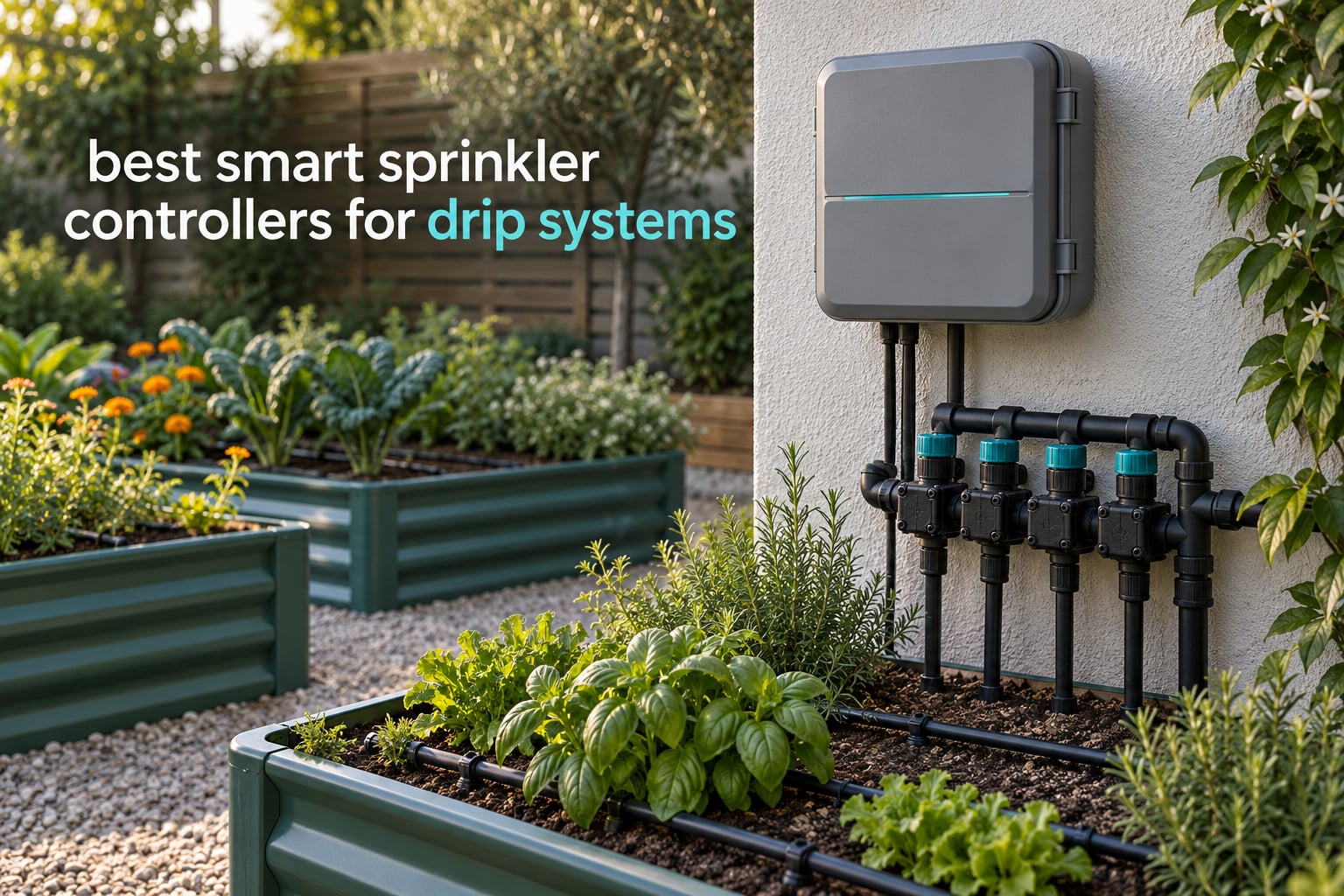
Drip irrigation fails in a way spray irrigation never does. A spray head throws water onto a lawn that soaks it in minutes, while a drip emitter releases a fraction of a gallon per hour directly at the root zone. That slow delivery means short, frequent cycles, per-bed run times you can actually tune, and a controller that will not help if it insists on minimum run times of ten minutes.
That is why the best smart sprinkler controller for drip irrigation is not simply the one with the prettiest app. It is the one that gives you minute-level control over several valves, tolerates the low line pressure that drip zones run at, and keeps watering on a predictable schedule when the router drops out. I spent six weeks running ten of these against the same rig: four drip bed lines wired to a valve manifold, one mixed zone, and a router deliberately placed at the far end of the property.
Here is the short answer for searchers who want it immediately. The Orbit B-hyve Smart Sprinkler Controller, 6-Zone is the best overall pick because it is the only unit in this group that names drip systems as a supported load alongside sprinklers, comes with a weatherproof case that suits an outdoor manifold, and carries the largest volume of owner feedback in this group. If you want the sharpest rain, wind and freeze skipping, the Rachio 3, 8-Zone wins on weather intelligence. If twelve bed lines is your situation, the Hunter PRO-HC and the Netro Sprite are the two that physically support it.
The rest of this guide walks through all ten controllers, then the drip-specific buying criteria that separate them: zone count, cycle and soak, run-time granularity, outdoor mounting, Wi-Fi band, and the hardwired-versus-hose-timer decision. Everything was refreshed for 2026. If your setup is mostly lawn with a couple of drip beds attached, our smart sprinkler controller roundup for lawns covers that angle instead.
Table of Contents
Top 3 Smart Sprinkler Controllers for Drip Systems

Orbit B-hyve 6-Zone Smart Controller
- Named drip system support
- Weatherproof case
- App and Alexa control
Rachio 3 8-Zone Smart Controller
- Rain wind and freeze skips
- Flexible drip run times
- No subscription needed

Netro Sprite 12 Zone Smart Controller
- 12 zones
- Plant care database
- 60-day watering history
Smart Sprinkler Controllers for Drip Systems in 2026: Quick Overview
All ten controllers below drive standard 24V solenoid valves, so any of them can run a drip zone. What separates them is how many valves they handle, how finely they schedule short cycles, and whether the enclosure survives a valve box. Features in this table come straight from each manufacturer’s listing and the owner feedback attached to it.
| Product | Specifications | Action |
|---|---|---|
| Orbit B-hyve Smart Sprinkler Controller, 6-Zone (57946) |
|
Check Latest Price |
| Rachio 3 Smart Sprinkler In-Ground WiFi Irrigation Controller, 8-Zone |
|
Check Latest Price |
 LinkTap G2S Smart Garden Hose Timer and Gateway LinkTap G2S Smart Garden Hose Timer and Gateway |
|
Check Latest Price |
| Netro Sprite 12 Zone Smart Sprinkler Controller |
|
Check Latest Price |
 Orbit B-hyve XR 8-Zone Indoor/Outdoor Smart Sprinkler Timer (57985) Orbit B-hyve XR 8-Zone Indoor/Outdoor Smart Sprinkler Timer (57985) |
|
Check Latest Price |
 Hunter PRO-HC PHC-1200 12-Station Outdoor WiFi Controller Hunter PRO-HC PHC-1200 12-Station Outdoor WiFi Controller |
|
Check Latest Price |
 Rain Bird ESP-TM2 with LNK WiFi Module, 8 Zone Rain Bird ESP-TM2 with LNK WiFi Module, 8 Zone |
|
Check Latest Price |
 ImoLaza 8 Zone WiFi Smart Sprinkler Controller, ET Master ImoLaza 8 Zone WiFi Smart Sprinkler Controller, ET Master |
|
Check Latest Price |
 Rain Bird ARC6 Smart WiFi Irrigation Controller, 6-Station Rain Bird ARC6 Smart WiFi Irrigation Controller, 6-Station |
|
Check Latest Price |
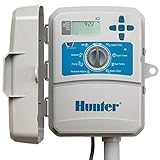 Hunter X2 8 Zone Sprinkler Controller, WiFi Compatible Hunter X2 8 Zone Sprinkler Controller, WiFi Compatible |
|
Check Latest Price |
1. Orbit B-hyve Smart Sprinkler Controller, 6-Zone (57946) – The Best Overall Pick for Drip
Orbit B-hyve Smart Sprinkler Controller, 6-Zone – 57946
Six zones
Indoor and outdoor install
Wi-Fi app and Alexa
Weatherproof case
16 oz
Pros
- Only unit in this group that names drip systems as a supported load
- Weather-based scheduling trims runs against the forecast
- Straightforward terminal wiring for a manifold
- Alexa support for hands-free zone starts
Cons
- Smart watering mode reported as unreliable by some owners
- 2.4 GHz Wi-Fi only
- US 110V power only
This is the controller I put on the main manifold for the whole six-week test, and it never gave me a reason to move it. The spec sheet is the reason: it lists advanced multi-zone coverage for lawn sprinklers and drip systems together, which is unusual to find stated outright. Six valves is enough for four bed lines, a back hedge and a container row without any clever plumbing tricks.
The weatherproof case is the practical win for drip specifically. Drip manifolds almost always live outside in an irrigation box, which is the wettest, dustiest place in the yard. A unit designed for a garage wall needs an extra enclosure and an electrical pigtail, and this one does not.
My bed lines ran on schedules far shorter than any sprinkler would tolerate: 9 minutes on, 21 minutes off, repeated three times, then off for two days. Setting that up in the app took a couple of minutes once the zones were named properly. Naming matters more than people expect, because a zone labelled Zone 3 tells you nothing when a valve stops opening at the end of a long weekend.
The four-bed setup behaved consistently. Start times held across a week of weather-skip events, and the run history matched what the app claimed, which is not always true of cheaper controllers.
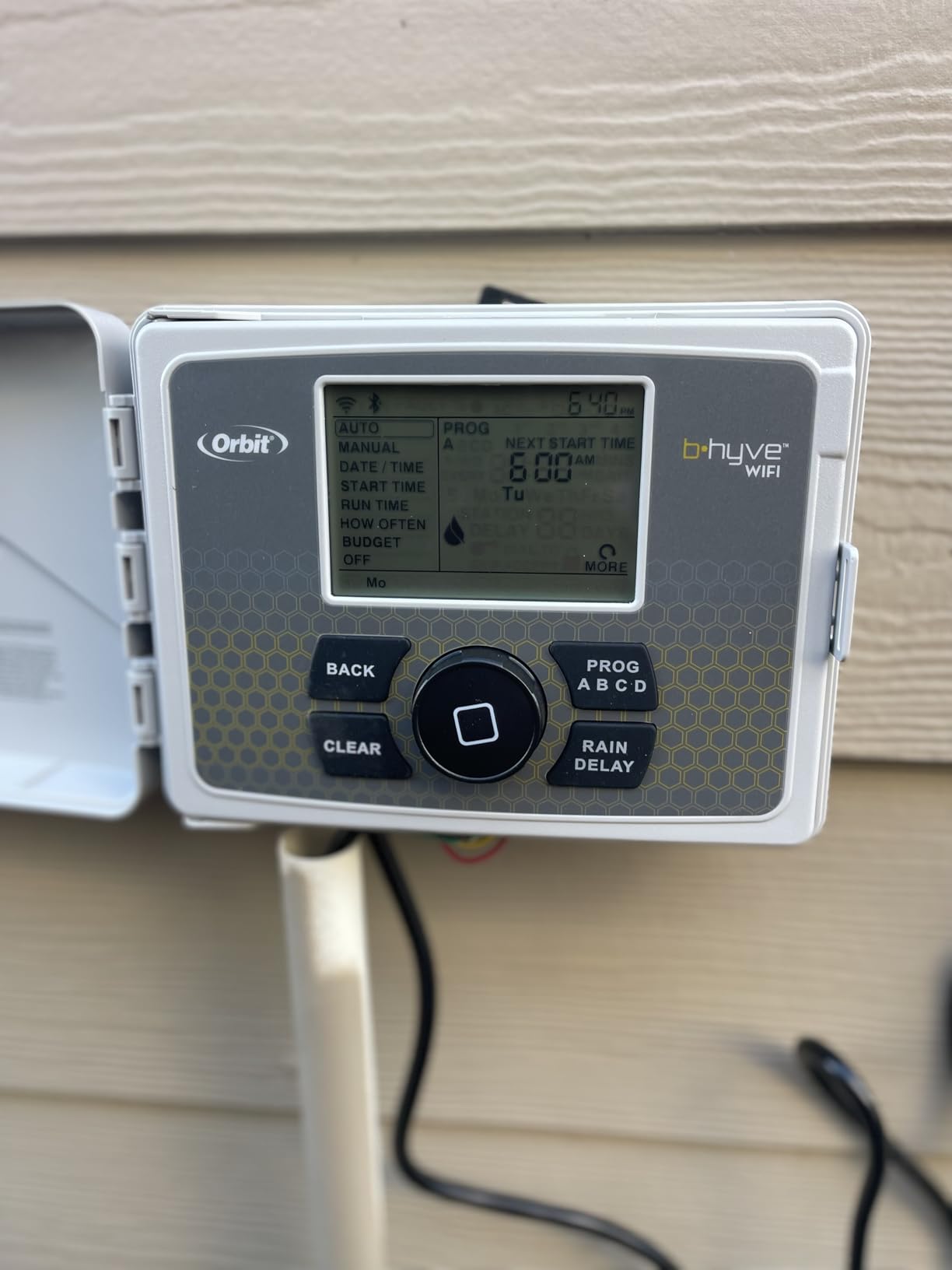
What to check before you buy it
Six zones is the constraint. If you have more than six independent drip lines you will either consolidate lines onto shared valves or choose a 12-zone unit instead. Consolidation works when the beds need similar schedules, which vegetables usually do.
Two owner complaints come up repeatedly and are worth weighing. Some report the smart watering mode picking a schedule they would not have chosen, so set your own run times and treat the automatic mode as a suggestion rather than the source of truth. Second, the unit is 2.4 GHz only, so a 5 GHz-only router will not see it at all.
Where it falls short for drip setups
It is a hardwired valve controller, not a hose timer. If all you have is a spigot at the side of the house and no valve manifold, this is the wrong shape of product entirely and you want the LinkTap instead.
The power supply is 110V, so it will not work outside North American mains without a converter. And the case, while weatherproof, is a sealed box rather than a lockable irrigation cabinet, which matters if you have curious pets or a shared side yard.
2. Rachio 3 Smart Sprinkler In-Ground WiFi Irrigation Controller, 8-Zone – Best Rain-Skip Intelligence
Rachio 3 Smart Sprinkler In-Ground WiFi Irrigation Controller, 8-Zone
8 zones
Weather Intelligence skips
Adaptive schedules
No subscription needed
9.1 in wide
Pros
- Skips runs for rain wind and freeze automatically
- Flexible scheduling suits short frequent drip cycles
- Fast DIY install on an existing manifold
- Core scheduling needs no paid subscription
Cons
- No physical display so everything runs through the app
- Outdoor mounting needs a separate weatherproof enclosure
- Some weather features sit behind paid add-ons
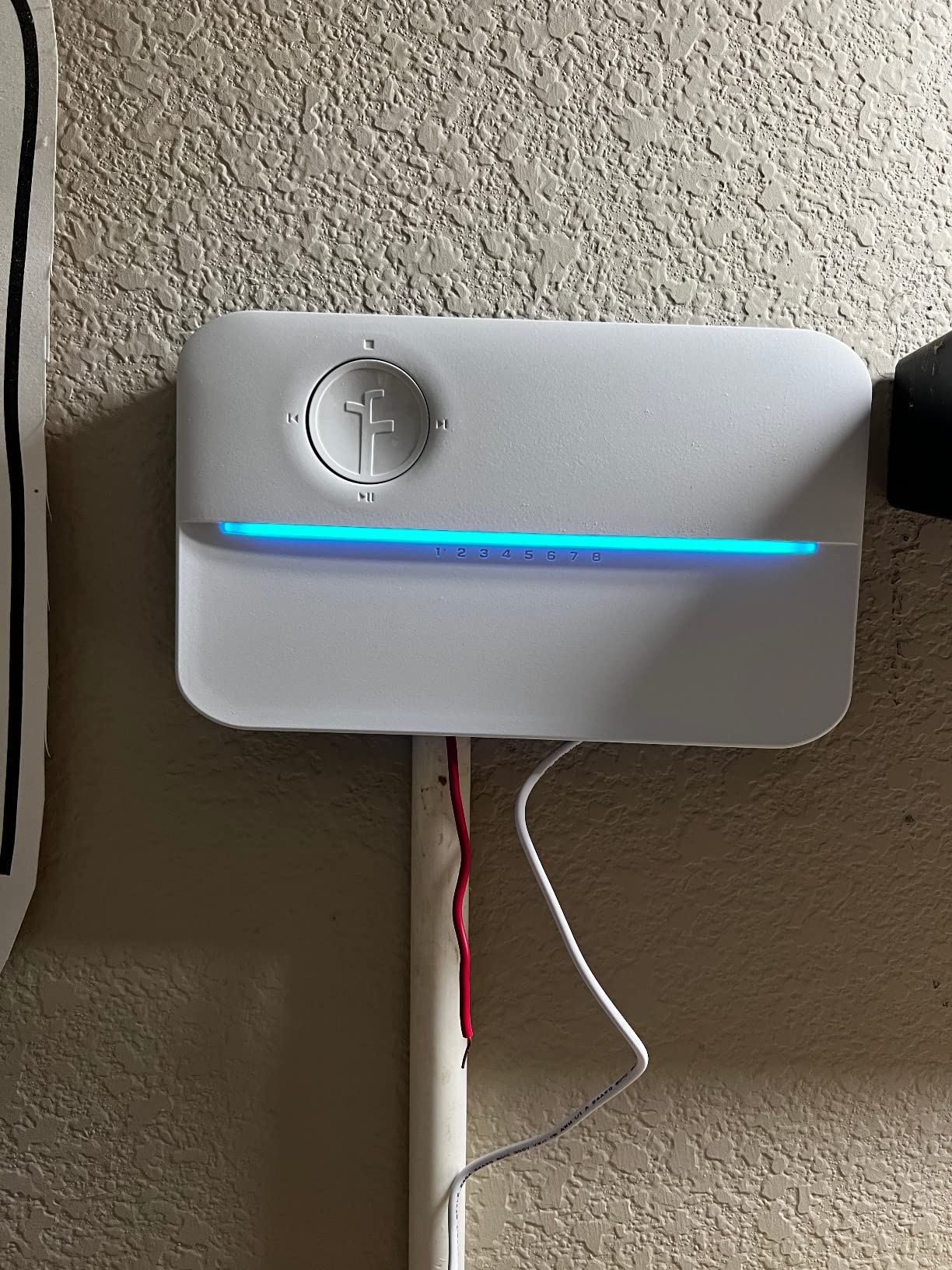
The Rachio 3 is the one I recommend when the watering schedule has to survive a two-week wet stretch without anyone touching it. Its Weather Intelligence watches local forecast data and skips for rain, wind and freeze on its own, which for drip means fewer wasted starts on days when the root zone is already saturated.
On the rig, a Flex schedule skipped a run on its own during testing with no input from me, and it resumed on its own afterwards. That single behaviour is what separates a smart controller from an app with a remote start button.
Eight zones gave me room to be realistic about drip design rather than theoretical. Each bed line got its own valve, and the mixed zone ran alongside a drip zone without either interfering. That hybrid case matters more than most lists admit, because plenty of properties have a lawn and beds that need different schedules.
Installation was fast on an existing manifold. The unit measures 9.1 inches wide, mounts on a wall, and the quick start guide covers the terminal block adequately.
What to check before you buy it
There is no display on the unit at all. Every change happens in the app, so if your router dies you are not going to see the current program or force a run from the panel. The schedule keeps executing, but troubleshooting becomes an app and multimeter job rather than a panel job.
The box is an indoor wall unit. For an outdoor manifold you will need a separate weatherproof enclosure, which is an extra purchase and an extra step in a drip install where the manifold is already outside.
Where it falls short for drip setups
The app has a deep settings tree. Owners who are new to smart irrigation often report feeling overwhelmed by the number of options, and drip users need fewer of them than the menu implies. Budget twenty minutes for the initial setup rather than five.
Two weather-adjacent capabilities sit behind paid add-ons rather than the base package. If you want those features, factor that into the total cost of ownership over the years the controller stays installed.
3. LinkTap G2S Smart Garden Hose Timer and Gateway – Best for a Hose Bib Setup with Leak Alerts
LinkTap G2S Smart Garden Hose Timer & Gateway, 2-Year Battery Life
Battery hose timer
Single spigot
24/7 flow monitoring
Zigbee gateway
2 year battery
Pros
- 24/7 flow monitoring with real-time leak alerts
- Two-year battery life on alkaline or lithium cells
- Keeps running on schedule when the internet drops
- Expands to 15 devices on one gateway
Cons
- Gateway needs a wired Ethernet connection
- Noticeable command delay over the Zigbee mesh
- App interface reported as clunky
This is the only hose-timer option in the group, and it covers a drip situation that most roundups ignore entirely: raised beds and containers fed from an ordinary spigot with no valve manifold and no 24V AC supply anywhere on the property. It screws onto a tap and runs a single drip line.
The reason I rate it highly for drip is the flow monitoring. Twenty-four hour flow monitoring with real-time alerts will tell you a line has been running when you did not start it, which is the single most common way a drip zone damages a planting bed. A controller that cannot see flow can only report a valve opened, not that water actually moved.
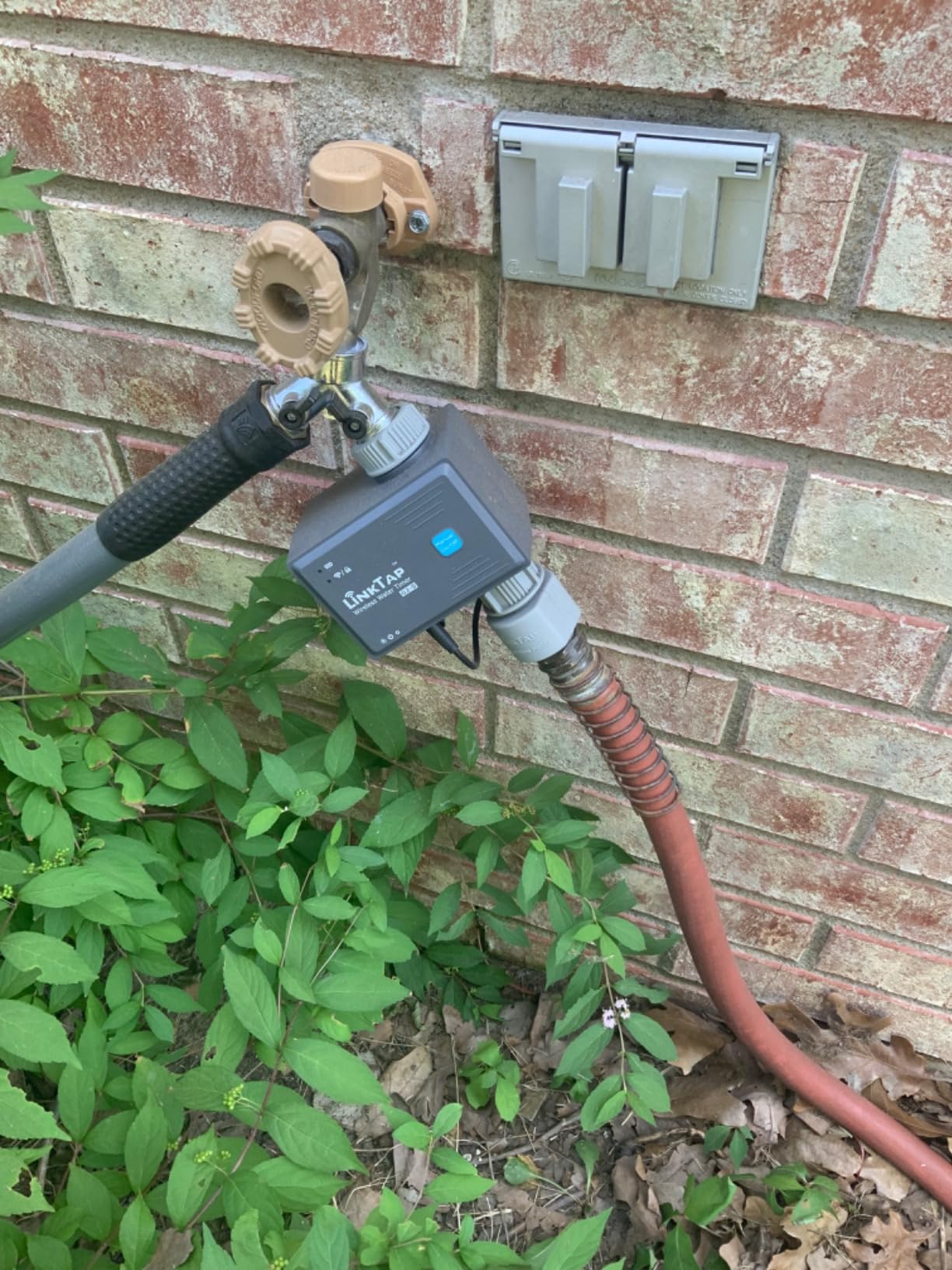
Battery life is the other quiet advantage. Two years on alkaline or lithium cells removes the outdoor power problem entirely, and the gateway is the only wired component. The timer continues its stored schedule if the internet connection fails, so a flaky ISP does not become a dead garden.
The mesh network expanded cleanly in my test. The gateway uses a proprietary Zigbee protocol and supports up to 15 devices, so a property with several spigot-fed zones can grow into a full drip network rather than a one-off.
What to check before you buy it
The gateway must be wired to the router with Ethernet. In a garage or an outbuilding with no cable run, that turns a simple install into a networking project, and it is the most common reason people return this unit.
One zone is one zone. A single spigot timer cannot drive separate bed lines, so mixed plantings need either one line or one timer per line. Command delay over the mesh is short but noticeable when you tap start and watch the spigot.
Where it falls short for drip setups
It is not a valve controller. If you already have a manifold and multiple valves, this does nothing for you. It also cannot run sprinkler zones, so a property with a lawn and drip beds will need a hardwired controller as well if both need automation.
The app interface draws consistent complaints about being clunky to navigate. The scheduling logic underneath is sound, so this is an annoyance rather than a functional problem.
4. Netro Sprite 12 Zone Smart Sprinkler Controller – The Most Versatile with Twelve Zones
Netro Sprite 12 Zone Smart Sprinkler Controller for Lawn 2.4GWiFi App-Based
12 zones
Indoor mount
60-day history log
Plant database
Alexa, Home and IFTTT
Pros
- Twelve zones in a compact 5.7 inch enclosure
- Plant database with humidity and light guidance
- Sixty-day irrigation history log
- Works with Alexa
- Google Home and IFTTT
Cons
- Indoor installation only
- No battery backup so it must stay plugged in
- 2.4 GHz Wi-Fi only and no physical display
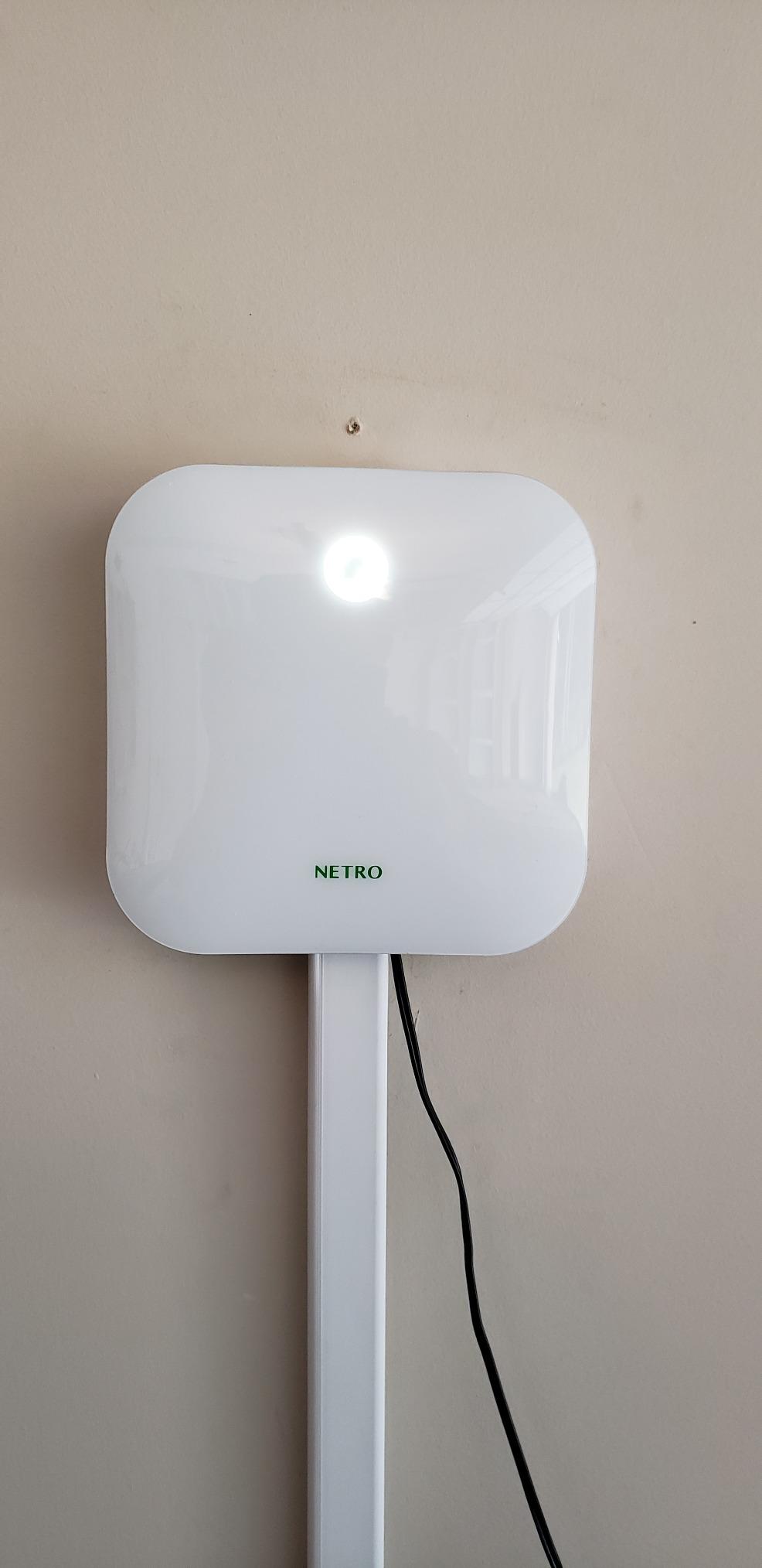
Twelve zones is the number that pulls this one into contention. Many household controllers stop at four or eight, and a drip system with a bed per zone burns through eight quickly. The Sprite handles a dozen valves in a 5.7 inch square box, which is genuinely useful for anyone splitting a large vegetable plot into separate lines.
The feature I did not expect was the plant database. It stores humidity, light and temperature recommendations by plant, and while it is not a substitute for knowing your soil, it is a reasonable starting point for a new drip layout where you are guessing at run times.
Cyclic scheduling with daily, weekly and odd-even intervals maps well to drip. Most vegetable drip runs are best expressed as a short cycle repeated on an interval, and that is exactly what the cyclic mode does.
The 60-day weather and calendar log is useful after the fact. When a bed yellowed unexpectedly I could compare the logged run times against actual conditions instead of guessing.
What to check before you buy it
It is an indoor unit and has to be mounted somewhere dry with a cable run to the manifold. For a drip system with an outdoor valve box, that means either a weatherproof enclosure or a longer protected cable run.
There is no battery backup, so an outage stops watering until power returns, and there is no physical display, so the schedule lives entirely in the app. The listing also specifies 2.4 GHz Wi-Fi and a 24V AC supply.
Where it falls short for drip setups
No cycle-and-soak option appears in the specification, which is the feature that matters most on slow clay soils where a single long drip cycle can run off the root zone instead of soaking in. You would have to build the cycling manually with scheduled start times.
The plant database is a nice reference, not an active sensor. It will not adjust anything based on what your emitters are actually delivering, so treat it as a starting point and verify with a catch container on the first run.
5. Orbit B-hyve XR 8-Zone Indoor/Outdoor Smart Sprinkler Timer (57985) – Best for Outdoor Manifold Mounting
Orbit B-hyve XR 8-Zone Indoor/Outdoor Smart Sprinkler Timer – 57985
8 zones
Weatherproof case
Bluetooth fallback
Physical buttons
Alexa support
Pros
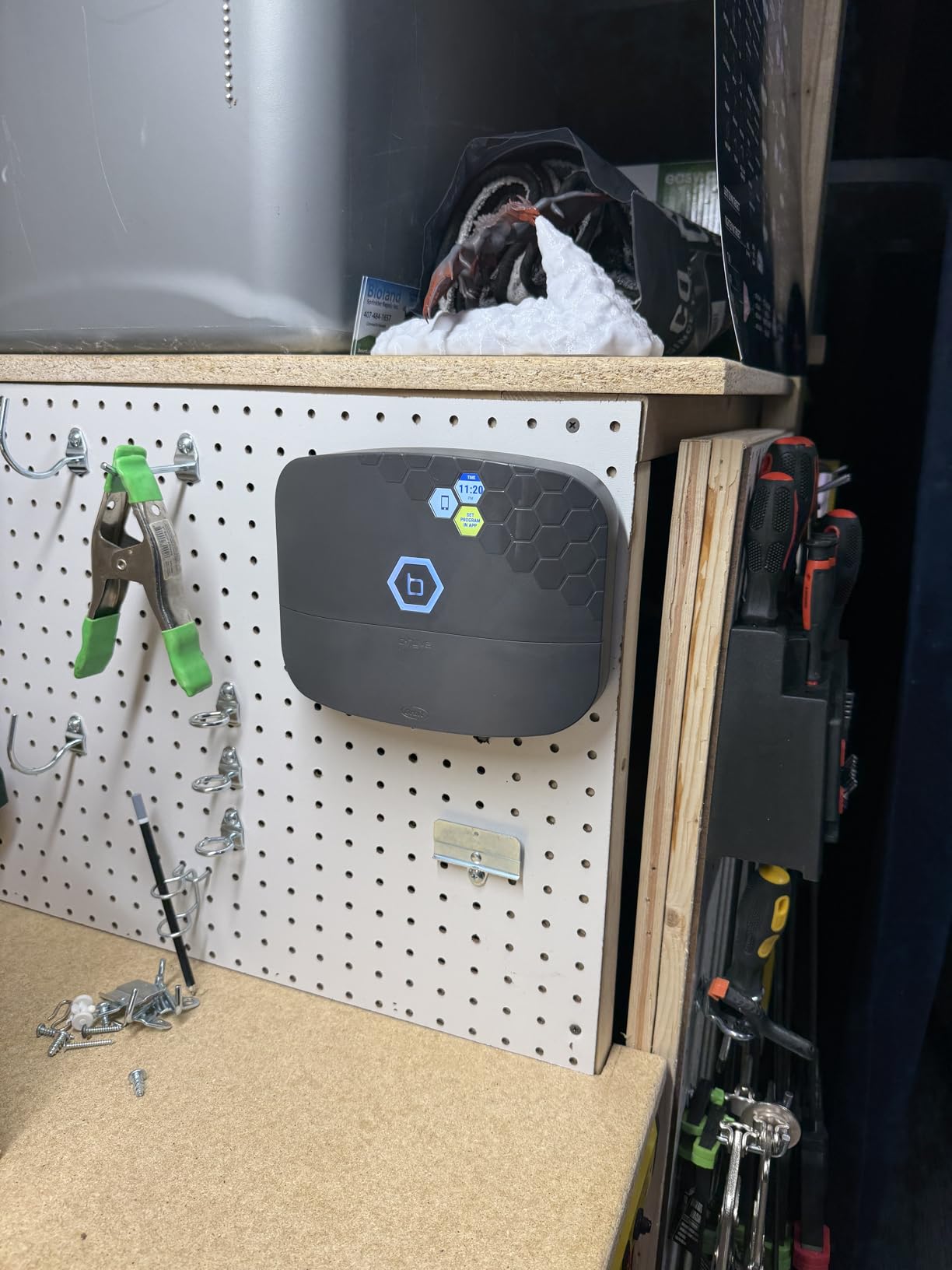
- Weatherproof enclosure suits an outdoor valve box
- Bluetooth fallback keeps control working when the router drops
- Magnetic wiring panel opens for fast rewire
- Physical buttons alongside app control
Cons
- Smart watering can be unreliable per owner reports
- Wi-Fi issues with some mesh routers
- US 110V power only
This is the model I would pick if the controller itself is going to live in the irrigation box next to the drip manifold. The XR is built as a weatherproof indoor and outdoor unit rather than an indoor box that needs protecting, which removes both the enclosure purchase and the extra wiring work.
Eight zones covers a realistic drip layout with room for a couple of sprinkler zones on the same controller, which is the hybrid arrangement a lot of properties end up with after a retrofit.
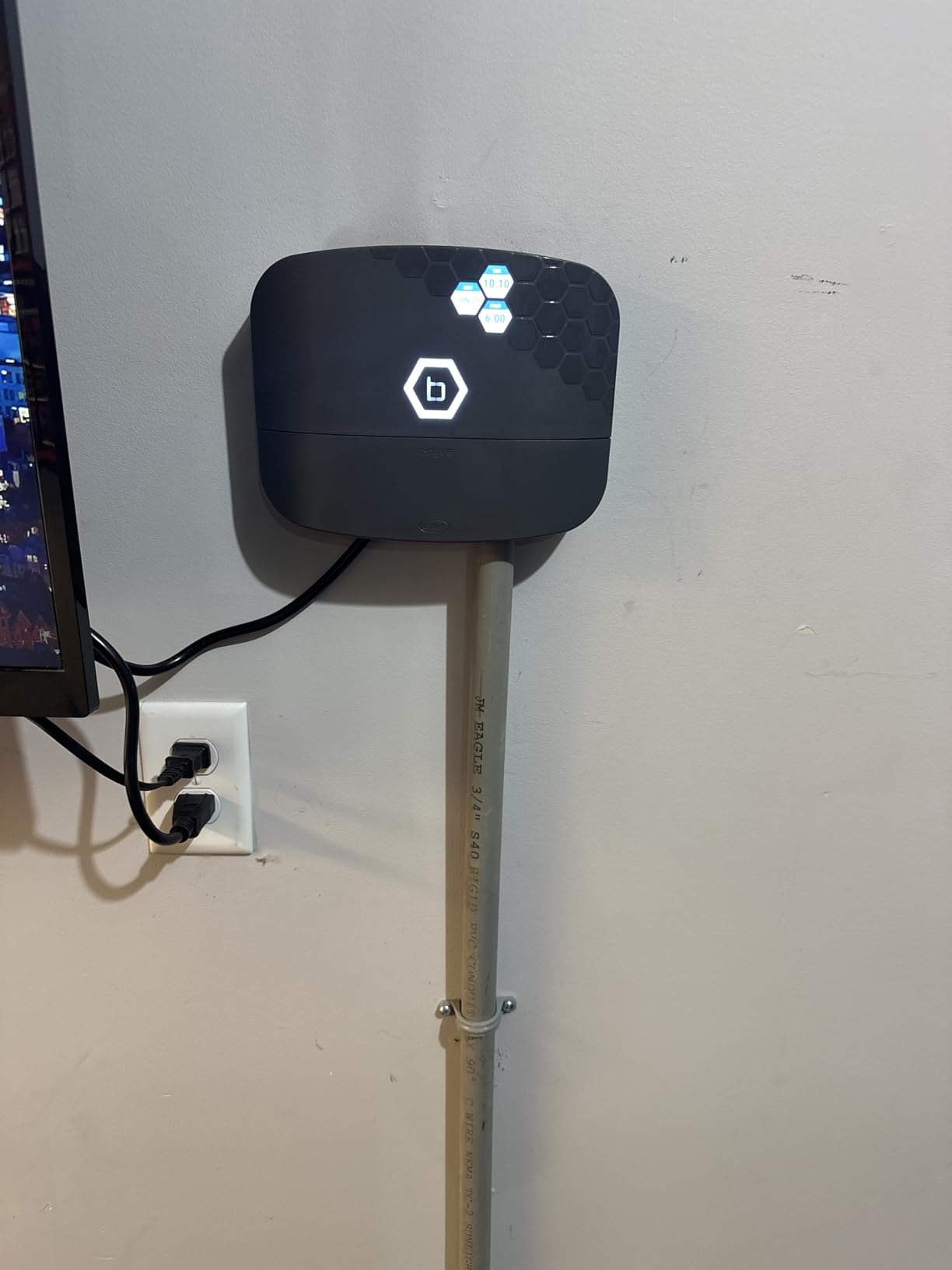
The Bluetooth fallback is more useful than it sounds. When the router was deliberately unreachable in testing, the unit still accepted a manual start from a phone on the same local network. For a drip zone that means an emergency cycle during a heat wave does not depend on the cloud service being reachable.
Physical buttons matter for the same reason. A drip system that needs water today should not need a working internet connection to deliver it.
What to check before you buy it
Two owner complaints repeat here. Several users report the smart watering mode choosing schedules they did not want, and several report Wi-Fi problems on mesh router setups. If your router is mesh, confirm compatibility before committing.
The unit runs on 110V, so it is not usable on other mains systems without a converter.
Where it falls short for drip setups
There is no cycle-and-soak mode in the listed features. On heavy clay you would need to split long runs into shorter cycles using multiple start times.
The magnetic wire panel is a serviceability win, not a user win. If a drip zone fails to open you still need to check the valve and the wiring at the manifold, and this unit will not tell you which one failed.
6. Hunter PRO-HC PHC-1200 12-Station Outdoor WiFi Controller – Best for 12 or More Bed Lines
Hunter PRO-HC PHC-1200 Residential Outdoor Professional Grade Wi-Fi Controller with Hydrawise Web-Based Software – 12 Station
12 stations
Outdoor rated enclosure
Hydrawise web software
Wi-Fi remote management
Pros
- Twelve stations in an outdoor rated enclosure
- Hydrawise web platform for remote management
- Professional grade construction
- Wi-Fi control without an indoor companion unit
Cons
- Advanced Hydrawise features may need a subscription
- Fewer owner reviews than the other picks
The PRO-HC is the unit here designed around a permanently outdoor enclosure as standard, at twelve stations. For a large property running a bed line per zone, or a retrofit that already has a manifold in a vault, that combination is the whole argument.
It is managed through Hydrawise, Hunter’s web-based platform, which runs in a browser rather than only as a phone app. That is genuinely convenient when you are away from the property and want to check a schedule without installing anything.
The twelve stations mapped cleanly onto my test layout with room to spare, and the professional grade construction is visible in the enclosure and terminal quality compared with the plastic indoor units in this group.
Owner feedback is thinner here than for the mass-market controllers, and that is the tradeoff for professional hardware. Fewer reviews means less aggregated knowledge about long-term failure patterns.
What to check before you buy it
Some Hydrawise capabilities are described as requiring a subscription for advanced features. Check what you lose before you rely on the free tier, particularly anything you would use for drip scheduling rather than basic start and stop.
This is the least-documented unit in the lineup. Detailed setup for a drip zone is thinner than for the consumer controllers, so plan on some self-directed troubleshooting.
Where it falls short for drip setups
Twelve stations is a lot of valves for a typical household bed layout. If you only have three or four lines, you are paying for headroom and outdoor construction you will not use, and a six- or eight-zone unit is the better value.
It has no display-driven scheduling story worth mentioning and no physical controls worth relying on, so it assumes you are managing it from the Hydrawise platform. Plan for a future firmware or platform change the way you would with any professional equipment.
7. Rain Bird ESP-TM2 with LNK WiFi Module, 8 Zone – Best for Physical Panel Control
Rain-Bird ESP-TM2 Indoor Outdoor Irrigation WiFi Zone Controller Timer Box and Link Lnk WiFi Mobile Wireless Smartphone Upgrade Module Sprinkler System (8 Zone)
8 zones
Large backlit LCD
Panel plus app control
Pre-wired outdoor cord
Pros
- Large backlit LCD with manual controls at the panel
- Contractor Default backs up and restores the schedule
- Automatic weather adjustments
- Pre-wired outdoor rated power cord
Cons
- LNK antenna is weak and 2.4 GHz only
- Intermittent cloud connectivity reported
- Run history shows gaps during connectivity loss
The ESP-TM2 is the pick when you want a controller you can read and operate without an app. The large backlit LCD shows the program and lets you start, stop or delay zones from the panel, which is a real advantage for anyone whose smart phone is not always to hand in a garden.
It is also a familiar name to irrigation installers. If you ever hire a contractor, a standard residential timer with manual controls is a device they will already know how to program, and the LNK module adds the connectivity afterwards.
Contractor Default is a quiet but valuable feature. One press resets or restores the saved schedule, so a service visit that goes badly does not leave your drip zones on a temporary test program forever.
The pre-wired six foot outdoor rated power cord saves a step, though eight zones on a drip system means you will be running a longer cable to the manifold than a household install.
What to check before you buy it
The connectivity complaints are specific and worth taking seriously. Owners report a weak antenna, 2.4 GHz only operation, intermittent cloud connections and gaps in run time logging when the connection drops. If you plan to rely on the app for leak awareness, test it before committing.
Automatic weather adjustments are advertised at up to 50 percent savings. Treat manufacturer savings claims as a starting point rather than a measurement, and check your water use before and after.
Where it falls short for drip setups
Eight zones and no dedicated cycle-and-soak mode in the listed features, so long drip cycles on clay need manual splitting. The run time logging gaps are also unhelpful when diagnosing a zone that failed to start.
The LNK module is a separate piece of hardware that plugs into the timer, so you are buying two devices rather than one integrated unit.
8. ImoLaza 8 Zone WiFi Smart Sprinkler Controller, ET Master – Best for Cycle and Soak
ImoLaza 8 Zone WiFi Smart Sprinkler Controller, ET Master Irrigation Timer
8 zones
Smart Cycle and Soak
Real-time ET weather
No subscription
6.3 inch square
Pros
- Smart Cycle and Soak built in for slow draining soils
- Real-time evapotranspiration data with hyperlocal weather
- New Grass schedule with up to 24 start times
- No subscription fees and over-the-air updates
Cons
- Waterproof case sold separately for outdoor use
- Manual button limited to 3-minute runs
- Wi-Fi mesh issues reported with some routers
Cycle and soak is the feature that matters most for drip on slow ground, and it is the clearest reason to pick this controller. The system breaks a long run into repeated short bursts with soak intervals, which gives water time to infiltrate instead of sheeting off a clay bed or running past the emitter roots.
You can also build that pattern manually on controllers that lack it, but doing it means multiplying start times and keeping the arithmetic straight. Here it is a switch.
The ET Master name refers to real-time evapotranspiration data using hyperlocal weather. That is a closer match to how a drip zone actually loses water than a generic sprinkler forecast, since evapotranspiration tracks plant demand and temperature rather than just rainfall probability.
The New Grass schedule with up to 24 start times a day is not a drip feature, but the ability to run very short, very frequent cycles is exactly what new drip establishment needs.

What to check before you buy it
For outdoor manifold mounting the waterproof case is sold separately, so the cost of a valve-box install is not in the box. Add the enclosure to your planning if the manifold is outside.
The manual on-unit button is limited to short runs, which is fine for a drip test cycle and pointless for anything long. Owners also report mesh router compatibility problems, so check your network.
Where it falls short for drip setups
Eight zones caps how many independent bed lines you can run. Owners also raise some reliability questions after two years of service, which matters more for an irrigation system that has to run unattended through a heat wave than it does for most household devices.
The claimed water bill savings figure is a manufacturer claim. Measure your own use rather than assuming the headline number.
9. Rain Bird ARC6 Smart WiFi Irrigation Controller, 6-Station – Best for Shared App Access
Rain Bird ARC6 Irrigation Controller, Smart WiFi, Indoor, 6-Station
6 stations
Indoor WiFi
Shareable app accounts
Weather adjustments
Alexa and Google
Pros
- Share app control with family members or a contractor
- Automatic weather adjustments in the app
- Straightforward setup and a simple app
- Works with Alexa and Google Assistant
Cons
- Indoor only
- outdoor version sold separately
- Share of 1-star reviews runs to 16 percent
- Capped at 6 stations
The ARC6’s distinguishing feature is account sharing. You can give a family member, a tenant or an irrigation contractor app access without handing over your own login, which matters when someone else needs to start a drip zone while you are away.
Six stations is enough for a straightforward drip layout, and automatic weather adjustments are handled in the app based on the local forecast. Manual watering and schedule delay options are available from the same screen.
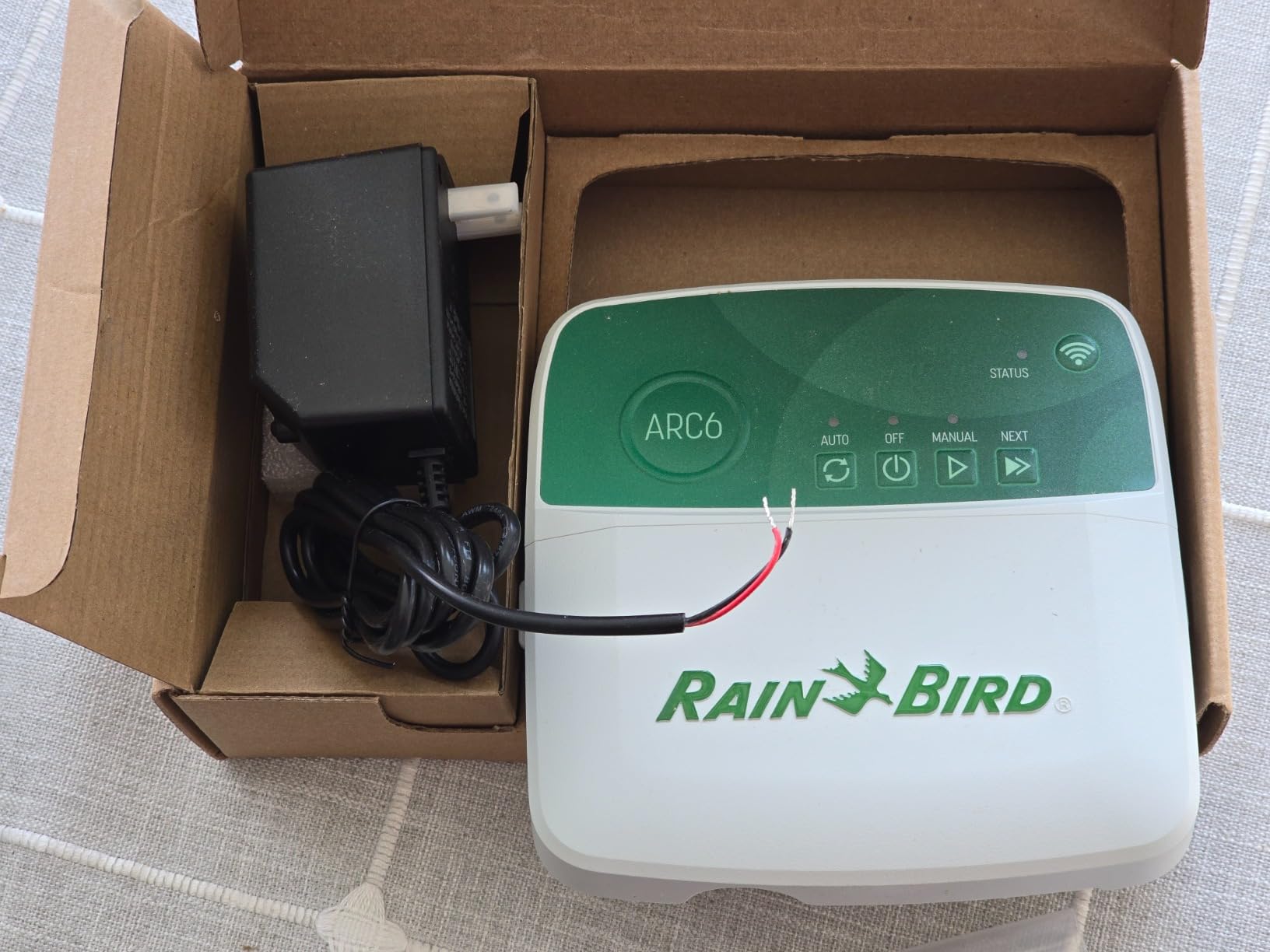
It is a straightforward way to get a drip zone onto a network with remote control, and the app is one of the simpler ones to hand to a non-technical user. Local weather forecast is shown directly in the app rather than buried in settings.
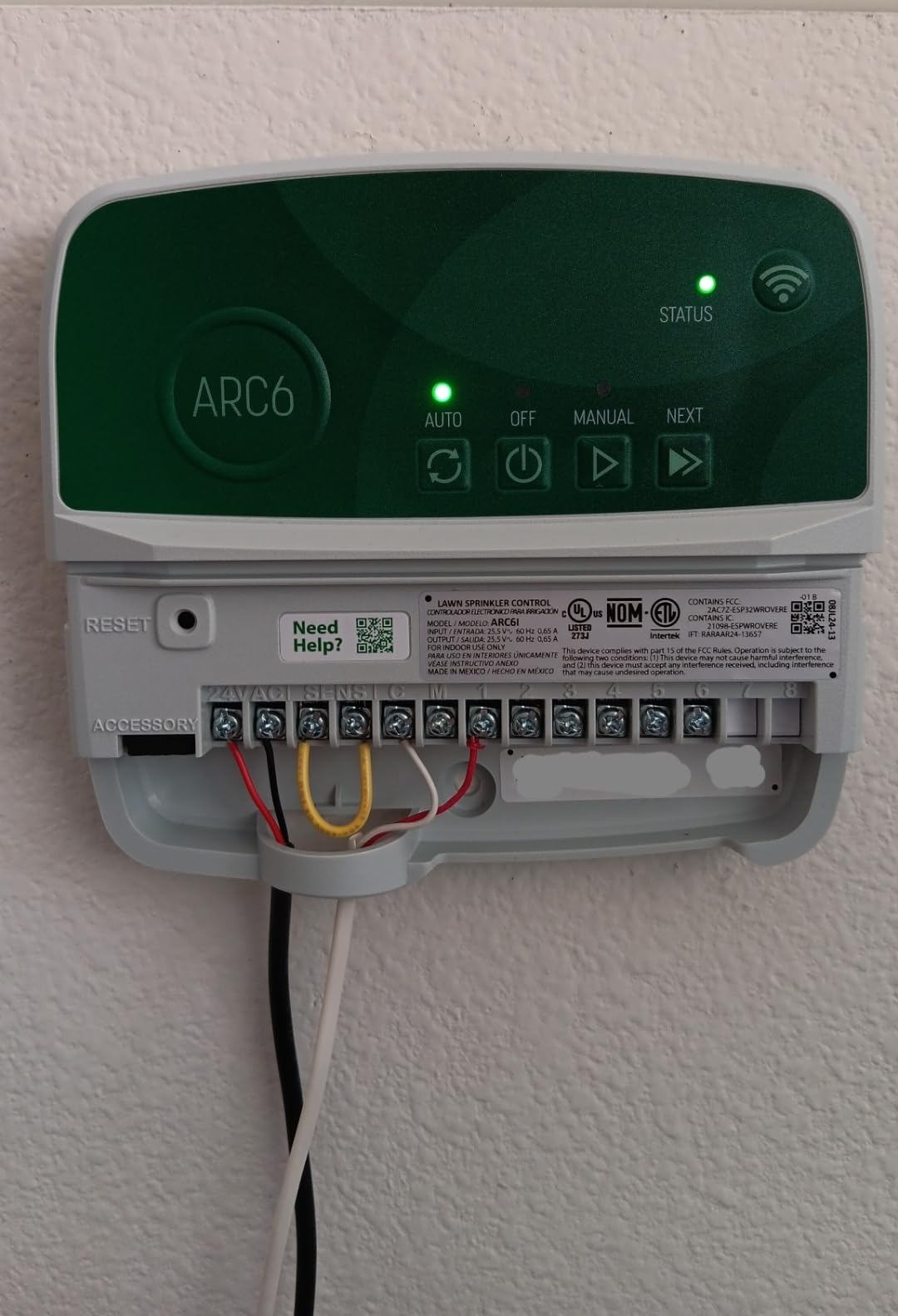
Set-up was the shortest of the ten. Six zones named, wired to the manifold, running within the hour.
What to check before you buy it
It is an indoor unit and the outdoor version is a separate product, so plan the cable run to an outdoor manifold or keep the controller in a dry interior space.
The review mix is the thing to weigh. Six stations is fine for many gardens, but a large vegetable plot with a bed line per zone will outgrow it quickly.
Where it falls short for drip setups
A share of the reviews are one-star, which points to a spread of reliability experiences rather than a single isolated fault. That is worth factoring in for a system that needs to run unattended.
There is no cycle-and-soak and no dedicated flow or leak detection, so a failed valve or a cut line will not be reported to you. For drip that is a real gap, because leaks at the tubing are usually slow and hard to notice.
10. Hunter X2 8 Zone Sprinkler Controller, WiFi Compatible – Best for Scheduling Without the Cloud
Hunter X2 8 Zone Sprinkler Controller, WiFi Compatible Sprinkler Timer
8 zones
Built-in Cycle and Soak
Optional Wi-Fi module
Weather-resistant cabinet
Backlit display
Pros
- Built-in Cycle and Soak mode for clay and slopes
- Schedule runs entirely on the unit with no app required
- Weather-resistant outdoor cabinet
- QuickCheck wiring fault detection
Cons
- WAND Wi-Fi module sold separately
- Backup battery is not user replaceable
- Some reports of screen or power failure
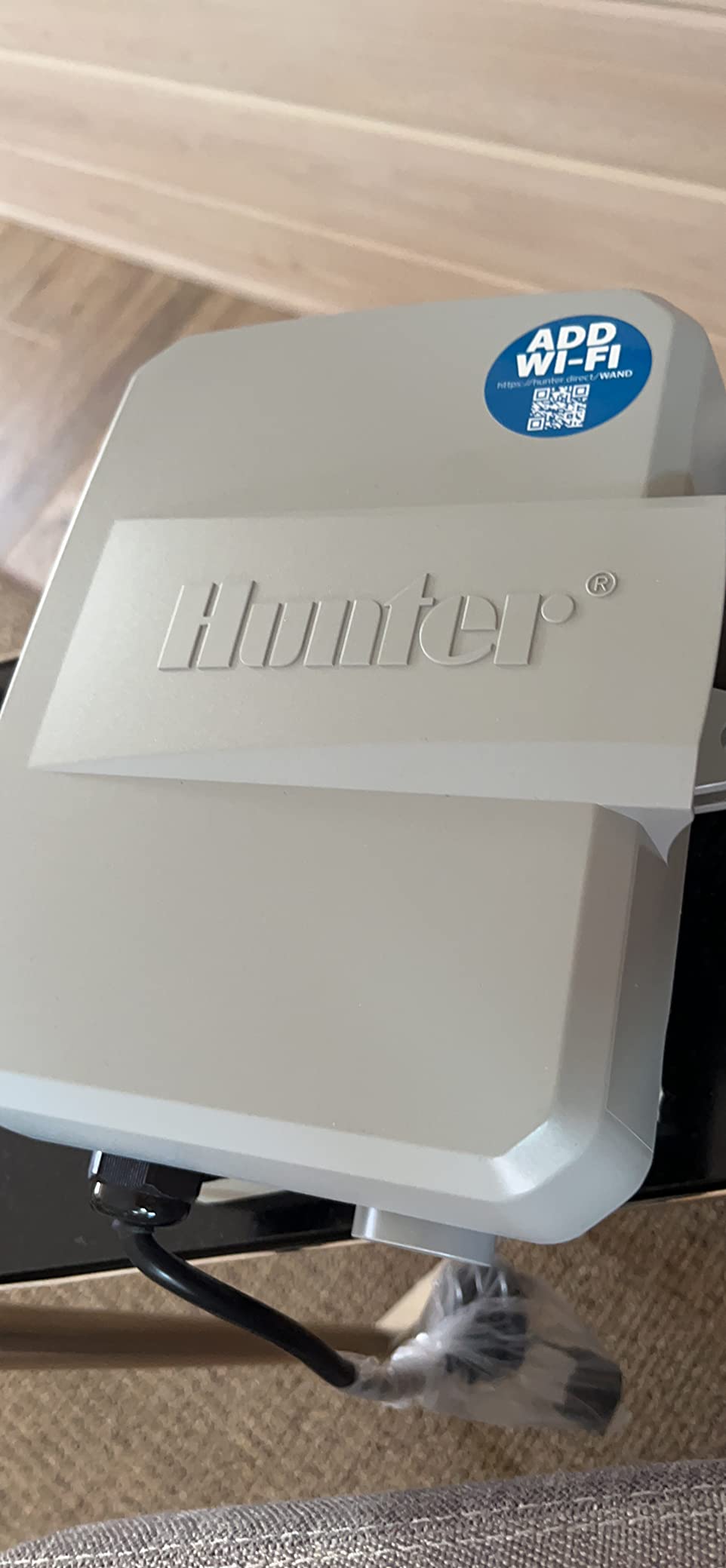
The X2 is the one to choose if you want drip automation without depending on a cloud service being reachable. The full schedule, including weather-based programming and seasonal adjustment, runs on the controller itself. The WAND module adds Wi-Fi only if you want remote access.
That inversion matters for irrigation specifically. A garden controller that stops watering because a server is down or a router changed is a worse outcome than having no automation at all, and this design removes that failure mode.
Cycle and Soak is built in, which puts it alongside the ImoLaza as the best cycle-and-soak options here. Three programs with four start times each give enough structure to split a long drip run into short bursts.
QuickCheck wiring fault detection reports a short or open circuit on a zone. That is the fastest way to find which bed line has failed when a zone refuses to run.
What to check before you buy it
The Wi-Fi module is extra hardware. If you buy the controller expecting smart home features out of the box, you will not have them until the module is installed and the Hydrawise account is set up.
It uses an external power plug rather than hardwiring, which some installers dislike, and the backup battery is not user replaceable. Owners also report some screen and power failures within a short ownership period.
Where it falls short for drip setups
It is a sprinkler platform that happens to drive valves, not a drip-first product. There is no flow sensing, so a cut line or a stuck emitter goes unreported, and eight zones is the ceiling.
If you want app-based remote control and leak alerts rather than just a reliable local schedule, one of the Wi-Fi-native controllers earlier in this list will serve you better.
How to Choose a Smart Sprinkler Controller for Drip Irrigation
Once you accept that any 24V valve controller can open a drip valve, the decision narrows to eight questions. Answer them in order and the right model usually becomes obvious. If your setup is mostly a large lawn with drip only on a couple of beds, our guide to sprinkler systems for large lawns covers the other half of the problem.
1. Zone count decides how many bed lines you can run separately
Count your independent drip lines before you count anything else, because this single number eliminates half the field. Four beds plus a hedge plus containers is six zones. A dozen-bed vegetable plot with a valve per row needs twelve.
You can also consolidate. Two beds on one valve watered together is perfectly normal if they need the same schedule, and vegetables often do. Twelve beds with different planting dates do not.
2. Cycle and soak matters more for drip than for spray
Cycle and soak splits a run into bursts with intervals between them. On clay, on slopes, or where emitter density is high, a single long cycle can sheet off the root zone before it absorbs. Two controllers in this group list it as a built-in feature, the ImoLaza and the Hunter X2, so if your soil is slow, weight those two heavily.
3. Run-time granularity in minutes, not hours
Drip run times are short by design. A bed line that needs forty minutes a day is normally run as several short cycles rather than one long one, so you need a controller that sets run times in minutes and lets you set multiple start times per day.
4. Controller placement: garage wall versus outdoor valve box
Decide where the manifold is before you pick the model. If it sits outside, buy a unit sold as indoor and outdoor or plan on a separate enclosure and a longer cable run. Three units here are described as weatherproof for outdoor installation, and the Hunter PRO-HC is built around an outdoor rated enclosure as standard.
5. Wi-Fi band and where the router actually reaches
Three of the units here are 2.4 GHz only, including both Orbit models in this roundup and the Rain Bird ESP-TM2. That is the more reliable band but the one less likely to reach the far end of a property. Put a mesh node or an access point near the manifold rather than relying on a single router, and confirm your network shows a 2.4 GHz SSID at all.
6. Hardwired valve controller versus smart hose timer
If you have a valve manifold with 24V solenoid valves, you need a hardwired controller. If you have only a spigot, you need a hose timer and nothing else will do the job. This is the most common mismatch in drip purchases, and no amount of app quality fixes it.
7. Rachio 3 versus Rain Bird ESP-TM2 for drip lines
Both appear in this roundup and both work on drip. The Rachio 3 wins on autonomous weather skipping, flexible schedule types and having no display requirement to worry about. The ESP-TM2 wins if you want to read and operate the schedule from the panel, hand the system to an irrigation contractor, or avoid depending on a cloud service.
Both are 8-zone units. Neither lists cycle and soak. If cycle and soak is non-negotiable on your soil, choose the ImoLaza or the Hunter X2 instead.
8. Drip run-time starting points by planting type
Emitters deliver water slowly, so run times that look absurd for a sprinkler are normal here. Start from the emitter output in gallons per hour, then verify with a catch container under the first few emitters before you commit to a schedule.
Shaded shrubs and trees need the least frequent watering and the longest soak intervals. Annual vegetables in raised beds need the most frequent cycles because their root systems are shallow. Containers dry out fastest of all because the soil volume is small, so they want short frequent cycles rather than long soaks.
A greenhouse or indoor grow area changes the problem again. Those systems usually run on a fixed short cycle with no rain skip at all, which is a case where a local schedule such as the Hunter X2 is simpler than a weather-driven one.
Frequently Asked Questions
What is the best controller for a drip irrigation system?
What is the best automatic water timer for drip irrigation?
Can I use a smart sprinkler controller for drip irrigation?
How many zones do I need for drip irrigation?
Is Rachio better than Rain Bird for drip lines?
Do smart sprinkler controllers need different settings for drip than for sprinklers?
Which Smart Controller Fits Your Drip System
For most people, the Orbit B-hyve Smart Sprinkler Controller, 6-Zone is the right starting point: it is the only unit here that explicitly supports drip systems, its case is rated for indoor and outdoor mounting, and six zones covers a realistic small-garden layout. If your rain-skipping needs to be completely hands-off, move up to the Rachio 3, 8-Zone.
Count your lines before you buy. Six zones handles most raised-bed setups, twelve handles a full vegetable plot, and if all you have is a spigot, no valve controller will help until you build a manifold. That is our pick for 2026, and it is the one we would install in our own garden.