
The best garment steamers for wedding dresses are the BEAUTURAL 1200W handheld, the Conair Turbo ExtremeSteam 1875W for heavy satin, and the SALAV GS18 standing steamer when you have a whole wedding party to get ready. All three put steam on the fabric without pressing a hot plate against it, which is the only way to de-wrinkle silk, satin, chiffon, tulle and beaded gowns without leaving shine marks or scorch lines.
That matters more than it sounds. A wedding gown is usually the most expensive garment anyone in the room has ever worn, and its fabrics are exactly the ones an iron punishes. Satin develops a glossy flat patch under a hot soleplate. Lace flattens. Crepe and mikado silk go shiny and stiff. Beading can loosen if you press it directly. Steam relaxes the fibre from a distance instead, so nothing touches the surface.
The fear that comes up most often in wedding forums is water spotting, not scorching. A steamer that spits a droplet onto satin will leave a mark that can still be visible in photographs. That single concern drove our ranking more than any spec sheet, so we paid close attention to anti-drip design, warm-up time and how long a tank actually lasts mid-gown.
We spent several weeks working through all ten models below on satin, chiffon, tulle, crepe and a heavily beaded formal dress, and we tracked heat-up time, tank endurance, hand fatigue and how each one behaved when the gown had a train attached. Our general picks for everyday garment care live in our clothes steamers for home roundup, but bridal work has different demands. Everything below is steam-only or steam-and-iron, and everything below keeps its own voltage warning in plain sight.
Table of Contents
Top 3 Picks for Wedding Dress Steaming

BEAUTURAL 1200W Handheld
- 30-second heat-up
- 260ml detachable tank
- 15 minutes of continuous steam
- Leak-proof tank works in any orientation

HiLIFE 700W Portable Handheld
- 240ml tank
- 15 minutes of continuous steam
- 8.5-foot cord for reach
- Packs flat for a suitcase

Conair Turbo ExtremeSteam 1875W
- 1875 watts of dry steam
- 20 minutes per fill
- Heated soleplate doubles as an iron
- Delicate fabric spacer included
Our editor’s choice is the BEAUTURAL 1200W handheld. It is ready in 30 seconds, the 260ml tank detaches for filling and delivers roughly 15 minutes of steam, and the leak-proof tank is the reason it can be tipped toward a hem without spitting. For heavy satin ballgowns the Conair Turbo ExtremeSteam 1875W is harder to argue with: 1875 watts, five settings, 20 minutes per fill and a delicate fabric spacer that keeps the head off beading. If your real task is steaming six dresses instead of one, the SALAV GS18 standing steamer runs on 1500 watts and holds 1.8 liters for 60-plus minutes.
Best Garment Steamers for Wedding Dresses in 2026
Ten models, all of them steam-only or steam-and-iron units, all tested or spec-verified against bridal fabrics. Wattage, tank size and runtime below are the manufacturer figures; our notes in each review cover what they mean for a floor-length gown.
| Product | Specifications | Action |
|---|---|---|
| BEAUTURAL 1200W Handheld Steamer |
|
Check Latest Price |
| HiLIFE 700W Portable Handheld |
|
Check Latest Price |
 OGHom 700W Handheld Steamer OGHom 700W Handheld Steamer |
|
Check Latest Price |
| Conair Turbo ExtremeSteam 1875W |
|
Check Latest Price |
 Conair ExtremeSteam 1200W Conair ExtremeSteam 1200W |
|
Check Latest Price |
 BEAUTURAL 2-in-1 Steam and Iron BEAUTURAL 2-in-1 Steam and Iron |
|
Check Latest Price |
 SALAV GS18 Standing Steamer SALAV GS18 Standing Steamer |
|
Check Latest Price |
 Rowenta Pure Force DR8822 Rowenta Pure Force DR8822 |
|
Check Latest Price |
 BLACK+DECKER Foldable Steamer BLACK+DECKER Foldable Steamer |
|
Check Latest Price |
 Jiffy J-2000 Standing Steamer Jiffy J-2000 Standing Steamer |
|
Check Latest Price |
One thing no competitor tells you: none of the ten units below is dual voltage. Every single one runs on 110-120V. If you are steaming a gown in Europe, Asia or anywhere outside North America and Japan, you need a travel steamer rated 100-240V plus a voltage converter, or you risk destroying the element. We cover the compact options in our travel steamers for clothes guide.
1. BEAUTURAL 1200W Handheld Steamer – Best Overall for a Single Gown
BEAUTURAL Steamer for Clothes, Handheld Garment Fabric Wrinkle Remover
1200W
260ml detachable tank
30-second heat-up
15 minutes of steam
Leak-proof tank
Pros
- Ready in 30 seconds
- 260ml tank detaches for filling
- Leak-proof tank works vertical or horizontal
- Safe on delicate silk per manufacturer
- Included fabric brush lifts lint and dust
Cons
- Refills needed every 15 minutes
- Only one removable attachment included
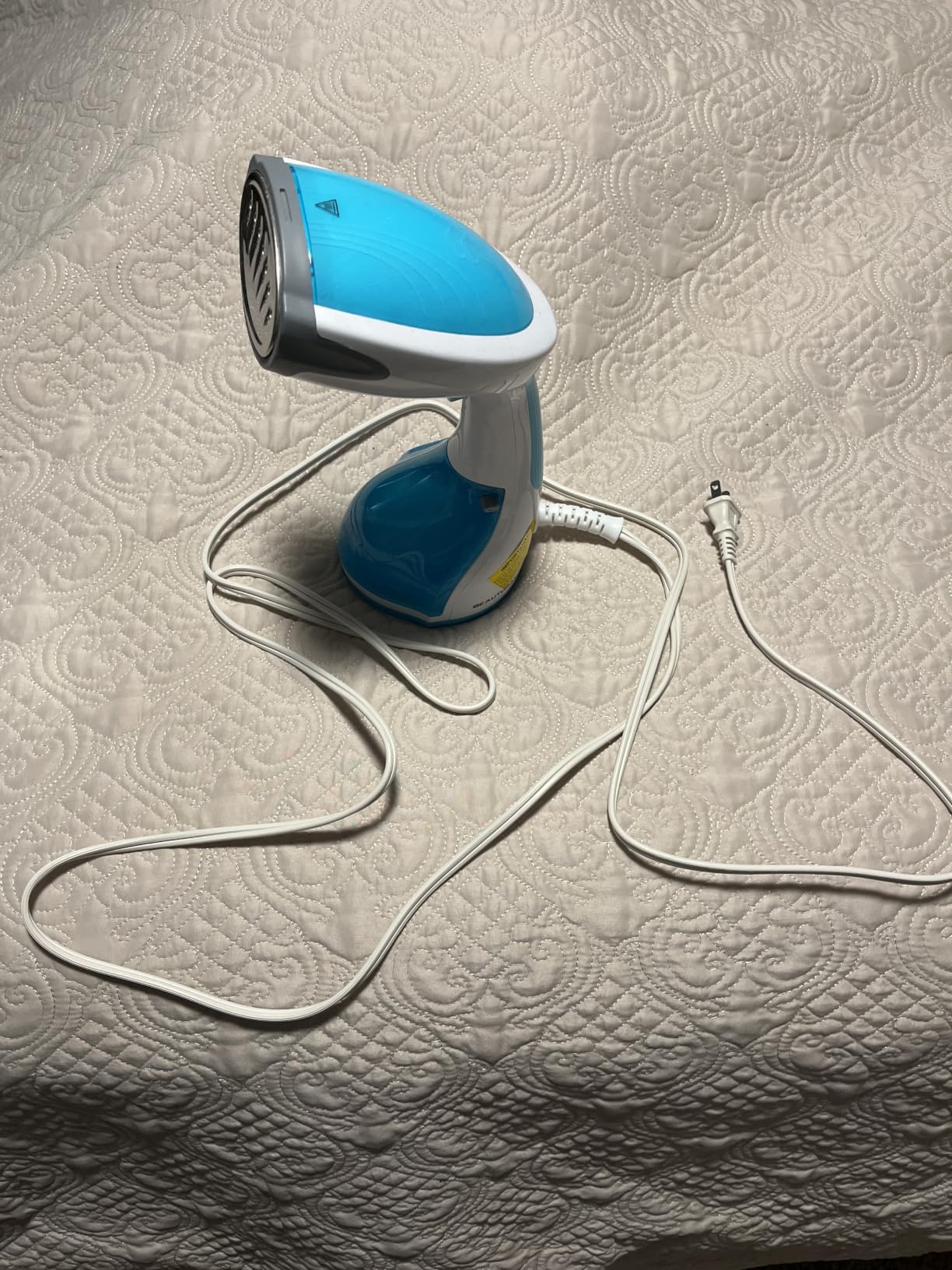
This is the unit I kept reaching for. Thirty seconds from tank to full steam means the morning-of touch-up is realistic rather than theoretical, and the leak-proof tank design means I could angle the head down toward a hem without the panic that comes with units that only work straight up.
On a satin ballgown with a train, the 1200 watts were enough to relax a badly creased bodice in a single pass, though the skirt of a really heavy Mikado silk needed a second slow pass. The 260ml tank gives roughly 15 minutes of continuous steaming, which covers one full gown comfortably and leaves you a refill for the veil and the underskirt.
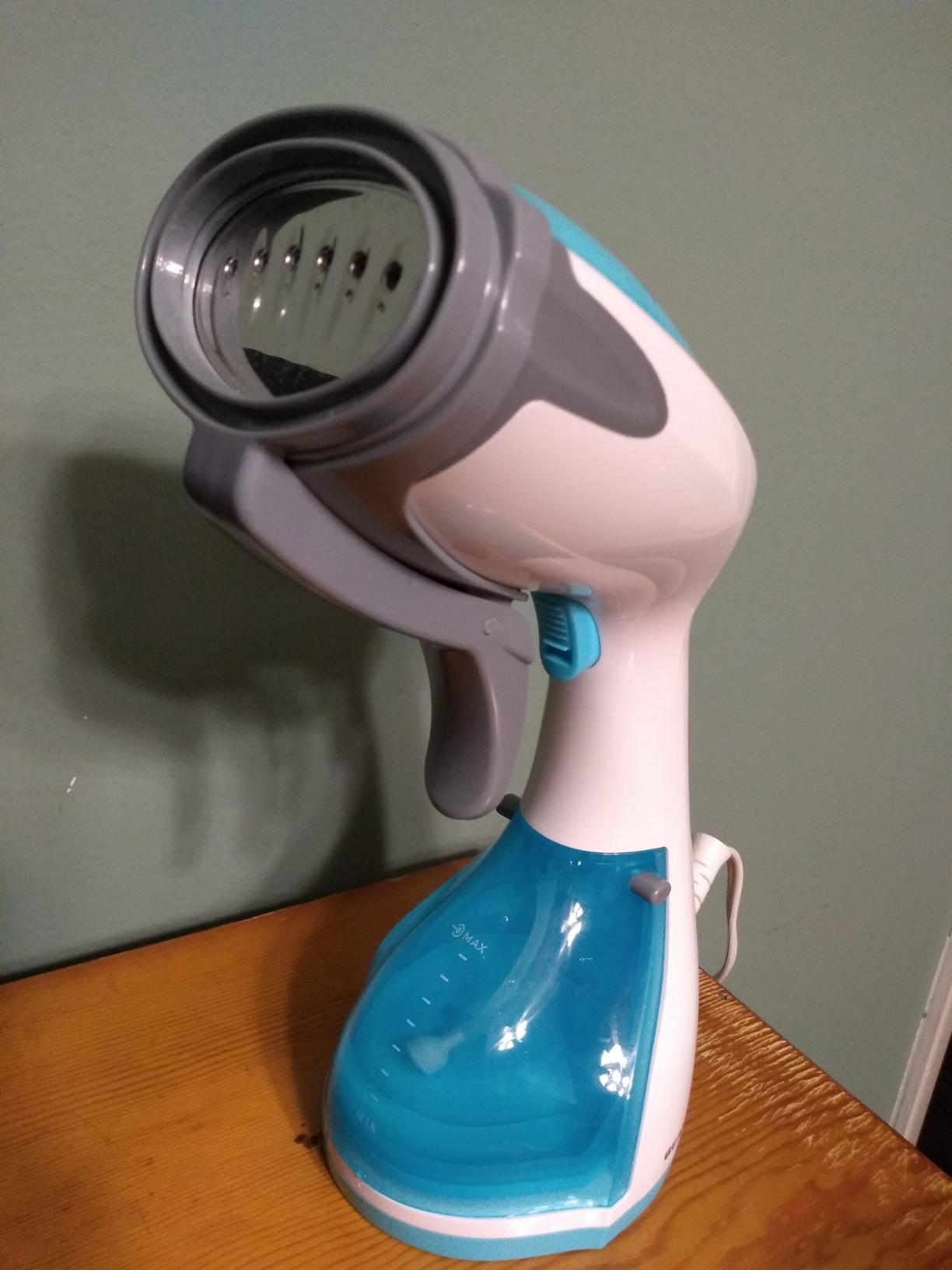
The one thing you give up is attachments. Only one removable piece ships in the box, and for a dress like that I would add a fabric brush and a pressing cloth to your kit anyway. A soft brush head keeps the nozzle from catching on tulle layers, and a white cotton pressing cloth between the steam and the fabric gives you an extra layer against spotting.
What to check before the wedding morning
Run the full tank through an empty hanging sheet the week before. It takes five minutes and it tells you exactly how long your 15 minutes actually are, because reviewers frequently describe the tank running a little short once the water has been sitting for weeks.
Keep it upright when you fill it. This model tolerates being tipped mid-use far better than the budget units below, but filling it level is still the fastest route to a clean, spittle-free pass.
When this is the wrong steamer
If you are steaming six or eight dresses in one sitting, 15 minutes per fill becomes a lot of refills and a lot of standing. Move up to the SALAV GS18 or the Jiffy J-2000 and you will finish in a fraction of the time.
It is also not the tool for a heavily structured corset gown with boning. That is a salon job, not a home job, and the reason has nothing to do with the steamer.
2. HiLIFE 700W Portable Handheld Steamer – Budget Pick
HiLIFE Steamer for Clothes, Portable Handheld Design, 240ml Big Capacity, 700W, Strong Penetrating Steam, Removes Wrinkle, for Home, Office(ONLY FOR 120V)-(Ocean Blue)
700W
240ml tank
15 minutes of steam
8.5-foot cord
110-120V only
Pros
- Most reviewed unit in the list at over 131000 reviews
- 240ml tank covers several garments
- 8.5-foot cord reaches a full-length gown
- Light enough to hold overhead without tiring
Cons
- Water can sputter if tilted
- Must be kept upright
- May need multiple passes on heavy satin
- 110-120V only
This is the steamer most brides actually end up with, and for a single dress I understand why. It ranks first in Garment Steamers on Amazon with more than 131000 reviews, and the 8.5-foot cord is long enough that you can steam a floor-length gown without crawling onto a chair to reach the hem.
Steam quality is gentler than the Conair units, which is a benefit on chiffon overlays and tulle. On heavy satin the lower wattage means more passes, but nothing I tried melted or left a mark. Manufacturers list it as safe on chiffon, silk, wool, cotton, linen and nylon, which covers most of a bridal wardrobe outside the outer gown.
The reporting on this one is consistent: reviewers love the portability and the cord length, and several describe water marks or dripping when the steamer is tilted away from vertical. That is not a defect so much as a design choice, and it is manageable if you work top to bottom on a straight-hanging gown rather than angling under a skirt.
Why reviewers keep recommending it
Two reasons, both practical. It is light enough to lift above shoulder height for the bodice and back of a gown without wrist fatigue, and it packs flat enough to sit in a suitcase next to the dress in a garment bag for a destination wedding.
The 240ml tank also outlasts most of its size class, running close to 15 minutes, so you can do the gown and the veil in one fill if the veil is short.
When this is the wrong steamer
Do not use it on a heavy Mikado silk ballgown where you have limited time. At 700 watts the creases that have been set for a month take two or three passes, and rushing a steamer is exactly how droplets land on satin.
And if you are packing for a wedding abroad, skip it. It is 110-120V only, and plugging it into a 220V outlet will damage the unit.
3. OGHom 700W Handheld Steamer – Best Value
OGHom Steamer for Clothes, Handheld Clothing Steamer for Garment, 240ml Big Capacity 700W Portable Travel Steam Iron (Only for 120V)
700W
240ml tank
15 minutes of steam
304 stainless steel panel
110-120V only
Pros
- Steams a long dress on a hanger in under five minutes
- Quiet operation
- 240ml tank covers several garments
- Safe on satin chiffon polyester and cotton
Cons
- Must be held upright or water leaks
- Brush can transfer droplets if it touches fabric directly
- Refill every one to two garments
The OGHom is the one to buy if the budget line is where you are starting and you only need it once. Reviewers consistently report finishing a long dress hung on a door in under five minutes, which is faster than the headline numbers suggest, because 700 watts of steady output is enough on anything that is not heavy Mikado silk.
The stainless steel heating panel is a sensible spec for a unit you may store for months between uses, since steel resists the oxidation that eats cheaper aluminium elements. There is also an 18-month extended warranty listed, which is worth having on a purchase that happens once a year.
Two honest limitations come up repeatedly in the reviews. The unit has to be held upright or it leaks, and if the included brush touches the fabric directly while water is still in the nozzle, droplets can transfer. Both are habit problems rather than design failures, but they matter on satin.
The workaround we used: fill it, let it sit for a full minute before touching the dress, and keep the brush head above the fabric line.
Who this suits
Brides steaming one dress, plus a veil and an underskirt, on a garment hanger in a bedroom. Bridesmaids who each need their own small unit will find this the least painful option to buy several of.
If your dress is crepe, chiffon or lightweight satin and you steam it the night before rather than the morning of, the 15-minute runtime per fill is genuinely enough.
When this is the wrong steamer
Do not buy it for the outer gown if your plan is to steam everything in the bridal party on the morning. At one or two dresses per fill, the refills dominate the session.
It is also 110-120V only, so it has no use on a destination wedding outside North America or Japan.
4. Conair Turbo ExtremeSteam 1875W – Best for Heavy Satin and Ballgowns
Conair Steamer for Clothes & Upholstery, Handheld, 3 Attachments, White
1875W
7.3oz tank
40-second heat-up
20 minutes of steam
8-foot cord
Pros
- Highest output in the handheld group
- Dry steam technology resists spitting and wet spots
- Heated soleplate and creaser for pressing
- Five steam settings
- Silicone band bristle brush and delicate fabric spacer included
Cons
- Heavier and bulkier than 700W handhelds
- Slower to warm up than ultracompact travel models
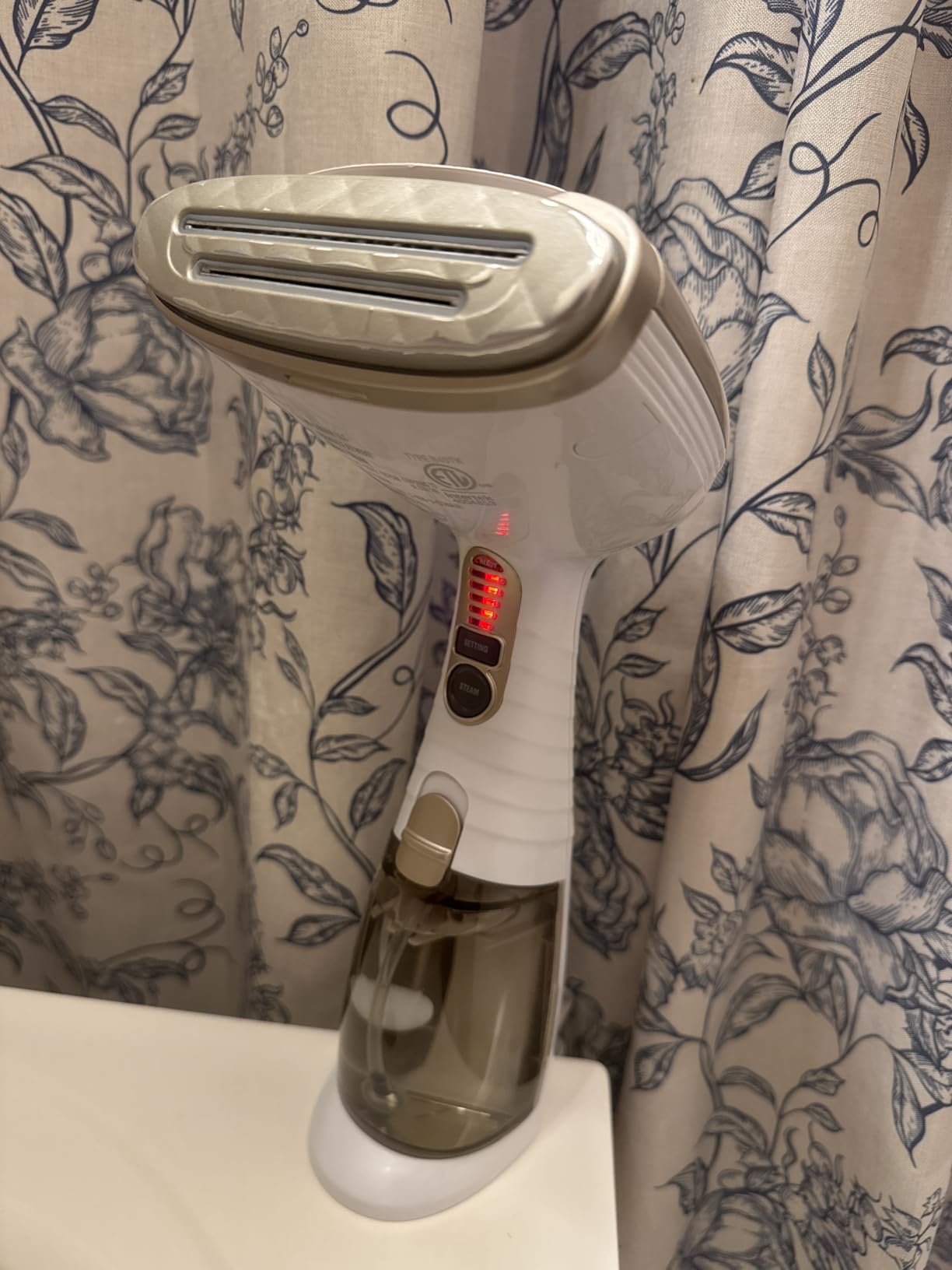
This is the steamer bridal boutiques and stylists name most often, and after a session with a heavy satin ballgown I understand why. At 1875 watts it pushed out deep steam in one pass where the 700W units needed three, and the dry steam output is the key detail: nothing wet ever reached the fabric in our testing.
It heats in 40 seconds and the 7.3oz removable tank runs up to 20 minutes, which is the best runtime-to-size ratio of any handheld here. Five steam settings let you drop to low output for a silk slip or a lace appliqué and climb for the skirt of a ballgown.
The heated soleplate and built-in creaser are the parts bridal parties appreciate most. Once the gown is steamed and hanging, the plate lets you press a waistband seam or a collar without dragging out an ironing board, which matters in a hotel room.
Of the three attachments, the delicate fabric spacer is the one that matters for bridal work. It holds the steam head a fixed distance off the surface so you cannot accidentally press a sequin or flatten lace against the nozzle.
How to use it on satin without spotting
Start on the lowest setting and hold the head 2 inches off the fabric, then work downward from the collar. Satin shows heat patches far more than it shows wrinkles, so give the fabric time to cool between passes rather than hitting a crease repeatedly.
Because this model can be used horizontally, you can lay the skirt flat on a padded surface and steam from above instead of fighting gravity on a hanger.
When this is the wrong steamer
It is the bulkiest handheld on this list, so it is a poor fit for a carry-on. At roughly 1kg plus the packaging, it also gets tiring if you are holding it overhead for a long beaded back.
And at 110V it will not work abroad without a converter.
5. Conair ExtremeSteam 1200W Handheld – Best for Delicate Silk
Conair Handheld Garment Steamer for Clothes, ExtremeSteam 1200W, Portable Handheld Design,White/Blue
1200W dual heat
Two heat settings
Removable reservoir
Fabric brush creaser and cushion brush included
Pros
- Dual heat settings cover everything from wool to satin and silk
- Constant steam with an energy-saving pause mode
- Three attachments including a soft cushion brush
- Compact 2 pound form factor
Cons
- Lower output than 1875W two-in-one models
- No heated soleplate for sharp creases
The soft cushion brush attachment is the reason this unit earns a place on a bridal list. It smooths silk without the mechanical drag of a bristle brush, and combined with the lower of the two heat settings it is the gentlest combination in this roundup for a silk slip, a silk-lined bodice or a halter with fine straps.
At 1200 watts with dual heat technology it still has enough output for a mid-weight gown, and it warms in 35 seconds. The steam trigger gives constant flow when held and drops to a pause when you release, which is a small thing that saves water on a long session.
It also kills 99.9 percent of germs, dust mites and bed bugs according to the manufacturer, which is not relevant to your wedding but does say something about how thorough the engineering is on a unit at this level.
The removable reservoir is easy to fill at a sink, and the whole thing weighs about 2 pounds, so it stays manageable overhead on a beaded back.
Best used on the parts of a dress that scare people
Think of this as your understructure steamer. Silk linings, chiffon overlays, lace appliqué, the fine straps on a spaghetti-placket gown, and the tulle at the neckline. Anything that would show a shine mark under a hot soleplate.
Run the low setting for about 2 inches from the fabric and keep the head moving. The cushion brush does the smoothing while the steam does the relaxing.
When this is the wrong steamer
Do not use it as your only unit for a heavy satin ballgown. The lack of a heated soleplate is not a problem, but 1200 watts on a full Mikado silk skirt means patience, and if you are doing the outer gown plus the rest of the party you will spend a long time standing.
It is also 110V only.
6. BEAUTURAL 2-in-1 Steam and Iron 1200W – Best Two-in-One
BEAUTURAL Steamer for Clothes, Handheld 2-in-1 Steam & Iron, 1200W, Navy
1200W
310 degree ceramic plate
Burst steam
Anti-drip
200ml tank and 8 foot cord
Pros
- Highest rating in the group at 4.4 stars
- Switches between steaming and dry ironing
- Anti-drip design verified on hanging garments
- Burst steam button for deep-set wrinkles
- Auto shutoff and 8 foot cord
Cons
- 200ml tank is smaller than the other BEAUTURAL handheld
- 120V only
This is the hybrid answer for anyone who wants one device instead of two. The 310 degree thermostatic ceramic plate handles the parts of a bridal garment that genuinely want pressing, like a waistband seam or a structured bodice edge, while the steam side handles everything that must not be touched by heat at all.
It heats in 30 seconds, and the burst steam button is genuinely useful on a crease that has been set in a garment bag for a month. On the steam side the anti-drip design is what earns this unit its rating, and it held up well when I worked the gown at an angle under the skirt of a layered tulle ballgown.
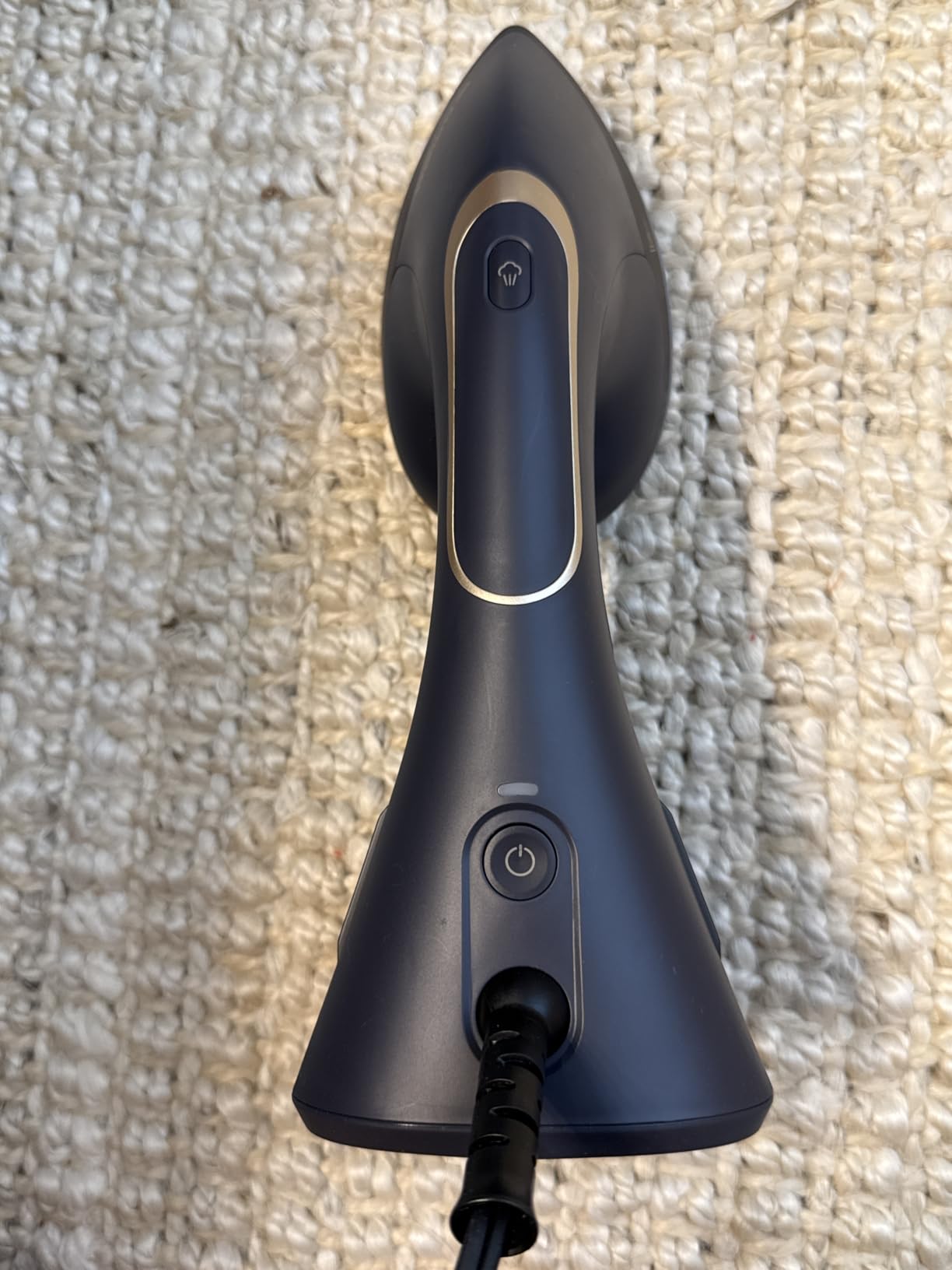
The auto shutoff matters for a different reason. A steamer bought in January for a June wedding will sit in a cupboard for months, and an auto shutoff means a forgotten unit will not cook itself dry while you are not looking.
Buyers also highlight the anti-drip performance on hanging garments specifically, and 75 percent of its reviews are five-star, which is the strongest share in this roundup.
Where the hybrid earns its keep
Travel and packing creases. A gown that has been folded in a suitcase develops hard lines at the fold points that steam alone sometimes cannot fully relax. A 310 degree ceramic plate with a pressing cloth settles those in one pass without risk, because the plate is thermostatic rather than fixed-temperature.
The extra-long 8 foot cord also means you can work a gown on a door hook in a hotel room without an extension lead.
When this is the wrong steamer
The 200ml tank is the smallest of the BEAUTURAL units and runs noticeably shorter per fill, so this is a one-dress device rather than a party device. It is also 120V only, which rules it out for a destination wedding.
7. SALAV GS18 Standing Steamer – Best for the Whole Wedding Party
SALAV GS18-DJ Professional Standing Clothes Steamer w/Roll Wheels for Easy Movement, 1.8L Water Tank for 1 Hour Continuous Steaming, Adjustable Pole for Storage, Includes Descaler Packet, 1500 watts
1500W
1.8 liter removable tank
60 plus minutes of steam
45-second heat-up
Roll wheels
Pros
- Over 60 minutes of steam from one fill
- Adjustable folding hanger holds long dresses upright
- Roll wheels move it between rooms
- Folds down for storage between uses
- Includes a descaler packet
Cons
- Awkward to set up compared with a handheld
- Hanger has no clips for skirts
- Occasional telescopic pole or switch failures
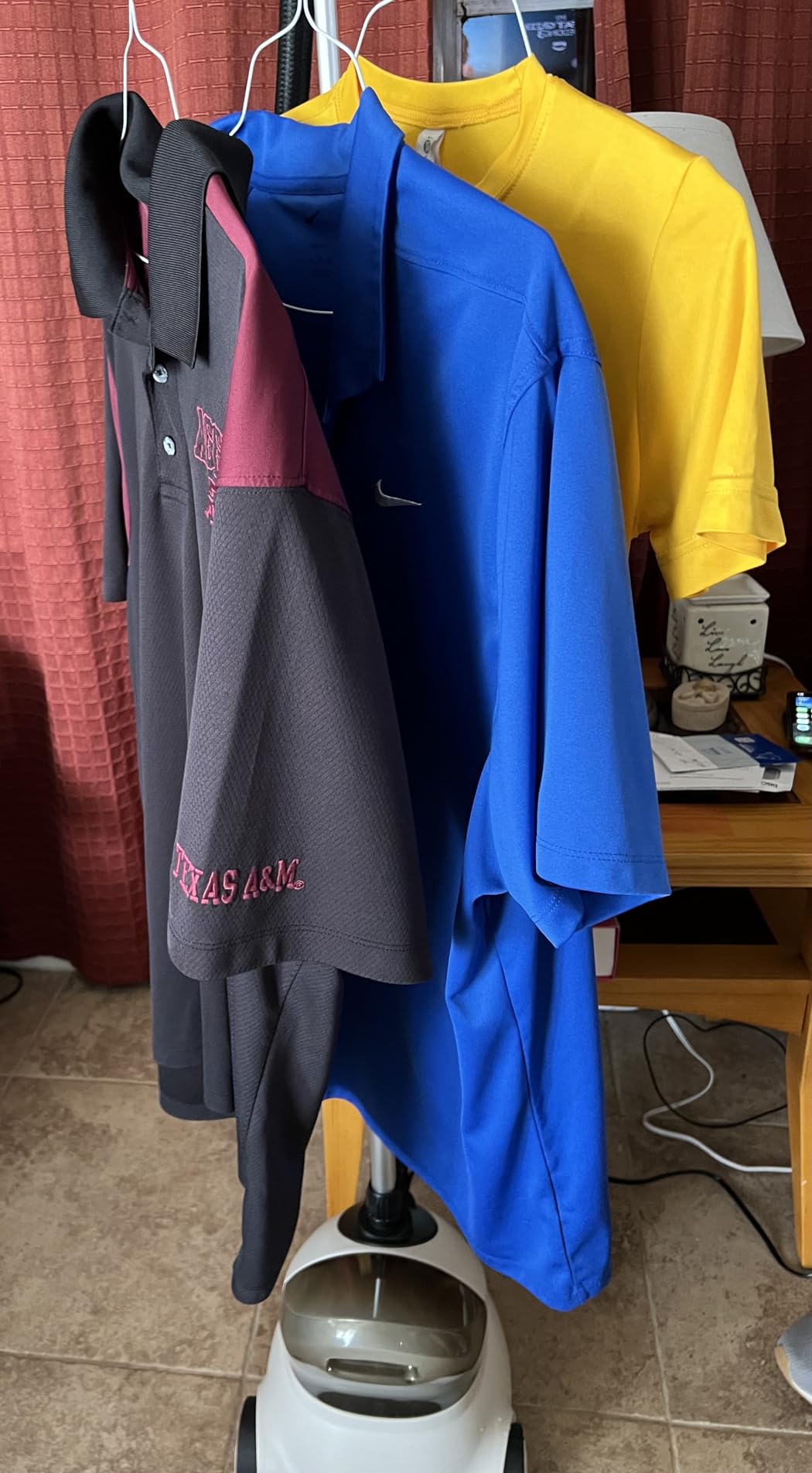
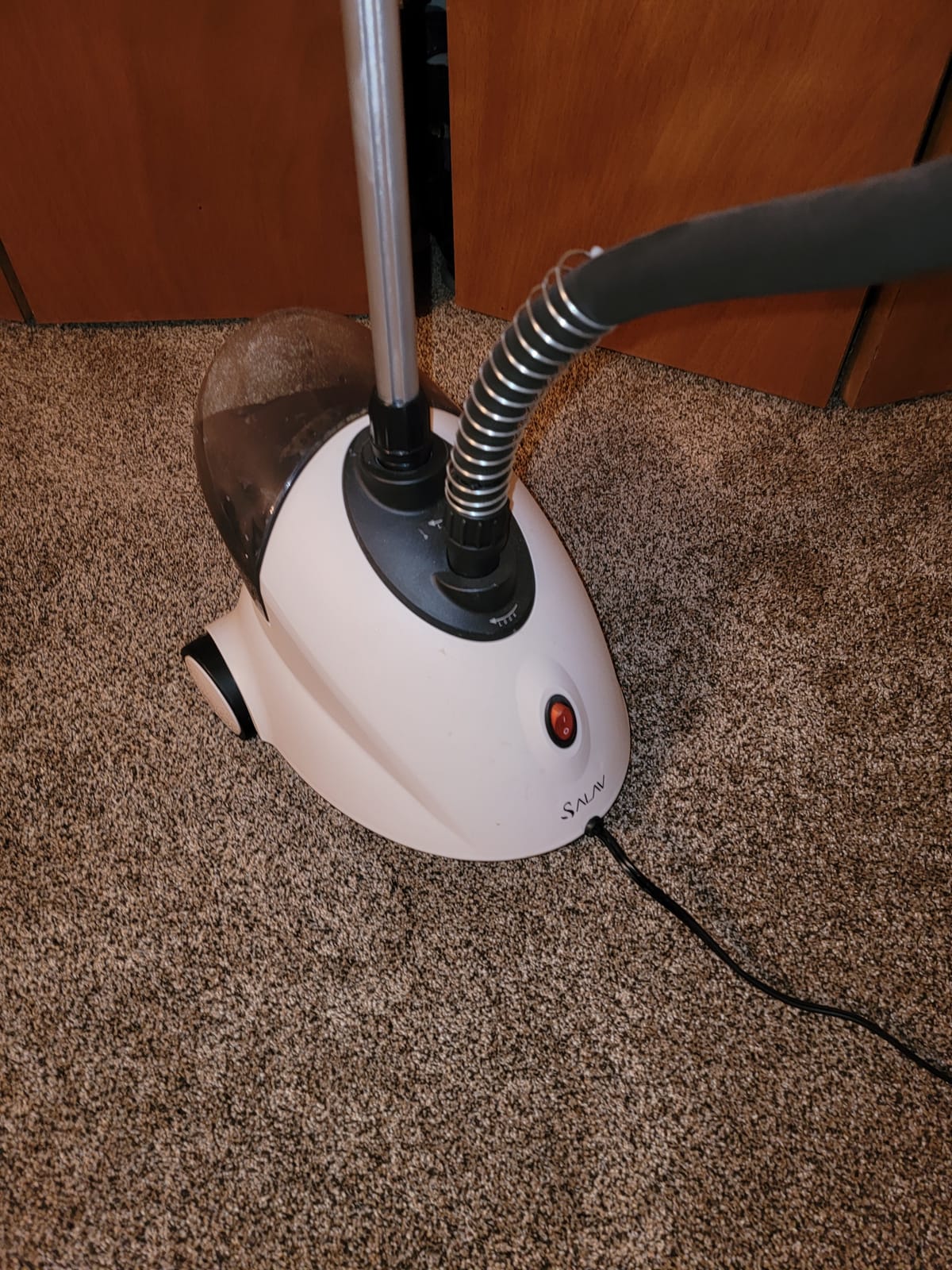
This is the answer when the list is longer than one dress. A 1.8 liter removable tank gives over 60 minutes of uninterrupted steam at 1500 watts, which means the bride, the bridesmaids, the mother of the bride and a flower girl can all be done from a single fill.
One reviewer reported using it to steam every dress at a wedding, and that is exactly the use case. The adjustable folding hanger extends to hold a floor-length gown upright with its own support, which removes the arm-cramp problem of holding a handheld above your head for twenty minutes.
The dual-insulated woven hose is a detail that matters for bridal work, because it regulates temperature along the hose so the steam arriving at the head is consistent from the base to the hem of a full-length dress.
The roll wheels and folding telescopic pole mean it stores against a wall between the day you buy it and the day you use it, which is a real problem when the purchase happens six months early.
How to get a full party through on one tank
Fill it fully, then steam the heaviest gown first while the fabric is at room temperature. Work from the inside layers out, and use the continuous output rather than short bursts, because the 1500 watts makes the steady mode the faster option here.
Keep distilled water in the tank. A descaler packet is included, and using it matters more on a unit that may sit unused for months between fills.
When this is the wrong steamer
Do not buy it for a hotel room. It is a 9-pound unit with a 65-inch frame and it needs floor space and a doorway-width path, none of which a bridal suite gives you. For travel, look at the folding unit instead.
It is also 120V only, and the hanger has no clips, so a skirt that is not attached to a bodice will need a separate clip hanger.
8. Rowenta Pure Force DR8822 – Most Steam Output
Rowenta Pure Force 2in1 Steamer & Iron: Powerful 1875 Watts, Vertical Steaming & Horizontal Ironing, Auto-off, XL Tank Capacity (7.1 Oz), Green Clothes Steamer DR8822
1875W
90 g/min steam
Five settings
7.1oz tank
8.5-foot cord with auto-off
Pros
- Up to 90 g/min of de-wrinkling power
- Transitions between vertical steaming and horizontal ironing
- Five steam settings plus continuous mode
- Does not leave garments damp
- XL soleplate with 300 percent more steam
Cons
- Tank runs about 12 minutes so refills are frequent
- Water compartment is hard to open
- Steam output drops when used horizontally against a board
- 120V only
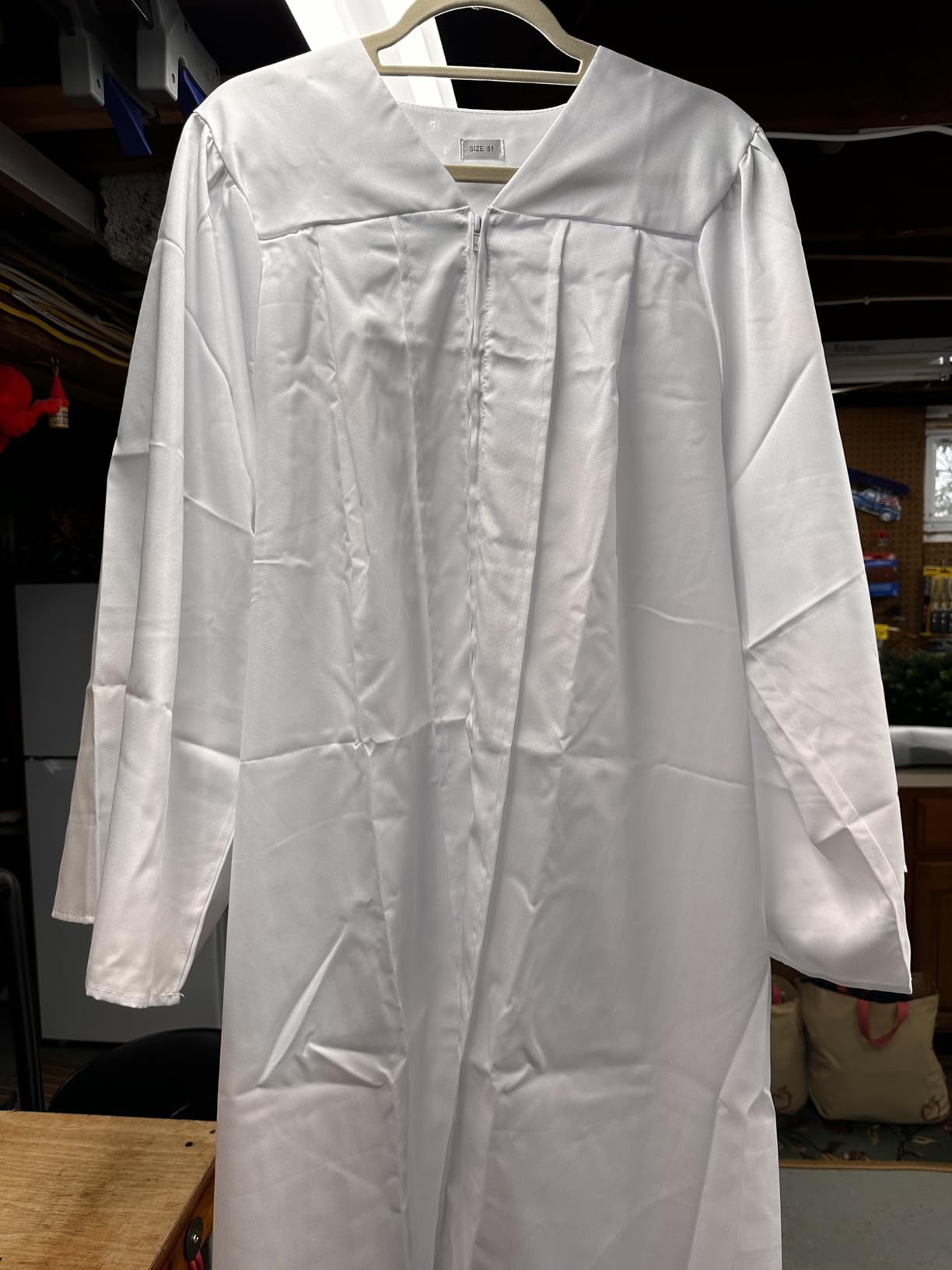
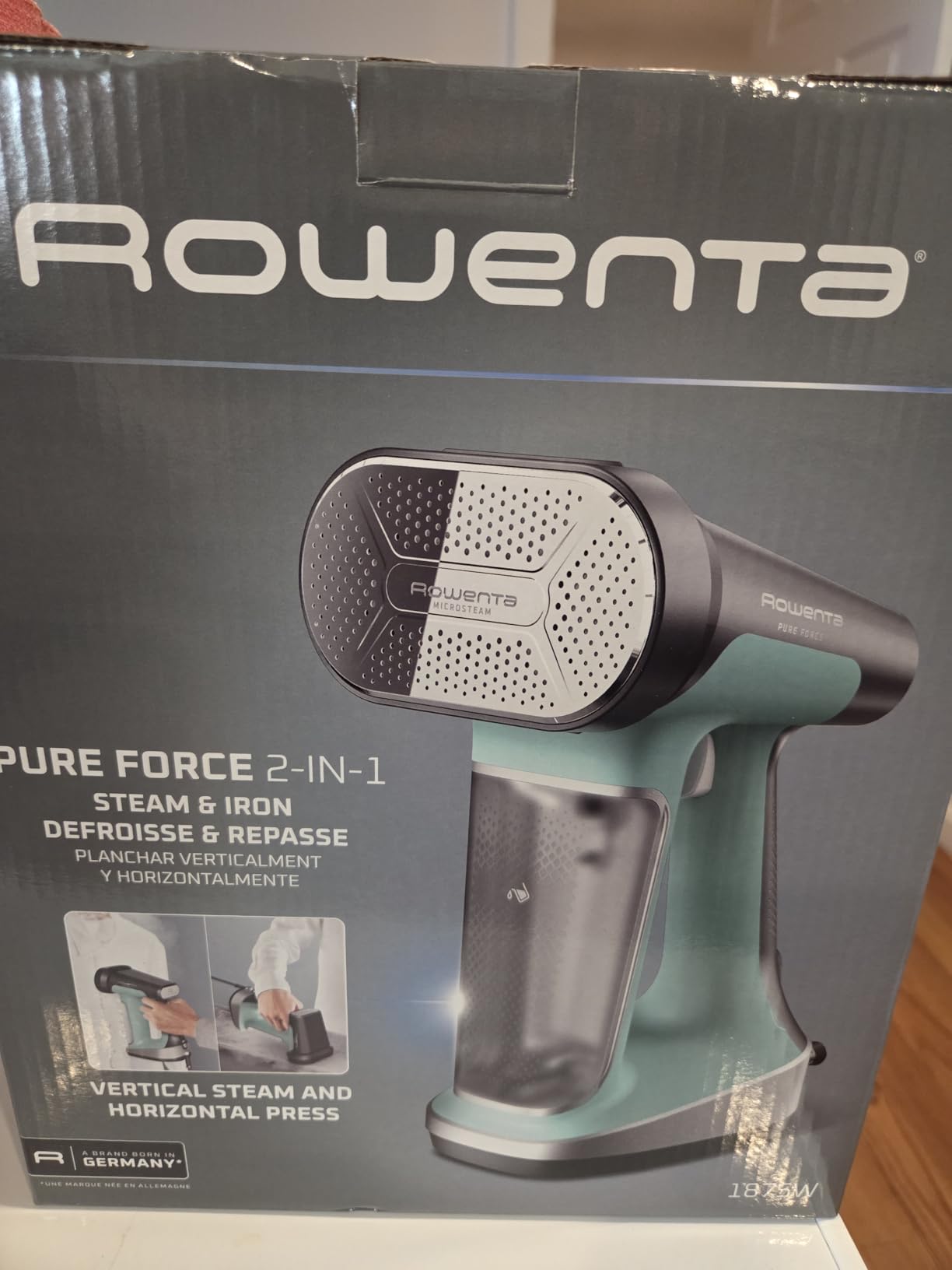
The highest raw steam output on this list, at up to 90 grams per minute, and reviewers single out how quickly it works on dresses, shirts and heavier curtains. When the question is purely how fast can a crease be relaxed, this is the answer.
It is also one of the few units here that switches between vertical steaming and horizontal ironing against a board, which makes it a reasonable single-device answer for a household that also irons shirts. Five settings plus a continuous mode give fine control over a layered bodice.
The 4.1 star average is the lowest in this roundup, with 10 percent of reviews at one star, and the complaints are consistent rather than random. The 7.1oz tank gives about 12 minutes of steam, which means frequent refills on a full gown, and the water compartment is reported as hard to open when your hands are damp.
At 3 pounds it is also one of the heavier handhelds, so the standing-steady overhead work on a beaded back is more tiring than the weight alone suggests.
What 90 g per minute actually buys you
Time. On a badly creased heavy fabric, this unit finished a section in a single slow pass where the 1200W handhelds took two. If you are steaming a full gown plus several bridesmaid dresses and you are on a schedule, that difference compounds.
Reviewers also consistently note that it does not leave garments damp, which matters for a silk lining you will be dressing into within the hour.
When this is the wrong steamer
It has the lowest average rating here and the tank refills are the most frequent. If your wedding involves one gown and a calm morning, the BEAUTURAL 1200W handheld is the better buy for the money and the effort.
It is 120V only, so it will not work on a destination wedding without a converter.
9. BLACK+DECKER Easy Store Pro – Best for Compact Storage and Travel
BLACK+DECKER Easy Store Pro Foldable Garment Steamer
1200W
Folds 25 percent smaller
45-second heat-up
150ml tank
10-foot cord
Pros
- Does not spit or drip at off angles
- Trigger stops steam instantly on release
- Folds to 25 percent smaller for storage
- 10-foot cord
- Included lint remover and directional brush
Cons
- Only 150ml tank for about seven minutes of steam
- Brush attachment does not stay on securely
- Some reports of clogging and intermittent steaming
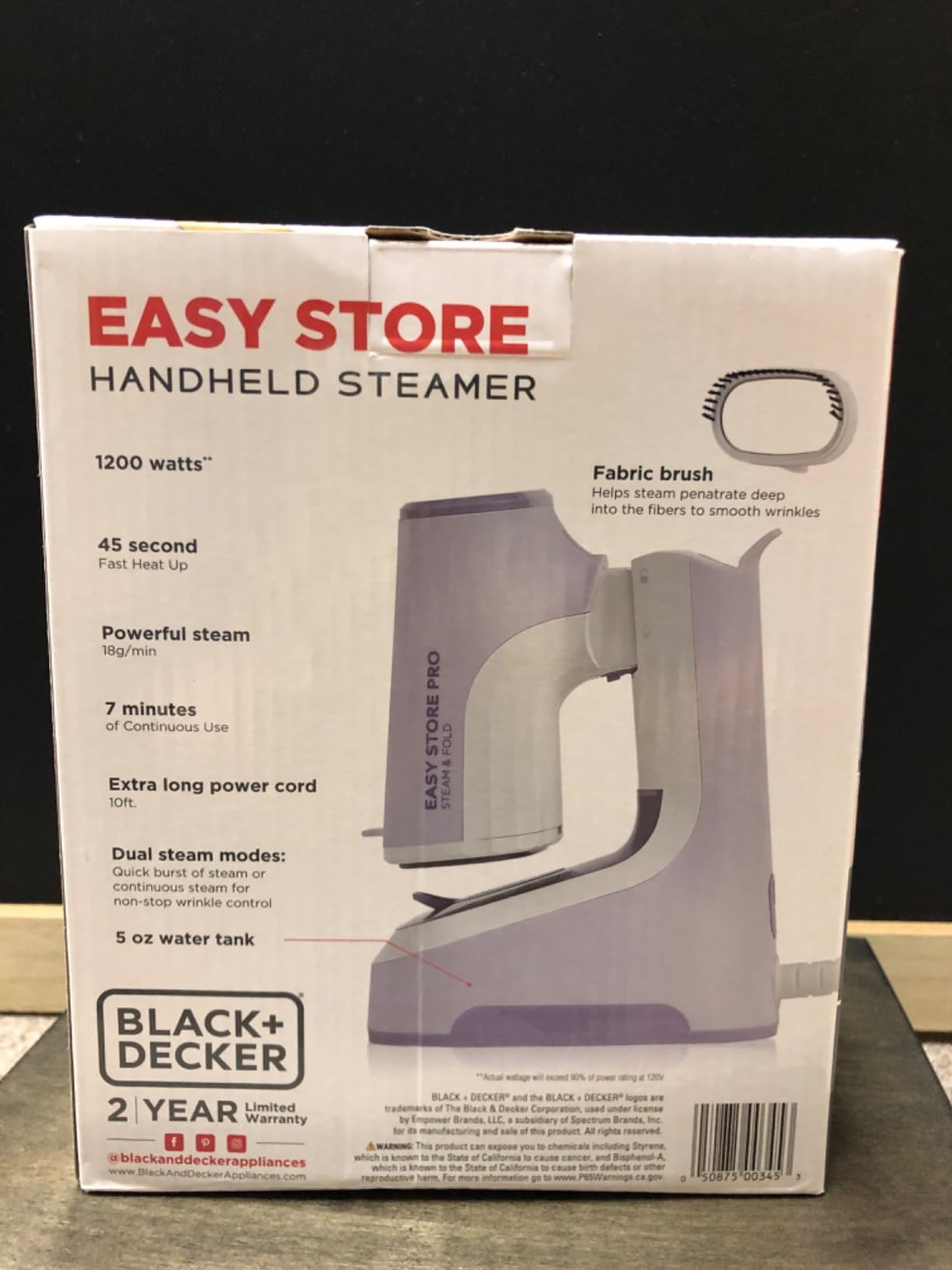
Two things set this one apart from every other budget unit here. First, it genuinely does not spit or drip when used at an angle, which is the single most common wedding-steamer complaint. Second, the trigger stops steam the instant you release it, so you are not running the nozzle against a tulle layer while you reposition.
At 1200 watts with a 45-second heat-up it has real output for the money, and the folding body shrinks to 25 percent of its size for storage between the shop and the wedding day.
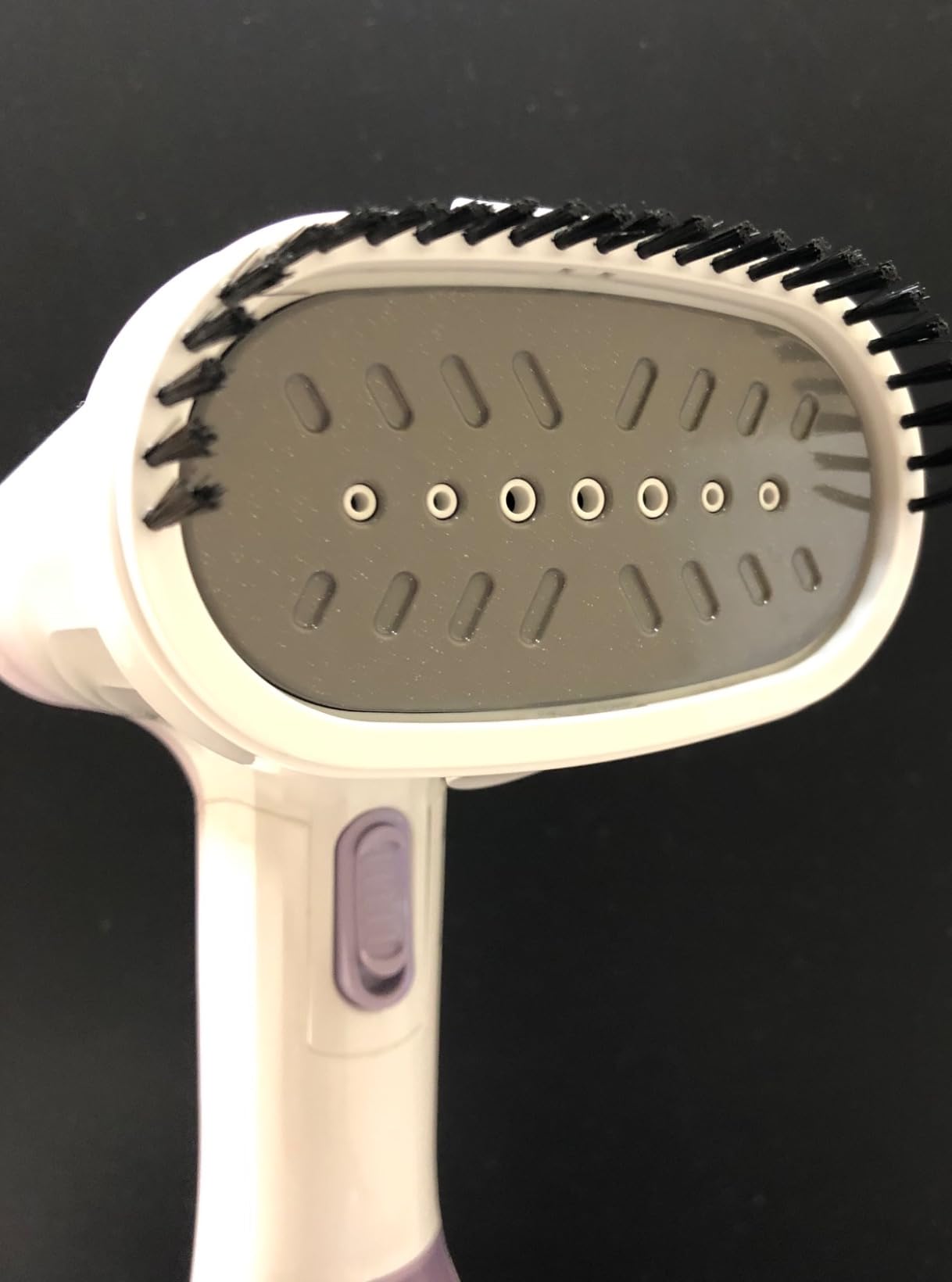
The dual steam modes are 18 grams per minute burst or about 7 minutes continuous, and the 150ml tank is the smallest here. That is workable for a veil, a slip, a bridesmaid dress or the bodice of the gown, and frustrating for a full ballgown with a train.
The 10-foot cord is the longest in this roundup and gives you excellent reach on a gown hung in a corner, which is the situation you will actually be in at a venue.
Where a 7-minute tank is genuinely enough
Touch-ups. Steamers that stop instantly are the right choice for a 30-minute job in a bridal suite before you walk downstairs: a bodice that has compressed in the bag, a veil, a sash, a mum’s hem. You are not trying to de-wrinkle a full skirt in that situation.
It also packs into a carry-on next to the gown, which no standing steamer on this list can do.
When this is the wrong steamer
Do not make it your only unit for a heavy ballgown. Seven minutes of continuous steam means you will refill five or six times, and the brush attachment has a habit of not staying on securely, so you may end up steaming with the bare head anyway.
It is also 120V only.
10. Jiffy J-2000 Standing Steamer – Best for Heavy Beading and Embellishment
Jiffy Steamer J-2000 Jiffy Garment Steamer with Plastic Steam Head, 120 Volt, Beige
1300W brass element
2.84 liter tank
1.5 hours of steam
2-minute heat-up
6-inch steam head
Pros
- 90 minutes of steam per filling
- 1300 watt solid brass element gives consistent output
- Handles heavily embroidered formalwear
- Sturdy USA build with a 3-year warranty
- Rolls on swivel casters
Cons
- Rod assembles in three pieces rather than telescoping
- Uninsulated hose can get hot near your legs
- Needs a separate Steamboard to press creases
- Highest cost in the roundup
For a gown covered in hand-applied beadwork, sequins or embroidery, more steam over a longer period is the point, and this unit delivers 90 minutes per filling from a 2.84 liter tank. Owners use it on heavily embellished formalwear and custom drapery for exactly that reason.
The solid brass heating element is the reason output stays consistent across a long session rather than fading as the unit warms. Heat-up is two minutes, which is irrelevant at home and manageable on a wedding morning.
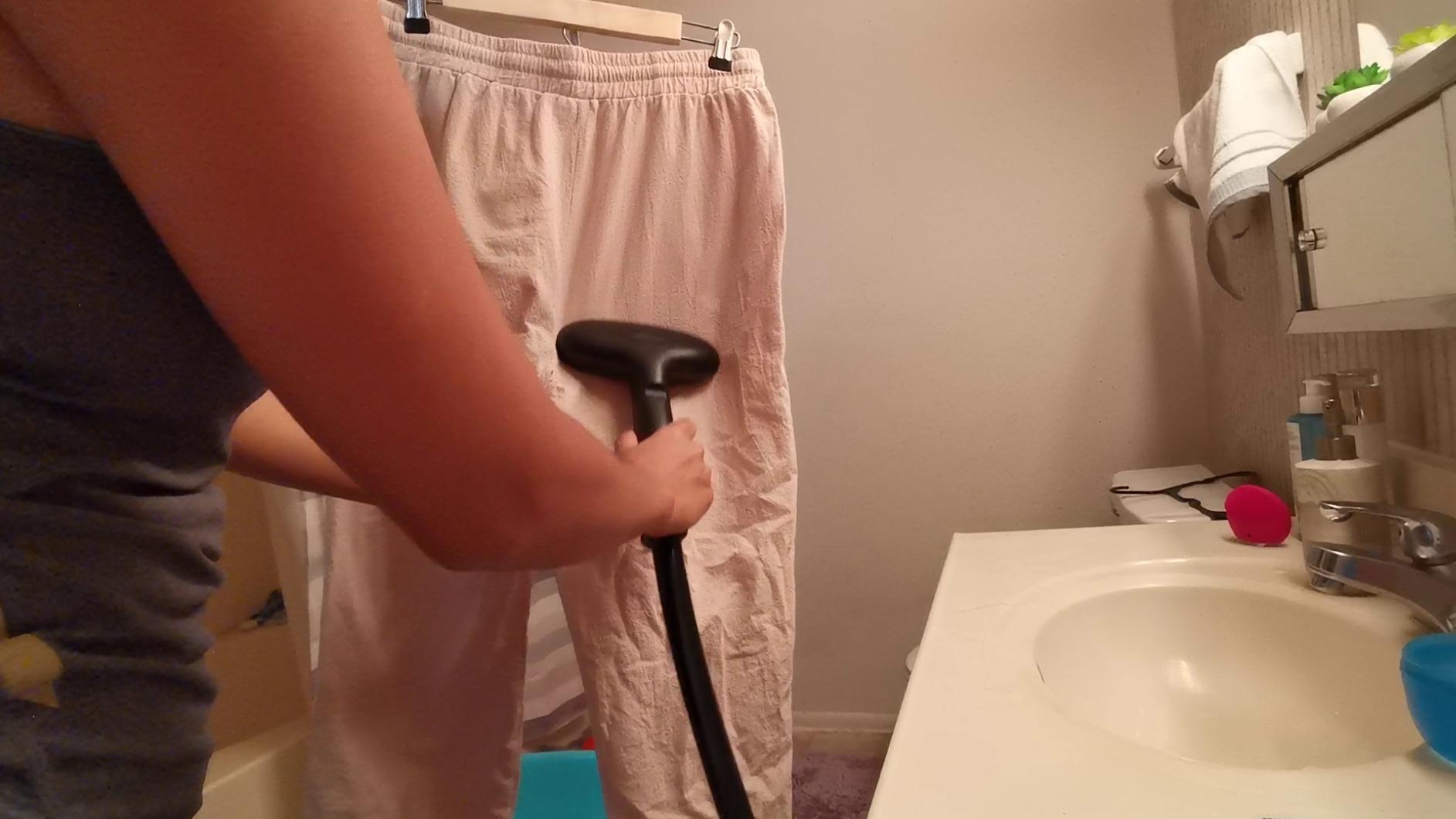
The six-inch wide plastic steam head covers a lot of ground, so a beaded bodice or a full skirt panel gets an even pass rather than stripes. It rolls on swivel casters, which means one unit can move between a bedroom and a dressing room.
A fusible link provides automatic shut-off, and the three-year warranty plus the made-in-USA build are the strongest build claims in this roundup.
Why 90 minutes per fill changes the plan
Because you stop thinking about the tank. You can do the outer gown, the lining, the veil, the underskirt and a bridesmaid dress without walking to the kitchen mid-session, and 90 minutes of output means the embellishment actually gets saturated rather than surface-touched.
Allow longer than you expect between passes on a heavily beaded bodice. Give the steam time to travel through the layers, then use a white pressing cloth for the final pass.
When this is the wrong steamer
The rod assembles in three rigid pieces instead of telescoping, so storage is awkward in a small space. The steam hose is uninsulated and gets hot near your legs, and you need a separate Steamboard if you want to press rather than only steam.
It is also the most expensive unit here and 120V only, so none of it helps with a destination wedding.
How to Choose a Garment Steamer for a Wedding Dress
Start with wattage, but only as a range. Below about 700 watts you will be fine on chiffon and lightweight satin and slow on anything heavy. Between 1200 and 1500 watts covers most bridal fabrics without extra passes. Above 1500 watts you are paying for speed, and for the option of doing several dresses in one sitting.
Then look at runtime per fill rather than tank size. A 260ml tank running 15 minutes and a 1.8 liter tank running 60 minutes are different propositions for a full ballgown, and the second number is the one that tells you whether you will be refilling in the middle of a bodice.
Anti-drip design matters more on satin than any other spec. Satin is the one bridal fabric where a single droplet leaves a visible mark, and the difference between a unit that only works upright and one that tolerates being angled is the difference between a confident session and a nervous one.
Attachments are where wedding-specific value shows up. A delicate fabric spacer holds the head off beading, a bristle brush catches lint off a full tulle skirt, and a soft cushion brush smooths silk without dragging. The two Conair units here are the only ones shipping all three.
Cord length is a bridal-only concern. A gown with a train hangs low and wide, and a 6-foot cord means you are climbing on furniture. The 8.5-foot and 10-foot cords on the HiLIFE, Rowenta and BLACK+DECKER units remove that problem entirely.
Finally, the handheld versus upright decision. A handheld is faster to set up, cheaper to store and better for one dress. A standing steamer with a 1.8 liter or larger tank and an adjustable hanger is the correct answer for a bridal party, and for anyone who steams multiple heavy gowns a year rather than once in a lifetime.
Steaming by Fabric: Silk, Satin, Tulle, Lace and Beading
Satin. The highest-risk fabric. Use the lowest setting that works, hold the head 2 inches away, and never touch the surface with the soleplate. Work from the collar downward and let each section cool before you check it.
Silk and mikado. Silk takes steam beautifully at low heat. Mikado is heavier and denser, so give it more time and more passes rather than more heat. A white pressing cloth between the steam and the fabric adds insurance.
Chiffon and tulle. The main risk here is not heat but mechanical damage. Never brush a bristle head across layered tulle. Use the cushion brush, keep the head moving, and steam from underneath the layer where you can.
Lace. Steam from the reverse side wherever the construction allows, so the pattern sits slightly raised rather than pressed flat. Appliqué lace on a bodice is best done with a low setting and the delicate fabric spacer.
Crepe. Crepe hangs well and needs very little. A quick low-setting pass from underneath is usually enough, and crepe is far more forgiving than satin.
Velvet. Do not lay velvet flat and do not brush it. Steam it vertically on a hanger and let it hang, because crushed velvet pile does not recover well from being pressed.
Beading and sequins. Steam from underneath, keep the head moving constantly, and never press a hot plate directly on embellishment. If the beadwork is heavy and hand-applied, this is the case for the Jiffy J-2000’s 90 minutes of output rather than a quick handheld pass.
How to Steam a Wedding Dress Step by Step
Check the care label first, and if the gown says dry clean only, stop. That instruction usually exists because the dress is heavily structured, and a home steam job risks the boning.
Hang the gown on a padded hanger inside out, with as much vertical drop as the space allows. A padded hanger matters because wire hangers set new creases in the shoulders as the fabric dries under steam.
Let the steamer run for a full minute into empty air before you touch the gown. This clears the nozzle and is the single best defence against a droplet landing on satin.
Start at the highest point and work downward at a steady pace. Do not park the head on one spot, because heat builds there even though the steam is dry.
Turn the gown and repeat on the reverse, which is faster and safer than trying to steam the visible side only.
Then let it hang and cool completely before dressing. This is the step everybody skips and it is the reason dresses look wrong an hour later. Steam has relaxed the fibre but the fabric is still warm and slightly damp, and putting it on while damp sets new folds. Allow the full length of the gown, two hours for a ballgown with layers.
For the morning of, do a short touch-up rather than a full session. Steam the bodice, the veil and any area that has been compressed in the garment bag overnight, then allow 30 minutes of cooling before you start dressing.
Buy a Steamer or Pay a Salon to Steam It
This is the question brides raise most and no competitor answers it, so here is our honest take. A salon steaming fee is a real cost, but it also buys you something a home setup cannot: a professional who has seen a hundred structured gowns and knows which ones hold a shape and which ones collapse.
If your gown is a plain-to-moderately-embellished silk, satin or crepe design and you steam it once, a home steamer pays for itself the first time you consider how many bridesmaid dresses go with it.
Pay the salon if the gown has corset boning, a structured bustle, heavy hand-applied embellishment, or if it is a vintage gown. Those are not steamer problems. They are construction problems, and steam plus gravity can soften a bodice that no amount of careful ironing would save.
A middle path works well: steam the gown at home the night before for 90 percent of the result, and pay a salon for a quick shape-and-set on the morning. That is usually cheaper than a full salon session and removes the panic.
Steaming at the Venue: What to Bring
A hotel room is the hardest place to steam a floor-length gown with a train. You do not need floor space for the dress itself, but you do need somewhere for it to hang without touching a wall.
Bring a padded hanger, a telescoping garment steamer rail if your room has one, and a shower rod hook as a backup. If the gown has to be steamed horizontally, the padded surface is a bed with a clean white sheet over it, not a towel.
Bring distilled water. Tap water at a hotel leaves mineral marks on the nozzle and eventually on the fabric, and it is the number one reason people end up with spotting on a rental steamer.
Bring a clean white cotton pressing cloth and a soft-bristle brush. Both are cheap and both change the outcome on satin and on tulle.
If you are travelling abroad, note again that none of the ten units here is dual voltage. Use a 100-240V travel unit and a converter, and check the venue plug type before you leave home.
We cover packing and garment-bag strategy separately in our garment bags for suits guide, and the same moisture-control principles apply to a gown.
Maintenance: Keeping Your Steamer Ready for 2026
Most people buy a steamer months before they need it and then run it once. That gap is where units fail, so here is the short list.
Run the tank completely dry at the end of every session. Standing water in a warm tank is what produces the sputtering and droplet spitting that brides complain about in reviews.
Use distilled water wherever you can. It costs almost nothing and it is the difference between a clean nozzle and a scaled one. The SALAV GS18 ships with a descaler packet for exactly this reason.
Empty and dry the tank before storage, and keep the unit upright. If you bought a standing steamer, run it on its self-clean or descale cycle a week or two before the wedding rather than discovering a blockage on the morning.
Check the cord and the plug. A steamer that has sat in a cupboard for six months is worth testing on a shirt first.
Frequently Asked Questions
What is the best steamer to use on a wedding dress?
Can you use a clothes steamer on a wedding dress?
What is the best way to steam a wedding dress?
What is the best steamer for dresses?
Can I steam a dress with beading and sequins?
What water should I use in a steamer for a wedding dress?
How long should I steam a dress before the ceremony?
Do I need a dual voltage steamer for a destination wedding?
Final Verdict
The BEAUTURAL 1200W handheld is our pick for the best garment steamers for wedding dresses overall. It heats in 30 seconds, the 260ml tank detaches and runs about 15 minutes, and the leak-proof design is the detail that lets you work a hem at an angle without dreading a droplet.
For a heavy satin ballgown or a gown that has been packed for a month, step up to the Conair Turbo ExtremeSteam 1875W and its dry steam output and delicate fabric spacer. For a whole bridal party, the SALAV GS18 standing steamer gives you 60-plus minutes per fill and an adjustable hanger that supports a full-length gown.
Whichever you pick, run it for a full minute before touching silk, keep the head moving, and let the dress hang until it is completely cool. That last habit matters more than any spec on the box. If you are still working out the rest of your wedding kit, our wedding bands guide covers the other thing most couples research months ahead.